Visual abstracts
New randomized trials and meta-analyses from leading journals at a glance: who was studied, what was compared, and what was found. Every paper is free to read in full.
All specialtiesCardiology 4800Oncology 4084Gastroenterology & Hepatology 1917Infectious Disease 3789Neurology 1886Psychiatry & Mental Health 2240Pulmonology 2061Critical Care 1335Endocrinology & Diabetes 2553Pediatrics 2914Surgery 2500Orthopedics & Sports Medicine 923Neurosurgery 532Cardiothoracic & Vascular Surgery 665Plastic & Reconstructive Surgery 585Nephrology 1115Rheumatology 815Hematology 1099Dermatology 619Ophthalmology 539Obstetrics & Gynecology 1661Public & Global Health 1044Radiology & Imaging 637Anesthesiology 959Urology 751ENT (Otolaryngology) 497Emergency Medicine 484Allergy & Immunology 310Geriatrics 974Family Medicine & Primary Care 538Medical Genetics & Genomics 662Pathology & Laboratory Medicine 156Physical Medicine & Rehabilitation 746Palliative Care 422Nutrition 1566Digital Health & AI 2191General Medicine 319
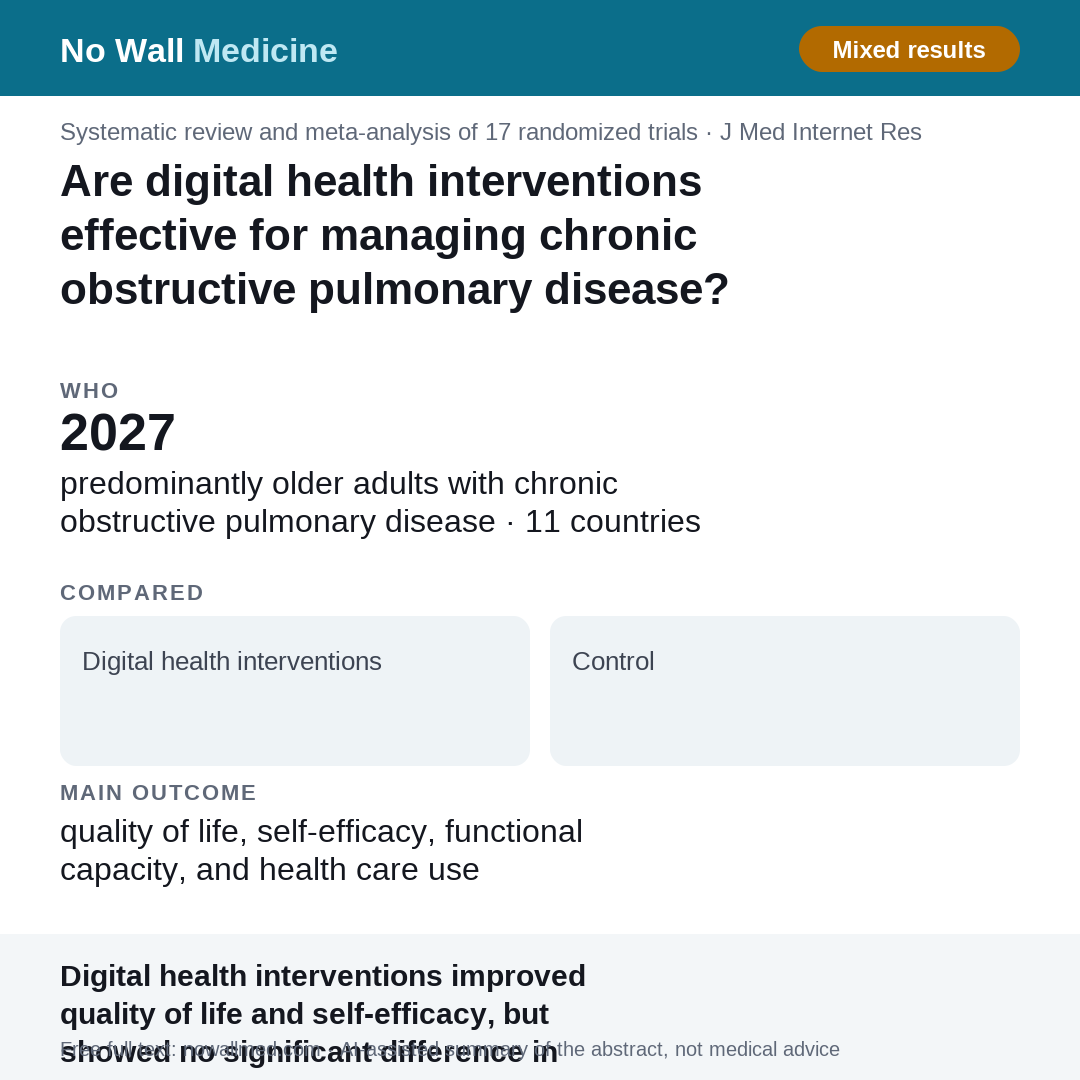
Effectiveness of Digital Health Interventions for Chronic Obstructive Pulmonary Disease: Systematic Review and Meta-Analysis
Systematic review and meta-analysis of 17 randomized trialsMixed results
Are digital health interventions effective for managing chronic obstructive pulmonary disease?
Who
2027
predominantly older adults with chronic obstructive pulmonary disease · 11 countries
Compared
Digital health interventions
Control
Main outcome
quality of life, self-efficacy, functional capacity, and health care use
Result: not reported as a single pooled effect
Bottom line: Digital health interventions improved quality of life and self-efficacy, but showed no significant difference in functional capacity or health care use.
Limitation: Further robust studies are needed, particularly involving larger numbers of older adults with chronic obstructive pulmonary disease.
J Med Internet Res · 2025-05-26Download image
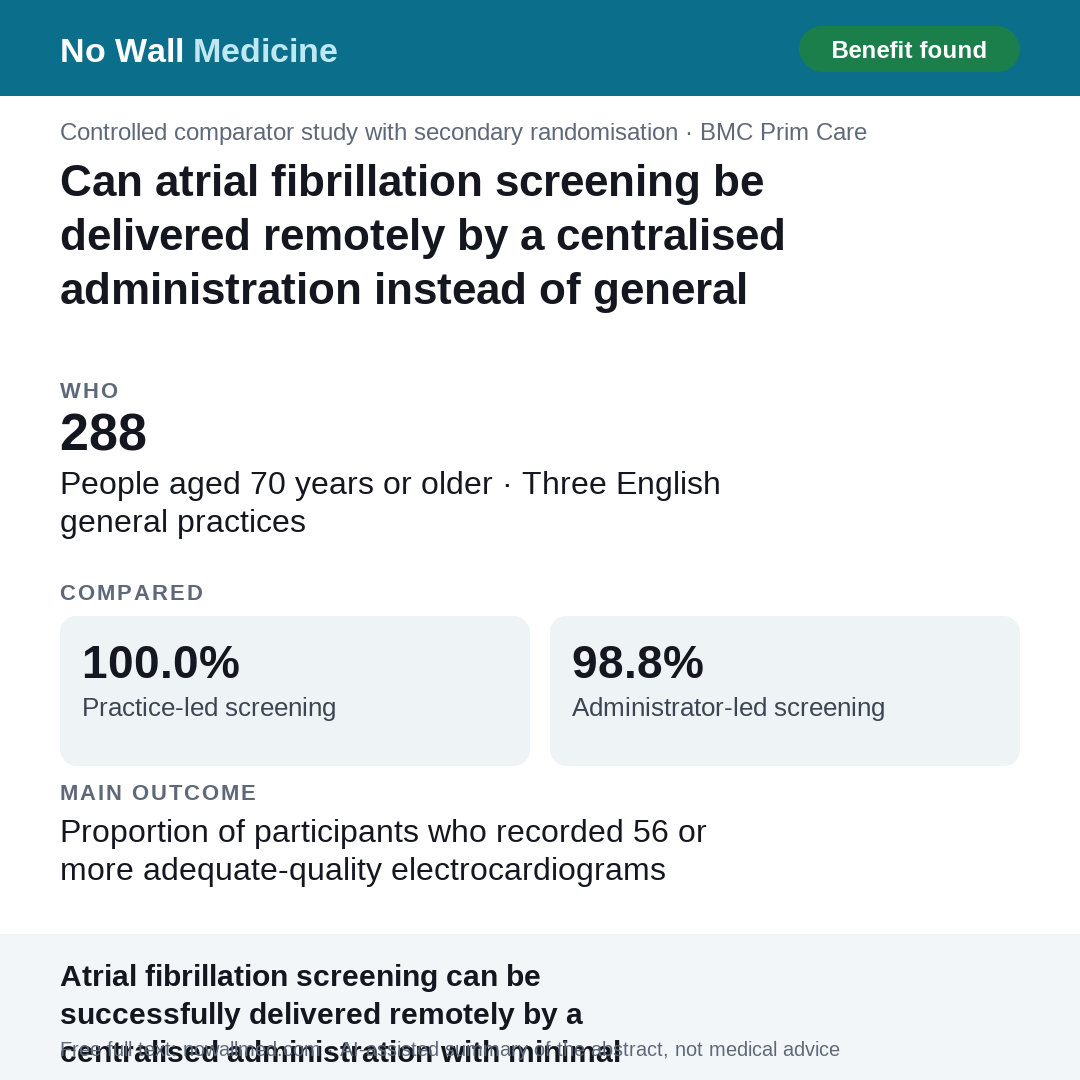
Screening for atrial fibrillation with or without general practice involvement: a controlled study
Controlled comparator study with secondary randomisationBenefit found
Can atrial fibrillation screening be delivered remotely by a centralised administration instead of general practice?
Who
288
People aged 70 years or older · Three English general practices
Compared
100.0%Practice-led screening
98.8%Administrator-led screening
Main outcome
Proportion of participants who recorded 56 or more adequate-quality electrocardiograms
Bottom line: Atrial fibrillation screening can be successfully delivered remotely by a centralised administration with minimal support.
BMC Prim Care · 2025-05-26Download image
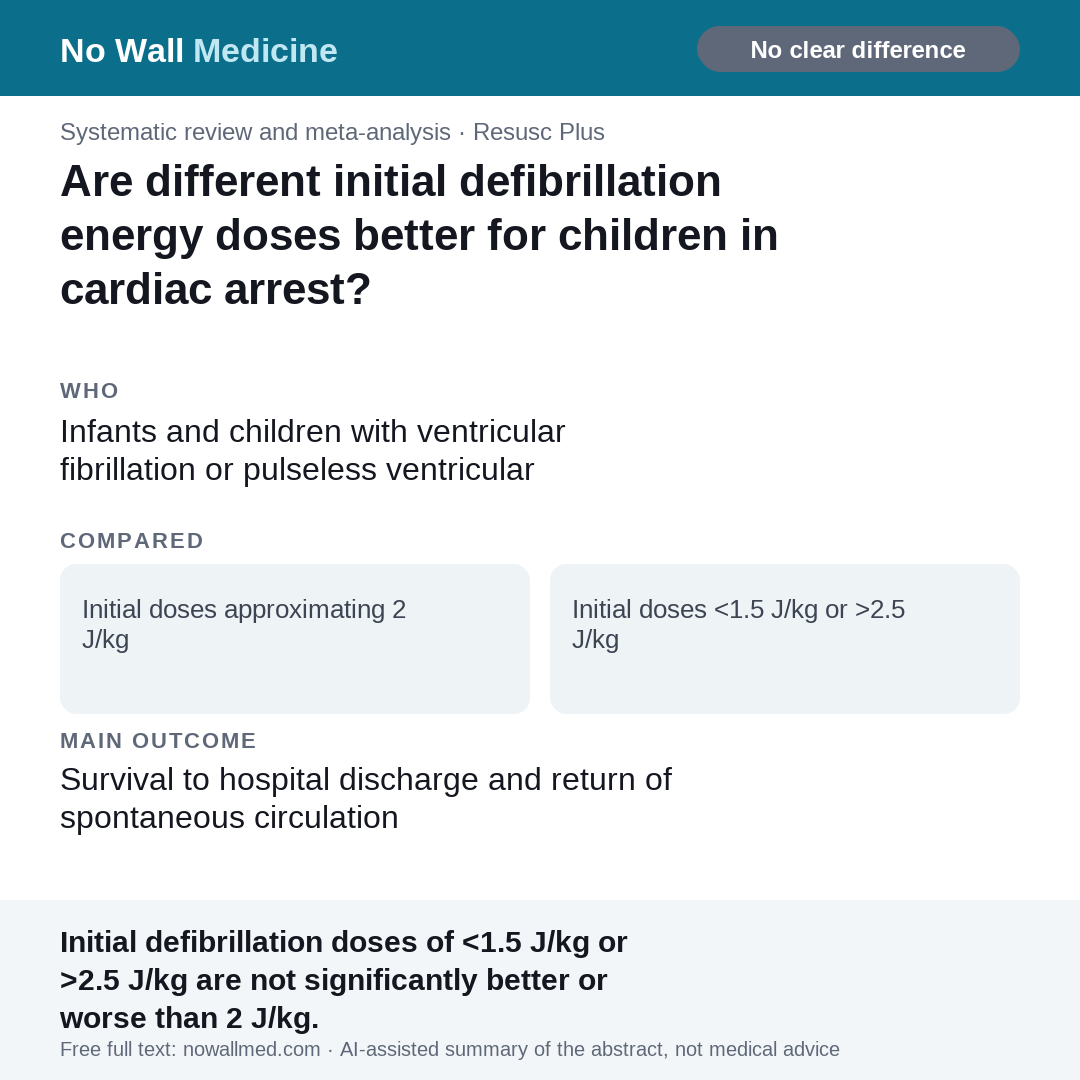
Energy doses for paediatric defibrillation in cardiac arrest: systematic review and meta-analysis
Systematic review and meta-analysisNo clear difference
Are different initial defibrillation energy doses better for children in cardiac arrest?
Who
Infants and children with ventricular fibrillation or pulseless ventricular tachycardia · In-hospital cardiac arrest
Compared
Initial doses approximating 2 J/kg
Initial doses <1.5 J/kg or >2.5 J/kg
Main outcome
Survival to hospital discharge and return of spontaneous circulation
Bottom line: Initial defibrillation doses of <1.5 J/kg or >2.5 J/kg are not significantly better or worse than 2 J/kg.
Limitation: The overall certainty of evidence was very low.
Resusc Plus · 2025-05-26Download image
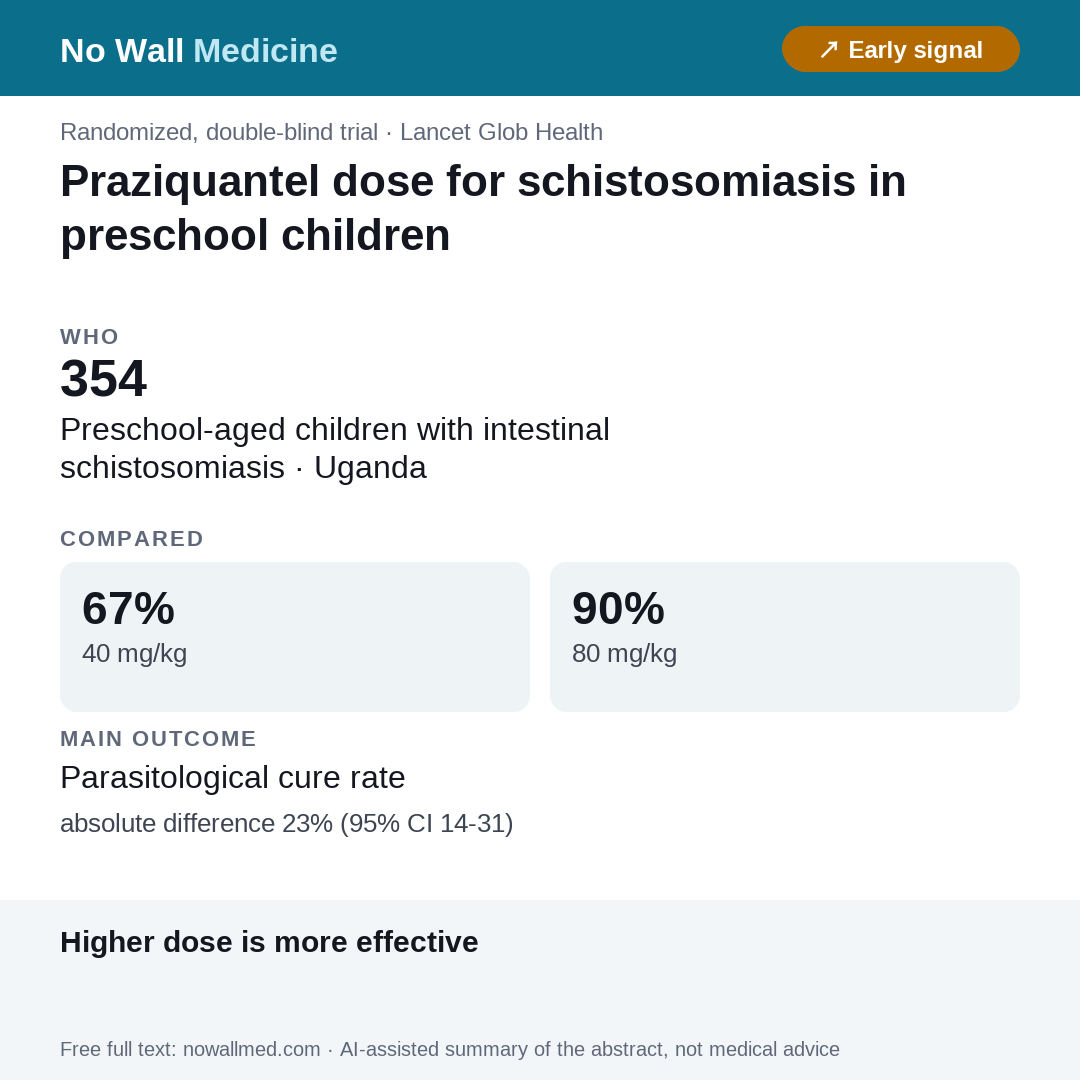
Safety and efficacy of praziquantel 40 mg/kg versus 80 mg/kg in preschool-aged children with intestinal schistosomiasis in Uganda: a 2 × 2 factorial, double-blind, placebo-controlled, phase 2 randomised trial
Randomized, double-blind trialEarly signal
Praziquantel dose for schistosomiasis in preschool children
Who
354
Preschool-aged children with intestinal schistosomiasis · Uganda
Compared
67%40 mg/kg
90%80 mg/kg
Main outcome
Parasitological cure rate
Result: absolute difference 23% (95% CI 14-31)
Bottom line: Higher dose is more effective
Funded by: US National Institutes of Health
Lancet Glob Health · 2025-05-25Download image
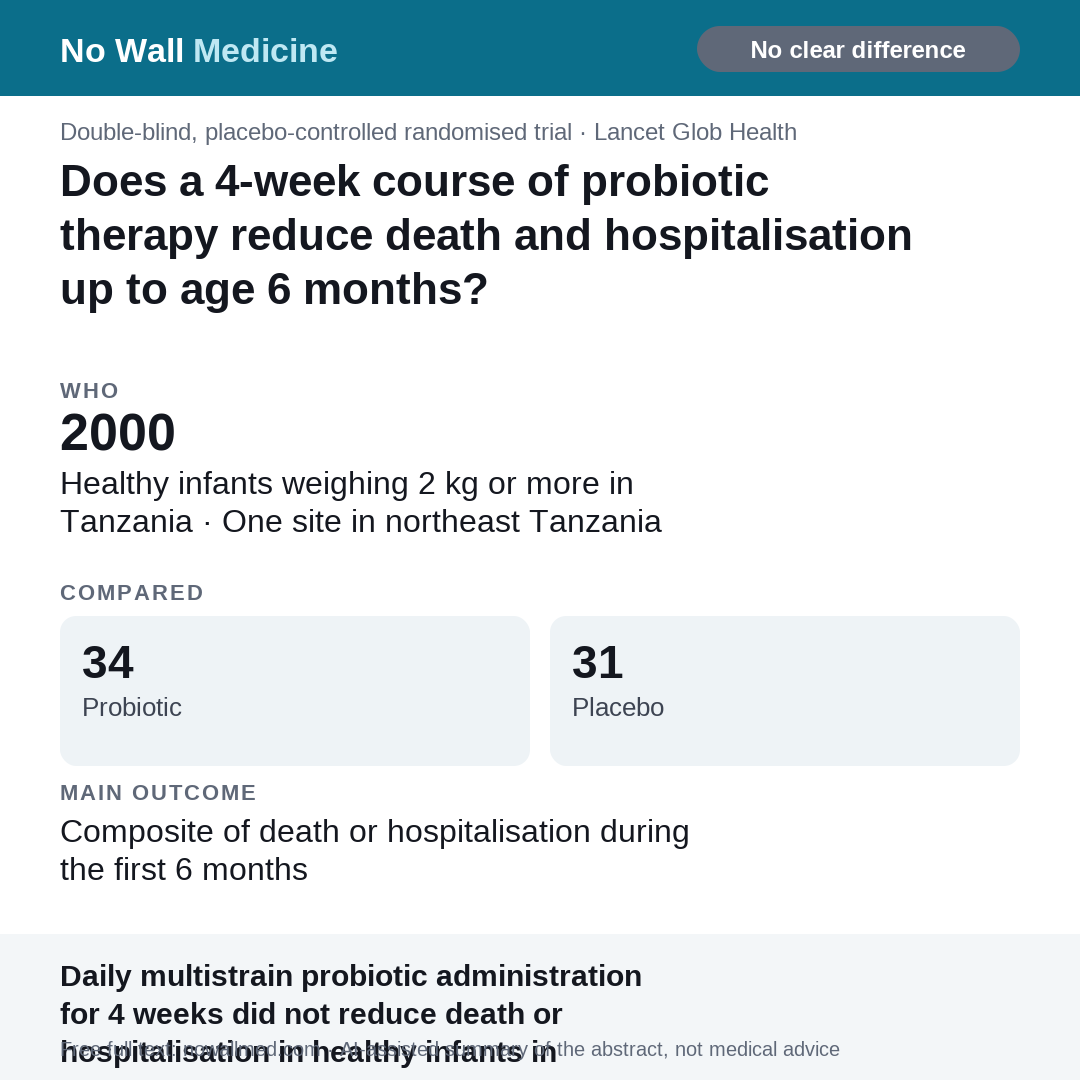
Home administration of a multistrain probiotic once per day for 4 weeks to newborn infants in Tanzania (ProRIDE): a double-blind, placebo-controlled randomised trial
Double-blind, placebo-controlled randomised trialNo clear difference
Does a 4-week course of probiotic therapy reduce death and hospitalisation up to age 6 months?
Who
2000
Healthy infants weighing 2 kg or more in Tanzania · One site in northeast Tanzania
Compared
34Probiotic (3%)
31Placebo (3%)
Main outcome
Composite of death or hospitalisation during the first 6 months
Result: crude relative risk 1.10 (95% CI 0.68-1.78)
Bottom line: Daily multistrain probiotic administration for 4 weeks did not reduce death or hospitalisation in healthy infants in Tanzania.
Lancet Glob Health · 2025-05-25Download image
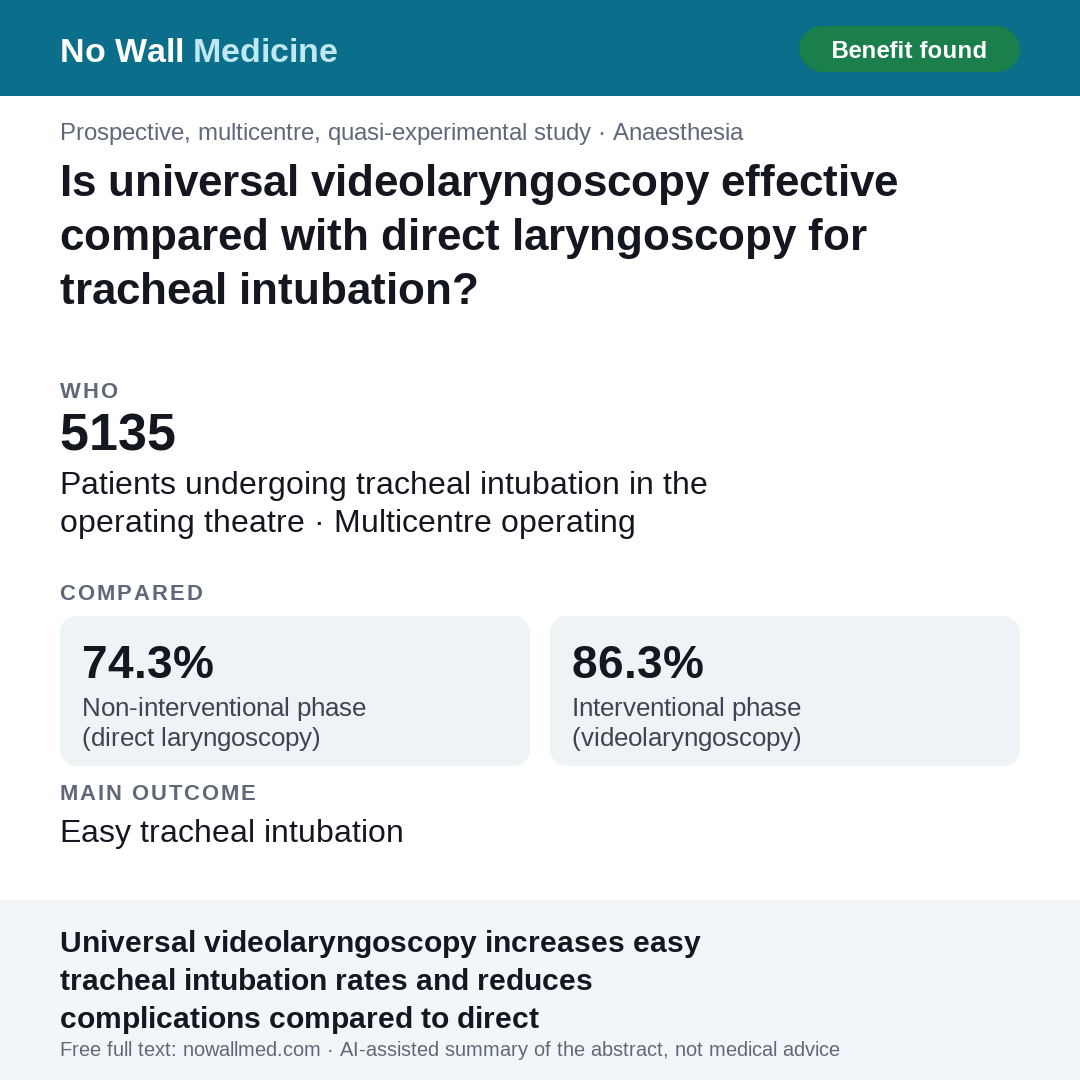
Universal videolaryngoscopy for tracheal intubation in the operating theatre: A prospective non-randomised clinical trial
Prospective, multicentre, quasi-experimental studyBenefit found
Is universal videolaryngoscopy effective compared with direct laryngoscopy for tracheal intubation?
Who
5135
Patients undergoing tracheal intubation in the operating theatre · Multicentre operating theatre settings
Compared
74.3%Non-interventional phase (direct laryngoscopy)
86.3%Interventional phase (videolaryngoscopy)
Main outcome
Easy tracheal intubation
Result: absolute difference 12%, 95%CI 9.8-14.1
Bottom line: Universal videolaryngoscopy increases easy tracheal intubation rates and reduces complications compared to direct laryngoscopy in operating theatres.
Limitation: Prospective non-randomised clinical trial
Anaesthesia · 2025-05-25Download image
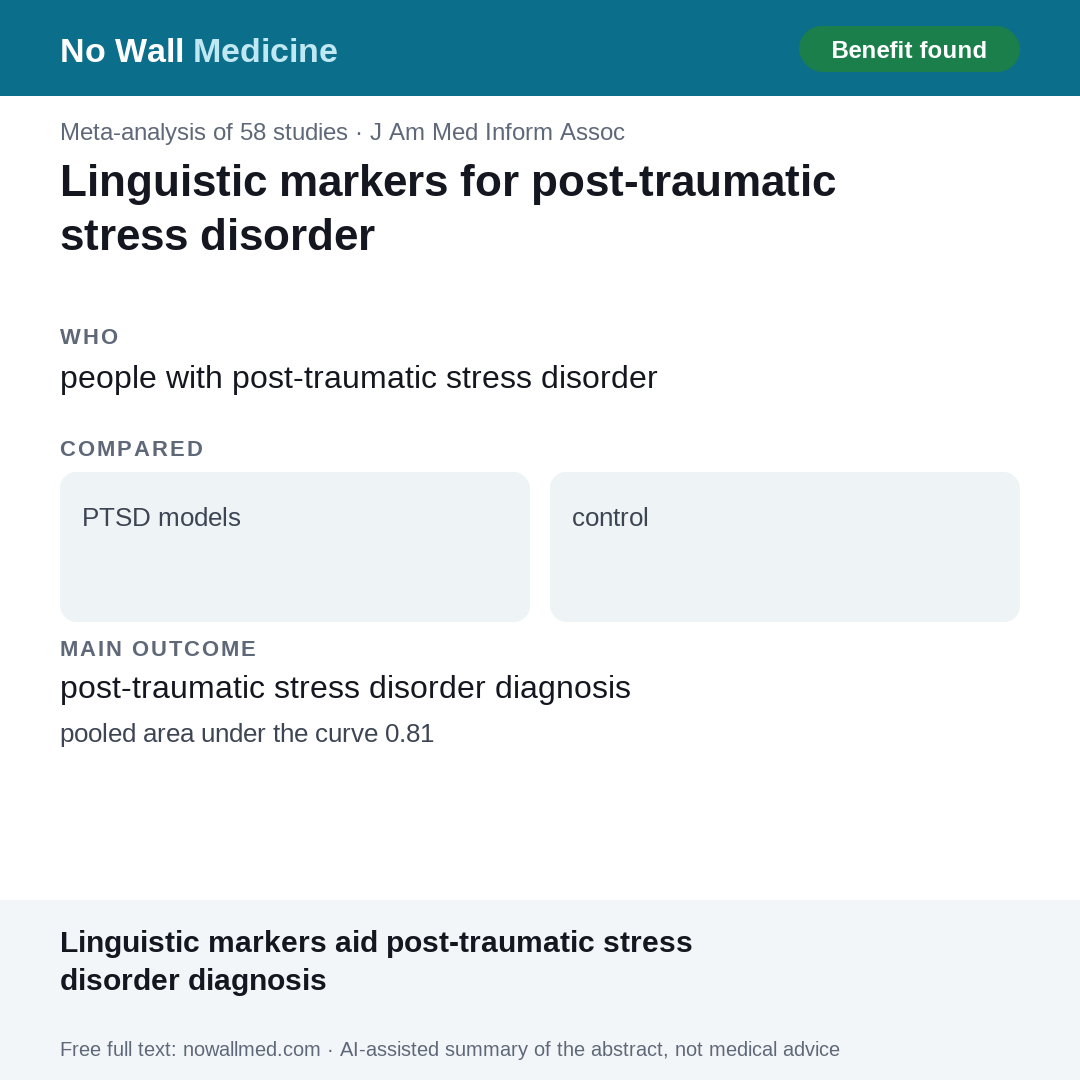
Linguistic markers for identifying post-traumatic stress disorder and associated symptoms: a systematic literature review
Meta-analysis of 58 studiesBenefit found
Linguistic markers for post-traumatic stress disorder
Who
people with post-traumatic stress disorder
Compared
PTSD models
control
Main outcome
post-traumatic stress disorder diagnosis
Result: pooled area under the curve 0.81
Bottom line: Linguistic markers aid post-traumatic stress disorder diagnosis
Limitation: methodological inconsistencies and biases
J Am Med Inform Assoc · 2025-05-25Download image
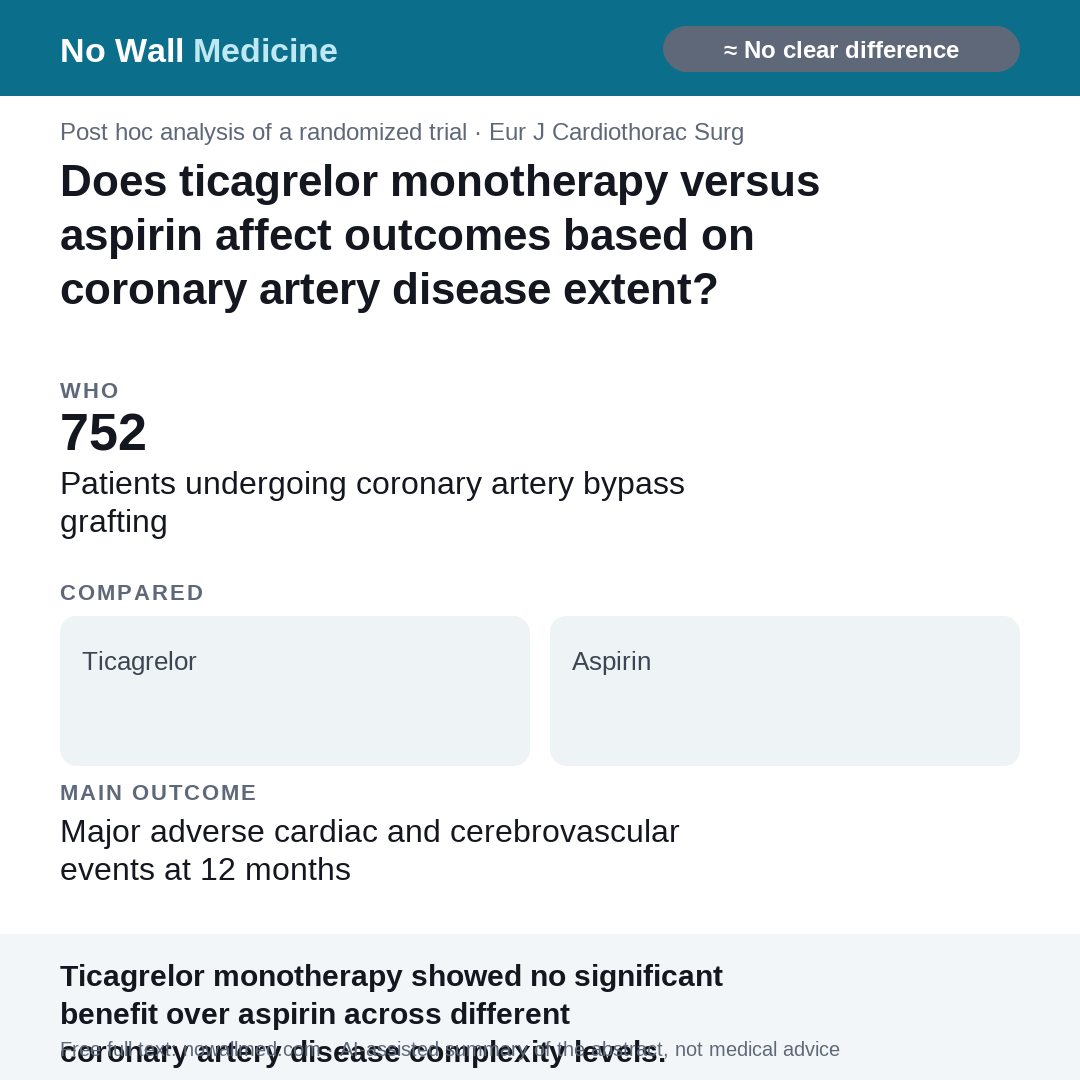
Extent of coronary artery disease and clinical outcomes with ticagrelor monotherapy versus aspirin after coronary artery bypass grafting: insights from the TiCAB trial
Post hoc analysis of a randomized trialNo clear difference
Does ticagrelor monotherapy versus aspirin affect outcomes based on coronary artery disease extent?
Who
752
Patients undergoing coronary artery bypass grafting
Compared
Ticagrelor
Aspirin
Main outcome
Major adverse cardiac and cerebrovascular events at 12 months
Result: Pint=0.41
Bottom line: Ticagrelor monotherapy showed no significant benefit over aspirin across different coronary artery disease complexity levels.
Eur J Cardiothorac Surg · 2025-05-25Download image
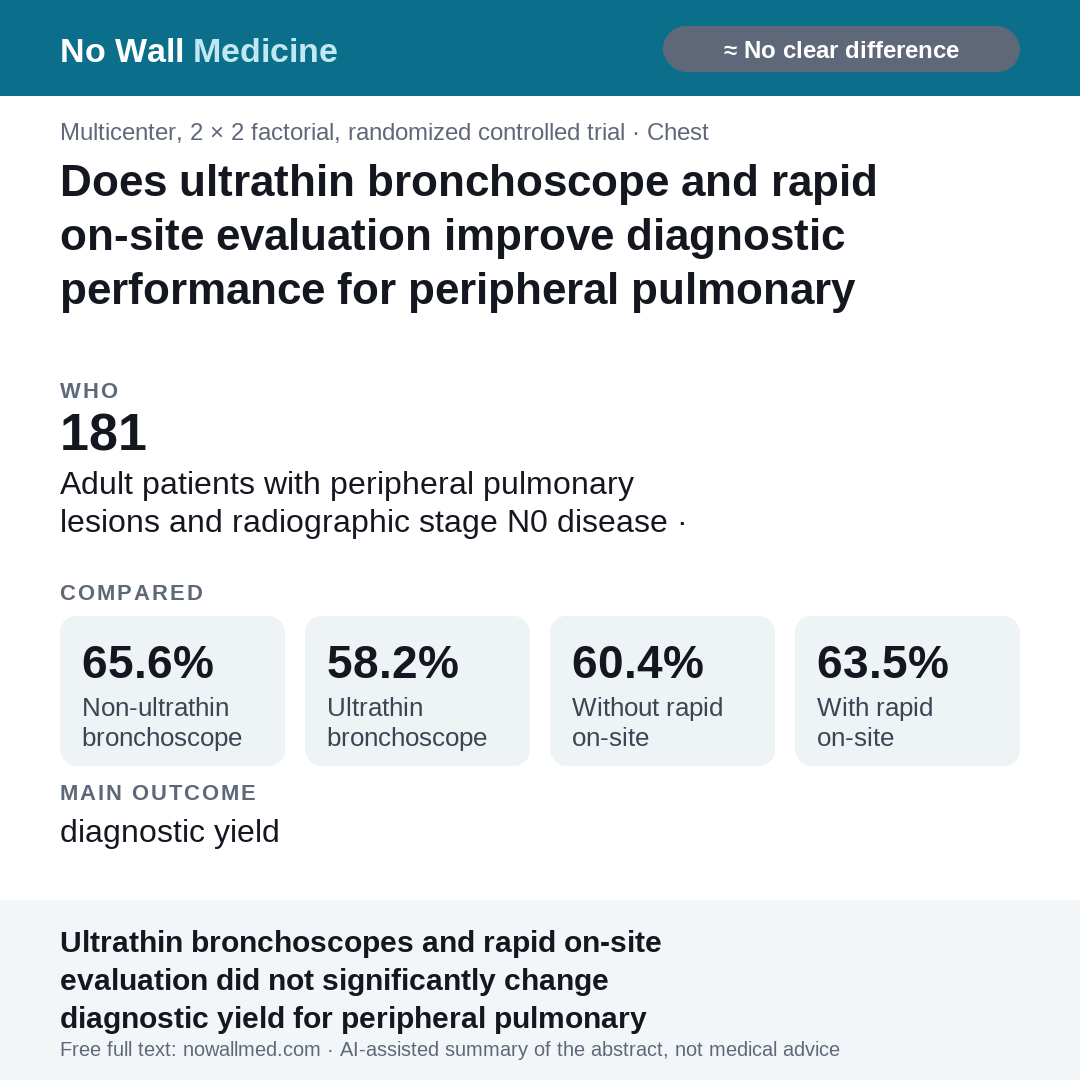
Ultrathin Bronchoscopy With Radial Endobronchial Ultrasound and Rapid On-Site Evaluation for the Diagnosis of Peripheral Pulmonary Lesions: A Multicenter Randomized Controlled Factorial Trial
Multicenter, 2 × 2 factorial, randomized controlled trialNo clear difference
Does ultrathin bronchoscope and rapid on-site evaluation improve diagnostic performance for peripheral pulmonary lesions?
Who
181
Adult patients with peripheral pulmonary lesions and radiographic stage N0 disease · Multicenter
Compared
65.6%Non-ultrathin bronchoscope
58.2%Ultrathin bronchoscope
60.4%Without rapid on-site evaluation
63.5%With rapid on-site evaluation
Main outcome
diagnostic yield
Bottom line: Ultrathin bronchoscopes and rapid on-site evaluation did not significantly change diagnostic yield for peripheral pulmonary lesions.
Chest · 2025-05-24Download image
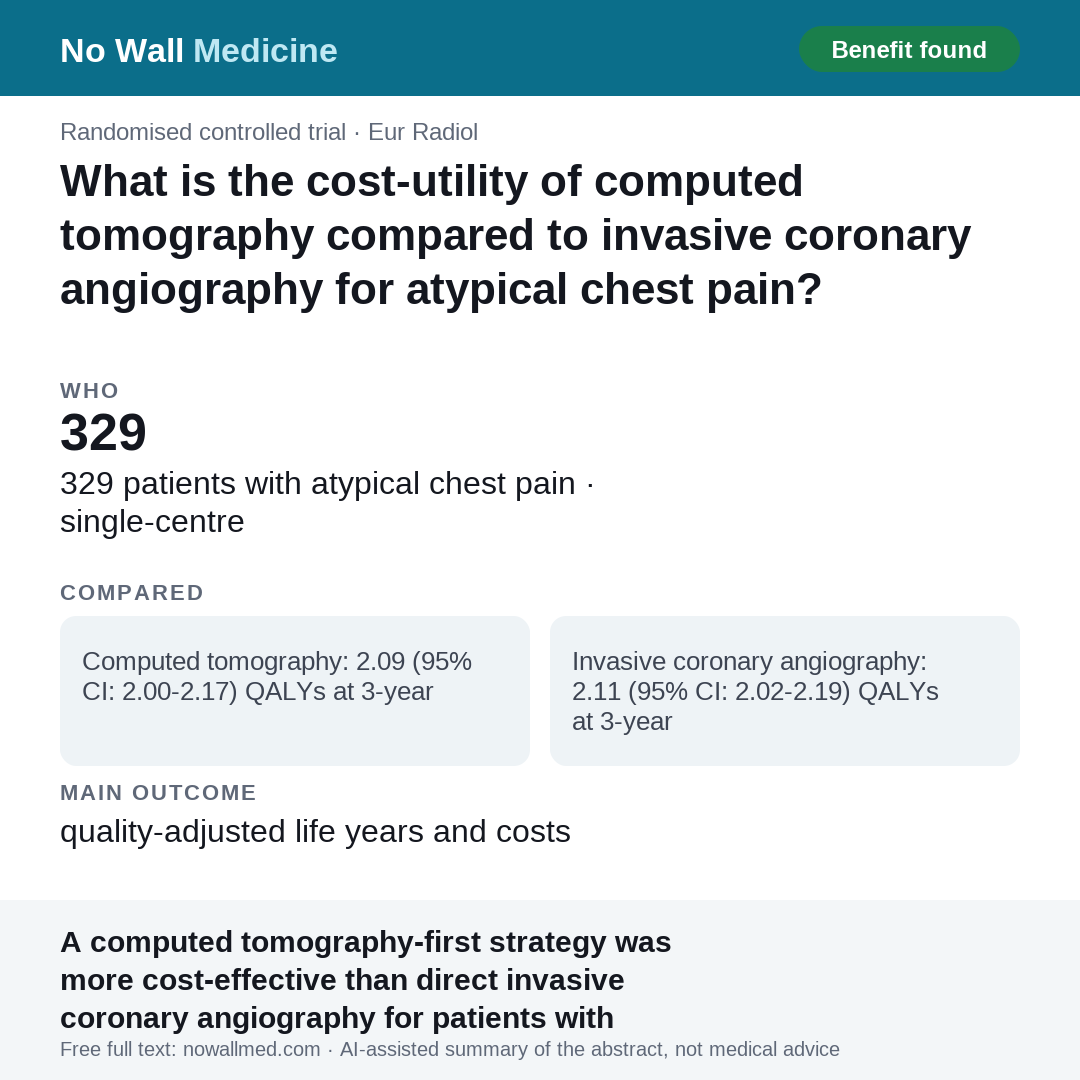
Cost-utility of computed tomography in patients with atypical chest pain clinically referred for invasive coronary angiography: randomised controlled trial
Randomised controlled trialBenefit found
What is the cost-utility of computed tomography compared to invasive coronary angiography for atypical chest pain?
Who
329
329 patients with atypical chest pain · single-centre
Compared
Computed tomography: 2.09 (95% CI: 2.00-2.17) QALYs at 3-year
Invasive coronary angiography: 2.11 (95% CI: 2.02-2.19) QALYs at 3-year
Main outcome
quality-adjusted life years and costs
Result: difference: -0.02 (95% CI: -0.14 to 0.12) QALYs at 3-year
Bottom line: A computed tomography-first strategy was more cost-effective than direct invasive coronary angiography for patients with atypical chest pain.
Eur Radiol · 2025-05-24Download image
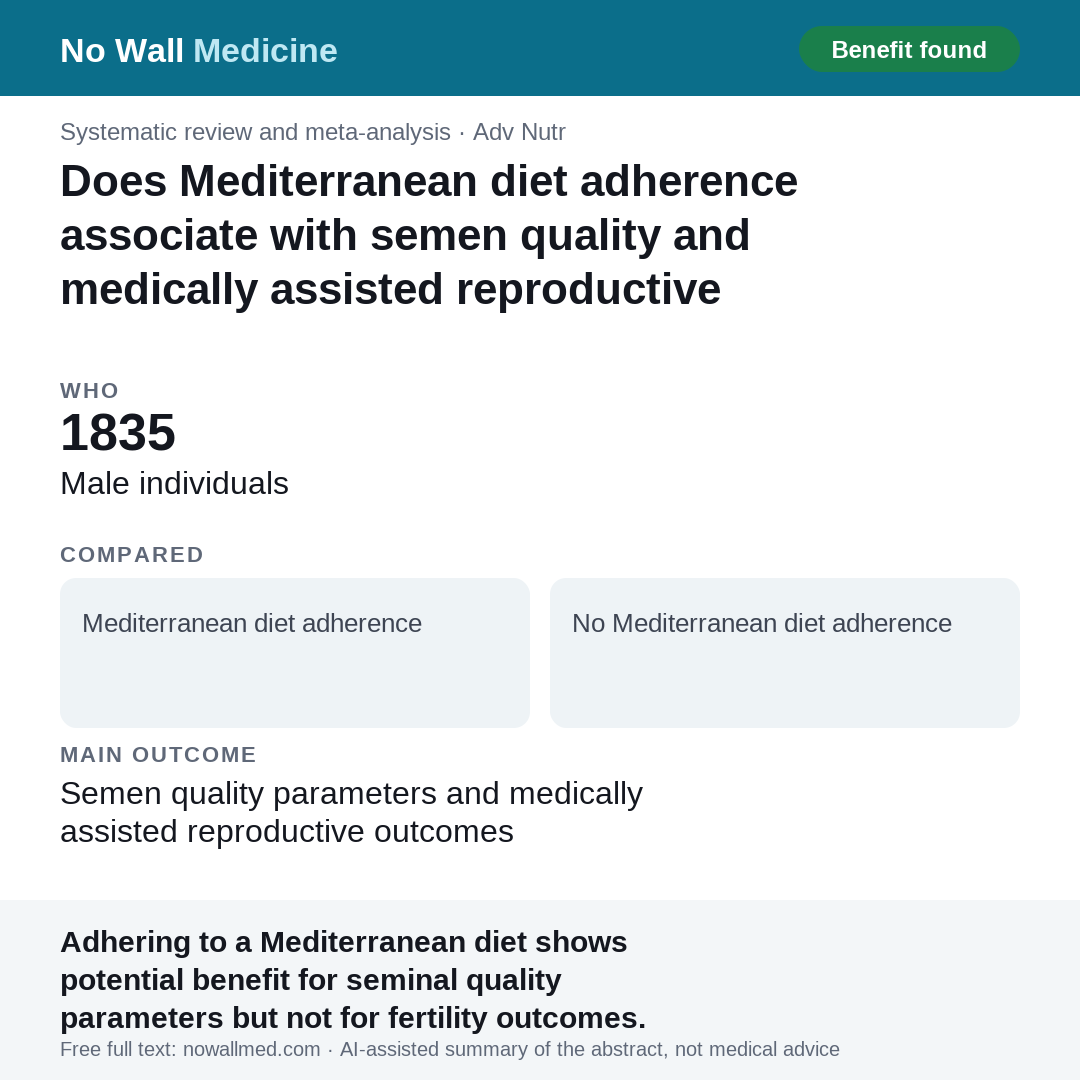
Mediterranean Diet, Semen Quality, and Medically Assisted Reproductive Outcomes in the Male Population: A Systematic Review and Meta-Analysis
Systematic review and meta-analysisBenefit found
Does Mediterranean diet adherence associate with semen quality and medically assisted reproductive outcomes?
Who
1835
Male individuals
Compared
Mediterranean diet adherence
No Mediterranean diet adherence
Main outcome
Semen quality parameters and medically assisted reproductive outcomes
Result: sperm count 24.37 M spz. (1.30-47.44); total motility 8.81% (2.26-15.37); progressive motility 7.49% (1.47-13.50); normal morphology 1.02% (0.21-1.82)
Bottom line: Adhering to a Mediterranean diet shows potential benefit for seminal quality parameters but not for fertility outcomes.
Adv Nutr · 2025-05-24Download image
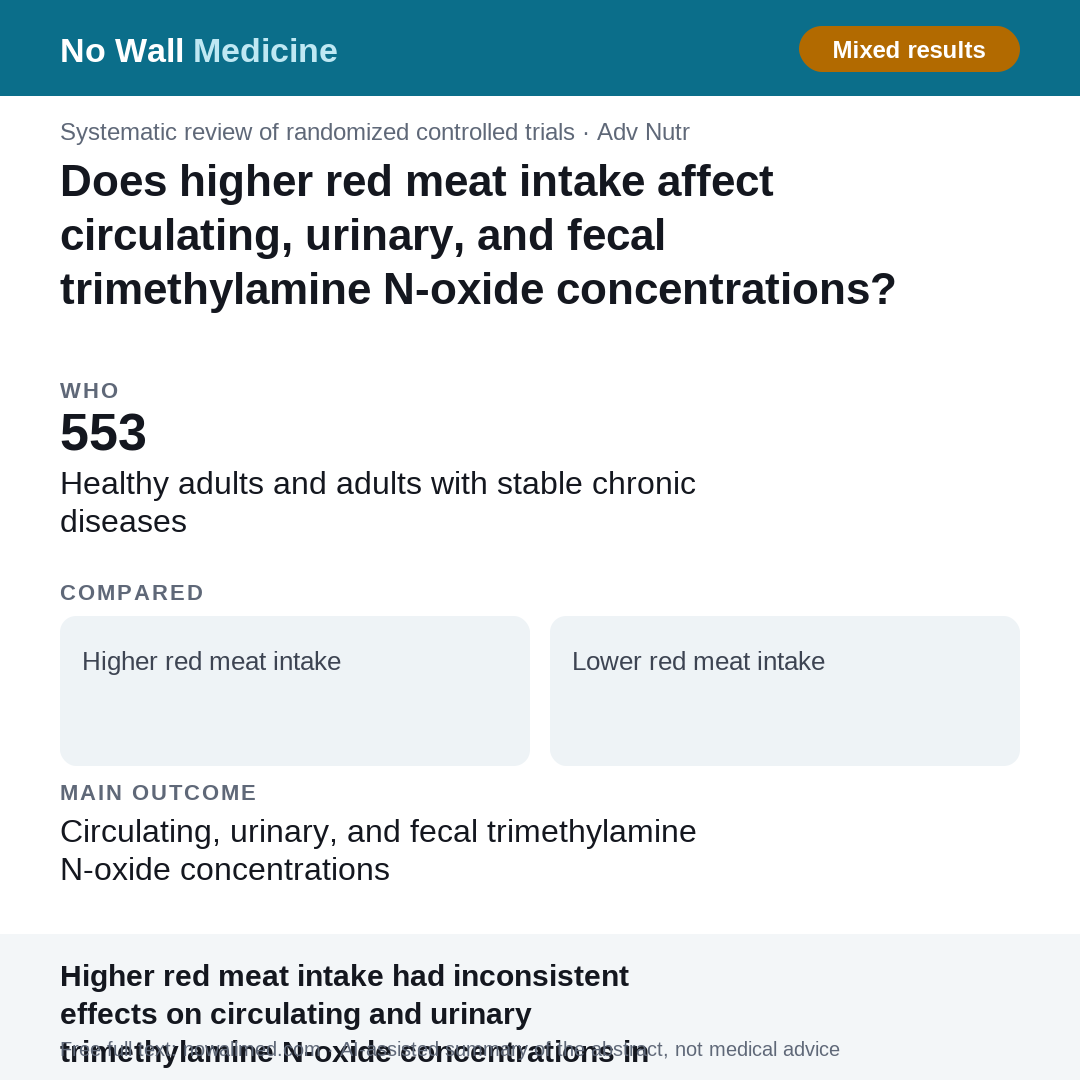
The Effect of Red Meat Consumption on Circulating, Urinary, and Fecal Trimethylamine-N-Oxide: A Systematic Review and Narrative Synthesis of Randomized Controlled Trials
Systematic review of randomized controlled trialsMixed results
Does higher red meat intake affect circulating, urinary, and fecal trimethylamine N-oxide concentrations?
Who
553
Healthy adults and adults with stable chronic diseases
Compared
Higher red meat intake
Lower red meat intake
Main outcome
Circulating, urinary, and fecal trimethylamine N-oxide concentrations
Bottom line: Higher red meat intake had inconsistent effects on circulating and urinary trimethylamine N-oxide concentrations in short-term studies.
Adv Nutr · 2025-05-24Download image
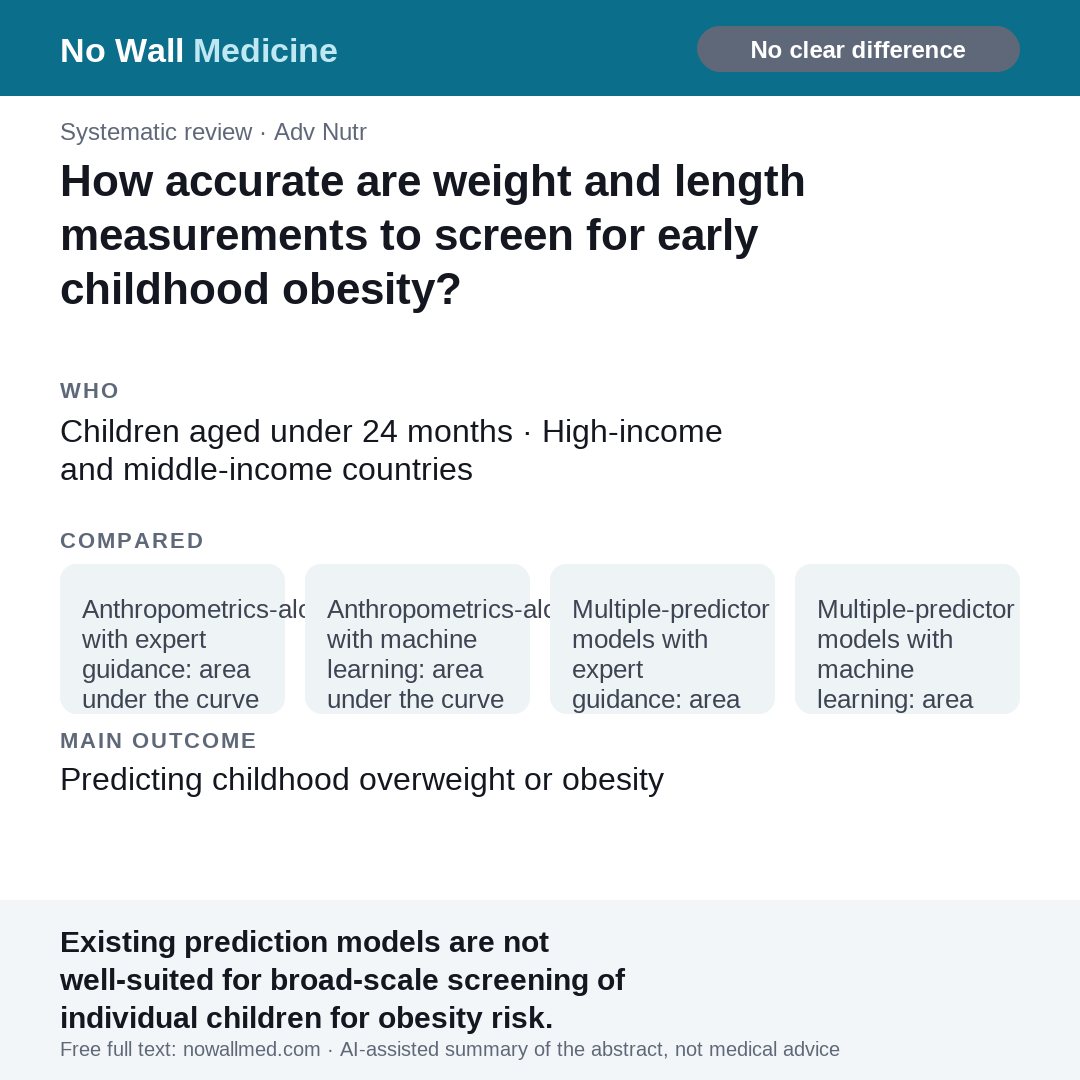
Accuracy of Using Weight and Length in Children under 24 mo to Screen for Early Childhood Obesity: A Systematic Review
Systematic reviewNo clear difference
How accurate are weight and length measurements to screen for early childhood obesity?
Who
Children aged under 24 months · High-income and middle-income countries
Compared
Anthropometrics-alone with expert guidance: area under the curve ≥ 0.56
Anthropometrics-alone with machine learning: area under the curve ≥ 0.77
Multiple-predictor models with expert guidance: area under the curve ≥ 0.68
Multiple-predictor models with machine learning: area under the curve ≥ 0.76
Main outcome
Predicting childhood overweight or obesity
Bottom line: Existing prediction models are not well-suited for broad-scale screening of individual children for obesity risk.
Adv Nutr · 2025-05-24Download image
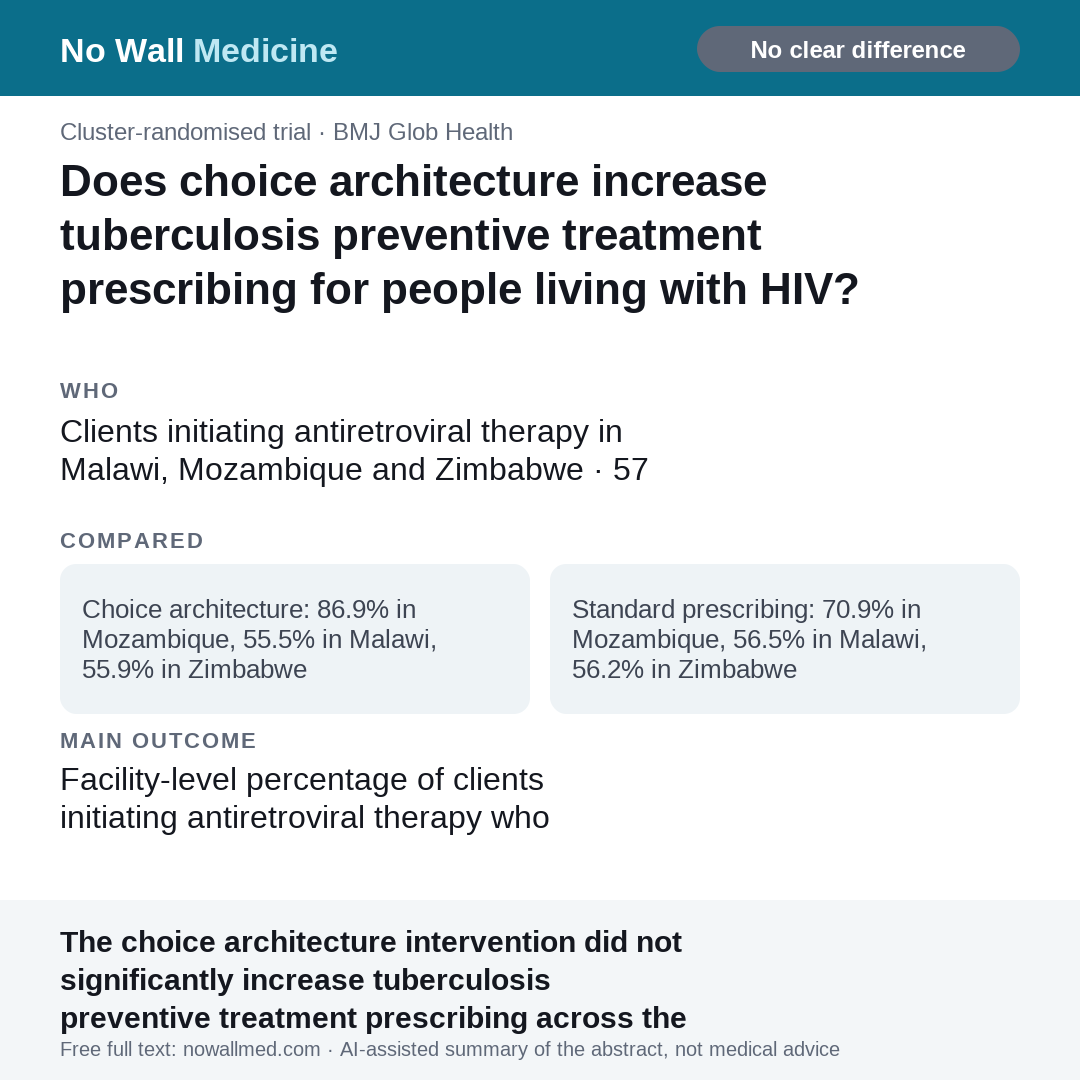
An evaluation of a choice architecture-based intervention on prescribing of TB preventive treatment to people living with HIV in southern Africa (the CAT study): a cluster-randomised trial
Cluster-randomised trialNo clear difference
Does choice architecture increase tuberculosis preventive treatment prescribing for people living with HIV?
Who
Clients initiating antiretroviral therapy in Malawi, Mozambique and Zimbabwe · 57 healthcare facilities in Malawi, Mozambique and Zimbabwe
Compared
Choice architecture: 86.9% in Mozambique, 55.5% in Malawi, 55.9% in Zimbabwe
Standard prescribing: 70.9% in Mozambique, 56.5% in Malawi, 56.2% in Zimbabwe
Main outcome
Facility-level percentage of clients initiating antiretroviral therapy who initiated tuberculosis preventive treatment
Bottom line: The choice architecture intervention did not significantly increase tuberculosis preventive treatment prescribing across the studied countries.
BMJ Glob Health · 2025-05-24Download image
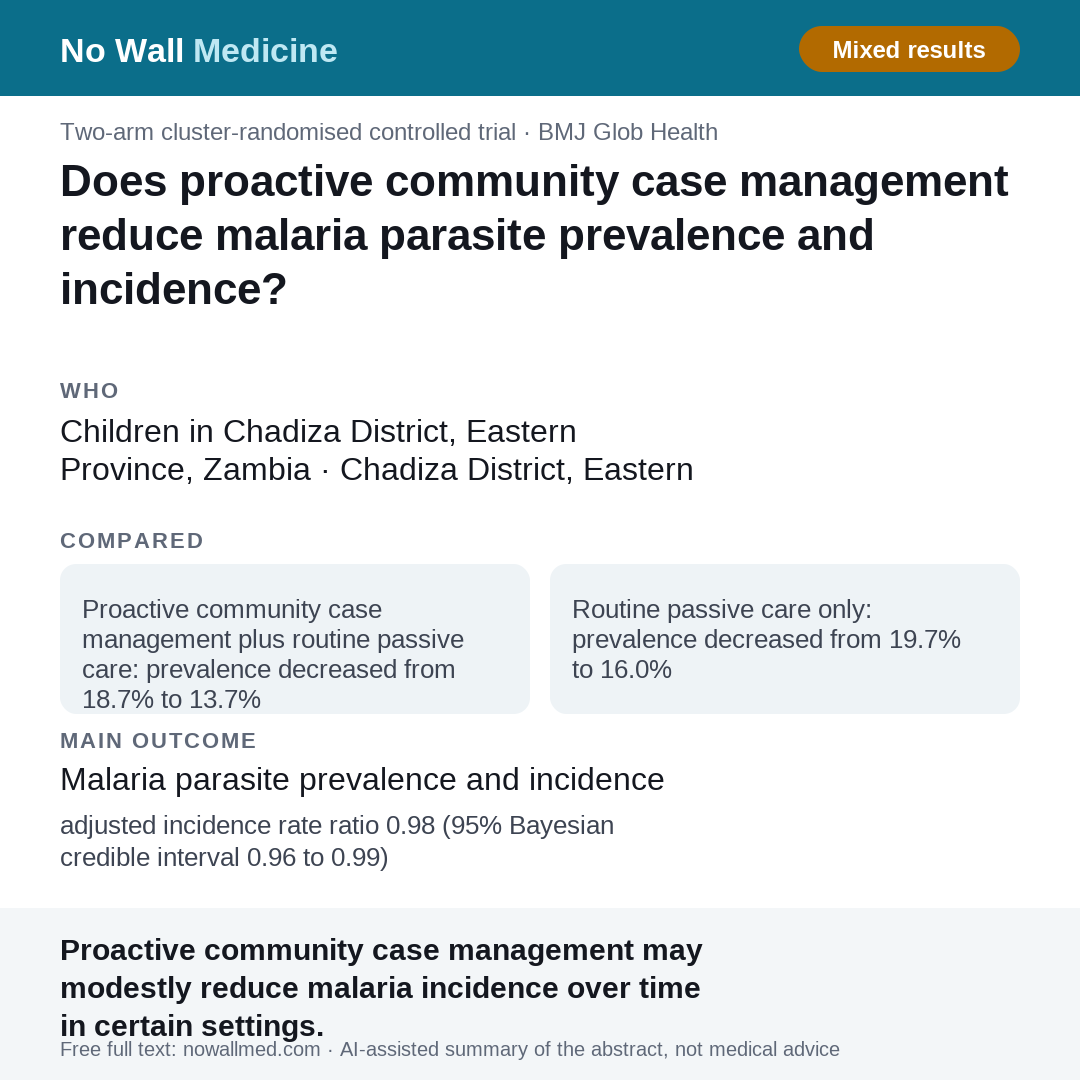
Impact of proactive malaria community case management (proCCM) on parasite prevalence and incidence from 2021 to 2023: a randomised controlled trial in Chadiza District, Eastern Province, Zambia
Two-arm cluster-randomised controlled trialMixed results
Does proactive community case management reduce malaria parasite prevalence and incidence?
Who
Children in Chadiza District, Eastern Province, Zambia · Chadiza District, Eastern Province, Zambia
Compared
Proactive community case management plus routine passive care: prevalence decreased from 18.7% to 13.7%
Routine passive care only: prevalence decreased from 19.7% to 16.0%
Main outcome
Malaria parasite prevalence and incidence
Result: adjusted incidence rate ratio 0.98 (95% Bayesian credible interval 0.96 to 0.99)
Bottom line: Proactive community case management may modestly reduce malaria incidence over time in certain settings.
BMJ Glob Health · 2025-05-24Download image
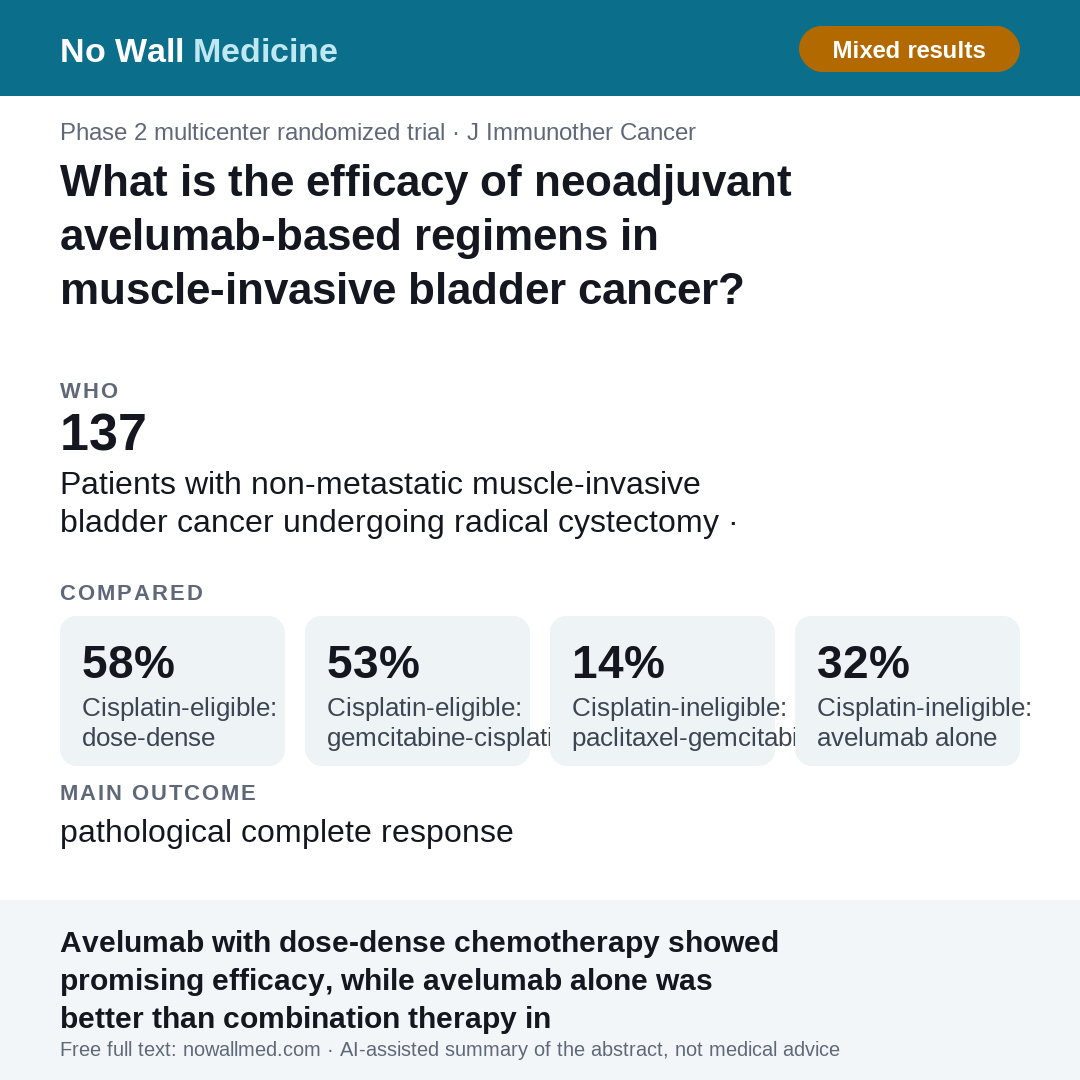
Avelumab-based neoadjuvant therapy in patients with muscle-invasive bladder cancer (AURA Oncodistinct-004): a phase 2 multicenter clinical trial
Phase 2 multicenter randomized trialMixed results
What is the efficacy of neoadjuvant avelumab-based regimens in muscle-invasive bladder cancer?
Who
137
Patients with non-metastatic muscle-invasive bladder cancer undergoing radical cystectomy · Multicenter
Compared
58%Cisplatin-eligible: dose-dense methotrexate-vinblastine-doxorubicin-cisplatin plus avelumab (95% CI: 42% to 72%)
53%Cisplatin-eligible: gemcitabine-cisplatin plus avelumab (95% CI: 37% to 68%)
14%Cisplatin-ineligible: paclitaxel-gemcitabine plus avelumab (95% CI: 6% to 31%)
32%Cisplatin-ineligible: avelumab alone (95% CI: 18% to 51%)
Main outcome
pathological complete response
Bottom line: Avelumab with dose-dense chemotherapy showed promising efficacy, while avelumab alone was better than combination therapy in cisplatin-ineligible patients.
J Immunother Cancer · 2025-05-24Download image
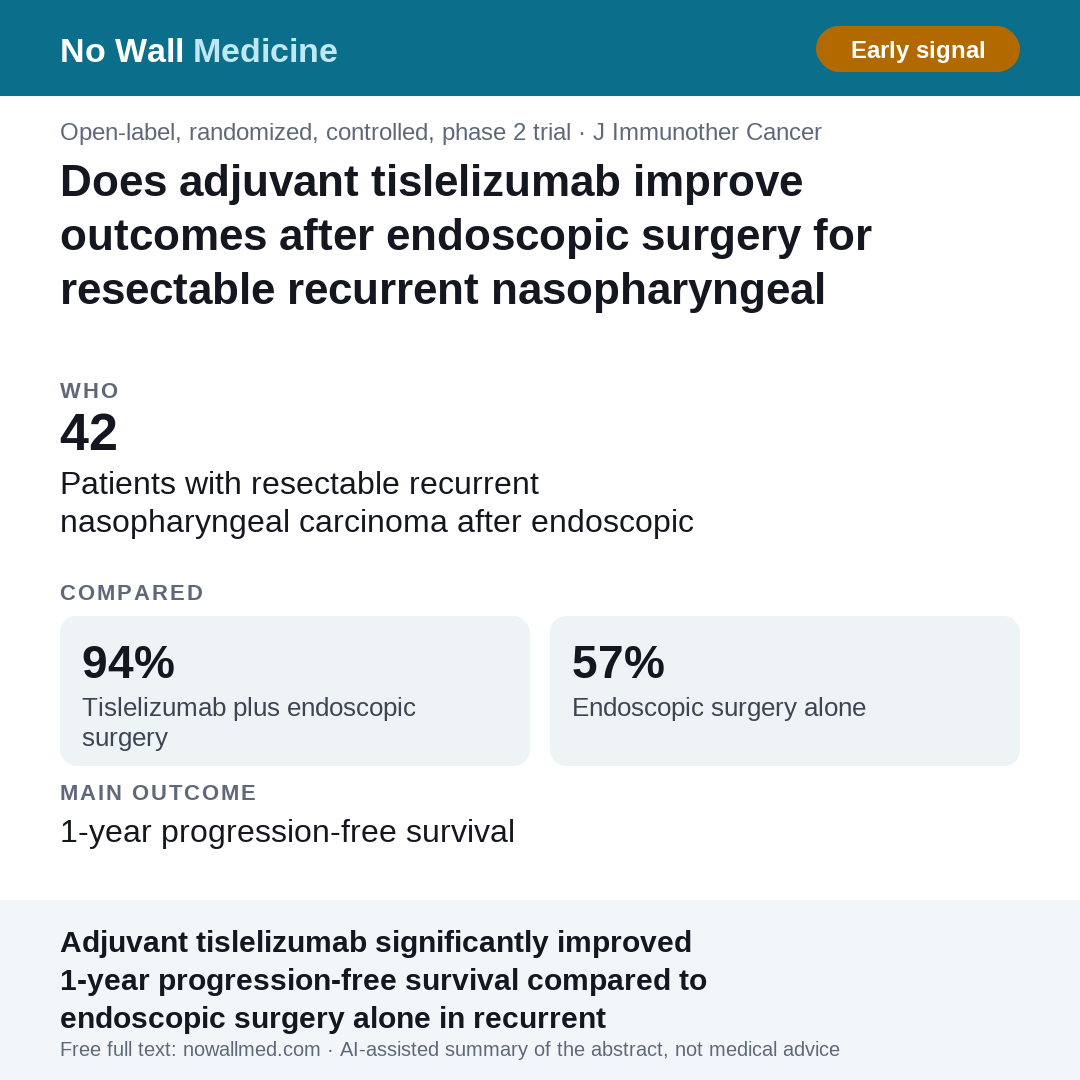
Tislelizumab as adjuvant therapy following endoscopic surgery for resectable recurrent nasopharyngeal carcinoma: a randomized clinical trial
Open-label, randomized, controlled, phase 2 trialEarly signal
Does adjuvant tislelizumab improve outcomes after endoscopic surgery for resectable recurrent nasopharyngeal carcinoma?
Who
42
Patients with resectable recurrent nasopharyngeal carcinoma after endoscopic surgery · Single-center
Compared
94%Tislelizumab plus endoscopic surgery (95% CI: 83% to 100%)
57%Endoscopic surgery alone (95% CI: 38% to 85%)
Main outcome
1-year progression-free survival
Bottom line: Adjuvant tislelizumab significantly improved 1-year progression-free survival compared to endoscopic surgery alone in recurrent nasopharyngeal carcinoma.
J Immunother Cancer · 2025-05-24Download image
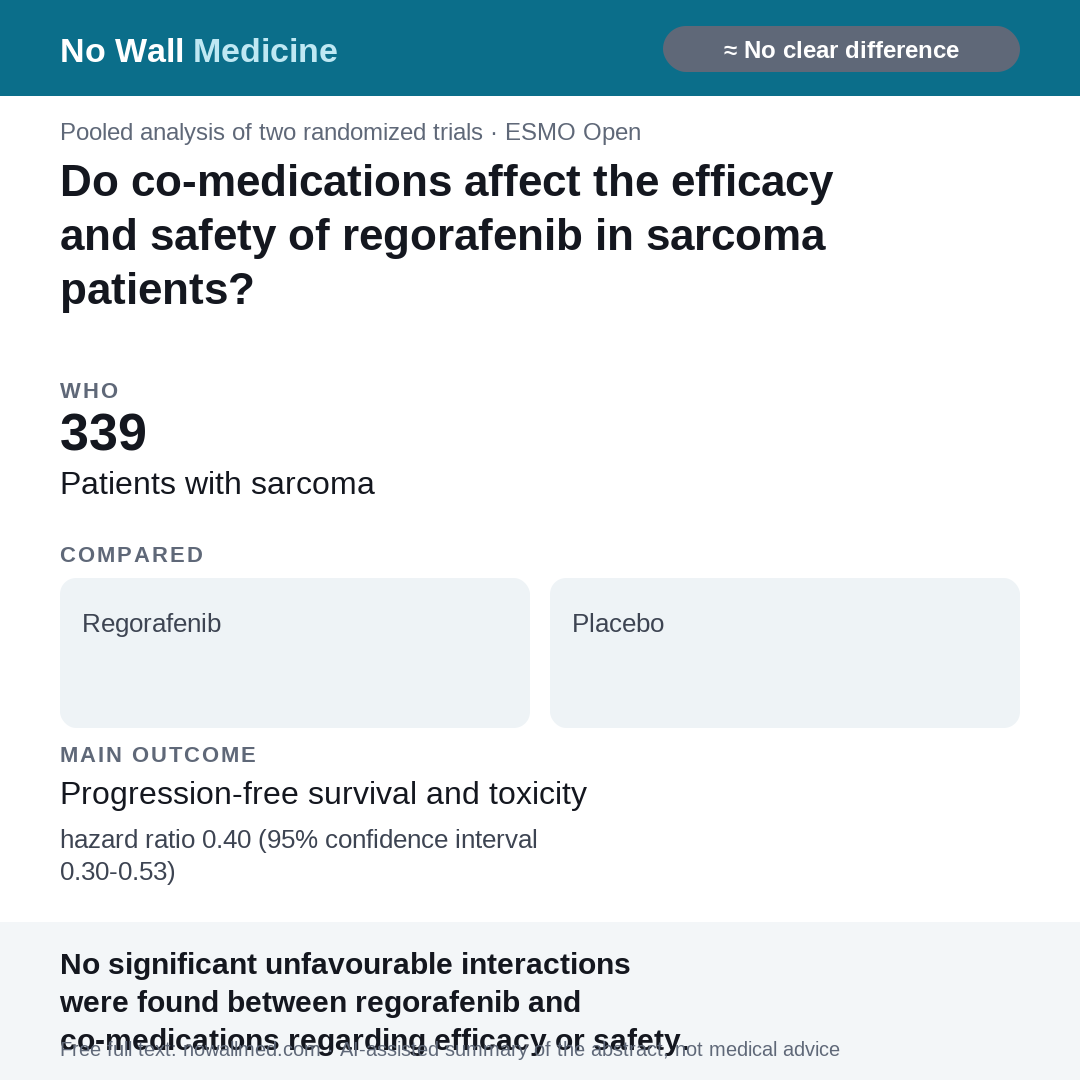
COREGO: drug-drug interaction analysis on the efficacy and safety of regorafenib in patients with a sarcoma: pooled analysis of the data from the REGOSARC and REGOBONE trials
Pooled analysis of two randomized trialsNo clear difference
Do co-medications affect the efficacy and safety of regorafenib in sarcoma patients?
Who
339
Patients with sarcoma
Compared
Regorafenib
Placebo
Main outcome
Progression-free survival and toxicity
Result: hazard ratio 0.40 (95% confidence interval 0.30-0.53)
Bottom line: No significant unfavourable interactions were found between regorafenib and co-medications regarding efficacy or safety.
ESMO Open · 2025-05-24Download image
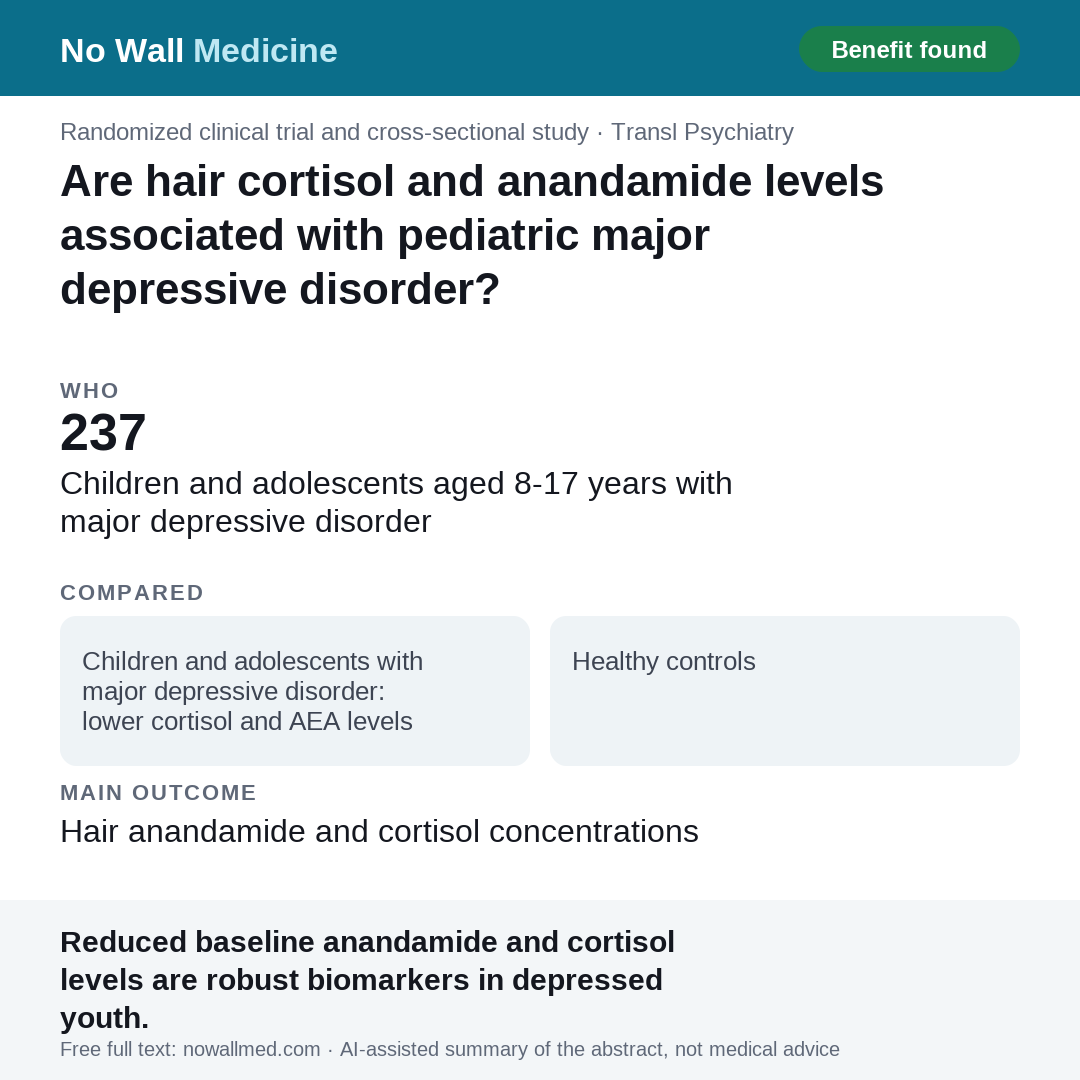
Major depressive disorder in children and adolescents is associated with reduced hair cortisol and anandamide (AEA): cross-sectional and longitudinal evidence from a large randomized clinical trial
Randomized clinical trial and cross-sectional studyBenefit found
Are hair cortisol and anandamide levels associated with pediatric major depressive disorder?
Who
237
Children and adolescents aged 8-17 years with major depressive disorder
Compared
Children and adolescents with major depressive disorder: lower cortisol and AEA levels
Healthy controls
Main outcome
Hair anandamide and cortisol concentrations
Bottom line: Reduced baseline anandamide and cortisol levels are robust biomarkers in depressed youth.
Transl Psychiatry · 2025-05-24Download image
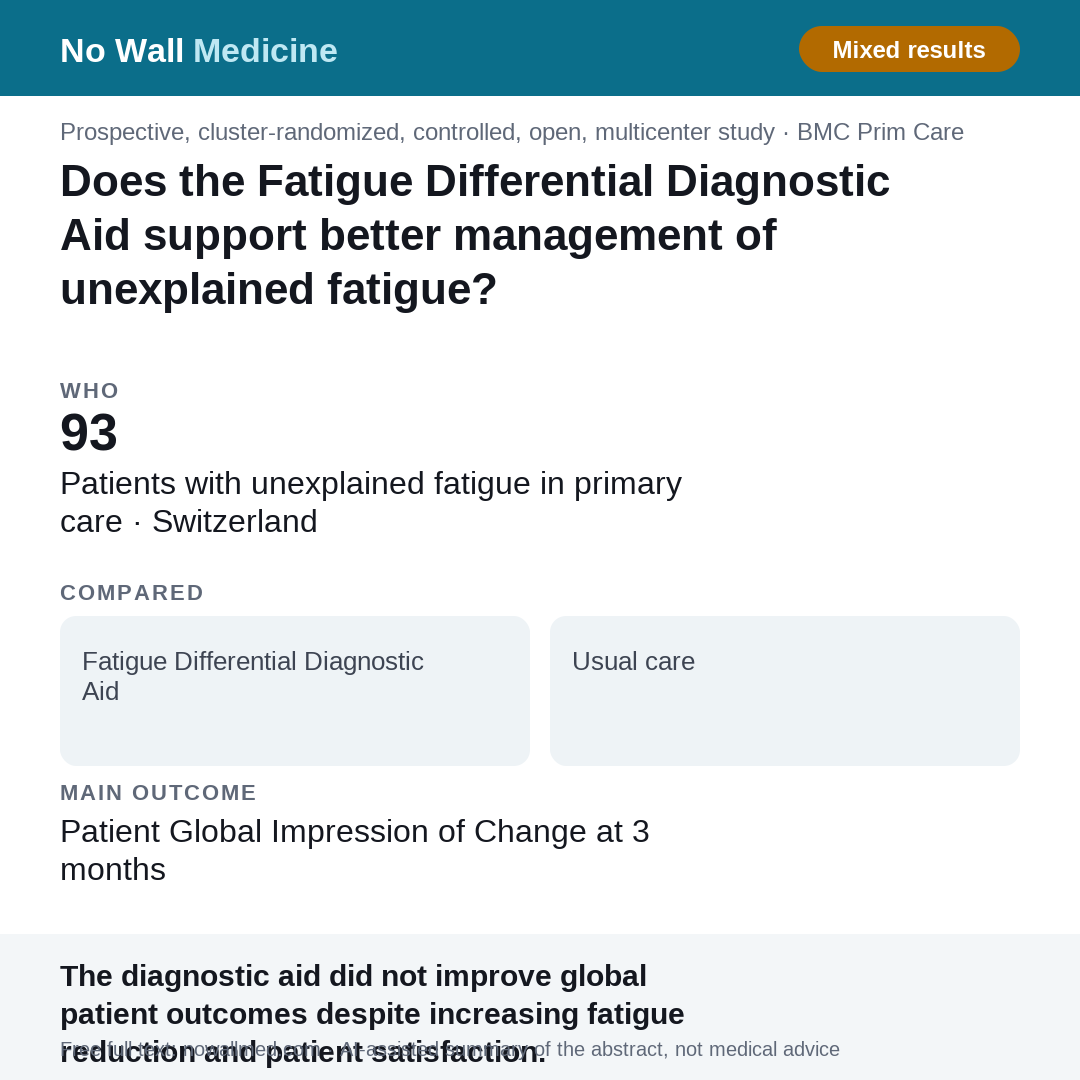
Effects of a novel differential diagnosis aid for managing patients with unexplained fatigue in primary care: a prospective randomized, controlled, open and multicenter study in primary care
Prospective, cluster-randomized, controlled, open, multicenter studyMixed results
Does the Fatigue Differential Diagnostic Aid support better management of unexplained fatigue?
Who
93
Patients with unexplained fatigue in primary care · Switzerland
Compared
Fatigue Differential Diagnostic Aid
Usual care
Main outcome
Patient Global Impression of Change at 3 months
Result: D = 0.06, 95%-CI: -0.41 - -0.53, p = 0.802
Bottom line: The diagnostic aid did not improve global patient outcomes despite increasing fatigue reduction and patient satisfaction.
Limitation: The achieved sample size was less than planned.
BMC Prim Care · 2025-05-24Download image