Visual abstracts
New randomized trials and meta-analyses from leading journals at a glance: who was studied, what was compared, and what was found. Every paper is free to read in full.
All specialtiesCardiology 4876Oncology 4133Gastroenterology & Hepatology 1942Infectious Disease 3833Neurology 1902Psychiatry & Mental Health 2273Pulmonology 2142Critical Care 1364Endocrinology & Diabetes 2579Pediatrics 2980Surgery 2556Orthopedics & Sports Medicine 931Neurosurgery 537Cardiothoracic & Vascular Surgery 674Plastic & Reconstructive Surgery 590Nephrology 1133Rheumatology 823Hematology 1109Dermatology 621Ophthalmology 543Obstetrics & Gynecology 1686Public & Global Health 1058Radiology & Imaging 648Anesthesiology 986Urology 764ENT (Otolaryngology) 503Emergency Medicine 511Allergy & Immunology 313Geriatrics 978Family Medicine & Primary Care 562Medical Genetics & Genomics 676Pathology & Laboratory Medicine 159Physical Medicine & Rehabilitation 757Palliative Care 444Nutrition 1588Digital Health & AI 2197General Medicine 319
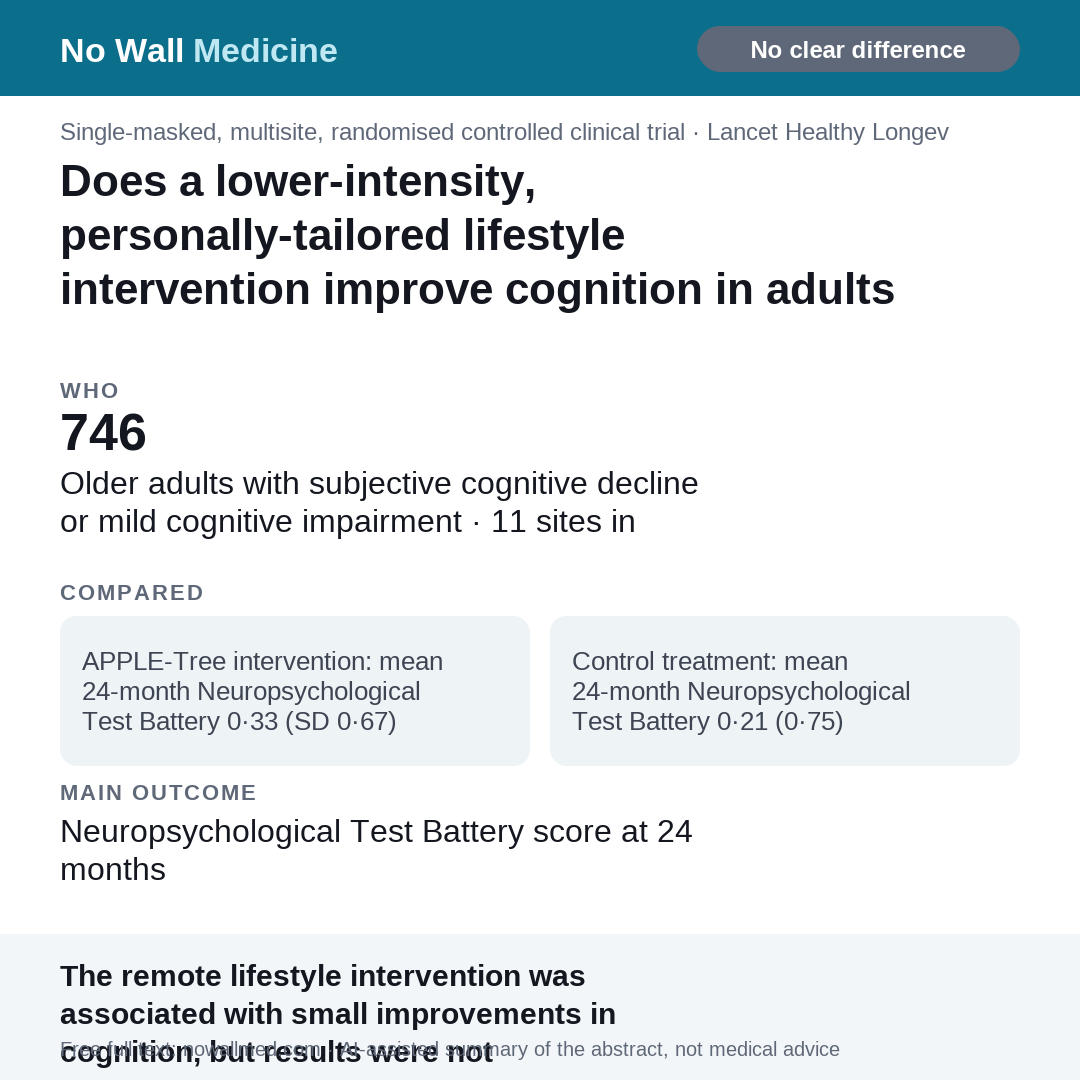
Remote, lower-intensity, multidomain lifestyle intervention for subjective cognitive decline or mild cognitive impairment (APPLE-Tree): a multicentre, single-masked, randomised controlled trial
Single-masked, multisite, randomised controlled clinical trialNo clear difference
Does a lower-intensity, personally-tailored lifestyle intervention improve cognition in adults with cognitive decline?
Who
746
Older adults with subjective cognitive decline or mild cognitive impairment · 11 sites in England
Compared
APPLE-Tree intervention: mean 24-month Neuropsychological Test Battery 0·33 (SD 0·67)
Control treatment: mean 24-month Neuropsychological Test Battery 0·21 (0·75)
Main outcome
Neuropsychological Test Battery score at 24 months
Result: adjusted mean difference 0·06 (95% CI -0·001 to 0·128)
Bottom line: The remote lifestyle intervention was associated with small improvements in cognition, but results were not statistically significant.
Limitation: further work is needed to optimise the intervention for delivery in routine settings
Funded by: Economic and Social Research Council and National Institute for Health and Care Research
Lancet Healthy Longev · 2025-10-20Download image
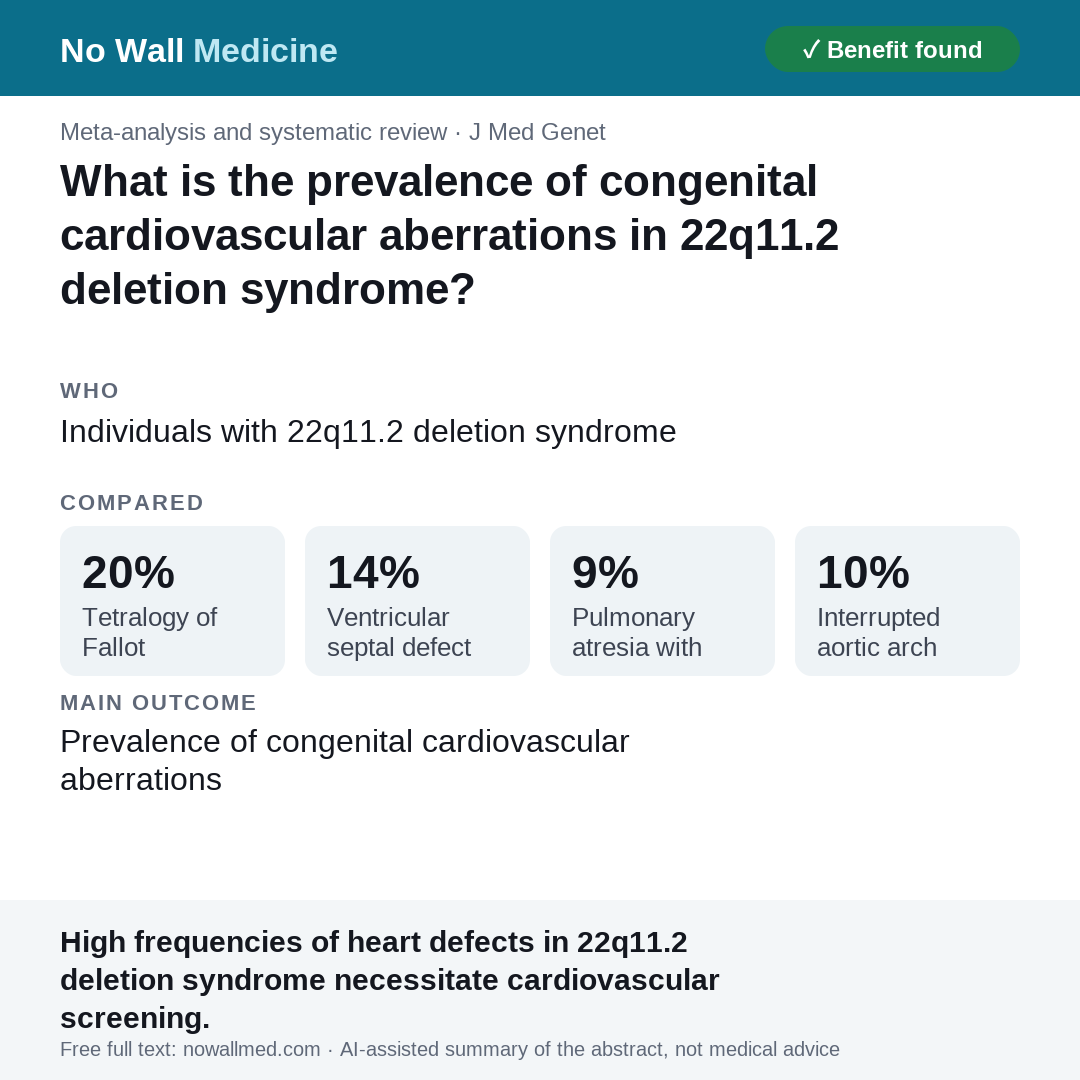
Congenital heart disease in 22q11.2 deletion syndrome: a meta-analysis and systematic review of the literature
Meta-analysis and systematic reviewBenefit found
What is the prevalence of congenital cardiovascular aberrations in 22q11.2 deletion syndrome?
Who
Individuals with 22q11.2 deletion syndrome
Compared
20%Tetralogy of Fallot (95% CI 0.17 to 0.23)
14%Ventricular septal defect (95% CI 0.12 to 0.16)
9%Pulmonary atresia with ventricular septal defect (95% CI 0.06 to 0.12)
10%Interrupted aortic arch (95% CI 0.06 to 0.15)
Main outcome
Prevalence of congenital cardiovascular aberrations
Bottom line: High frequencies of heart defects in 22q11.2 deletion syndrome necessitate cardiovascular screening.
J Med Genet · 2025-10-20Download image
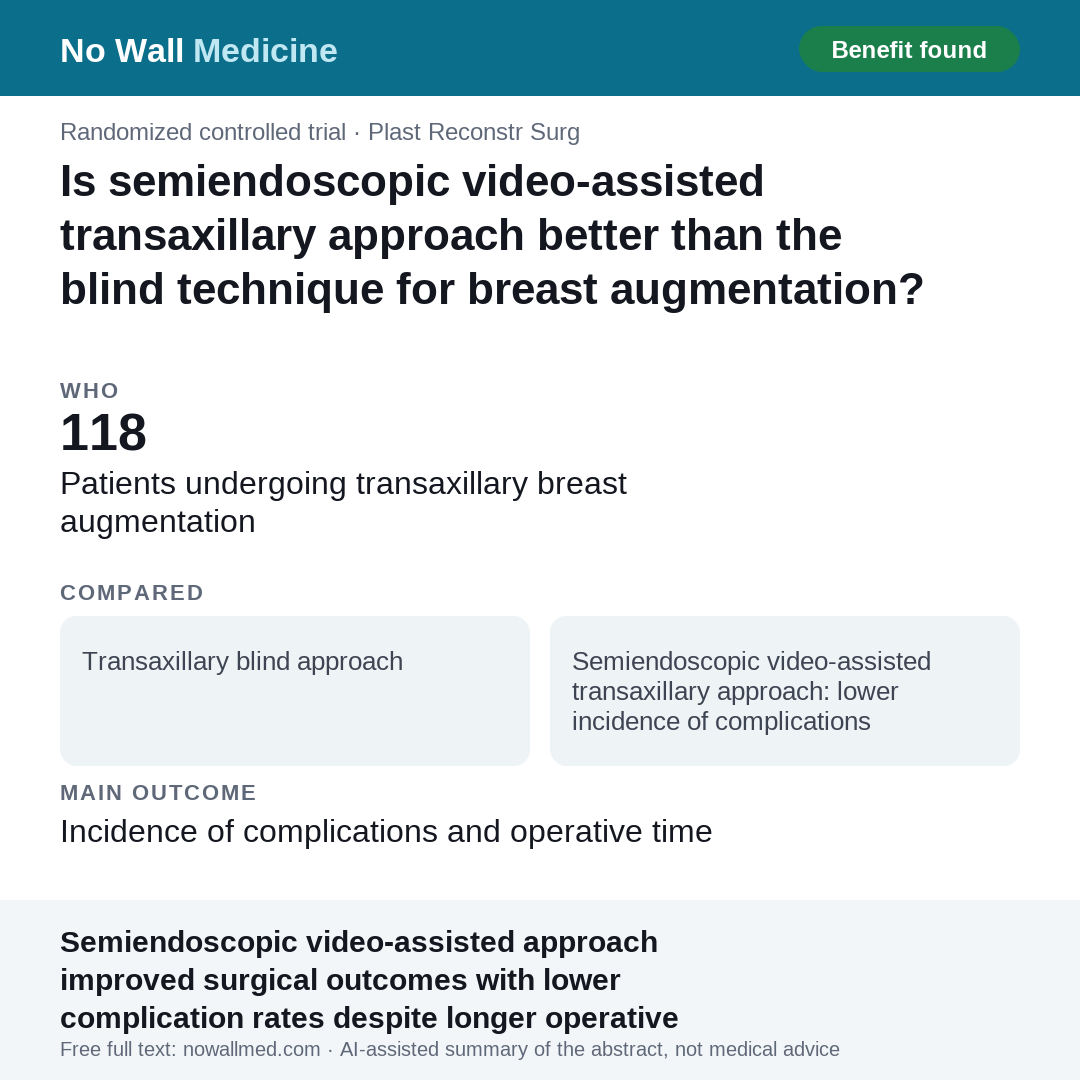
Transaxillary Breast Augmentation: A Randomized Controlled Trial Comparing a New Semiendoscopic Video-Assisted Technique versus the Blind Technique
Randomized controlled trialBenefit found
Is semiendoscopic video-assisted transaxillary approach better than the blind technique for breast augmentation?
Who
118
Patients undergoing transaxillary breast augmentation
Compared
Transaxillary blind approach
Semiendoscopic video-assisted transaxillary approach: lower incidence of complications
Main outcome
Incidence of complications and operative time
Bottom line: Semiendoscopic video-assisted approach improved surgical outcomes with lower complication rates despite longer operative times.
Plast Reconstr Surg · 2025-10-20Download image
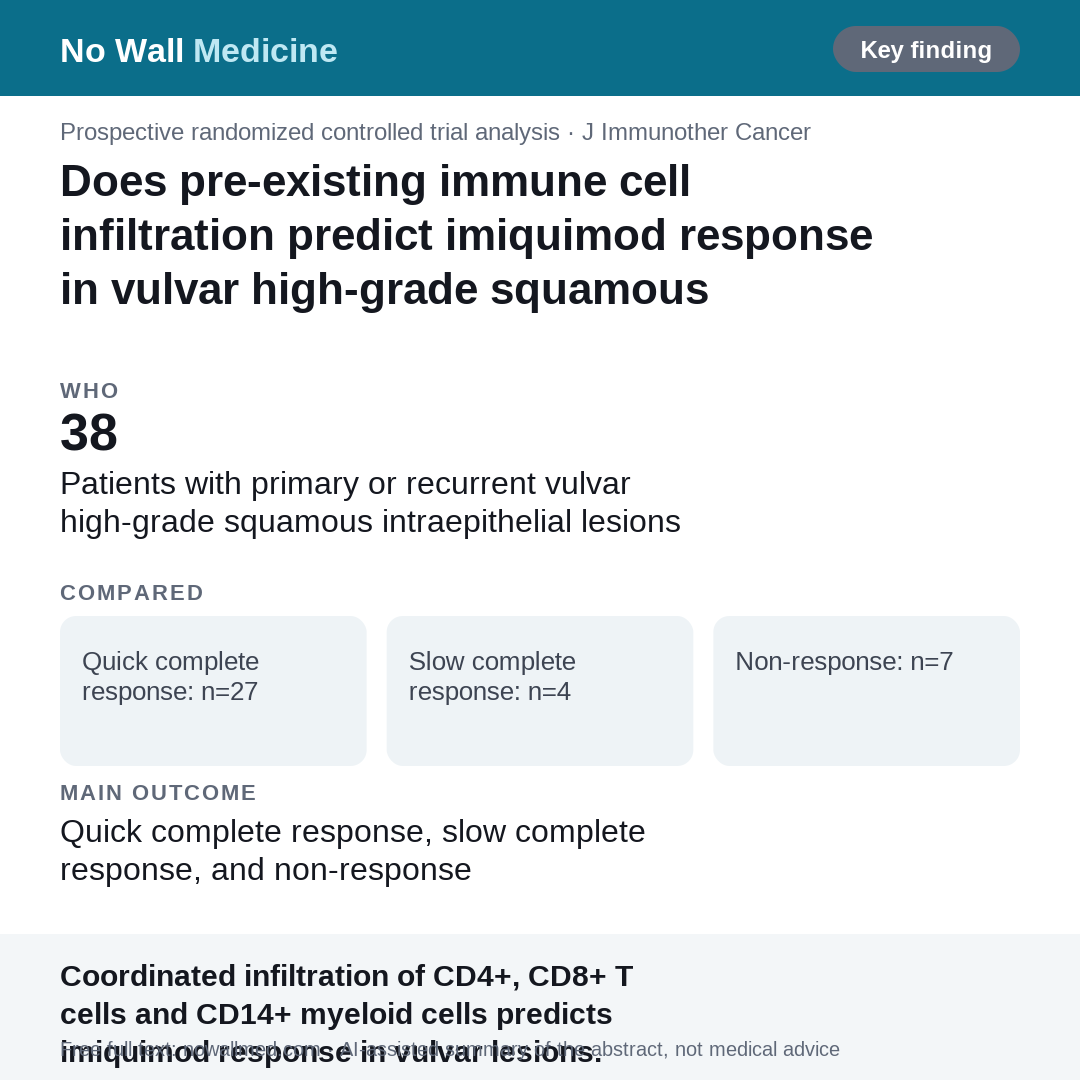
Pre-existing infiltration with T cells and CD14+ myeloid cells is associated with treatment response to imiquimod in primary and recurrent vulvar high-grade squamous intraepithelial lesions
Prospective randomized controlled trial analysisBenefit found
Does pre-existing immune cell infiltration predict imiquimod response in vulvar high-grade squamous intraepithelial lesions?
Who
38
Patients with primary or recurrent vulvar high-grade squamous intraepithelial lesions
Compared
Quick complete response: n=27
Slow complete response: n=4
Non-response: n=7
Main outcome
Quick complete response, slow complete response, and non-response
Bottom line: Coordinated infiltration of CD4+, CD8+ T cells and CD14+ myeloid cells predicts imiquimod response in vulvar lesions.
J Immunother Cancer · 2025-10-20Download image
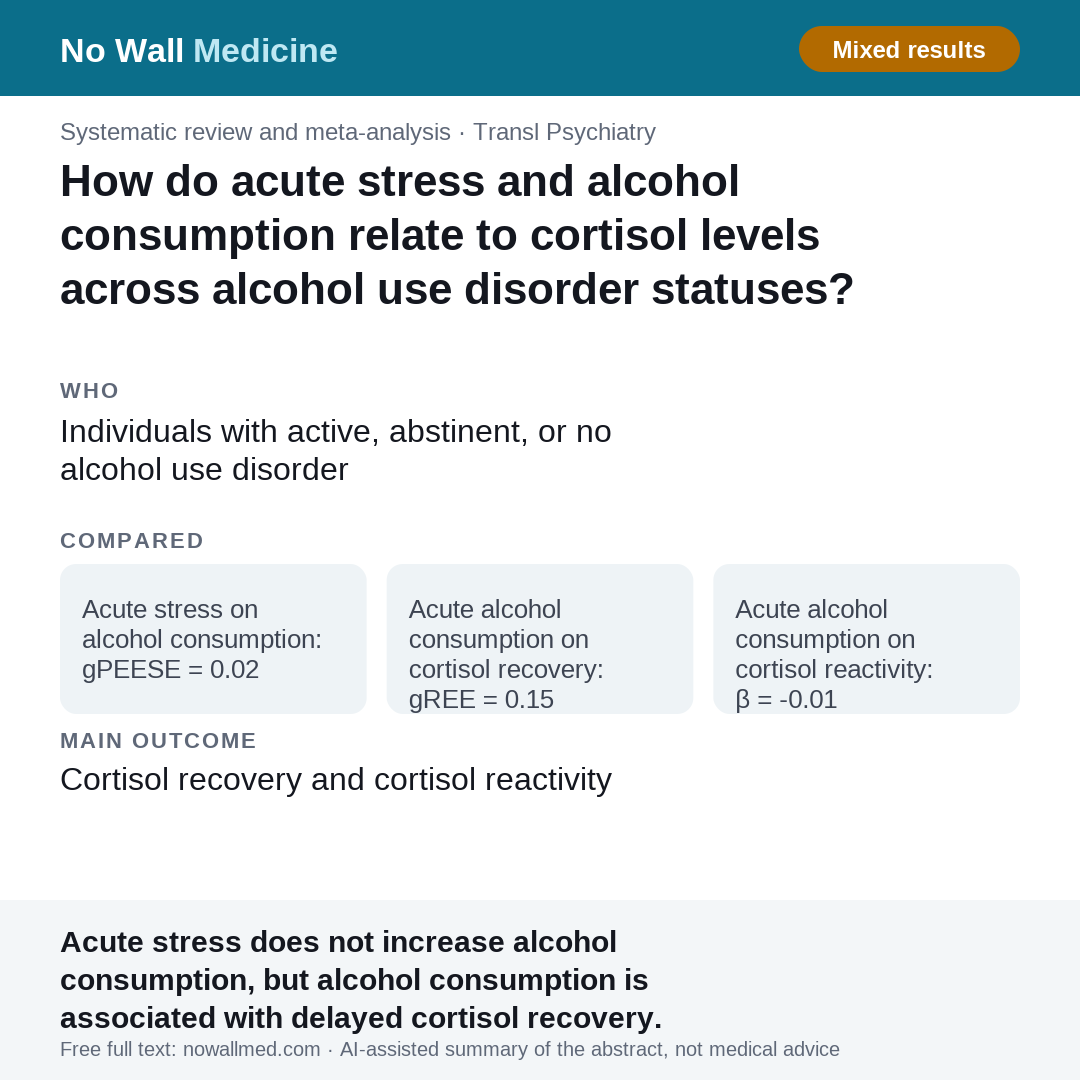
A systematic review with meta-analysis on the relation between acute stress, alcohol consumption and cortisol levels in individuals with a personal, familial or no alcohol use disorder
Systematic review and meta-analysisMixed results
How do acute stress and alcohol consumption relate to cortisol levels across alcohol use disorder statuses?
Who
Individuals with active, abstinent, or no alcohol use disorder
Compared
Acute stress on alcohol consumption: gPEESE = 0.02
Acute alcohol consumption on cortisol recovery: gREE = 0.15
Acute alcohol consumption on cortisol reactivity: β = -0.01
Main outcome
Cortisol recovery and cortisol reactivity
Bottom line: Acute stress does not increase alcohol consumption, but alcohol consumption is associated with delayed cortisol recovery.
Limitation: Small-study effects influenced initial findings regarding stress and alcohol consumption.
Transl Psychiatry · 2025-10-20Download image
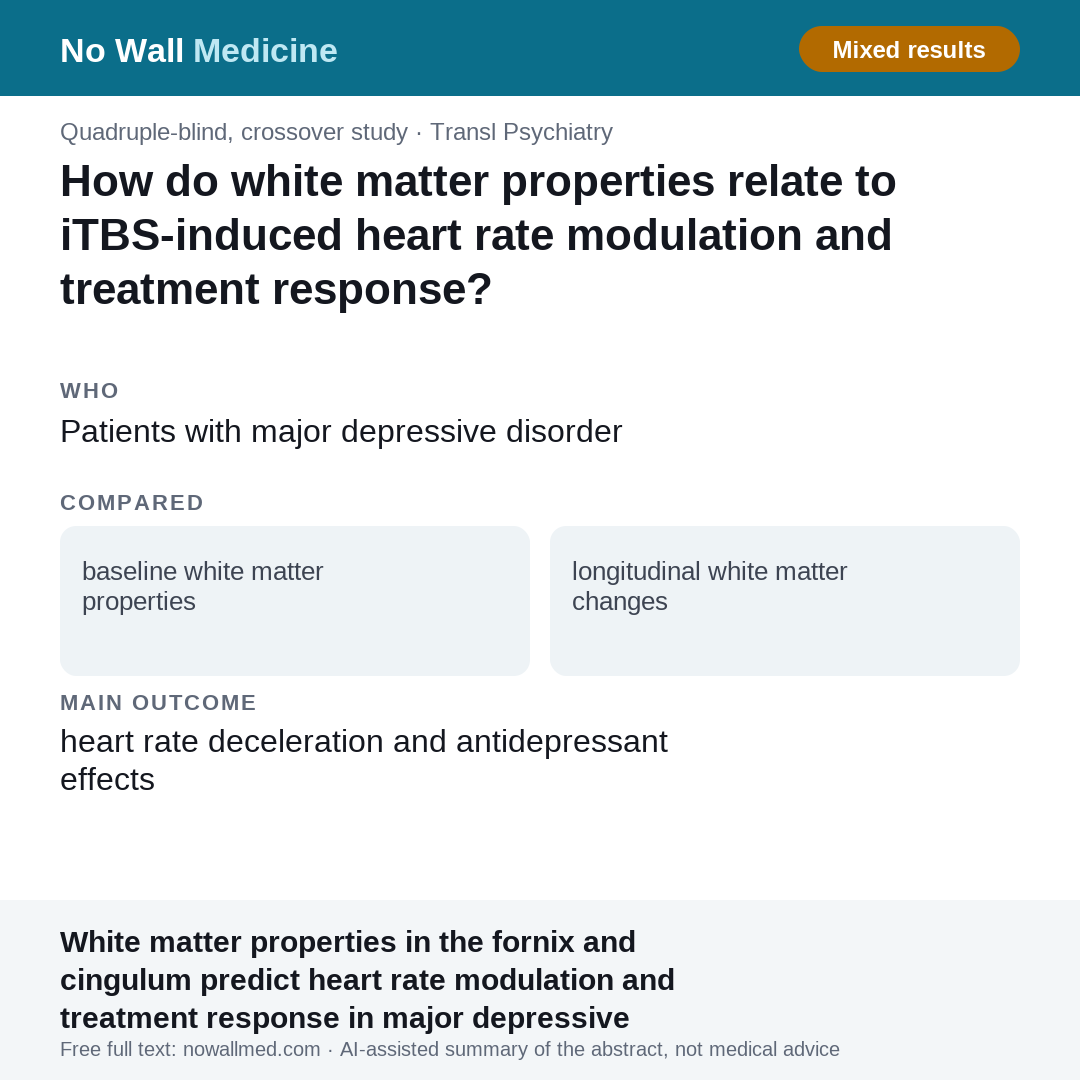
White matter tracts associated with iTBS-induced heart rate deceleration and treatment response in major depressive disorder
Quadruple-blind, crossover studyMixed results
How do white matter properties relate to iTBS-induced heart rate modulation and treatment response?
Who
Patients with major depressive disorder
Compared
baseline white matter properties
longitudinal white matter changes
Main outcome
heart rate deceleration and antidepressant effects
Bottom line: White matter properties in the fornix and cingulum predict heart rate modulation and treatment response in major depressive disorder.
Transl Psychiatry · 2025-10-20Download image
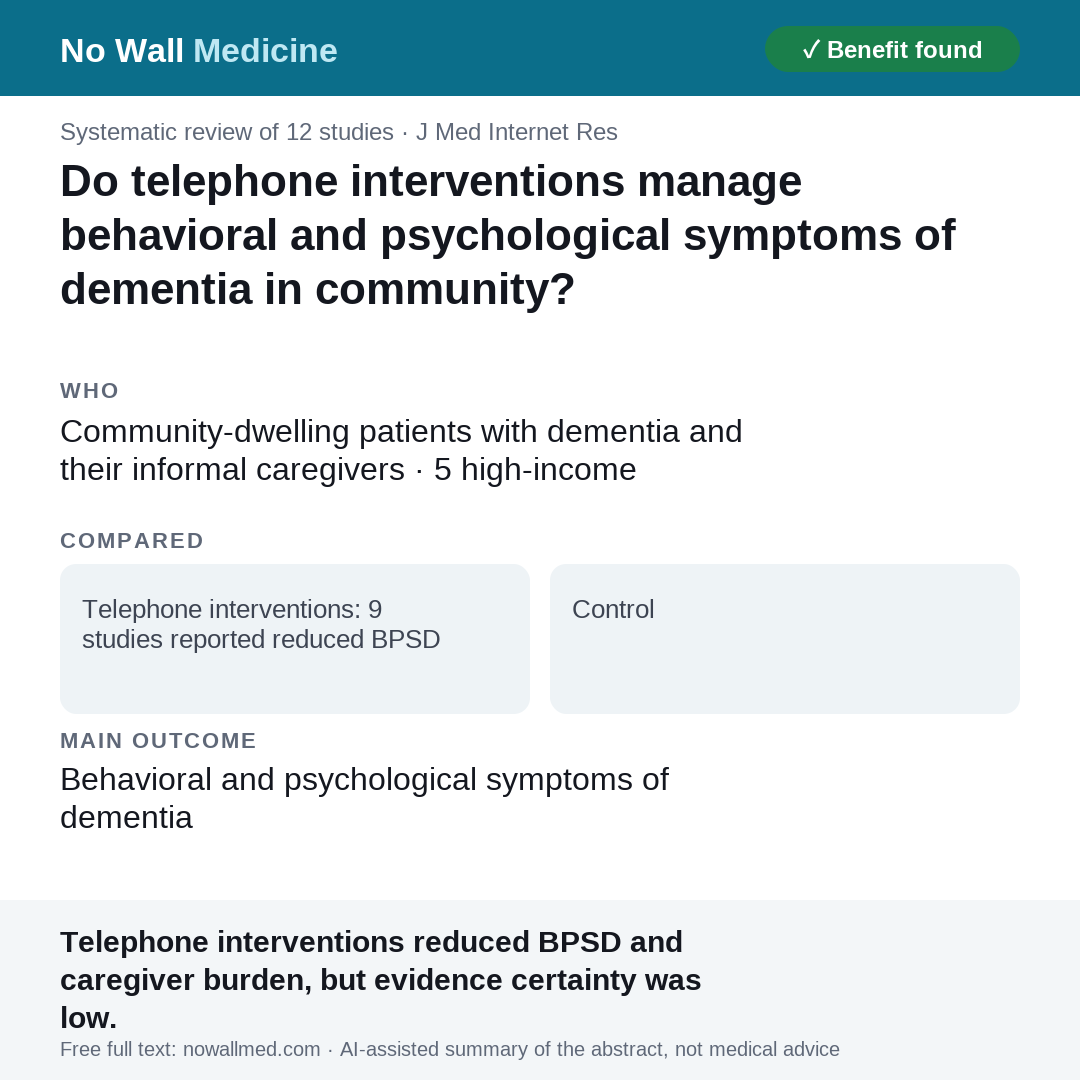
Effectiveness of Telephone Interventions for the Management of Behavioral and Psychological Symptoms of Dementia in the Community: Systematic Review
Systematic reviewBenefit found
Are telephone interventions effective for managing behavioral and psychological symptoms of dementia?
Who
Community-dwelling patients with dementia and their informal caregivers · 5 high-income countries
Compared
Telephone interventions
Control
Main outcome
Behavioral and psychological symptoms of dementia and caregiver burden
Bottom line: Telephone interventions show promise for reducing symptoms and caregiver burden, but the certainty of evidence is low.
Limitation: The certainty of evidence was rated as low according to the GRADE analysis.
J Med Internet Res · 2025-10-20Download image
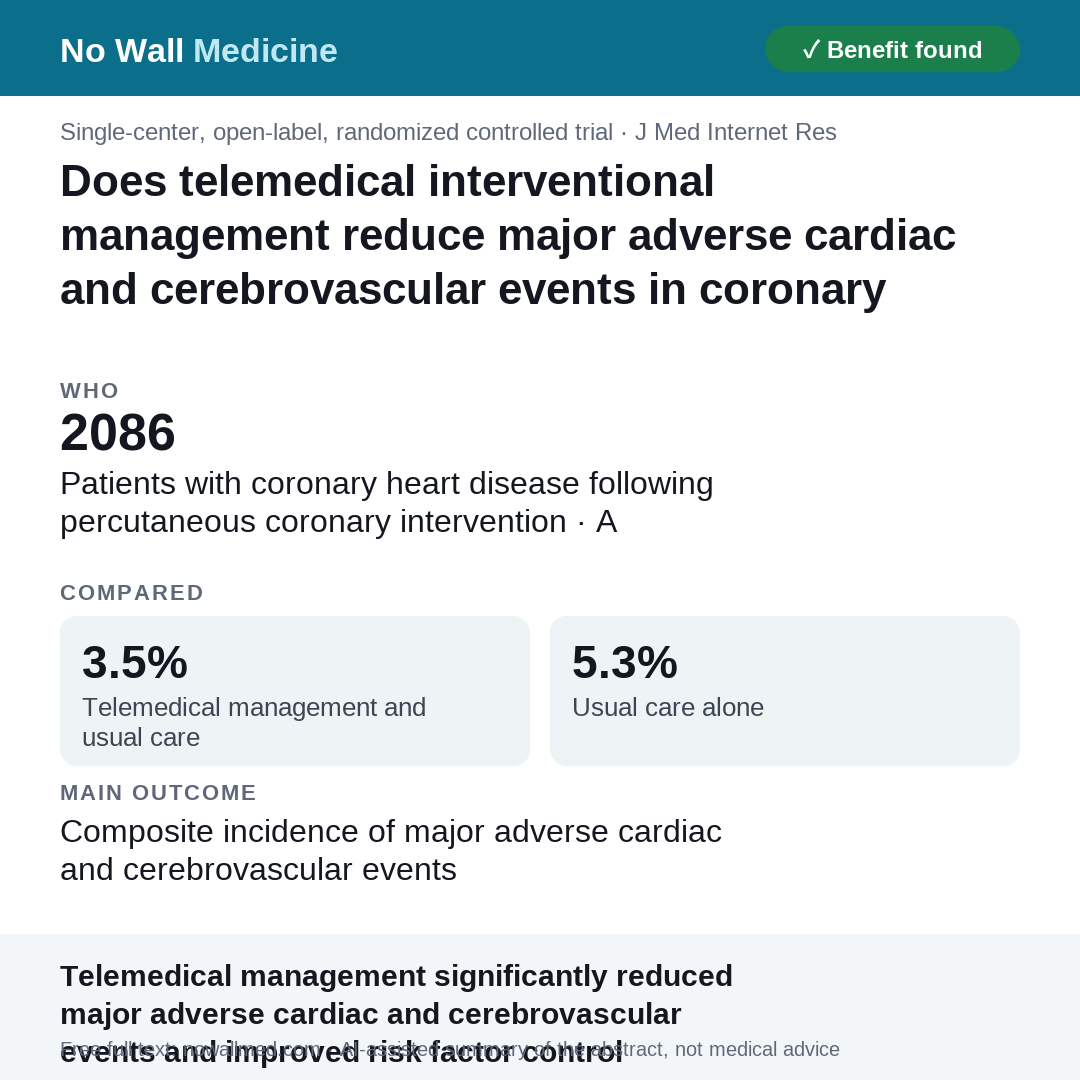
Efficacy of Telemedical Interventional Management in Patients with Coronary Heart Disease Undergoing Percutaneous Coronary Intervention: Randomized Controlled Trial
Single-center, open-label, randomized controlled trialBenefit found
Does telemedical interventional management reduce major adverse cardiac and cerebrovascular events in coronary heart disease patients?
Who
2086
Patients with coronary heart disease following percutaneous coronary intervention · A tertiary hospital in China
Compared
3.5%Telemedical management and usual care (36/1040)
5.3%Usual care alone (55/1046)
Main outcome
Composite incidence of major adverse cardiac and cerebrovascular events
Bottom line: Telemedical management significantly reduced major adverse cardiac and cerebrovascular events and improved risk factor control after percutaneous coronary intervention.
Limitation: Further multicenter studies are necessary to validate these results.
J Med Internet Res · 2025-10-20Download image
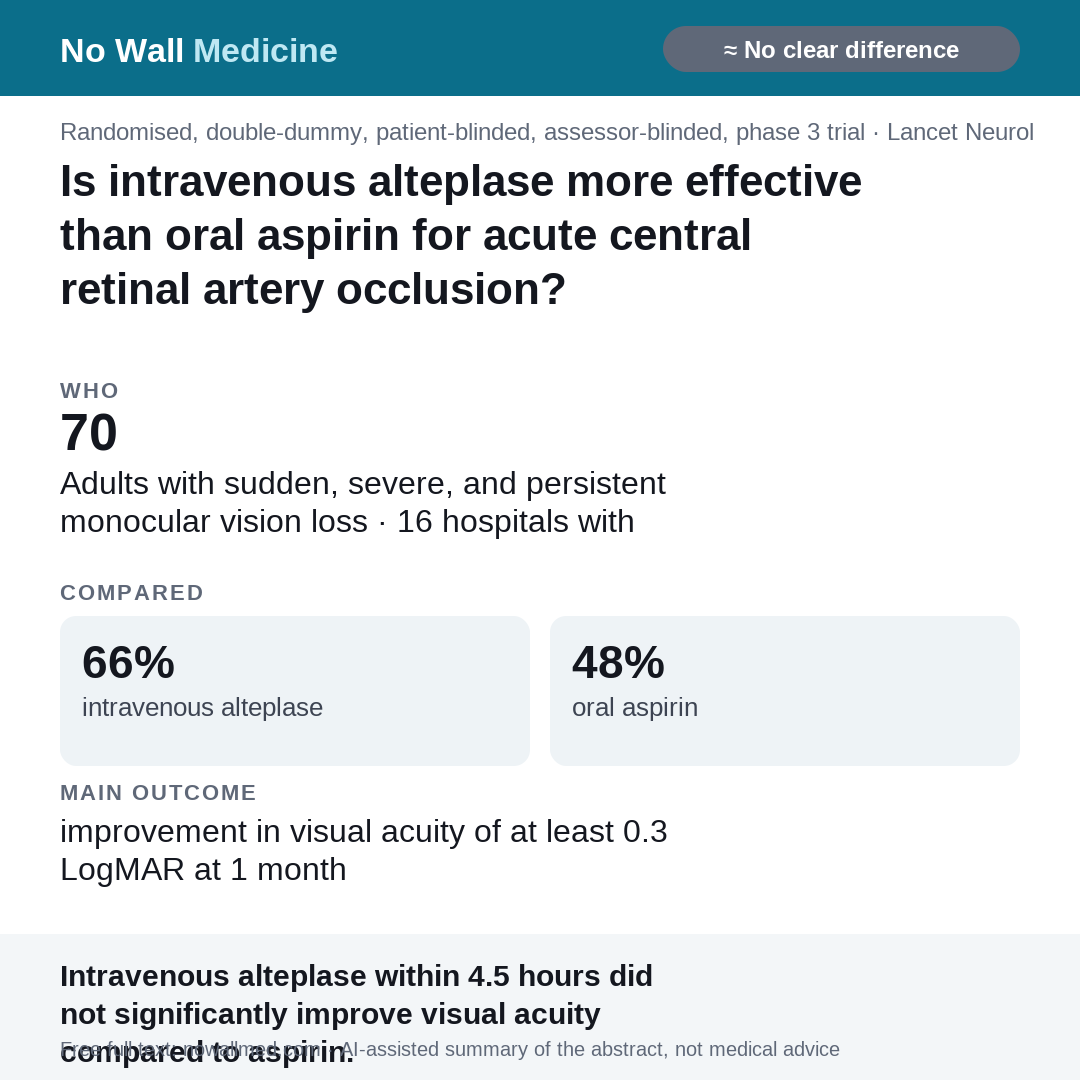
Intravenous alteplase versus oral aspirin for acute central retinal artery occlusion within 4·5 h of severe vision loss (THEIA): a multicentre, double-dummy, patient-blinded and assessor-blinded, randomised, controlled, phase 3 trial
Randomised, double-dummy, patient-blinded, assessor-blinded, phase 3 trialNo clear difference
Is intravenous alteplase more effective than oral aspirin for acute central retinal artery occlusion?
Who
70
Adults with sudden, severe, and persistent monocular vision loss · 16 hospitals with stroke units in France
Compared
66%intravenous alteplase (19/29)
48%oral aspirin (13/27)
Main outcome
improvement in visual acuity of at least 0.3 LogMAR at 1 month
Result: unadjusted risk difference 17.4 (95% CI -11.8 to 46.5)
Bottom line: Intravenous alteplase within 4.5 hours did not significantly improve visual acuity compared to aspirin.
Limitation: The study was likely underpowered to detect a statistical difference.
Funded by: French Ministry of Health and Boehringer Ingelheim, France
Lancet Neurol · 2025-10-19Download image
When are postpartum haemorrhages diagnosed? A nested observational study within the E-MOTIVE cluster-randomised trial
Nested observational studyMixed results
How does postpartum haemorrhage diagnosis timing and method vary across four African countries?
Who
2578
Postpartum women at 39 hospitals · Nigeria, Kenya, Tanzania, and South Africa
Compared
Nigeria and Tanzania: 15 min
Kenya: 17 min
South Africa: 30 min
Main outcome
Median time from vaginal birth to postpartum haemorrhage diagnosis
Bottom line: Diagnosis timing was faster in countries using a 300 mL threshold with clinical signs compared to a 500 mL threshold.
Funded by: Bill & Melinda Gates Foundation and Ammalife
Lancet Glob Health · 2025-10-19Download image

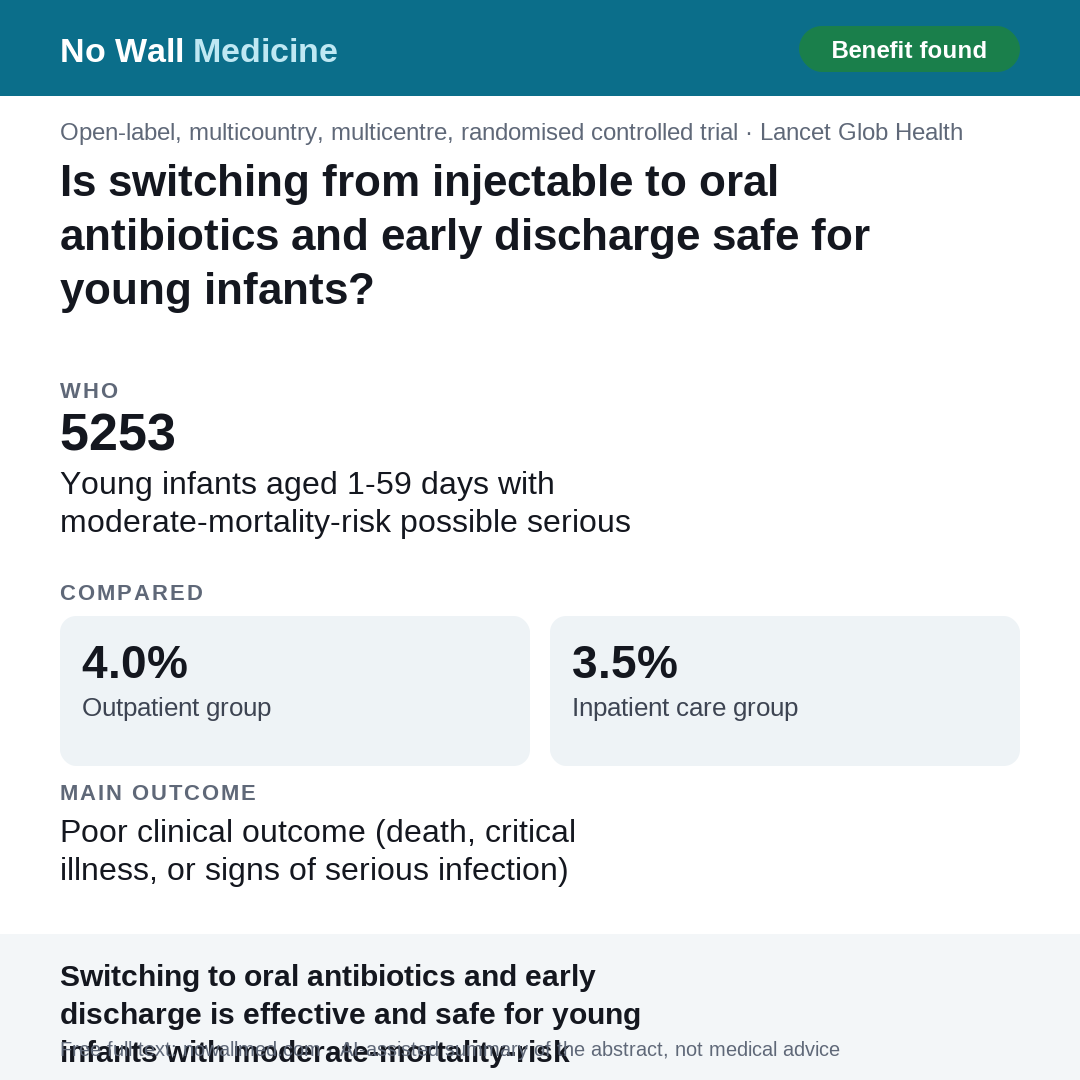
Switching antibiotic therapy from injectable to oral to optimise the duration of inpatient care for young infants presenting with moderate-mortality-risk signs of possible serious bacterial infection: an open-label, multicountry, randomised controlled trial
Open-label, multicountry, multicentre, randomised controlled trialBenefit found
Is switching from injectable to oral antibiotics and early discharge safe for young infants?
Who
5253
Young infants aged 1-59 days with moderate-mortality-risk possible serious bacterial infection signs · Bangladesh, Ethiopia, India, Nigeria, Pakistan, and Tanzania
Compared
4.0%Outpatient group (105 of 2616)
3.5%Inpatient care group (90 of 2603)
Main outcome
Poor clinical outcome (death, critical illness, or signs of serious infection)
Result: risk difference 0.0056 (95% CI -0.0047 to 0.0158)
Bottom line: Switching to oral antibiotics and early discharge is effective and safe for young infants with moderate-mortality-risk possible serious bacterial infection.
Funded by: Gates Foundation
Lancet Glob Health · 2025-10-19Download image
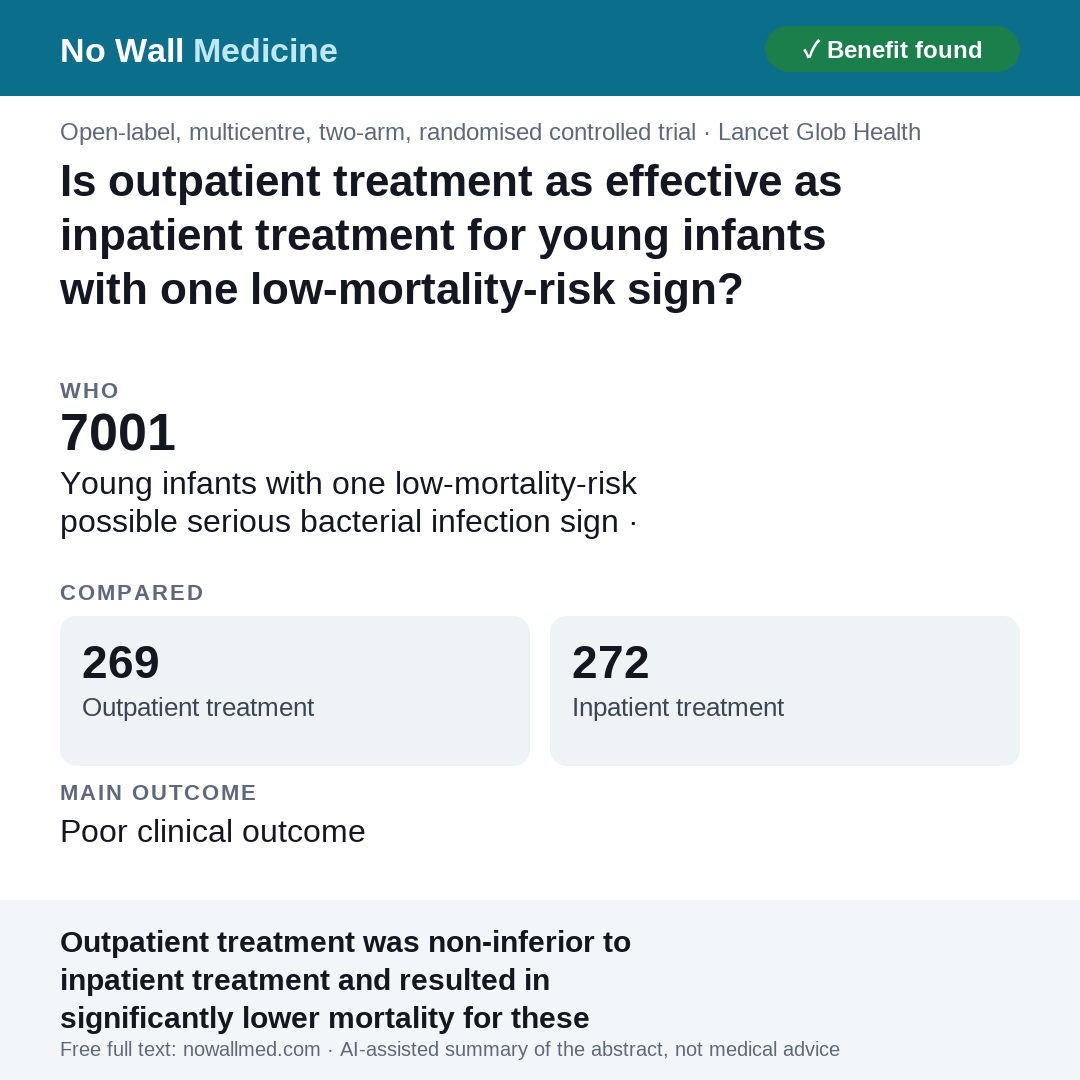
Inpatient versus outpatient management of young infants with a single low-mortality-risk sign of possible serious bacterial infection in sub-Saharan Africa and south Asia: an open-label, multicentre, two-arm, randomised controlled trial
Open-label, multicentre, two-arm, randomised controlled trialBenefit found
Is outpatient treatment as effective as inpatient treatment for young infants with one low-mortality-risk sign?
Who
7001
Young infants with one low-mortality-risk possible serious bacterial infection sign · Seven sites in Bangladesh, Ethiopia, India, Nigeria, Pakistan, and Tanzania
Compared
269Outpatient treatment (7·7%)
272Inpatient treatment (7·8%)
Main outcome
Poor clinical outcome
Result: risk difference -0·0009 (95% CI -0·0134 to 0·0116)
Bottom line: Outpatient treatment was non-inferior to inpatient treatment and resulted in significantly lower mortality for these infants.
Funded by: Bill and Melinda Gates Foundation
Lancet Glob Health · 2025-10-19Download image
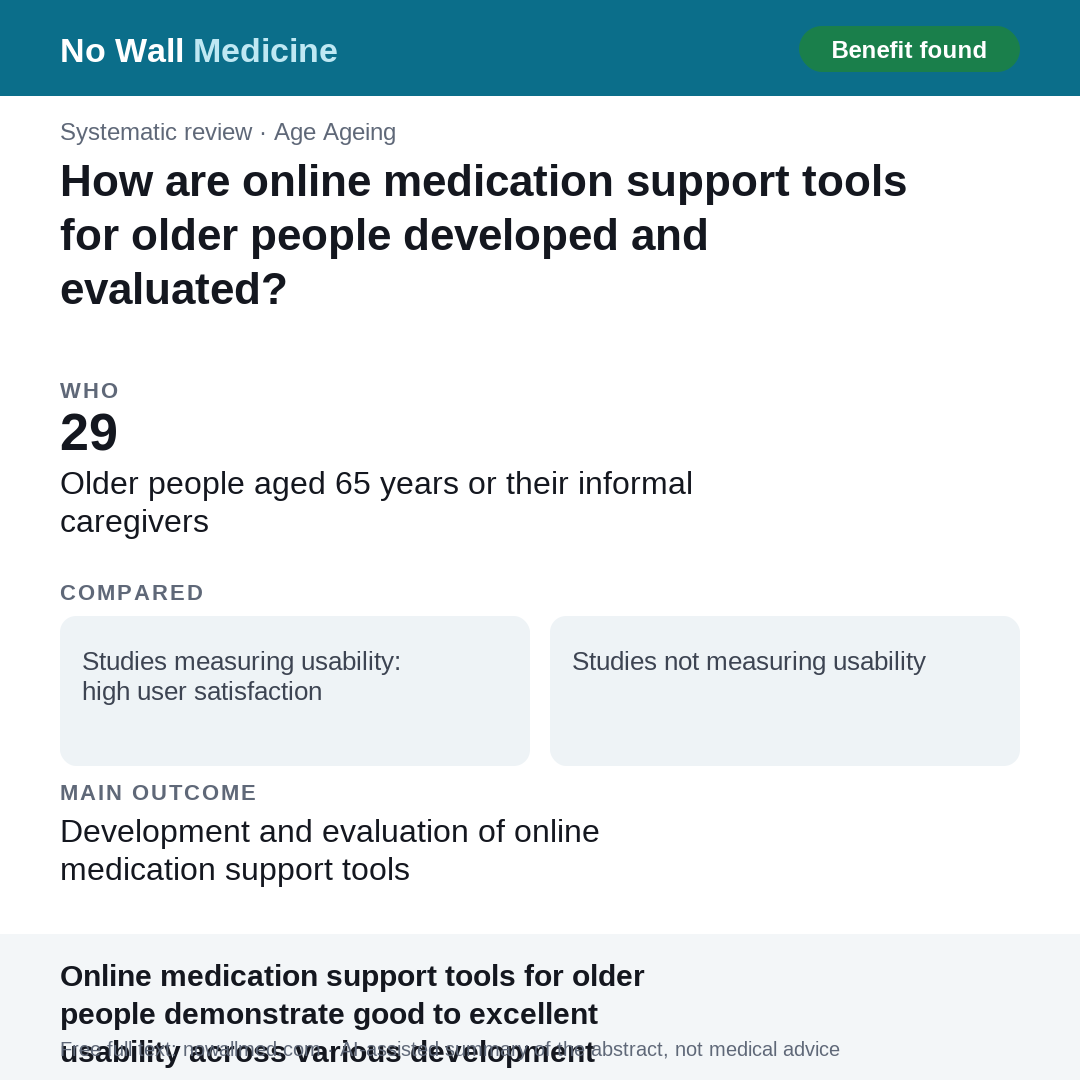
Development and evaluation of online medication support tools for older people: a systematic review
Systematic reviewBenefit found
How are online medication support tools for older people developed and evaluated?
Who
29
Older people aged 65 years or their informal caregivers
Compared
Studies measuring usability: high user satisfaction
Studies not measuring usability
Main outcome
Development and evaluation of online medication support tools
Bottom line: Online medication support tools for older people demonstrate good to excellent usability across various development methodologies.
Age Ageing · 2025-10-19Download image
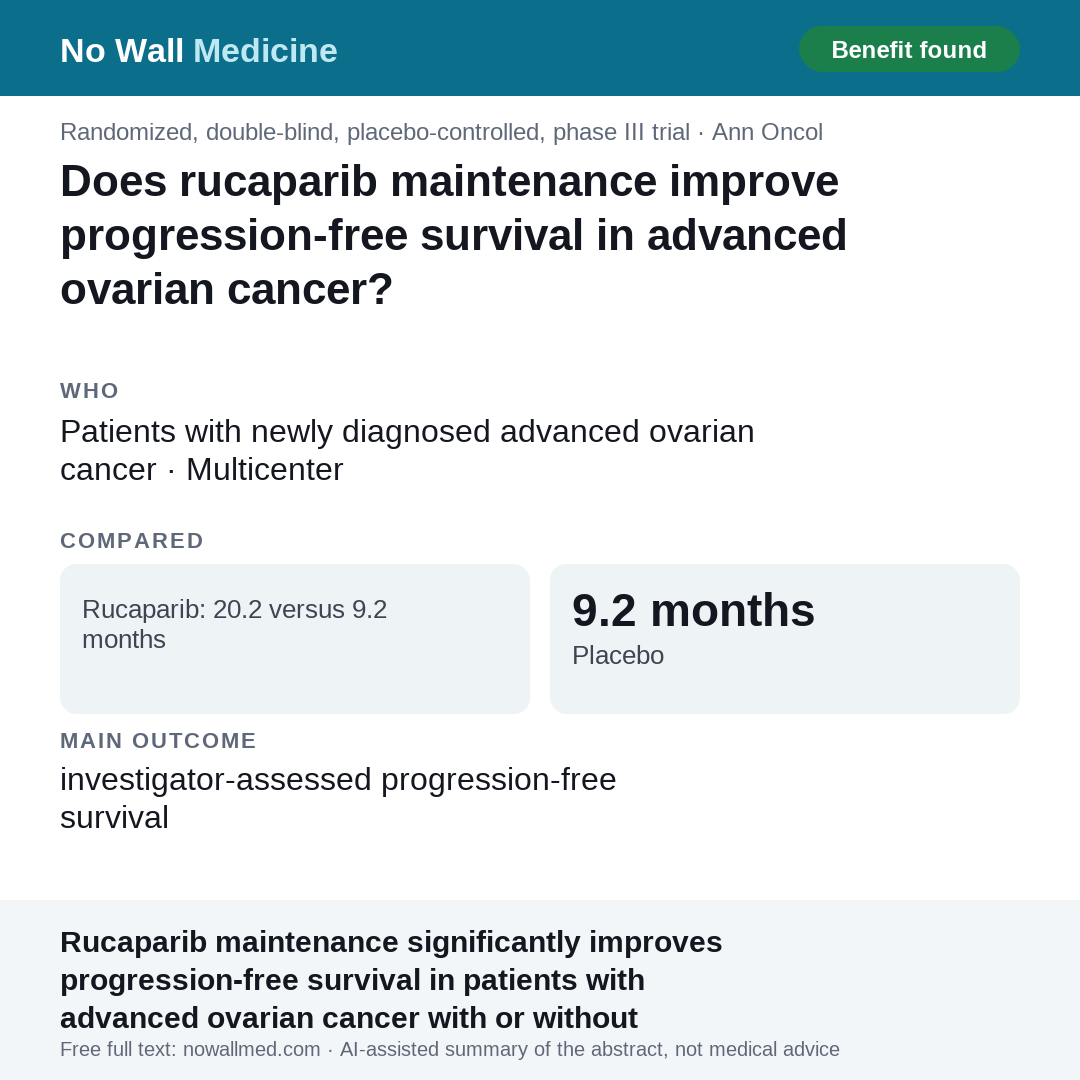
Rucaparib maintenance for newly diagnosed advanced ovarian cancer: interim overall survival, progression-free survival, and safety at 5 years of follow-up from the phase III ATHENA-MONO/GOG-3020/ENGOT-ov45 study
Randomized, double-blind, placebo-controlled, phase III trialBenefit found
Does rucaparib maintenance improve progression-free survival in advanced ovarian cancer?
Who
Patients with newly diagnosed advanced ovarian cancer · Multicenter
Compared
Rucaparib: 20.2 versus 9.2 months
9.2 monthsPlacebo
Main outcome
investigator-assessed progression-free survival
Result: hazard ratio 0.53 (95% CI 0.42 to 0.69)
Bottom line: Rucaparib maintenance significantly improves progression-free survival in patients with advanced ovarian cancer with or without homologous recombination deficiency.
Ann Oncol · 2025-10-18Download image
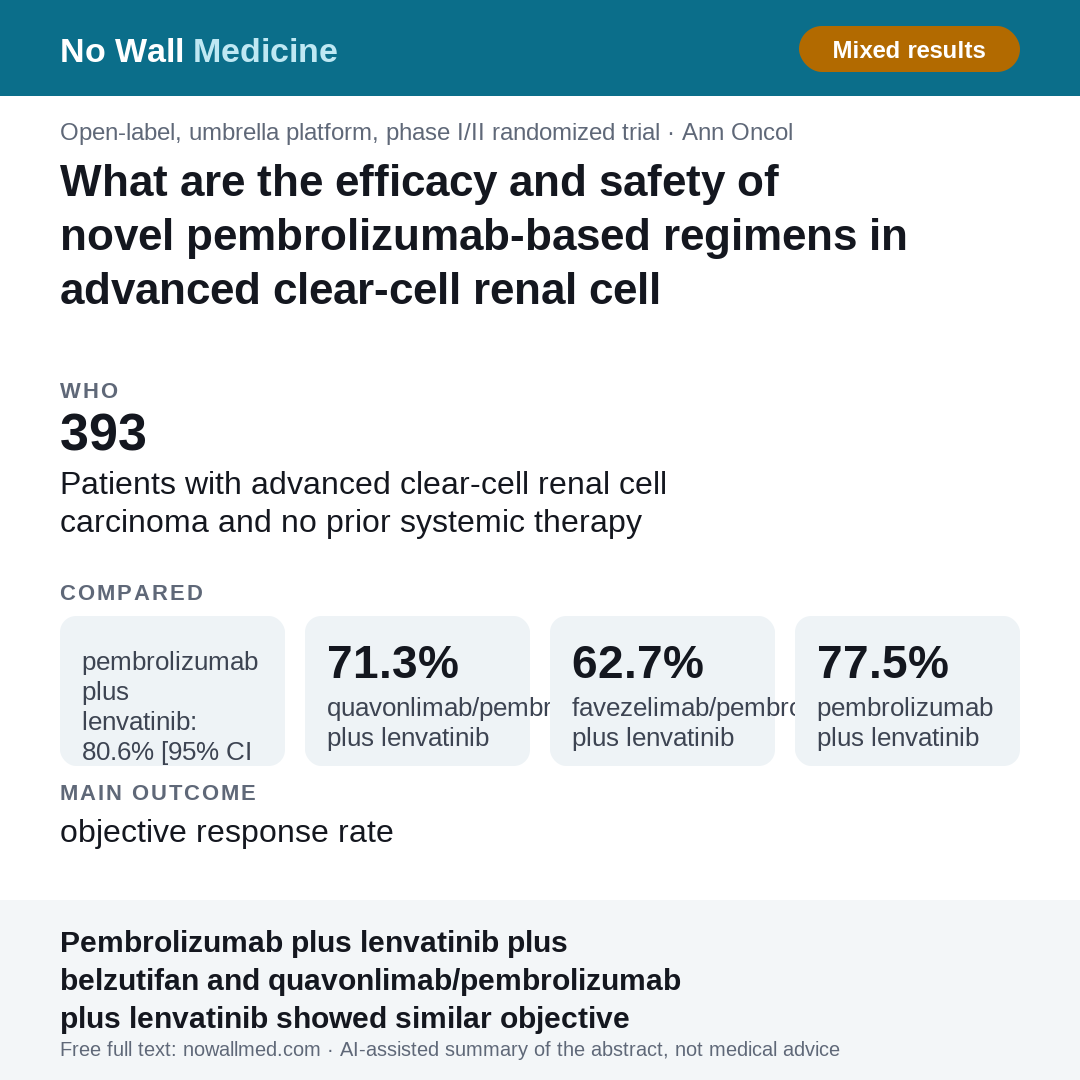
Novel pembrolizumab-based treatments as first-line therapy in advanced clear-cell renal cell carcinoma: substudy 03A of the open-label, umbrella platform, phase I/II KEYMAKER-U03 trial
Open-label, umbrella platform, phase I/II randomized trialMixed results
What are the efficacy and safety of novel pembrolizumab-based regimens in advanced clear-cell renal cell carcinoma?
Who
393
Patients with advanced clear-cell renal cell carcinoma and no prior systemic therapy
Compared
pembrolizumab plus lenvatinib: 80.6% [95% CI 68.6% to 89.6%]
71.3%quavonlimab/pembrolizumab plus lenvatinib (95% CI 60.0% to 80.8%)
62.7%favezelimab/pembrolizumab plus lenvatinib (95% CI 48.1% to 75.9%)
77.5%pembrolizumab plus lenvatinib plus belzutifan (95% CI 66.8% to 86.1%)
Main outcome
objective response rate
Bottom line: Pembrolizumab plus lenvatinib plus belzutifan and quavonlimab/pembrolizumab plus lenvatinib showed similar objective response rates to the reference treatment.
Ann Oncol · 2025-10-18Download image
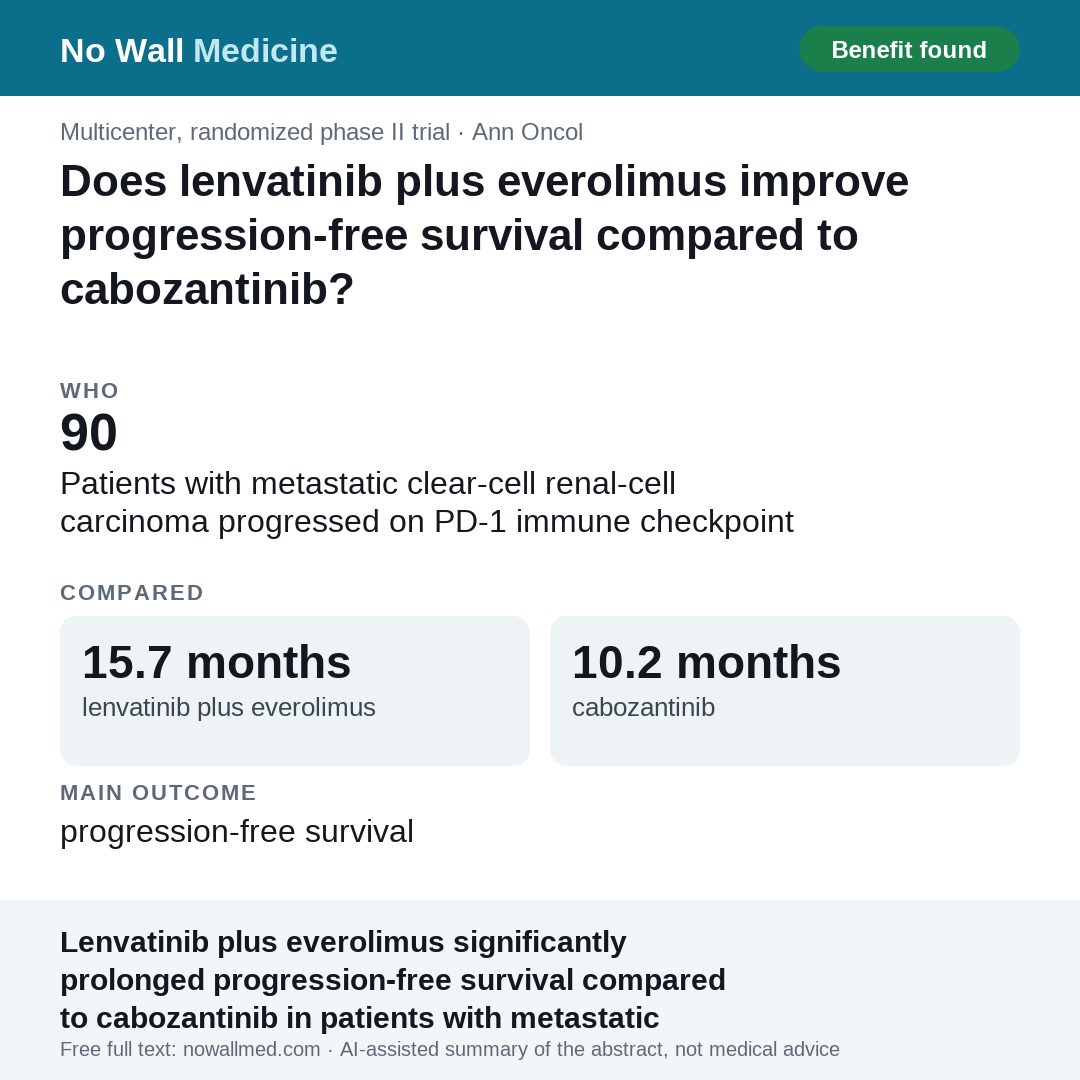
A multicenter randomized phase II trial of lenvatinib plus everolimus versus cabozantinib in patients with metastatic clear-cell RCC that progressed on PD-1 immune checkpoint inhibition (LenCabo)
Multicenter, randomized phase II trialBenefit found
Does lenvatinib plus everolimus improve progression-free survival compared to cabozantinib?
Who
90
Patients with metastatic clear-cell renal-cell carcinoma progressed on PD-1 immune checkpoint inhibition
Compared
15.7 monthslenvatinib plus everolimus
10.2 monthscabozantinib
Main outcome
progression-free survival
Result: hazard ratio 0.51, 95% confidence interval (CI) 0.29-0.89
Bottom line: Lenvatinib plus everolimus significantly prolonged progression-free survival compared to cabozantinib in patients with metastatic clear-cell renal-cell carcinoma.
Ann Oncol · 2025-10-18Download image
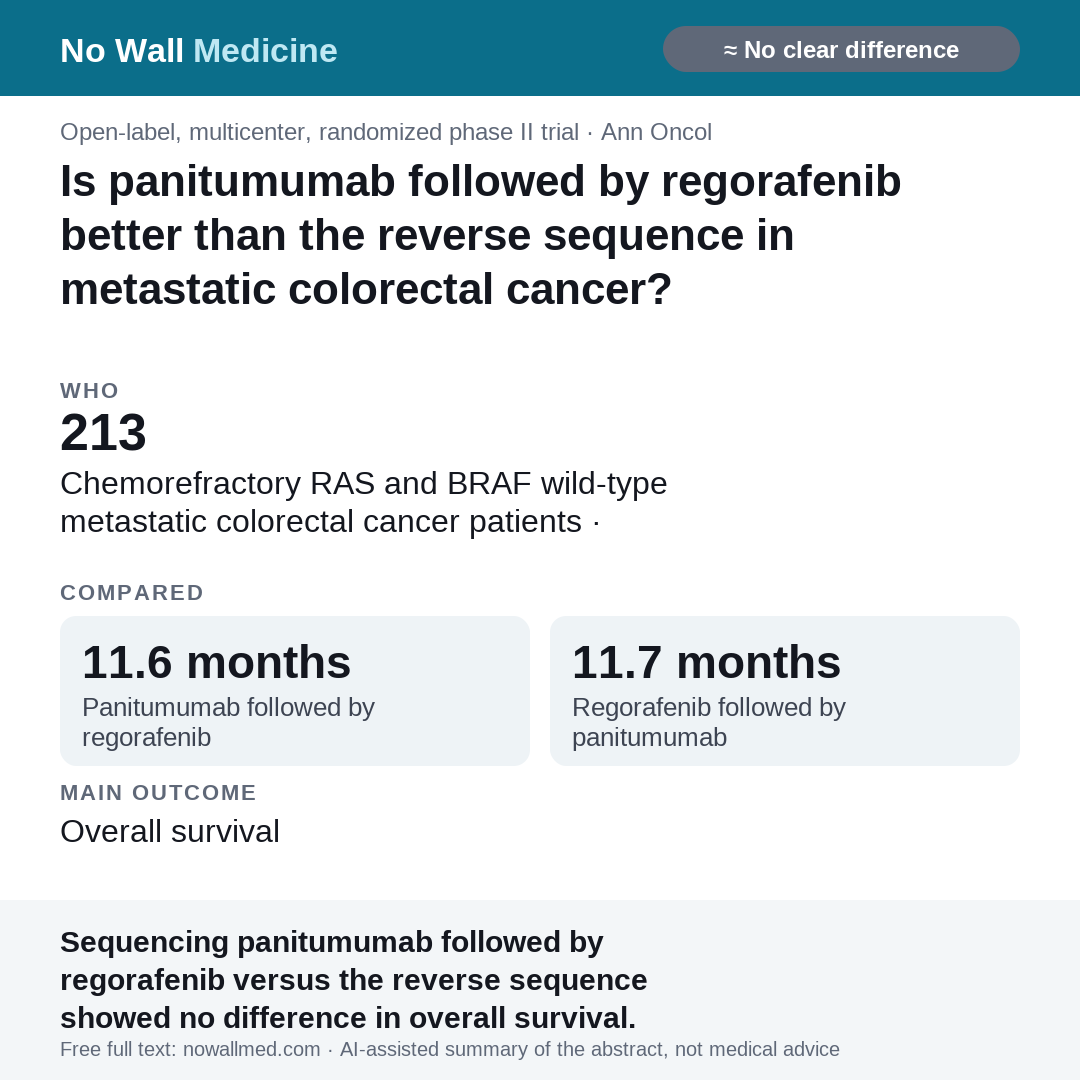
Re-treatment with panitumumab followed by regorafenib versus the reverse sequence in chemorefractory metastatic colorectal cancer patients with RAS and BRAF wild-type circulating tumor DNA: the PARERE study by GONO
Open-label, multicenter, randomized phase II trialNo clear difference
Is panitumumab followed by regorafenib better than the reverse sequence in metastatic colorectal cancer?
Who
213
Chemorefractory RAS and BRAF wild-type metastatic colorectal cancer patients · Multicenter
Compared
11.6 monthsPanitumumab followed by regorafenib
11.7 monthsRegorafenib followed by panitumumab
Main outcome
Overall survival
Result: hazard ratio 1.13, 85% confidence interval 0.90-1.41
Bottom line: Sequencing panitumumab followed by regorafenib versus the reverse sequence showed no difference in overall survival.
Ann Oncol · 2025-10-18Download image
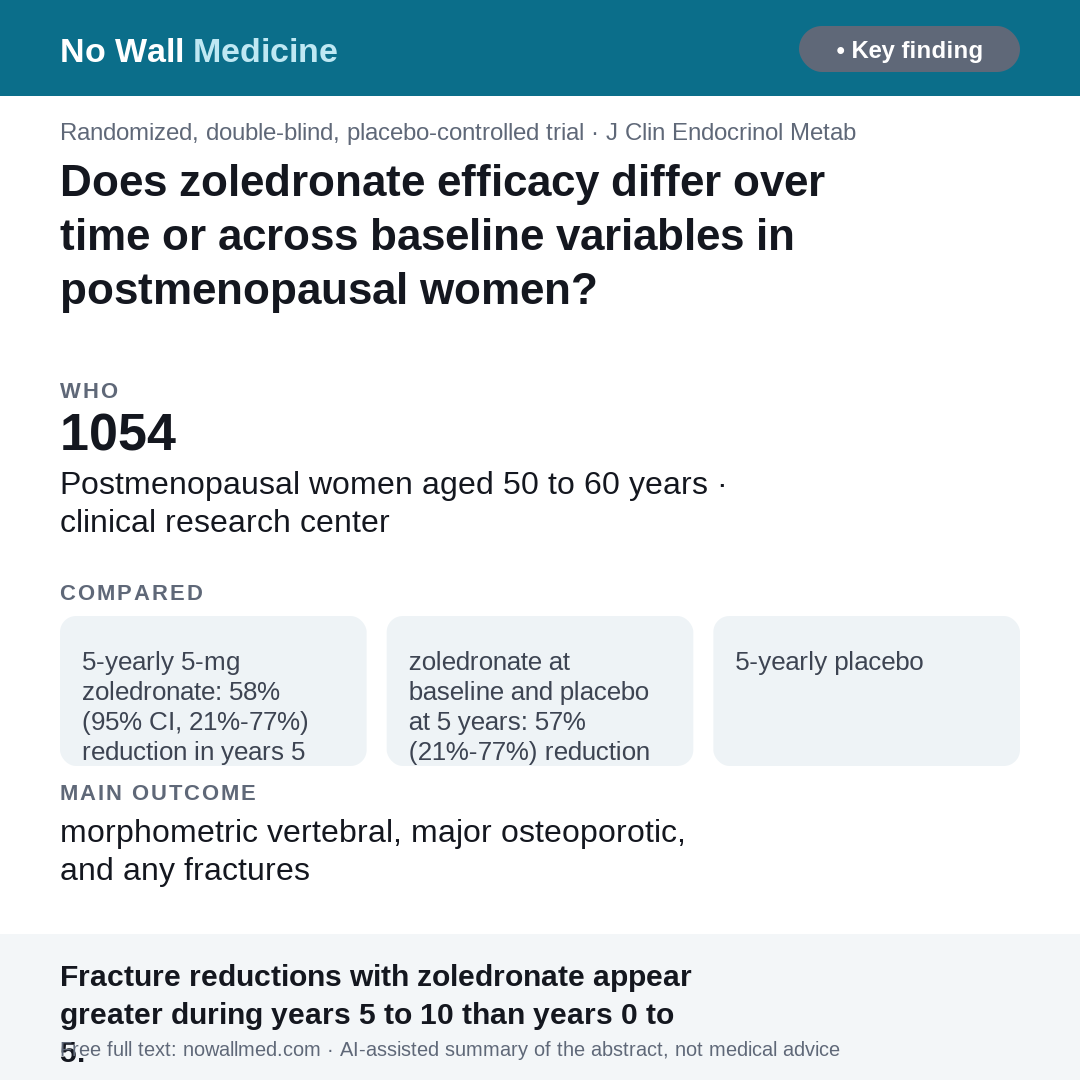
Antifracture Efficacy of 5- or 10-Yearly Zoledronate in Women Aged 50 to 60 Years: Secondary Analyses of a Randomized Trial
Randomized, double-blind, placebo-controlled trialBenefit found
Does zoledronate efficacy differ over time or across baseline variables in postmenopausal women?
Who
1054
Postmenopausal women aged 50 to 60 years · clinical research center
Compared
5-yearly 5-mg zoledronate: 58% (95% CI, 21%-77%) reduction in years 5 to 10
zoledronate at baseline and placebo at 5 years: 57% (21%-77%) reduction in years 5 to 10
5-yearly placebo
Main outcome
morphometric vertebral, major osteoporotic, and any fractures
Bottom line: Fracture reductions with zoledronate appear greater during years 5 to 10 than years 0 to 5.
J Clin Endocrinol Metab · 2025-10-18Download image
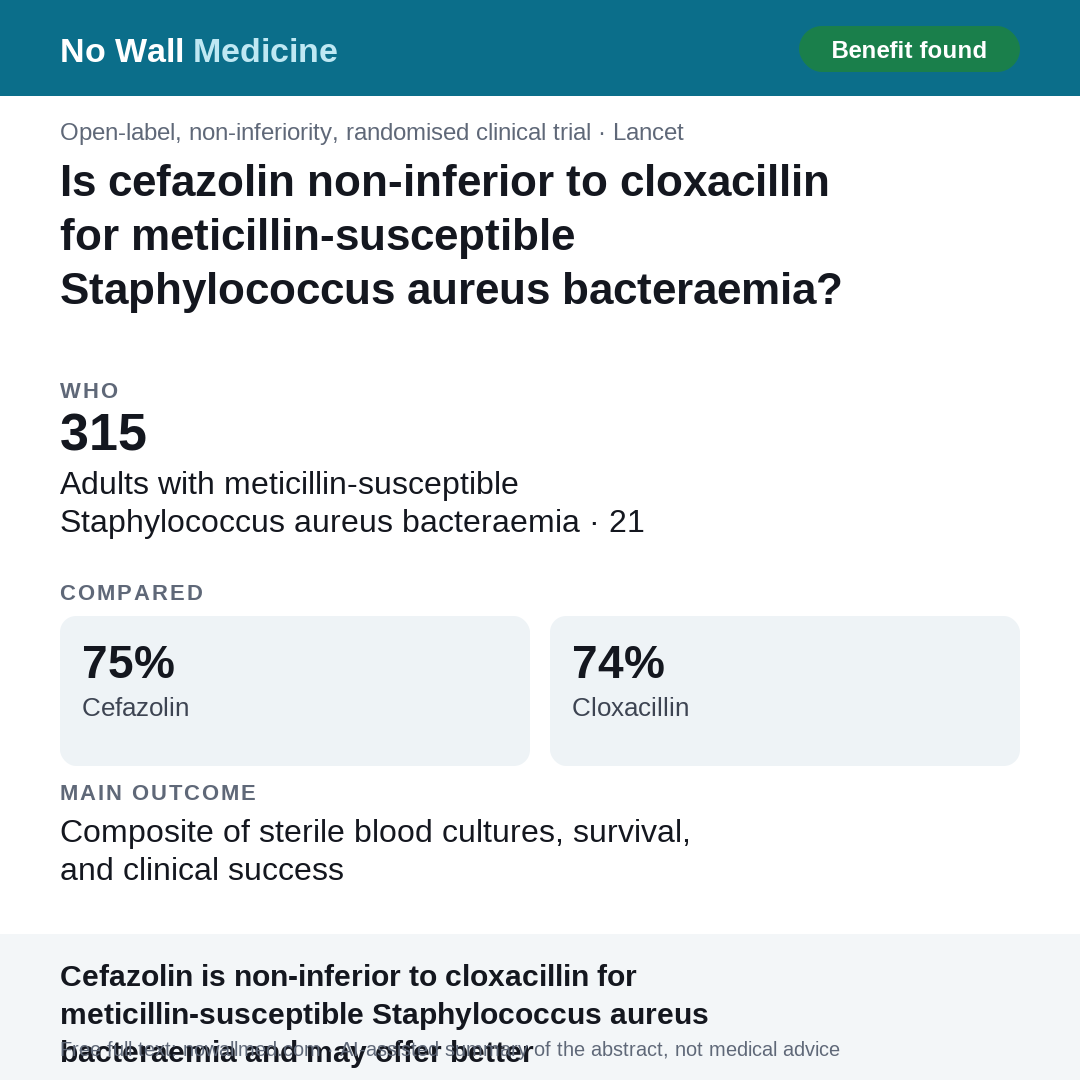
Cloxacillin versus cefazolin for meticillin-susceptible Staphylococcus aureus bacteraemia (CloCeBa): a prospective, open-label, multicentre, non-inferiority, randomised clinical trial
Open-label, non-inferiority, randomised clinical trialBenefit found
Is cefazolin non-inferior to cloxacillin for meticillin-susceptible Staphylococcus aureus bacteraemia?
Who
315
Adults with meticillin-susceptible Staphylococcus aureus bacteraemia · 21 hospitals in France
Compared
75%Cefazolin (109/146)
74%Cloxacillin (108/146)
Main outcome
Composite of sterile blood cultures, survival, and clinical success
Result: treatment difference -1% (95% CI -11 to 9)
Bottom line: Cefazolin is non-inferior to cloxacillin for meticillin-susceptible Staphylococcus aureus bacteraemia and may offer better tolerability.
Funded by: French Ministry of Health
Lancet · 2025-10-17Download image
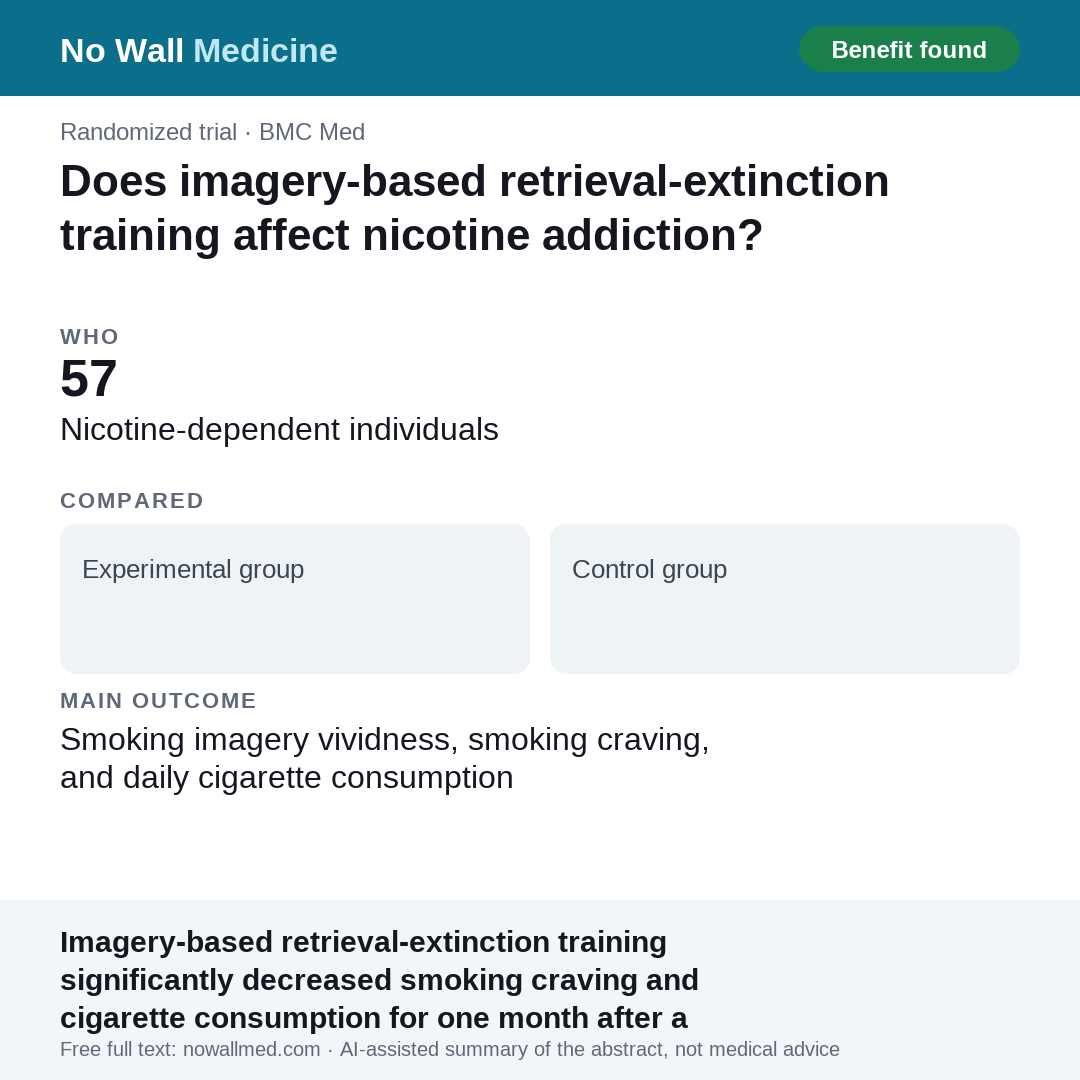
A novel imagery-based retrieval-extinction training for intervention in nicotine addiction
Randomized trialBenefit found
Does imagery-based retrieval-extinction training affect nicotine addiction?
Who
57
Nicotine-dependent individuals
Compared
Experimental group
Control group
Main outcome
Smoking imagery vividness, smoking craving, and daily cigarette consumption
Bottom line: Imagery-based retrieval-extinction training significantly decreased smoking craving and cigarette consumption for one month after a single session.
BMC Med · 2025-10-17Download image