Visual abstracts
New randomized trials and meta-analyses from leading journals at a glance: who was studied, what was compared, and what was found. Every paper is free to read in full.
All specialtiesCardiology 4763Oncology 4042Gastroenterology & Hepatology 1902Infectious Disease 3756Neurology 1872Psychiatry & Mental Health 2215Pulmonology 2044Critical Care 1319Endocrinology & Diabetes 2544Pediatrics 2889Surgery 2479Orthopedics & Sports Medicine 917Neurosurgery 525Cardiothoracic & Vascular Surgery 656Plastic & Reconstructive Surgery 574Nephrology 1107Rheumatology 810Hematology 1090Dermatology 611Ophthalmology 532Obstetrics & Gynecology 1645Public & Global Health 1037Radiology & Imaging 617Anesthesiology 957Urology 745ENT (Otolaryngology) 494Emergency Medicine 481Allergy & Immunology 309Geriatrics 972Family Medicine & Primary Care 533Medical Genetics & Genomics 659Pathology & Laboratory Medicine 156Physical Medicine & Rehabilitation 734Palliative Care 421Nutrition 1560Digital Health & AI 2135General Medicine 318
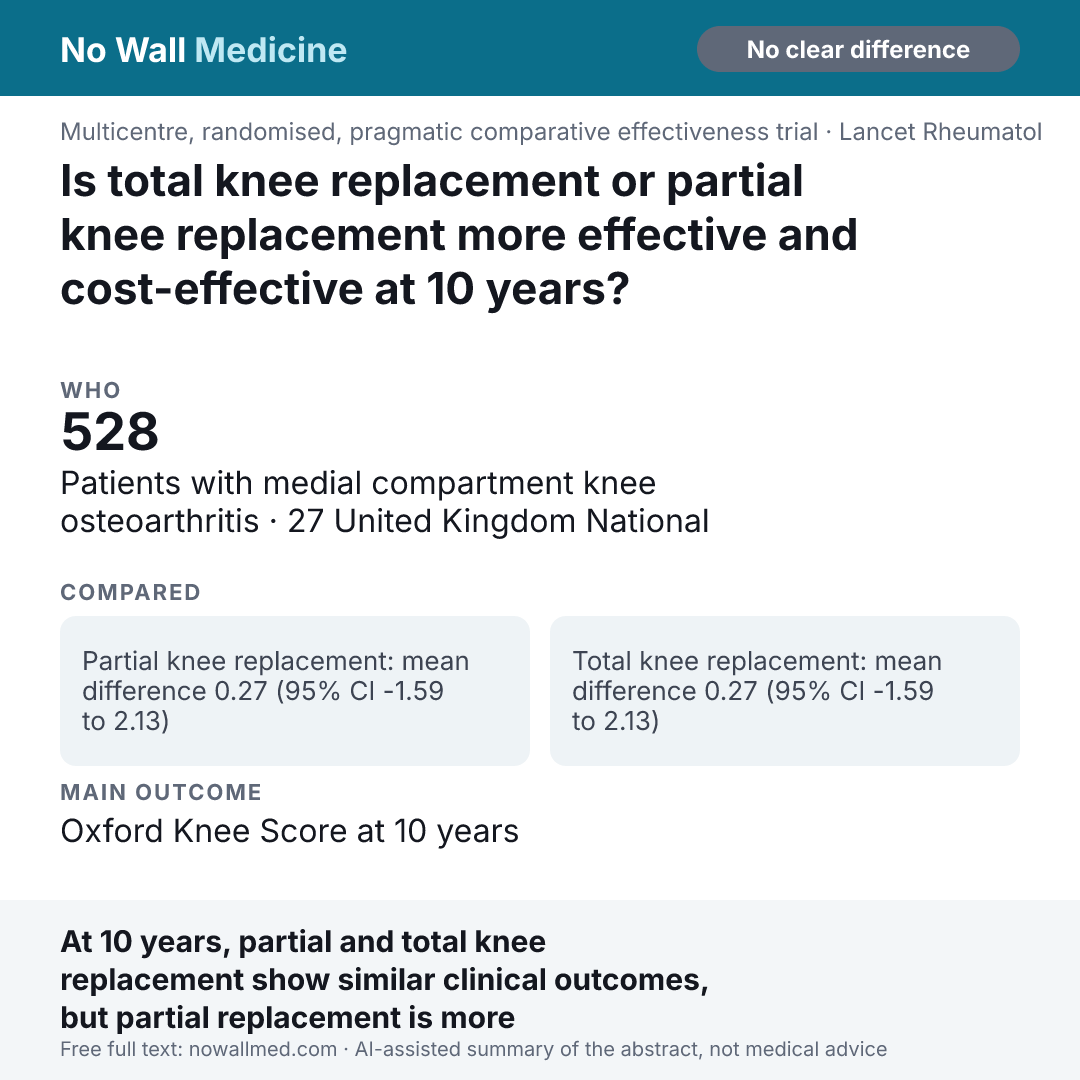
Assessing clinical and cost effectiveness of total versus partial knee replacement (TOPKAT): 10-year follow-up of a multicentre, randomised controlled trial
Multicentre, randomised, pragmatic comparative effectiveness trialNo clear difference
Is total knee replacement or partial knee replacement more effective and cost-effective at 10 years?
Who
528
Patients with medial compartment knee osteoarthritis · 27 United Kingdom National Health Service hospitals
Compared
Partial knee replacement: mean difference 0.27 (95% CI -1.59 to 2.13)
Total knee replacement: mean difference 0.27 (95% CI -1.59 to 2.13)
Main outcome
Oxford Knee Score at 10 years
Result: mean difference 0.27 (95% CI -1.59 to 2.13)
Bottom line: At 10 years, partial and total knee replacement show similar clinical outcomes, but partial replacement is more cost-effective.
Funded by: National Institute for Health and Care Research
Lancet Rheumatol · 2025-11-18 · Save PNG
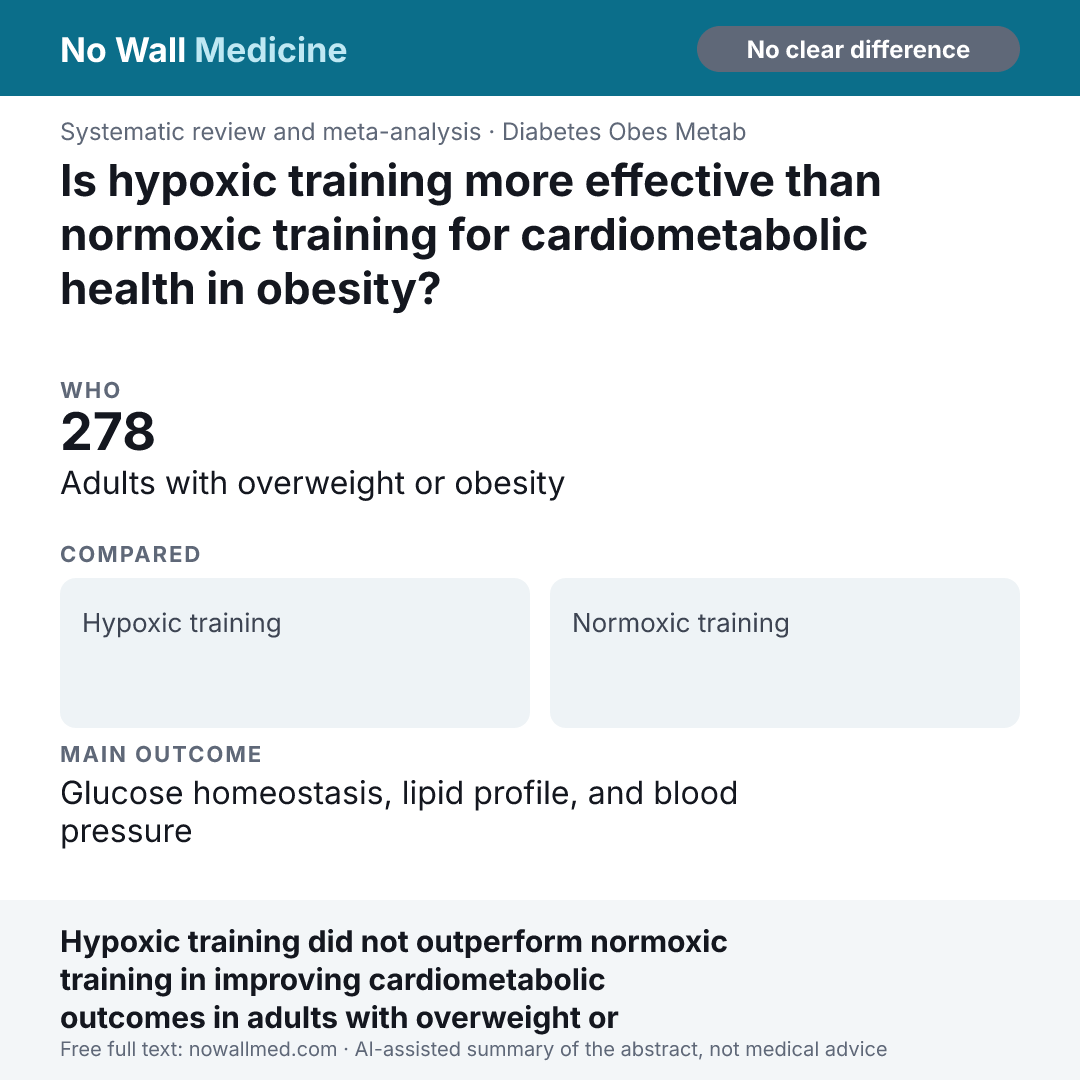
Effects of hypoxic training interventions on cardiometabolic health of adults with overweight and obesity: A systematic review and meta-analysis
Systematic review and meta-analysisNo clear difference
Is hypoxic training more effective than normoxic training for cardiometabolic health in obesity?
Who
278
Adults with overweight or obesity
Compared
Hypoxic training
Normoxic training
Main outcome
Glucose homeostasis, lipid profile, and blood pressure
Bottom line: Hypoxic training did not outperform normoxic training in improving cardiometabolic outcomes in adults with overweight or obesity.
Limitation: Considerable variability in intervention duration, hypoxic dose, and exercise intensity across studies.
Diabetes Obes Metab · 2025-11-18 · Save PNG
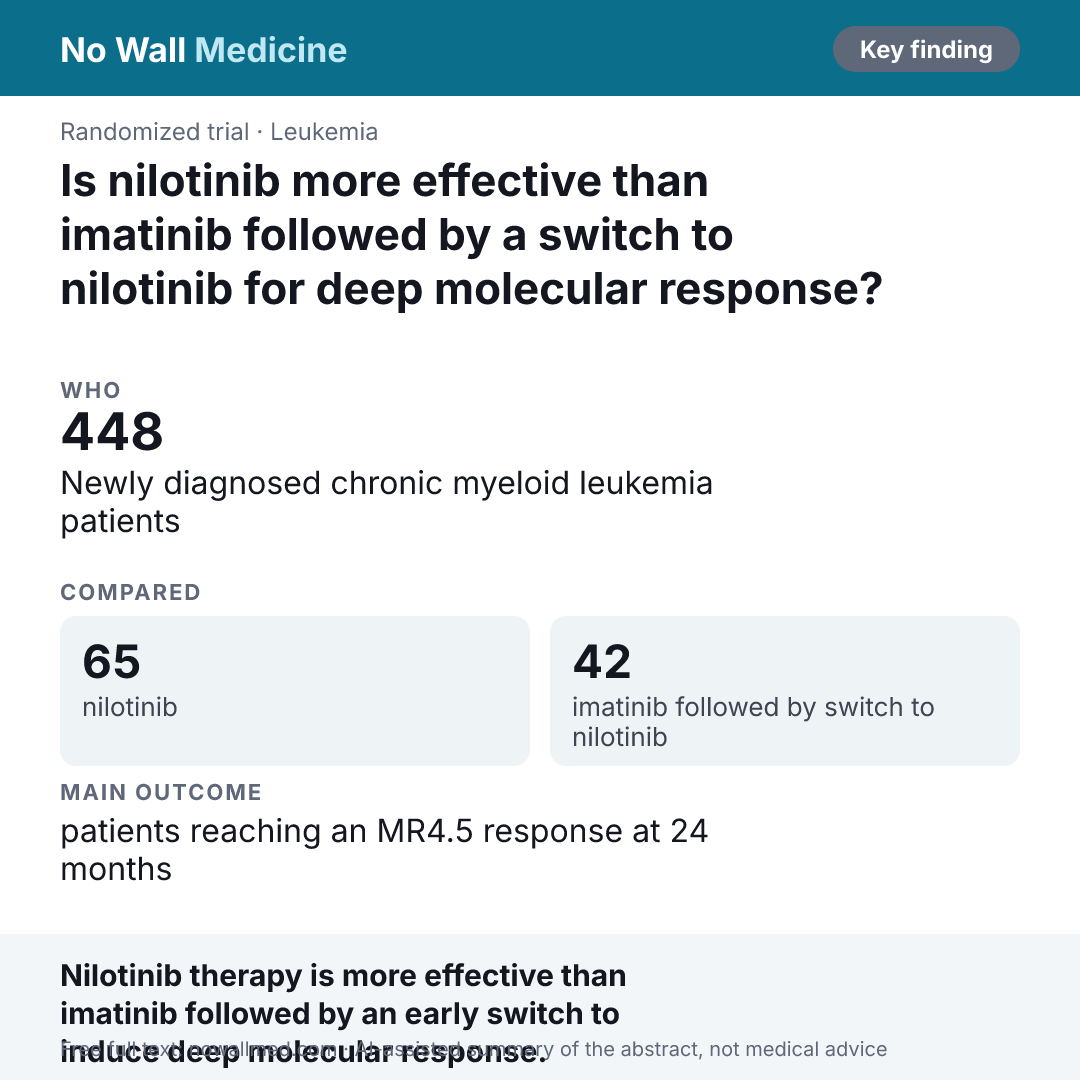
Nilotinib versus imatinib with early switch from imatinib to nilotinib to obtain treatment-free remission in newly diagnosed chronic myeloid leukemia patients: the analysis of the first co-primary endpoint
Randomized trialKey finding
Is nilotinib more effective than imatinib followed by a switch to nilotinib for deep molecular response?
Who
448
Newly diagnosed chronic myeloid leukemia patients
Compared
65nilotinib
42imatinib followed by switch to nilotinib
Main outcome
patients reaching an MR4.5 response at 24 months
Result: 65 vs 42; p = 0.02
Bottom line: Nilotinib therapy is more effective than imatinib followed by an early switch to induce deep molecular response.
Leukemia · 2025-11-18 · Save PNG
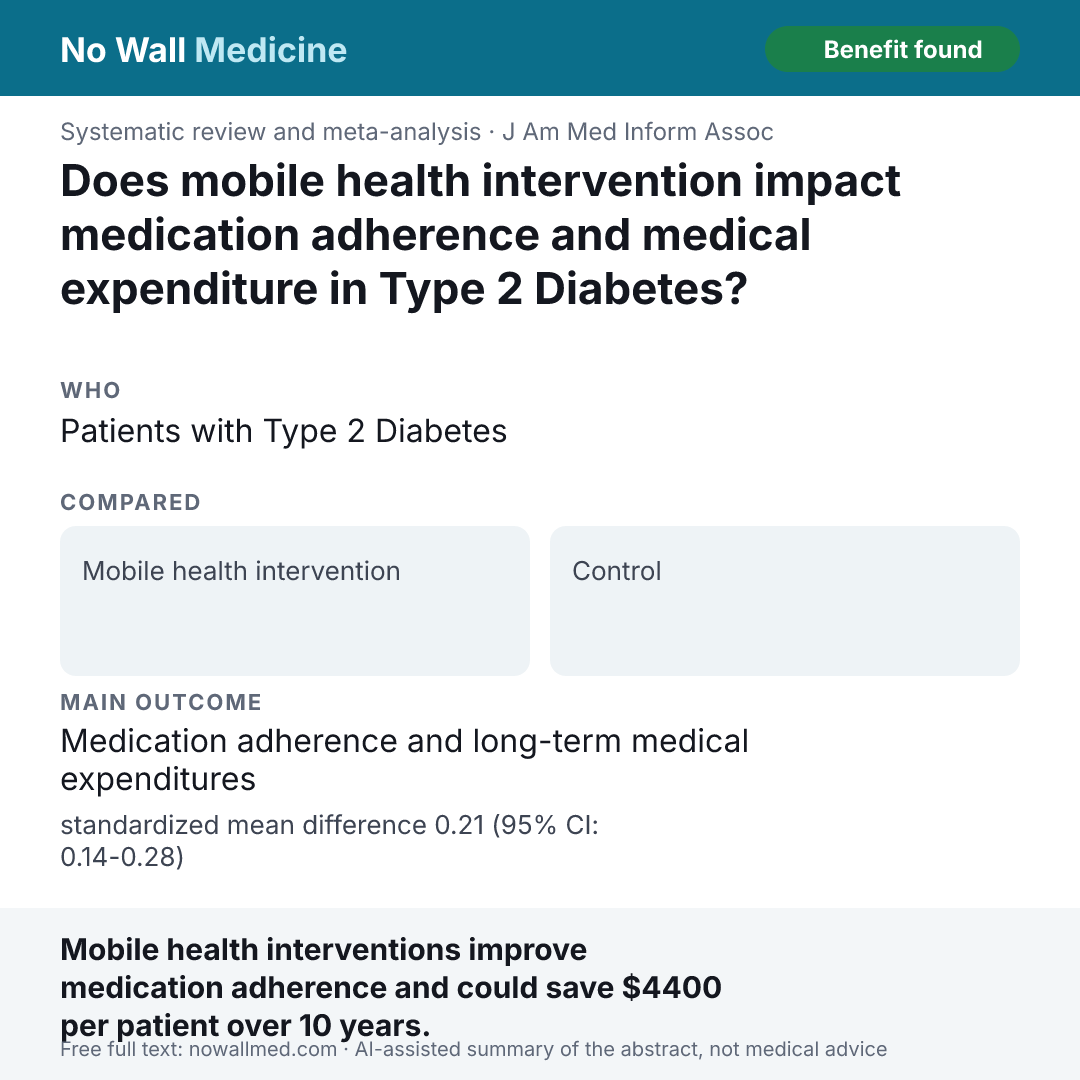
Does it save me money? The economic impact of mobile health interventions on medical expenditure of diabetic patients
Systematic review and meta-analysisBenefit found
Does mobile health intervention impact medication adherence and medical expenditure in Type 2 Diabetes?
Who
Patients with Type 2 Diabetes
Compared
Mobile health intervention
Control
Main outcome
Medication adherence and long-term medical expenditures
Result: standardized mean difference 0.21 (95% CI: 0.14-0.28)
Bottom line: Mobile health interventions improve medication adherence and could save $4400 per patient over 10 years.
J Am Med Inform Assoc · 2025-11-18 · Save PNG
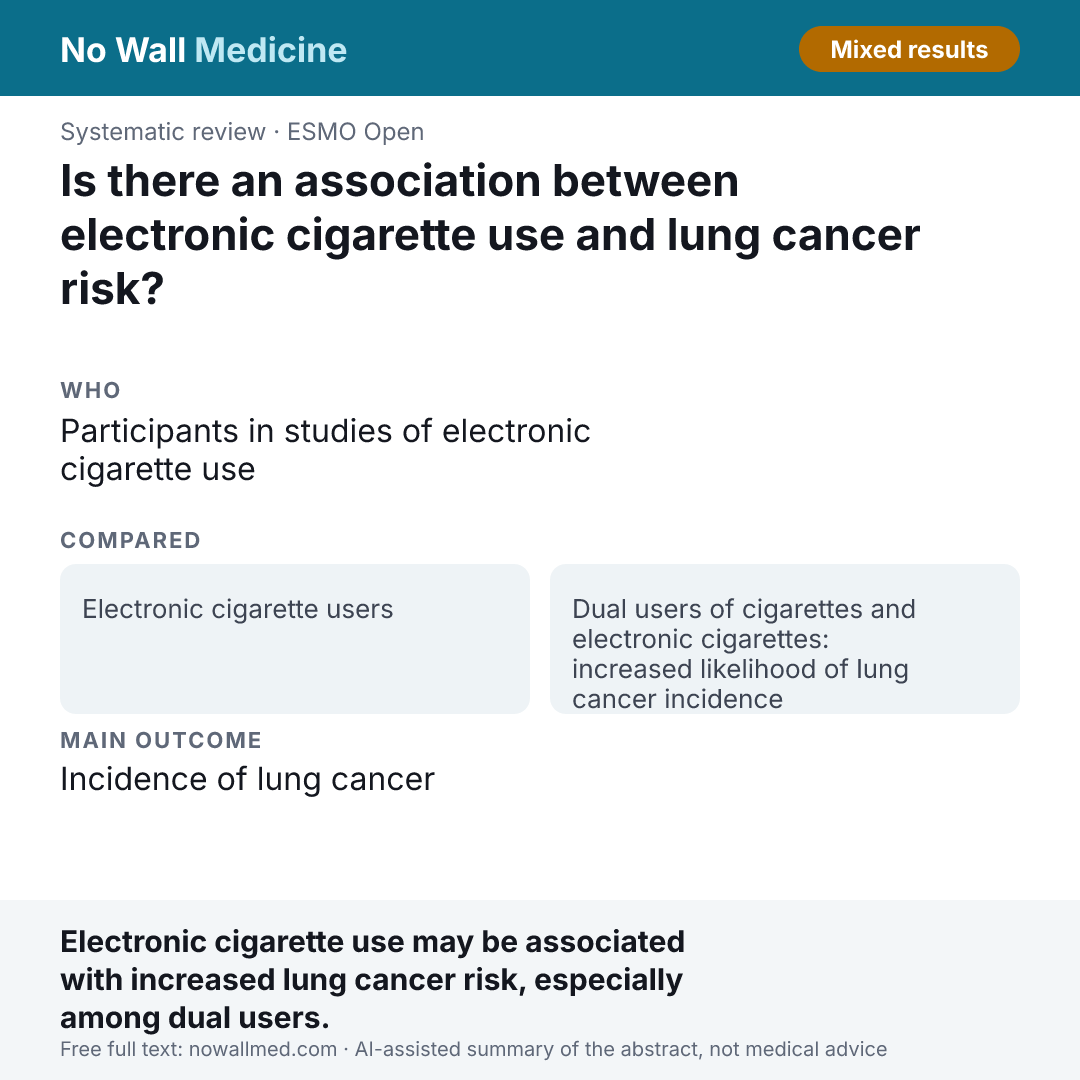
Transcranial doppler (TCD) in predicting outcomes following successful mechanical thrombectomy of large vessel occlusions in anterior circulation: a systematic review and meta-analysis
Systematic review and meta-analysisKey finding
Can transcranial doppler parameters predict outcomes after successful mechanical thrombectomy?
Who
1432
Patients with large vessel occlusions in anterior circulation
Compared
MFV index ≥1.3: RR 1.97 (95% CI 1.28 to 3.03) for all hemorrhagic transformation
MFV index <1.3
Main outcome
Hemorrhagic transformation and functional recovery
Result: RR 1.65 (95% CI 1.27 to 2.14) for poor functional status
Bottom line: A mean flow velocity index of 1.3 or higher predicts hemorrhagic transformation and poor functional recovery after successful mechanical thrombectomy.
J Neurointerv Surg · 2025-11-18 · Save PNG
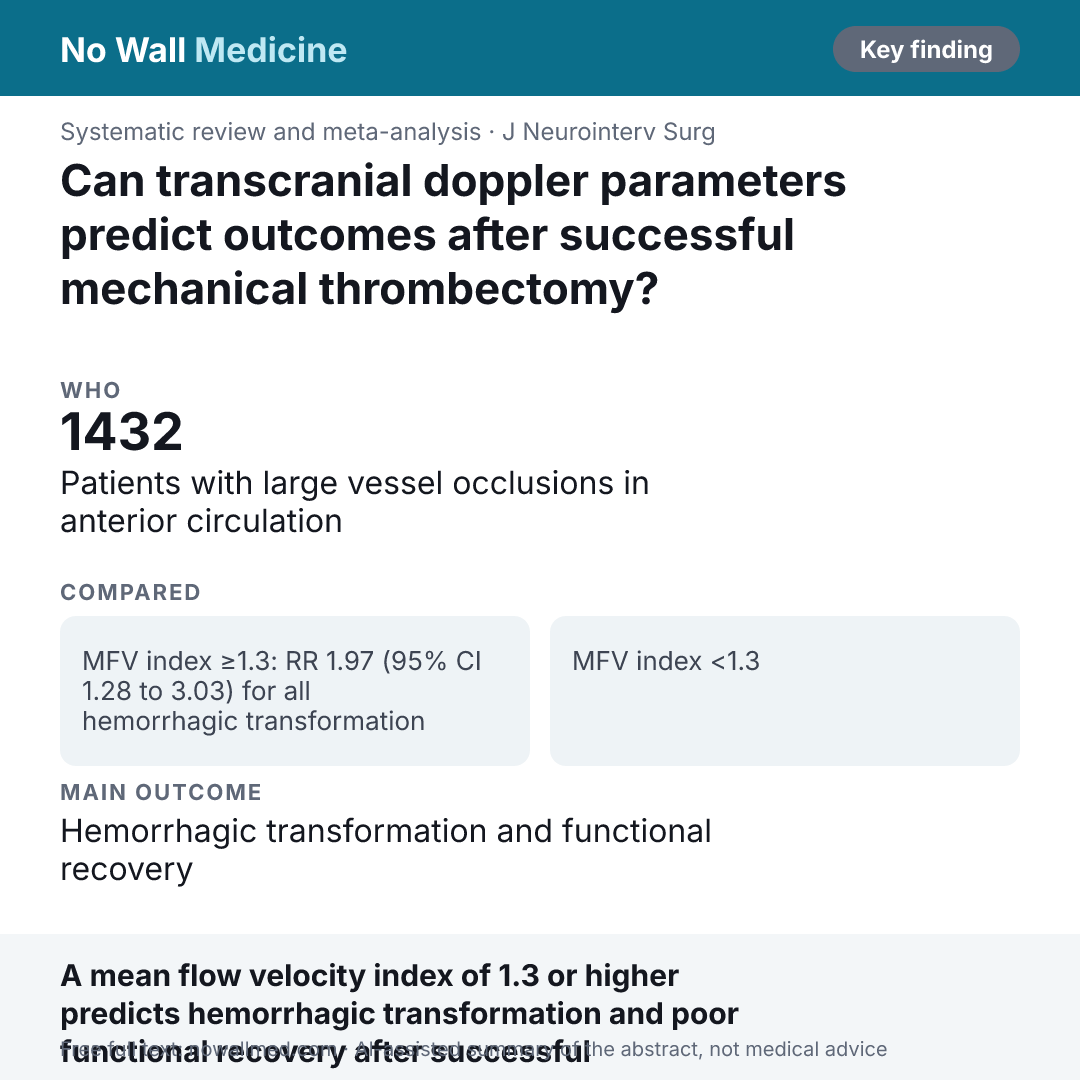
A Randomised Clinical Trial Comparing Two Biopsy Templates and Follow-up Schedules for Men on Active Surveillance for Low-risk Prostate Cancer: SAMS
Randomized clinical trialNo clear difference
Does an extended biopsy and less intense follow-up affect curative treatment rates?
Who
328
Men aged 40-75 with low-risk prostate cancer · Sweden
Compared
42%Standard confirmatory systematic biopsy and standard follow-up
36%Extended confirmatory systematic biopsy and less intense follow-up
Main outcome
Decision to initiate curative treatment within 5 years
Bottom line: Extended initial biopsy and less intensive monitoring resulted in similar 5-year treatment rates for low-risk prostate cancer.
Limitation: Inclusion was stopped before the target of 500 men was reached.
Eur Urol Open Sci · 2025-11-18 · Save PNG
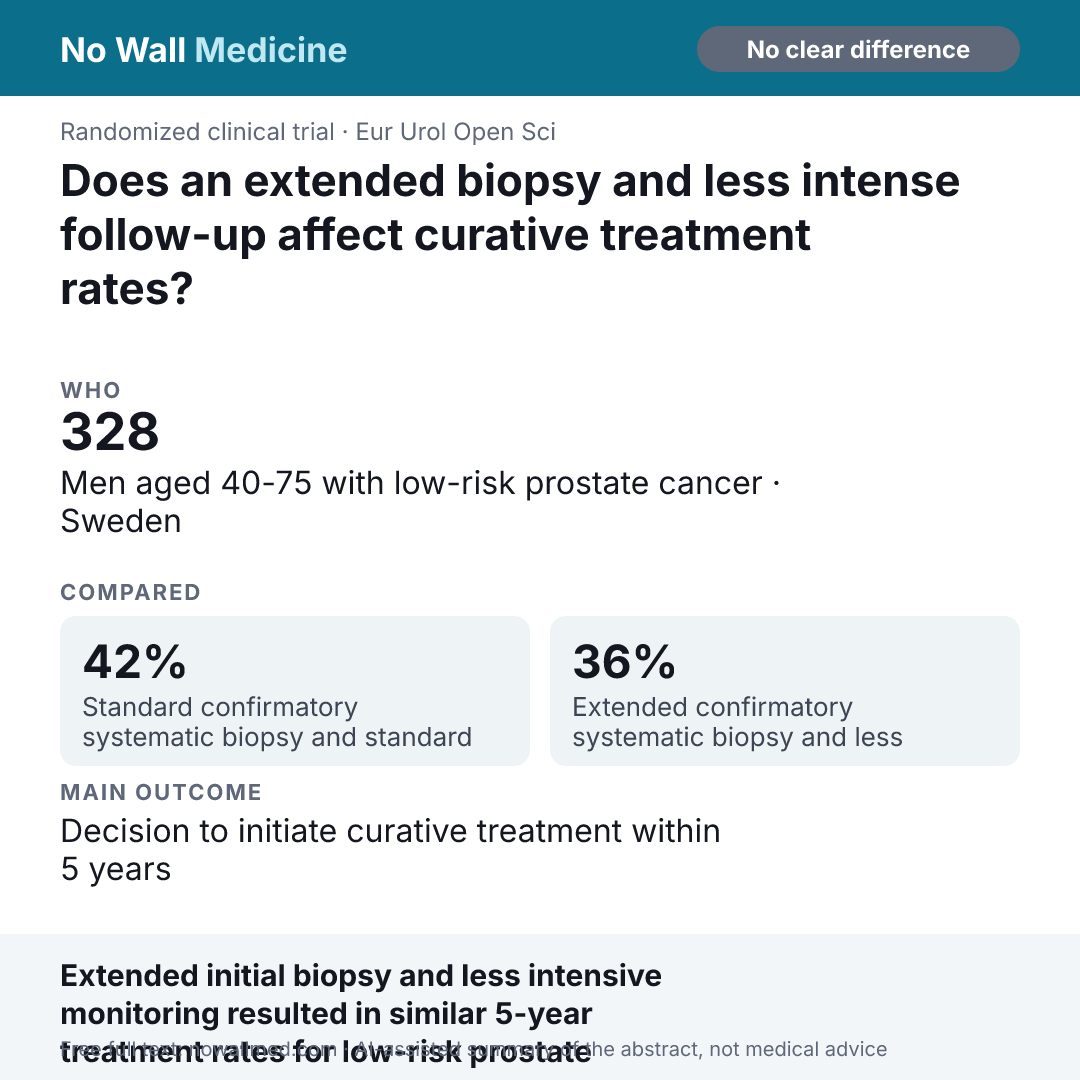
Pembrolizumab plus chemotherapy versus chemotherapy for advanced esophageal cancer: 5-year extended follow-up for the randomized phase III KEYNOTE-590 study
Randomized phase III trialBenefit found
Does pembrolizumab plus chemotherapy improve survival in advanced esophageal cancer?
Who
749
Adults with previously untreated advanced esophageal or Siewert type 1 gastroesophageal junction cancer
Compared
pembrolizumab plus chemotherapy: 10.6% 5-year survival rate
placebo plus chemotherapy: 3.0% 5-year survival rate
Main outcome
overall survival
Result: hazard ratio 0.72 (95% CI 0.62-0.84)
Bottom line: Pembrolizumab plus chemotherapy more than tripled the 5-year overall survival rate compared with placebo plus chemotherapy.
ESMO Open · 2025-11-18 · Save PNG
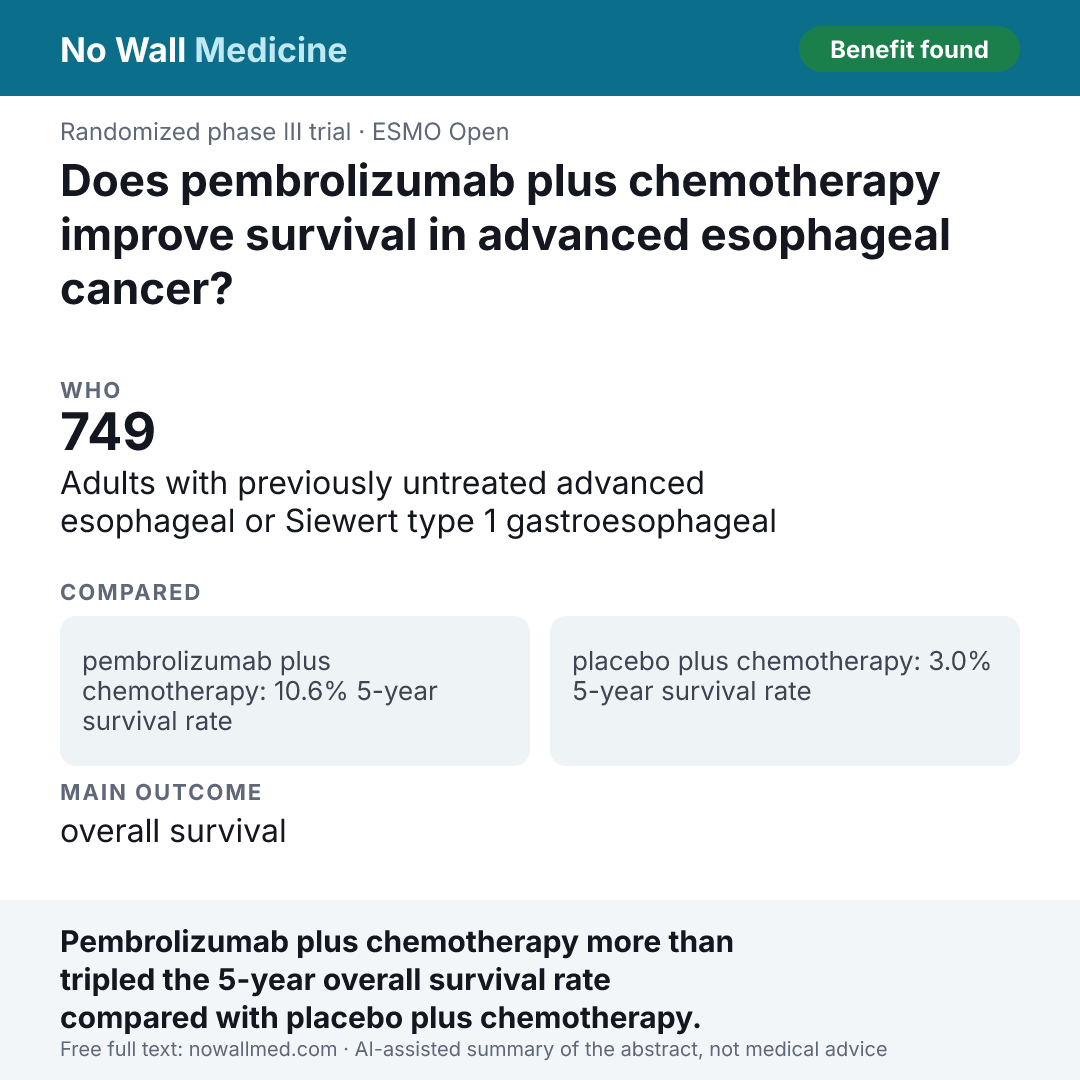
The risk of lung cancer from vaping or e-cigarette usage: a systematic review
Systematic reviewMixed results
Is there an association between electronic cigarette use and lung cancer risk?
Who
Participants in studies of electronic cigarette use
Compared
Electronic cigarette users
Dual users of cigarettes and electronic cigarettes: increased likelihood of lung cancer incidence
Main outcome
Incidence of lung cancer
Bottom line: Electronic cigarette use may be associated with increased lung cancer risk, especially among dual users.
Limitation: Causality cannot be established due to heterogeneity and limited longitudinal data.
ESMO Open · 2025-11-18 · Save PNG
Identification of 1q25.2 as a novel shared locus between schizophrenia and major depressive disorder in east Asians by integrative analyses
Linkage disequilibrium score regression and MiXeR analysesKey finding
Is there polygenic overlap between schizophrenia and major depressive disorder in East Asians?
Who
East Asian individuals with schizophrenia and major depressive disorder
Compared
Schizophrenia: 29,519 cases and 44,392 controls
Major depressive disorder: 7,753 cases and 14,046 controls
Main outcome
Polygenic overlap and shared genomic loci
Bottom line: Substantial genetic overlap exists between schizophrenia and major depressive disorder in East Asians, including a novel locus at 1q25.2.
Transl Psychiatry · 2025-11-18 · Save PNG

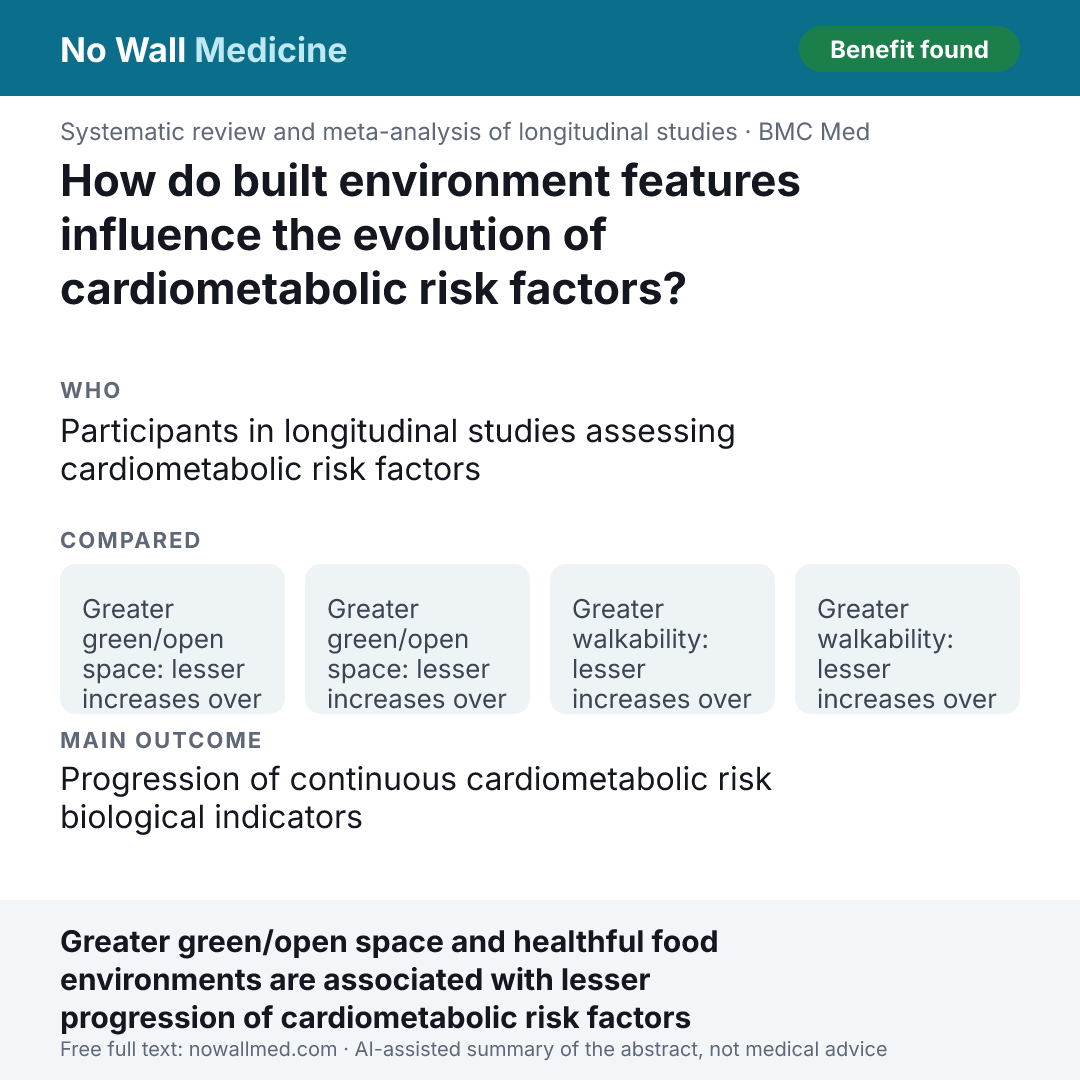
Configuration design of ankle rehabilitation robots: a systematic review and future prospects
Systematic reviewUnclear result
Ankle rehabilitation robots vs traditional therapy
Who
stroke and fracture patients
Compared
Ankle robots
Traditional therapy
Main outcome
patient recovery outcomes
Bottom line: Robots offer varied training strategies
Limitation: shortcomings in human-machine compatibility
J Neuroeng Rehabil · 2025-11-18 · Save PNG
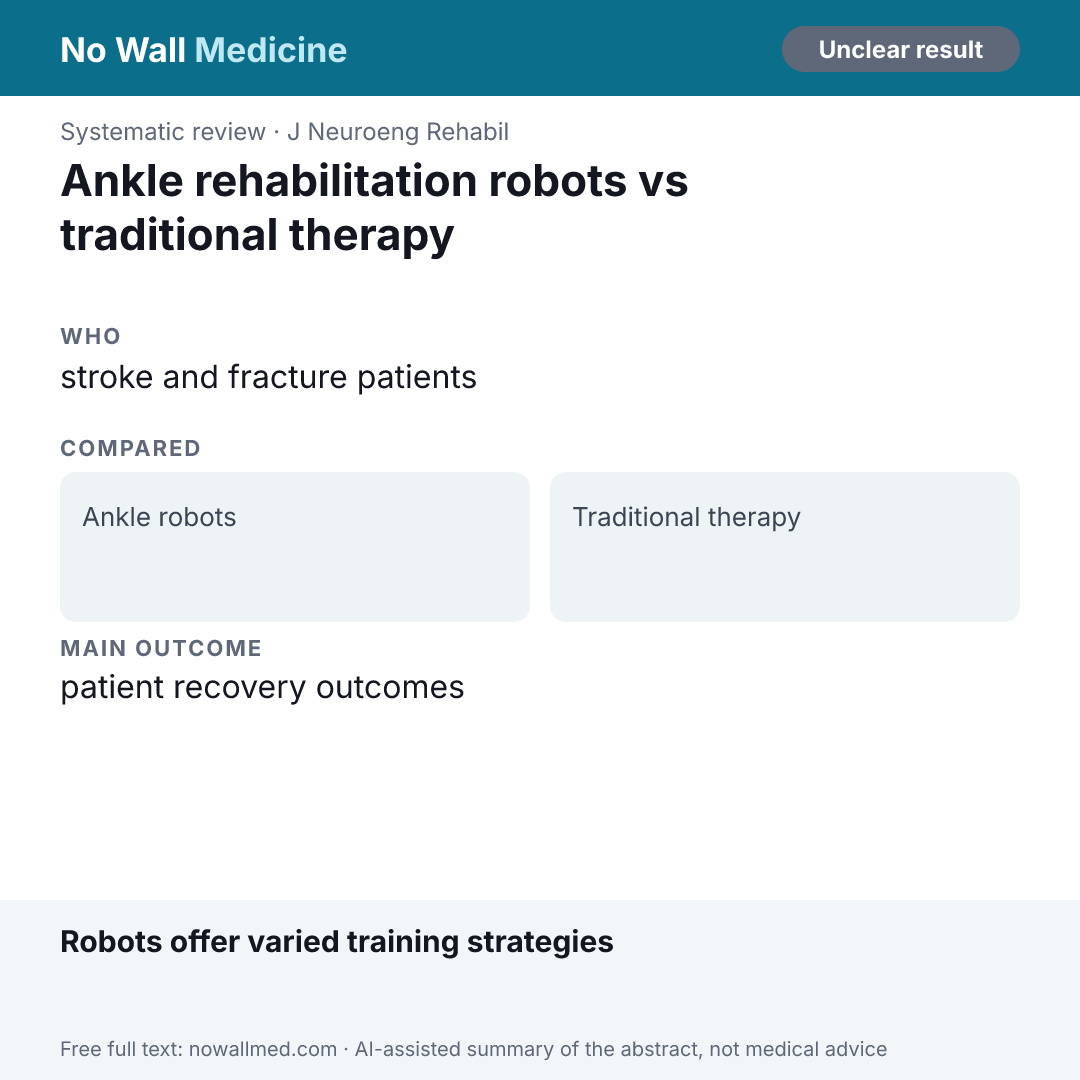
Efficacy of Over-the-Counter Cerumen Removal Devices: A Randomized Trial
Prospective randomized trialNo clear difference
How effective are over-the-counter cerumen removal devices compared to cotton swabs?
Who
147
Adults aged 18 years or older with moderate to excessive cerumen · Minnesota State Fair
Compared
Cotton swab control
Irrigator
Powered spiral tool
Non-powered spiral tool
Main outcome
Cerumen burden grade improvement
Bottom line: Over-the-counter cerumen removal devices did not significantly reduce cerumen burden compared to cotton swabs.
Laryngoscope Investig Otolaryngol · 2025-11-18 · Save PNG
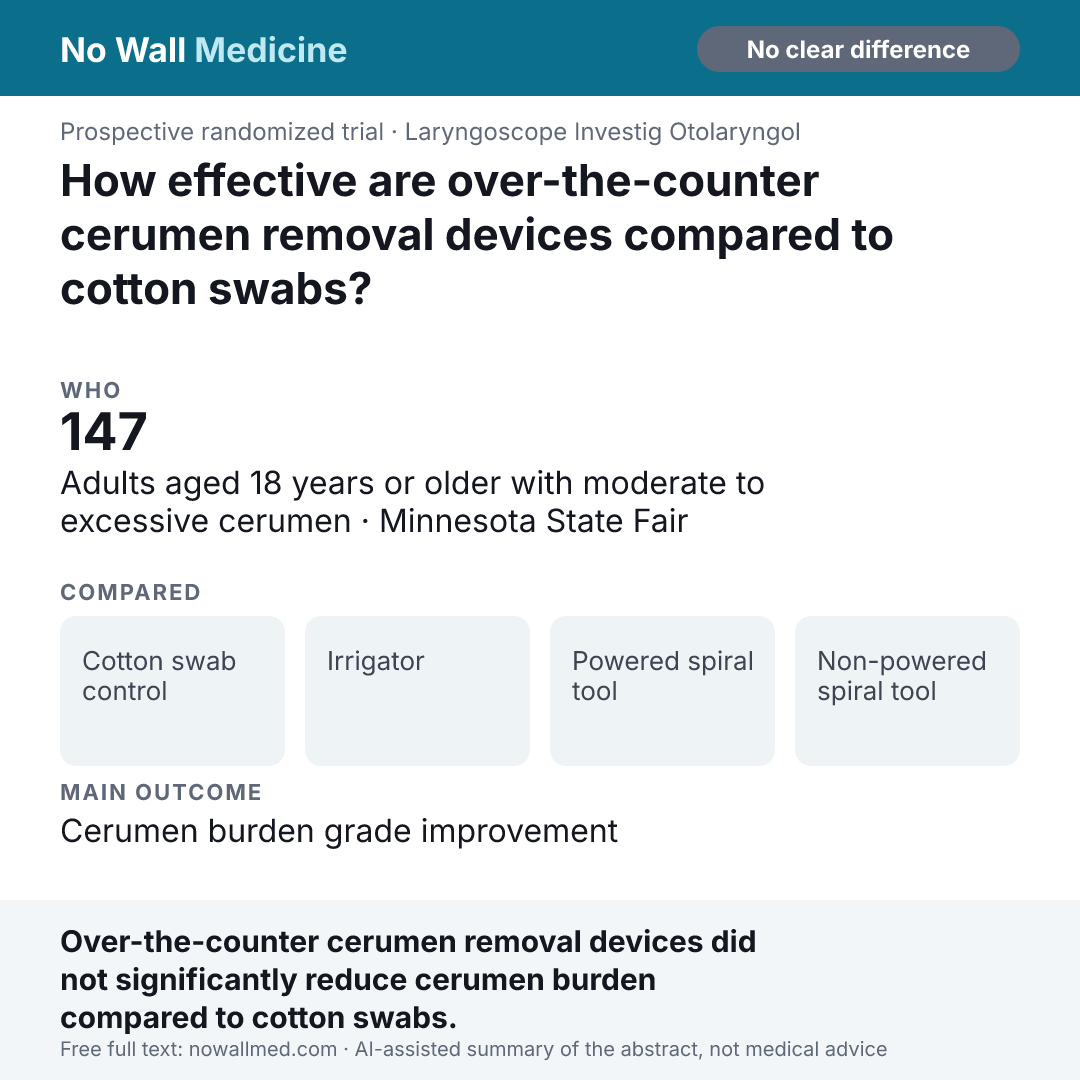
Perineural versus intravenous dexamethasone for single-shot interscalene block in arthroscopic shoulder surgery: a systematic review and meta-analysis of studies published through May 2021
Systematic review and meta-analysisMixed results
Is perineural or intravenous dexamethasone better for single-shot interscalene block in shoulder surgery?
Who
846
Patients undergoing arthroscopic shoulder surgery
Compared
Perineural dexamethasone
Intravenous dexamethasone
Main outcome
Analgesia duration, sensory block duration, and motor block duration
Result: weighted mean difference 1.699 h (95% CI 0.014 to 3.384)
Bottom line: Perineural dexamethasone modestly prolongs analgesia duration, but clinical importance remains uncertain due to small pain score reductions.
Limitation: Reductions in postoperative pain scores are small and unlikely to reach clinically important thresholds.
Perioper Med · 2025-11-18 · Save PNG
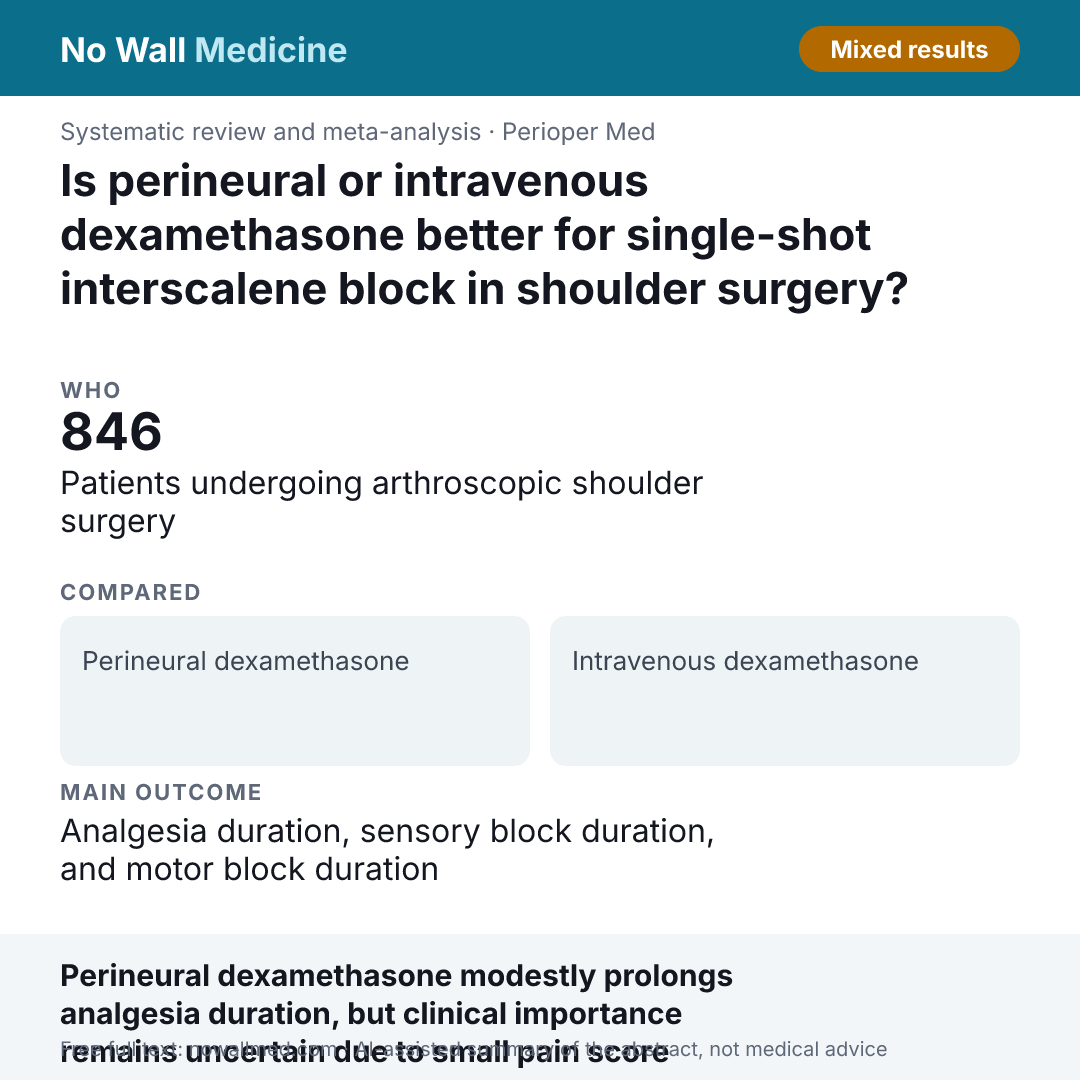
Built environment and the evolution of cardiometabolic risk factors: a systematic review and meta-analysis of longitudinal studies
Systematic review and meta-analysis of longitudinal studiesBenefit found
How do built environment features influence the evolution of cardiometabolic risk factors?
Who
Participants in longitudinal studies assessing cardiometabolic risk factors
Compared
Greater green/open space: lesser increases over time in systolic blood pressure (weighted z=3.43, p<0.001)
Greater green/open space: lesser increases over time in diastolic blood pressure (weighted z=2.89, p<0.01)
Greater walkability: lesser increases over time in systolic blood pressure (weighted z=2.95, p<0.01)
Greater walkability: lesser increases over time in glycated haemoglobin
Main outcome
Progression of continuous cardiometabolic risk biological indicators
Bottom line: Greater green/open space and healthful food environments are associated with lesser progression of cardiometabolic risk factors over time.
BMC Med · 2025-11-17 · Save PNG
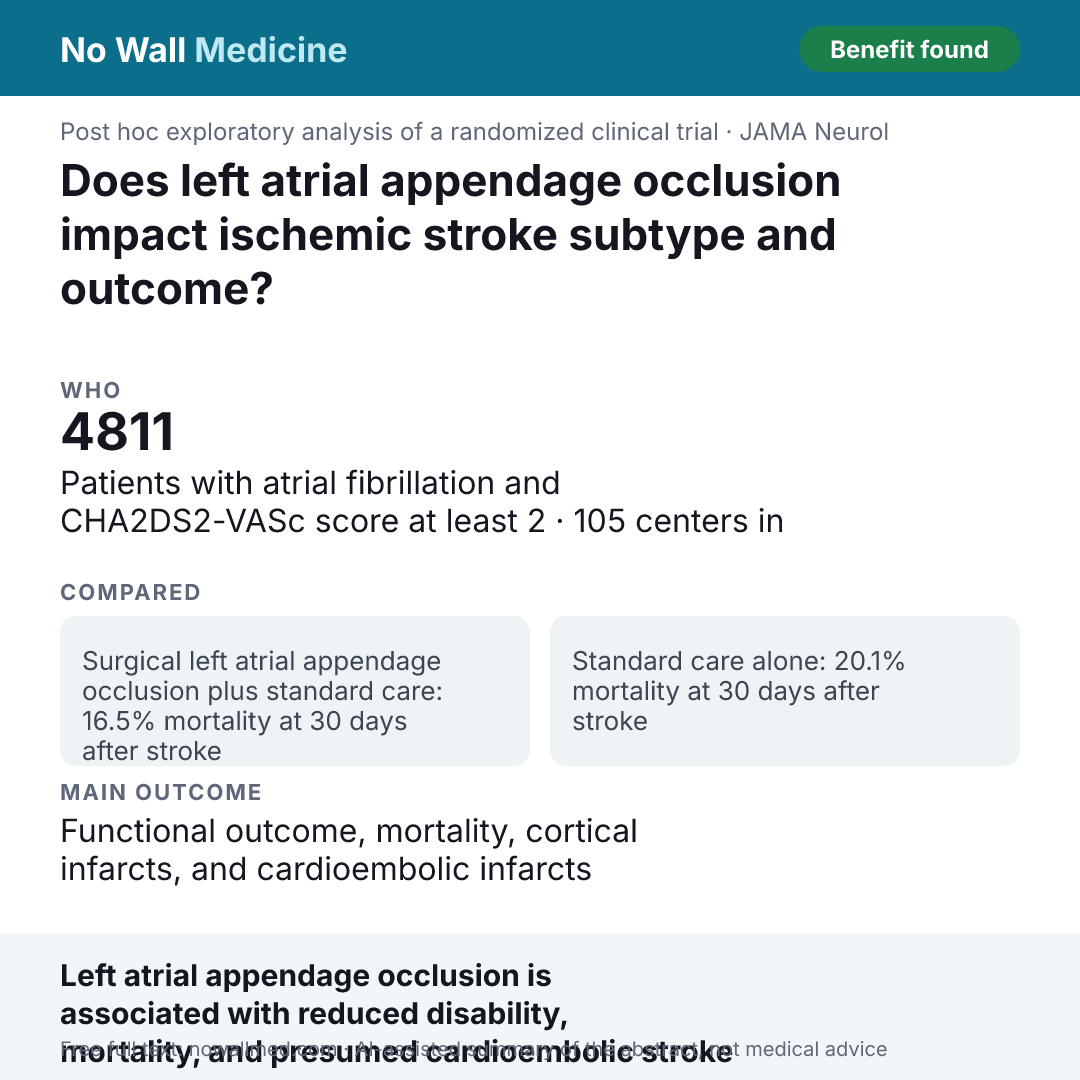
Stroke Mechanism and Severity After Left Atrial Appendage Occlusion: Insights From the LAAOS III Randomized Clinical Trial
Post hoc exploratory analysis of a randomized clinical trialBenefit found
Does left atrial appendage occlusion impact ischemic stroke subtype and outcome?
Who
4811
Patients with atrial fibrillation and CHA2DS2-VASc score at least 2 · 105 centers in 27 countries
Compared
Surgical left atrial appendage occlusion plus standard care: 16.5% mortality at 30 days after stroke
Standard care alone: 20.1% mortality at 30 days after stroke
Main outcome
Functional outcome, mortality, cortical infarcts, and cardioembolic infarcts
Result: hazard ratio 0.55 (95% CI, 0.31-0.97)
Bottom line: Left atrial appendage occlusion is associated with reduced disability, mortality, and presumed cardioembolic stroke in patients with atrial fibrillation.
JAMA Neurol · 2025-11-17 · Save PNG
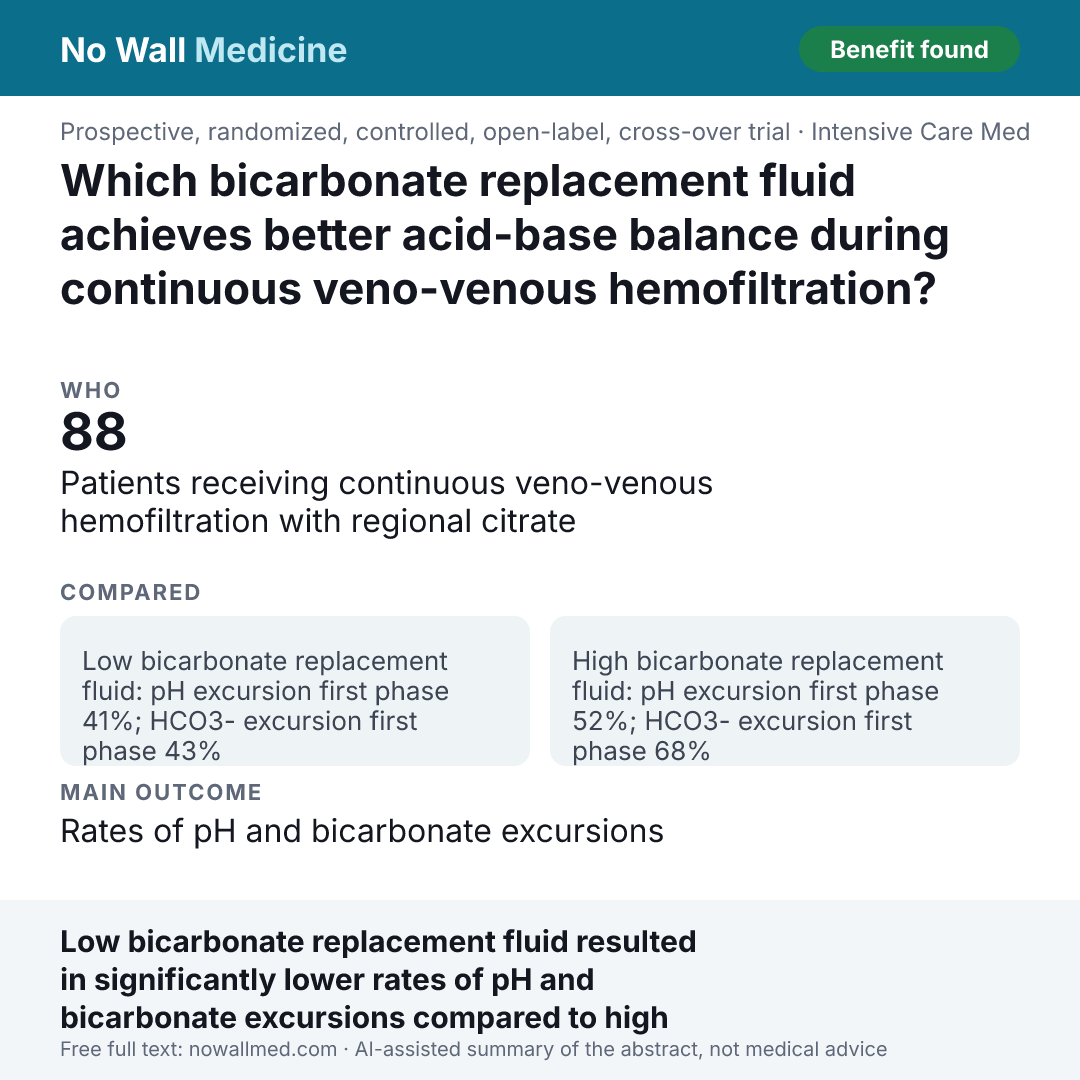
Comparison of two different bicarbonate replacement fluids during CVVH with RCA: a prospective, randomized, controlled trial
Prospective, randomized, controlled, open-label, cross-over trialBenefit found
Which bicarbonate replacement fluid achieves better acid-base balance during continuous veno-venous hemofiltration?
Who
88
Patients receiving continuous veno-venous hemofiltration with regional citrate anticoagulation · single-center trial
Compared
Low bicarbonate replacement fluid: pH excursion first phase 41%; HCO3- excursion first phase 43%
High bicarbonate replacement fluid: pH excursion first phase 52%; HCO3- excursion first phase 68%
Main outcome
Rates of pH and bicarbonate excursions
Result: odds ratio 1.78 (95% CI 1.12-2.82) for pH; 3.60 (95% CI 2.16-5.99) for HCO3-
Bottom line: Low bicarbonate replacement fluid resulted in significantly lower rates of pH and bicarbonate excursions compared to high bicarbonate replacement fluid.
Intensive Care Med · 2025-11-17 · Save PNG
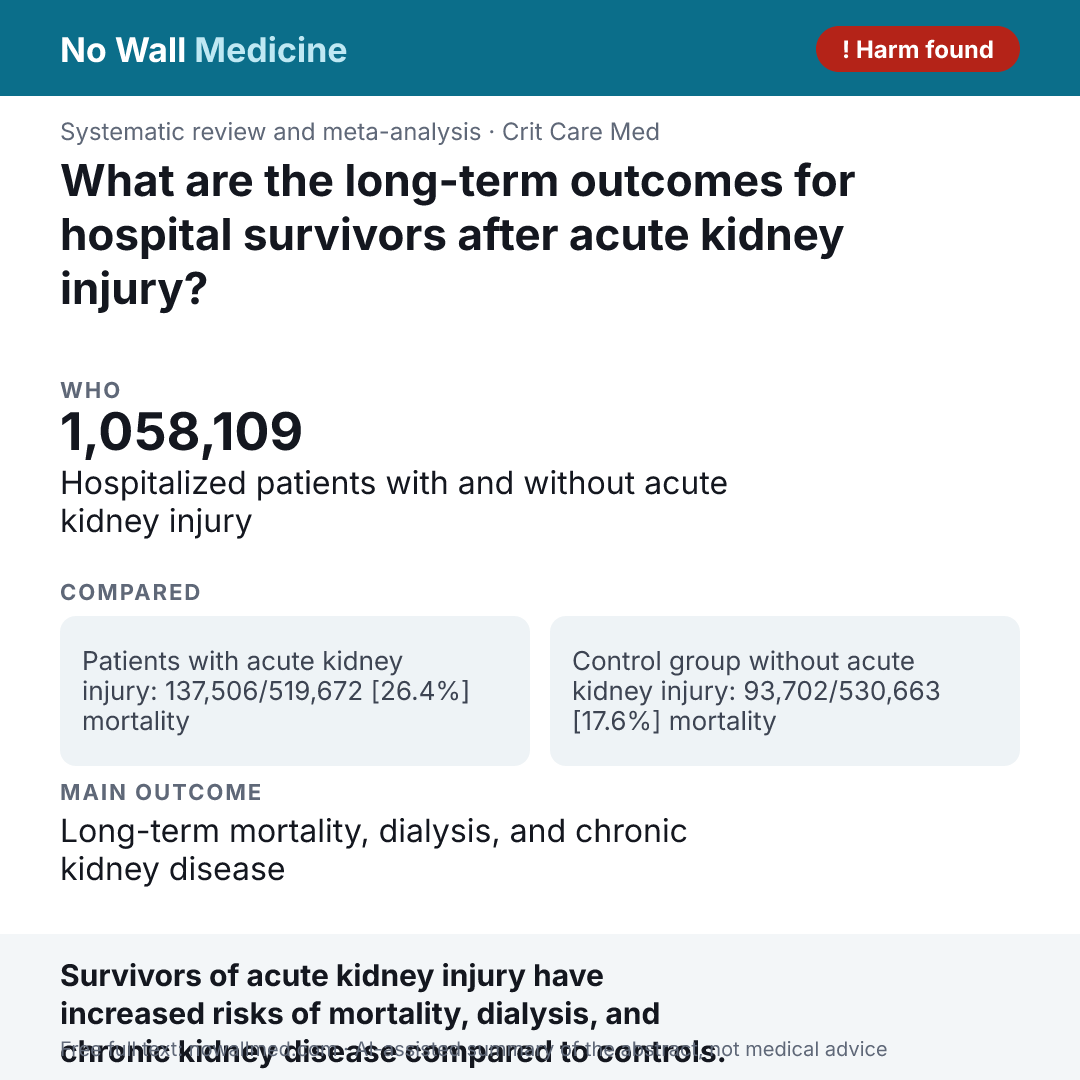
Long-Term Outcomes After Acute Kidney Injury During Hospitalization: A Systematic Review and Meta-Analysis of Matched Controls Studies
Systematic review and meta-analysisHarm found
What are the long-term outcomes for hospital survivors after acute kidney injury?
Who
1,058,109
Hospitalized patients with and without acute kidney injury
Compared
Patients with acute kidney injury: 137,506/519,672 [26.4%] mortality
Control group without acute kidney injury: 93,702/530,663 [17.6%] mortality
Main outcome
Long-term mortality, dialysis, and chronic kidney disease
Result: relative risk 1.42 (95% CI 1.13-1.78)
Bottom line: Survivors of acute kidney injury have increased risks of mortality, dialysis, and chronic kidney disease compared to controls.
Crit Care Med · 2025-11-17 · Save PNG
Once-Weekly Navepegritide in Children With Achondroplasia: The APPROACH Randomized Clinical Trial
Randomized, double-blind trialEarly signal
Navepegritide efficacy in children with achondroplasia
Who
84
Children with achondroplasia aged two to eleven years · Ten hospitals in seven countries
Compared
Navepegritide: annualized growth velocity increase of 1.49 cm/y
Placebo
Main outcome
Annualized growth velocity
Result: least-squares mean treatment difference of 1.49 cm/y (95% CI 1.05 to 1.93)
Bottom line: Navepegritide increased growth velocity in children
JAMA Pediatr · 2025-11-17 · Save PNG

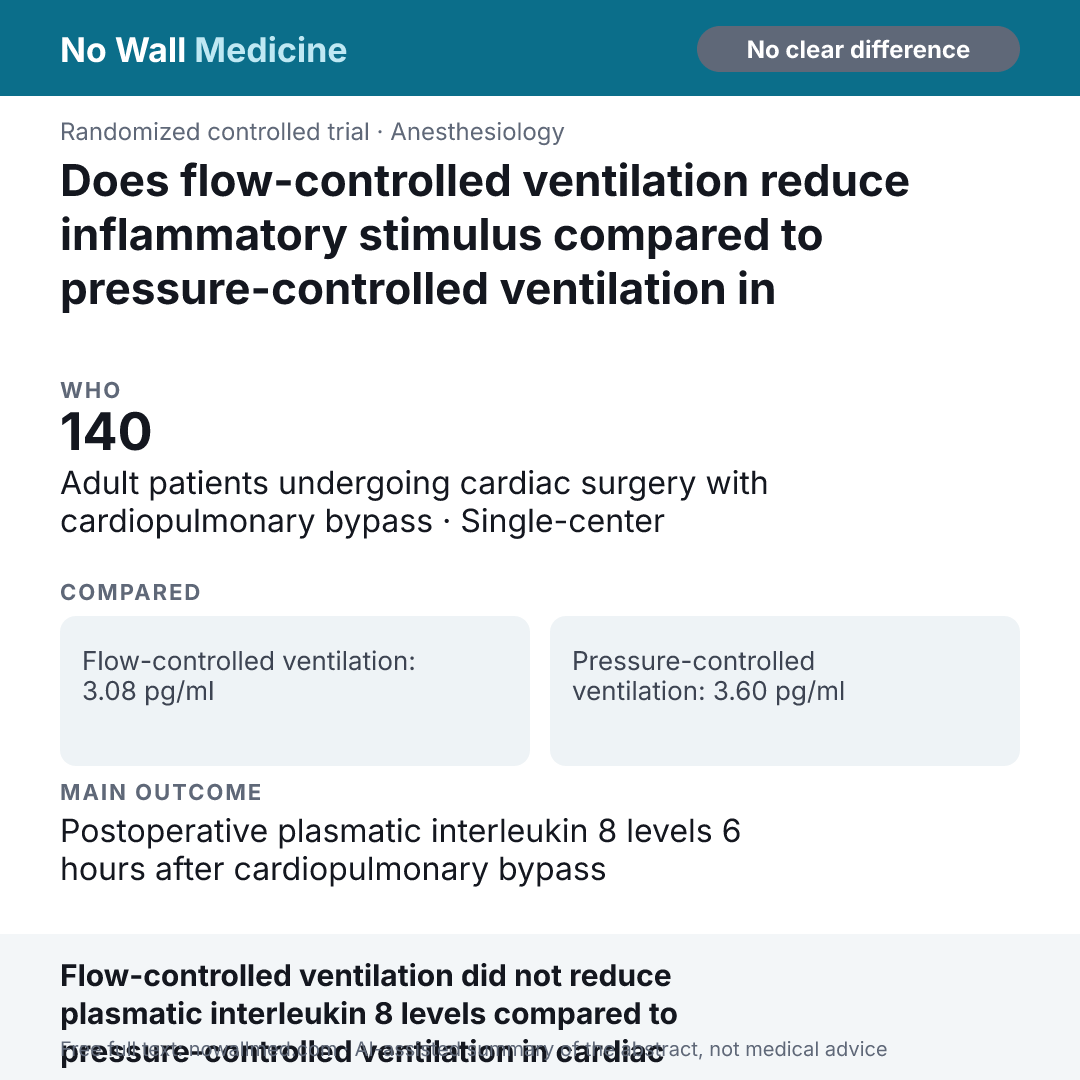
Individualized Flow-controlled versus Pressure-controlled Ventilation in Cardiac Surgery: A Randomized Controlled Trial
Randomized controlled trialNo clear difference
Does flow-controlled ventilation reduce inflammatory stimulus compared to pressure-controlled ventilation in cardiac surgery?
Who
140
Adult patients undergoing cardiac surgery with cardiopulmonary bypass · Single-center
Compared
Flow-controlled ventilation: 3.08 pg/ml
Pressure-controlled ventilation: 3.60 pg/ml
Main outcome
Postoperative plasmatic interleukin 8 levels 6 hours after cardiopulmonary bypass
Result: β, 0.08 pg/ml; 95% CI, -0.17 to 0.33
Bottom line: Flow-controlled ventilation did not reduce plasmatic interleukin 8 levels compared to pressure-controlled ventilation in cardiac surgery patients.
Limitation: Secondary outcomes including pulmonary and extrapulmonary complications were explorative.
Anesthesiology · 2025-11-17 · Save PNG
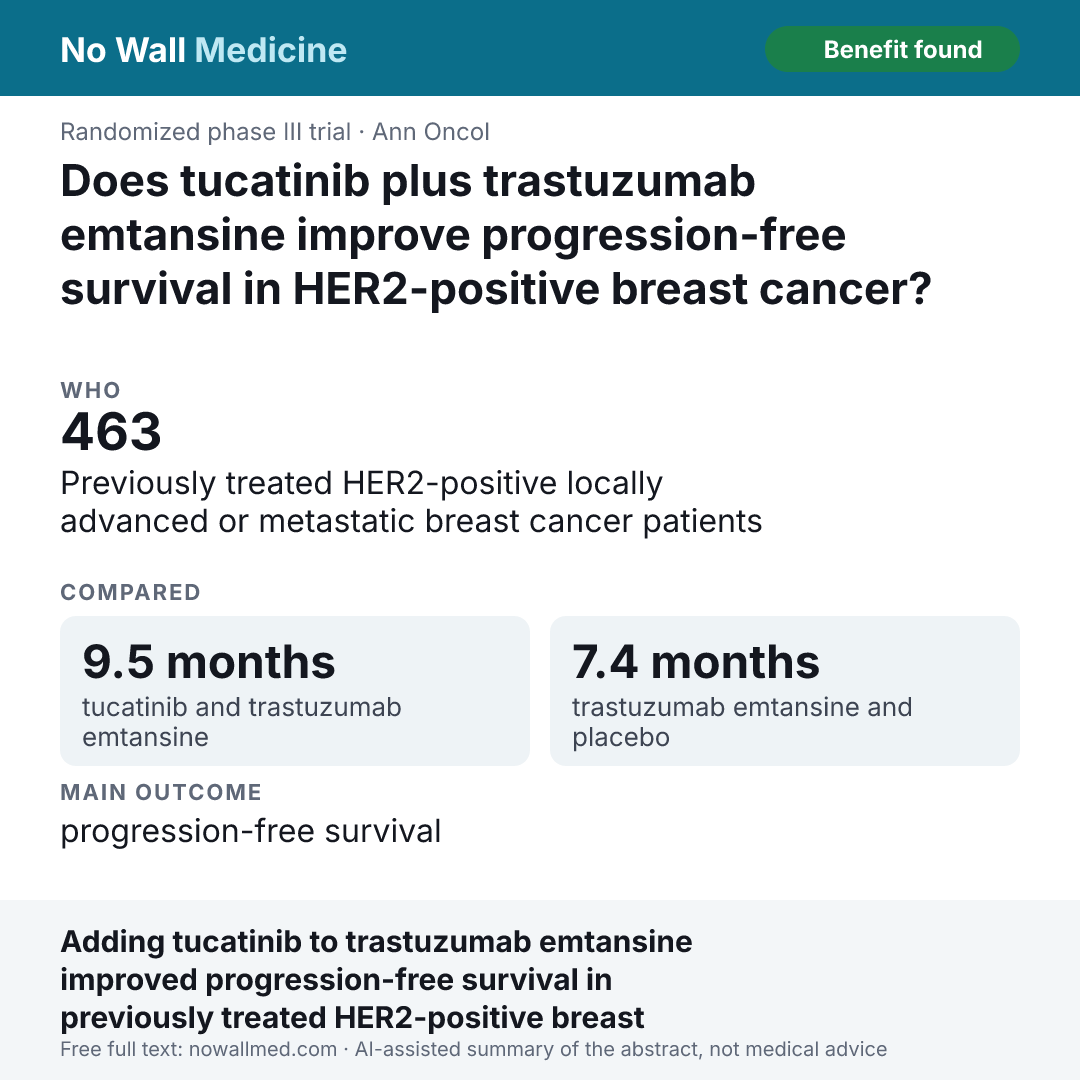
Tucatinib and trastuzumab emtansine for patients with previously treated HER2-positive locally advanced and metastatic breast cancer: primary analysis of the randomized phase III trial HER2CLIMB-02
Randomized phase III trialBenefit found
Does tucatinib plus trastuzumab emtansine improve progression-free survival in HER2-positive breast cancer?
Who
463
Previously treated HER2-positive locally advanced or metastatic breast cancer patients
Compared
9.5 monthstucatinib and trastuzumab emtansine
7.4 monthstrastuzumab emtansine and placebo
Main outcome
progression-free survival
Result: hazard ratio 0.76 (95% CI 0.61-0.95)
Bottom line: Adding tucatinib to trastuzumab emtansine improved progression-free survival in previously treated HER2-positive breast cancer patients.
Ann Oncol · 2025-11-17 · Save PNG
Effectiveness of digital psychological and psychoeducational interventions to prevent anxiety: Systematic review and meta-analysis of randomized controlled trials
Systematic review and meta-analysis of randomized controlled trialsBenefit, low certainty
Are digital psychological and psychoeducational interventions effective to prevent anxiety disorders?
Who
6093
Non-anxious and varied populations
Compared
Digital interventions
Control
Main outcome
Prevention of anxiety disorders
Result: standardized mean difference = -0.32 (95% confidence interval: -0.44 to -0.20)
Bottom line: Digital psychological and psychoeducational interventions show a small effect in preventing anxiety disorders.
Limitation: High heterogeneity and very low quality of evidence according to Grading of Recommendations Assessment, Development, and Evaluation.
Psychol Med · 2025-11-17 · Save PNG