Visual abstracts
New randomized trials and meta-analyses from leading journals at a glance: who was studied, what was compared, and what was found. Every paper is free to read in full.
All specialtiesCardiology 4347Oncology 3689Gastroenterology & Hepatology 1737Infectious Disease 3330Neurology 1716Psychiatry & Mental Health 2033Pulmonology 1896Critical Care 1225Endocrinology & Diabetes 2264Pediatrics 2631Surgery 2294Orthopedics & Sports Medicine 816Neurosurgery 487Cardiothoracic & Vascular Surgery 565Plastic & Reconstructive Surgery 565Nephrology 976Rheumatology 714Hematology 981Dermatology 555Ophthalmology 475Obstetrics & Gynecology 1485Public & Global Health 886Radiology & Imaging 579Anesthesiology 888Urology 688ENT (Otolaryngology) 463Emergency Medicine 462Allergy & Immunology 276Geriatrics 887Family Medicine & Primary Care 510Medical Genetics & Genomics 600Pathology & Laboratory Medicine 145Physical Medicine & Rehabilitation 657Palliative Care 390Nutrition 1352Digital Health & AI 2010General Medicine 297
Equity in protection: bridging global data gaps for an EBV vaccine-a systematic review and meta-analysis
Systematic review and meta-analysisMixed results
What is the Epstein-Barr virus seroprevalence by age, region, and country income level?
Who
Global populations across different age groups and income levels · Global
Compared
59%Middle-income countries (0-4 years) (95% CI 28 to 91%, I2=99%)
29%High-income countries (0-4 years) (95% CI 16 to 41%, I2=99%)
Main outcome
Epstein-Barr virus seroprevalence by age
Result: 30% absolute increase in 0- to 4-year-olds in middle-income than in high-income countries
Bottom line: Middle-income countries show a quicker rise in Epstein-Barr virus seroprevalence in young children compared to high-income countries.
Limitation: Data variability and limited consistency of methodologies and seroprevalence measurements hindered comprehensive meta-analyses.
BMJ Glob Health · 2025-08-14Download image

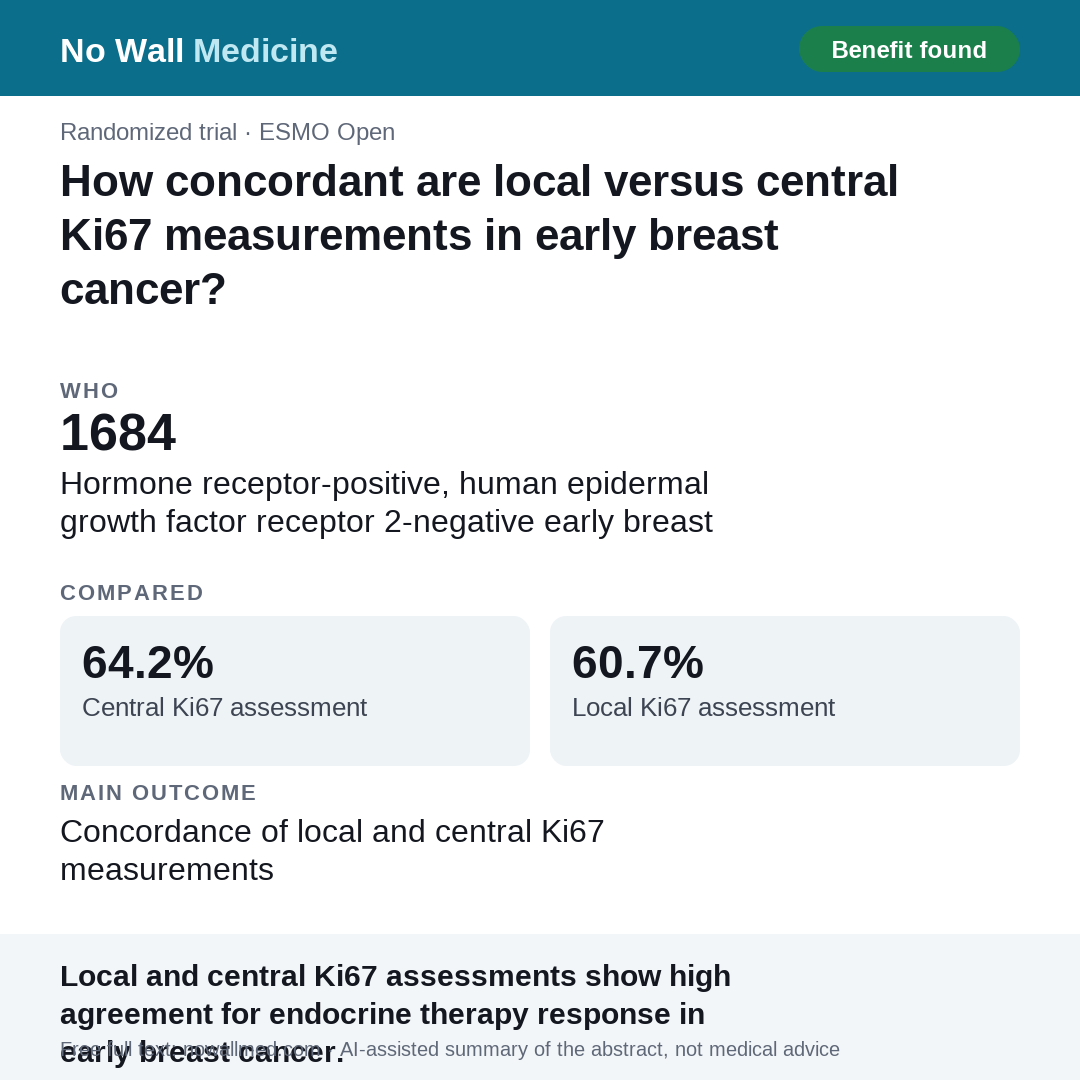
Endocrine response assessment in HR-positive HER2-negative early breast cancer: concordance of local versus central Ki67 measurements in the WSG ADAPTcycle trial (n = 5292)
Randomized trialBenefit found
How concordant are local versus central Ki67 measurements in early breast cancer?
Who
1684
Hormone receptor-positive, human epidermal growth factor receptor 2-negative early breast cancer · 85 sites in Germany
Compared
64.2%Central Ki67 assessment
60.7%Local Ki67 assessment
Main outcome
Concordance of local and central Ki67 measurements
Result: overall agreement 86.9% (95% CI 85.9% to 87.9%)
Bottom line: Local and central Ki67 assessments show high agreement for endocrine therapy response in early breast cancer.
ESMO Open · 2025-08-14Download image
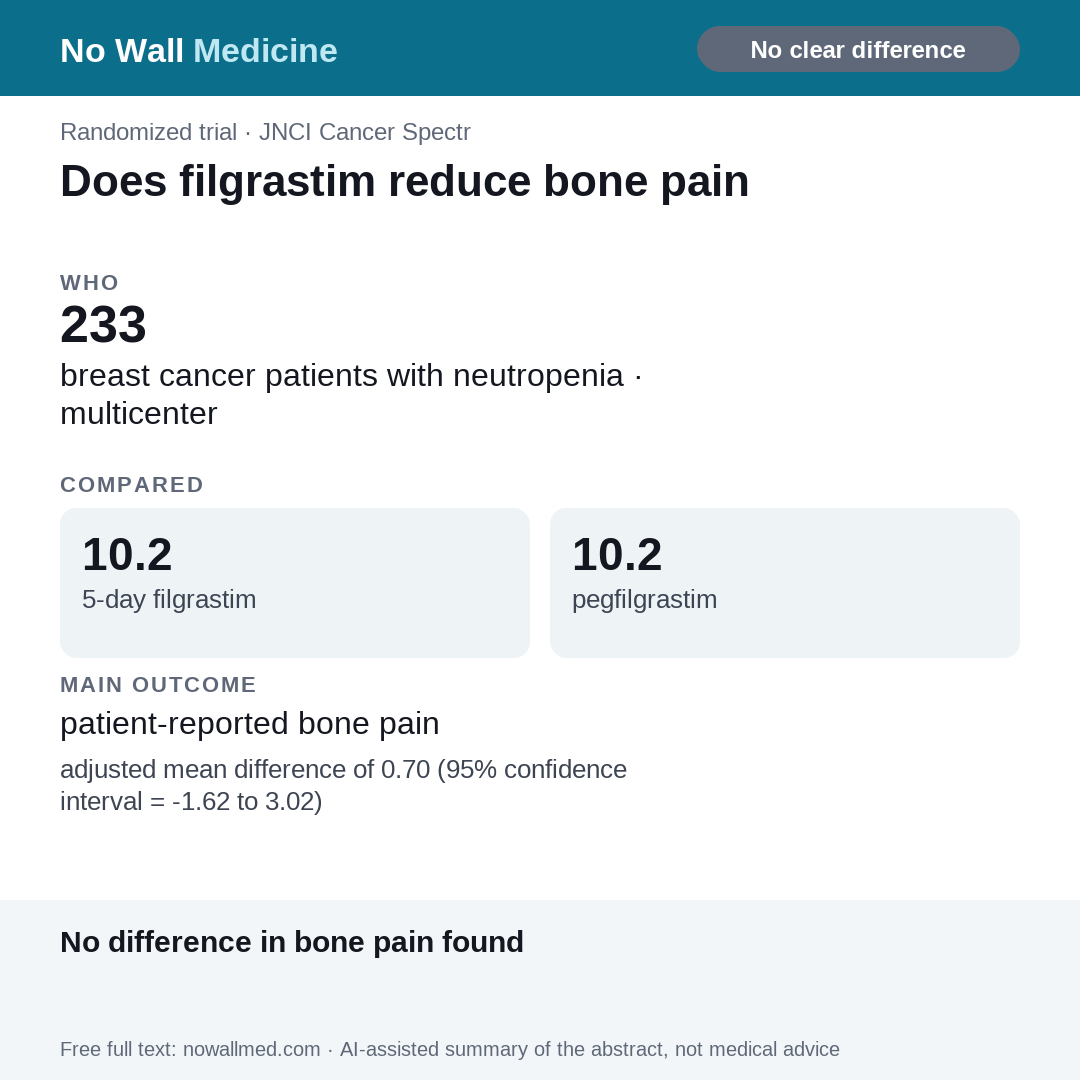
REaCT-5G: a randomized trial of bone pain with 5-day filgrastim vs pegfilgrastim for neutropenia in breast cancer
Randomized trialNo clear difference
Does filgrastim reduce bone pain
Who
233
breast cancer patients with neutropenia · multicenter
Compared
10.25-day filgrastim (11.2)
10.2pegfilgrastim (9.81)
Main outcome
patient-reported bone pain
Result: adjusted mean difference of 0.70 (95% confidence interval = -1.62 to 3.02)
Bottom line: No difference in bone pain found
JNCI Cancer Spectr · 2025-08-14Download image
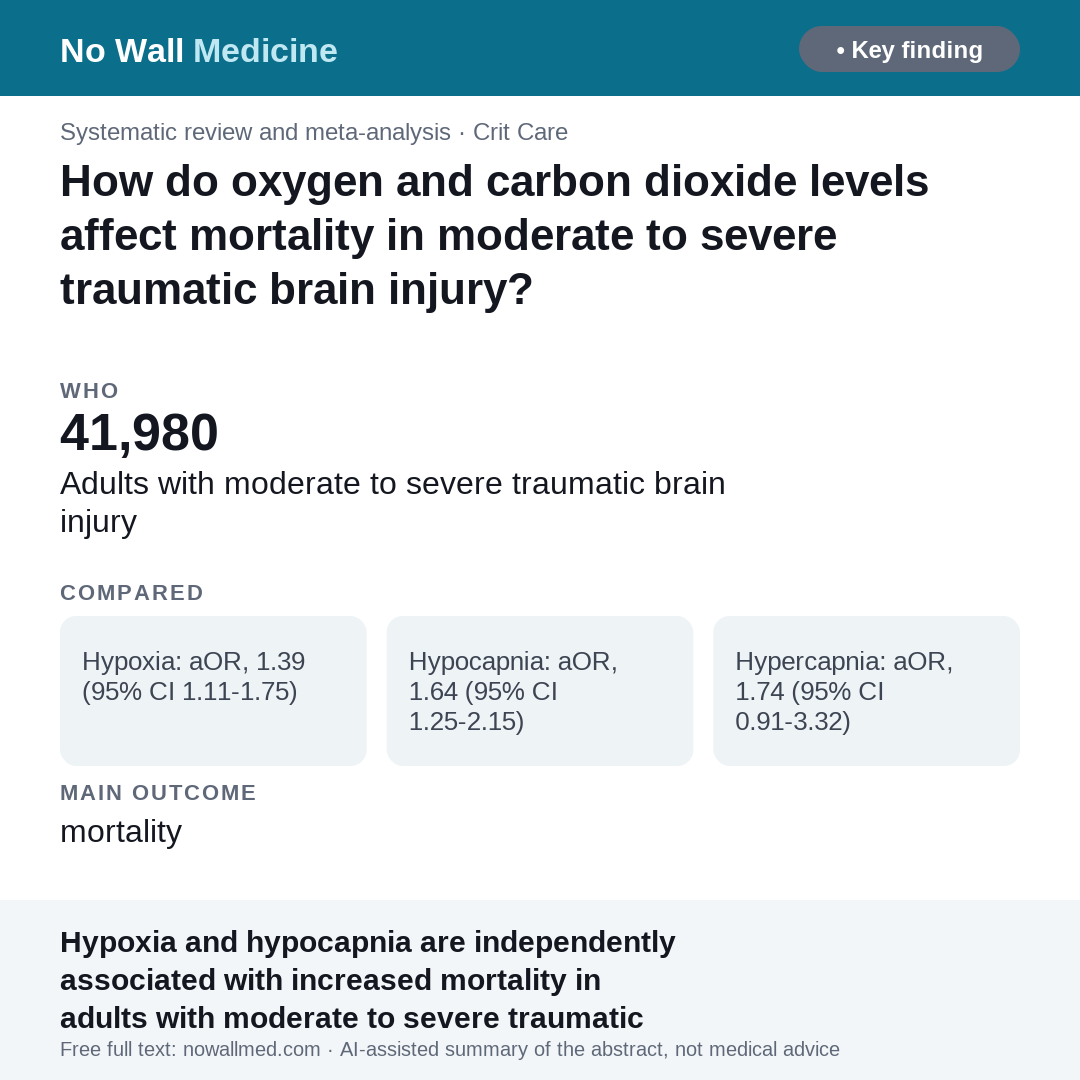
Impact of oxygen and carbon dioxide levels on mortality in moderate to severe traumatic brain injury: a systematic review and meta-analysis
Systematic review and meta-analysisHarm found
How do oxygen and carbon dioxide levels affect mortality in moderate to severe traumatic brain injury?
Who
41,980
Adults with moderate to severe traumatic brain injury
Compared
Hypoxia: aOR, 1.39 (95% CI 1.11-1.75)
Hypocapnia: aOR, 1.64 (95% CI 1.25-2.15)
Hypercapnia: aOR, 1.74 (95% CI 0.91-3.32)
Main outcome
mortality
Bottom line: Hypoxia and hypocapnia are independently associated with increased mortality in adults with moderate to severe traumatic brain injury.
Crit Care · 2025-08-14Download image
Efficacy of zinc supplementation for young infants with clinical severe infection in Tanzania: study protocol for a randomised controlled trial
Individually randomised, quadruple-blind trialUnclear result
Does zinc supplementation improve survival and treatment outcomes for young infants with severe infection?
Who
3250
Infants 0-59 days old with clinical severe infection · Dar es Salaam, Tanzania
Compared
zinc citrate supplementation
matching placebo supplementation
Main outcome
infant death and treatment failure
Bottom line: This study protocol describes a trial to evaluate zinc supplementation for infants with severe infection.
BMJ Paediatr Open · 2025-08-14Download image

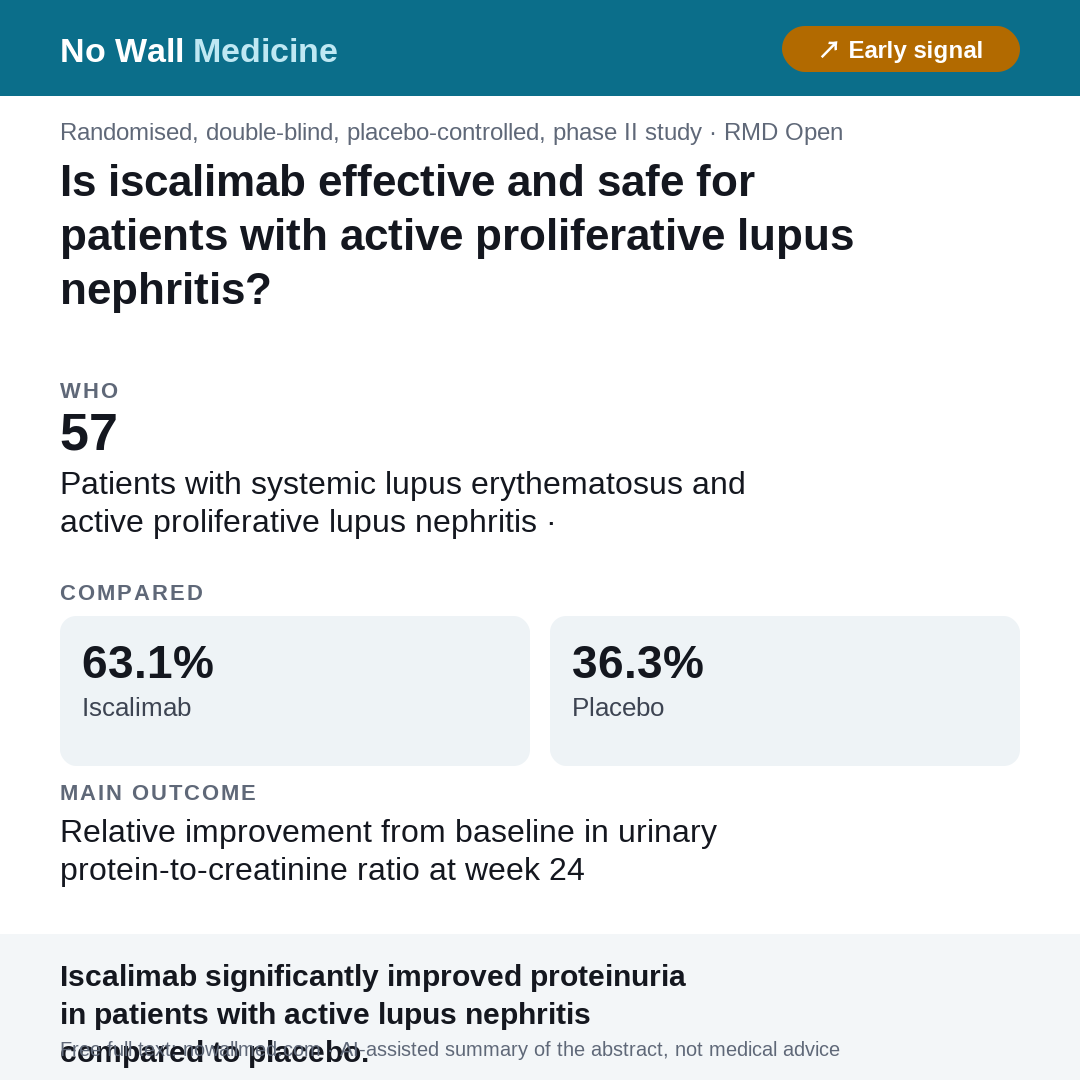
Efficacy, pharmacokinetics and safety of iscalimab (CFZ533) in patients with proliferative lupus nephritis: a randomised, double-blind, placebo-controlled, phase II study
Randomised, double-blind, placebo-controlled, phase II studyBenefit found
Is iscalimab effective and safe for patients with active proliferative lupus nephritis?
Who
57
Patients with systemic lupus erythematosus and active proliferative lupus nephritis · Multicentre study
Compared
63.1%Iscalimab
36.3%Placebo
Main outcome
Relative improvement from baseline in urinary protein-to-creatinine ratio at week 24
Result: 42.1% reduction in urinary protein-to-creatinine ratio versus placebo
Bottom line: Iscalimab significantly improved proteinuria in patients with active lupus nephritis compared to placebo.
RMD Open · 2025-08-14Download image
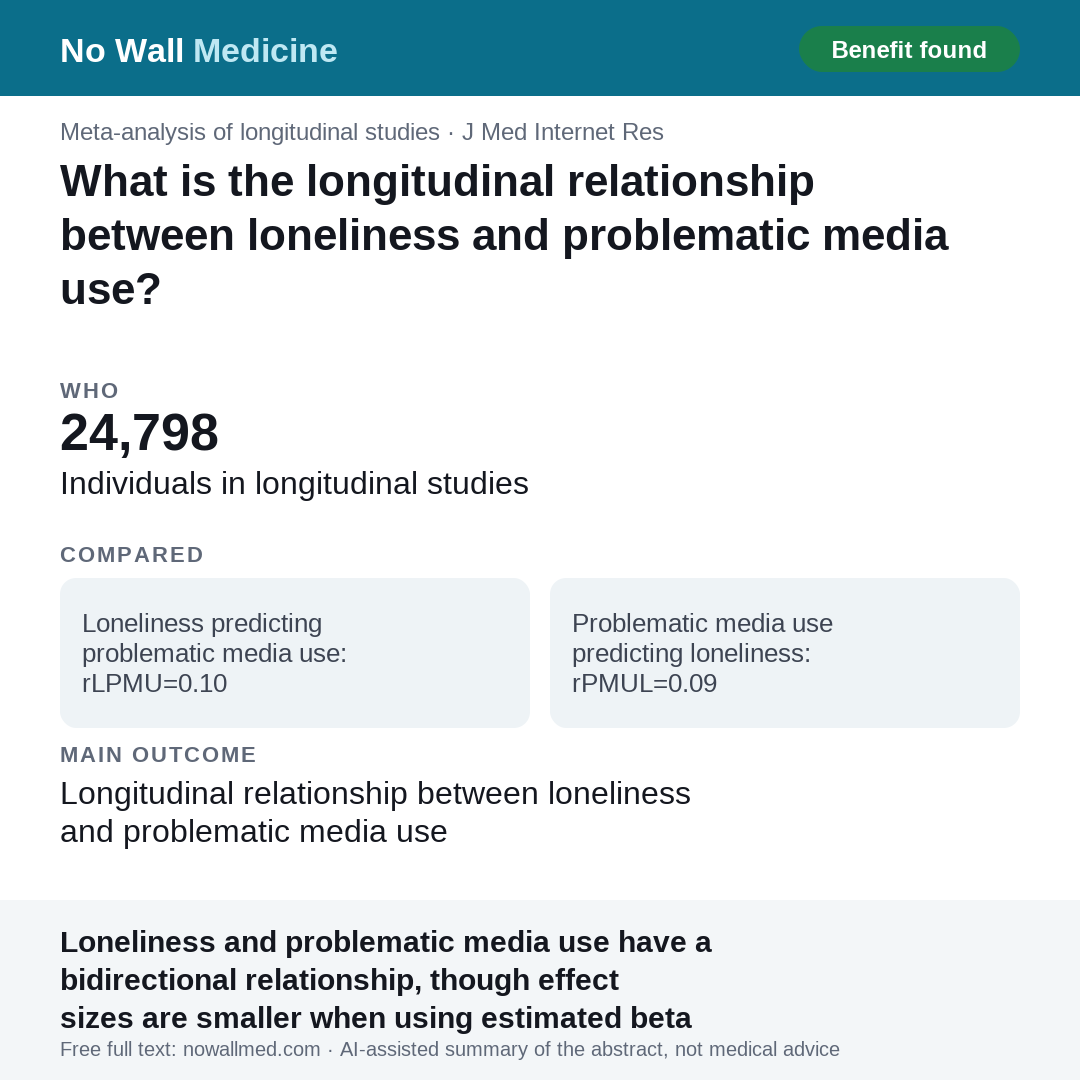
Loneliness and Problematic Media Use: Meta-Analysis of Longitudinal Studies
Meta-analysis of longitudinal studiesBenefit found
What is the longitudinal relationship between loneliness and problematic media use?
Who
24,798
Individuals in longitudinal studies
Compared
Loneliness predicting problematic media use: rLPMU=0.10
Problematic media use predicting loneliness: rPMUL=0.09
Main outcome
Longitudinal relationship between loneliness and problematic media use
Bottom line: Loneliness and problematic media use have a bidirectional relationship, though effect sizes are smaller when using estimated beta coefficients.
Limitation: Asymmetrical pattern in funnel plot and Egger regression test suggests need for more studies.
J Med Internet Res · 2025-08-14Download image
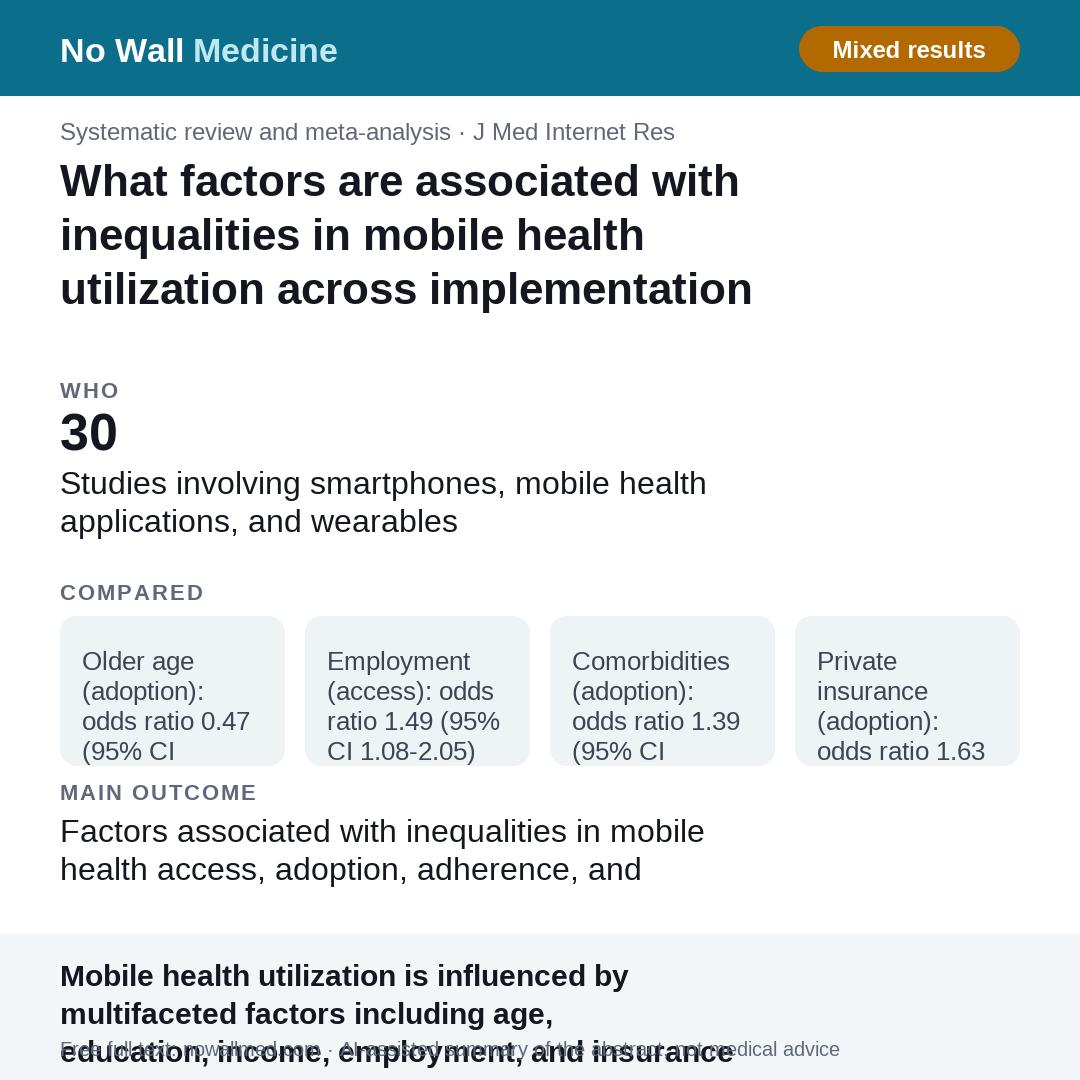
Understanding Inequalities in Mobile Health Utilization Across Phases: Systematic Review and Meta-Analysis
Systematic review and meta-analysisMixed results
What factors are associated with inequalities in mobile health utilization across implementation phases?
Who
30
Studies involving smartphones, mobile health applications, and wearables
Compared
Older age (adoption): odds ratio 0.47 (95% CI 0.23-0.93)
Employment (access): odds ratio 1.49 (95% CI 1.08-2.05)
Comorbidities (adoption): odds ratio 1.39 (95% CI 1.03-1.86)
Private insurance (adoption): odds ratio 1.63 (95% CI 1.07-2.48)
Main outcome
Factors associated with inequalities in mobile health access, adoption, adherence, and maintenance
Bottom line: Mobile health utilization is influenced by multifaceted factors including age, education, income, employment, and insurance across different implementation phases.
J Med Internet Res · 2025-08-14Download image
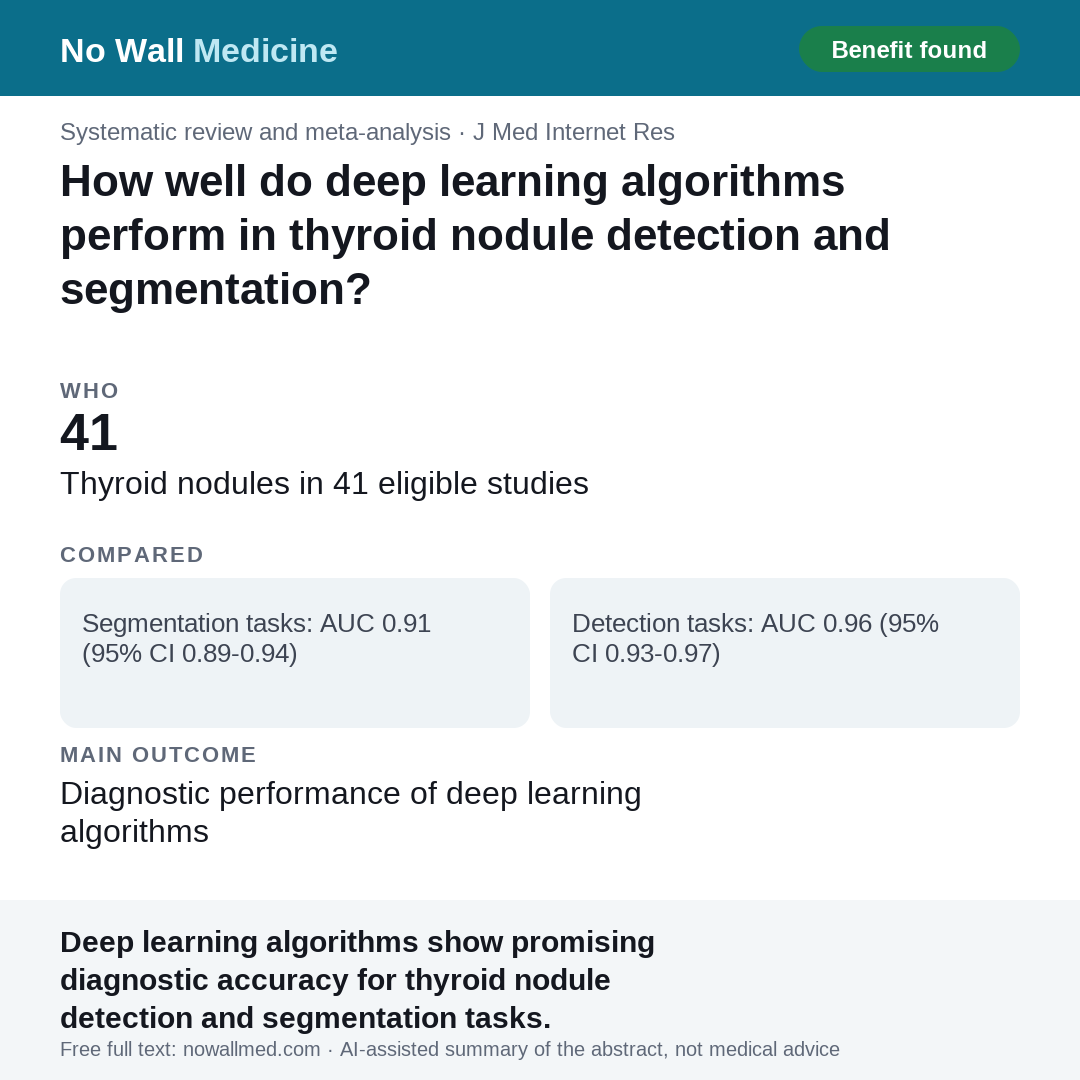
Performance Evaluation of Deep Learning for the Detection and Segmentation of Thyroid Nodules: Systematic Review and Meta-Analysis
Systematic review and meta-analysisBenefit found
How well do deep learning algorithms perform in thyroid nodule detection and segmentation?
Who
41
Thyroid nodules in 41 eligible studies
Compared
Segmentation tasks: AUC 0.91 (95% CI 0.89-0.94)
Detection tasks: AUC 0.96 (95% CI 0.93-0.97)
Main outcome
Diagnostic performance of deep learning algorithms
Bottom line: Deep learning algorithms show promising diagnostic accuracy for thyroid nodule detection and segmentation tasks.
Limitation: Suboptimal methodological design, inconsistent image quality, and insufficient external validation.
J Med Internet Res · 2025-08-14Download image
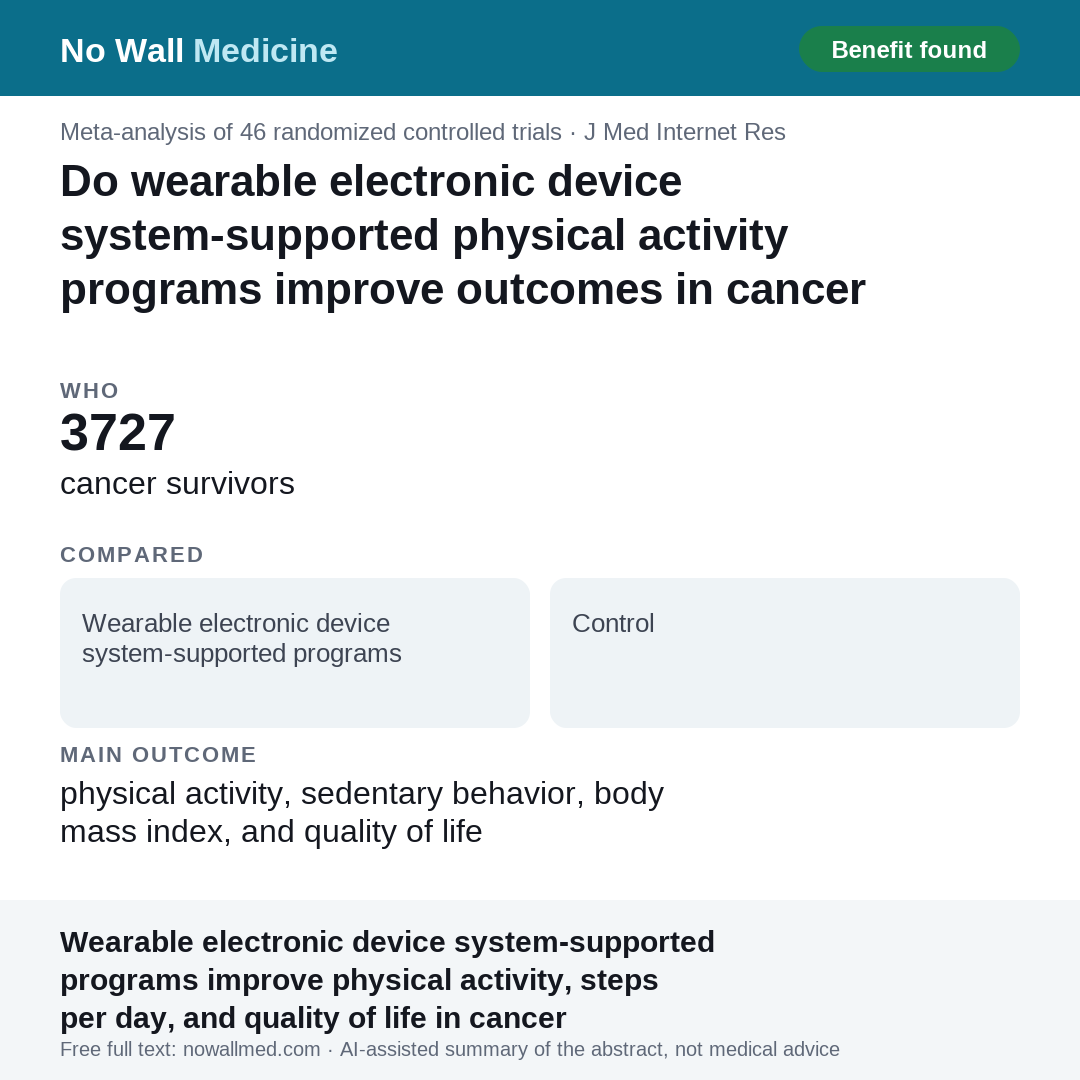
The Effectiveness of Wearable Electronic Device System-Supported Physical Activity Programs for Cancer Survivors: Meta-Analysis of Randomized Controlled Trials
Meta-analysis of 46 randomized controlled trialsBenefit found
Do wearable electronic device system-supported physical activity programs improve outcomes in cancer survivors?
Who
3727
cancer survivors
Compared
Wearable electronic device system-supported programs
Control
Main outcome
physical activity, sedentary behavior, body mass index, and quality of life
Result: SMD 0.66 (95% CI 0.47-0.86) for moderate-to-vigorous-intensity physical activity
Bottom line: Wearable electronic device system-supported programs improve physical activity, steps per day, and quality of life in cancer survivors.
J Med Internet Res · 2025-08-14Download image
Social-Media-Based Mental Health Interventions: Meta-Analysis of Randomized Controlled Trials
Meta-analysis of randomized controlled trialsBenefit found
Do social-media-based mental health interventions reduce mental health issues?
Who
5624
General population aged 15.27 to 59.65 years
Compared
Social-media-based interventions
Control groups
Main outcome
Reduction of mental health issues including depression, anxiety, and stress
Result: effect size 0.32 (95% CI 0.24-0.45)
Bottom line: Social-media-based mental health interventions are effective at reducing anxiety, depression, and stress in the general population.
Limitation: The small sample size of 17 included studies restricts the power of the models.
J Med Internet Res · 2025-08-14Download image

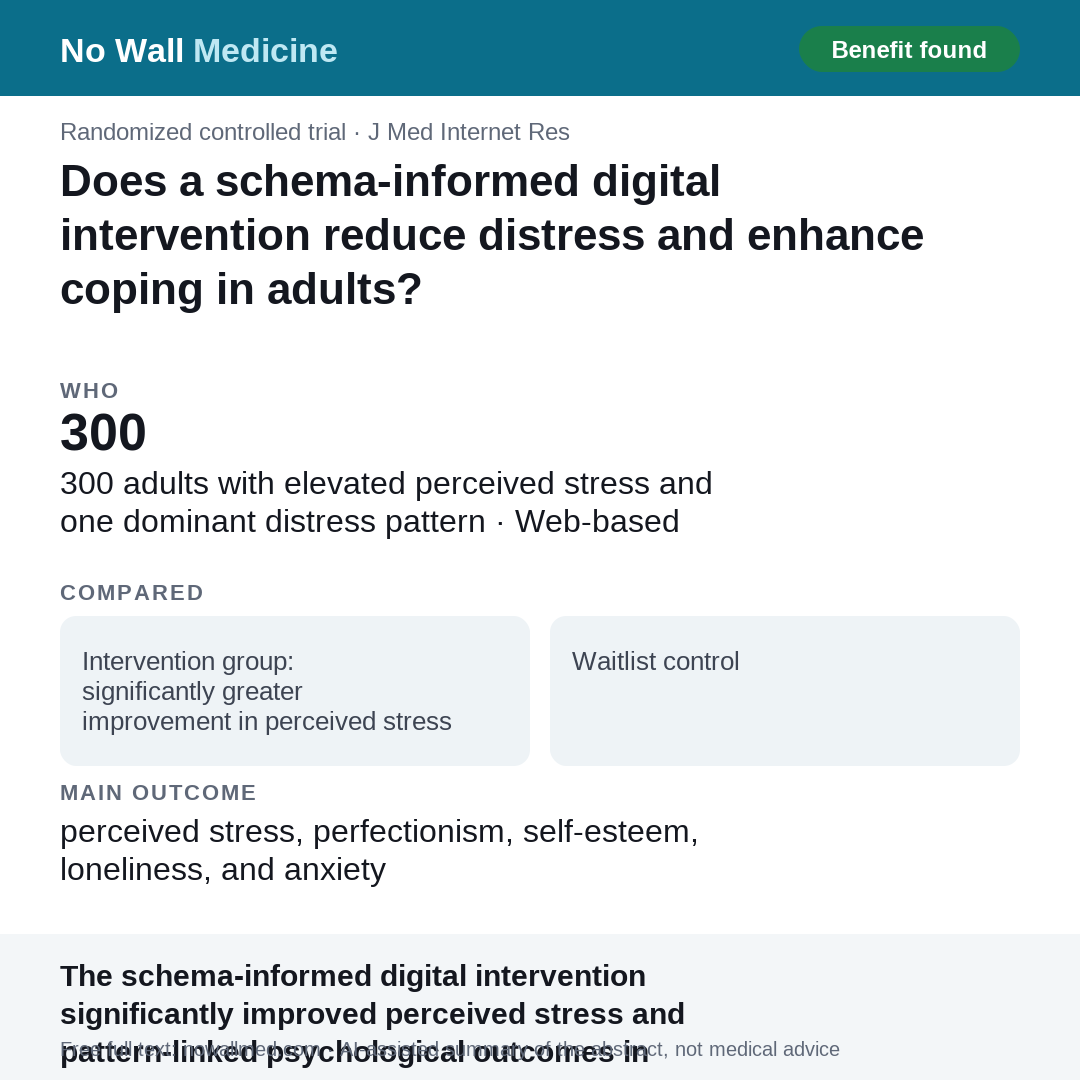
Schema-Informed Digital Mental Health Intervention for Maladaptive Cognitive-Emotional Patterns: Randomized Controlled Trial
Randomized controlled trialBenefit found
Does a schema-informed digital intervention reduce distress and enhance coping in adults?
Who
300
300 adults with elevated perceived stress and one dominant distress pattern · Web-based recruitment in South Korea
Compared
Intervention group: significantly greater improvement in perceived stress
Waitlist control
Main outcome
perceived stress, perfectionism, self-esteem, loneliness, and anxiety
Bottom line: The schema-informed digital intervention significantly improved perceived stress and pattern-linked psychological outcomes in adults.
Limitation: Limitations in study design, sample representativeness, and follow-up duration.
J Med Internet Res · 2025-08-14Download image
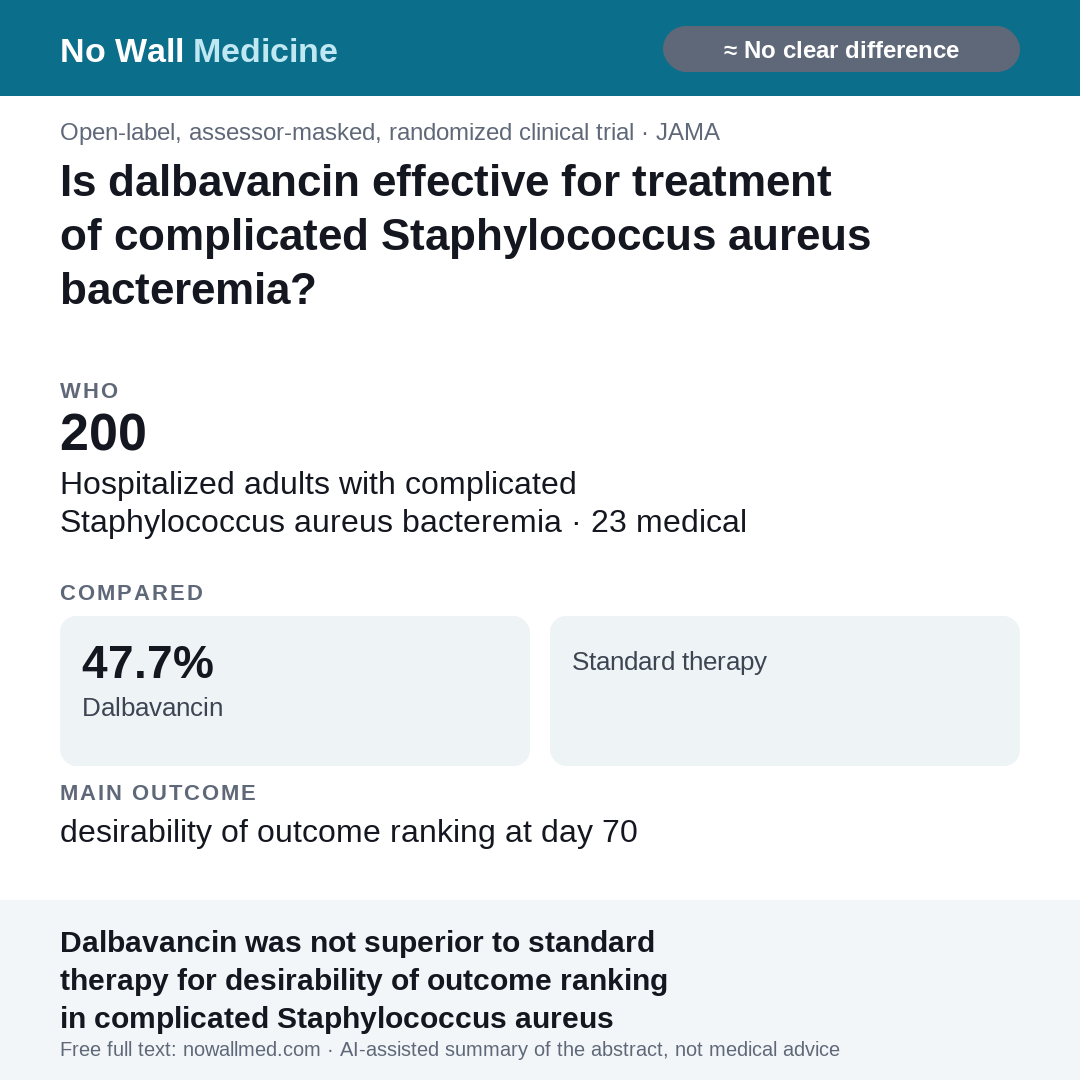
Dalbavancin for Treatment of Staphylococcus aureus Bacteremia: The DOTS Randomized Clinical Trial
Open-label, assessor-masked, randomized clinical trialNo clear difference
Is dalbavancin effective for treatment of complicated Staphylococcus aureus bacteremia?
Who
200
Hospitalized adults with complicated Staphylococcus aureus bacteremia · 23 medical centers in the US and Canada
Compared
47.7%Dalbavancin (95% CI, 39.8% to 55.7%)
Standard therapy
Main outcome
desirability of outcome ranking at day 70
Result: 47.7% (95% CI, 39.8% to 55.7%)
Bottom line: Dalbavancin was not superior to standard therapy for desirability of outcome ranking in complicated Staphylococcus aureus bacteremia.
JAMA · 2025-08-13Download image
Virtual reality-based versus standard cognitive behavioral therapy for paranoia in schizophrenia spectrum disorders: a randomized controlled trial
Assessor-masked, randomized parallel group superiority trialNo clear difference
Is virtual reality-based cognitive behavioral therapy more effective than standard therapy for paranoia?
Who
254
Participants with schizophrenia spectrum disorders
Compared
Virtual reality-based cognitive behavioral therapy
Standard cognitive behavioral therapy
Main outcome
Ideas of Persecution subscale from the Green Paranoid Thoughts Scale
Result: 2% in favor of VR-CBTp; 95% confidence interval: -11% to +17%
Bottom line: Virtual reality-based cognitive behavioral therapy was not superior to standard cognitive behavioral therapy in reducing paranoia.
Nat Med · 2025-08-13Download image

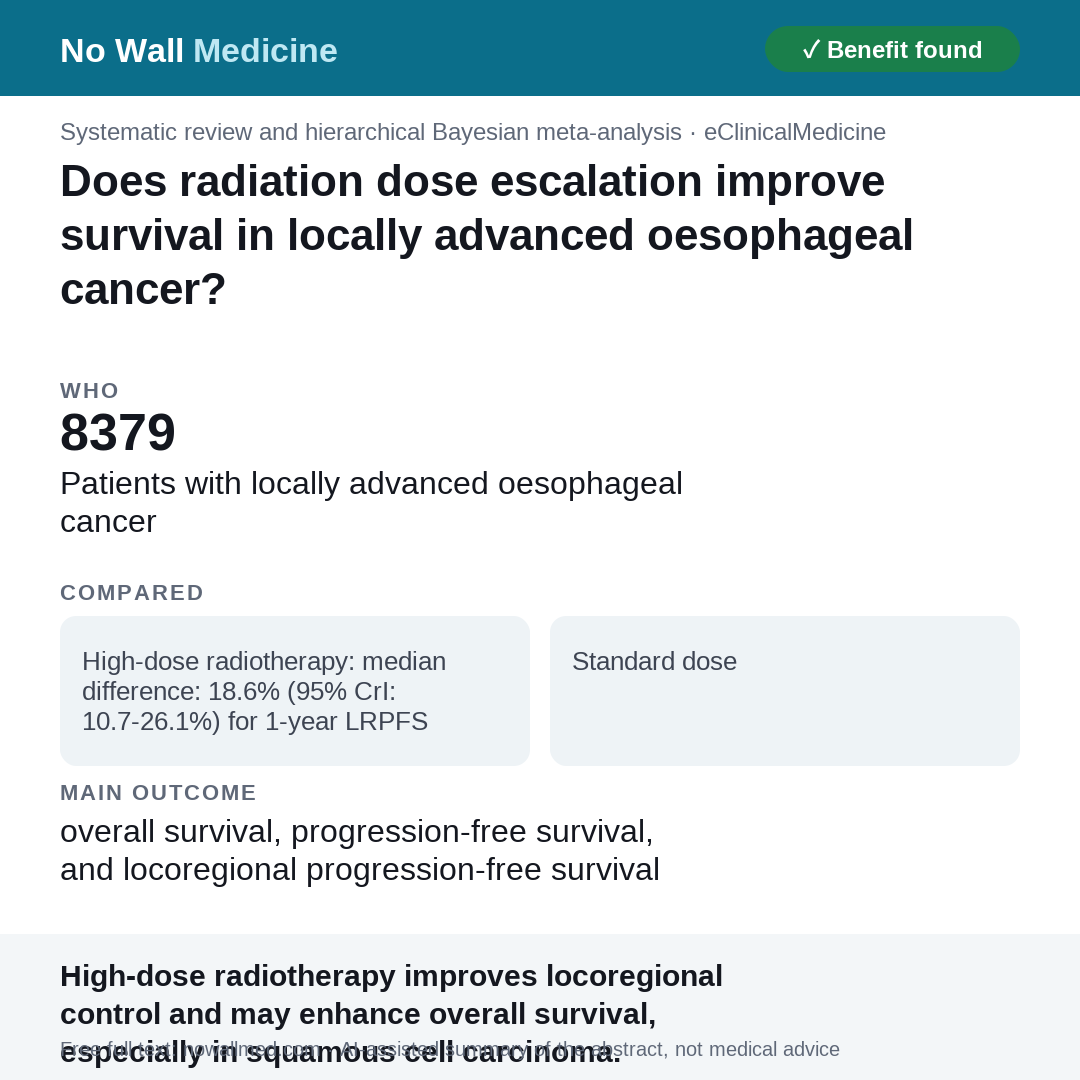
Radiation dose escalation in locally advanced oesophageal cancer: a systematic review and hierarchical Bayesian meta-analysis
Systematic review and hierarchical Bayesian meta-analysisBenefit found
Does radiation dose escalation improve survival in locally advanced oesophageal cancer?
Who
8379
Patients with locally advanced oesophageal cancer
Compared
High-dose radiotherapy: median difference: 18.6% (95% CrI: 10.7-26.1%) for 1-year LRPFS
Standard dose
Main outcome
overall survival, progression-free survival, and locoregional progression-free survival
Result: median difference: 18.6% (95% CrI: 10.7-26.1%) for 1-year LRPFS
Bottom line: High-dose radiotherapy improves locoregional control and may enhance overall survival, especially in squamous cell carcinoma.
Limitation: Most included studies were retrospective with moderate risk of bias.
eClinicalMedicine · 2025-08-13Download image
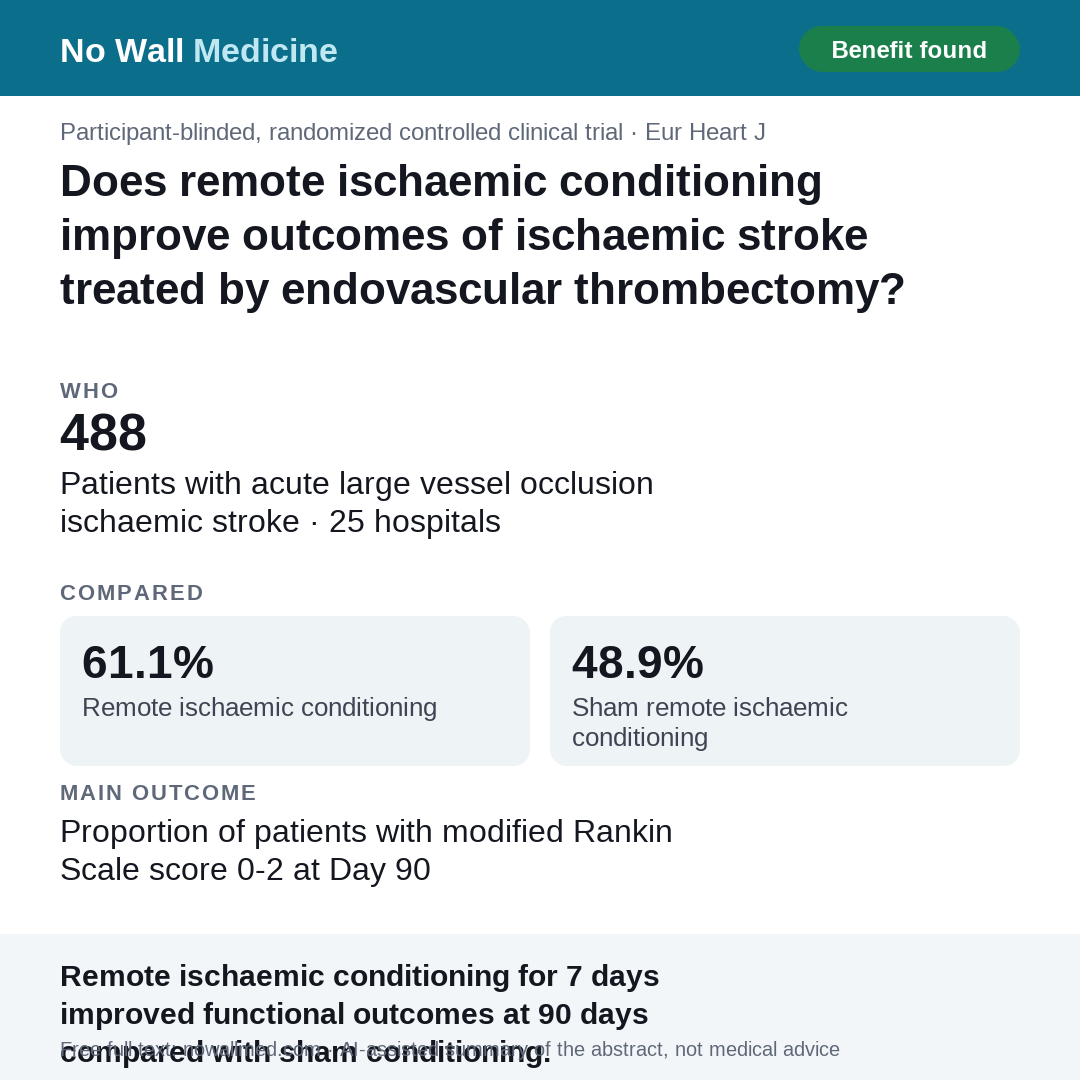
Remote ischaemic conditioning improves outcomes of ischaemic stroke treated by endovascular thrombectomy: the SERIC-EVT trial
Participant-blinded, randomized controlled clinical trialBenefit found
Does remote ischaemic conditioning improve outcomes of ischaemic stroke treated by endovascular thrombectomy?
Who
488
Patients with acute large vessel occlusion ischaemic stroke · 25 hospitals
Compared
61.1%Remote ischaemic conditioning
48.9%Sham remote ischaemic conditioning
Main outcome
Proportion of patients with modified Rankin Scale score 0-2 at Day 90
Result: unadjusted risk ratio 1.25 (95% confidence interval 1.06-1.47)
Bottom line: Remote ischaemic conditioning for 7 days improved functional outcomes at 90 days compared with sham conditioning.
Eur Heart J · 2025-08-13Download image
Coronary function testing vs angiography alone to guide treatment of angina with non-obstructive coronary arteries: the ILIAS ANOCA trial
Randomized trialBenefit found
Does routine coronary function testing with tailored therapy improve quality of life in ANOCA?
Who
153
Patients with angina with non-obstructive coronary arteries
Compared
Standard care
Intervention group
Main outcome
Change in Seattle Angina Questionnaire summary score
Result: 9.4 units (95% confidence interval 3.9-14.9)
Bottom line: Routine coronary function testing with tailored medical therapy significantly improved quality of life in ANOCA patients.
Eur Heart J · 2025-08-13Download image

Safety and immunogenicity of novel live attenuated type 1 and type 3 oral poliomyelitis vaccines in healthy adults in the USA: a first-in-human, observer-masked, multicentre, phase 1 randomised controlled trial
First-in-human, observer-masked, multicentre, phase 1 randomised controlled trialBenefit found
What are the safety and immunogenicity of novel live attenuated oral poliovirus vaccines in healthy adults?
Who
205
Healthy adults in the USA · Four centres in the USA
Compared
nOPV1
mOPV1
nOPV3
mOPV3
Main outcome
Safety, immunogenicity, and faecal viral shedding
Bottom line: Novel oral poliovirus vaccines were well tolerated with similar immunogenicity and shedding profiles to Sabin-strain vaccines.
Funded by: Bill & Melinda Gates Foundation
Lancet Infect Dis · 2025-08-13Download image

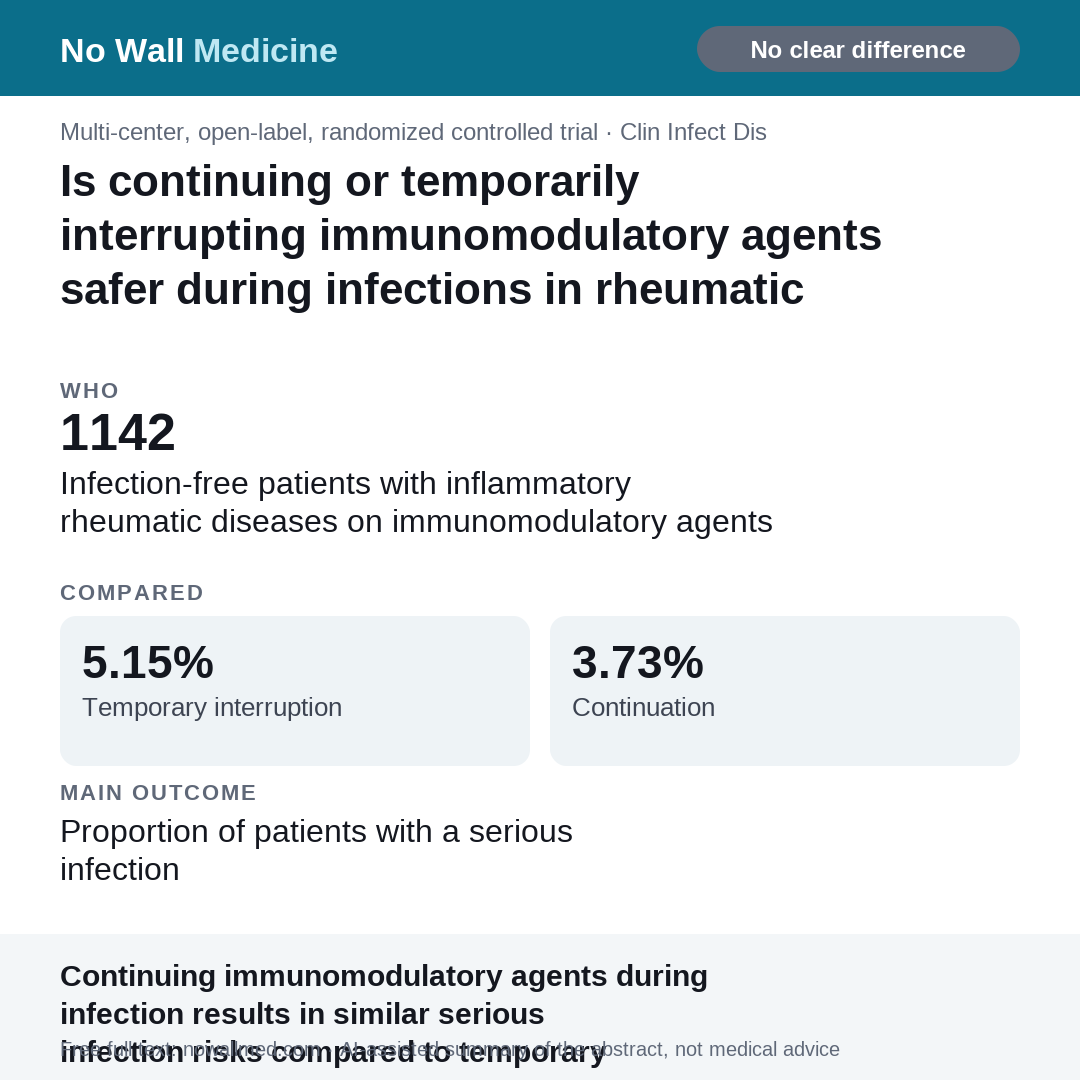
Continuation Versus Temporary Interruption of Immunomodulatory Agents During Infections in Patients With Inflammatory Rheumatic Diseases: A Randomized Controlled Trial
Multi-center, open-label, randomized controlled trialNo clear difference
Is continuing or temporarily interrupting immunomodulatory agents safer during infections in rheumatic disease?
Who
1142
Infection-free patients with inflammatory rheumatic diseases on immunomodulatory agents · Multi-center
Compared
5.15%Temporary interruption (12/233)
3.73%Continuation (9/241)
Main outcome
Proportion of patients with a serious infection
Result: adjusted risk difference 1.71% (95% CI -1.99 to 5.39)
Bottom line: Continuing immunomodulatory agents during infection results in similar serious infection risks compared to temporary interruption.
Limitation: The study is limited by low statistical power.
Clin Infect Dis · 2025-08-13Download image
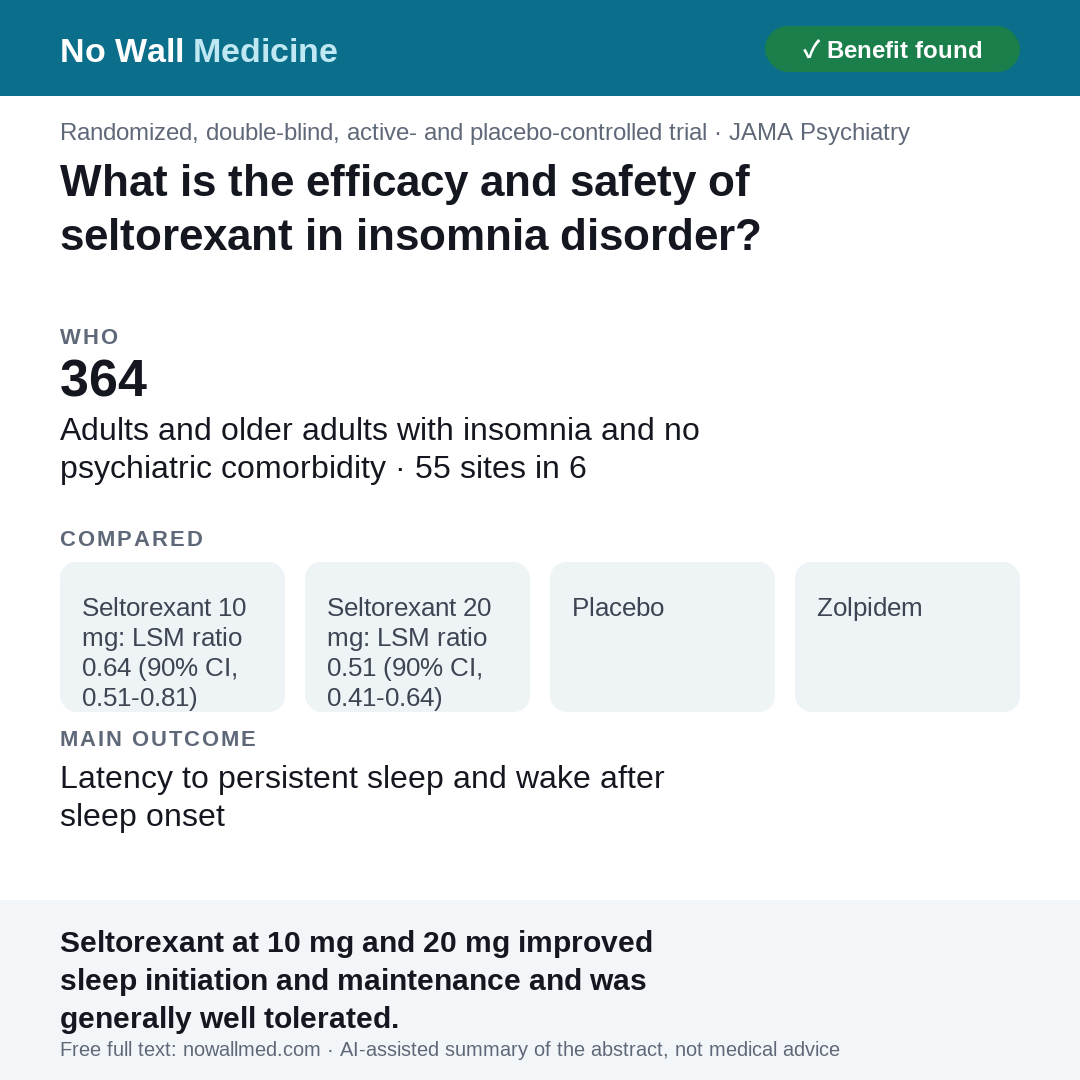
Efficacy and Safety of Seltorexant in Insomnia Disorder: A Randomized Clinical Trial
Randomized, double-blind, active- and placebo-controlled trialBenefit found
What is the efficacy and safety of seltorexant in insomnia disorder?
Who
364
Adults and older adults with insomnia and no psychiatric comorbidity · 55 sites in 6 countries
Compared
Seltorexant 10 mg: LSM ratio 0.64 (90% CI, 0.51-0.81)
Seltorexant 20 mg: LSM ratio 0.51 (90% CI, 0.41-0.64)
Placebo
Zolpidem
Main outcome
Latency to persistent sleep and wake after sleep onset
Result: LSM ratio 0.51 (90% CI, 0.41-0.64)
Bottom line: Seltorexant at 10 mg and 20 mg improved sleep initiation and maintenance and was generally well tolerated.
JAMA Psychiatry · 2025-08-13Download image