Visual abstracts
New randomized trials and meta-analyses from leading journals at a glance: who was studied, what was compared, and what was found. Every paper is free to read in full.
All specialtiesCardiology 1420Oncology 1253Gastroenterology & Hepatology 515Infectious Disease 915Neurology 585Psychiatry & Mental Health 708Pulmonology 614Critical Care 417Endocrinology & Diabetes 778Pediatrics 844Surgery 679Orthopedics & Sports Medicine 269Neurosurgery 189Cardiothoracic & Vascular Surgery 158Plastic & Reconstructive Surgery 226Nephrology 301Rheumatology 189Hematology 297Dermatology 150Ophthalmology 159Obstetrics & Gynecology 449Public & Global Health 273Radiology & Imaging 180Anesthesiology 278Urology 265ENT (Otolaryngology) 193Emergency Medicine 157Allergy & Immunology 92Geriatrics 296Family Medicine & Primary Care 175Medical Genetics & Genomics 151Pathology & Laboratory Medicine 43Physical Medicine & Rehabilitation 248Palliative Care 127Nutrition 372Digital Health & AI 744General Medicine 123
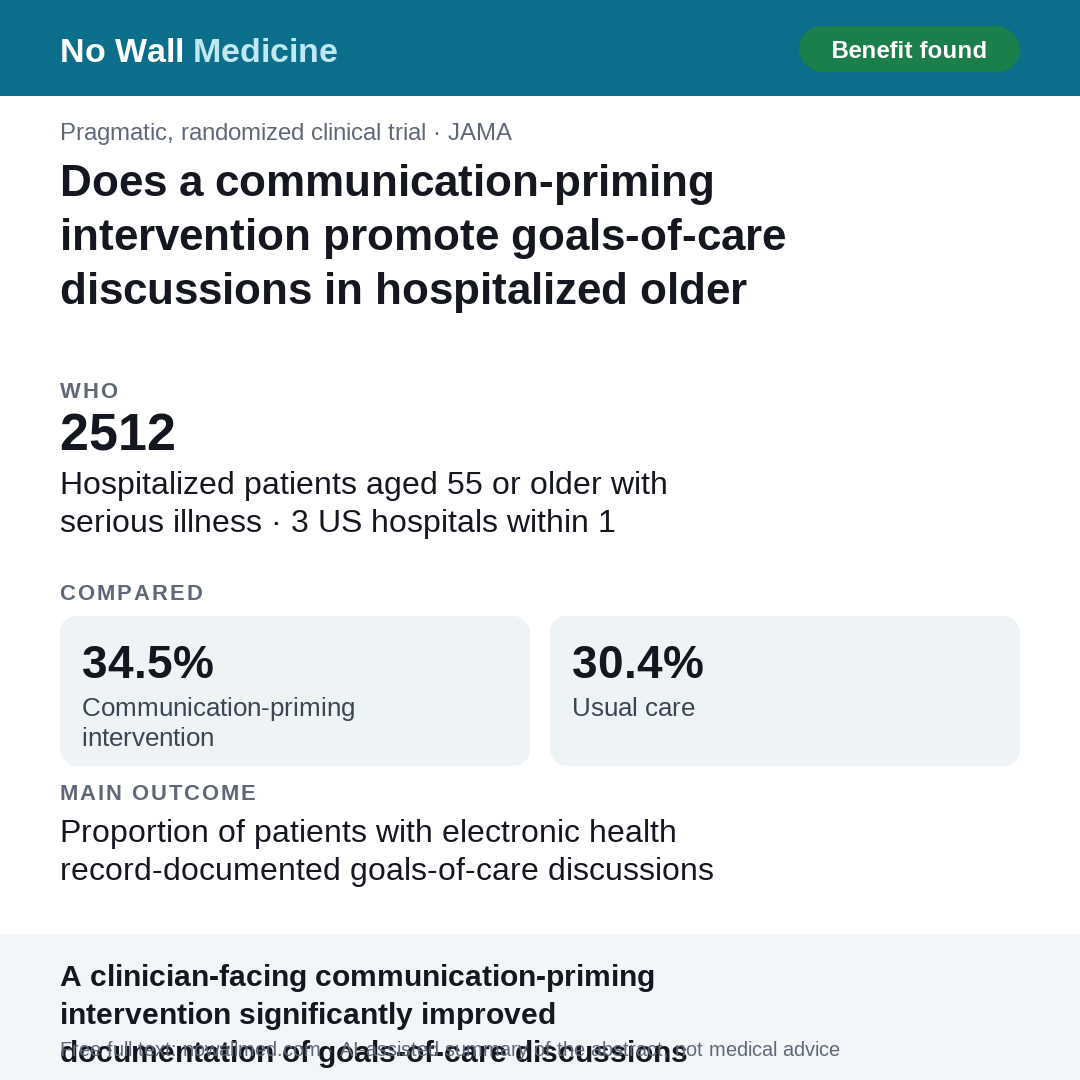
Intervention to Promote Communication About Goals of Care for Hospitalized Patients With Serious Illness: A Randomized Clinical Trial
Pragmatic, randomized clinical trialBenefit found
Does a communication-priming intervention promote goals-of-care discussions in hospitalized older patients?
Who
2512
Hospitalized patients aged 55 or older with serious illness · 3 US hospitals within 1 health care system
Compared
34.5%Communication-priming intervention (433 of 1255 patients)
30.4%Usual care (382 of 1257 patients)
Main outcome
Proportion of patients with electronic health record-documented goals-of-care discussions
Result: hospital- and dementia-adjusted difference, 4.1% (95% CI, 0.4% to 7.8%)
Bottom line: A clinician-facing communication-priming intervention significantly improved documentation of goals-of-care discussions in hospitalized older adults.
JAMA · 2023-05-21Download image
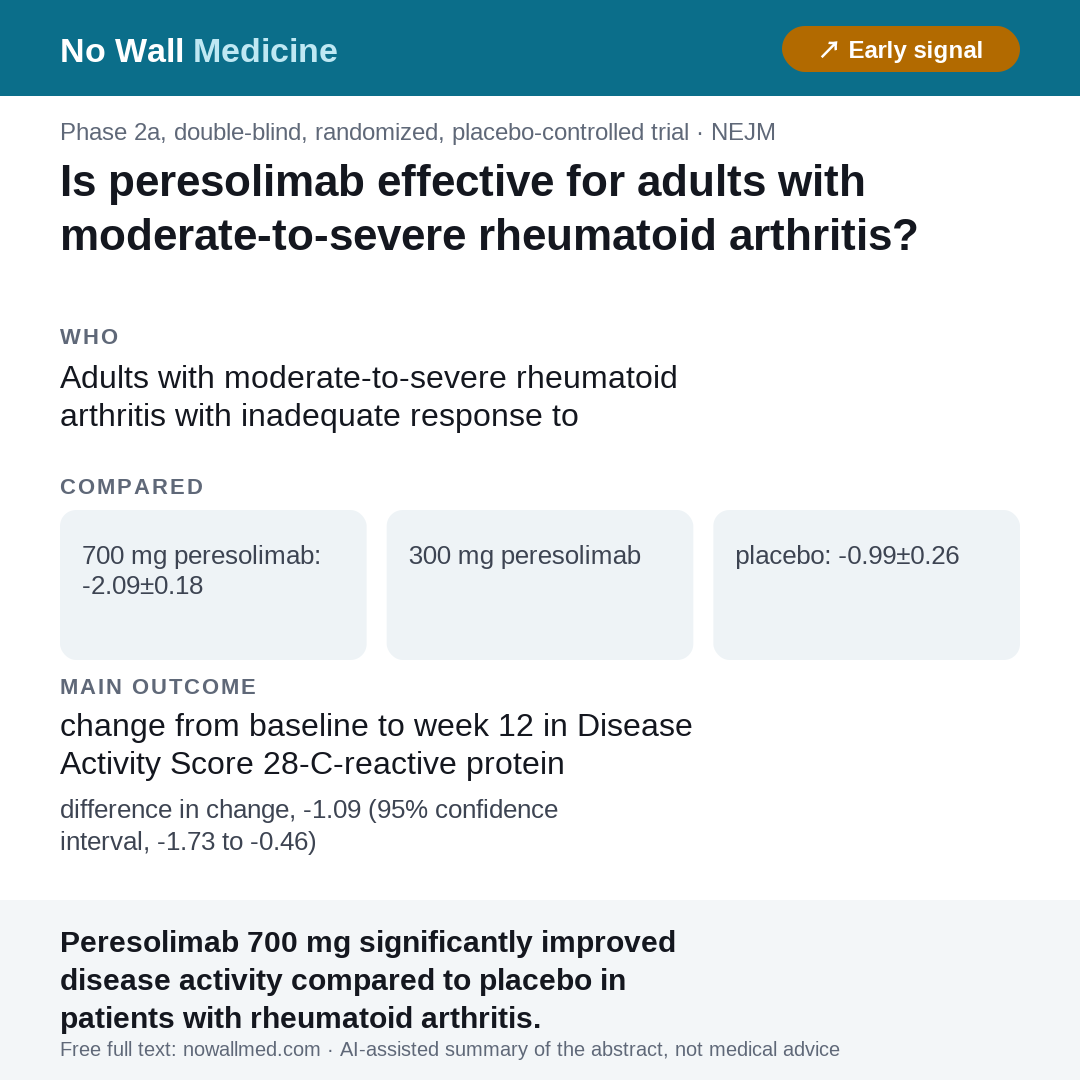
A Phase 2 Trial of Peresolimab for Adults with Rheumatoid Arthritis
Phase 2a, double-blind, randomized, placebo-controlled trialBenefit found
Is peresolimab effective for adults with moderate-to-severe rheumatoid arthritis?
Who
Adults with moderate-to-severe rheumatoid arthritis with inadequate response to disease-modifying antirheumatic drugs
Compared
700 mg peresolimab: -2.09±0.18
300 mg peresolimab
placebo: -0.99±0.26
Main outcome
change from baseline to week 12 in Disease Activity Score 28-C-reactive protein
Result: difference in change, -1.09 (95% confidence interval, -1.73 to -0.46)
Bottom line: Peresolimab 700 mg significantly improved disease activity compared to placebo in patients with rheumatoid arthritis.
Funded by: Eli Lilly
NEJM · 2023-05-17Download image
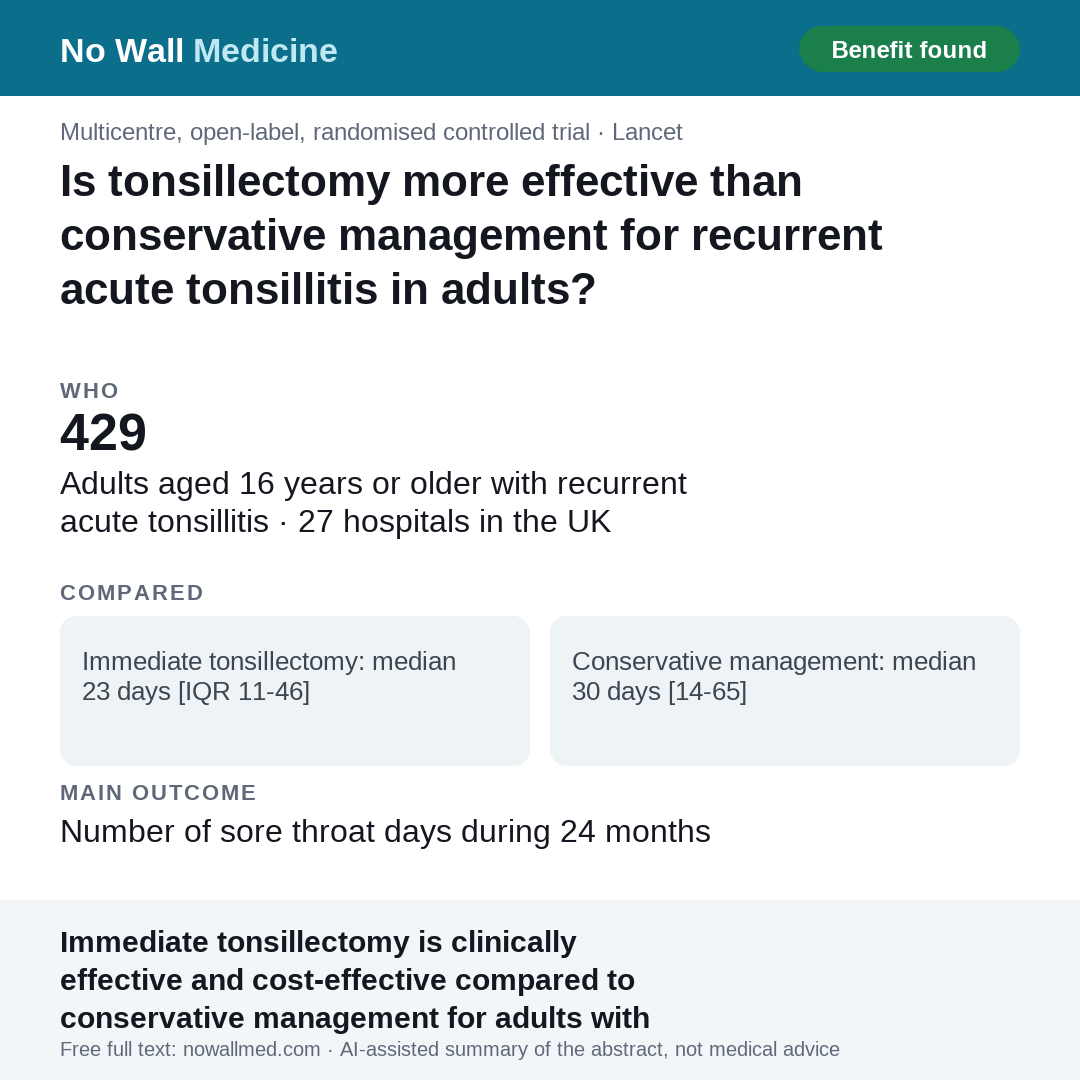
Conservative management versus tonsillectomy in adults with recurrent acute tonsillitis in the UK (NATTINA): a multicentre, open-label, randomised controlled trial
Multicentre, open-label, randomised controlled trialBenefit found
Is tonsillectomy more effective than conservative management for recurrent acute tonsillitis in adults?
Who
429
Adults aged 16 years or older with recurrent acute tonsillitis · 27 hospitals in the UK
Compared
Immediate tonsillectomy: median 23 days [IQR 11-46]
Conservative management: median 30 days [14-65]
Main outcome
Number of sore throat days during 24 months
Result: incident rate ratio 0·53 (95% CI 0·43 to 0·65)
Bottom line: Immediate tonsillectomy is clinically effective and cost-effective compared to conservative management for adults with recurrent acute tonsillitis.
Funded by: National Institute for Health Research
Lancet · 2023-05-17Download image
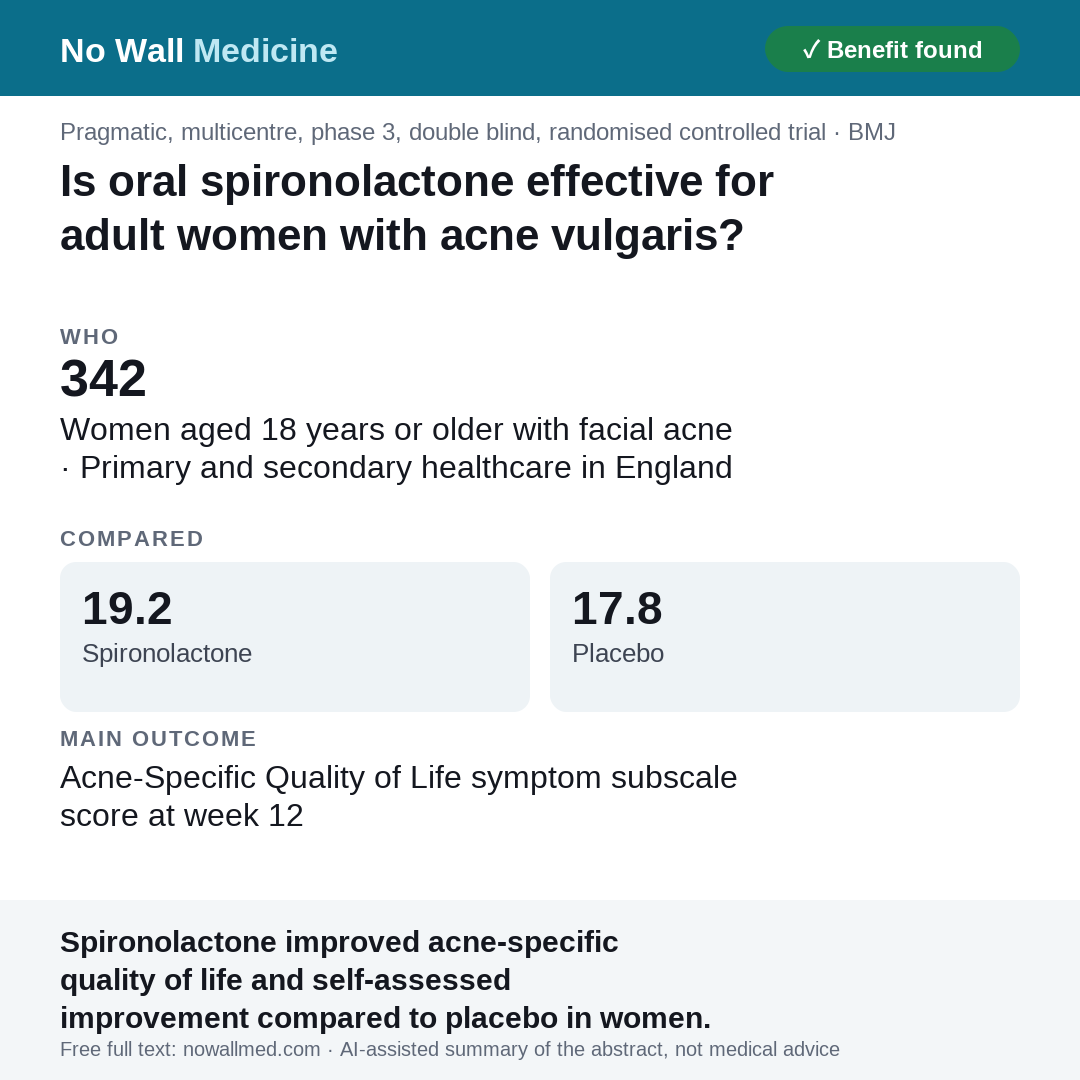
Effectiveness of spironolactone for women with acne vulgaris (SAFA) in England and Wales: pragmatic, multicentre, phase 3, double blind, randomised controlled trial
Pragmatic, multicentre, phase 3, double blind, randomised controlled trialBenefit found
Is oral spironolactone effective for adult women with acne vulgaris?
Who
342
Women aged 18 years or older with facial acne · Primary and secondary healthcare in England and Wales
Compared
19.2Spironolactone (6.1)
17.8Placebo (5.6)
Main outcome
Acne-Specific Quality of Life symptom subscale score at week 12
Result: difference favouring spironolactone 1.27 (95% confidence interval 0.07 to 2.46)
Bottom line: Spironolactone improved acne-specific quality of life and self-assessed improvement compared to placebo in women.
BMJ · 2023-05-16Download image
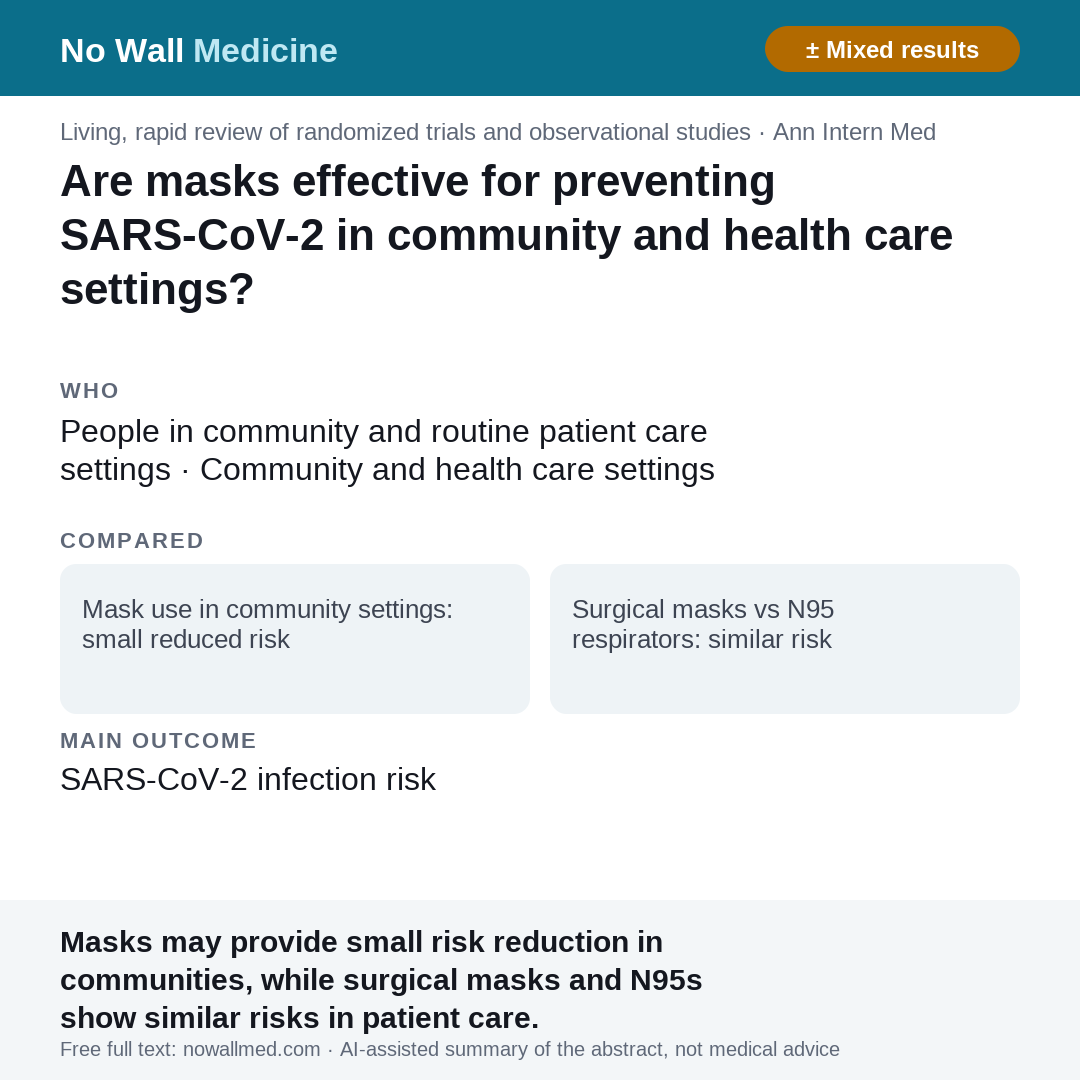
Major Update: Masks for Prevention of SARS-CoV-2 in Health Care and Community Settings-Final Update of a Living, Rapid Review
Living, rapid review of randomized trials and observational studiesMixed results
Are masks effective for preventing SARS-CoV-2 in community and health care settings?
Who
People in community and routine patient care settings · Community and health care settings
Compared
Mask use in community settings: small reduced risk
Surgical masks vs N95 respirators: similar risk
Main outcome
SARS-CoV-2 infection risk
Bottom line: Masks may provide small risk reduction in communities, while surgical masks and N95s show similar risks in patient care.
Limitation: Few randomized trials, methodological limitations, imprecision, and uncertain applicability to Omicron variant era.
Ann Intern Med · 2023-05-16Download image
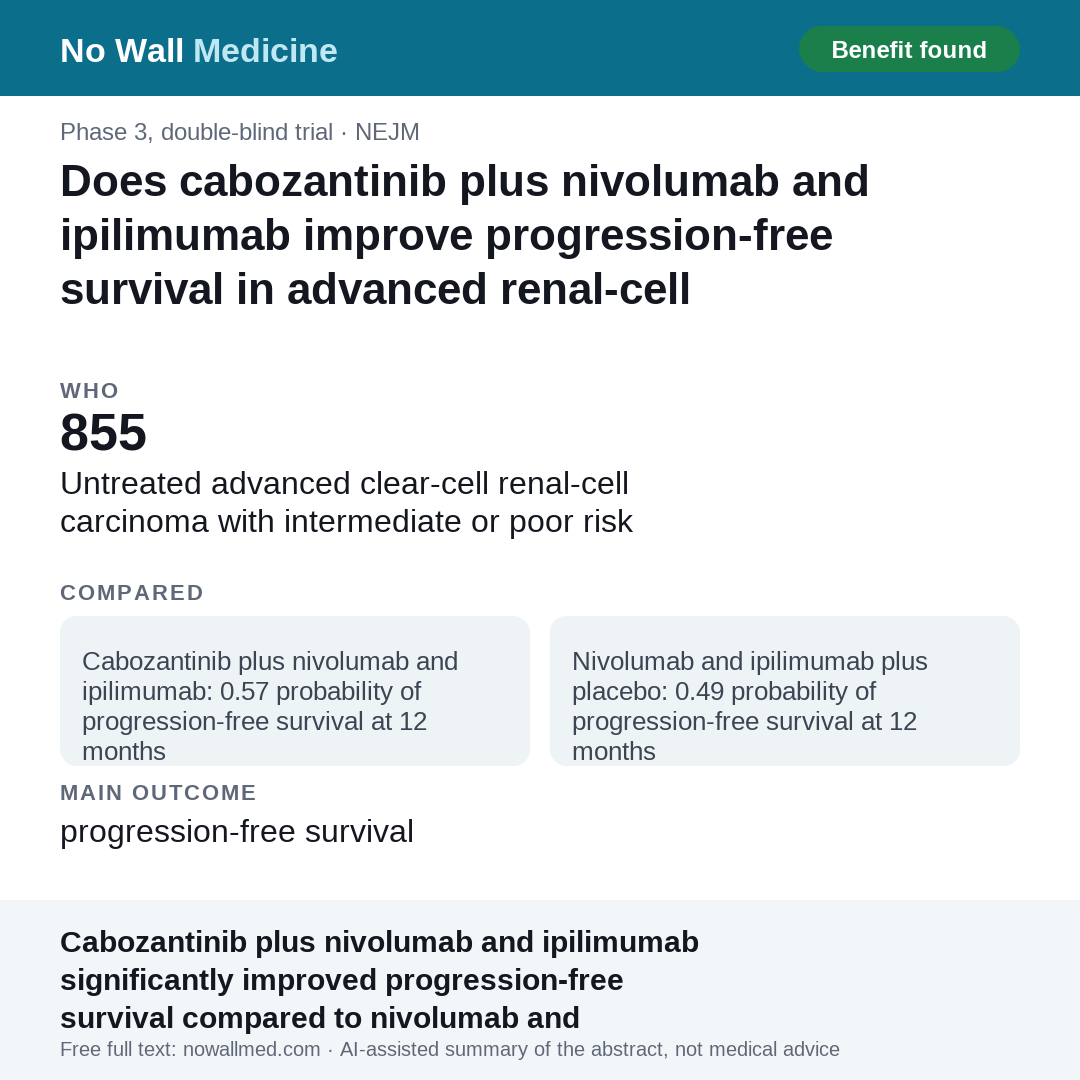
Cabozantinib plus Nivolumab and Ipilimumab in Renal-Cell Carcinoma
Phase 3, double-blind trialBenefit found
Does cabozantinib plus nivolumab and ipilimumab improve progression-free survival in advanced renal-cell carcinoma?
Who
855
Untreated advanced clear-cell renal-cell carcinoma with intermediate or poor risk
Compared
Cabozantinib plus nivolumab and ipilimumab: 0.57 probability of progression-free survival at 12 months
Nivolumab and ipilimumab plus placebo: 0.49 probability of progression-free survival at 12 months
Main outcome
progression-free survival
Result: hazard ratio 0.73 (95% confidence interval, 0.57 to 0.94)
Bottom line: Cabozantinib plus nivolumab and ipilimumab significantly improved progression-free survival compared to nivolumab and ipilimumab alone.
Funded by: Exelixis
NEJM · 2023-05-10Download image
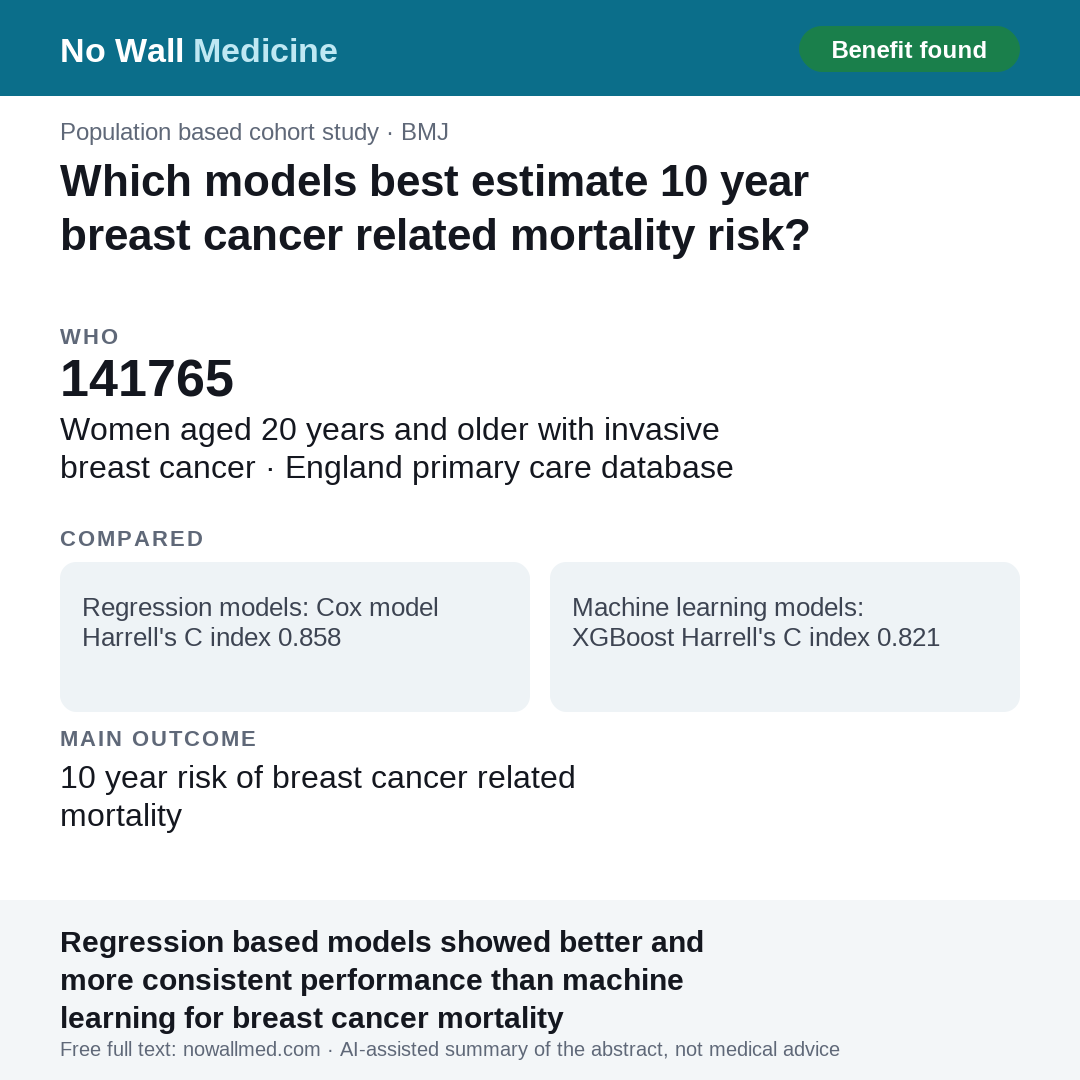
Development and internal-external validation of statistical and machine learning models for breast cancer prognostication: cohort study
Population based cohort studyBenefit found
Which models best estimate 10 year breast cancer related mortality risk?
Who
141765
Women aged 20 years and older with invasive breast cancer · England primary care database
Compared
Regression models: Cox model Harrell's C index 0.858
Machine learning models: XGBoost Harrell's C index 0.821
Main outcome
10 year risk of breast cancer related mortality
Result: Cox model Harrell's C index 0.858 (95% CI 0.853 to 0.864)
Bottom line: Regression based models showed better and more consistent performance than machine learning for breast cancer mortality prediction.
BMJ · 2023-05-10Download image
Effect of Prophylactic Antibiotics on Mortality in Severe Alcohol-Related Hepatitis: A Randomized Clinical Trial
Multicenter, randomized, double-blind clinical trialNo clear difference
Does amoxicillin-clavulanate improve mortality in severe alcohol-related hepatitis patients treated with prednisolone?
Who
292
Hospitalized patients with biopsy-proven severe alcohol-related hepatitis · 25 centers in France and Belgium
Compared
17.3%Amoxicillin-clavulanate and prednisolone
21.3%Placebo and prednisolone
Main outcome
All-cause mortality at 60 days
Result: hazard ratio 0.77 (95% CI 0.45-1.31)
Bottom line: Amoxicillin-clavulanate combined with prednisolone did not improve 60-day survival compared to prednisolone alone.
JAMA · 2023-05-09Download image
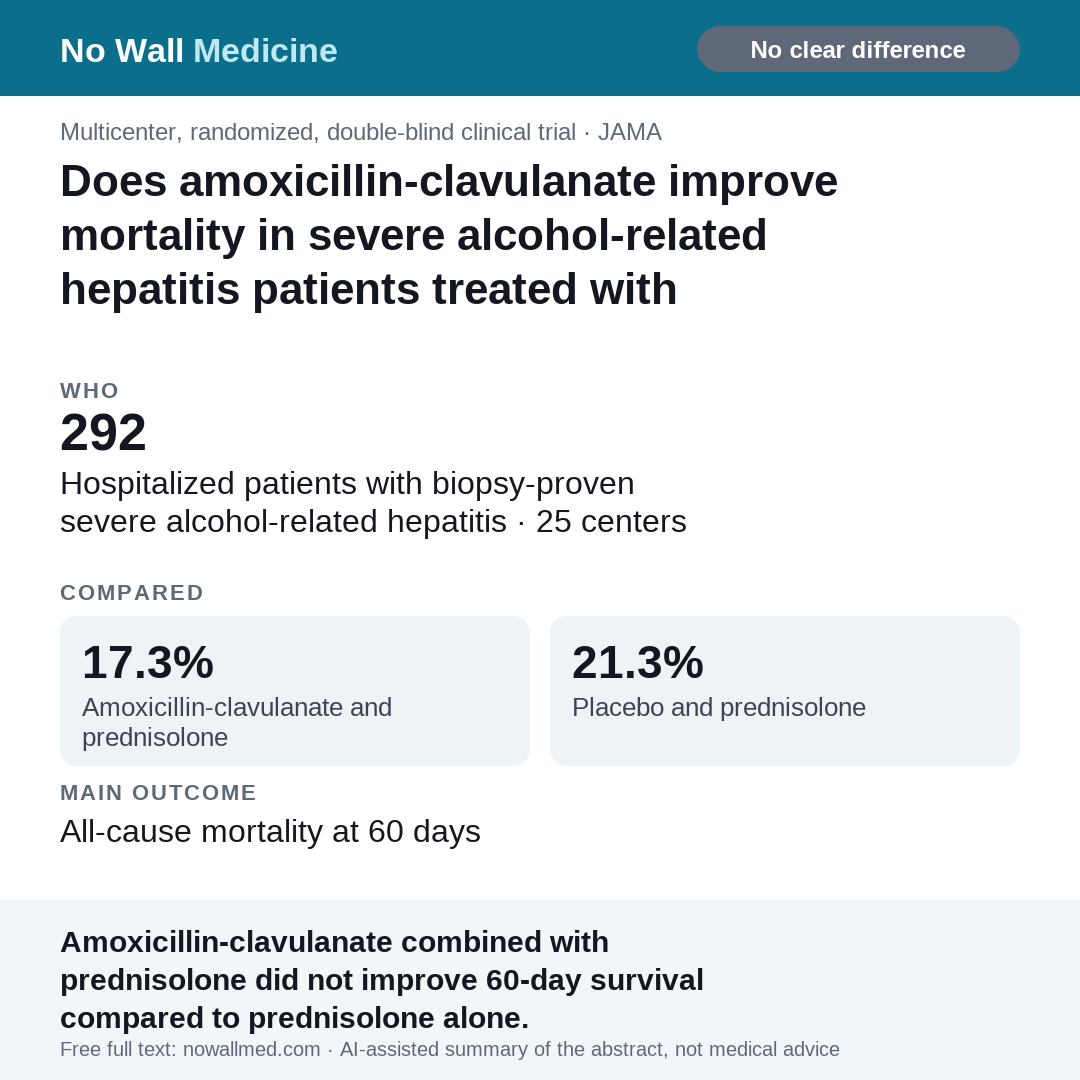
Prednisone vs Placebo and Live Birth in Patients With Recurrent Implantation Failure Undergoing In Vitro Fertilization: A Randomized Clinical Trial
Double-blind, placebo-controlled, randomized clinical trialNo clear difference
Does 10 mg of prednisone improve live birth compared to placebo in recurrent implantation failure?
Who
715
Women with recurrent implantation failure undergoing frozen-thawed embryo transfer · 8 fertility centers in China
Compared
37.8%Prednisone (135 of 357)
38.8%Placebo (139 of 358)
Main outcome
Live birth
Result: relative ratio 0.97 (95% CI 0.81 to 1.17)
Bottom line: Prednisone did not improve live birth rates and may increase risks of preterm delivery and biochemical pregnancy loss.
JAMA · 2023-05-02Download image
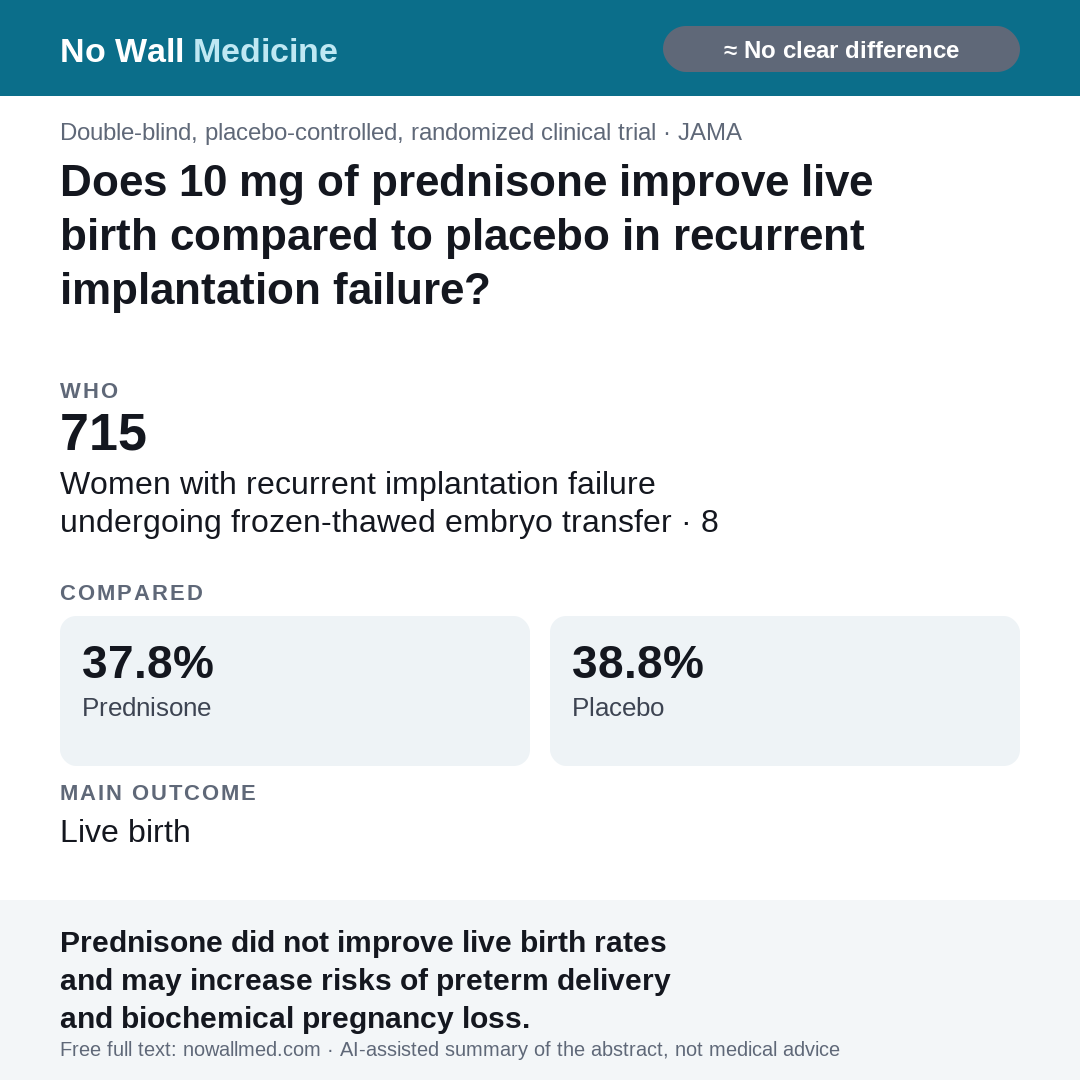
Fracture risk reduction and safety by osteoporosis treatment compared with placebo or active comparator in postmenopausal women: systematic review, network meta-analysis, and meta-regression analysis of randomised clinical trials
Meta-analysis of 69 trialsBenefit found
Osteoporosis treatment effectiveness
Who
80000
postmenopausal women
Compared
treatment
placebo
Main outcome
clinical fractures
Result: odds ratio 1.49 (95% CI 1.12 to 2.00)
Bottom line: Osteoporosis treatments reduce fracture risk
Limitation: serious risk of bias and imprecision
BMJ · 2023-05-02Download image
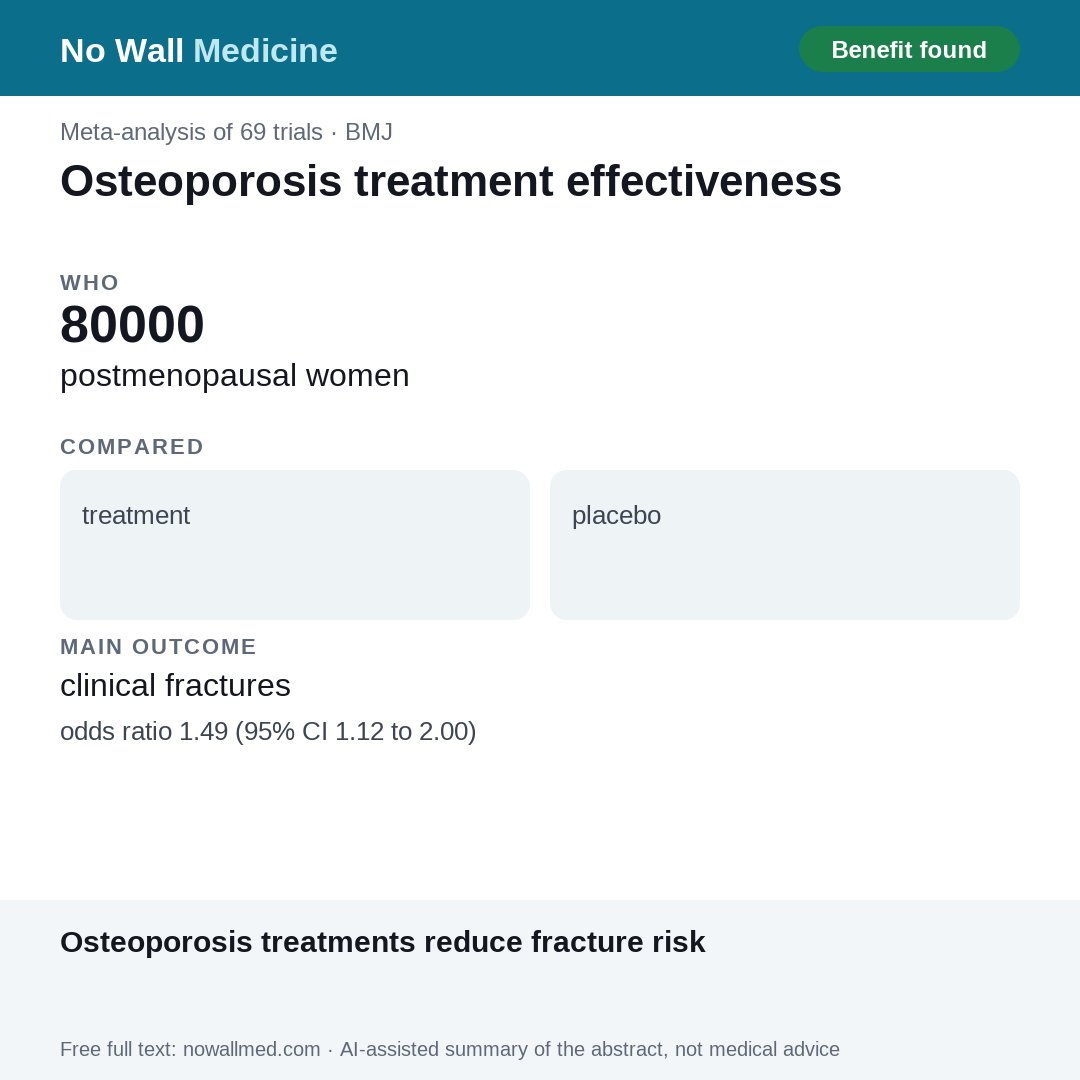
Eat, Sleep, Console Approach or Usual Care for Neonatal Opioid Withdrawal
Cluster-randomized, controlled trialBenefit found
Does the Eat, Sleep, Console approach reduce time to medical readiness for discharge?
Who
1305
Infants with neonatal opioid withdrawal syndrome born at 36 weeks' gestation or more · 26 United States hospitals
Compared
8.2 daysEat, Sleep, Console approach
14.9 daysUsual care
Main outcome
Time from birth until medical readiness for discharge
Result: rate ratio 0.55 (95% CI, 0.46 to 0.65)
Bottom line: The Eat, Sleep, Console approach significantly decreased days until medical readiness for discharge compared to usual care.
Funded by: National Institutes of Health Helping End Addiction Long-term Initiative
NEJM · 2023-04-30Download image
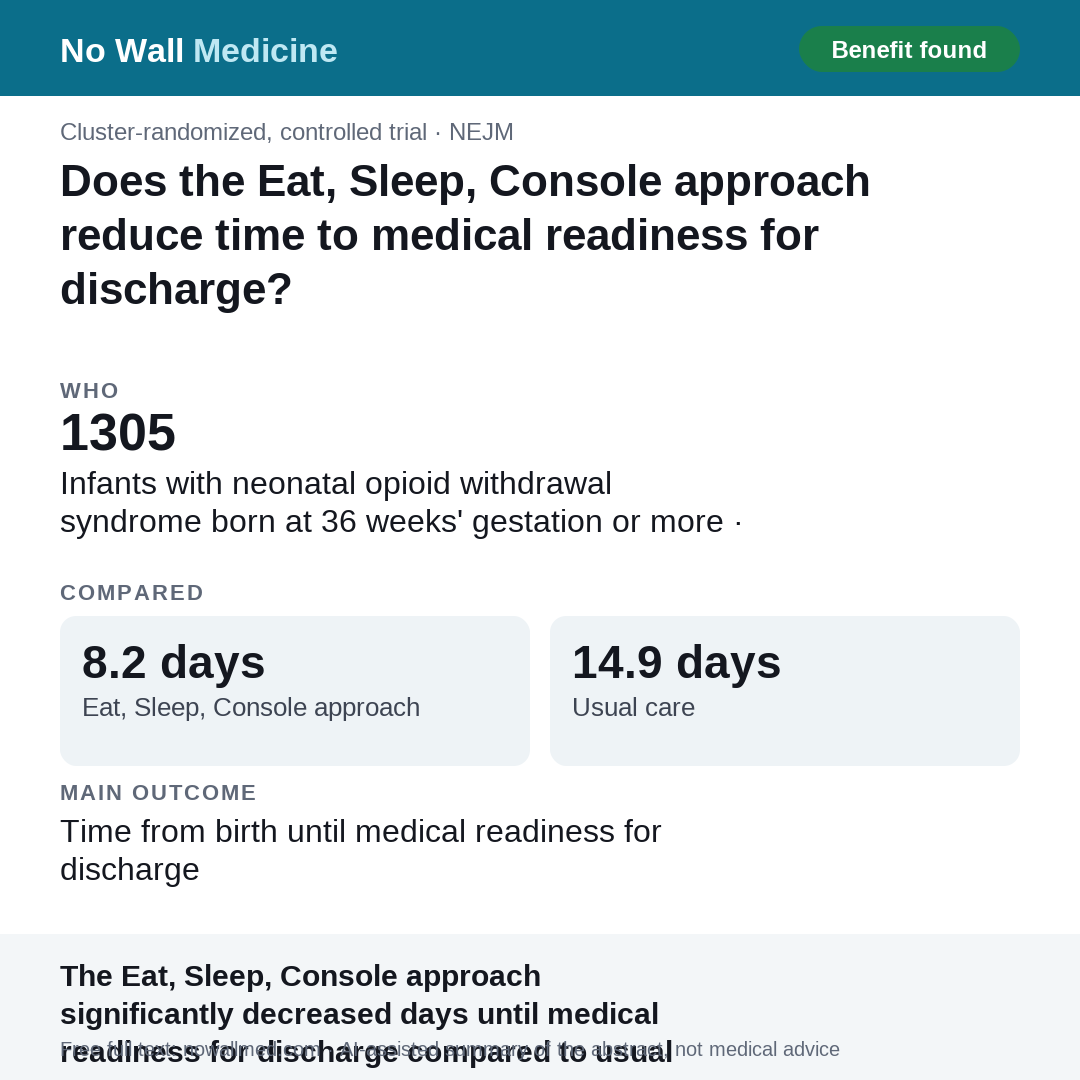
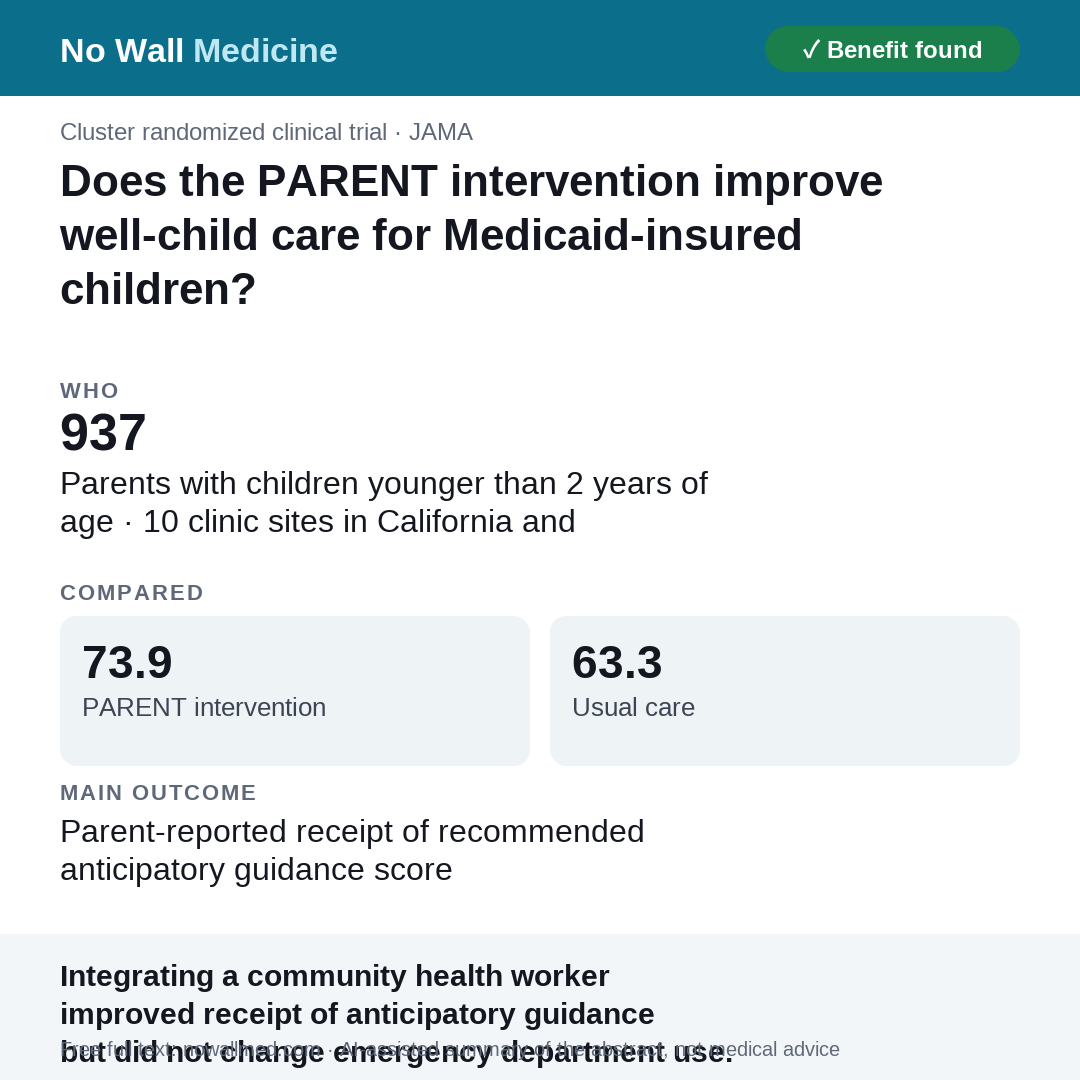
Community Health Workers in Early Childhood Well-Child Care for Medicaid-Insured Children: A Randomized Clinical Trial
Cluster randomized clinical trialBenefit found
Does the PARENT intervention improve well-child care for Medicaid-insured children?
Who
937
Parents with children younger than 2 years of age · 10 clinic sites in California and Washington
Compared
73.9PARENT intervention (SD, 23.4)
63.3Usual care (SD, 27.8)
Main outcome
Parent-reported receipt of recommended anticipatory guidance score
Result: adjusted absolute difference, 11.01 (95% CI, 6.44 to 15.59)
Bottom line: Integrating a community health worker improved receipt of anticipatory guidance but did not change emergency department use.
JAMA · 2023-04-30Download image
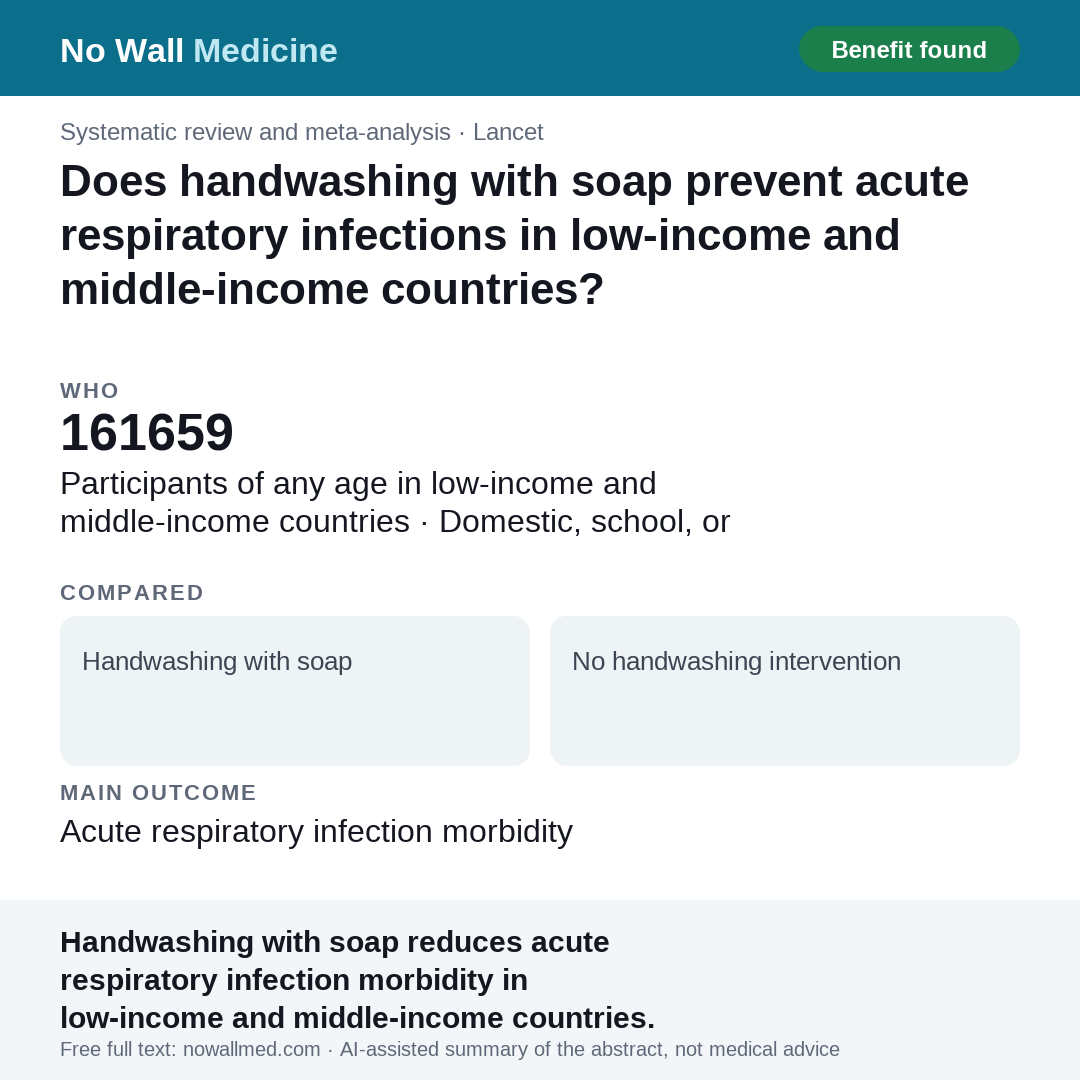
Effectiveness of handwashing with soap for preventing acute respiratory infections in low-income and middle-income countries: a systematic review and meta-analysis
Systematic review and meta-analysisBenefit found
Does handwashing with soap prevent acute respiratory infections in low-income and middle-income countries?
Who
161659
Participants of any age in low-income and middle-income countries · Domestic, school, or childcare settings
Compared
Handwashing with soap
No handwashing intervention
Main outcome
Acute respiratory infection morbidity
Result: relative risk 0·83 (95% CI 0·76-0·90)
Bottom line: Handwashing with soap reduces acute respiratory infection morbidity in low-income and middle-income countries.
Limitation: The GRADE rating for acute respiratory infection was moderate certainty evidence.
Funded by: Bill & Melinda Gates Foundation, Reckitt Global Hygiene Institute, UK FCDO
Lancet · 2023-04-27Download image
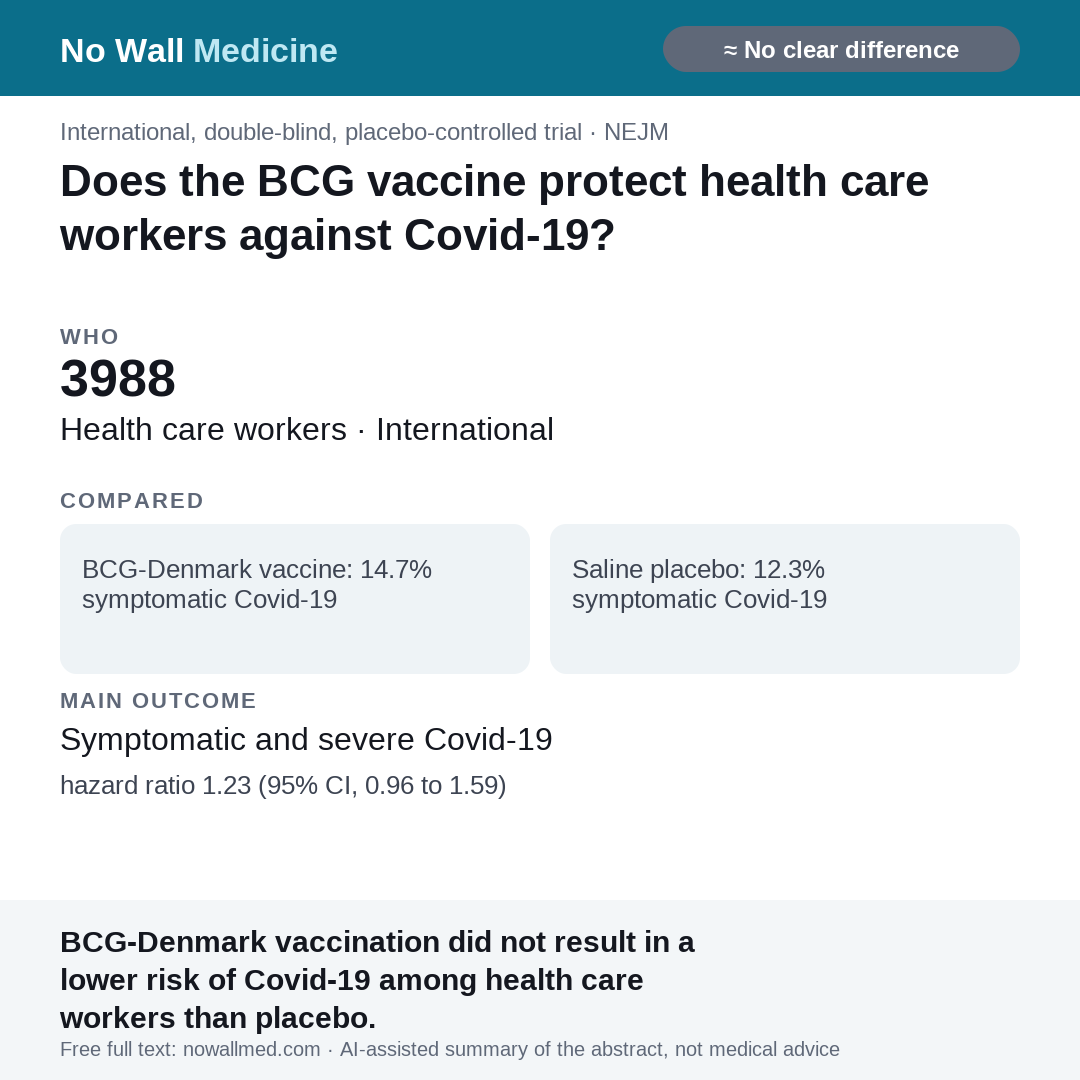
Randomized Trial of BCG Vaccine to Protect against Covid-19 in Health Care Workers
International, double-blind, placebo-controlled trialNo clear difference
Does the BCG vaccine protect health care workers against Covid-19?
Who
3988
Health care workers · International
Compared
BCG-Denmark vaccine: 14.7% symptomatic Covid-19
Saline placebo: 12.3% symptomatic Covid-19
Main outcome
Symptomatic and severe Covid-19
Result: hazard ratio 1.23 (95% CI, 0.96 to 1.59)
Bottom line: BCG-Denmark vaccination did not result in a lower risk of Covid-19 among health care workers than placebo.
Funded by: Bill and Melinda Gates Foundation and others
NEJM · 2023-04-26Download image
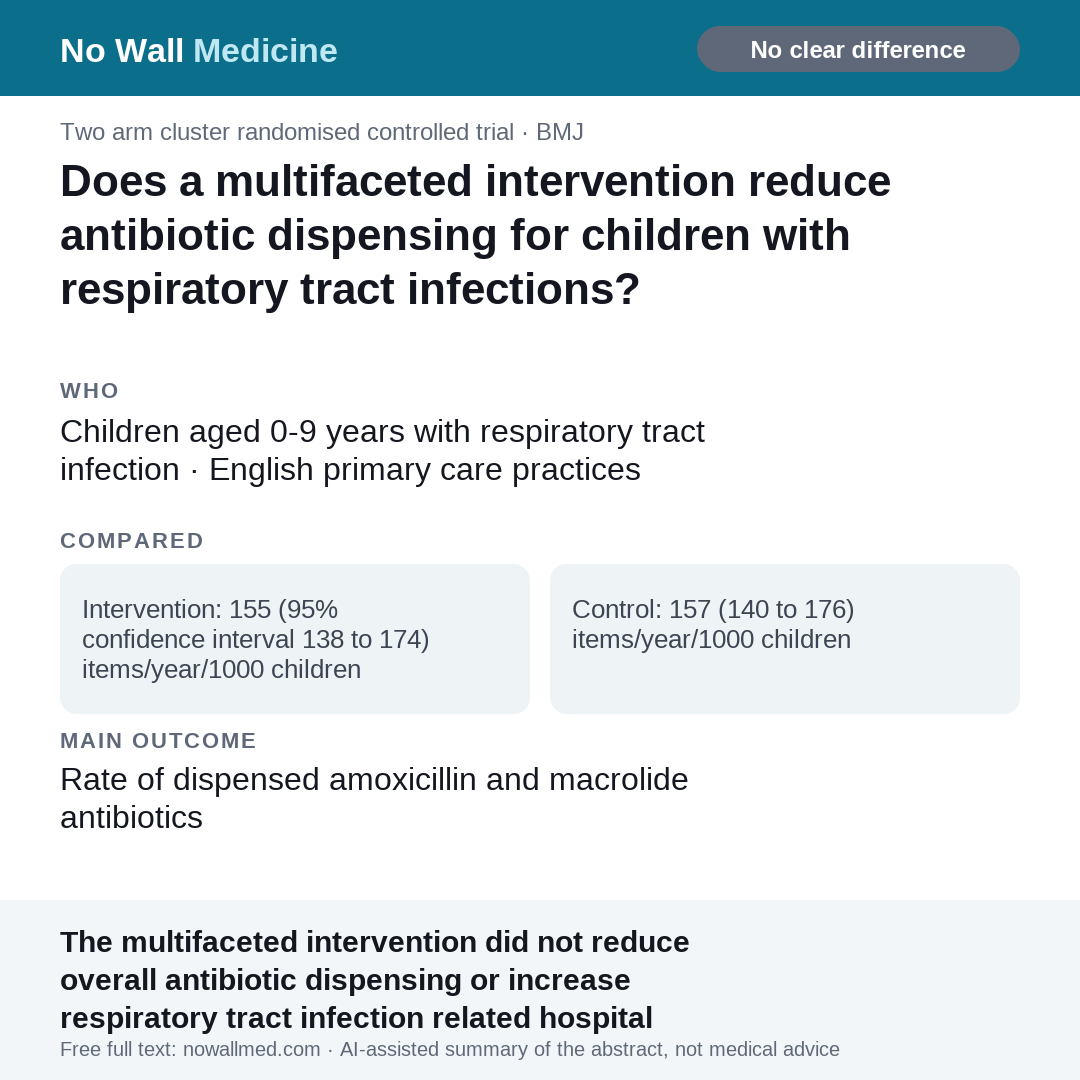
Multi-faceted intervention to improve management of antibiotics for children presenting to primary care with acute cough and respiratory tract infection (CHICO): efficient cluster randomised controlled trial
Two arm cluster randomised controlled trialNo clear difference
Does a multifaceted intervention reduce antibiotic dispensing for children with respiratory tract infections?
Who
Children aged 0-9 years with respiratory tract infection · English primary care practices
Compared
Intervention: 155 (95% confidence interval 138 to 174) items/year/1000 children
Control: 157 (140 to 176) items/year/1000 children
Main outcome
Rate of dispensed amoxicillin and macrolide antibiotics
Result: rate ratio 1.011, 95% confidence interval 0.992 to 1.029
Bottom line: The multifaceted intervention did not reduce overall antibiotic dispensing or increase respiratory tract infection related hospital admissions.
BMJ · 2023-04-26Download image
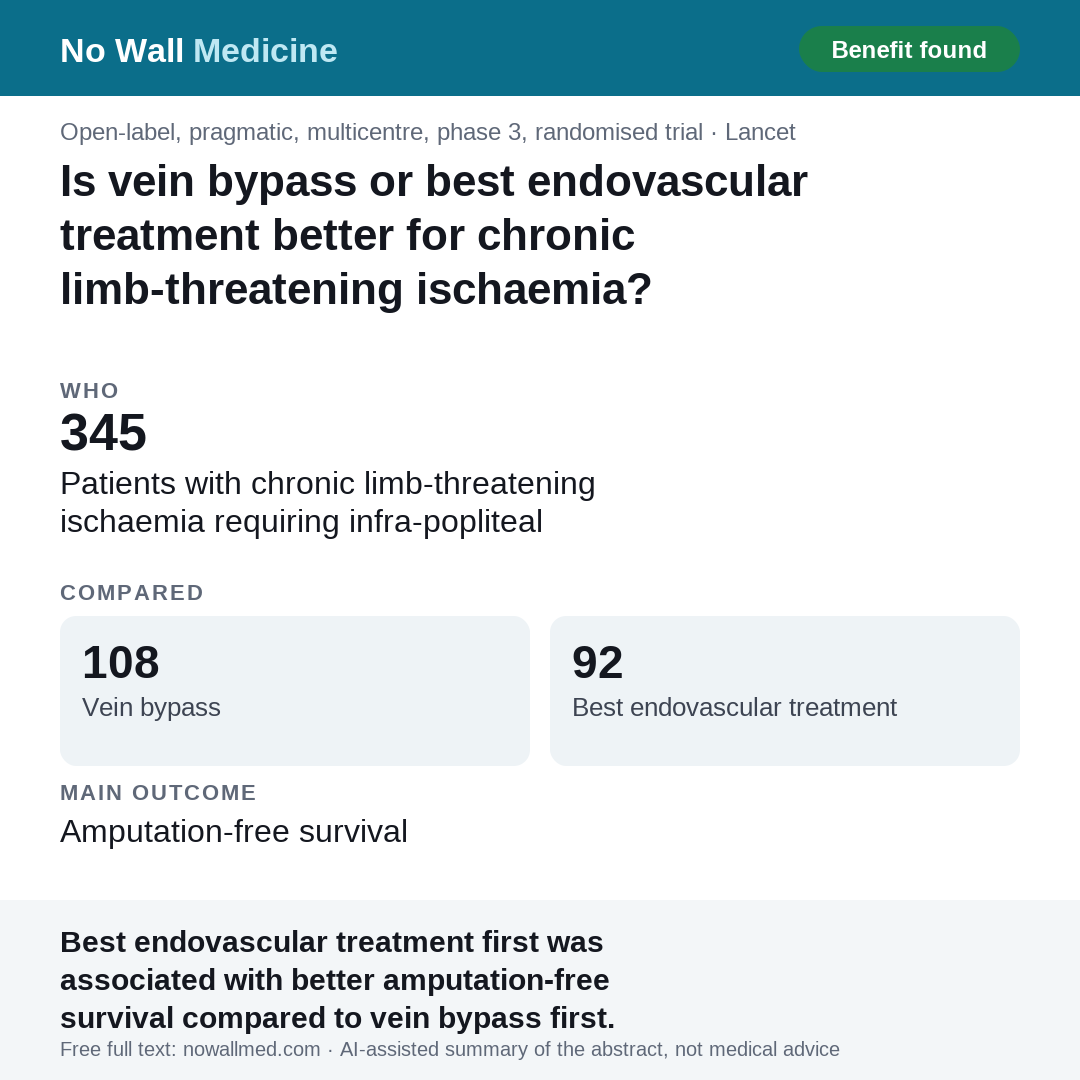
A vein bypass first versus a best endovascular treatment first revascularisation strategy for patients with chronic limb threatening ischaemia who required an infra-popliteal, with or without an additional more proximal infra-inguinal revascularisation procedure to restore limb perfusion (BASIL-2): an open-label, randomised, multicentre, phase 3 trial
Open-label, pragmatic, multicentre, phase 3, randomised trialBenefit found
Is vein bypass or best endovascular treatment better for chronic limb-threatening ischaemia?
Who
345
Patients with chronic limb-threatening ischaemia requiring infra-popliteal revascularisation · 41 sites in UK, Sweden, and Denmark
Compared
108Vein bypass (63%)
92Best endovascular treatment (53%)
Main outcome
Amputation-free survival
Result: adjusted hazard ratio 1·35 (95% CI 1·02-1·80)
Bottom line: Best endovascular treatment first was associated with better amputation-free survival compared to vein bypass first.
Lancet · 2023-04-25Download image
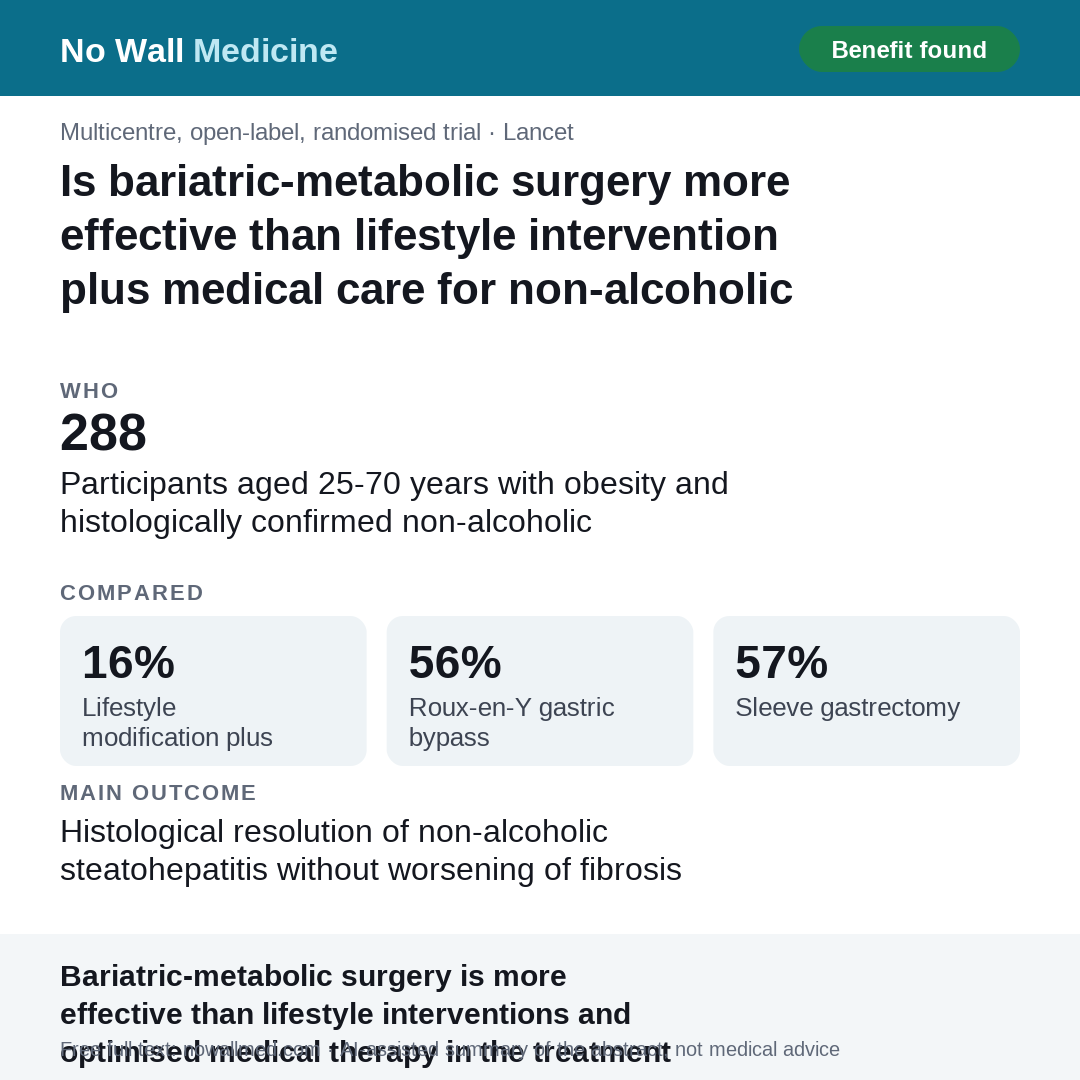
Bariatric-metabolic surgery versus lifestyle intervention plus best medical care in non-alcoholic steatohepatitis (BRAVES): a multicentre, open-label, randomised trial
Multicentre, open-label, randomised trialBenefit found
Is bariatric-metabolic surgery more effective than lifestyle intervention plus medical care for non-alcoholic steatohepatitis?
Who
288
Participants aged 25-70 years with obesity and histologically confirmed non-alcoholic steatohepatitis · Three major hospitals in Rome, Italy
Compared
16%Lifestyle modification plus best medical care
56%Roux-en-Y gastric bypass
57%Sleeve gastrectomy
Main outcome
Histological resolution of non-alcoholic steatohepatitis without worsening of fibrosis
Result: probability of NASH resolution was 3.60 times greater (95% CI 2.19-5.92) for Roux-en-Y gastric bypass
Bottom line: Bariatric-metabolic surgery is more effective than lifestyle interventions and optimised medical therapy in the treatment of non-alcoholic steatohepatitis.
Funded by: Fondazione Policlinico Universitario A Gemelli, Policlinico Universitario Umberto I and S Camillo Hospital
Lancet · 2023-04-21Download image
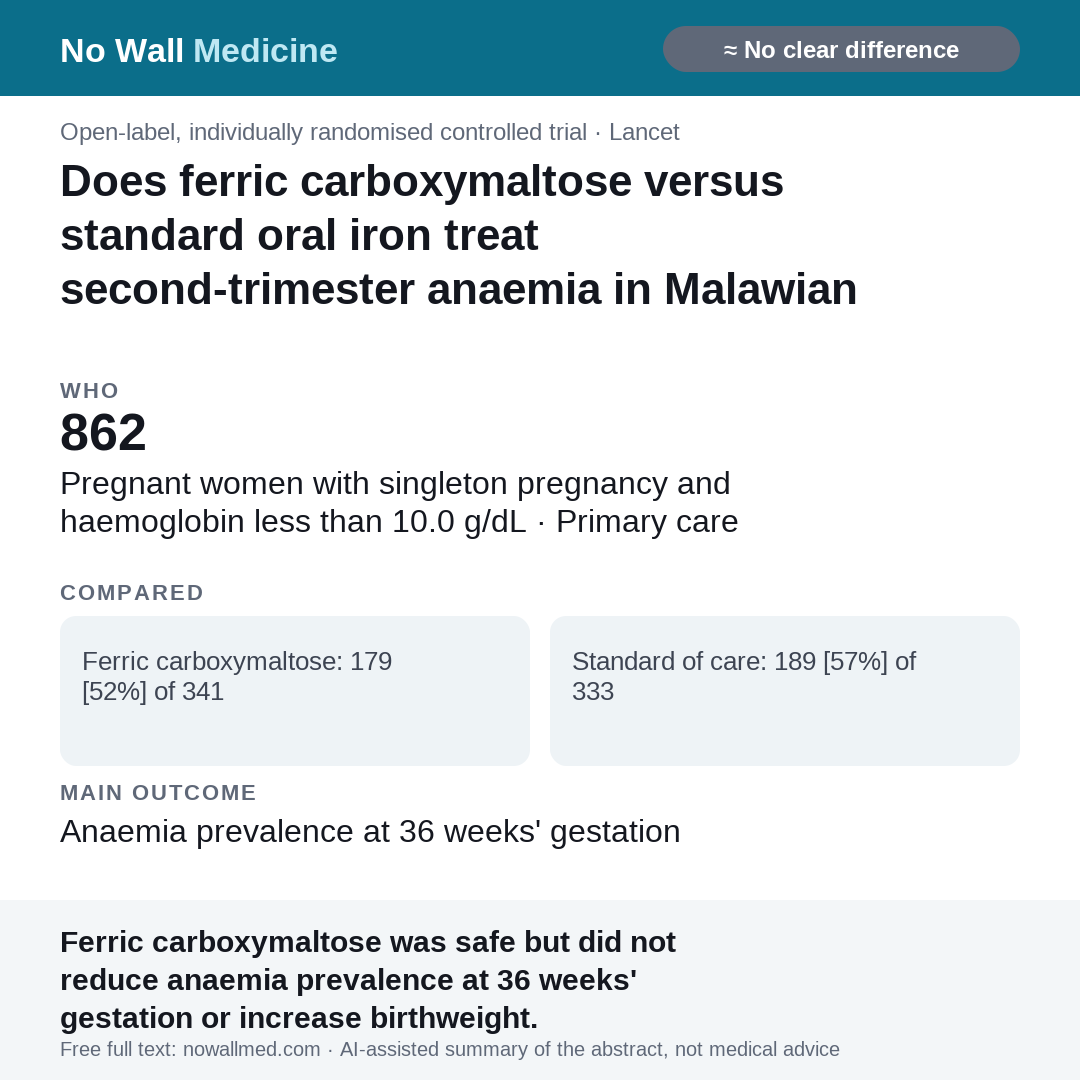
Ferric carboxymaltose versus standard-of-care oral iron to treat second-trimester anaemia in Malawian pregnant women: a randomised controlled trial
Open-label, individually randomised controlled trialNo clear difference
Does ferric carboxymaltose versus standard oral iron treat second-trimester anaemia in Malawian pregnant women?
Who
862
Pregnant women with singleton pregnancy and haemoglobin less than 10.0 g/dL · Primary care and outpatient settings in southern Malawi
Compared
Ferric carboxymaltose: 179 [52%] of 341
Standard of care: 189 [57%] of 333
Main outcome
Anaemia prevalence at 36 weeks' gestation
Result: prevalence ratio 0.92 (95% CI 0.81 to 1.06)
Bottom line: Ferric carboxymaltose was safe but did not reduce anaemia prevalence at 36 weeks' gestation or increase birthweight.
Funded by: Bill & Melinda Gates Foundation
Lancet · 2023-04-21Download image
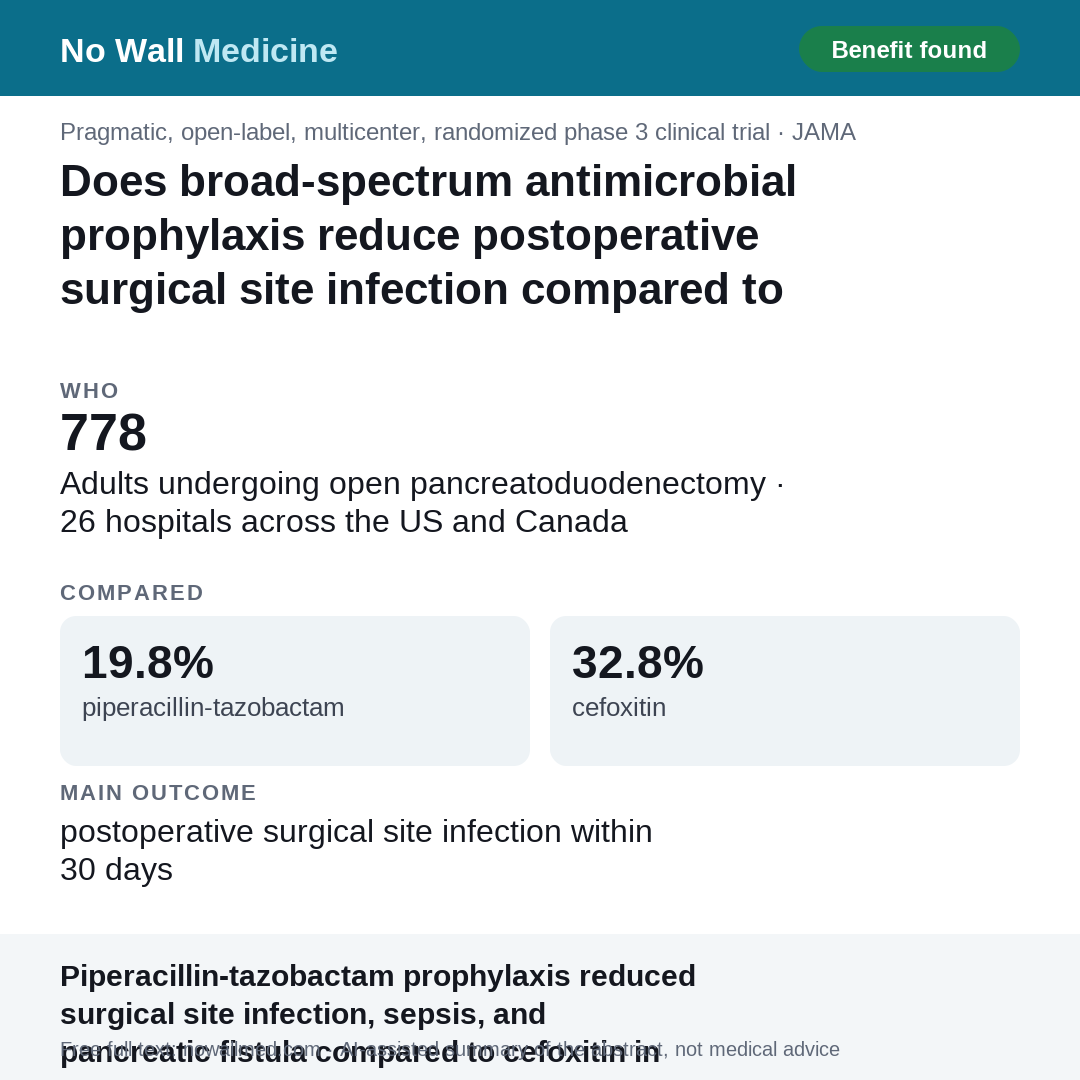
Piperacillin-Tazobactam Compared With Cefoxitin as Antimicrobial Prophylaxis for Pancreatoduodenectomy: A Randomized Clinical Trial
Pragmatic, open-label, multicenter, randomized phase 3 clinical trialBenefit found
Does broad-spectrum antimicrobial prophylaxis reduce postoperative surgical site infection compared to standard care antibiotics?
Who
778
Adults undergoing open pancreatoduodenectomy · 26 hospitals across the US and Canada
Compared
19.8%piperacillin-tazobactam
32.8%cefoxitin
Main outcome
postoperative surgical site infection within 30 days
Result: absolute difference, -13.0% (95% CI, -19.1% to -6.9%)
Bottom line: Piperacillin-tazobactam prophylaxis reduced surgical site infection, sepsis, and pancreatic fistula compared to cefoxitin in pancreatoduodenectomy patients.
JAMA · 2023-04-20Download image
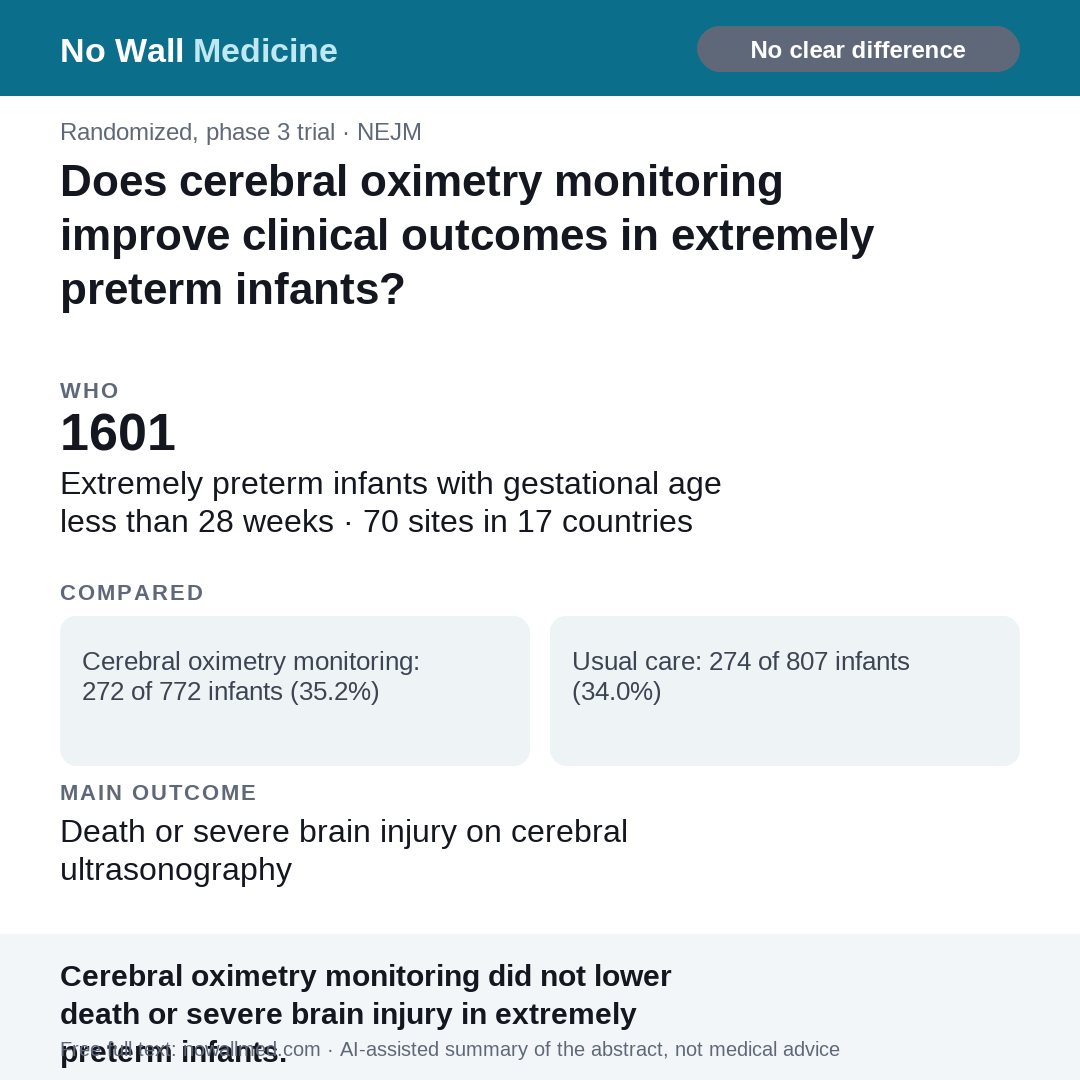
Cerebral Oximetry Monitoring in Extremely Preterm Infants
Randomized, phase 3 trialNo clear difference
Does cerebral oximetry monitoring improve clinical outcomes in extremely preterm infants?
Who
1601
Extremely preterm infants with gestational age less than 28 weeks · 70 sites in 17 countries
Compared
Cerebral oximetry monitoring: 272 of 772 infants (35.2%)
Usual care: 274 of 807 infants (34.0%)
Main outcome
Death or severe brain injury on cerebral ultrasonography
Result: relative risk 1.03 (95% confidence interval, 0.90 to 1.18)
Bottom line: Cerebral oximetry monitoring did not lower death or severe brain injury in extremely preterm infants.
Funded by: Elsass Foundation and others
NEJM · 2023-04-19Download image