Visual abstracts
New randomized trials and meta-analyses from leading journals at a glance: who was studied, what was compared, and what was found. Every paper is free to read in full.
All specialtiesCardiology 842Oncology 763Gastroenterology & Hepatology 307Infectious Disease 626Neurology 350Psychiatry & Mental Health 430Pulmonology 366Critical Care 245Endocrinology & Diabetes 480Pediatrics 536Surgery 324Orthopedics & Sports Medicine 162Neurosurgery 93Cardiothoracic & Vascular Surgery 87Plastic & Reconstructive Surgery 124Nephrology 197Rheumatology 108Hematology 182Dermatology 80Ophthalmology 97Obstetrics & Gynecology 261Public & Global Health 167Radiology & Imaging 98Anesthesiology 114Urology 162ENT (Otolaryngology) 91Emergency Medicine 73Allergy & Immunology 58Geriatrics 160Family Medicine & Primary Care 111Medical Genetics & Genomics 91Pathology & Laboratory Medicine 24Physical Medicine & Rehabilitation 148Palliative Care 81Nutrition 223Digital Health & AI 460General Medicine 101
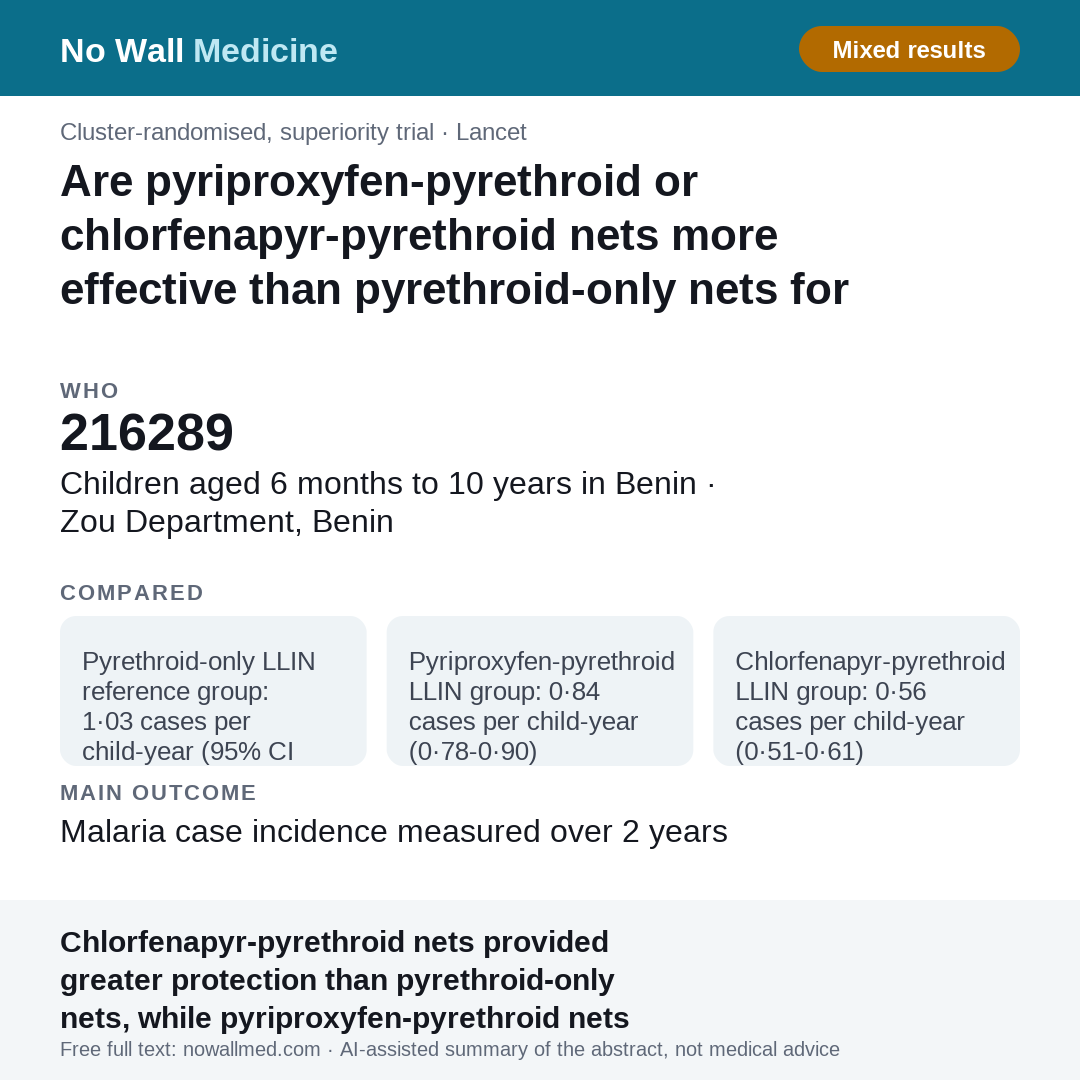
Efficacy of pyriproxyfen-pyrethroid long-lasting insecticidal nets (LLINs) and chlorfenapyr-pyrethroid LLINs compared with pyrethroid-only LLINs for malaria control in Benin: a cluster-randomised, superiority trial
Cluster-randomised, superiority trialMixed results
Are pyriproxyfen-pyrethroid or chlorfenapyr-pyrethroid nets more effective than pyrethroid-only nets for malaria control?
Who
216289
Children aged 6 months to 10 years in Benin · Zou Department, Benin
Compared
Pyrethroid-only LLIN reference group: 1·03 cases per child-year (95% CI 0·96-1·09)
Pyriproxyfen-pyrethroid LLIN group: 0·84 cases per child-year (0·78-0·90)
Chlorfenapyr-pyrethroid LLIN group: 0·56 cases per child-year (0·51-0·61)
Main outcome
Malaria case incidence measured over 2 years
Result: hazard ratio 0·54 (95% CI 0·42-0·70) for chlorfenapyr-pyrethroid
Bottom line: Chlorfenapyr-pyrethroid nets provided greater protection than pyrethroid-only nets, while pyriproxyfen-pyrethroid nets conferred similar protection.
Funded by: UNITAID, The Global Fund
Lancet · 2023-01-24Download image
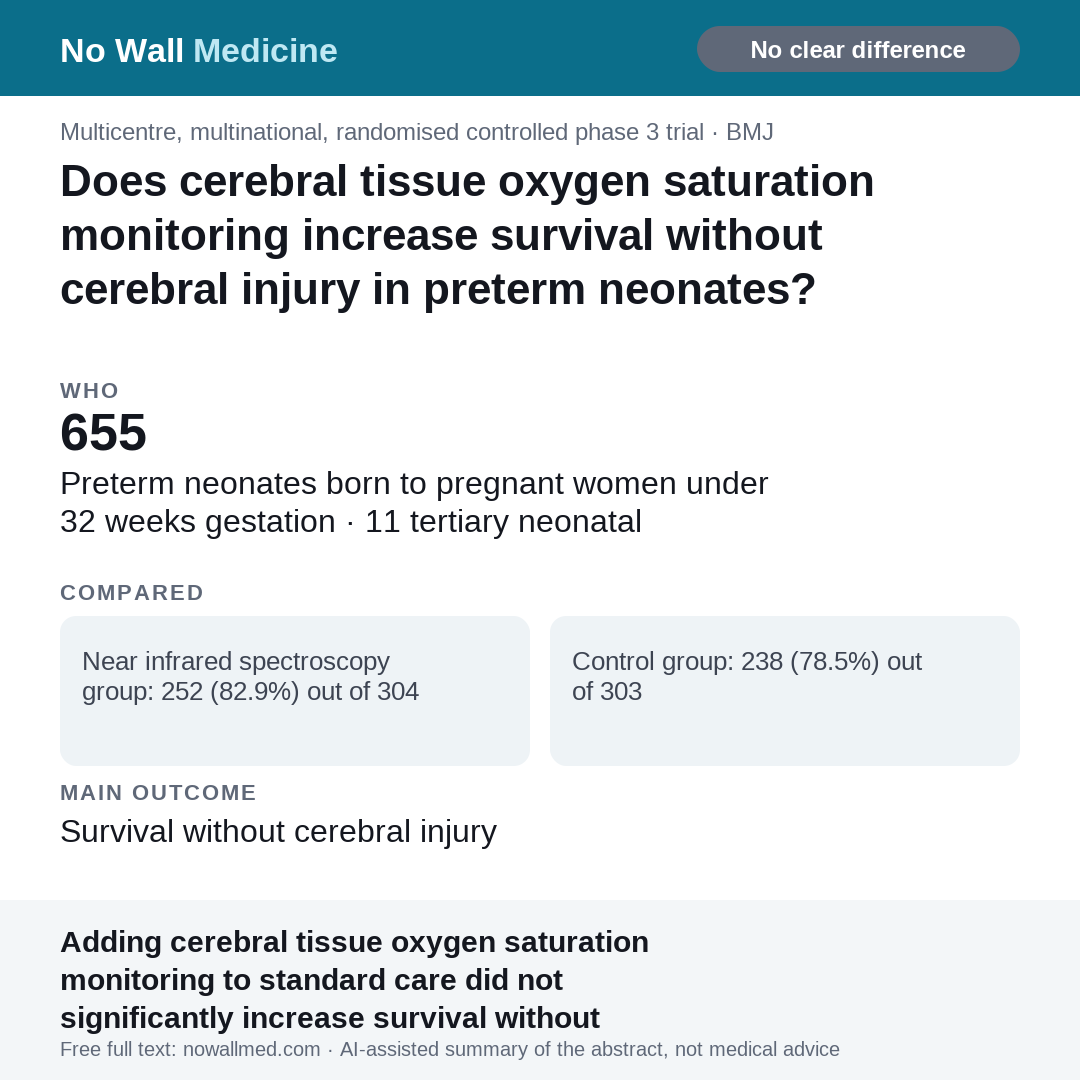
Cerebral regional tissue Oxygen Saturation to Guide Oxygen Delivery in preterm neonates during immediate transition after birth (COSGOD III): multicentre randomised phase 3 clinical trial
Multicentre, multinational, randomised controlled phase 3 trialNo clear difference
Does cerebral tissue oxygen saturation monitoring increase survival without cerebral injury in preterm neonates?
Who
655
Preterm neonates born to pregnant women under 32 weeks gestation · 11 tertiary neonatal intensive care units in six countries
Compared
Near infrared spectroscopy group: 252 (82.9%) out of 304
Control group: 238 (78.5%) out of 303
Main outcome
Survival without cerebral injury
Result: relative risk 1.06 (95% confidence interval 0.98 to 1.14)
Bottom line: Adding cerebral tissue oxygen saturation monitoring to standard care did not significantly increase survival without cerebral injury in preterm neonates.
BMJ · 2023-01-24Download image
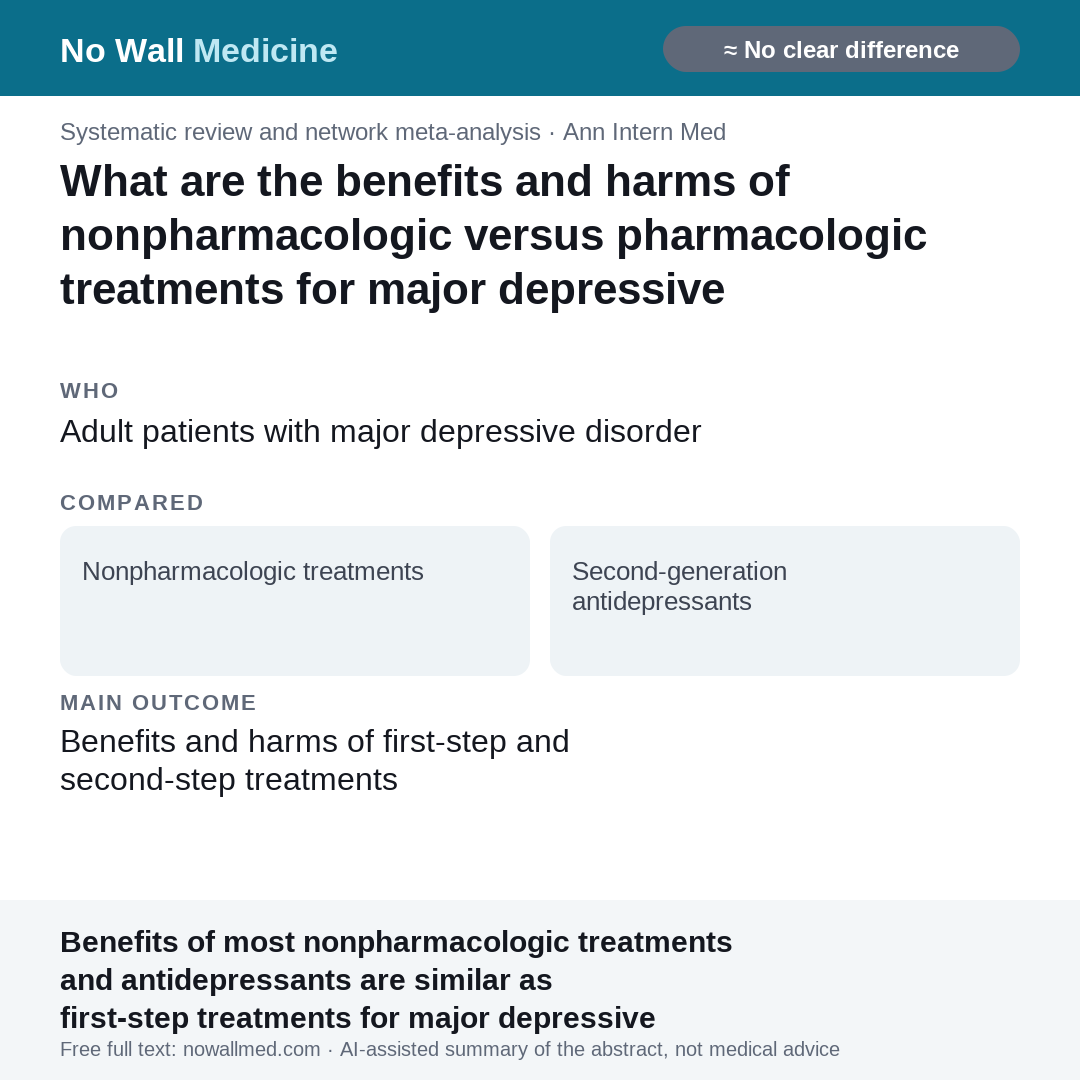
Nonpharmacologic and Pharmacologic Treatments of Adult Patients With Major Depressive Disorder: A Systematic Review and Network Meta-analysis for a Clinical Guideline by the American College of Physicians
Systematic review and network meta-analysisNo clear difference
What are the benefits and harms of nonpharmacologic versus pharmacologic treatments for major depressive disorder?
Who
65
Adult patients with major depressive disorder
Compared
Nonpharmacologic treatments
Second-generation antidepressants
Main outcome
Benefits and harms of first-step and second-step treatments
Bottom line: Benefits of most nonpharmacologic treatments and antidepressants are similar as first-step treatments for major depressive disorder.
Limitation: Low certainty of evidence, methodological limitations, dosing inequalities, and potential publication bias.
Funded by: American College of Physicians
Ann Intern Med · 2023-01-24Download image
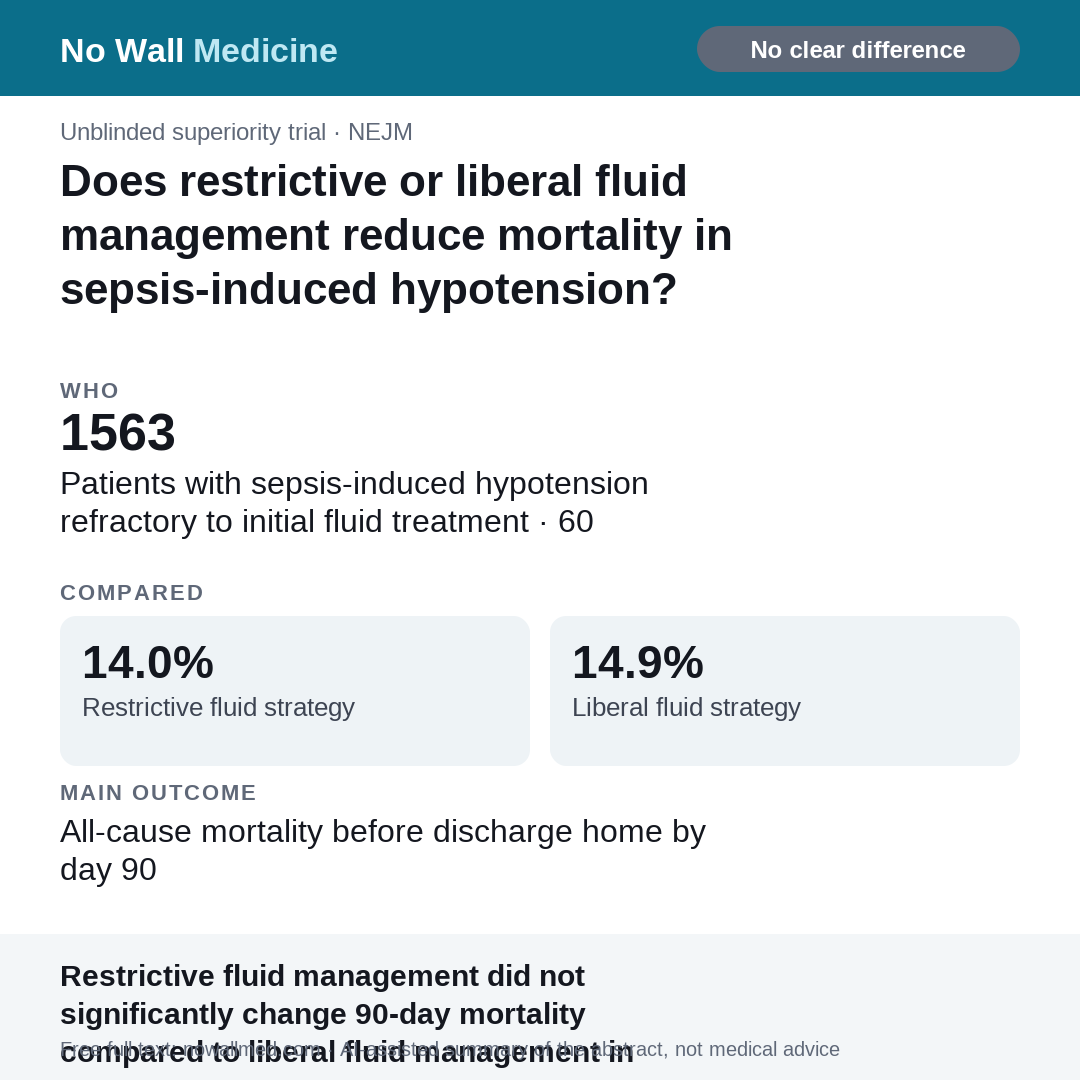
Early Restrictive or Liberal Fluid Management for Sepsis-Induced Hypotension
Unblinded superiority trialNo clear difference
Does restrictive or liberal fluid management reduce mortality in sepsis-induced hypotension?
Who
1563
Patients with sepsis-induced hypotension refractory to initial fluid treatment · 60 United States centers
Compared
14.0%Restrictive fluid strategy (109 patients)
14.9%Liberal fluid strategy (116 patients)
Main outcome
All-cause mortality before discharge home by day 90
Result: estimated difference, -0.9 percentage points; 95% CI, -4.4 to 2.6
Bottom line: Restrictive fluid management did not significantly change 90-day mortality compared to liberal fluid management in sepsis-induced hypotension.
Funded by: National Heart, Lung, and Blood Institute
NEJM · 2023-01-21Download image
Bivalent Omicron BA.1-Adapted BNT162b2 Booster in Adults Older than 55 Years
Randomized phase 3 trialBenefit found
Are BA.1-adapted vaccines superior or noninferior to BNT162b2 for neutralizing activity?
Who
1846
Adults older than 55 years previously receiving three doses of BNT162b2
Compared
BNT162b2 (30 μg)
1.56Bivalent BA.1 (30 μg) (95% CI, 1.17 to 2.08)
1.97Bivalent BA.1 (60 μg) (95% CI, 1.45 to 2.68)
3.15Monovalent BA.1 (60 μg) (95% CI, 2.38 to 4.16)
Main outcome
50% neutralizing titer geometric mean ratios against BA.1
Result: GMRs of 1.56 (95% CI, 1.17 to 2.08), 1.97 (95% CI, 1.45 to 2.68), and 3.15 (95% CI, 2.38 to 4.16)
Bottom line: Bivalent and monovalent BA.1-adapted vaccines showed superior neutralizing activity against BA.1 compared to BNT162b2.
Funded by: BioNTech and Pfizer
NEJM · 2023-01-18Download image

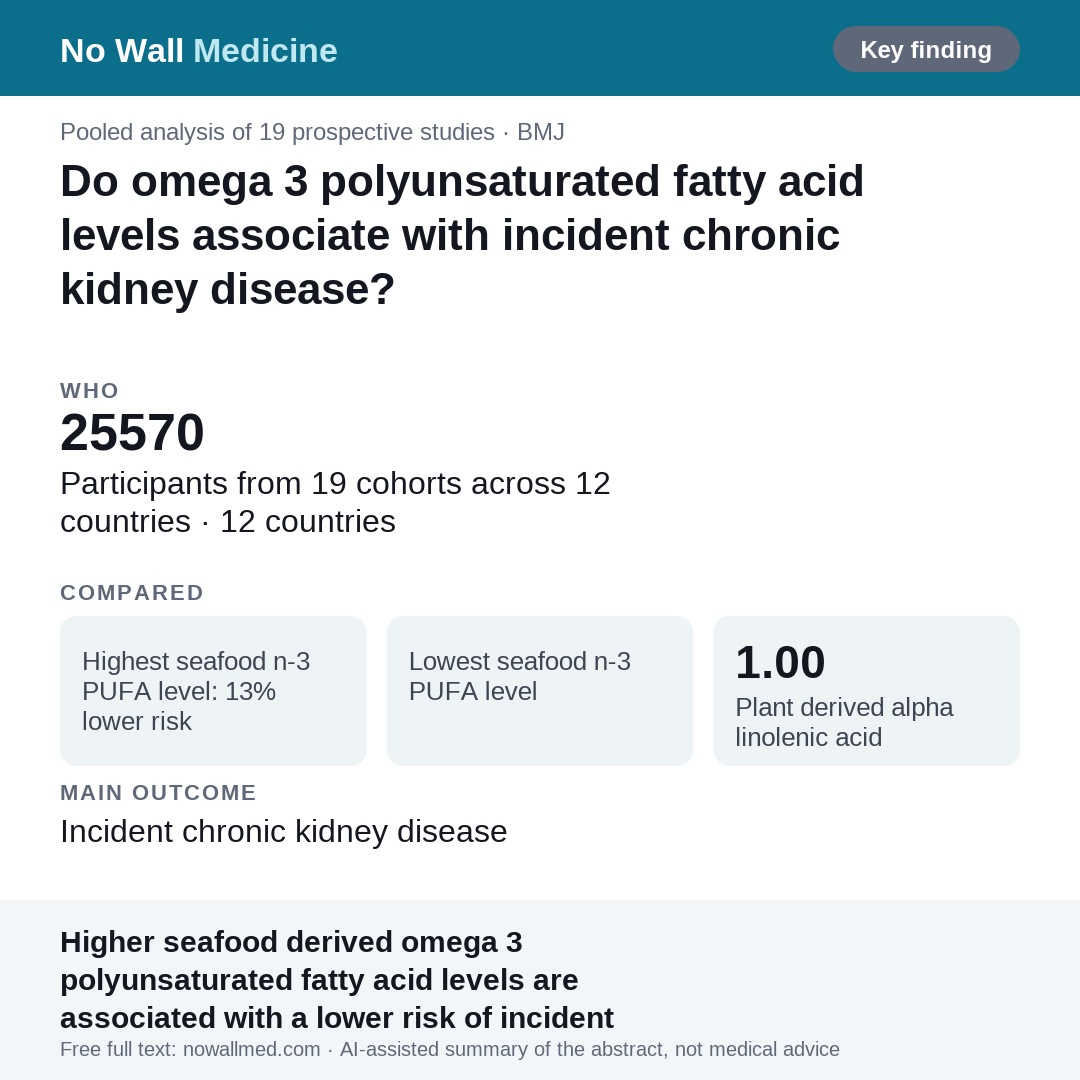
Association of omega 3 polyunsaturated fatty acids with incident chronic kidney disease: pooled analysis of 19 cohorts
Pooled analysis of 19 prospective studiesBenefit found
Do omega 3 polyunsaturated fatty acid levels associate with incident chronic kidney disease?
Who
25570
Participants from 19 cohorts across 12 countries · 12 countries
Compared
Highest seafood n-3 PUFA level: 13% lower risk
Lowest seafood n-3 PUFA level
1.00Plant derived alpha linolenic acid (95% CI 0.94 to 1.06)
Main outcome
Incident chronic kidney disease
Result: relative risk per interquintile range 0.92 (95% CI 0.86 to 0.98)
Bottom line: Higher seafood derived omega 3 polyunsaturated fatty acid levels are associated with a lower risk of incident chronic kidney disease.
BMJ · 2023-01-18Download image
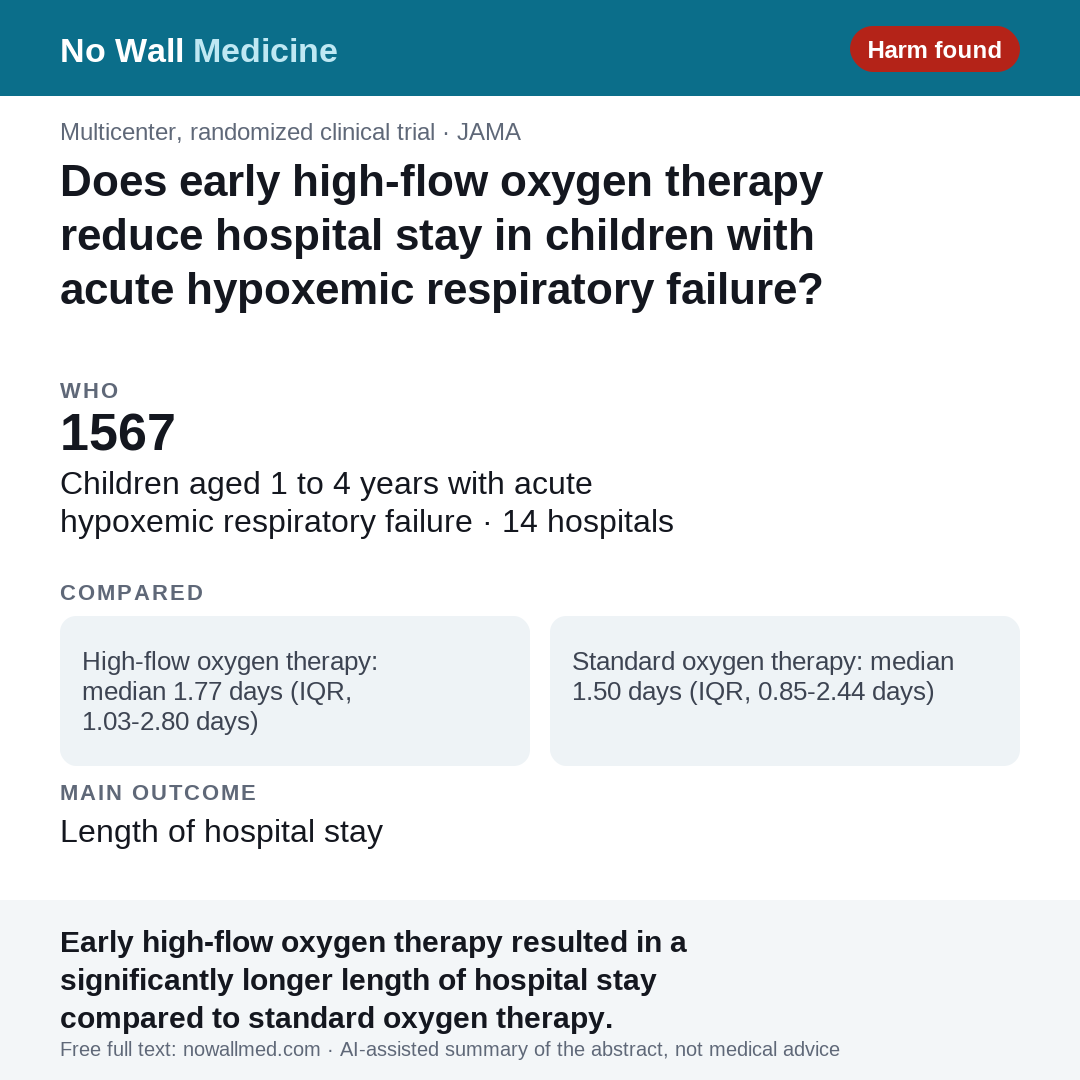
Effect of Early High-Flow Nasal Oxygen vs Standard Oxygen Therapy on Length of Hospital Stay in Hospitalized Children With Acute Hypoxemic Respiratory Failure: The PARIS-2 Randomized Clinical Trial
Multicenter, randomized clinical trialHarm found
Does early high-flow oxygen therapy reduce hospital stay in children with acute hypoxemic respiratory failure?
Who
1567
Children aged 1 to 4 years with acute hypoxemic respiratory failure · 14 hospitals in Australia and New Zealand
Compared
High-flow oxygen therapy: median 1.77 days (IQR, 1.03-2.80 days)
Standard oxygen therapy: median 1.50 days (IQR, 0.85-2.44 days)
Main outcome
Length of hospital stay
Result: adjusted hazard ratio, 0.83 (95% CI, 0.75-0.92)
Bottom line: Early high-flow oxygen therapy resulted in a significantly longer length of hospital stay compared to standard oxygen therapy.
JAMA · 2023-01-17Download image
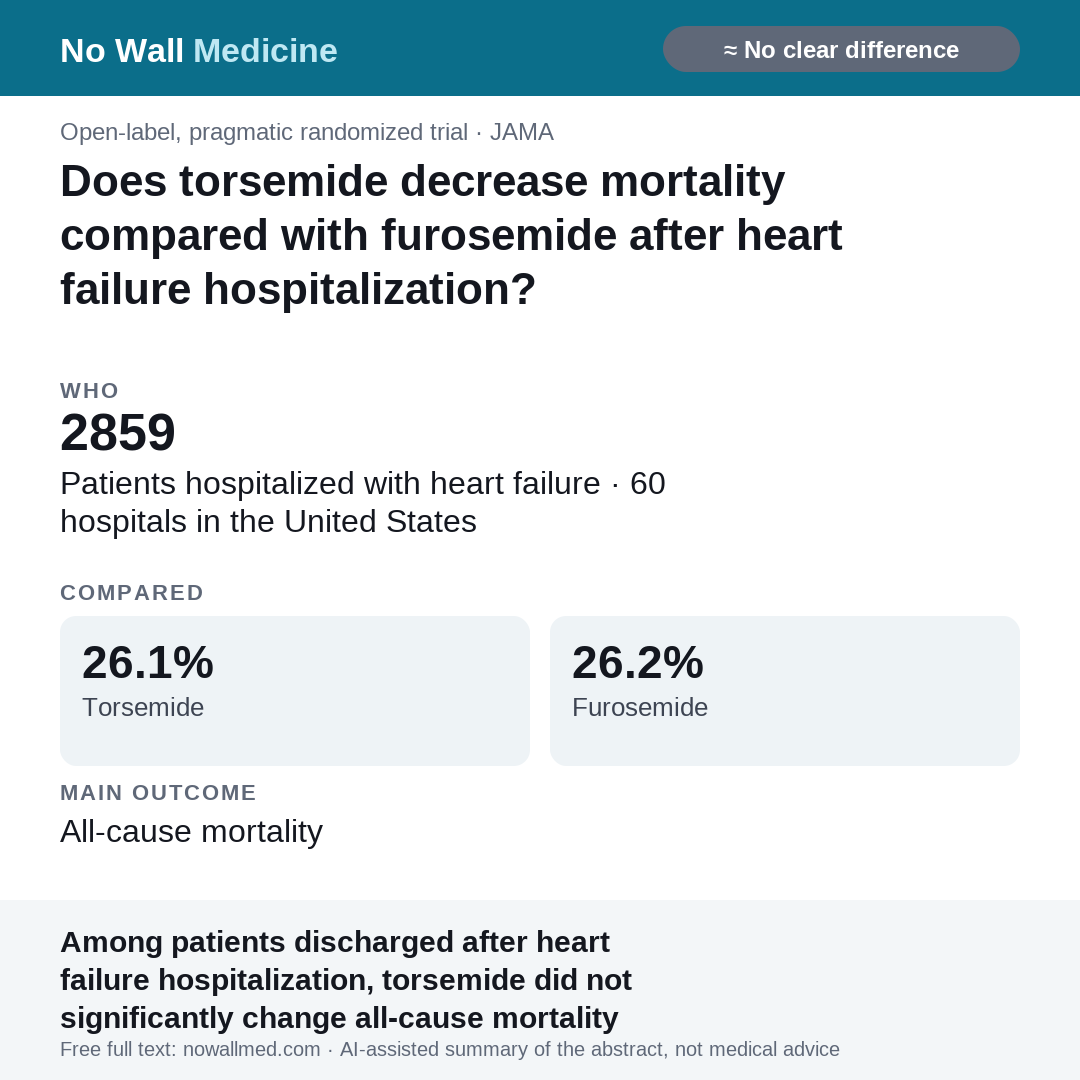
Effect of Torsemide vs Furosemide After Discharge on All-Cause Mortality in Patients Hospitalized With Heart Failure: The TRANSFORM-HF Randomized Clinical Trial
Open-label, pragmatic randomized trialNo clear difference
Does torsemide decrease mortality compared with furosemide after heart failure hospitalization?
Who
2859
Patients hospitalized with heart failure · 60 hospitals in the United States
Compared
26.1%Torsemide
26.2%Furosemide
Main outcome
All-cause mortality
Result: hazard ratio 1.02 (95% CI 0.89-1.18)
Bottom line: Among patients discharged after heart failure hospitalization, torsemide did not significantly change all-cause mortality compared with furosemide.
Limitation: Interpretation is limited by loss to follow-up, participant crossover, and nonadherence.
JAMA · 2023-01-17Download image
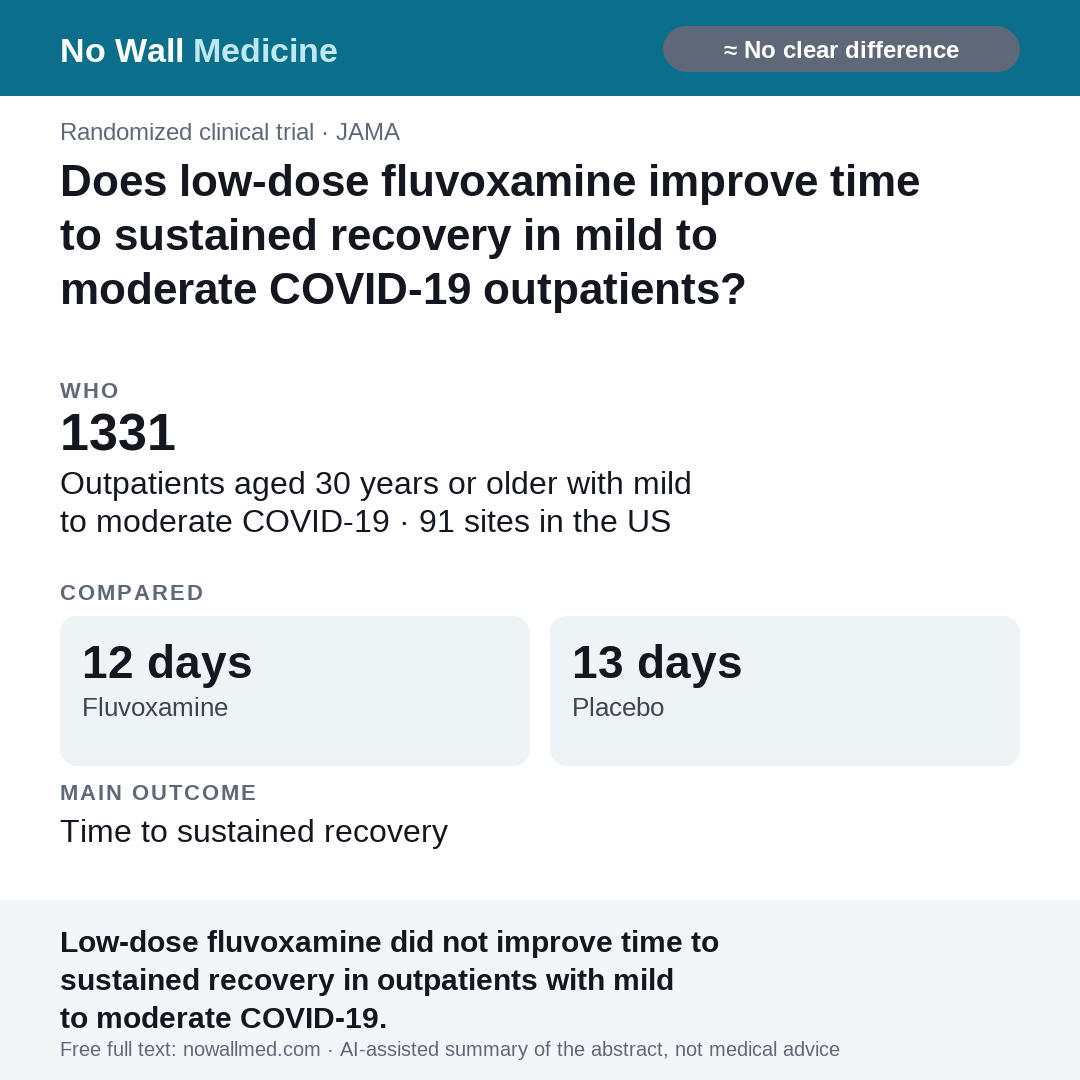
Effect of Fluvoxamine vs Placebo on Time to Sustained Recovery in Outpatients With Mild to Moderate COVID-19: A Randomized Clinical Trial
Randomized clinical trialNo clear difference
Does low-dose fluvoxamine improve time to sustained recovery in mild to moderate COVID-19 outpatients?
Who
1331
Outpatients aged 30 years or older with mild to moderate COVID-19 · 91 sites in the US
Compared
12 daysFluvoxamine (IQR, 11-14 days)
13 daysPlacebo (IQR, 12-13 days)
Main outcome
Time to sustained recovery
Result: hazard ratio 0.96 (95% credible interval, 0.86-1.06)
Bottom line: Low-dose fluvoxamine did not improve time to sustained recovery in outpatients with mild to moderate COVID-19.
JAMA · 2023-01-13Download image
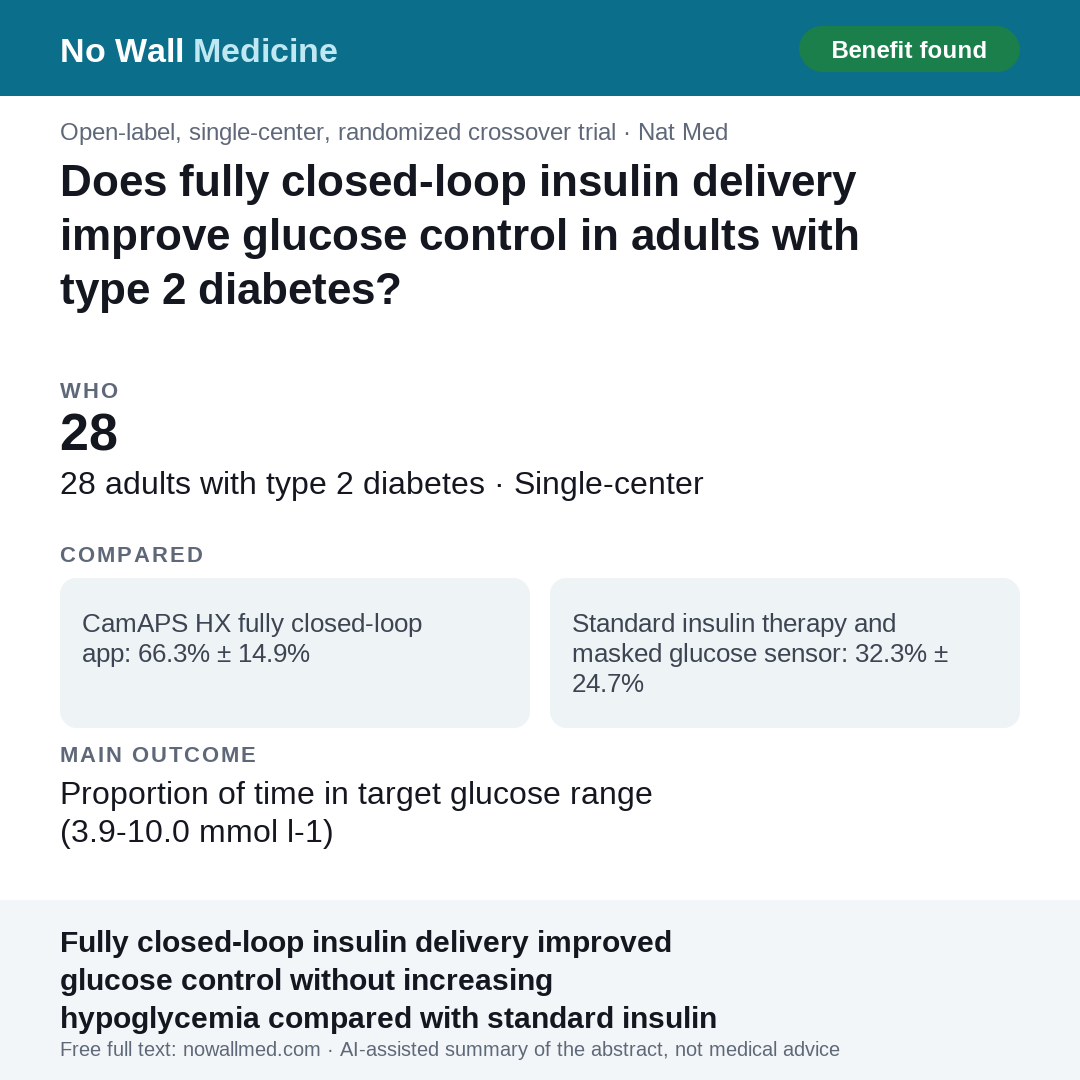
Fully automated closed-loop insulin delivery in adults with type 2 diabetes: an open-label, single-center, randomized crossover trial
Open-label, single-center, randomized crossover trialBenefit found
Does fully closed-loop insulin delivery improve glucose control in adults with type 2 diabetes?
Who
28
28 adults with type 2 diabetes · Single-center
Compared
CamAPS HX fully closed-loop app: 66.3% ± 14.9%
Standard insulin therapy and masked glucose sensor: 32.3% ± 24.7%
Main outcome
Proportion of time in target glucose range (3.9-10.0 mmol l-1)
Result: mean difference, 35.3 percentage points; 95% confidence interval (CI), 28.0-42.6 percentage points
Bottom line: Fully closed-loop insulin delivery improved glucose control without increasing hypoglycemia compared with standard insulin therapy in adults with type 2 diabetes.
Nat Med · 2023-01-11Download image
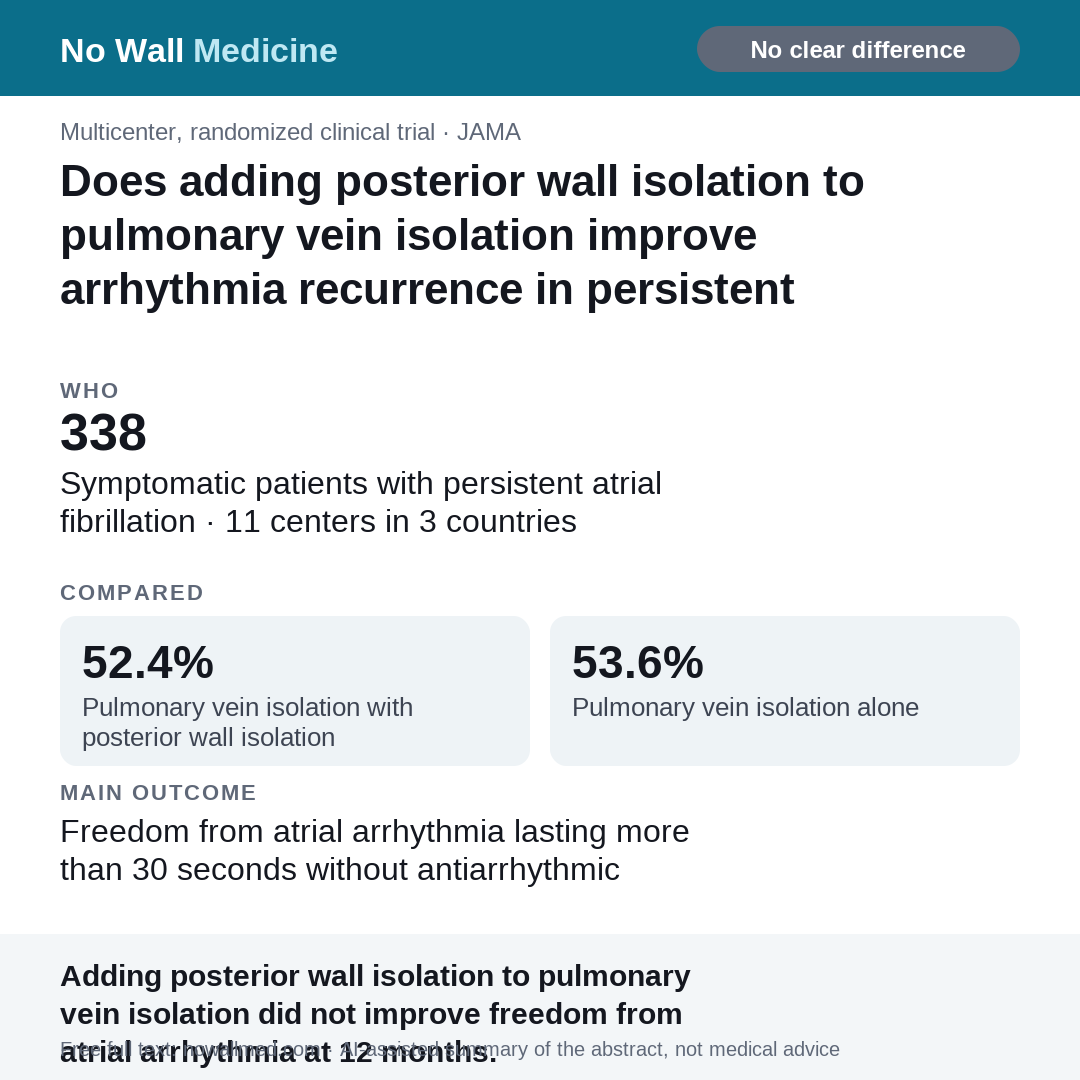
Effect of Catheter Ablation Using Pulmonary Vein Isolation With vs Without Posterior Left Atrial Wall Isolation on Atrial Arrhythmia Recurrence in Patients With Persistent Atrial Fibrillation: The CAPLA Randomized Clinical Trial
Multicenter, randomized clinical trialNo clear difference
Does adding posterior wall isolation to pulmonary vein isolation improve arrhythmia recurrence in persistent atrial fibrillation?
Who
338
Symptomatic patients with persistent atrial fibrillation · 11 centers in 3 countries
Compared
52.4%Pulmonary vein isolation with posterior wall isolation
53.6%Pulmonary vein isolation alone
Main outcome
Freedom from atrial arrhythmia lasting more than 30 seconds without antiarrhythmic medication
Result: hazard ratio 0.99 (95% CI 0.73-1.36)
Bottom line: Adding posterior wall isolation to pulmonary vein isolation did not improve freedom from atrial arrhythmia at 12 months.
JAMA · 2023-01-10Download image
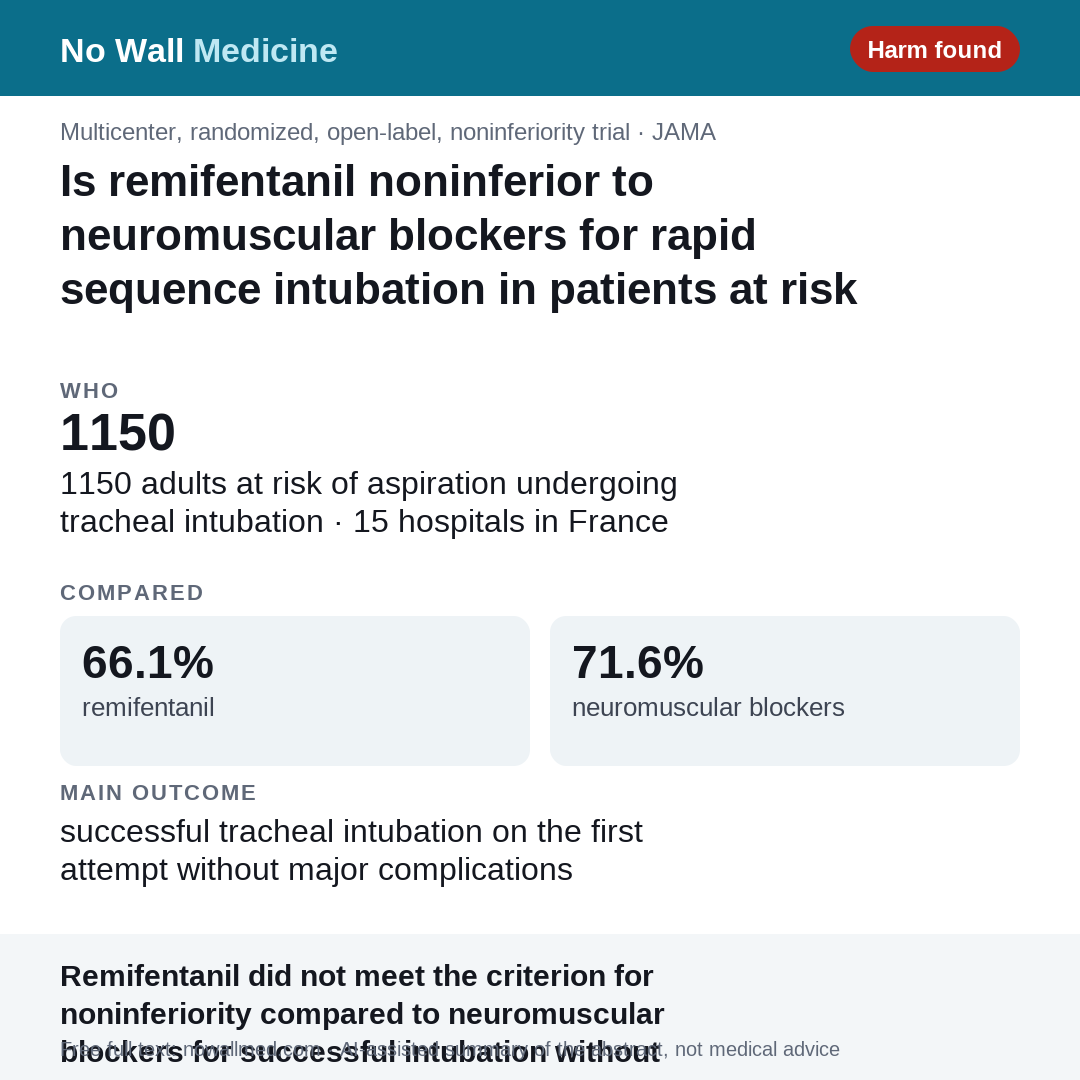
Effect of Remifentanil vs Neuromuscular Blockers During Rapid Sequence Intubation on Successful Intubation Without Major Complications Among Patients at Risk of Aspiration: A Randomized Clinical Trial
Multicenter, randomized, open-label, noninferiority trialHarm found
Is remifentanil noninferior to neuromuscular blockers for rapid sequence intubation in patients at risk of aspiration?
Who
1150
1150 adults at risk of aspiration undergoing tracheal intubation · 15 hospitals in France
Compared
66.1%remifentanil (374/575)
71.6%neuromuscular blockers (408/575)
Main outcome
successful tracheal intubation on the first attempt without major complications
Result: -6.1%; 95% CI, -11.6% to -0.5%
Bottom line: Remifentanil did not meet the criterion for noninferiority compared to neuromuscular blockers for successful intubation without major complications.
JAMA · 2023-01-03Download image
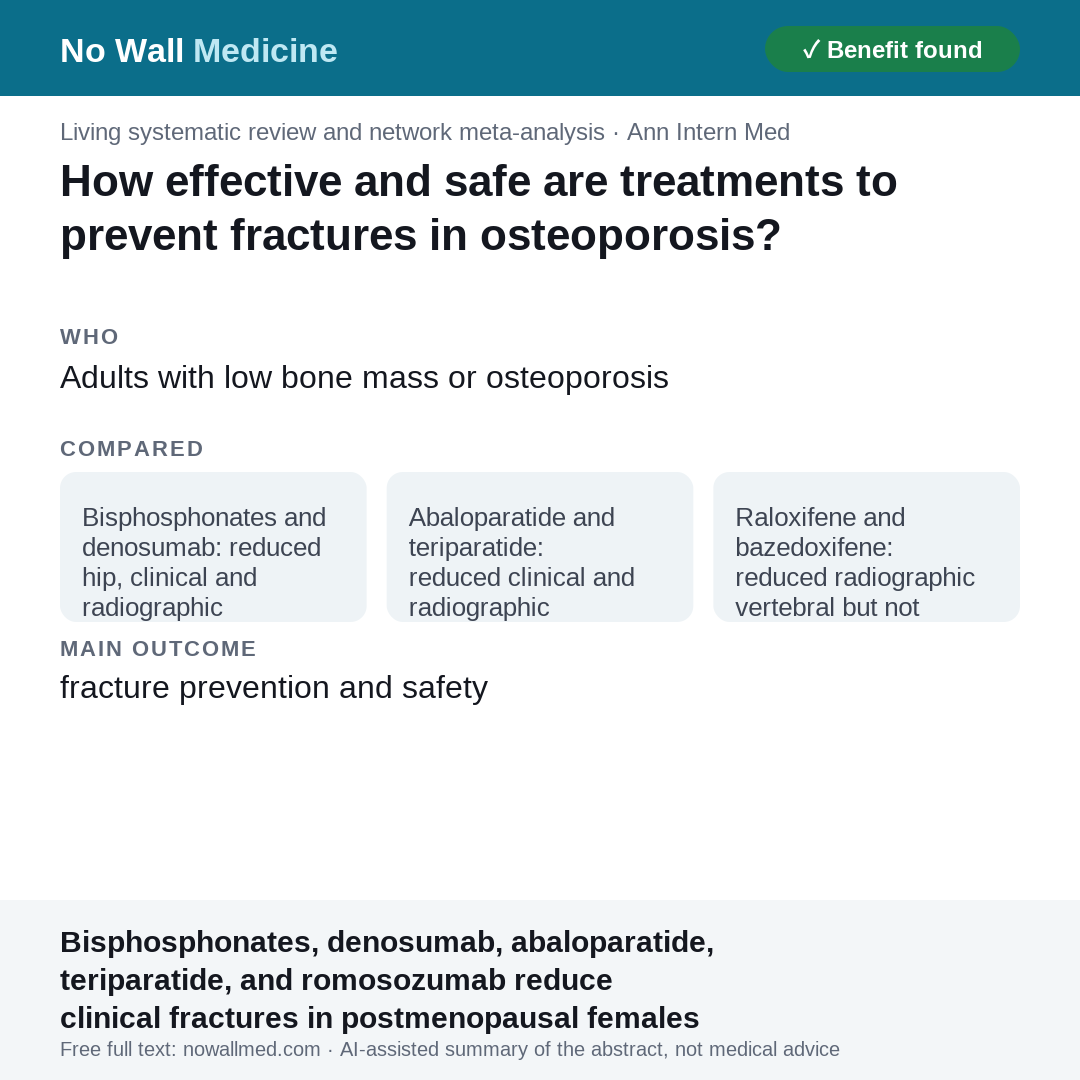
Effectiveness and Safety of Treatments to Prevent Fractures in People With Low Bone Mass or Primary Osteoporosis: A Living Systematic Review and Network Meta-analysis for the American College of Physicians
Living systematic review and network meta-analysisBenefit found
How effective and safe are treatments to prevent fractures in osteoporosis?
Who
Adults with low bone mass or osteoporosis
Compared
Bisphosphonates and denosumab: reduced hip, clinical and radiographic vertebral, and other clinical fractures
Abaloparatide and teriparatide: reduced clinical and radiographic vertebral fractures
Raloxifene and bazedoxifene: reduced radiographic vertebral but not clinical fractures
Main outcome
fracture prevention and safety
Bottom line: Bisphosphonates, denosumab, abaloparatide, teriparatide, and romosozumab reduce clinical fractures in postmenopausal females with osteoporosis.
Limitation: Few studies examined low bone mass, males, Black-identifying persons, or sequential therapy.
Funded by: American College of Physicians
Ann Intern Med · 2023-01-03Download image
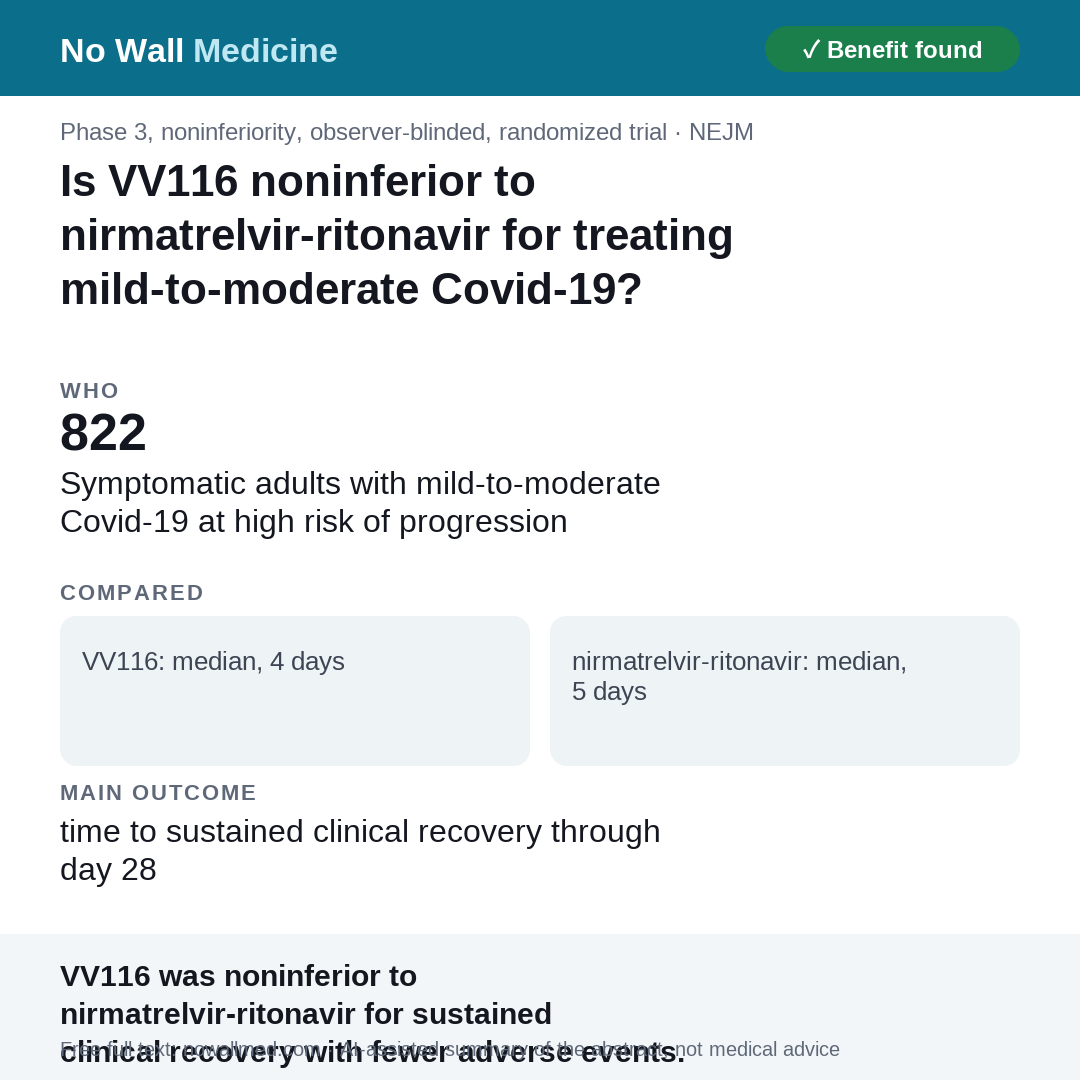
VV116 versus Nirmatrelvir-Ritonavir for Oral Treatment of Covid-19
Phase 3, noninferiority, observer-blinded, randomized trialBenefit found
Is VV116 noninferior to nirmatrelvir-ritonavir for treating mild-to-moderate Covid-19?
Who
822
Symptomatic adults with mild-to-moderate Covid-19 at high risk of progression
Compared
VV116: median, 4 days
nirmatrelvir-ritonavir: median, 5 days
Main outcome
time to sustained clinical recovery through day 28
Result: hazard ratio, 1.17; 95% confidence interval, 1.01 to 1.35
Bottom line: VV116 was noninferior to nirmatrelvir-ritonavir for sustained clinical recovery with fewer adverse events.
Funded by: Vigonvita Life Sciences and others
NEJM · 2022-12-28Download image
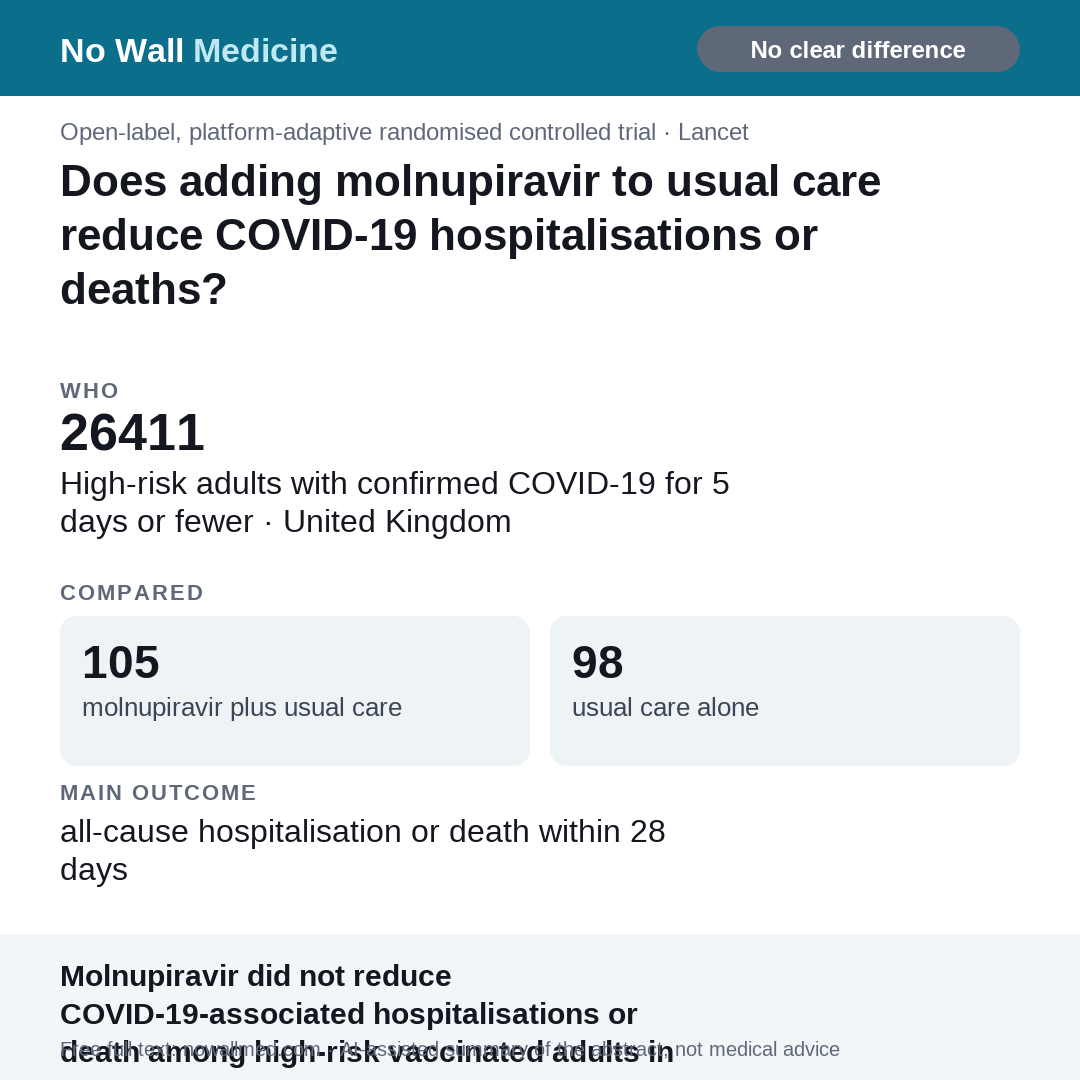
Molnupiravir plus usual care versus usual care alone as early treatment for adults with COVID-19 at increased risk of adverse outcomes (PANORAMIC): an open-label, platform-adaptive randomised controlled trial
Open-label, platform-adaptive randomised controlled trialNo clear difference
Does adding molnupiravir to usual care reduce COVID-19 hospitalisations or deaths?
Who
26411
High-risk adults with confirmed COVID-19 for 5 days or fewer · United Kingdom
Compared
105molnupiravir plus usual care (1%)
98usual care alone (1%)
Main outcome
all-cause hospitalisation or death within 28 days
Result: adjusted odds ratio 1·06 (95% Bayesian credible interval 0·81-1·41)
Bottom line: Molnupiravir did not reduce COVID-19-associated hospitalisations or death among high-risk vaccinated adults in the community.
Funded by: UK National Institute for Health and Care Research
Lancet · 2022-12-22Download image
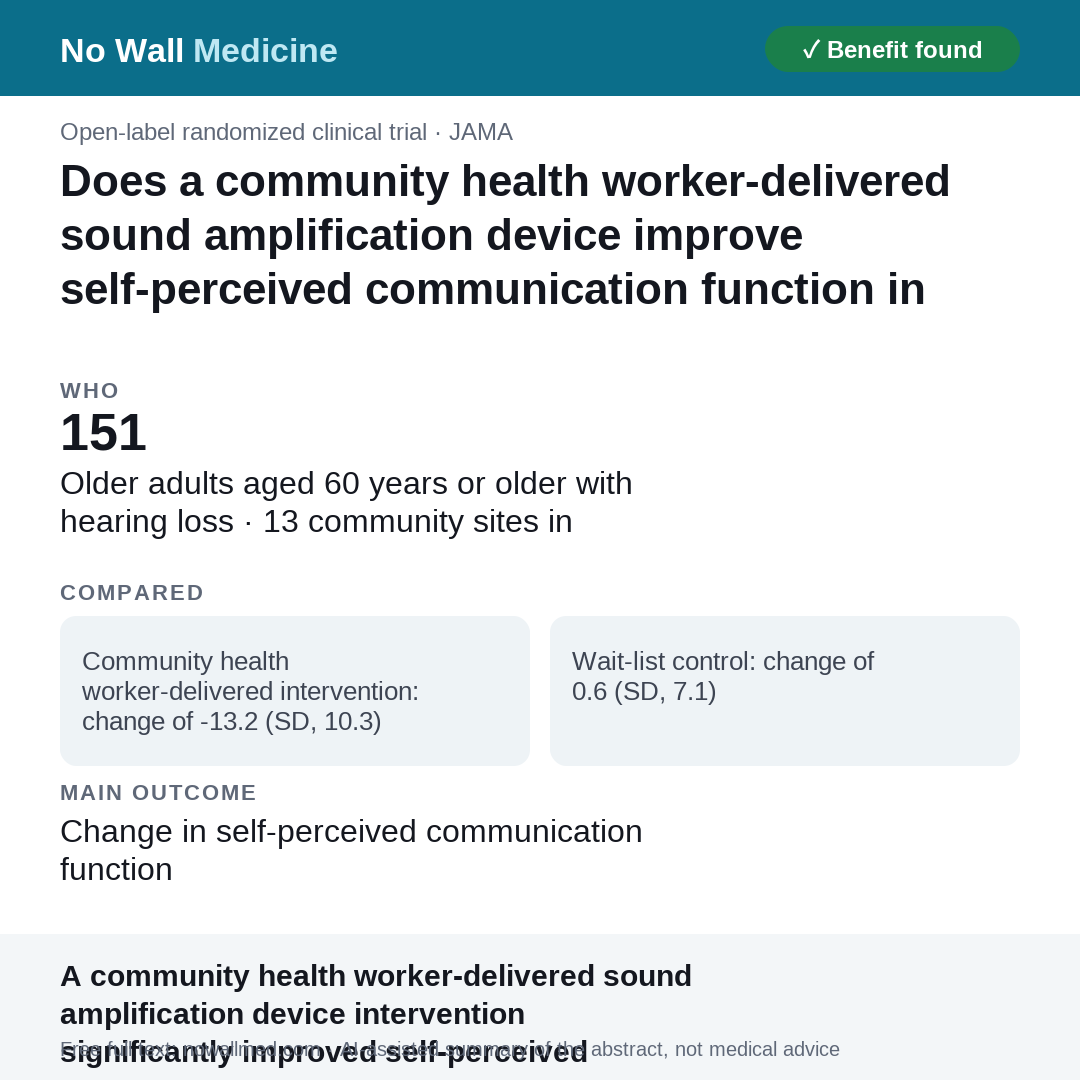
Effect of a Community Health Worker-Delivered Personal Sound Amplification Device on Self-Perceived Communication Function in Older Adults With Hearing Loss: A Randomized Clinical Trial
Open-label randomized clinical trialBenefit found
Does a community health worker-delivered sound amplification device improve self-perceived communication function in older adults?
Who
151
Older adults aged 60 years or older with hearing loss · 13 community sites in Baltimore, Maryland
Compared
Community health worker-delivered intervention: change of -13.2 (SD, 10.3)
Wait-list control: change of 0.6 (SD, 7.1)
Main outcome
Change in self-perceived communication function
Result: -12.98-point HHIE-S change (95% CI, -15.51 to -10.42)
Bottom line: A community health worker-delivered sound amplification device intervention significantly improved self-perceived communication function at 3 months.
Limitation: Findings are limited by the absence of a sham control.
JAMA · 2022-12-20Download image
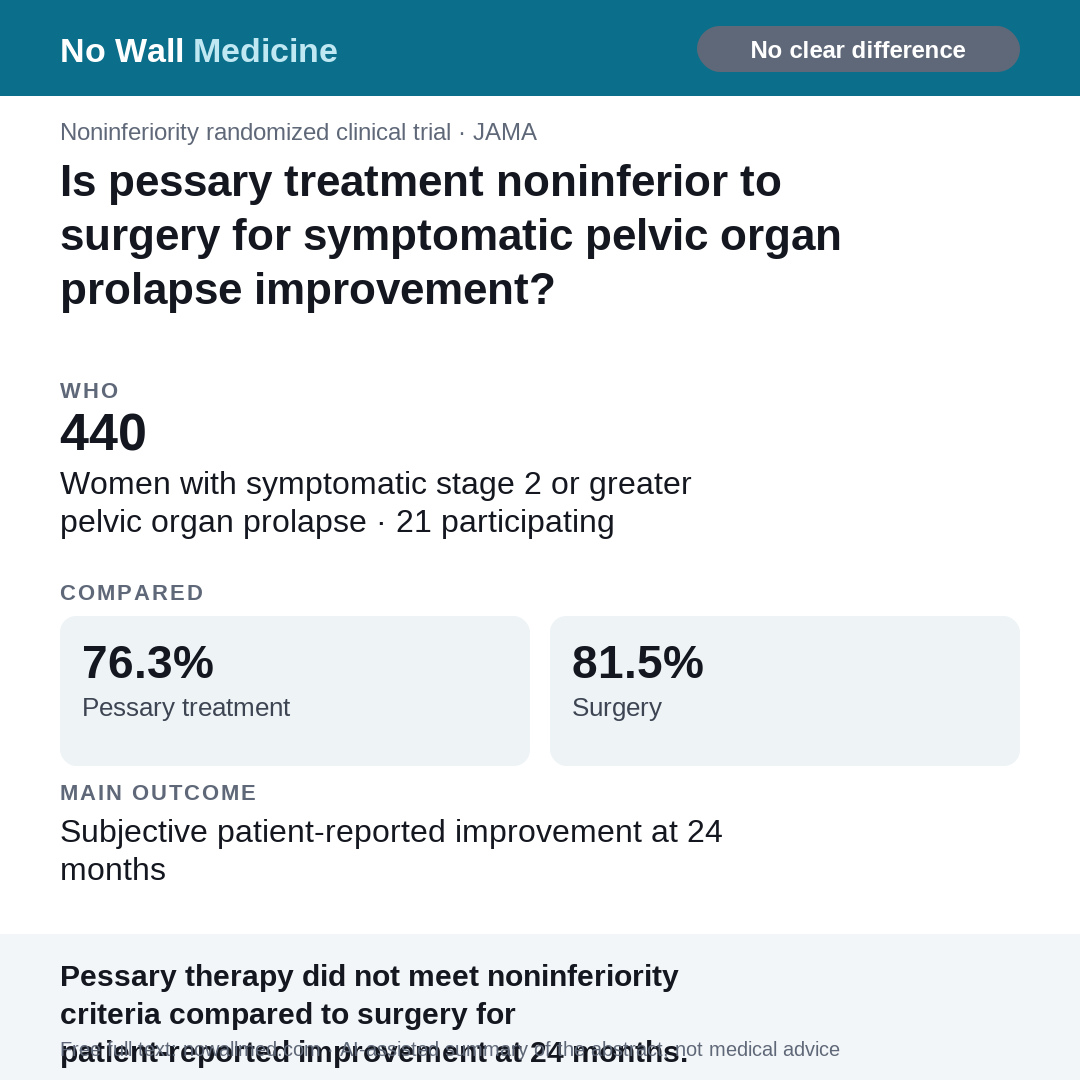
Effect of Pessary vs Surgery on Patient-Reported Improvement in Patients With Symptomatic Pelvic Organ Prolapse: A Randomized Clinical Trial
Noninferiority randomized clinical trialNo clear difference
Is pessary treatment noninferior to surgery for symptomatic pelvic organ prolapse improvement?
Who
440
Women with symptomatic stage 2 or greater pelvic organ prolapse · 21 participating hospitals in the Netherlands
Compared
76.3%Pessary treatment
81.5%Surgery
Main outcome
Subjective patient-reported improvement at 24 months
Result: risk difference, -6.1% [1-sided 95% CI, -12.7 to ∞]
Bottom line: Pessary therapy did not meet noninferiority criteria compared to surgery for patient-reported improvement at 24 months.
Limitation: Interpretation is limited by loss to follow-up and large amount of participant crossover from pessary to surgery.
JAMA · 2022-12-20Download image
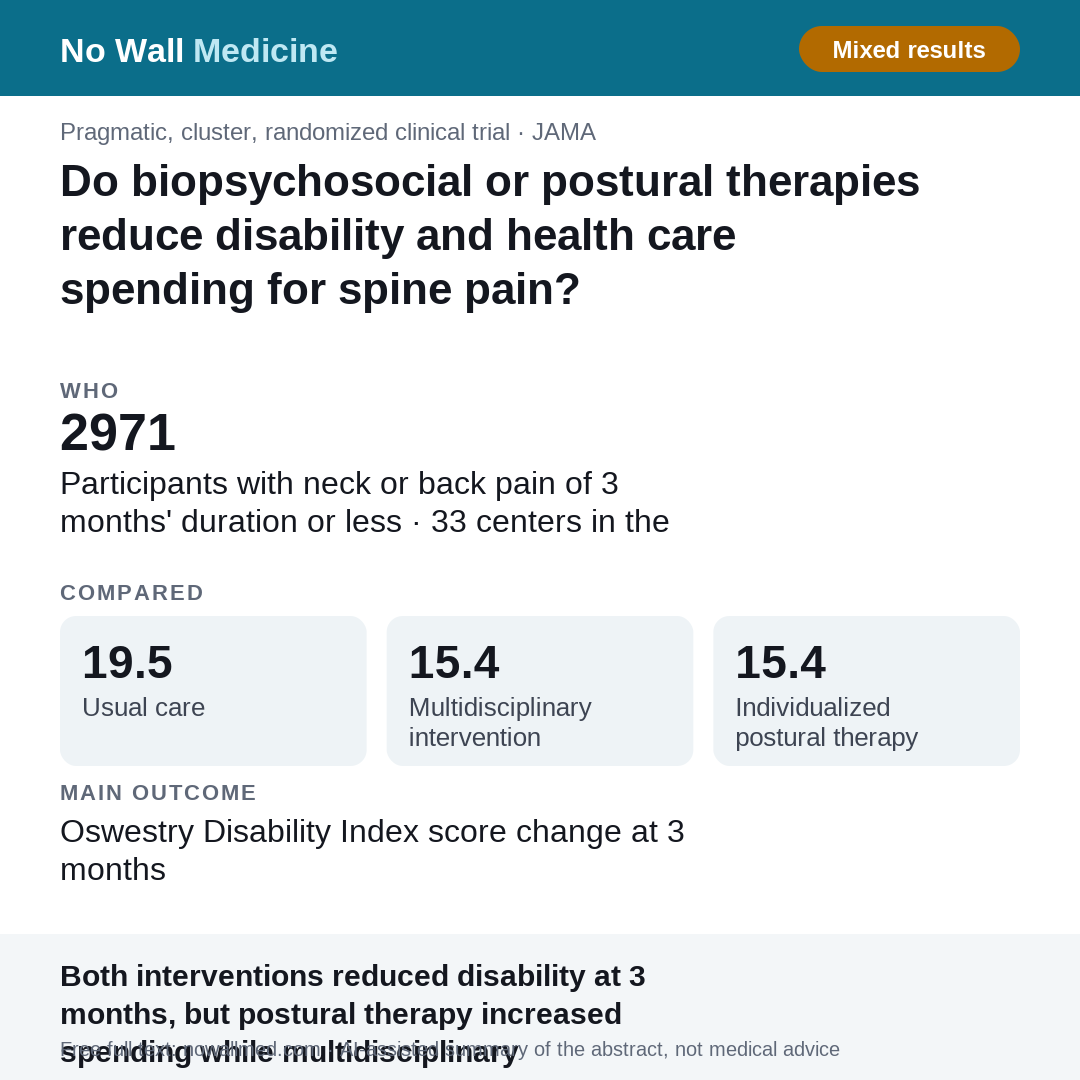
Effect of a Biopsychosocial Intervention or Postural Therapy on Disability and Health Care Spending Among Patients With Acute and Subacute Spine Pain: The SPINE CARE Randomized Clinical Trial
Pragmatic, cluster, randomized clinical trialMixed results
Do biopsychosocial or postural therapies reduce disability and health care spending for spine pain?
Who
2971
Participants with neck or back pain of 3 months' duration or less · 33 centers in the US
Compared
19.5Usual care
15.4Multidisciplinary intervention
15.4Individualized postural therapy
Main outcome
Oswestry Disability Index score change at 3 months
Result: -5.8 (95% CI, -7.7 to -3.9) for ICE and -4.3 (95% CI, -5.9 to -2.6) for IPT
Bottom line: Both interventions reduced disability at 3 months, but postural therapy increased spending while multidisciplinary intervention showed no significant spending difference.
JAMA · 2022-12-20Download image
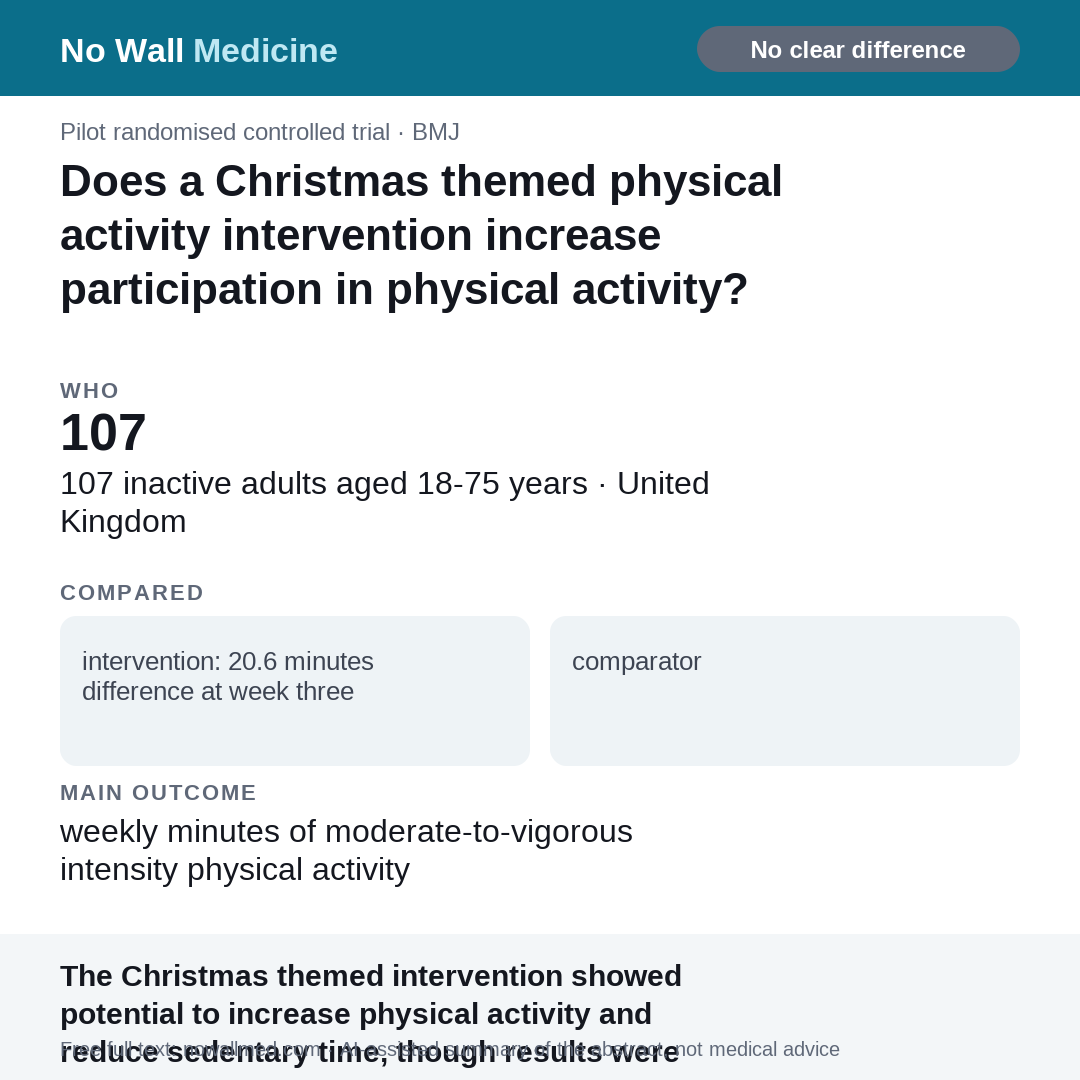
A Christmas themed physical activity intervention to increase participation in physical activity during Advent: pilot randomised controlled trial
Pilot randomised controlled trialNo clear difference
Does a Christmas themed physical activity intervention increase participation in physical activity?
Who
107
107 inactive adults aged 18-75 years · United Kingdom
Compared
intervention: 20.6 minutes difference at week three
comparator
Main outcome
weekly minutes of moderate-to-vigorous intensity physical activity
Result: adjusted mean difference 20.6 minutes (95% confidence interval -29.7 to 70.9)
Bottom line: The Christmas themed intervention showed potential to increase physical activity and reduce sedentary time, though results were not statistically significant.
BMJ · 2022-12-19Download image
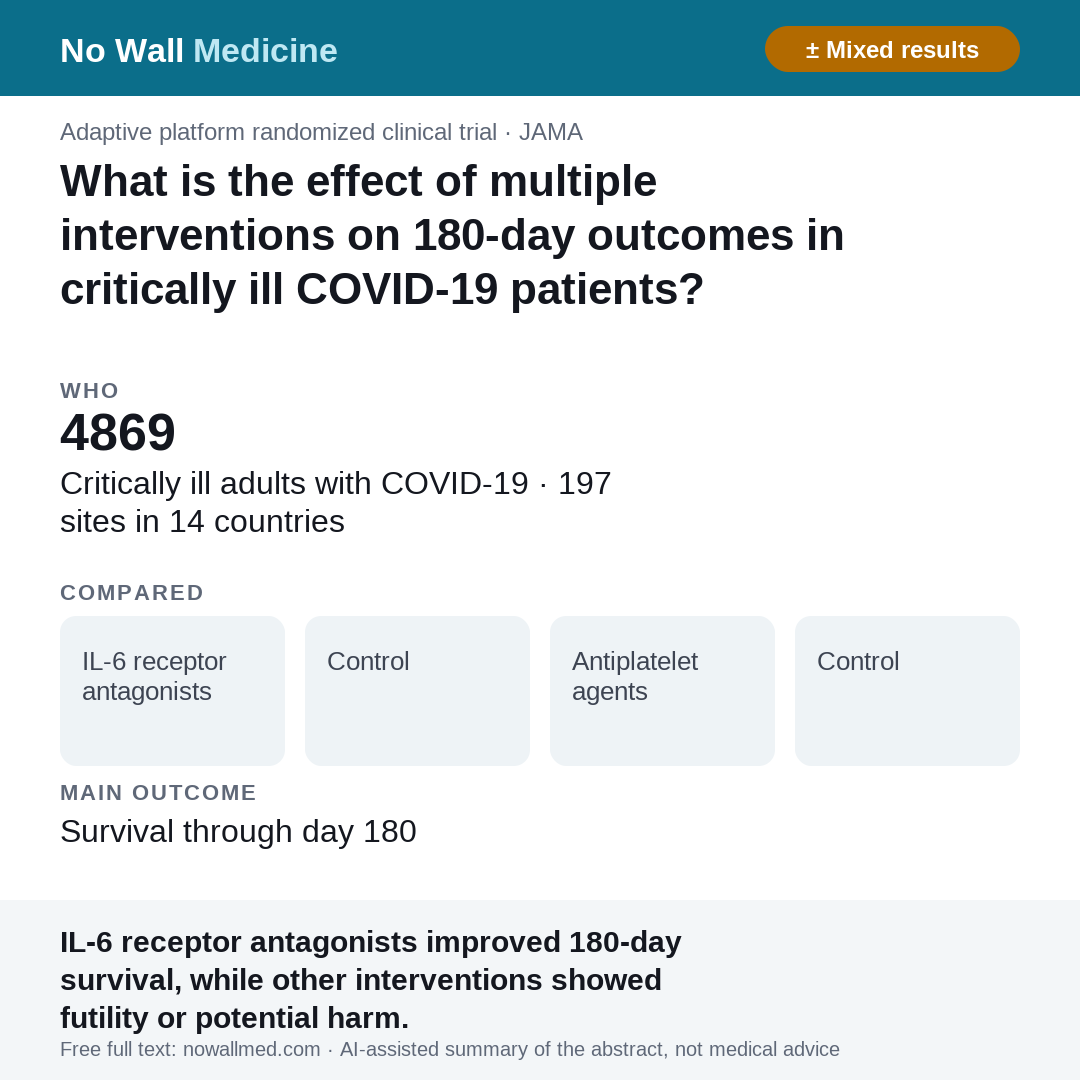
Long-term (180-Day) Outcomes in Critically Ill Patients With COVID-19 in the REMAP-CAP Randomized Clinical Trial
Adaptive platform randomized clinical trialMixed results
What is the effect of multiple interventions on 180-day outcomes in critically ill COVID-19 patients?
Who
4869
Critically ill adults with COVID-19 · 197 sites in 14 countries
Compared
IL-6 receptor antagonists
Control
Antiplatelet agents
Control
Main outcome
Survival through day 180
Result: adjusted HR, 0.74 (95% credible interval, 0.61-0.90) for IL-6 receptor antagonists
Bottom line: IL-6 receptor antagonists improved 180-day survival, while other interventions showed futility or potential harm.
JAMA · 2022-12-17Download image