Visual abstracts
New randomized trials and meta-analyses from leading journals at a glance: who was studied, what was compared, and what was found. Every paper is free to read in full.
All specialtiesCardiology 4877Oncology 4138Gastroenterology & Hepatology 1942Infectious Disease 3837Neurology 1905Psychiatry & Mental Health 2273Pulmonology 2143Critical Care 1365Endocrinology & Diabetes 2580Pediatrics 2980Surgery 2559Orthopedics & Sports Medicine 931Neurosurgery 537Cardiothoracic & Vascular Surgery 674Plastic & Reconstructive Surgery 591Nephrology 1133Rheumatology 823Hematology 1109Dermatology 621Ophthalmology 543Obstetrics & Gynecology 1686Public & Global Health 1058Radiology & Imaging 648Anesthesiology 986Urology 764ENT (Otolaryngology) 503Emergency Medicine 511Allergy & Immunology 313Geriatrics 981Family Medicine & Primary Care 562Medical Genetics & Genomics 676Pathology & Laboratory Medicine 159Physical Medicine & Rehabilitation 757Palliative Care 444Nutrition 1588Digital Health & AI 2201General Medicine 321
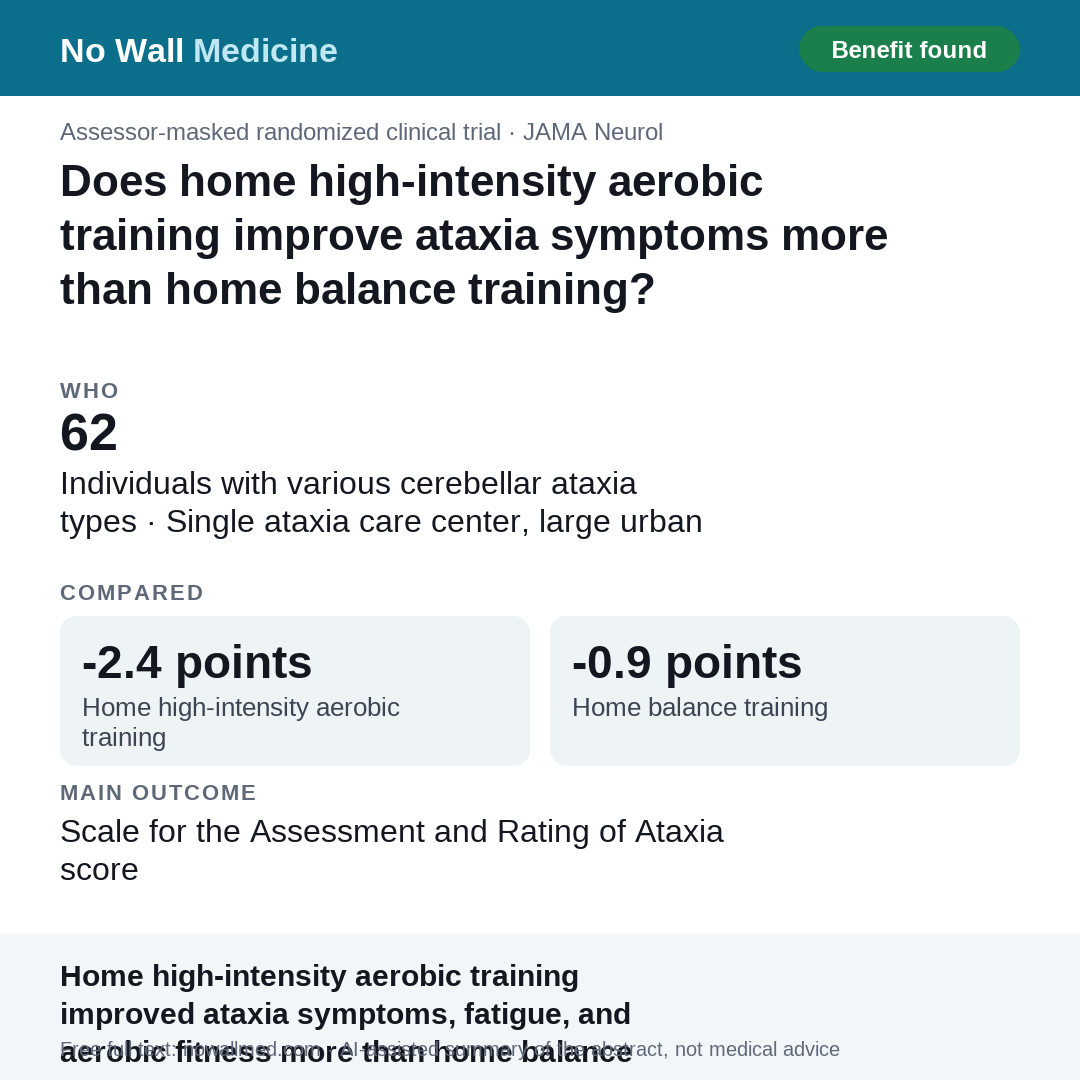
Home Training for Cerebellar Ataxias: A Randomized Clinical Trial
Assessor-masked randomized clinical trialBenefit found
Does home high-intensity aerobic training improve ataxia symptoms more than home balance training?
Who
62
Individuals with various cerebellar ataxia types · Single ataxia care center, large urban US city
Compared
-2.4 pointsHome high-intensity aerobic training (95% CI, -3.1 to -1.80)
-0.9 pointsHome balance training (95% CI, -1.5 to -0.2)
Main outcome
Scale for the Assessment and Rating of Ataxia score
Result: β, -1.53 (95% CI, -2.44 to -0.61)
Bottom line: Home high-intensity aerobic training improved ataxia symptoms, fatigue, and aerobic fitness more than home balance training.
JAMA Neurol · 2025-09-15Download image
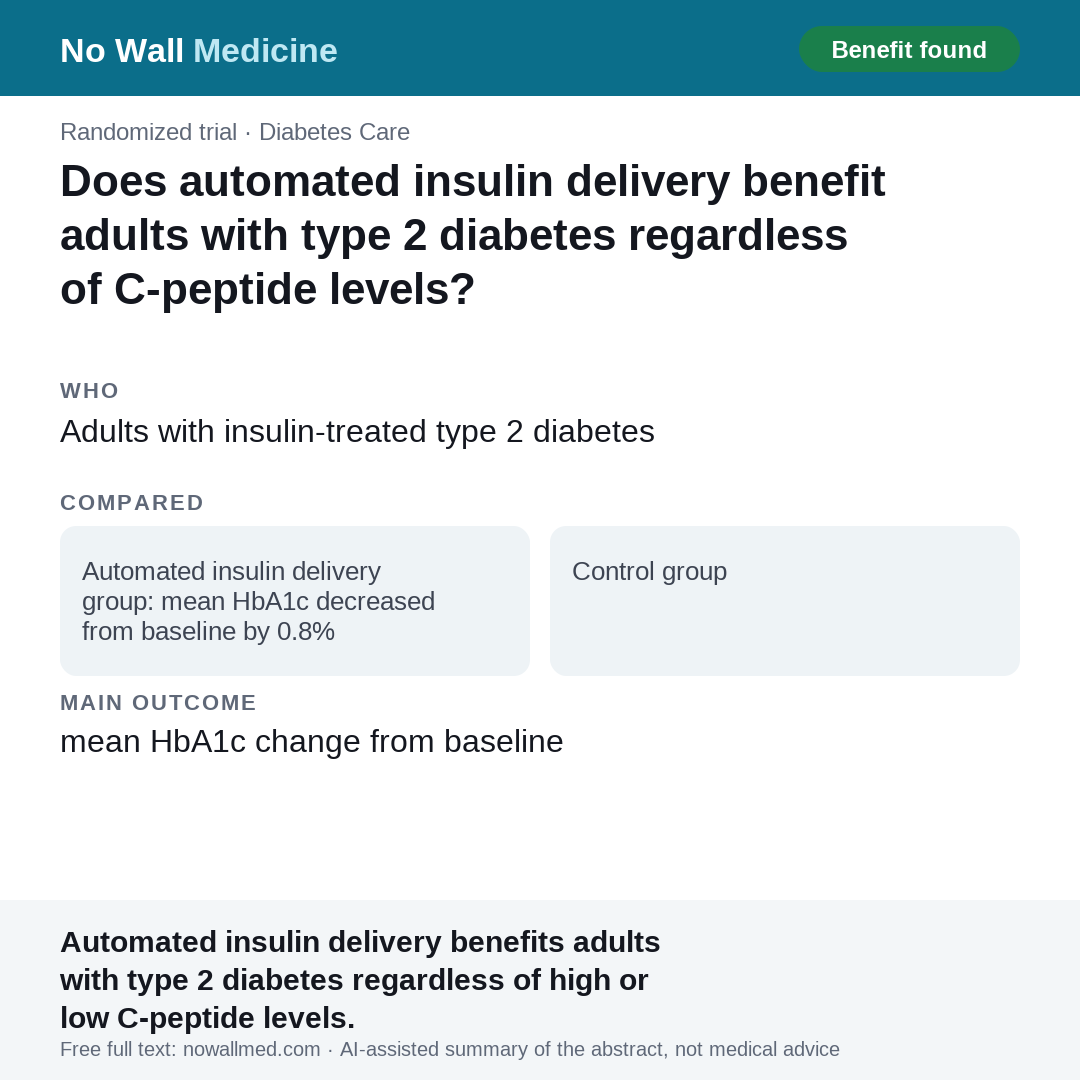
Adults With Type 2 Diabetes Benefit From Automated Insulin Delivery Irrespective of C-Peptide Level
Randomized trialBenefit found
Does automated insulin delivery benefit adults with type 2 diabetes regardless of C-peptide levels?
Who
Adults with insulin-treated type 2 diabetes
Compared
Automated insulin delivery group: mean HbA1c decreased from baseline by 0.8%
Control group
Main outcome
mean HbA1c change from baseline
Bottom line: Automated insulin delivery benefits adults with type 2 diabetes regardless of high or low C-peptide levels.
Diabetes Care · 2025-09-15Download image
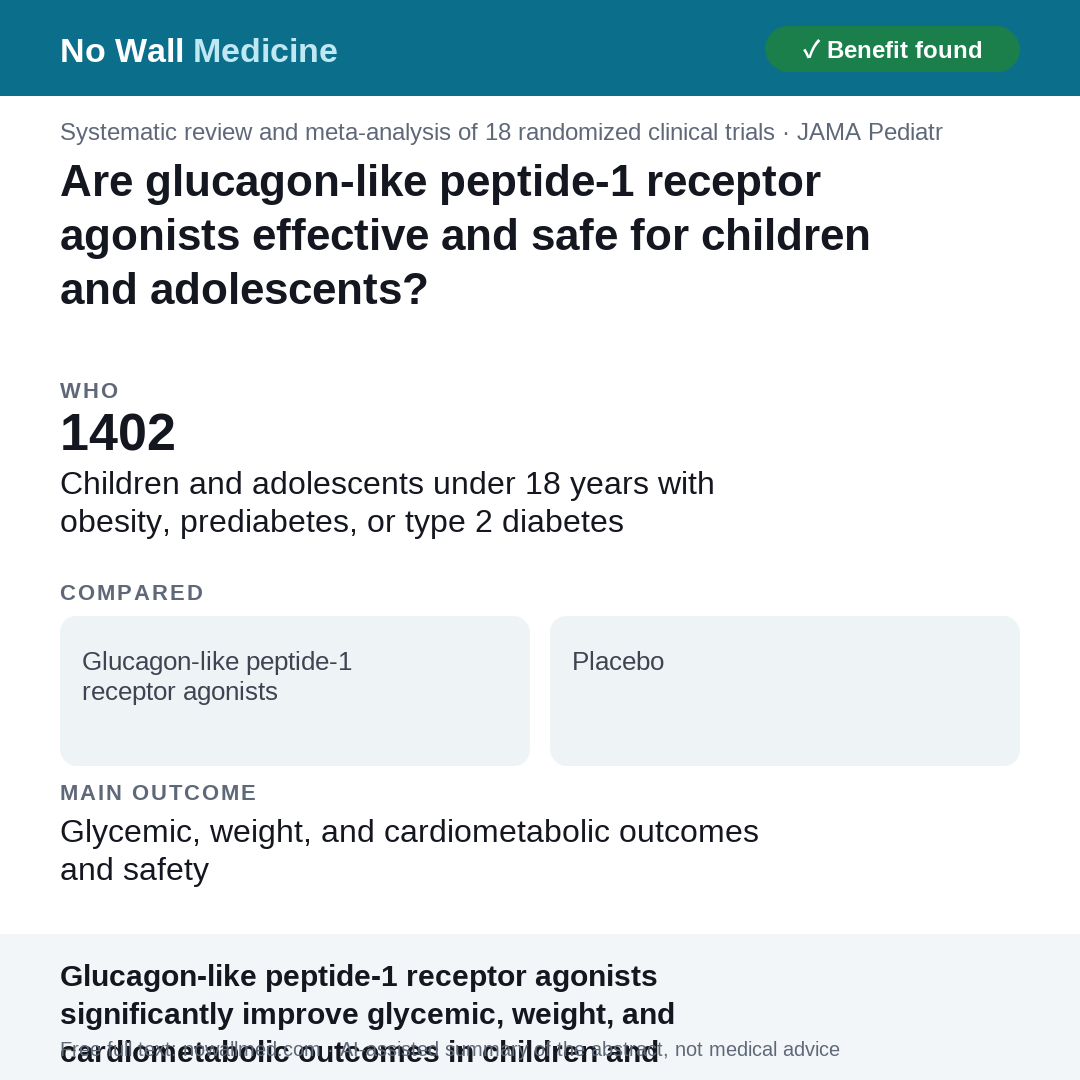
Efficacy and Safety of GLP-1 RAs in Children and Adolescents With Obesity or Type 2 Diabetes: A Systematic Review and Meta-Analysis
Systematic review and meta-analysis of 18 randomized clinical trialsBenefit found
Are glucagon-like peptide-1 receptor agonists effective and safe for children and adolescents?
Who
1402
Children and adolescents under 18 years with obesity, prediabetes, or type 2 diabetes
Compared
Glucagon-like peptide-1 receptor agonists
Placebo
Main outcome
Glycemic, weight, and cardiometabolic outcomes and safety
Result: HbA1c change -0.44% (95% CI -0.68% to -0.21%)
Bottom line: Glucagon-like peptide-1 receptor agonists significantly improve glycemic, weight, and cardiometabolic outcomes in children and adolescents.
Limitation: Available data over a relatively short follow-up
JAMA Pediatr · 2025-09-15Download image
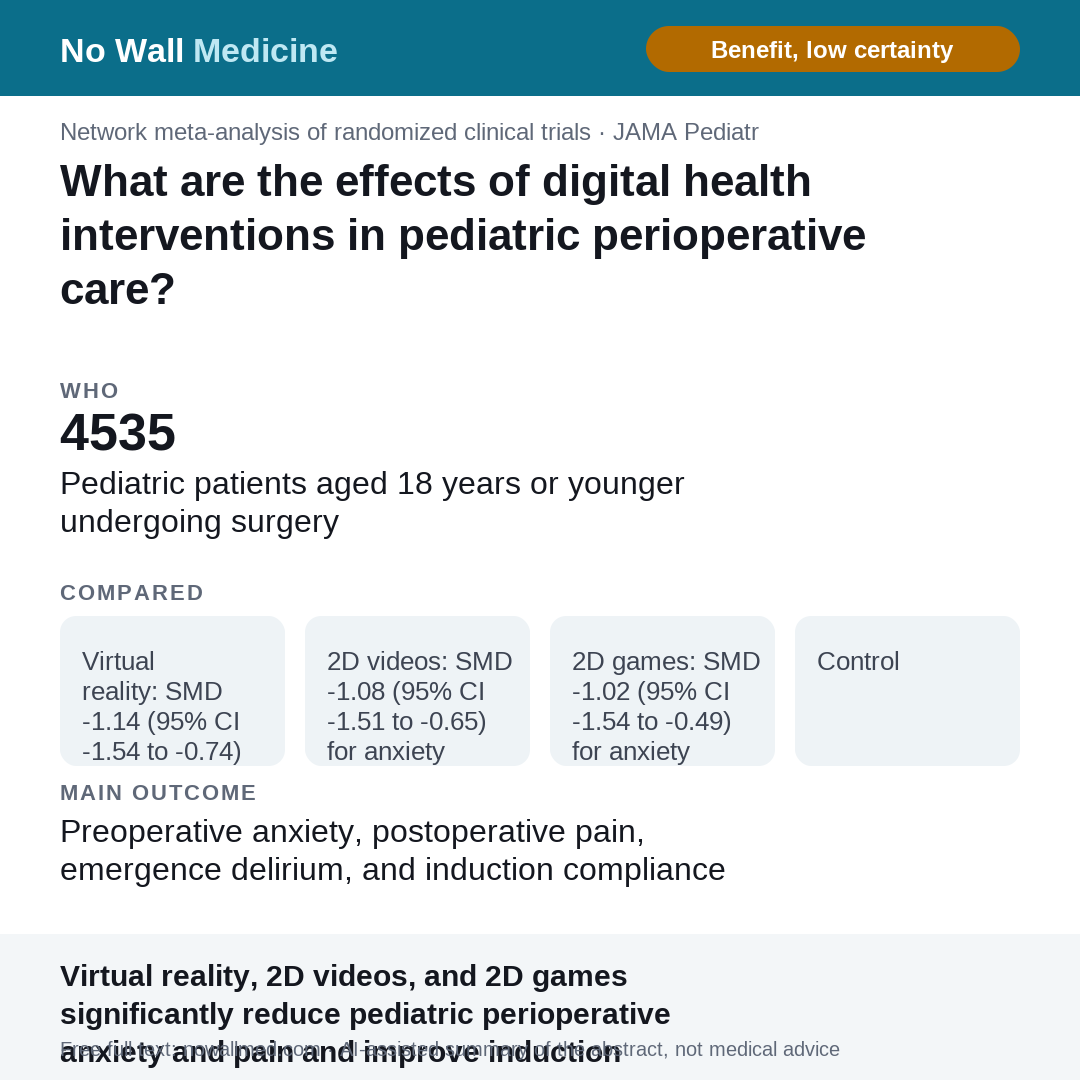
Digital Health Interventions in Pediatric Perioperative Care: A Network Meta-Analysis
Network meta-analysis of randomized clinical trialsBenefit found
What are the effects of digital health interventions in pediatric perioperative care?
Who
4535
Pediatric patients aged 18 years or younger undergoing surgery
Compared
Virtual reality: SMD -1.14 (95% CI -1.54 to -0.74) for anxiety
2D videos: SMD -1.08 (95% CI -1.51 to -0.65) for anxiety
2D games: SMD -1.02 (95% CI -1.54 to -0.49) for anxiety
Control
Main outcome
Preoperative anxiety, postoperative pain, emergence delirium, and induction compliance
Bottom line: Virtual reality, 2D videos, and 2D games significantly reduce pediatric perioperative anxiety and pain and improve induction compliance.
JAMA Pediatr · 2025-09-15Download image
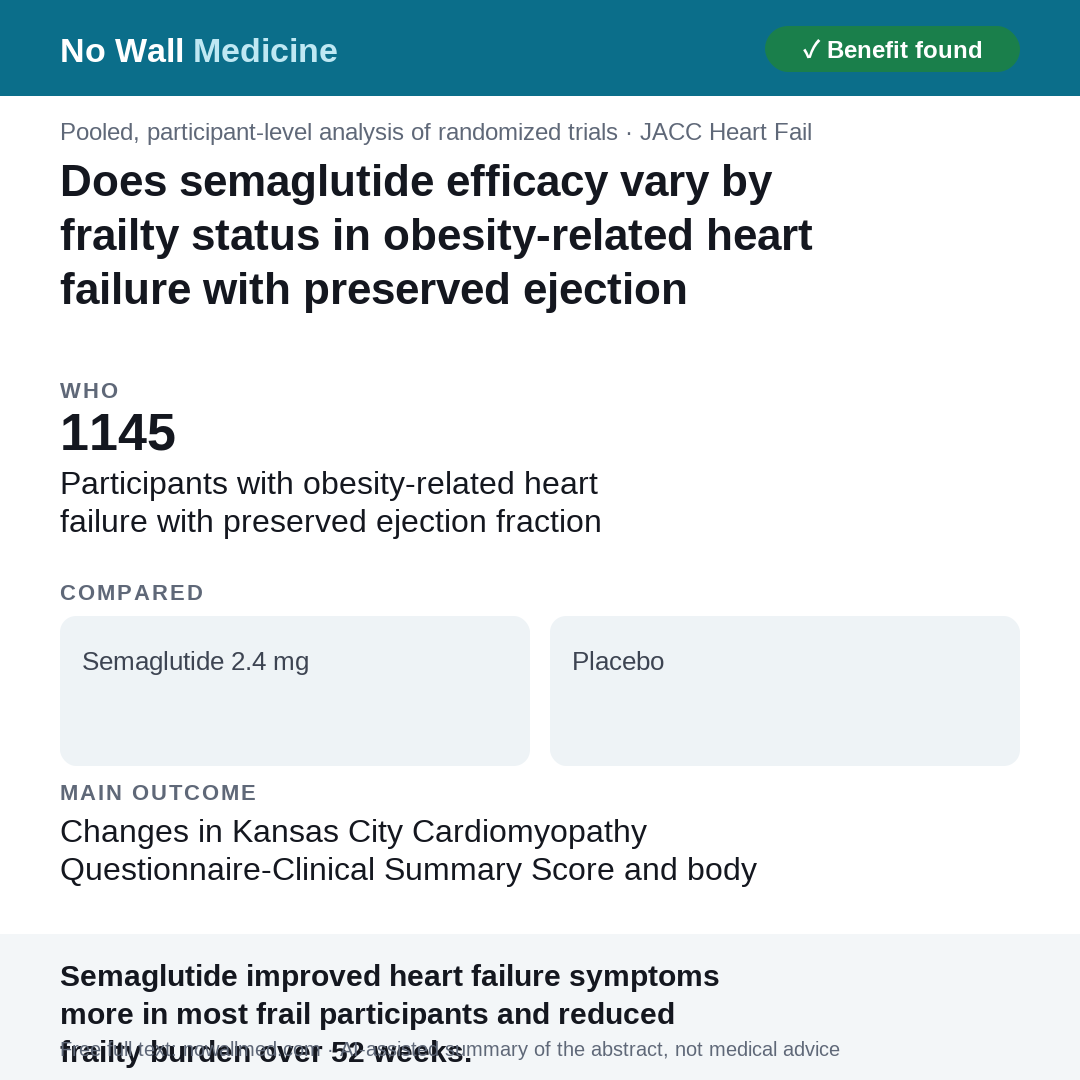
Frailty and Effects of Semaglutide in Obesity-Related HFpEF: Findings From the STEP-HFpEF Program
Pooled, participant-level analysis of randomized trialsBenefit found
Does semaglutide efficacy vary by frailty status in obesity-related heart failure with preserved ejection fraction?
Who
1145
Participants with obesity-related heart failure with preserved ejection fraction
Compared
Semaglutide 2.4 mg
Placebo
Main outcome
Changes in Kansas City Cardiomyopathy Questionnaire-Clinical Summary Score and body weight
Result: most frail mean difference: 11.0 (95% CI 8.1-13.8)
Bottom line: Semaglutide improved heart failure symptoms more in most frail participants and reduced frailty burden over 52 weeks.
JACC Heart Fail · 2025-09-15Download image
Charting the evolution of artificial intelligence mental health chatbots from rule-based systems to large language models: a systematic review
Systematic review of 160 studiesUnclear result
How have artificial intelligence mental health chatbots evolved and how are they evaluated?
Who
160
Artificial intelligence mental health chatbots
Compared
All studies: 47% focused on clinical efficacy testing
Large language model studies: 16% underwent clinical efficacy testing
Main outcome
Chatbot architecture evolution and evaluation rigor
Bottom line: Large language model chatbots are increasing but lack sufficient clinical efficacy testing and robust validation.
Limitation: Discrepancies exist between marketed claims and actual artificial intelligence architectures used.
World Psychiatry · 2025-09-15Download image

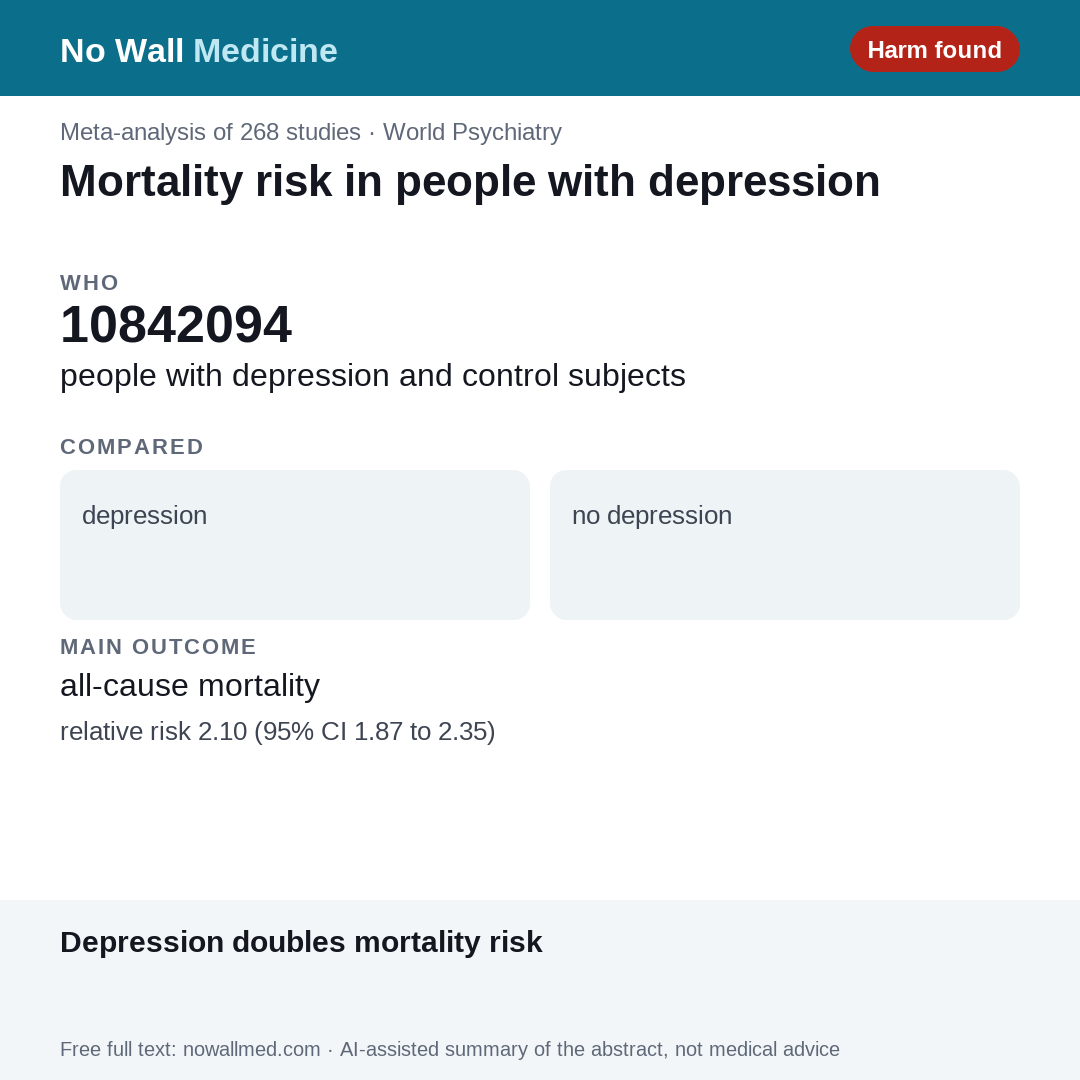
All-cause and cause-specific mortality in people with depression: a large-scale systematic review and meta-analysis of relative risk and aggravating or attenuating factors, including antidepressant treatment
Meta-analysis of 268 studiesHarm found
Mortality risk in people with depression
Who
10842094
people with depression and control subjects
Compared
depression
no depression
Main outcome
all-cause mortality
Result: relative risk 2.10 (95% CI 1.87 to 2.35)
Bottom line: Depression doubles mortality risk
World Psychiatry · 2025-09-15Download image
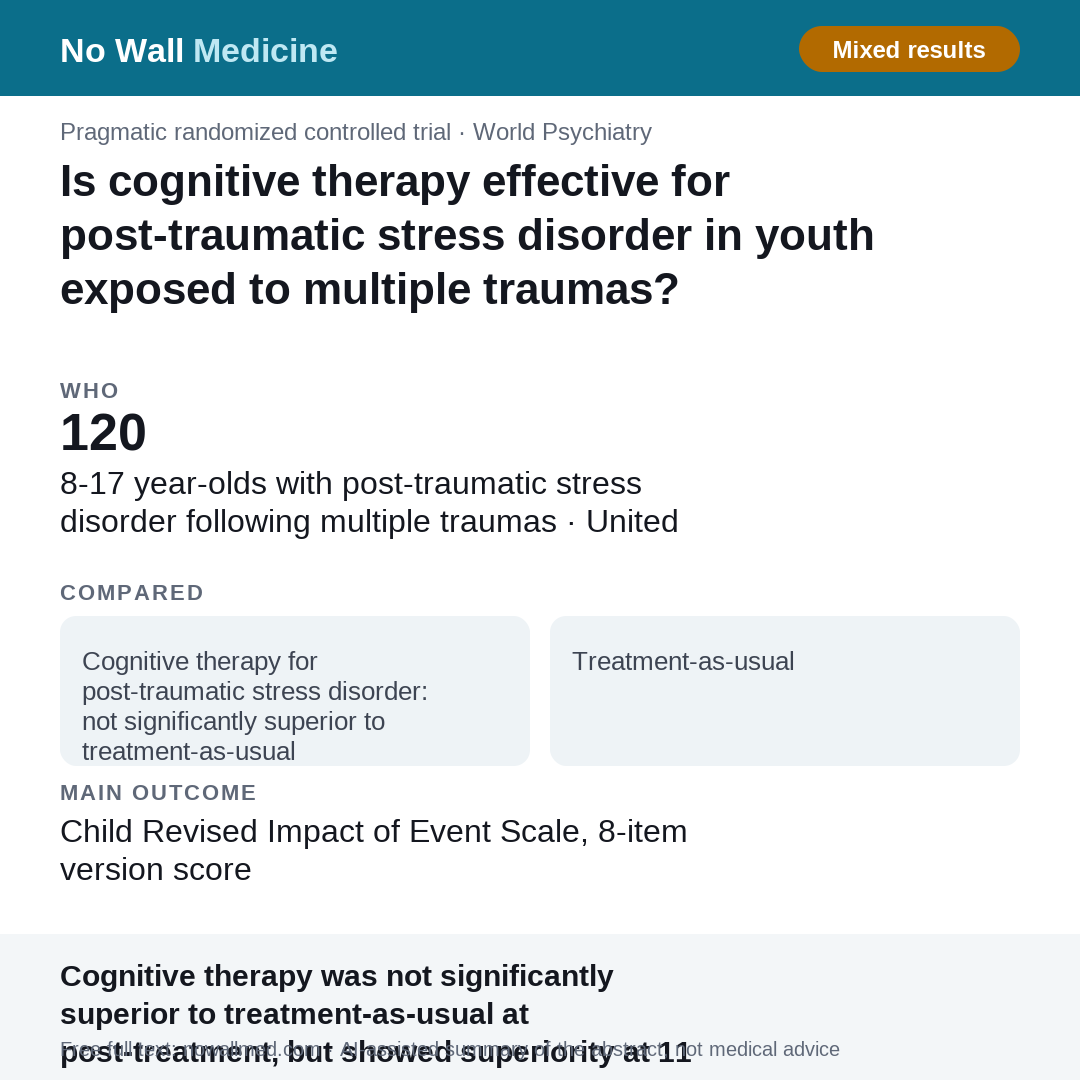
A pragmatic randomized controlled trial of cognitive therapy for post-traumatic stress disorder in children and adolescents exposed to multiple traumatic stressors: the DECRYPT trial
Pragmatic randomized controlled trialMixed results
Is cognitive therapy effective for post-traumatic stress disorder in youth exposed to multiple traumas?
Who
120
8-17 year-olds with post-traumatic stress disorder following multiple traumas · United Kingdom mental health services
Compared
Cognitive therapy for post-traumatic stress disorder: not significantly superior to treatment-as-usual
Treatment-as-usual
Main outcome
Child Revised Impact of Event Scale, 8-item version score
Result: adjusted difference: -3.80, 95% CI: -7.56 to -0.06
Bottom line: Cognitive therapy was not significantly superior to treatment-as-usual at post-treatment, but showed superiority at 11 months.
World Psychiatry · 2025-09-15Download image
Brain structure and function in adult survivors of developmental trauma with psychosis: A systematic review
Systematic reviewMixed results
Brain structure in trauma survivors with psychosis
Who
1761
adult survivors of developmental trauma with psychosis
Compared
trauma survivors
healthy controls
Main outcome
brain structure and function
Bottom line: Trauma associated with brain differences
Psychol Med · 2025-09-15Download image

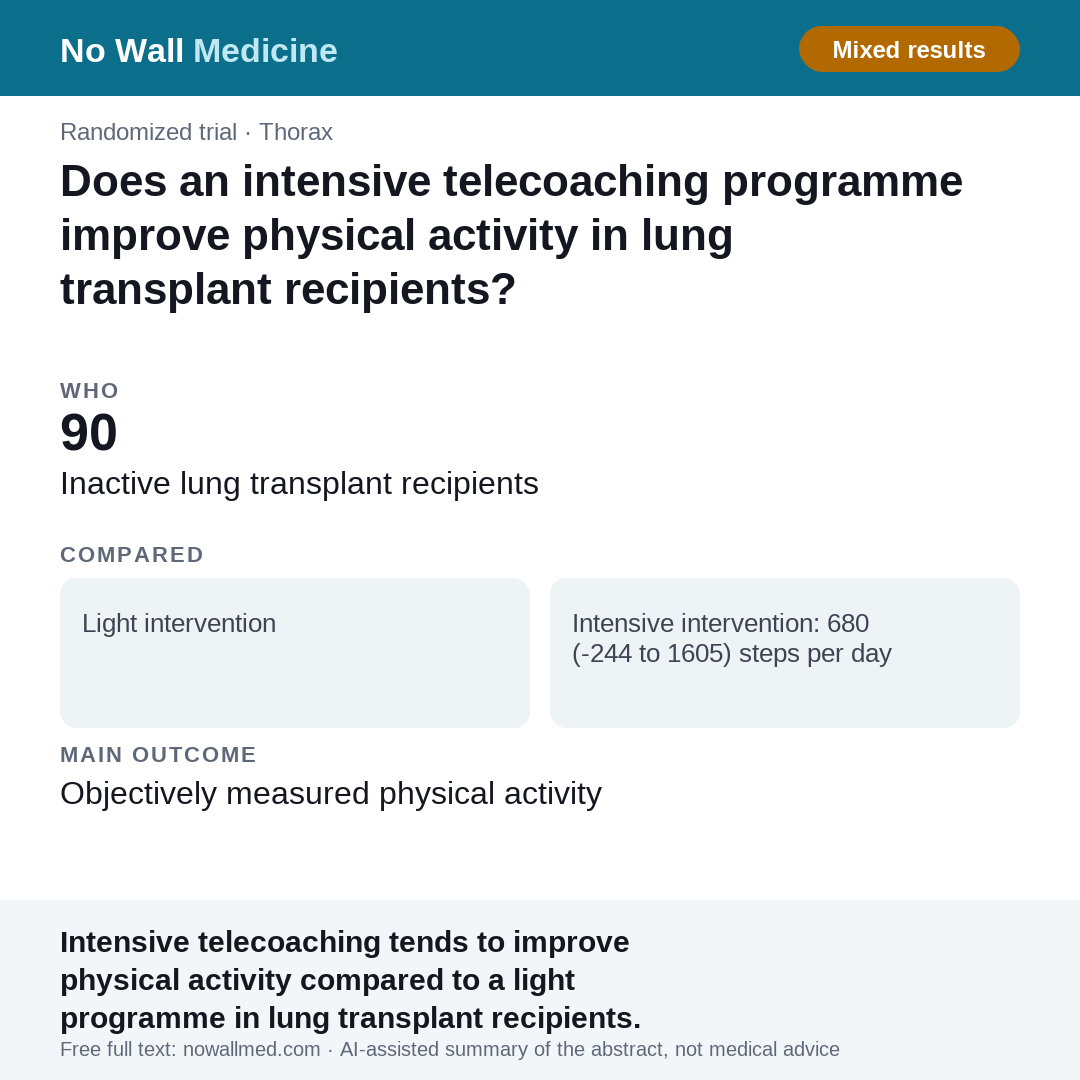
1-year physical activity coaching programme in lung transplant recipients: an RCT
Randomized trialMixed results
Does an intensive telecoaching programme improve physical activity in lung transplant recipients?
Who
90
Inactive lung transplant recipients
Compared
Light intervention
Intensive intervention: 680 (-244 to 1605) steps per day
Main outcome
Objectively measured physical activity
Bottom line: Intensive telecoaching tends to improve physical activity compared to a light programme in lung transplant recipients.
Thorax · 2025-09-15Download image
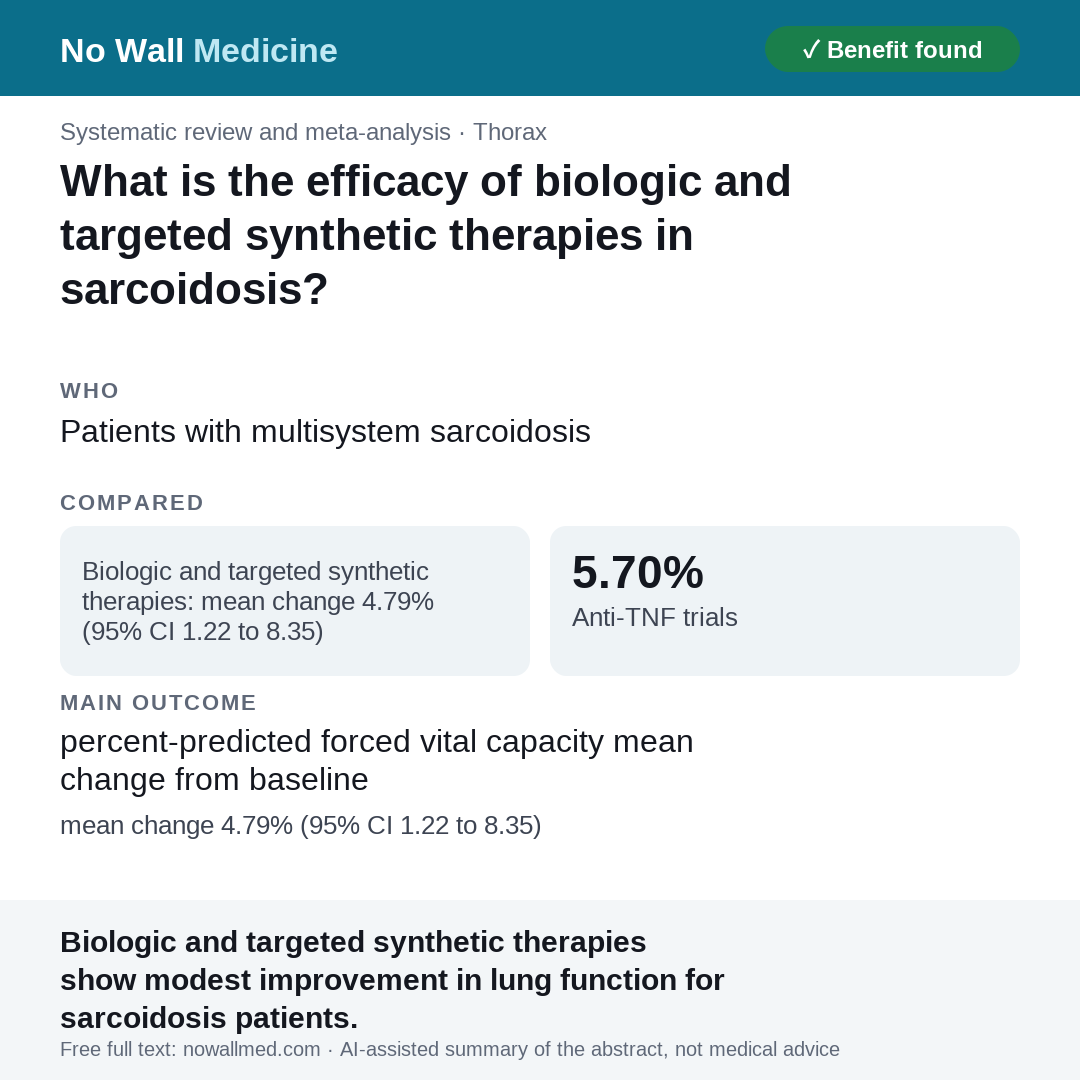
Systematic review and meta-analysis of the efficacy of biologic and targeted synthetic therapies in sarcoidosis
Systematic review and meta-analysisBenefit found
What is the efficacy of biologic and targeted synthetic therapies in sarcoidosis?
Who
Patients with multisystem sarcoidosis
Compared
Biologic and targeted synthetic therapies: mean change 4.79% (95% CI 1.22 to 8.35)
5.70%Anti-TNF trials (95% CI 1.61 to 9.78)
Main outcome
percent-predicted forced vital capacity mean change from baseline
Result: mean change 4.79% (95% CI 1.22 to 8.35)
Bottom line: Biologic and targeted synthetic therapies show modest improvement in lung function for sarcoidosis patients.
Limitation: Small sample sizes and substantial heterogeneity in study design and population.
Thorax · 2025-09-15Download image
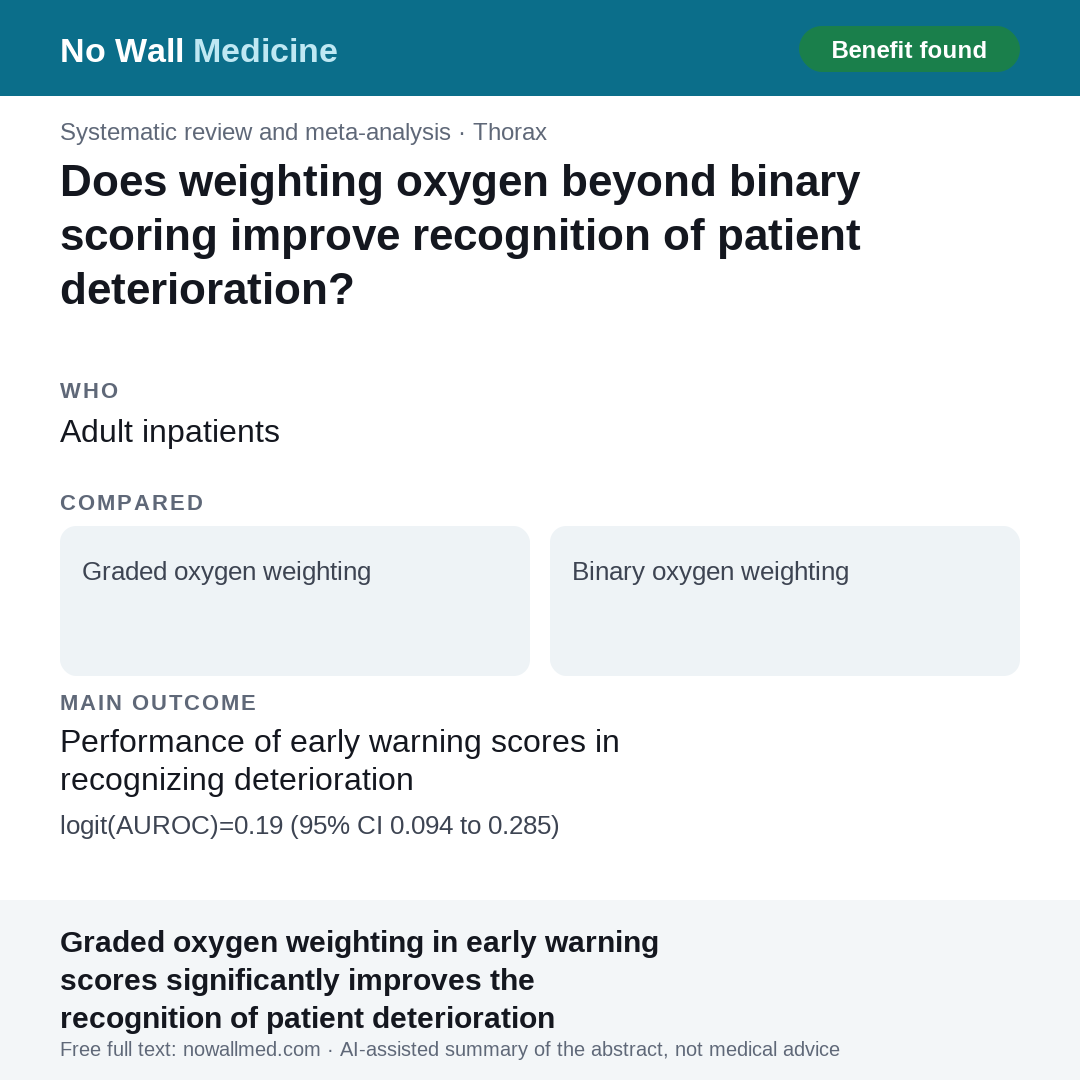
Oxygen therapy in early warning scores: a systematic review and meta-analysis
Systematic review and meta-analysisBenefit found
Does weighting oxygen beyond binary scoring improve recognition of patient deterioration?
Who
Adult inpatients
Compared
Graded oxygen weighting
Binary oxygen weighting
Main outcome
Performance of early warning scores in recognizing deterioration
Result: logit(AUROC)=0.19 (95% CI 0.094 to 0.285)
Bottom line: Graded oxygen weighting in early warning scores significantly improves the recognition of patient deterioration compared to binary scoring.
Limitation: 15 of 16 models were at high risk of bias.
Thorax · 2025-09-15Download image
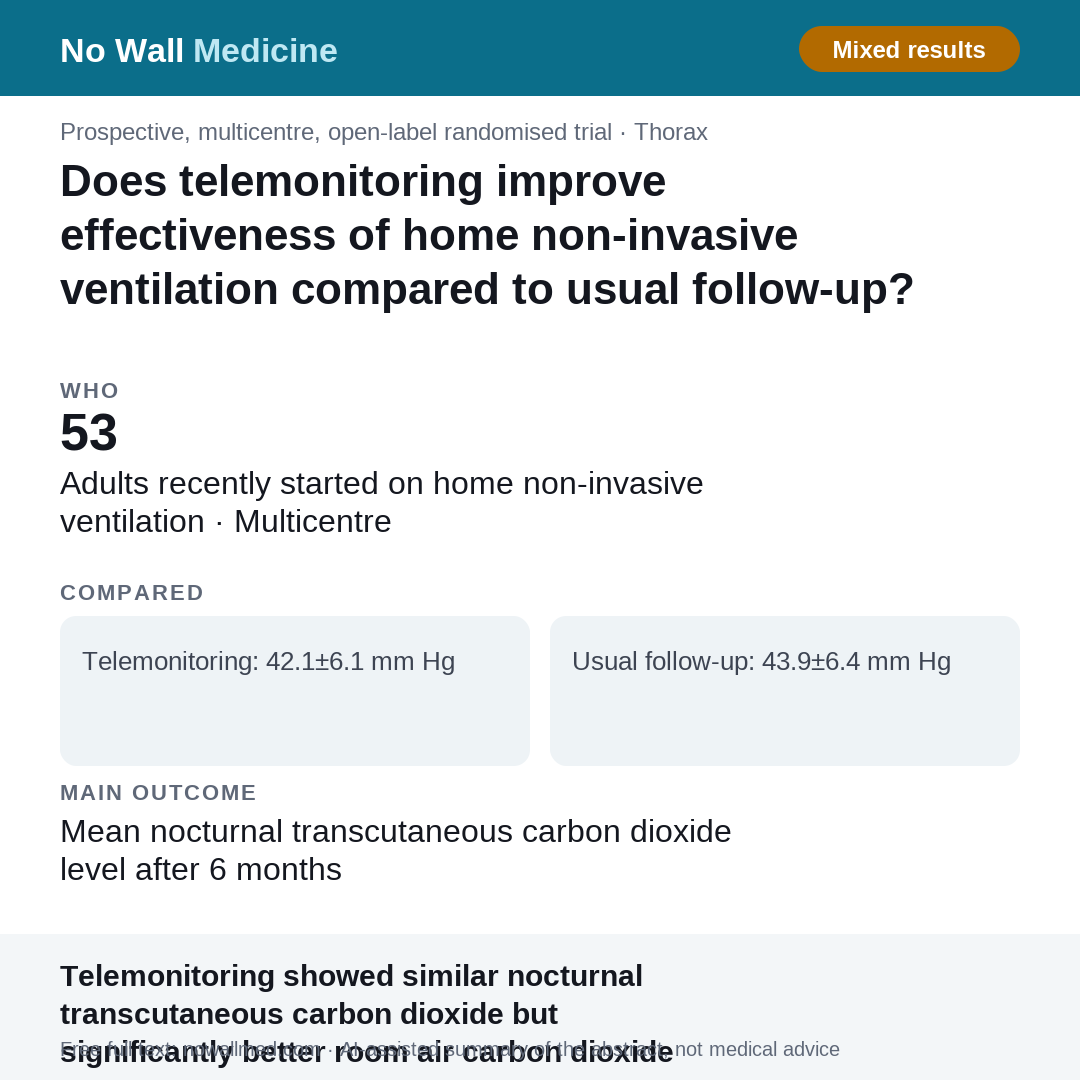
Real-world telemonitoring and remote support for home non-invasive ventilation to improve therapy effectiveness: the exploratory, multicentre randomised eVENT study
Prospective, multicentre, open-label randomised trialMixed results
Does telemonitoring improve effectiveness of home non-invasive ventilation compared to usual follow-up?
Who
53
Adults recently started on home non-invasive ventilation · Multicentre
Compared
Telemonitoring: 42.1±6.1 mm Hg
Usual follow-up: 43.9±6.4 mm Hg
Main outcome
Mean nocturnal transcutaneous carbon dioxide level after 6 months
Bottom line: Telemonitoring showed similar nocturnal transcutaneous carbon dioxide but significantly better room air carbon dioxide levels and ventilatory support quality.
Thorax · 2025-09-15Download image
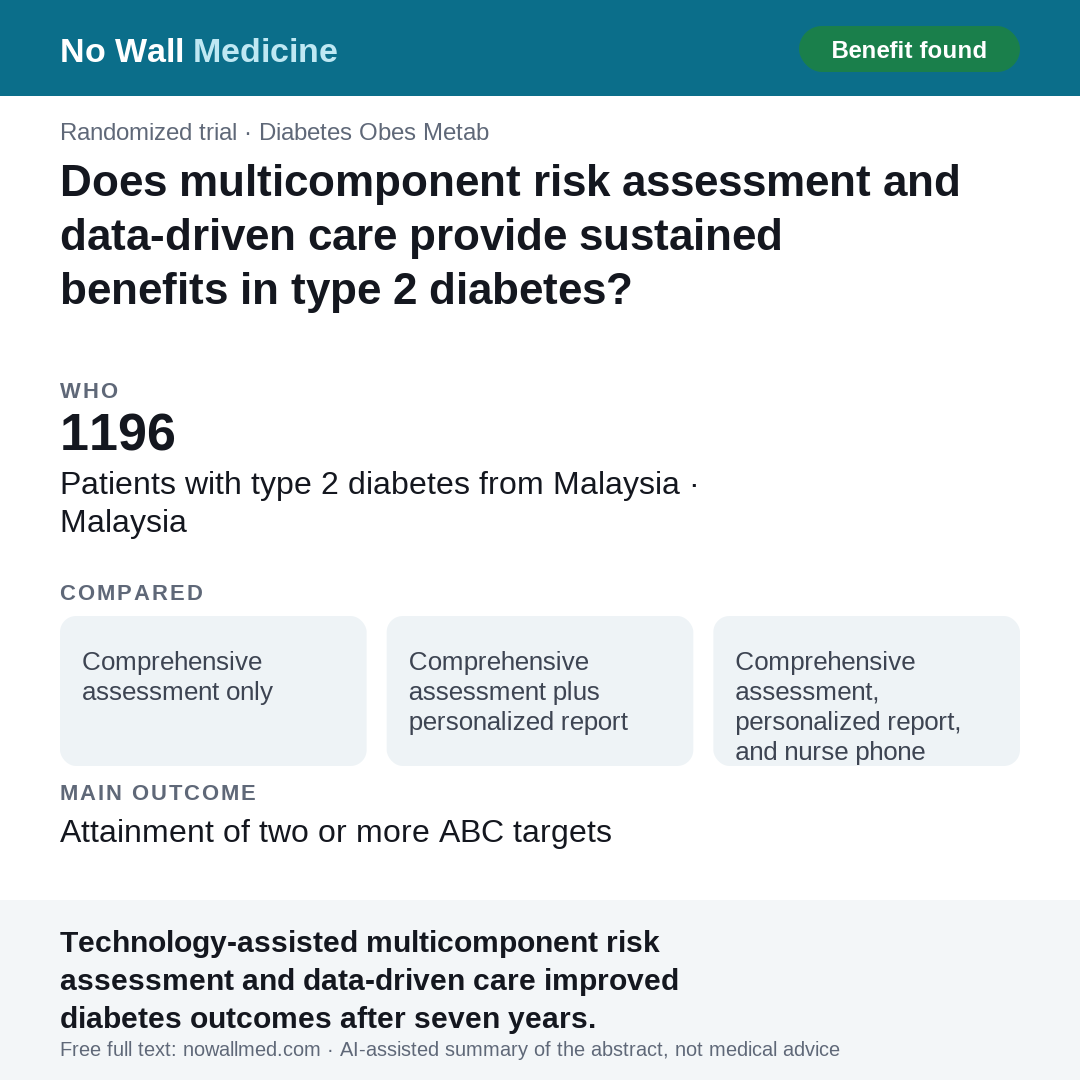
A 7-year prospective analysis of sustained benefits of multicomponent risk assessment and data-driven care in patients with type 2 diabetes: The Malaysian JADE Program
Randomized trialBenefit found
Does multicomponent risk assessment and data-driven care provide sustained benefits in type 2 diabetes?
Who
1196
Patients with type 2 diabetes from Malaysia · Malaysia
Compared
Comprehensive assessment only
Comprehensive assessment plus personalized report
Comprehensive assessment, personalized report, and nurse phone calls
Main outcome
Attainment of two or more ABC targets
Result: odds ratio 1.57 (95% CI 1.02-2.41)
Bottom line: Technology-assisted multicomponent risk assessment and data-driven care improved diabetes outcomes after seven years.
Diabetes Obes Metab · 2025-09-15Download image
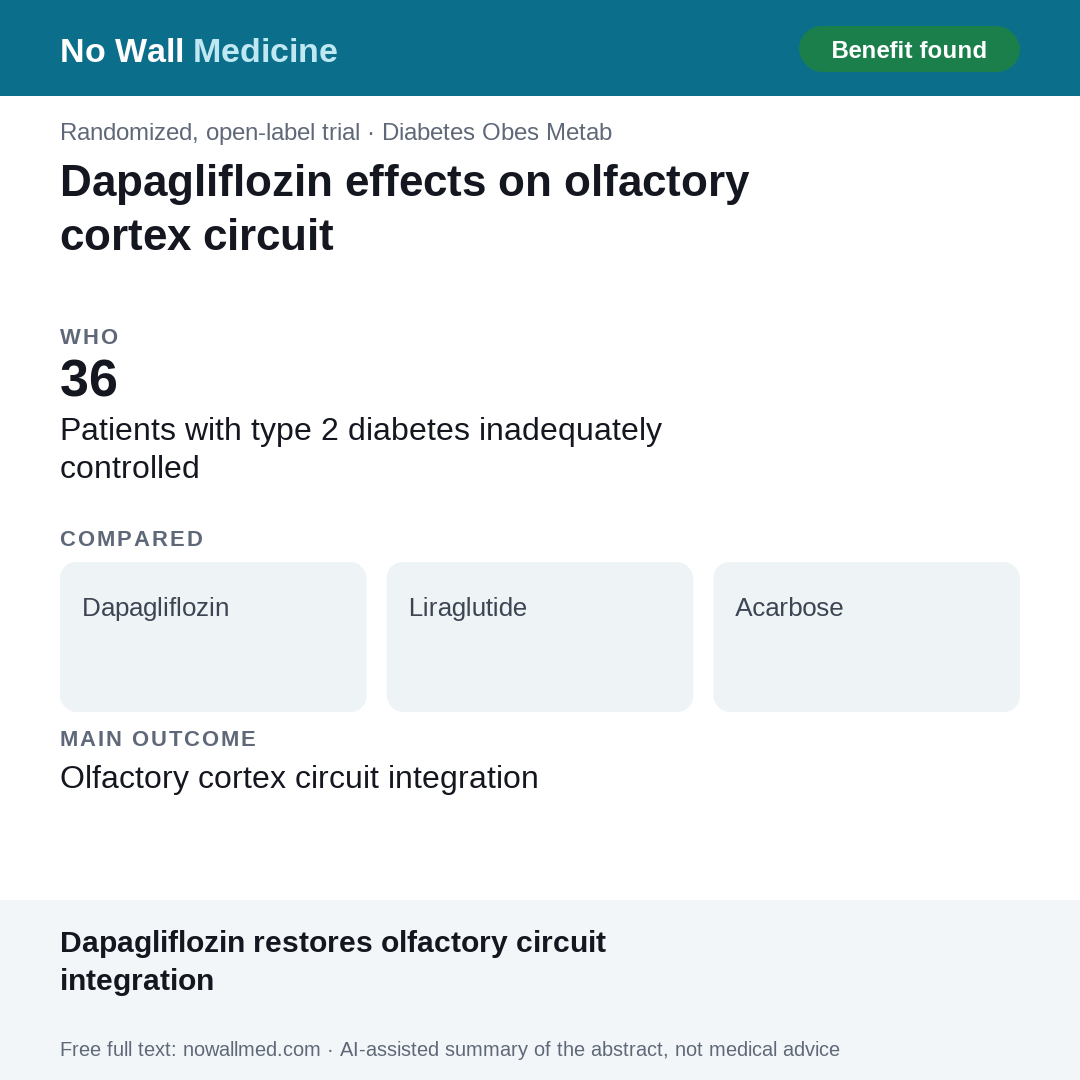
Dapagliflozin restores odour-induced functional integration of primary olfactory cortex circuit but not olfactory-related regional brain activation in patients with type 2 diabetes: A 16-week randomised comparative study
Randomized, open-label trialBenefit found
Dapagliflozin effects on olfactory cortex circuit
Who
36
Patients with type 2 diabetes inadequately controlled
Compared
Dapagliflozin
Liraglutide
Acarbose
Main outcome
Olfactory cortex circuit integration
Bottom line: Dapagliflozin restores olfactory circuit integration
Diabetes Obes Metab · 2025-09-15Download image
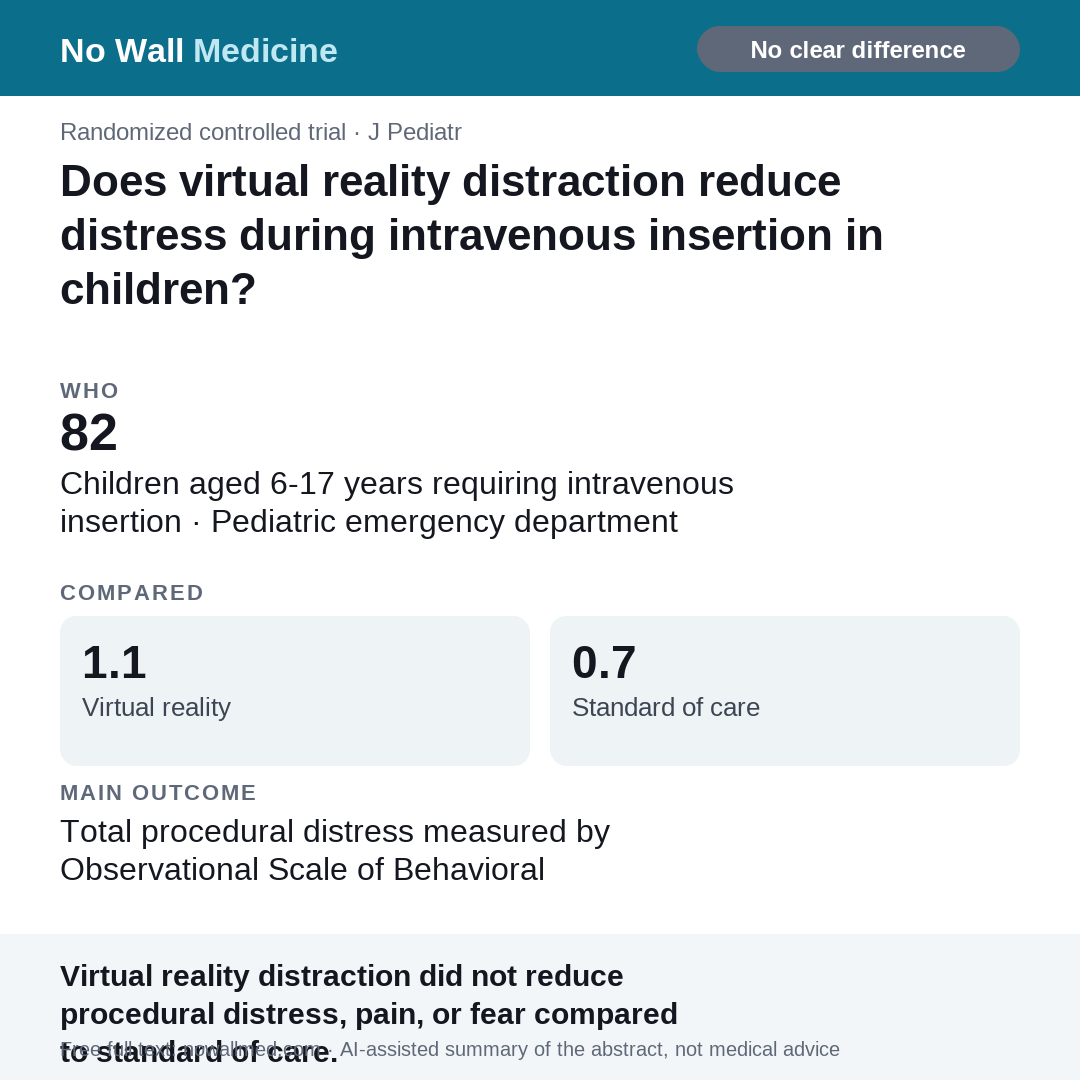
A Randomized Controlled Trial of Commercially Available Virtual Reality for Intravenous Cannulation-Related Distress in Children
Randomized controlled trialNo clear difference
Does virtual reality distraction reduce distress during intravenous insertion in children?
Who
82
Children aged 6-17 years requiring intravenous insertion · Pediatric emergency department
Compared
1.1Virtual reality (1.5)
0.7Standard of care (1.4)
Main outcome
Total procedural distress measured by Observational Scale of Behavioral Distress-Revised
Bottom line: Virtual reality distraction did not reduce procedural distress, pain, or fear compared to standard of care.
J Pediatr · 2025-09-15Download image
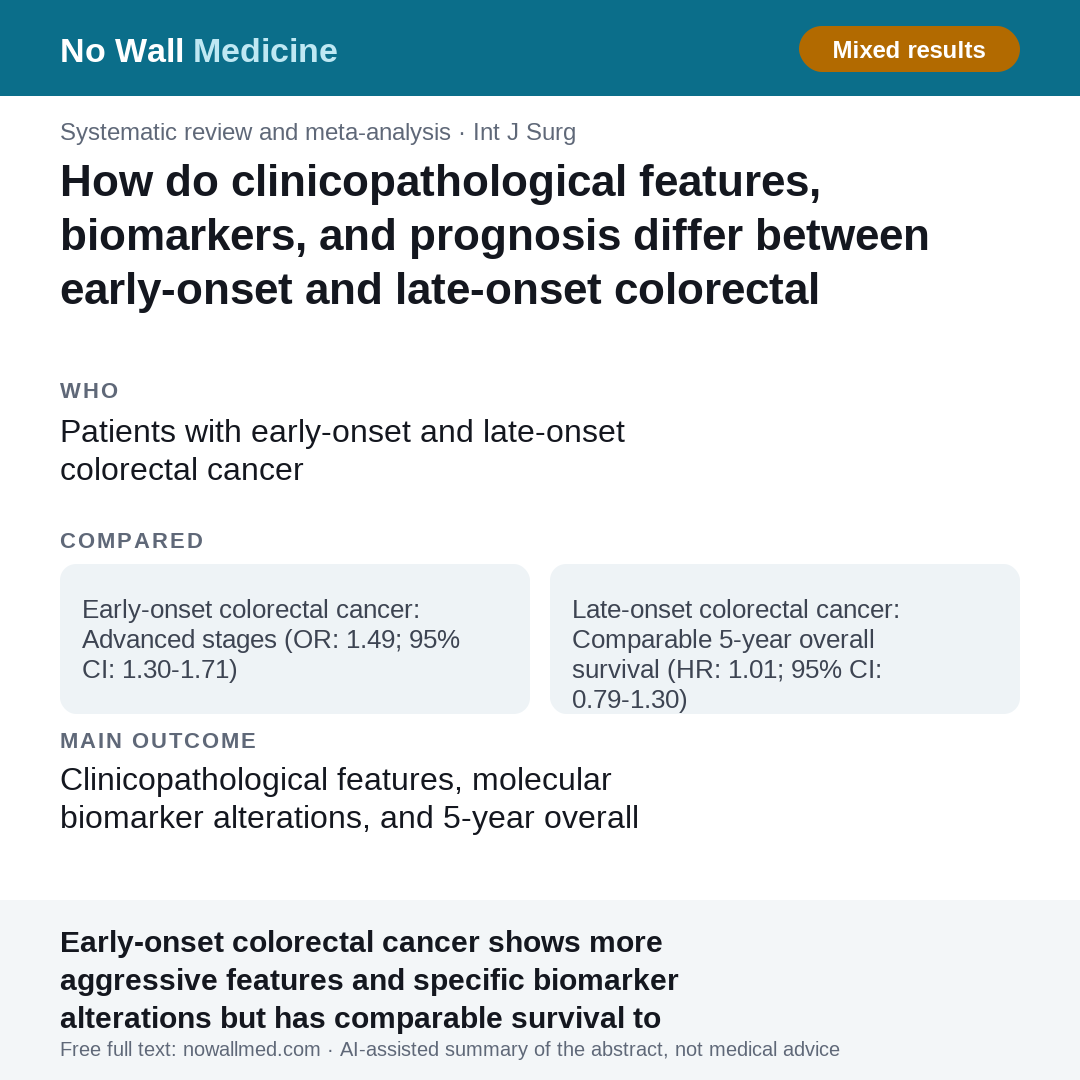
Clinicopathological characteristics and biomarker alterations in early-onset vs. late-onset colorectal cancer: a systematic review and meta-analysis
Systematic review and meta-analysisMixed results
How do clinicopathological features, biomarkers, and prognosis differ between early-onset and late-onset colorectal cancer?
Who
Patients with early-onset and late-onset colorectal cancer
Compared
Early-onset colorectal cancer: Advanced stages (OR: 1.49; 95% CI: 1.30-1.71)
Late-onset colorectal cancer: Comparable 5-year overall survival (HR: 1.01; 95% CI: 0.79-1.30)
Main outcome
Clinicopathological features, molecular biomarker alterations, and 5-year overall survival
Result: hazard ratio 1.01 (95% CI 0.79-1.30) for 5-year overall survival
Bottom line: Early-onset colorectal cancer shows more aggressive features and specific biomarker alterations but has comparable survival to late-onset cancer.
Int J Surg · 2025-09-15Download image
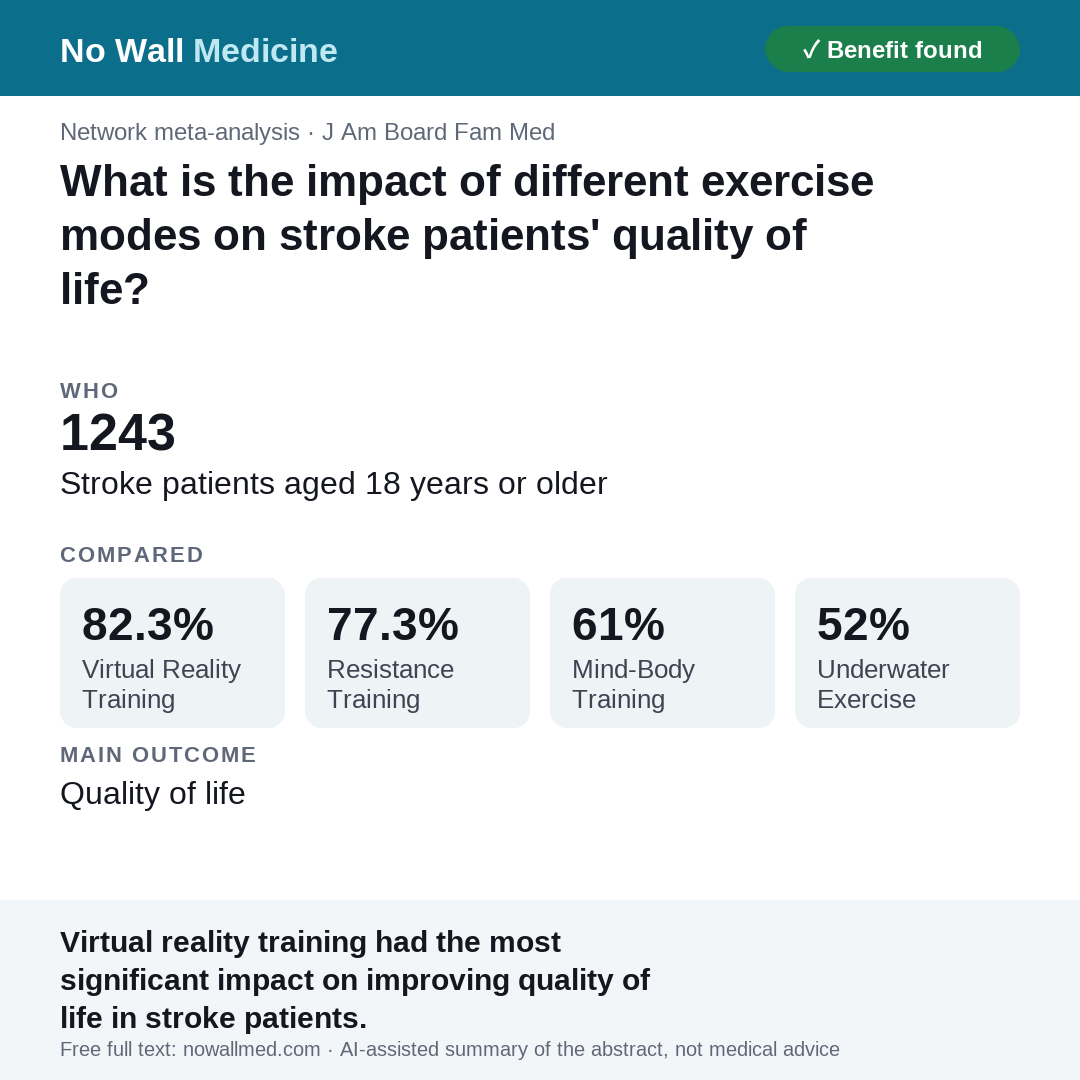
The Impact of Multiple Exercise Modes on the Quality of Life of Stroke Patients: A Network Meta-Analysis
Network meta-analysisBenefit found
What is the impact of different exercise modes on stroke patients' quality of life?
Who
1243
Stroke patients aged 18 years or older
Compared
82.3%Virtual Reality Training
77.3%Resistance Training
61%Mind-Body Training
52%Underwater Exercise
Main outcome
Quality of life
Bottom line: Virtual reality training had the most significant impact on improving quality of life in stroke patients.
J Am Board Fam Med · 2025-09-15Download image
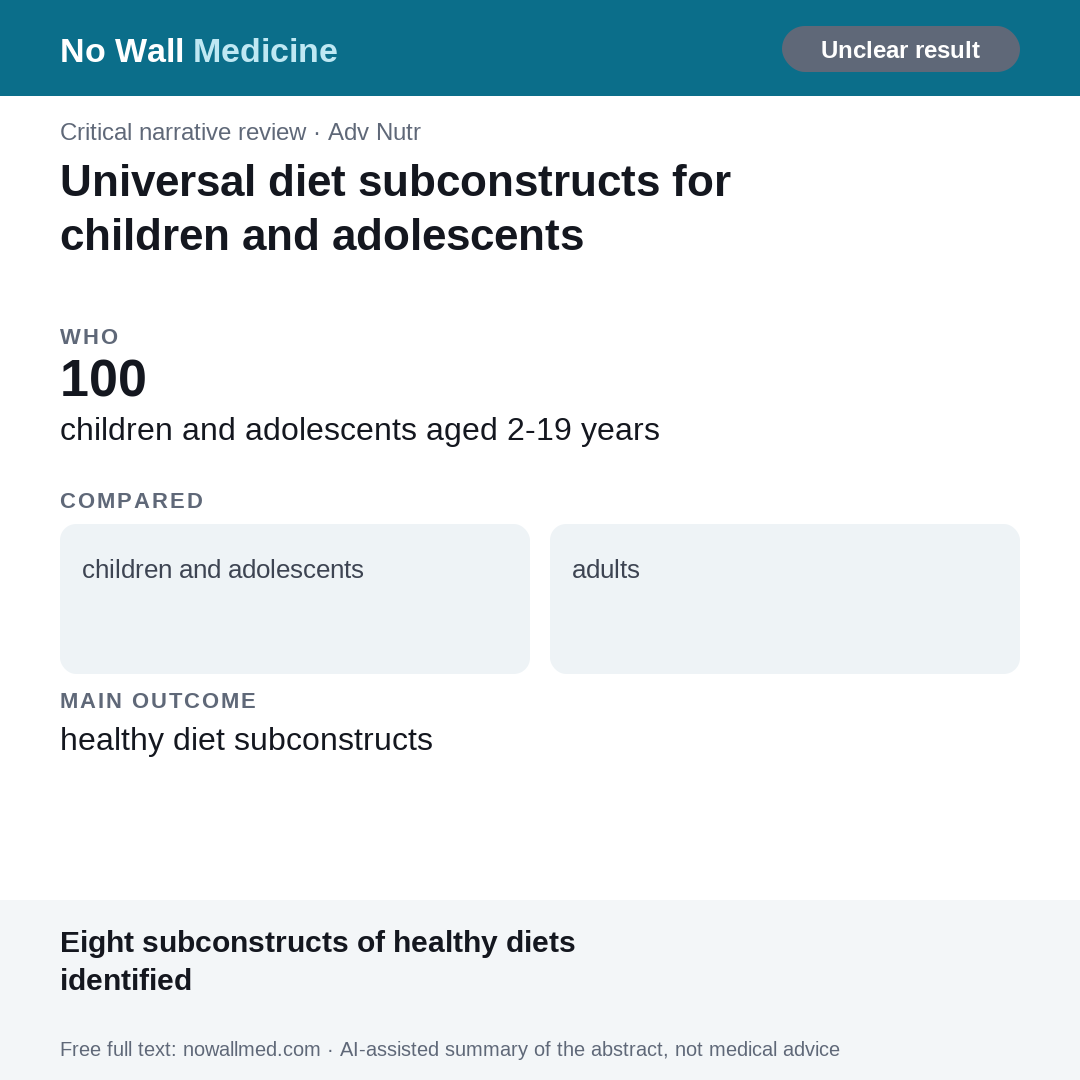
Universal Subconstructs of a Healthy Diet for Children and Adolescents: A Critical Review
Critical narrative reviewUnclear result
Universal diet subconstructs for children and adolescents
Who
100
children and adolescents aged 2-19 years
Compared
children and adolescents
adults
Main outcome
healthy diet subconstructs
Bottom line: Eight subconstructs of healthy diets identified
Adv Nutr · 2025-09-15Download image
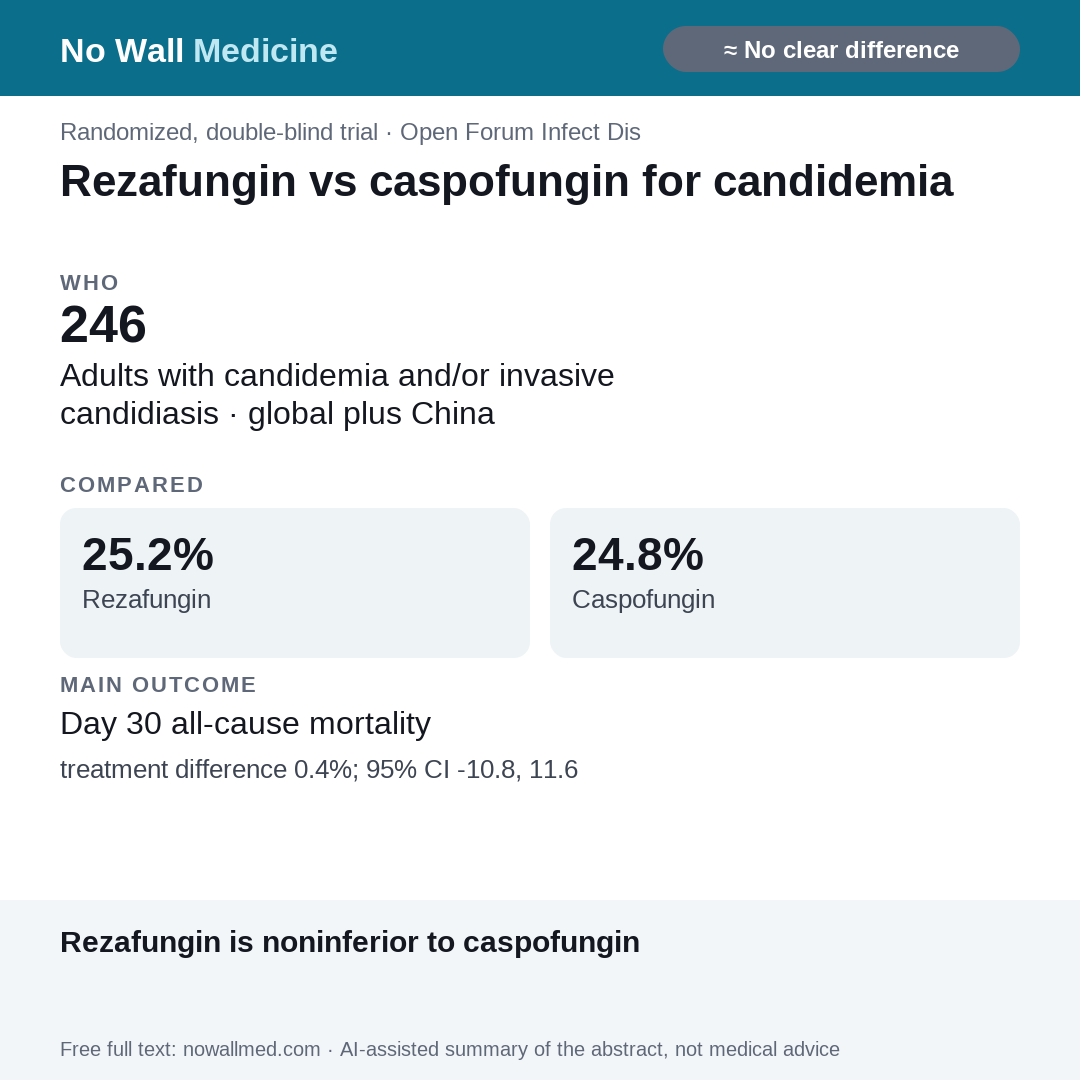
Rezafungin Versus Caspofungin for the Treatment of Candidemia and Invasive Candidiasis: Results from the Double-blind, Randomized, Phase 3 ReSTORE Trial Including the China Extension Study
Randomized, double-blind trialNo clear difference
Rezafungin vs caspofungin for candidemia
Who
246
Adults with candidemia and/or invasive candidiasis · global plus China
Compared
25.2%Rezafungin
24.8%Caspofungin
Main outcome
Day 30 all-cause mortality
Result: treatment difference 0.4%; 95% CI -10.8, 11.6
Bottom line: Rezafungin is noninferior to caspofungin
Open Forum Infect Dis · 2025-09-15Download image