Visual abstracts
New randomized trials and meta-analyses from leading journals at a glance: who was studied, what was compared, and what was found. Every paper is free to read in full.
All specialtiesCardiology 4877Oncology 4138Gastroenterology & Hepatology 1942Infectious Disease 3837Neurology 1905Psychiatry & Mental Health 2273Pulmonology 2143Critical Care 1365Endocrinology & Diabetes 2580Pediatrics 2980Surgery 2559Orthopedics & Sports Medicine 931Neurosurgery 537Cardiothoracic & Vascular Surgery 674Plastic & Reconstructive Surgery 591Nephrology 1133Rheumatology 823Hematology 1109Dermatology 621Ophthalmology 543Obstetrics & Gynecology 1686Public & Global Health 1058Radiology & Imaging 648Anesthesiology 986Urology 764ENT (Otolaryngology) 503Emergency Medicine 511Allergy & Immunology 313Geriatrics 981Family Medicine & Primary Care 562Medical Genetics & Genomics 676Pathology & Laboratory Medicine 159Physical Medicine & Rehabilitation 757Palliative Care 444Nutrition 1588Digital Health & AI 2201General Medicine 321
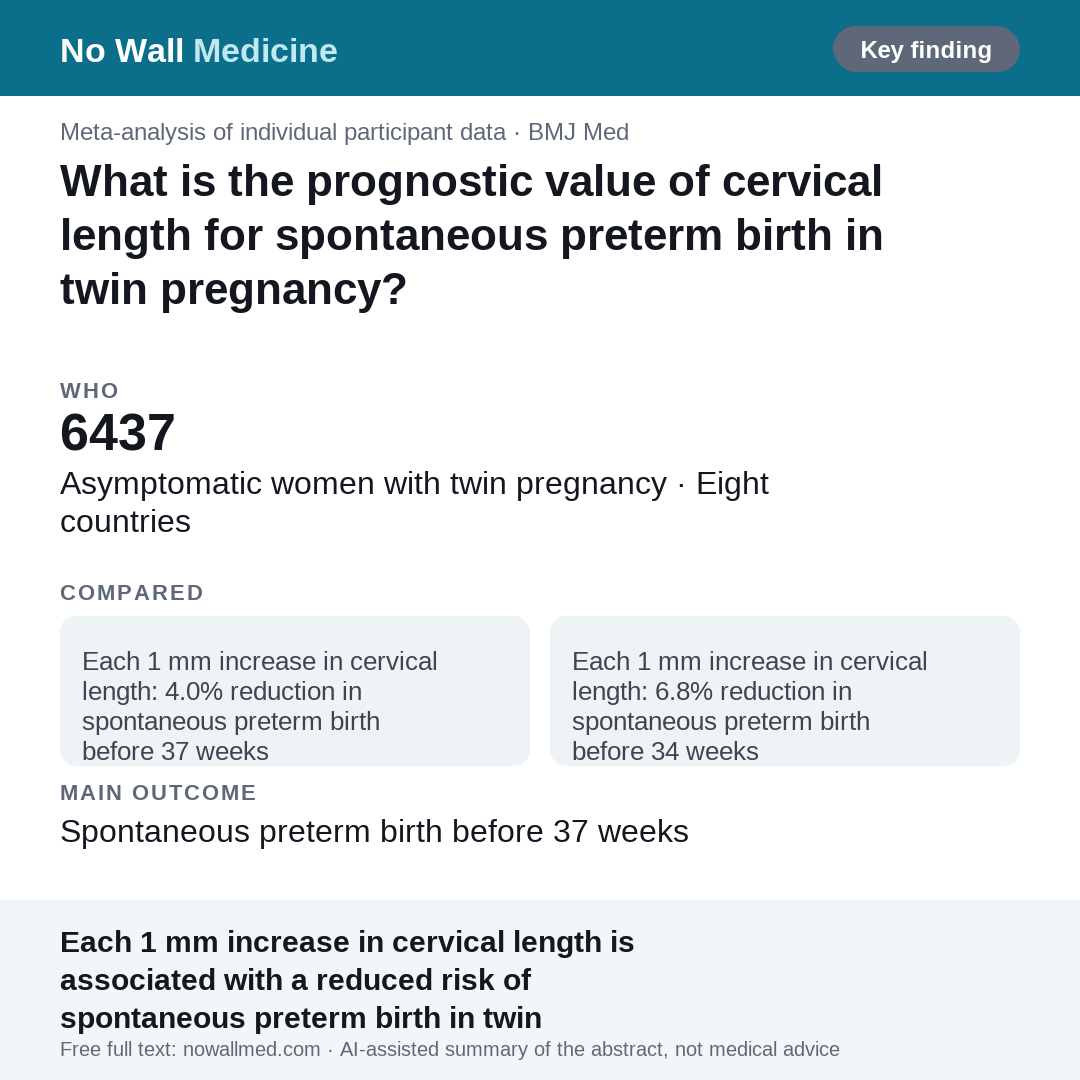
Prognostic value of cervical length for spontaneous preterm birth in asymptomatic women with twin pregnancy: meta-analysis of individual participant data
Meta-analysis of individual participant dataBenefit found
What is the prognostic value of cervical length for spontaneous preterm birth in twin pregnancy?
Who
6437
Asymptomatic women with twin pregnancy · Eight countries
Compared
Each 1 mm increase in cervical length: 4.0% reduction in spontaneous preterm birth before 37 weeks
Each 1 mm increase in cervical length: 6.8% reduction in spontaneous preterm birth before 34 weeks
Main outcome
Spontaneous preterm birth before 37 weeks
Result: hazard ratio 0.96 (95% confidence interval 0.95 to 0.97)
Bottom line: Each 1 mm increase in cervical length is associated with a reduced risk of spontaneous preterm birth in twin pregnancies.
Limitation: No specific cervical length can reliably predict or exclude all spontaneous preterm births.
BMJ Med · 2025-04-16Download image
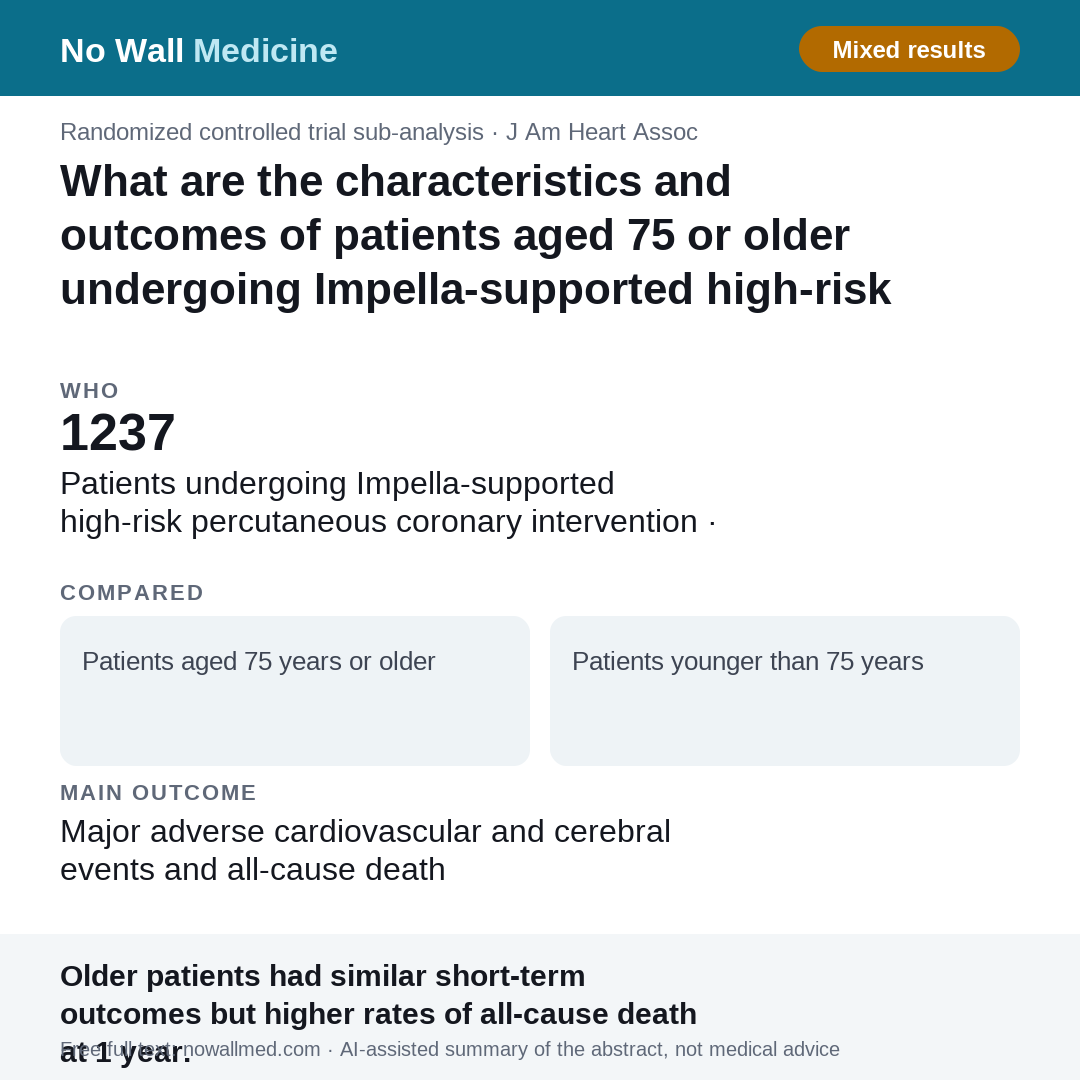
Characteristics and Outcomes of Older Patients Undergoing Protected Percutaneous Coronary Intervention With Impella
Randomized controlled trial sub-analysisMixed results
What are the characteristics and outcomes of patients aged 75 or older undergoing Impella-supported high-risk percutaneous coronary intervention?
Who
1237
Patients undergoing Impella-supported high-risk percutaneous coronary intervention · Multi-center
Compared
Patients aged 75 years or older
Patients younger than 75 years
Main outcome
Major adverse cardiovascular and cerebral events and all-cause death
Result: adjusted hazard ratio 1.99 (95% CI 1.24-3.18)
Bottom line: Older patients had similar short-term outcomes but higher rates of all-cause death at 1 year.
J Am Heart Assoc · 2025-04-16Download image
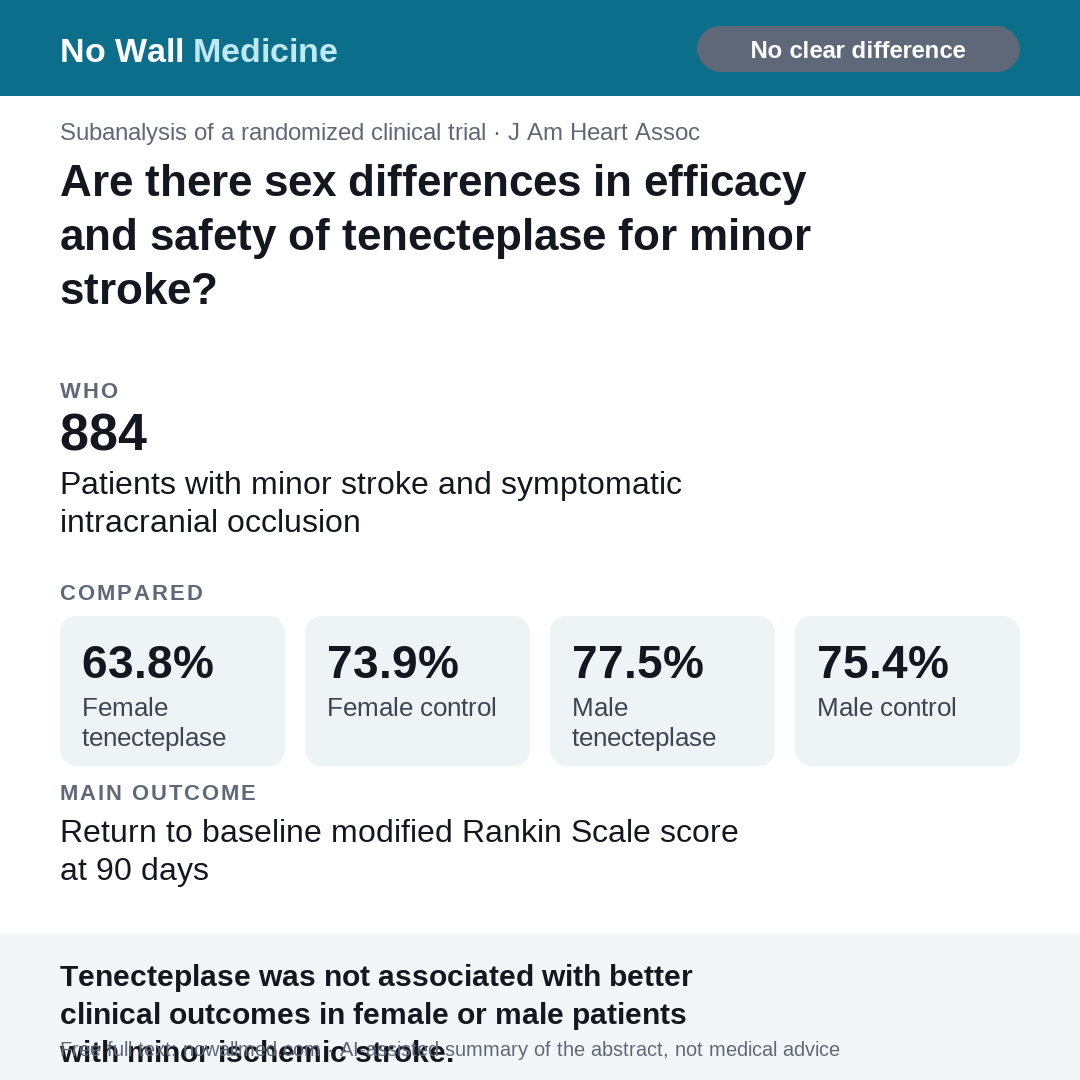
Sex Differences in Outcomes After Tenecteplase for Minor Stroke: A Subanalysis of the TEMPO-2 Trial
Subanalysis of a randomized clinical trialNo clear difference
Are there sex differences in efficacy and safety of tenecteplase for minor stroke?
Who
884
Patients with minor stroke and symptomatic intracranial occlusion
Compared
63.8%Female tenecteplase
73.9%Female control
77.5%Male tenecteplase
75.4%Male control
Main outcome
Return to baseline modified Rankin Scale score at 90 days
Result: aRR 0.87 (95% CI 0.76-1.00) in females; 1.03 (95% CI 0.94-1.13) in males
Bottom line: Tenecteplase was not associated with better clinical outcomes in female or male patients with minor ischemic stroke.
J Am Heart Assoc · 2025-04-16Download image
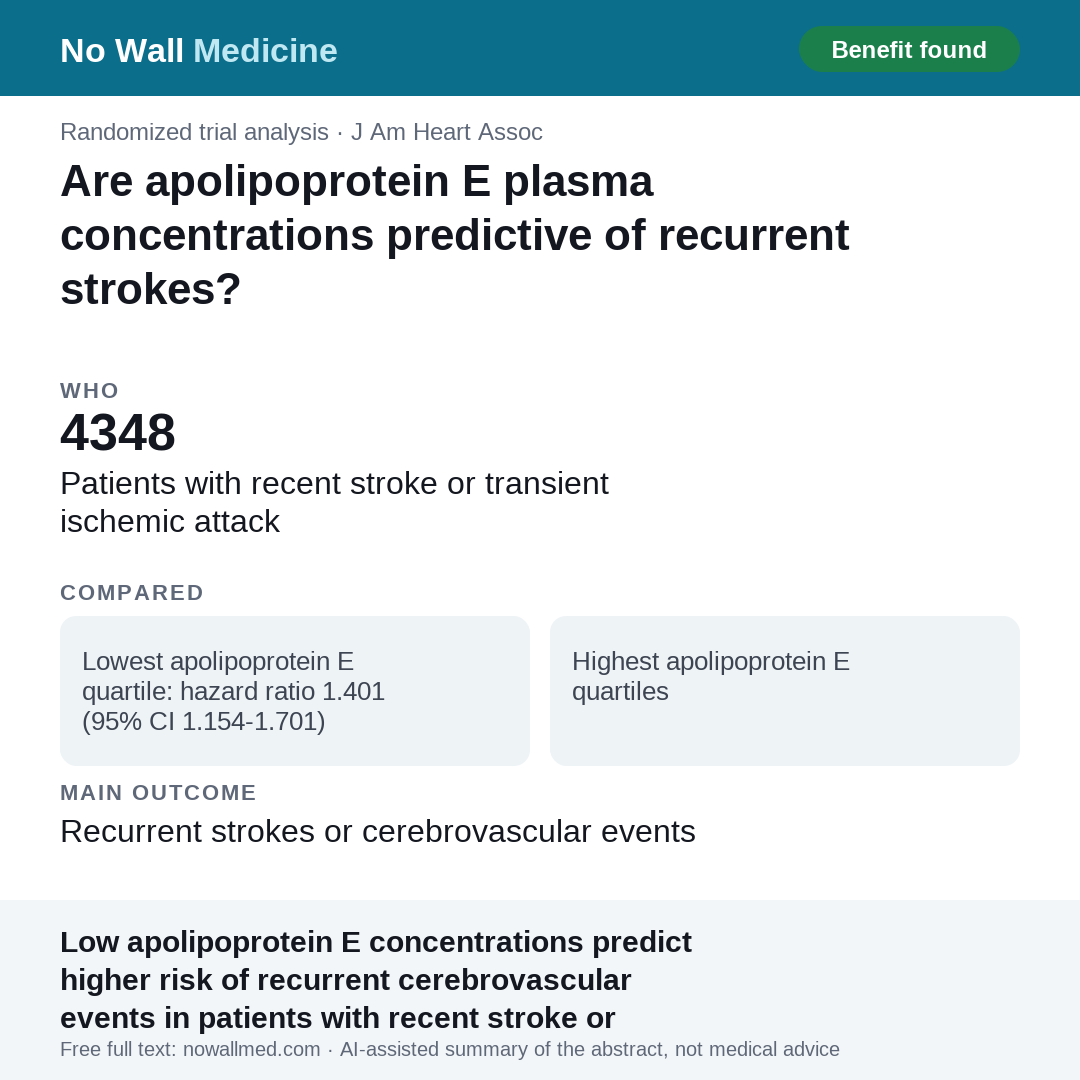
Apolipoprotein E Plasma Concentrations Are Predictive of Recurrent Strokes: Insights From the SPARCL Trial
Randomized trial analysisBenefit found
Are apolipoprotein E plasma concentrations predictive of recurrent strokes?
Who
4348
Patients with recent stroke or transient ischemic attack
Compared
Lowest apolipoprotein E quartile: hazard ratio 1.401 (95% CI 1.154-1.701)
Highest apolipoprotein E quartiles
Main outcome
Recurrent strokes or cerebrovascular events
Result: hazard ratio 1.401 (95% CI 1.154-1.701)
Bottom line: Low apolipoprotein E concentrations predict higher risk of recurrent cerebrovascular events in patients with recent stroke or transient ischemic attack.
J Am Heart Assoc · 2025-04-16Download image
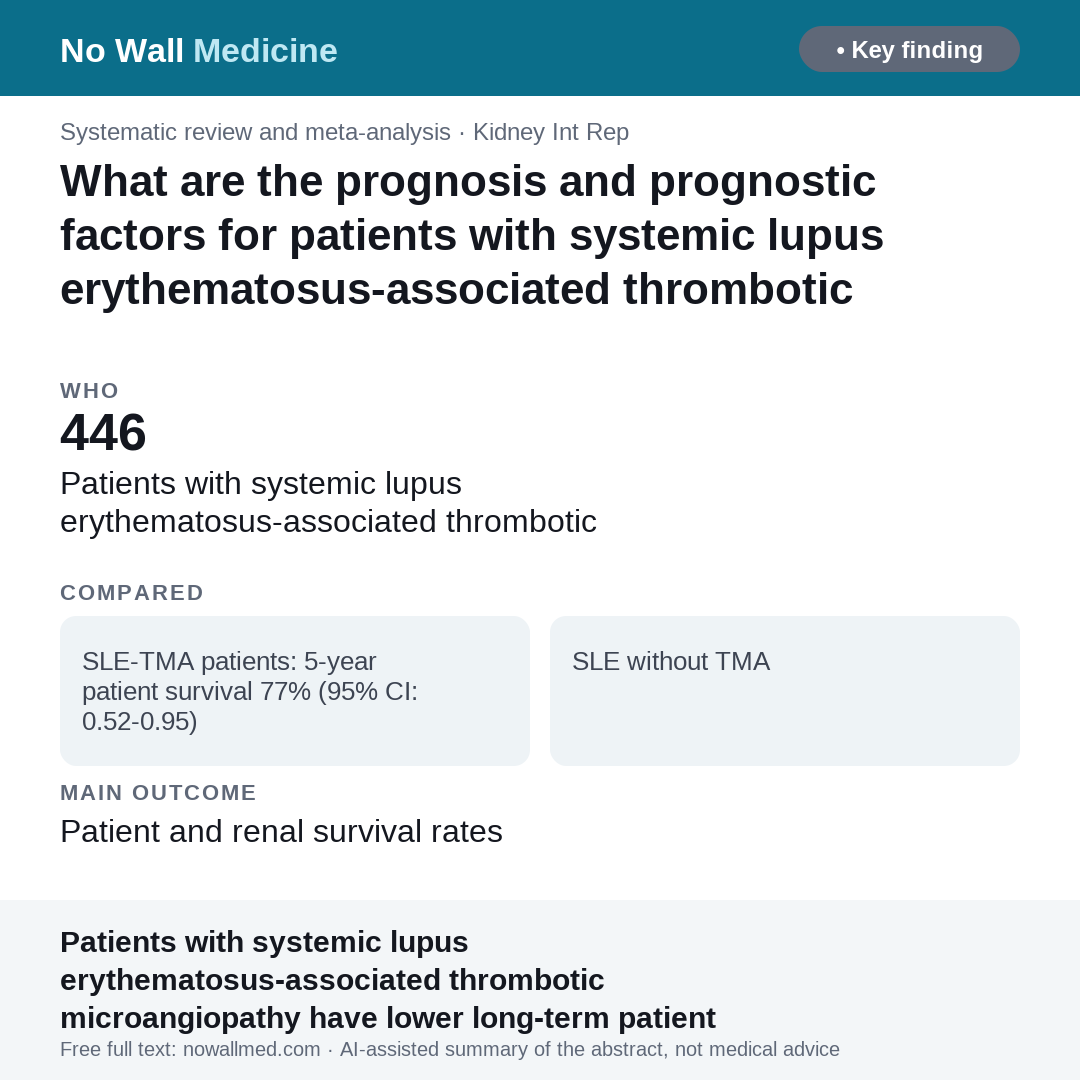
Systematic Review of the Outcomes and Prognostic Factors of Patients With Systemic Lupus Erythematosus-Associated Thrombotic Microangiopathy
Systematic review and meta-analysisHarm found
What are the prognosis and prognostic factors for patients with systemic lupus erythematosus-associated thrombotic microangiopathy?
Who
446
Patients with systemic lupus erythematosus-associated thrombotic microangiopathy
Compared
SLE-TMA patients: 5-year patient survival 77% (95% CI: 0.52-0.95)
SLE without TMA
Main outcome
Patient and renal survival rates
Result: 5-year renal relative risk 2.58 (95% CI: 2.01-3.29)
Bottom line: Patients with systemic lupus erythematosus-associated thrombotic microangiopathy have lower long-term patient and renal survival rates.
Kidney Int Rep · 2025-04-16Download image
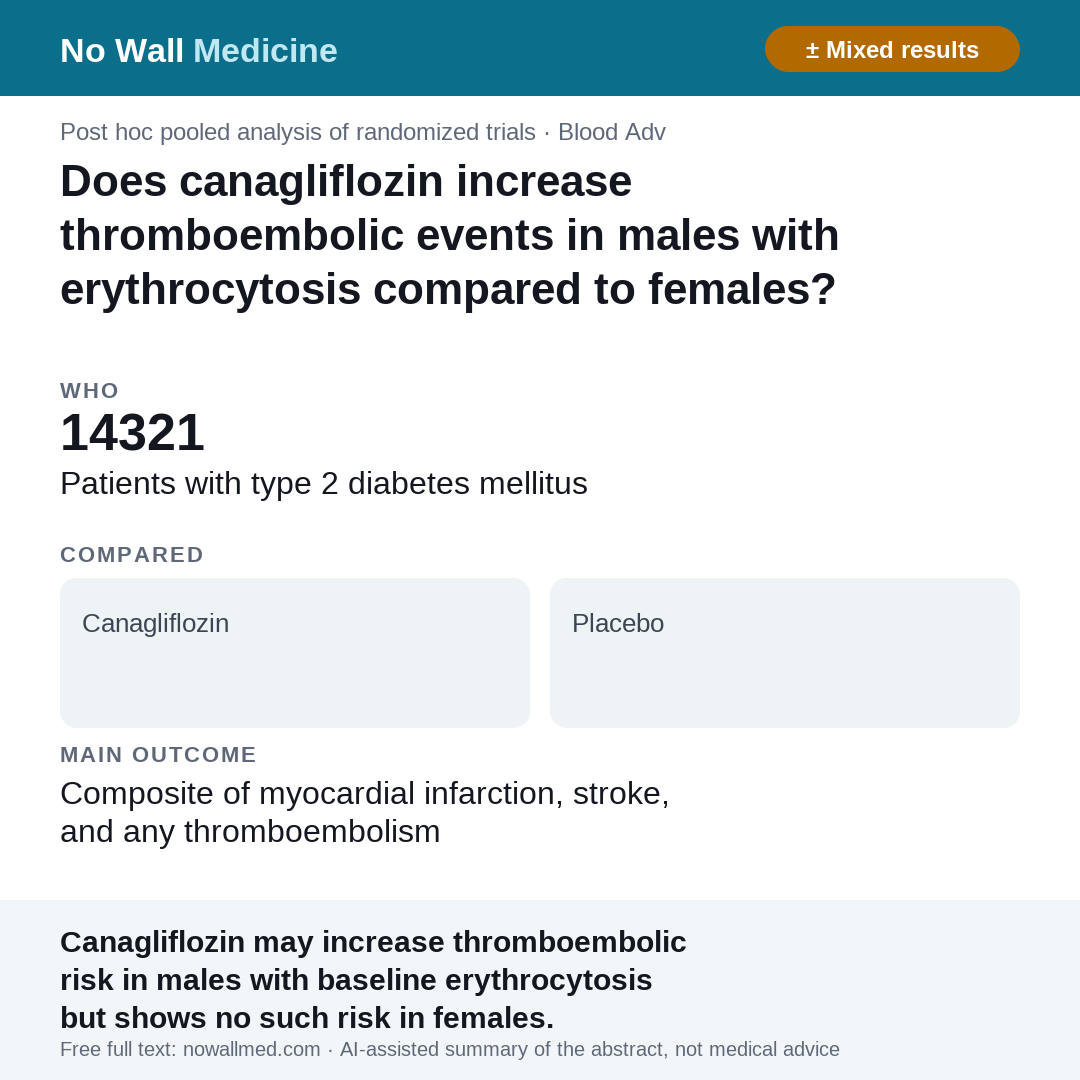
Canagliflozin may increase thromboembolic events in males with erythrocytosis but not in females
Post hoc pooled analysis of randomized trialsMixed results
Does canagliflozin increase thromboembolic events in males with erythrocytosis compared to females?
Who
14321
Patients with type 2 diabetes mellitus
Compared
Canagliflozin
Placebo
Main outcome
Composite of myocardial infarction, stroke, and any thromboembolism
Bottom line: Canagliflozin may increase thromboembolic risk in males with baseline erythrocytosis but shows no such risk in females.
Limitation: Post hoc pooled analysis of patient-level data
Blood Adv · 2025-04-16Download image
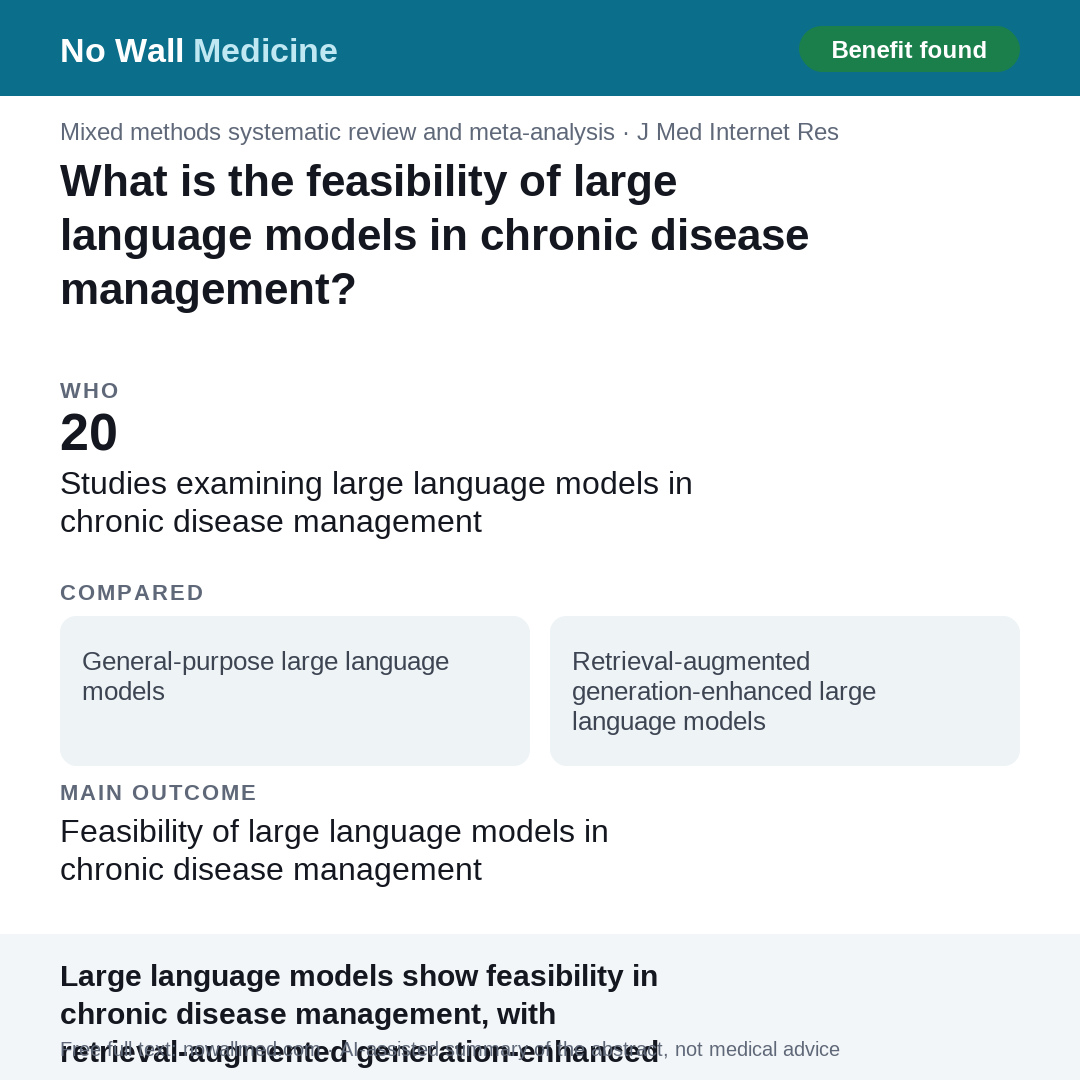
Unveiling the Potential of Large Language Models in Transforming Chronic Disease Management: Mixed Methods Systematic Review
Mixed methods systematic review and meta-analysisBenefit found
What is the feasibility of large language models in chronic disease management?
Who
20
Studies examining large language models in chronic disease management
Compared
General-purpose large language models
Retrieval-augmented generation-enhanced large language models
Main outcome
Feasibility of large language models in chronic disease management
Result: odds ratio 2.89 (95% CI 1.83-4.58)
Bottom line: Large language models show feasibility in chronic disease management, with retrieval-augmented generation-enhanced models demonstrating higher accuracy rates.
Limitation: Direct application in clinical settings is still in its infancy.
J Med Internet Res · 2025-04-16Download image
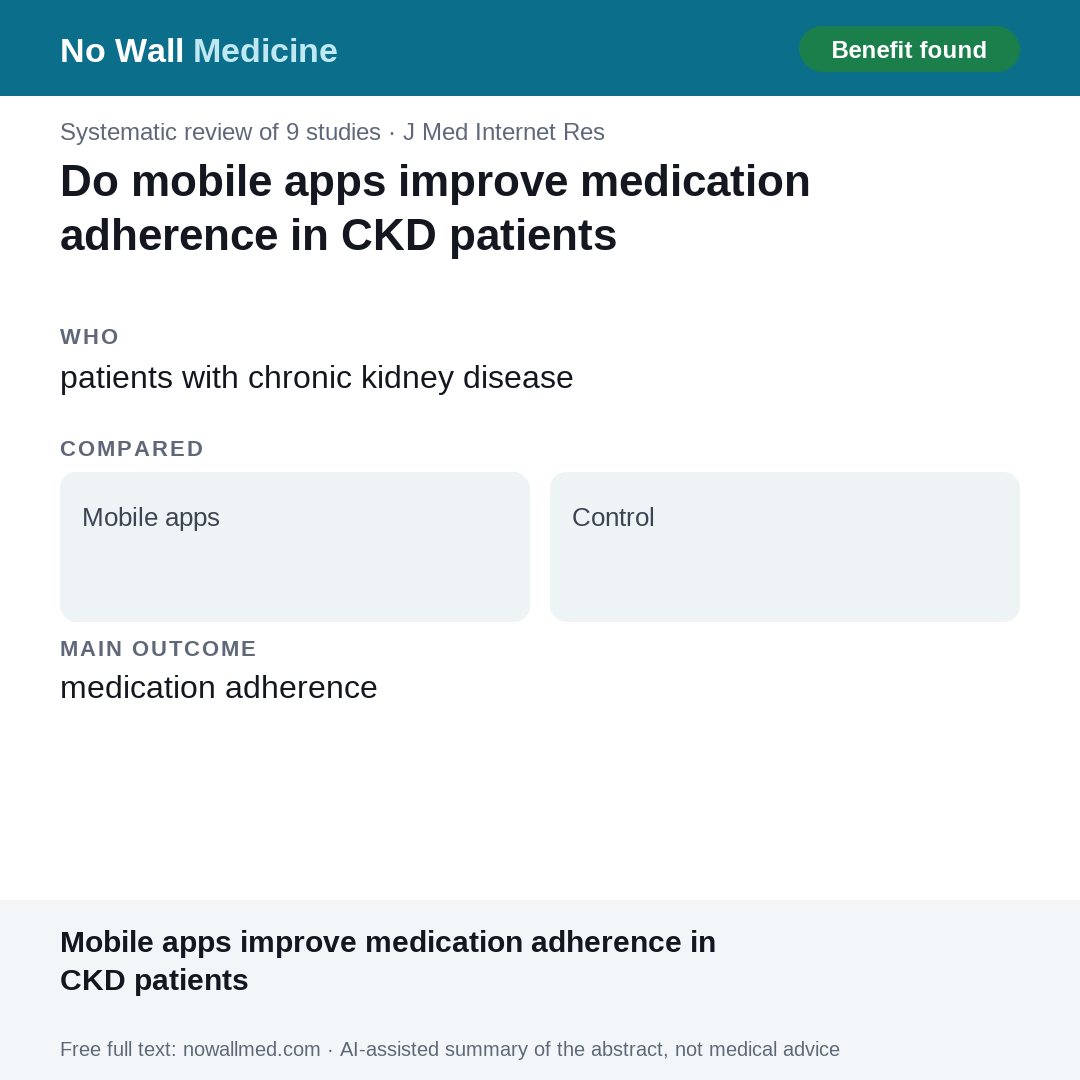
Effectiveness of Mobile Apps in Improving Medication Adherence Among Chronic Kidney Disease Patients: Systematic Review
Systematic review of 9 studiesBenefit found
Do mobile apps improve medication adherence in CKD patients
Who
patients with chronic kidney disease
Compared
Mobile apps
Control
Main outcome
medication adherence
Bottom line: Mobile apps improve medication adherence in CKD patients
Limitation: low evidence and short intervention duration
J Med Internet Res · 2025-04-16Download image
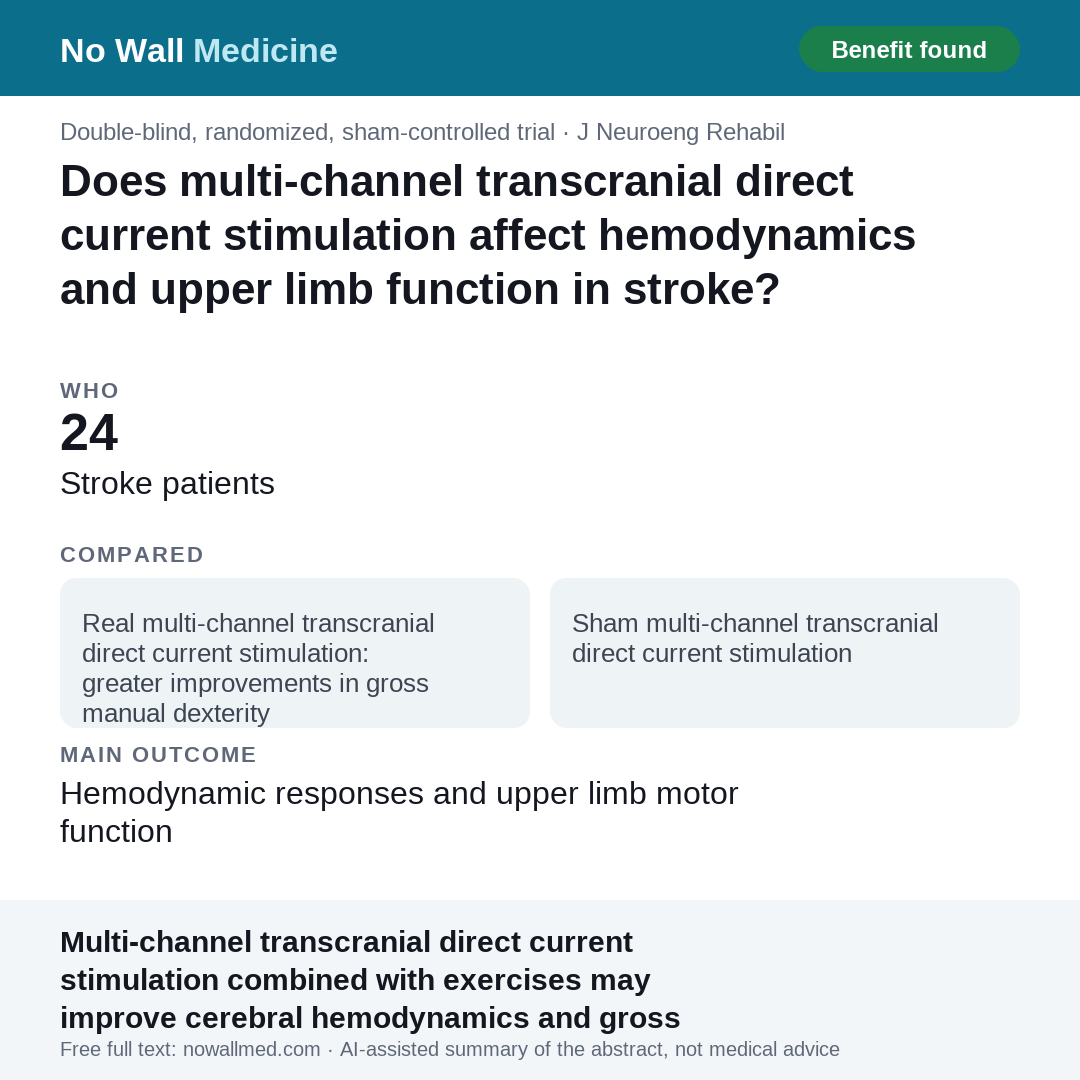
Resting-state hemodynamic changes and effects on upper limb function after multi-channel transcranial direct current stimulation to the ipsilesional primary motor cortex and anterior intraparietal sulcus in stroke patients: an fNIRS pilot study
Double-blind, randomized, sham-controlled trialBenefit found
Does multi-channel transcranial direct current stimulation affect hemodynamics and upper limb function in stroke?
Who
24
Stroke patients
Compared
Real multi-channel transcranial direct current stimulation: greater improvements in gross manual dexterity
Sham multi-channel transcranial direct current stimulation
Main outcome
Hemodynamic responses and upper limb motor function
Bottom line: Multi-channel transcranial direct current stimulation combined with exercises may improve cerebral hemodynamics and gross manual dexterity in stroke patients.
J Neuroeng Rehabil · 2025-04-16Download image
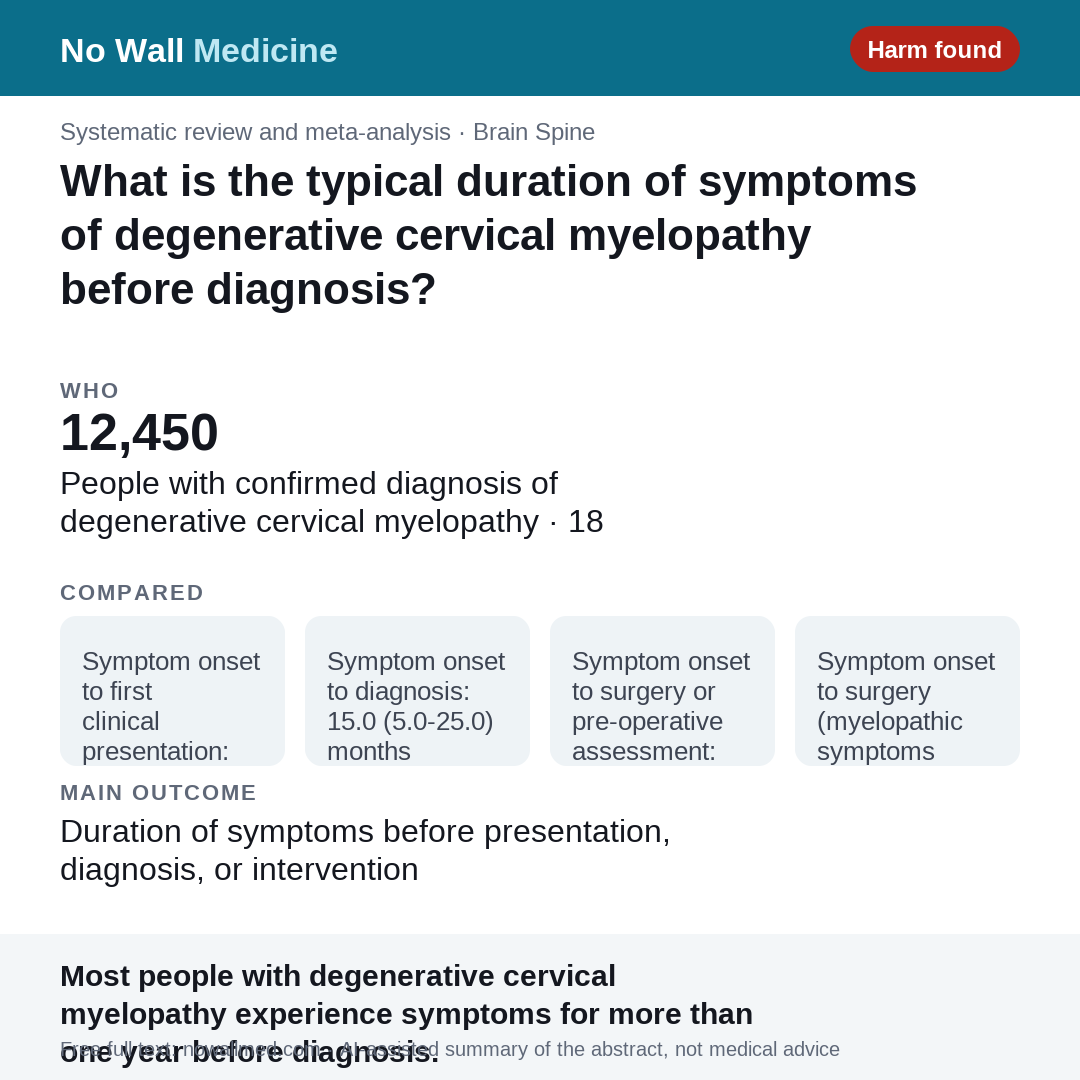
Duration of symptoms before diagnosis in degenerative cervical myelopathy: A systematic review and meta-analysis
Systematic review and meta-analysisHarm found
What is the typical duration of symptoms of degenerative cervical myelopathy before diagnosis?
Who
12,450
People with confirmed diagnosis of degenerative cervical myelopathy · 18 countries
Compared
Symptom onset to first clinical presentation: 3.3 (95 % confidence interval, -0.3-6.8) months
Symptom onset to diagnosis: 15.0 (5.0-25.0) months
Symptom onset to surgery or pre-operative assessment: 14.5 (12.1-17.0) months
Symptom onset to surgery (myelopathic symptoms defined): 10.7 (2.3-18.5) months
Main outcome
Duration of symptoms before presentation, diagnosis, or intervention
Bottom line: Most people with degenerative cervical myelopathy experience symptoms for more than one year before diagnosis.
Limitation: Most studies did not define the symptoms at onset.
Brain Spine · 2025-04-16Download image
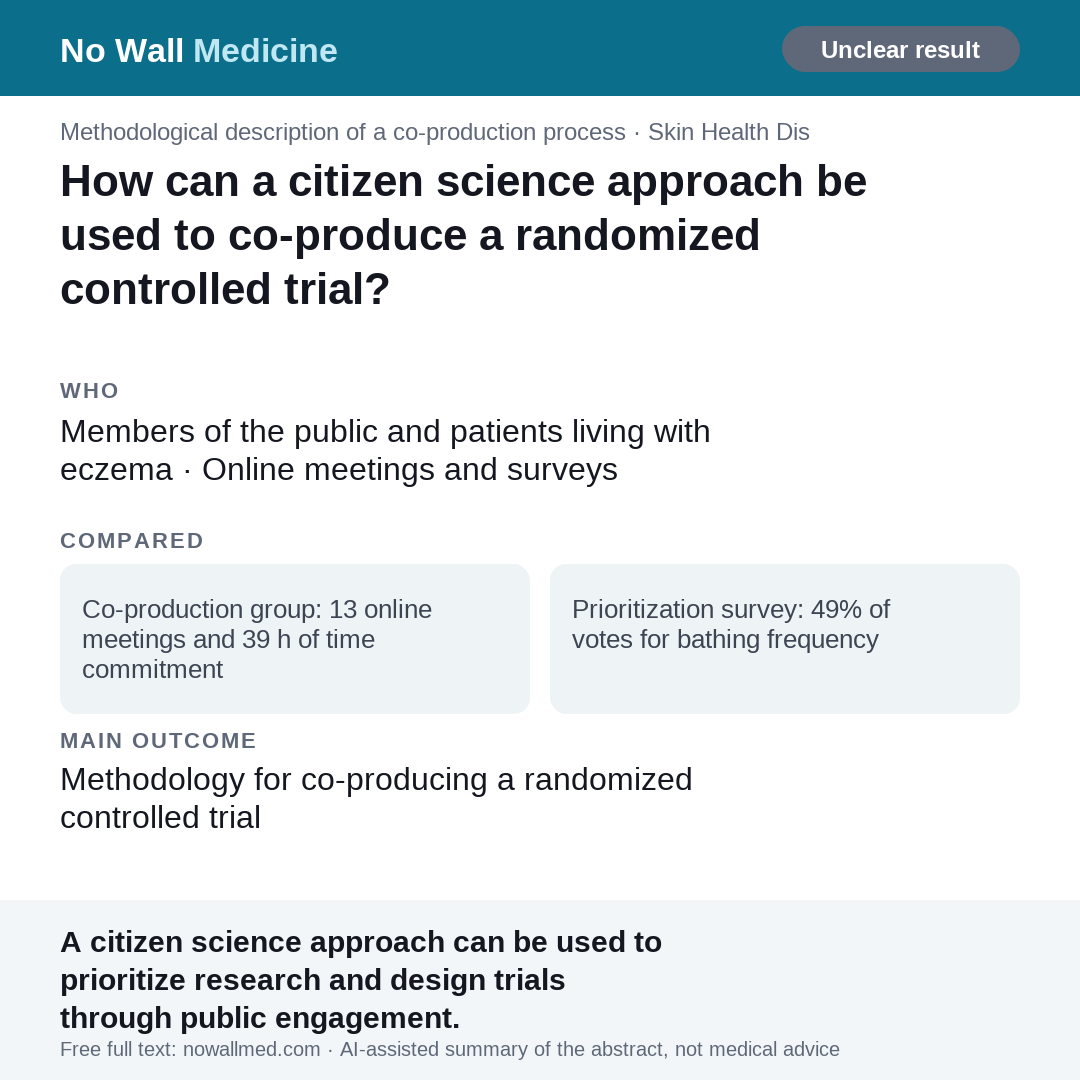
Co-producing a randomized controlled trial on the frequency of bathing in eczema: description of a citizen science approach
Methodological description of a co-production processUnclear result
How can a citizen science approach be used to co-produce a randomized controlled trial?
Who
Members of the public and patients living with eczema · Online meetings and surveys
Compared
Co-production group: 13 online meetings and 39 h of time commitment
Prioritization survey: 49% of votes for bathing frequency
Main outcome
Methodology for co-producing a randomized controlled trial
Bottom line: A citizen science approach can be used to prioritize research and design trials through public engagement.
Skin Health Dis · 2025-04-16Download image
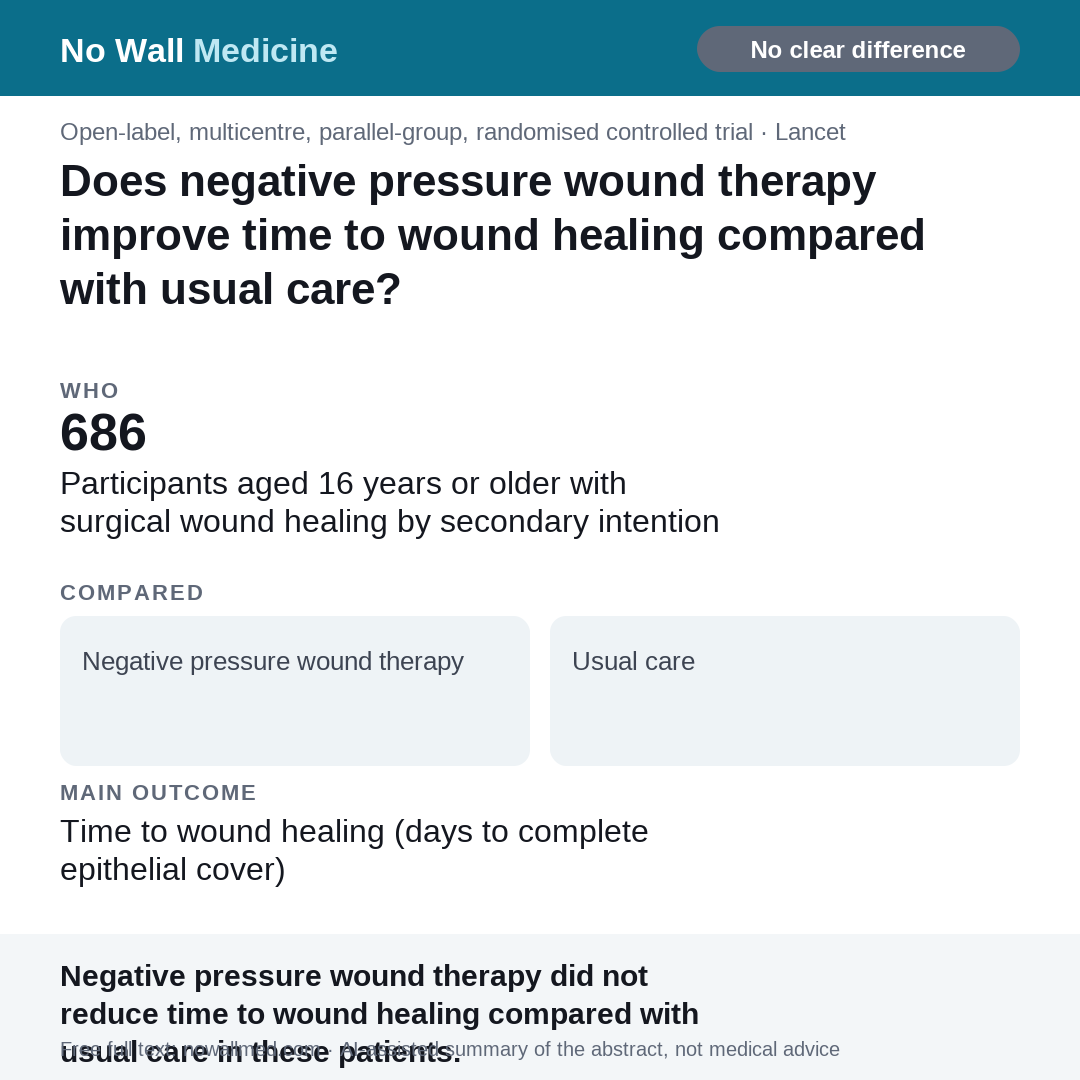
Negative pressure wound therapy versus usual care in patients with surgical wound healing by secondary intention in the UK (SWHSI-2): an open-label, multicentre, parallel-group, randomised controlled trial
Open-label, multicentre, parallel-group, randomised controlled trialNo clear difference
Does negative pressure wound therapy improve time to wound healing compared with usual care?
Who
686
Participants aged 16 years or older with surgical wound healing by secondary intention · 29 United Kingdom National Health Service Trusts
Compared
Negative pressure wound therapy
Usual care
Main outcome
Time to wound healing (days to complete epithelial cover)
Result: hazard ratio 1·08 (95% CI 0·88-1·32)
Bottom line: Negative pressure wound therapy did not reduce time to wound healing compared with usual care in these patients.
Funded by: National Institute for Health Research Health Technology Assessment Programme
Lancet · 2025-04-15Download image
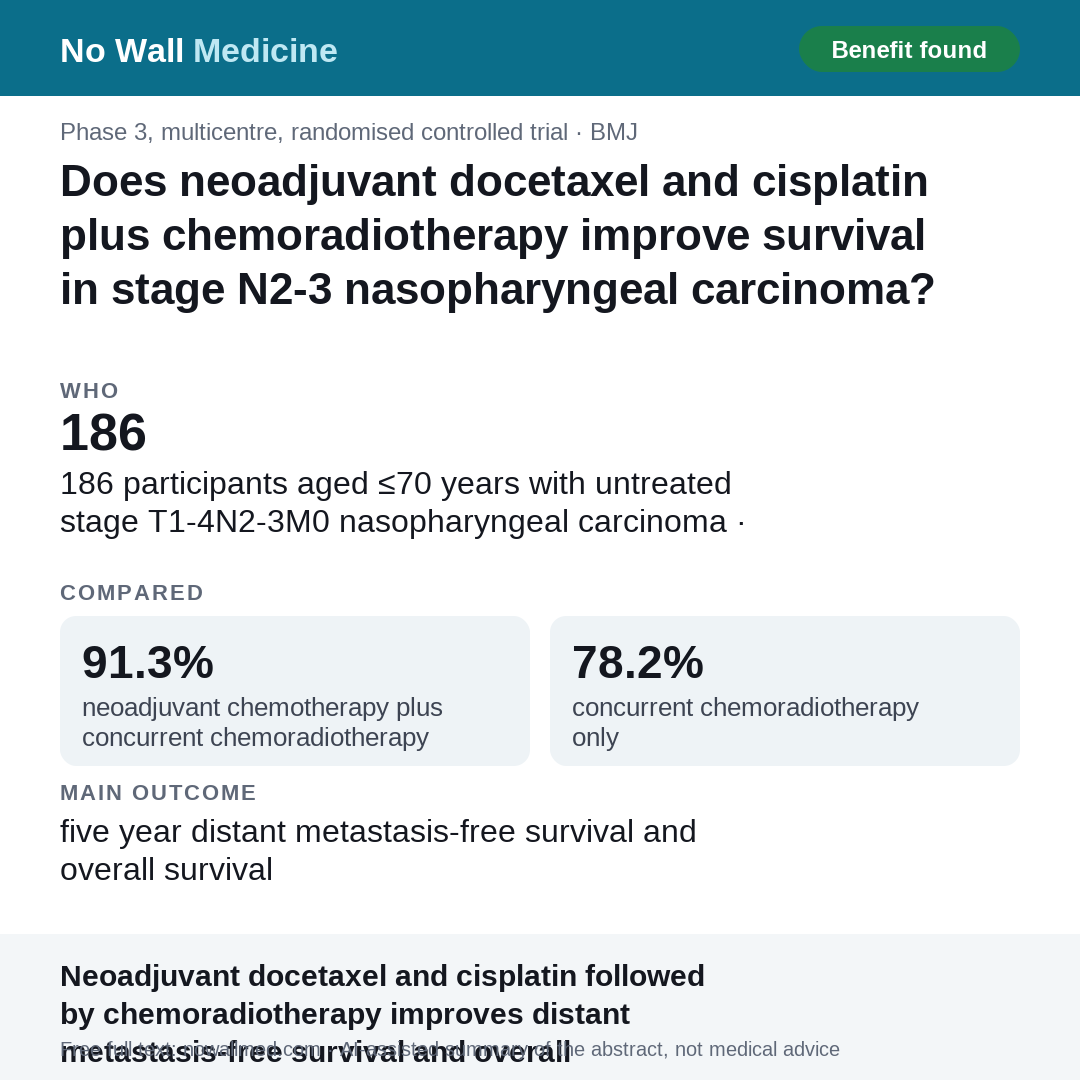
Four cycles of docetaxel plus cisplatin as neoadjuvant chemotherapy followed by concurrent chemoradiotherapy in stage N2-3 nasopharyngeal carcinoma: phase 3 multicentre randomised controlled trial
Phase 3, multicentre, randomised controlled trialBenefit found
Does neoadjuvant docetaxel and cisplatin plus chemoradiotherapy improve survival in stage N2-3 nasopharyngeal carcinoma?
Who
186
186 participants aged ≤70 years with untreated stage T1-4N2-3M0 nasopharyngeal carcinoma · Six sites in China
Compared
91.3%neoadjuvant chemotherapy plus concurrent chemoradiotherapy (95% CI 85.4% to 97.2%)
78.2%concurrent chemoradiotherapy only (69.8% to 86.6%)
Main outcome
five year distant metastasis-free survival and overall survival
Result: hazard ratio 0.41 (95% CI 0.19 to 0.87)
Bottom line: Neoadjuvant docetaxel and cisplatin followed by chemoradiotherapy improves distant metastasis-free survival and overall survival in N2-3 nasopharyngeal carcinoma.
BMJ · 2025-04-15Download image
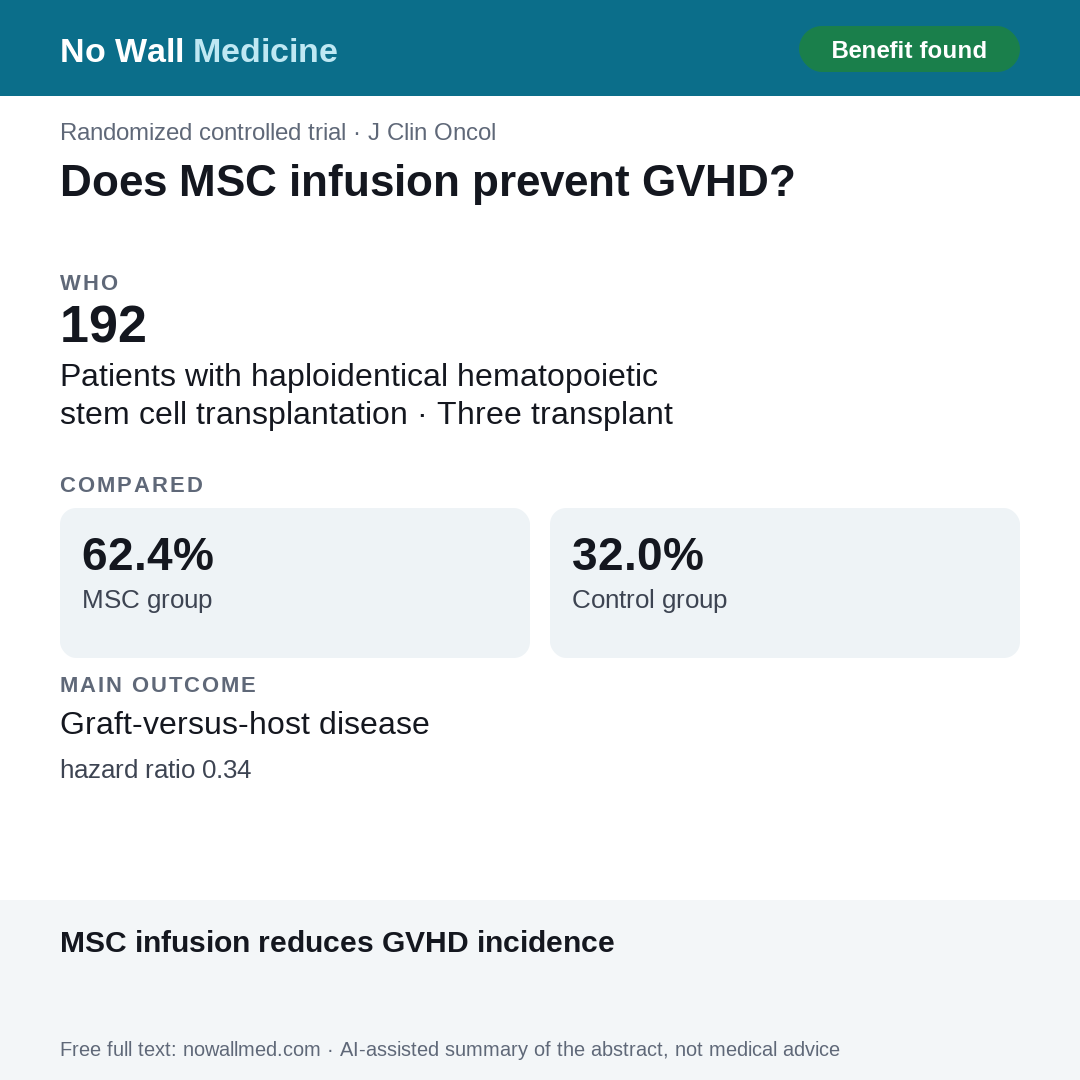
Sequential Infusion of Mesenchymal Stem Cell for Graft-Versus-Host Disease Prevention in Haploidentical Hematopoietic Stem Cell Transplantation: An Open-Label, Multicenter, Randomized Controlled Clinical Trial
Randomized controlled trialBenefit found
Does MSC infusion prevent GVHD?
Who
192
Patients with haploidentical hematopoietic stem cell transplantation · Three transplant centers in China
Compared
62.4%MSC group
32.0%Control group
Main outcome
Graft-versus-host disease
Result: hazard ratio 0.34
Bottom line: MSC infusion reduces GVHD incidence
J Clin Oncol · 2025-04-15Download image
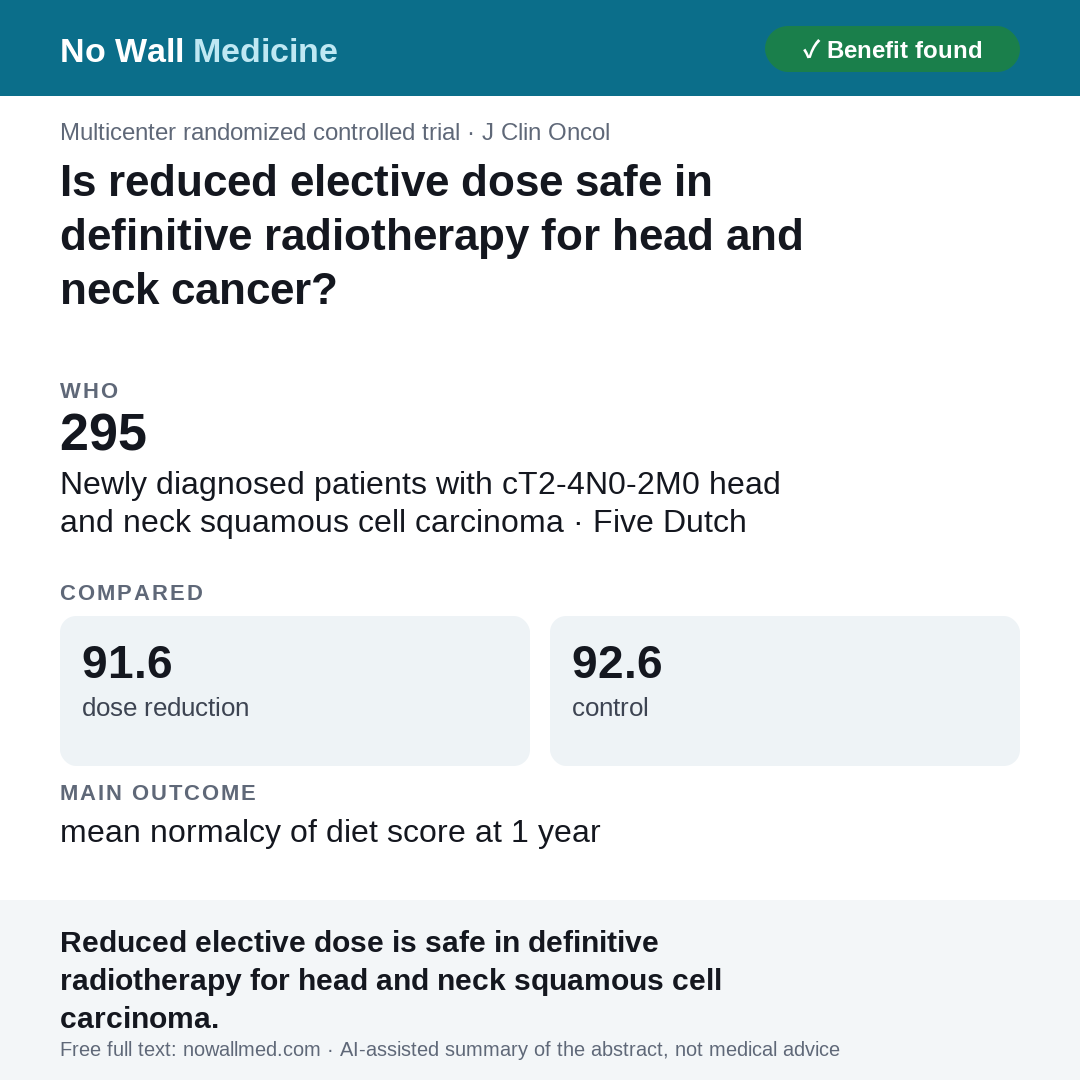
Clinical Benefit and Safety of Reduced Elective Dose in Definitive Radiotherapy for Head and Neck Squamous Cell Carcinoma: The UPGRADE-RT Multicenter Randomized Controlled Trial
Multicenter randomized controlled trialBenefit found
Is reduced elective dose safe in definitive radiotherapy for head and neck cancer?
Who
295
Newly diagnosed patients with cT2-4N0-2M0 head and neck squamous cell carcinoma · Five Dutch centers
Compared
91.6dose reduction (95% CI, 88.5 to 94.7)
92.6control (95% CI, 88.2 to 97.1)
Main outcome
mean normalcy of diet score at 1 year
Result: mean difference, -1.1 (95% CI, -6.5 to 4.4)
Bottom line: Reduced elective dose is safe in definitive radiotherapy for head and neck squamous cell carcinoma.
J Clin Oncol · 2025-04-15Download image
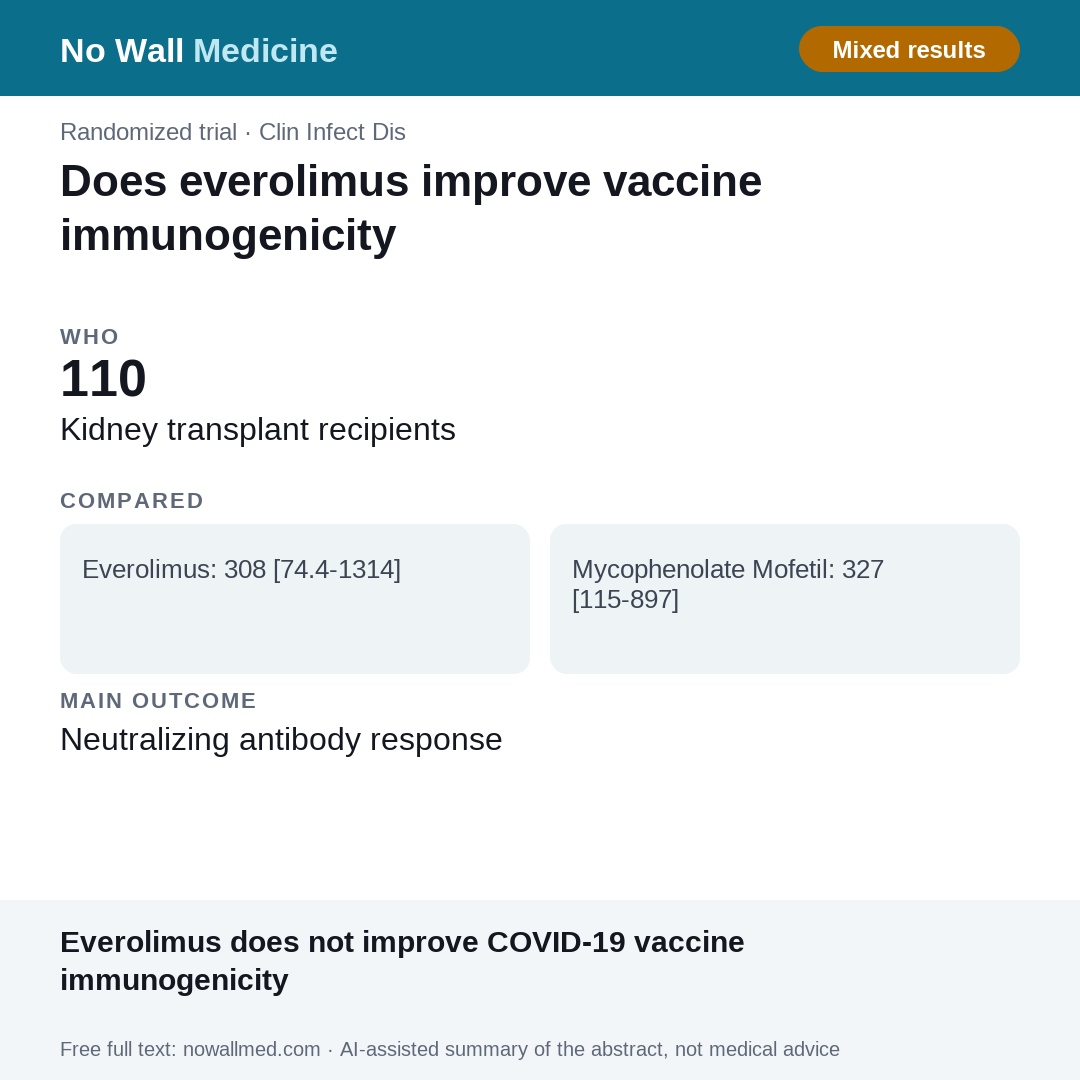
Replacing Mycophenolate Mofetil by Everolimus in Kidney Transplant Recipients to Increase Vaccine Immunogenicity: Results of a Randomized Controlled Trial
Randomized trialMixed results
Does everolimus improve vaccine immunogenicity
Who
110
Kidney transplant recipients
Compared
Everolimus: 308 [74.4-1314]
Mycophenolate Mofetil: 327 [115-897]
Main outcome
Neutralizing antibody response
Bottom line: Everolimus does not improve COVID-19 vaccine immunogenicity
Clin Infect Dis · 2025-04-15Download image
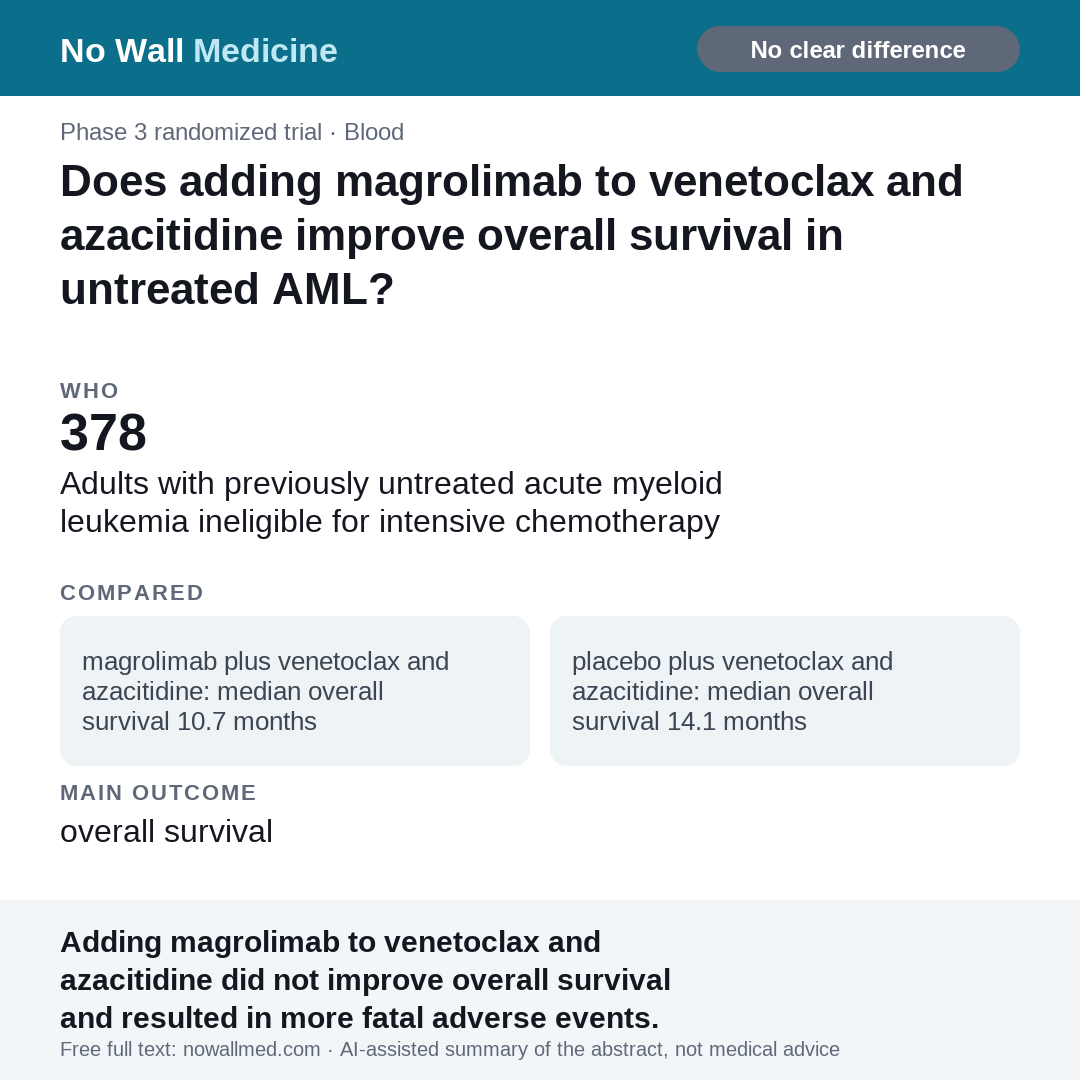
The ENHANCE-3 study: venetoclax and azacitidine plus magrolimab or placebo for untreated AML unfit for intensive therapy
Phase 3 randomized trialNo clear difference
Does adding magrolimab to venetoclax and azacitidine improve overall survival in untreated AML?
Who
378
Adults with previously untreated acute myeloid leukemia ineligible for intensive chemotherapy
Compared
magrolimab plus venetoclax and azacitidine: median overall survival 10.7 months
placebo plus venetoclax and azacitidine: median overall survival 14.1 months
Main outcome
overall survival
Result: hazard ratio 1.178 (95% confidence interval 0.848-1.637)
Bottom line: Adding magrolimab to venetoclax and azacitidine did not improve overall survival and resulted in more fatal adverse events.
Limitation: The trial was stopped at a prespecified interim analysis owing to futility.
Blood · 2025-04-15Download image
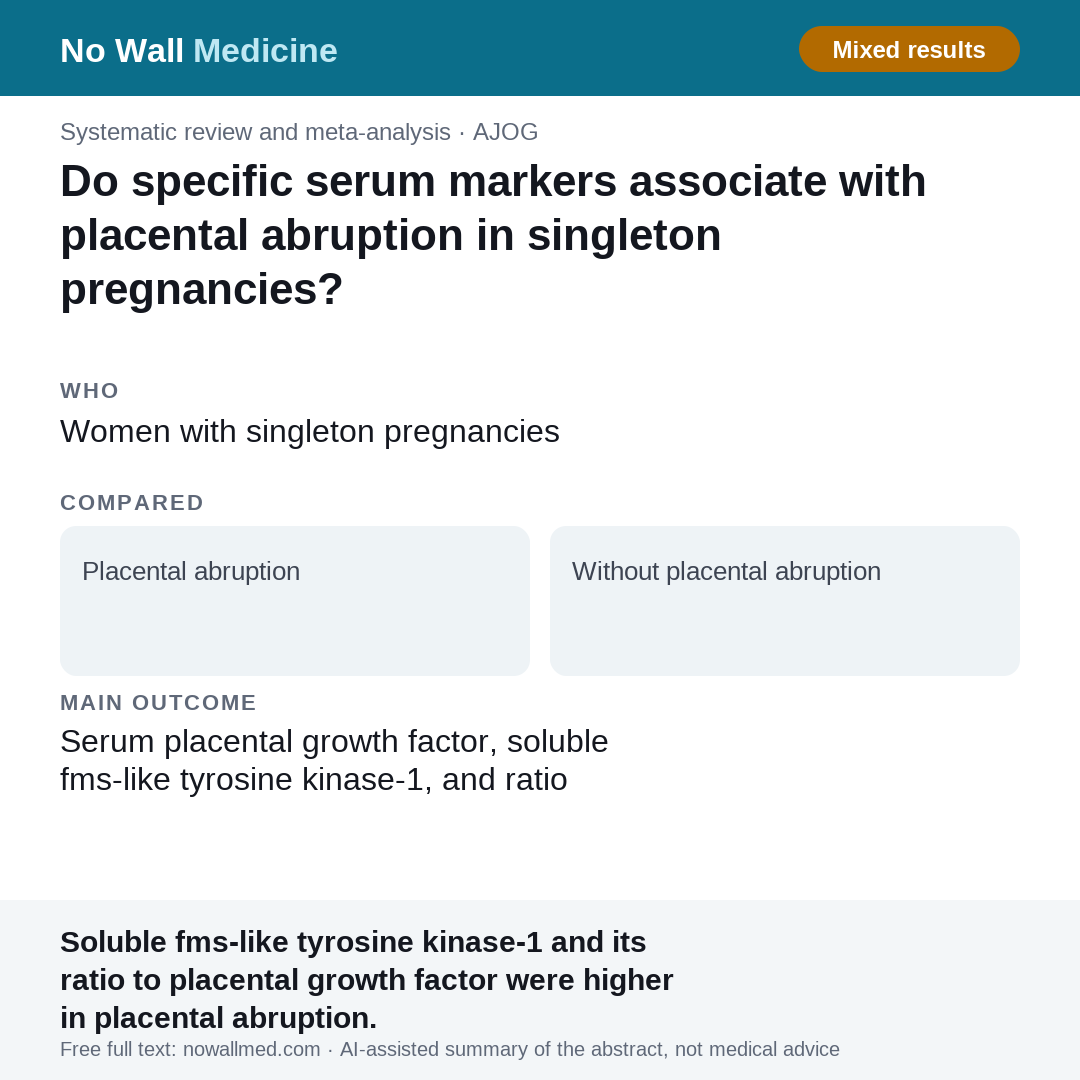
The association between serum soluble fms-like tyrosine kinase-1, placental growth factor, and soluble fms-like tyrosine kinase-1/placental growth factor ratio in singleton pregnancy and placental abruption: a systematic review and meta-analysis
Systematic review and meta-analysisMixed results
Do specific serum markers associate with placental abruption in singleton pregnancies?
Who
Women with singleton pregnancies
Compared
Placental abruption
Without placental abruption
Main outcome
Serum placental growth factor, soluble fms-like tyrosine kinase-1, and ratio
Bottom line: Soluble fms-like tyrosine kinase-1 and its ratio to placental growth factor were higher in placental abruption.
AJOG · 2025-04-15Download image
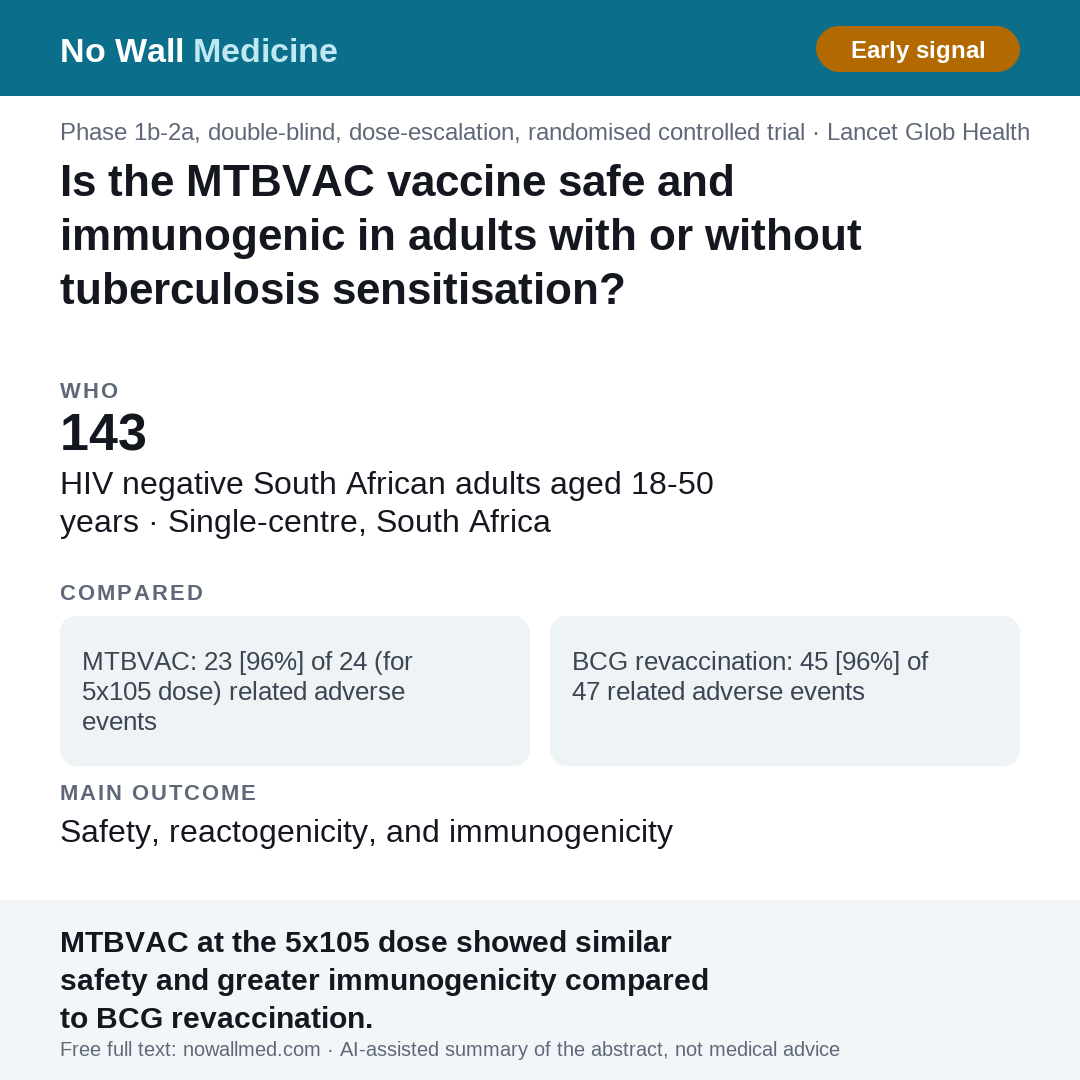
Live-attenuated Mycobacterium tuberculosis vaccine, MTBVAC, in adults with or without M tuberculosis sensitisation: a single-centre, phase 1b-2a, double-blind, dose-escalation, randomised controlled trial
Phase 1b-2a, double-blind, dose-escalation, randomised controlled trialBenefit found
Is the MTBVAC vaccine safe and immunogenic in adults with or without tuberculosis sensitisation?
Who
143
HIV negative South African adults aged 18-50 years · Single-centre, South Africa
Compared
MTBVAC: 23 [96%] of 24 (for 5x10⁵ dose) related adverse events
BCG revaccination: 45 [96%] of 47 related adverse events
Main outcome
Safety, reactogenicity, and immunogenicity
Bottom line: MTBVAC at the 5x10⁵ dose showed similar safety and greater immunogenicity compared to BCG revaccination.
Funded by: Congressionally Directed Medical Research Programmes and US National Institutes of Health
Lancet Glob Health · 2025-04-15Download image
Baseline basophil activation and early suppression is associated with clinical outcome after peanut sublingual immunotherapy
Randomized trialBenefit found
Does timing of basophil suppression during peanut sublingual immunotherapy impact clinical outcomes?
Who
50
Children with peanut allergy
Compared
Active peanut sublingual immunotherapy: CD63 expression significantly reduced by 12 months
Placebo sublingual immunotherapy: CD63 activation remained unchanged from 0 to 36 months
Main outcome
Clinical remission and basophil activation levels
Bottom line: Early suppression of basophil activation by 12 months indicates successful peanut sublingual immunotherapy remission.
JACI · 2025-04-15Download image