Visual abstracts
New randomized trials and meta-analyses from leading journals at a glance: who was studied, what was compared, and what was found. Every paper is free to read in full.
All specialtiesCardiology 857Oncology 770Gastroenterology & Hepatology 311Infectious Disease 626Neurology 354Psychiatry & Mental Health 430Pulmonology 370Critical Care 260Endocrinology & Diabetes 484Pediatrics 542Surgery 351Orthopedics & Sports Medicine 166Neurosurgery 115Cardiothoracic & Vascular Surgery 87Plastic & Reconstructive Surgery 144Nephrology 197Rheumatology 108Hematology 183Dermatology 82Ophthalmology 97Obstetrics & Gynecology 266Public & Global Health 168Radiology & Imaging 105Anesthesiology 130Urology 162ENT (Otolaryngology) 115Emergency Medicine 103Allergy & Immunology 58Geriatrics 160Family Medicine & Primary Care 111Medical Genetics & Genomics 91Pathology & Laboratory Medicine 27Physical Medicine & Rehabilitation 149Palliative Care 81Nutrition 223Digital Health & AI 462General Medicine 101
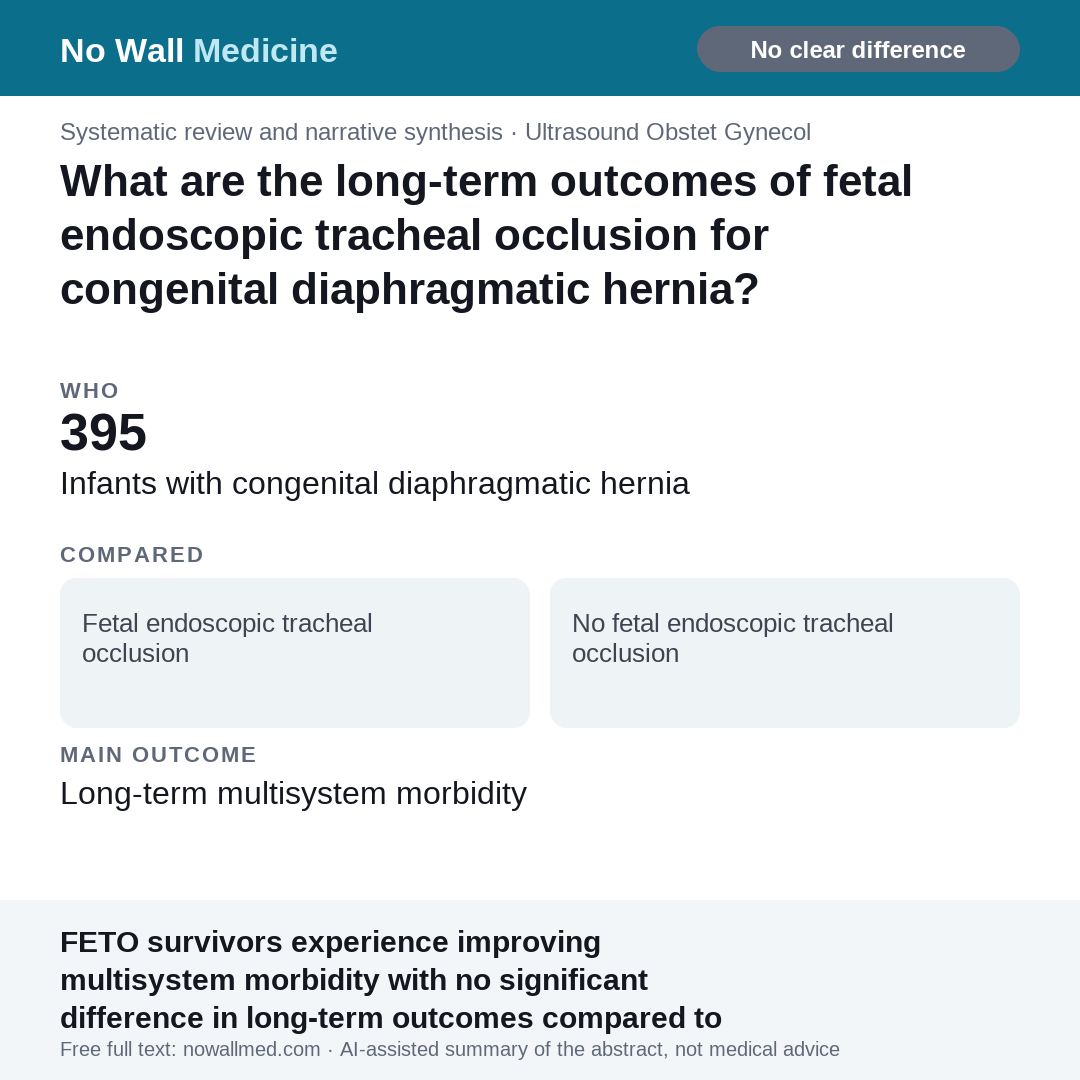
Long-term outcome after fetal endoscopic tracheal occlusion for congenital diaphragmatic hernia: systematic review
Systematic review and narrative synthesisNo clear difference
What are the long-term outcomes of fetal endoscopic tracheal occlusion for congenital diaphragmatic hernia?
Who
395
Infants with congenital diaphragmatic hernia
Compared
Fetal endoscopic tracheal occlusion
No fetal endoscopic tracheal occlusion
Main outcome
Long-term multisystem morbidity
Bottom line: FETO survivors experience improving multisystem morbidity with no significant difference in long-term outcomes compared to non-FETO infants.
Limitation: Meta-analysis was not performed due to outcome heterogeneity.
Ultrasound Obstet Gynecol · 2026-08-29Download image
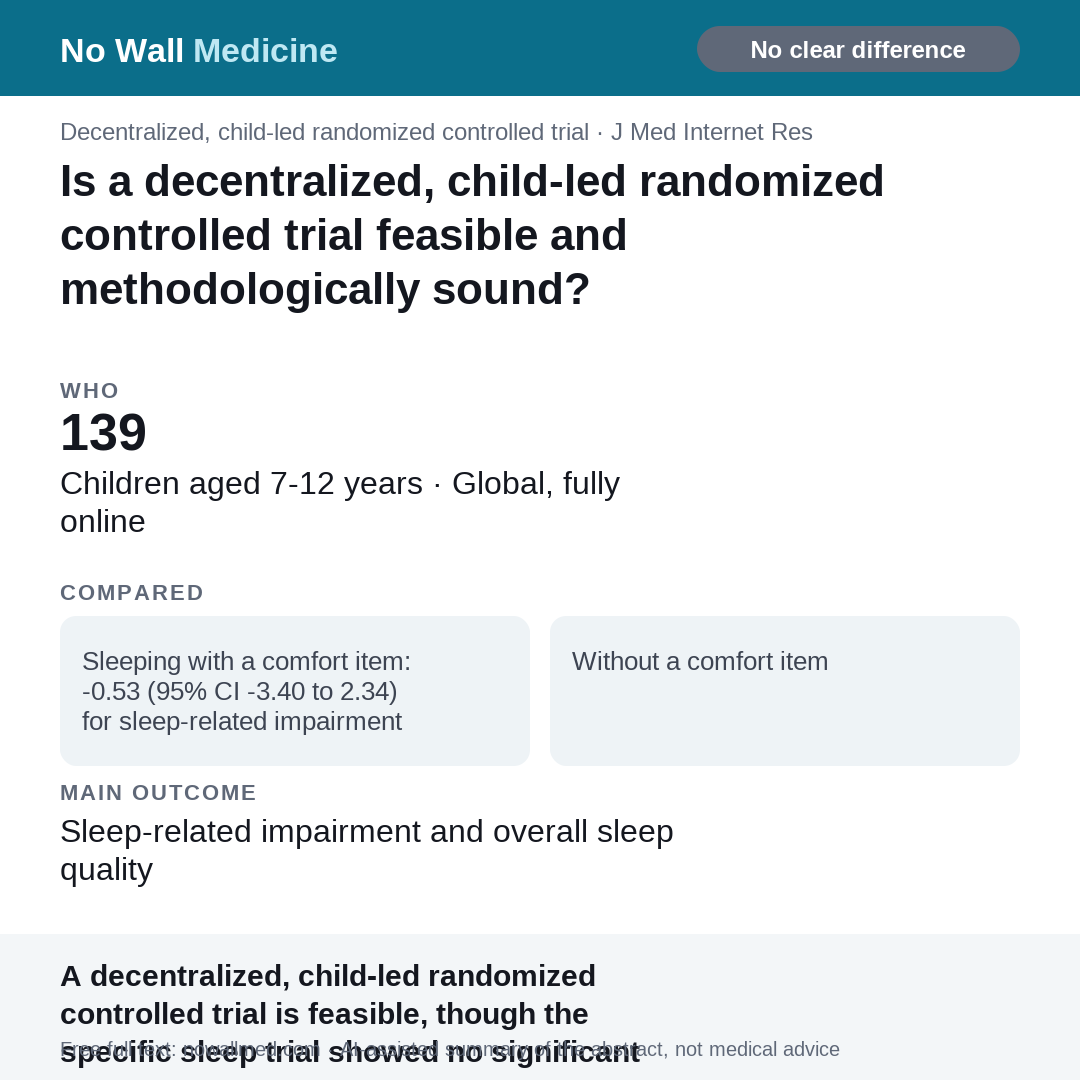
Feasibility and Methodological Reflections From the Co-Creation of a Randomized Controlled Trial (The Kid's Trial): Decentralized, Child-Led Citizen-Science Study
Decentralized, child-led randomized controlled trialNo clear difference
Is a decentralized, child-led randomized controlled trial feasible and methodologically sound?
Who
139
Children aged 7-12 years · Global, fully online
Compared
Sleeping with a comfort item: -0.53 (95% CI -3.40 to 2.34) for sleep-related impairment
Without a comfort item
Main outcome
Sleep-related impairment and overall sleep quality
Result: adjusted mean difference -0.53 (95% CI -3.40 to 2.34) for sleep-related impairment
Bottom line: A decentralized, child-led randomized controlled trial is feasible, though the specific sleep trial showed no significant difference in impairment.
Limitation: Poststudy responses were limited by low response rate and potential selection bias.
J Med Internet Res · 2026-08-28Download image
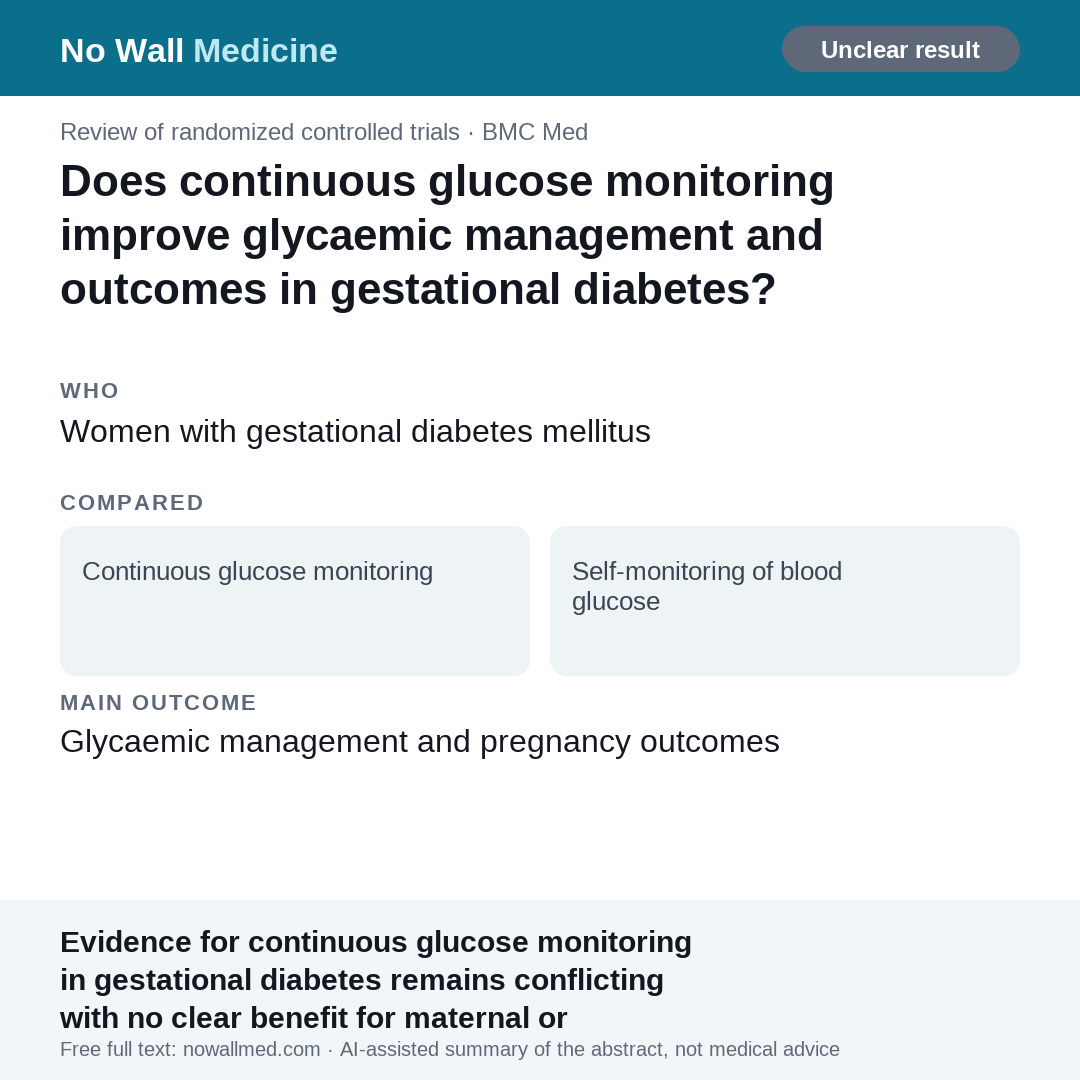
Conflicting evidence for continuous glucose monitoring in gestational diabetes: current challenges and the imperative for individual participant data meta-analysis
Review of randomized controlled trialsUnclear result
Does continuous glucose monitoring improve glycaemic management and outcomes in gestational diabetes?
Who
Women with gestational diabetes mellitus
Compared
Continuous glucose monitoring
Self-monitoring of blood glucose
Main outcome
Glycaemic management and pregnancy outcomes
Bottom line: Evidence for continuous glucose monitoring in gestational diabetes remains conflicting with no clear benefit for maternal or neonatal outcomes.
Limitation: Absence of validated continuous glucose monitoring-based glycaemic targets specific to gestational diabetes.
BMC Med · 2026-08-27Download image
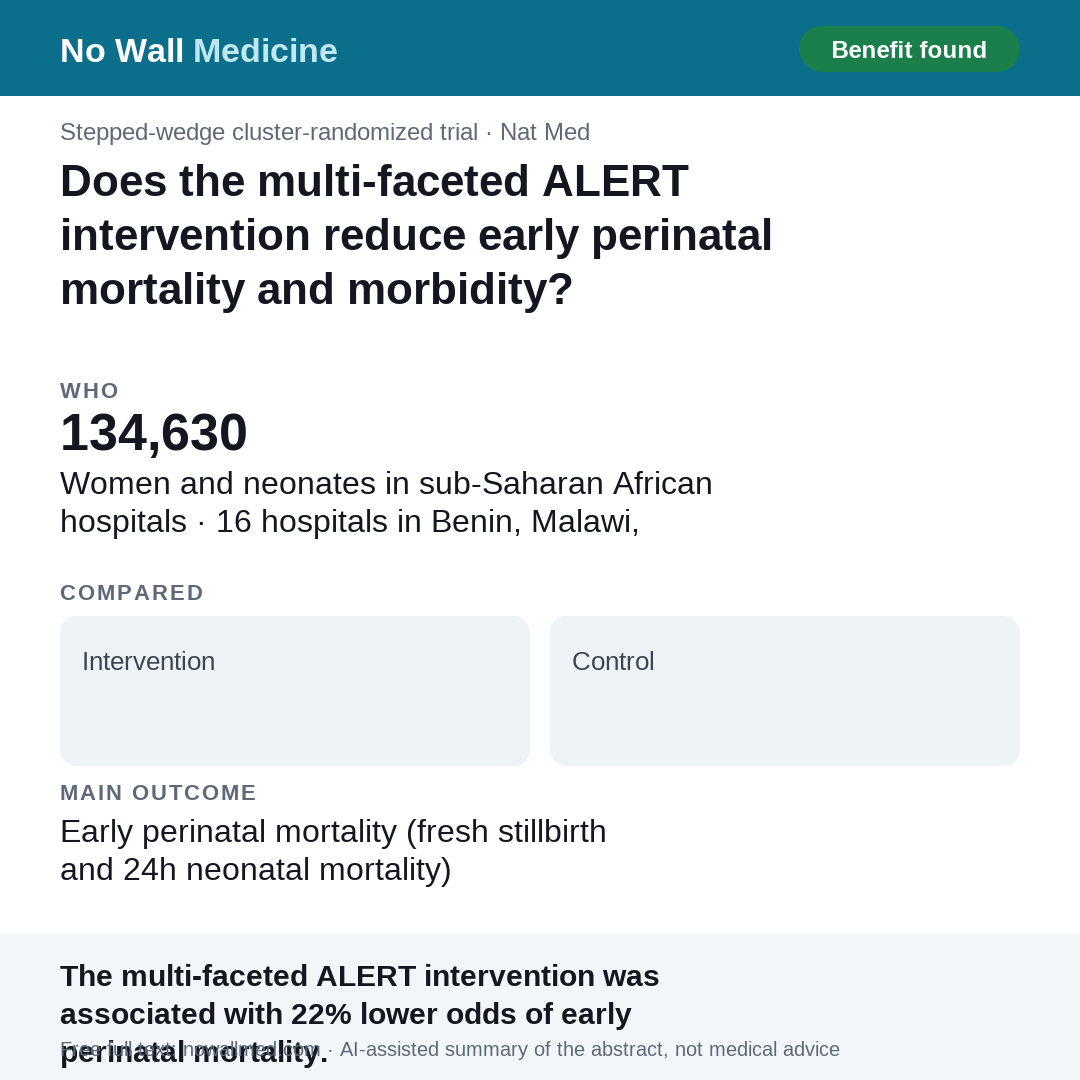
A multi-faceted hospital-based intervention for intrapartum care in sub-Saharan Africa: a stepped-wedge cluster-randomized trial
Stepped-wedge cluster-randomized trialBenefit found
Does the multi-faceted ALERT intervention reduce early perinatal mortality and morbidity?
Who
134,630
Women and neonates in sub-Saharan African hospitals · 16 hospitals in Benin, Malawi, Tanzania and Uganda
Compared
Intervention
Control
Main outcome
Early perinatal mortality (fresh stillbirth and 24h neonatal mortality)
Result: adjusted odds ratio 0.78 (95% confidence interval 0.65-0.94)
Bottom line: The multi-faceted ALERT intervention was associated with 22% lower odds of early perinatal mortality.
Limitation: The study only included 16 hospitals.
Nat Med · 2026-08-26Download image
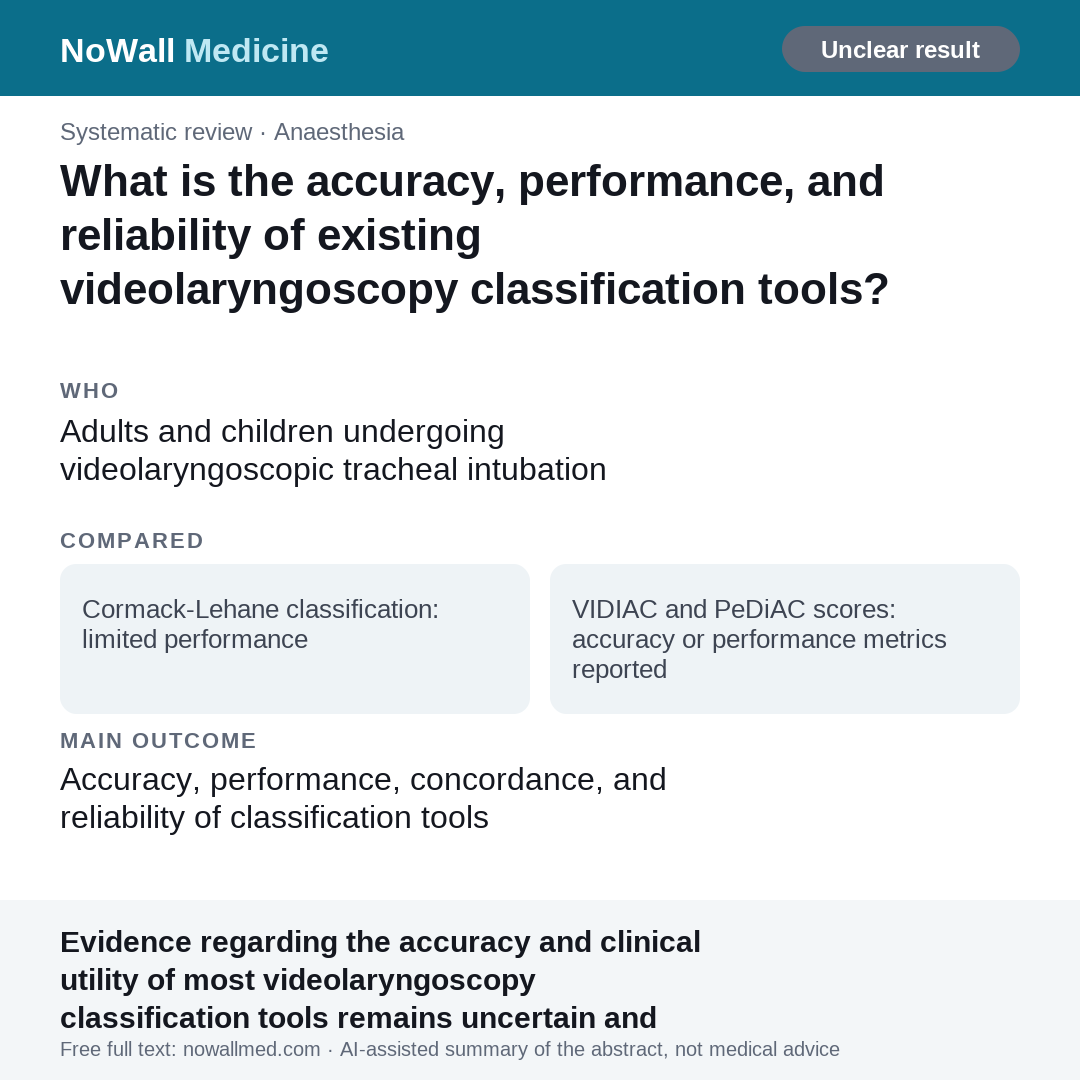
Classification of videolaryngoscopy: a systematic review
Systematic reviewUnclear result
What is the accuracy, performance, and reliability of existing videolaryngoscopy classification tools?
Who
Adults and children undergoing videolaryngoscopic tracheal intubation
Compared
Cormack-Lehane classification: limited performance
VIDIAC and PeDiAC scores: accuracy or performance metrics reported
Main outcome
Accuracy, performance, concordance, and reliability of classification tools
Bottom line: Evidence regarding the accuracy and clinical utility of most videolaryngoscopy classification tools remains uncertain and limited.
Limitation: High risk of bias regarding reference standard, flow, timing, and substantial applicability concerns.
Anaesthesia · 2026-08-26Download image
Rethinking Pediatric Asthma Education Through Large Language Model Generation and Simplification: Randomized Double-Blind Study
Randomized, double-blind evaluation studyNo clear difference
How do AI-generated and AI-simplified asthma materials compare to expert-authored responses?
Who
Medical professionals and pediatric patient families
Compared
Published expert-authored responses: 72.97 (SD 14.88) for professionals and 64.18 (SD 15.76) for families
AI-generated responses: 76.17 (SD 12.59) for professionals and 68.77 (SD 16.47) for families
AI-simplified responses: 72.98 (SD 12.64) for professionals and 65.47 (SD 16.52) for families
Main outcome
Total scores on a 19-item Likert scale questionnaire
Bottom line: AI-generated and simplified asthma materials showed no significant difference in perceived quality compared to expert-authored responses.
J Med Internet Res · 2026-08-26Download image

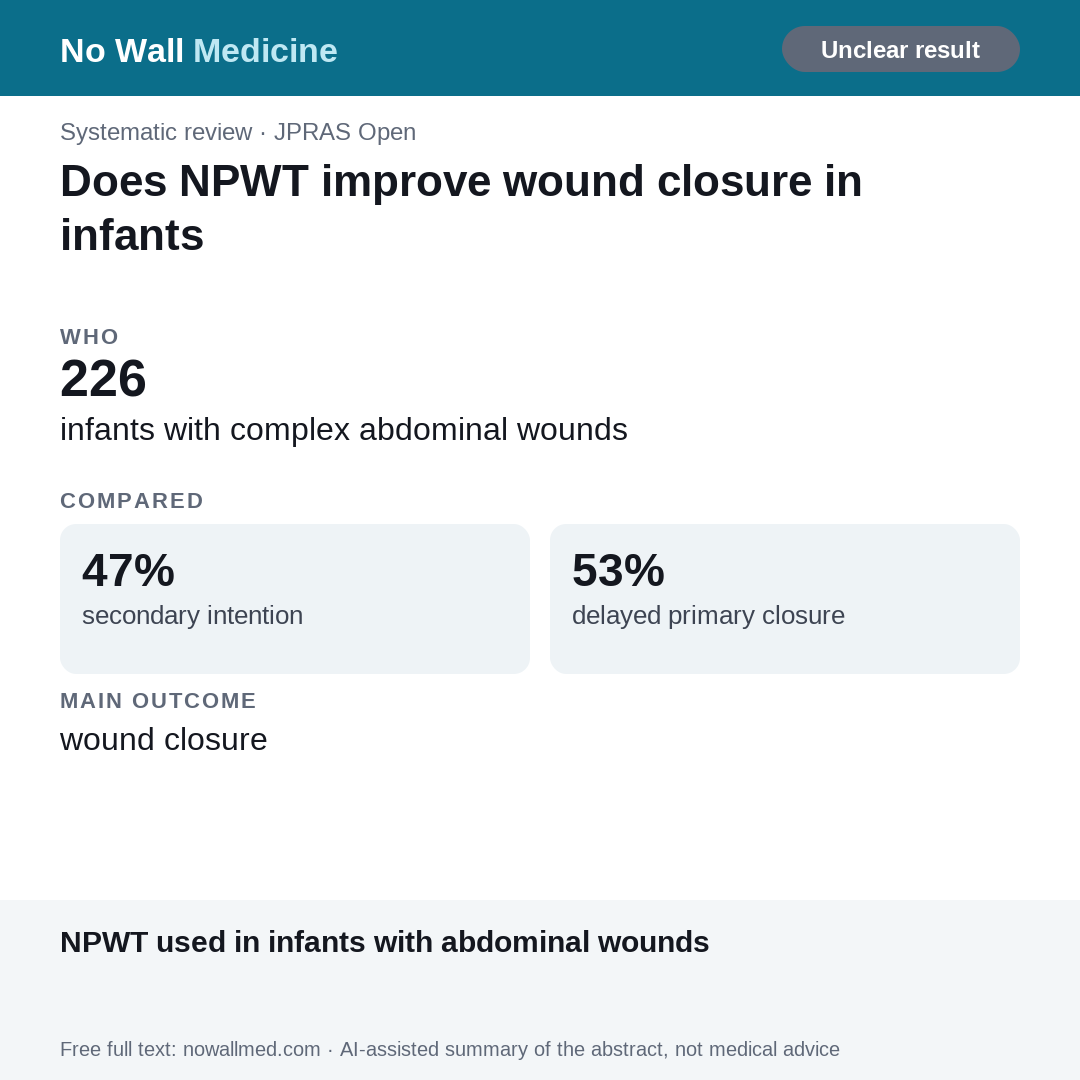
Negative pressure wound therapy in infants with complex abdominal wounds: A systematic review of clinical applications and closure strategies
Systematic reviewUnclear result
Does NPWT improve wound closure in infants
Who
226
infants with complex abdominal wounds
Compared
47%secondary intention
53%delayed primary closure
Main outcome
wound closure
Bottom line: NPWT used in infants with abdominal wounds
Limitation: heterogeneous protocols and bias risk
JPRAS Open · 2026-08-26Download image
Safety and immunogenicity of GBS6 in pregnant women living with and without HIV and their infants in Uganda (PREPARE WP4): a double-blind, randomised, placebo-controlled, phase 2 clinical trial
Double-blind, randomised, placebo-controlled, phase 2 clinical trialBenefit found
Is GBS6 vaccine safe and immunogenic in pregnant women with or without HIV?
Who
300
Pregnant women aged 18-40 years living with or without HIV · Five antenatal care facilities in Kampala, Uganda
Compared
GBS6 vaccine: 86 serious adverse events recorded
Placebo: 86 serious adverse events recorded
Main outcome
Maternal and infant safety, reactogenicity, and immunogenicity
Bottom line: GBS6 vaccine was safe and induced maternal antibodies in pregnant women living with or without HIV.
Lancet Infect Dis · 2026-08-25Download image

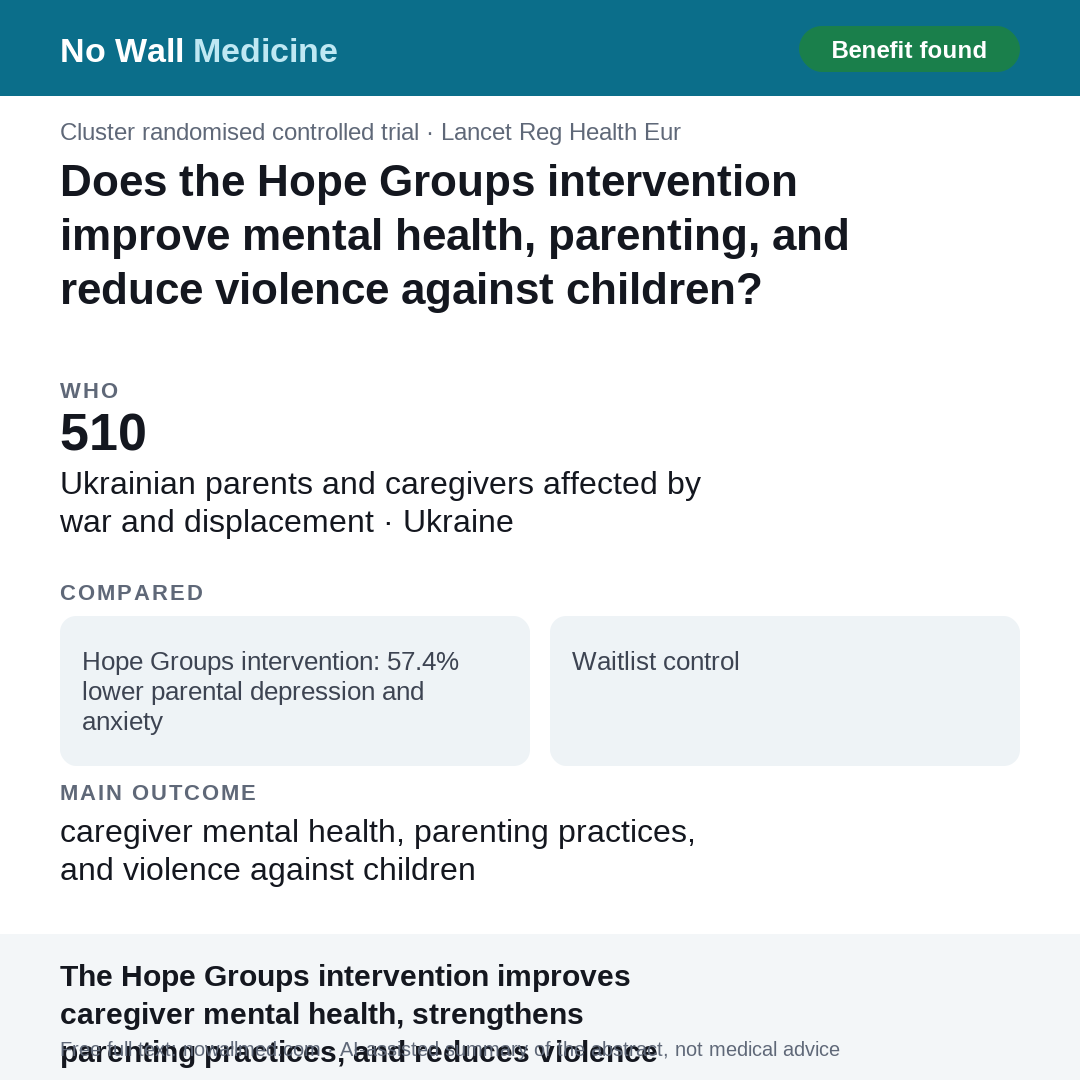
Effectiveness of the hope groups intervention on mental health, parenting practices, and violence against children among Ukrainian parents and caregivers affected by war and displacement: a cluster randomised controlled trial
Cluster randomised controlled trialBenefit found
Does the Hope Groups intervention improve mental health, parenting, and reduce violence against children?
Who
510
Ukrainian parents and caregivers affected by war and displacement · Ukraine
Compared
Hope Groups intervention: 57.4% lower parental depression and anxiety
Waitlist control
Main outcome
caregiver mental health, parenting practices, and violence against children
Result: β = -2.85; 95% CI = -3.49, -2.22; β = -0.5; 95% CI = -0.64, -0.36; β = 1.32, 95% CI = 0.92, 1.71
Bottom line: The Hope Groups intervention improves caregiver mental health, strengthens parenting practices, and reduces violence against children during war.
Funded by: Global Parenting Initiative, Moderna Foundation, and World Without Orphans
Lancet Reg Health Eur · 2026-08-25Download image
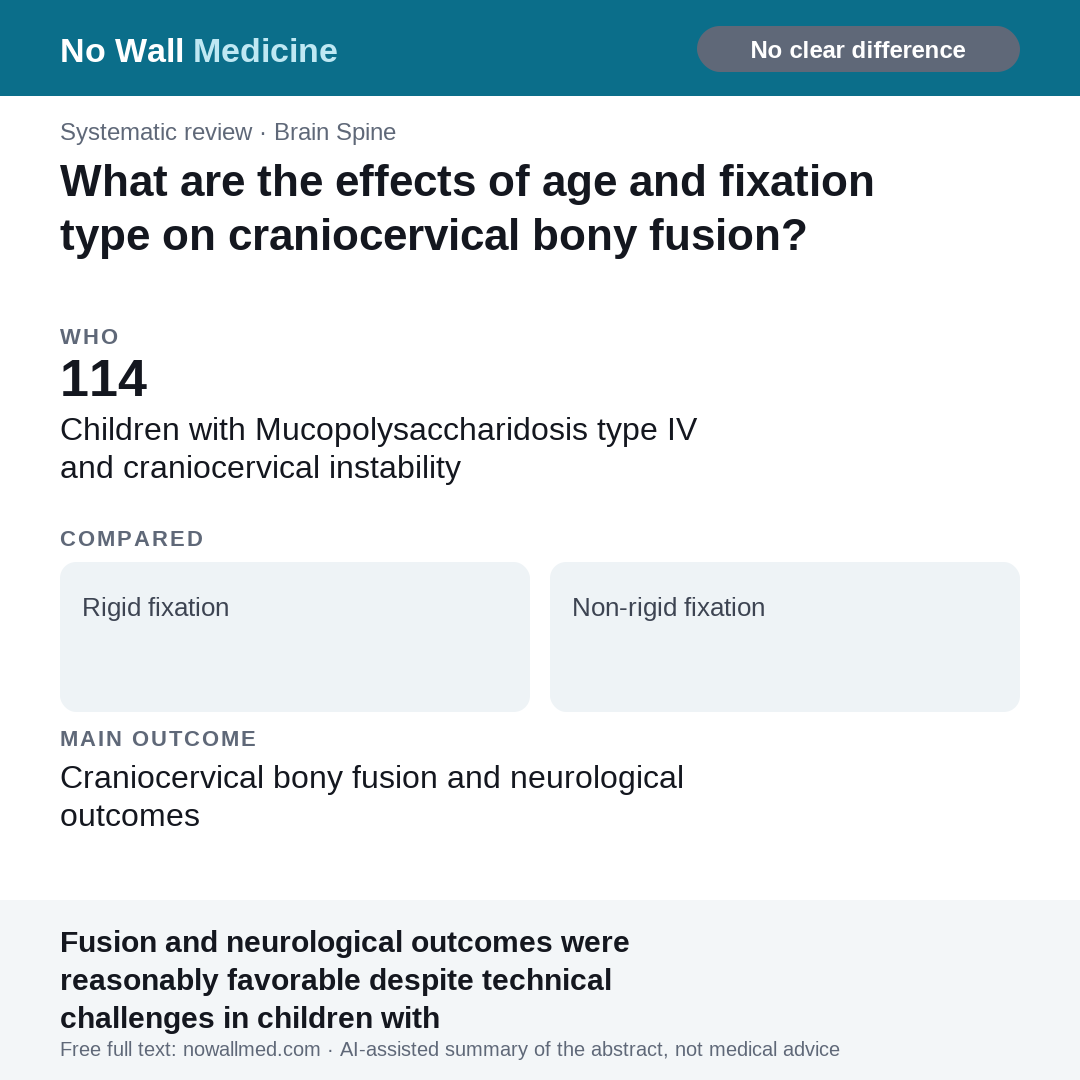
Surgery for craniocervical instability and spinal cord compression in children with Mucopolysaccharidosis type IV: A systematic review
Systematic reviewNo clear difference
What are the effects of age and fixation type on craniocervical bony fusion?
Who
114
Children with Mucopolysaccharidosis type IV and craniocervical instability
Compared
Rigid fixation
Non-rigid fixation
Main outcome
Craniocervical bony fusion and neurological outcomes
Result: OR 2.44 (95% CI 0.24-330.60)
Bottom line: Fusion and neurological outcomes were reasonably favorable despite technical challenges in children with Mucopolysaccharidosis type IV.
Brain Spine · 2026-08-25Download image
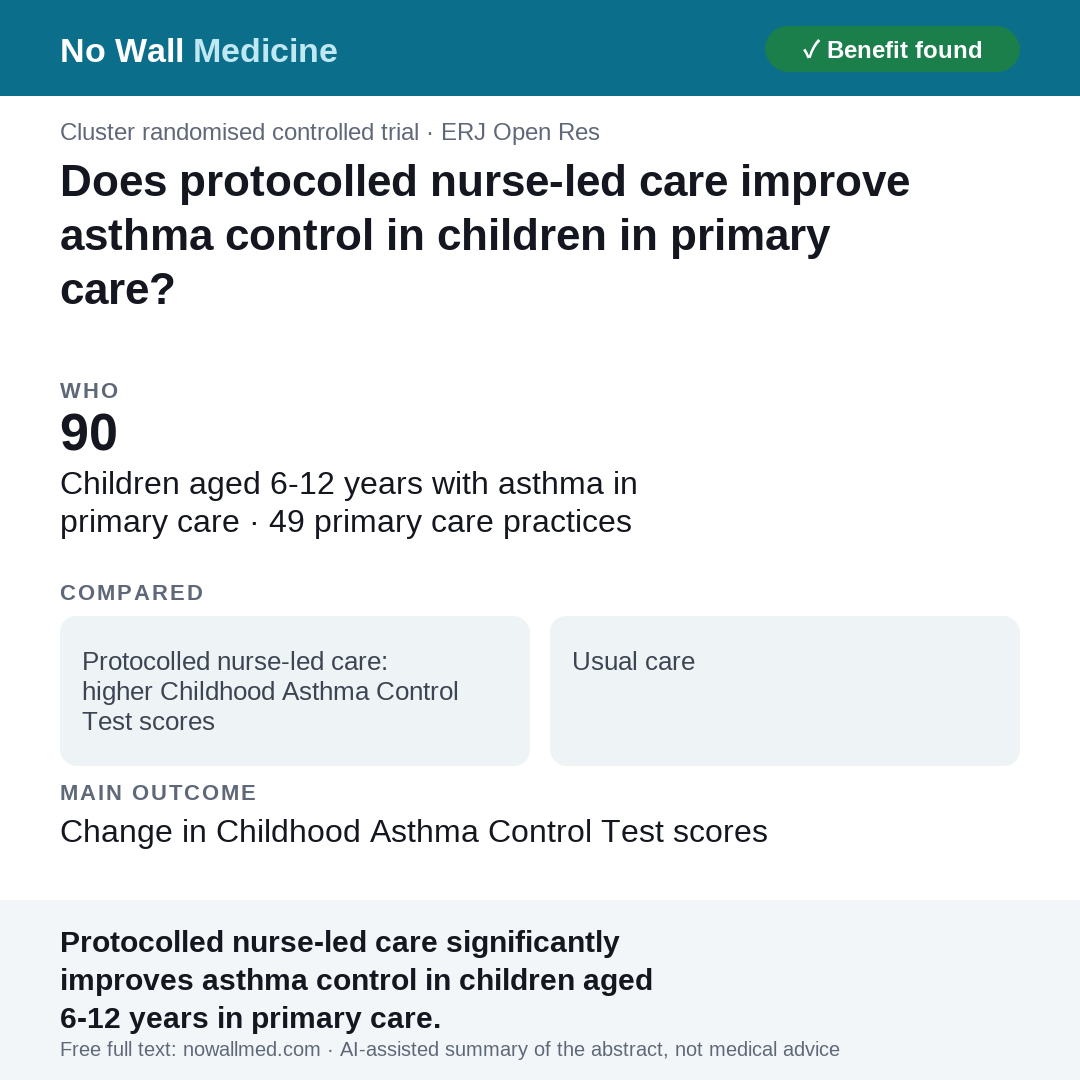
Nurse-led care for children with asthma in primary care: results of a randomised controlled trial
Cluster randomised controlled trialBenefit found
Does protocolled nurse-led care improve asthma control in children in primary care?
Who
90
Children aged 6-12 years with asthma in primary care · 49 primary care practices
Compared
Protocolled nurse-led care: higher Childhood Asthma Control Test scores
Usual care
Main outcome
Change in Childhood Asthma Control Test scores
Bottom line: Protocolled nurse-led care significantly improves asthma control in children aged 6-12 years in primary care.
ERJ Open Res · 2026-08-24Download image
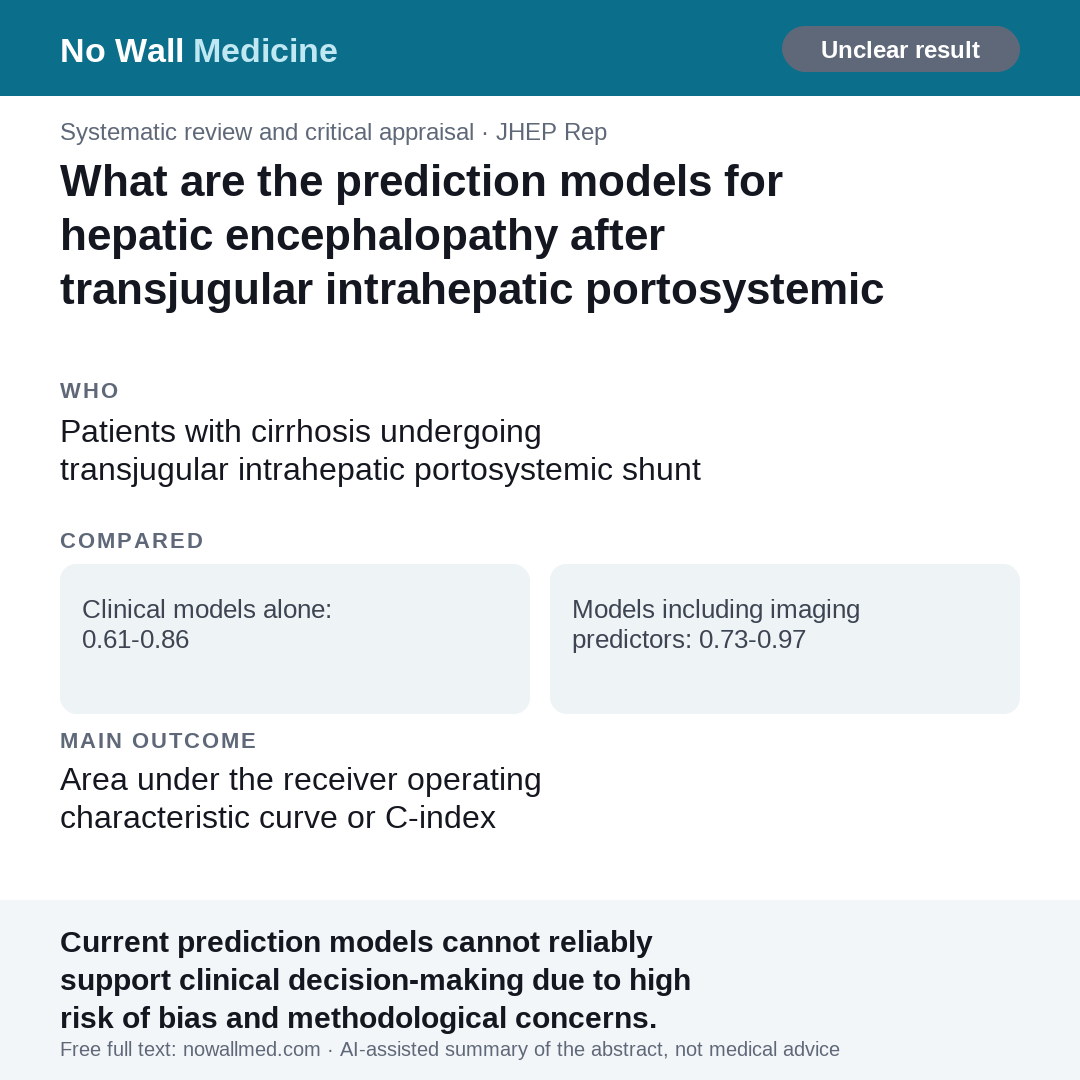
Risk prediction models for hepatic encephalopathy post-transjugular intrahepatic portosystemic shunt: A systematic review and critical appraisal
Systematic review and critical appraisalUnclear result
What are the prediction models for hepatic encephalopathy after transjugular intrahepatic portosystemic shunt?
Who
Patients with cirrhosis undergoing transjugular intrahepatic portosystemic shunt · 25 cohorts from Asia (93%)
Compared
Clinical models alone: 0.61-0.86
Models including imaging predictors: 0.73-0.97
Main outcome
Area under the receiver operating characteristic curve or C-index
Bottom line: Current prediction models cannot reliably support clinical decision-making due to high risk of bias and methodological concerns.
Limitation: High risk of bias, inappropriate patient exclusion, low events-per-variable ratio, and inadequate validation.
JHEP Rep · 2026-08-22Download image
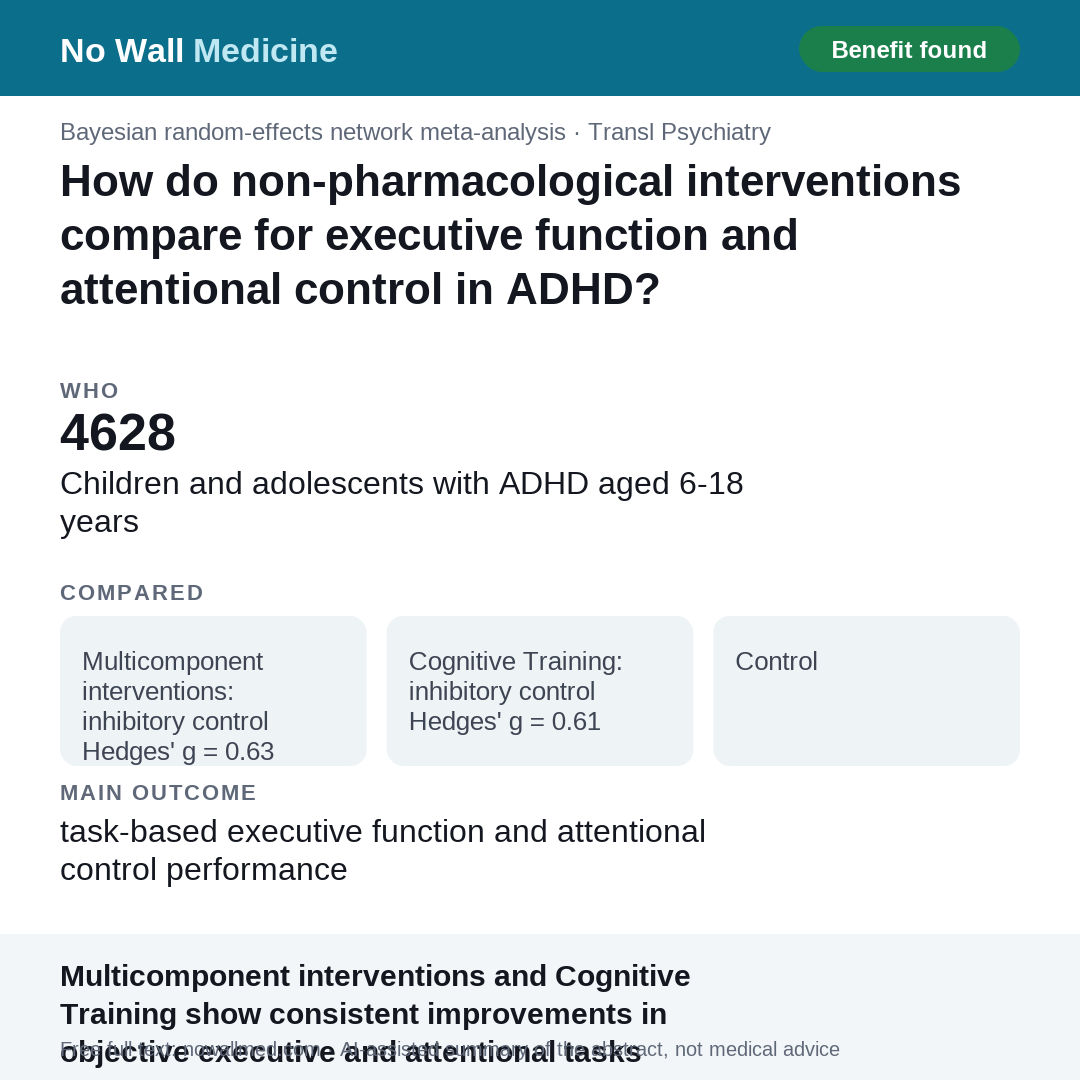
Comparative efficacy of non-pharmacological interventions on executive function and attentional control in children and adolescents with ADHD: a Bayesian network meta-analysis based on task-based cognitive outcomes
Bayesian random-effects network meta-analysisBenefit found
How do non-pharmacological interventions compare for executive function and attentional control in ADHD?
Who
4628
Children and adolescents with ADHD aged 6-18 years
Compared
Multicomponent interventions: inhibitory control Hedges' g = 0.63
Cognitive Training: inhibitory control Hedges' g = 0.61
Control
Main outcome
task-based executive function and attentional control performance
Bottom line: Multicomponent interventions and Cognitive Training show consistent improvements in objective executive and attentional tasks for pediatric ADHD.
Transl Psychiatry · 2026-08-21Download image
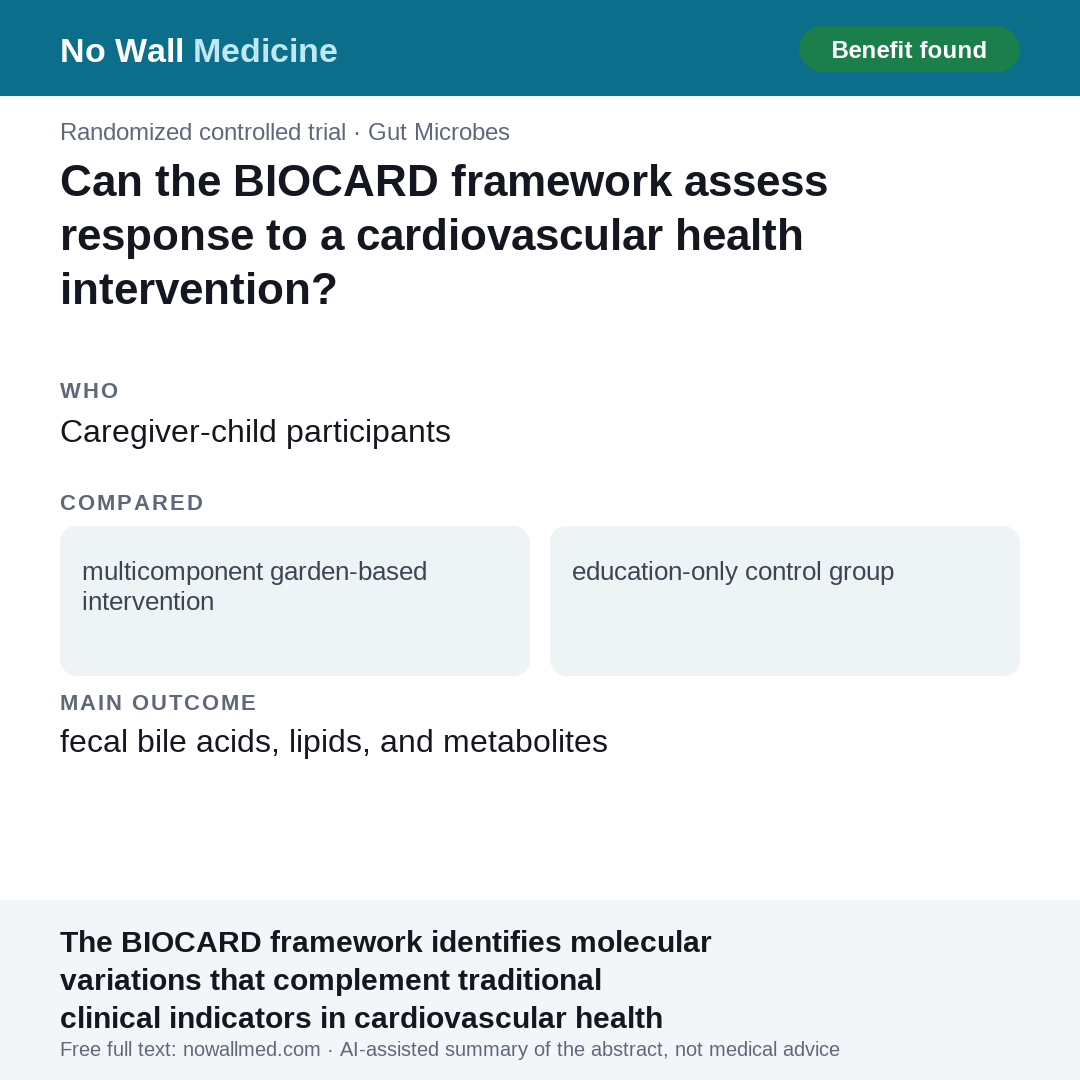
BIOCARD framework: integrating fecal bile acids, lipids, and metabolites to assess response to a cardiovascular health intervention
Randomized controlled trialBenefit found
Can the BIOCARD framework assess response to a cardiovascular health intervention?
Who
Caregiver-child participants
Compared
multicomponent garden-based intervention
education-only control group
Main outcome
fecal bile acids, lipids, and metabolites
Bottom line: The BIOCARD framework identifies molecular variations that complement traditional clinical indicators in cardiovascular health interventions.
Limitation: Traditional clinical indicators showed limited sensitivity for detecting intervention-related differences.
Gut Microbes · 2026-08-21Download image
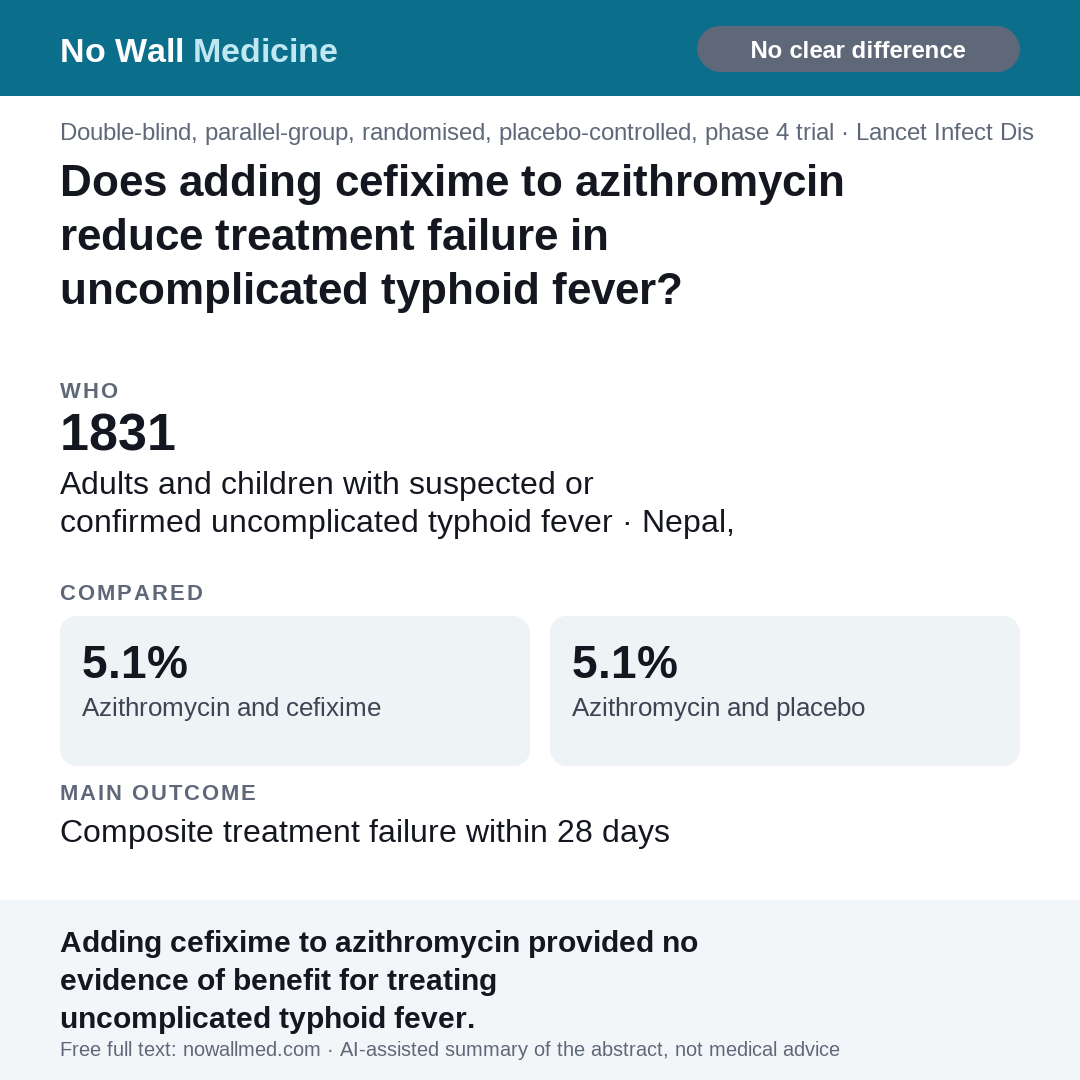
Azithromycin with or without cefixime for suspected or culture-confirmed uncomplicated typhoid fever in Nepal, Bangladesh, and Pakistan (ACT-South Asia): a double-blind, parallel-group, randomised, placebo-controlled, phase 4 trial
Double-blind, parallel-group, randomised, placebo-controlled, phase 4 trialNo clear difference
Does adding cefixime to azithromycin reduce treatment failure in uncomplicated typhoid fever?
Who
1831
Adults and children with suspected or confirmed uncomplicated typhoid fever · Nepal, Bangladesh, and Pakistan
Compared
5.1%Azithromycin and cefixime
5.1%Azithromycin and placebo
Main outcome
Composite treatment failure within 28 days
Result: absolute risk difference -0.00 percentage points, 95% CI -2.08 to 2.08
Bottom line: Adding cefixime to azithromycin provided no evidence of benefit for treating uncomplicated typhoid fever.
Funded by: Department of Health and Social Care, FCDO, Medical Research Council, Wellcome Trust
Lancet Infect Dis · 2026-08-20Download image
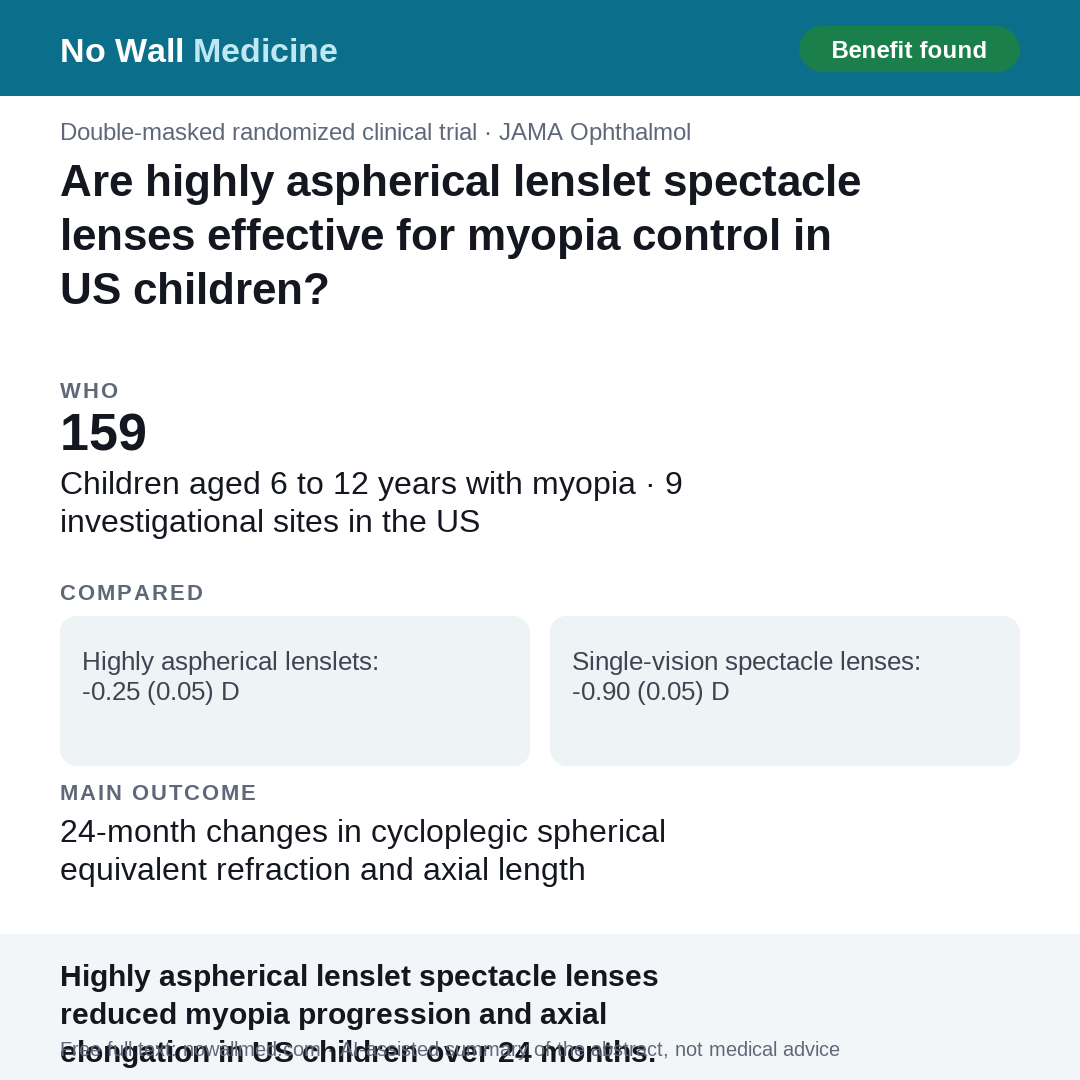
Spectacle Lenses With Highly Aspherical Lenslets for Myopia Control: A Randomized Clinical Trial
Double-masked randomized clinical trialBenefit found
Are highly aspherical lenslet spectacle lenses effective for myopia control in US children?
Who
159
Children aged 6 to 12 years with myopia · 9 investigational sites in the US
Compared
Highly aspherical lenslets: -0.25 (0.05) D
Single-vision spectacle lenses: -0.90 (0.05) D
Main outcome
24-month changes in cycloplegic spherical equivalent refraction and axial length
Result: difference, 0.64 D; 95% CI, 0.50 to 0.79
Bottom line: Highly aspherical lenslet spectacle lenses significantly reduced myopia progression and axial elongation in US children over 24 months.
JAMA Ophthalmol · 2026-08-20Download image
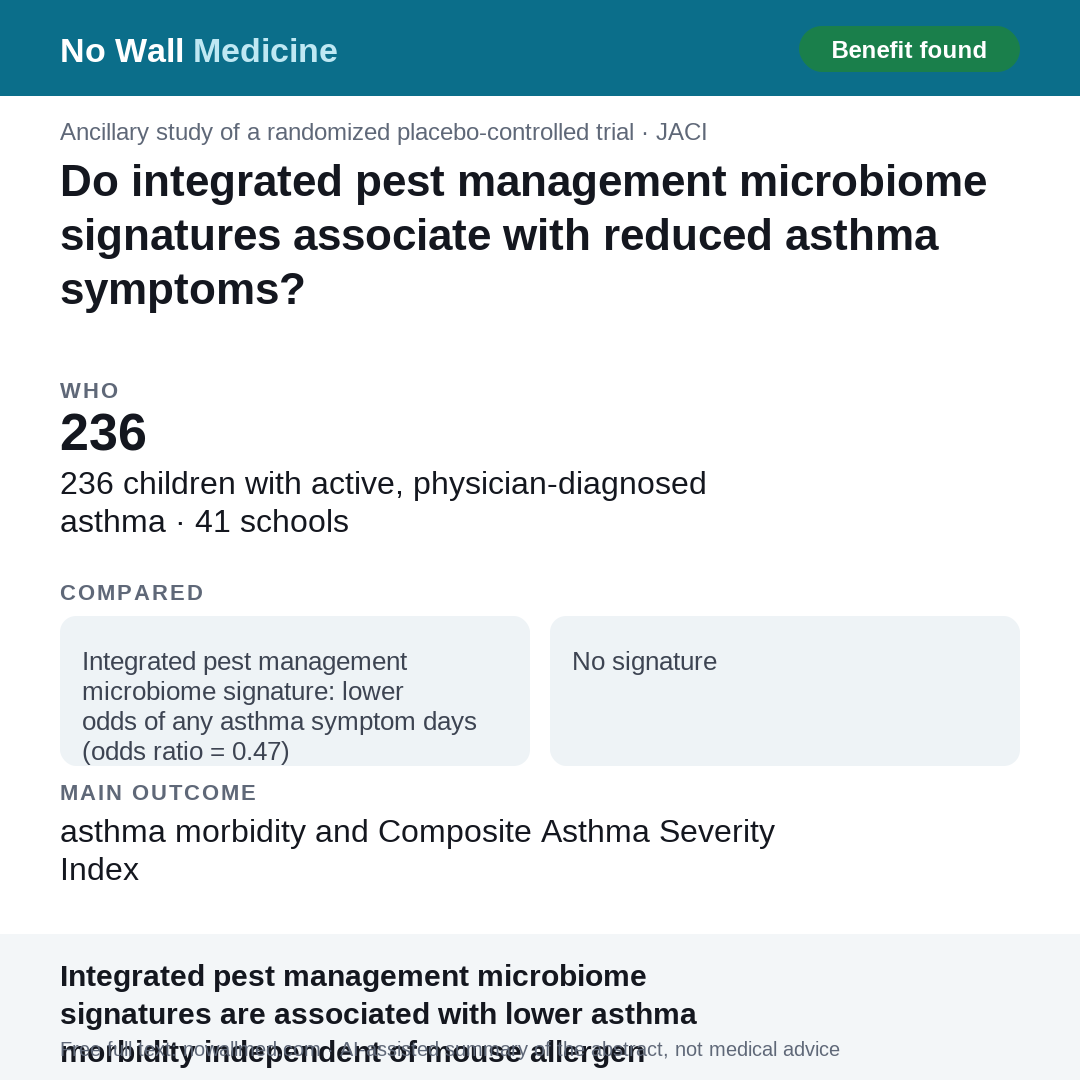
Classroom microbiome signatures of pest management associate with reduced asthma symptoms
Ancillary study of a randomized placebo-controlled trialBenefit found
Do integrated pest management microbiome signatures associate with reduced asthma symptoms?
Who
236
236 children with active, physician-diagnosed asthma · 41 schools
Compared
Integrated pest management microbiome signature: lower odds of any asthma symptom days (odds ratio = 0.47)
No signature
Main outcome
asthma morbidity and Composite Asthma Severity Index
Result: odds ratio = 0.47 (95% confidence interval, 0.22, 0.97)
Bottom line: Integrated pest management microbiome signatures are associated with lower asthma morbidity independent of mouse allergen exposure.
JACI · 2026-08-19Download image
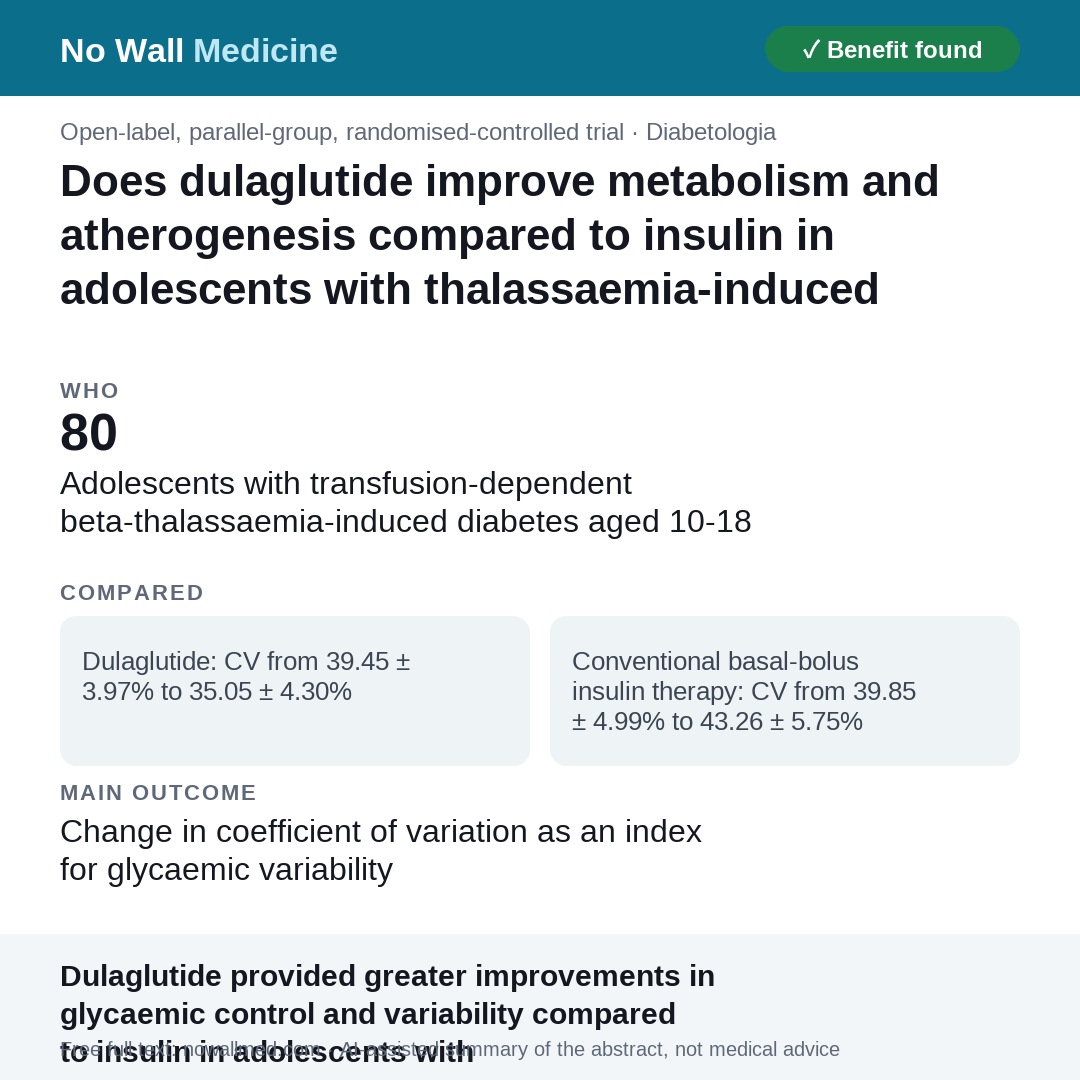
Dulaglutide vs insulin in adolescents with thalassaemia-induced diabetes: effect on metabolism and atherogenesis (DIADEMA)
Open-label, parallel-group, randomised-controlled trialBenefit found
Does dulaglutide improve metabolism and atherogenesis compared to insulin in adolescents with thalassaemia-induced diabetes?
Who
80
Adolescents with transfusion-dependent beta-thalassaemia-induced diabetes aged 10-18 years · Cairo, Egypt
Compared
Dulaglutide: CV from 39.45 ± 3.97% to 35.05 ± 4.30%
Conventional basal-bolus insulin therapy: CV from 39.85 ± 4.99% to 43.26 ± 5.75%
Main outcome
Change in coefficient of variation as an index for glycaemic variability
Result: standardised effect size 1.69 (95% CI 1.16, 2.22)
Bottom line: Dulaglutide provided greater improvements in glycaemic control and variability compared to insulin in adolescents with thalassaemia-induced diabetes.
Diabetologia · 2026-08-19Download image
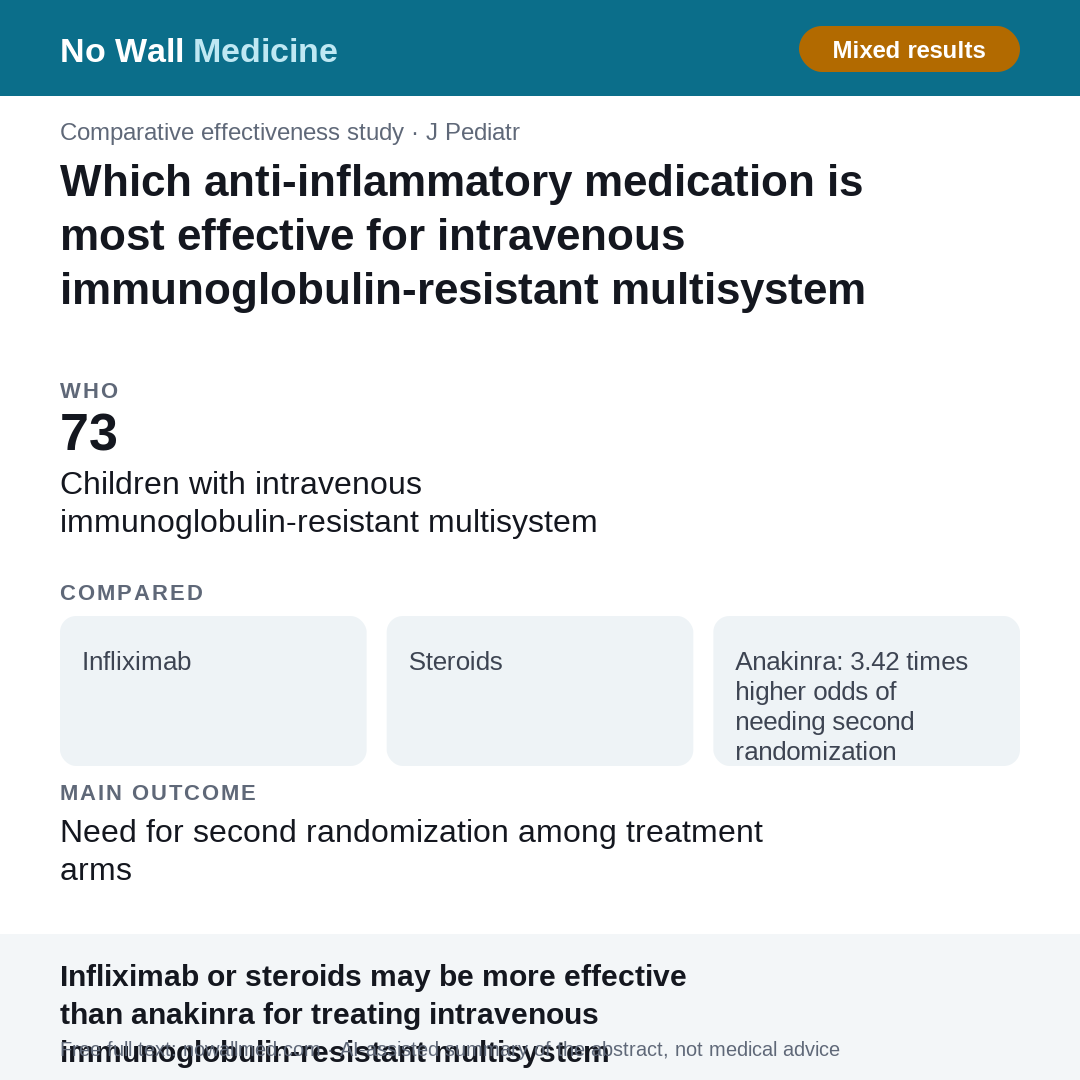
Multisystem Inflammatory Syndrome Therapies in Children: A Comparative Effectiveness Trial
Comparative effectiveness studyMixed results
Which anti-inflammatory medication is most effective for intravenous immunoglobulin-resistant multisystem inflammatory syndrome in children?
Who
73
Children with intravenous immunoglobulin-resistant multisystem inflammatory syndrome · Two hospitals
Compared
Infliximab
Steroids
Anakinra: 3.42 times higher odds of needing second randomization
Main outcome
Need for second randomization among treatment arms
Result: odds ratio 3.42 (95% CI 1.03 to 12.29)
Bottom line: Infliximab or steroids may be more effective than anakinra for treating intravenous immunoglobulin-resistant multisystem inflammatory syndrome in children.
J Pediatr · 2026-08-19Download image
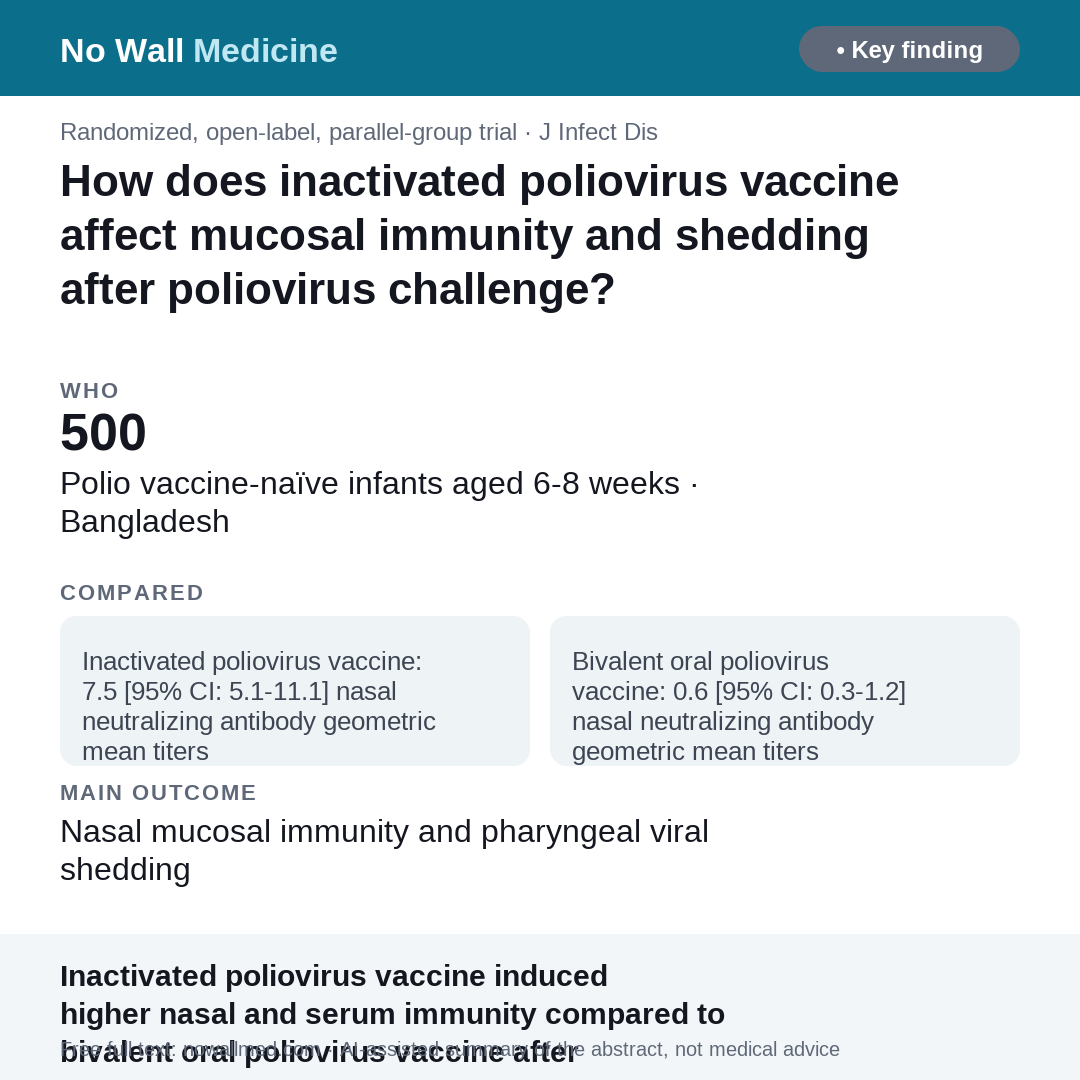
Effect of inactivated poliovirus vaccine on nasal mucosal immunity and pharyngeal shedding following novel oral poliovirus vaccine type 2 challenge: A randomized, open-label trial
Randomized, open-label, parallel-group trialBenefit found
How does inactivated poliovirus vaccine affect mucosal immunity and shedding after poliovirus challenge?
Who
500
Polio vaccine-naïve infants aged 6-8 weeks · Bangladesh
Compared
Inactivated poliovirus vaccine: 7.5 [95% CI: 5.1-11.1] nasal neutralizing antibody geometric mean titers
Bivalent oral poliovirus vaccine: 0.6 [95% CI: 0.3-1.2] nasal neutralizing antibody geometric mean titers
Main outcome
Nasal mucosal immunity and pharyngeal viral shedding
Bottom line: Inactivated poliovirus vaccine induced higher nasal and serum immunity compared to bivalent oral poliovirus vaccine after challenge.
J Infect Dis · 2026-08-18Download image