Visual abstracts
New randomized trials and meta-analyses from leading journals at a glance: who was studied, what was compared, and what was found. Every paper is free to read in full.
All specialtiesCardiology 4832Oncology 4114Gastroenterology & Hepatology 1934Infectious Disease 3824Neurology 1899Psychiatry & Mental Health 2256Pulmonology 2082Critical Care 1345Endocrinology & Diabetes 2572Pediatrics 2940Surgery 2525Orthopedics & Sports Medicine 926Neurosurgery 534Cardiothoracic & Vascular Surgery 671Plastic & Reconstructive Surgery 591Nephrology 1124Rheumatology 823Hematology 1104Dermatology 620Ophthalmology 543Obstetrics & Gynecology 1684Public & Global Health 1056Radiology & Imaging 641Anesthesiology 962Urology 754ENT (Otolaryngology) 503Emergency Medicine 489Allergy & Immunology 313Geriatrics 981Family Medicine & Primary Care 541Medical Genetics & Genomics 675Pathology & Laboratory Medicine 157Physical Medicine & Rehabilitation 751Palliative Care 424Nutrition 1580Digital Health & AI 2195General Medicine 321
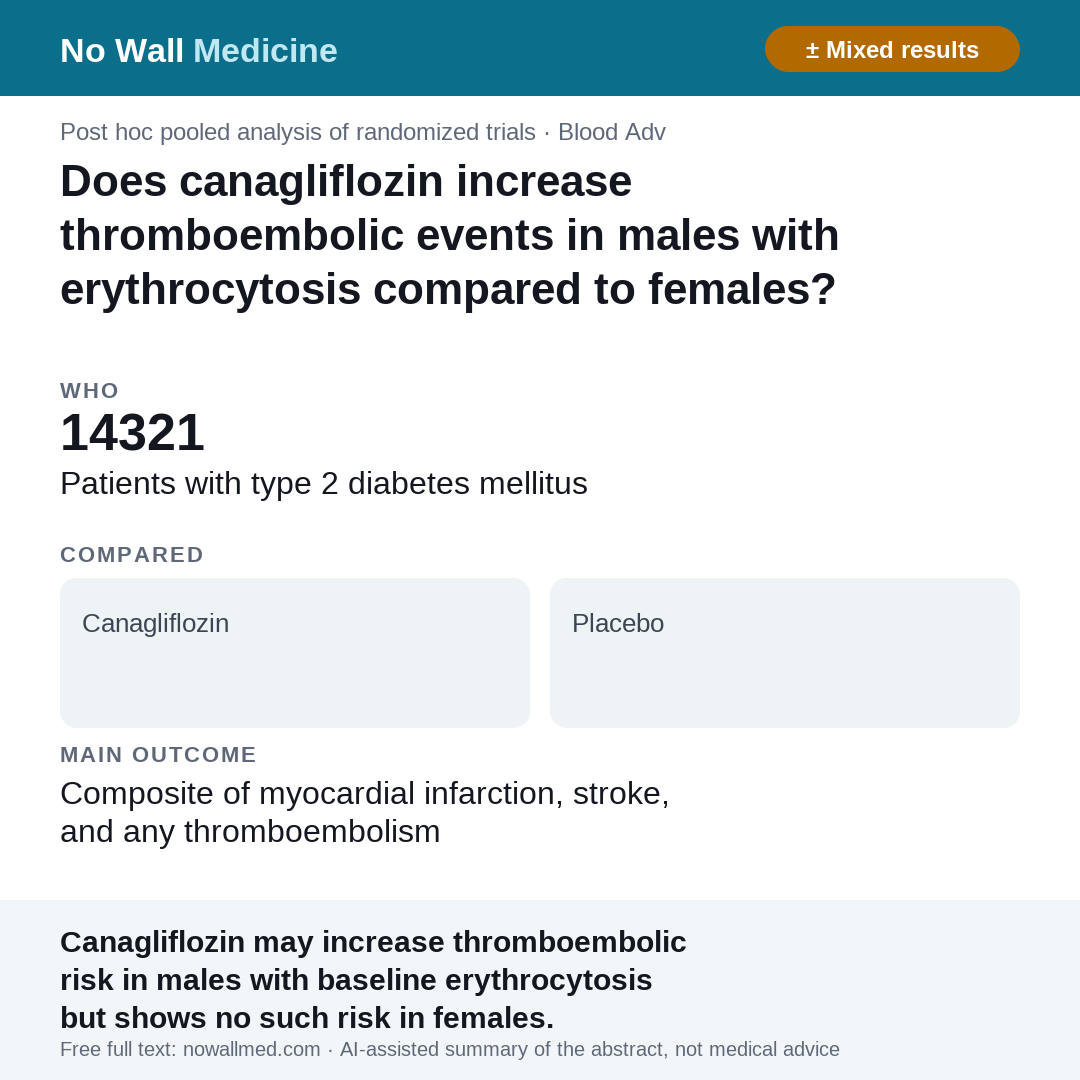
Canagliflozin may increase thromboembolic events in males with erythrocytosis but not in females
Post hoc pooled analysis of randomized trialsMixed results
Does canagliflozin increase thromboembolic events in males with erythrocytosis compared to females?
Who
14321
Patients with type 2 diabetes mellitus
Compared
Canagliflozin
Placebo
Main outcome
Composite of myocardial infarction, stroke, and any thromboembolism
Bottom line: Canagliflozin may increase thromboembolic risk in males with baseline erythrocytosis but shows no such risk in females.
Limitation: Post hoc pooled analysis of patient-level data
Blood Adv · 2025-04-16Download image
Unveiling the Potential of Large Language Models in Transforming Chronic Disease Management: Mixed Methods Systematic Review
Mixed methods systematic review and meta-analysisBenefit found
What is the feasibility of large language models in chronic disease management?
Who
20
Studies examining large language models in chronic disease management
Compared
General-purpose large language models
Retrieval-augmented generation-enhanced large language models
Main outcome
Feasibility of large language models in chronic disease management
Result: odds ratio 2.89 (95% CI 1.83-4.58)
Bottom line: Large language models show feasibility in chronic disease management, with retrieval-augmented generation-enhanced models demonstrating higher accuracy rates.
Limitation: Direct application in clinical settings is still in its infancy.
J Med Internet Res · 2025-04-16Download image

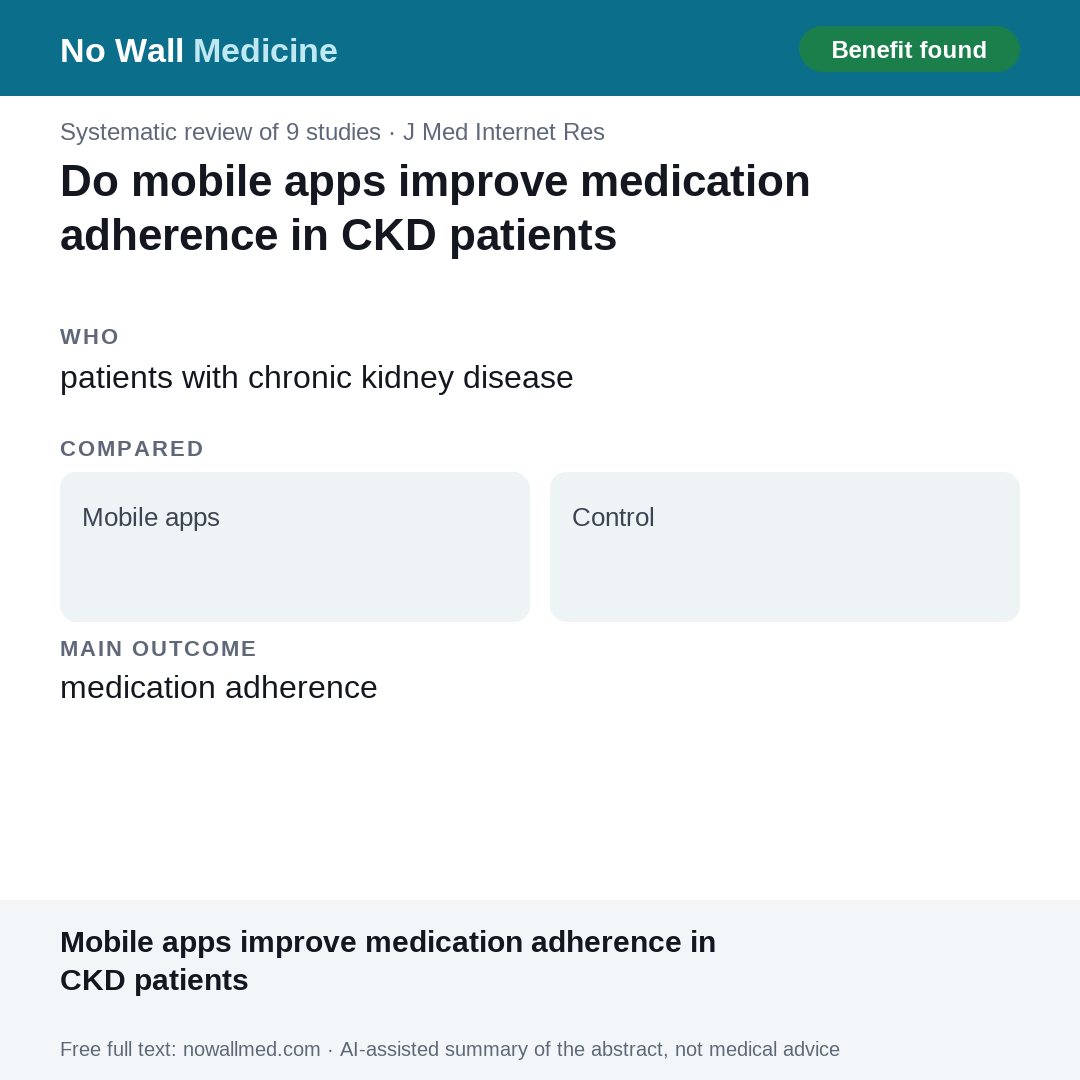
Effectiveness of Mobile Apps in Improving Medication Adherence Among Chronic Kidney Disease Patients: Systematic Review
Systematic review of 9 studiesBenefit found
Do mobile apps improve medication adherence in CKD patients
Who
patients with chronic kidney disease
Compared
Mobile apps
Control
Main outcome
medication adherence
Bottom line: Mobile apps improve medication adherence in CKD patients
Limitation: low evidence and short intervention duration
J Med Internet Res · 2025-04-16Download image
Resting-state hemodynamic changes and effects on upper limb function after multi-channel transcranial direct current stimulation to the ipsilesional primary motor cortex and anterior intraparietal sulcus in stroke patients: an fNIRS pilot study
Double-blind, randomized, sham-controlled trialBenefit found
Does multi-channel transcranial direct current stimulation affect hemodynamics and upper limb function in stroke?
Who
24
Stroke patients
Compared
Real multi-channel transcranial direct current stimulation: greater improvements in gross manual dexterity
Sham multi-channel transcranial direct current stimulation
Main outcome
Hemodynamic responses and upper limb motor function
Bottom line: Multi-channel transcranial direct current stimulation combined with exercises may improve cerebral hemodynamics and gross manual dexterity in stroke patients.
J Neuroeng Rehabil · 2025-04-16Download image

Duration of symptoms before diagnosis in degenerative cervical myelopathy: A systematic review and meta-analysis
Systematic review and meta-analysisHarm found
What is the typical duration of symptoms of degenerative cervical myelopathy before diagnosis?
Who
12,450
People with confirmed diagnosis of degenerative cervical myelopathy · 18 countries
Compared
Symptom onset to first clinical presentation: 3.3 (95 % confidence interval, -0.3-6.8) months
Symptom onset to diagnosis: 15.0 (5.0-25.0) months
Symptom onset to surgery or pre-operative assessment: 14.5 (12.1-17.0) months
Symptom onset to surgery (myelopathic symptoms defined): 10.7 (2.3-18.5) months
Main outcome
Duration of symptoms before presentation, diagnosis, or intervention
Bottom line: Most people with degenerative cervical myelopathy experience symptoms for more than one year before diagnosis.
Limitation: Most studies did not define the symptoms at onset.
Brain Spine · 2025-04-16Download image

Co-producing a randomized controlled trial on the frequency of bathing in eczema: description of a citizen science approach
Methodological description of a co-production processUnclear result
How can a citizen science approach be used to co-produce a randomized controlled trial?
Who
Members of the public and patients living with eczema · Online meetings and surveys
Compared
Co-production group: 13 online meetings and 39 h of time commitment
Prioritization survey: 49% of votes for bathing frequency
Main outcome
Methodology for co-producing a randomized controlled trial
Bottom line: A citizen science approach can be used to prioritize research and design trials through public engagement.
Skin Health Dis · 2025-04-16Download image

Negative pressure wound therapy versus usual care in patients with surgical wound healing by secondary intention in the UK (SWHSI-2): an open-label, multicentre, parallel-group, randomised controlled trial
Open-label, multicentre, parallel-group, randomised controlled trialNo clear difference
Does negative pressure wound therapy improve time to wound healing compared with usual care?
Who
686
Participants aged 16 years or older with surgical wound healing by secondary intention · 29 United Kingdom National Health Service Trusts
Compared
Negative pressure wound therapy
Usual care
Main outcome
Time to wound healing (days to complete epithelial cover)
Result: hazard ratio 1·08 (95% CI 0·88-1·32)
Bottom line: Negative pressure wound therapy did not reduce time to wound healing compared with usual care in these patients.
Funded by: National Institute for Health Research Health Technology Assessment Programme
Lancet · 2025-04-15Download image

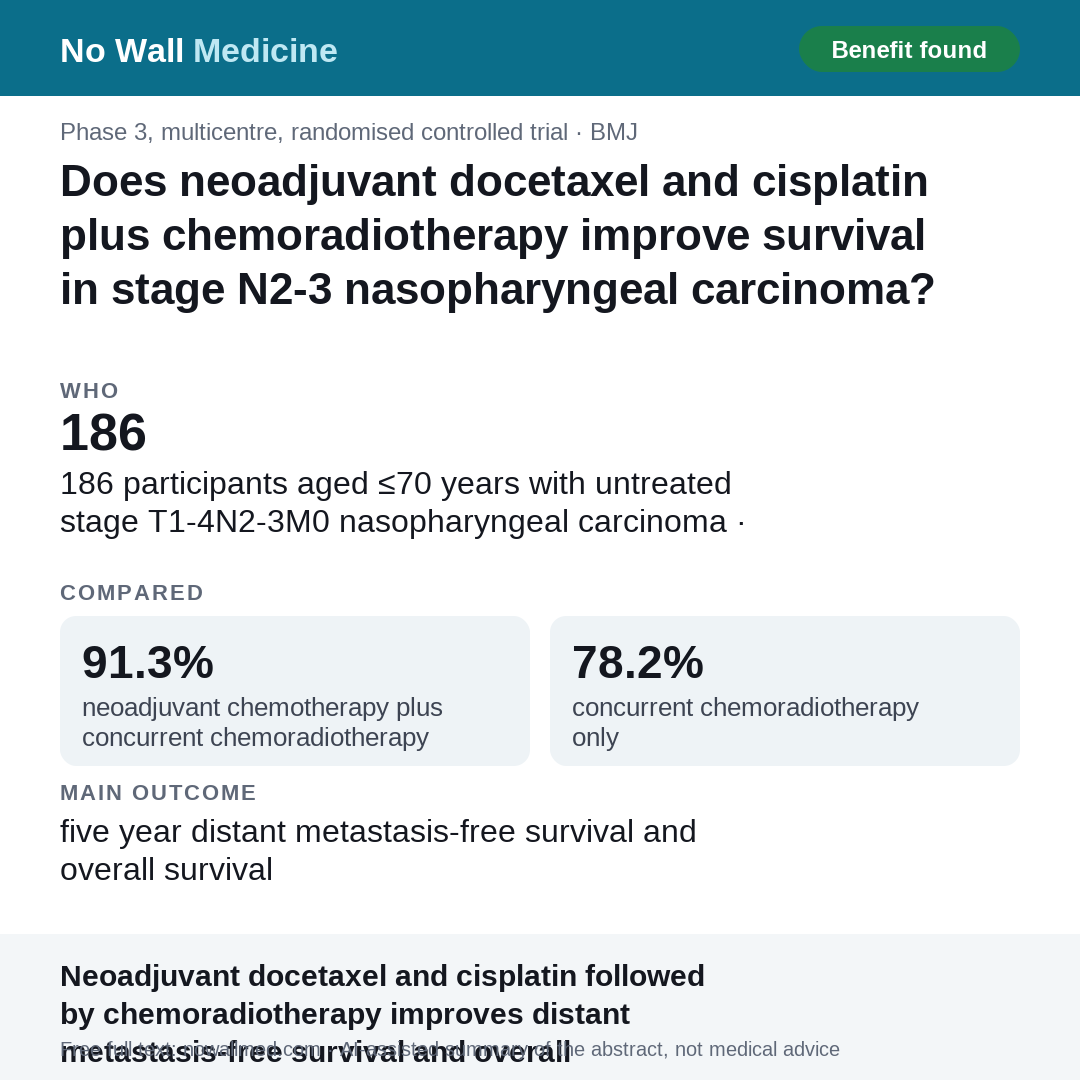
Four cycles of docetaxel plus cisplatin as neoadjuvant chemotherapy followed by concurrent chemoradiotherapy in stage N2-3 nasopharyngeal carcinoma: phase 3 multicentre randomised controlled trial
Phase 3, multicentre, randomised controlled trialBenefit found
Does neoadjuvant docetaxel and cisplatin plus chemoradiotherapy improve survival in stage N2-3 nasopharyngeal carcinoma?
Who
186
186 participants aged ≤70 years with untreated stage T1-4N2-3M0 nasopharyngeal carcinoma · Six sites in China
Compared
91.3%neoadjuvant chemotherapy plus concurrent chemoradiotherapy (95% CI 85.4% to 97.2%)
78.2%concurrent chemoradiotherapy only (69.8% to 86.6%)
Main outcome
five year distant metastasis-free survival and overall survival
Result: hazard ratio 0.41 (95% CI 0.19 to 0.87)
Bottom line: Neoadjuvant docetaxel and cisplatin followed by chemoradiotherapy improves distant metastasis-free survival and overall survival in N2-3 nasopharyngeal carcinoma.
BMJ · 2025-04-15Download image
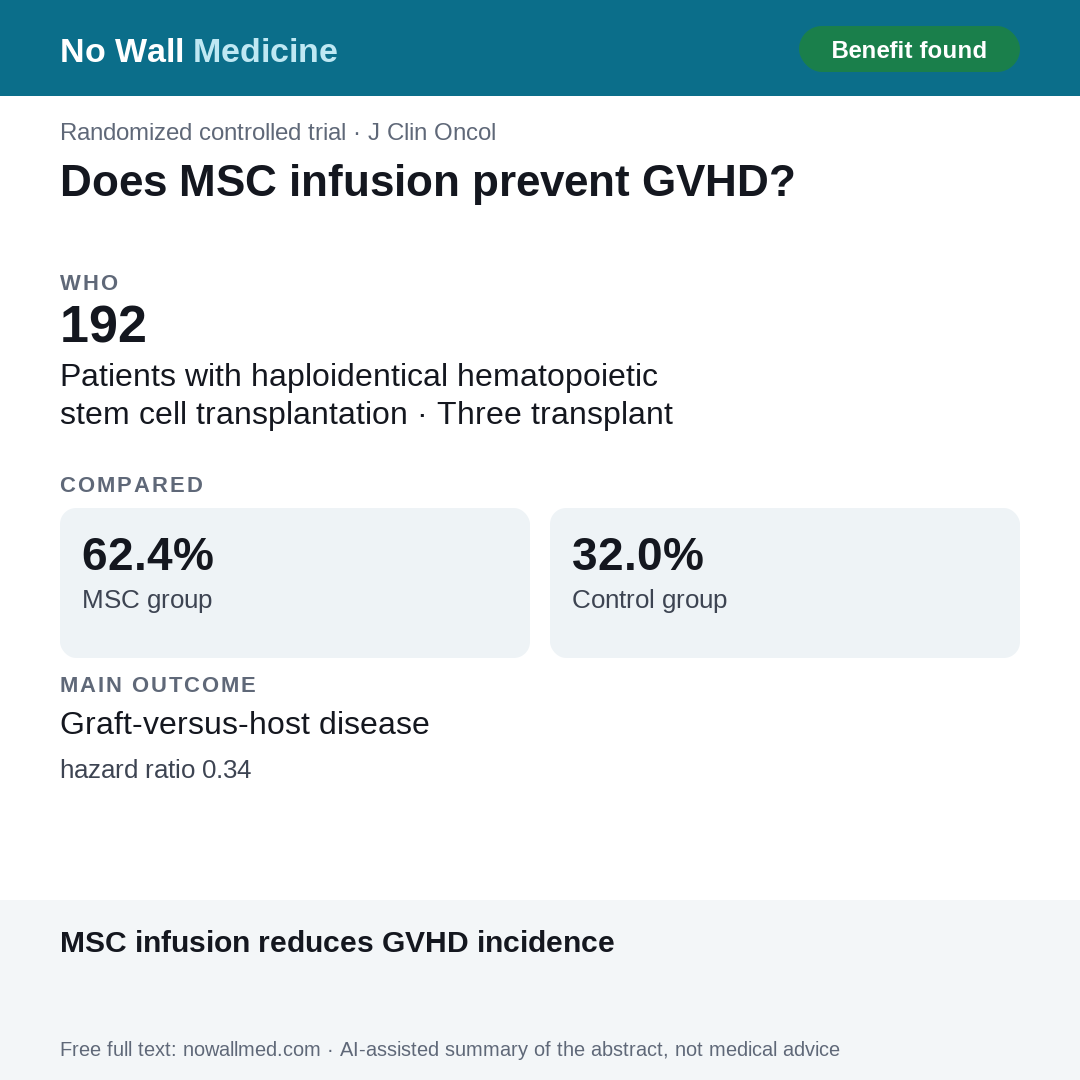
Sequential Infusion of Mesenchymal Stem Cell for Graft-Versus-Host Disease Prevention in Haploidentical Hematopoietic Stem Cell Transplantation: An Open-Label, Multicenter, Randomized Controlled Clinical Trial
Randomized controlled trialBenefit found
Does MSC infusion prevent GVHD?
Who
192
Patients with haploidentical hematopoietic stem cell transplantation · Three transplant centers in China
Compared
62.4%MSC group
32.0%Control group
Main outcome
Graft-versus-host disease
Result: hazard ratio 0.34
Bottom line: MSC infusion reduces GVHD incidence
J Clin Oncol · 2025-04-15Download image
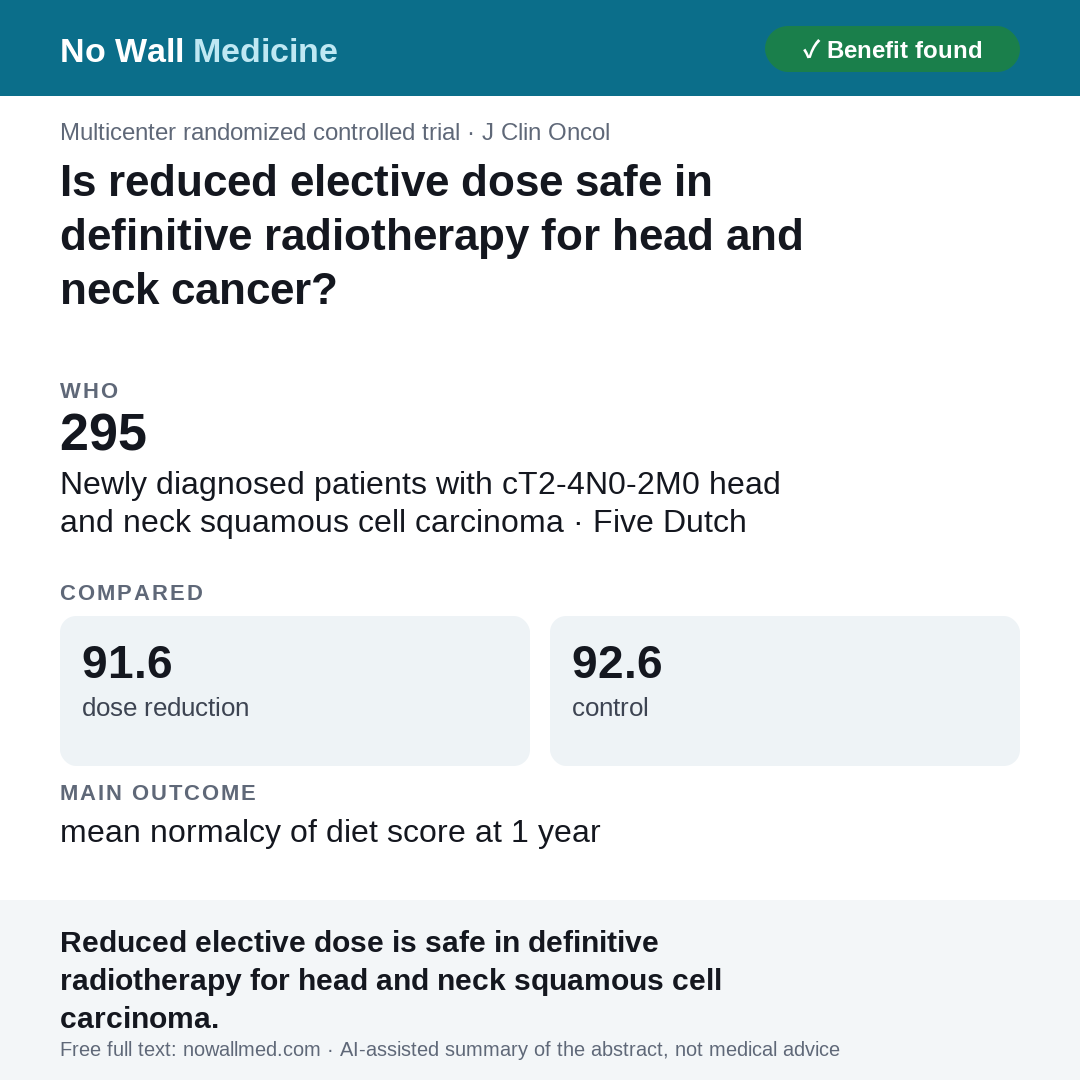
Clinical Benefit and Safety of Reduced Elective Dose in Definitive Radiotherapy for Head and Neck Squamous Cell Carcinoma: The UPGRADE-RT Multicenter Randomized Controlled Trial
Multicenter randomized controlled trialBenefit found
Is reduced elective dose safe in definitive radiotherapy for head and neck cancer?
Who
295
Newly diagnosed patients with cT2-4N0-2M0 head and neck squamous cell carcinoma · Five Dutch centers
Compared
91.6dose reduction (95% CI, 88.5 to 94.7)
92.6control (95% CI, 88.2 to 97.1)
Main outcome
mean normalcy of diet score at 1 year
Result: mean difference, -1.1 (95% CI, -6.5 to 4.4)
Bottom line: Reduced elective dose is safe in definitive radiotherapy for head and neck squamous cell carcinoma.
J Clin Oncol · 2025-04-15Download image
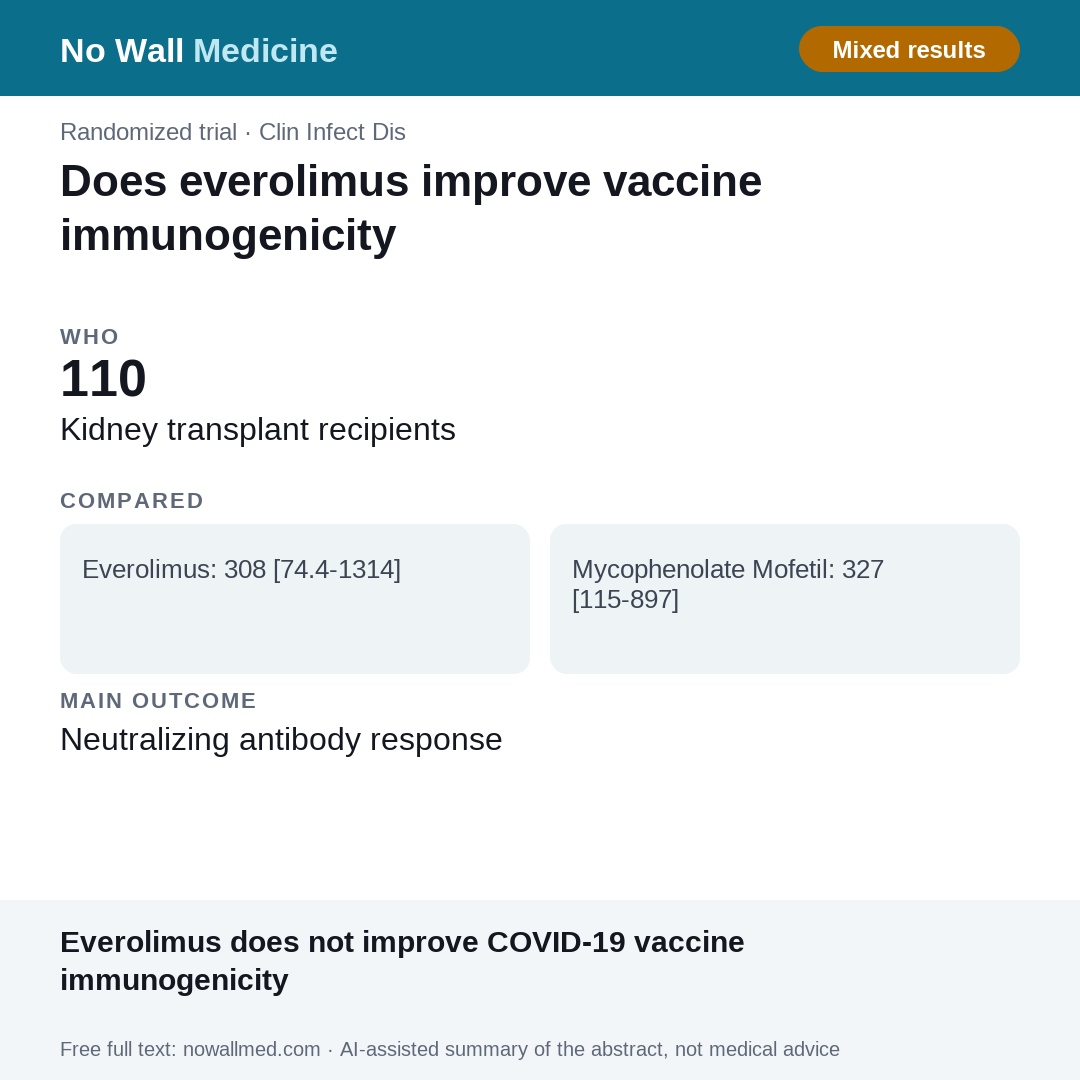
Replacing Mycophenolate Mofetil by Everolimus in Kidney Transplant Recipients to Increase Vaccine Immunogenicity: Results of a Randomized Controlled Trial
Randomized trialMixed results
Does everolimus improve vaccine immunogenicity
Who
110
Kidney transplant recipients
Compared
Everolimus: 308 [74.4-1314]
Mycophenolate Mofetil: 327 [115-897]
Main outcome
Neutralizing antibody response
Bottom line: Everolimus does not improve COVID-19 vaccine immunogenicity
Clin Infect Dis · 2025-04-15Download image
The ENHANCE-3 study: venetoclax and azacitidine plus magrolimab or placebo for untreated AML unfit for intensive therapy
Phase 3 randomized trialNo clear difference
Does adding magrolimab to venetoclax and azacitidine improve overall survival in untreated AML?
Who
378
Adults with previously untreated acute myeloid leukemia ineligible for intensive chemotherapy
Compared
magrolimab plus venetoclax and azacitidine: median overall survival 10.7 months
placebo plus venetoclax and azacitidine: median overall survival 14.1 months
Main outcome
overall survival
Result: hazard ratio 1.178 (95% confidence interval 0.848-1.637)
Bottom line: Adding magrolimab to venetoclax and azacitidine did not improve overall survival and resulted in more fatal adverse events.
Limitation: The trial was stopped at a prespecified interim analysis owing to futility.
Blood · 2025-04-15Download image

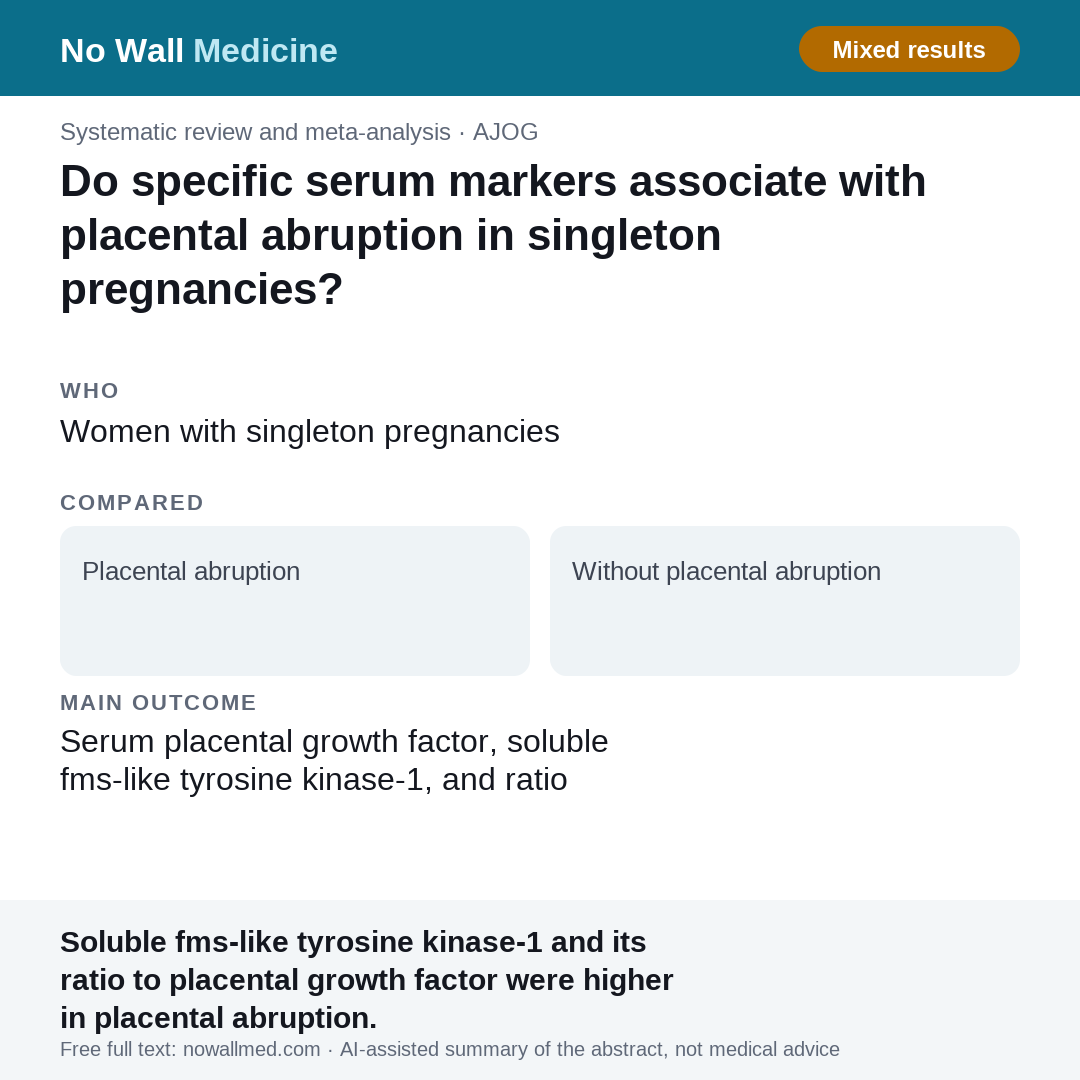
The association between serum soluble fms-like tyrosine kinase-1, placental growth factor, and soluble fms-like tyrosine kinase-1/placental growth factor ratio in singleton pregnancy and placental abruption: a systematic review and meta-analysis
Systematic review and meta-analysisMixed results
Do specific serum markers associate with placental abruption in singleton pregnancies?
Who
Women with singleton pregnancies
Compared
Placental abruption
Without placental abruption
Main outcome
Serum placental growth factor, soluble fms-like tyrosine kinase-1, and ratio
Bottom line: Soluble fms-like tyrosine kinase-1 and its ratio to placental growth factor were higher in placental abruption.
AJOG · 2025-04-15Download image
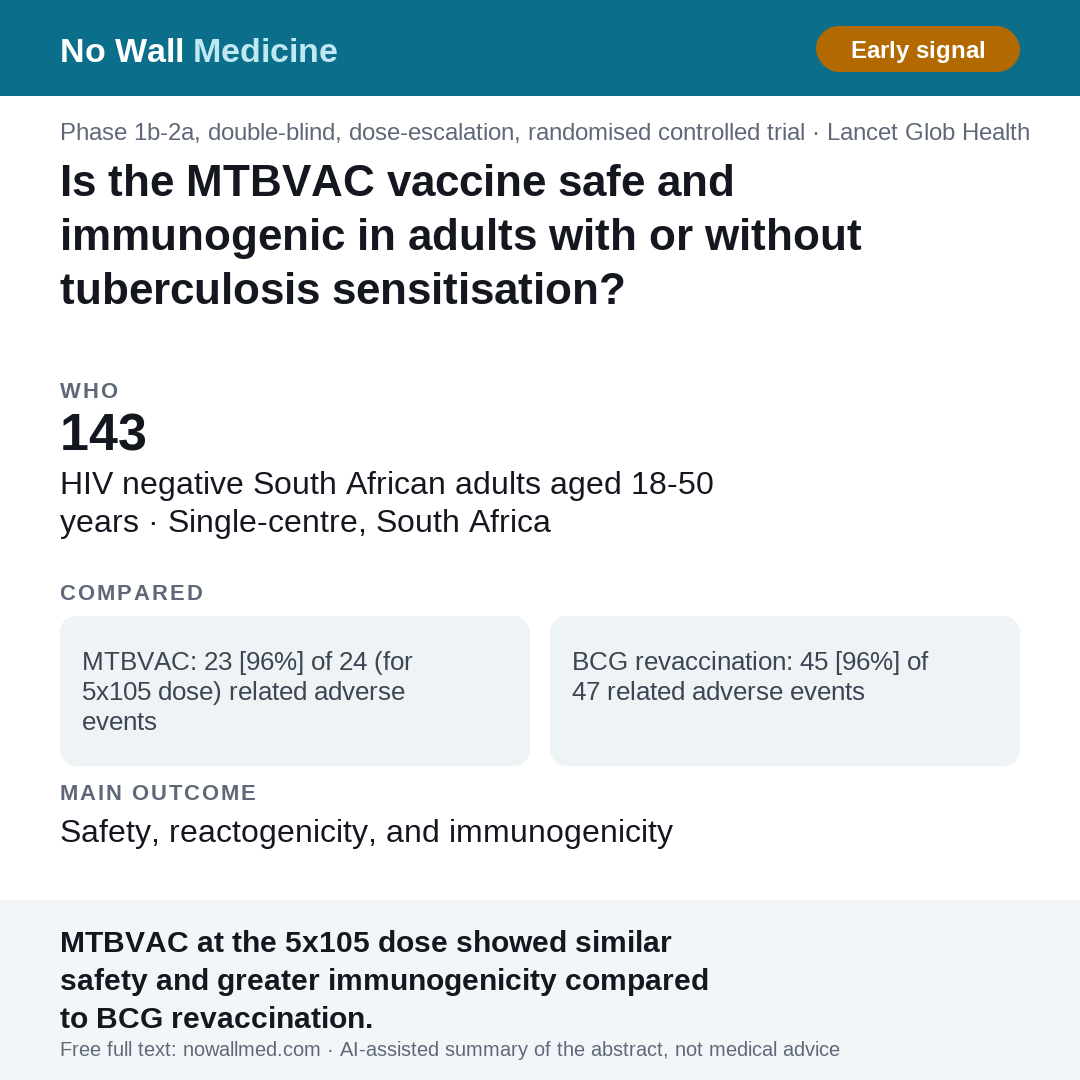
Live-attenuated Mycobacterium tuberculosis vaccine, MTBVAC, in adults with or without M tuberculosis sensitisation: a single-centre, phase 1b-2a, double-blind, dose-escalation, randomised controlled trial
Phase 1b-2a, double-blind, dose-escalation, randomised controlled trialEarly signal
Is the MTBVAC vaccine safe and immunogenic in adults with or without tuberculosis sensitisation?
Who
143
HIV negative South African adults aged 18-50 years · Single-centre, South Africa
Compared
MTBVAC: 23 [96%] of 24 (for 5x10⁵ dose) related adverse events
BCG revaccination: 45 [96%] of 47 related adverse events
Main outcome
Safety, reactogenicity, and immunogenicity
Bottom line: MTBVAC at the 5x10⁵ dose showed similar safety and greater immunogenicity compared to BCG revaccination.
Funded by: Congressionally Directed Medical Research Programmes and US National Institutes of Health
Lancet Glob Health · 2025-04-15Download image
Baseline basophil activation and early suppression is associated with clinical outcome after peanut sublingual immunotherapy
Randomized trialBenefit found
Does timing of basophil suppression during peanut sublingual immunotherapy impact clinical outcomes?
Who
50
Children with peanut allergy
Compared
Active peanut sublingual immunotherapy: CD63 expression significantly reduced by 12 months
Placebo sublingual immunotherapy: CD63 activation remained unchanged from 0 to 36 months
Main outcome
Clinical remission and basophil activation levels
Bottom line: Early suppression of basophil activation by 12 months indicates successful peanut sublingual immunotherapy remission.
JACI · 2025-04-15Download image

Asthma treatment response modified by fine particulate matter, nitrogen dioxide, and ozone among Black children: A reanalysis of the AsthmaNet Best African American Response to Asthma Drugs trial
Reanalysis of a randomized crossover trialMixed results
How does air pollution exposure influence asthma treatment efficacy in Black children?
Who
224
Black children with asthma · National Institutes of Health AsthmaNet trial sites
Compared
High nitrogen dioxide exposure
Below median nitrogen dioxide exposure: reduction of 5.86 (95% CI 1.16, 10.56) in percent predicted FEV1
Main outcome
asthma exacerbations, percent predicted FEV1, and annualized asthma control days
Result: reduction of 5.86 (95% CI 1.16, 10.56) in percent predicted FEV1
Bottom line: High nitrogen dioxide exposure may attenuate the efficacy of inhaled corticosteroid and long-acting beta agonist therapy on lung function.
JACI · 2025-04-15Download image

Association between glucagon-like peptide-1 receptor agonist use and peri-operative pulmonary aspiration: a systematic review and meta-analysis
Systematic review and meta-analysisMixed results
Is glucagon-like peptide-1 receptor agonist use associated with pulmonary aspiration or residual gastric contents?
Who
185414
Fasted patients or volunteers using glucagon-like peptide-1 receptor agonists
Compared
Glucagon-like peptide-1 receptor agonist exposure: 471 cases of pulmonary aspiration
No exposure
Main outcome
Pulmonary aspiration and residual gastric contents
Result: odds ratio 1.04 (95%CI 0.87-1.25)
Bottom line: Glucagon-like peptide-1 receptor agonists increase residual gastric contents risk but not pulmonary aspiration risk.
Limitation: Low certainty of evidence for both pulmonary aspiration and residual gastric contents outcomes.
Anaesthesia · 2025-04-15Download image

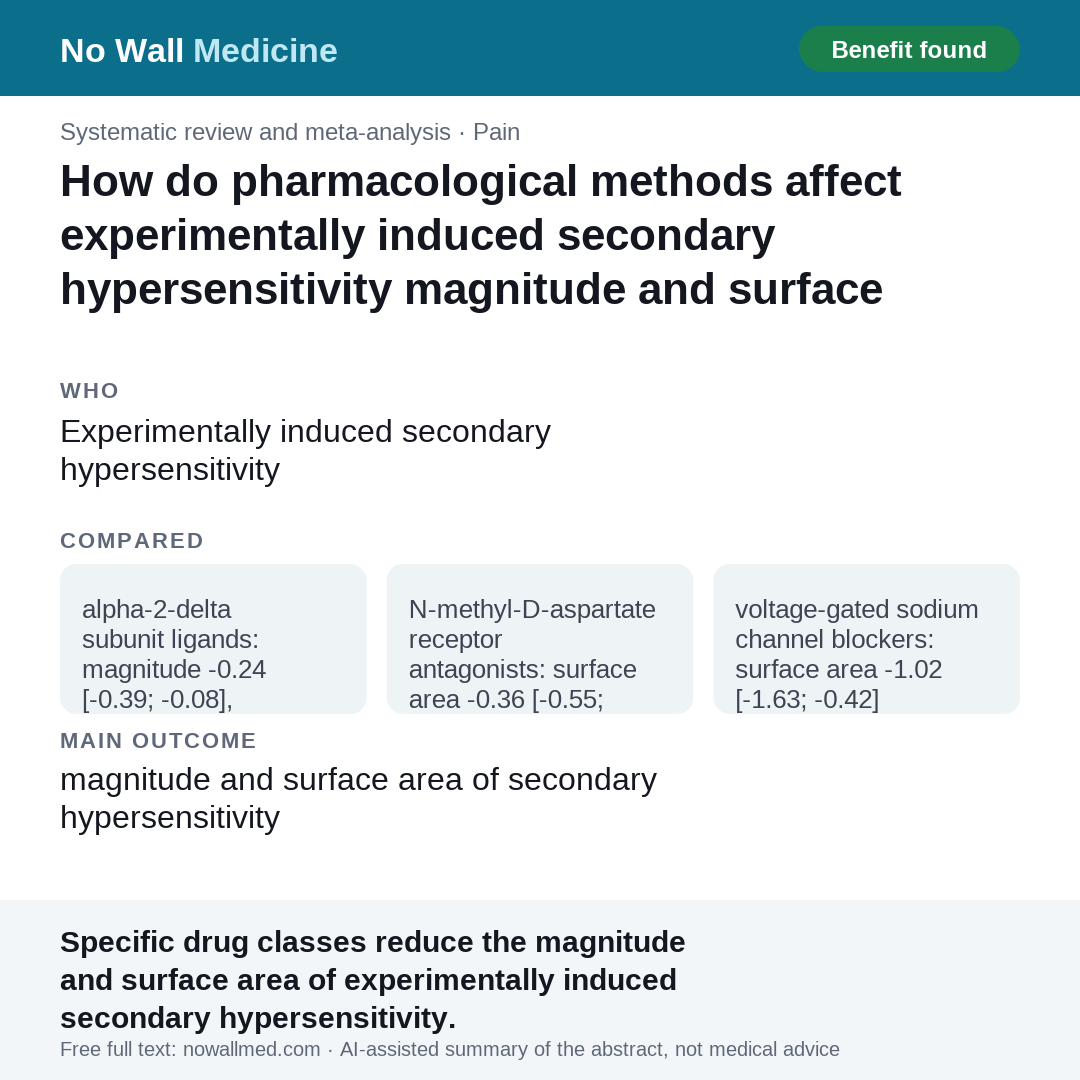
A systematic review and meta-analysis of pharmacological methods to manipulate experimentally induced secondary hypersensitivity
Systematic review and meta-analysisBenefit found
How do pharmacological methods affect experimentally induced secondary hypersensitivity magnitude and surface area?
Who
Experimentally induced secondary hypersensitivity
Compared
alpha-2-delta subunit ligands: magnitude -0.24 [-0.39; -0.08], surface area -0.38 [-0.59; -0.18]
N-methyl-D-aspartate receptor antagonists: surface area -0.36 [-0.55; -0.17]
voltage-gated sodium channel blockers: surface area -1.02 [-1.63; -0.42]
Main outcome
magnitude and surface area of secondary hypersensitivity
Bottom line: Specific drug classes reduce the magnitude and surface area of experimentally induced secondary hypersensitivity.
Limitation: Most datasets had unclear risk of performance and detection bias due to inadequate blinding reporting.
Pain · 2025-04-15Download image
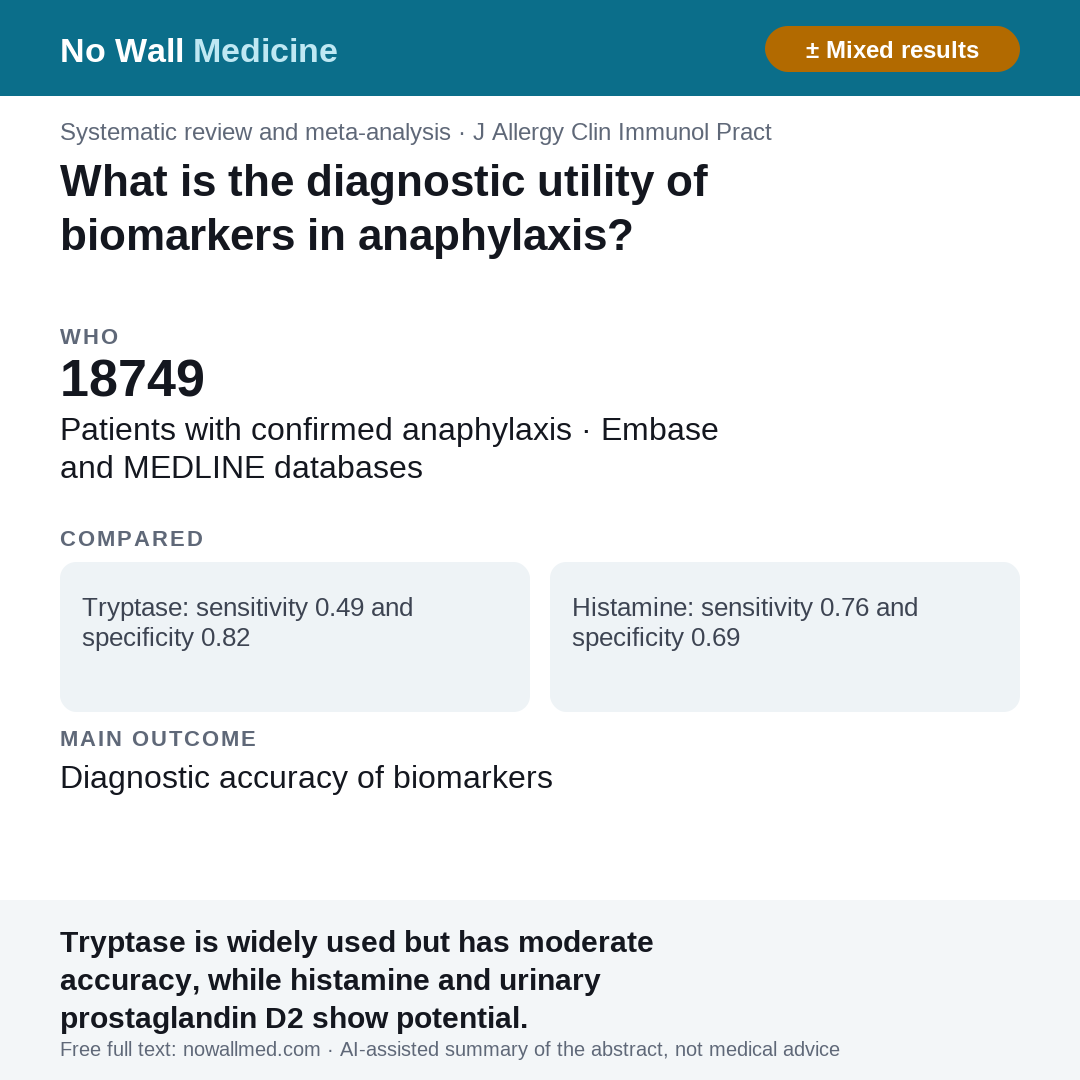
Diagnostic Utility of Biomarkers in Anaphylaxis: A Systematic Review and Meta-Analysis
Systematic review and meta-analysisMixed results
What is the diagnostic utility of biomarkers in anaphylaxis?
Who
18749
Patients with confirmed anaphylaxis · Embase and MEDLINE databases
Compared
Tryptase: sensitivity 0.49 and specificity 0.82
Histamine: sensitivity 0.76 and specificity 0.69
Main outcome
Diagnostic accuracy of biomarkers
Bottom line: Tryptase is widely used but has moderate accuracy, while histamine and urinary prostaglandin D2 show potential.
Limitation: Limited data were available for platelet-activating factor, platelet-activating factor-acetylhydrolase, and urinary prostaglandin D2.
J Allergy Clin Immunol Pract · 2025-04-15Download image
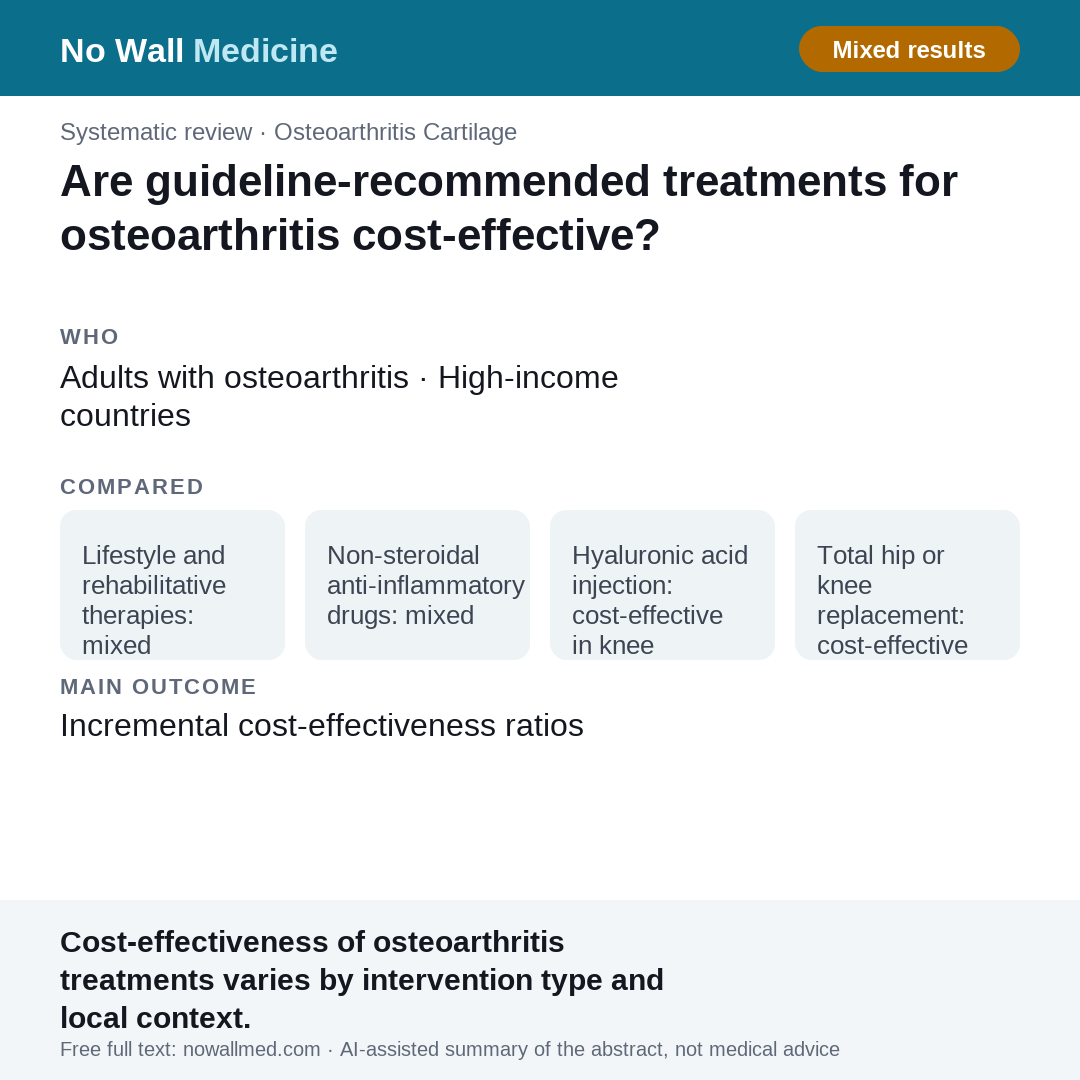
The cost-effectiveness of guideline-recommended treatments for osteoarthritis: A systematic review
Systematic reviewMixed results
Are guideline-recommended treatments for osteoarthritis cost-effective?
Who
Adults with osteoarthritis · High-income countries
Compared
Lifestyle and rehabilitative therapies: mixed
Non-steroidal anti-inflammatory drugs: mixed
Hyaluronic acid injection: cost-effective in knee osteoarthritis compared to placebo, usual care and paracetamol
Total hip or knee replacement: cost-effective compared to usual care or no surgery
Main outcome
Incremental cost-effectiveness ratios
Bottom line: Cost-effectiveness of osteoarthritis treatments varies by intervention type and local context.
Limitation: Risk of bias domains were frequently scored poorly related to cost methods.
Osteoarthritis Cartilage · 2025-04-15Download image