Visual abstracts
New randomized trials and meta-analyses from leading journals at a glance: who was studied, what was compared, and what was found. Every paper is free to read in full.
All specialtiesCardiology 129Oncology 95Gastroenterology & Hepatology 53Infectious Disease 100Neurology 49Psychiatry & Mental Health 63Pulmonology 49Critical Care 31Endocrinology & Diabetes 59Pediatrics 54Surgery 36Orthopedics & Sports Medicine 20Neurosurgery 5Cardiothoracic & Vascular Surgery 8Plastic & Reconstructive Surgery 24Nephrology 20Rheumatology 22Hematology 31Dermatology 12Ophthalmology 20Obstetrics & Gynecology 36Public & Global Health 37Radiology & Imaging 10Anesthesiology 18Urology 25ENT (Otolaryngology) 9Emergency Medicine 14Allergy & Immunology 9Geriatrics 33Family Medicine & Primary Care 13Medical Genetics & Genomics 12Pathology & Laboratory Medicine 1Physical Medicine & Rehabilitation 27Palliative Care 14Nutrition 40Digital Health & AI 111General Medicine 20
Serum biomarkers for the diagnosis and management of adolescent polyendocrine metabolic ovarian syndrome: a systematic review and meta-analysis
Systematic review and meta-analysisBenefit found
What are the serum biomarkers for diagnosing and managing adolescent polyendocrine metabolic ovarian syndrome?
Who
4892
Adolescents with polyendocrine metabolic ovarian syndrome and healthy controls
Compared
Adolescents with PMOS
Healthy controls
Main outcome
Effect sizes of serum reproductive hormones, insulin indices, and adipokines
Bottom line: Total testosterone and free androgen index are primary diagnostic biomarkers for adolescent polyendocrine metabolic ovarian syndrome.
Limitation: Certainty of evidence ranged from low to moderate.
Funded by: HMRF, CUHK, and Chulalongkorn University
eBioMedicine · 2026-09-24Download image

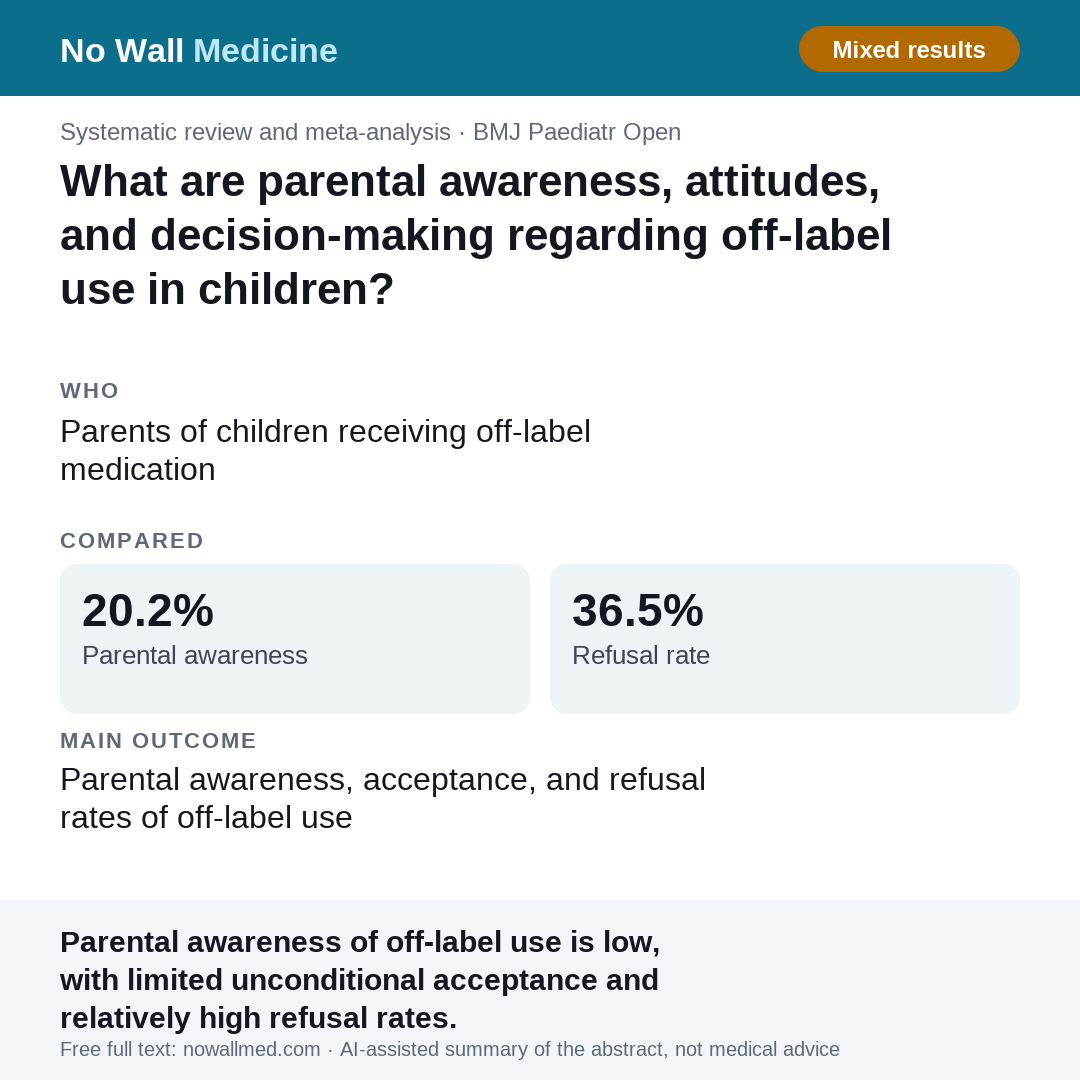
Parental awareness, attitudes and decision-making of off-label use in children: a systematic review and meta-analysis
Systematic review and meta-analysisMixed results
What are parental awareness, attitudes, and decision-making regarding off-label use in children?
Who
Parents of children receiving off-label medication
Compared
20.2%Parental awareness (95% CI: 10.6% to 31.9%)
36.5%Refusal rate (95% CI: 14.6% to 61.8%)
Main outcome
Parental awareness, acceptance, and refusal rates of off-label use
Bottom line: Parental awareness of off-label use is low, with limited unconditional acceptance and relatively high refusal rates.
Limitation: Extreme heterogeneity in operational definitions for conditional acceptance rates.
BMJ Paediatr Open · 2026-09-24Download image
Childhood socioeconomic circumstances and adult mortality: a systematic review and meta-analysis
Systematic review and meta-analysisHarm found
Do childhood socioeconomic circumstances associate with adult all-cause and cause-specific mortality?
Who
8
Adults aged 18 years or older · 24 countries
Compared
Disadvantaged socioeconomic circumstances: higher adult mortality
All exposure types: harmful associations in 390 of 474 estimates (82%; 95% CI 79-86)
Main outcome
Adult all-cause and cause-specific mortality
Bottom line: Disadvantaged childhood socioeconomic circumstances are associated with increased adult mortality across diverse measures of disadvantage and causes of death.
Limitation: All included studies were observational longitudinal studies
Lancet Public Health · 2026-09-22Download image

Revisiting the link between childhood adversity and stress-sensitive brain regions in psychosis and bipolar disorder: a systematic review and meta-analysis
Systematic review and meta-analysisNo clear difference
Are childhood adversity and gray matter volume alterations linked in psychosis and bipolar disorder?
Who
3056
Participants with psychotic disorder and bipolar disorder
Compared
Hippocampus volume: no significant association (p ≥ 0.66)
Amygdala volume: no significant association (p ≥ 0.87)
Main outcome
Gray matter volume alterations in stress-sensitive brain regions
Bottom line: Childhood adversity was not consistently associated with hippocampal or amygdala volume alterations in psychosis and bipolar disorder.
Transl Psychiatry · 2026-09-19Download image

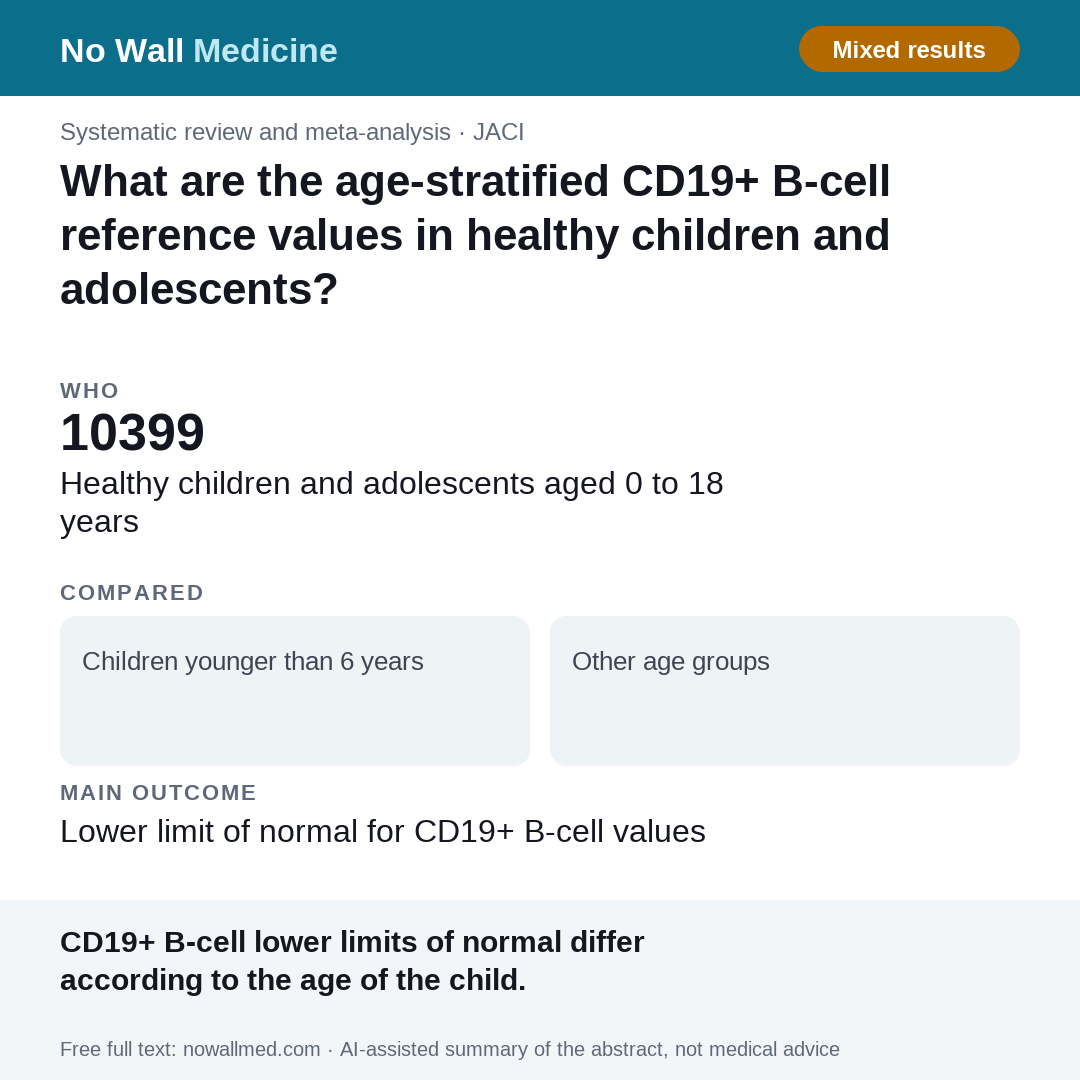
Age-stratified CD19+ B-cell reference values in children and adolescents-a systematic review and meta-analysis
Systematic review and meta-analysisMixed results
What are the age-stratified CD19+ B-cell reference values in healthy children and adolescents?
Who
10399
Healthy children and adolescents aged 0 to 18 years
Compared
Children younger than 6 years
Other age groups
Main outcome
Lower limit of normal for CD19+ B-cell values
Bottom line: CD19+ B-cell lower limits of normal differ according to the age of the child.
JACI · 2026-09-18Download image
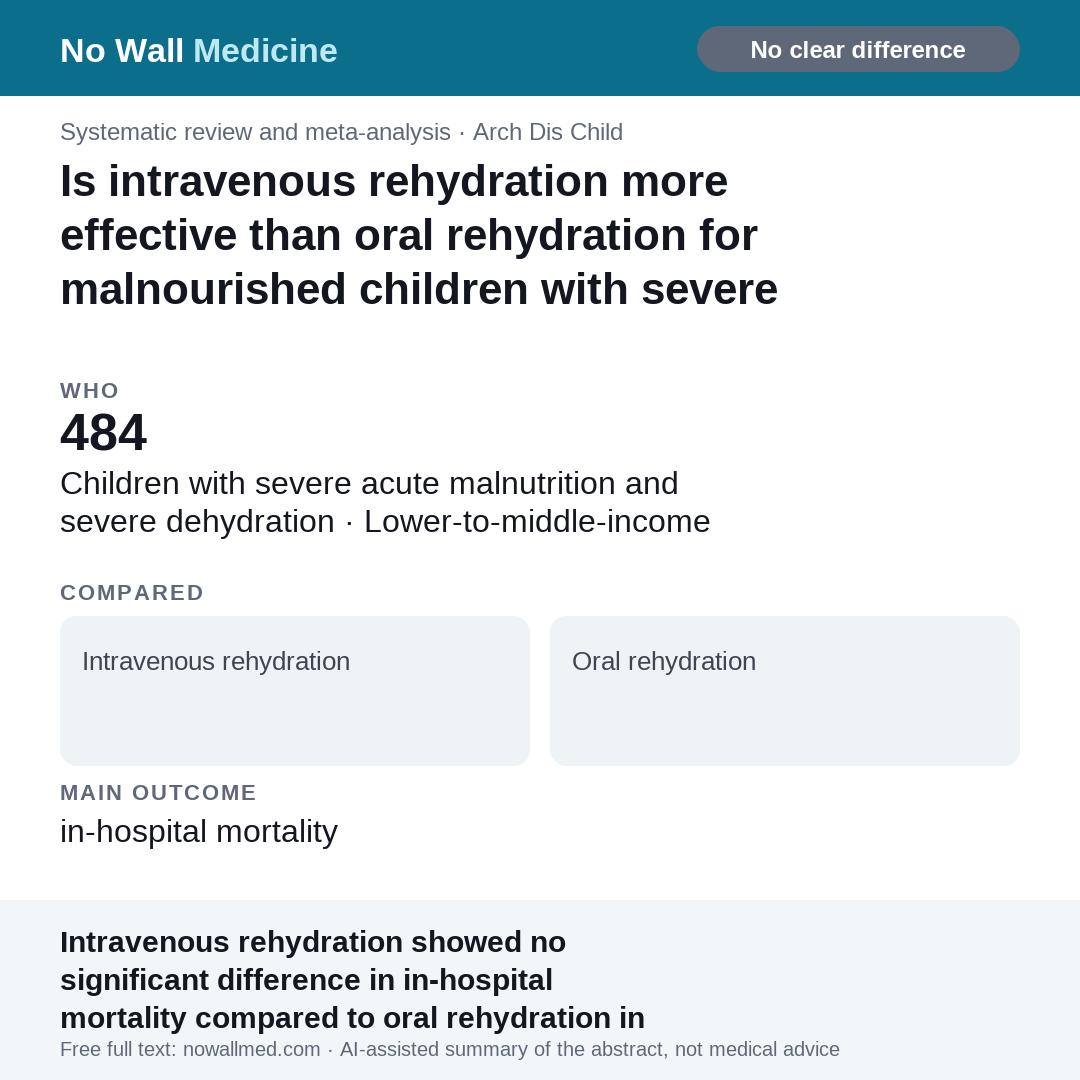
Intravenous rehydration in children with severe malnutrition and severe dehydration: a systematic review and meta-analysis
Systematic review and meta-analysisNo clear difference
Is intravenous rehydration more effective than oral rehydration for children with severe malnutrition?
Who
484
Children with severe acute malnutrition and severe dehydration · Lower-to-middle-income countries
Compared
Intravenous rehydration
Oral rehydration
Main outcome
In-hospital mortality
Result: risk ratio 0.71 (95% CI 0.46 to 1.10)
Bottom line: Intravenous rehydration showed no significant difference in in-hospital mortality compared to oral rehydration in children.
Limitation: Two trials had some risk of bias
Arch Dis Child · 2026-09-18Download image
Drawing and visual art interventions for anxiety in children aged 5-12: a systematic review and meta-analysis of randomised controlled trials
Systematic review and meta-analysis of randomised controlled trialsBenefit found
Do drawing and visual art interventions reduce anxiety in children aged 5-12 years?
Who
816
Children aged 5-12 years · Medical or procedure-related contexts
Compared
Drawing and visual art interventions
Non-art or usual-care comparators
Main outcome
Postintervention anxiety
Result: standardised mean difference -2.70 (95% CI -3.73 to -1.68)
Bottom line: Drawing and visual art interventions may reduce short-term anxiety in acute medical or procedure-related contexts.
Limitation: Substantial heterogeneity and lack of generalisable effect across paediatric settings.
BMJ Paediatr Open · 2026-09-16Download image

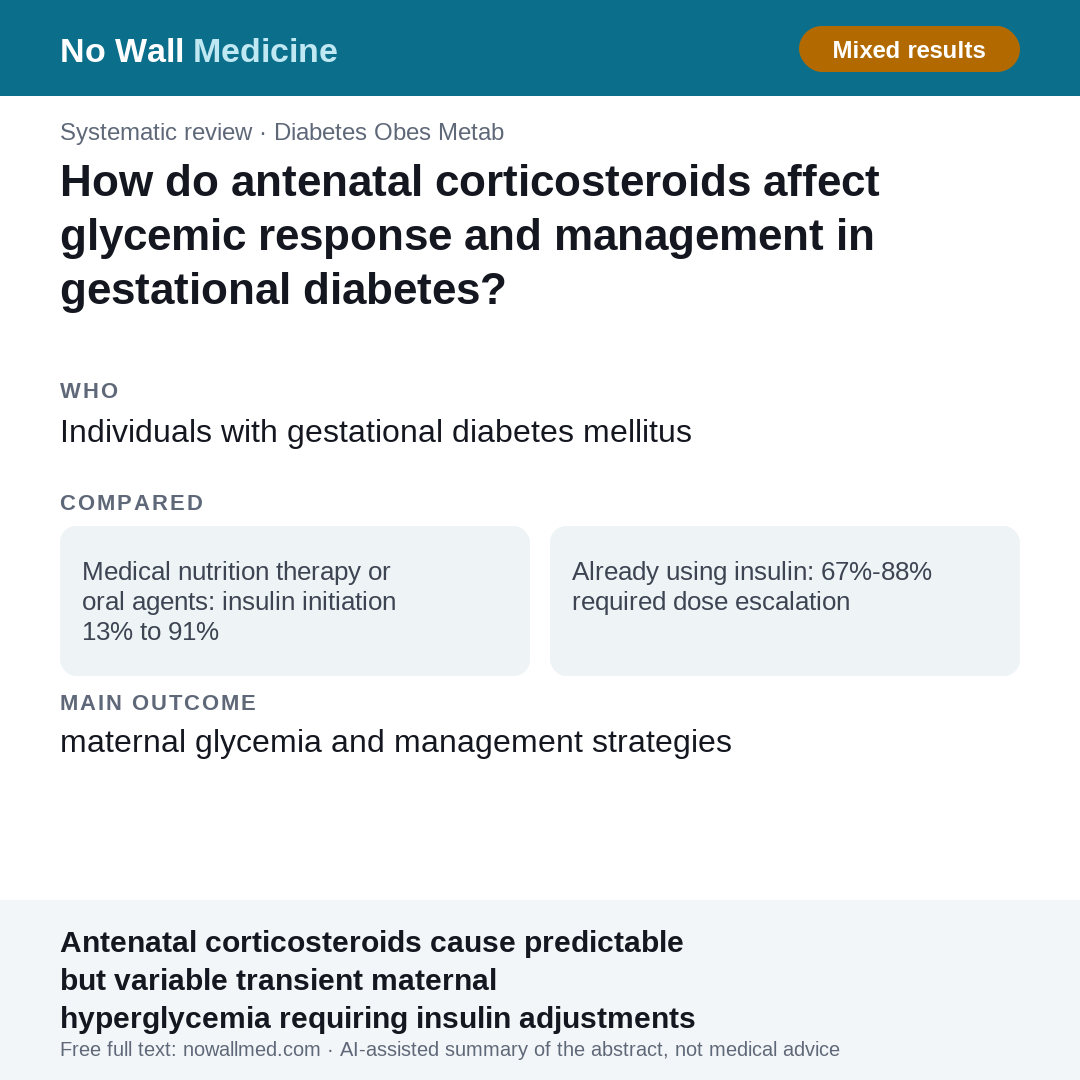
Antenatal Corticosteroids in Gestational Diabetes: A Systematic Review of Glycemic Response and Management Strategies
Systematic reviewMixed results
How do antenatal corticosteroids affect glycemic response and management in gestational diabetes?
Who
Individuals with gestational diabetes mellitus
Compared
Medical nutrition therapy or oral agents: insulin initiation 13% to 91%
Already using insulin: 67%-88% required dose escalation
Main outcome
maternal glycemia and management strategies
Bottom line: Antenatal corticosteroids cause predictable but variable transient maternal hyperglycemia requiring insulin adjustments in gestational diabetes.
Limitation: evidence remains heterogeneous and largely observational
Diabetes Obes Metab · 2026-09-09Download image
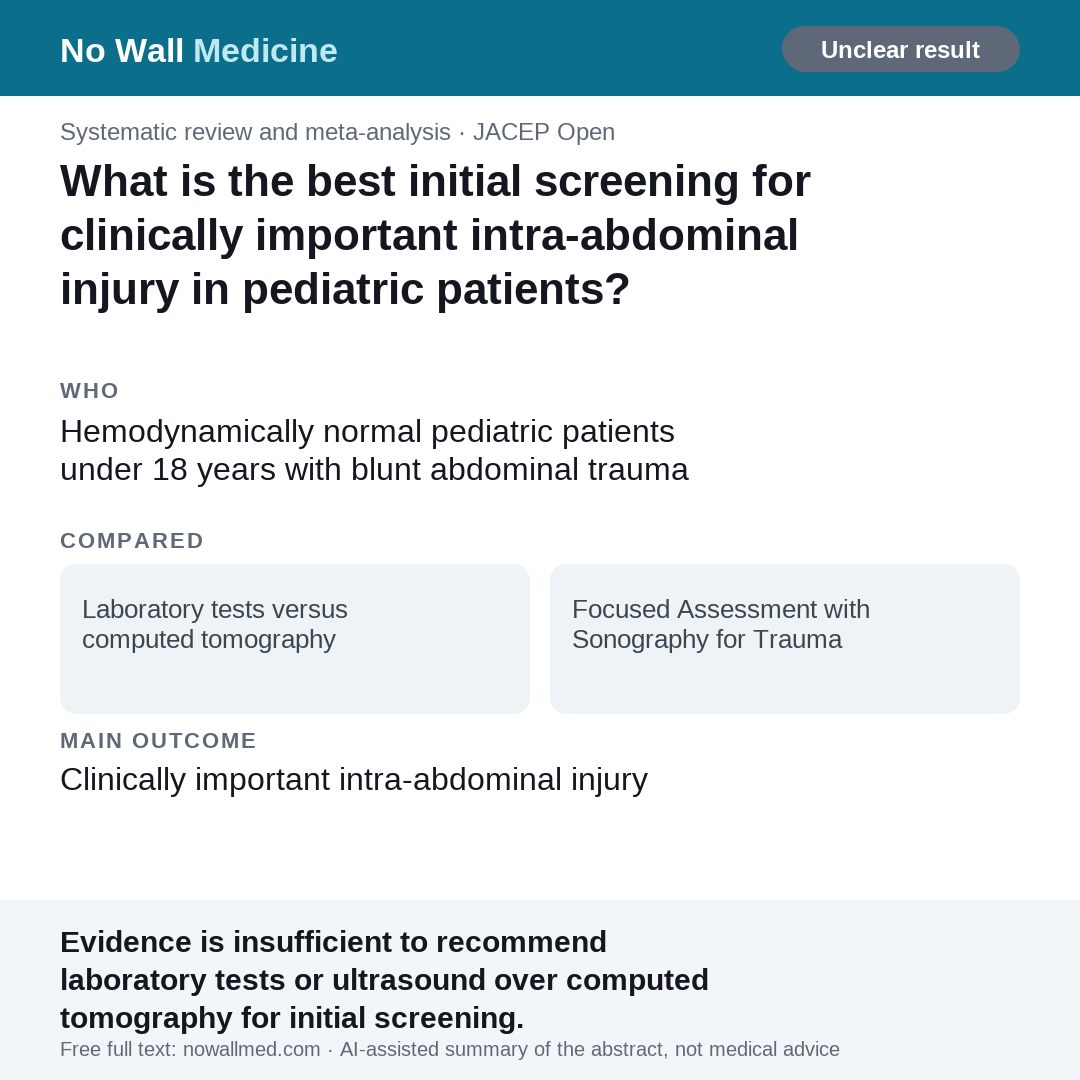
Evaluation of Pediatric Patients with Blunt Abdominal Trauma: A Systematic Review, Meta-Analysis, and Practice Management Recommendations
Systematic review and meta-analysisUnclear result
What is the best initial screening for clinically important intra-abdominal injury in pediatric patients?
Who
Hemodynamically normal pediatric patients under 18 years with blunt abdominal trauma
Compared
Laboratory tests versus computed tomography
Focused Assessment with Sonography for Trauma
Main outcome
Clinically important intra-abdominal injury
Bottom line: Evidence is insufficient to recommend laboratory tests or ultrasound over computed tomography for initial screening.
Limitation: Most studies were retrospective and the quality of available evidence was very low.
JACEP Open · 2026-09-09Download image
Virtual Reality Interventions for Pediatric Pain and Anxiety Management During Emergency Department Procedures: A Systematic Review and Meta-Analysis
Systematic review and meta-analysisBenefit found
Does virtual reality reduce pediatric procedural pain and anxiety in emergency departments?
Who
1929
Children undergoing procedures in emergency departments · Emergency departments
Compared
Virtual reality
Routine care
Active or other interventions
Main outcome
Self-reported peak procedural pain and anxiety
Result: mean difference -0.76 (95% CI -1.25 to -0.27) for pain vs routine care
Bottom line: Virtual reality shows moderate reductions in pediatric procedural pain and anxiety in emergency departments.
Limitation: Study heterogeneity and methodological limitations reduce confidence in these findings.
JACEP Open · 2026-09-09Download image

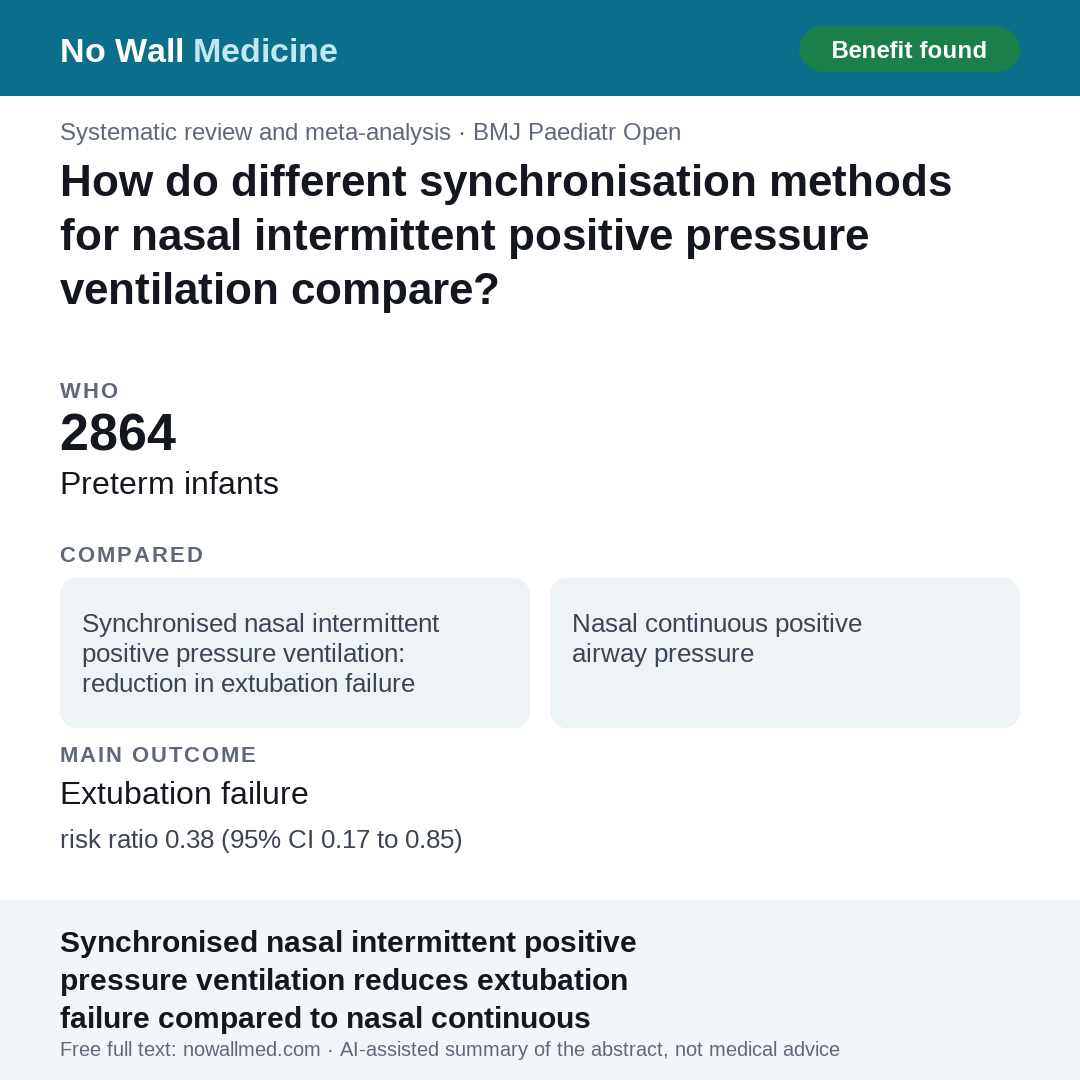
Triggering modalities to synchronise non-invasive respiratory support in preterm infants: a systematic review and meta-analysis
Systematic review and meta-analysisBenefit found
How do different synchronisation methods for nasal intermittent positive pressure ventilation compare?
Who
2864
Preterm infants
Compared
Synchronised nasal intermittent positive pressure ventilation: reduction in extubation failure
Nasal continuous positive airway pressure
Main outcome
Extubation failure
Result: risk ratio 0.38 (95% CI 0.17 to 0.85)
Bottom line: Synchronised nasal intermittent positive pressure ventilation reduces extubation failure compared to nasal continuous positive airway pressure.
Limitation: Evidence on positive effects on long-term major clinical outcomes remains limited.
BMJ Paediatr Open · 2026-09-08Download image
Risk of Injury Among Children and Youths Whose Mothers Experienced Violent Injury: A Systematic Review and Meta-Analysis
Systematic review and meta-analysisHarm found
What is the risk of physical and sexual injury among children whose mothers experienced violent injury?
Who
7666786
Children and youths younger than 25 years
Compared
42.4%Children exposed to maternal violent injury (95% CI, 30.6%-54.6%)
Unexposed children
Main outcome
Risk of physical and sexual injury
Result: pooled prevalence ratio, 1.65 [95% CI, 1.36-2.01]
Bottom line: Children exposed to maternal violent injury have a substantially increased risk of physical injury and high sexual injury prevalence.
Limitation: Substantial heterogeneity and insufficient comparative data for sexual injury outcomes.
JAMA Netw Open · 2026-09-01Download image

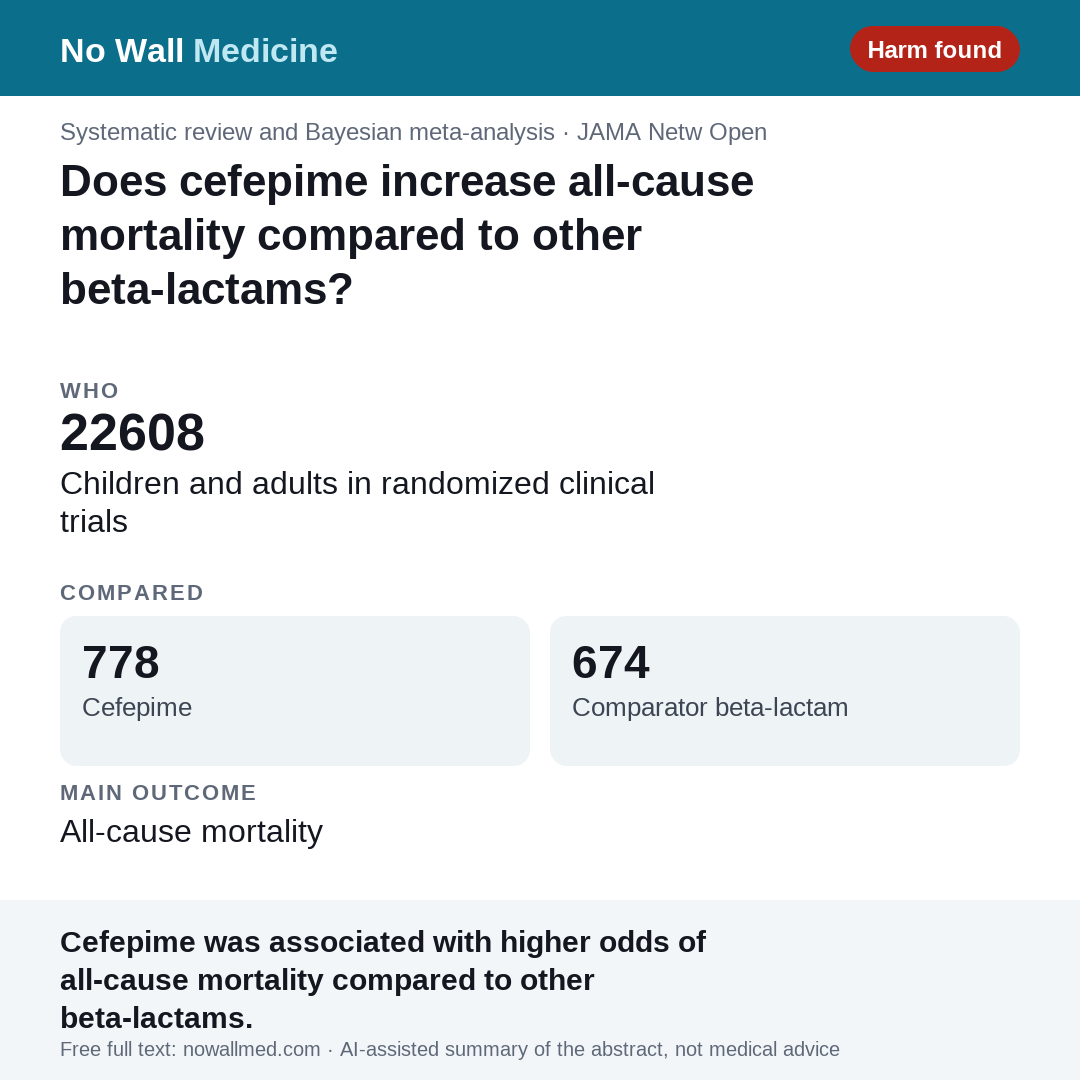
Cefepime and Mortality: A Systematic Review and Bayesian Meta-Analysis
Systematic review and Bayesian meta-analysisHarm found
Does cefepime increase all-cause mortality compared to other beta-lactams?
Who
22608
Children and adults in randomized clinical trials
Compared
778Cefepime (6.6%)
674Comparator beta-lactam (6.2%)
Main outcome
All-cause mortality
Result: odds ratio 1.10 (95% credible interval 0.98-1.24)
Bottom line: Cefepime was associated with higher odds of all-cause mortality compared to other beta-lactams.
JAMA Netw Open · 2026-09-01Download image
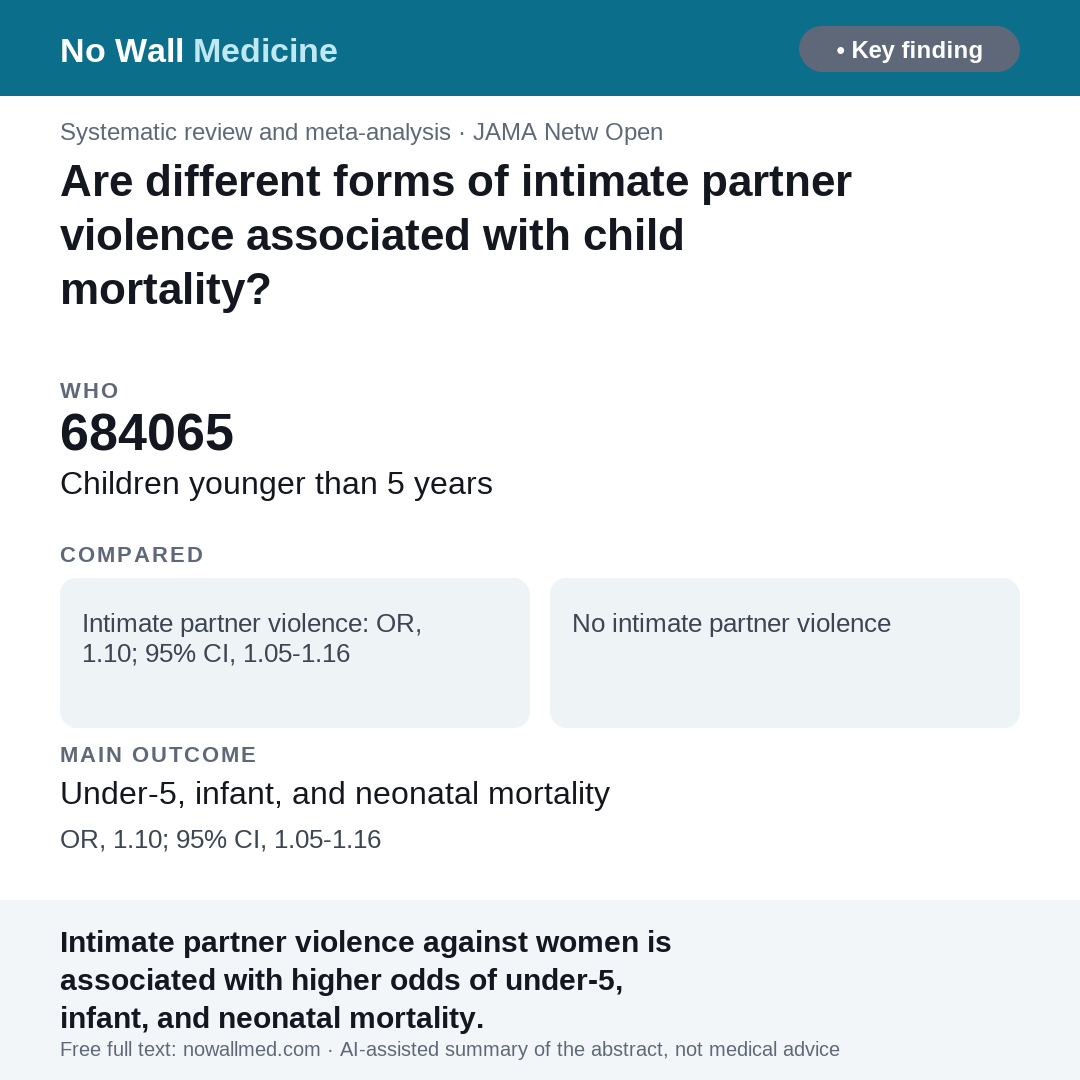
Intimate Partner Violence Against Women and Mortality Among Children Younger Than 5 Years: A Systematic Review and Meta-Analysis
Systematic review and meta-analysisHarm found
Are different forms of intimate partner violence associated with child mortality?
Who
684065
Children younger than 5 years
Compared
Intimate partner violence: OR, 1.10; 95% CI, 1.05-1.16
No intimate partner violence
Main outcome
Under-5, infant, and neonatal mortality
Result: OR, 1.10; 95% CI, 1.05-1.16
Bottom line: Intimate partner violence against women is associated with higher odds of under-5, infant, and neonatal mortality.
JAMA Netw Open · 2026-09-01Download image
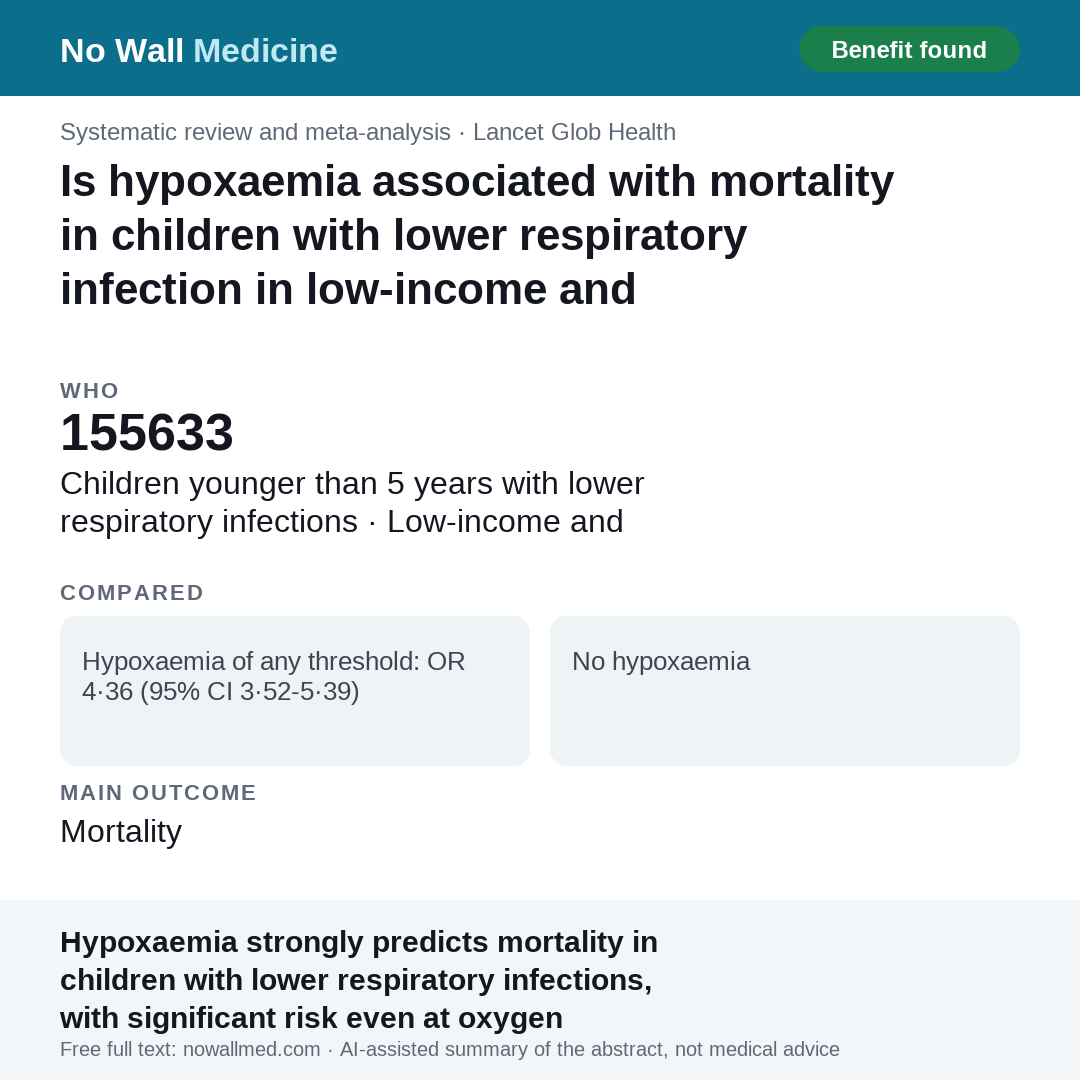
Hypoxaemia and mortality in children with lower respiratory infection in low-income and middle-income countries: systematic review and meta-analysis
Systematic review and meta-analysisHarm found
Is hypoxaemia associated with mortality in children with lower respiratory infection?
Who
155633
Children younger than 5 years with lower respiratory infections · Low-income and middle-income countries, primarily Africa and Asia
Compared
Hypoxaemia of any threshold
No hypoxaemia
Main outcome
Mortality
Result: odds ratio 4·36 (95% CI 3·52-5·39)
Bottom line: Hypoxaemia of any threshold is associated with higher odds of mortality in children with lower respiratory infections.
Lancet Glob Health · 2026-09-01Download image
Long-term outcome after fetal endoscopic tracheal occlusion for congenital diaphragmatic hernia: systematic review
Systematic review and narrative synthesisNo clear difference
What are the long-term outcomes of fetal endoscopic tracheal occlusion for congenital diaphragmatic hernia?
Who
395
Infants with congenital diaphragmatic hernia
Compared
Fetal endoscopic tracheal occlusion
No fetal endoscopic tracheal occlusion
Main outcome
Long-term multisystem morbidity
Bottom line: FETO survivors experience improving multisystem morbidity with no significant difference in long-term outcomes compared to non-FETO infants.
Limitation: Meta-analysis was not performed due to outcome heterogeneity.
Ultrasound Obstet Gynecol · 2026-08-29Download image

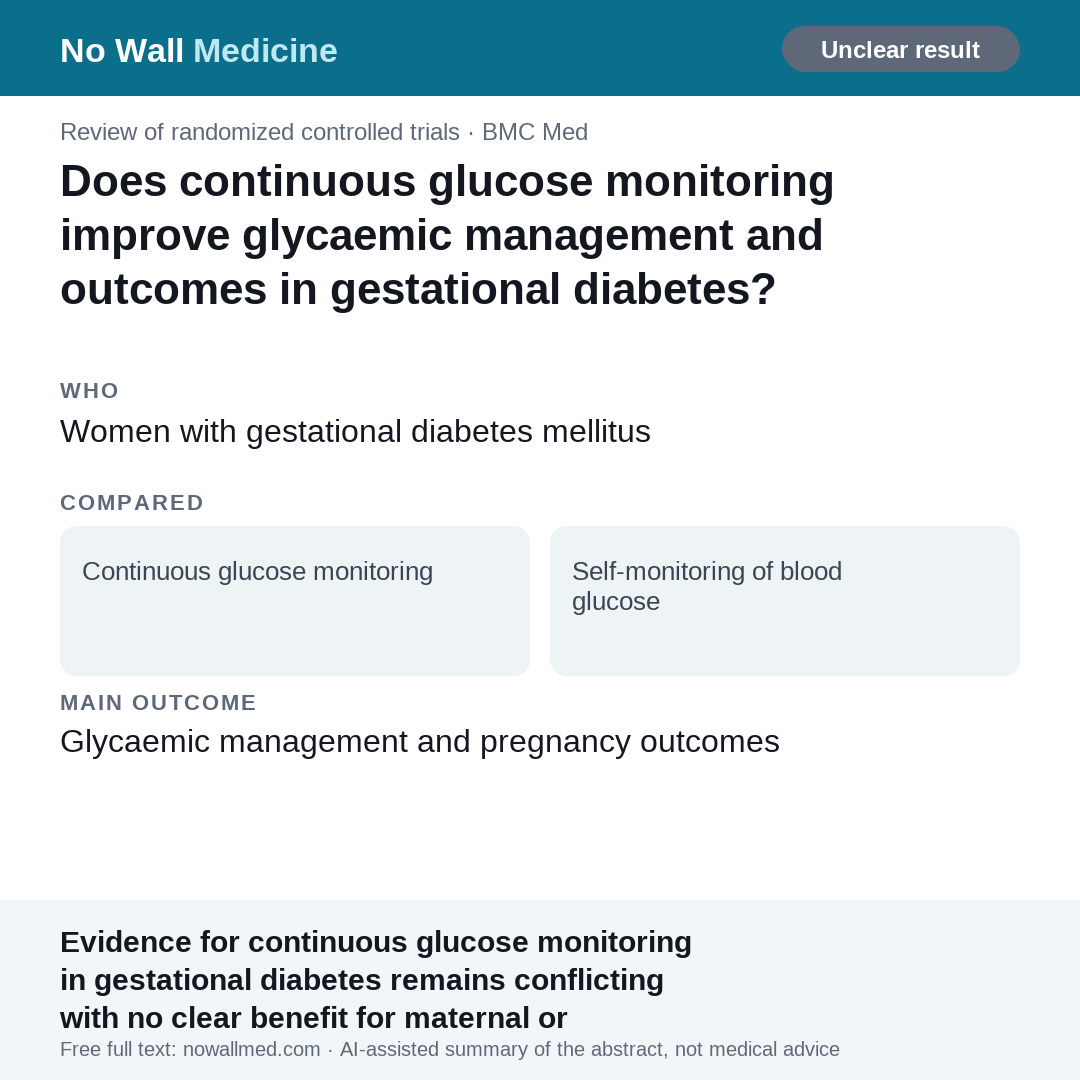
Conflicting evidence for continuous glucose monitoring in gestational diabetes: current challenges and the imperative for individual participant data meta-analysis
Review of randomized controlled trialsUnclear result
Does continuous glucose monitoring improve glycaemic management and outcomes in gestational diabetes?
Who
Women with gestational diabetes mellitus
Compared
Continuous glucose monitoring
Self-monitoring of blood glucose
Main outcome
Glycaemic management and pregnancy outcomes
Bottom line: Evidence for continuous glucose monitoring in gestational diabetes remains conflicting with no clear benefit for maternal or neonatal outcomes.
Limitation: Absence of validated continuous glucose monitoring-based glycaemic targets specific to gestational diabetes.
BMC Med · 2026-08-27Download image
Classification of videolaryngoscopy: a systematic review
Systematic reviewUnclear result
What is the accuracy, performance, and reliability of existing videolaryngoscopy classification tools?
Who
Adults and children undergoing videolaryngoscopic tracheal intubation
Compared
Cormack-Lehane classification: limited performance
VIDIAC and PeDiAC scores: accuracy or performance metrics reported
Main outcome
Accuracy, performance, concordance, and reliability of classification tools
Bottom line: Evidence regarding the accuracy and clinical utility of most videolaryngoscopy classification tools remains uncertain and limited.
Limitation: High risk of bias regarding reference standard, flow, timing, and substantial applicability concerns.
Anaesthesia · 2026-08-26Download image

Risk prediction models for hepatic encephalopathy post-transjugular intrahepatic portosystemic shunt: A systematic review and critical appraisal
Systematic review and critical appraisalUnclear result
What are the prediction models for hepatic encephalopathy after transjugular intrahepatic portosystemic shunt?
Who
Patients with cirrhosis undergoing transjugular intrahepatic portosystemic shunt · 25 cohorts from Asia (93%)
Compared
Clinical models alone: 0.61-0.86
Models including imaging predictors: 0.73-0.97
Main outcome
Area under the receiver operating characteristic curve or C-index
Bottom line: Current prediction models cannot reliably support clinical decision-making due to high risk of bias and methodological concerns.
Limitation: High risk of bias, inappropriate patient exclusion, low events-per-variable ratio, and inadequate validation.
JHEP Rep · 2026-08-22Download image

Comparative efficacy of non-pharmacological interventions on executive function and attentional control in children and adolescents with ADHD: a Bayesian network meta-analysis based on task-based cognitive outcomes
Bayesian random-effects network meta-analysisBenefit found
How do non-pharmacological interventions compare for executive function and attentional control in ADHD?
Who
4628
Children and adolescents with ADHD aged 6-18 years
Compared
Multicomponent interventions: inhibitory control Hedges' g = 0.63
Cognitive Training: inhibitory control Hedges' g = 0.61
Control
Main outcome
task-based executive function and attentional control performance
Bottom line: Multicomponent interventions and Cognitive Training show consistent improvements in objective executive and attentional tasks for pediatric ADHD.
Transl Psychiatry · 2026-08-21Download image