Visual abstracts
New randomized trials and meta-analyses from leading journals at a glance: who was studied, what was compared, and what was found. Every paper is free to read in full.
All specialtiesCardiology 4763Oncology 4042Gastroenterology & Hepatology 1902Infectious Disease 3756Neurology 1872Psychiatry & Mental Health 2214Pulmonology 2042Critical Care 1319Endocrinology & Diabetes 2544Pediatrics 2889Surgery 2479Orthopedics & Sports Medicine 917Neurosurgery 525Cardiothoracic & Vascular Surgery 656Plastic & Reconstructive Surgery 574Nephrology 1107Rheumatology 810Hematology 1090Dermatology 611Ophthalmology 532Obstetrics & Gynecology 1645Public & Global Health 1037Radiology & Imaging 617Anesthesiology 957Urology 745ENT (Otolaryngology) 494Emergency Medicine 481Allergy & Immunology 309Geriatrics 972Family Medicine & Primary Care 533Medical Genetics & Genomics 659Pathology & Laboratory Medicine 156Physical Medicine & Rehabilitation 734Palliative Care 421Nutrition 1560Digital Health & AI 2133General Medicine 318
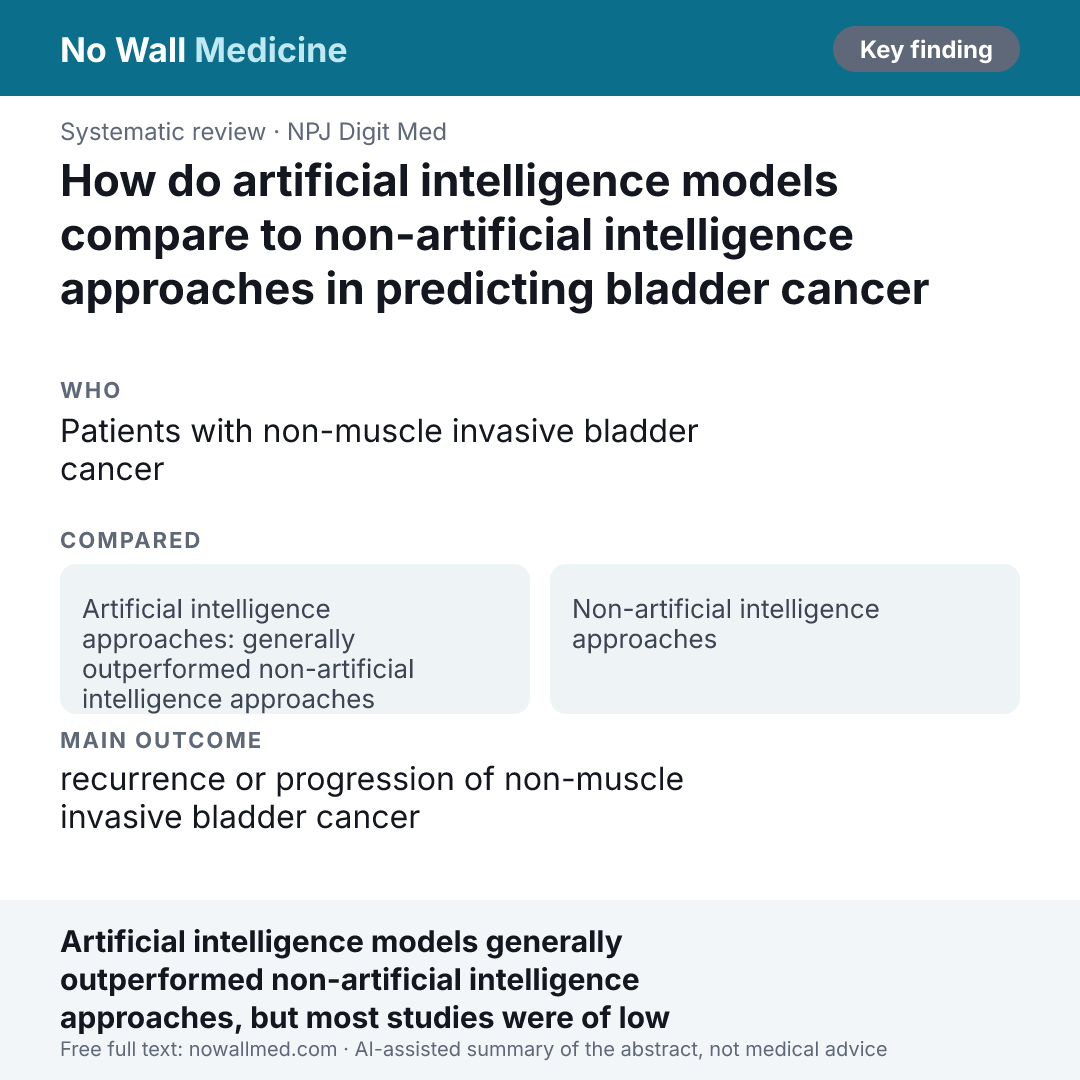
Predicting non-muscle invasive bladder cancer outcomes using artificial intelligence: a systematic review using APPRAISE-AI
Systematic reviewKey finding
How do artificial intelligence models compare to non-artificial intelligence approaches in predicting bladder cancer outcomes?
Who
Patients with non-muscle invasive bladder cancer
Compared
Artificial intelligence approaches: generally outperformed non-artificial intelligence approaches
Non-artificial intelligence approaches
Main outcome
recurrence or progression of non-muscle invasive bladder cancer
Result: median absolute performance difference was 10 for low, 22 for moderate, and 4 for high quality studies
Bottom line: Artificial intelligence models generally outperformed non-artificial intelligence approaches, but most studies were of low quality.
Limitation: Most studies were low quality, with dataset limitations, methodological flaws, and reproducibility issues.
NPJ Digit Med · 2024-04-18 · Save PNG
Prevalence of Mental Health Disorders Among Individuals Experiencing Homelessness: A Systematic Review and Meta-Analysis
Systematic review and meta-analysisBenefit found
What is the current and lifetime prevalence of mental health disorders among people experiencing homelessness?
Who
48414
People experiencing homelessness aged 18 years and older · Global
Compared
67%Current prevalence (95% CI, 55-77)
77%Lifetime prevalence (95% CI, 61-88)
Main outcome
Current and lifetime prevalence of mental health disorders
Bottom line: Most people experiencing homelessness have mental health disorders, with higher prevalences than those observed in general community samples.
JAMA Psychiatry · 2024-04-17 · Save PNG

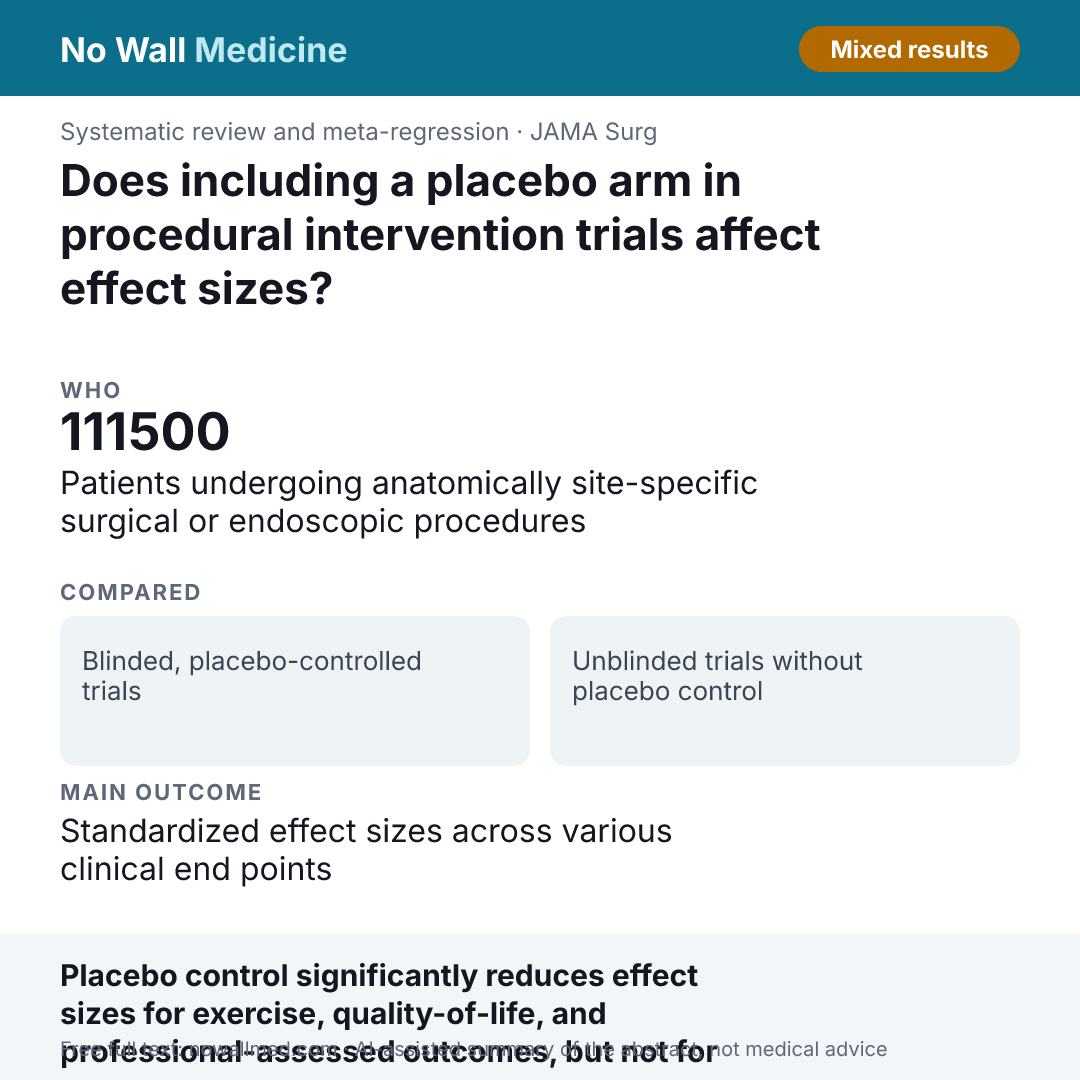
Placebo Control and Blinding in Randomized Trials of Procedural Interventions: A Systematic Review and Meta-Regression
Systematic review and meta-regressionMixed results
Does including a placebo arm in procedural intervention trials affect effect sizes?
Who
111500
Patients undergoing anatomically site-specific surgical or endoscopic procedures
Compared
Blinded, placebo-controlled trials
Unblinded trials without placebo control
Main outcome
Standardized effect sizes across various clinical end points
Result: SMD 0.59 (95% CI, 0.29 to 0.89) for exercise-related outcomes in unblinded trials
Bottom line: Placebo control significantly reduces effect sizes for exercise, quality-of-life, and professional-assessed outcomes, but not for mortality or pain.
JAMA Surg · 2024-04-17 · Save PNG
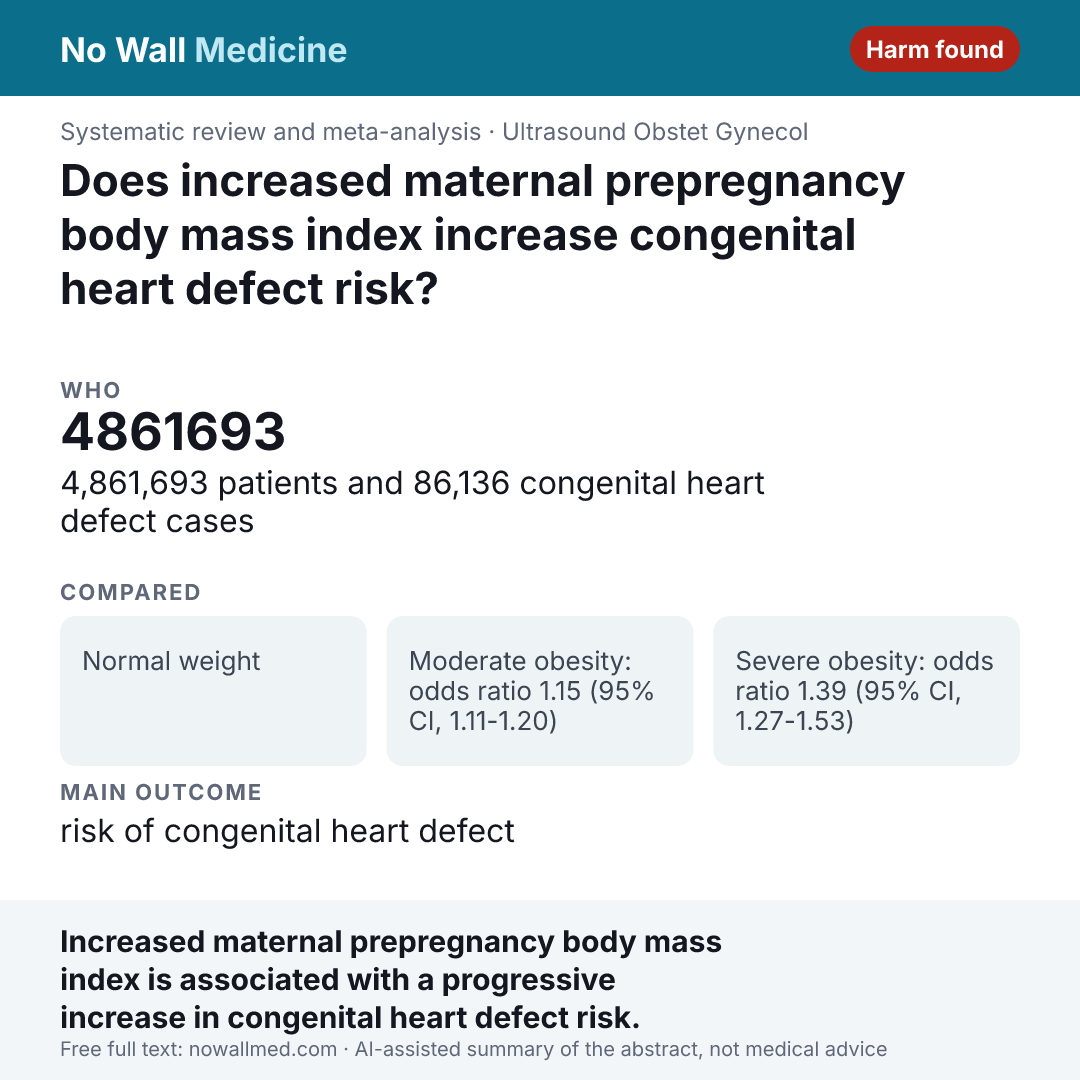
Maternal prepregnancy weight as an independent risk factor for congenital heart defect: systematic review and meta-analysis stratified by subtype and severity of defect
Systematic review and meta-analysisHarm found
Does increased maternal prepregnancy body mass index increase congenital heart defect risk?
Who
4861693
4,861,693 patients and 86,136 congenital heart defect cases
Compared
Normal weight
Moderate obesity: odds ratio 1.15 (95% CI, 1.11-1.20)
Severe obesity: odds ratio 1.39 (95% CI, 1.27-1.53)
Main outcome
risk of congenital heart defect
Result: odds ratio 1.15 (95% CI, 1.11-1.20) to 1.39 (95% CI, 1.27-1.53)
Bottom line: Increased maternal prepregnancy body mass index is associated with a progressive increase in congenital heart defect risk.
Ultrasound Obstet Gynecol · 2024-04-17 · Save PNG
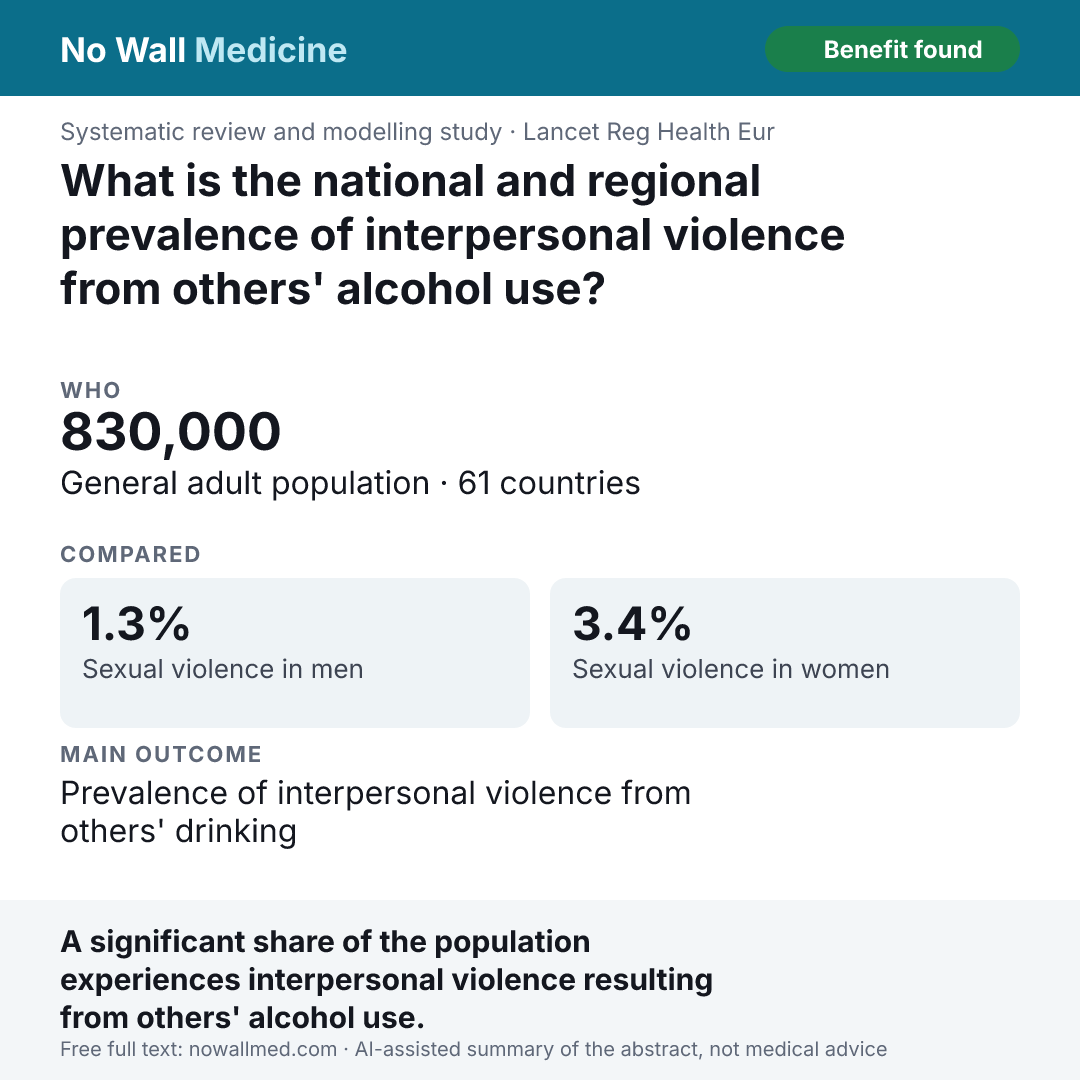
National and regional prevalence of interpersonal violence from others' alcohol use: a systematic review and modelling study
Systematic review and modelling studyBenefit found
What is the national and regional prevalence of interpersonal violence from others' alcohol use?
Who
830,000
General adult population · 61 countries
Compared
1.3%Sexual violence in men (95% CI: 0.5-3.3%, 95% PI: 0.1-16.9%)
3.4%Sexual violence in women (95% CI: 1.4-8.3%, 95% PI: 0.2-35.3%)
Main outcome
Prevalence of interpersonal violence from others' drinking
Bottom line: A significant share of the population experiences interpersonal violence resulting from others' alcohol use.
Limitation: Risk of bias was moderate or critical for most reports.
Funded by: Canadian Institutes of Health Research
Lancet Reg Health Eur · 2024-04-17 · Save PNG
Digital Interventions for Recreational Cannabis Use Among Young Adults: Systematic Review, Meta-Analysis, and Behavior Change Technique Analysis of Randomized Controlled Studies
Systematic review and meta-analysis of randomized controlled studiesBenefit found
Are digital interventions effective for reducing cannabis use among young adults?
Who
6710
Young adults aged 16-35 years living in the community
Compared
Digital interventions
Control conditions
Main outcome
Cannabis use frequency
Result: -6.79 days of use in the previous month (95% CI -9.59 to -4.00)
Bottom line: Digital interventions can reduce cannabis use frequency in young adults at 3-month follow-up.
Limitation: Optimal exposure dose regarding intervention duration and frequency remains unknown.
J Med Internet Res · 2024-04-17 · Save PNG

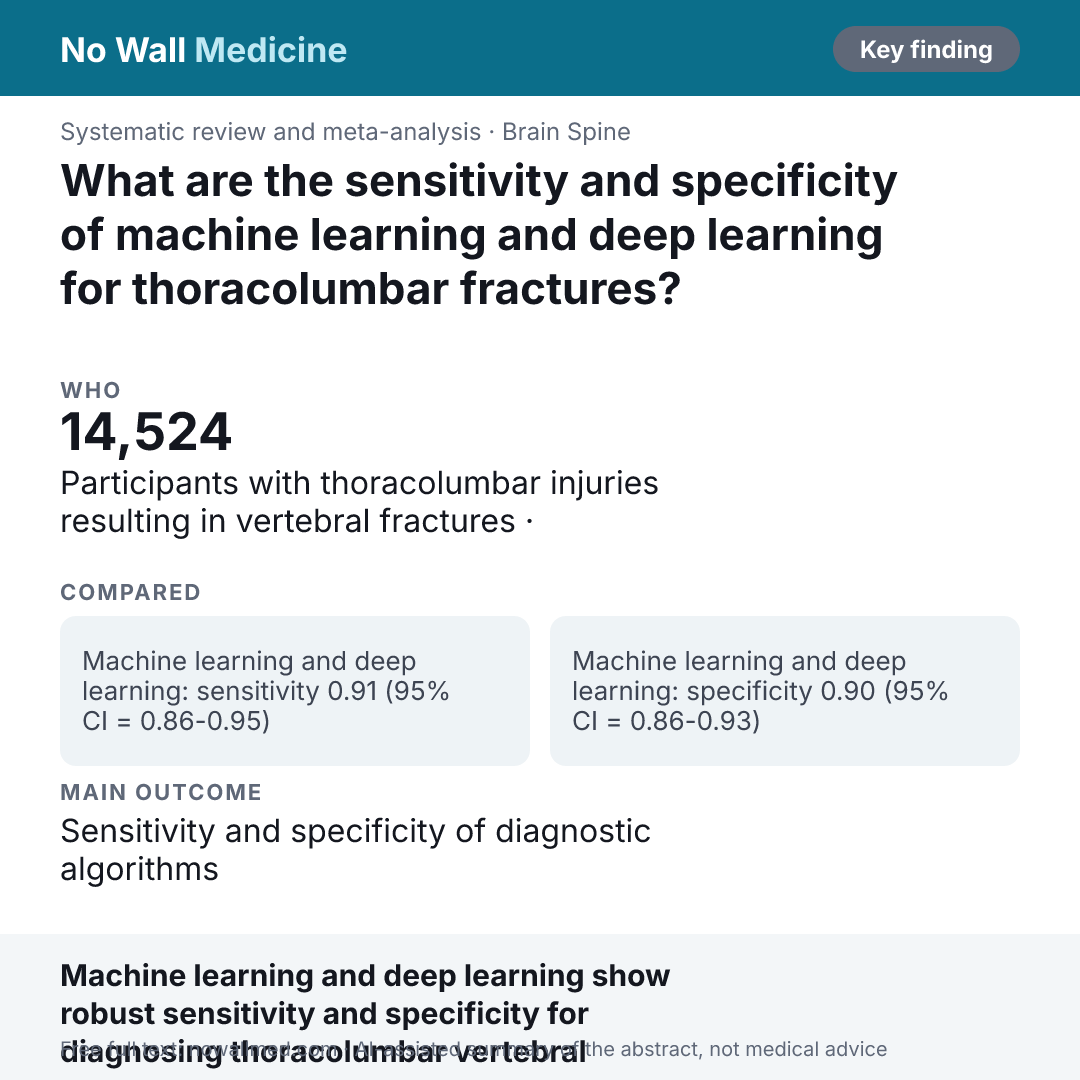
Sensitivity and specificity of machine learning and deep learning algorithms in the diagnosis of thoracolumbar injuries resulting in vertebral fractures: A systematic review and meta-analysis
Systematic review and meta-analysisKey finding
What are the sensitivity and specificity of machine learning and deep learning for thoracolumbar fractures?
Who
14,524
Participants with thoracolumbar injuries resulting in vertebral fractures · Predominantly China
Compared
Machine learning and deep learning: sensitivity 0.91 (95% CI = 0.86-0.95)
Machine learning and deep learning: specificity 0.90 (95% CI = 0.86-0.93)
Main outcome
Sensitivity and specificity of diagnostic algorithms
Result: sensitivity 0.91 (95% CI = 0.86-0.95), specificity 0.90 (95% CI = 0.86-0.93)
Bottom line: Machine learning and deep learning show robust sensitivity and specificity for diagnosing thoracolumbar vertebral fractures.
Limitation: Critical need for standardization in methodologies to enhance clinical utility.
Brain Spine · 2024-04-17 · Save PNG
Gamified learning for resuscitation education: A systematic review
Systematic reviewBenefit, low certainty
Does gamified learning impact educational and clinical outcomes during life support education?
Who
Healthcare providers and laypersons
Compared
Gamified learning
Non-gamified learning
Main outcome
Educational and clinical outcomes
Bottom line: Most studies found a positive effect on at least one educational domain using gamified learning.
Limitation: Significant heterogeneity and low certainty evidence with mostly moderate to high risk of bias.
Resusc Plus · 2024-04-17 · Save PNG

Coeliac disease is a strong risk factor for Gastro-oesophageal reflux disease while a gluten free diet is protective: a systematic review and meta-analysis
Systematic review and meta-analysisBenefit found
Is coeliac disease associated with gastro-oesophageal reflux disease and is a gluten free diet protective?
Who
Individuals with coeliac disease and controls
Compared
Coeliac disease on gluten containing diet: 3 times more likely to have gastro-oesophageal reflux disease
Coeliac disease on gluten free diet
Main outcome
Gastro-oesophageal reflux disease
Result: OR: 10.20 (95% CI: 6.49-16.04)
Bottom line: Coeliac disease is strongly associated with gastro-oesophageal reflux disease, but a gluten free diet is protective.
Funded by: NHMRC Investigator Grant
eClinicalMedicine · 2024-04-16 · Save PNG

Thrombectomy vs Medical Management for Posterior Cerebral Artery Stroke: Systematic Review, Meta-Analysis, and Real-World Data
Meta-analysis of 5 cohort studiesMixed results
Thrombectomy vs medical management for PCA stroke
Who
2095
Patients with posterior cerebral artery strokes
Compared
Endovascular thrombectomy
Medical management
Main outcome
90-day functional outcomes
Result: odds ratio 1.25 (95% CI 1.04-1.50)
Bottom line: Thrombectomy helps with disability but increases hemorrhage
Neurology · 2024-04-16 · Save PNG

Policy Approaches for Increasing Adolescent HPV Vaccination Coverage: A Systematic Review
Systematic review of 36 studiesKey finding
Which governmental policies increase adolescent HPV vaccination coverage?
Who
Adolescents ages 9 to 18 in US jurisdictions · US jurisdictions
Compared
School-entry requirements: 8 of 14 positive associations
Federally-funded policies: 7 of 9 higher coverage
Main outcome
HPV vaccination coverage
Bottom line: School-entry requirements and federally-funded policies suggested promise for increasing HPV vaccination coverage.
Limitation: Limited data sources, non-experimental designs, and poorly matched comparison groups.
Pediatrics · 2024-04-16 · Save PNG

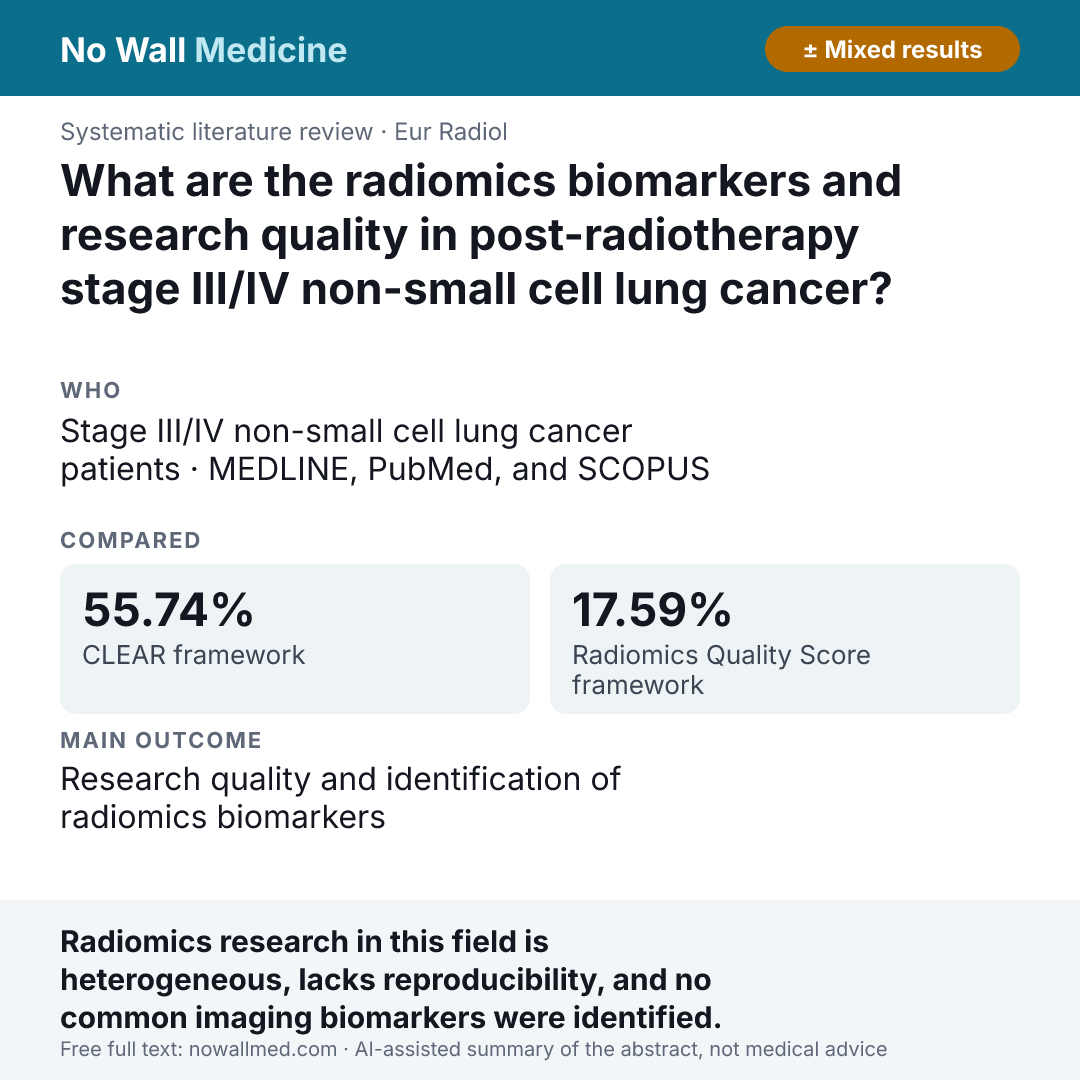
Post-radiotherapy stage III/IV non-small cell lung cancer radiomics research: a systematic review and comparison of CLEAR and RQS frameworks
Systematic literature reviewMixed results
What are the radiomics biomarkers and research quality in post-radiotherapy stage III/IV non-small cell lung cancer?
Who
Stage III/IV non-small cell lung cancer patients · MEDLINE, PubMed, and SCOPUS
Compared
55.74%CLEAR framework (32.33/58 points)
17.59%Radiomics Quality Score framework (6.3/36 points)
Main outcome
Research quality and identification of radiomics biomarkers
Bottom line: Radiomics research in this field is heterogeneous, lacks reproducibility, and no common imaging biomarkers were identified.
Limitation: Small cohort sizes, nonvalidated studies, and missing technical parameters were identified as barriers to reproducibility.
Eur Radiol · 2024-04-16 · Save PNG
Barriers and enablers to exercise adherence in people with nonspecific chronic low back pain: a systematic review of qualitative evidence
Systematic reviewUnclear result
What affects exercise adherence in chronic low back pain
Who
677
people with nonspecific chronic low back pain
Compared
barriers
enablers
Main outcome
exercise adherence
Bottom line: Barriers and enablers affect exercise adherence
Pain · 2024-04-16 · Save PNG

Systematic review and meta-analysis of cerebrospinal fluid drain-related mortality and morbidity after fenestrated-branched endovascular aortic repair
Systematic review and meta-analysisKey finding
What are the mortality and morbidity rates of cerebrospinal fluid drainage in F/B-EVAR patients?
Who
1079
Patients undergoing fenestrated and branched endovascular aortic repair · Six single-center studies
Compared
Cerebrospinal fluid drainage: mortality rate 1.4% (95% CI: 0.0-4.8)
Cerebrospinal fluid drainage: overall morbidity rate 25.6% (95% CI: 13.6-39.7)
Main outcome
Cerebrospinal fluid drainage-related mortality and morbidity
Result: mortality rate 1.4% (95% CI: 0.0-4.8); morbidity rate 25.6% (95% CI: 13.6-39.7)
Bottom line: Cerebrospinal fluid drainage in fenestrated and branched endovascular aortic repair is associated with notable mortality and substantial morbidity.
Limitation: High to moderate risk of bias in included retrospective, observational studies.
J Vasc Surg · 2024-04-16 · Save PNG

Medical and interventional outcome of dissection of the cervical arteries: Systematic review and meta-analysis
Systematic review and meta-analysisNo clear difference
What are the medical and interventional outcomes of cervical artery dissection treatments?
Who
4104
Patients with cervical artery dissections
Compared
Antiplatelet therapy
Oral anticoagulant therapy
Main outcome
Stroke and stroke/death/bleeding
Result: odds ratio 1.25 (95% CI 0.19-8.18)
Bottom line: Antiplatelet and oral anticoagulant therapies show similar efficacy in reducing stroke recurrence after cervical artery dissection.
Limitation: Overall risk of bias was considered serious and few prospective studies are available.
J Vasc Surg · 2024-04-16 · Save PNG

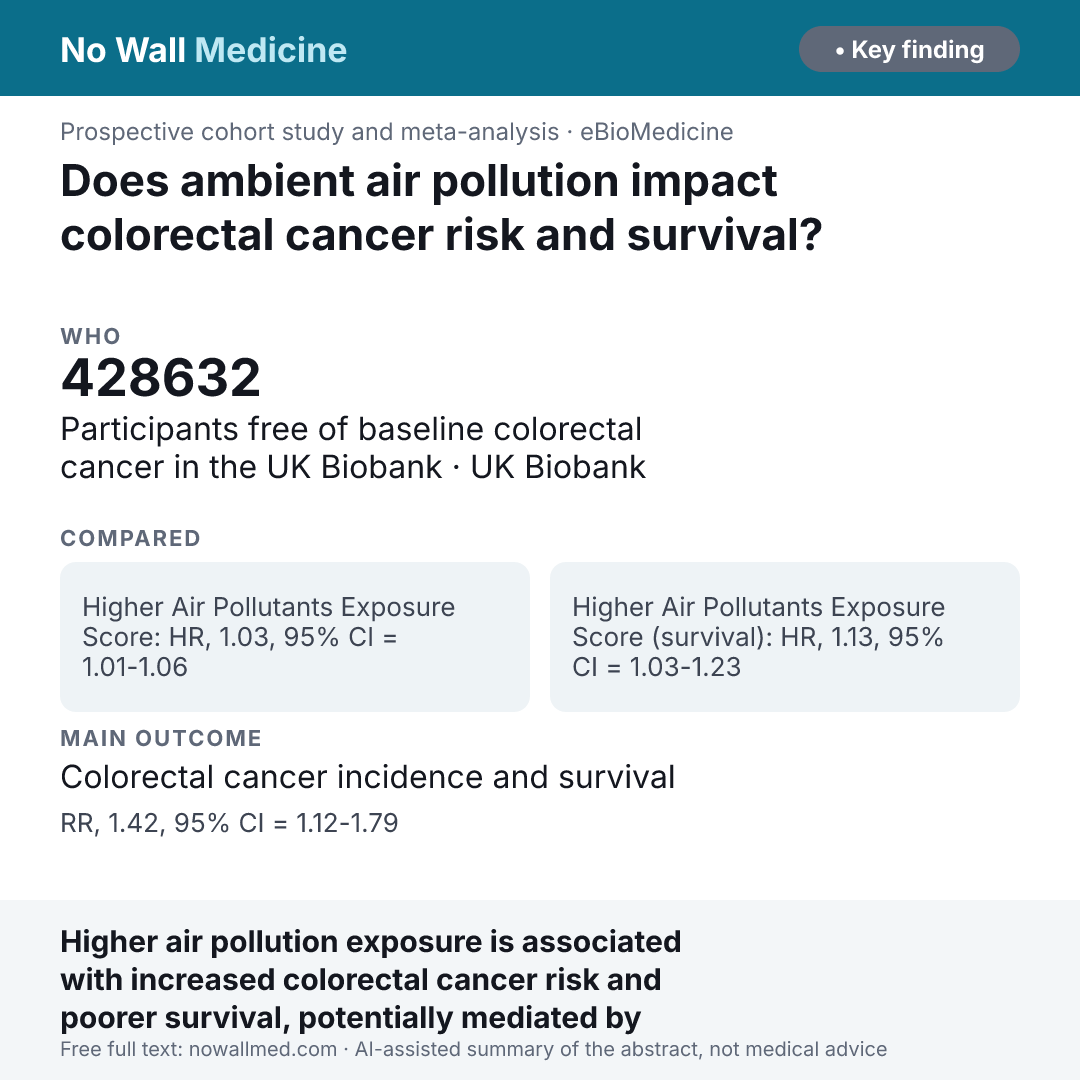
Impact of ambient air pollution on colorectal cancer risk and survival: insights from a prospective cohort and epigenetic Mendelian randomization study
Prospective cohort study and meta-analysisKey finding
Does ambient air pollution impact colorectal cancer risk and survival?
Who
428632
Participants free of baseline colorectal cancer in the UK Biobank · UK Biobank
Compared
Higher Air Pollutants Exposure Score: HR, 1.03, 95% CI = 1.01-1.06
Higher Air Pollutants Exposure Score (survival): HR, 1.13, 95% CI = 1.03-1.23
Main outcome
Colorectal cancer incidence and survival
Result: RR, 1.42, 95% CI = 1.12-1.79
Bottom line: Higher air pollution exposure is associated with increased colorectal cancer risk and poorer survival, potentially mediated by epigenetic modifications.
eBioMedicine · 2024-04-16 · Save PNG
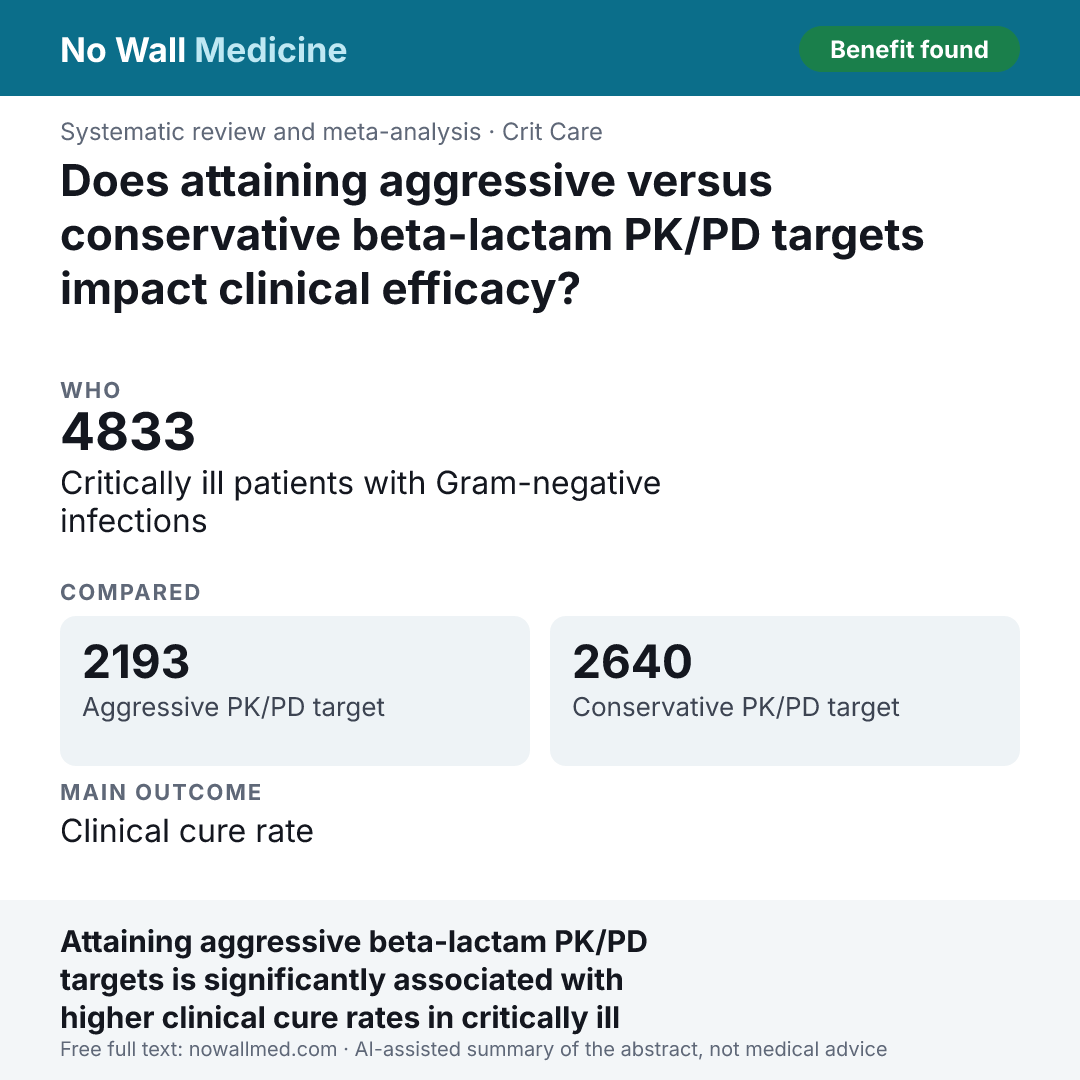
Impact of attaining aggressive vs. conservative PK/PD target on the clinical efficacy of beta-lactams for the treatment of Gram-negative infections in the critically ill patients: a systematic review and meta-analysis
Systematic review and meta-analysisBenefit found
Does attaining aggressive versus conservative beta-lactam PK/PD targets impact clinical efficacy?
Who
4833
Critically ill patients with Gram-negative infections
Compared
2193Aggressive PK/PD target
2640Conservative PK/PD target
Main outcome
Clinical cure rate
Result: odds ratio 1.69 (95% CI 1.15-2.49)
Bottom line: Attaining aggressive beta-lactam PK/PD targets is significantly associated with higher clinical cure rates in critically ill patients.
Limitation: The risk of bias was moderate in 19 studies and severe in 2 studies.
Crit Care · 2024-04-16 · Save PNG
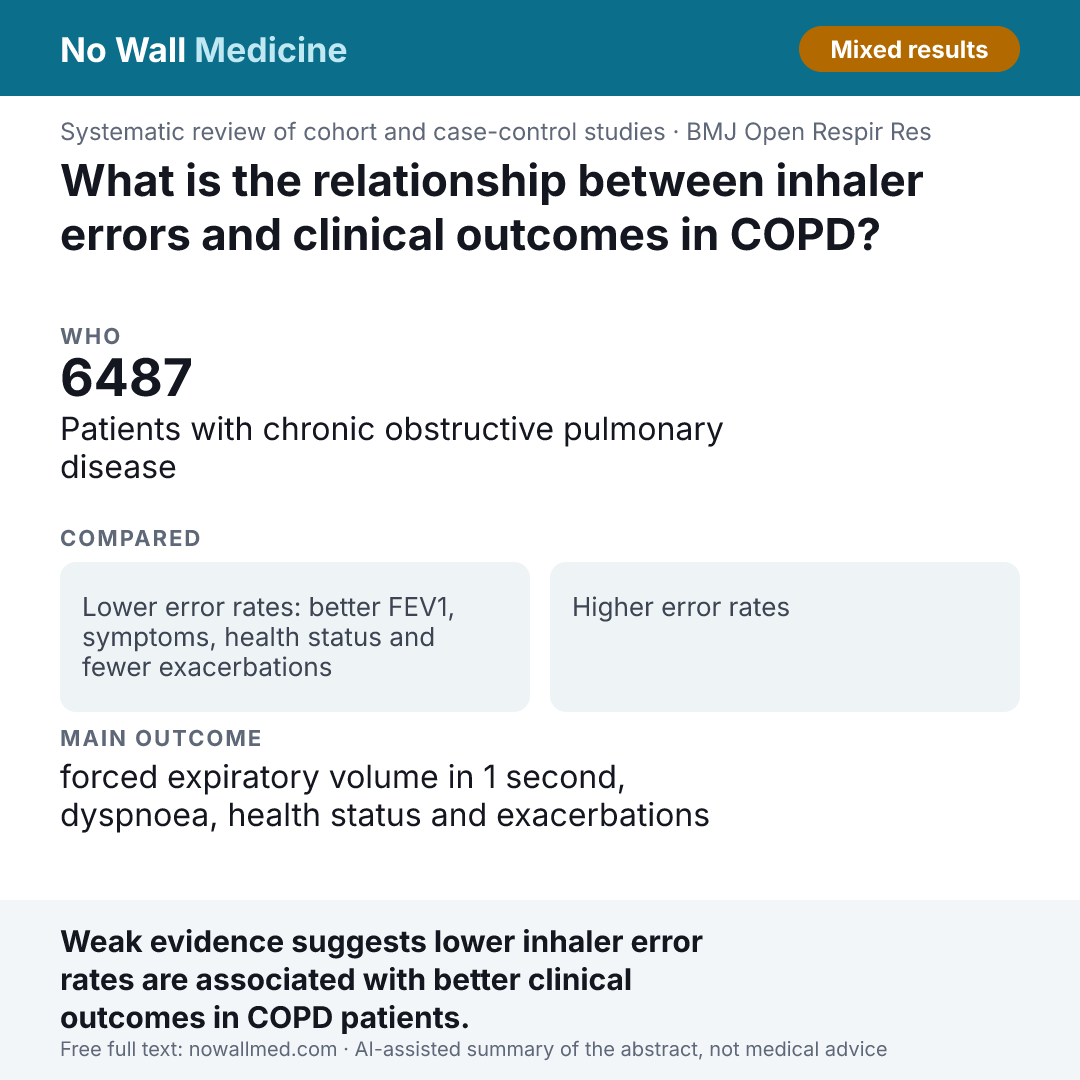
Systematic review of the effects of patient errors using inhaled delivery systems on clinical outcomes in COPD
Systematic review of cohort and case-control studiesMixed results
What is the relationship between inhaler errors and clinical outcomes in COPD?
Who
6487
Patients with chronic obstructive pulmonary disease
Compared
Lower error rates: better FEV1, symptoms, health status and fewer exacerbations
Higher error rates
Main outcome
forced expiratory volume in 1 second, dyspnoea, health status and exacerbations
Bottom line: Weak evidence suggests lower inhaler error rates are associated with better clinical outcomes in COPD patients.
Limitation: Most studies were low quality and confounded by the absence of adherence data.
BMJ Open Respir Res · 2024-04-16 · Save PNG
Validity and reliability of outcome measures to assess dysfunctional breathing: a systematic review
Systematic reviewMixed results
What are the psychometric properties of outcome measures assessing dysfunctional breathing in adults?
Who
Adults with dysfunctional breathing
Compared
Nijmegen Questionnaire: sufficient ratings for content validity, internal consistency, reliability and construct validity
All other outcome measures: did not report characteristics of content validity in the patients' group
Main outcome
Psychometric properties of dysfunctional breathing outcome measures
Bottom line: The Nijmegen Questionnaire is the only measure with sufficient validity and reliability for assessing dysfunctional breathing.
Limitation: Further evaluation of the psychometric properties is needed for the remaining outcome measures.
BMJ Open Respir Res · 2024-04-16 · Save PNG

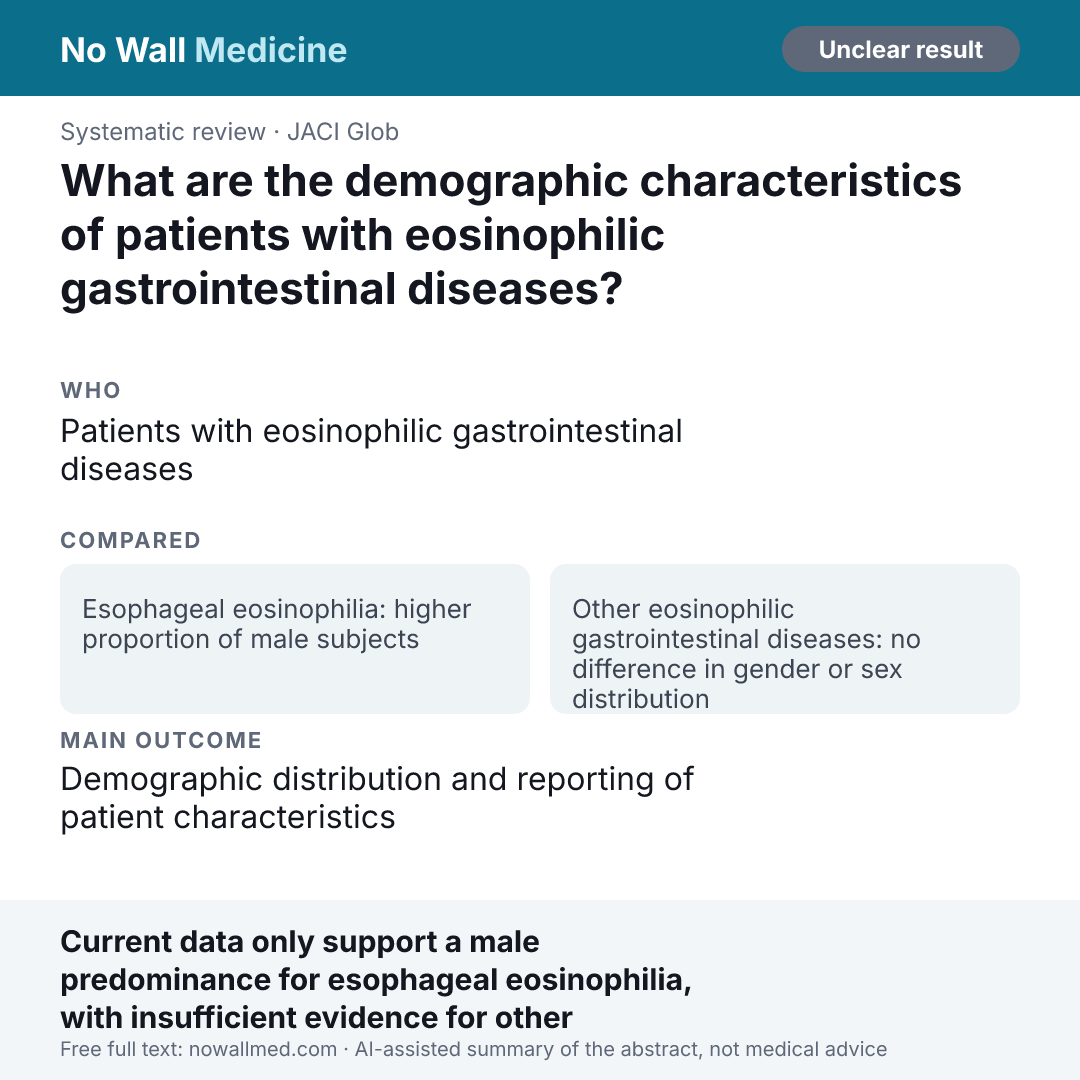
Challenging assumptions about the demographics of eosinophilic gastrointestinal diseases: A systematic review
Systematic reviewUnclear result
What are the demographic characteristics of patients with eosinophilic gastrointestinal diseases?
Who
Patients with eosinophilic gastrointestinal diseases
Compared
Esophageal eosinophilia: higher proportion of male subjects
Other eosinophilic gastrointestinal diseases: no difference in gender or sex distribution
Main outcome
Demographic distribution and reporting of patient characteristics
Bottom line: Current data only support a male predominance for esophageal eosinophilia, with insufficient evidence for other demographic enrichments.
Limitation: Demographics were rarely described and reporting of race and ethnicity was inconsistent with guidelines.
JACI Glob · 2024-04-16 · Save PNG