Visual abstracts
New randomized trials and meta-analyses from leading journals at a glance: who was studied, what was compared, and what was found. Every paper is free to read in full.
All specialtiesCardiology 1302Oncology 1136Gastroenterology & Hepatology 462Infectious Disease 853Neurology 533Psychiatry & Mental Health 648Pulmonology 558Critical Care 384Endocrinology & Diabetes 725Pediatrics 766Surgery 606Orthopedics & Sports Medicine 248Neurosurgery 175Cardiothoracic & Vascular Surgery 144Plastic & Reconstructive Surgery 201Nephrology 276Rheumatology 173Hematology 271Dermatology 135Ophthalmology 143Obstetrics & Gynecology 406Public & Global Health 252Radiology & Imaging 167Anesthesiology 242Urology 239ENT (Otolaryngology) 178Emergency Medicine 141Allergy & Immunology 89Geriatrics 269Family Medicine & Primary Care 164Medical Genetics & Genomics 139Pathology & Laboratory Medicine 40Physical Medicine & Rehabilitation 225Palliative Care 117Nutrition 338Digital Health & AI 662General Medicine 121
From risk to chronicity: genetic and neuroimaging insights into the evolving patterns of spontaneous brain activity in schizophrenia
Neuroimaging meta-analysisBenefit found
How does spontaneous brain activity and genetic association change across schizophrenia stages?
Who
High-risk, first-episode, and chronic schizophrenia stages
Compared
High-risk stage: reduced brain activity in the right median cingulate and paracingulate gyri
First-episode stage: increased activity in the right putamen and decreased activity in the left gyrus rectus and right postcentral gyrus
Chronic stage: heightened activity in the right inferior frontal gyrus and reduced activity in the superior occipital gyrus and right postcentral gyrus
Main outcome
Spontaneous brain activity alterations and associated genes
Bottom line: Brain activity alterations and 199 consistent genes across schizophrenia stages may serve as universal biomarkers and therapeutic targets.
Psychol Med · 2025-10-10Download image

Effect of neuromuscular blocking agents on tracheal intubation quality in paediatric patients: a systematic review using network meta-analysis and meta-regression
Systematic review and network meta-analysisBenefit found
How do different neuromuscular blocking agents affect tracheal intubation quality in paediatric patients?
Who
8008
Healthy paediatric participants aged 0 to 12 years
Compared
Non depolarising neuromuscular blocking agents: excellent (OR: 2.97 [1.82-5.10]) and acceptable (OR: 2.29 [1.14-4.39]) intubation conditions
Intubation without neuromuscular blocking agents
Main outcome
excellent and acceptable tracheal intubation conditions
Bottom line: Non depolarising neuromuscular blocking agents enhance excellent and acceptable intubation conditions in paediatric patients.
Br J Anaesth · 2025-10-10Download image

Machine Learning to Predict Extranodal Extension in Head and Neck Squamous Cell Carcinoma: A Systematic Review and Meta-Analysis
Systematic review and meta-analysisBenefit found
Can machine learning algorithms diagnose extranodal extension in head and neck squamous cell carcinoma?
Who
1407
Patients with head and neck squamous cell carcinoma
Compared
Machine learning algorithms: pooled AUC of 0.92 (95% CI [0.915, 0.923])
Radiologists: pooled AUCs of 0.65 (95% CI [0.645-0.654])
Main outcome
Diagnostic accuracy of detecting extranodal extension using computed tomography imaging
Result: pooled AUC of 0.92 (95% CI [0.915, 0.923])
Bottom line: Machine learning algorithms demonstrate superior diagnostic performance in predicting extranodal extension compared to radiologists.
Laryngoscope · 2025-10-10Download image

Health professional education in autism and intellectual disability: systematic review
Systematic review of 34 studiesBenefit found
Do educational interventions improve care for autism and intellectual disability?
Who
Health and mental health professionals
Compared
Educational interventions
Control
Main outcome
Health professionals' knowledge and skills
Bottom line: Educational interventions have positive effects
Limitation: Limited evidence and heterogeneity of measures
BJPsych Open · 2025-10-10Download image

The translational potential of salvinorin A: systematic review and meta-analysis of preclinical studies
Systematic review and meta-analysis of preclinical studiesMixed results
What is the therapeutic potential and toxicity of salvinorin A in preclinical models?
Who
Animal models of neurological and psychiatric disorders
Compared
Salvinorin A
Control
Main outcome
Therapeutic potential, toxic effects, and pharmacokinetic characteristics
Bottom line: Salvinorin A shows potential for pain, addiction, and stroke, but side effects may limit clinical use.
Limitation: Findings on depression were inconsistent, with both antidepressant and depressogenic outcomes reported.
Transl Psychiatry · 2025-10-10Download image

Magnitude and predictors of mild cognitive impairment among older populations in Africa: a systematic review and meta-analysis
Meta-analysisMixed results
Mild cognitive impairment in older Africans
Who
older populations in Africa · Africa
Compared
29.39%with mild cognitive impairment (95% CI:24.73, 34.04)
without mild cognitive impairment
Main outcome
mild cognitive impairment
Bottom line: Mild cognitive impairment is significant in older Africans
Transl Psychiatry · 2025-10-10Download image

Viral infections and the risk of neurodegenerative diseases: a comprehensive meta-analysis and systematic review
Meta-analysis and systematic reviewMixed results
Do viral infections increase the risk of neurodegenerative diseases?
Who
Observational studies on viral infections and neurodegenerative diseases
Compared
Alzheimer's disease risk: cytomegalovirus OR 1.41 (95% CI 1.03, 1.93)
Alzheimer's disease risk: severe acute respiratory syndrome coronavirus 2 OR 1.88 (95% CI 1.53, 2.32)
Alzheimer's disease risk: hepatitis C virus OR 1.39 (95% CI 1.14, 1.69)
Alzheimer's disease risk: human herpesvirus OR 1.24 (95% CI 1.02, 1.51)
Main outcome
Risk of Alzheimer's disease, Parkinson's disease, and amyotrophic lateral sclerosis
Bottom line: Select viral infections are associated with increased Alzheimer's and Parkinson's disease risk, but no association was found with amyotrophic lateral sclerosis.
Limitation: Need for further large, multicenter, and longitudinal studies to confirm causality.
Transl Psychiatry · 2025-10-10Download image

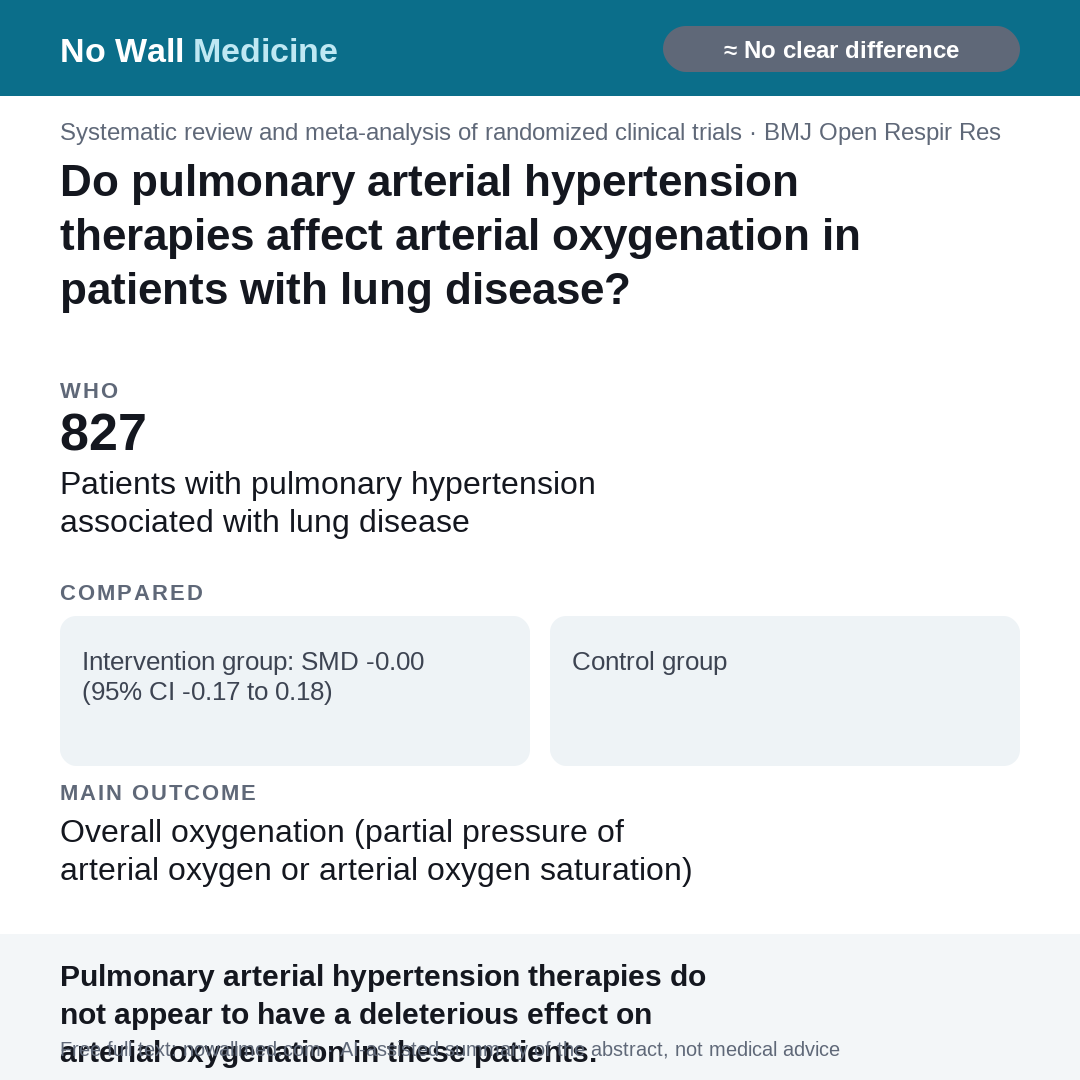
Effects of pulmonary arterial hypertension therapies on arterial oxygenation in patients with pulmonary hypertension associated with lung disease: a systematic review and meta-analysis
Systematic review and meta-analysis of randomized clinical trialsNo clear difference
Do pulmonary arterial hypertension therapies affect arterial oxygenation in patients with lung disease?
Who
827
Patients with pulmonary hypertension associated with lung disease
Compared
Intervention group: SMD -0.00 (95% CI -0.17 to 0.18)
Control group
Main outcome
Overall oxygenation (partial pressure of arterial oxygen or arterial oxygen saturation)
Result: standard mean difference -0.00 (95% CI -0.17 to 0.18)
Bottom line: Pulmonary arterial hypertension therapies do not appear to have a deleterious effect on arterial oxygenation in these patients.
BMJ Open Respir Res · 2025-10-10Download image
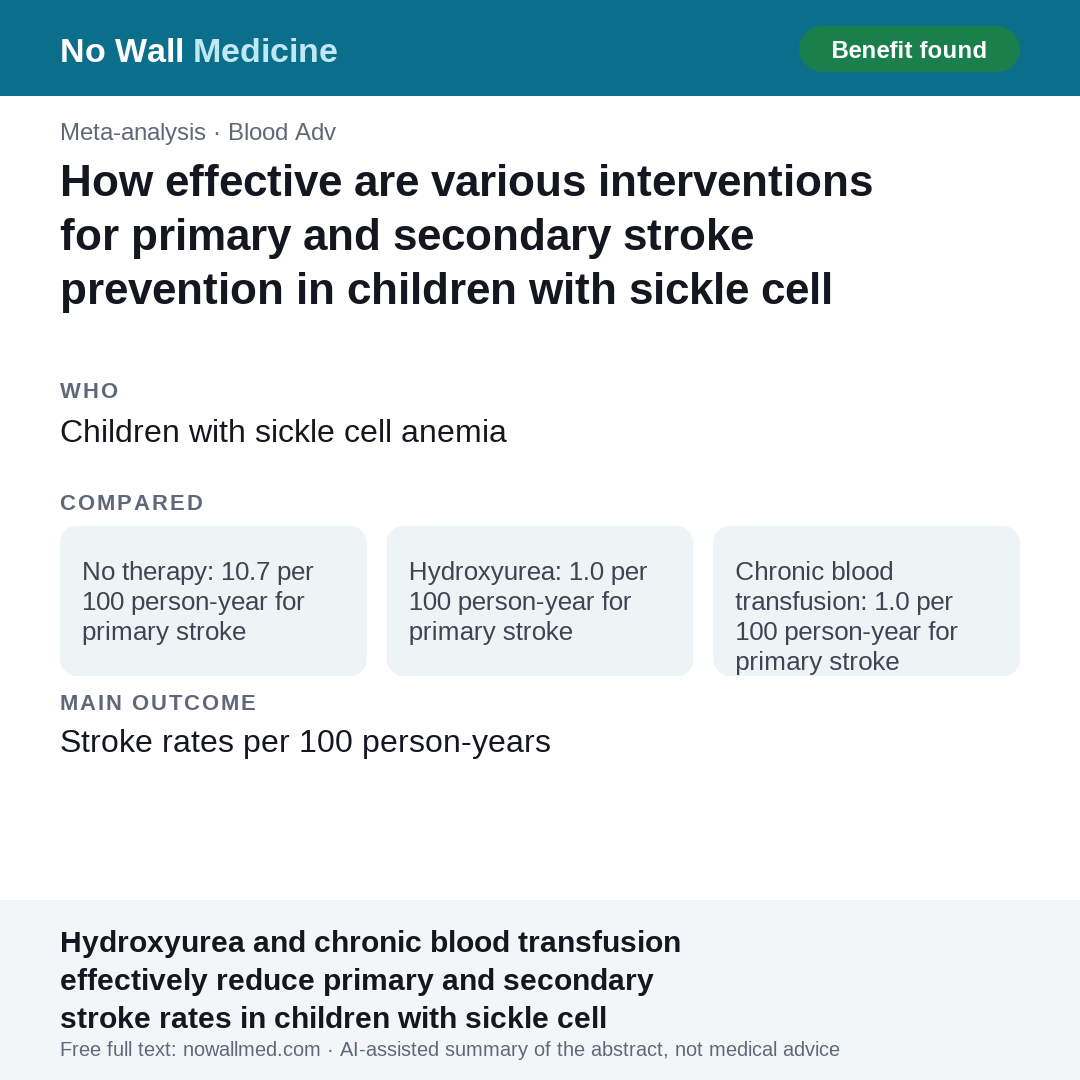
Primary and secondary stroke prophylaxis in children with sickle cell anemia: a meta-analysis
Meta-analysisBenefit found
How effective are various interventions for primary and secondary stroke prevention in children with sickle cell anemia?
Who
Children with sickle cell anemia
Compared
No therapy: 10.7 per 100 person-year for primary stroke
Hydroxyurea: 1.0 per 100 person-year for primary stroke
Chronic blood transfusion: 1.0 per 100 person-year for primary stroke
Main outcome
Stroke rates per 100 person-years
Bottom line: Hydroxyurea and chronic blood transfusion effectively reduce primary and secondary stroke rates in children with sickle cell anemia.
Blood Adv · 2025-10-10Download image
Prevalence of Dropout and Influencing Factors in Digital Psychosocial Intervention Trials for Adult Illicit Substance Users: Systematic Review and Meta-Analysis
Systematic review and meta-analysisNo clear difference
What is the dropout rate in digital psychosocial interventions for adult illicit substance users?
Who
9693
Adult illicit drug users
Compared
22%Intervention group (95% CI 0.13-0.36)
26%Control group (95% CI 0.16-0.39)
Main outcome
Dropout rate during treatment and longest follow-up
Bottom line: Dropout rates in digital psychosocial interventions were comparable to control groups, with various demographic and clinical factors influencing attrition.
Limitation: High heterogeneity was observed between studies.
J Med Internet Res · 2025-10-10Download image

Combined Immersive and Nonimmersive Virtual Reality With Mirror Therapy for Patients With Stroke: Systematic Review and Meta-Analysis of Randomized Controlled Trials
Systematic review and meta-analysis of randomized controlled trialsMixed results
Does combined virtual reality and mirror therapy improve stroke rehabilitation?
Who
475
Patients with stroke
Compared
Combined virtual reality and mirror therapy
Control
Main outcome
Upper extremity motor function and hand dexterity
Result: mean difference 3.50 (95% CI 1.47 to 5.53)
Bottom line: Combined virtual reality and mirror therapy improves upper extremity function, but may not reach minimal clinically important difference.
Limitation: The pooled Fugl-Meyer Assessment-Upper Extremity improvement did not consistently exceed the minimal clinically important difference.
J Med Internet Res · 2025-10-10Download image

The effectiveness and perceived value of feedback used in cardiac arrest simulation education: a mixed-method systematic review
Mixed-method systematic reviewBenefit found
How effective and valuable is feedback in cardiac arrest simulation education?
Who
Healthcare, nursing, and medical students and professionals
Compared
All feedback methods: improves performance
Device-based feedback: is preferred
Main outcome
Effectiveness and perceived value of feedback methods
Bottom line: All feedback improves performance, but objective device-based feedback is preferred in cardiac arrest simulation education.
Limitation: Limited research on non-technical aspects and qualitative explorations of participant experiences.
Scand J Trauma Resusc Emerg Med · 2025-10-10Download image

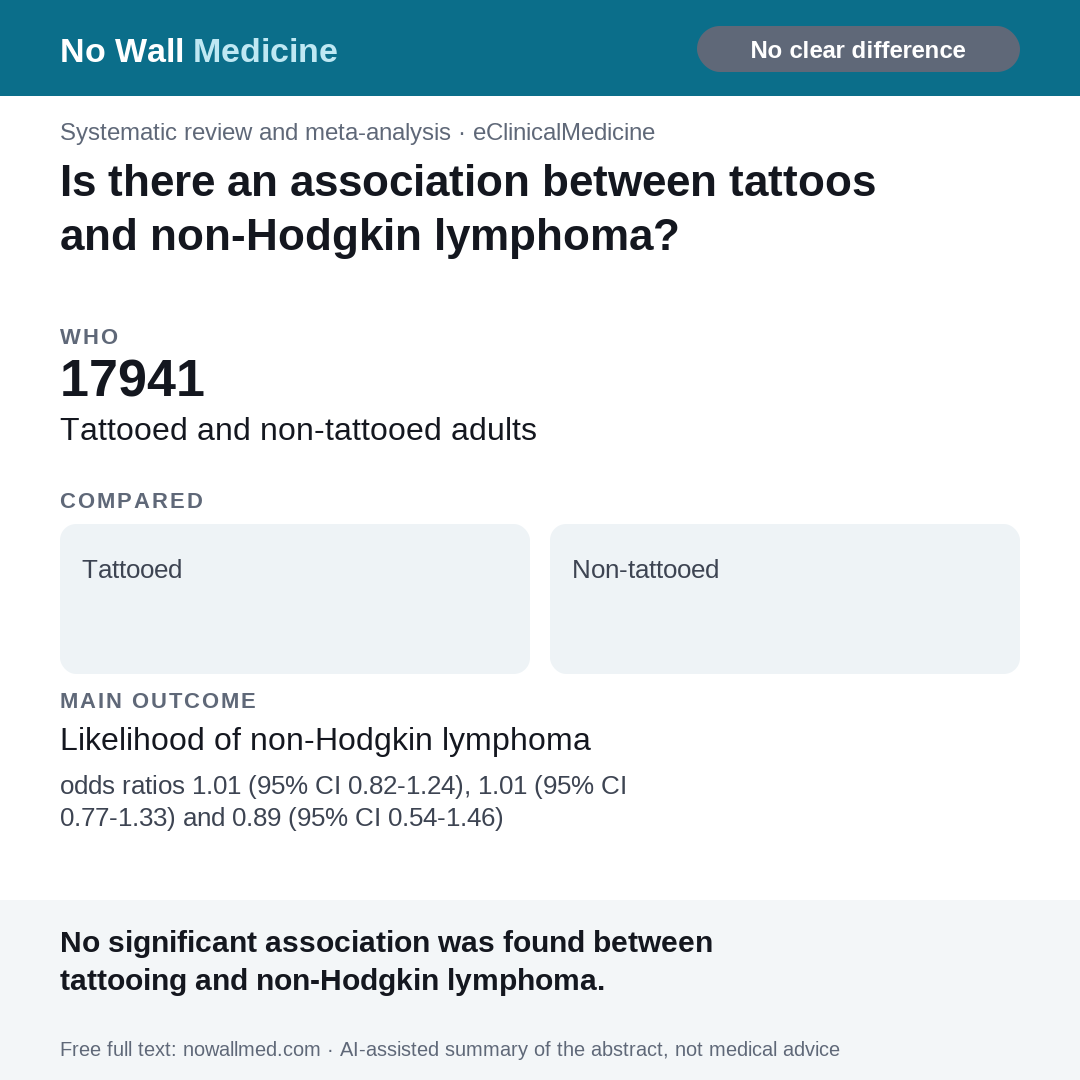
Investigating the potential association between tattoos and lymphoma: an exploratory systematic review and meta-analysis
Systematic review and meta-analysisNo clear difference
Is there an association between tattoos and non-Hodgkin lymphoma?
Who
17941
Tattooed and non-tattooed adults
Compared
Tattooed
Non-tattooed
Main outcome
Likelihood of non-Hodgkin lymphoma
Result: odds ratios 1.01 (95% CI 0.82-1.24), 1.01 (95% CI 0.77-1.33) and 0.89 (95% CI 0.54-1.46)
Bottom line: No significant association was found between tattooing and non-Hodgkin lymphoma.
Limitation: Low certainty of evidence due to lack of high-quality studies with similar methodologies.
eClinicalMedicine · 2025-10-09Download image
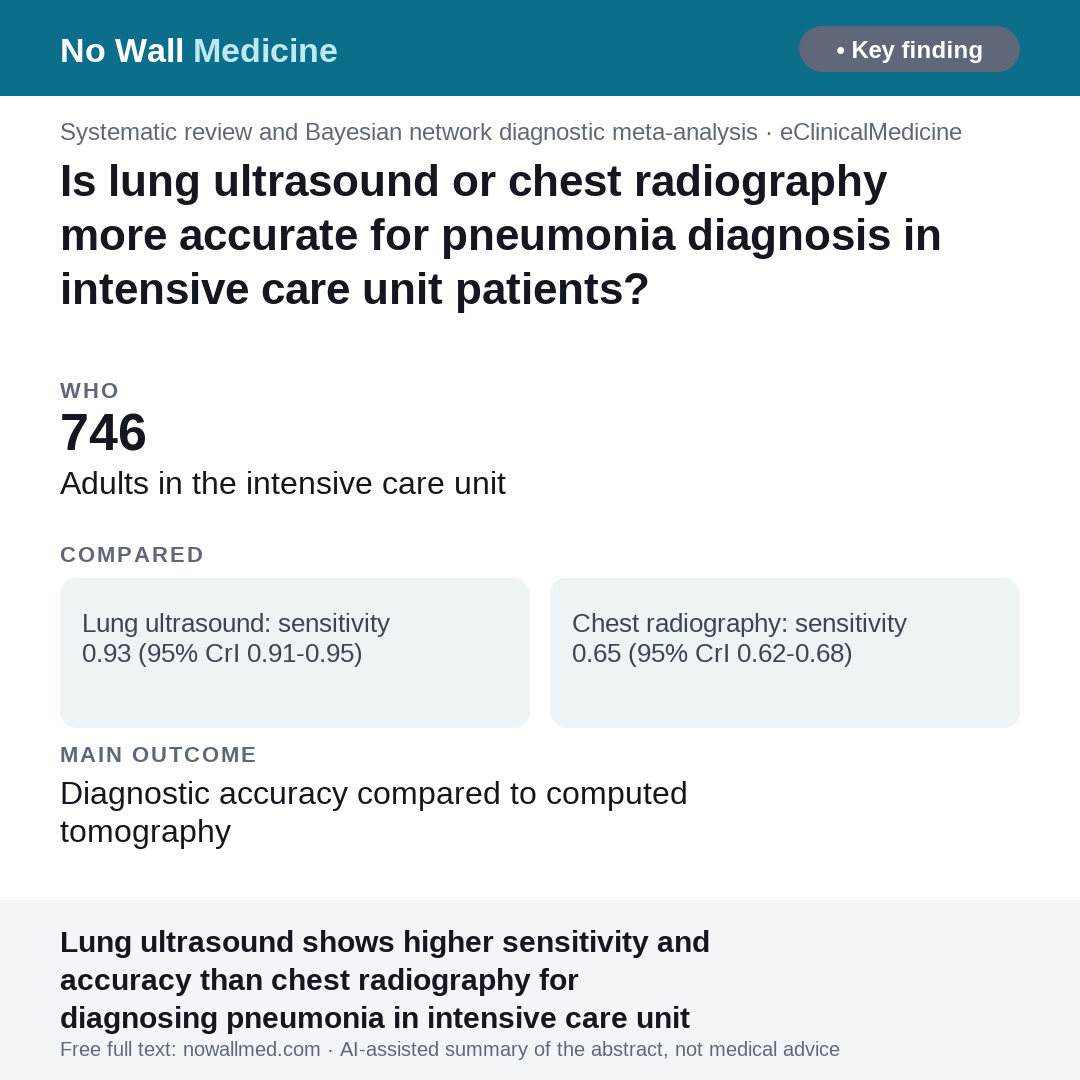
Lung ultrasound vs chest radiography for pneumonia diagnosis in critically ill patients in the intensive care unit: a systematic review and Bayesian network diagnostic meta-analysis
Systematic review and Bayesian network diagnostic meta-analysisBenefit found
Is lung ultrasound or chest radiography more accurate for pneumonia diagnosis in intensive care unit patients?
Who
746
Adults in the intensive care unit
Compared
Lung ultrasound: sensitivity 0.93 (95% CrI 0.91-0.95)
Chest radiography: sensitivity 0.65 (95% CrI 0.62-0.68)
Main outcome
Diagnostic accuracy compared to computed tomography
Result: AUC 0.88 (95% CrI 0.77-0.95) for lung ultrasound vs 0.76 (95% CrI 0.60-0.88) for chest radiography
Bottom line: Lung ultrasound shows higher sensitivity and accuracy than chest radiography for diagnosing pneumonia in intensive care unit patients.
Limitation: High risk of bias for index test blinding and moderate specificity.
eClinicalMedicine · 2025-10-09Download image
Role of antibiotic prophylaxis in liver transplant patients undergoing endoscopic retrograde cholangiopancreatography: a systematic review and meta-analysis
Meta-analysis of 26 studiesMixed results
Role of antibiotics in liver transplant patients
Who
3800
liver transplant recipients undergoing ERCP
Compared
with antibiotics
without antibiotics
Main outcome
post-ERCP infections and complications
Bottom line: Infections and resistance remain prevalent despite antibiotics
eClinicalMedicine · 2025-10-09Download image

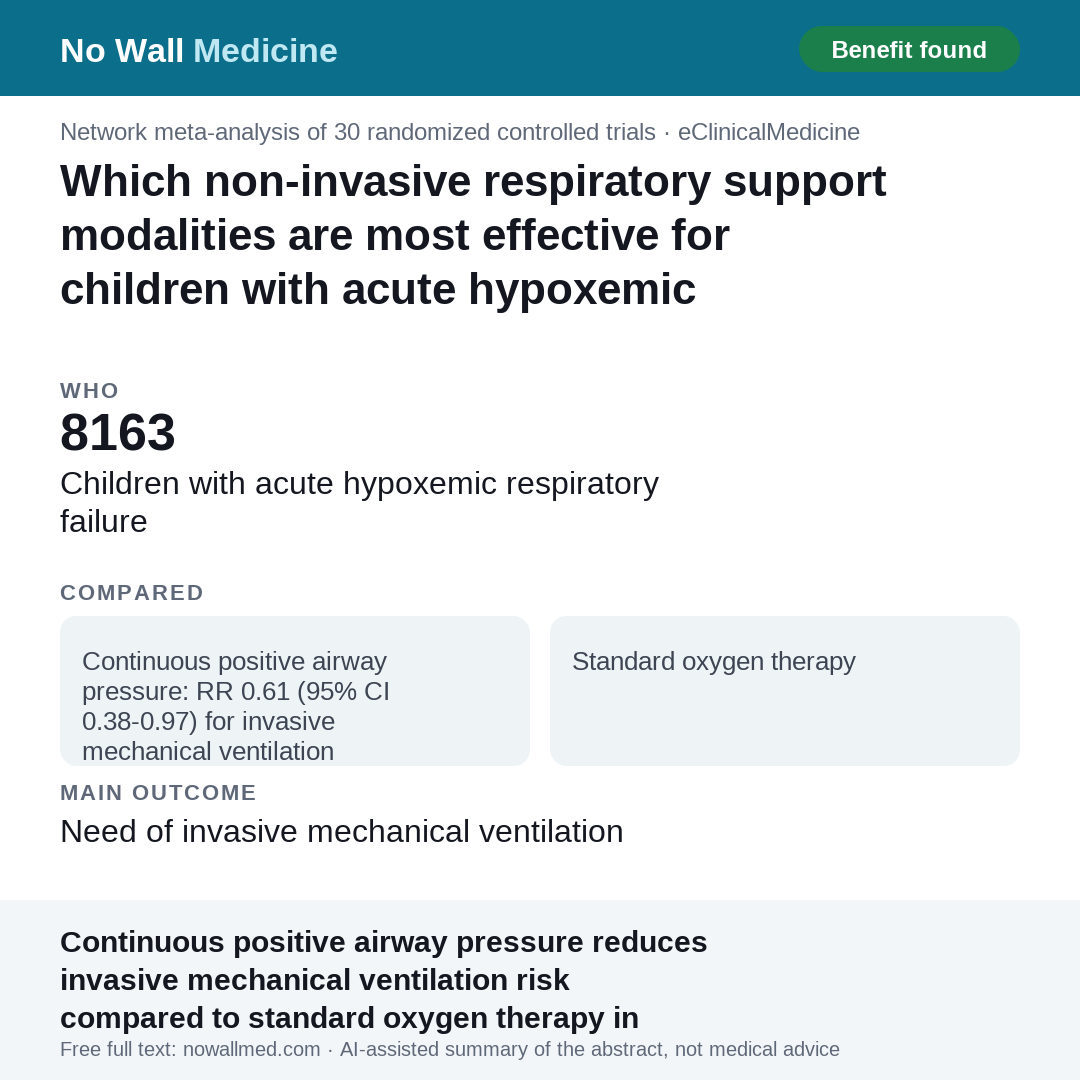
Non-invasive respiratory support in pediatric patients with acute hypoxemic respiratory failure: a systematic review and network meta-analysis of randomized controlled trials
Network meta-analysis of 30 randomized controlled trialsBenefit found
Which non-invasive respiratory support modalities are most effective for children with acute hypoxemic respiratory failure?
Who
8163
Children with acute hypoxemic respiratory failure
Compared
Continuous positive airway pressure: RR 0.61 (95% CI 0.38-0.97) for invasive mechanical ventilation
Standard oxygen therapy
Main outcome
Need of invasive mechanical ventilation
Result: risk ratio 0.61 (95% CI 0.38 to 0.97)
Bottom line: Continuous positive airway pressure reduces invasive mechanical ventilation risk compared to standard oxygen therapy in children.
Limitation: The certainty of evidence for non-invasive ventilation was very low.
Funded by: Foundation of the First Hospital of Lanzhou University and others
eClinicalMedicine · 2025-10-09Download image
Prediction models for self-harm and suicide: a systematic review and critical appraisal
Systematic review and critical appraisalMixed results
What is the predictive performance and methodological quality of self-harm and suicide risk models?
Who
Statistical models for predicting non-fatal self-harm and suicide
Compared
Development studies: median C index 0.82
External validations: median C index 0.81
Main outcome
Predictive performance and methodological quality of risk models
Result: C indices ranged from 0.61 to 0.97 (median 0.82) in development and 0.60 to 0.86 (median 0.81) in external validations
Bottom line: Five models showed good performance, but most studies had high risk of bias and lacked external validation.
Limitation: Most models were at high risk of bias due to inappropriate performance evaluation and insufficient sample sizes.
BMC Med · 2025-10-09Download image

Evaluation of bacteriophages as a signature of microbiome health: a systematic review and meta-analysis
Systematic review and meta-analysisMixed results
Can bacteriophage viromes serve as broad signatures of microbiome health?
Who
74
Human, mouse, pig, dog, and cow hosts
Compared
Dysbiosis state: 41% reported significant changes in alpha diversity
Healthy state
Main outcome
Virome alpha and beta diversity changes in dysbiosis
Result: mean r2=0·380 (95% CI 0·597-0·163) in healthy groups
Bottom line: Shifting viral composition is a consistent signature of dysbiosis, though alpha diversity changes are variable and less consistent.
Lancet Microbe · 2025-10-09Download image

Risk factors for morbidity in both donor and recipient following minimally invasive donor hepatectomy: a systematic review
Systematic reviewMixed results
What are the risk factors for donor and recipient morbidity after minimally invasive donor hepatectomy?
Who
Donors and recipients undergoing minimally invasive donor hepatectomy
Compared
Donor risk factors
Recipient risk factors
Main outcome
Donor and recipient morbidity
Bottom line: Morbidity is linked to anatomical, operative, procedural, donor, and recipient factors, including biliary variation.
Limitation: Limited studies on risk factors require multicenter studies with larger sample sizes.
Int J Surg · 2025-10-09Download image

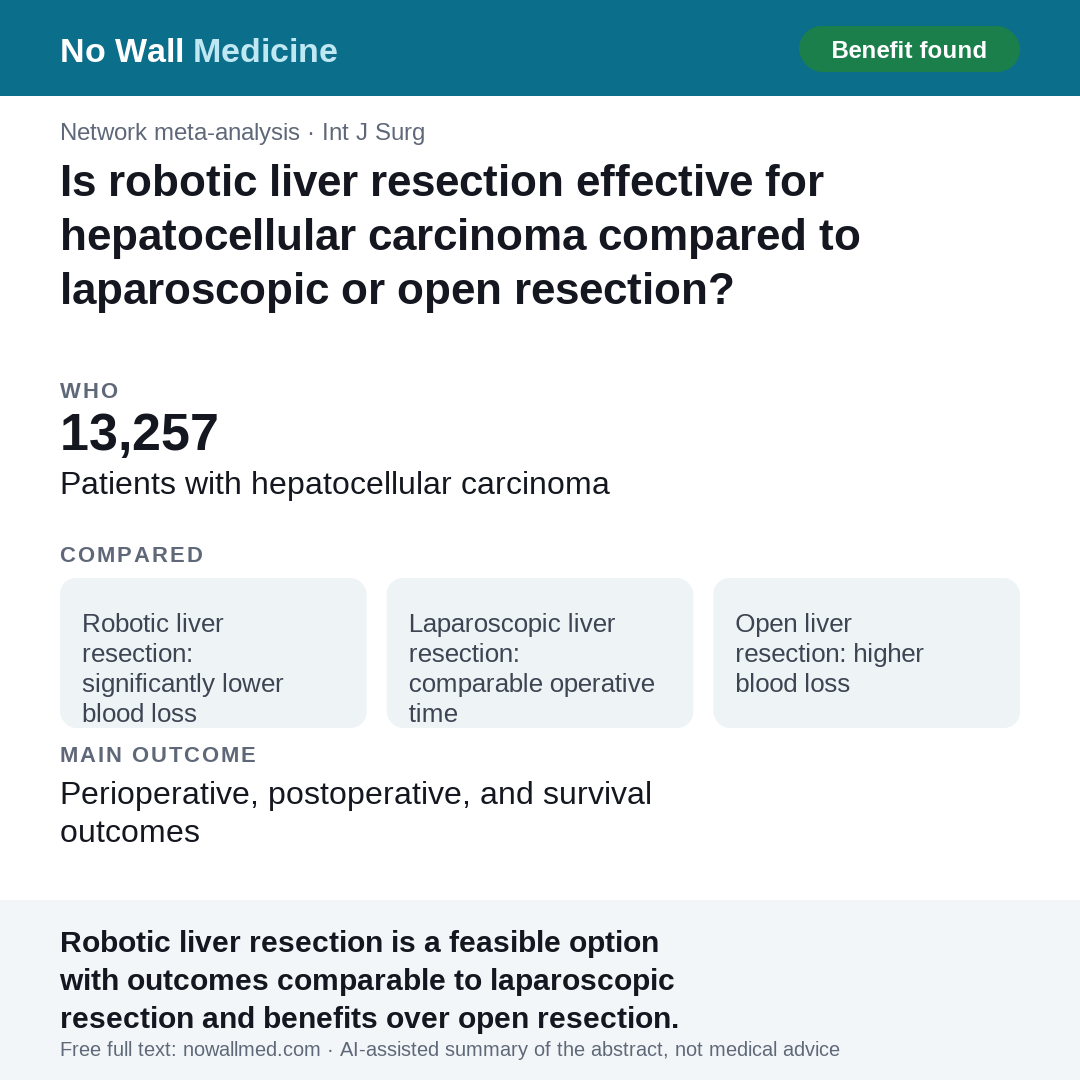
Feasibility of robotic liver resection compared with laparoscopic and open liver resection for hepatocellular carcinoma: a network meta-analysis
Network meta-analysisBenefit found
Is robotic liver resection effective for hepatocellular carcinoma compared to laparoscopic or open resection?
Who
13,257
Patients with hepatocellular carcinoma
Compared
Robotic liver resection: significantly lower blood loss
Laparoscopic liver resection: comparable operative time
Open liver resection: higher blood loss
Main outcome
Perioperative, postoperative, and survival outcomes
Bottom line: Robotic liver resection is a feasible option with outcomes comparable to laparoscopic resection and benefits over open resection.
Limitation: Further studies are needed to confirm efficacy due to limited sample size.
Int J Surg · 2025-10-09Download image