Visual abstracts
New randomized trials and meta-analyses from leading journals at a glance: who was studied, what was compared, and what was found. Every paper is free to read in full.
All specialtiesCardiology 4763Oncology 4042Gastroenterology & Hepatology 1902Infectious Disease 3756Neurology 1872Psychiatry & Mental Health 2214Pulmonology 2042Critical Care 1319Endocrinology & Diabetes 2544Pediatrics 2889Surgery 2479Orthopedics & Sports Medicine 917Neurosurgery 525Cardiothoracic & Vascular Surgery 656Plastic & Reconstructive Surgery 574Nephrology 1107Rheumatology 810Hematology 1090Dermatology 611Ophthalmology 532Obstetrics & Gynecology 1645Public & Global Health 1037Radiology & Imaging 617Anesthesiology 957Urology 745ENT (Otolaryngology) 494Emergency Medicine 481Allergy & Immunology 309Geriatrics 972Family Medicine & Primary Care 533Medical Genetics & Genomics 659Pathology & Laboratory Medicine 156Physical Medicine & Rehabilitation 734Palliative Care 421Nutrition 1560Digital Health & AI 2133General Medicine 318
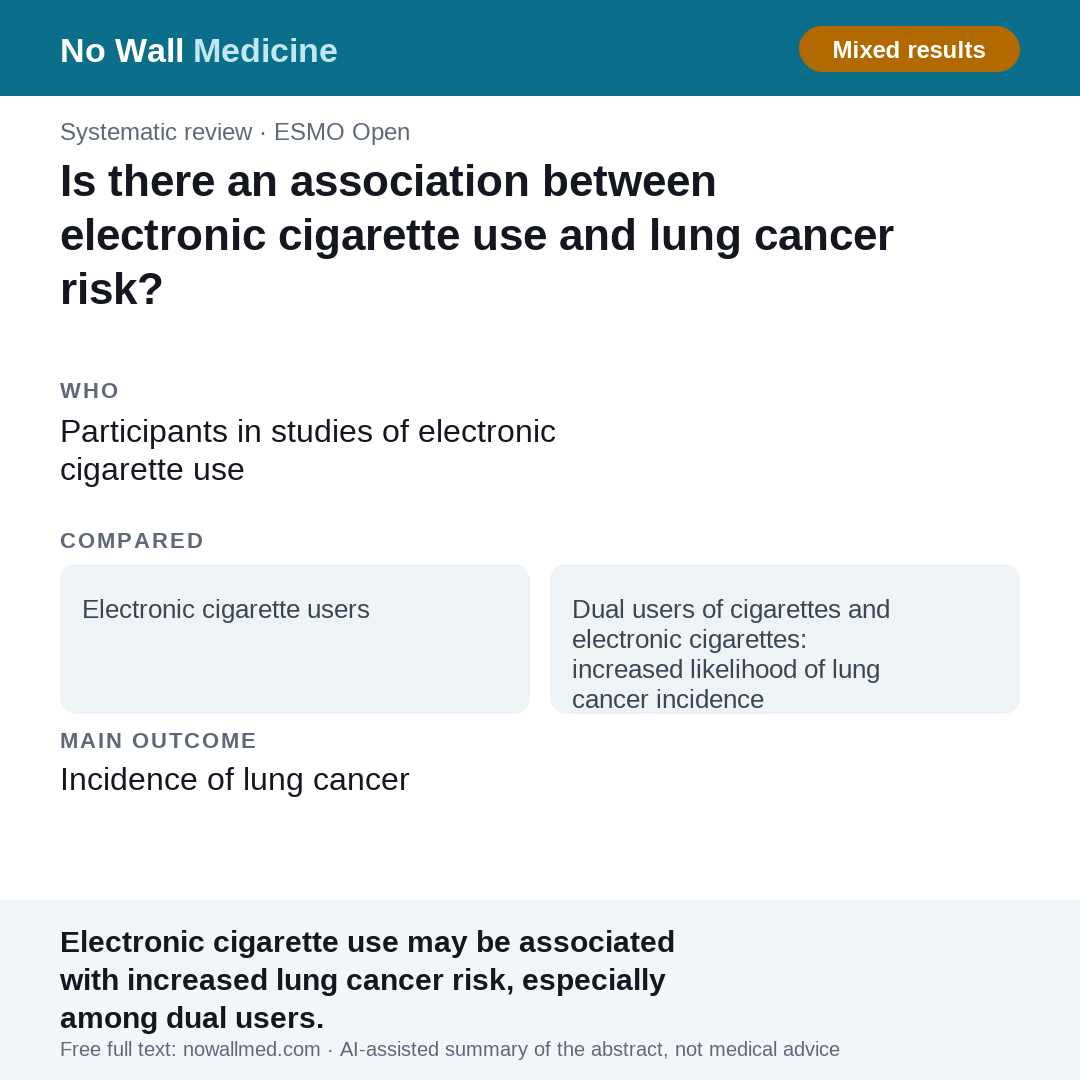
The risk of lung cancer from vaping or e-cigarette usage: a systematic review
Systematic reviewMixed results
Is there an association between electronic cigarette use and lung cancer risk?
Who
Participants in studies of electronic cigarette use
Compared
Electronic cigarette users
Dual users of cigarettes and electronic cigarettes: increased likelihood of lung cancer incidence
Main outcome
Incidence of lung cancer
Bottom line: Electronic cigarette use may be associated with increased lung cancer risk, especially among dual users.
Limitation: Causality cannot be established due to heterogeneity and limited longitudinal data.
ESMO Open · 2025-11-18Download image
Identification of 1q25.2 as a novel shared locus between schizophrenia and major depressive disorder in east Asians by integrative analyses
Linkage disequilibrium score regression and MiXeR analysesKey finding
Is there polygenic overlap between schizophrenia and major depressive disorder in East Asians?
Who
East Asian individuals with schizophrenia and major depressive disorder
Compared
Schizophrenia: 29,519 cases and 44,392 controls
Major depressive disorder: 7,753 cases and 14,046 controls
Main outcome
Polygenic overlap and shared genomic loci
Bottom line: Substantial genetic overlap exists between schizophrenia and major depressive disorder in East Asians, including a novel locus at 1q25.2.
Transl Psychiatry · 2025-11-18Download image

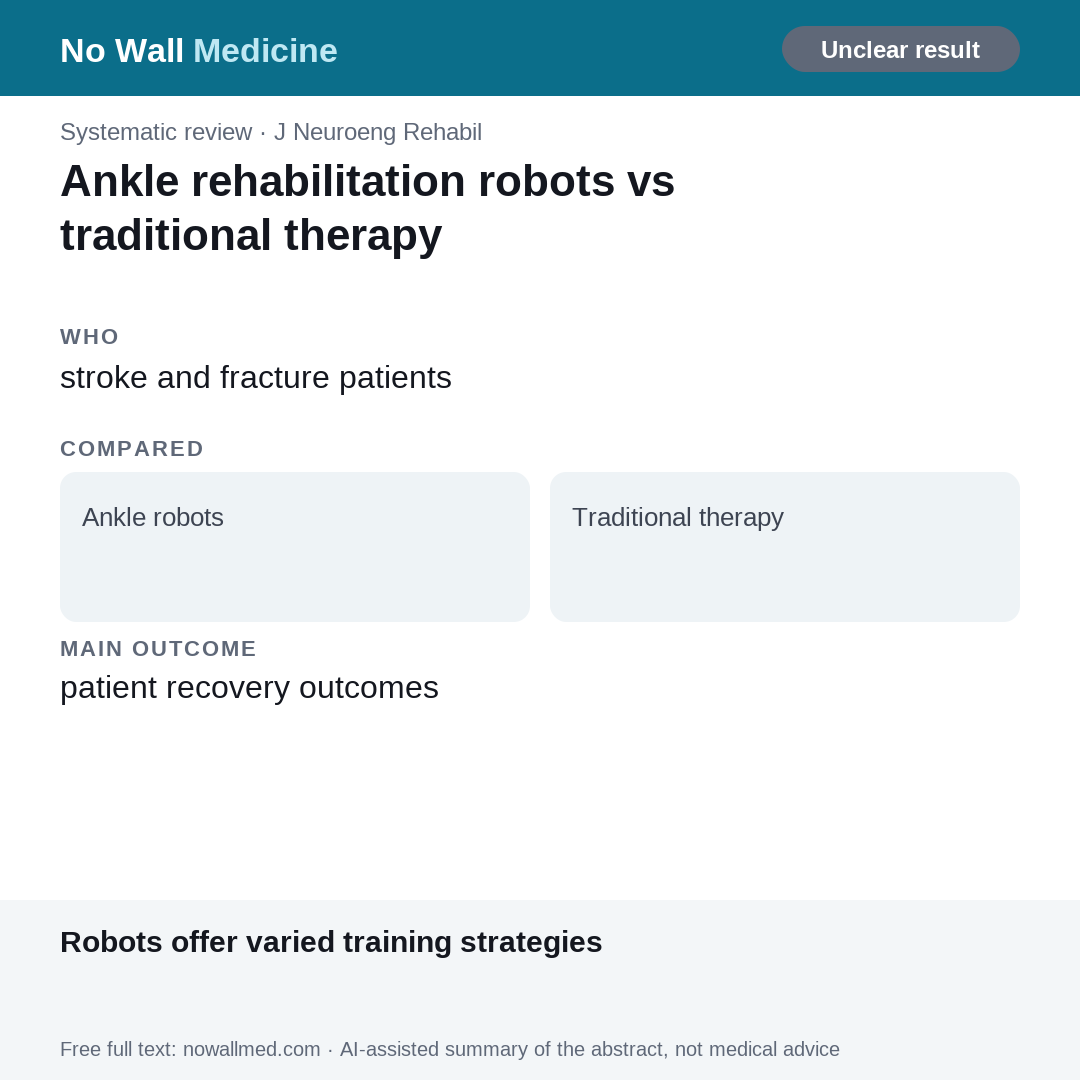
Configuration design of ankle rehabilitation robots: a systematic review and future prospects
Systematic reviewUnclear result
Ankle rehabilitation robots vs traditional therapy
Who
stroke and fracture patients
Compared
Ankle robots
Traditional therapy
Main outcome
patient recovery outcomes
Bottom line: Robots offer varied training strategies
Limitation: shortcomings in human-machine compatibility
J Neuroeng Rehabil · 2025-11-18Download image
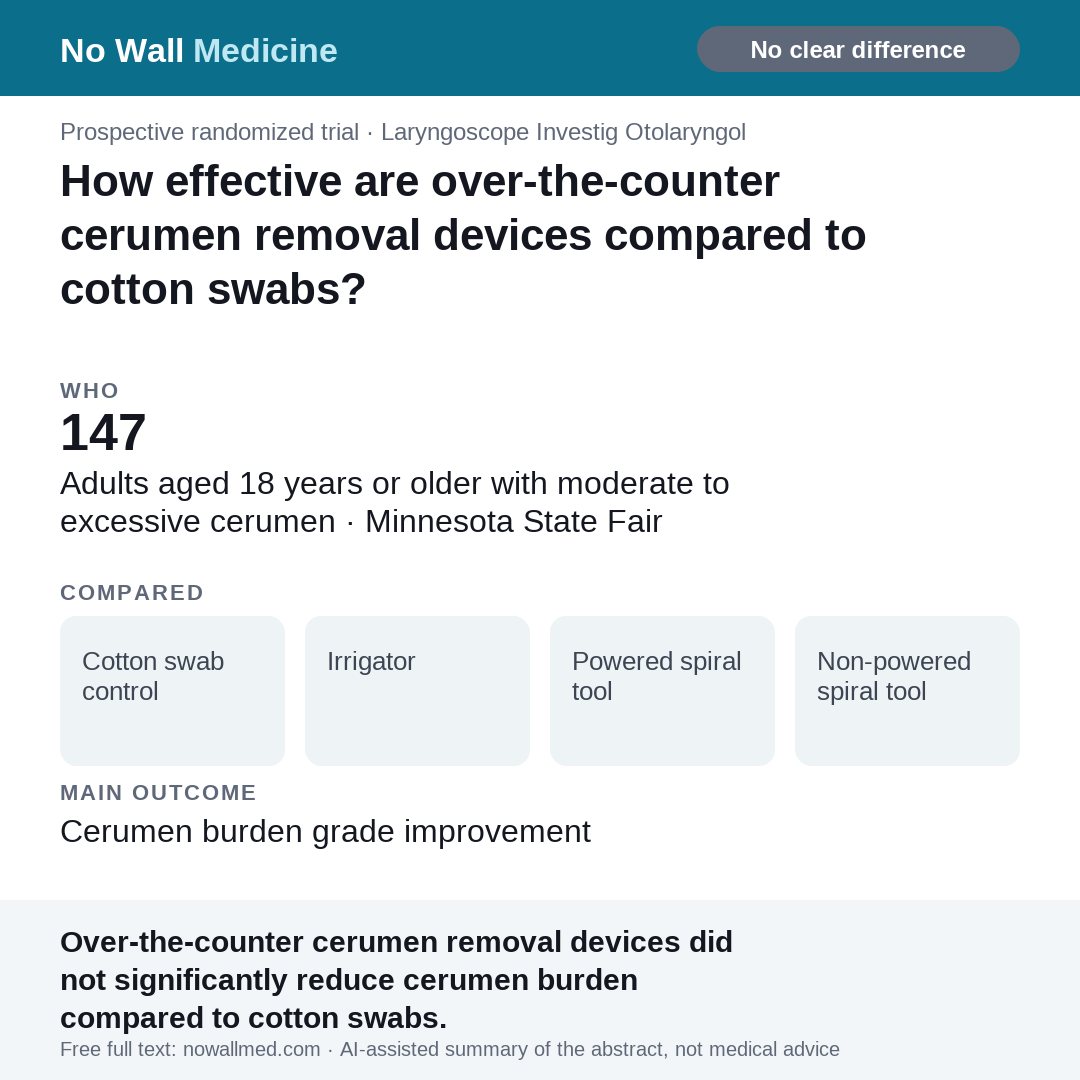
Efficacy of Over-the-Counter Cerumen Removal Devices: A Randomized Trial
Prospective randomized trialNo clear difference
How effective are over-the-counter cerumen removal devices compared to cotton swabs?
Who
147
Adults aged 18 years or older with moderate to excessive cerumen · Minnesota State Fair
Compared
Cotton swab control
Irrigator
Powered spiral tool
Non-powered spiral tool
Main outcome
Cerumen burden grade improvement
Bottom line: Over-the-counter cerumen removal devices did not significantly reduce cerumen burden compared to cotton swabs.
Laryngoscope Investig Otolaryngol · 2025-11-18Download image
Perineural versus intravenous dexamethasone for single-shot interscalene block in arthroscopic shoulder surgery: a systematic review and meta-analysis of studies published through May 2021
Systematic review and meta-analysisMixed results
Is perineural or intravenous dexamethasone better for single-shot interscalene block in shoulder surgery?
Who
846
Patients undergoing arthroscopic shoulder surgery
Compared
Perineural dexamethasone
Intravenous dexamethasone
Main outcome
Analgesia duration, sensory block duration, and motor block duration
Result: weighted mean difference 1.699 h (95% CI 0.014 to 3.384)
Bottom line: Perineural dexamethasone modestly prolongs analgesia duration, but clinical importance remains uncertain due to small pain score reductions.
Limitation: Reductions in postoperative pain scores are small and unlikely to reach clinically important thresholds.
Perioper Med · 2025-11-18Download image
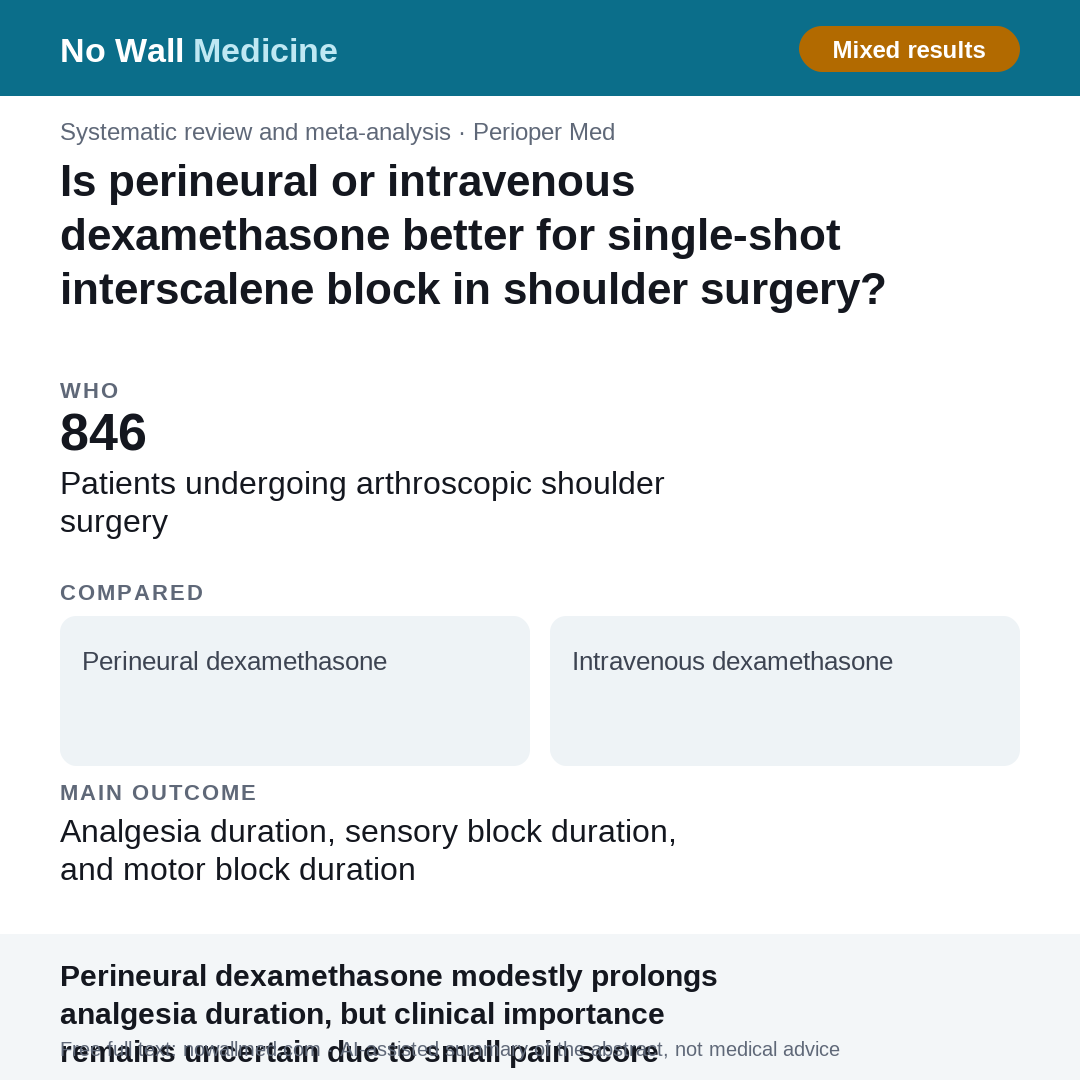
Built environment and the evolution of cardiometabolic risk factors: a systematic review and meta-analysis of longitudinal studies
Systematic review and meta-analysis of longitudinal studiesBenefit found
How do built environment features influence the evolution of cardiometabolic risk factors?
Who
Participants in longitudinal studies assessing cardiometabolic risk factors
Compared
Greater green/open space: lesser increases over time in systolic blood pressure (weighted z=3.43, p<0.001)
Greater green/open space: lesser increases over time in diastolic blood pressure (weighted z=2.89, p<0.01)
Greater walkability: lesser increases over time in systolic blood pressure (weighted z=2.95, p<0.01)
Greater walkability: lesser increases over time in glycated haemoglobin
Main outcome
Progression of continuous cardiometabolic risk biological indicators
Bottom line: Greater green/open space and healthful food environments are associated with lesser progression of cardiometabolic risk factors over time.
BMC Med · 2025-11-17Download image
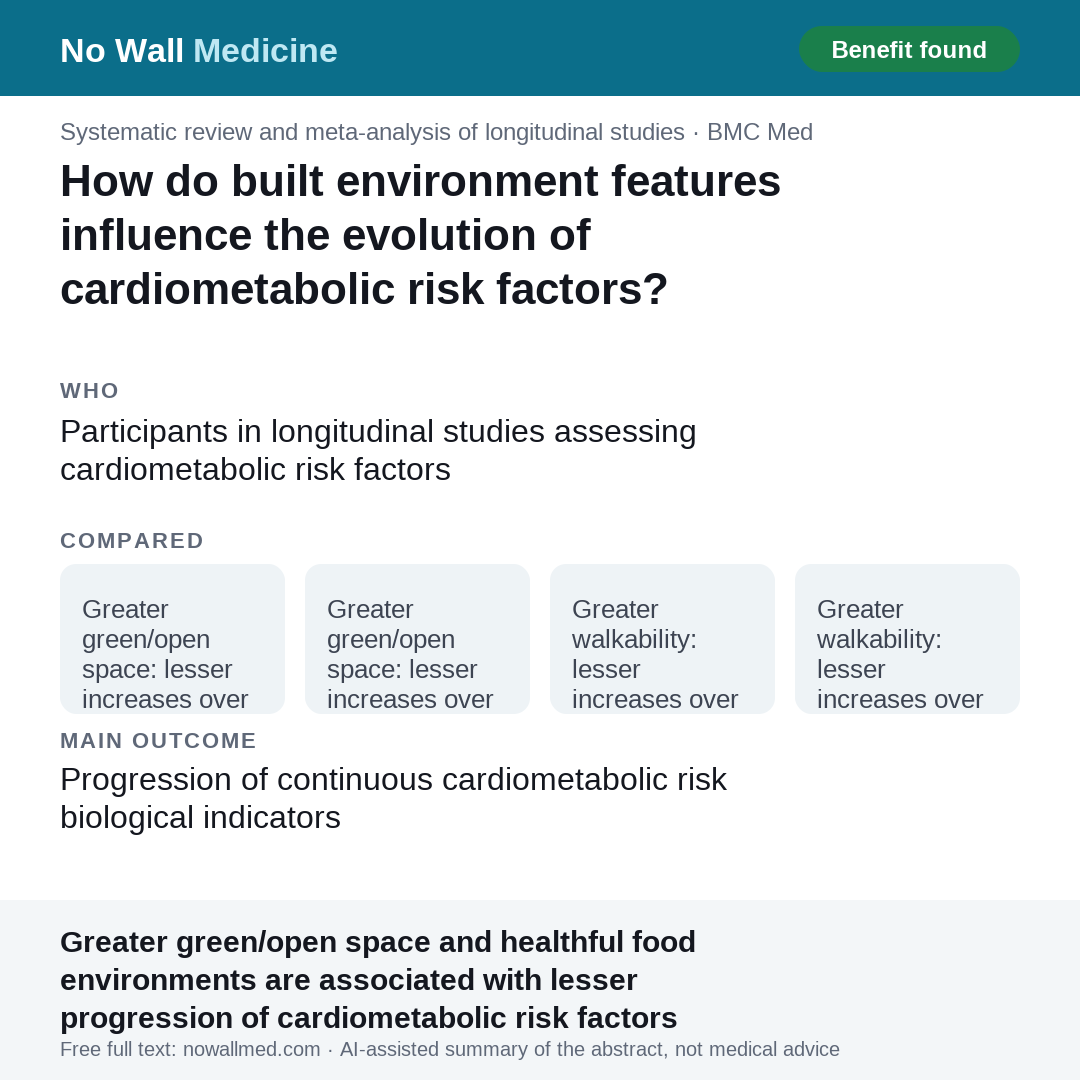
Stroke Mechanism and Severity After Left Atrial Appendage Occlusion: Insights From the LAAOS III Randomized Clinical Trial
Post hoc exploratory analysis of a randomized clinical trialBenefit found
Does left atrial appendage occlusion impact ischemic stroke subtype and outcome?
Who
4811
Patients with atrial fibrillation and CHA2DS2-VASc score at least 2 · 105 centers in 27 countries
Compared
Surgical left atrial appendage occlusion plus standard care: 16.5% mortality at 30 days after stroke
Standard care alone: 20.1% mortality at 30 days after stroke
Main outcome
Functional outcome, mortality, cortical infarcts, and cardioembolic infarcts
Result: hazard ratio 0.55 (95% CI, 0.31-0.97)
Bottom line: Left atrial appendage occlusion is associated with reduced disability, mortality, and presumed cardioembolic stroke in patients with atrial fibrillation.
JAMA Neurol · 2025-11-17Download image
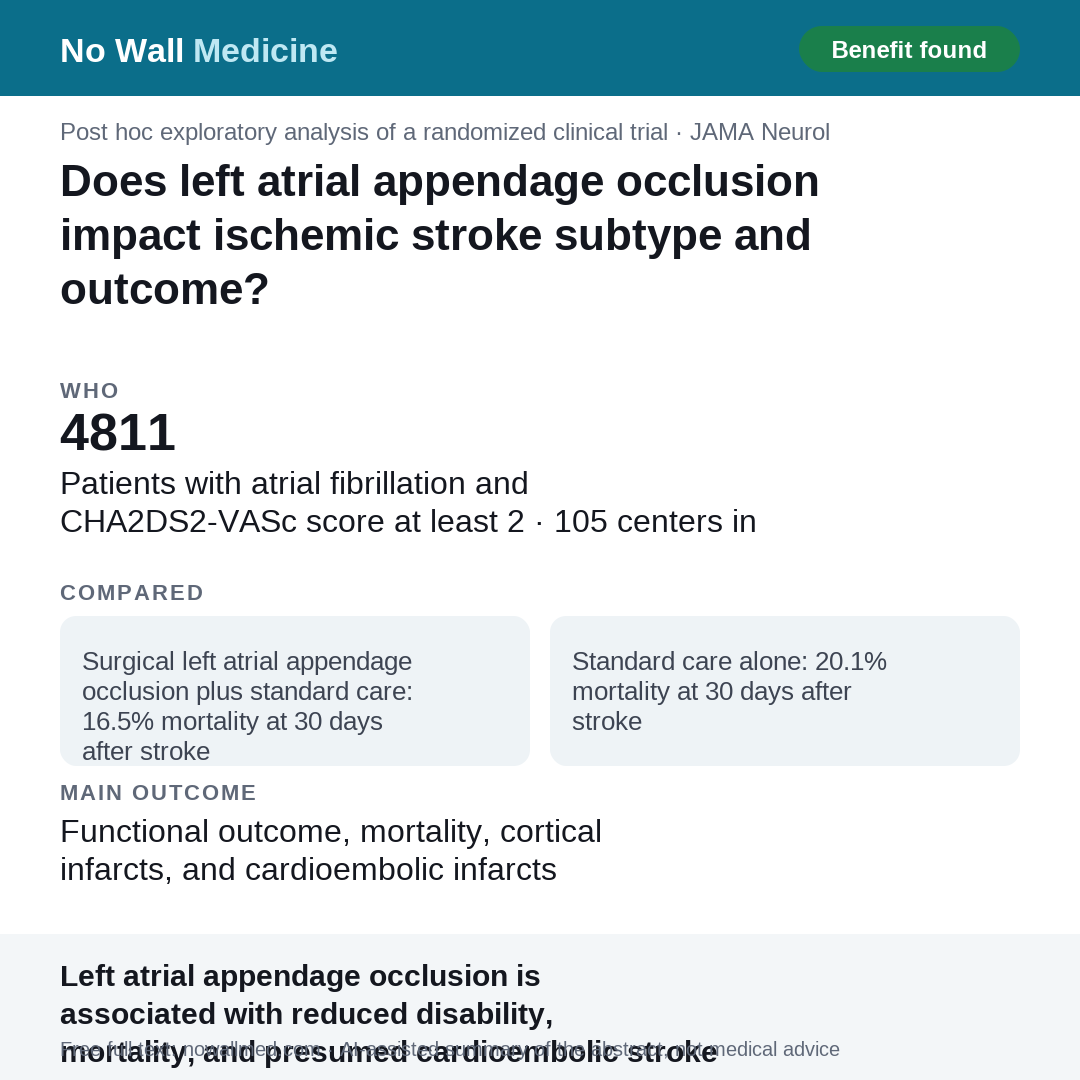
Comparison of two different bicarbonate replacement fluids during CVVH with RCA: a prospective, randomized, controlled trial
Prospective, randomized, controlled, open-label, cross-over trialBenefit found
Which bicarbonate replacement fluid achieves better acid-base balance during continuous veno-venous hemofiltration?
Who
88
Patients receiving continuous veno-venous hemofiltration with regional citrate anticoagulation · single-center trial
Compared
Low bicarbonate replacement fluid: pH excursion first phase 41%; HCO3- excursion first phase 43%
High bicarbonate replacement fluid: pH excursion first phase 52%; HCO3- excursion first phase 68%
Main outcome
Rates of pH and bicarbonate excursions
Result: odds ratio 1.78 (95% CI 1.12-2.82) for pH; 3.60 (95% CI 2.16-5.99) for HCO3-
Bottom line: Low bicarbonate replacement fluid resulted in significantly lower rates of pH and bicarbonate excursions compared to high bicarbonate replacement fluid.
Intensive Care Med · 2025-11-17Download image
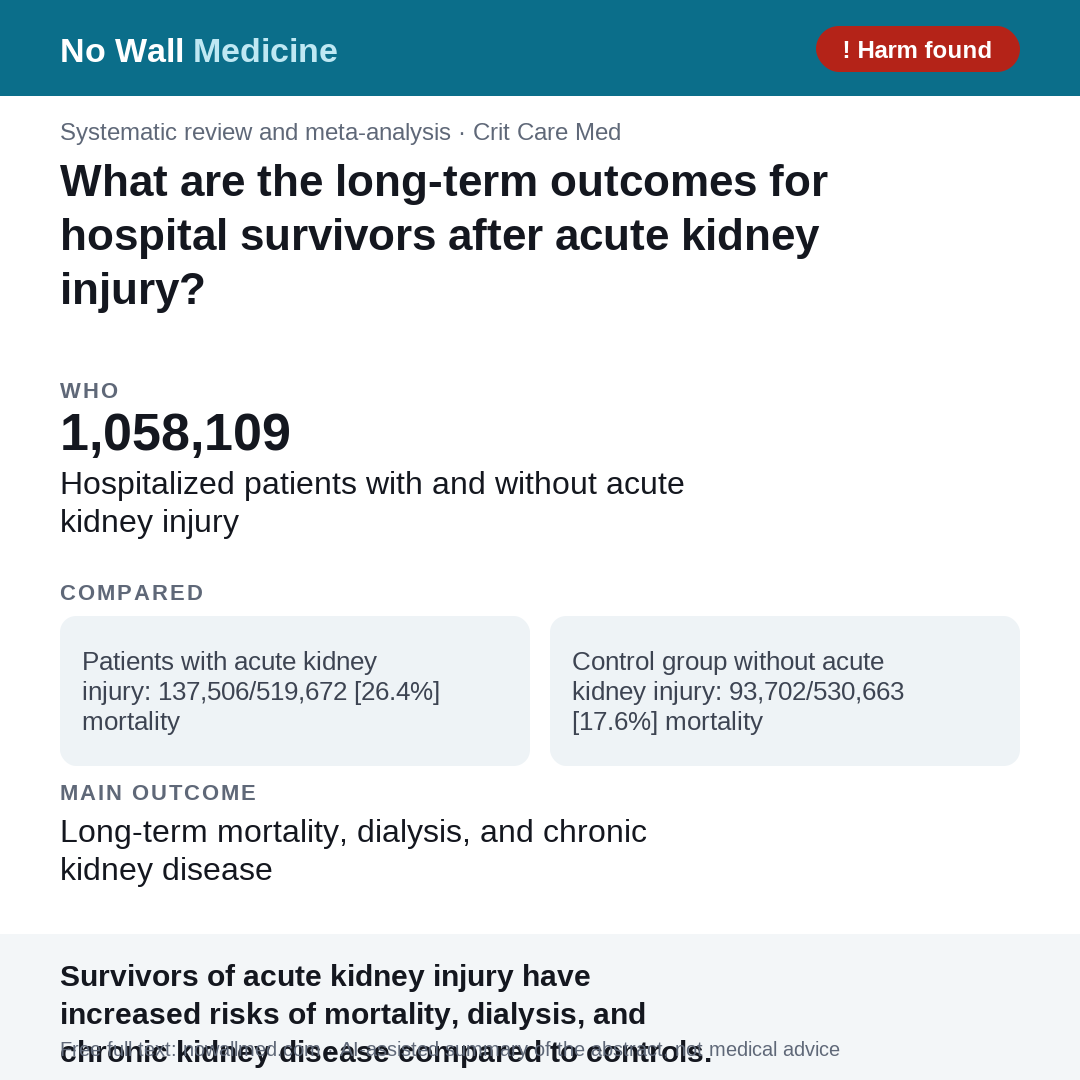
Long-Term Outcomes After Acute Kidney Injury During Hospitalization: A Systematic Review and Meta-Analysis of Matched Controls Studies
Systematic review and meta-analysisHarm found
What are the long-term outcomes for hospital survivors after acute kidney injury?
Who
1,058,109
Hospitalized patients with and without acute kidney injury
Compared
Patients with acute kidney injury: 137,506/519,672 [26.4%] mortality
Control group without acute kidney injury: 93,702/530,663 [17.6%] mortality
Main outcome
Long-term mortality, dialysis, and chronic kidney disease
Result: relative risk 1.42 (95% CI 1.13-1.78)
Bottom line: Survivors of acute kidney injury have increased risks of mortality, dialysis, and chronic kidney disease compared to controls.
Crit Care Med · 2025-11-17Download image
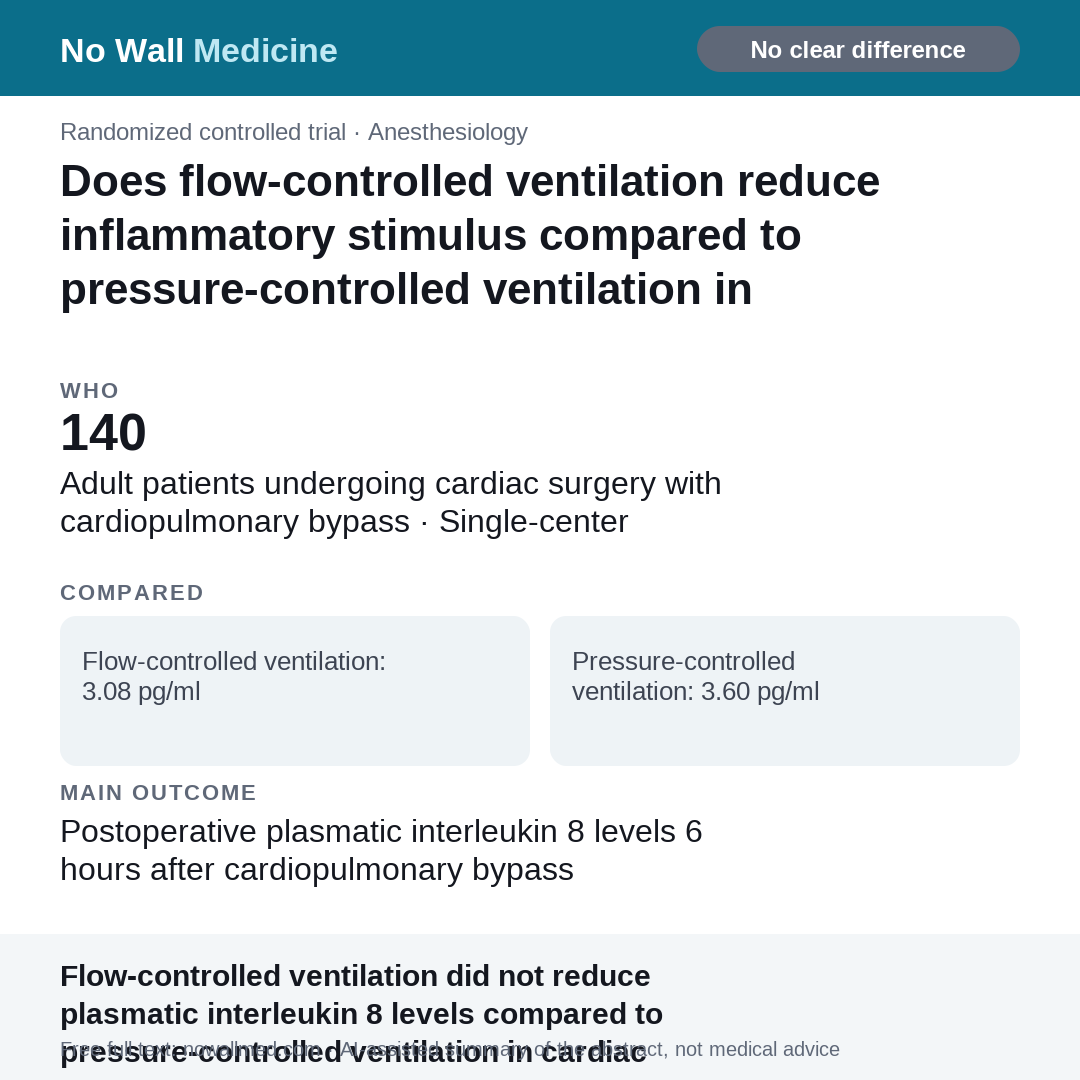
Individualized Flow-controlled versus Pressure-controlled Ventilation in Cardiac Surgery: A Randomized Controlled Trial
Randomized controlled trialNo clear difference
Does flow-controlled ventilation reduce inflammatory stimulus compared to pressure-controlled ventilation in cardiac surgery?
Who
140
Adult patients undergoing cardiac surgery with cardiopulmonary bypass · Single-center
Compared
Flow-controlled ventilation: 3.08 pg/ml
Pressure-controlled ventilation: 3.60 pg/ml
Main outcome
Postoperative plasmatic interleukin 8 levels 6 hours after cardiopulmonary bypass
Result: β, 0.08 pg/ml; 95% CI, -0.17 to 0.33
Bottom line: Flow-controlled ventilation did not reduce plasmatic interleukin 8 levels compared to pressure-controlled ventilation in cardiac surgery patients.
Limitation: Secondary outcomes including pulmonary and extrapulmonary complications were explorative.
Anesthesiology · 2025-11-17Download image
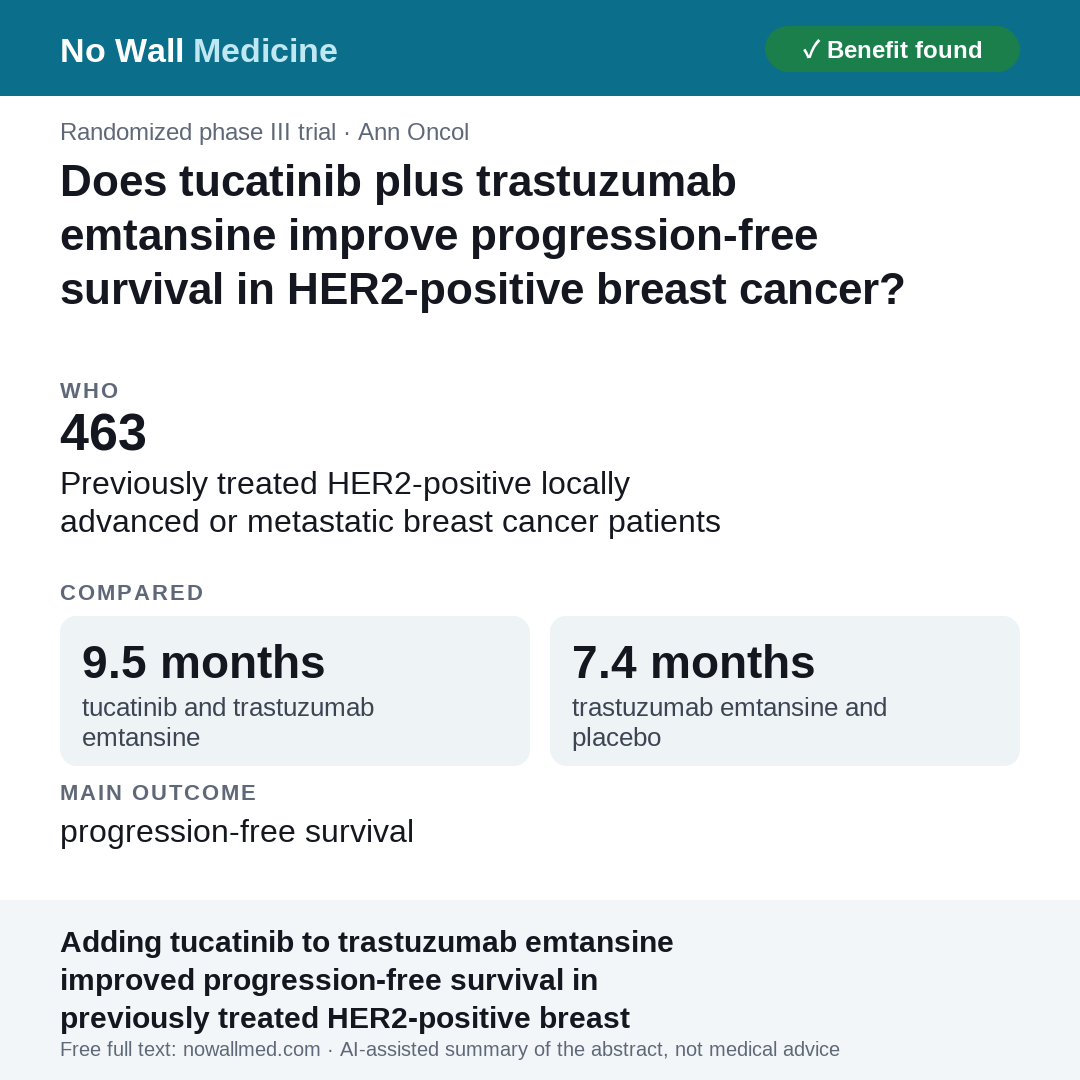
Tucatinib and trastuzumab emtansine for patients with previously treated HER2-positive locally advanced and metastatic breast cancer: primary analysis of the randomized phase III trial HER2CLIMB-02
Randomized phase III trialBenefit found
Does tucatinib plus trastuzumab emtansine improve progression-free survival in HER2-positive breast cancer?
Who
463
Previously treated HER2-positive locally advanced or metastatic breast cancer patients
Compared
9.5 monthstucatinib and trastuzumab emtansine
7.4 monthstrastuzumab emtansine and placebo
Main outcome
progression-free survival
Result: hazard ratio 0.76 (95% CI 0.61-0.95)
Bottom line: Adding tucatinib to trastuzumab emtansine improved progression-free survival in previously treated HER2-positive breast cancer patients.
Ann Oncol · 2025-11-17Download image
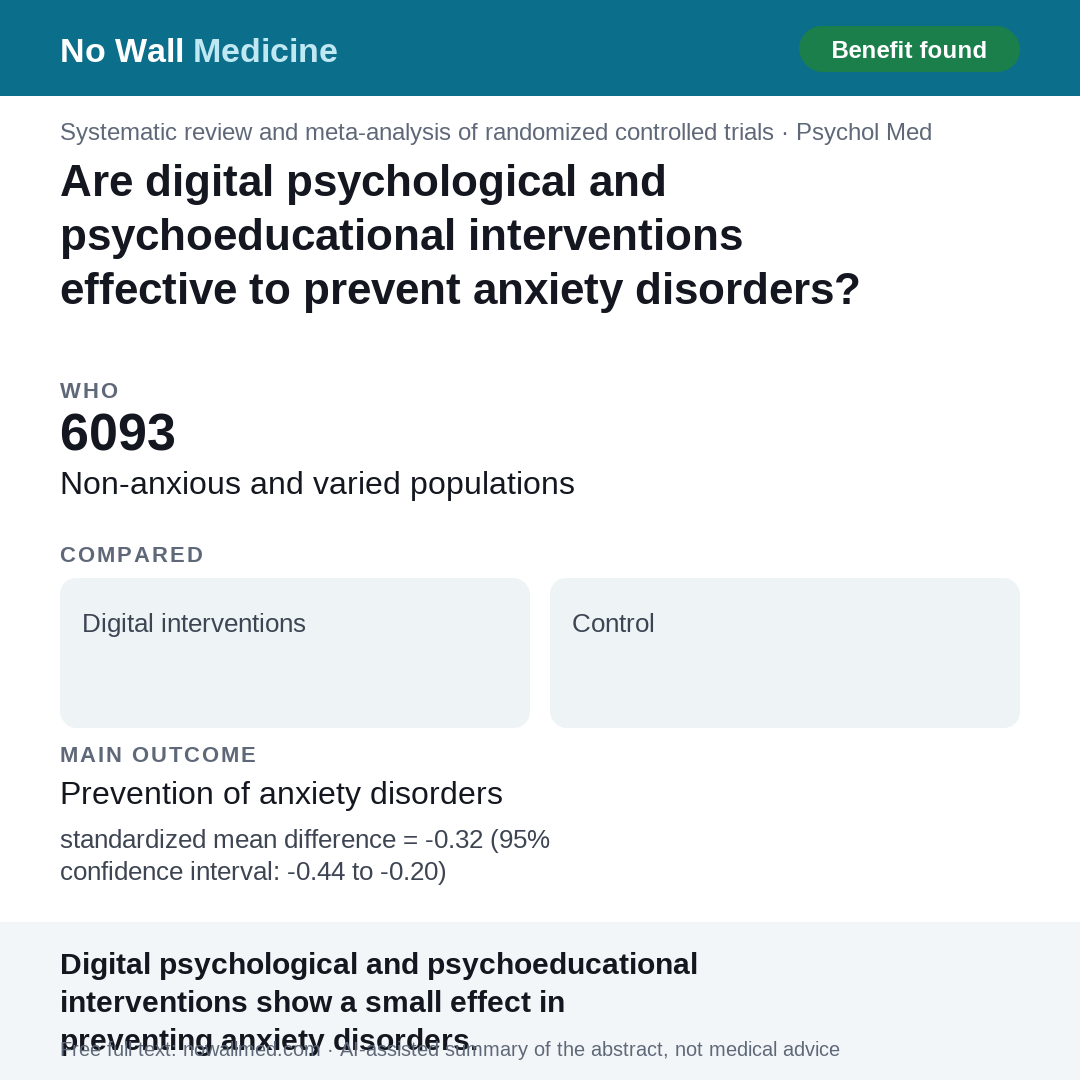
Effectiveness of digital psychological and psychoeducational interventions to prevent anxiety: Systematic review and meta-analysis of randomized controlled trials
Systematic review and meta-analysis of randomized controlled trialsBenefit, low certainty
Are digital psychological and psychoeducational interventions effective to prevent anxiety disorders?
Who
6093
Non-anxious and varied populations
Compared
Digital interventions
Control
Main outcome
Prevention of anxiety disorders
Result: standardized mean difference = -0.32 (95% confidence interval: -0.44 to -0.20)
Bottom line: Digital psychological and psychoeducational interventions show a small effect in preventing anxiety disorders.
Limitation: High heterogeneity and very low quality of evidence according to Grading of Recommendations Assessment, Development, and Evaluation.
Psychol Med · 2025-11-17Download image
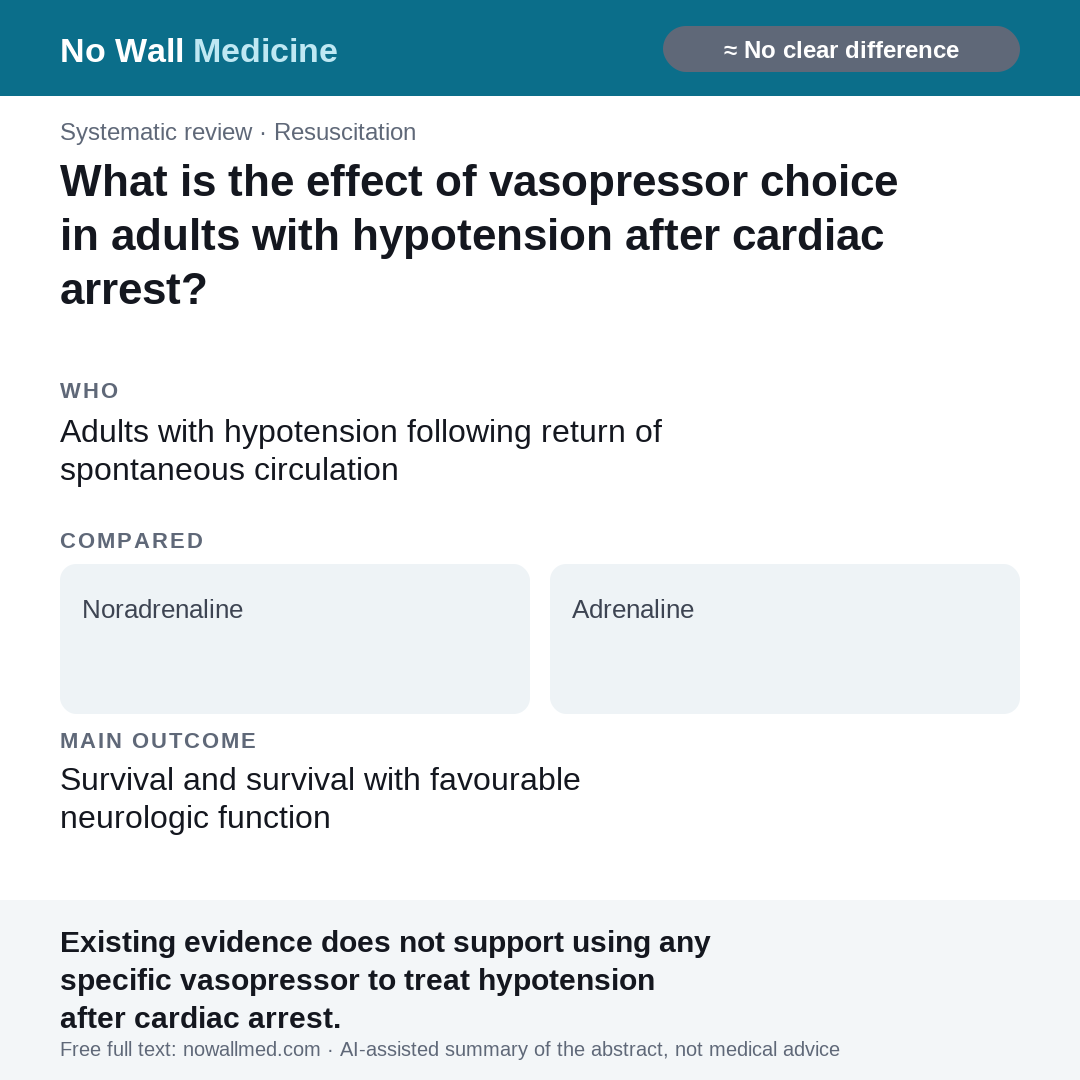
The impact of vasopressor choice in patients with hypotension after cardiac arrest: a systematic review
Systematic reviewNo clear difference
What is the effect of vasopressor choice in adults with hypotension after cardiac arrest?
Who
Adults with hypotension following return of spontaneous circulation
Compared
Noradrenaline
Adrenaline
Main outcome
Survival and survival with favourable neurologic function
Bottom line: Existing evidence does not support using any specific vasopressor to treat hypotension after cardiac arrest.
Limitation: Risk of bias was moderate or high and evidence certainty was very low.
Resuscitation · 2025-11-17Download image
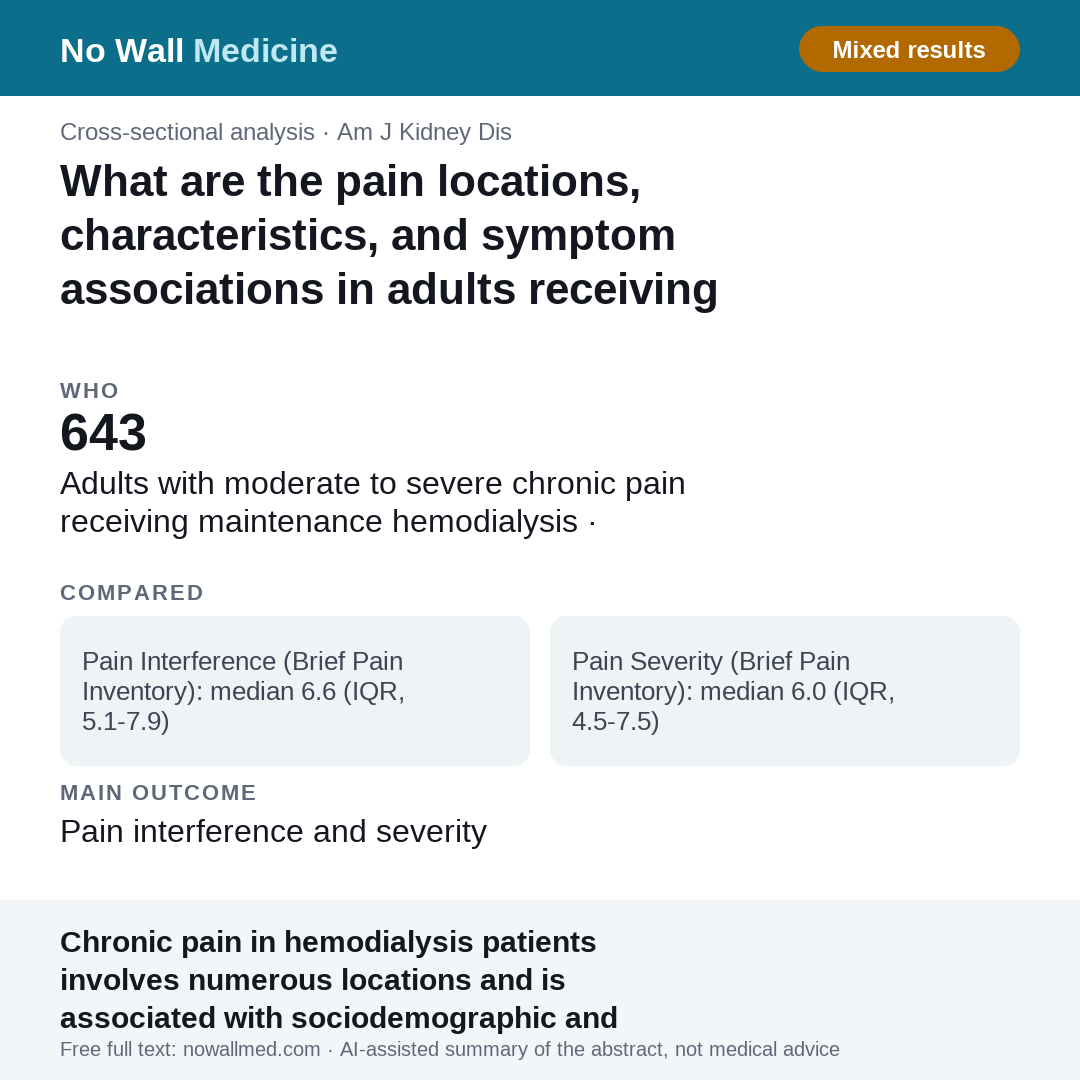
Chronic Pain Locations, Characteristics, and Associations With Other Symptoms in Adults Receiving Maintenance Hemodialysis: Findings From the HOPE Consortium Trial
Cross-sectional analysisMixed results
What are the pain locations, characteristics, and symptom associations in adults receiving maintenance hemodialysis?
Who
643
Adults with moderate to severe chronic pain receiving maintenance hemodialysis · Multicenter
Compared
Pain Interference (Brief Pain Inventory): median 6.6 (IQR, 5.1-7.9)
Pain Severity (Brief Pain Inventory): median 6.0 (IQR, 4.5-7.5)
Main outcome
Pain interference and severity
Bottom line: Chronic pain in hemodialysis patients involves numerous locations and is associated with sociodemographic and psychological factors.
Limitation: Neither relationship directionality nor causality can be inferred.
Am J Kidney Dis · 2025-11-17Download image
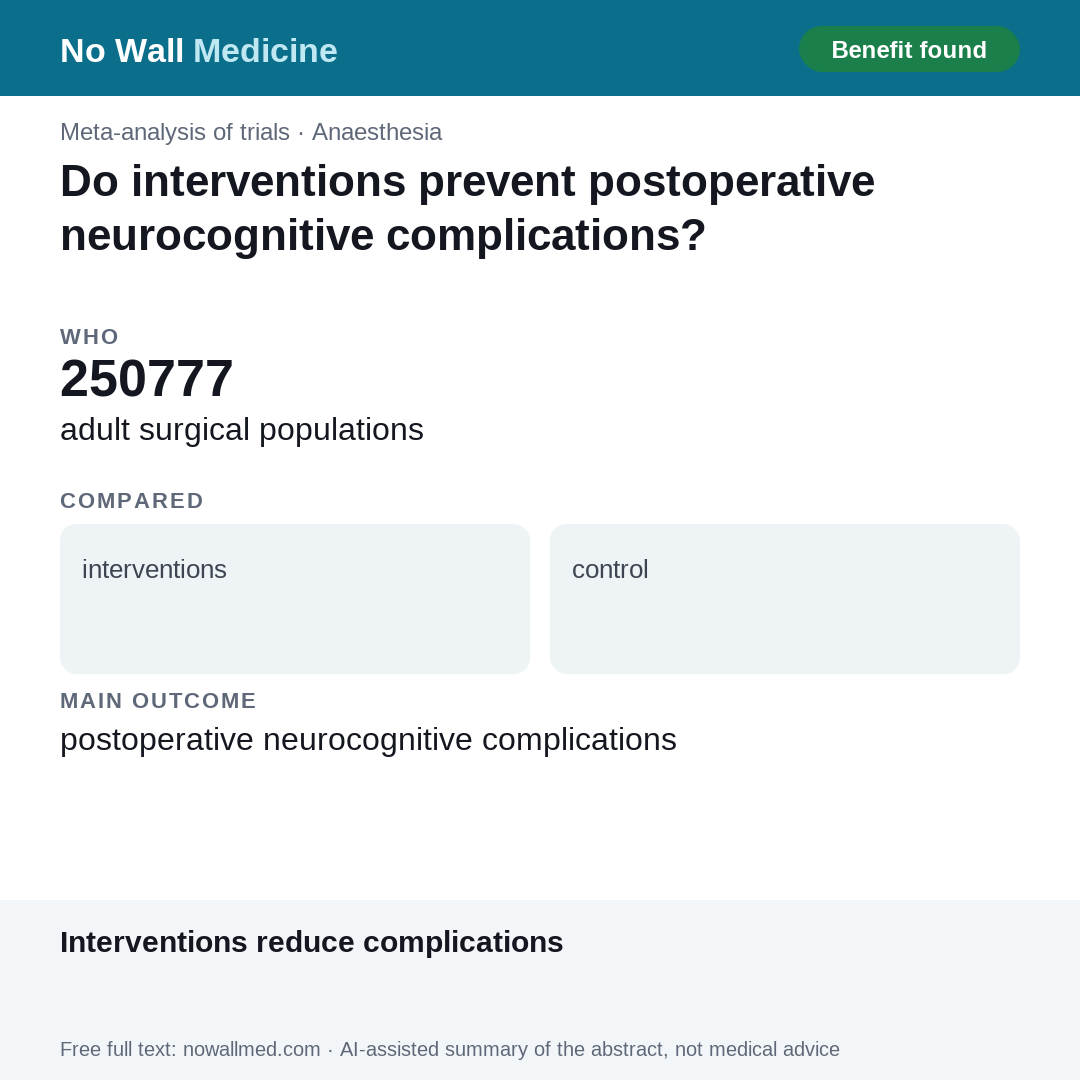
Interventions to prevent postoperative neurocognitive complications: an umbrella review of meta-analyses of randomised controlled trials
Meta-analysis of trialsBenefit found
Do interventions prevent postoperative neurocognitive complications?
Who
250777
adult surgical populations
Compared
interventions
control
Main outcome
postoperative neurocognitive complications
Bottom line: Interventions reduce complications
Limitation: very low certainty of evidence
Anaesthesia · 2025-11-17Download image
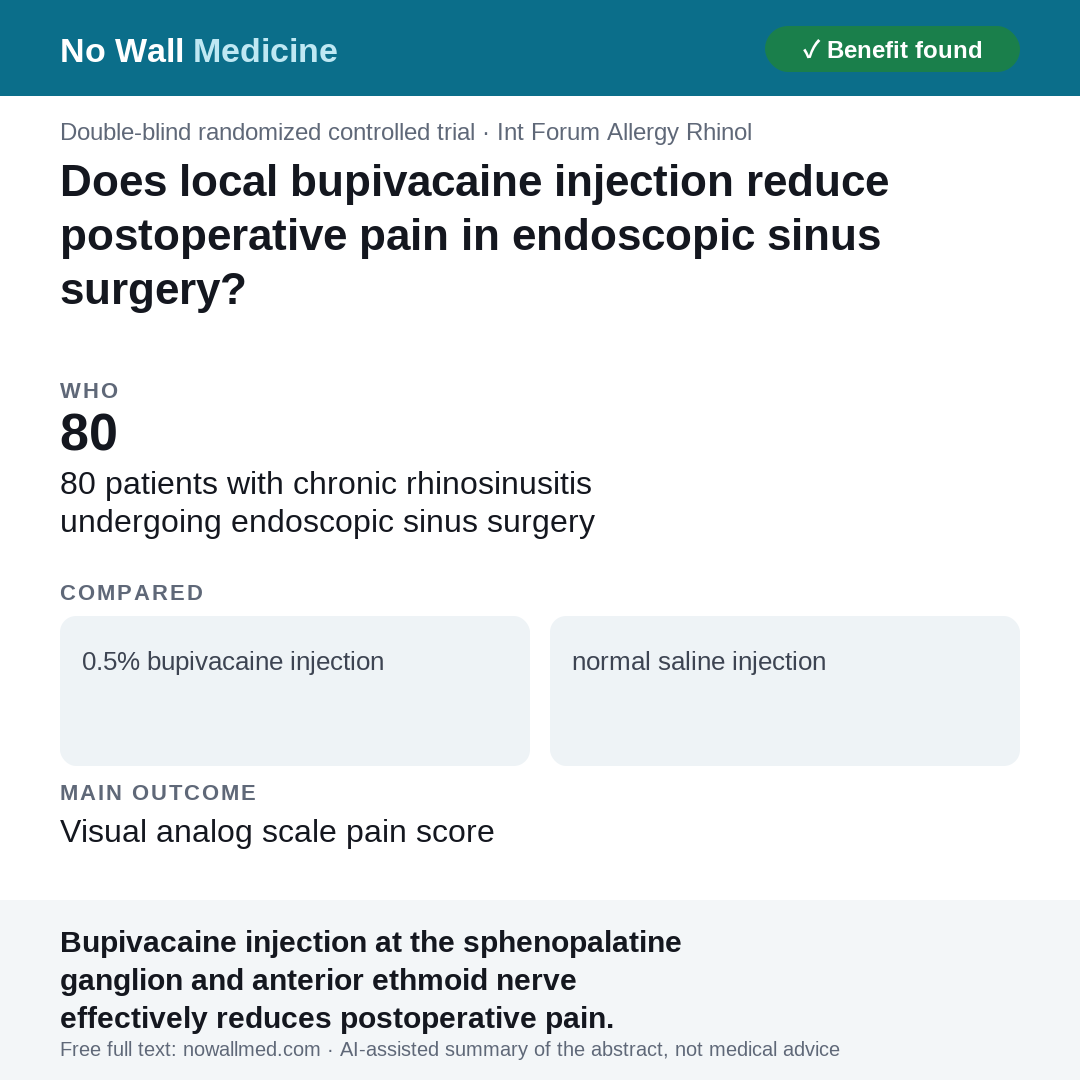
Efficacy of Local Bupivacaine Injection of Postoperative Pain in Endoscopic Sinus Surgery
Double-blind randomized controlled trialBenefit found
Does local bupivacaine injection reduce postoperative pain in endoscopic sinus surgery?
Who
80
80 patients with chronic rhinosinusitis undergoing endoscopic sinus surgery
Compared
0.5% bupivacaine injection
normal saline injection
Main outcome
Visual analog scale pain score
Result: 95% CI = 0.51-1.74, p < 0.001
Bottom line: Bupivacaine injection at the sphenopalatine ganglion and anterior ethmoid nerve effectively reduces postoperative pain.
Int Forum Allergy Rhinol · 2025-11-17Download image
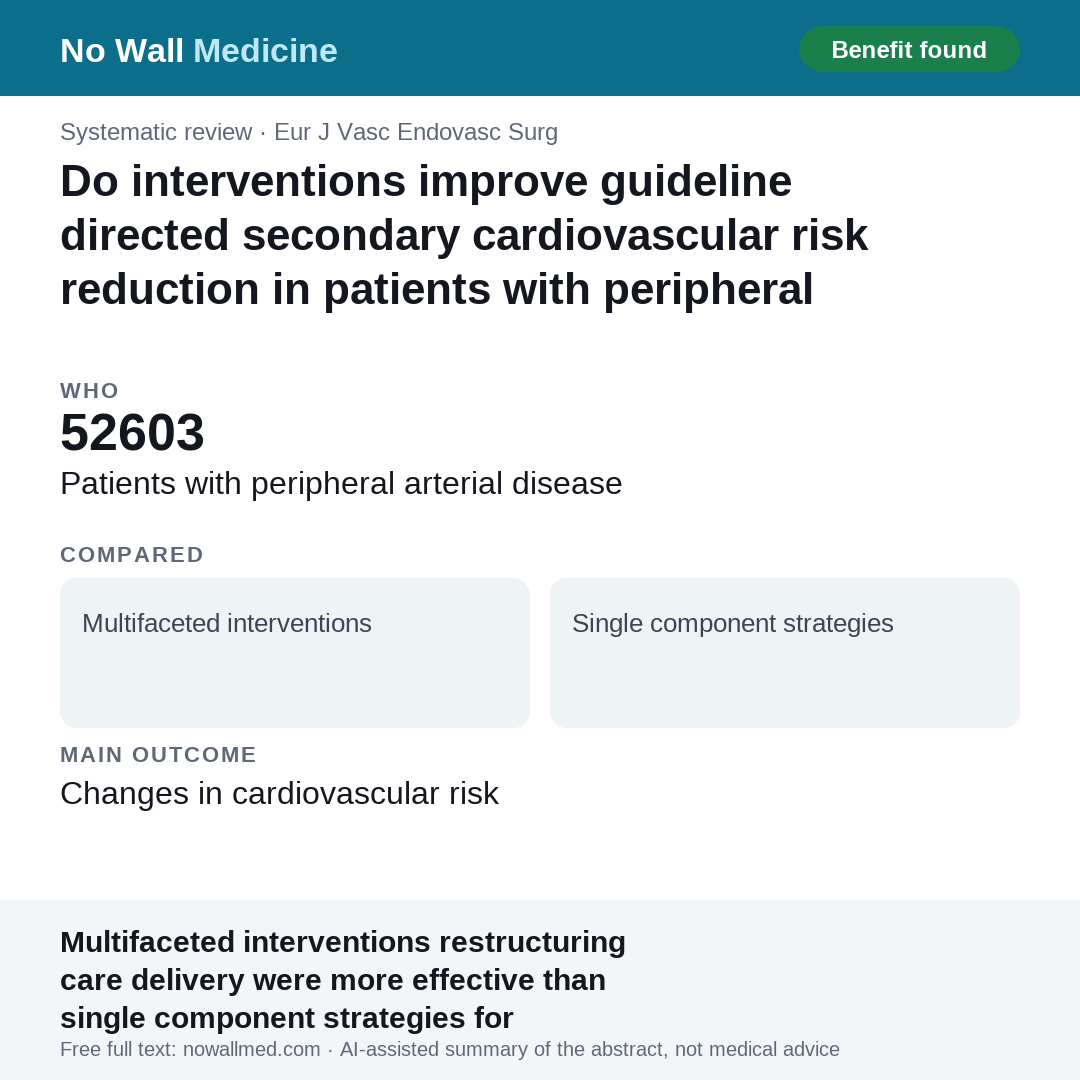
Editor's Choice - A Systematic Review of Interventions to Improve Guideline Directed Secondary Cardiovascular Risk Reduction in Patients with Peripheral Arterial Disease
Systematic reviewBenefit found
Do interventions improve guideline directed secondary cardiovascular risk reduction in patients with peripheral arterial disease?
Who
52603
Patients with peripheral arterial disease
Compared
Multifaceted interventions
Single component strategies
Main outcome
Changes in cardiovascular risk
Bottom line: Multifaceted interventions restructuring care delivery were more effective than single component strategies for cardiovascular risk reduction.
Limitation: Study quality was limited, and consistent outcome measurements were lacking.
Eur J Vasc Endovasc Surg · 2025-11-17Download image
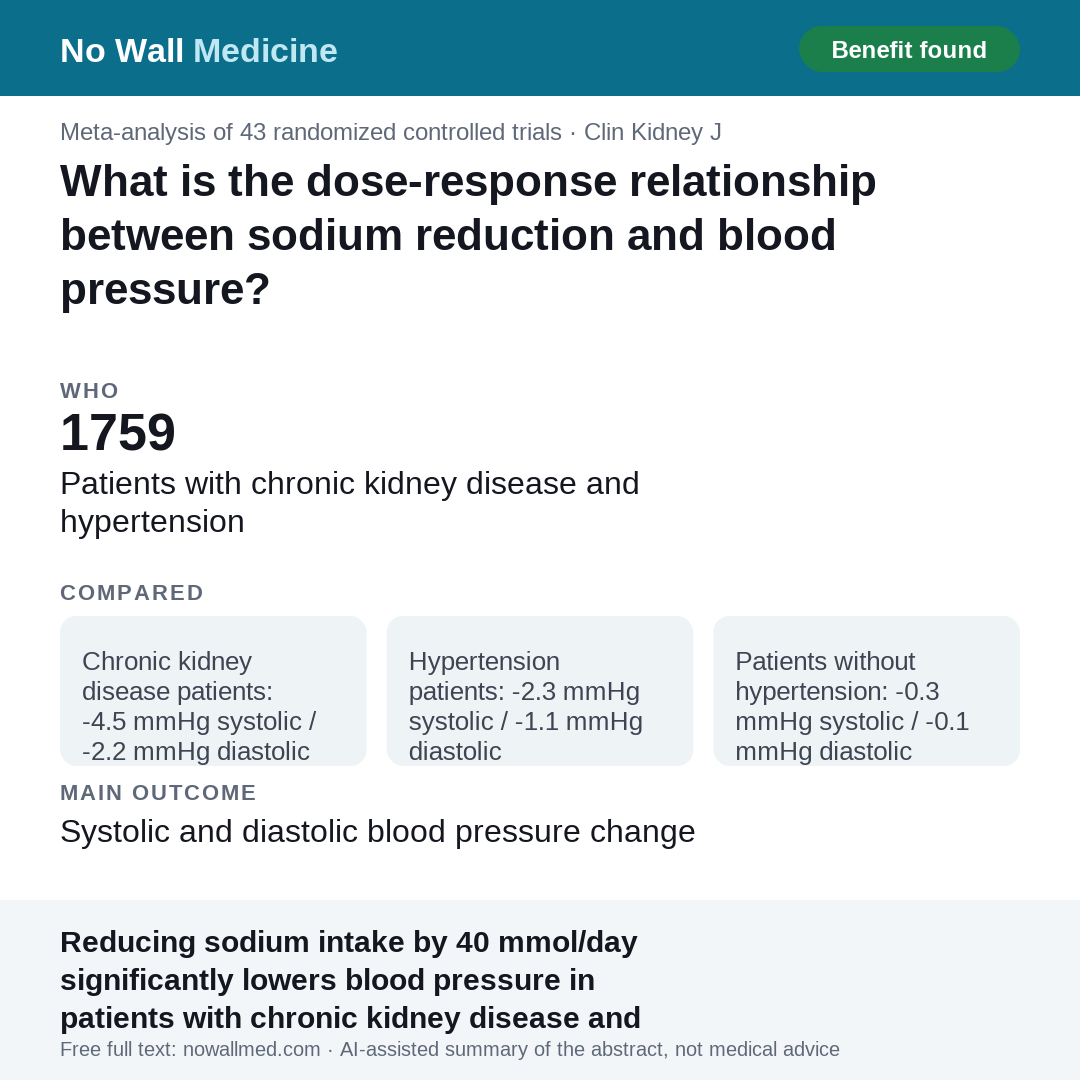
Dietary sodium reduction and blood pressure: a dose-response meta-analysis in hypertensive and chronic kidney disease patients
Meta-analysis of 43 randomized controlled trialsBenefit found
What is the dose-response relationship between sodium reduction and blood pressure?
Who
1759
Patients with chronic kidney disease and hypertension
Compared
Chronic kidney disease patients: -4.5 mmHg systolic / -2.2 mmHg diastolic
Hypertension patients: -2.3 mmHg systolic / -1.1 mmHg diastolic
Patients without hypertension: -0.3 mmHg systolic / -0.1 mmHg diastolic
Main outcome
Systolic and diastolic blood pressure change
Bottom line: Reducing sodium intake by 40 mmol/day significantly lowers blood pressure in patients with chronic kidney disease and hypertension.
Clin Kidney J · 2025-11-17Download image
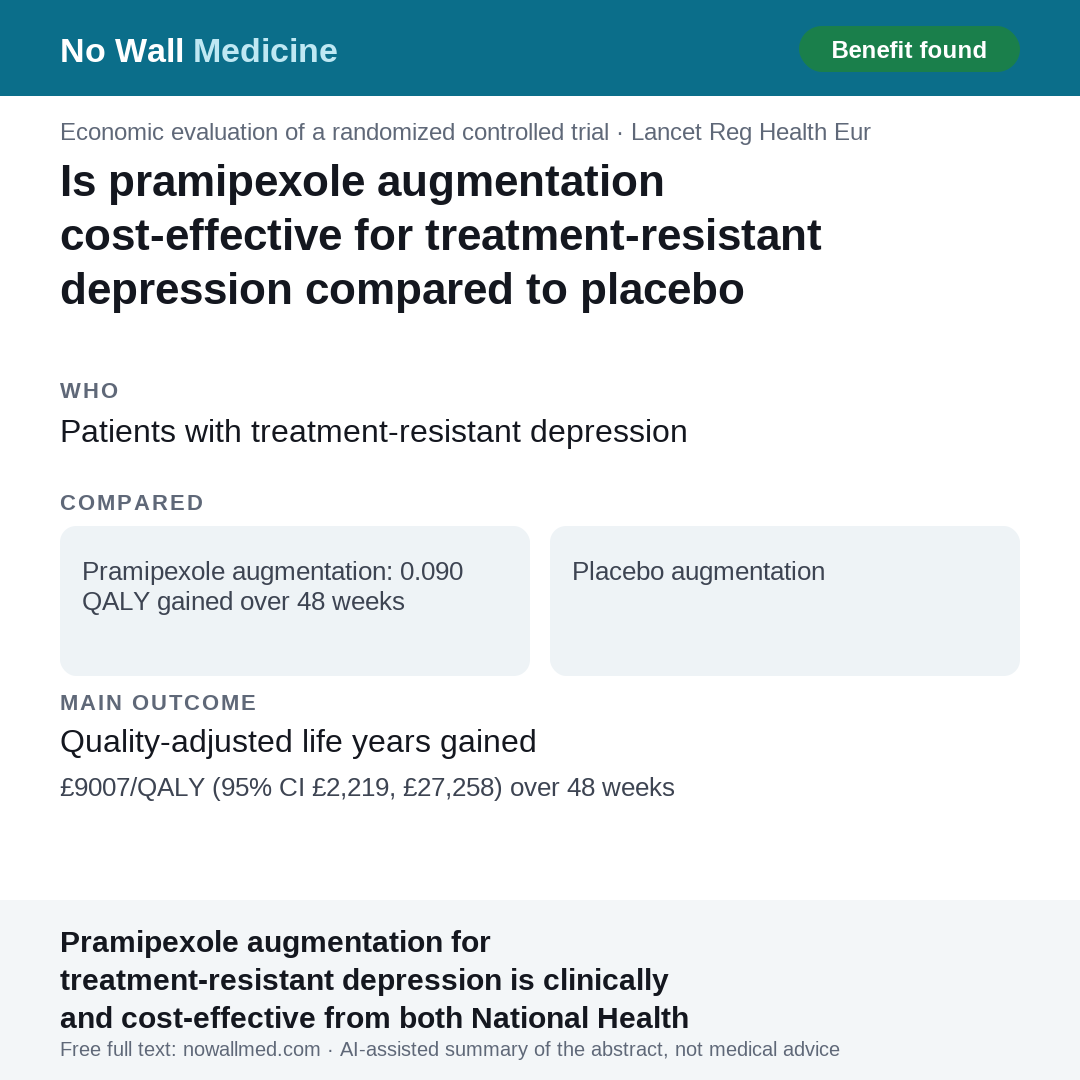
Cost-effectiveness of pramipexole augmentation for acute phase and maintenance therapy of treatment-resistant depression compared to placebo augmentation: economic evaluation of the PAX-D randomised controlled trial
Economic evaluation of a randomized controlled trialBenefit found
Is pramipexole augmentation cost-effective for treatment-resistant depression compared to placebo augmentation?
Who
Patients with treatment-resistant depression
Compared
Pramipexole augmentation: 0.090 QALY gained over 48 weeks
Placebo augmentation
Main outcome
Quality-adjusted life years gained
Result: £9007/QALY (95% CI £2,219, £27,258) over 48 weeks
Bottom line: Pramipexole augmentation for treatment-resistant depression is clinically and cost-effective from both National Health Service and societal perspectives.
Funded by: National Institute for Health and Care Research
Lancet Reg Health Eur · 2025-11-17Download image
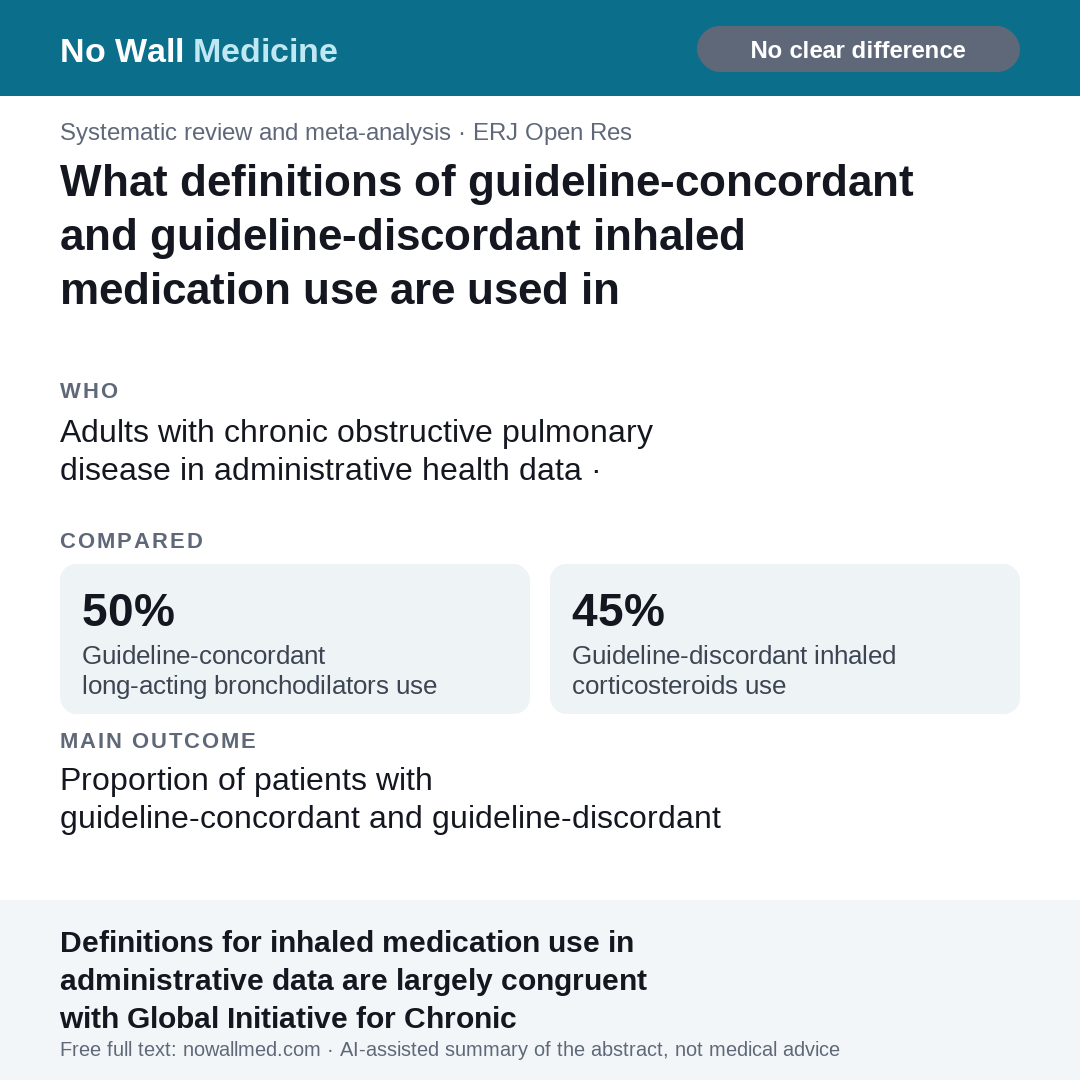
Guideline-concordant inhaled medication use in COPD: a systematic review of definitions used in administrative health data
Systematic review and meta-analysisNo clear difference
What definitions of guideline-concordant and guideline-discordant inhaled medication use are used in administrative health data?
Who
Adults with chronic obstructive pulmonary disease in administrative health data · MEDLINE and Embase databases
Compared
50%Guideline-concordant long-acting bronchodilators use
45%Guideline-discordant inhaled corticosteroids use
Main outcome
Proportion of patients with guideline-concordant and guideline-discordant medication use
Bottom line: Definitions for inhaled medication use in administrative data are largely congruent with Global Initiative for Chronic Obstructive Lung Disease recommendations.
ERJ Open Res · 2025-11-17Download image