Visual abstracts
New randomized trials and meta-analyses from leading journals at a glance: who was studied, what was compared, and what was found. Every paper is free to read in full.
All specialtiesCardiology 1548Oncology 1368Gastroenterology & Hepatology 564Infectious Disease 986Neurology 645Psychiatry & Mental Health 770Pulmonology 671Critical Care 458Endocrinology & Diabetes 841Pediatrics 913Surgery 763Orthopedics & Sports Medicine 295Neurosurgery 199Cardiothoracic & Vascular Surgery 178Plastic & Reconstructive Surgery 247Nephrology 324Rheumatology 206Hematology 332Dermatology 167Ophthalmology 177Obstetrics & Gynecology 498Public & Global Health 298Radiology & Imaging 206Anesthesiology 307Urology 286ENT (Otolaryngology) 209Emergency Medicine 174Allergy & Immunology 100Geriatrics 335Family Medicine & Primary Care 189Medical Genetics & Genomics 167Pathology & Laboratory Medicine 52Physical Medicine & Rehabilitation 272Palliative Care 140Nutrition 406Digital Health & AI 818General Medicine 129
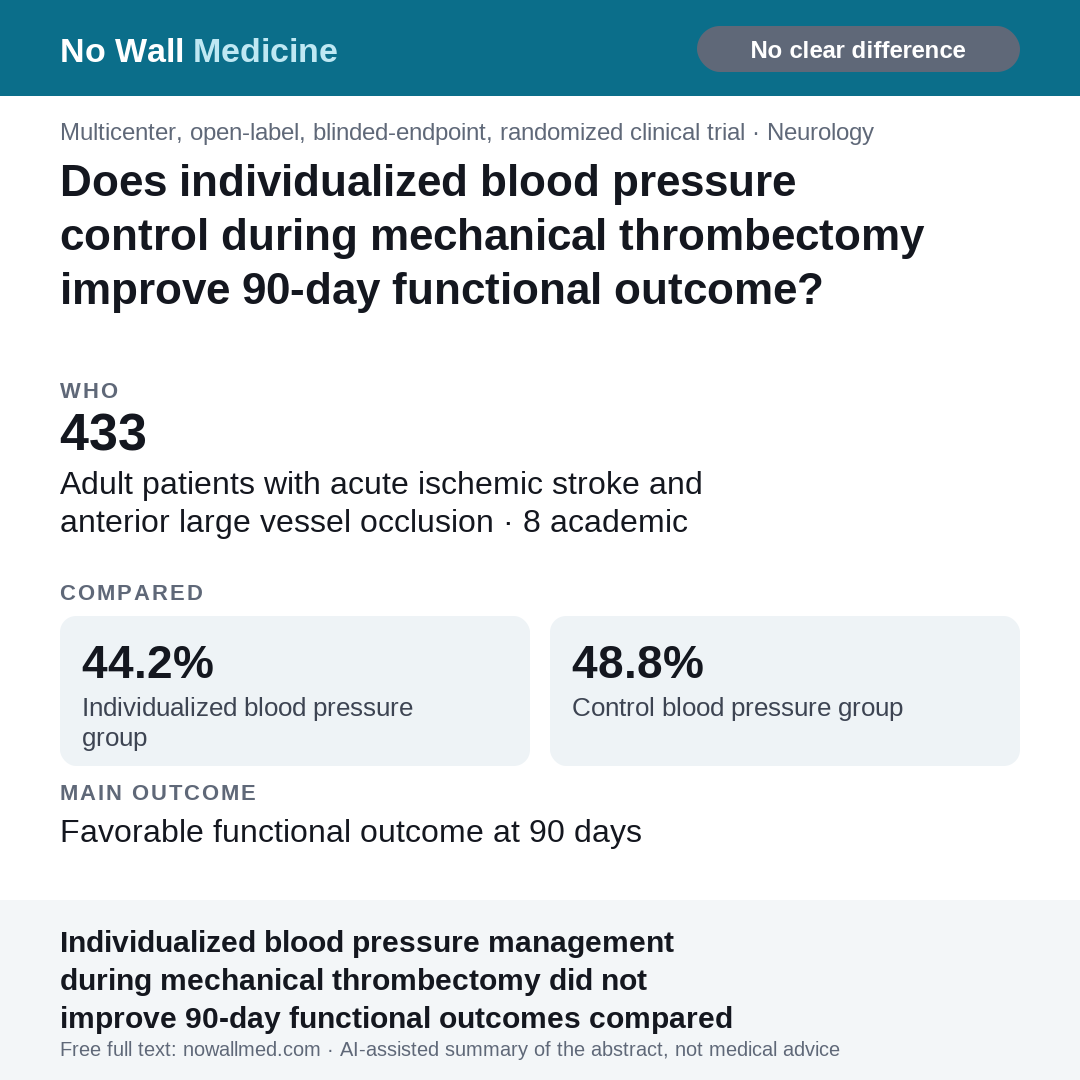
Individualized vs Standard Blood Pressure Control During Thrombectomy for Ischemic Stroke: The DETERMINE Randomized Clinical Trial
Multicenter, open-label, blinded-endpoint, randomized clinical trialNo clear difference
Does individualized blood pressure control during mechanical thrombectomy improve 90-day functional outcome?
Who
433
Adult patients with acute ischemic stroke and anterior large vessel occlusion · 8 academic comprehensive stroke centers in France
Compared
44.2%Individualized blood pressure group
48.8%Control blood pressure group
Main outcome
Favorable functional outcome at 90 days
Result: adjusted odds ratio 0.82 (95% CI 0.54-1.24)
Bottom line: Individualized blood pressure management during mechanical thrombectomy did not improve 90-day functional outcomes compared to standard management.
Neurology · 2026-08-12Download image
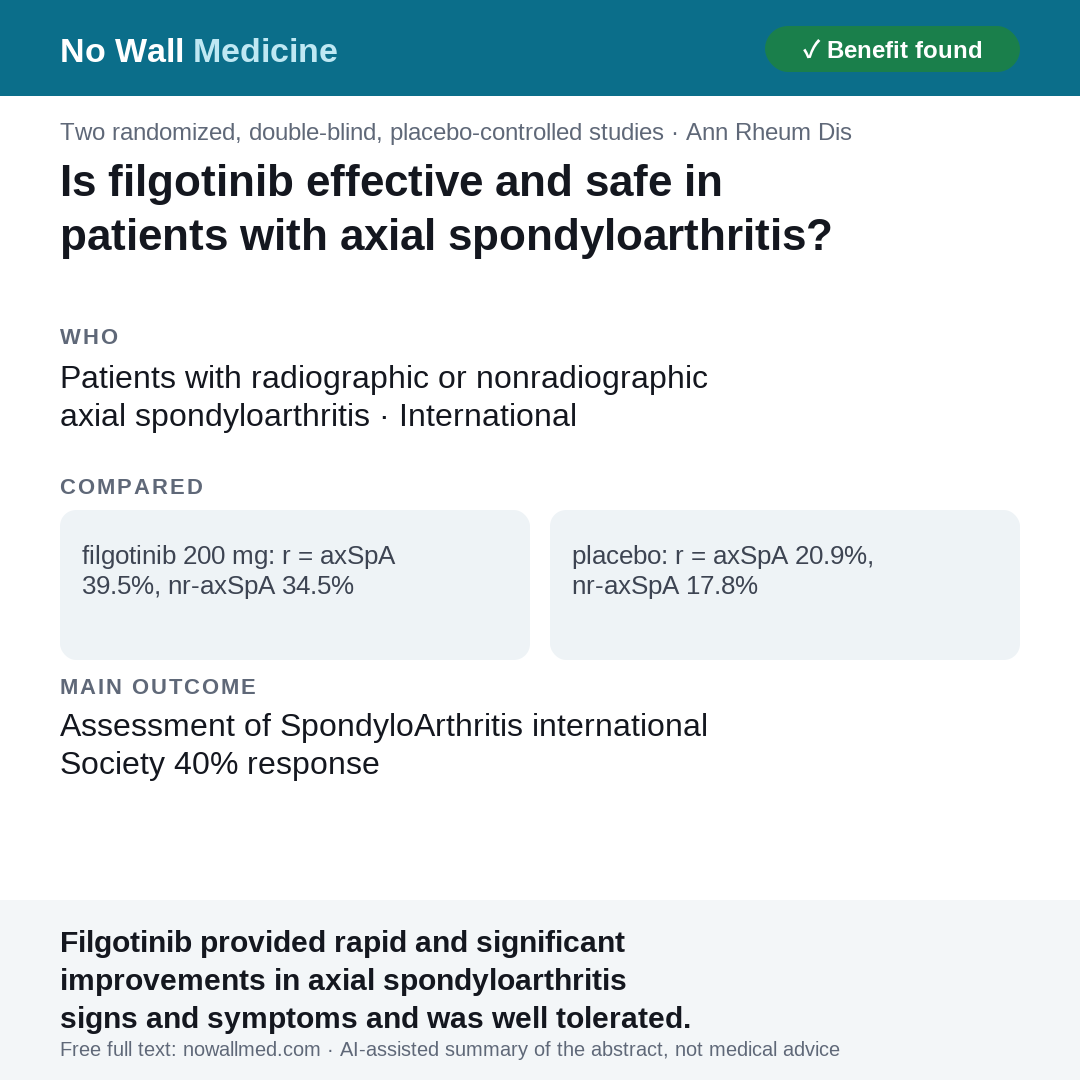
Efficacy and safety of filgotinib in patients with active radiographic and nonradiographic axial spondyloarthritis: results from OLINGUITO, a phase 3 trial consisting of 2 randomised, placebo-controlled, double-blind, parallel-group studies
Two randomized, double-blind, placebo-controlled studiesBenefit found
Is filgotinib effective and safe in patients with axial spondyloarthritis?
Who
Patients with radiographic or nonradiographic axial spondyloarthritis · International
Compared
filgotinib 200 mg: r = axSpA 39.5%, nr-axSpA 34.5%
placebo: r = axSpA 20.9%, nr-axSpA 17.8%
Main outcome
Assessment of SpondyloArthritis international Society 40% response
Bottom line: Filgotinib provided rapid and significant improvements in axial spondyloarthritis signs and symptoms and was well tolerated.
Ann Rheum Dis · 2026-08-12Download image
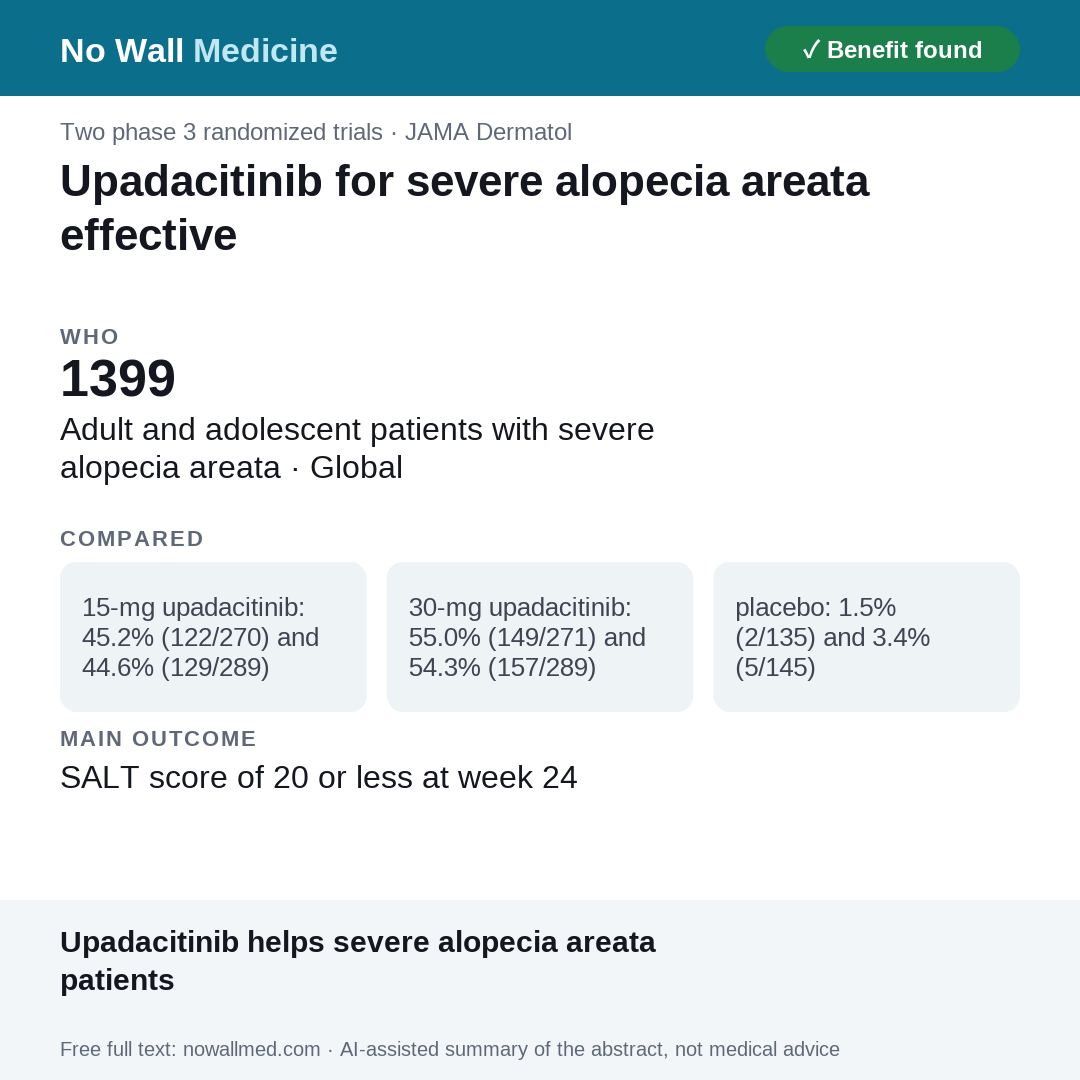
Upadacitinib for Severe Alopecia Areata in Adults and Adolescents: Two Phase 3 UP-AA Randomized Clinical Trials
Two phase 3 randomized trialsBenefit found
Upadacitinib for severe alopecia areata effective
Who
1399
Adult and adolescent patients with severe alopecia areata · Global
Compared
15-mg upadacitinib: 45.2% (122/270) and 44.6% (129/289)
30-mg upadacitinib: 55.0% (149/271) and 54.3% (157/289)
placebo: 1.5% (2/135) and 3.4% (5/145)
Main outcome
SALT score of 20 or less at week 24
Bottom line: Upadacitinib helps severe alopecia areata patients
JAMA Dermatol · 2026-08-12Download image
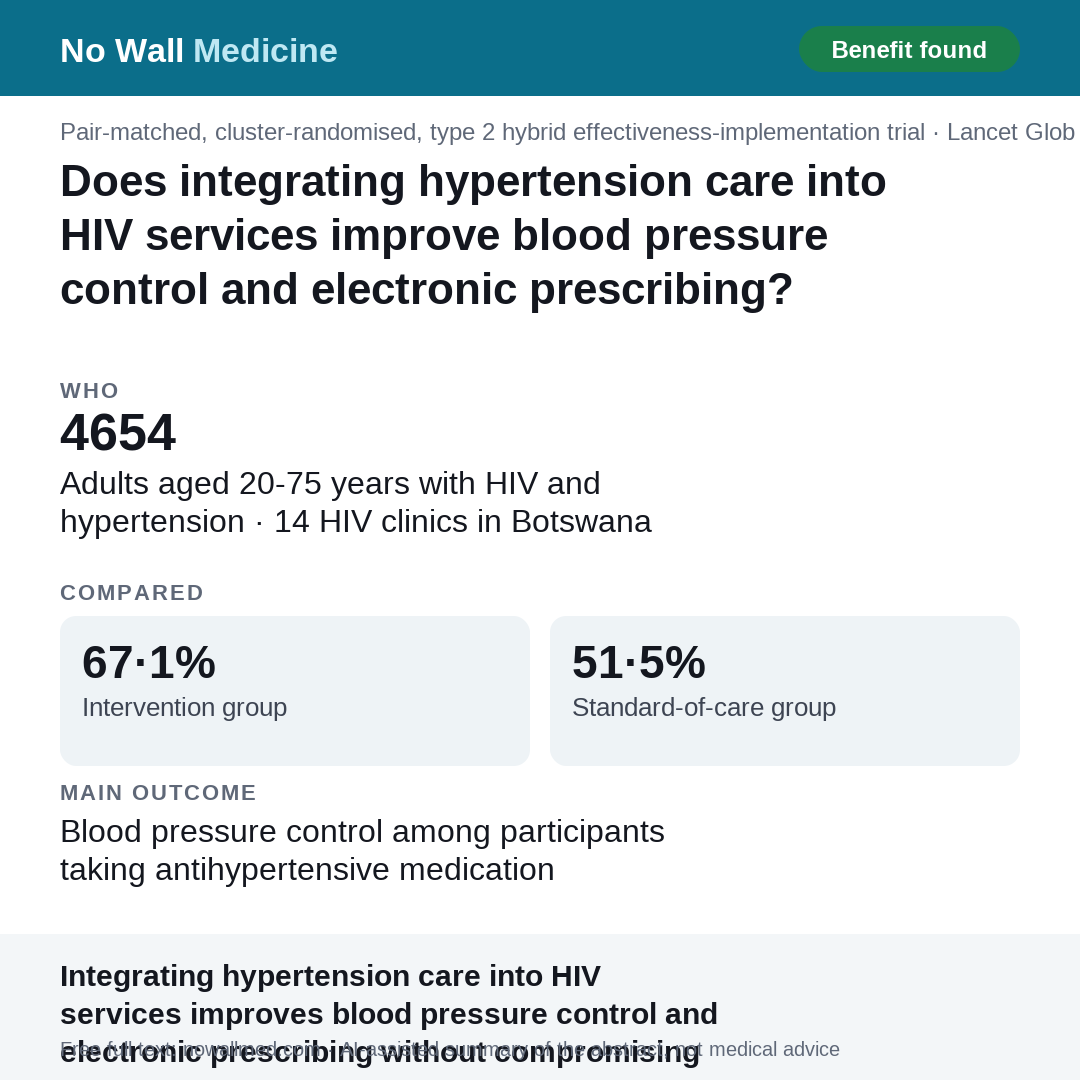
Integrating hypertension care into the existing HIV services package in Botswana (InterCARE): a pair-matched, cluster-randomised, type 2 hybrid effectiveness-implementation trial
Pair-matched, cluster-randomised, type 2 hybrid effectiveness-implementation trialBenefit found
Does integrating hypertension care into HIV services improve blood pressure control and electronic prescribing?
Who
4654
Adults aged 20-75 years with HIV and hypertension · 14 HIV clinics in Botswana
Compared
67·1%Intervention group (719/1072)
51·5%Standard-of-care group (593/1152)
Main outcome
Blood pressure control among participants taking antihypertensive medication
Result: risk ratio 1·29 (95% CI 1·10-1·51)
Bottom line: Integrating hypertension care into HIV services improves blood pressure control and electronic prescribing without compromising HIV viral suppression.
Funded by: National Heart, Lung, and Blood Institute of the US National Institutes of Health
Lancet Glob Health · 2026-08-12Download image
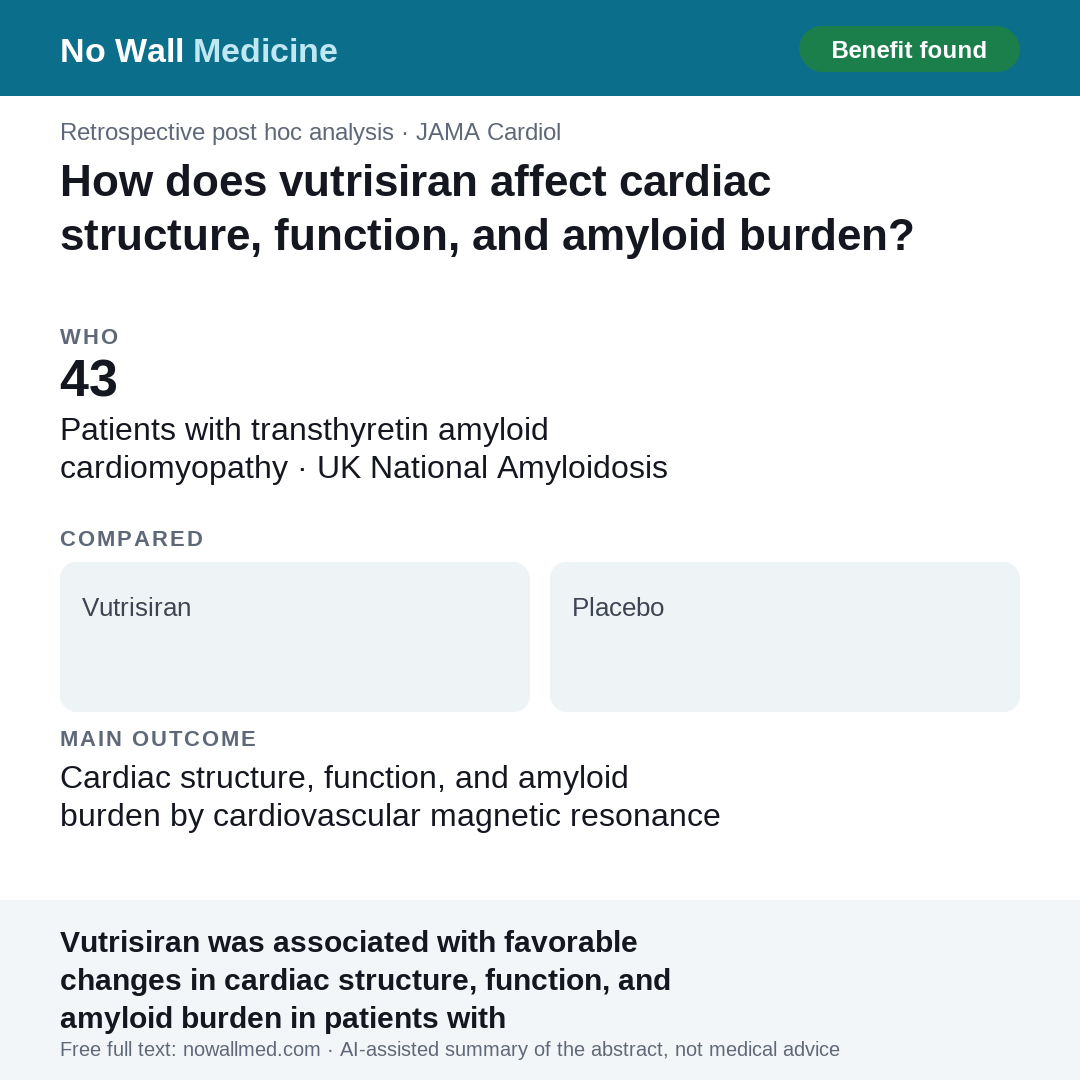
Vutrisiran Treatment and Changes in Cardiac Parameters and Amyloid Burden Assessed by Cardiovascular MRI
Retrospective post hoc analysisBenefit found
How does vutrisiran affect cardiac structure, function, and amyloid burden?
Who
43
Patients with transthyretin amyloid cardiomyopathy · UK National Amyloidosis Centre
Compared
Vutrisiran
Placebo
Main outcome
Cardiac structure, function, and amyloid burden by cardiovascular magnetic resonance
Result: left ventricular ejection fraction least-squares mean difference, 19.18%; 95% CI, 11.76%-26.60%
Bottom line: Vutrisiran was associated with favorable changes in cardiac structure, function, and amyloid burden in patients with transthyretin amyloid cardiomyopathy.
JAMA Cardiol · 2026-08-12Download image
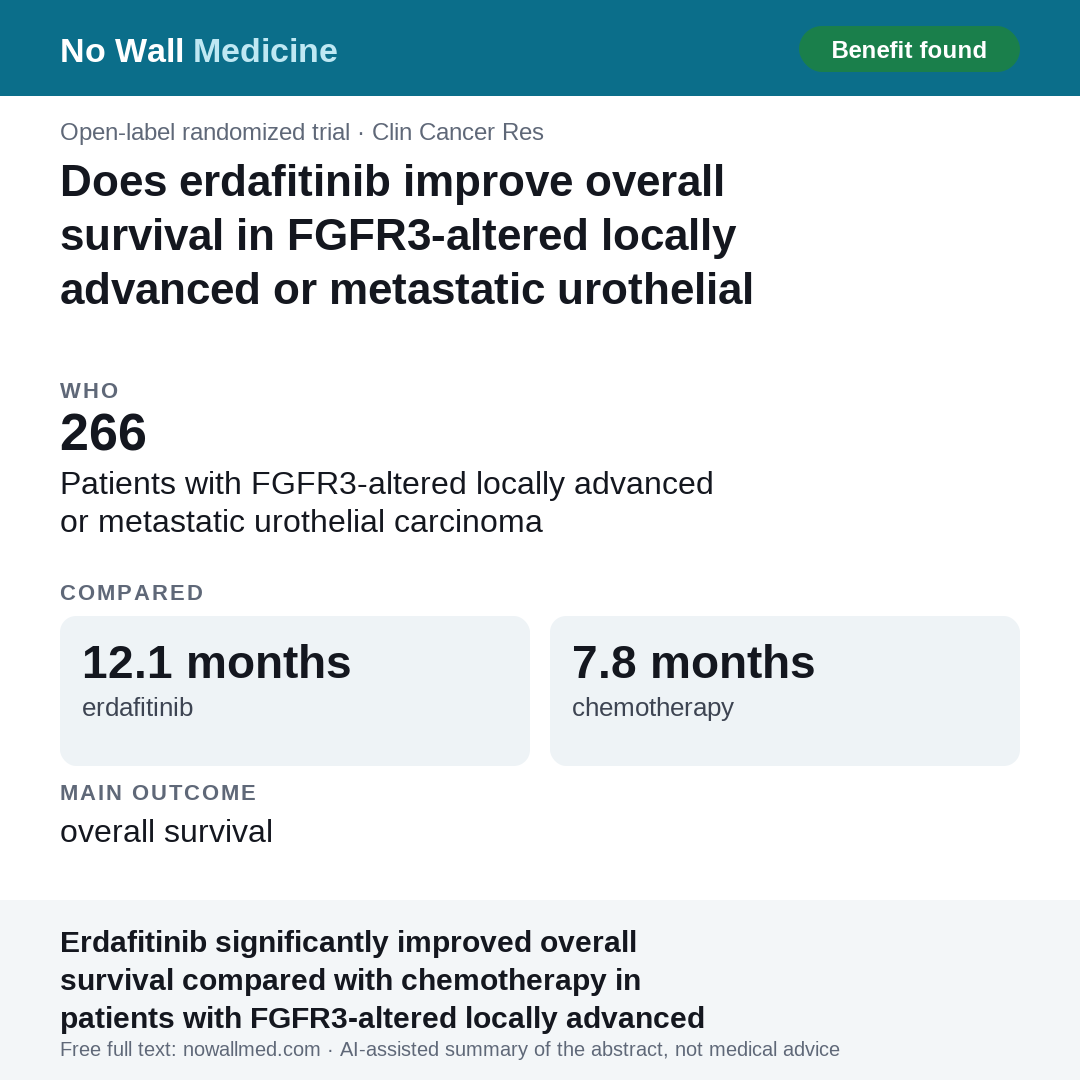
FDA Approval Summary: Erdafitinib for FGFR3-Altered Locally Advanced or Metastatic Urothelial Carcinoma
Open-label randomized trialBenefit found
Does erdafitinib improve overall survival in FGFR3-altered locally advanced or metastatic urothelial carcinoma?
Who
266
Patients with FGFR3-altered locally advanced or metastatic urothelial carcinoma
Compared
12.1 monthserdafitinib
7.8 monthschemotherapy
Main outcome
overall survival
Result: hazard ratio 0.64 (95% CI 0.47-0.88)
Bottom line: Erdafitinib significantly improved overall survival compared with chemotherapy in patients with FGFR3-altered locally advanced or metastatic urothelial carcinoma.
Limitation: Not recommended for patients eligible for and not receiving prior PD-(L)1 inhibitor therapy.
Clin Cancer Res · 2026-08-12Download image
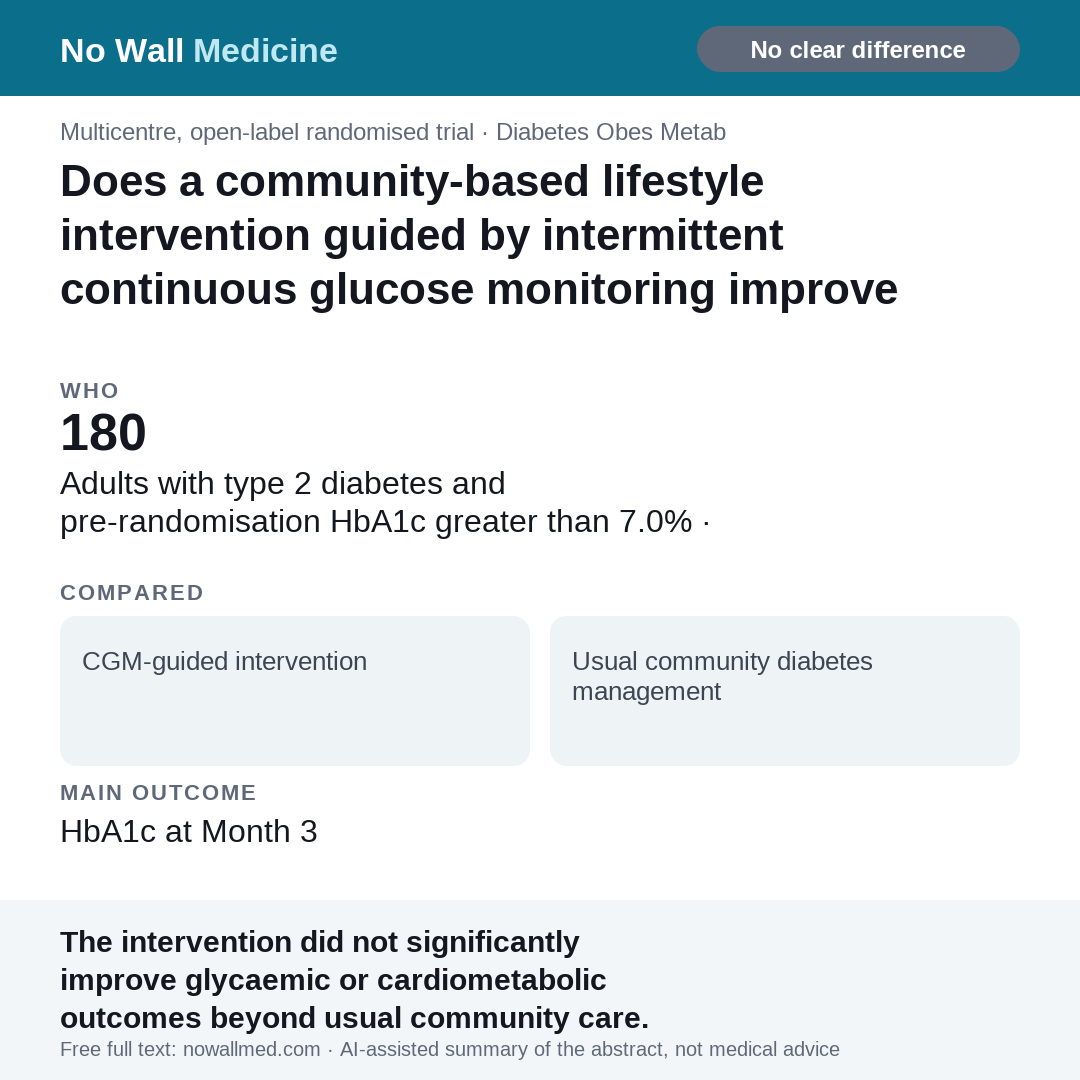
Community-Based Personalised Lifestyle Intervention Guided by Intermittent Continuous Glucose Monitoring in Adults With Type 2 Diabetes: A Multicentre Randomised Controlled Trial
Multicentre, open-label randomised trialNo clear difference
Does a community-based lifestyle intervention guided by intermittent continuous glucose monitoring improve outcomes?
Who
180
Adults with type 2 diabetes and pre-randomisation HbA1c greater than 7.0% · Multicentre
Compared
CGM-guided intervention
Usual community diabetes management
Main outcome
HbA1c at Month 3
Result: -0.09 percentage points (95% CI, -0.38 to 0.21)
Bottom line: The intervention did not significantly improve glycaemic or cardiometabolic outcomes beyond usual community care.
Diabetes Obes Metab · 2026-08-12Download image
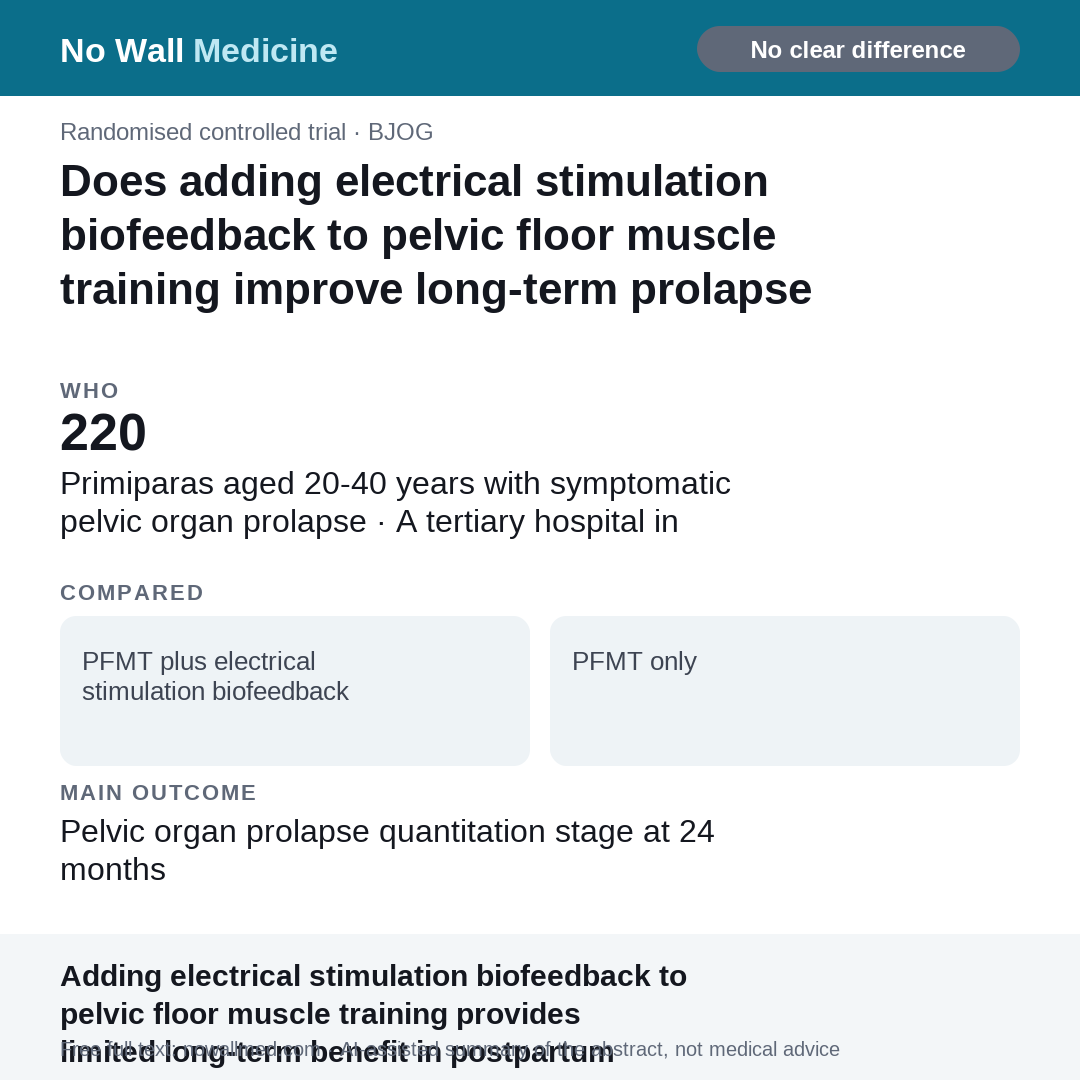
Long-Term Effects of Pelvic Floor Muscle Training Combined With Electrical Stimulation Biofeedback Among Women With Symptomatic Pelvic Organ Prolapse: A Randomised Controlled Trial
Randomised controlled trialNo clear difference
Does adding electrical stimulation biofeedback to pelvic floor muscle training improve long-term prolapse anatomy?
Who
220
Primiparas aged 20-40 years with symptomatic pelvic organ prolapse · A tertiary hospital in Beijing, China
Compared
PFMT plus electrical stimulation biofeedback
PFMT only
Main outcome
Pelvic organ prolapse quantitation stage at 24 months
Bottom line: Adding electrical stimulation biofeedback to pelvic floor muscle training provides limited long-term benefit in postpartum prolapse anatomy.
BJOG · 2026-08-12Download image
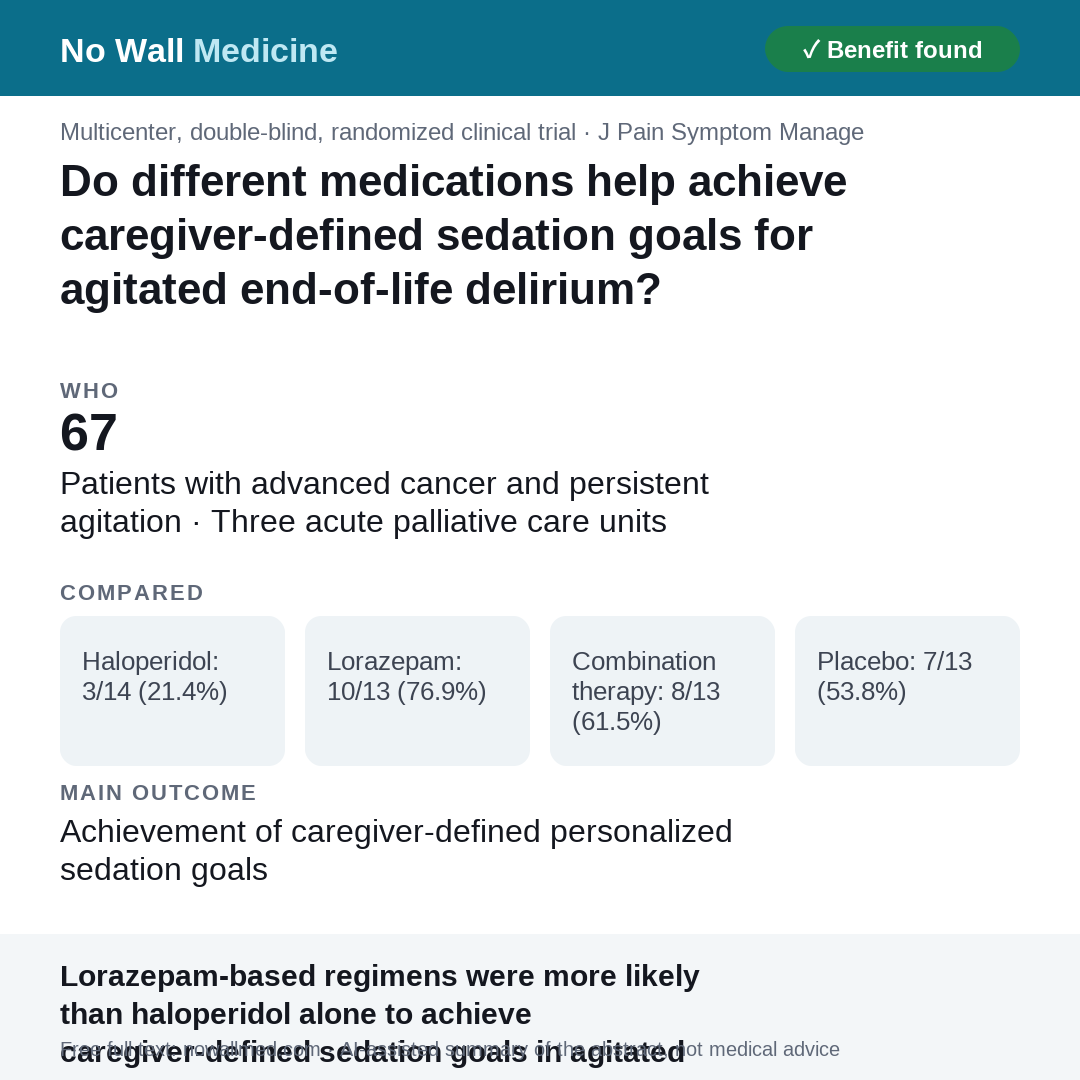
Personalized Sedation Goals for Agitated End-of-Life Delirium: Secondary Analysis of RECORD Trial
Multicenter, double-blind, randomized clinical trialBenefit found
Do different medications help achieve caregiver-defined sedation goals for agitated end-of-life delirium?
Who
67
Patients with advanced cancer and persistent agitation · Three acute palliative care units in United States and Taiwan
Compared
Haloperidol: 3/14 (21.4%)
Lorazepam: 10/13 (76.9%)
Combination therapy: 8/13 (61.5%)
Placebo: 7/13 (53.8%)
Main outcome
Achievement of caregiver-defined personalized sedation goals
Result: odds ratio 12.2 (95% CI 2.0-75.1) for lorazepam; odds ratio 5.9 (95% CI 1.1-32.0) for combination therapy
Bottom line: Lorazepam-based regimens were more likely than haloperidol alone to achieve caregiver-defined sedation goals in agitated end-of-life delirium.
J Pain Symptom Manage · 2026-08-12Download image
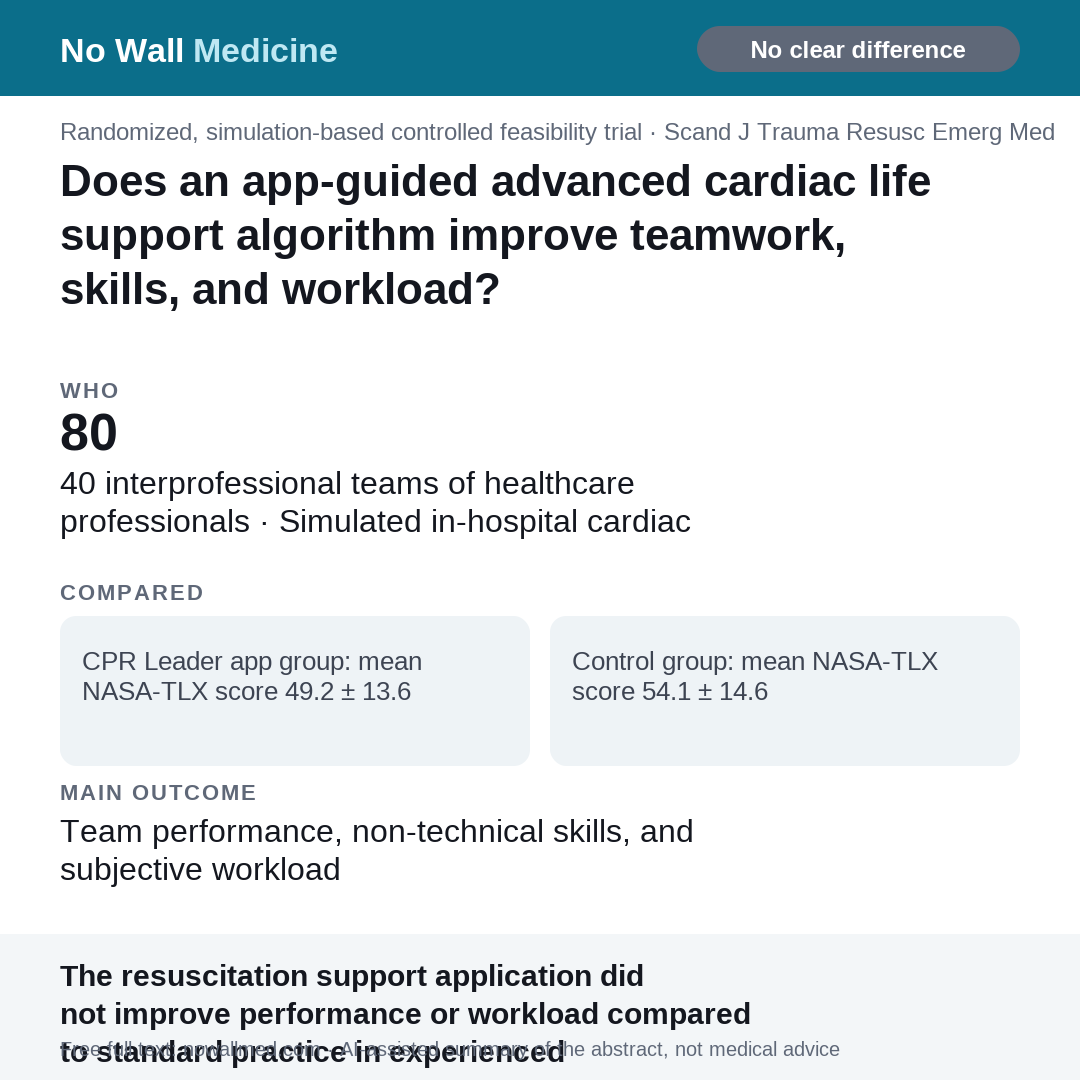
Effect of an app-guided advanced cardiac life support algorithm on teamwork, non-technical skills, and workload in simulated in-hospital cardiac arrest: a randomized controlled feasibility trial
Randomized, simulation-based controlled feasibility trialNo clear difference
Does an app-guided advanced cardiac life support algorithm improve teamwork, skills, and workload?
Who
80
40 interprofessional teams of healthcare professionals · Simulated in-hospital cardiac arrest scenarios
Compared
CPR Leader app group: mean NASA-TLX score 49.2 ± 13.6
Control group: mean NASA-TLX score 54.1 ± 14.6
Main outcome
Team performance, non-technical skills, and subjective workload
Bottom line: The resuscitation support application did not improve performance or workload compared to standard practice in experienced professionals.
Limitation: Findings may not generalize to novice providers, mixed-experience teams, or real-world clinical practice.
Scand J Trauma Resusc Emerg Med · 2026-08-12Download image
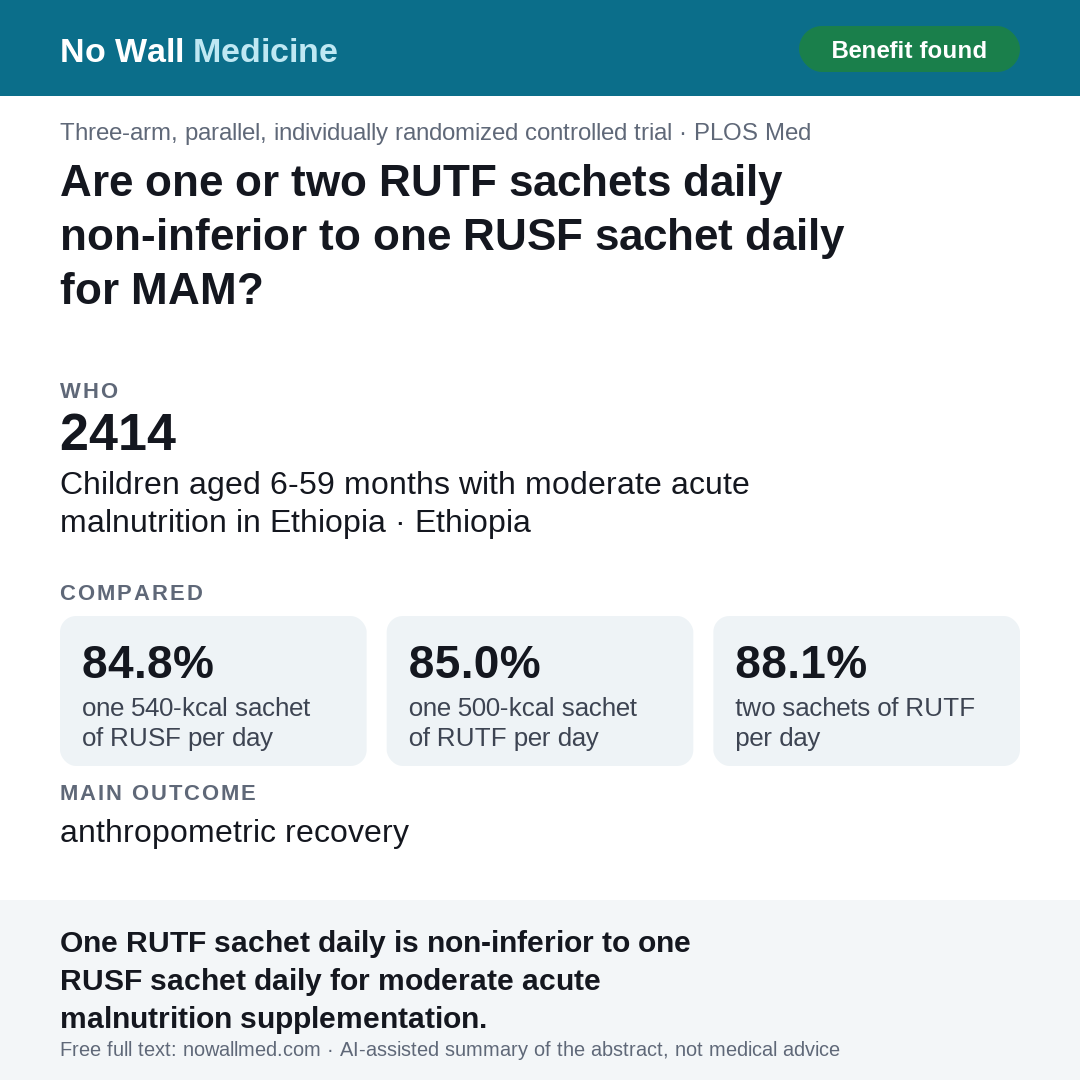
Comparative effectiveness of lipid-nutrient spread supplementation regimens for moderate acute malnutrition in Ethiopia: The MODAM-MAM individually randomized controlled trial
Three-arm, parallel, individually randomized controlled trialBenefit found
Are one or two RUTF sachets daily non-inferior to one RUSF sachet daily for MAM?
Who
2414
Children aged 6-59 months with moderate acute malnutrition in Ethiopia · Ethiopia
Compared
84.8%one 540-kcal sachet of RUSF per day (679/801)
85.0%one 500-kcal sachet of RUTF per day (674/793)
88.1%two sachets of RUTF per day (721/818)
Main outcome
anthropometric recovery
Result: risk difference +0.2 percentage points (95% CI [-3.3, 3.7]) for 1-RUTF; +3.4 percentage points (95% CI [0.0, 6.7]) for 2-RUTF
Bottom line: One RUTF sachet daily is non-inferior to one RUSF sachet daily for moderate acute malnutrition supplementation.
Limitation: evaluation of a single ready-to-use supplementary food formulation and earlier-than-typical case-finding
PLOS Med · 2026-08-11Download image
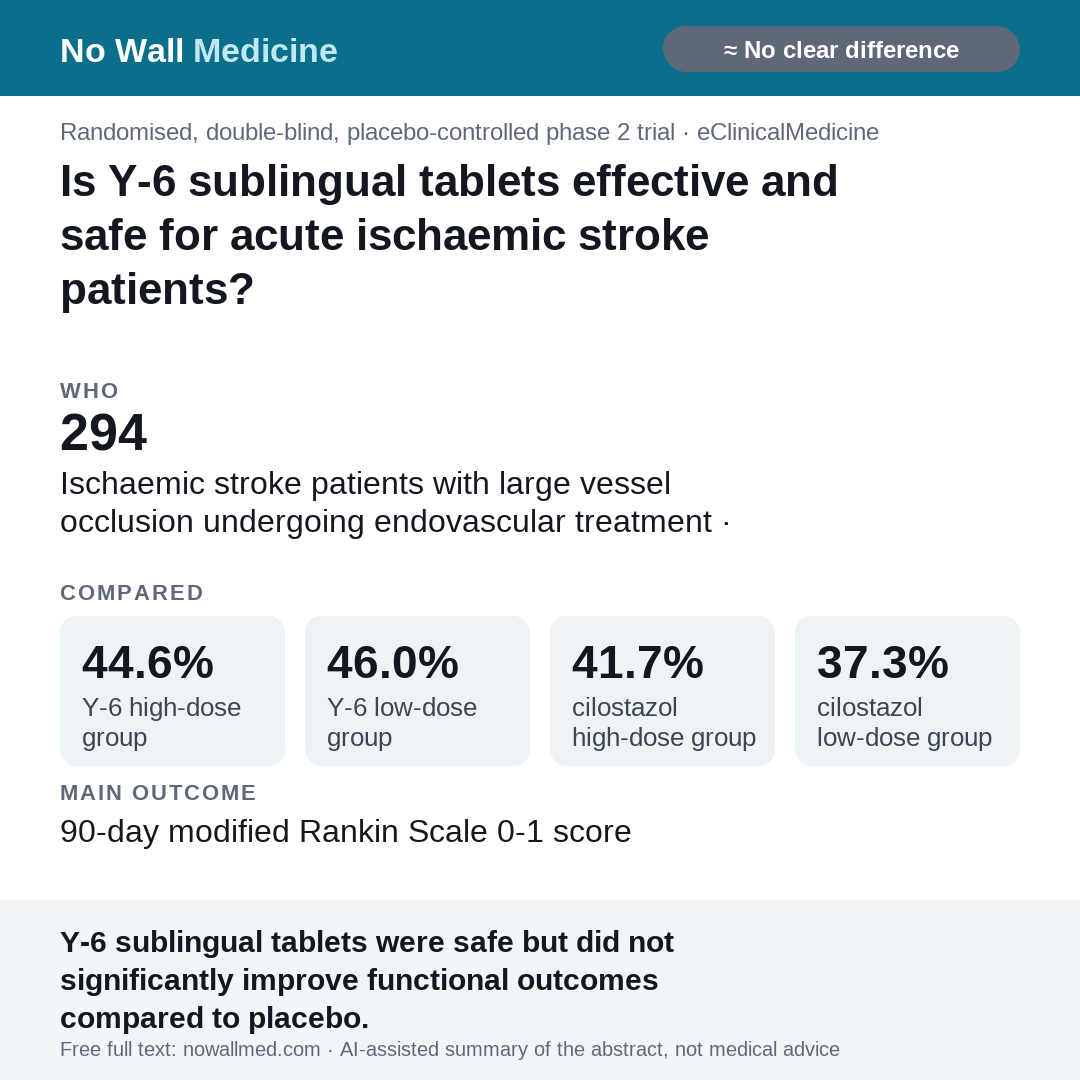
Efficacy and safety of sublingual cilostazol and dexborneol for the treatment of acute ischaemic stroke: a randomised phase 2 trial in China
Randomised, double-blind, placebo-controlled phase 2 trialNo clear difference
Is Y-6 sublingual tablets effective and safe for acute ischaemic stroke patients?
Who
294
Ischaemic stroke patients with large vessel occlusion undergoing endovascular treatment · 33 centres in China
Compared
44.6%Y-6 high-dose group
46.0%Y-6 low-dose group
41.7%cilostazol high-dose group
37.3%cilostazol low-dose group
Main outcome
90-day modified Rankin Scale 0-1 score
Bottom line: Y-6 sublingual tablets were safe but did not significantly improve functional outcomes compared to placebo.
Limitation: The trial did not demonstrate statistically significant efficacy on the primary outcome.
Funded by: National Natural Science Foundation of China and others
eClinicalMedicine · 2026-08-11Download image
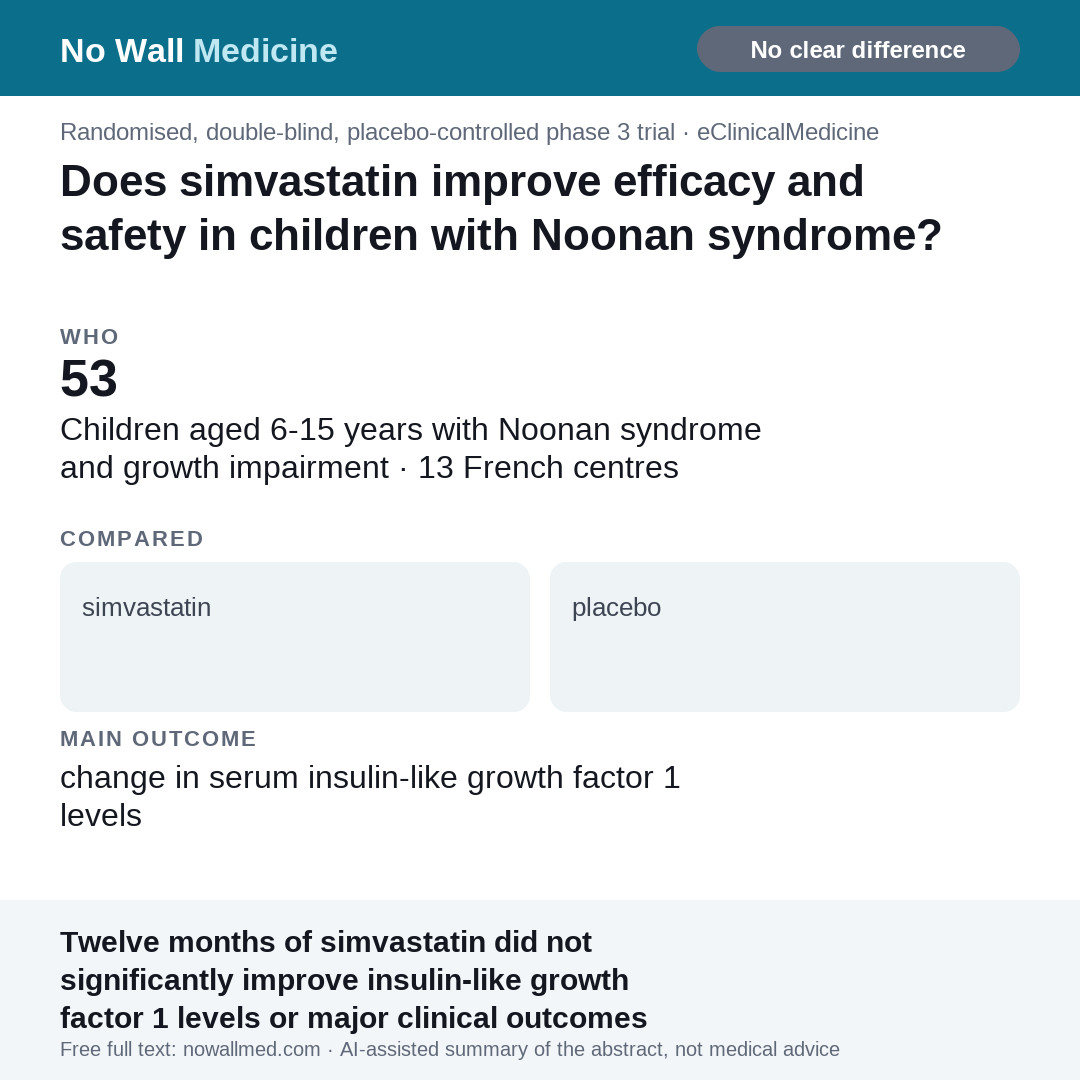
RAS/MAPK pathway modulation with simvastatin in children with Noonan syndrome: a multicentre, randomised, double-blind, placebo-controlled phase 3 trial
Randomised, double-blind, placebo-controlled phase 3 trialNo clear difference
Does simvastatin improve efficacy and safety in children with Noonan syndrome?
Who
53
Children aged 6-15 years with Noonan syndrome and growth impairment · 13 French centres
Compared
simvastatin
placebo
Main outcome
change in serum insulin-like growth factor 1 levels
Result: between-group difference -0.08 log ng/mL, 95% CI -0.18 to 0.01
Bottom line: Twelve months of simvastatin did not significantly improve insulin-like growth factor 1 levels or major clinical outcomes in children.
Limitation: Changes in secondary findings were of borderline statistical significance and lacked corresponding clinical improvements.
Funded by: French Ministry of Health
eClinicalMedicine · 2026-08-11Download image
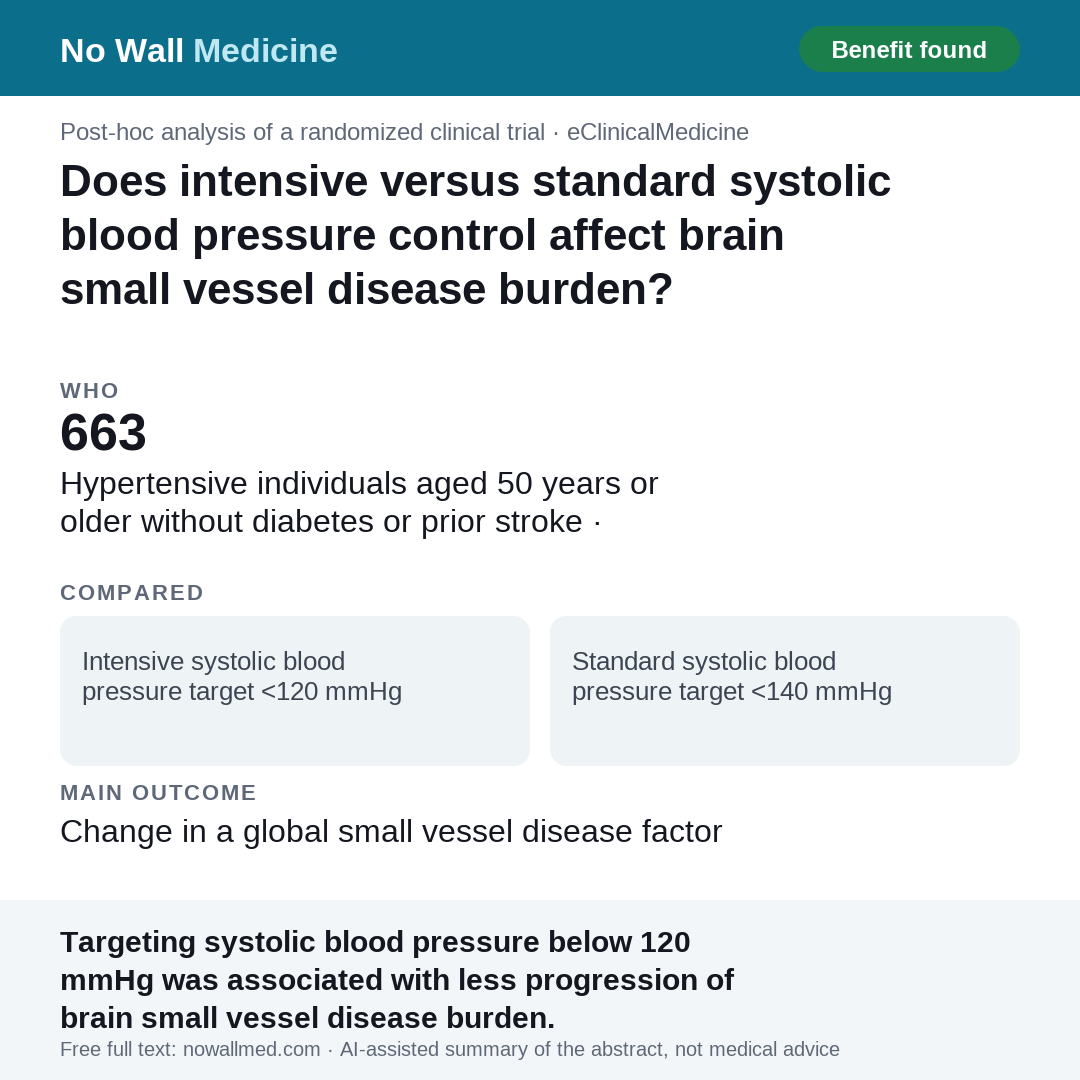
Intensive versus standard blood pressure control and overall brain small vessel disease burden: a post-hoc analysis of the SPRINT randomized clinical trial
Post-hoc analysis of a randomized clinical trialBenefit found
Does intensive versus standard systolic blood pressure control affect brain small vessel disease burden?
Who
663
Hypertensive individuals aged 50 years or older without diabetes or prior stroke · Multicenter
Compared
Intensive systolic blood pressure target <120 mmHg
Standard systolic blood pressure target <140 mmHg
Main outcome
Change in a global small vessel disease factor
Result: standardized mean difference -0.40 (95% CI -0.62 to -0.17)
Bottom line: Targeting systolic blood pressure below 120 mmHg was associated with less progression of brain small vessel disease burden.
Funded by: National Institutes of Health
eClinicalMedicine · 2026-08-11Download image
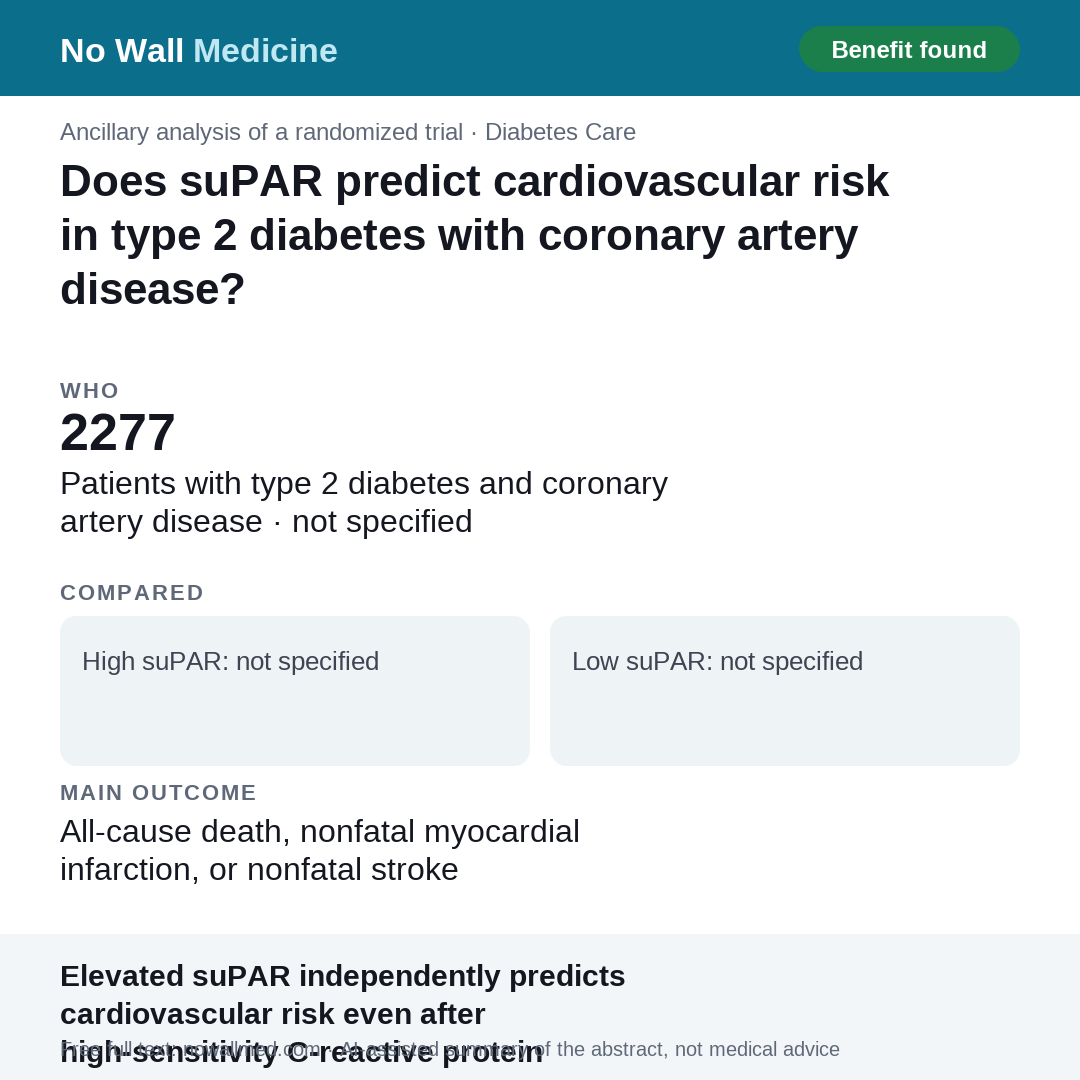
suPAR Identifies Treatment-Resistant Inflammatory Risk Beyond hs-CRP in Type 2 Diabetes With Coronary Artery Disease: An Ancillary Analysis of BARI 2D
Ancillary analysis of a randomized trialBenefit found
Does suPAR predict cardiovascular risk in type 2 diabetes with coronary artery disease?
Who
2277
Patients with type 2 diabetes and coronary artery disease · not specified
Compared
High suPAR: not specified
Low suPAR: not specified
Main outcome
All-cause death, nonfatal myocardial infarction, or nonfatal stroke
Result: adjusted hazard ratio 1.40 (95% CI 1.27-1.55) per standard deviation
Bottom line: Elevated suPAR independently predicts cardiovascular risk even after high-sensitivity C-reactive protein normalization.
Diabetes Care · 2026-08-11Download image
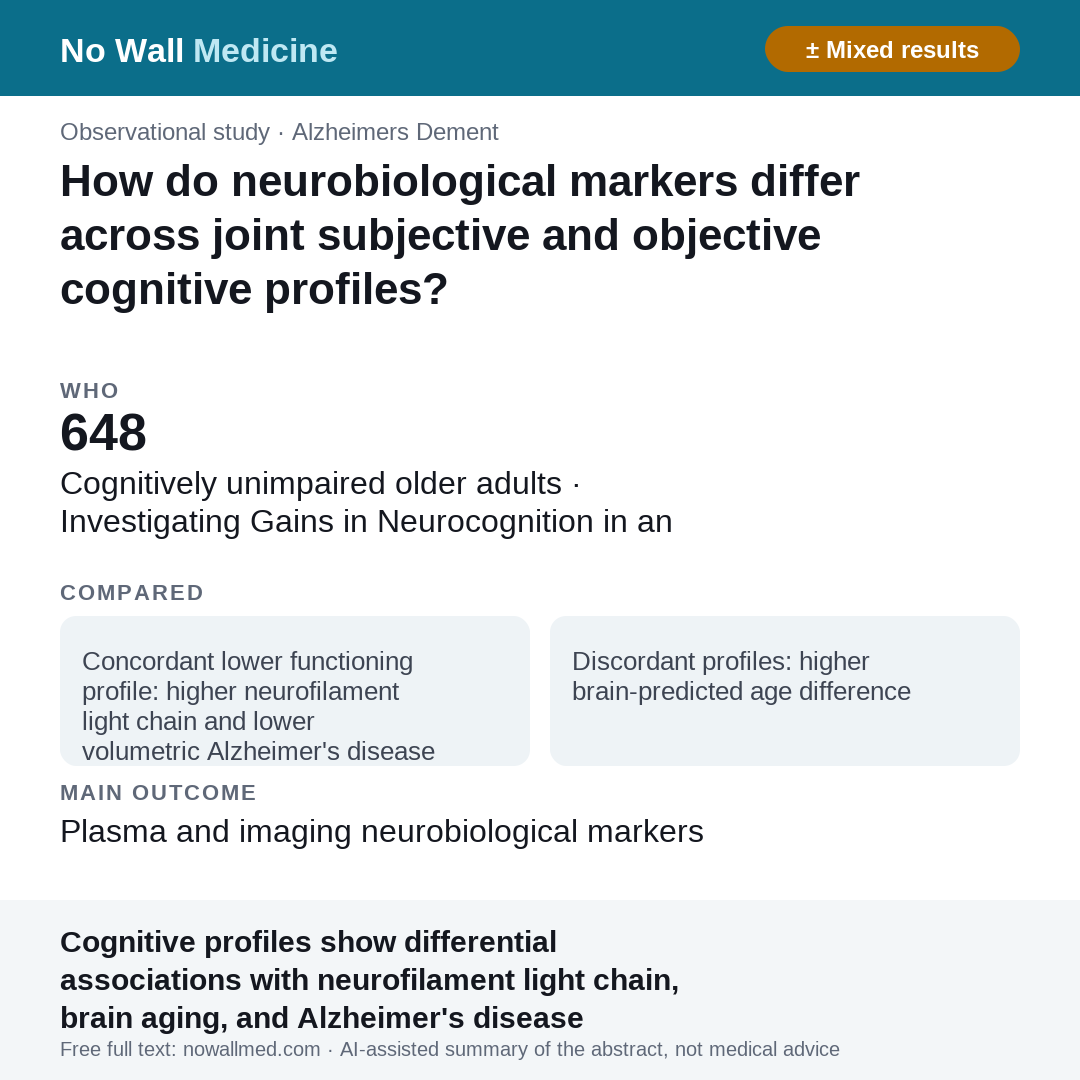
Neurobiological markers across joint profiles of subjective cognitive decline and objective cognitive function in older adults
Observational studyMixed results
How do neurobiological markers differ across joint subjective and objective cognitive profiles?
Who
648
Cognitively unimpaired older adults · Investigating Gains in Neurocognition in an Intervention Trial of Exercise
Compared
Concordant lower functioning profile: higher neurofilament light chain and lower volumetric Alzheimer's disease signature
Discordant profiles: higher brain-predicted age difference
Main outcome
Plasma and imaging neurobiological markers
Bottom line: Cognitive profiles show differential associations with neurofilament light chain, brain aging, and Alzheimer's disease signature.
Alzheimers Dement · 2026-08-11Download image
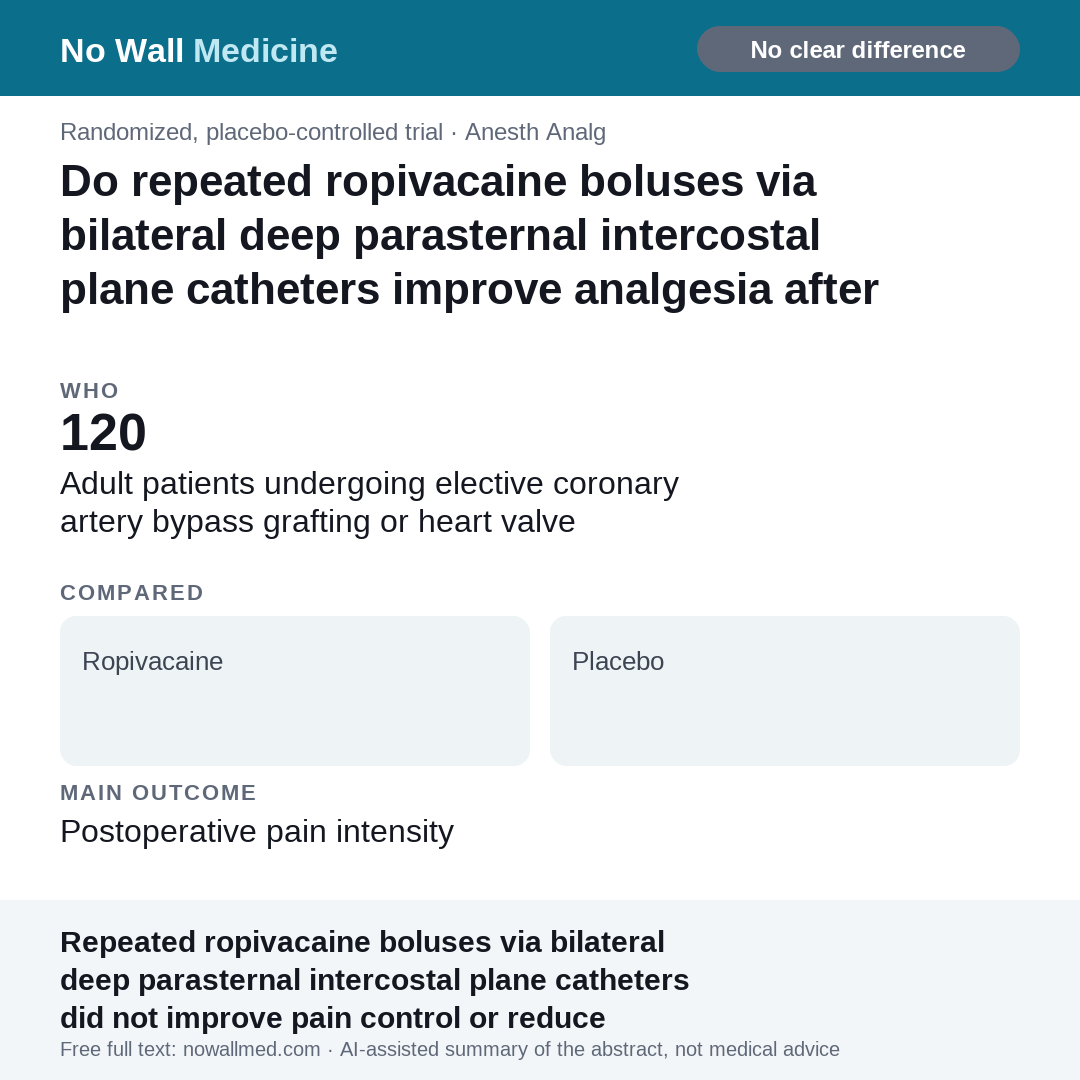
The Effect of Repeated Bilateral Deep Parasternal Intercostal Plane Catheter Boluses on Analgesia After Cardiac Surgery: A Randomized Controlled Trial
Randomized, placebo-controlled trialNo clear difference
Do repeated ropivacaine boluses via bilateral deep parasternal intercostal plane catheters improve analgesia after cardiac surgery?
Who
120
Adult patients undergoing elective coronary artery bypass grafting or heart valve replacement
Compared
Ropivacaine
Placebo
Main outcome
Postoperative pain intensity
Bottom line: Repeated ropivacaine boluses via bilateral deep parasternal intercostal plane catheters did not improve pain control or reduce opioid consumption.
Anesth Analg · 2026-08-11Download image
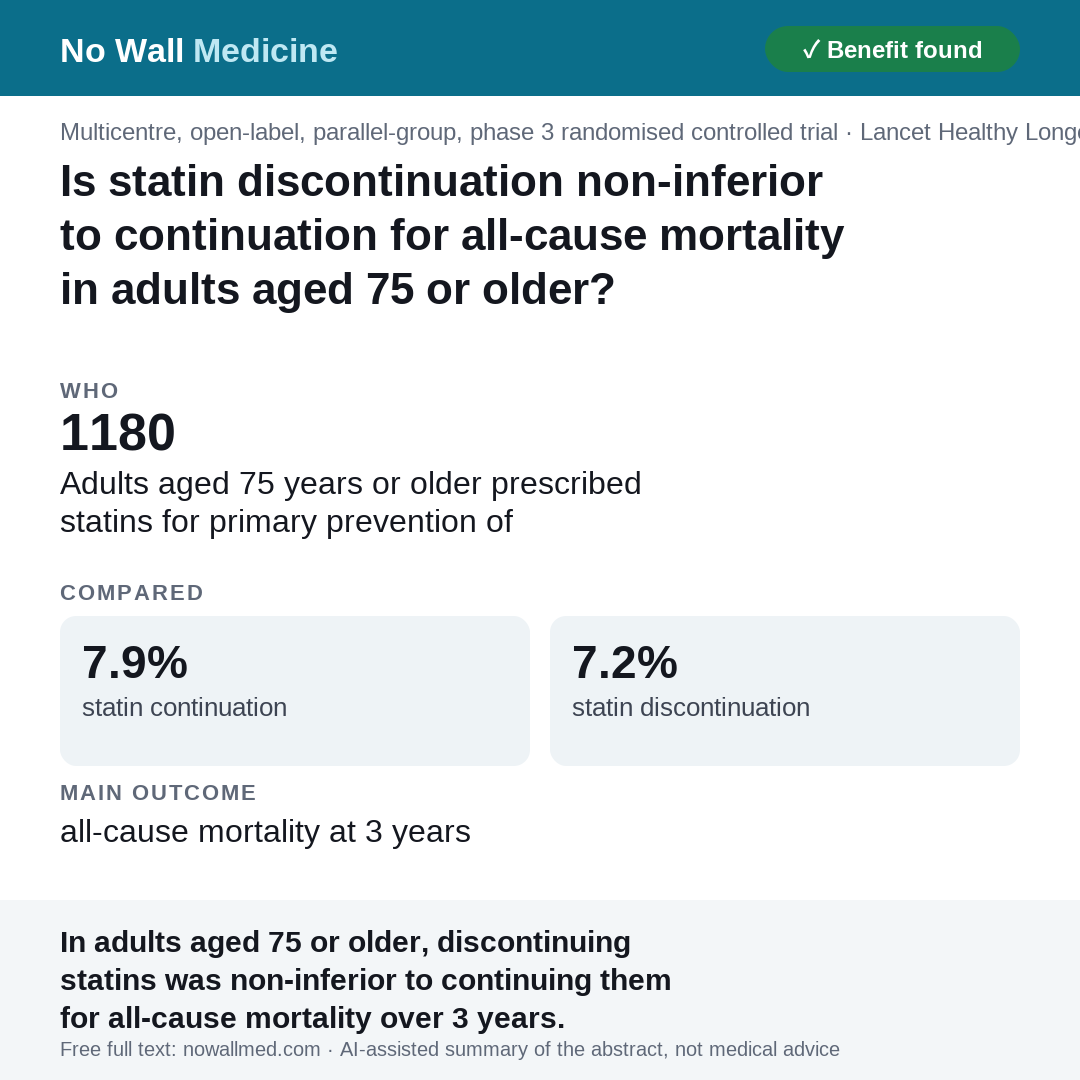
Discontinuation of statins for primary prevention of atherosclerotic cardiovascular disease in adults aged 75 years or older (SAGA/SITE): a multicentre, open-label, pragmatic, non-inferiority randomised trial
Multicentre, open-label, parallel-group, phase 3 randomised controlled trialBenefit found
Is statin discontinuation non-inferior to continuation for all-cause mortality in adults aged 75 or older?
Who
1180
Adults aged 75 years or older prescribed statins for primary prevention of atherosclerotic cardiovascular disease · 297 primary care offices
Compared
7.9%statin continuation (48/604)
7.2%statin discontinuation (35/484)
Main outcome
all-cause mortality at 3 years
Result: -0.68% (95% CI -3.95 to 2.60)
Bottom line: In adults aged 75 or older, discontinuing statins was non-inferior to continuing them for all-cause mortality over 3 years.
Limitation: masking was not done
Funded by: French Ministry of Health
Lancet Healthy Longev · 2026-08-11Download image
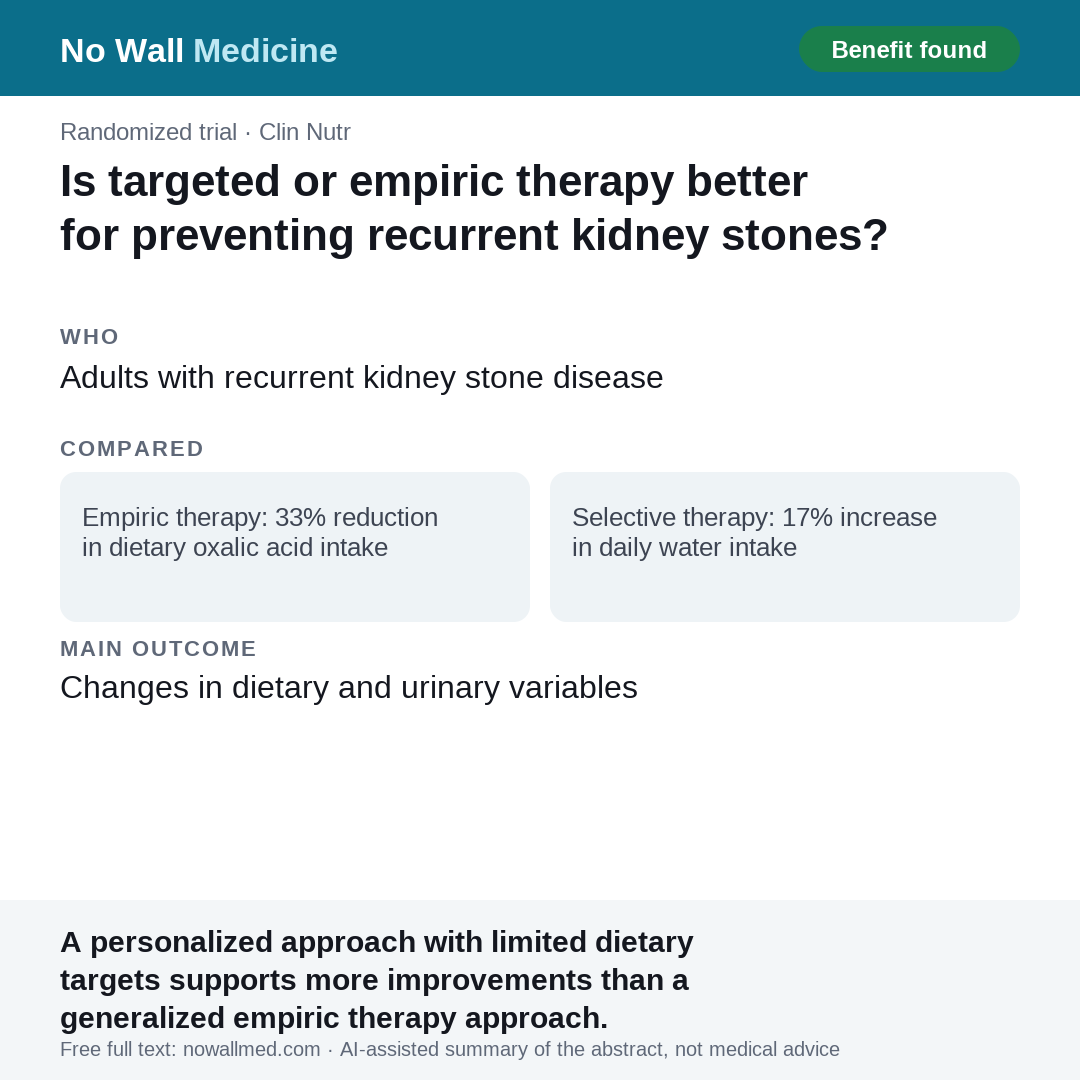
Targeted versus empiric approach for prevention of recurrent kidney stones: Insights on diet therapy from a randomized trial
Randomized trialBenefit found
Is targeted or empiric therapy better for preventing recurrent kidney stones?
Who
Adults with recurrent kidney stone disease
Compared
Empiric therapy: 33% reduction in dietary oxalic acid intake
Selective therapy: 17% increase in daily water intake
Main outcome
Changes in dietary and urinary variables
Bottom line: A personalized approach with limited dietary targets supports more improvements than a generalized empiric therapy approach.
Limitation: Adherence to dietary recommendations is particularly challenging in a lifelong condition.
Clin Nutr · 2026-08-11Download image
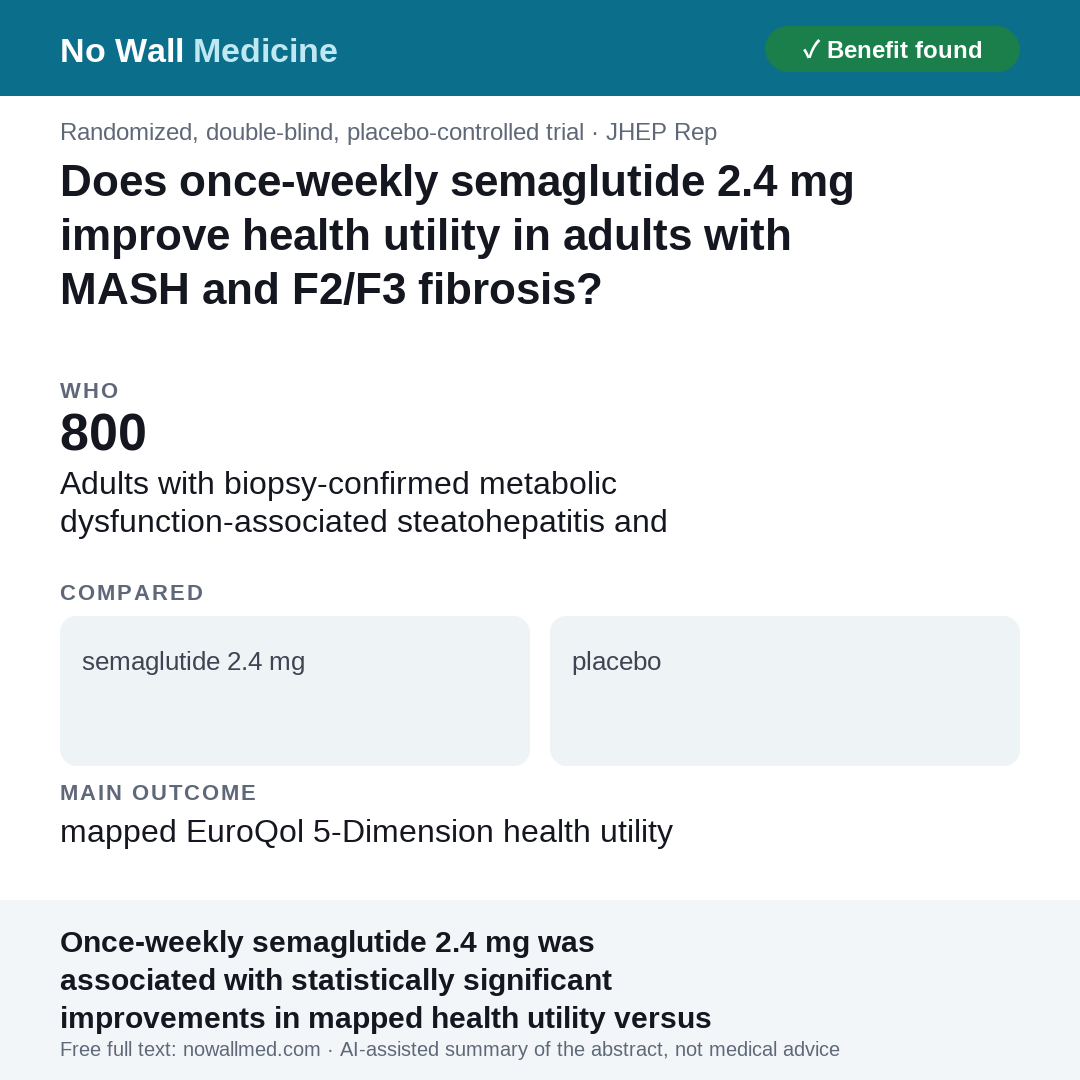
EQ-5D health utility gains with once-weekly semaglutide 2.4 mg in people with MASH and F2/F3 fibrosis: An analysis of ESSENCE
Randomized, double-blind, placebo-controlled trialBenefit found
Does once-weekly semaglutide 2.4 mg improve health utility in adults with MASH and F2/F3 fibrosis?
Who
800
Adults with biopsy-confirmed metabolic dysfunction-associated steatohepatitis and fibrosis stage F2 or F3
Compared
semaglutide 2.4 mg
placebo
Main outcome
mapped EuroQol 5-Dimension health utility
Result: estimated treatment difference 0.03 (95% CI 0.01-0.06)
Bottom line: Once-weekly semaglutide 2.4 mg was associated with statistically significant improvements in mapped health utility versus placebo.
Limitation: Use of mapped rather than directly measured utilities and the UK-specific tariff.
JHEP Rep · 2026-08-11Download image