Visual abstracts
New randomized trials and meta-analyses from leading journals at a glance: who was studied, what was compared, and what was found. Every paper is free to read in full.
All specialtiesCardiology 262Oncology 205Gastroenterology & Hepatology 117Infectious Disease 211Neurology 121Psychiatry & Mental Health 172Pulmonology 123Critical Care 78Endocrinology & Diabetes 172Pediatrics 114Surgery 79Orthopedics & Sports Medicine 48Neurosurgery 15Cardiothoracic & Vascular Surgery 28Plastic & Reconstructive Surgery 59Nephrology 54Rheumatology 51Hematology 64Dermatology 27Ophthalmology 48Obstetrics & Gynecology 73Public & Global Health 79Radiology & Imaging 21Anesthesiology 42Urology 58ENT (Otolaryngology) 36Emergency Medicine 28Allergy & Immunology 26Geriatrics 78Family Medicine & Primary Care 38Medical Genetics & Genomics 27Pathology & Laboratory Medicine 5Physical Medicine & Rehabilitation 66Palliative Care 39Nutrition 99Digital Health & AI 237General Medicine 38
EASE-CF: dietitian-led weight-loss intervention for adults with cystic fibrosis and excess weight: protocol for a feasibility randomised controlled trial
Multicentre feasibility randomized controlled trialUnclear result
Is a dietitian-led weight-loss intervention feasible for adults with cystic fibrosis?
Who
30
Adults with cystic fibrosis and body mass index ≥27 kg/m2 · Four United Kingdom specialist centres
Compared
EASE-CF intervention
Routine dietetic consultations
Main outcome
Feasibility of progression to a definitive randomized controlled trial
Bottom line: This protocol describes a feasibility trial testing a dietitian-led weight-loss intervention for adults with cystic fibrosis.
BMJ Open Respir Res · 2026-07-27Download image

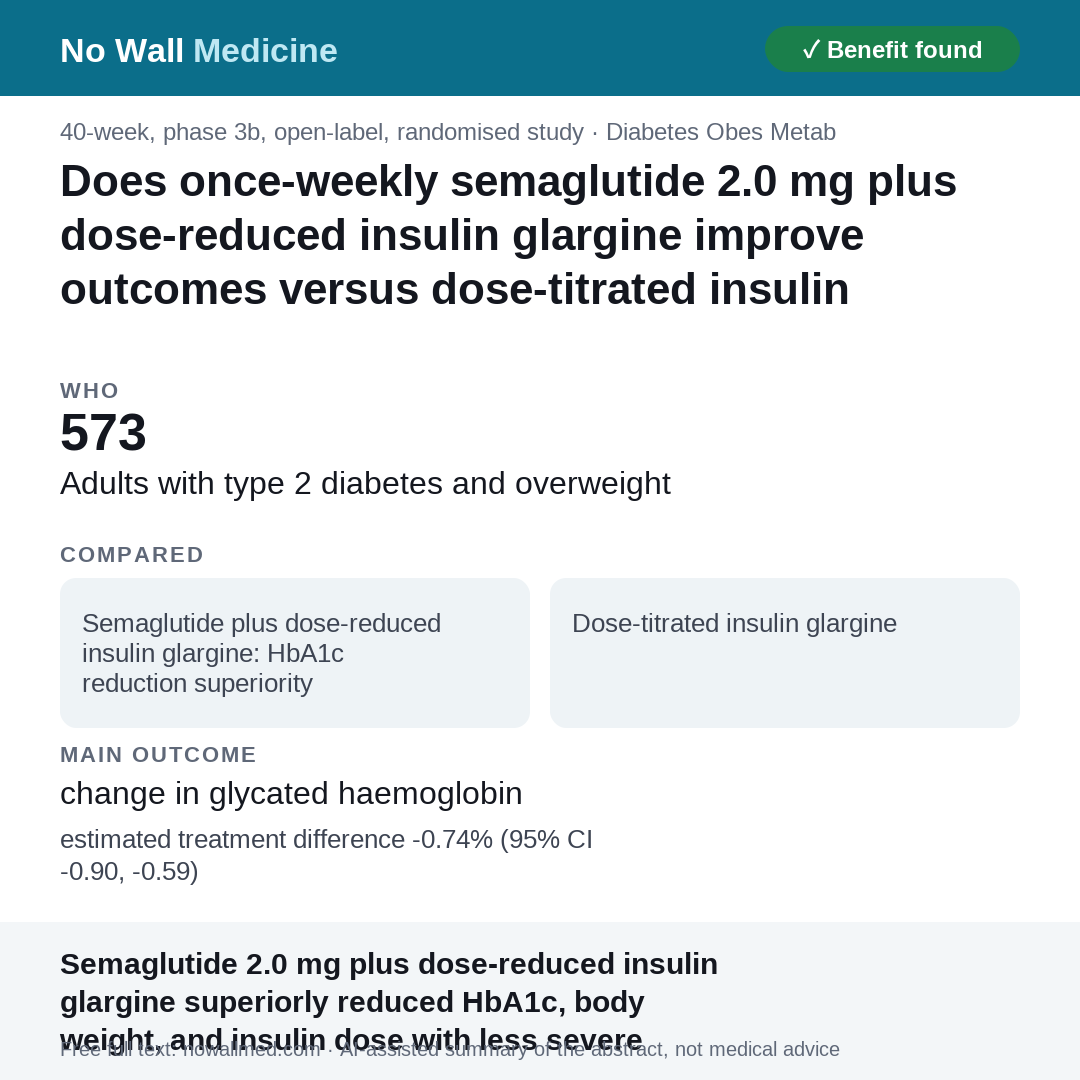
Efficacy and Safety of Once-Weekly Semaglutide 2.0 mg as an Add-On to Dose-Reduced Insulin Glargine versus Dose-Titrated Insulin Glargine in People With Type 2 Diabetes and Overweight (SUSTAIN OPTIMIZE)
40-week, phase 3b, open-label, randomised studyBenefit found
Does once-weekly semaglutide 2.0 mg plus dose-reduced insulin glargine improve outcomes versus dose-titrated insulin glargine?
Who
573
Adults with type 2 diabetes and overweight
Compared
Once-weekly semaglutide 2.0 mg plus dose-reduced insulin glargine
Dose-titrated insulin glargine
Main outcome
change in glycated haemoglobin
Result: estimated treatment difference -0.74% (95% CI -0.90, -0.59)
Bottom line: Semaglutide 2.0 mg plus dose-reduced insulin glargine superiorly reduced HbA1c, body weight, and daily insulin dose.
Diabetes Obes Metab · 2026-07-26Download image
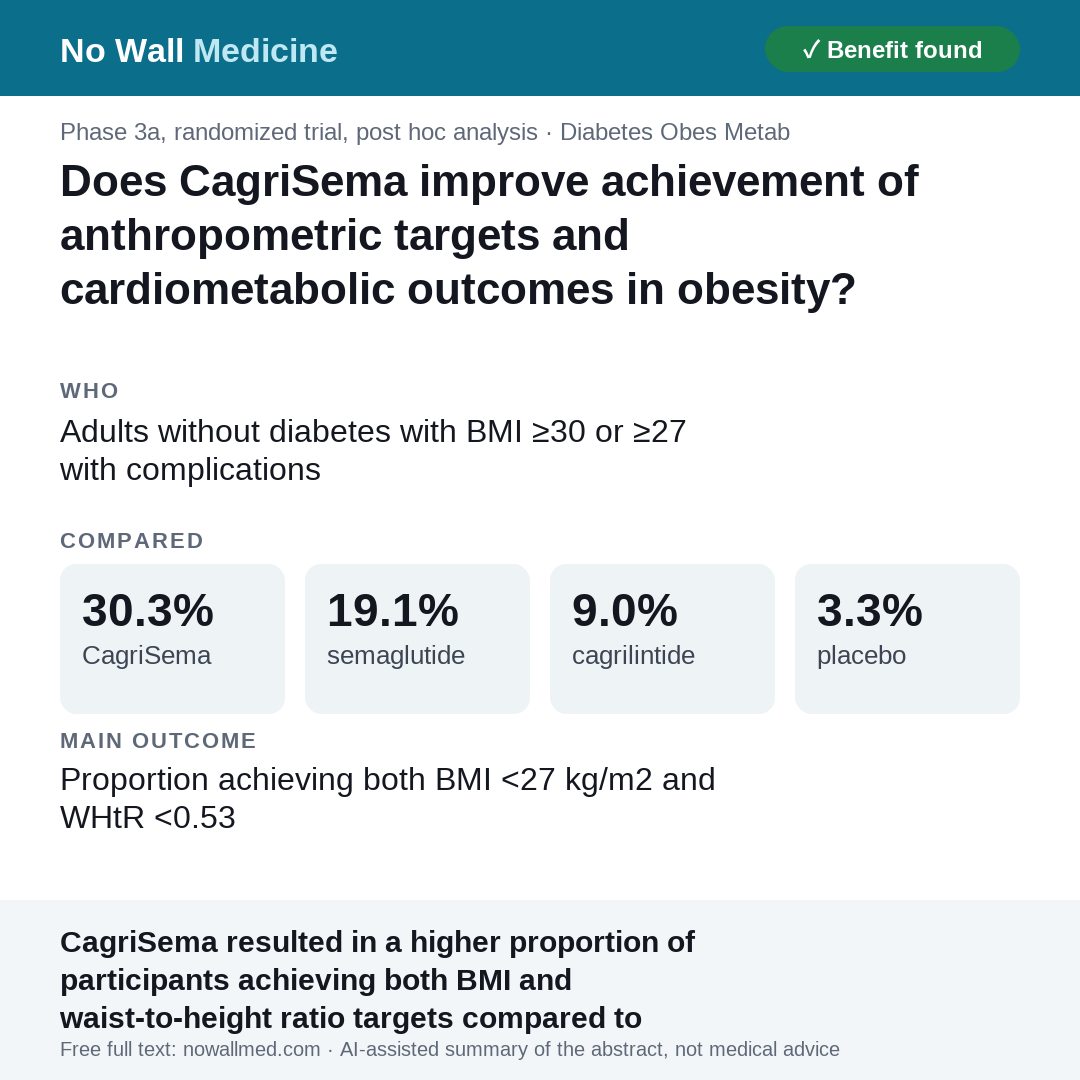
Efficacy of CagriSema for Reaching Anthropometric Treatment Targets and Cardiometabolic Outcomes: A Secondary, Post hoc Analysis of REDEFINE 1
Phase 3a, randomized trialBenefit found
Does CagriSema help achieve anthropometric targets compared to semaglutide, cagrilintide, or placebo?
Who
Adults without diabetes with high body mass index
Compared
CagriSema
semaglutide
cagrilintide
placebo
Main outcome
proportion of participants achieving anthropometric targets
Bottom line: CagriSema showed a greater proportion of participants achieving anthropometric targets compared to other treatments.
Diabetes Obes Metab · 2026-07-26Download image
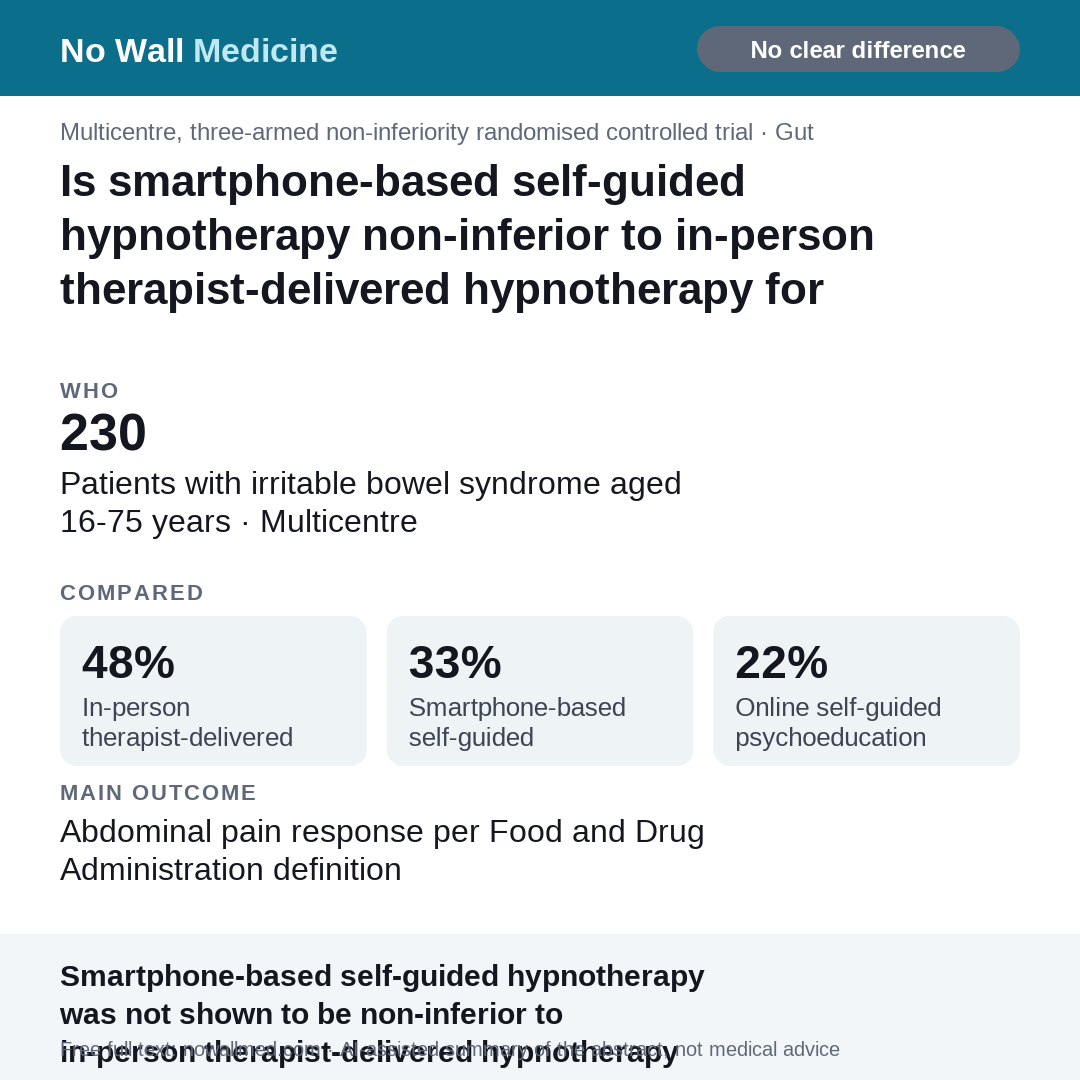
In-person therapist-delivered hypnotherapy versus smartphone-based self-guided hypnotherapy in IBS: a multicentre three-armed randomised controlled trial
Multicentre, three-armed non-inferiority randomised controlled trialNo clear difference
Is smartphone-based self-guided hypnotherapy non-inferior to in-person therapist-delivered hypnotherapy for IBS?
Who
230
Patients with irritable bowel syndrome aged 16-75 years · Multicentre
Compared
48%In-person therapist-delivered hypnotherapy
33%Smartphone-based self-guided hypnotherapy
22%Online self-guided psychoeducation
Main outcome
Abdominal pain response per Food and Drug Administration definition
Result: -14.7%, 95% CI -29.3% to 0.9%
Bottom line: Smartphone-based self-guided hypnotherapy did not show non-inferiority to in-person hypnotherapy for reducing abdominal pain.
Gut · 2026-07-25Download image
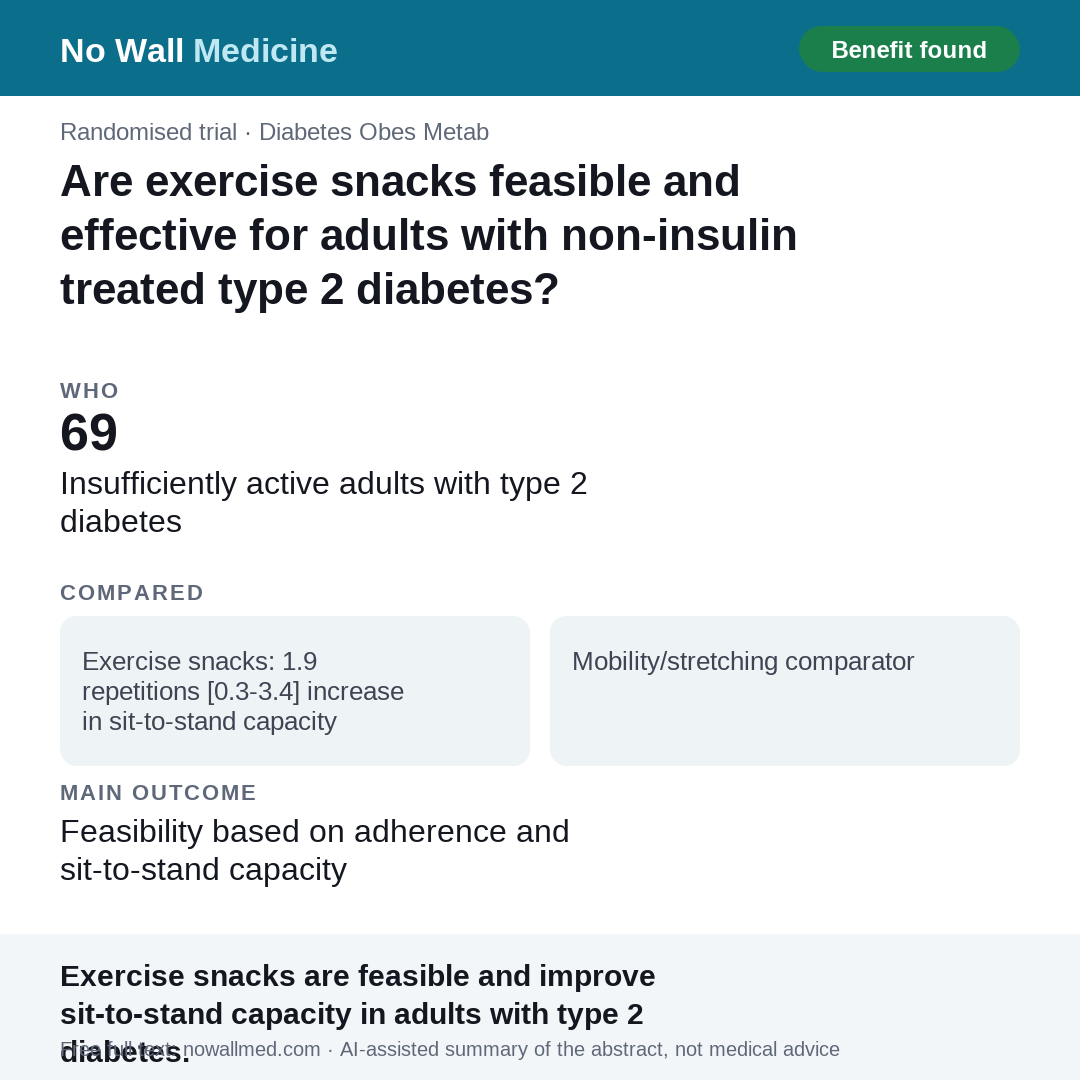
Exercise Snacks Are Feasible to Perform in the Real World and Improve Physical Capacity for Adults Living With Non-Insulin Treated Type 2 Diabetes: A Randomised Trial
Randomised trialBenefit found
Are exercise snacks feasible and effective for adults with non-insulin treated type 2 diabetes?
Who
69
Insufficiently active adults with type 2 diabetes
Compared
Exercise snacks: 1.9 repetitions [0.3-3.4] increase in sit-to-stand capacity
Mobility/stretching comparator
Main outcome
30-second sit-to-stand capacity
Result: between-group effect estimate [95% confidence interval]: 1.9 repetitions [0.3-3.4]
Bottom line: Exercise snacks are feasible and improve sit-to-stand capacity in adults with type 2 diabetes.
Diabetes Obes Metab · 2026-07-25Download image
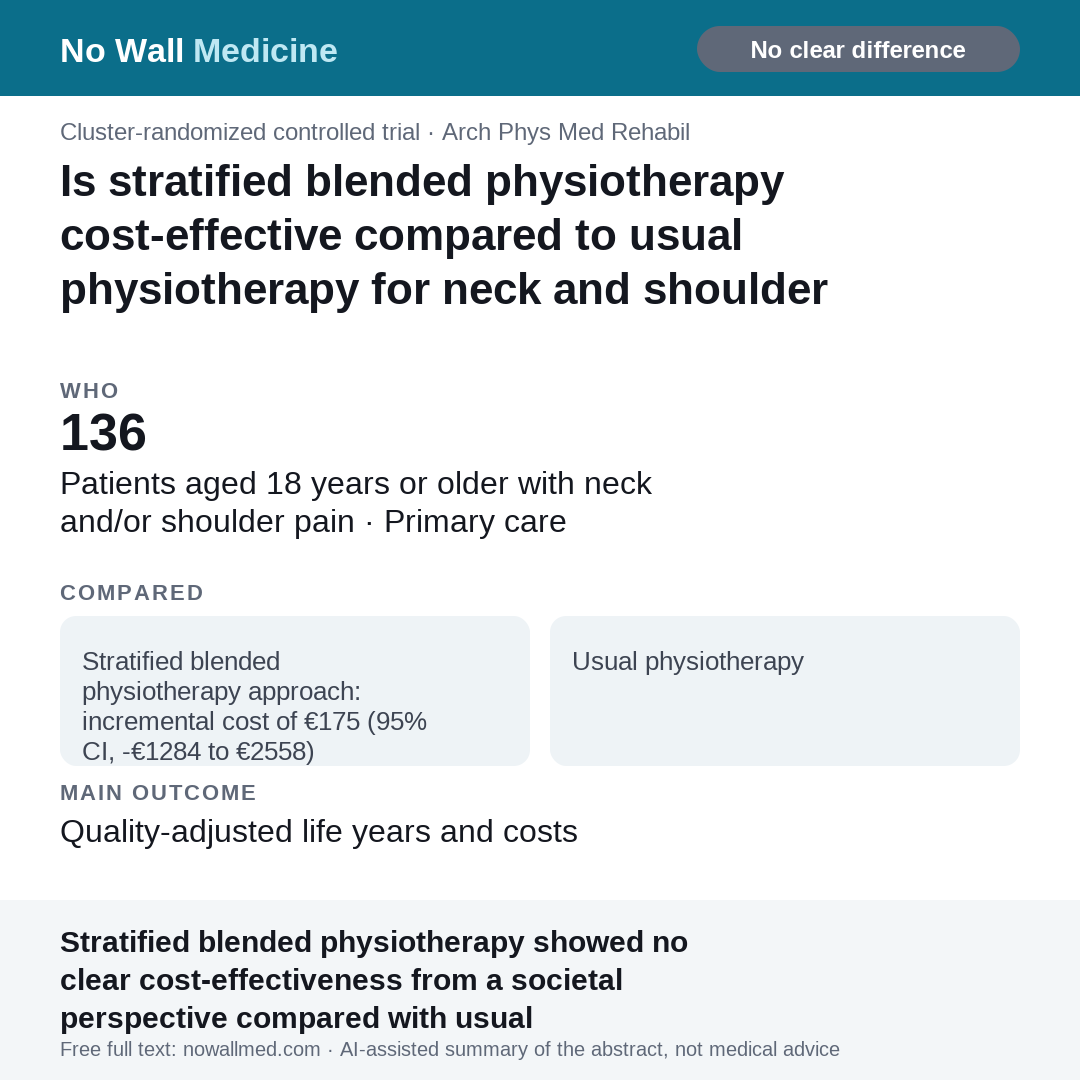
Cost-Effectiveness of Stratified Physiotherapy Integrated With Digital Health Versus Usual Physiotherapy for Neck and/or Shoulder Pain: Results of a Cluster-Randomized Controlled Trial
Cluster-randomized controlled trialNo clear difference
Is stratified blended physiotherapy cost-effective compared to usual physiotherapy for neck and shoulder pain?
Who
136
Patients aged 18 years or older with neck and/or shoulder pain · Primary care physiotherapy practices across the Netherlands
Compared
Stratified blended physiotherapy approach: incremental cost of €175 (95% CI, -€1284 to €2558)
Usual physiotherapy
Main outcome
Quality-adjusted life years and costs
Result: incremental cost-effectiveness ratio of €221,123/QALY
Bottom line: Stratified blended physiotherapy showed no clear cost-effectiveness from a societal perspective compared with usual physiotherapy.
Arch Phys Med Rehabil · 2026-07-25Download image
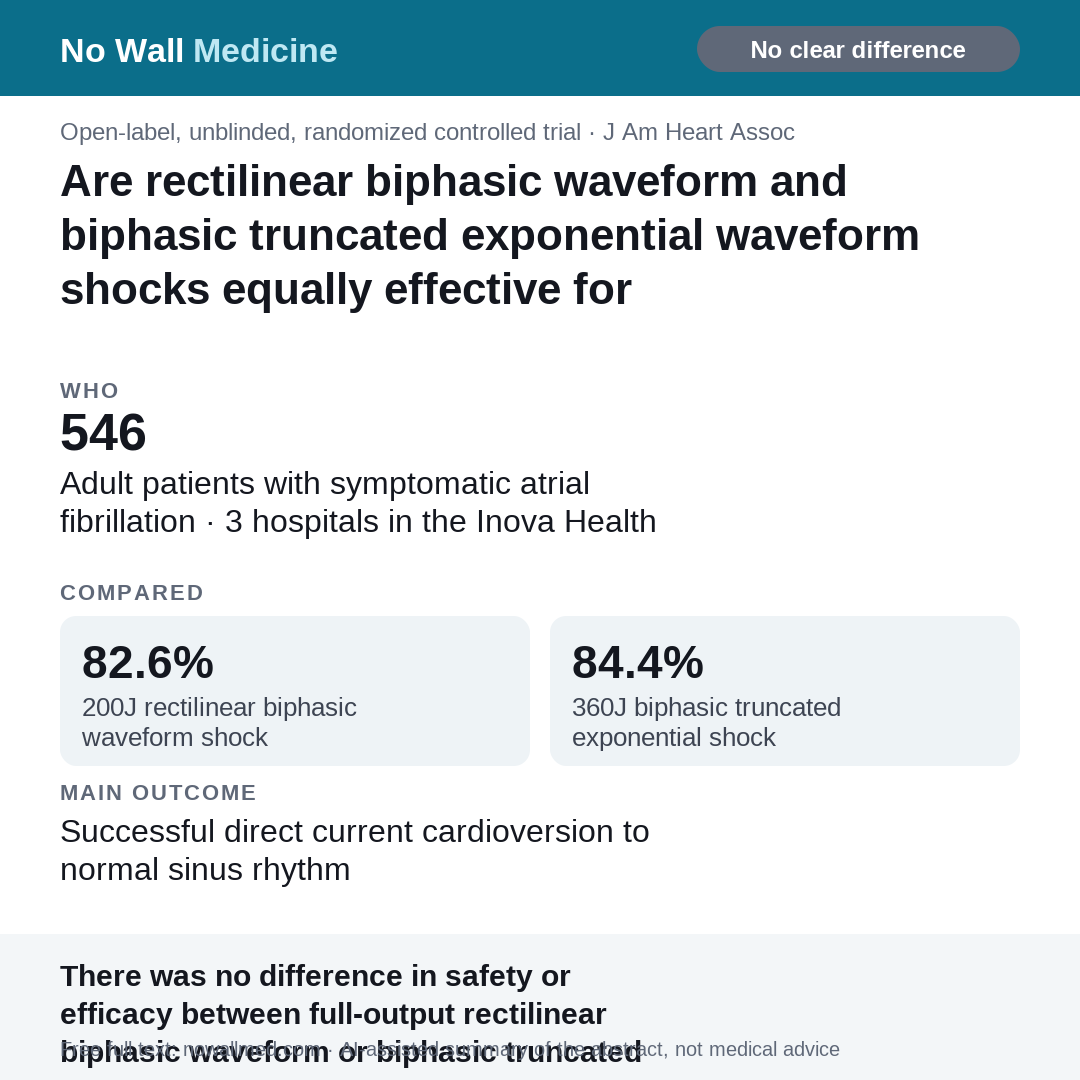
Pragmatic Randomized Clinical Trial Comparing Rectilinear Biphasic Waveform and Biphasic Truncated Exponential Waveform Shocks for Cardioversion of Atrial Fibrillation
Open-label, unblinded, randomized controlled trialNo clear difference
Are rectilinear biphasic waveform and biphasic truncated exponential waveform shocks equally effective for cardioversion?
Who
546
Adult patients with symptomatic atrial fibrillation · 3 hospitals in the Inova Health System
Compared
82.6%200J rectilinear biphasic waveform shock
84.4%360J biphasic truncated exponential shock
Main outcome
Successful direct current cardioversion to normal sinus rhythm
Bottom line: There was no difference in safety or efficacy between full-output rectilinear biphasic waveform or biphasic truncated exponential shocks.
J Am Heart Assoc · 2026-07-25Download image
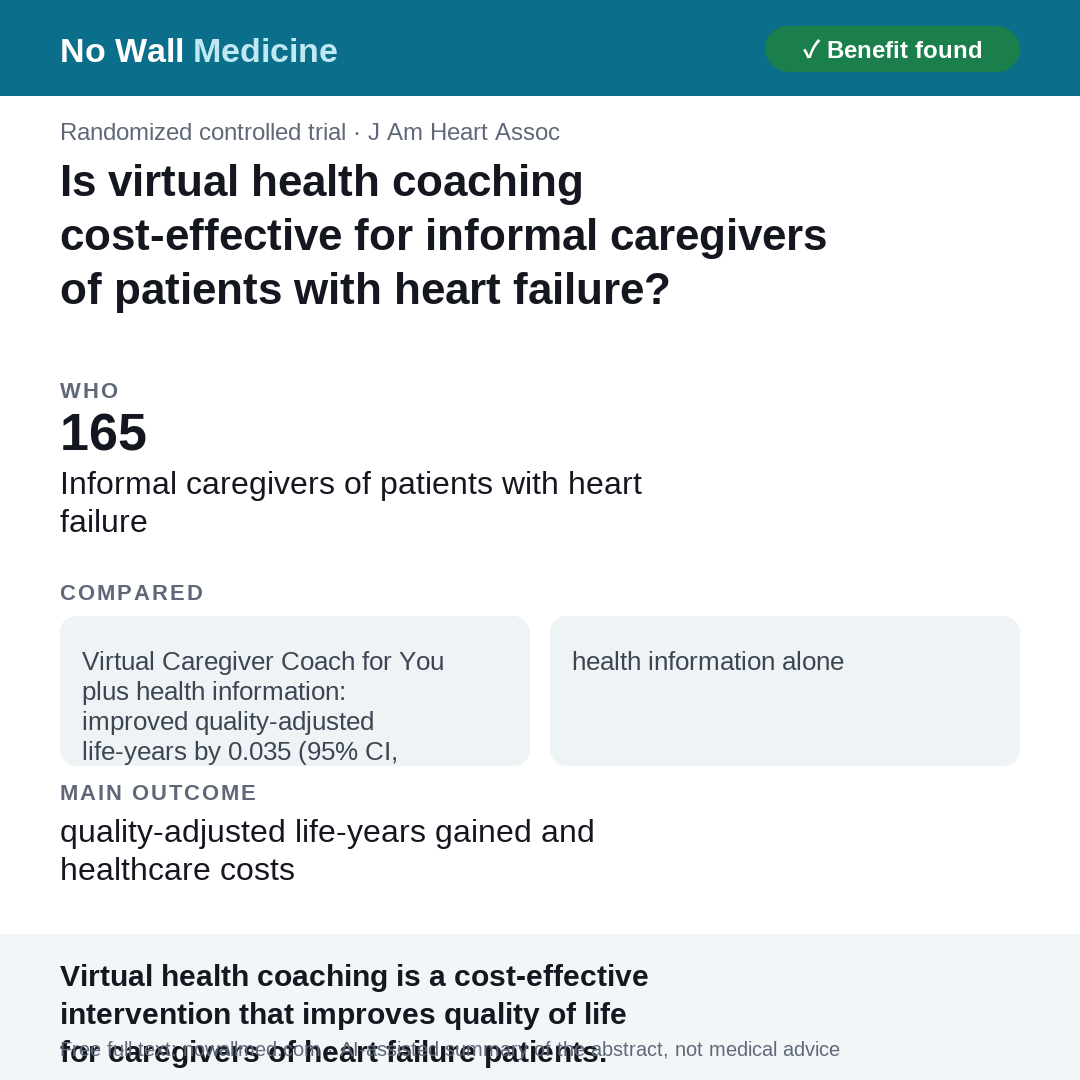
Cost-Effectiveness of Virtual Health Coaching for Caregivers of Patients With Heart Failure: Results From a Randomized Controlled Trial
Randomized controlled trialBenefit found
Is virtual health coaching cost-effective for informal caregivers of patients with heart failure?
Who
165
Informal caregivers of patients with heart failure
Compared
Virtual Caregiver Coach for You plus health information: improved quality-adjusted life-years by 0.035 (95% CI, 0.003-0.068)
health information alone
Main outcome
quality-adjusted life-years gained and healthcare costs
Result: $838 per quality-adjusted life-year gained
Bottom line: Virtual health coaching is a cost-effective intervention that improves quality of life for caregivers of heart failure patients.
J Am Heart Assoc · 2026-07-25Download image
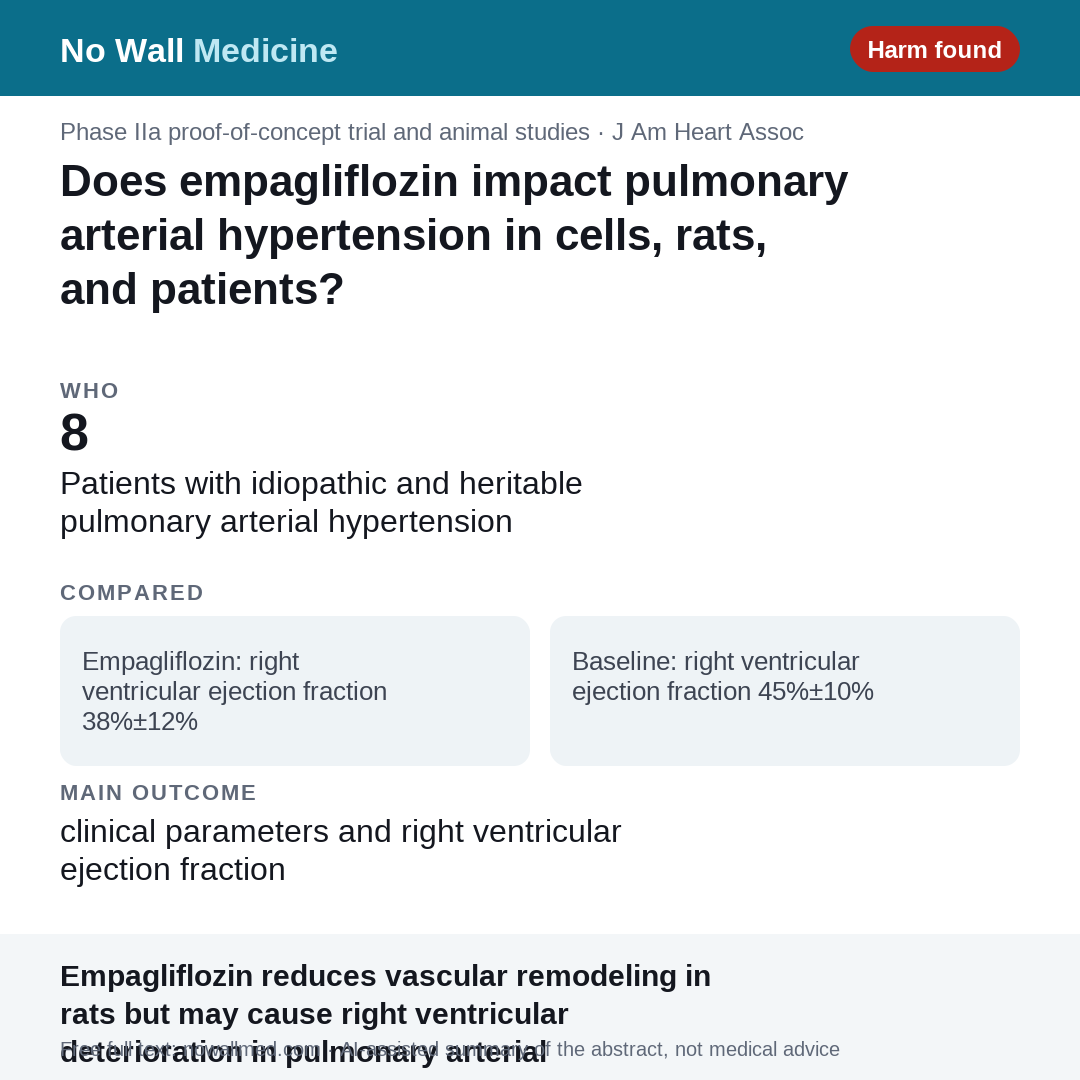
Empagliflozin Ameliorates Experimental Pulmonary Vascular Remodeling, but May Not Benefit Patients With Pulmonary Arterial Hypertension
Phase IIa proof-of-concept trial and animal studiesHarm found
Does empagliflozin impact pulmonary arterial hypertension in cells, rats, and patients?
Who
8
Patients with idiopathic and heritable pulmonary arterial hypertension
Compared
Empagliflozin: right ventricular ejection fraction 38%±12%
Baseline: right ventricular ejection fraction 45%±10%
Main outcome
clinical parameters and right ventricular ejection fraction
Result: P=0.031
Bottom line: Empagliflozin reduces vascular remodeling in rats but may cause right ventricular deterioration in pulmonary arterial hypertension patients.
Limitation: Small phase IIa proof-of-concept trial with eight patients.
J Am Heart Assoc · 2026-07-25Download image
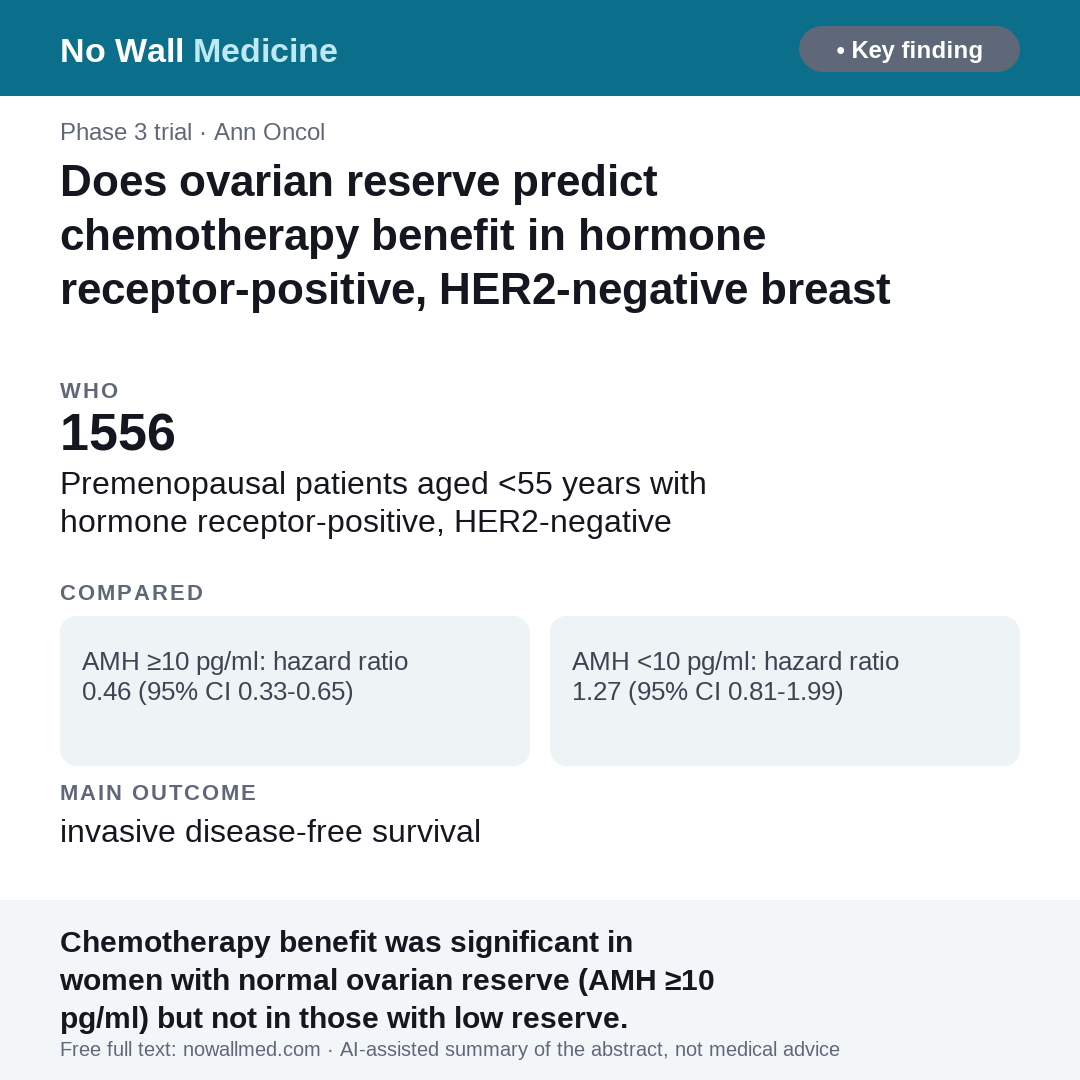
Ovarian reserve as a measure of adjuvant chemotherapy benefit in hormone receptor positive (HR-positive), HER2-negative, node-positive breast cancer in SWOG S1007 (RxPONDER)
Phase 3 randomized trialBenefit found
Does ovarian reserve predict chemotherapy benefit in hormone receptor-positive, HER2-negative breast cancer?
Who
1556
Premenopausal patients with hormone receptor-positive, HER2-negative, node-positive breast cancer
Compared
Normal ovarian reserve (AMH ≥10 pg/ml): hazard ratio 0.46 (95% CI 0.33-0.65)
Low ovarian reserve (AMH <10 pg/ml): not beneficial
Main outcome
invasive disease-free survival
Result: hazard ratio 0.46 (95% CI 0.33-0.65)
Bottom line: In premenopausal patients, anti-Müllerian hormone levels can help identify who benefits from adjuvant chemotherapy.
Ann Oncol · 2026-07-24Download image
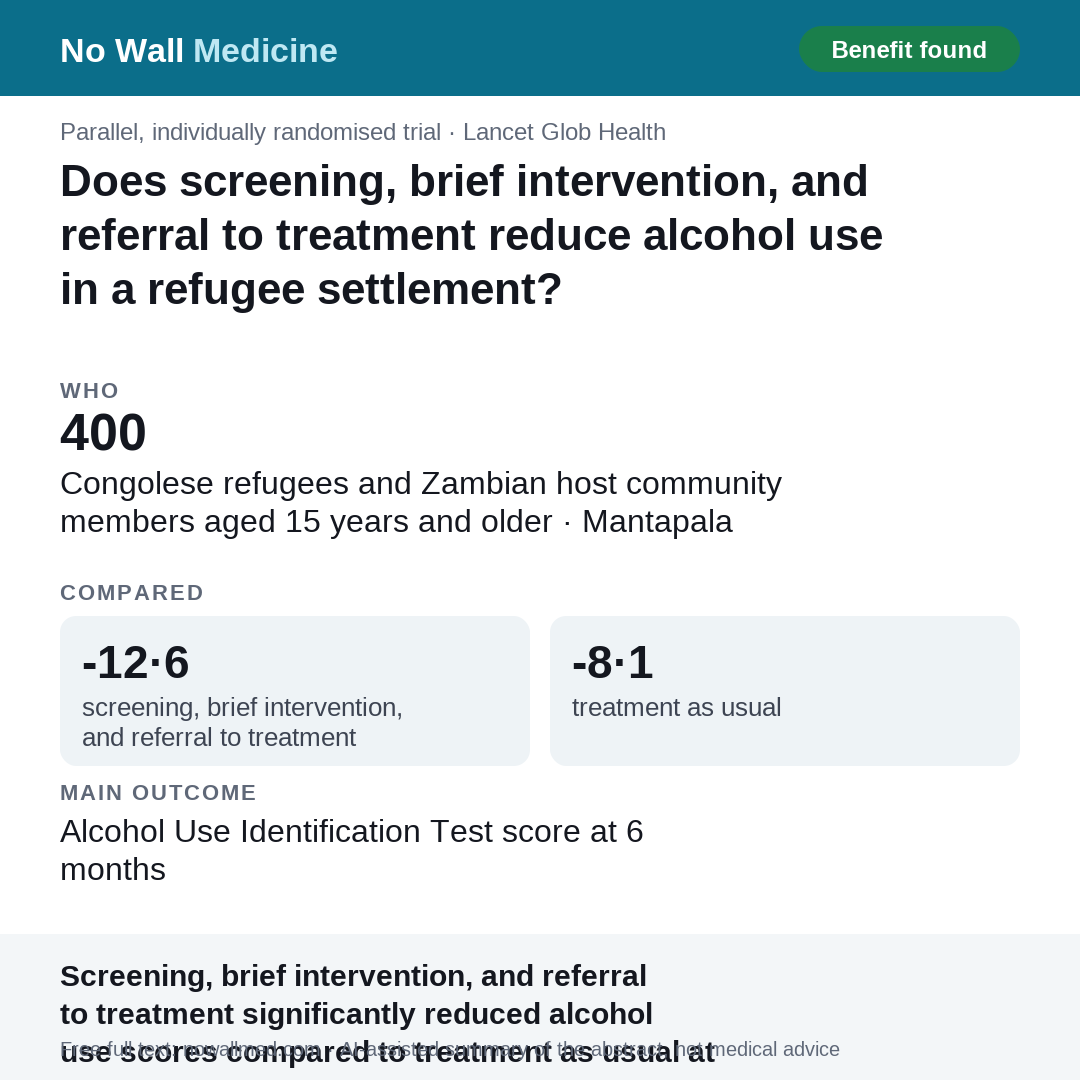
Screening, brief intervention, and referral to treatment compared with treatment as usual for alcohol use in an integrated refugee settlement in Zambia: a hybrid, type 1, randomised controlled trial
Parallel, individually randomised trialBenefit found
Does screening, brief intervention, and referral to treatment reduce alcohol use in a refugee settlement?
Who
400
Congolese refugees and Zambian host community members aged 15 years and older · Mantapala refugee settlement in Zambia
Compared
-12·6screening, brief intervention, and referral to treatment (95% CI -14·3 to -11·0)
-8·1treatment as usual (-9·8 to -6·3)
Main outcome
Alcohol Use Identification Test score at 6 months
Result: -4·6 (95% CI -6·9 to -2·2)
Bottom line: Screening, brief intervention, and referral to treatment significantly reduced alcohol use scores compared to treatment as usual at 6 months.
Funded by: Elrha's Research for Health in Humanitarian Crises Programme
Lancet Glob Health · 2026-07-24Download image
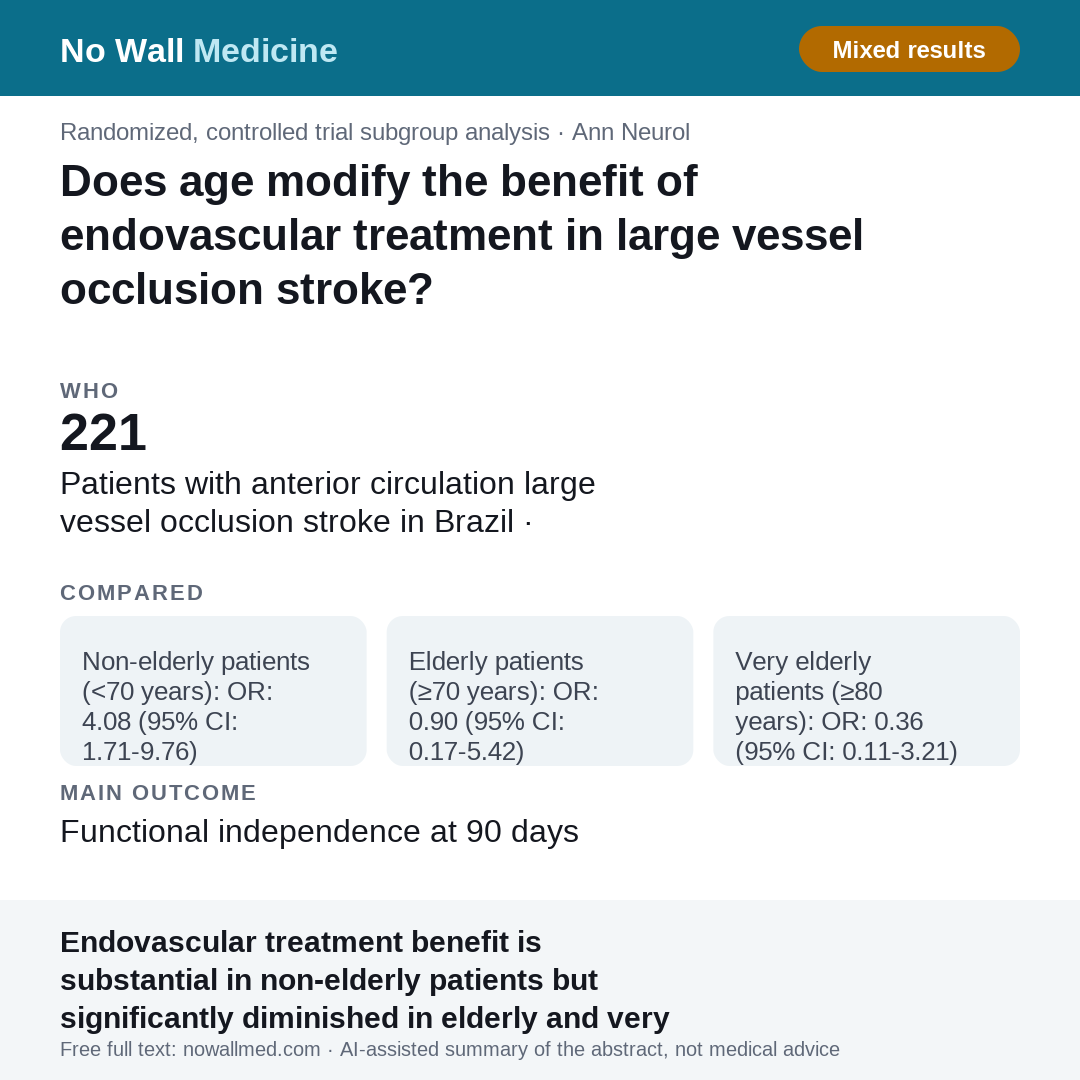
Age Is an Effect Modifier of Thrombectomy Benefit in a Socioeconomically Vulnerable Stroke Population
Randomized, controlled trial subgroup analysisMixed results
Does age modify the benefit of endovascular treatment in large vessel occlusion stroke?
Who
221
Patients with anterior circulation large vessel occlusion stroke in Brazil · Multicenter, public healthcare system in Brazil
Compared
Non-elderly patients: odds ratio 4.08 (95% CI 1.71-9.76)
Elderly patients: odds ratio 0.90 (95% CI 0.17-5.42)
Very elderly patients: odds ratio 0.36 (95% CI 0.11-3.21)
Main outcome
Odds of functional independence
Result: pinteraction = 0.03
Bottom line: Endovascular treatment benefit is substantial in non-elderly patients but significantly diminished in elderly and very elderly patients.
Limitation: Further studies are needed to understand the mechanism underlying these findings.
Ann Neurol · 2026-07-24Download image
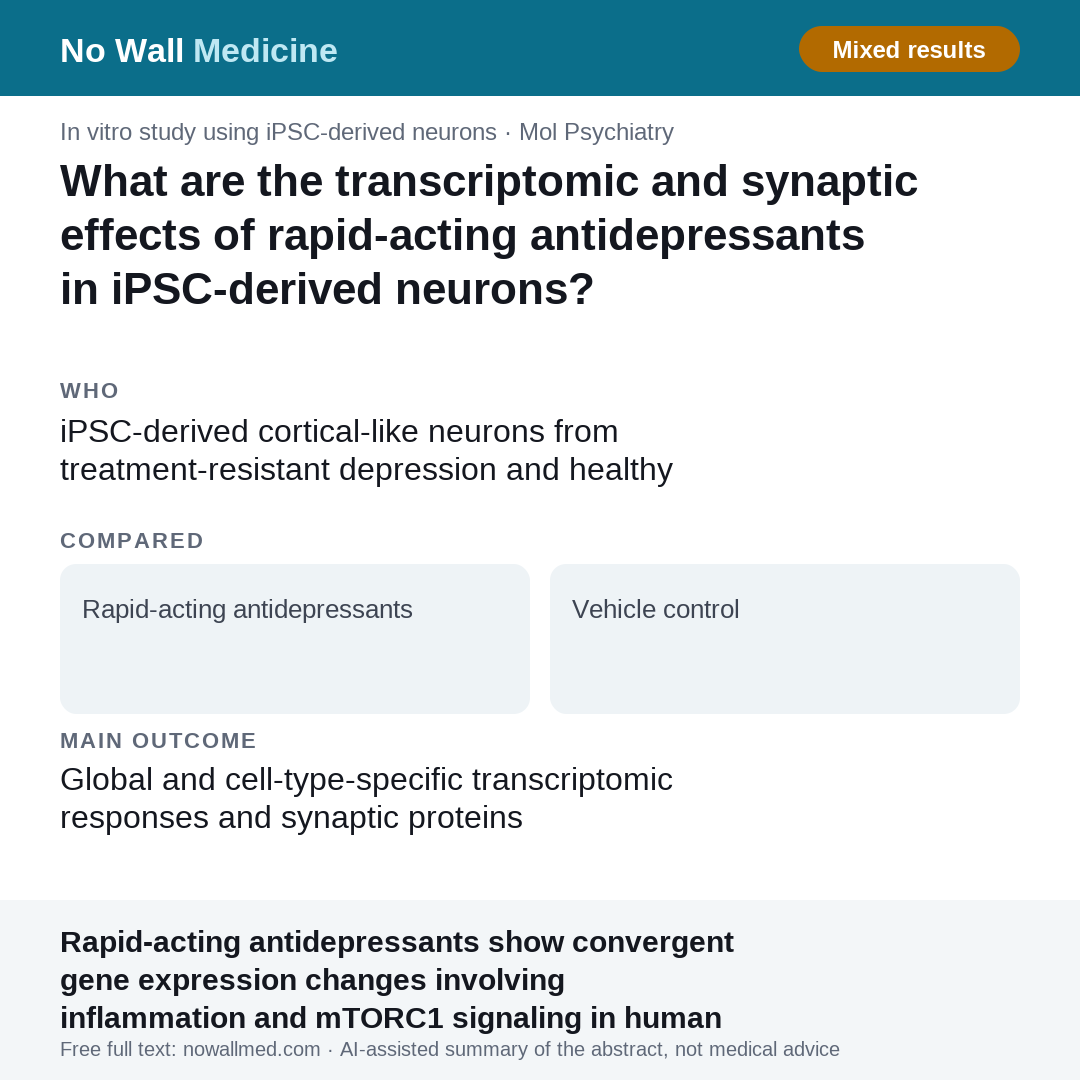
Time-dependent effects of rapid-acting antidepressants in iPSC-derived neurons from treatment-resistant depression and healthy volunteers
In vitro study using iPSC-derived neuronsMixed results
What are the transcriptomic and synaptic effects of rapid-acting antidepressants in iPSC-derived neurons?
Who
iPSC-derived cortical-like neurons from treatment-resistant depression and healthy volunteers
Compared
Rapid-acting antidepressants
Vehicle control
Main outcome
Global and cell-type-specific transcriptomic responses and synaptic proteins
Bottom line: Rapid-acting antidepressants show convergent gene expression changes involving inflammation and mTORC1 signaling in human iPSC-derived neurons.
Mol Psychiatry · 2026-07-24Download image
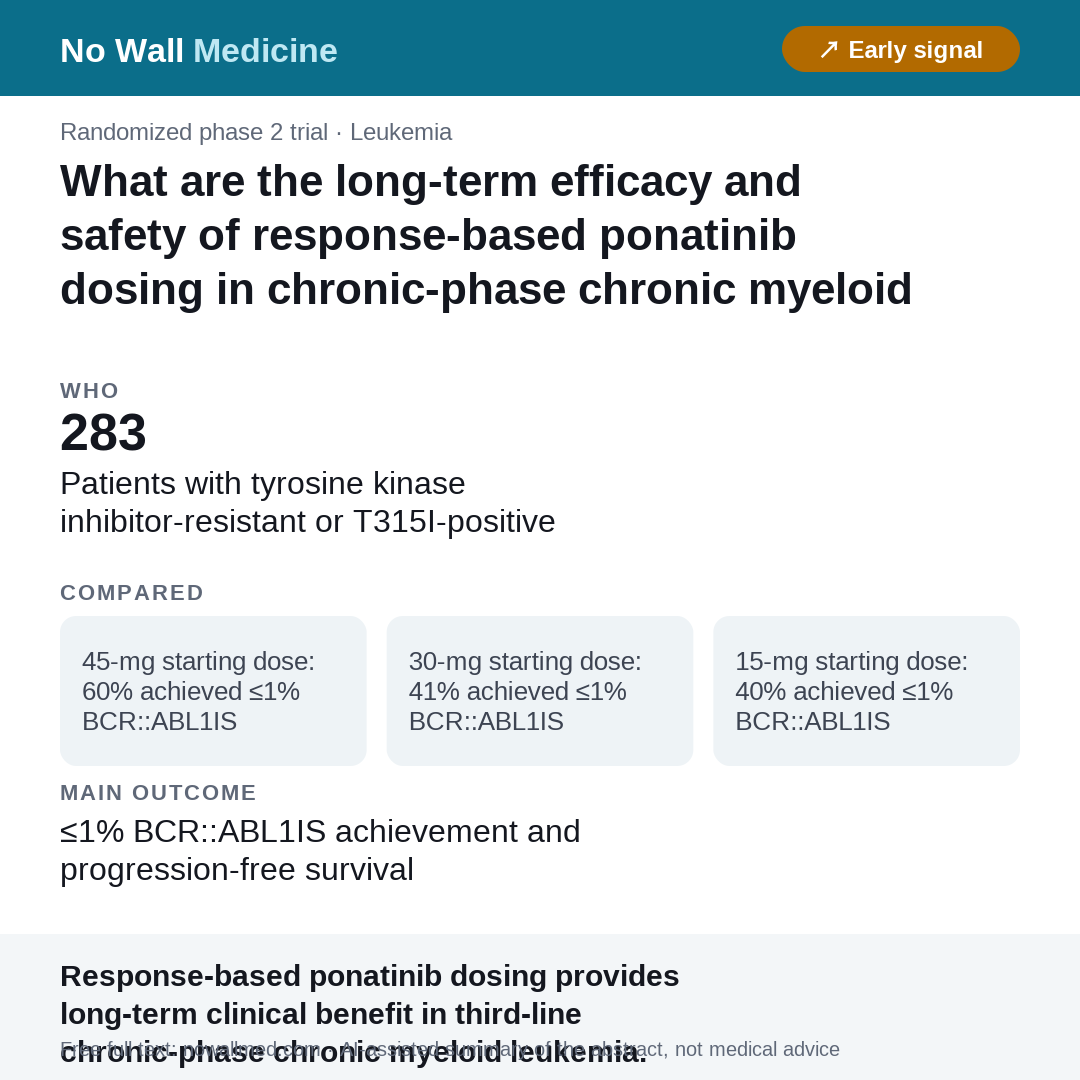
Five-year follow-up of OPTIC: long-term efficacy, safety, and mutation analyses of ponatinib in chronic-phase chronic myeloid leukemia from a randomized phase 2 trial
Randomized phase 2 trialBenefit found
What are the long-term efficacy and safety of response-based ponatinib dosing in chronic-phase chronic myeloid leukemia?
Who
283
Patients with tyrosine kinase inhibitor-resistant or T315I-positive chronic-phase chronic myeloid leukemia
Compared
45-mg starting dose: 60% achieved ≤1% BCR::ABL1IS
30-mg starting dose: 41% achieved ≤1% BCR::ABL1IS
15-mg starting dose: 40% achieved ≤1% BCR::ABL1IS
Main outcome
≤1% BCR::ABL1IS achievement and progression-free survival
Bottom line: Response-based ponatinib dosing provides long-term clinical benefit in third-line chronic-phase chronic myeloid leukemia.
Leukemia · 2026-07-24Download image
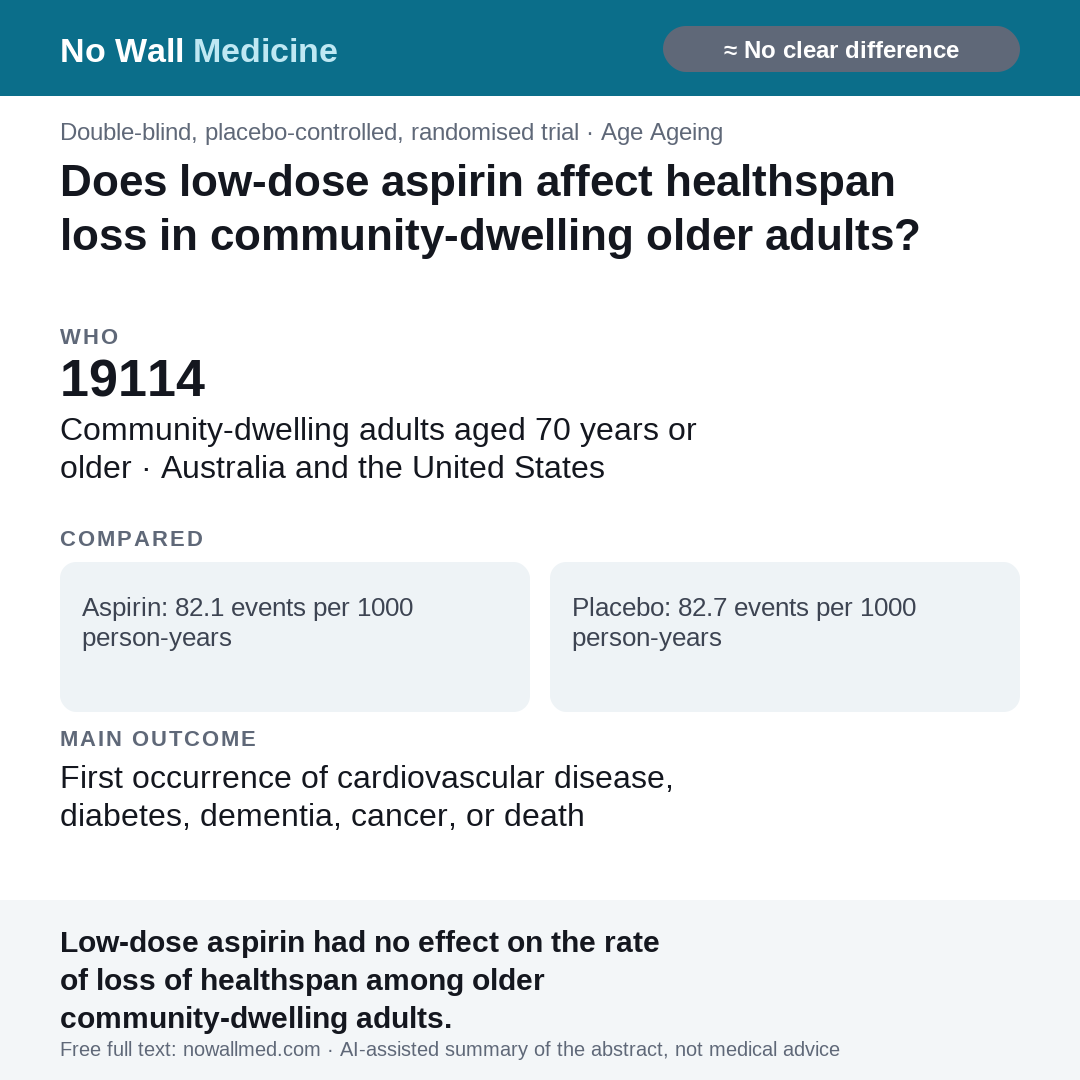
Effect of aspirin on healthspan in community-dwelling older adults: the ASPirin in reducing events in the elderly study
Double-blind, placebo-controlled, randomised trialNo clear difference
Does low-dose aspirin affect healthspan loss in community-dwelling older adults?
Who
19114
Community-dwelling adults aged 70 years or older · Australia and the United States
Compared
Aspirin: 82.1 events per 1000 person-years
Placebo: 82.7 events per 1000 person-years
Main outcome
First occurrence of cardiovascular disease, diabetes, dementia, cancer, or death
Result: hazard ratio 0.98 (95% CI: 0.92-1.05)
Bottom line: Low-dose aspirin had no effect on the rate of loss of healthspan among older community-dwelling adults.
Age Ageing · 2026-07-24Download image
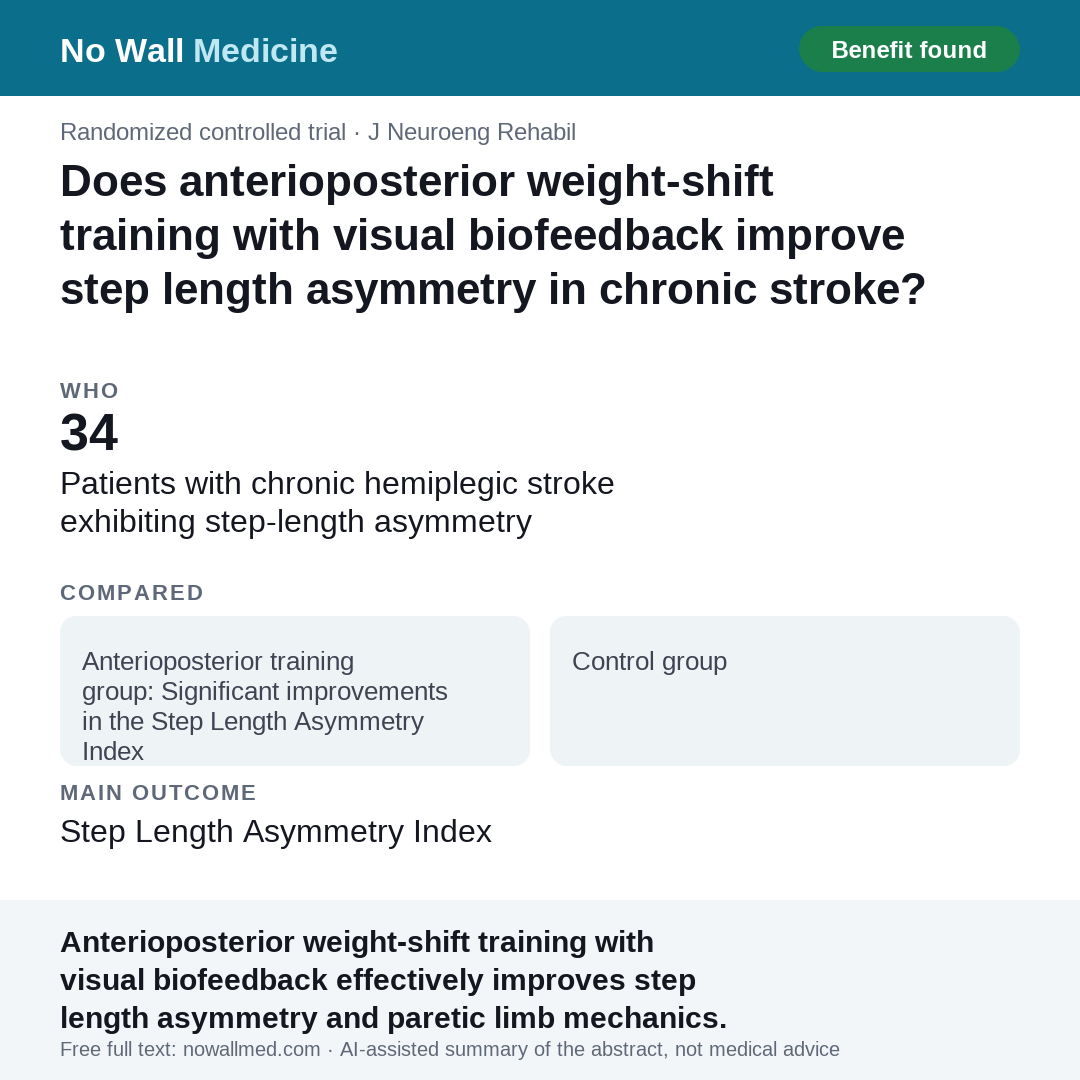
Efficacy of anterioposterior weight-shift training with visual biofeedback for step length asymmetry and functional mobility in chronic stroke: a randomized controlled trial
Randomized controlled trialBenefit found
Does anterioposterior weight-shift training with visual biofeedback improve step length asymmetry in chronic stroke?
Who
34
Patients with chronic hemiplegic stroke exhibiting step-length asymmetry
Compared
Anterioposterior training group
Control group
Main outcome
Step Length Asymmetry Index
Bottom line: Anterioposterior weight-shift training with visual biofeedback may effectively improve step length asymmetry in chronic stroke patients.
J Neuroeng Rehabil · 2026-07-24Download image
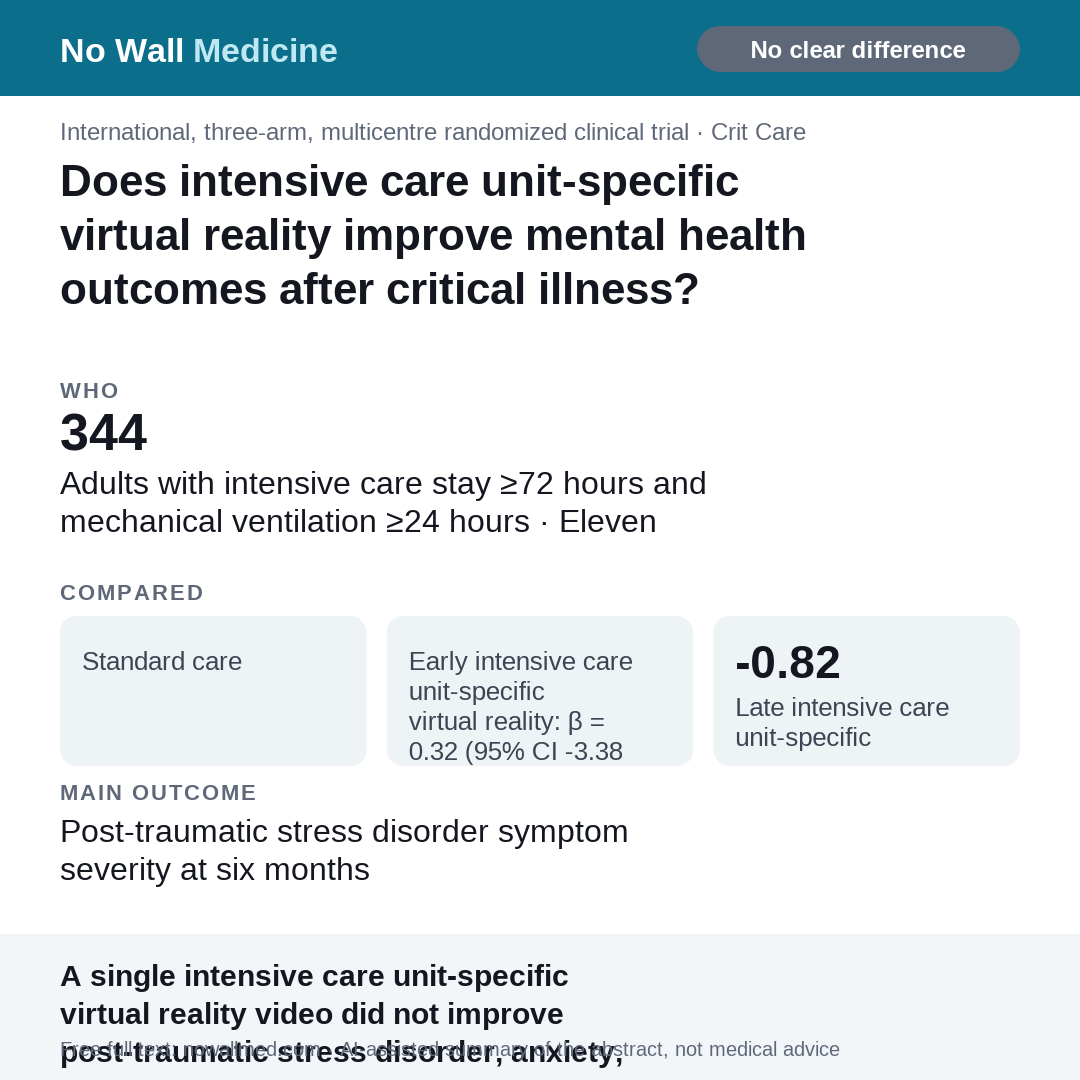
ICU-specific virtual reality for mental health after critical illness: an international three-arm randomized clinical trial
International, three-arm, multicentre randomized clinical trialNo clear difference
Does intensive care unit-specific virtual reality improve mental health outcomes after critical illness?
Who
344
Adults with intensive care stay ≥72 hours and mechanical ventilation ≥24 hours · Eleven hospitals
Compared
Standard care
Early intensive care unit-specific virtual reality: β = 0.32 (95% CI -3.38 to 4.02)
-0.82Late intensive care unit-specific virtual reality (95% CI -4.62 to 2.97)
Main outcome
Post-traumatic stress disorder symptom severity at six months
Result: β = 0.32 (95% CI -3.38 to 4.02) for early vs control
Bottom line: A single intensive care unit-specific virtual reality video did not improve post-traumatic stress disorder, anxiety, depression, or quality of life.
Limitation: Findings should not be generalized to multi-session, therapist-guided, or personalized virtual reality interventions.
Crit Care · 2026-07-24Download image
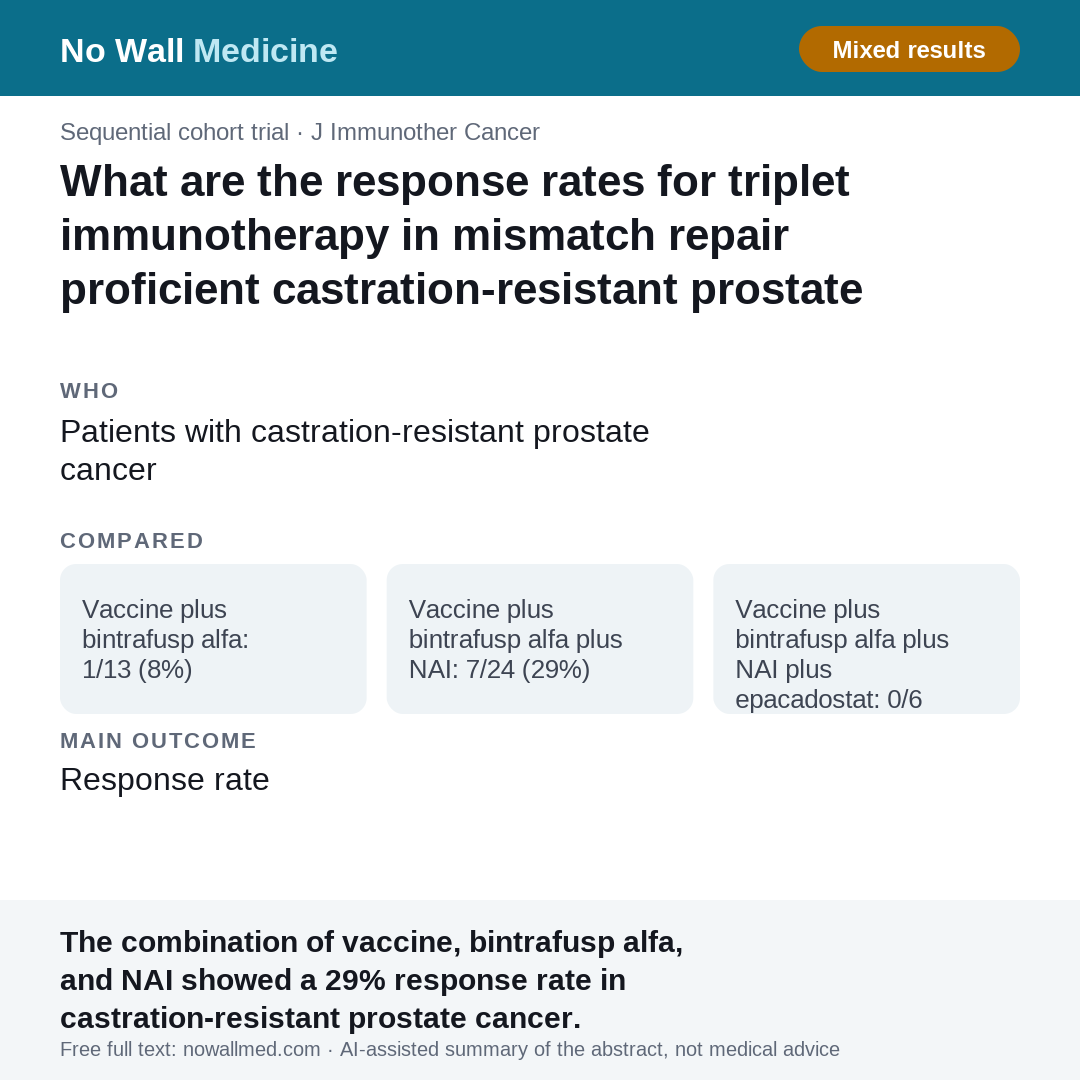
Durable responses to triplet immunotherapy targeting TGF-β, PD-L1, and tumor antigen, with an IL-15 receptor superagonist in mismatch repair proficient castration-resistant prostate cancer
Sequential cohort trialMixed results
What are the response rates for triplet immunotherapy in mismatch repair proficient castration-resistant prostate cancer?
Who
Patients with castration-resistant prostate cancer
Compared
Vaccine plus bintrafusp alfa: 1/13 (8%)
Vaccine plus bintrafusp alfa plus NAI: 7/24 (29%)
Vaccine plus bintrafusp alfa plus NAI plus epacadostat: 0/6 (0%)
Main outcome
Response rate
Bottom line: The combination of vaccine, bintrafusp alfa, and NAI showed a 29% response rate in castration-resistant prostate cancer.
J Immunother Cancer · 2026-07-24Download image
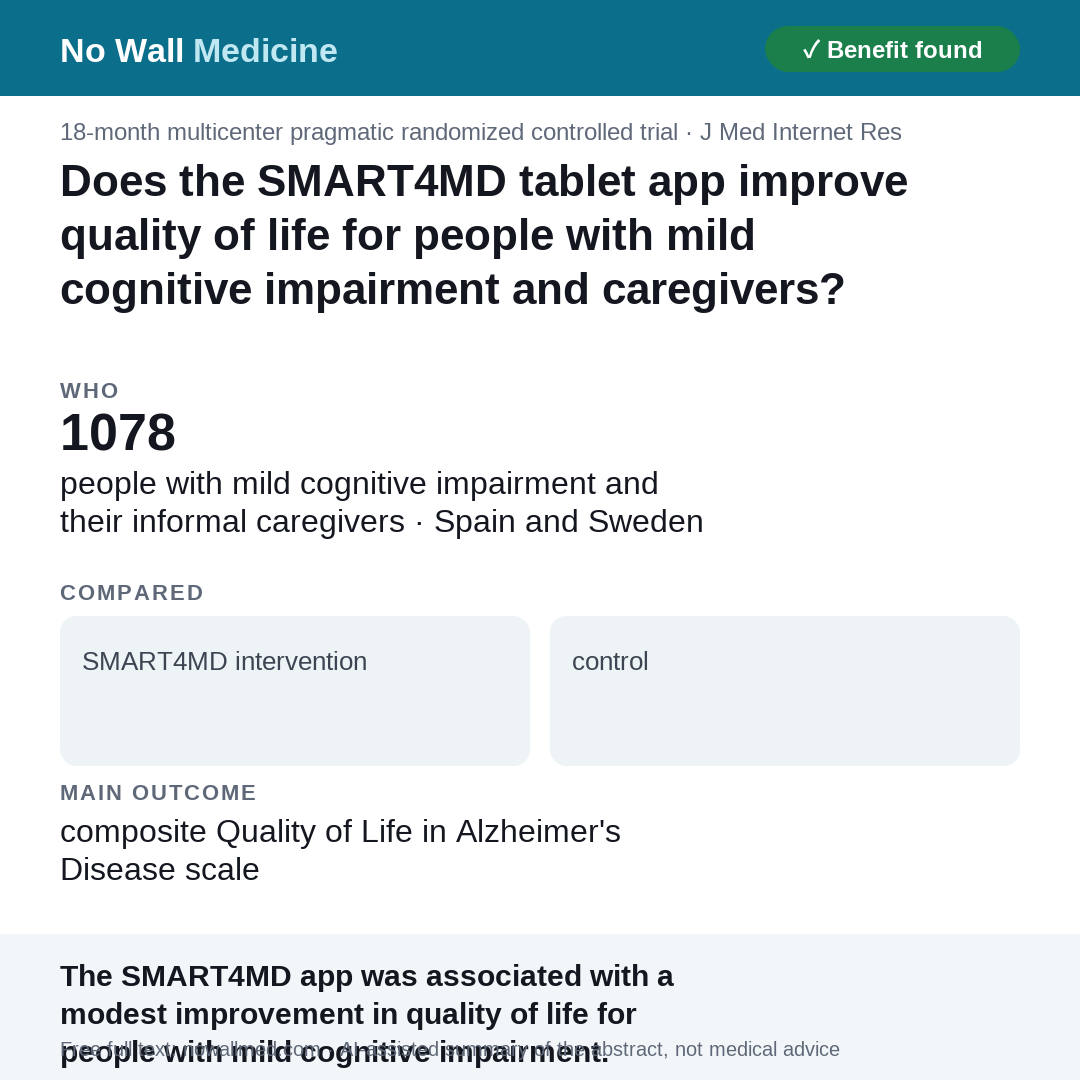
Effects of the Digital App "Support, Monitoring and Reminder Technology for Mild Dementia" (SMART4MD) on People With Mild Cognitive Impairment and Their Informal Caregivers: 18-Month Multicenter Pragmatic Randomized Controlled Trial
18-month multicenter pragmatic randomized controlled trialBenefit found
Does the SMART4MD tablet app improve quality of life for people with mild cognitive impairment?
Who
1078
people with mild cognitive impairment and their informal caregivers · Spain and Sweden
Compared
SMART4MD intervention
Control
Main outcome
composite Quality of Life in Alzheimer's Disease scale
Result: mean difference 0.75 (95% CI 0.07-1.42)
Bottom line: The SMART4MD intervention was associated with a modest improvement in quality of life for people with mild cognitive impairment.
Limitation: Nominally significant findings for exploratory outcomes were not adjusted for multiplicity.
J Med Internet Res · 2026-07-24Download image
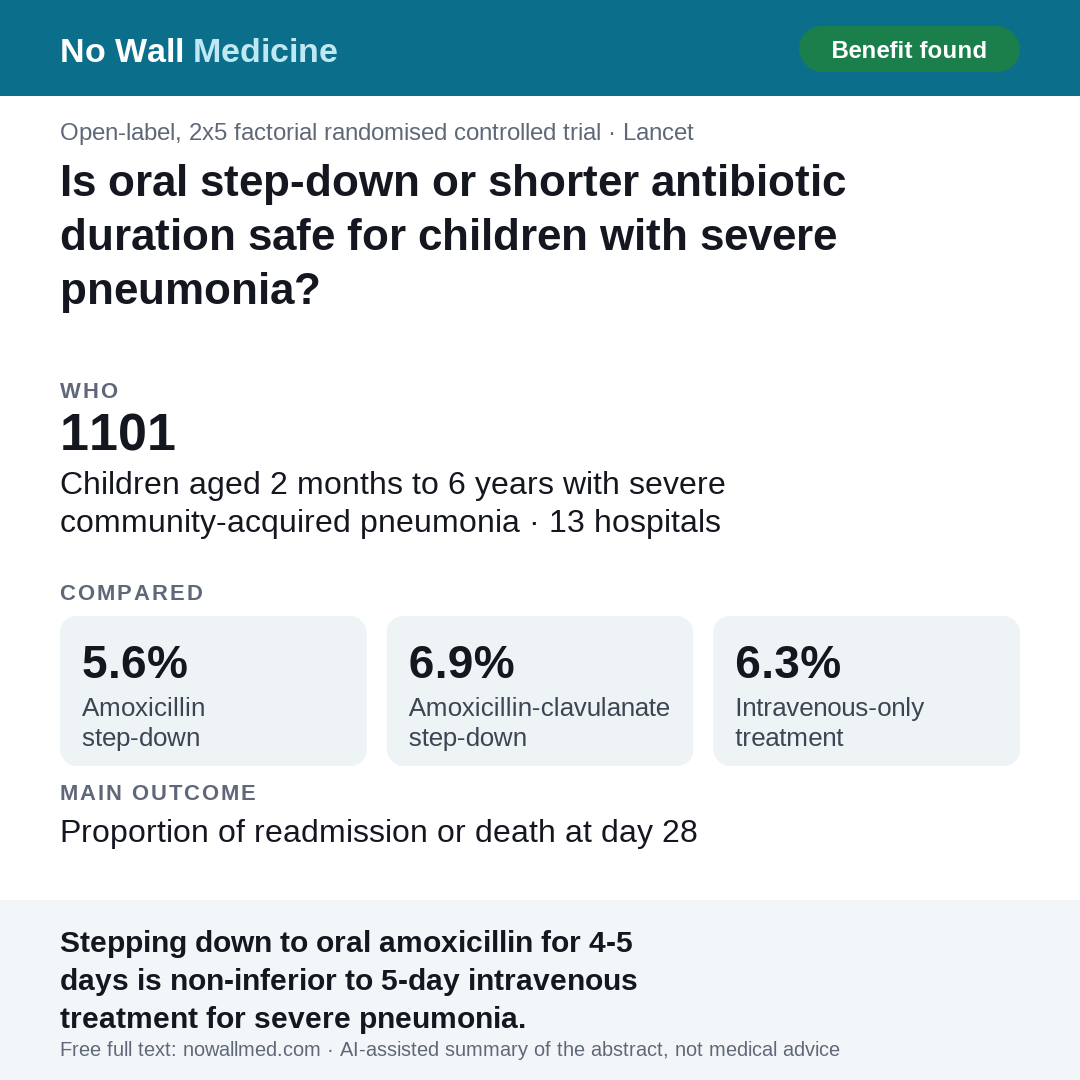
Oral step-down, optimal drug, and total duration of antibiotic treatment in African children hospitalised with severe community-acquired pneumonia (PediCAP): a factorial randomised controlled trial
Open-label, 2x5 factorial randomised controlled trialBenefit found
Is stepping down to oral antibiotics or shorter duration safe for severe pneumonia?
Who
1101
Children aged 2 months to 6 years with severe community-acquired pneumonia · 13 hospitals across five sub-Saharan African countries
Compared
Step-down to oral antibiotics
5-day intravenous-only treatment
Main outcome
Proportion of readmission or death at day 28
Bottom line: Stepping down to oral amoxicillin with 4-5 total days of treatment is non-inferior to 5-day intravenous treatment.
Funded by: Second European and Developing Countries Clinical Trials Partnership
Lancet · 2026-07-23Download image