Visual abstracts
New randomized trials and meta-analyses from leading journals at a glance: who was studied, what was compared, and what was found. Every paper is free to read in full.
All specialtiesCardiology 4763Oncology 4042Gastroenterology & Hepatology 1902Infectious Disease 3756Neurology 1872Psychiatry & Mental Health 2214Pulmonology 2042Critical Care 1319Endocrinology & Diabetes 2544Pediatrics 2889Surgery 2479Orthopedics & Sports Medicine 917Neurosurgery 525Cardiothoracic & Vascular Surgery 656Plastic & Reconstructive Surgery 574Nephrology 1107Rheumatology 810Hematology 1090Dermatology 611Ophthalmology 532Obstetrics & Gynecology 1645Public & Global Health 1037Radiology & Imaging 617Anesthesiology 957Urology 745ENT (Otolaryngology) 494Emergency Medicine 481Allergy & Immunology 309Geriatrics 972Family Medicine & Primary Care 533Medical Genetics & Genomics 659Pathology & Laboratory Medicine 156Physical Medicine & Rehabilitation 734Palliative Care 421Nutrition 1560Digital Health & AI 2133General Medicine 318
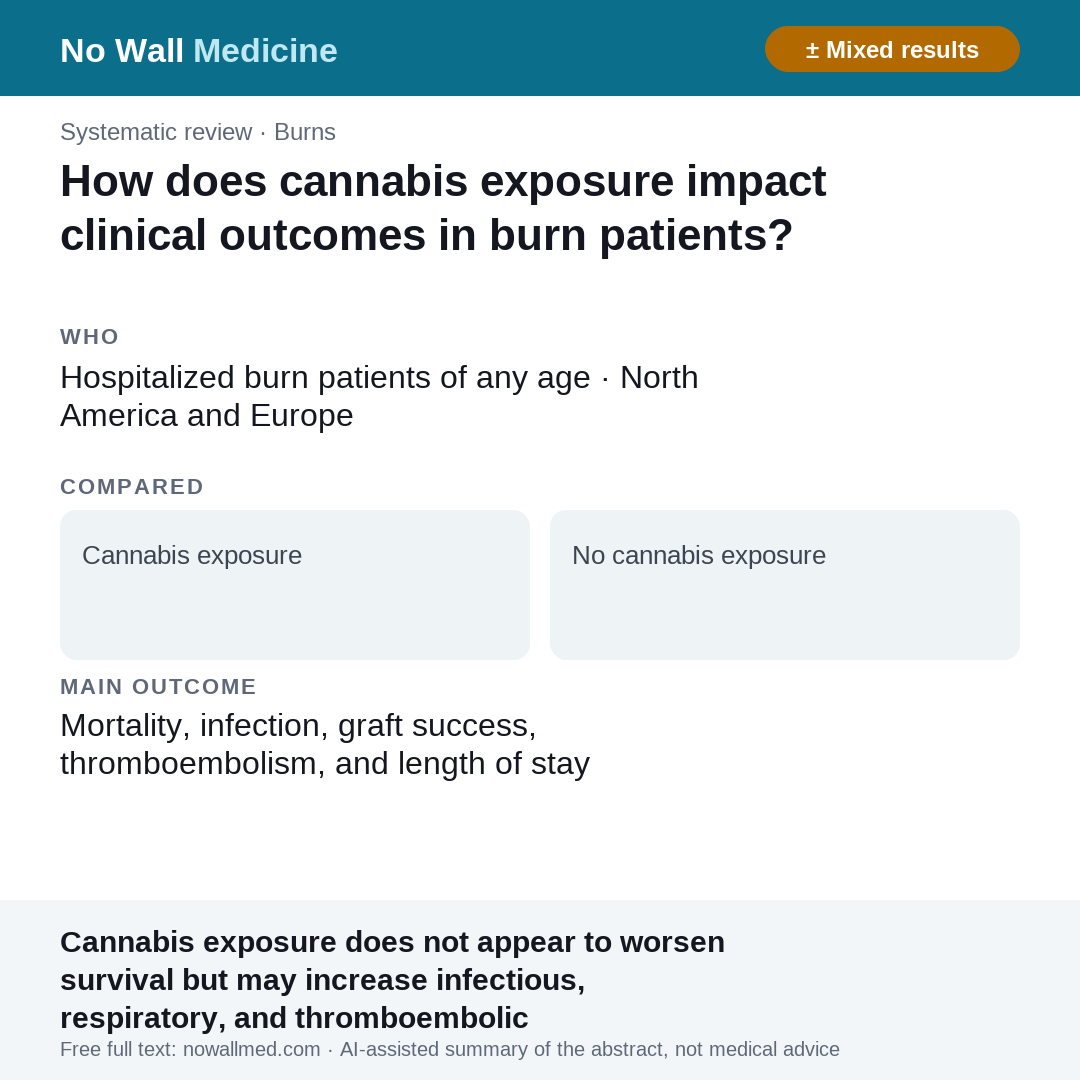
The impact of cannabis on clinical outcomes in burn patients: A systematic review
Systematic reviewMixed results
How does cannabis exposure impact clinical outcomes in burn patients?
Who
Hospitalized burn patients of any age · North America and Europe
Compared
Cannabis exposure
No cannabis exposure
Main outcome
Mortality, infection, graft success, thromboembolism, and length of stay
Bottom line: Cannabis exposure does not appear to worsen survival but may increase infectious, respiratory, and thromboembolic complications.
Limitation: Retrospective design, inconsistent exposure definitions, and confounding from polysubstance use.
Burns · 2026-08-22Download image
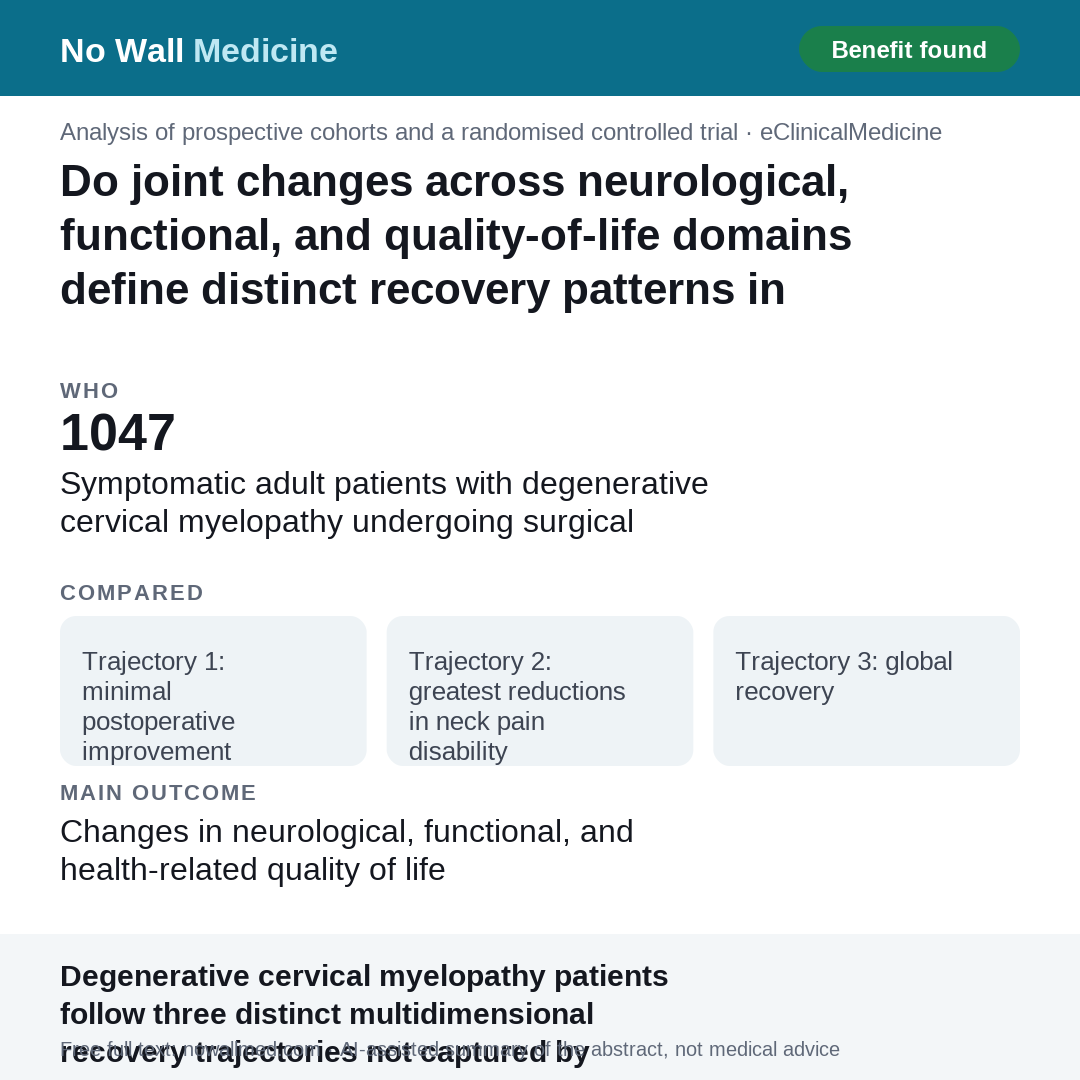
Identification, validation, and prediction of longitudinal recovery phenotypes in degenerative cervical myelopathy: analysis of prospective cohorts and a randomised controlled trial
Analysis of prospective cohorts and a randomised controlled trialKey finding
Do joint changes across neurological, functional, and quality-of-life domains define distinct recovery patterns in degenerative cervical myelopathy?
Who
1047
Symptomatic adult patients with degenerative cervical myelopathy undergoing surgical treatment · Clinic-based cohorts
Compared
Trajectory 1: minimal postoperative improvement
Trajectory 2: greatest reductions in neck pain disability
Trajectory 3: global recovery
Main outcome
Changes in neurological, functional, and health-related quality of life
Result: odds ratio 10.90 (95% CI 6.15-19.32) for neurological MCID
Bottom line: Degenerative cervical myelopathy patients follow three distinct multidimensional recovery trajectories not captured by neurological severity alone.
eClinicalMedicine · 2026-08-22Download image
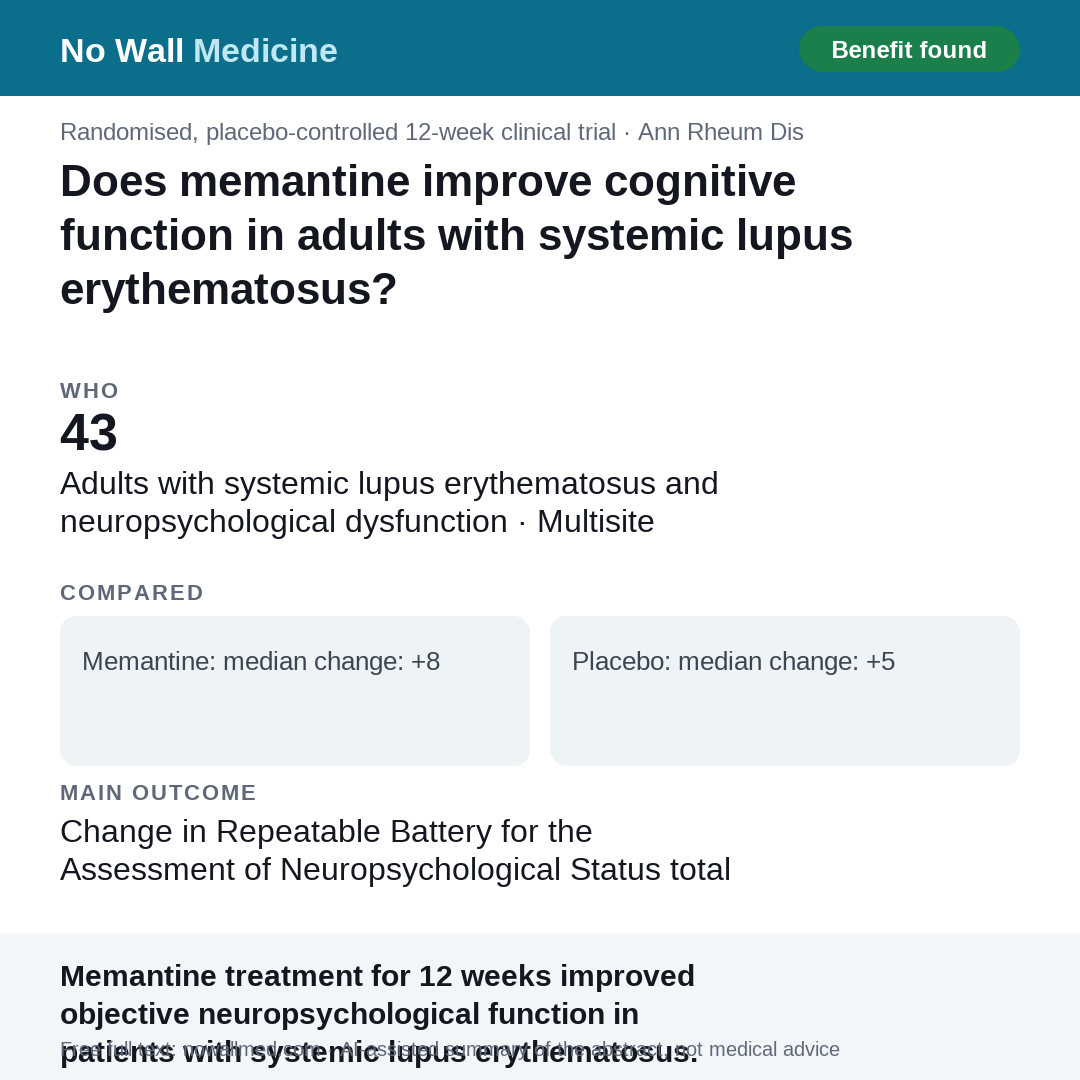
Improvement in neuropsychological function with memantine treatment among patients with systemic lupus erythematosus: a phase 2 randomised placebo-controlled clinical trial
Randomised, placebo-controlled 12-week clinical trialBenefit found
Does memantine improve cognitive function in adults with systemic lupus erythematosus?
Who
43
Adults with systemic lupus erythematosus and neuropsychological dysfunction · Multisite
Compared
Memantine: median change: +8
Placebo: median change: +5
Main outcome
Change in Repeatable Battery for the Assessment of Neuropsychological Status total score
Bottom line: Memantine treatment for 12 weeks improved objective neuropsychological function in patients with systemic lupus erythematosus.
Ann Rheum Dis · 2026-08-22Download image
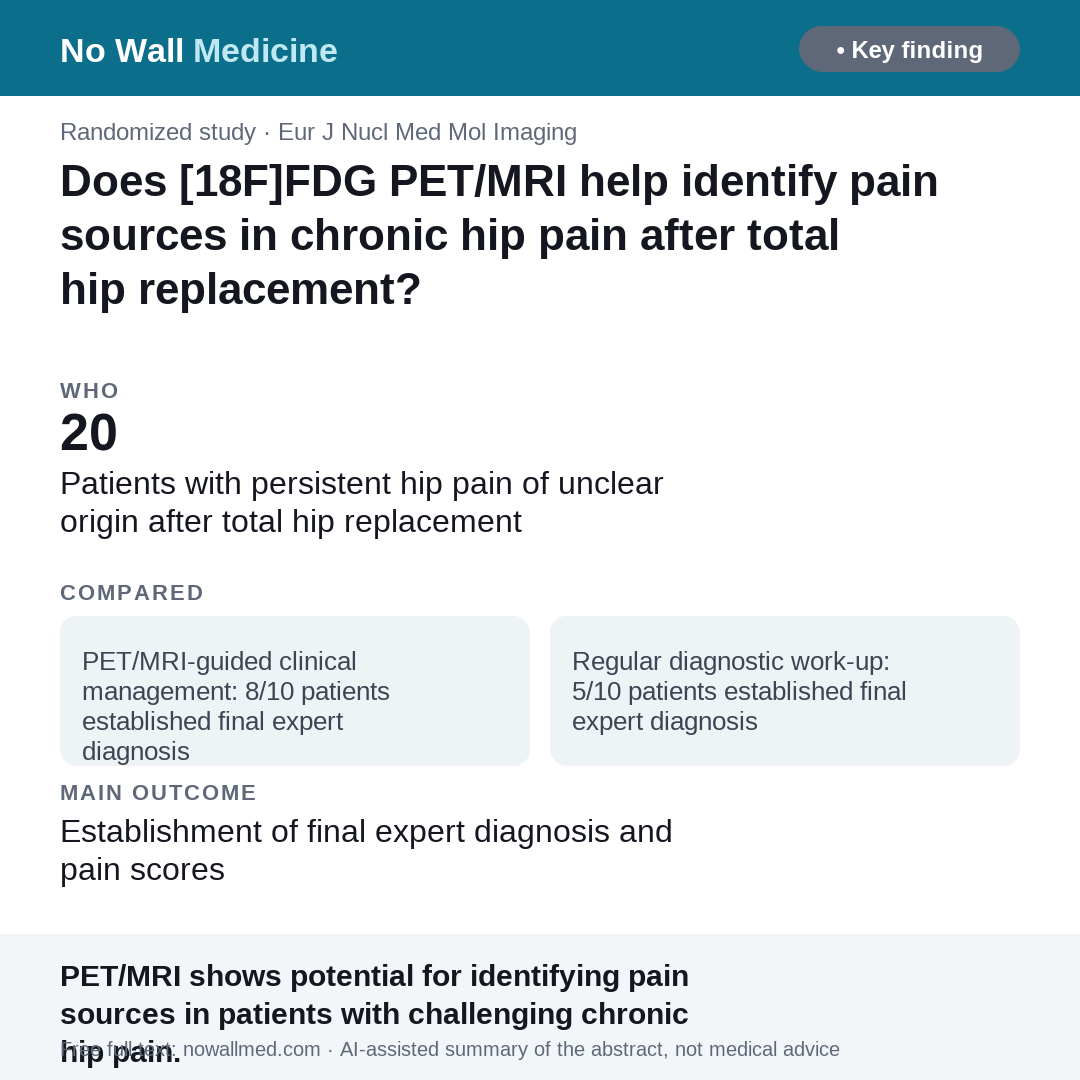
The potential of [18F]FDG PET/MRI for identifying pain sources in patients with diagnostically challenging chronic hip pain after total hip replacement
Randomized studyKey finding
Does [18F]FDG PET/MRI help identify pain sources in chronic hip pain after total hip replacement?
Who
20
Patients with persistent hip pain of unclear origin after total hip replacement
Compared
PET/MRI-guided clinical management: 8/10 patients established final expert diagnosis
Regular diagnostic work-up: 5/10 patients established final expert diagnosis
Main outcome
Establishment of final expert diagnosis and pain scores
Bottom line: PET/MRI shows potential for identifying pain sources in patients with challenging chronic hip pain.
Eur J Nucl Med Mol Imaging · 2026-08-22Download image
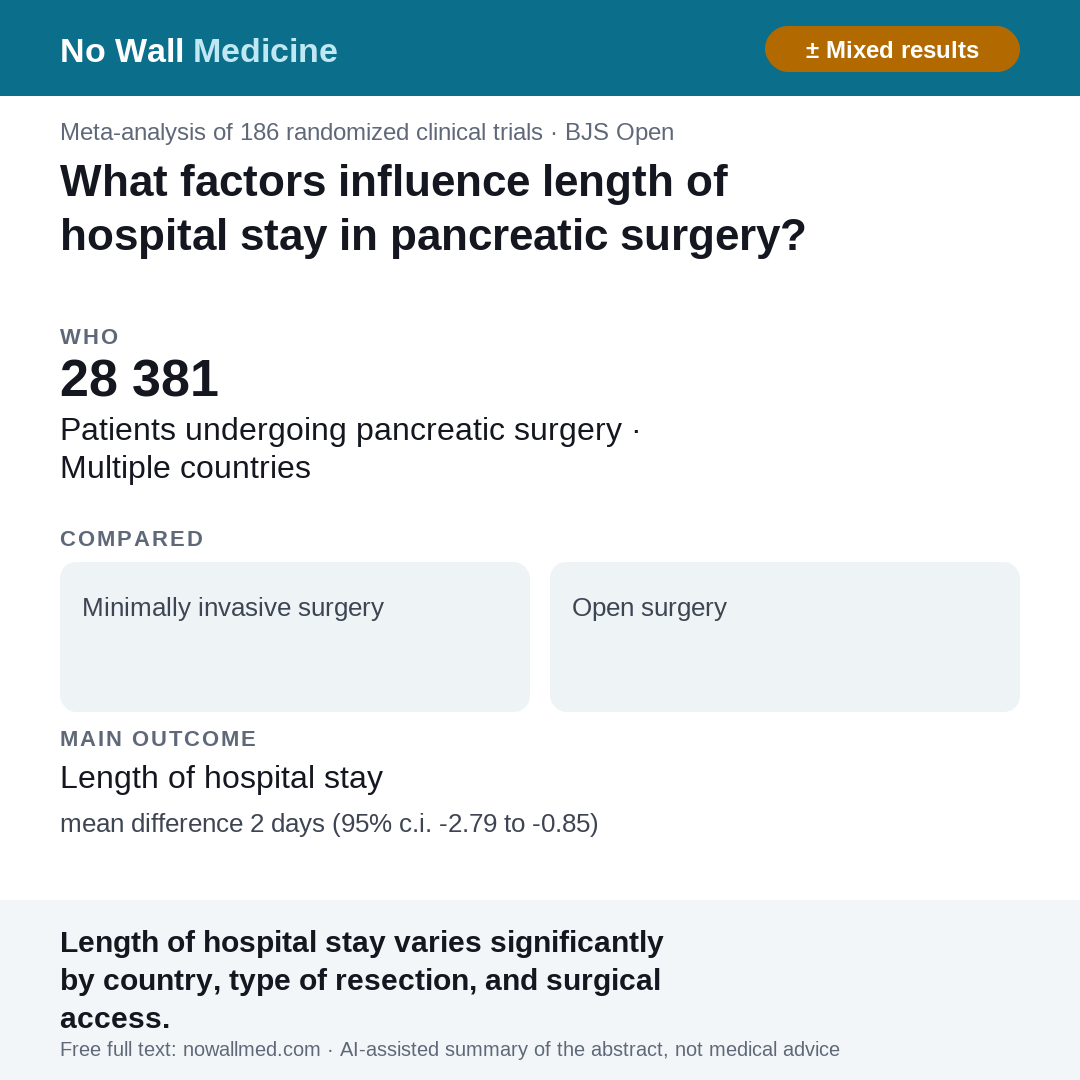
Pancreatic surgery and length of hospital stay: meta-analysis of randomized clinical trials
Meta-analysis of 186 randomized clinical trialsMixed results
What factors influence length of hospital stay in pancreatic surgery?
Who
28 381
Patients undergoing pancreatic surgery · Multiple countries
Compared
Minimally invasive surgery
Open surgery
Main outcome
Length of hospital stay
Result: mean difference 2 days (95% c.i. -2.79 to -0.85)
Bottom line: Length of hospital stay varies significantly by country, type of resection, and surgical access.
Limitation: Substantial statistical heterogeneity based on country, operation type, and access.
BJS Open · 2026-08-22Download image
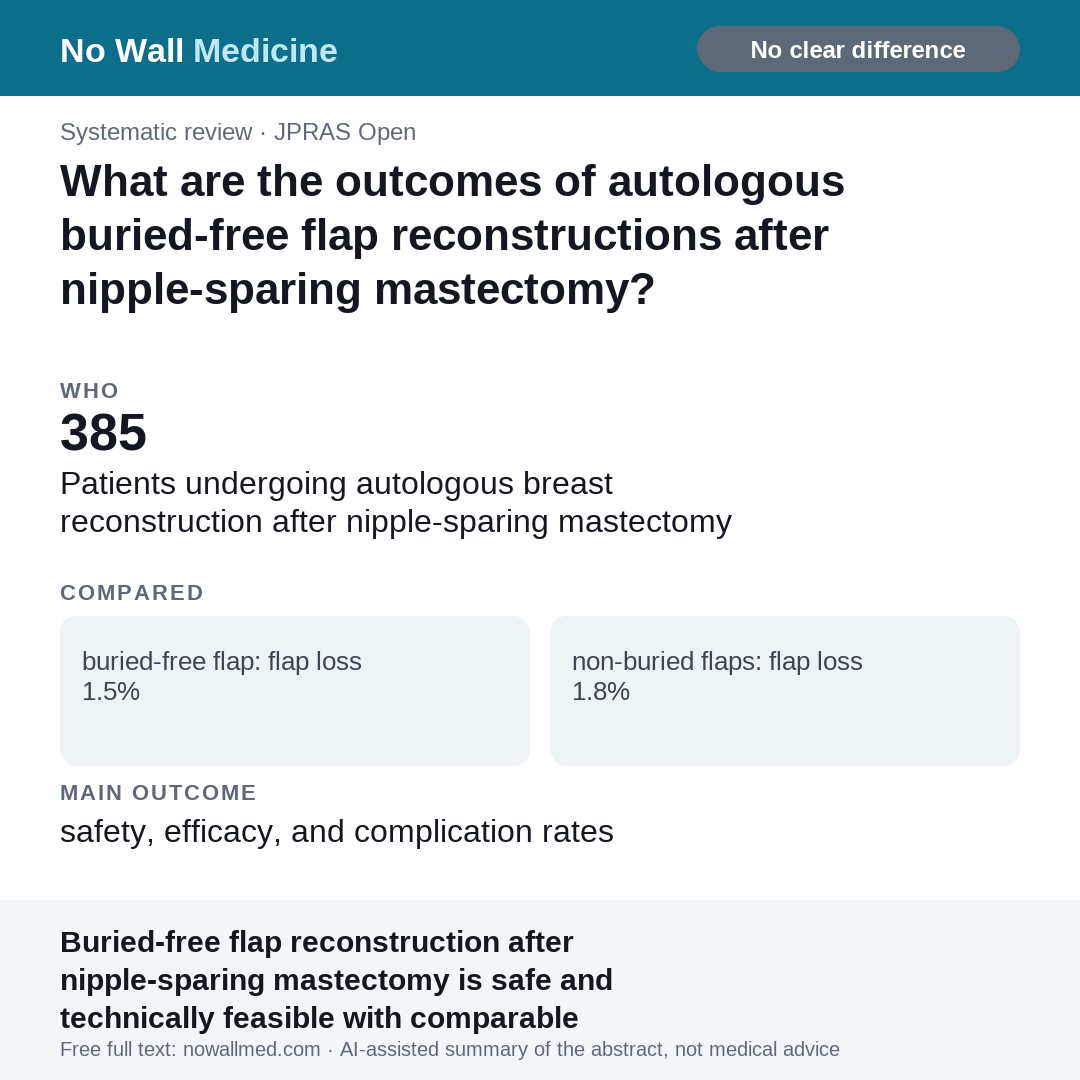
Systematic review of buried flap reconstructions after nipple-sparing mastectomy
Systematic reviewNo clear difference
What are the outcomes of autologous buried-free flap reconstructions after nipple-sparing mastectomy?
Who
385
Patients undergoing autologous breast reconstruction after nipple-sparing mastectomy
Compared
buried-free flap: flap loss 1.5%
non-buried flaps: flap loss 1.8%
Main outcome
safety, efficacy, and complication rates
Bottom line: Buried-free flap reconstruction after nipple-sparing mastectomy is safe and technically feasible with comparable complication rates.
JPRAS Open · 2026-08-22Download image
Effect of food swap recommendations on the healthfulness and carbon footprint of grocery purchases in a naturalistic online store: A randomized parallel trial
Randomized parallel trialBenefit found
Do food swap recommendations improve healthfulness and reduce carbon footprint of grocery purchases?
Who
1201
United States adults ages 18 and older · Naturalistic online grocery store
Compared
Climate swaps: healthfulness B=2.4 (95% CI [1.1, 3.7]), carbon footprint B=-3.3 kg CO2-eq per kg (95% CI [-4.6, -2.1])
Health swaps: healthfulness B=4.7 (95% CI [3.3, 6.0]), carbon footprint B=-0.4 (95% CI [-1.7, 0.8])
Climate and health swaps: healthfulness B=4.0 (95% CI [2.7, 5.4]), carbon footprint B=-2.8 (95% CI [-4.1, -1.6])
Control
Main outcome
Healthfulness score and carbon footprint of grocery selections
Bottom line: Recommending food swaps improved healthfulness and reduced carbon footprint in online grocery selections.
Limitation: Sample differed from the US population and results may not generalize to brick-and-mortar stores.
PLOS Med · 2026-08-21Download image

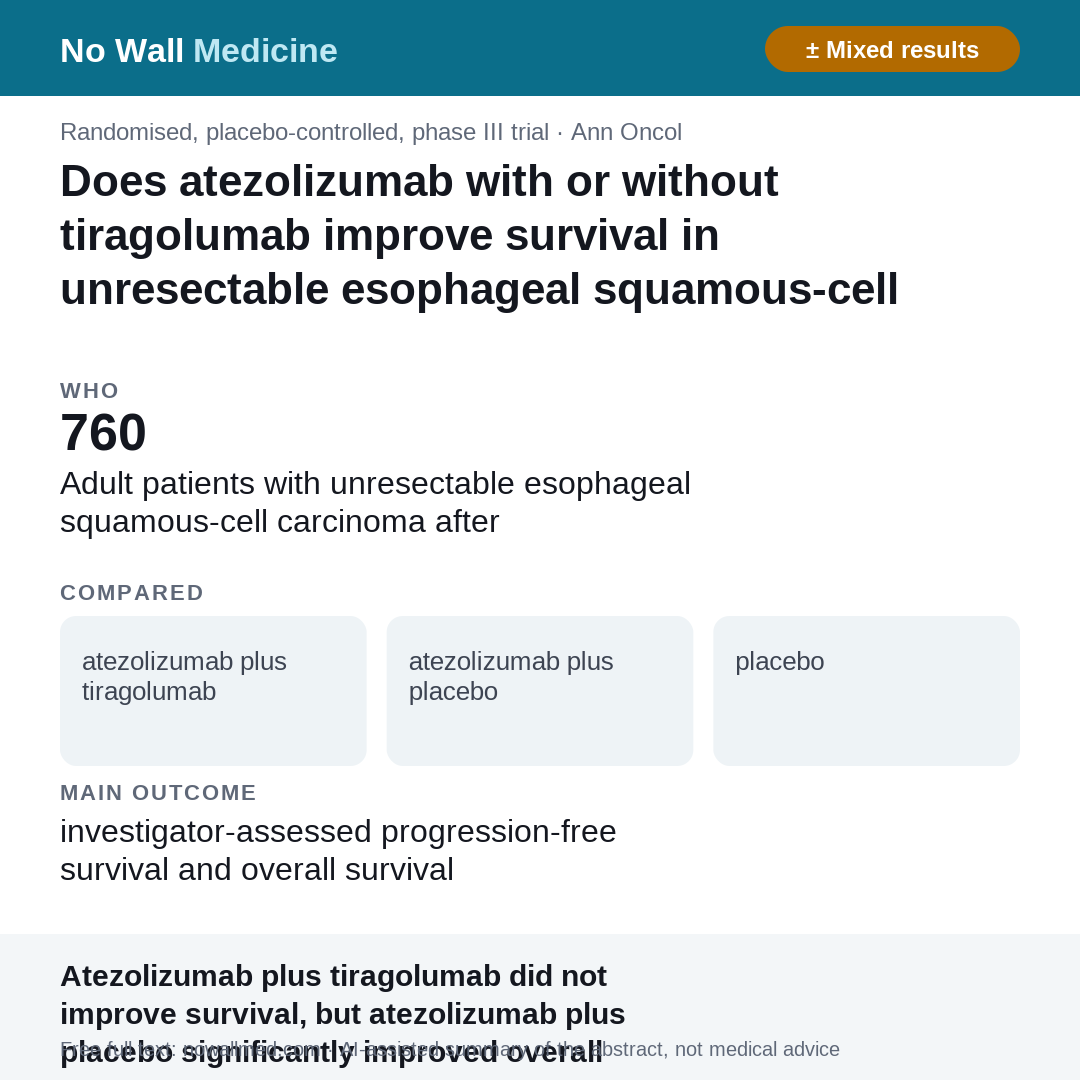
Atezolizumab with or without tiragolumab in unresectable esophageal squamous-cell carcinoma following definitive concurrent chemoradiotherapy (SKYSCRAPER-07): a randomised, phase III study
Randomised, placebo-controlled, phase III trialMixed results
Does atezolizumab with or without tiragolumab improve survival in unresectable esophageal squamous-cell carcinoma?
Who
760
Adult patients with unresectable esophageal squamous-cell carcinoma after chemoradiotherapy · 166 centres in 28 countries
Compared
atezolizumab plus tiragolumab
atezolizumab plus placebo
placebo
Main outcome
investigator-assessed progression-free survival and overall survival
Result: hazard ratio 0.91 (95% CI 0.70-1.18) for atezolizumab plus tiragolumab versus placebo
Bottom line: Atezolizumab plus tiragolumab did not improve survival, but atezolizumab plus placebo significantly improved overall survival versus placebo.
Ann Oncol · 2026-08-21Download image
Psychosocial coping with intensive care delirium: a mixed-methods systematic review of patient and family perspectives
Mixed-methods systematic reviewMixed results
What psychosocial coping strategies do intensive care unit patients and families use during delirium?
Who
Intensive care unit patients and their family caregivers · Seven countries
Compared
Patients: problem-focused, emotion-focused, and meaning-based strategies
Families: supporting patients and managing their own distress
Main outcome
Psychosocial coping strategies employed during intensive care unit delirium
Bottom line: Patients and families use diverse coping strategies, with families serving as a primary resource for patients.
Crit Care · 2026-08-21Download image

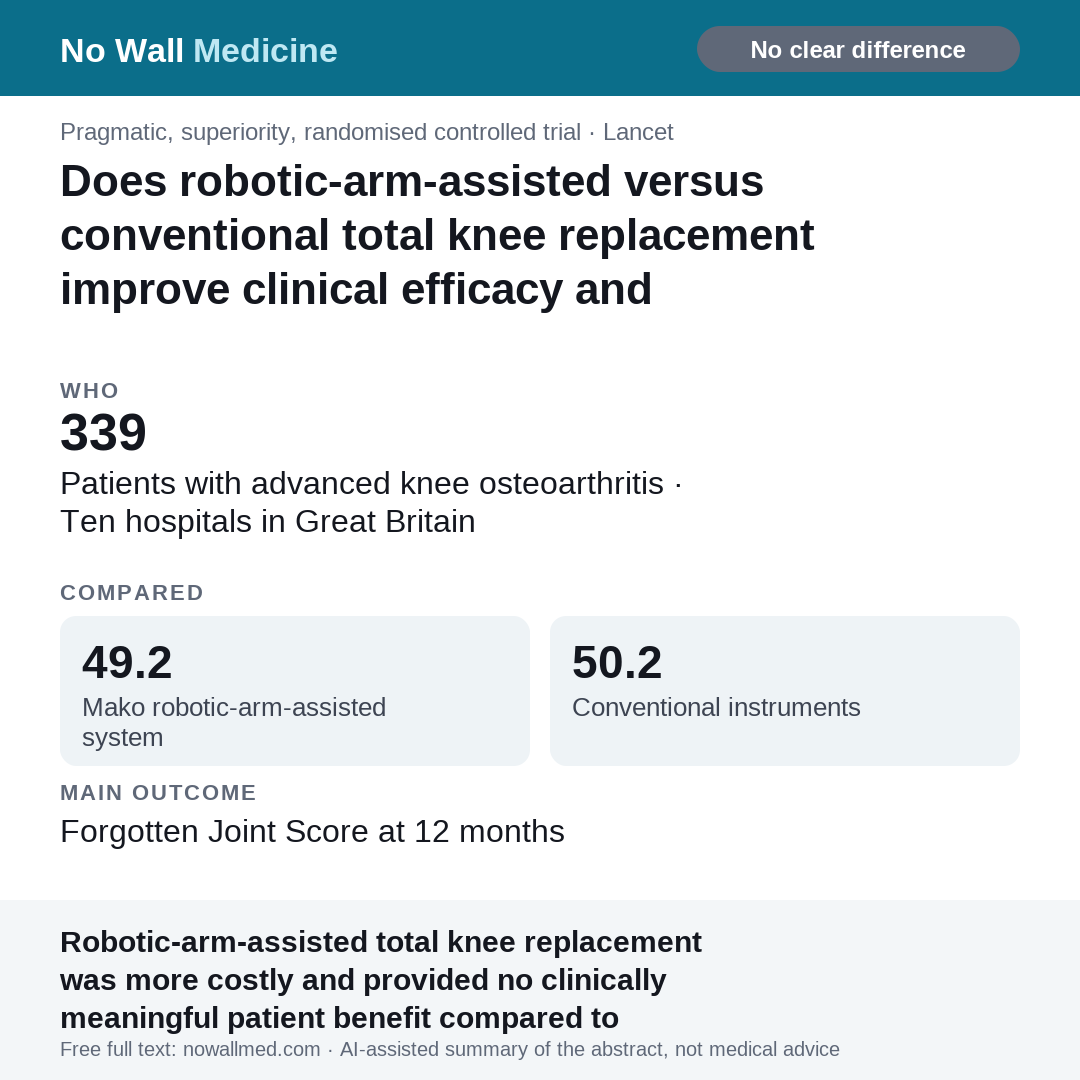
Robotic-arm-assisted versus conventional total knee replacement (RACER-Knee): a pragmatic, multicentre, participant-masked and assessor-masked, superiority, randomised controlled trial
Pragmatic, superiority, randomised controlled trialNo clear difference
Does robotic-arm-assisted versus conventional total knee replacement improve clinical efficacy and cost-effectiveness?
Who
339
Patients with advanced knee osteoarthritis · Ten hospitals in Great Britain
Compared
49.2Mako robotic-arm-assisted system (SD 28.4; n=154)
50.2Conventional instruments (29.9; n=158)
Main outcome
Forgotten Joint Score at 12 months
Result: adjusted mean difference -1.5 (95% CI -7.5 to 4.5; p=0.62)
Bottom line: Robotic-arm-assisted total knee replacement was more costly and provided no clinically meaningful patient benefit compared to conventional instruments.
Funded by: UK National Institute for Health and Care Research
Lancet · 2026-08-20Download image
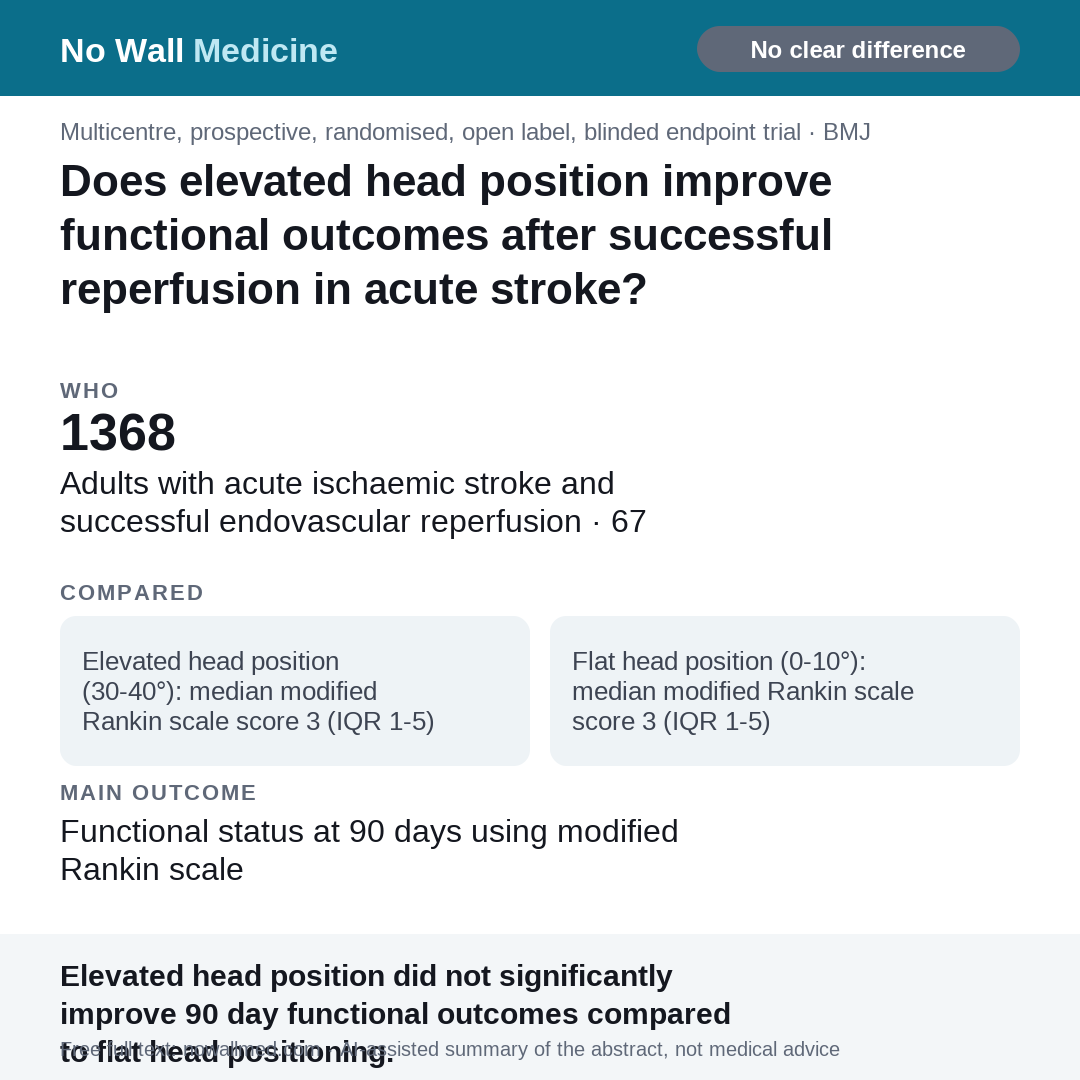
Head positioning after endovascular therapy for acute stroke due to large vessel occlusion (HeadSOAR): multicentre randomised controlled trial
Multicentre, prospective, randomised, open label, blinded endpoint trialNo clear difference
Does elevated head position improve functional outcomes after successful reperfusion in acute stroke?
Who
1368
Adults with acute ischaemic stroke and successful endovascular reperfusion · 67 comprehensive stroke centres in China
Compared
Elevated head position (30-40°): median modified Rankin scale score 3 (IQR 1-5)
Flat head position (0-10°): median modified Rankin scale score 3 (IQR 1-5)
Main outcome
Functional status at 90 days using modified Rankin scale
Result: adjusted generalised odds ratio 1.12 (95% CI 0.97 to 1.29)
Bottom line: Elevated head position did not significantly improve 90 day functional outcomes compared to flat head positioning.
BMJ · 2026-08-20Download image
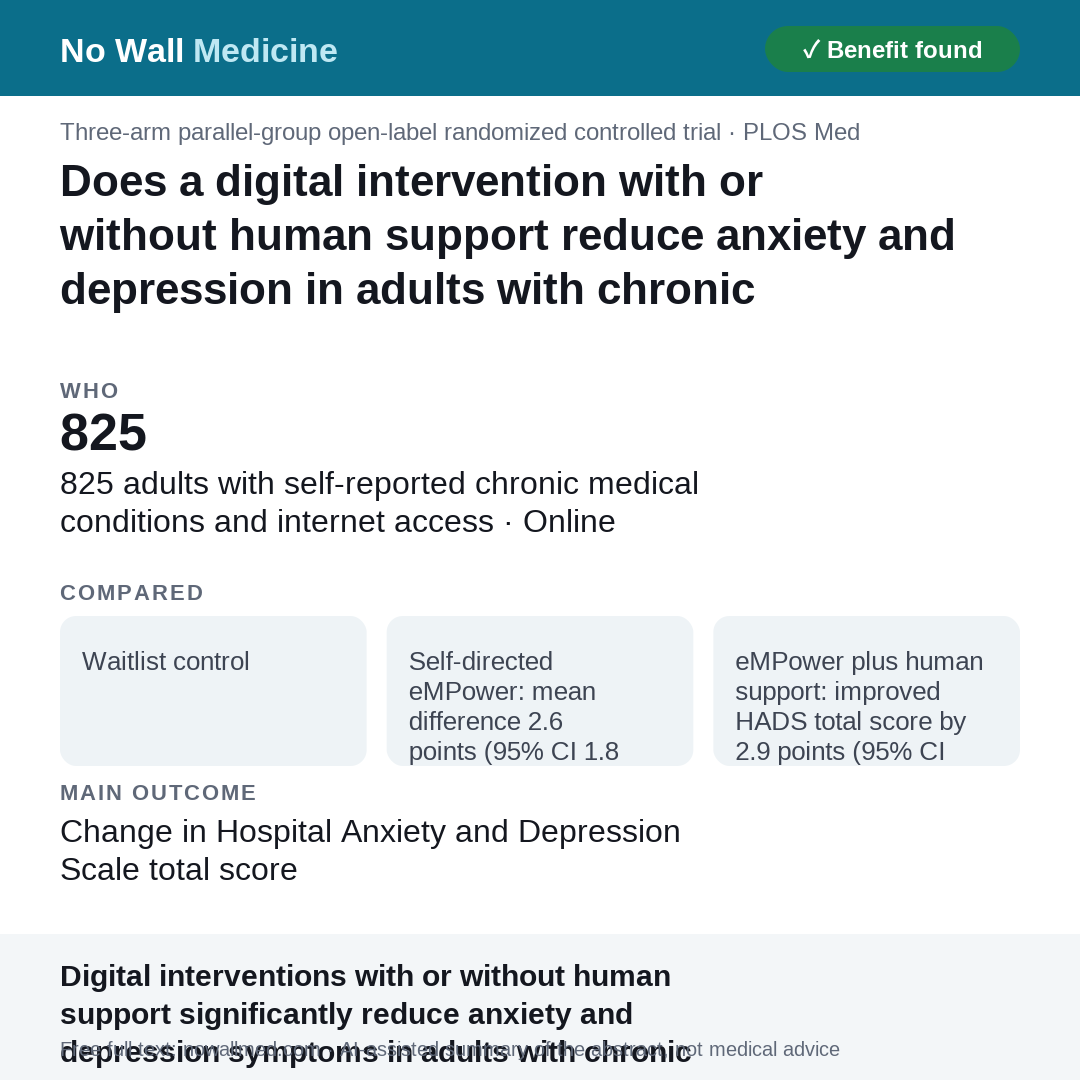
Effect of a digital intervention on mental health symptoms in adults with chronic conditions: A three-arm randomized controlled trial
Three-arm parallel-group open-label randomized controlled trialBenefit found
Does a digital intervention with or without human support reduce anxiety and depression in adults with chronic conditions?
Who
825
825 adults with self-reported chronic medical conditions and internet access · Online recruitment and delivery across 13 countries
Compared
Waitlist control
Self-directed eMPower: mean difference 2.6 points (95% CI 1.8 to 3.5)
eMPower plus human support: improved HADS total score by 2.9 points (95% CI 2.0 to 3.8)
Main outcome
Change in Hospital Anxiety and Depression Scale total score
Result: 2.9 points (95% CI 2.0 to 3.8)
Bottom line: Digital interventions with or without human support significantly reduce anxiety and depression symptoms in adults with chronic medical conditions.
Limitation: Waitlist control design, self-reported diagnoses, 12-week follow-up, and a predominantly female, highly educated sample.
PLOS Med · 2026-08-20Download image
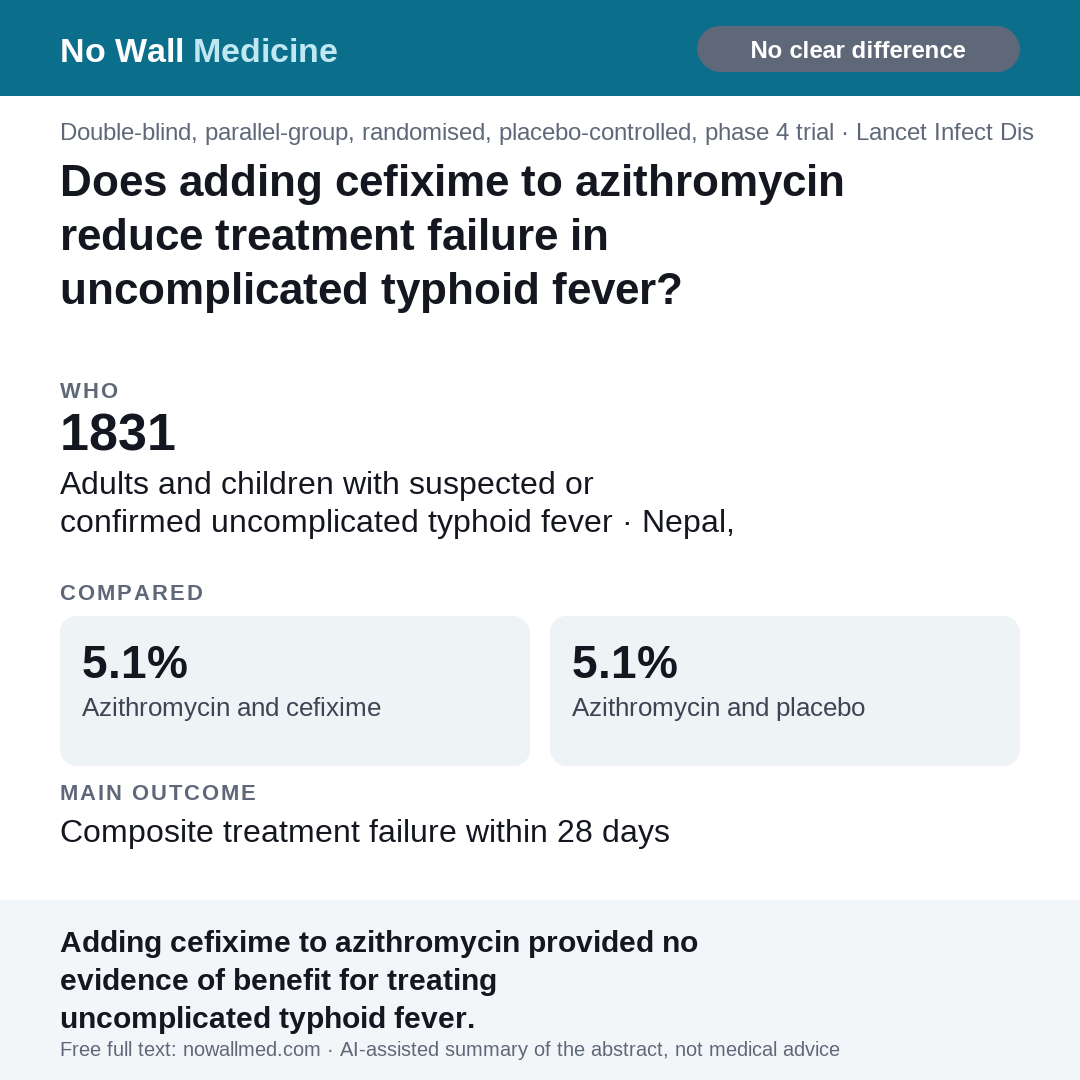
Azithromycin with or without cefixime for suspected or culture-confirmed uncomplicated typhoid fever in Nepal, Bangladesh, and Pakistan (ACT-South Asia): a double-blind, parallel-group, randomised, placebo-controlled, phase 4 trial
Double-blind, parallel-group, randomised, placebo-controlled, phase 4 trialNo clear difference
Does adding cefixime to azithromycin reduce treatment failure in uncomplicated typhoid fever?
Who
1831
Adults and children with suspected or confirmed uncomplicated typhoid fever · Nepal, Bangladesh, and Pakistan
Compared
5.1%Azithromycin and cefixime
5.1%Azithromycin and placebo
Main outcome
Composite treatment failure within 28 days
Result: absolute risk difference -0.00 percentage points, 95% CI -2.08 to 2.08
Bottom line: Adding cefixime to azithromycin provided no evidence of benefit for treating uncomplicated typhoid fever.
Funded by: Department of Health and Social Care, FCDO, Medical Research Council, Wellcome Trust
Lancet Infect Dis · 2026-08-20Download image
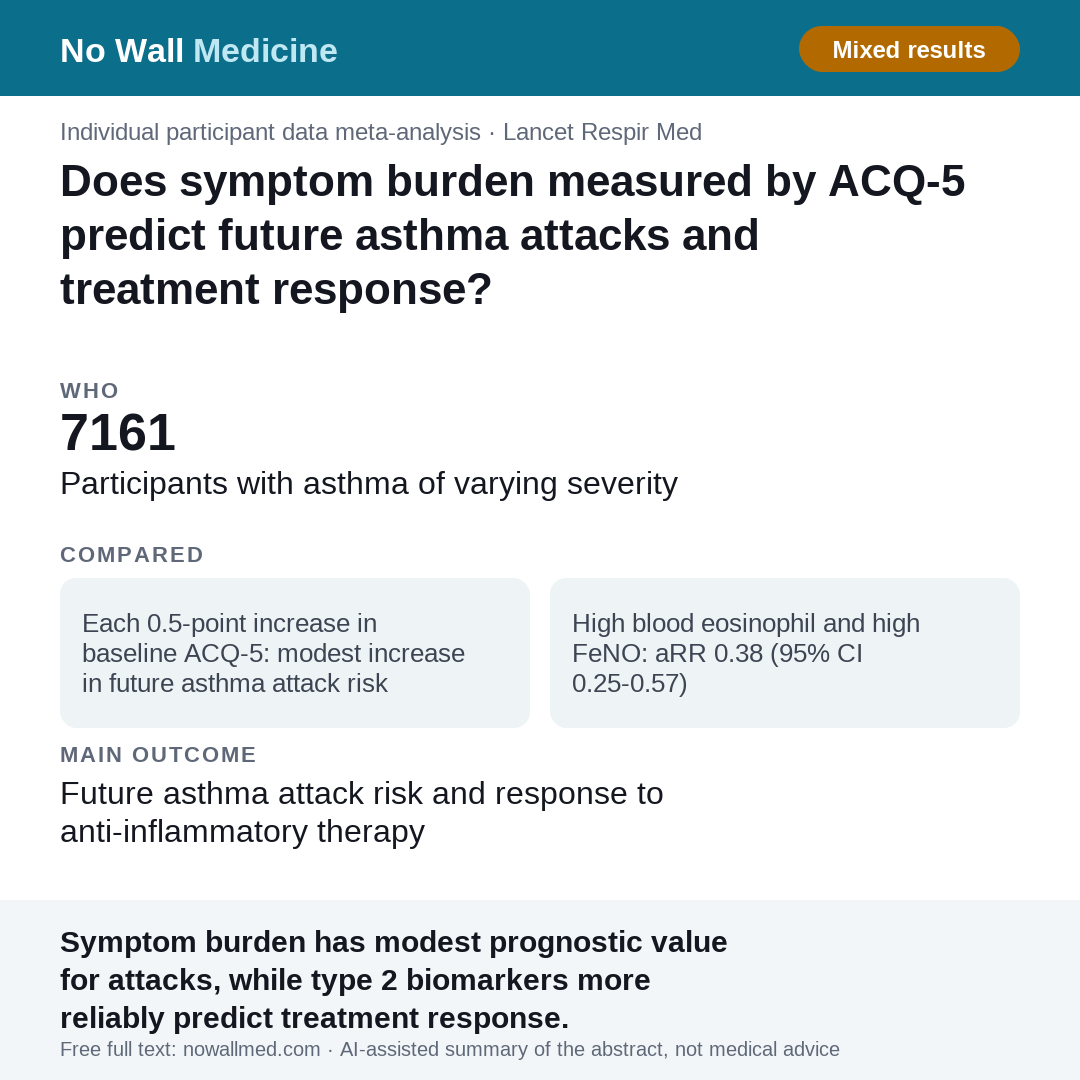
Symptom burden to characterise, predict, and prevent asthma attacks: a patient-level meta-analysis of randomised trials and translational prospective studies
Individual participant data meta-analysisMixed results
Does symptom burden measured by ACQ-5 predict future asthma attacks and treatment response?
Who
7161
Participants with asthma of varying severity
Compared
Each 0.5-point increase in baseline ACQ-5: modest increase in future asthma attack risk
High blood eosinophil and high FeNO: aRR 0.38 (95% CI 0.25-0.57)
Main outcome
Future asthma attack risk and response to anti-inflammatory therapy
Result: adjusted rate ratio 1.09 (95% CI 1.06-1.12)
Bottom line: Symptom burden has modest prognostic value for attacks, while type 2 biomarkers more reliably predict treatment response.
Funded by: National Institute for Health and Care Research and others
Lancet Respir Med · 2026-08-20Download image
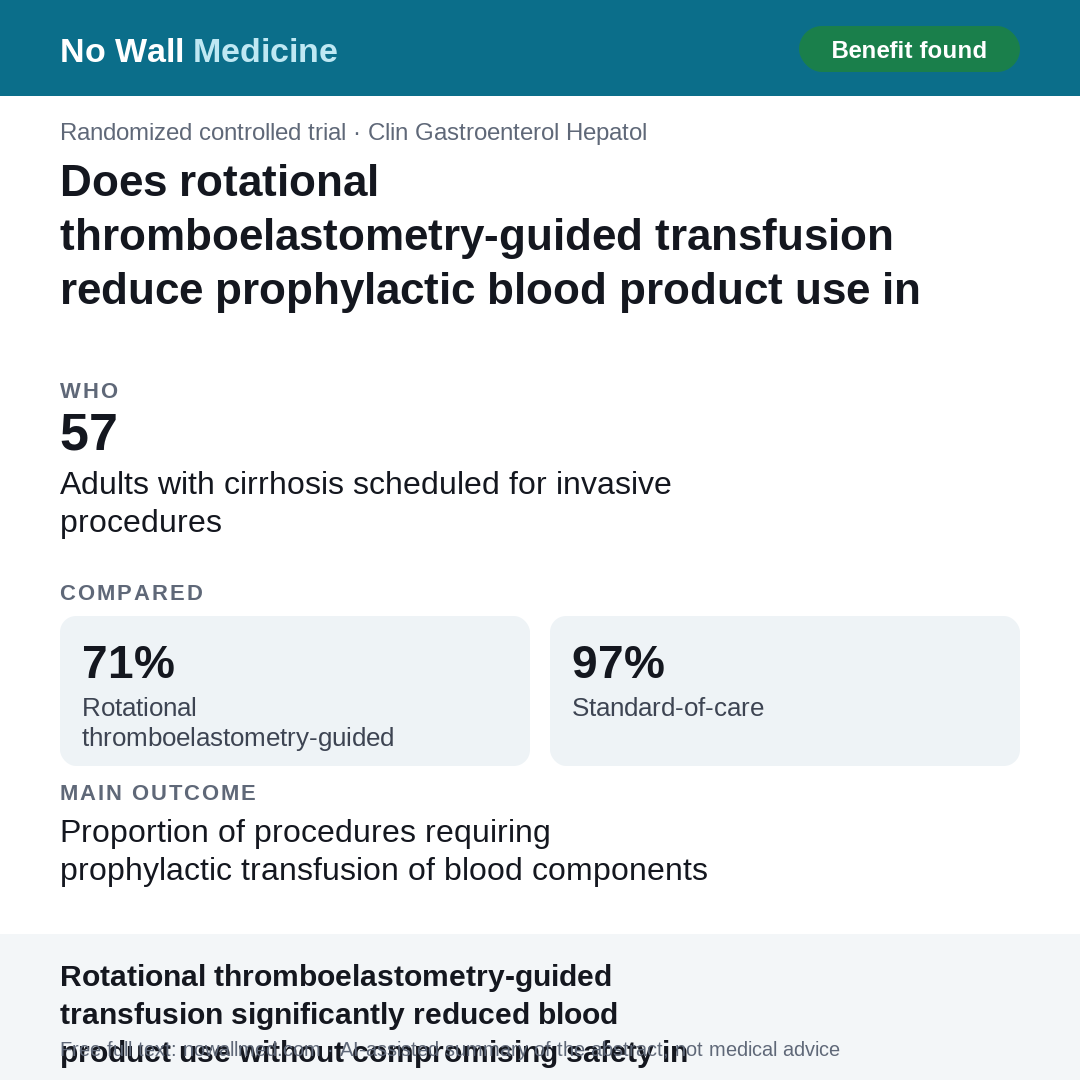
Rotational Thromboelastometry-Guided Blood Product Transfusion in Patients With Cirrhosis Having Invasive Procedures: A Randomized Controlled Trial
Randomized controlled trialBenefit found
Does rotational thromboelastometry-guided transfusion reduce prophylactic blood product use in patients with cirrhosis?
Who
57
Adults with cirrhosis scheduled for invasive procedures
Compared
71%Rotational thromboelastometry-guided
97%Standard-of-care
Main outcome
Proportion of procedures requiring prophylactic transfusion of blood components
Bottom line: Rotational thromboelastometry-guided transfusion significantly reduced blood product use without increasing bleeding complications in patients with cirrhosis.
Clin Gastroenterol Hepatol · 2026-08-20Download image
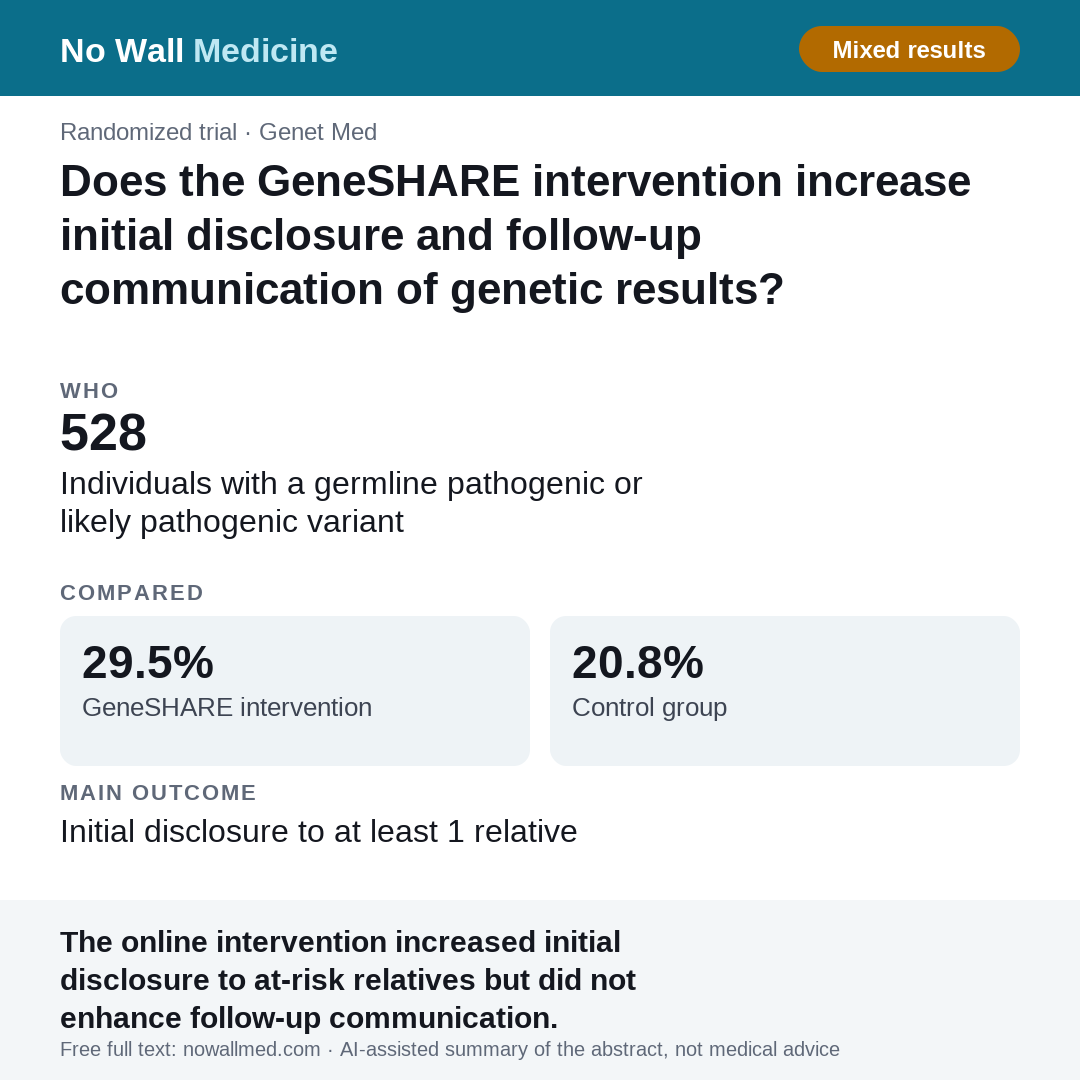
Short-term outcomes of a randomized, mixed-methods trial to improve disclosure of hereditary cancer test results and follow-up communication with family members
Randomized trialMixed results
Does the GeneSHARE intervention increase initial disclosure and follow-up communication of genetic results?
Who
528
Individuals with a germline pathogenic or likely pathogenic variant
Compared
29.5%GeneSHARE intervention
20.8%Control group
Main outcome
Initial disclosure to at least 1 relative
Bottom line: The online intervention increased initial disclosure to at-risk relatives but did not enhance follow-up communication.
Limitation: Intervention delivery long after testing, login barriers, and limited emphasis on follow-up communication.
Genet Med · 2026-08-20Download image
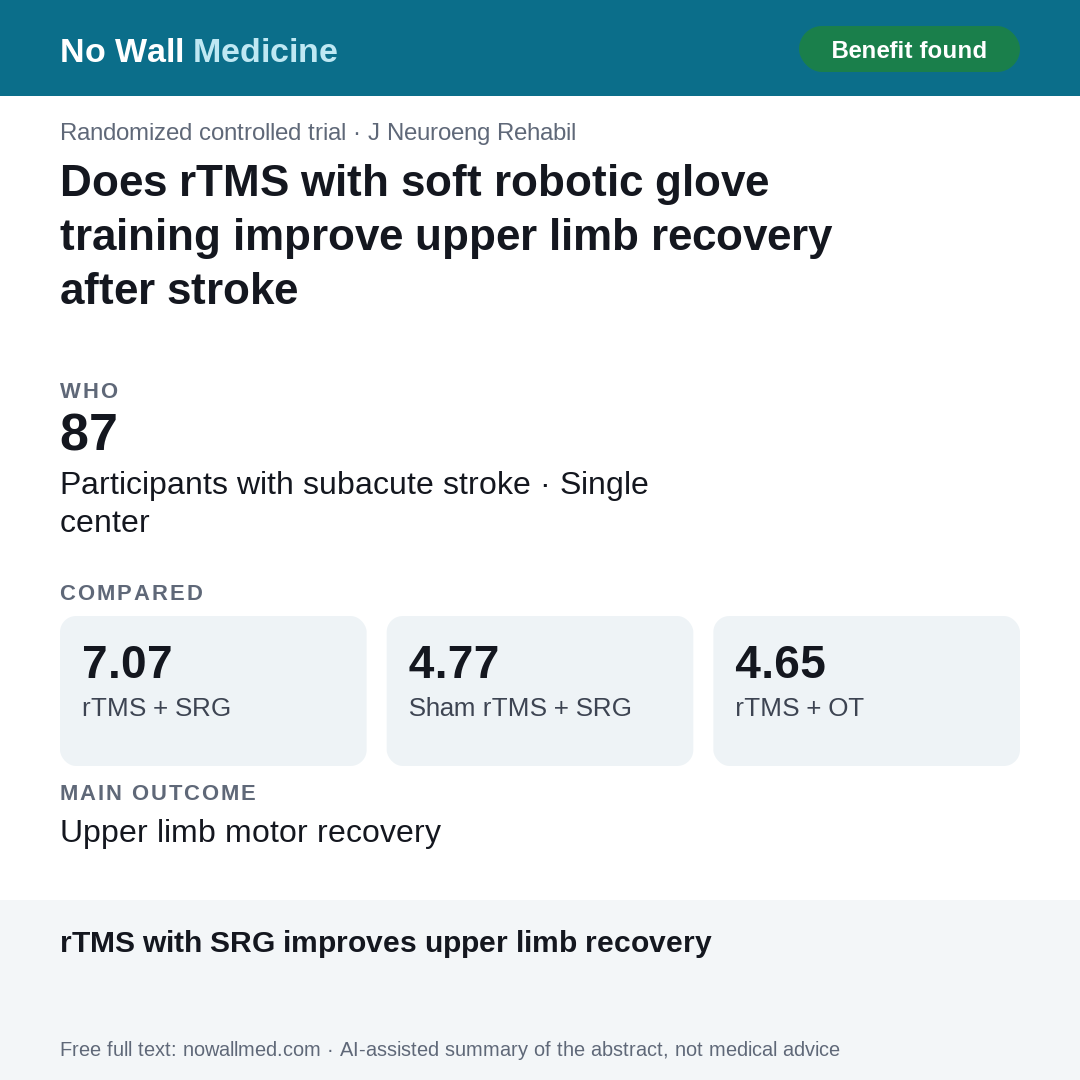
Clinical and neurophysiological effects of rTMS combined with soft robotic glove training on upper-limb recovery after subacute stroke: a three-arm randomized controlled trial
Randomized controlled trialBenefit found
Does rTMS with soft robotic glove training improve upper limb recovery after stroke
Who
87
Participants with subacute stroke · Single center
Compared
7.07rTMS + SRG
4.77Sham rTMS + SRG
4.65rTMS + OT
Main outcome
Upper limb motor recovery
Bottom line: rTMS with SRG improves upper limb recovery
J Neuroeng Rehabil · 2026-08-20Download image
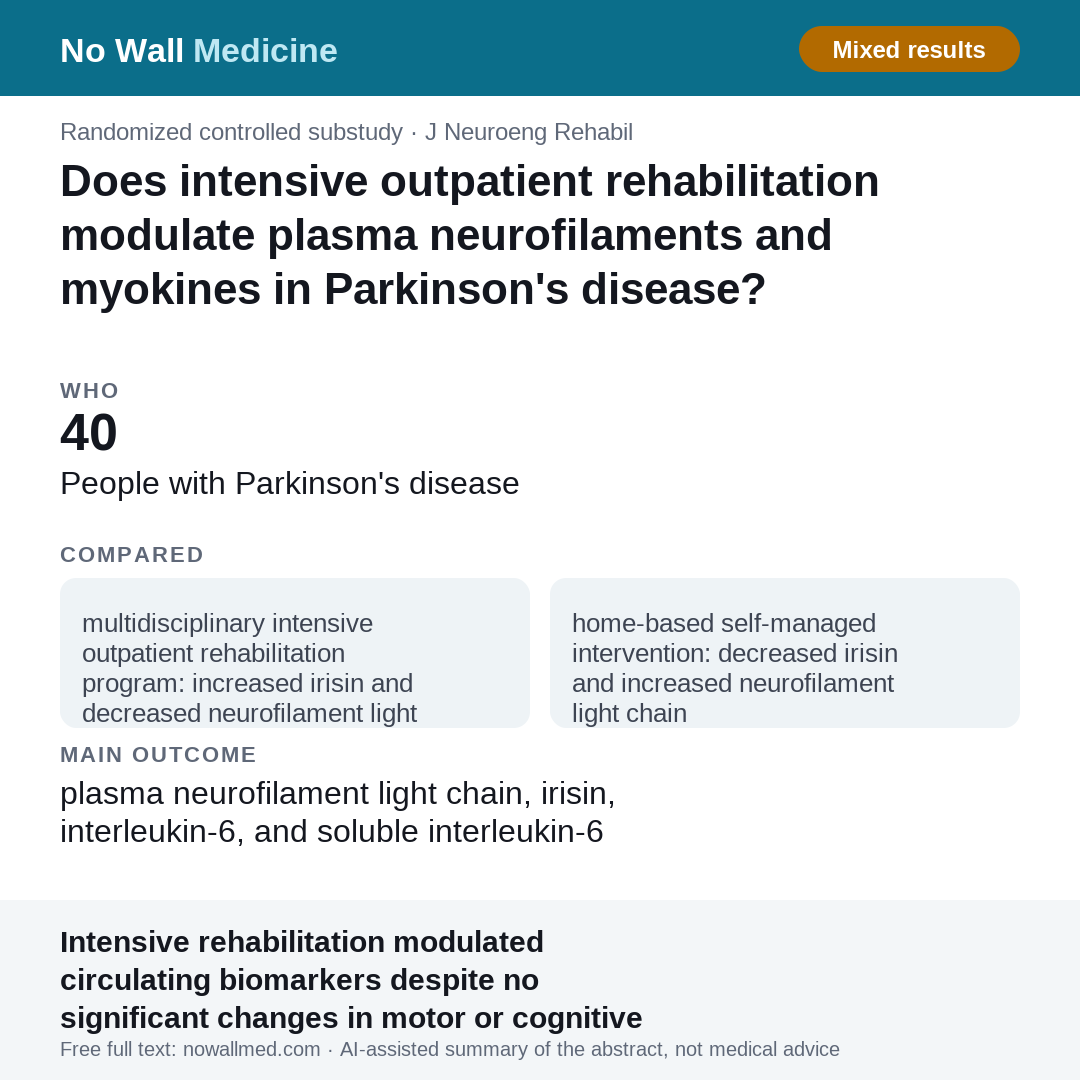
Effect of a multidisciplinary intensive outpatient rehabilitation program on plasma neurofilaments and myokines in Parkinson's disease: an exploratory analysis
Randomized controlled substudyMixed results
Does intensive outpatient rehabilitation modulate plasma neurofilaments and myokines in Parkinson's disease?
Who
40
People with Parkinson's disease
Compared
multidisciplinary intensive outpatient rehabilitation program: increased irisin and decreased neurofilament light chain
home-based self-managed intervention: decreased irisin and increased neurofilament light chain
Main outcome
plasma neurofilament light chain, irisin, interleukin-6, and soluble interleukin-6 receptor
Bottom line: Intensive rehabilitation modulated circulating biomarkers despite no significant changes in motor or cognitive clinical outcomes.
J Neuroeng Rehabil · 2026-08-20Download image
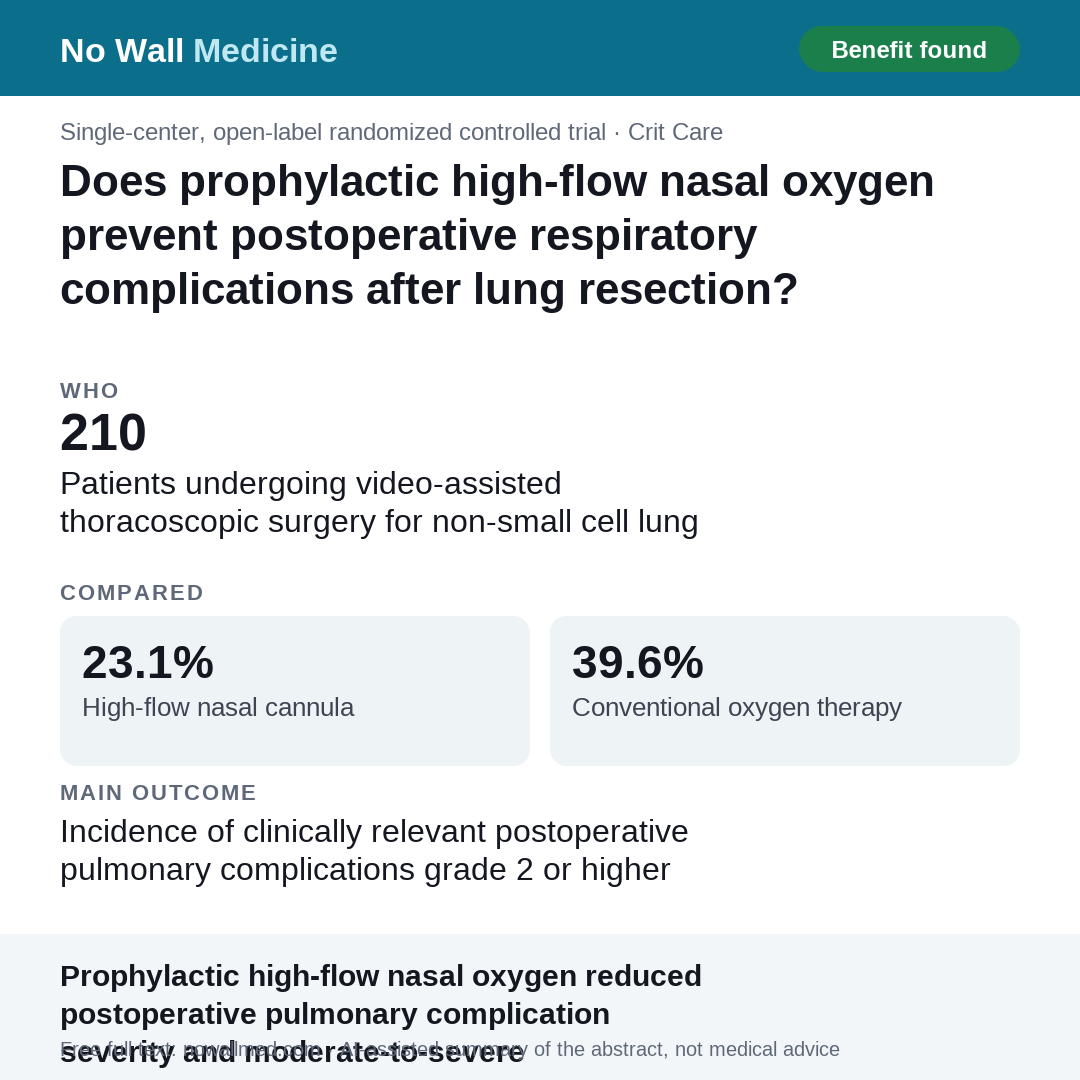
Prophylactic high-flow nasal oxygen vs. conventional oxygen for prevention of postoperative respiratory complications: a randomized trial
Single-center, open-label randomized controlled trialBenefit found
Does prophylactic high-flow nasal oxygen prevent postoperative respiratory complications after lung resection?
Who
210
Patients undergoing video-assisted thoracoscopic surgery for non-small cell lung cancer · Single-center
Compared
23.1%High-flow nasal cannula
39.6%Conventional oxygen therapy
Main outcome
Incidence of clinically relevant postoperative pulmonary complications grade 2 or higher
Result: ordinal OR, 0.50 (95% CI, 0.28-0.91)
Bottom line: Prophylactic high-flow nasal oxygen reduced postoperative pulmonary complication severity and moderate-to-severe complications after lung resection.
Crit Care · 2026-08-20Download image
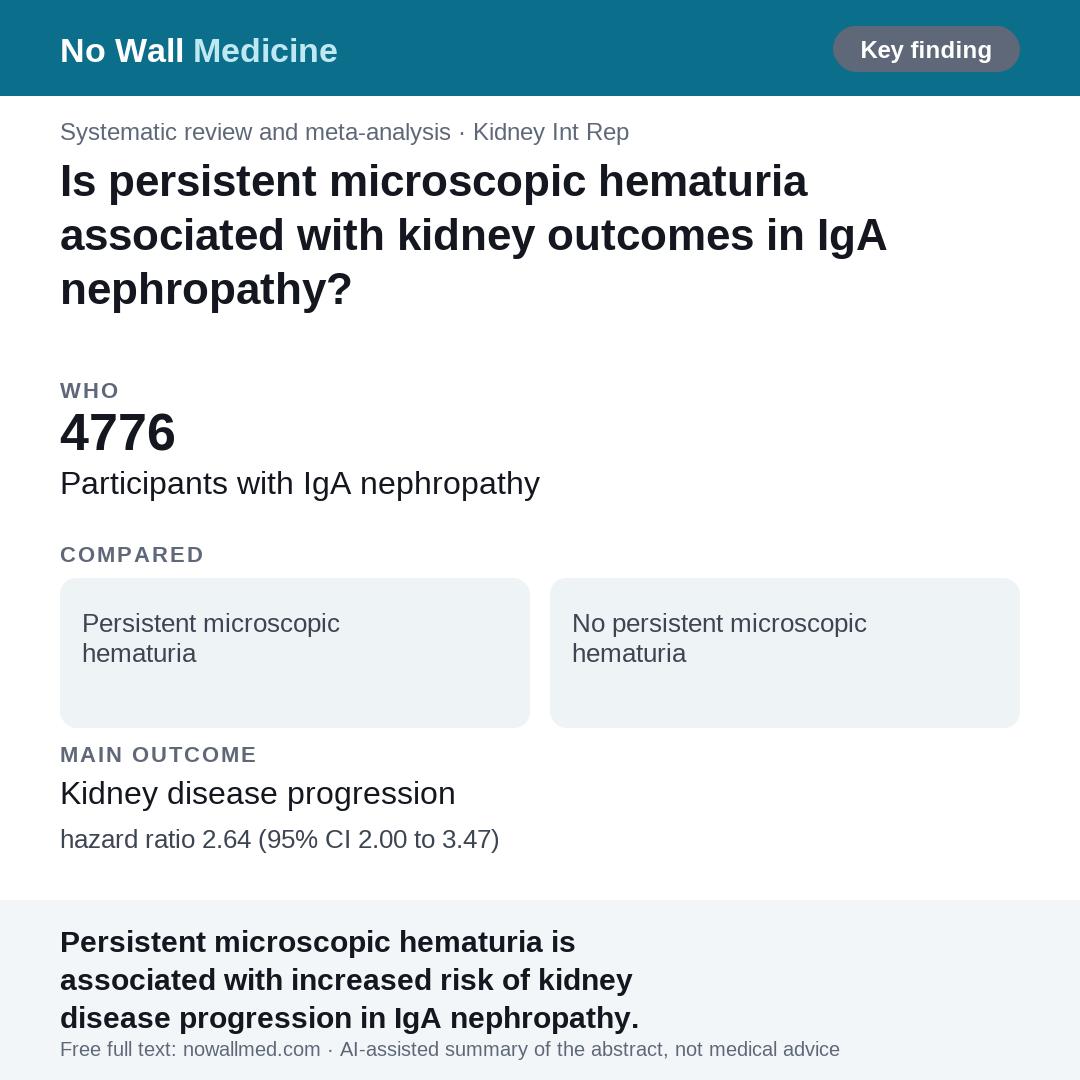
Systematic Review of Persistent Microscopic Hematuria and Kidney Outcomes in IgAN
Systematic review and meta-analysisKey finding
Is persistent microscopic hematuria associated with kidney outcomes in IgA nephropathy?
Who
4776
Participants with IgA nephropathy
Compared
Persistent microscopic hematuria
No persistent microscopic hematuria
Main outcome
Kidney disease progression
Result: hazard ratio 2.64 (95% CI 2.00 to 3.47)
Bottom line: Persistent microscopic hematuria is associated with increased risk of kidney disease progression in IgA nephropathy.
Kidney Int Rep · 2026-08-20Download image