Visual abstracts
New randomized trials and meta-analyses from leading journals at a glance: who was studied, what was compared, and what was found. Every paper is free to read in full.
All specialtiesCardiology 449Oncology 376Gastroenterology & Hepatology 180Infectious Disease 365Neurology 208Psychiatry & Mental Health 312Pulmonology 209Critical Care 146Endocrinology & Diabetes 286Pediatrics 221Surgery 159Orthopedics & Sports Medicine 93Neurosurgery 28Cardiothoracic & Vascular Surgery 54Plastic & Reconstructive Surgery 93Nephrology 88Rheumatology 93Hematology 111Dermatology 50Ophthalmology 83Obstetrics & Gynecology 140Public & Global Health 141Radiology & Imaging 42Anesthesiology 91Urology 105ENT (Otolaryngology) 60Emergency Medicine 45Allergy & Immunology 53Geriatrics 129Family Medicine & Primary Care 81Medical Genetics & Genomics 45Pathology & Laboratory Medicine 8Physical Medicine & Rehabilitation 122Palliative Care 71Nutrition 160Digital Health & AI 407General Medicine 56
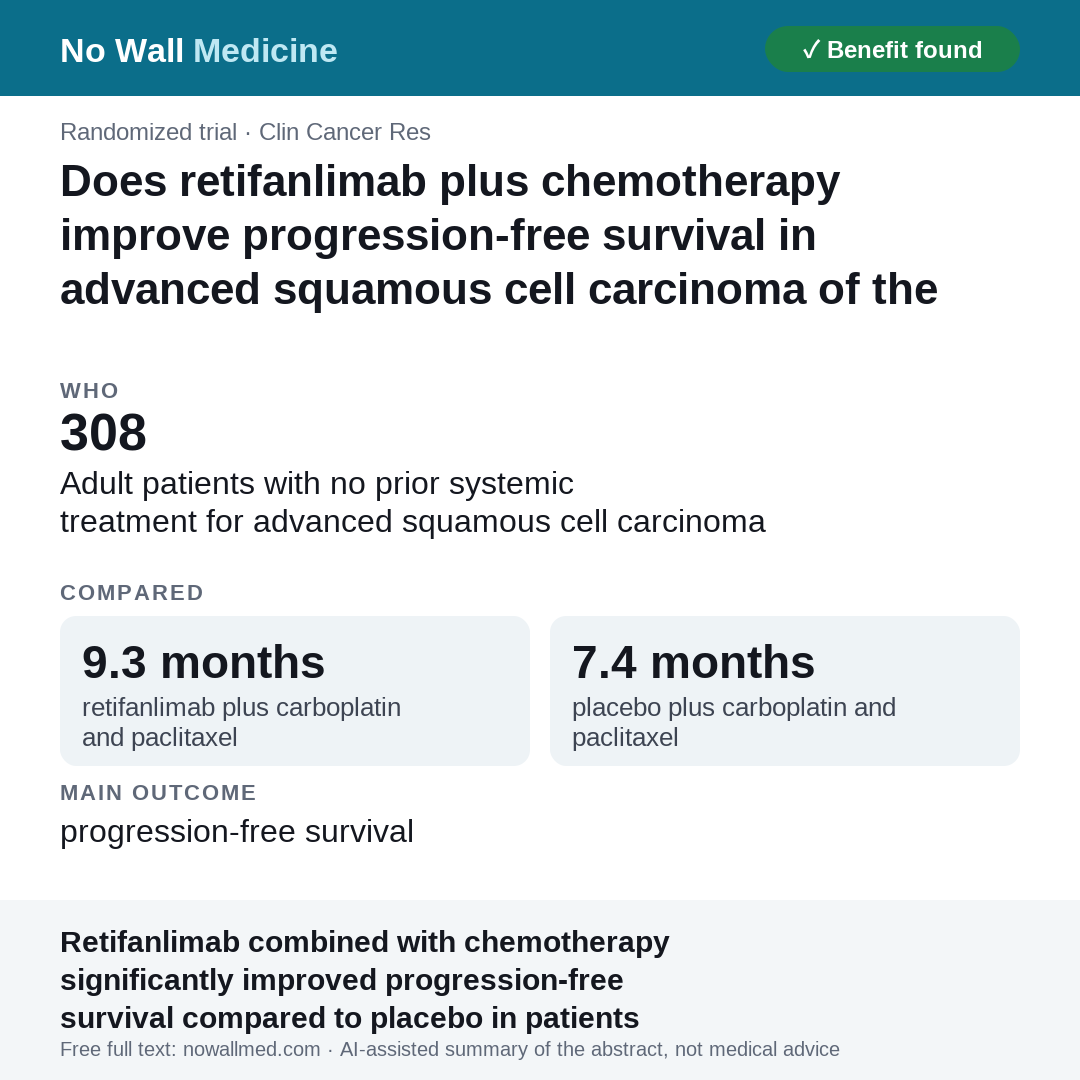
FDA Approval Summary: Retifanlimab for the Treatment of Adult Patients with Metastatic or Inoperable Locally Recurrent Squamous Cell Carcinoma of the Anal Canal
Randomized trialBenefit found
Does retifanlimab plus chemotherapy improve progression-free survival in advanced squamous cell carcinoma of the anal canal?
Who
308
Adult patients with no prior systemic treatment for advanced squamous cell carcinoma of the anal canal
Compared
9.3 monthsretifanlimab plus carboplatin and paclitaxel (95% CI, 7.5-11.3)
7.4 monthsplacebo plus carboplatin and paclitaxel (95% CI, 7.1-7.7)
Main outcome
progression-free survival
Result: hazard ratio 0.63 (95% CI 0.47-0.84)
Bottom line: Retifanlimab combined with chemotherapy significantly improved progression-free survival compared to placebo in patients with advanced squamous cell carcinoma of the anal canal.
Clin Cancer Res · 2026-08-05Download image
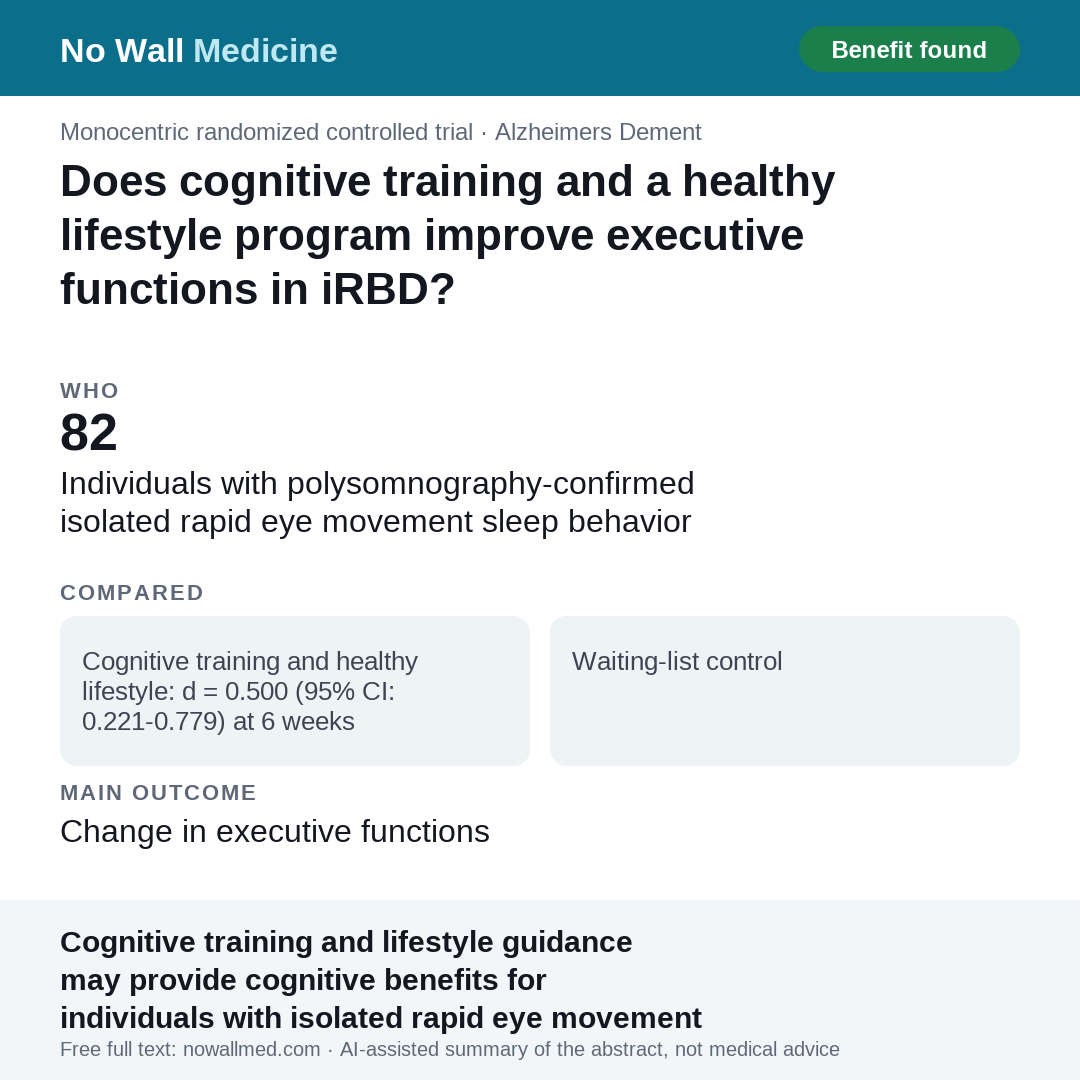
Cognitive training and promoting a healthy lifestyle in isolated REM sleep behavior disorder: The randomized controlled trial CogTrAiL-RBD
Monocentric randomized controlled trialBenefit found
Does cognitive training and a healthy lifestyle program improve executive functions in iRBD?
Who
82
Individuals with polysomnography-confirmed isolated rapid eye movement sleep behavior disorder · Monocentric
Compared
Cognitive training and healthy lifestyle: d = 0.500 (95% CI: 0.221-0.779) at 6 weeks
Waiting-list control
Main outcome
Change in executive functions
Result: d = 0.500 (95% CI: 0.221-0.779) at 6 weeks; d = 0.397 (95% CI: 0.115-0.679) at 6 months
Bottom line: Cognitive training and lifestyle guidance may provide cognitive benefits for individuals with isolated rapid eye movement sleep behavior disorder.
Alzheimers Dement · 2026-08-05Download image
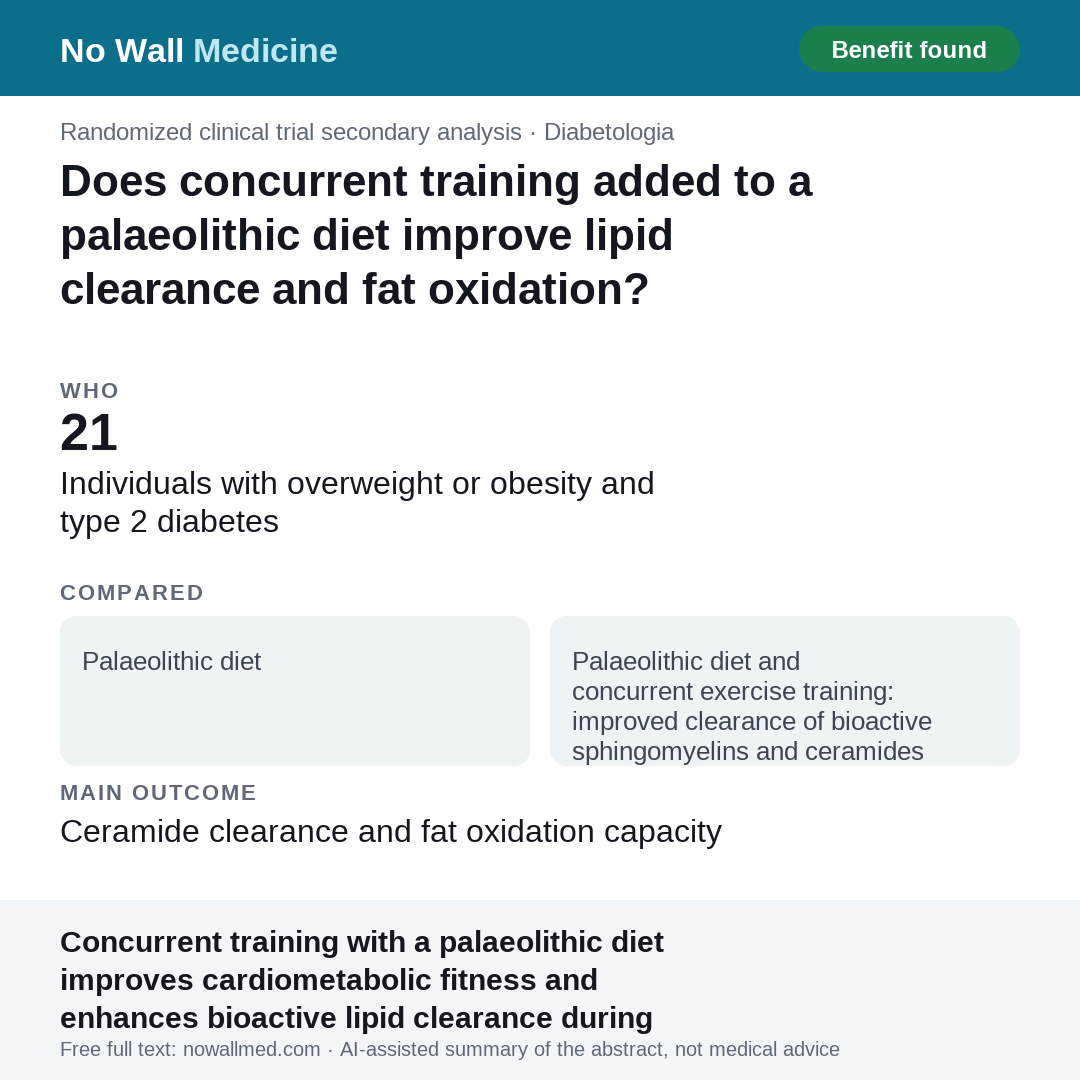
Concurrent training is associated with enhanced post-exercise ceramide clearance and fat oxidation capacity in individuals with type 2 diabetes following lifestyle intervention
Randomized clinical trial secondary analysisBenefit found
Does concurrent training added to a palaeolithic diet improve lipid clearance and fat oxidation?
Who
21
Individuals with overweight or obesity and type 2 diabetes
Compared
Palaeolithic diet
Palaeolithic diet and concurrent exercise training: improved clearance of bioactive sphingomyelins and ceramides during recovery
Main outcome
Ceramide clearance and fat oxidation capacity
Bottom line: Concurrent training with a palaeolithic diet improves cardiometabolic fitness and enhances bioactive lipid clearance during recovery.
Diabetologia · 2026-08-05Download image
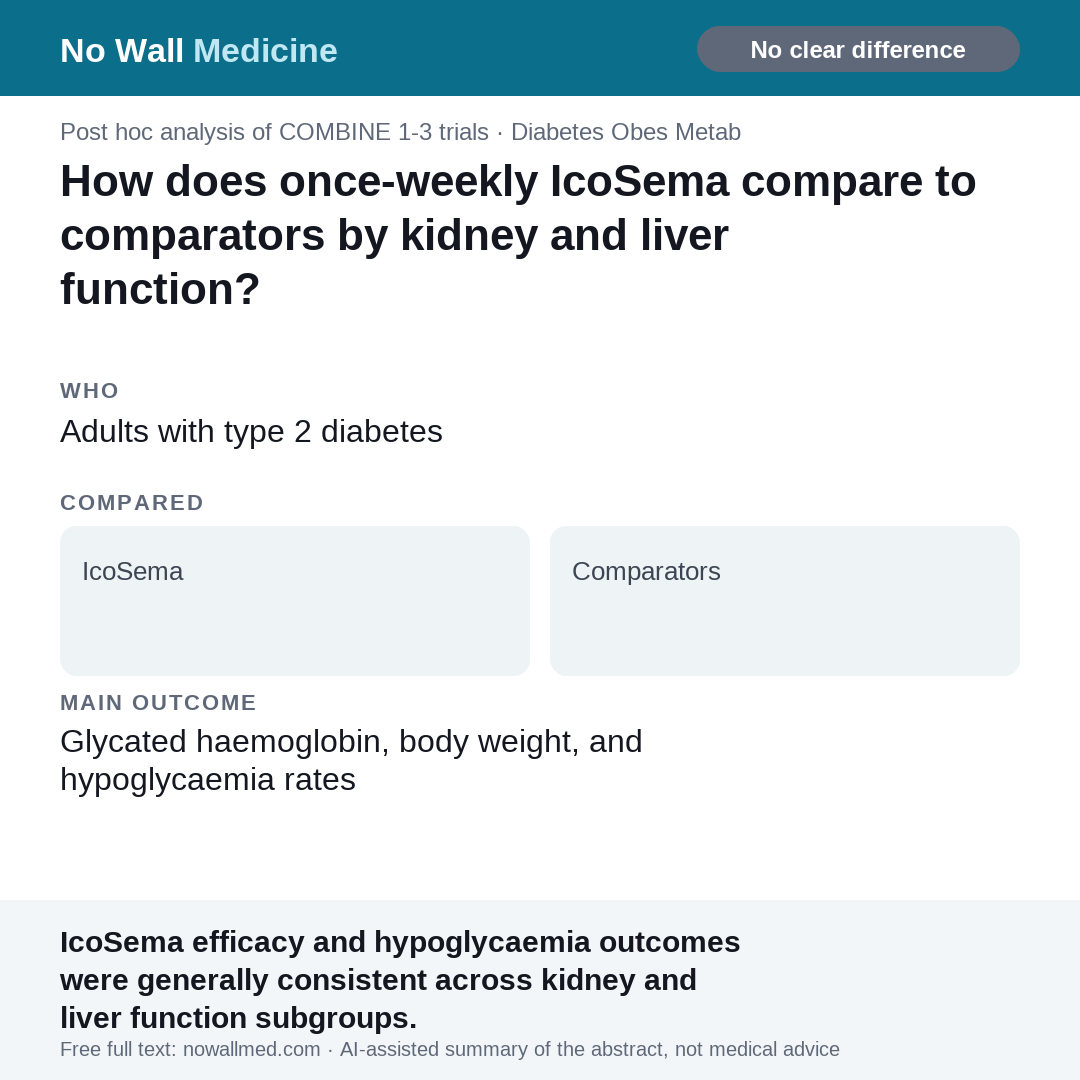
Efficacy and Hypoglycaemia Outcomes With Once-Weekly IcoSema Versus Comparators in Individuals With Type 2 Diabetes by Kidney and Liver Function: A Post Hoc Analysis of the COMBINE 1-3 Trials
Post hoc analysis of COMBINE 1-3 trialsNo clear difference
How does once-weekly IcoSema compare to comparators by kidney and liver function?
Who
Adults with type 2 diabetes
Compared
IcoSema
Comparators
Main outcome
Glycated haemoglobin, body weight, and hypoglycaemia rates
Bottom line: IcoSema efficacy and hypoglycaemia outcomes were generally consistent across kidney and liver function subgroups.
Funded by: Novo Nordisk
Diabetes Obes Metab · 2026-08-05Download image
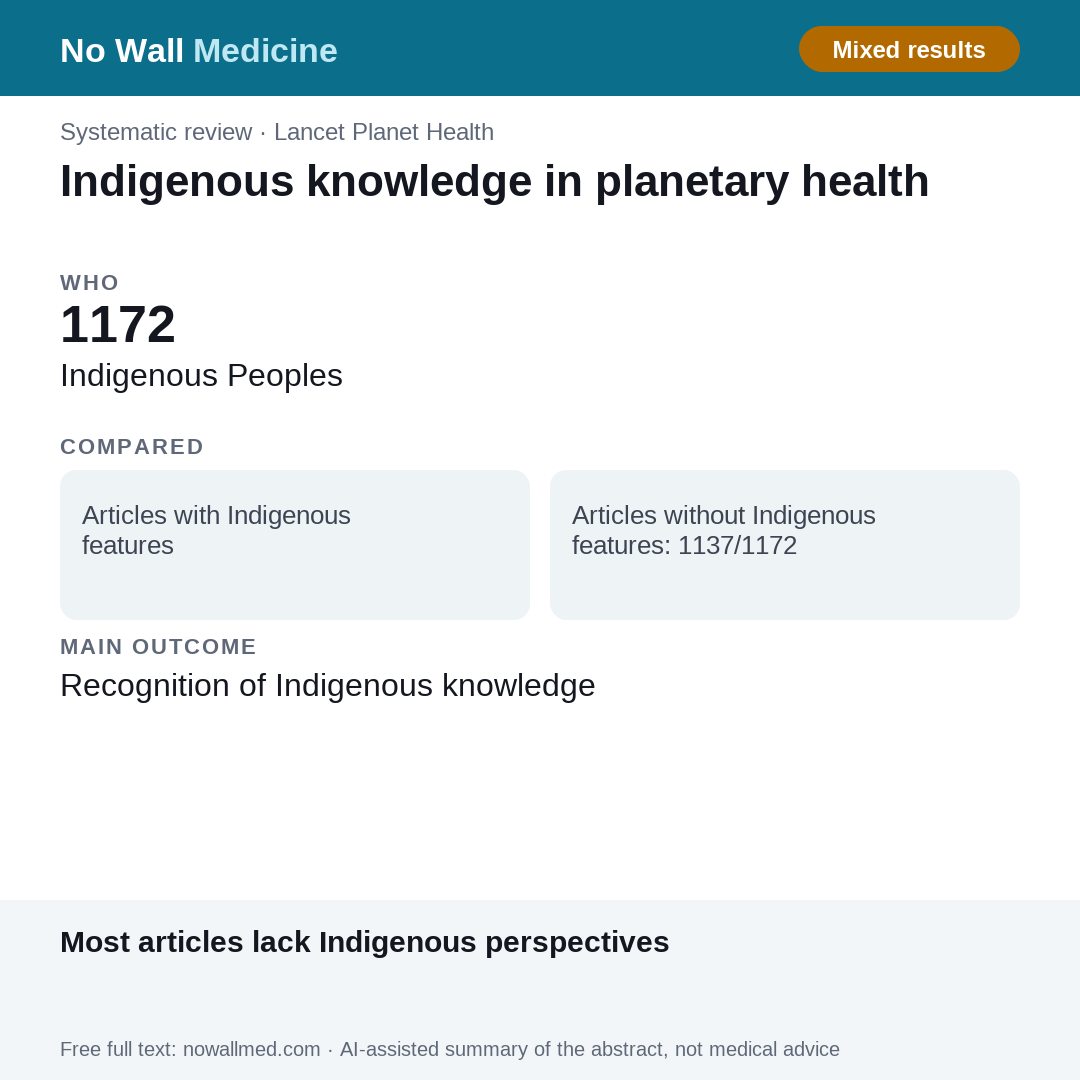
Radical, transformative, or decolonial? A systematic review of The Lancet Planetary Health's progress on embracing Indigenous Peoples' knowledge systems
Systematic reviewMixed results
Indigenous knowledge in planetary health
Who
1172
Indigenous Peoples
Compared
Articles with Indigenous features
Articles without Indigenous features: 1137/1172
Main outcome
Recognition of Indigenous knowledge
Bottom line: Most articles lack Indigenous perspectives
Lancet Planet Health · 2026-08-05Download image
Frailty, clinical outcomes, and treatment effects of a care bundle in acute intracerebral haemorrhage: a post-hoc analysis of the INTERACT3 trial
Post-hoc analysis of a cluster-randomised controlled trialNo clear difference
Does frailty associate with outcomes and modify care bundle treatment effects in acute intracerebral haemorrhage?
Who
7035
Individuals with acute spontaneous intracerebral haemorrhage · 121 hospitals in ten countries
Compared
Non-frail
Pre-frail
Frail
Main outcome
6-month all-cause mortality
Result: p for interaction=0·30
Bottom line: Frailty is associated with higher mortality, but does not modify the care bundle's effect on mortality.
Lancet Healthy Longev · 2026-08-05Download image

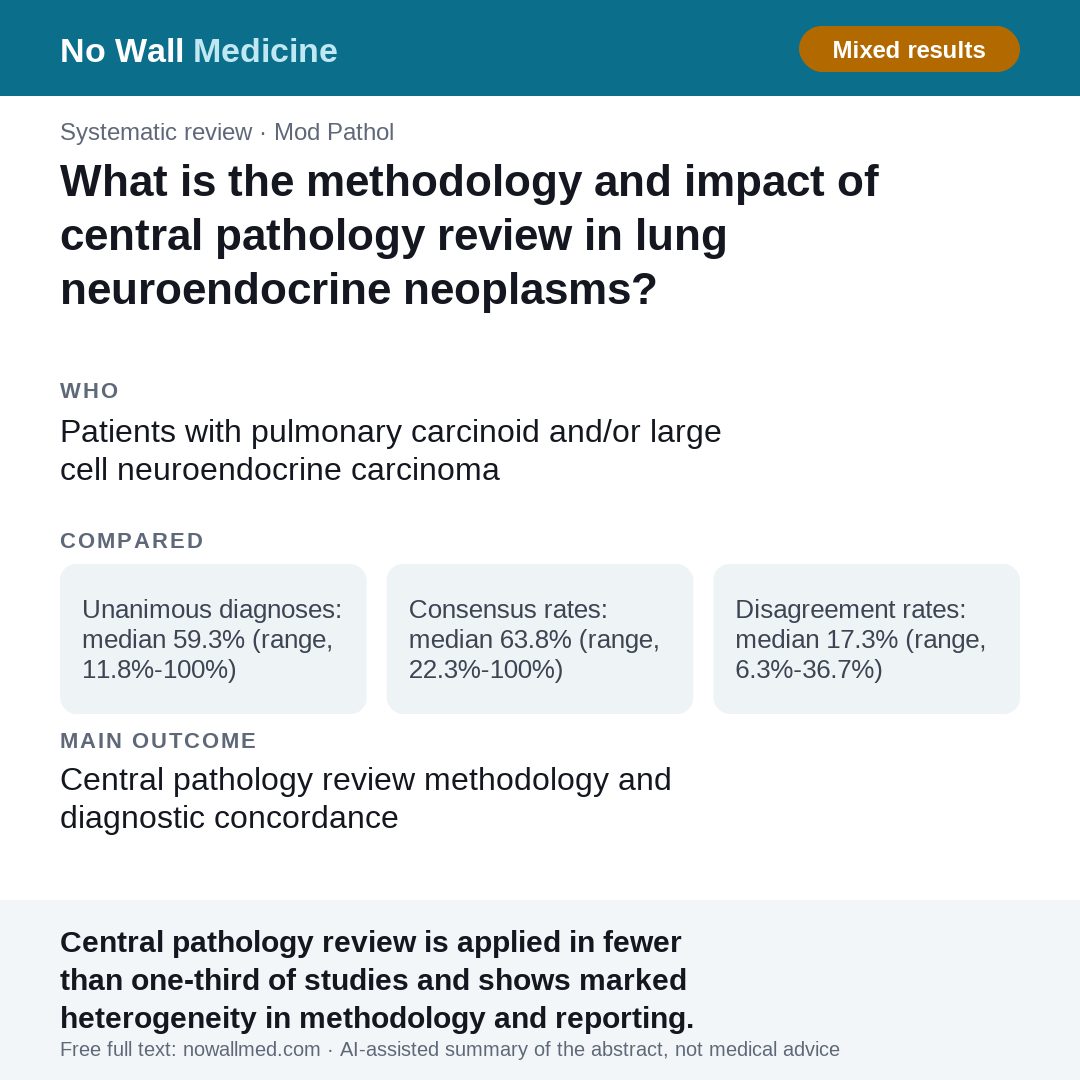
Quality in Central Pathology Assessment in Pulmonary Carcinoid and Large Cell Neuroendocrine Carcinoma: A Systematic Review
Systematic reviewMixed results
What is the methodology and impact of central pathology review in lung neuroendocrine neoplasms?
Who
Patients with pulmonary carcinoid and/or large cell neuroendocrine carcinoma
Compared
Unanimous diagnoses: median 59.3% (range, 11.8%-100%)
Consensus rates: median 63.8% (range, 22.3%-100%)
Disagreement rates: median 17.3% (range, 6.3%-36.7%)
Main outcome
Central pathology review methodology and diagnostic concordance
Bottom line: Central pathology review is applied in fewer than one-third of studies and shows marked heterogeneity in methodology and reporting.
Mod Pathol · 2026-08-05Download image
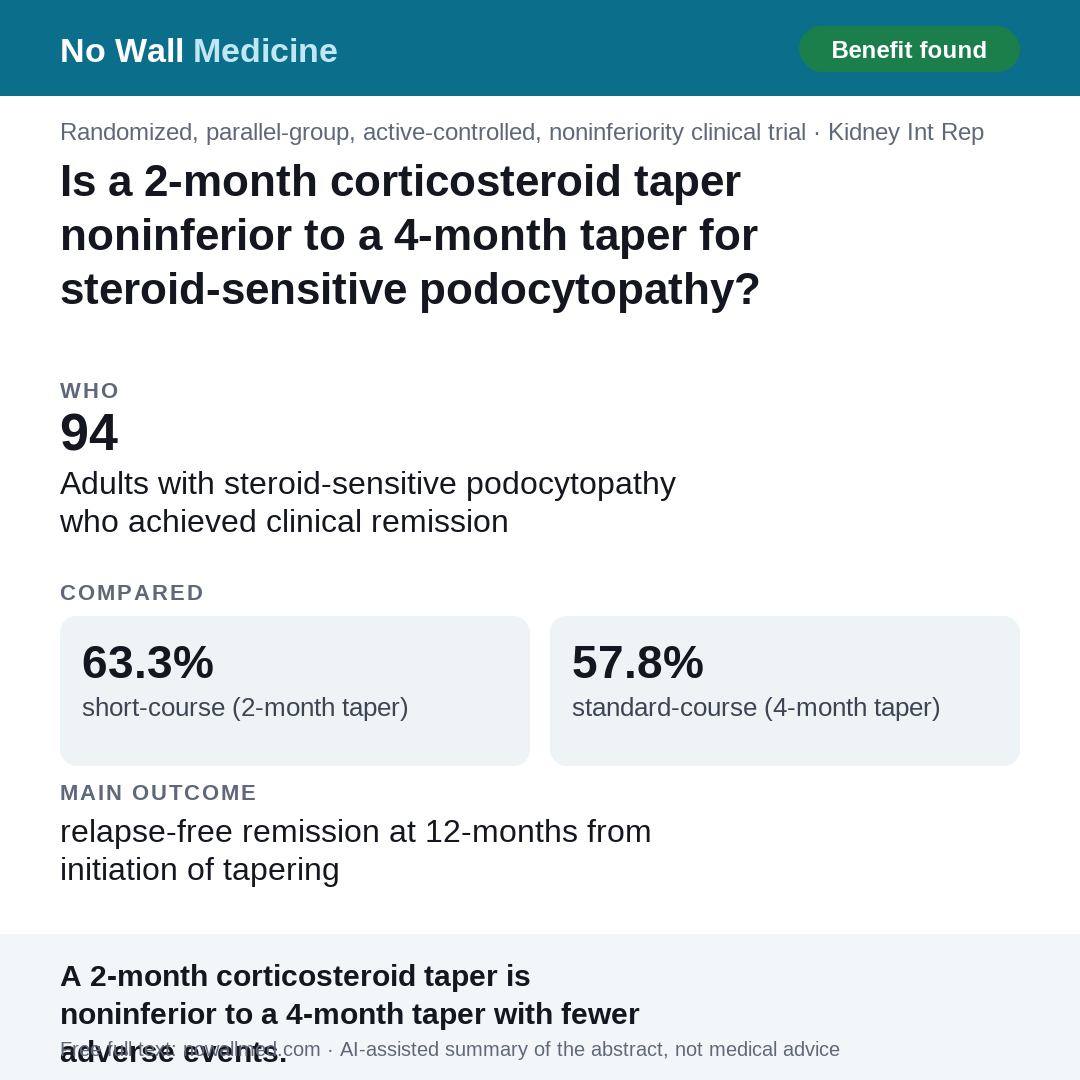
Randomized Controlled Trial of Corticosteroid Tapering in Steroid-Sensitive Podocytopathy
Randomized, parallel-group, active-controlled, noninferiority clinical trialBenefit found
Is a 2-month corticosteroid taper noninferior to a 4-month taper for steroid-sensitive podocytopathy?
Who
94
Adults with steroid-sensitive podocytopathy who achieved clinical remission
Compared
63.3%short-course (2-month taper)
57.8%standard-course (4-month taper)
Main outcome
relapse-free remission at 12-months from initiation of tapering
Result: absolute difference 5.5%; lower bound of the confidence interval -14.3%
Bottom line: A 2-month corticosteroid taper is noninferior to a 4-month taper with fewer adverse events.
Limitation: The targeted sample size of 114 patients was not met.
Kidney Int Rep · 2026-08-05Download image
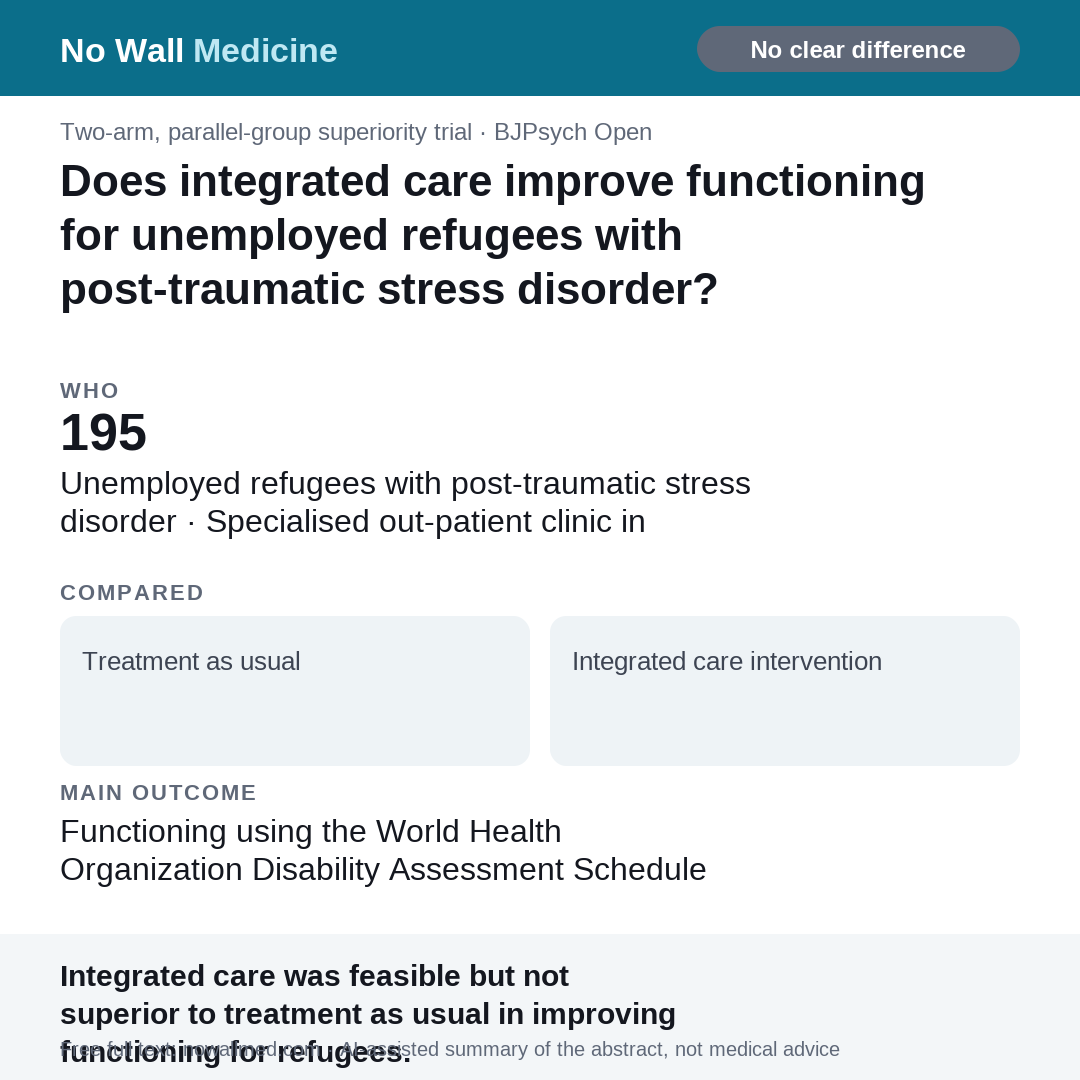
Integrated mental health treatment and employment services for refugees with PTSD: randomised controlled trial
Two-arm, parallel-group superiority trialNo clear difference
Does integrated care improve functioning for unemployed refugees with post-traumatic stress disorder?
Who
195
Unemployed refugees with post-traumatic stress disorder · Specialised out-patient clinic in Denmark
Compared
Treatment as usual
Integrated care intervention
Main outcome
Functioning using the World Health Organization Disability Assessment Schedule 2.0
Result: mean difference 0.30 (95% CI -2.40 to 3.00)
Bottom line: Integrated care was feasible but not superior to treatment as usual in improving functioning for refugees.
Limitation: Future research should examine how timing and intensity of interventions influence outcomes.
BJPsych Open · 2026-08-05Download image
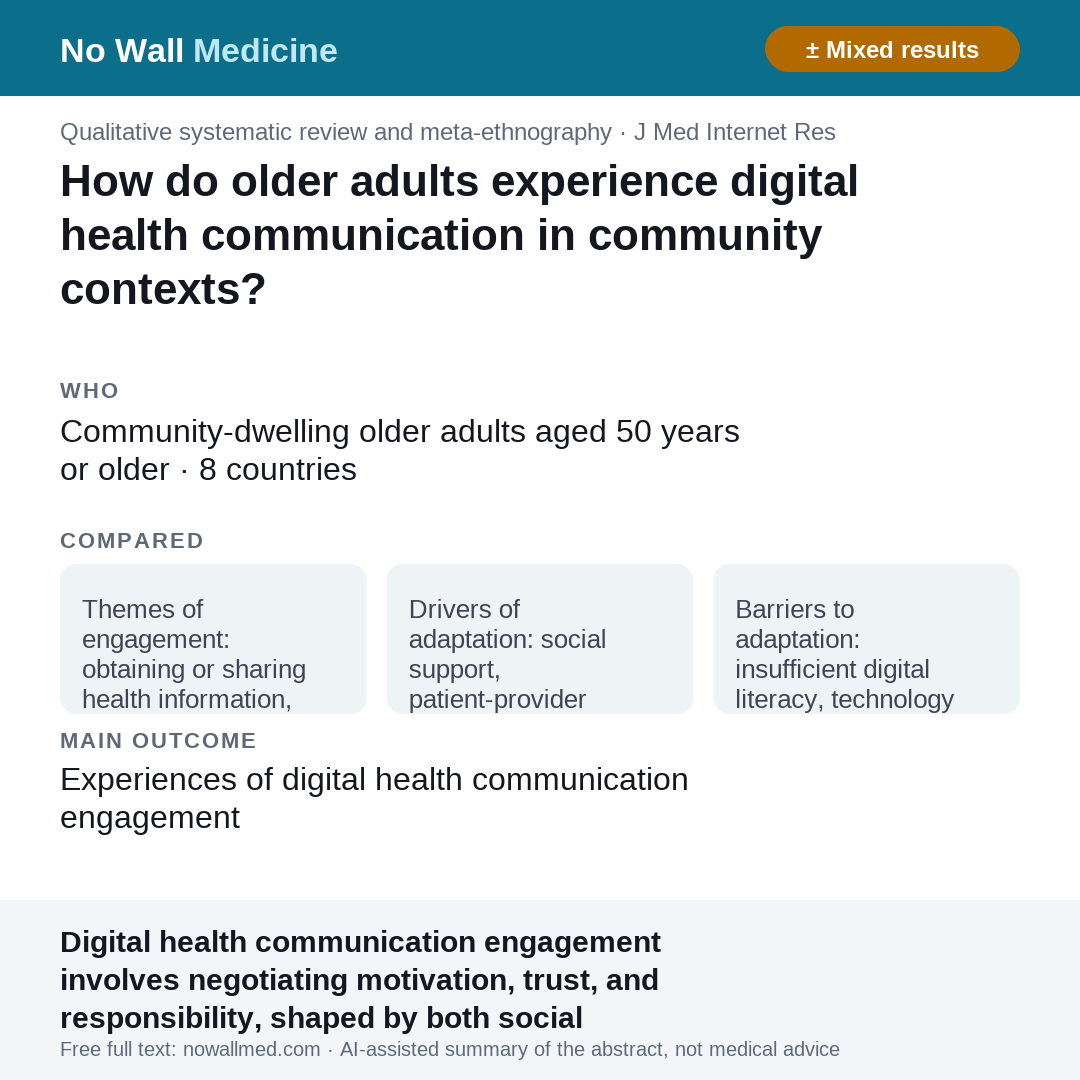
Digital Health Communication Engagement Experiences of Older Adults in Community Contexts: Qualitative Systematic Review and Meta-Ethnography
Qualitative systematic review and meta-ethnographyMixed results
How do older adults experience digital health communication in community contexts?
Who
Community-dwelling older adults aged 50 years or older · 8 countries
Compared
Themes of engagement: obtaining or sharing health information, maintaining health, and learning technology
Drivers of adaptation: social support, patient-provider trust, and technological affinity
Barriers to adaptation: insufficient digital literacy, technology anxiety, cost constraints, physiological limitations, and privacy concerns
Main outcome
Experiences of digital health communication engagement
Bottom line: Digital health communication engagement involves negotiating motivation, trust, and responsibility, shaped by both social drivers and technological barriers.
Limitation: Eligibility was limited to Chinese- or English-language abstracts, which may limit representativeness.
J Med Internet Res · 2026-08-05Download image
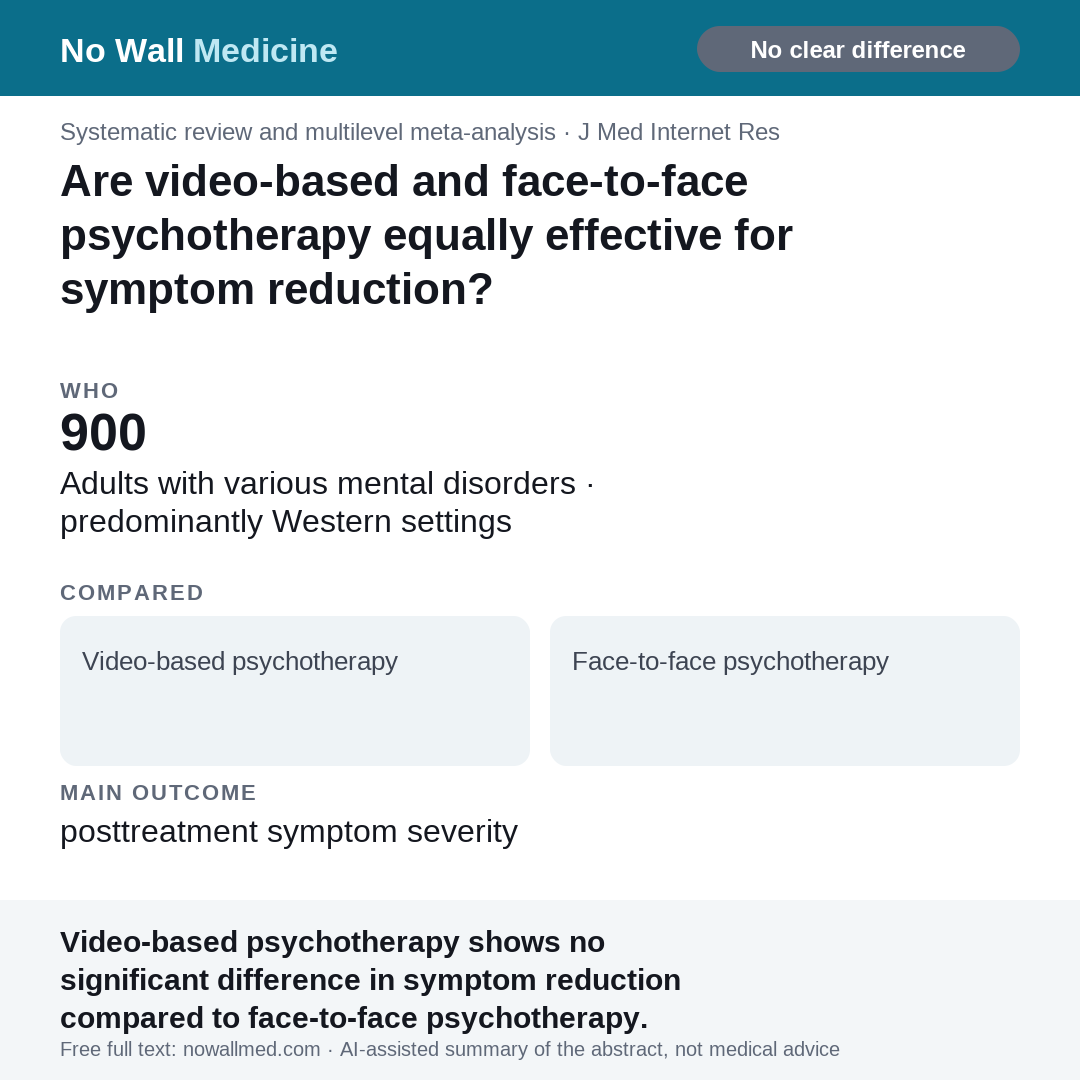
Comparing Video-Based and Face-to-Face Psychotherapy: Systematic Review and Multilevel Meta-Analysis Across Mental Disorders
Systematic review and multilevel meta-analysisNo clear difference
Are video-based and face-to-face psychotherapy equally effective for symptom reduction?
Who
900
Adults with various mental disorders · predominantly Western settings
Compared
Video-based psychotherapy
Face-to-face psychotherapy
Main outcome
posttreatment symptom severity
Result: Hedges g=-0.09 (95% CI -0.52 to 0.33)
Bottom line: Video-based psychotherapy shows no significant difference in symptom reduction compared to face-to-face psychotherapy.
Limitation: Limited size, scope, substantial heterogeneity, and few noninferiority trials.
J Med Internet Res · 2026-08-05Download image
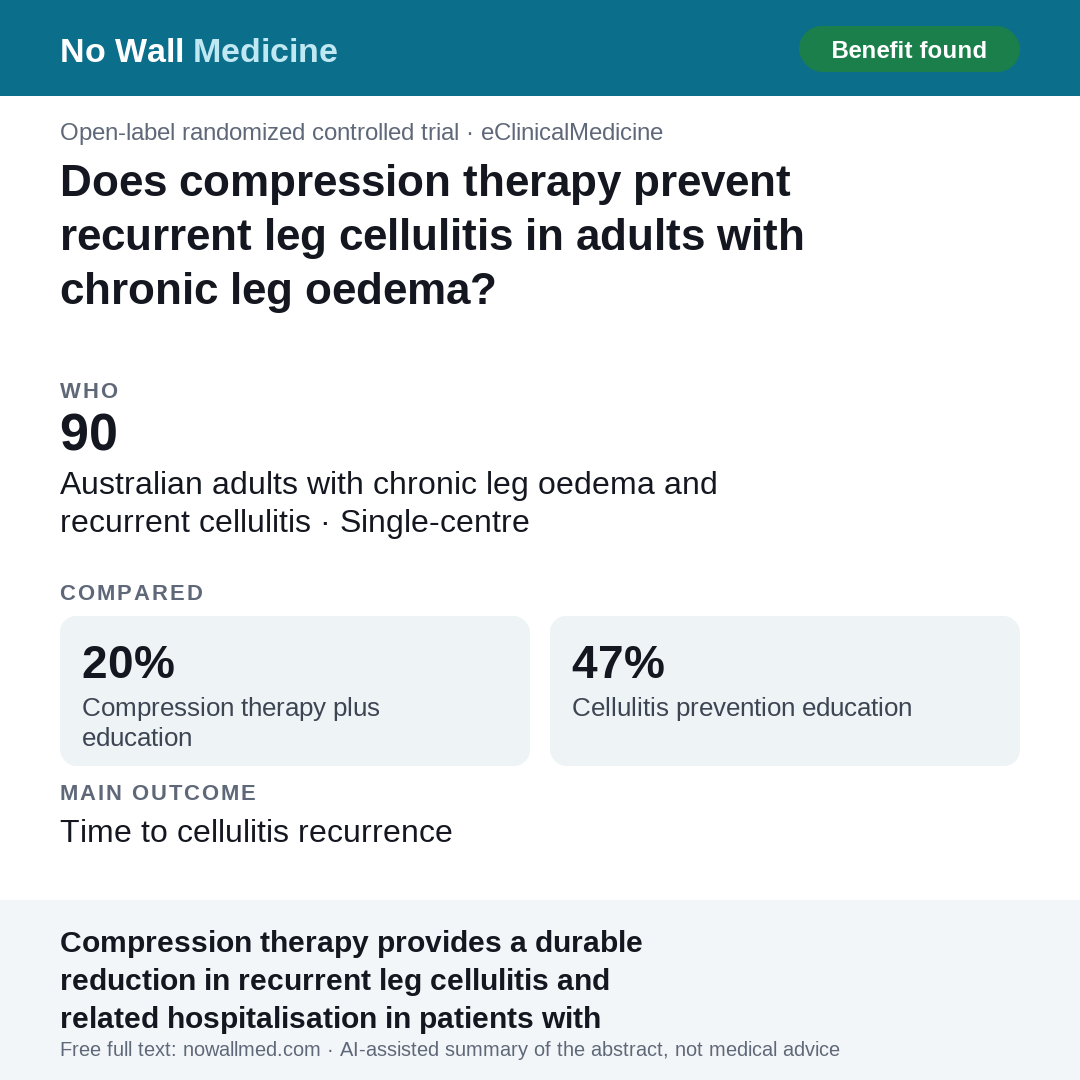
Sustained benefit of compression therapy for preventing recurrent leg cellulitis: extended follow-up of a randomised controlled trial
Open-label randomized controlled trialBenefit found
Does compression therapy prevent recurrent leg cellulitis in adults with chronic leg oedema?
Who
90
Australian adults with chronic leg oedema and recurrent cellulitis · Single-centre outpatient setting in Australia
Compared
20%Compression therapy plus education
47%Cellulitis prevention education
Main outcome
Time to cellulitis recurrence
Result: hazard ratio 0·23 (95% CI 0·10-0·52)
Bottom line: Compression therapy provides a durable reduction in recurrent leg cellulitis and related hospitalisation in patients with chronic oedema.
Funded by: Haddenham Healthcare
eClinicalMedicine · 2026-08-04Download image
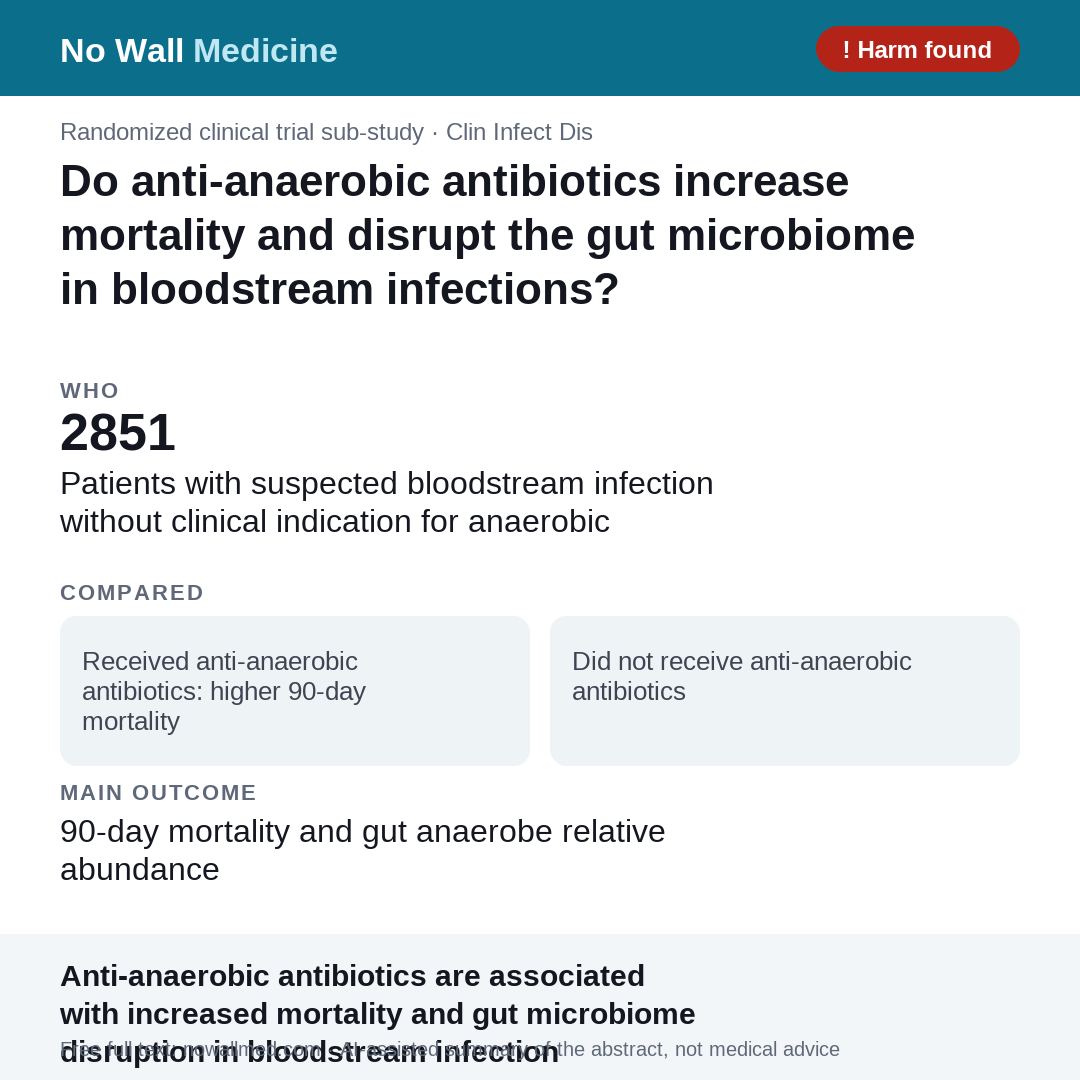
Association of anti-anaerobic antibiotics with mortality and the gut microbiome: a sub-study of the BALANCE randomized clinical trial
Randomized clinical trial sub-studyHarm found
Do anti-anaerobic antibiotics increase mortality and disrupt the gut microbiome in bloodstream infections?
Who
2851
Patients with suspected bloodstream infection without clinical indication for anaerobic coverage · Multisite
Compared
Received anti-anaerobic antibiotics: higher 90-day mortality
Did not receive anti-anaerobic antibiotics
Main outcome
90-day mortality and gut anaerobe relative abundance
Result: OR 1.41 (95% CI 1.03 to 1.92)
Bottom line: Anti-anaerobic antibiotics are associated with increased mortality and gut microbiome disruption in bloodstream infection patients.
Clin Infect Dis · 2026-08-04Download image
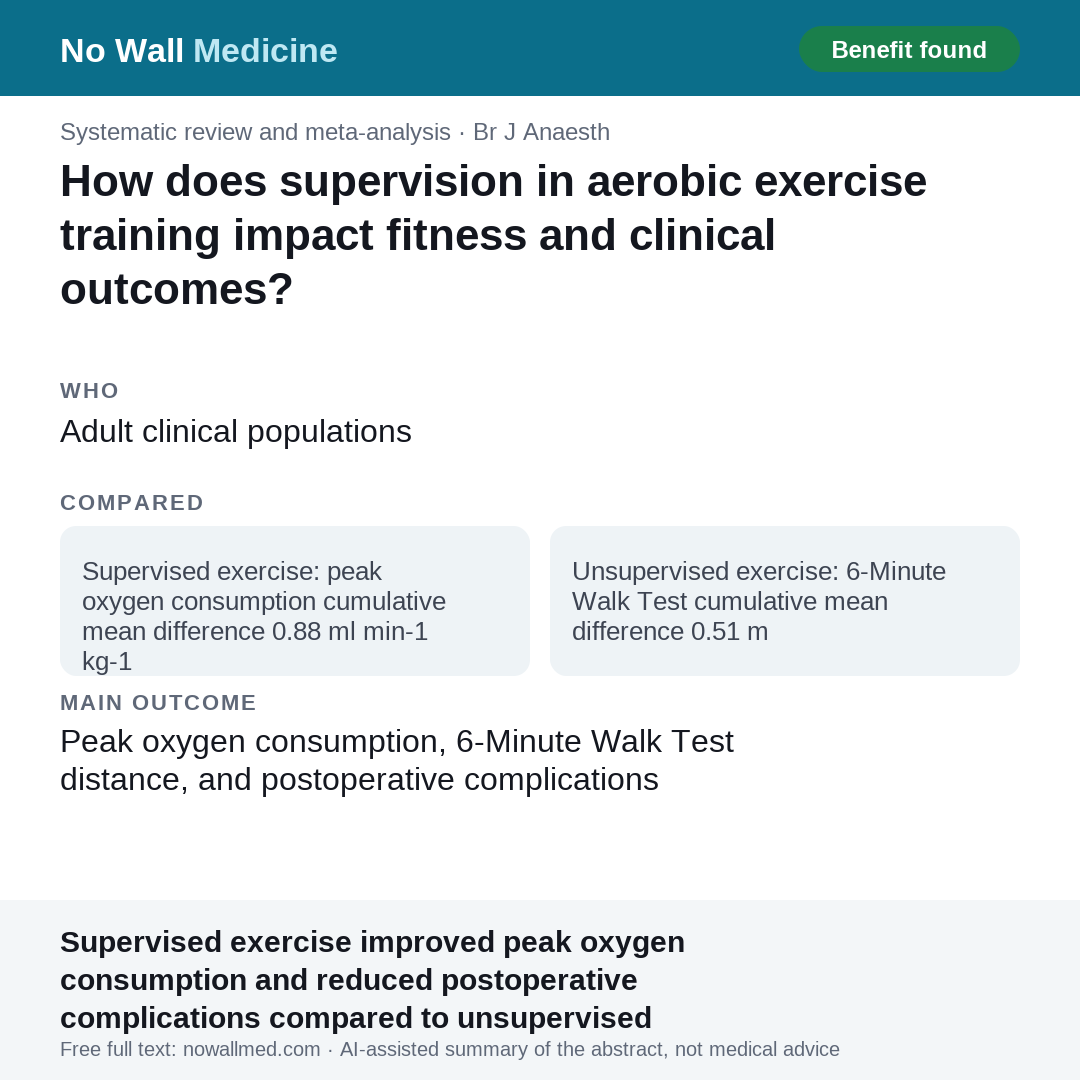
Assessing impact of supervision in aerobic exercise training on fitness and clinical outcomes: a systematic review and meta-analysis
Systematic review and meta-analysisBenefit found
How does supervision in aerobic exercise training impact fitness and clinical outcomes?
Who
Adult clinical populations
Compared
Supervised exercise: peak oxygen consumption cumulative mean difference 0.88 ml min-1 kg-1
Unsupervised exercise: 6-Minute Walk Test cumulative mean difference 0.51 m
Main outcome
Peak oxygen consumption, 6-Minute Walk Test distance, and postoperative complications
Bottom line: Supervised exercise improved peak oxygen consumption and reduced postoperative complications compared to unsupervised exercise.
Limitation: Lack of direct comparisons between supervised and unsupervised exercise groups.
Br J Anaesth · 2026-08-04Download image
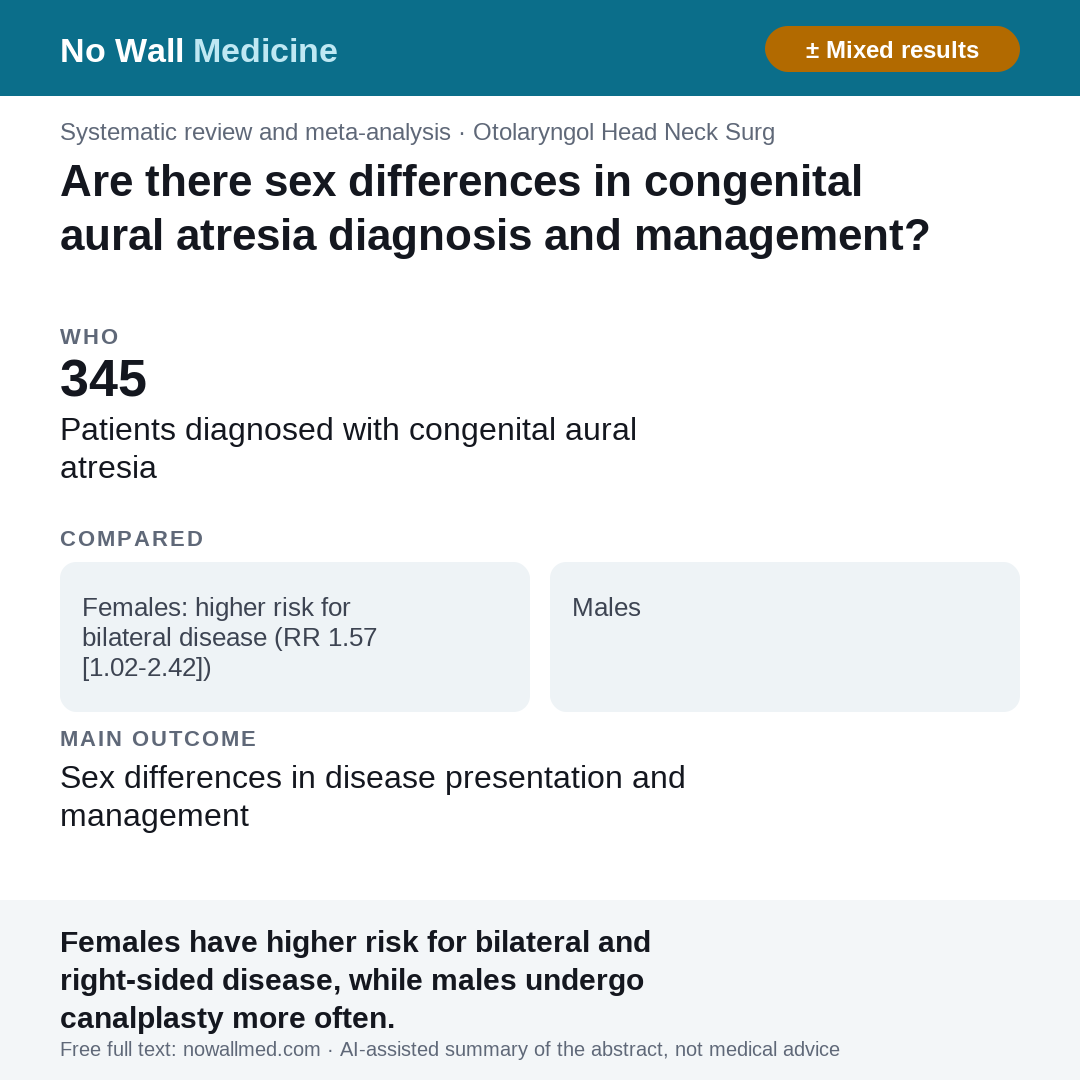
Sex Differences in Congenital Aural Atresia: A Systematic Review and Meta-Analysis
Systematic review and meta-analysisMixed results
Are there sex differences in congenital aural atresia diagnosis and management?
Who
345
Patients diagnosed with congenital aural atresia
Compared
Females: higher risk for bilateral disease (RR 1.57 [1.02-2.42])
Males
Main outcome
Sex differences in disease presentation and management
Result: relative risk 1.57 (95% CI 1.02-2.42)
Bottom line: Females have higher risk for bilateral and right-sided disease, while males undergo canalplasty more often.
Otolaryngol Head Neck Surg · 2026-08-04Download image
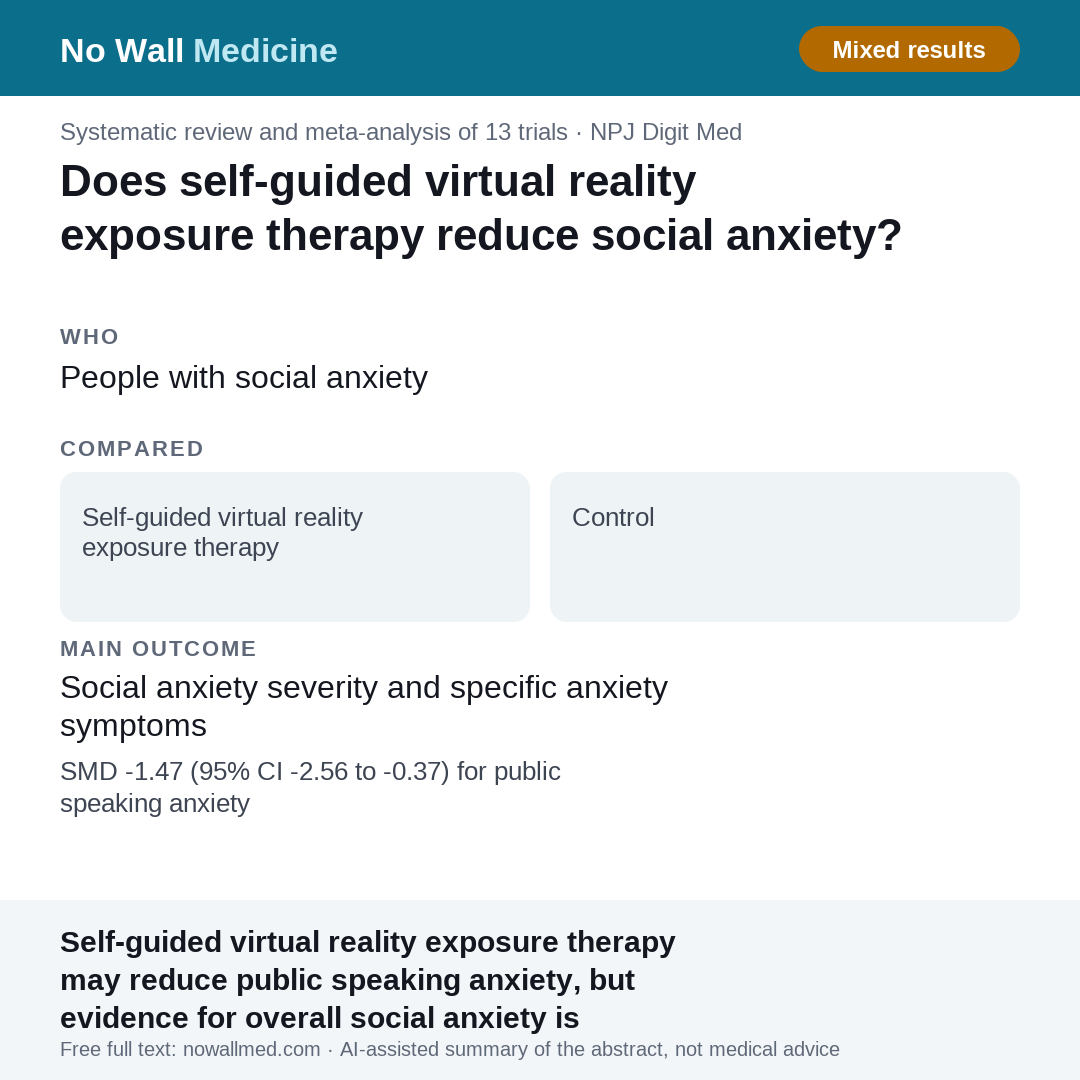
Systematic review and meta analysis of self guided virtual reality exposure therapy for social anxiety
Systematic review and meta-analysis of 13 trialsMixed results
Does self-guided virtual reality exposure therapy reduce social anxiety?
Who
People with social anxiety
Compared
Self-guided virtual reality exposure therapy
Control
Main outcome
Social anxiety severity and specific anxiety symptoms
Result: SMD -1.47 (95% CI -2.56 to -0.37) for public speaking anxiety
Bottom line: Self-guided virtual reality exposure therapy may reduce public speaking anxiety, but evidence for overall social anxiety is preliminary.
Limitation: Most included trials had a high risk of bias, limiting robustness.
NPJ Digit Med · 2026-08-04Download image
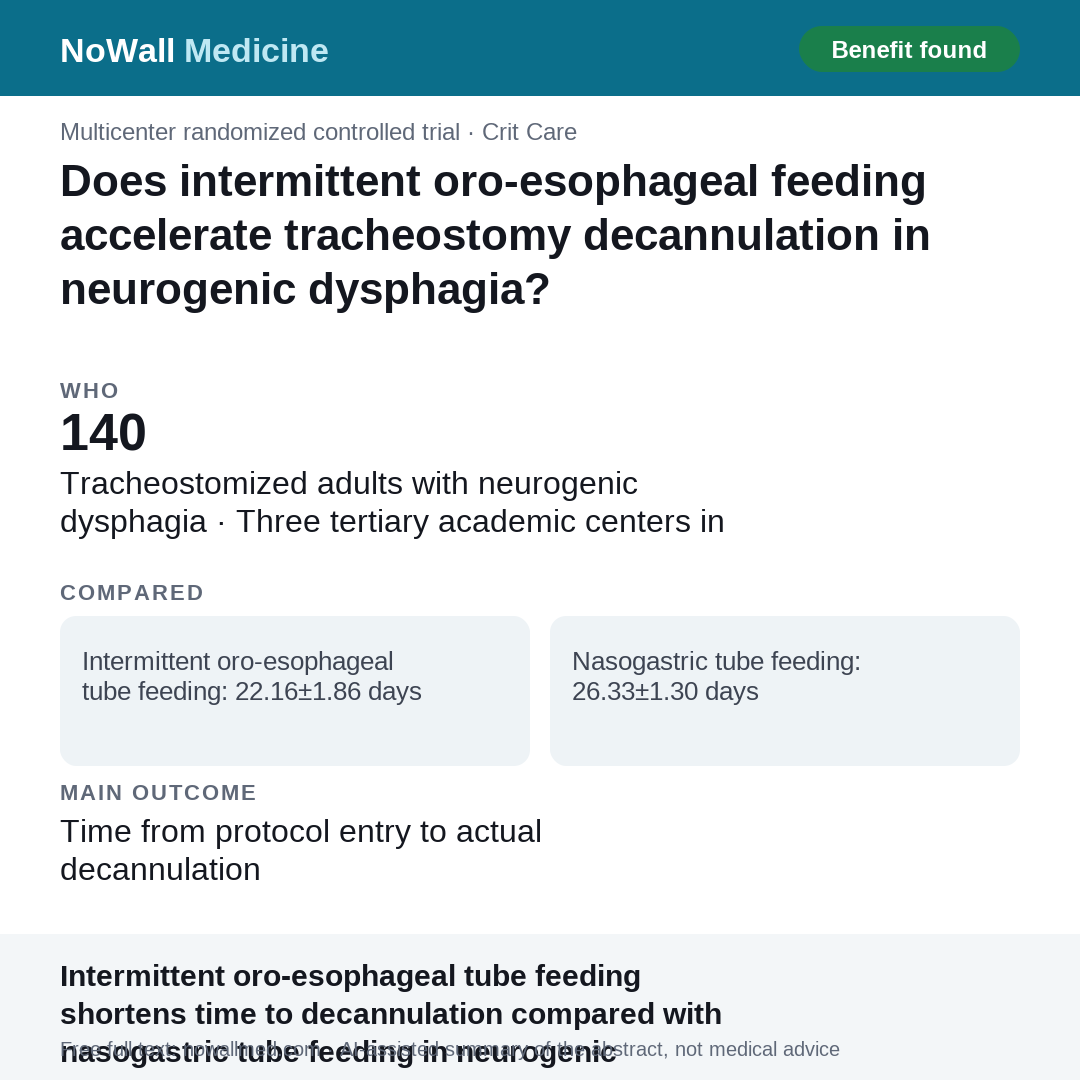
Accelerating tracheostomy decannulation with intermittent oro-esophageal feeding in neurogenic dysphagia: a multicenter randomized controlled trial
Multicenter randomized controlled trialBenefit found
Does intermittent oro-esophageal feeding accelerate tracheostomy decannulation in neurogenic dysphagia?
Who
140
Tracheostomized adults with neurogenic dysphagia · Three tertiary academic centers in China
Compared
Intermittent oro-esophageal feeding: 22.16 ± 1.86 days
Nasogastric tube feeding: 26.33 ± 1.30 days
Main outcome
Time from protocol entry to actual decannulation
Result: between-group difference, 4.17 days; 95% confidence interval [CI], 1.90-6.44
Bottom line: Intermittent oro-esophageal feeding shortens time to decannulation and improves nutritional and swallowing outcomes compared to nasogastric tube feeding.
Crit Care · 2026-08-04Download image
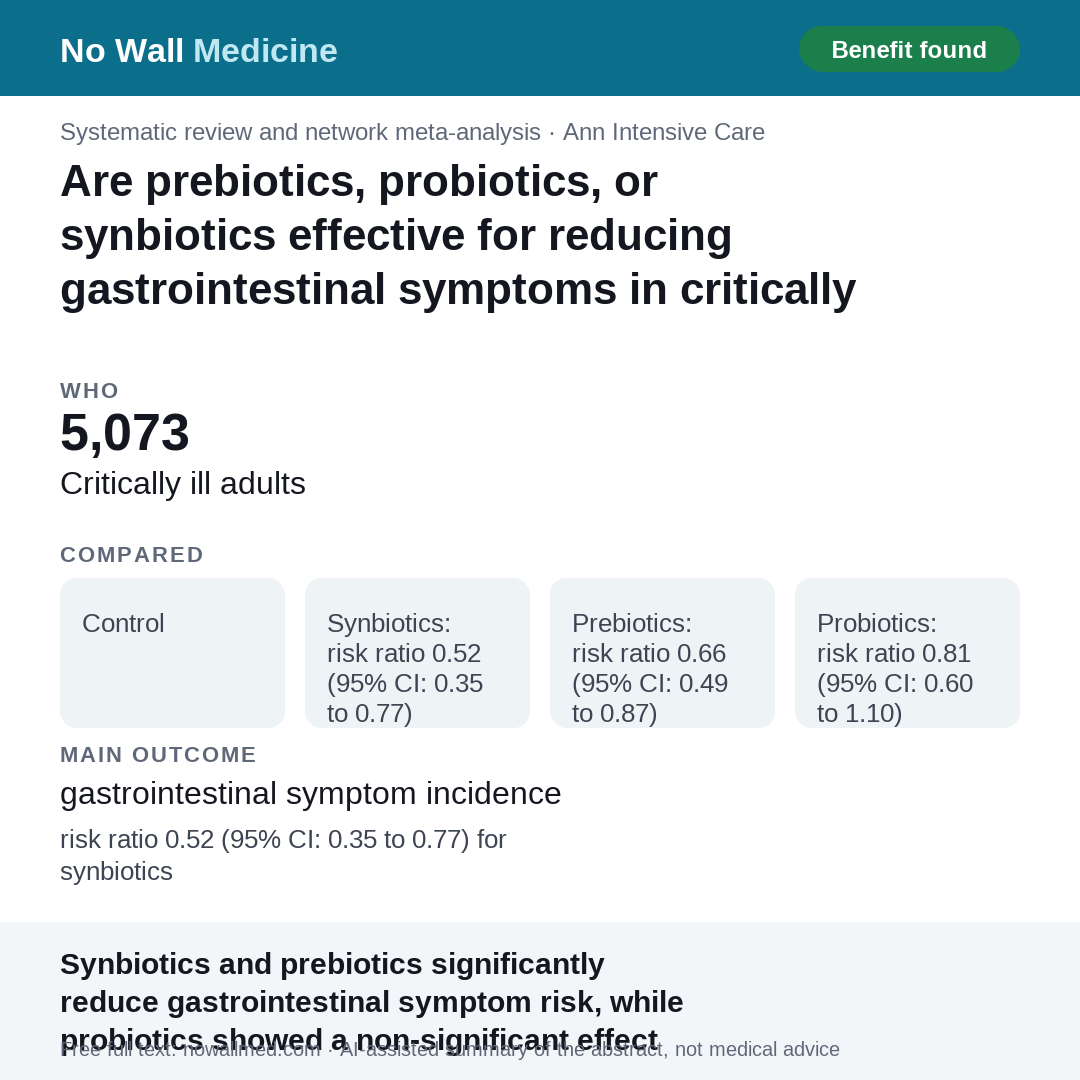
Prebiotics, probiotics, and synbiotics therapy in critically ill patients: a systematic review and network meta-analysis
Systematic review and network meta-analysisBenefit found
Are prebiotics, probiotics, or synbiotics effective for reducing gastrointestinal symptoms in critically ill patients?
Who
5,073
Critically ill adults
Compared
Control
Synbiotics: risk ratio 0.52 (95% CI: 0.35 to 0.77)
Prebiotics: risk ratio 0.66 (95% CI: 0.49 to 0.87)
Probiotics: risk ratio 0.81 (95% CI: 0.60 to 1.10)
Main outcome
gastrointestinal symptom incidence
Result: risk ratio 0.52 (95% CI: 0.35 to 0.77) for synbiotics
Bottom line: Synbiotics and prebiotics significantly reduce gastrointestinal symptom risk, while probiotics showed a non-significant effect in critically ill patients.
Ann Intensive Care · 2026-08-04Download image
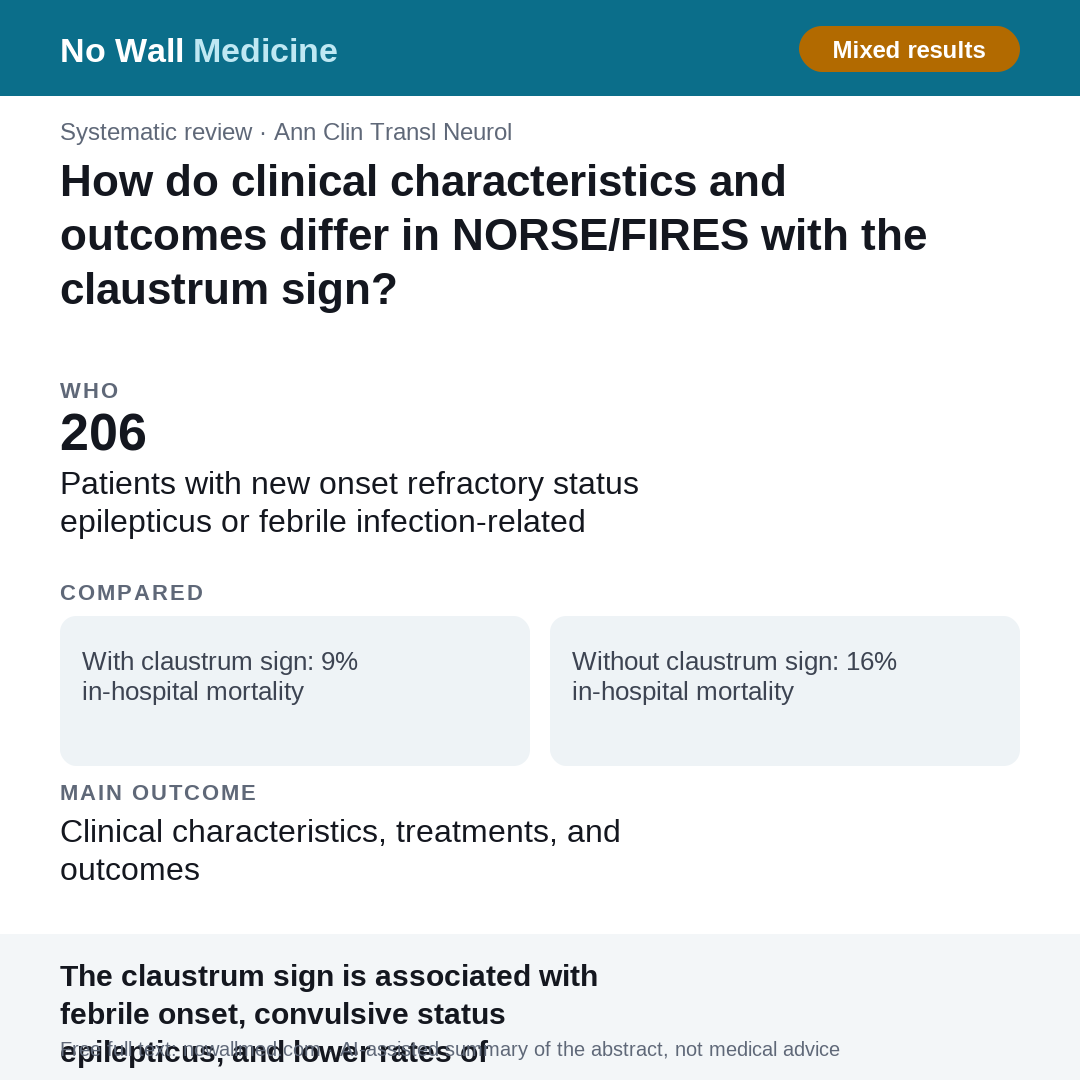
Claustrum Involvement in New Onset Refractory Status Epilepticus: A Systematic Review
Systematic reviewMixed results
How do clinical characteristics and outcomes differ in NORSE/FIRES with the claustrum sign?
Who
206
Patients with new onset refractory status epilepticus or febrile infection-related epilepsy syndrome
Compared
With claustrum sign: 9% in-hospital mortality
Without claustrum sign: 16% in-hospital mortality
Main outcome
Clinical characteristics, treatments, and outcomes
Bottom line: The claustrum sign is associated with febrile onset, convulsive status epilepticus, and lower rates of super-refractory status epilepticus.
Ann Clin Transl Neurol · 2026-08-04Download image
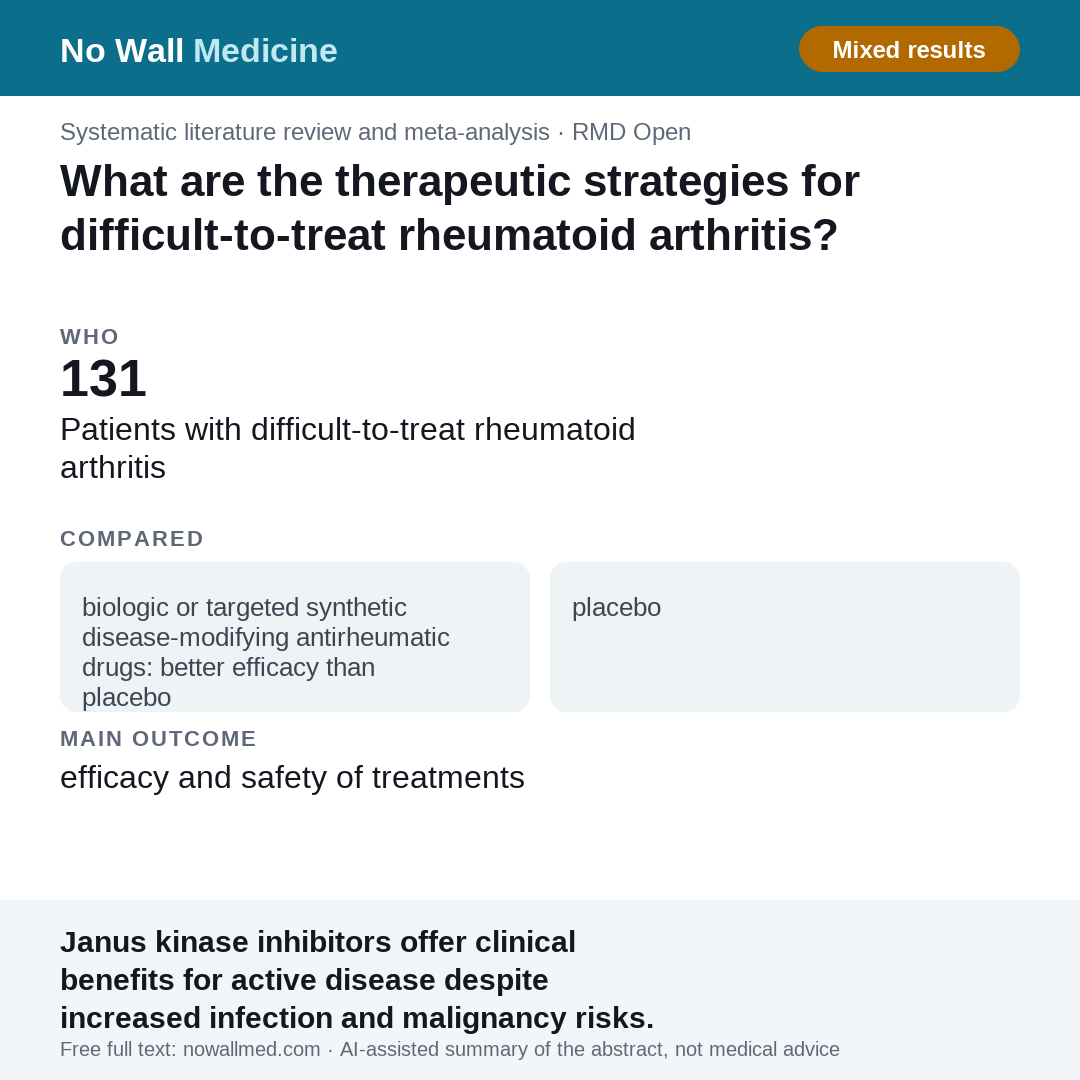
Therapeutic approaches for difficult-to-treat rheumatoid arthritis: a systematic literature review of current evidence
Systematic literature review and meta-analysisMixed results
What are the therapeutic strategies for difficult-to-treat rheumatoid arthritis?
Who
131
Patients with difficult-to-treat rheumatoid arthritis
Compared
biologic or targeted synthetic disease-modifying antirheumatic drugs: better efficacy than placebo
placebo
Main outcome
efficacy and safety of treatments
Bottom line: Janus kinase inhibitors offer clinical benefits for active disease despite increased infection and malignancy risks.
Limitation: Most studies for prior biologic failures had a high risk of bias.
RMD Open · 2026-08-04Download image