Visual abstracts
New randomized trials and meta-analyses from leading journals at a glance: who was studied, what was compared, and what was found. Every paper is free to read in full.
All specialtiesCardiology 131Oncology 98Gastroenterology & Hepatology 53Infectious Disease 100Neurology 50Psychiatry & Mental Health 64Pulmonology 51Critical Care 32Endocrinology & Diabetes 59Pediatrics 54Surgery 36Orthopedics & Sports Medicine 20Neurosurgery 5Cardiothoracic & Vascular Surgery 8Plastic & Reconstructive Surgery 24Nephrology 20Rheumatology 22Hematology 32Dermatology 12Ophthalmology 20Obstetrics & Gynecology 36Public & Global Health 38Radiology & Imaging 10Anesthesiology 18Urology 26ENT (Otolaryngology) 9Emergency Medicine 14Allergy & Immunology 10Geriatrics 35Family Medicine & Primary Care 13Medical Genetics & Genomics 12Pathology & Laboratory Medicine 1Physical Medicine & Rehabilitation 28Palliative Care 14Nutrition 40Digital Health & AI 111General Medicine 20
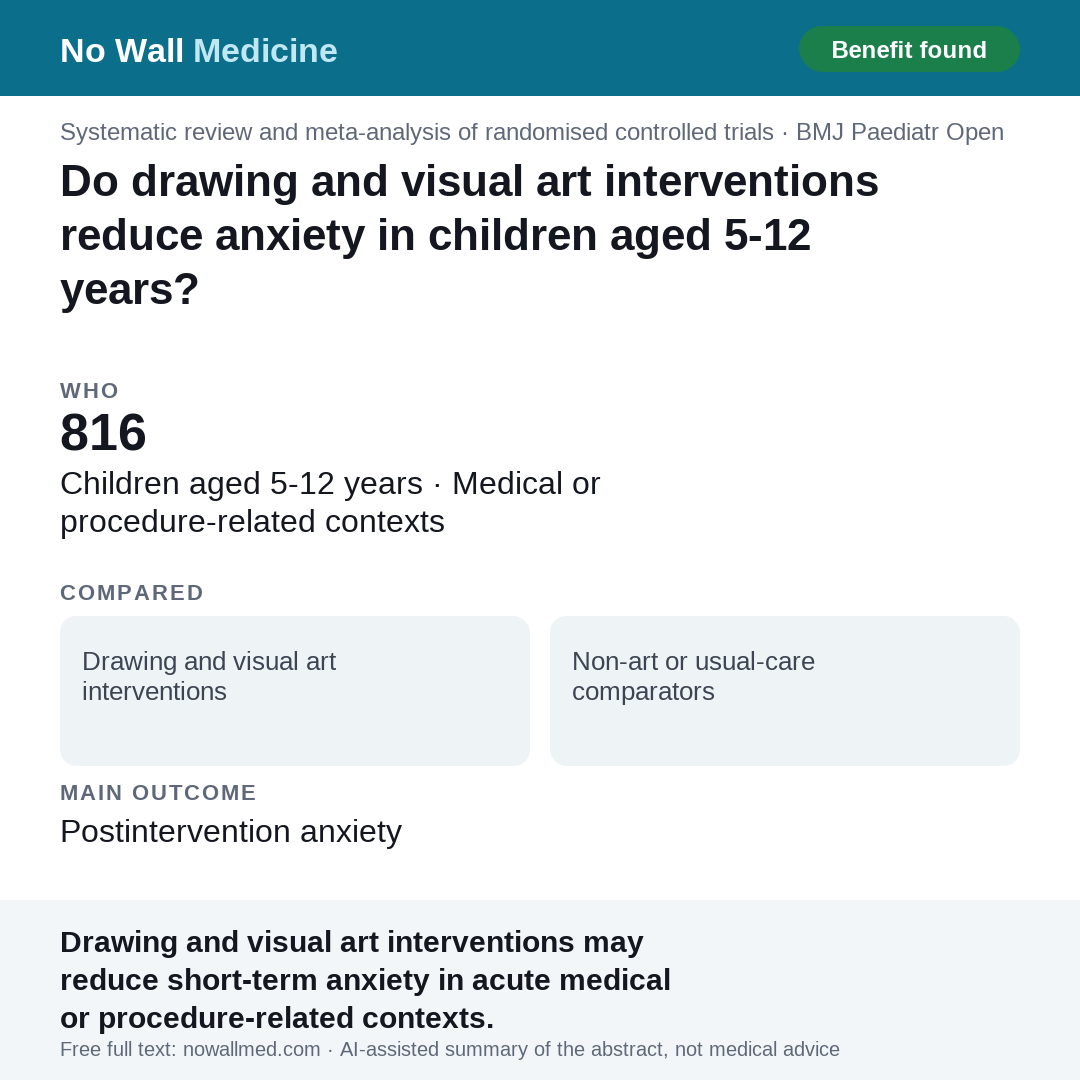
Drawing and visual art interventions for anxiety in children aged 5-12: a systematic review and meta-analysis of randomised controlled trials
Systematic review and meta-analysis of randomised controlled trialsBenefit found
Do drawing and visual art interventions reduce anxiety in children aged 5-12 years?
Who
816
Children aged 5-12 years · Medical or procedure-related contexts
Compared
Drawing and visual art interventions
Non-art or usual-care comparators
Main outcome
Postintervention anxiety
Result: standardised mean difference -2.70 (95% CI -3.73 to -1.68)
Bottom line: Drawing and visual art interventions may reduce short-term anxiety in acute medical or procedure-related contexts.
Limitation: Substantial heterogeneity and lack of generalisable effect across paediatric settings.
BMJ Paediatr Open · 2026-09-16Download image
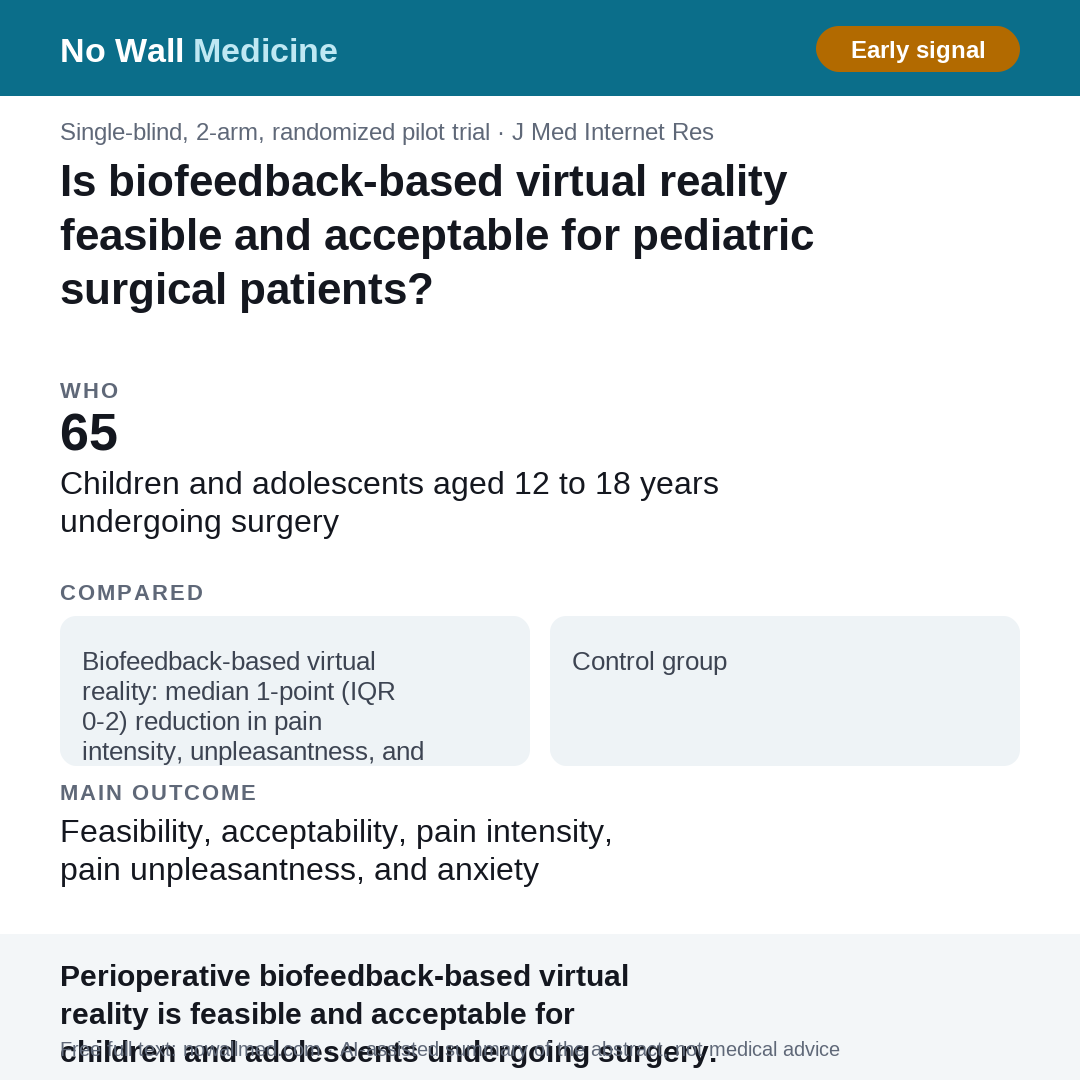
Feasibility and Acceptability of Perioperative Application of Biofeedback-Based Virtual Reality vs Control for Pain and Anxiety in Children and Adolescents Undergoing Surgery: Pilot Randomized Controlled Trial
Single-blind, 2-arm, randomized pilot trialBenefit found
Is biofeedback-based virtual reality feasible and acceptable for pediatric surgical patients?
Who
65
Children and adolescents aged 12 to 18 years undergoing surgery
Compared
Biofeedback-based virtual reality: median 1-point (IQR 0-2) reduction in pain intensity, unpleasantness, and anxiety
Control group
Main outcome
Feasibility, acceptability, pain intensity, pain unpleasantness, and anxiety
Bottom line: Perioperative biofeedback-based virtual reality is feasible and acceptable for children and adolescents undergoing surgery.
J Med Internet Res · 2026-09-16Download image
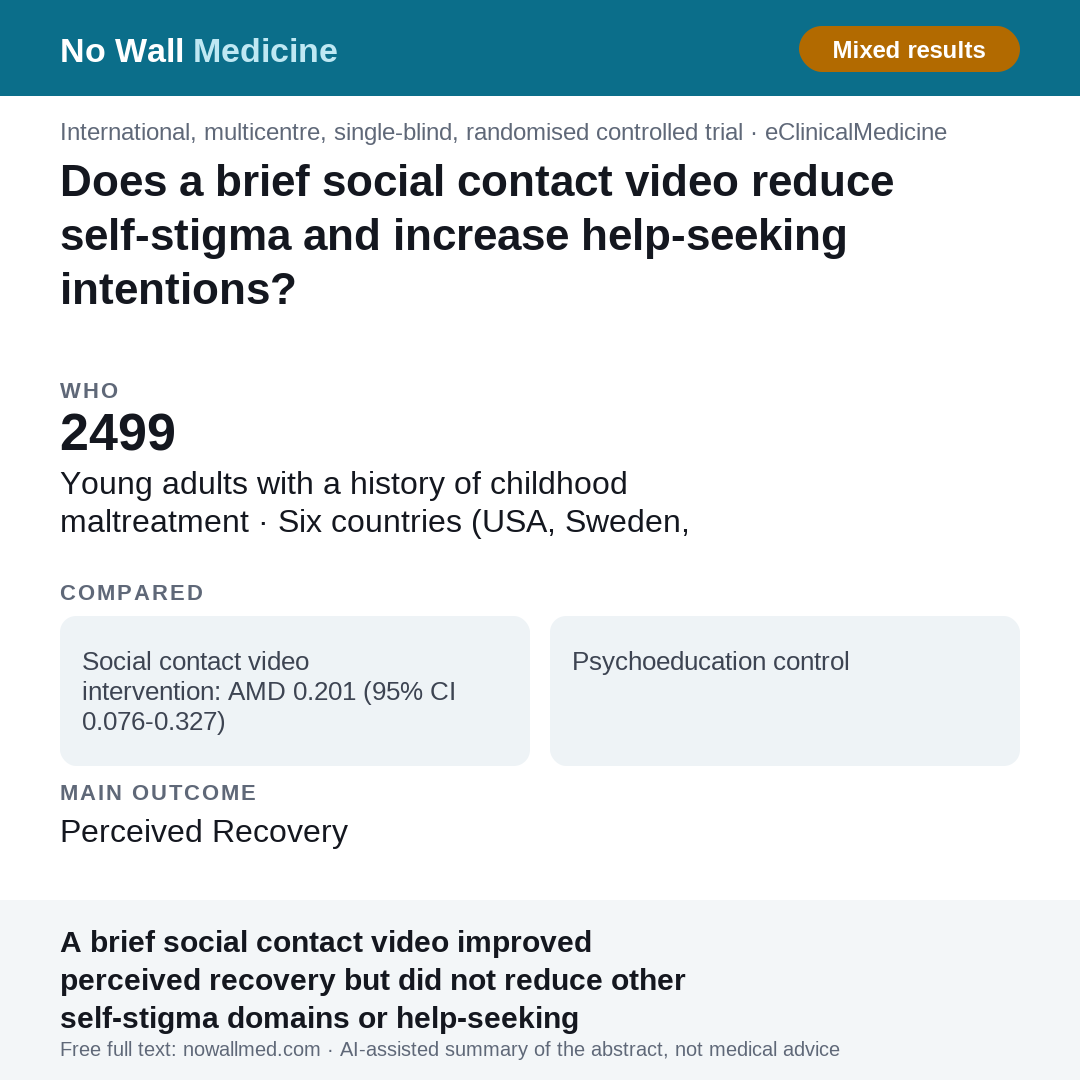
A brief video intervention targeting self-stigma among childhood maltreatment survivors: an international, multicentre, single-blind, randomised controlled trial
International, multicentre, single-blind, randomised controlled trialMixed results
Does a brief social contact video reduce self-stigma and increase help-seeking intentions?
Who
2499
Young adults with a history of childhood maltreatment · Six countries (USA, Sweden, Switzerland, Japan, South Africa, Türkiye)
Compared
Social contact video intervention: AMD 0.201 (95% CI 0.076-0.327)
Psychoeducation control
Main outcome
Perceived Recovery
Result: adjusted mean difference 0.201 (95% CI 0.076-0.327)
Bottom line: A brief social contact video improved perceived recovery but did not reduce other self-stigma domains or help-seeking intentions.
Funded by: Azrieli Foundation, NYSPI, JSPS, KAKENHI, and South African Medical Research Council
eClinicalMedicine · 2026-09-15Download image
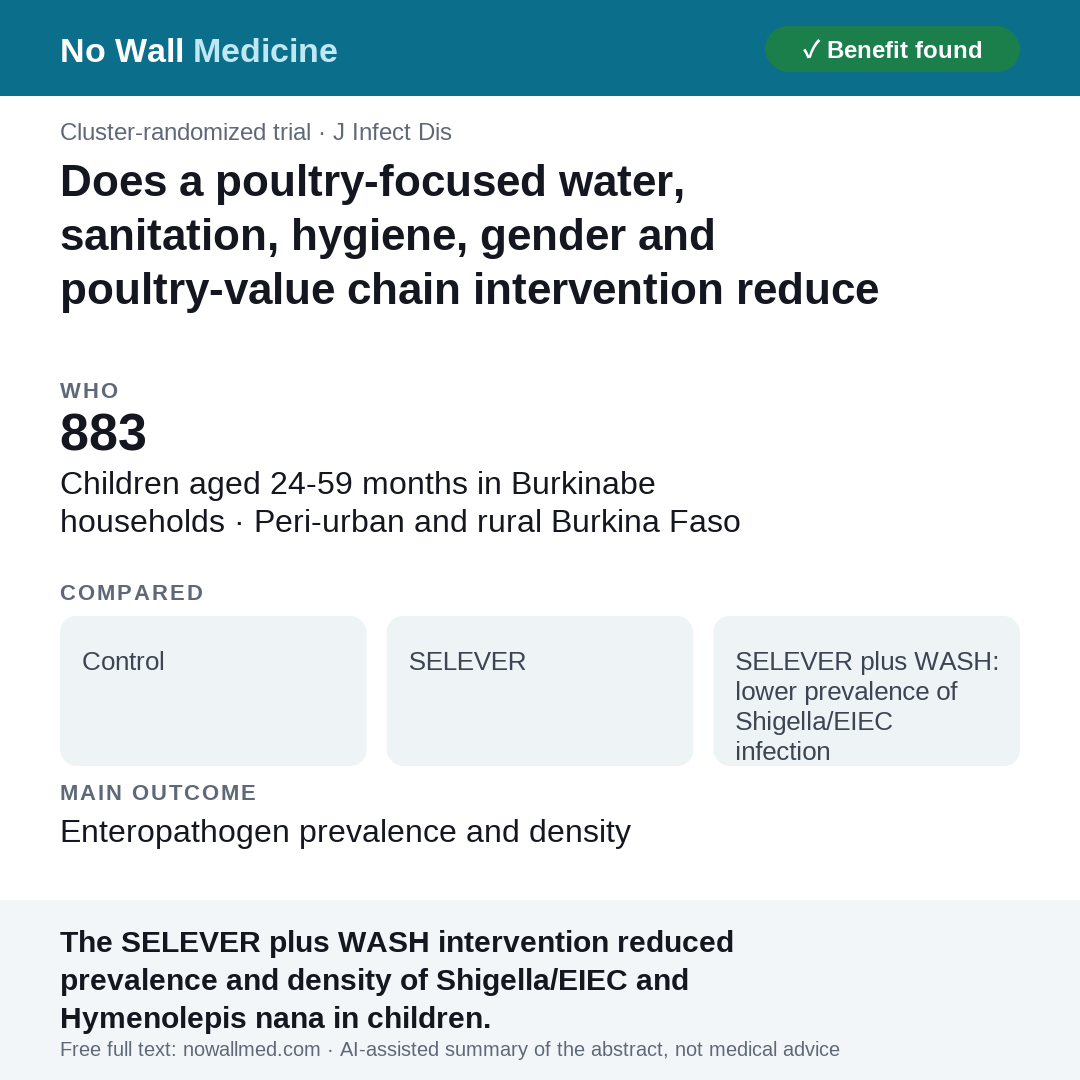
The effects of an integrated nutrition-sensitive WASH, gender and poultry-value chain intervention on enteropathogen carriage in Burkinabe children: A secondary outcome analysis of the SELEVER cluster-randomized trial
Cluster-randomized trialBenefit found
Does a poultry-focused water, sanitation, hygiene, gender and poultry-value chain intervention reduce enteropathogen carriage?
Who
883
Children aged 24-59 months in Burkinabe households · Peri-urban and rural Burkina Faso
Compared
Control
SELEVER
SELEVER plus WASH: lower prevalence of Shigella/EIEC infection
Main outcome
Enteropathogen prevalence and density
Result: prevalence difference: -9.0%, 95% CI: -15.4%, -2.6%
Bottom line: The SELEVER plus WASH intervention reduced prevalence and density of Shigella/EIEC and Hymenolepis nana in children.
J Infect Dis · 2026-09-15Download image
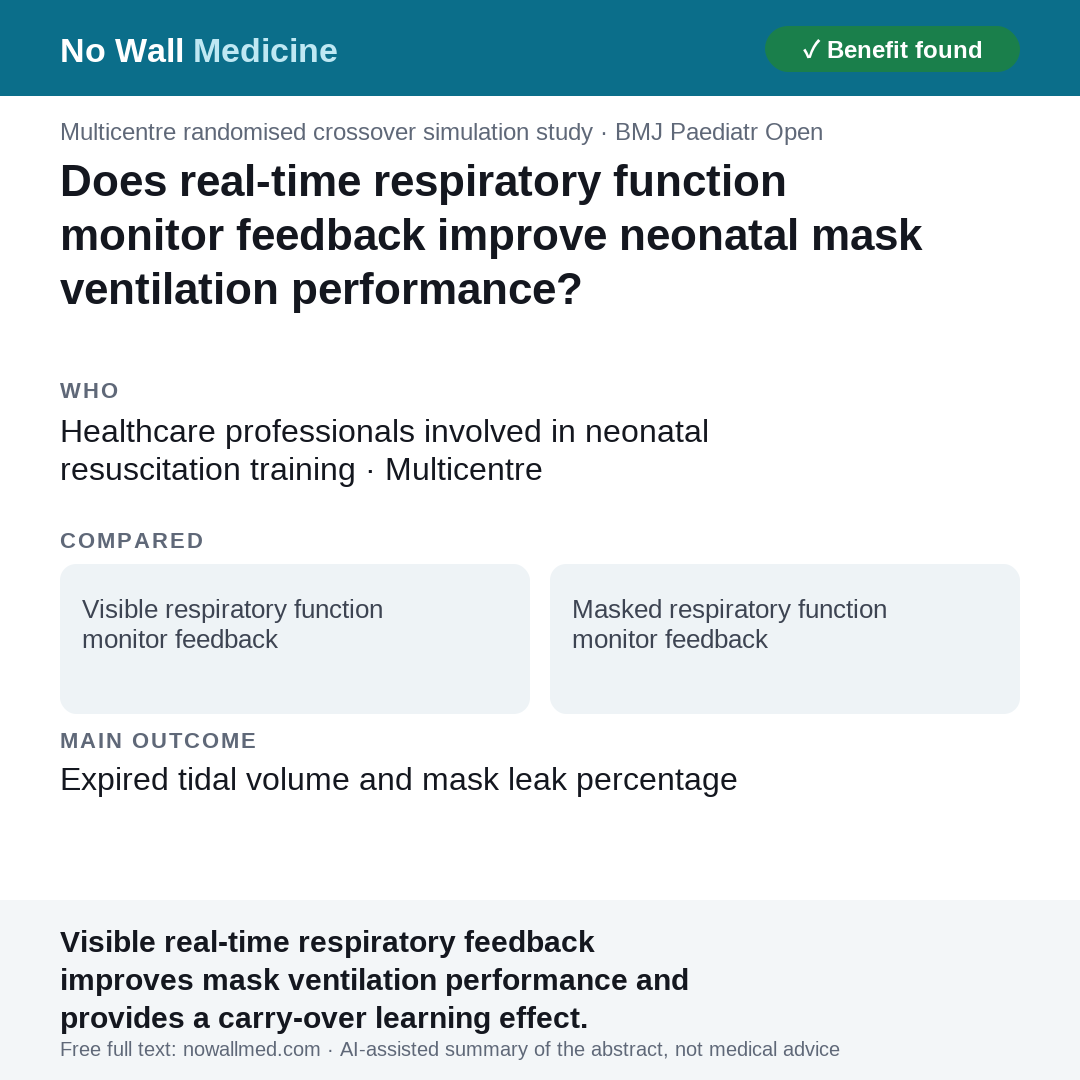
Impact of real-time respiratory function monitoring on neonatal mask ventilation training: a multicentre simulation-based crossover study
Multicentre randomised crossover simulation studyBenefit found
Does real-time respiratory function monitor feedback improve neonatal mask ventilation performance?
Who
Healthcare professionals involved in neonatal resuscitation training · Multicentre
Compared
Visible respiratory function monitor feedback
Masked respiratory function monitor feedback
Main outcome
Expired tidal volume and mask leak percentage
Bottom line: Visible real-time respiratory feedback improves mask ventilation performance and provides a carry-over learning effect.
BMJ Paediatr Open · 2026-09-15Download image
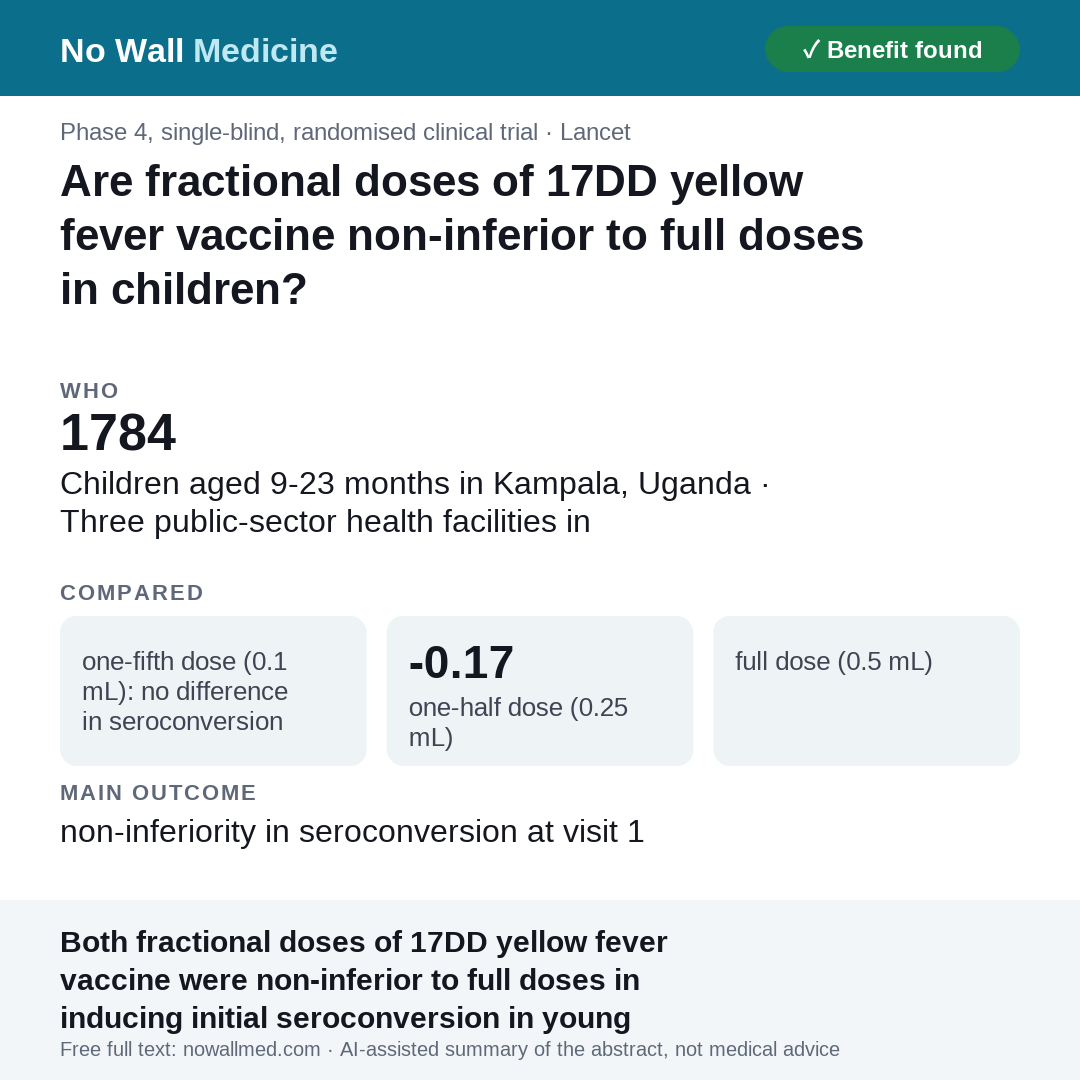
Immunogenicity of fractional one-fifth and one-half doses of 17DD yellow fever vaccine compared with full dose in children aged 9-23 months in Uganda: a phase 4, single-blind, randomised clinical trial
Phase 4, single-blind, randomised clinical trialBenefit found
Are fractional doses of 17DD yellow fever vaccine non-inferior to full doses in children?
Who
1784
Children aged 9-23 months in Kampala, Uganda · Three public-sector health facilities in Uganda
Compared
one-fifth dose (0.1 mL): no difference in seroconversion
-0.17one-half dose (0.25 mL) (95% CI -0.52 to 0.17)
full dose (0.5 mL)
Main outcome
non-inferiority in seroconversion at visit 1
Result: -0.17 (95% CI -0.52 to 0.17)
Bottom line: Both fractional doses of 17DD yellow fever vaccine were non-inferior to full doses in inducing initial seroconversion in young children.
Funded by: US Centers for Disease Control and Prevention
Lancet · 2026-09-11Download image
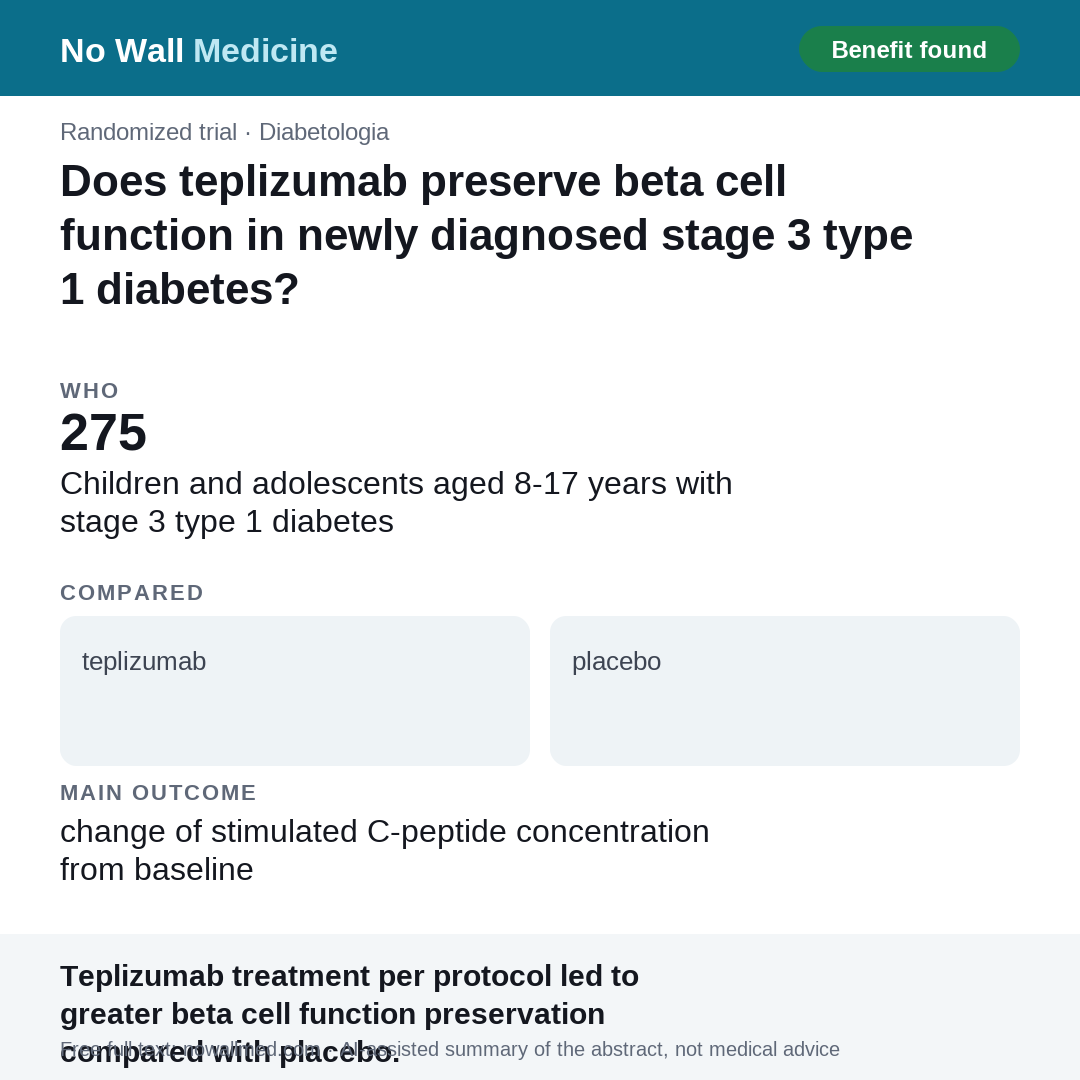
Preserving beta cell function in children and adolescents with newly diagnosed stage 3 type 1 diabetes: per-protocol population analysis from the PROTECT randomised trial
Randomized trialBenefit found
Does teplizumab preserve beta cell function in newly diagnosed stage 3 type 1 diabetes?
Who
275
Children and adolescents aged 8-17 years with stage 3 type 1 diabetes
Compared
teplizumab
placebo
Main outcome
change of stimulated C-peptide concentration from baseline
Result: least squares mean difference 0.14 nmol/l (95% CI 0.10, 0.18)
Bottom line: Teplizumab treatment per protocol led to greater beta cell function preservation compared with placebo.
Funded by: Provention Bio, a Sanofi company
Diabetologia · 2026-09-10Download image
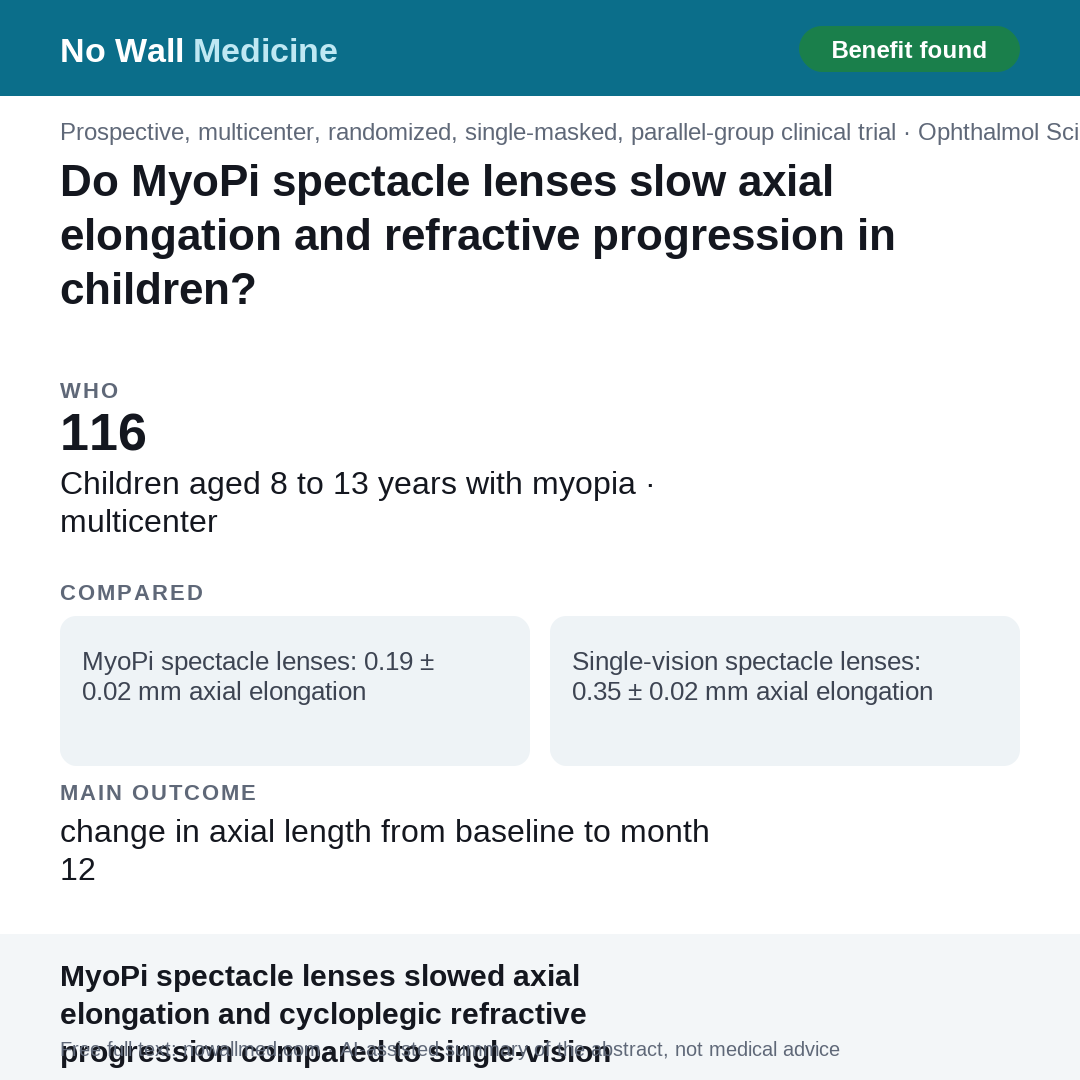
Twelve-Month Efficacy and Visual Tolerability of MyoPi Spectacle Lenses in Childhood Myopia: A Randomized Clinical Trial
Randomized, single-masked trialBenefit found
Do MyoPi lenses slow myopia progression
Who
116
Children with myopia aged 8 to 13 years · Multicenter
Compared
MyoPi: 0.19 ± 0.02 mm
Single-vision: 0.35 ± 0.02 mm
Main outcome
Axial elongation at 12 months
Result: between-group difference, -0.16 mm; 95% CI, -0.20 to -0.12
Bottom line: MyoPi lenses slow myopia progression
Ophthalmol Sci · 2026-09-10Download image
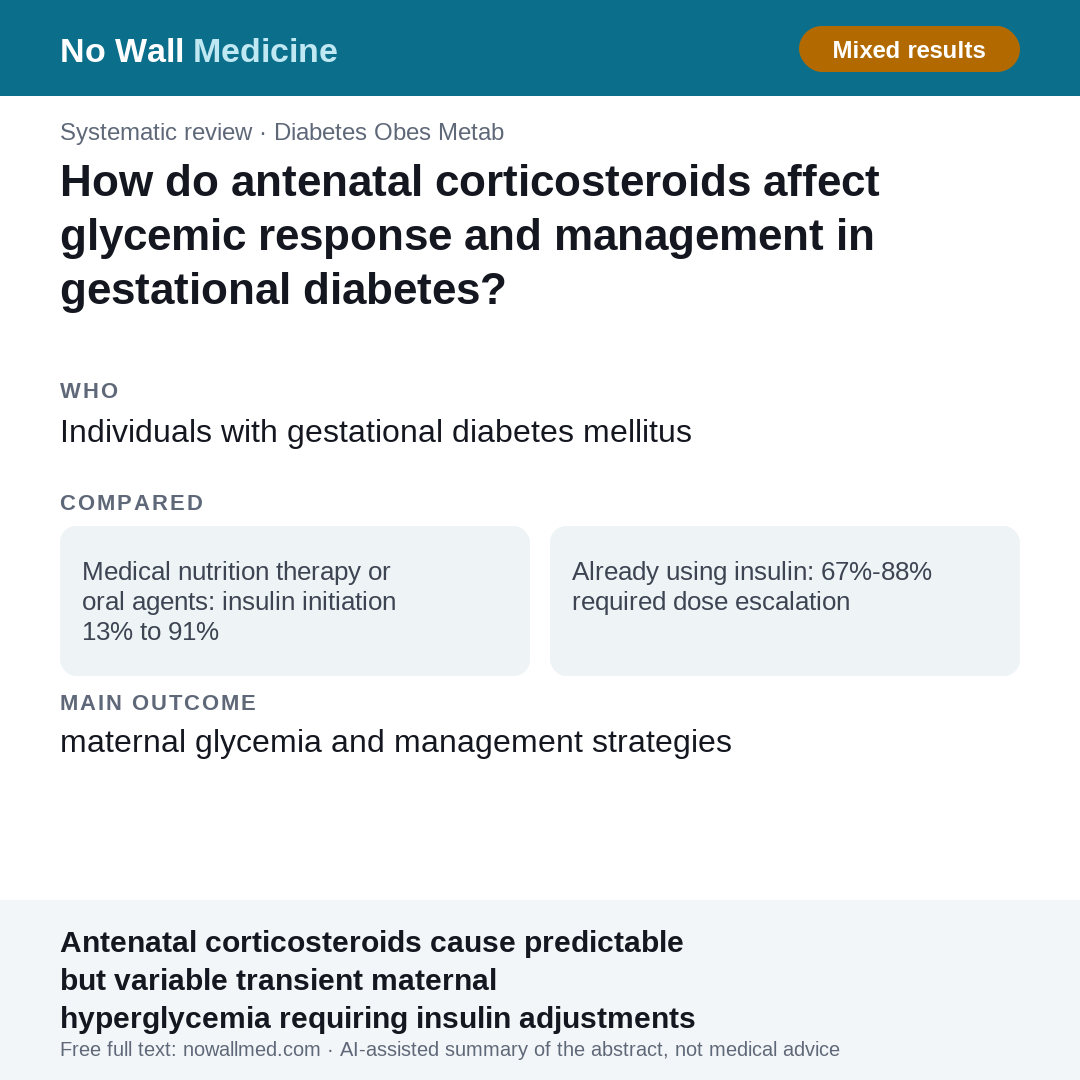
Antenatal Corticosteroids in Gestational Diabetes: A Systematic Review of Glycemic Response and Management Strategies
Systematic reviewMixed results
How do antenatal corticosteroids affect glycemic response and management in gestational diabetes?
Who
Individuals with gestational diabetes mellitus
Compared
Medical nutrition therapy or oral agents: insulin initiation 13% to 91%
Already using insulin: 67%-88% required dose escalation
Main outcome
maternal glycemia and management strategies
Bottom line: Antenatal corticosteroids cause predictable but variable transient maternal hyperglycemia requiring insulin adjustments in gestational diabetes.
Limitation: evidence remains heterogeneous and largely observational
Diabetes Obes Metab · 2026-09-09Download image
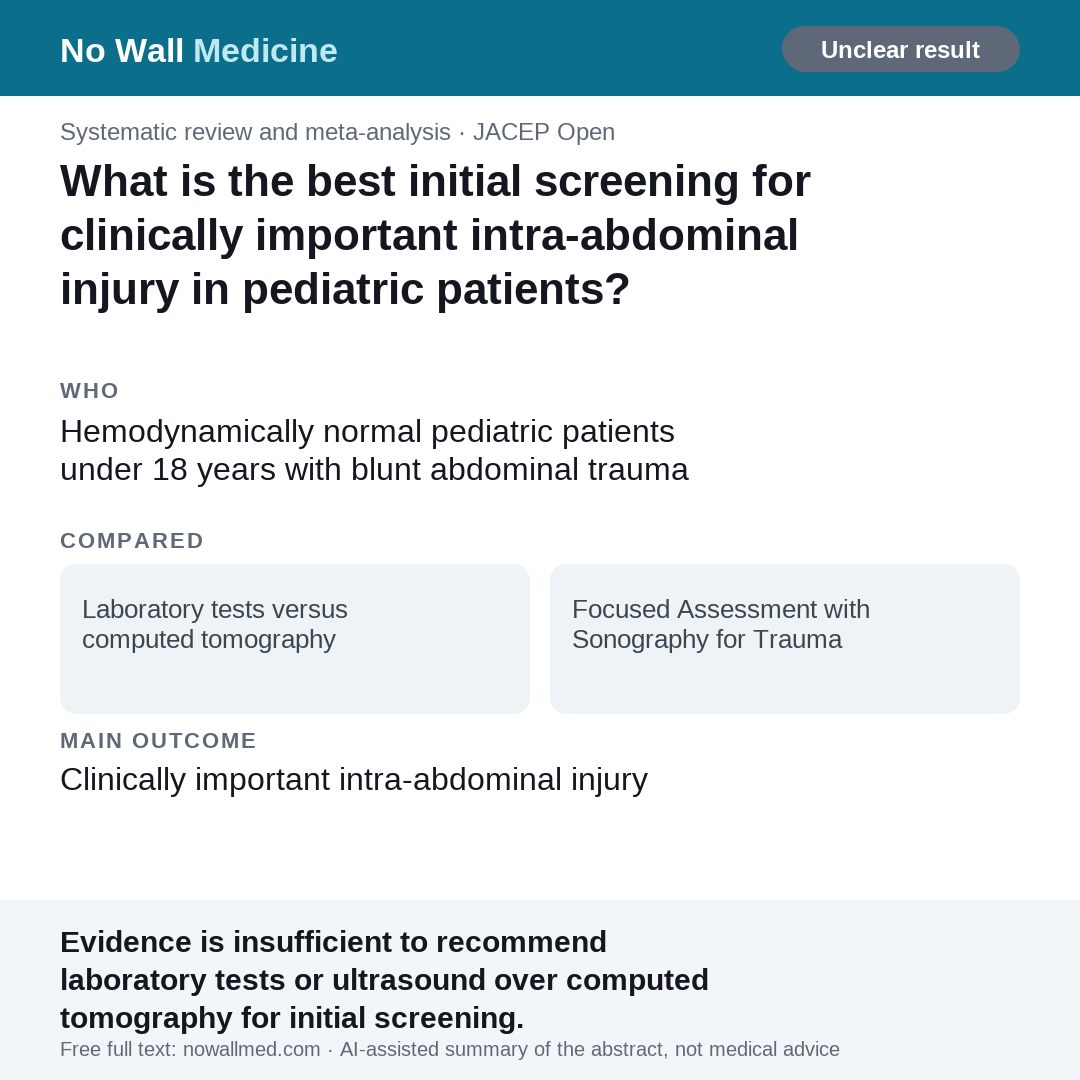
Evaluation of Pediatric Patients with Blunt Abdominal Trauma: A Systematic Review, Meta-Analysis, and Practice Management Recommendations
Systematic review and meta-analysisUnclear result
What is the best initial screening for clinically important intra-abdominal injury in pediatric patients?
Who
Hemodynamically normal pediatric patients under 18 years with blunt abdominal trauma
Compared
Laboratory tests versus computed tomography
Focused Assessment with Sonography for Trauma
Main outcome
Clinically important intra-abdominal injury
Bottom line: Evidence is insufficient to recommend laboratory tests or ultrasound over computed tomography for initial screening.
Limitation: Most studies were retrospective and the quality of available evidence was very low.
JACEP Open · 2026-09-09Download image
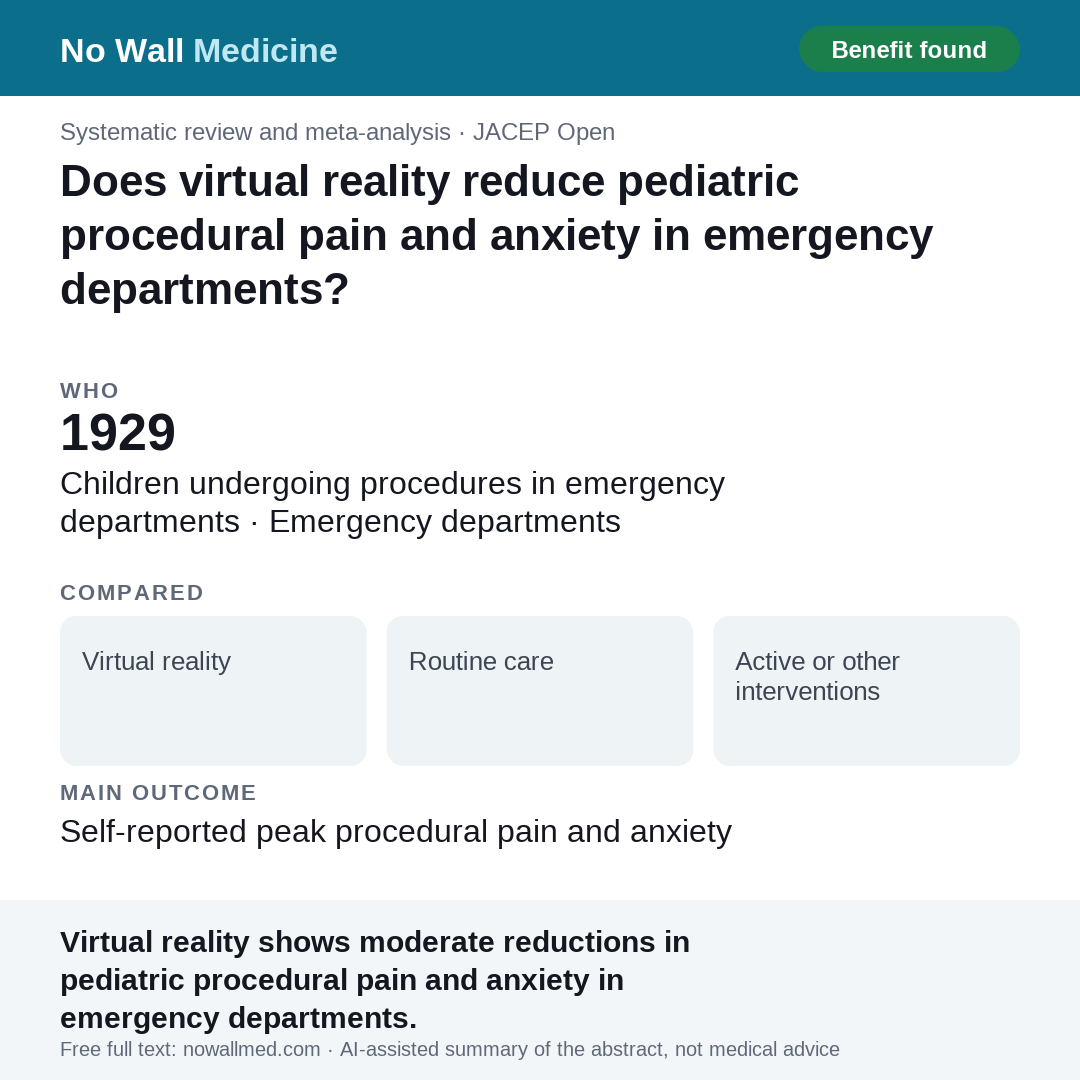
Virtual Reality Interventions for Pediatric Pain and Anxiety Management During Emergency Department Procedures: A Systematic Review and Meta-Analysis
Systematic review and meta-analysisBenefit found
Does virtual reality reduce pediatric procedural pain and anxiety in emergency departments?
Who
1929
Children undergoing procedures in emergency departments · Emergency departments
Compared
Virtual reality
Routine care
Active or other interventions
Main outcome
Self-reported peak procedural pain and anxiety
Result: mean difference -0.76 (95% CI -1.25 to -0.27) for pain vs routine care
Bottom line: Virtual reality shows moderate reductions in pediatric procedural pain and anxiety in emergency departments.
Limitation: Study heterogeneity and methodological limitations reduce confidence in these findings.
JACEP Open · 2026-09-09Download image
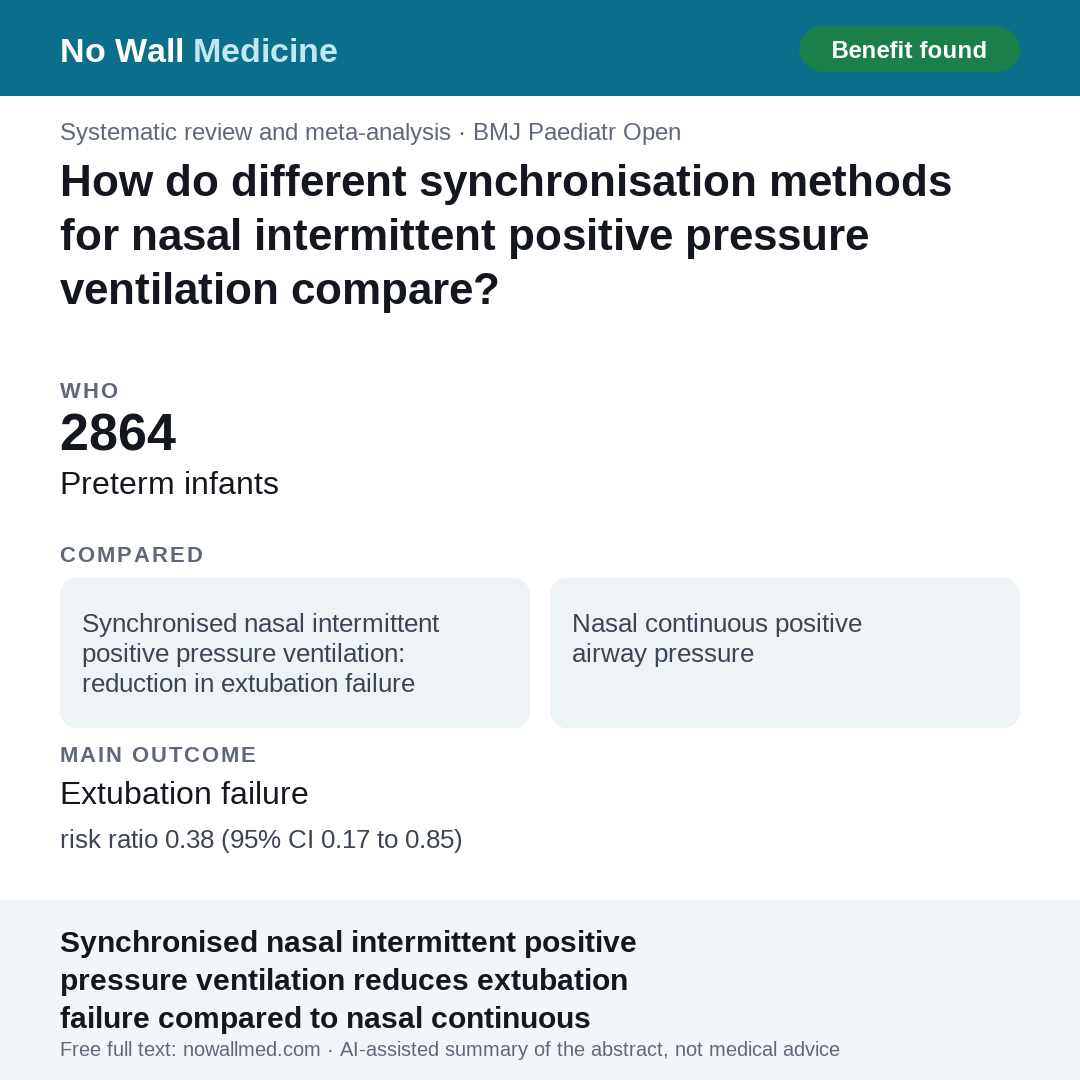
Triggering modalities to synchronise non-invasive respiratory support in preterm infants: a systematic review and meta-analysis
Systematic review and meta-analysisBenefit found
How do different synchronisation methods for nasal intermittent positive pressure ventilation compare?
Who
2864
Preterm infants
Compared
Synchronised nasal intermittent positive pressure ventilation: reduction in extubation failure
Nasal continuous positive airway pressure
Main outcome
Extubation failure
Result: risk ratio 0.38 (95% CI 0.17 to 0.85)
Bottom line: Synchronised nasal intermittent positive pressure ventilation reduces extubation failure compared to nasal continuous positive airway pressure.
Limitation: Evidence on positive effects on long-term major clinical outcomes remains limited.
BMJ Paediatr Open · 2026-09-08Download image
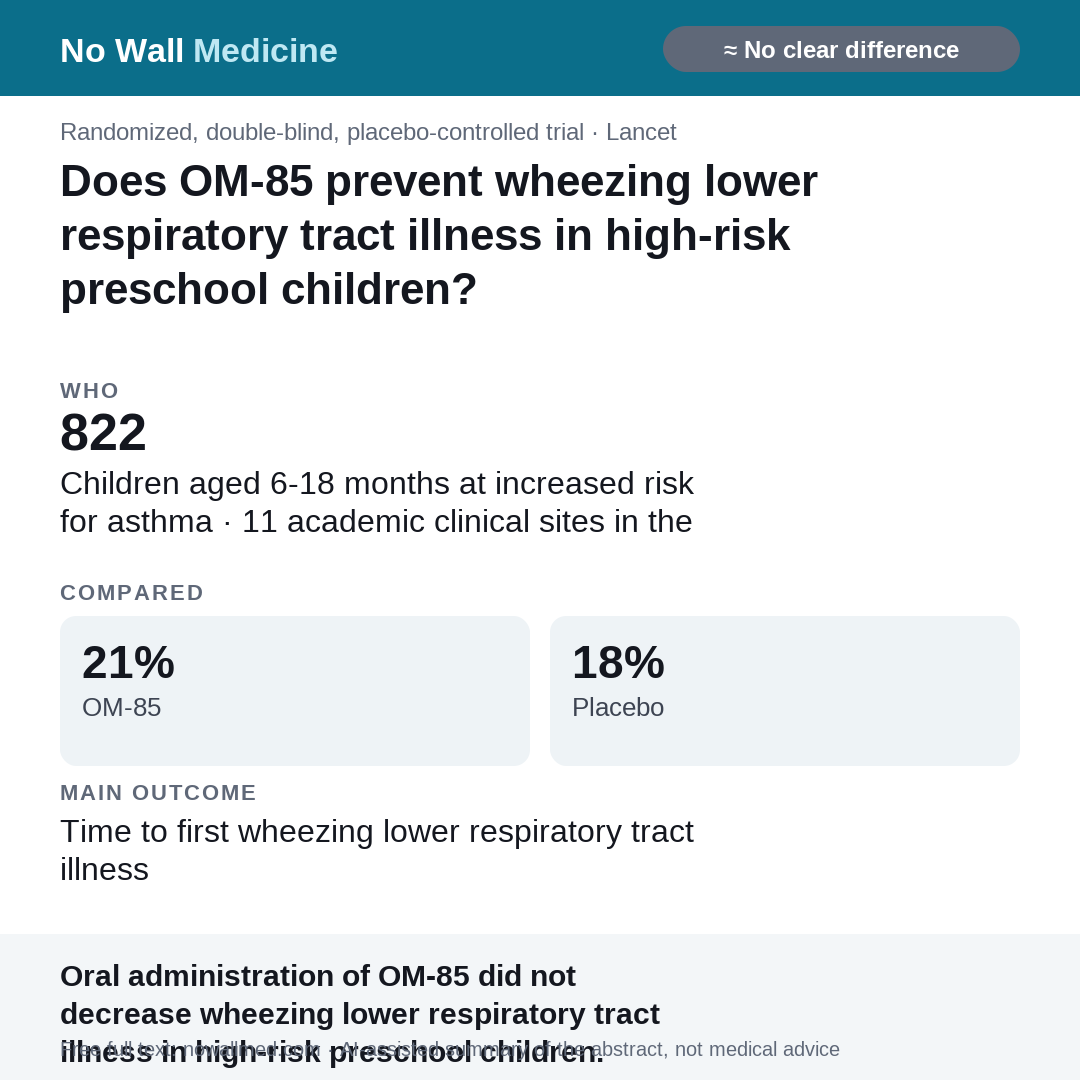
Use of the bacterial lysate OM-85 for the primary prevention of wheezing lower respiratory illness in preschool children: a randomised, placebo-controlled trial
Randomized, double-blind, placebo-controlled trialNo clear difference
Does OM-85 prevent wheezing lower respiratory tract illness in high-risk preschool children?
Who
822
Children aged 6-18 months at increased risk for asthma · 11 academic clinical sites in the USA
Compared
21%OM-85 (71/342)
18%Placebo (61/339)
Main outcome
Time to first wheezing lower respiratory tract illness
Result: hazard ratio 1.16 (95% CI 0.82-1.64)
Bottom line: Oral administration of OM-85 did not decrease wheezing lower respiratory tract illness in high-risk preschool children.
Funded by: National Heart, Lung, and Blood Institute and OM Pharma
Lancet · 2026-09-07Download image
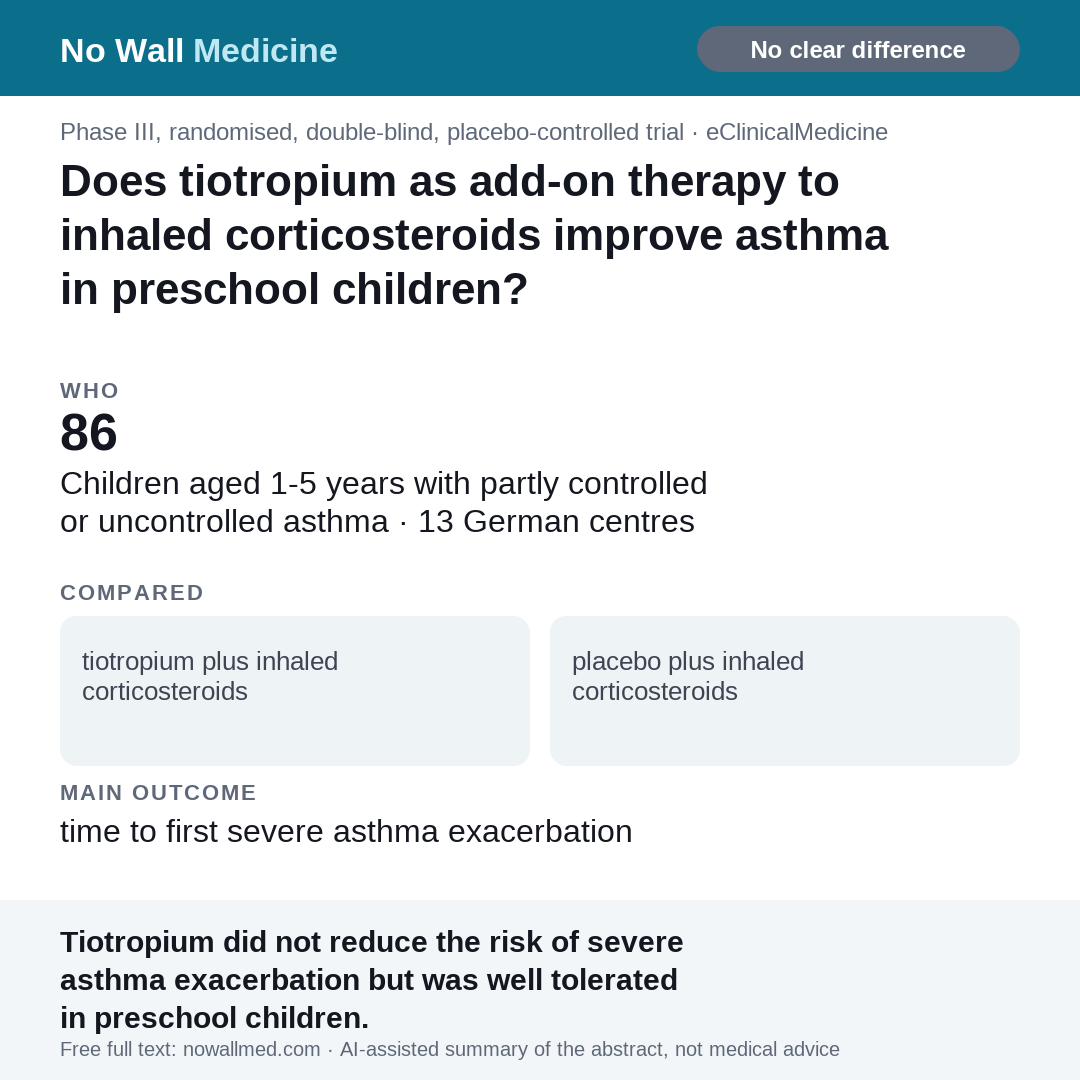
Efficacy and safety of tiotropium in partial and uncontrolled preschool asthma (TIPP): a phase III, multicentre, randomised, double-blind, placebo-controlled trial
Phase III, randomised, double-blind, placebo-controlled trialNo clear difference
Does tiotropium as add-on therapy to inhaled corticosteroids improve asthma in preschool children?
Who
86
Children aged 1-5 years with partly controlled or uncontrolled asthma · 13 German centres
Compared
tiotropium plus inhaled corticosteroids
placebo plus inhaled corticosteroids
Main outcome
time to first severe asthma exacerbation
Result: hazard ratio 0.99 (95% CI 0.51 to 1.92)
Bottom line: Tiotropium did not reduce the risk of severe asthma exacerbation but was well tolerated in preschool children.
Limitation: Only 100 of the planned 204 children were enrolled
Funded by: German Federal Ministry of Education and Research
eClinicalMedicine · 2026-09-04Download image
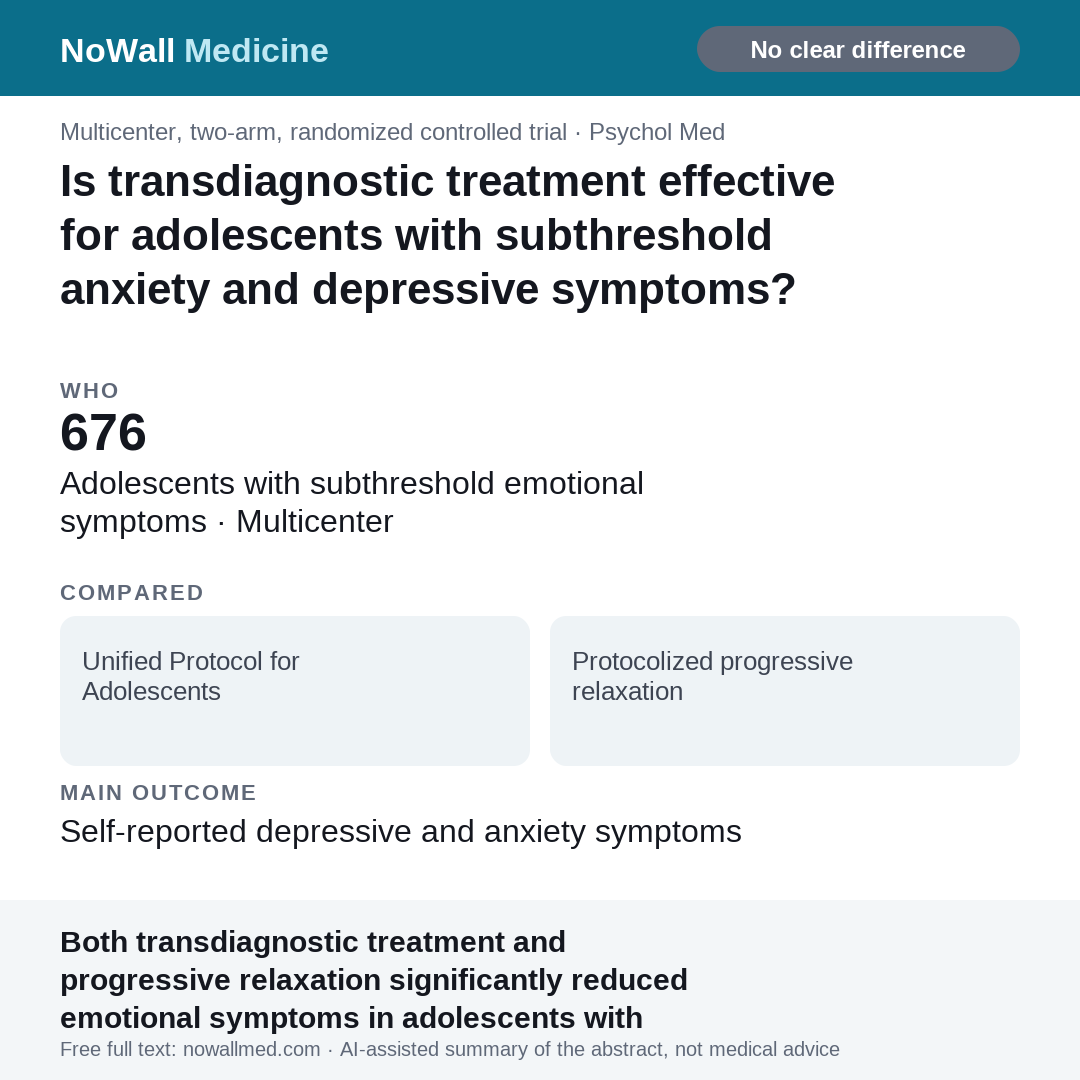
A multicenter randomized controlled effectiveness trial of transdiagnostic treatment for adolescents with subthreshold anxiety and depressive symptoms
Multicenter, two-arm, randomized controlled trialNo clear difference
Is transdiagnostic treatment effective for adolescents with subthreshold anxiety and depressive symptoms?
Who
676
Adolescents with subthreshold emotional symptoms · Multicenter
Compared
Unified Protocol for Adolescents
Protocolized progressive relaxation
Main outcome
Self-reported depressive and anxiety symptoms
Bottom line: Both transdiagnostic treatment and progressive relaxation significantly reduced emotional symptoms in adolescents with subthreshold presentations.
Psychol Med · 2026-09-04Download image
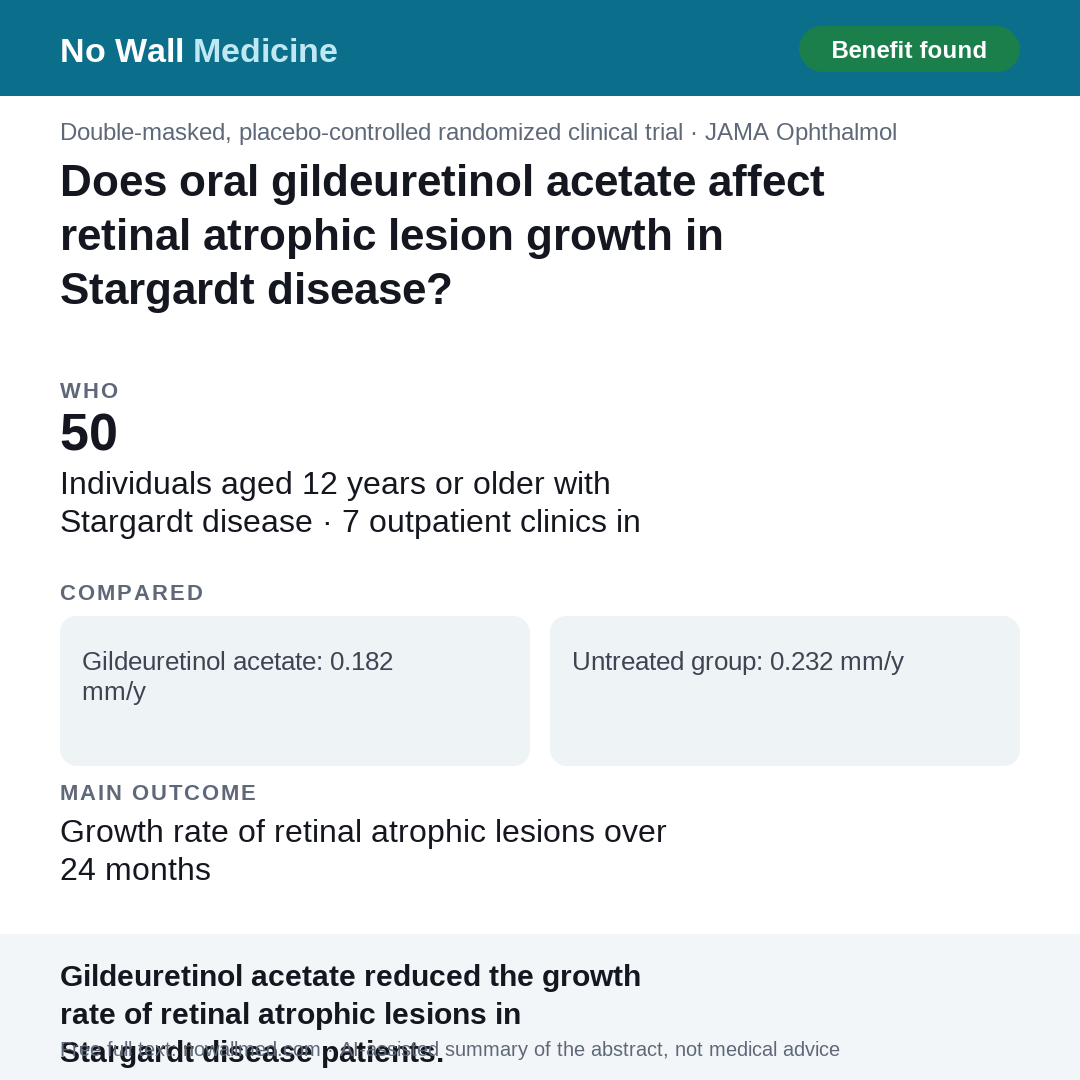
Safety and Effects of Gildeuretinol Acetate on Retinal Atrophic Lesions in Stargardt Disease: The TEASE-1 Randomized Clinical Trial
2-year, double-masked, placebo-controlled randomized clinical trialBenefit found
Does oral gildeuretinol acetate affect retinal atrophic lesion growth in Stargardt disease?
Who
50
Individuals aged 12 years or older with Stargardt disease · 7 outpatient clinics in the US
Compared
gildeuretinol acetate: 0.182 mm/y
untreated group: 0.232 mm/y
Main outcome
growth rate of retinal atrophic lesions
Result: mean difference -0.050 mm/y (95% CI, -0.072 to -0.027)
Bottom line: Gildeuretinol acetate reduced the growth rate of retinal atrophic lesions in Stargardt disease compared to untreated groups.
JAMA Ophthalmol · 2026-09-03Download image
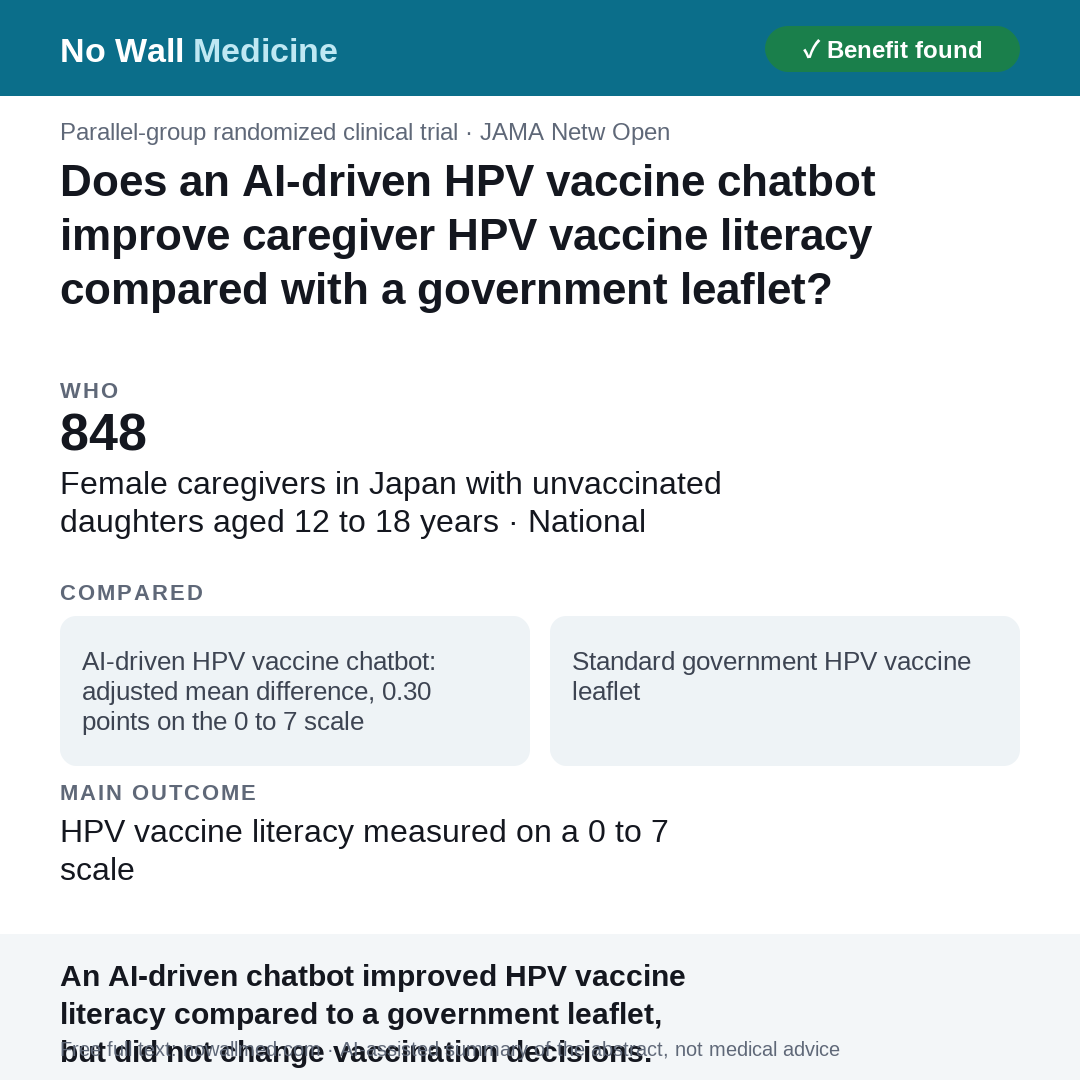
AI Chatbot Use for Human Papillomavirus Vaccine Literacy in Japan: A Randomized Clinical Trial
Randomized clinical trialBenefit found
Does AI chatbot improve HPV vaccine literacy?
Who
848
Female caregivers in Japan with unvaccinated daughters · Japan
Compared
AI chatbot: 0.30 points higher
Government leaflet
Main outcome
HPV vaccine literacy
Result: adjusted mean difference, 0.30 points (95% CI, 0.18-0.43 points)
Bottom line: AI chatbot improves HPV vaccine literacy
Limitation: no measurable short-term effect on vaccination decision
JAMA Netw Open · 2026-09-01Download image
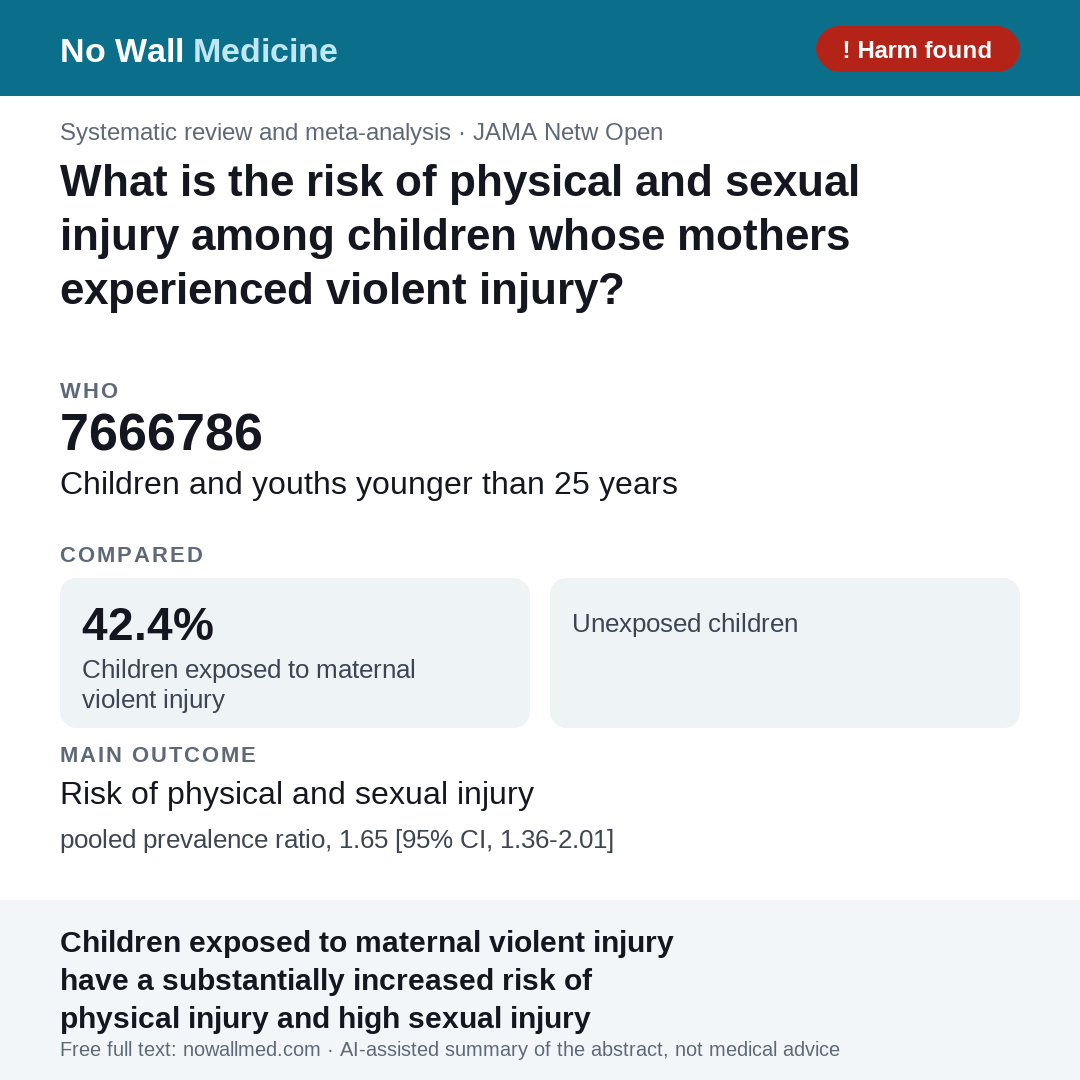
Risk of Injury Among Children and Youths Whose Mothers Experienced Violent Injury: A Systematic Review and Meta-Analysis
Systematic review and meta-analysisHarm found
What is the risk of physical and sexual injury among children whose mothers experienced violent injury?
Who
7666786
Children and youths younger than 25 years
Compared
42.4%Children exposed to maternal violent injury (95% CI, 30.6%-54.6%)
Unexposed children
Main outcome
Risk of physical and sexual injury
Result: pooled prevalence ratio, 1.65 [95% CI, 1.36-2.01]
Bottom line: Children exposed to maternal violent injury have a substantially increased risk of physical injury and high sexual injury prevalence.
Limitation: Substantial heterogeneity and insufficient comparative data for sexual injury outcomes.
JAMA Netw Open · 2026-09-01Download image
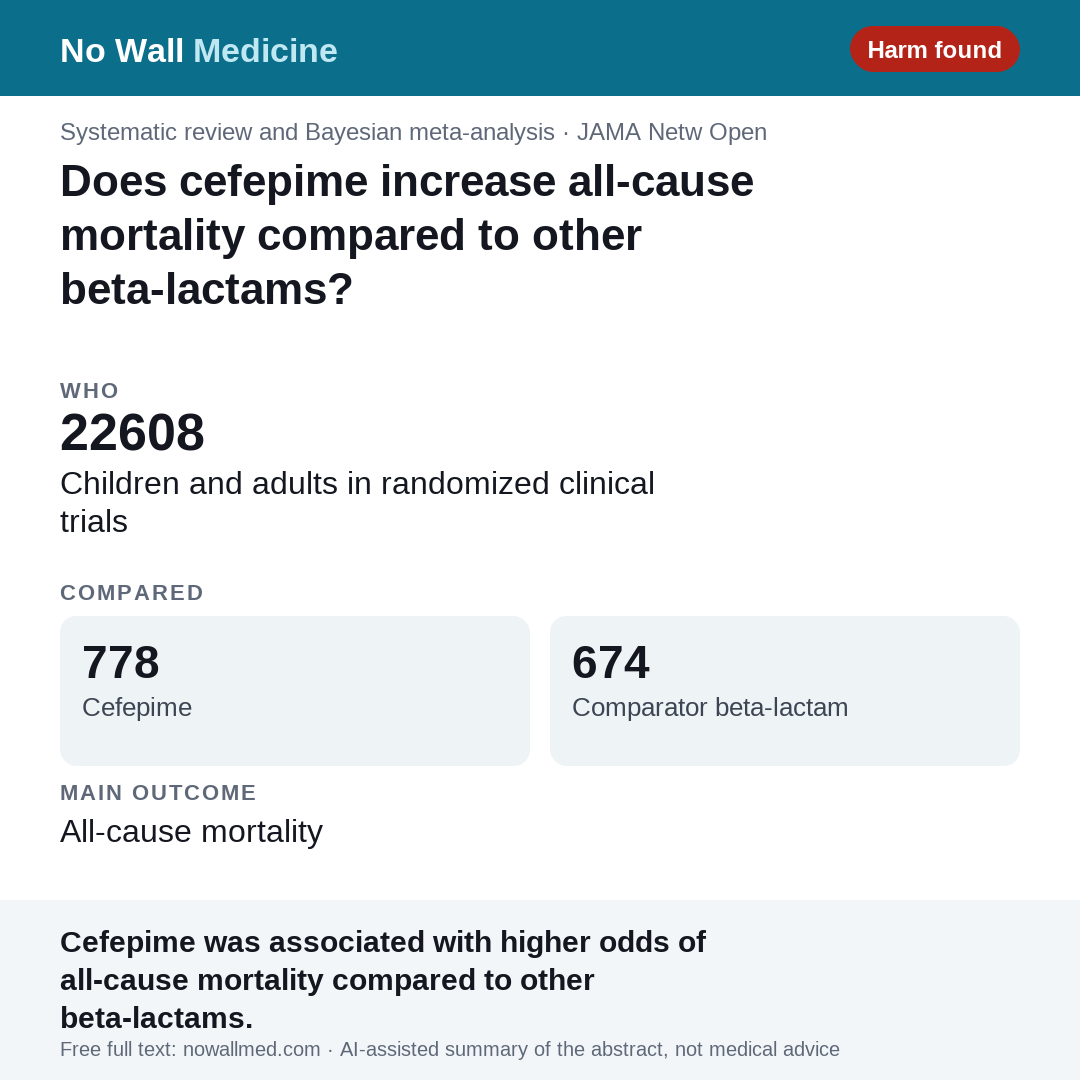
Cefepime and Mortality: A Systematic Review and Bayesian Meta-Analysis
Systematic review and Bayesian meta-analysisHarm found
Does cefepime increase all-cause mortality compared to other beta-lactams?
Who
22608
Children and adults in randomized clinical trials
Compared
778Cefepime (6.6%)
674Comparator beta-lactam (6.2%)
Main outcome
All-cause mortality
Result: odds ratio 1.10 (95% credible interval 0.98-1.24)
Bottom line: Cefepime was associated with higher odds of all-cause mortality compared to other beta-lactams.
JAMA Netw Open · 2026-09-01Download image
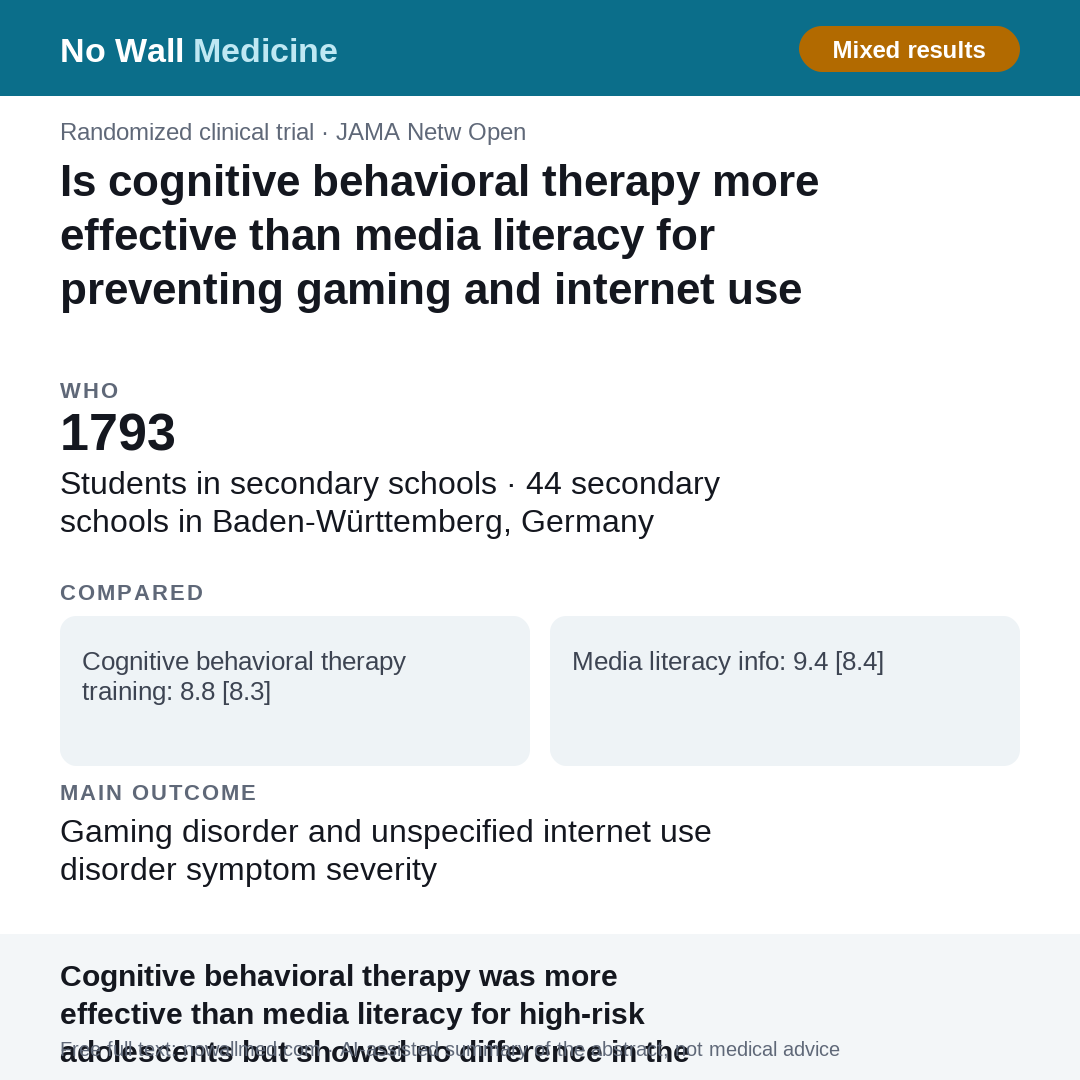
Cognitive Behavioral Therapy vs Media Literacy for Prevention of Gaming Disorder and Unspecified Internet Use Disorder: A Randomized Clinical Trial
Randomized clinical trialMixed results
Is cognitive behavioral therapy more effective than media literacy for preventing gaming and internet use disorders?
Who
1793
Students in secondary schools · 44 secondary schools in Baden-Württemberg, Germany
Compared
Cognitive behavioral therapy training: 8.8 [8.3]
Media literacy info: 9.4 [8.4]
Main outcome
Gaming disorder and unspecified internet use disorder symptom severity
Result: between-group Cohen d -0.07 (95% CI, -0.16 to 0.01)
Bottom line: Cognitive behavioral therapy was more effective than media literacy for high-risk adolescents but showed no difference in the total sample.
JAMA Netw Open · 2026-09-01Download image