Visual abstracts
New randomized trials and meta-analyses from leading journals at a glance: who was studied, what was compared, and what was found. Every paper is free to read in full.
All specialtiesCardiology 4763Oncology 4043Gastroenterology & Hepatology 1903Infectious Disease 3756Neurology 1872Psychiatry & Mental Health 2216Pulmonology 2044Critical Care 1319Endocrinology & Diabetes 2544Pediatrics 2889Surgery 2480Orthopedics & Sports Medicine 917Neurosurgery 525Cardiothoracic & Vascular Surgery 656Plastic & Reconstructive Surgery 574Nephrology 1107Rheumatology 810Hematology 1090Dermatology 611Ophthalmology 532Obstetrics & Gynecology 1645Public & Global Health 1037Radiology & Imaging 619Anesthesiology 958Urology 745ENT (Otolaryngology) 494Emergency Medicine 481Allergy & Immunology 309Geriatrics 972Family Medicine & Primary Care 534Medical Genetics & Genomics 659Pathology & Laboratory Medicine 156Physical Medicine & Rehabilitation 734Palliative Care 421Nutrition 1560Digital Health & AI 2137General Medicine 318
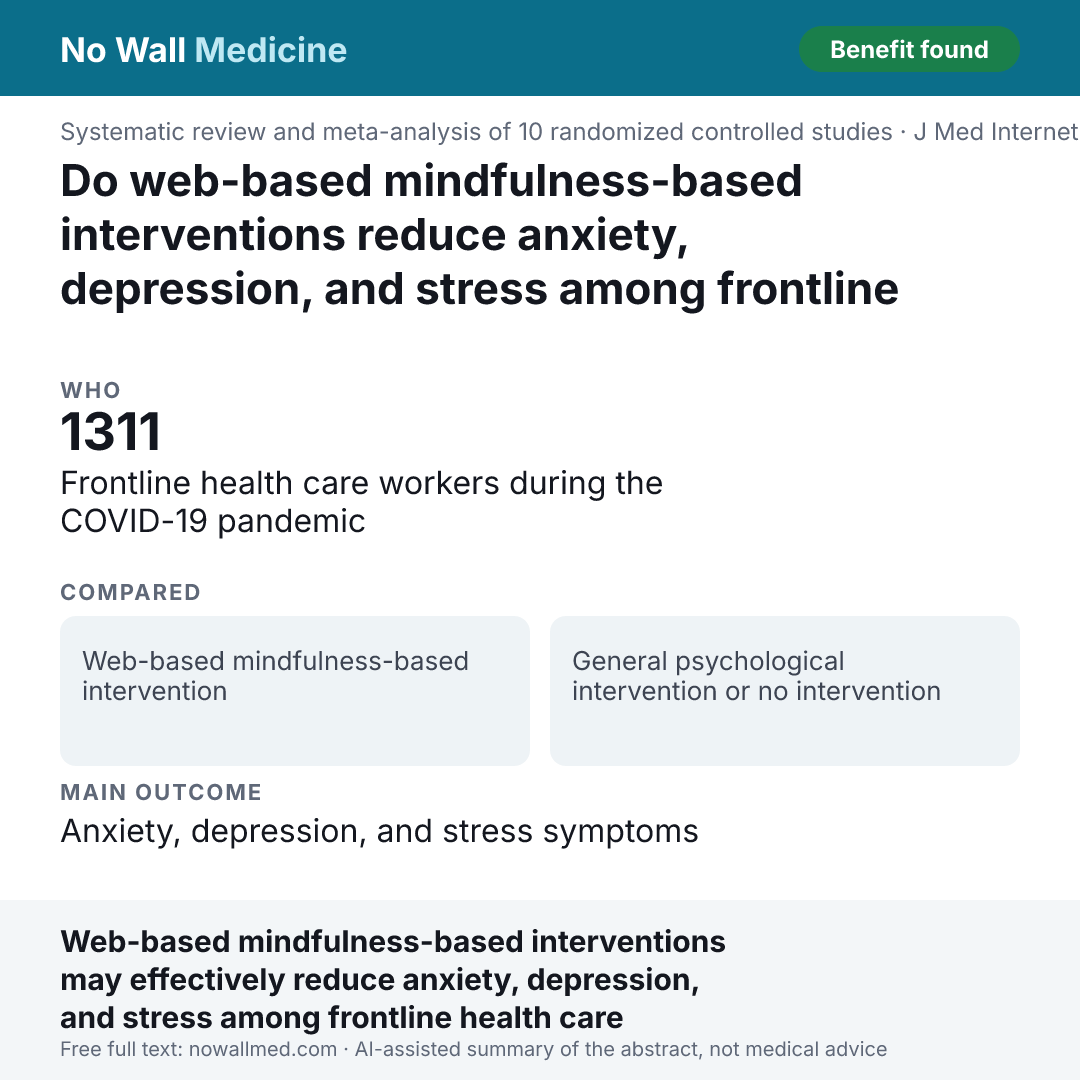
Effects of Web-Based Mindfulness-Based Interventions on Anxiety, Depression, and Stress Among Frontline Health Care Workers During the COVID-19 Pandemic: Systematic Review and Meta-Analysis
Systematic review and meta-analysis of 10 randomized controlled studiesBenefit found
Do web-based mindfulness-based interventions reduce anxiety, depression, and stress among frontline health care workers?
Who
1311
Frontline health care workers during the COVID-19 pandemic
Compared
Web-based mindfulness-based intervention
General psychological intervention or no intervention
Main outcome
Anxiety, depression, and stress symptoms
Result: anxiety SMD=-0.63 (95% CI -0.96 to -0.31), depression SMD=-0.52 (95% CI -0.77 to -0.26), stress SMD=-0.20 (95% CI -0.35 to -0.05)
Bottom line: Web-based mindfulness-based interventions may effectively reduce anxiety, depression, and stress among frontline health care workers.
Limitation: The effect is relatively mild and results had wide confidence intervals and high heterogeneity.
J Med Internet Res · 2023-08-29 · Save PNG
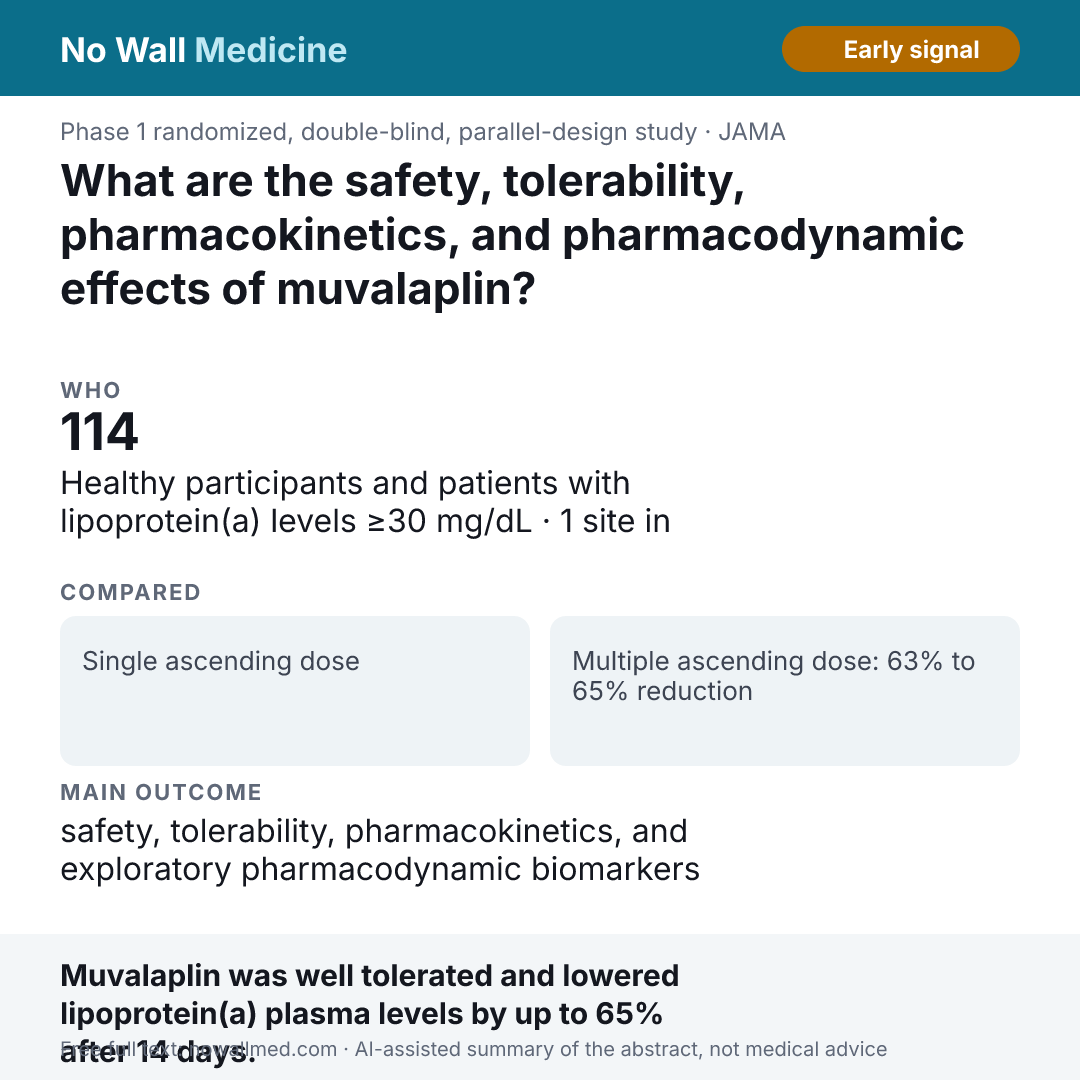
Muvalaplin, an Oral Small Molecule Inhibitor of Lipoprotein(a) Formation: A Randomized Clinical Trial
Phase 1 randomized, double-blind, parallel-design studyEarly signal
What are the safety, tolerability, pharmacokinetics, and pharmacodynamic effects of muvalaplin?
Who
114
Healthy participants and patients with lipoprotein(a) levels ≥30 mg/dL · 1 site in the Netherlands
Compared
Single ascending dose
Multiple ascending dose: 63% to 65% reduction
Main outcome
safety, tolerability, pharmacokinetics, and exploratory pharmacodynamic biomarkers
Bottom line: Muvalaplin was well tolerated and lowered lipoprotein(a) plasma levels by up to 65% after 14 days.
JAMA · 2023-08-28 · Save PNG
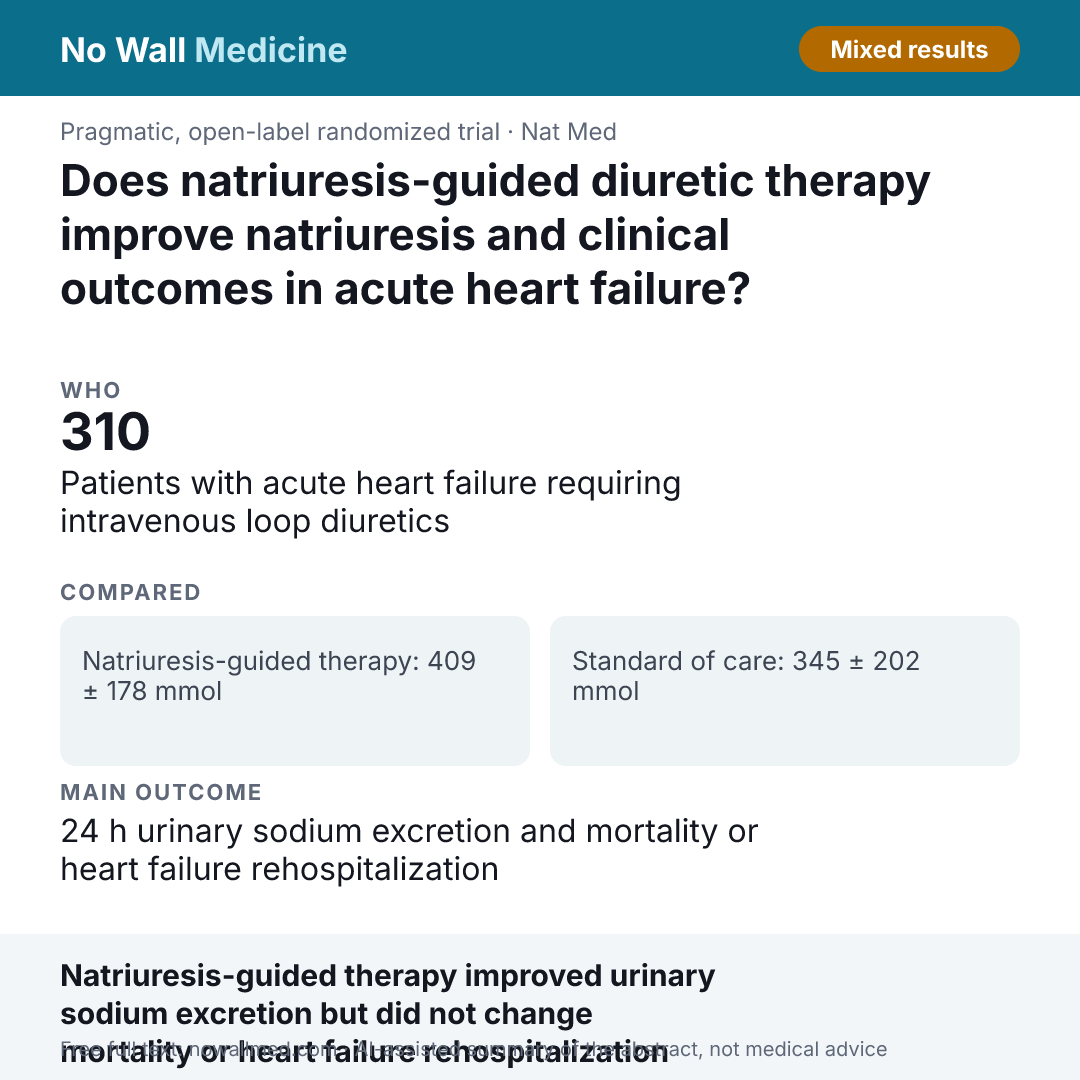
Natriuresis-guided diuretic therapy in acute heart failure: a pragmatic randomized trial
Pragmatic, open-label randomized trialMixed results
Does natriuresis-guided diuretic therapy improve natriuresis and clinical outcomes in acute heart failure?
Who
310
Patients with acute heart failure requiring intravenous loop diuretics
Compared
Natriuresis-guided therapy: 409 ± 178 mmol
Standard of care: 345 ± 202 mmol
Main outcome
24 h urinary sodium excretion and mortality or heart failure rehospitalization
Result: hazard ratio 0.92 (95% confidence interval 0.62-1.38)
Bottom line: Natriuresis-guided therapy improved urinary sodium excretion but did not change mortality or heart failure rehospitalization rates.
Nat Med · 2023-08-28 · Save PNG
Comparison of bivalent and monovalent SARS-CoV-2 variant vaccines: the phase 2 randomized open-label COVAIL trial
Randomized trialEarly signal
Bivalent vs monovalent SARS-CoV-2 vaccines
Who
people needing vaccine boosters · 22 US sites
Compared
Monovalent
Bivalent
Main outcome
Pseudovirus neutralization titers
Bottom line: Updated vaccines provide crossprotective responses
Nat Med · 2023-08-28 · Save PNG
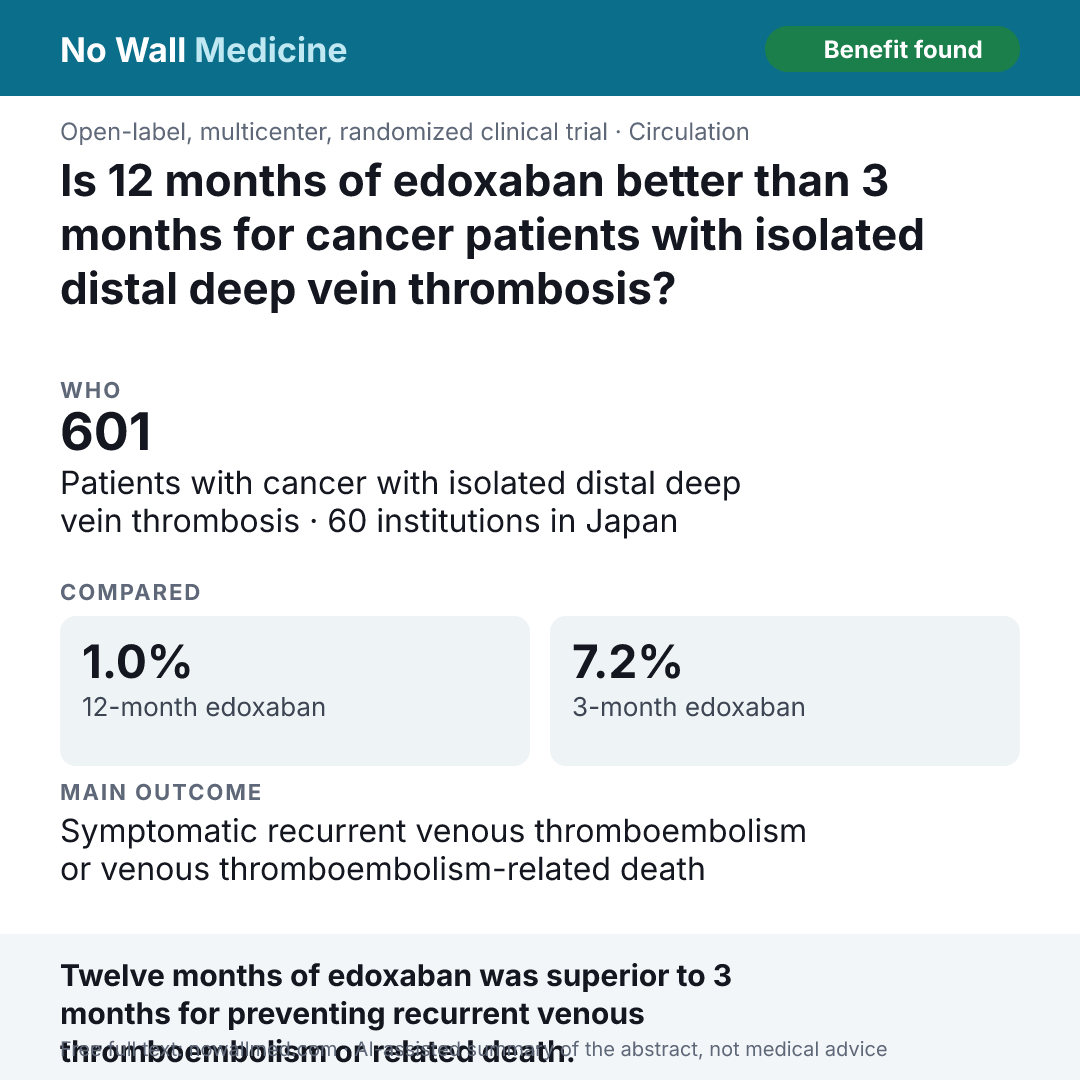
Edoxaban for 12 Months Versus 3 Months in Patients With Cancer With Isolated Distal Deep Vein Thrombosis (ONCO DVT Study): An Open-Label, Multicenter, Randomized Clinical Trial
Open-label, multicenter, randomized clinical trialBenefit found
Is 12 months of edoxaban better than 3 months for cancer patients with isolated distal deep vein thrombosis?
Who
601
Patients with cancer with isolated distal deep vein thrombosis · 60 institutions in Japan
Compared
1.0%12-month edoxaban
7.2%3-month edoxaban
Main outcome
Symptomatic recurrent venous thromboembolism or venous thromboembolism-related death
Result: odds ratio 0.13 (95% CI 0.03-0.44)
Bottom line: Twelve months of edoxaban was superior to 3 months for preventing recurrent venous thromboembolism or related death.
Circulation · 2023-08-28 · Save PNG
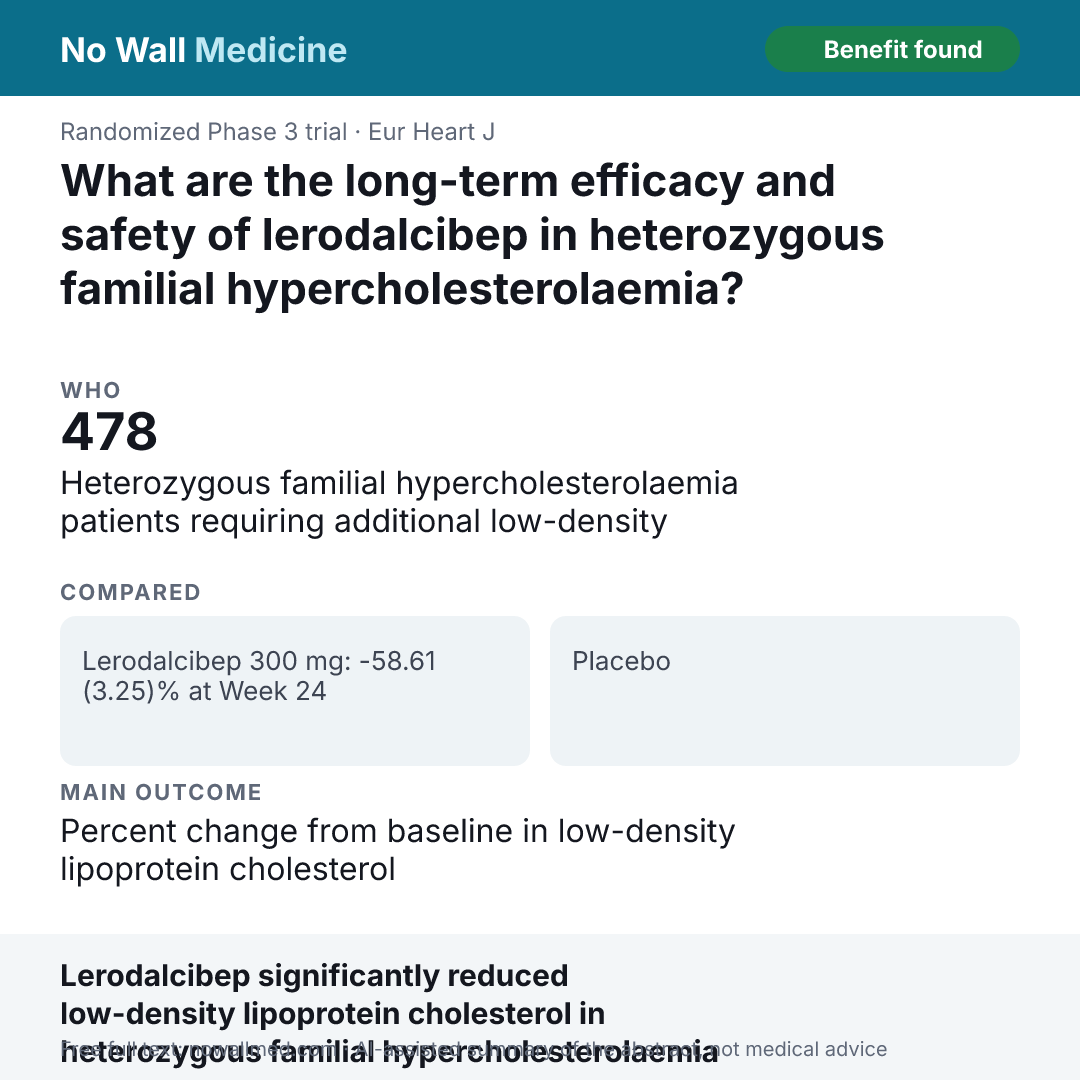
Long-term efficacy and safety of lerodalcibep in heterozygous familial hypercholesterolaemia: the LIBerate-HeFH trial
Randomized Phase 3 trialBenefit found
What are the long-term efficacy and safety of lerodalcibep in heterozygous familial hypercholesterolaemia?
Who
478
Heterozygous familial hypercholesterolaemia patients requiring additional low-density lipoprotein cholesterol lowering · Global
Compared
Lerodalcibep 300 mg: -58.61 (3.25)% at Week 24
Placebo
Main outcome
Percent change from baseline in low-density lipoprotein cholesterol
Result: -58.61 (3.25)% at Week 24
Bottom line: Lerodalcibep significantly reduced low-density lipoprotein cholesterol in heterozygous familial hypercholesterolaemia patients with a safety profile similar to placebo.
Eur Heart J · 2023-08-28 · Save PNG
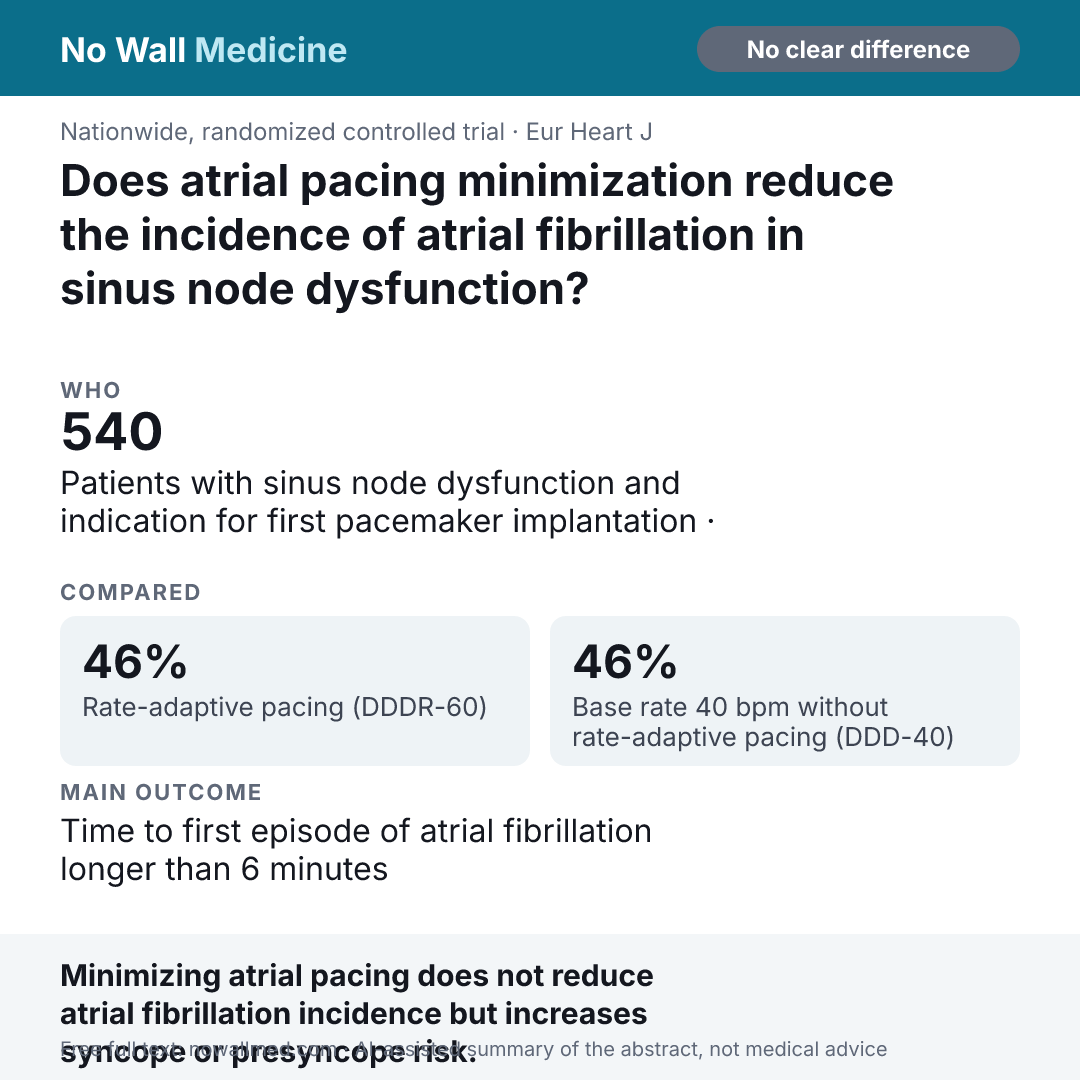
Atrial pacing minimization in sinus node dysfunction and risk of incident atrial fibrillation: a randomized trial
Nationwide, randomized controlled trialNo clear difference
Does atrial pacing minimization reduce the incidence of atrial fibrillation in sinus node dysfunction?
Who
540
Patients with sinus node dysfunction and indication for first pacemaker implantation · Nationwide
Compared
46%Rate-adaptive pacing (DDDR-60)
46%Base rate 40 bpm without rate-adaptive pacing (DDD-40)
Main outcome
Time to first episode of atrial fibrillation longer than 6 minutes
Result: hazard ratio 0.97 (95% CI 0.76-1.25)
Bottom line: Minimizing atrial pacing does not reduce atrial fibrillation incidence but increases syncope or presyncope risk.
Eur Heart J · 2023-08-28 · Save PNG
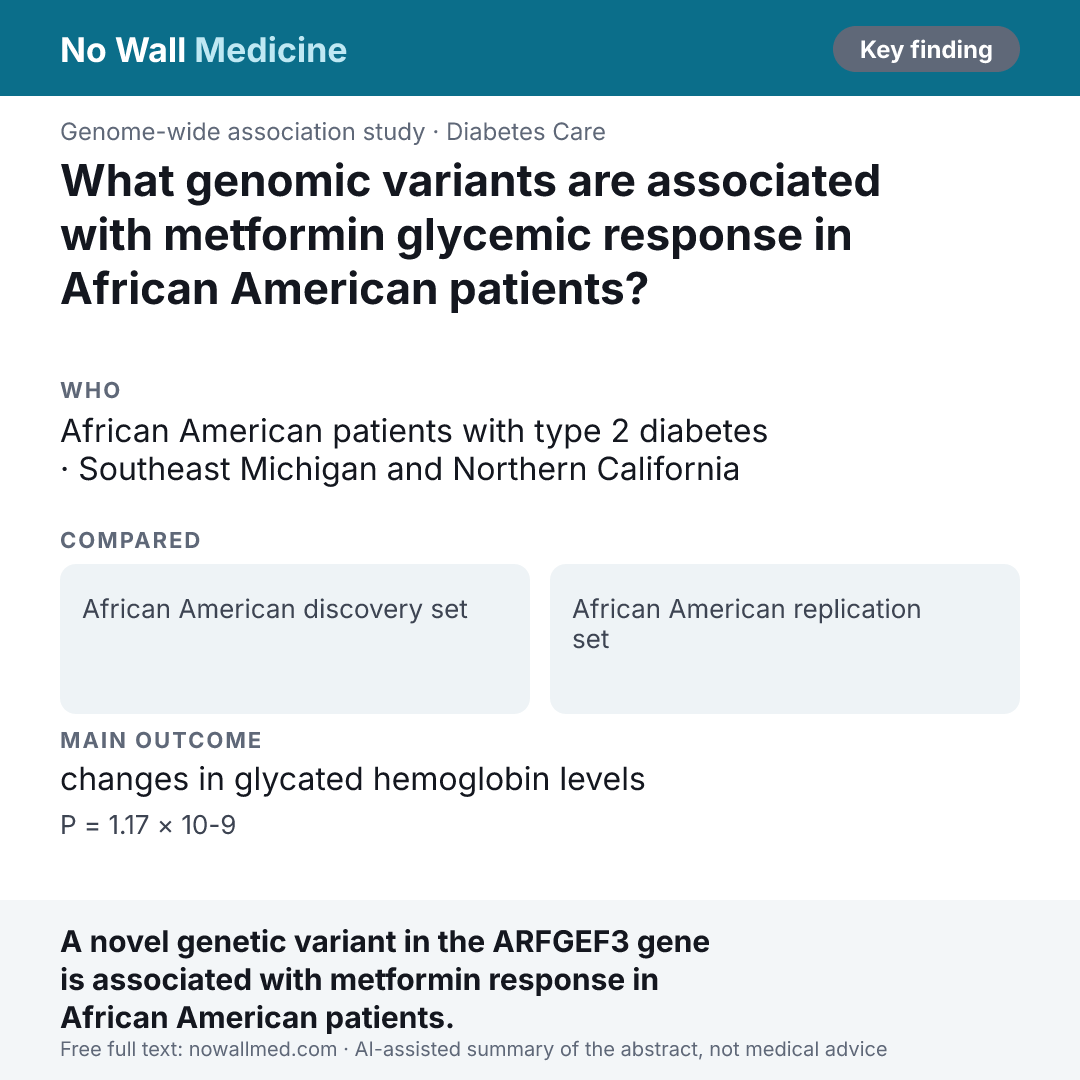
Genome-Wide Association Study Identifies Pharmacogenomic Variants Associated With Metformin Glycemic Response in African American Patients With Type 2 Diabetes
Genome-wide association studyKey finding
What genomic variants are associated with metformin glycemic response in African American patients?
Who
African American patients with type 2 diabetes · Southeast Michigan and Northern California
Compared
African American discovery set
African American replication set
Main outcome
changes in glycated hemoglobin levels
Result: P = 1.17 × 10⁻⁹
Bottom line: A novel genetic variant in the ARFGEF3 gene is associated with metformin response in African American patients.
Limitation: None mentioned
Diabetes Care · 2023-08-28 · Save PNG
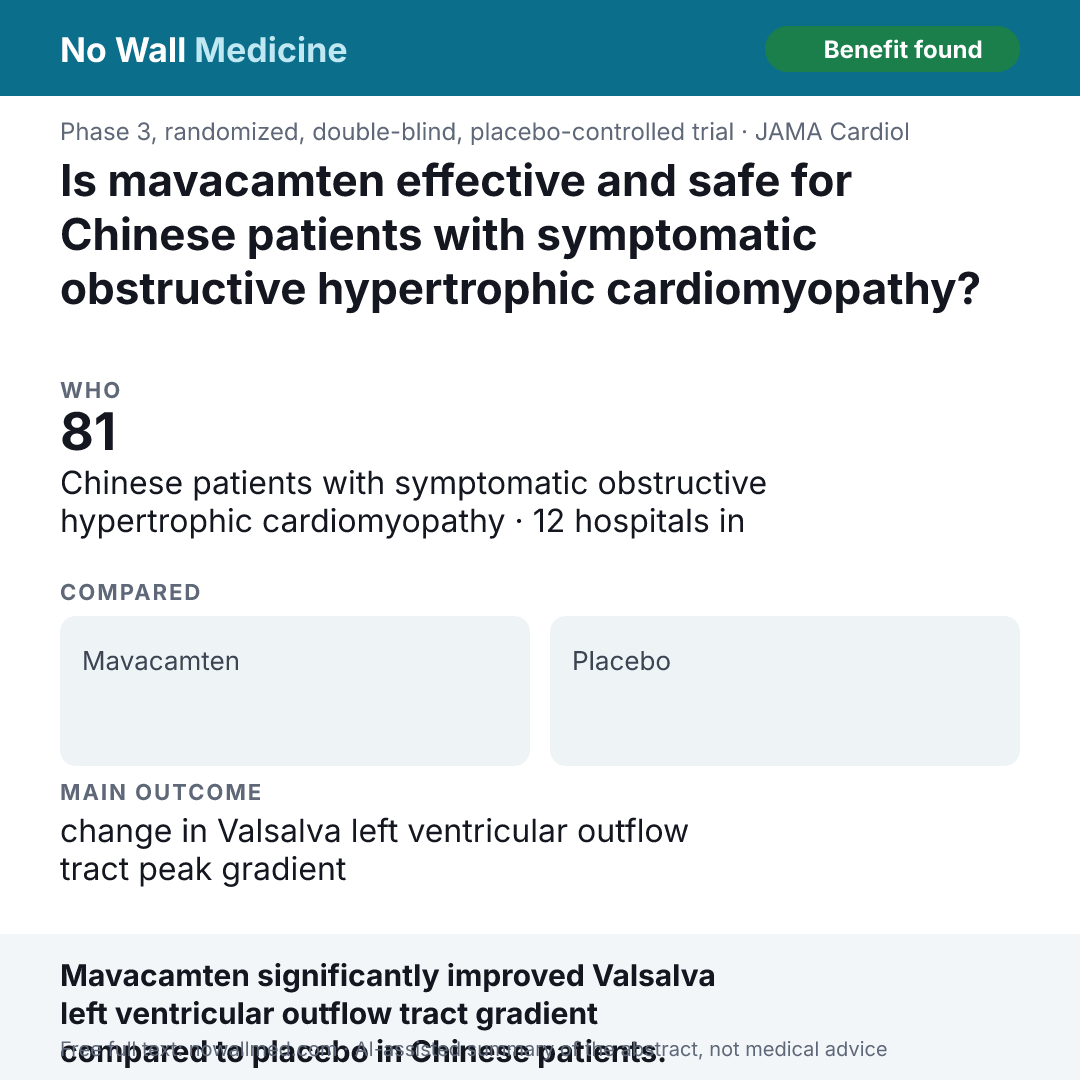
Effect of Mavacamten on Chinese Patients With Symptomatic Obstructive Hypertrophic Cardiomyopathy: The EXPLORER-CN Randomized Clinical Trial
Phase 3, randomized, double-blind, placebo-controlled trialBenefit found
Is mavacamten effective and safe for Chinese patients with symptomatic obstructive hypertrophic cardiomyopathy?
Who
81
Chinese patients with symptomatic obstructive hypertrophic cardiomyopathy · 12 hospitals in China
Compared
Mavacamten
Placebo
Main outcome
change in Valsalva left ventricular outflow tract peak gradient
Result: least-squares mean difference -70.3 mm Hg (95% CI -89.6 to -50.9 mm Hg)
Bottom line: Mavacamten significantly improved Valsalva left ventricular outflow tract gradient compared to placebo in Chinese patients.
JAMA Cardiol · 2023-08-28 · Save PNG
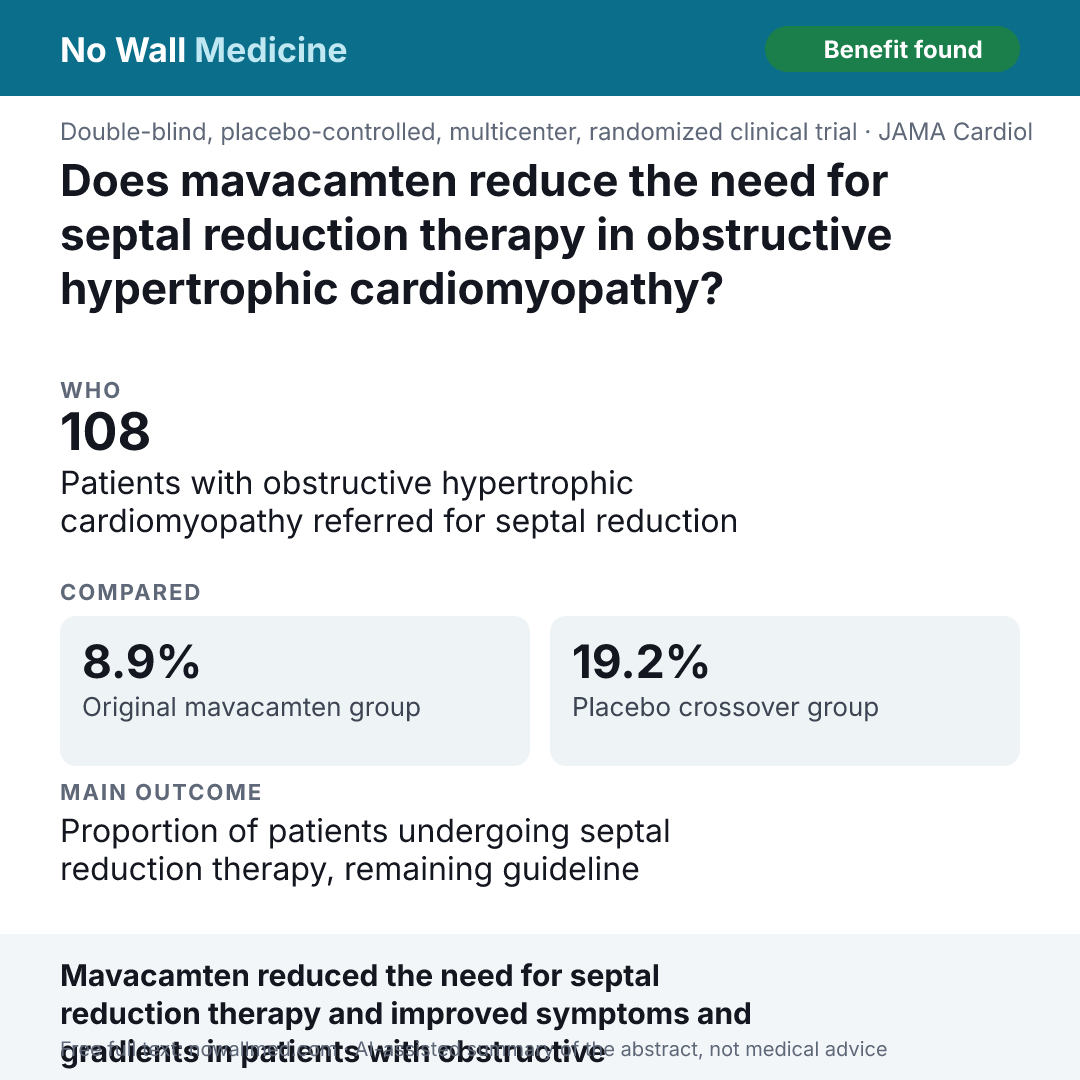
Mavacamten in Patients With Hypertrophic Cardiomyopathy Referred for Septal Reduction: Week 56 Results From the VALOR-HCM Randomized Clinical Trial
Double-blind, placebo-controlled, multicenter, randomized clinical trialBenefit found
Does mavacamten reduce the need for septal reduction therapy in obstructive hypertrophic cardiomyopathy?
Who
108
Patients with obstructive hypertrophic cardiomyopathy referred for septal reduction therapy · 19 United States centers
Compared
8.9%Original mavacamten group
19.2%Placebo crossover group
Main outcome
Proportion of patients undergoing septal reduction therapy, remaining guideline eligible or unevaluable
Bottom line: Mavacamten reduced the need for septal reduction therapy and improved symptoms and gradients in patients with obstructive hypertrophic cardiomyopathy.
JAMA Cardiol · 2023-08-28 · Save PNG
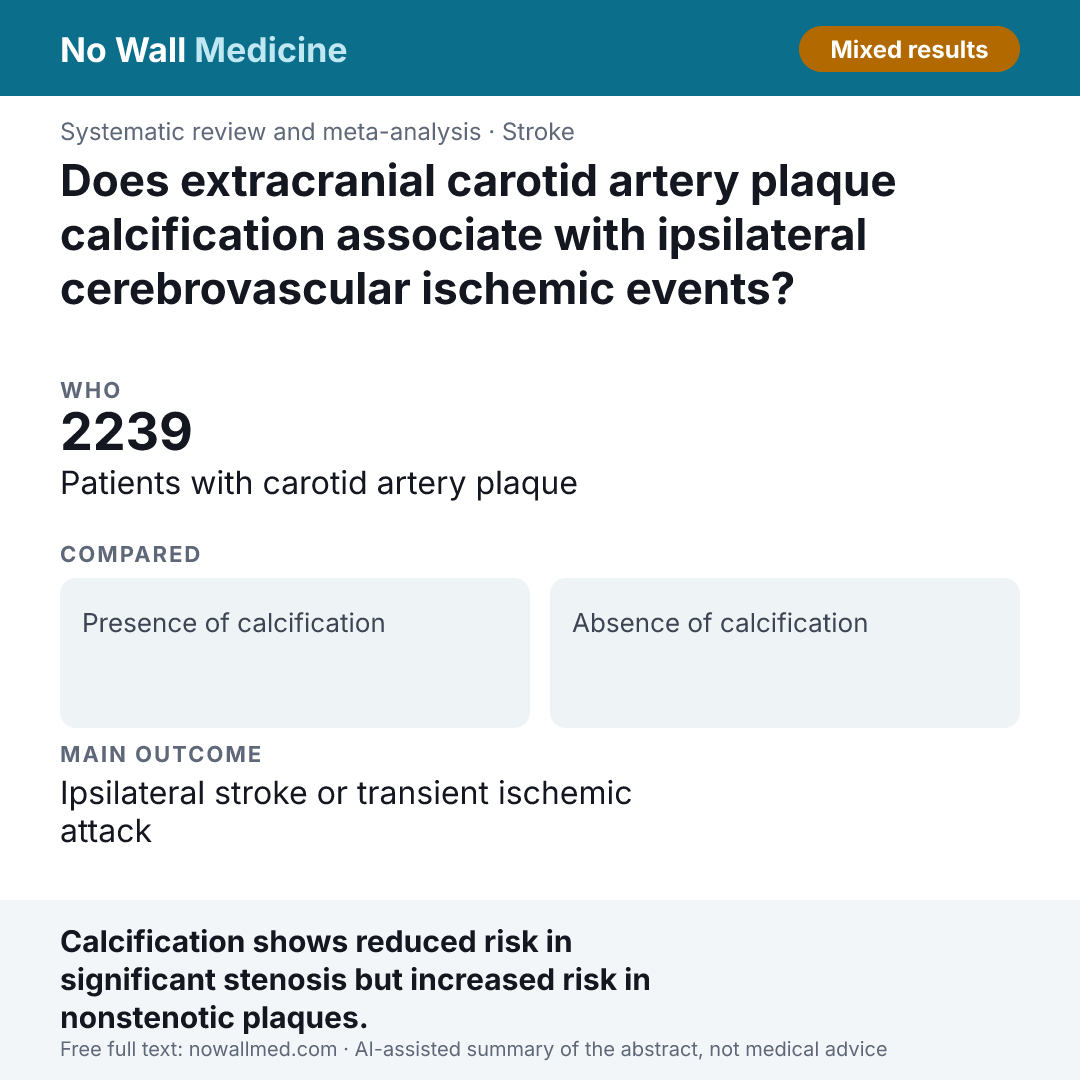
Extracranial Carotid Plaque Calcification and Cerebrovascular Ischemia: A Systematic Review and Meta-Analysis
Systematic review and meta-analysisMixed results
Does extracranial carotid artery plaque calcification associate with ipsilateral cerebrovascular ischemic events?
Who
2239
Patients with carotid artery plaque
Compared
Presence of calcification
Absence of calcification
Main outcome
Ipsilateral stroke or transient ischemic attack
Result: relative risk of 0.75 (95% CI, 0.44-1.28)
Bottom line: Calcification shows reduced risk in significant stenosis but increased risk in nonstenotic plaques.
Limitation: Results require more reproducible, standardized methods and prospective studies.
Stroke · 2023-08-28 · Save PNG
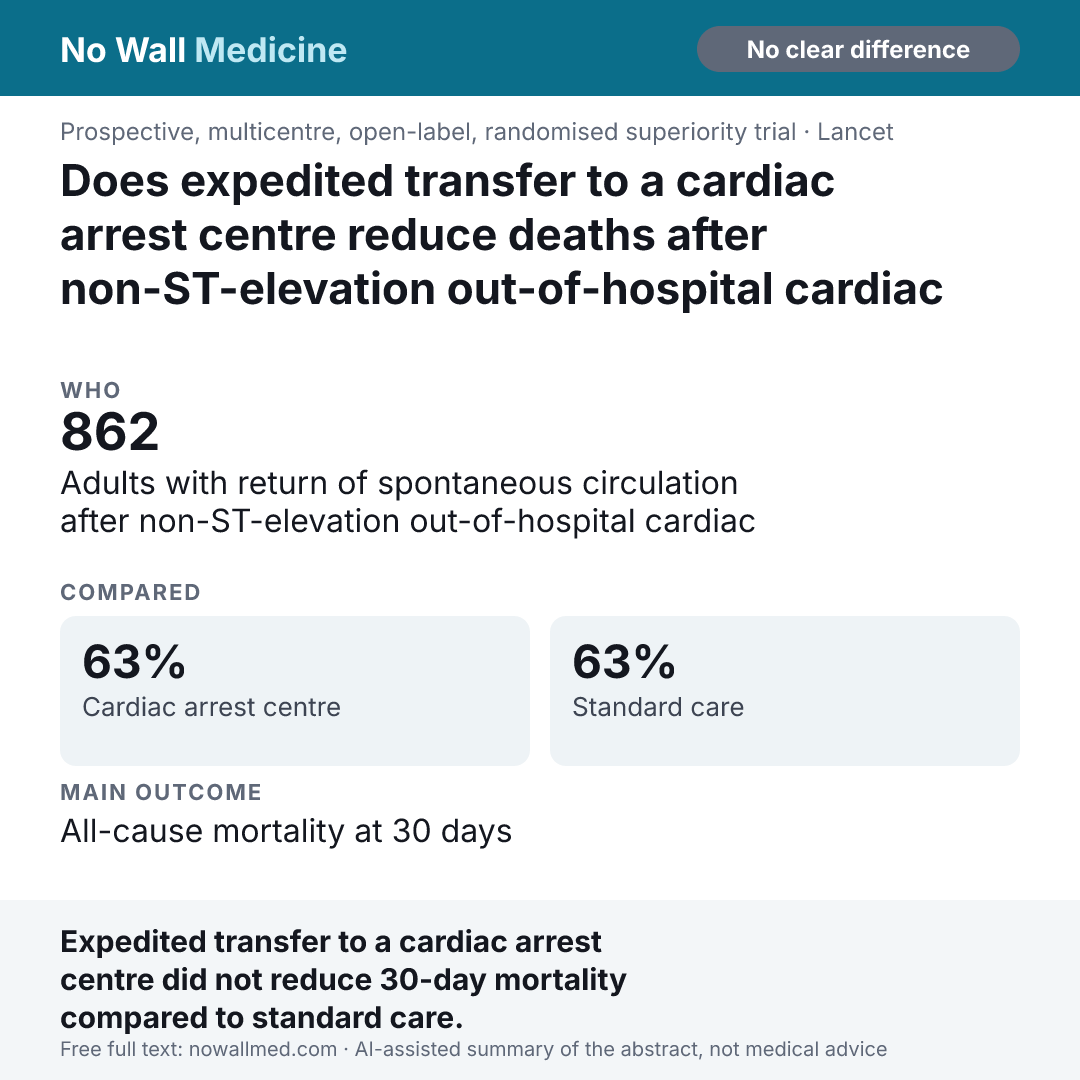
Predictors of transition in patients with clinical high risk for psychosis: an umbrella review
Umbrella review of systematic reviews and meta-analysesMixed results
What are the predictors of transition to psychosis in clinical high-risk patients?
Who
Patients at clinical high risk for psychosis
Compared
Clinical characteristics
Biomarkers
Main outcome
Transition to psychosis
Bottom line: Attenuated psychotic symptoms, negative symptoms, functioning, verbal memory deficits, and mismatch negativity are consistent predictors.
Limitation: Small, heterogeneous samples and relatively few transition events across studies.
Transl Psychiatry · 2023-08-28 · Save PNG
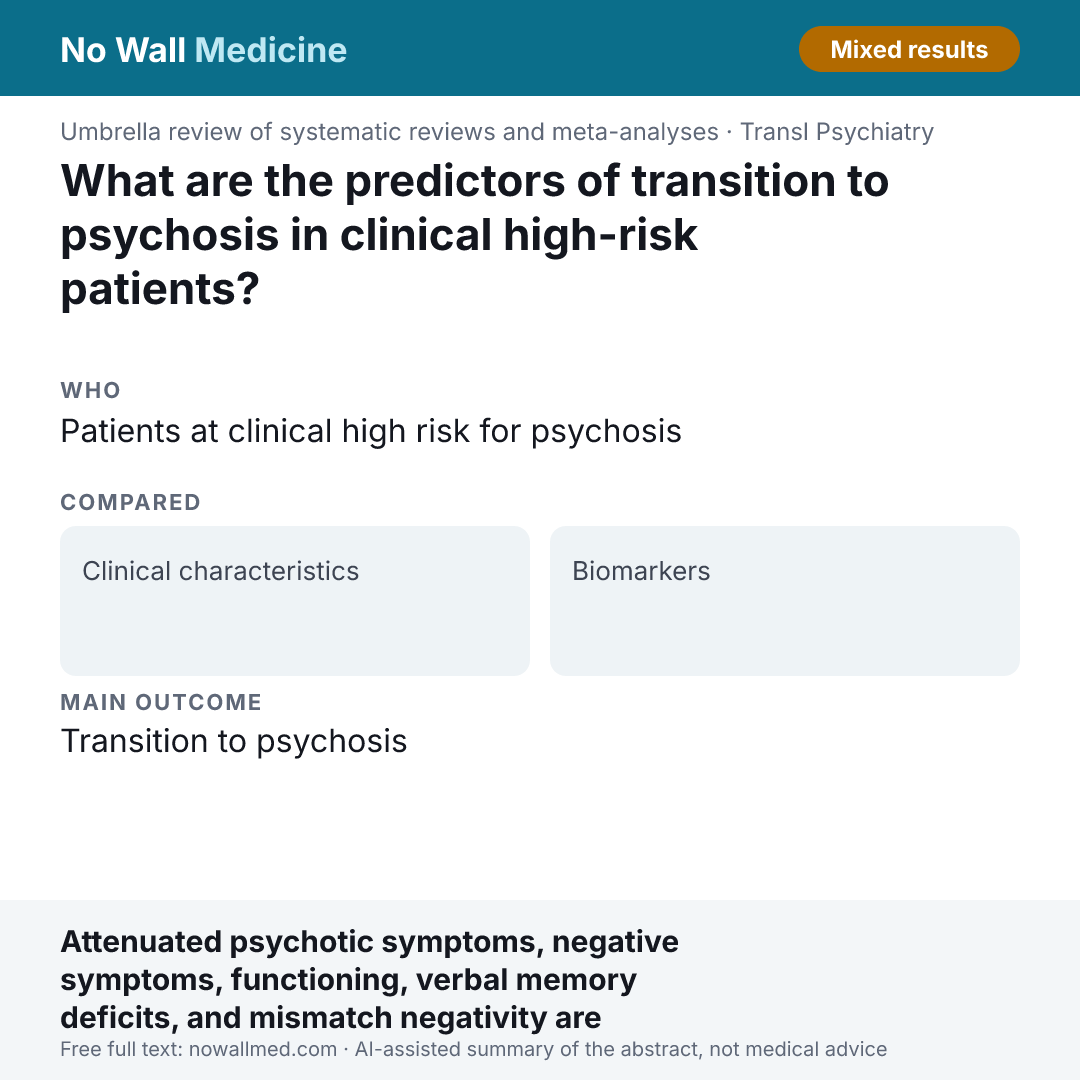
Disparities in survival of hematologic malignancies in the context of social determinants of health: a systematic review
Systematic reviewMixed results
How do social determinants of health impact survival in hematologic malignancies?
Who
Patients with hematologic malignancies in the United States · United States
Compared
Variables affecting survival
Variables with contradictory reports: distance traveled to the treatment center
Main outcome
Survival of patients with hematologic malignancies
Bottom line: Social, financial, and health care barriers significantly impact survival outcomes for patients with hematologic malignancies.
Limitation: Lack of data regarding transportation, debt, higher education, diet, social integration, environmental factors, or stress.
Blood Adv · 2023-08-28 · Save PNG
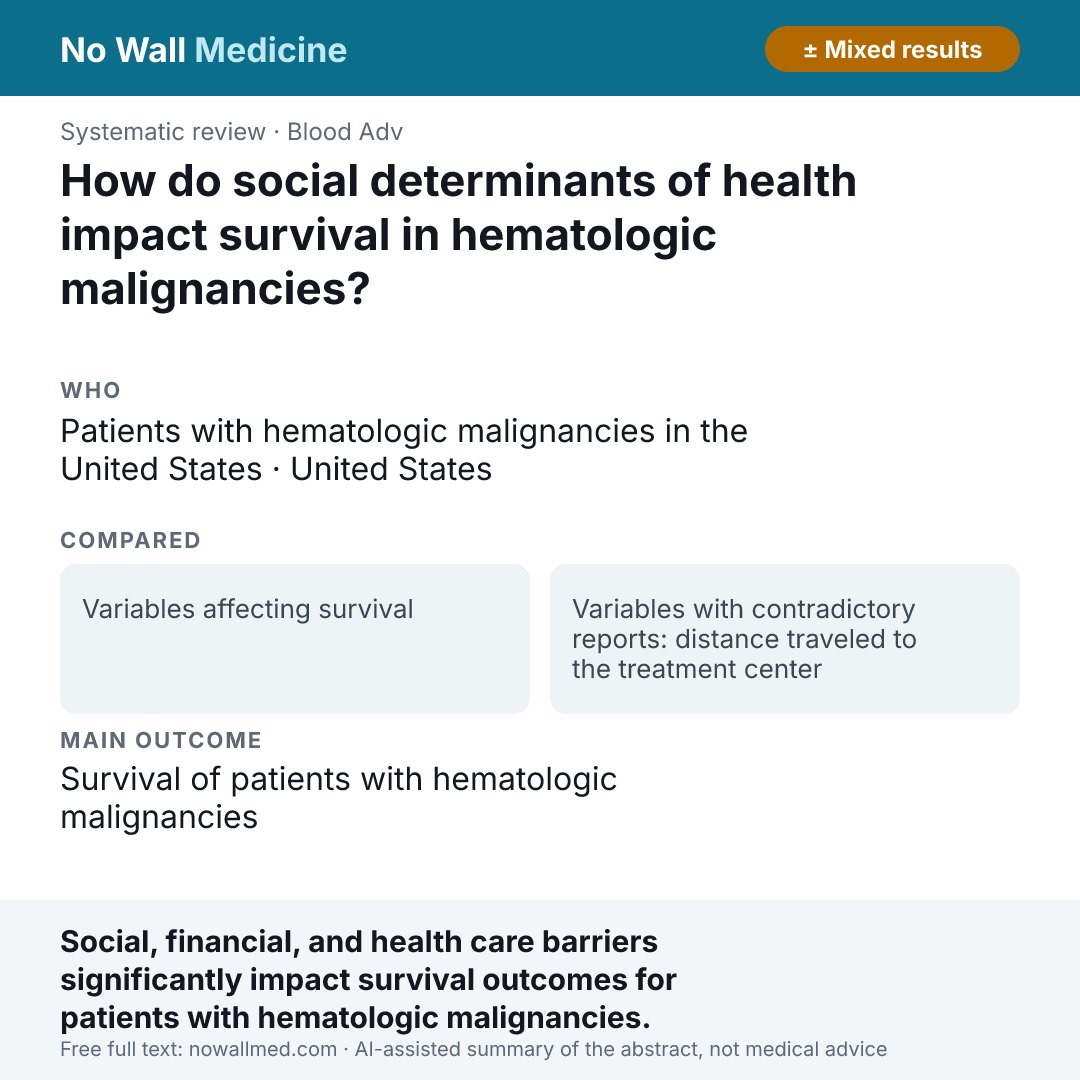
Stepwise approach to skills teaching in resuscitation: A systematic review
Systematic review of 17 studiesNo clear difference
Is Peyton's four-step approach more effective than alternative approaches for teaching resuscitation skills?
Who
2,906
Lay persons to health care professionals
Compared
Peyton's four-step approach
Alternative stepwise approaches
Main outcome
Skill acquisition or retention
Bottom line: Very low certainty evidence suggests Peyton's four-step approach was not more effective than alternative stepwise approaches.
Limitation: High methodological and clinical heterogeneity and very low certainty of evidence due to imprecision and inconsistency.
Resusc Plus · 2023-08-28 · Save PNG
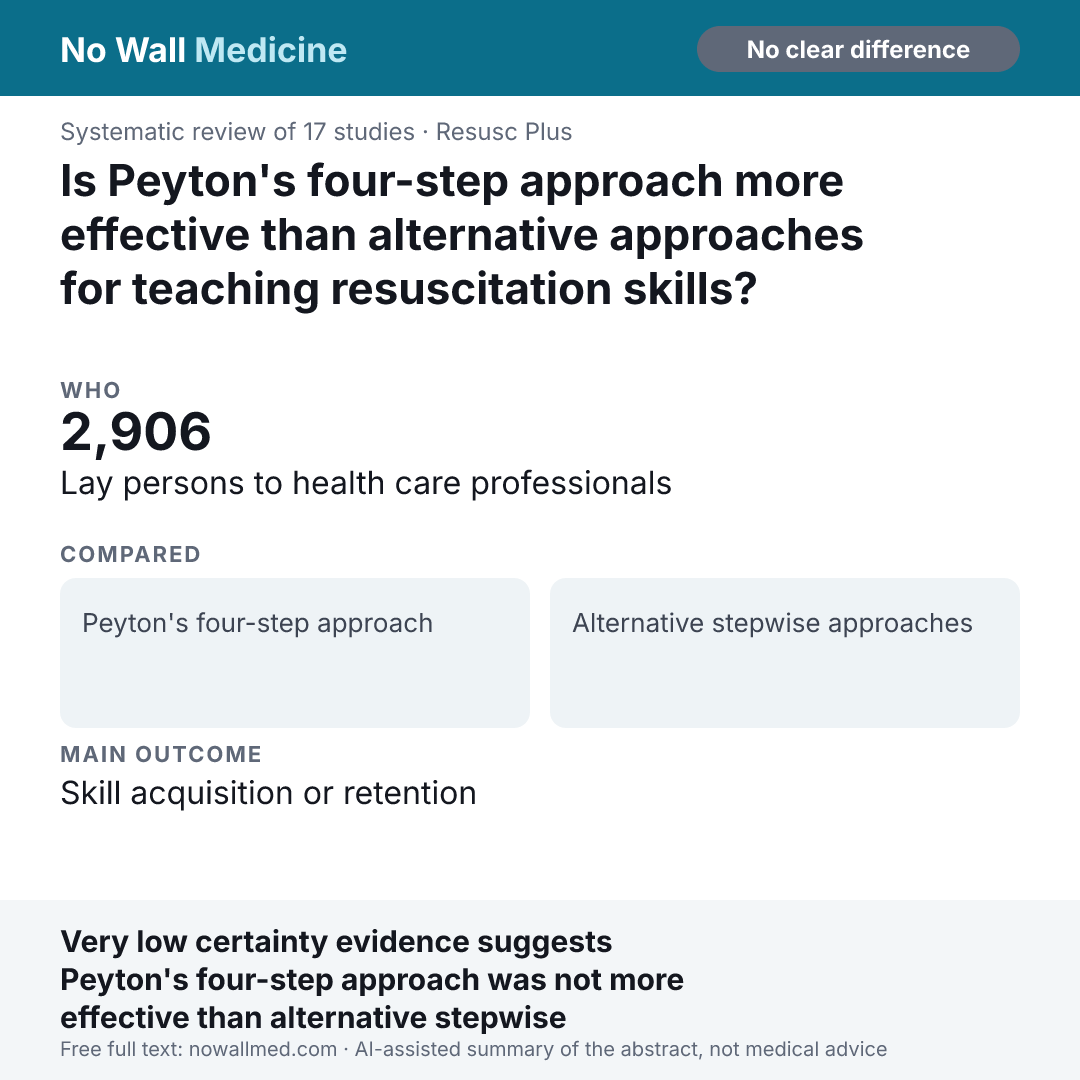
Expedited transfer to a cardiac arrest centre for non-ST-elevation out-of-hospital cardiac arrest (ARREST): a UK prospective, multicentre, parallel, randomised clinical trial
Prospective, multicentre, open-label, randomised superiority trialNo clear difference
Does expedited transfer to a cardiac arrest centre reduce deaths after non-ST-elevation out-of-hospital cardiac arrest?
Who
862
Adults with return of spontaneous circulation after non-ST-elevation out-of-hospital cardiac arrest · London, United Kingdom
Compared
63%Cardiac arrest centre (258/411)
63%Standard care (258/412)
Main outcome
All-cause mortality at 30 days
Result: unadjusted risk ratio for survival 1·00 (95% CI 0·90-1·11)
Bottom line: Expedited transfer to a cardiac arrest centre did not reduce 30-day mortality compared to standard care.
Funded by: British Heart Foundation
Lancet · 2023-08-27 · Save PNG
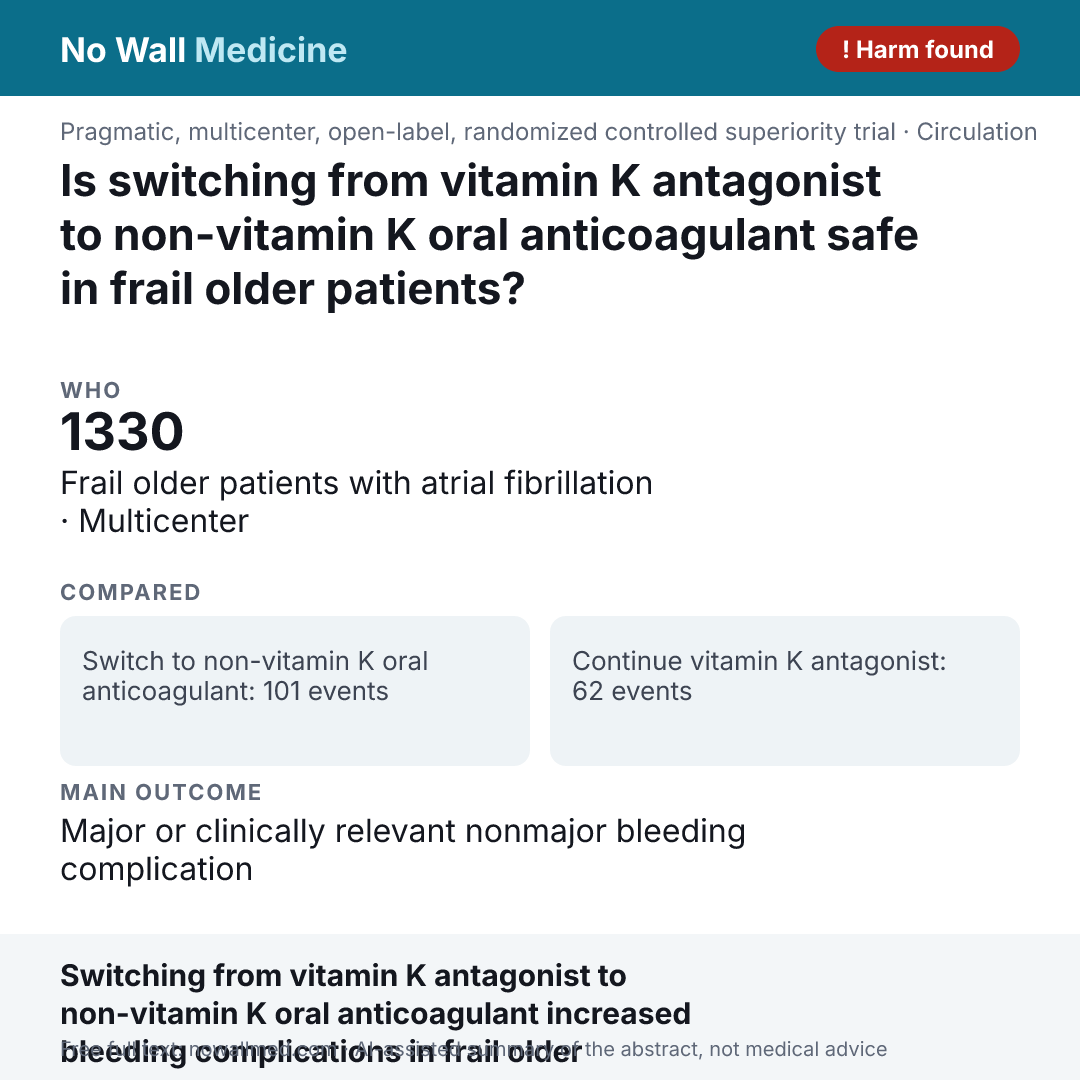
Safety of Switching From a Vitamin K Antagonist to a Non-Vitamin K Antagonist Oral Anticoagulant in Frail Older Patients With Atrial Fibrillation: Results of the FRAIL-AF Randomized Controlled Trial
Pragmatic, multicenter, open-label, randomized controlled superiority trialHarm found
Is switching from vitamin K antagonist to non-vitamin K oral anticoagulant safe in frail older patients?
Who
1330
Frail older patients with atrial fibrillation · Multicenter
Compared
Switch to non-vitamin K oral anticoagulant: 101 events
Continue vitamin K antagonist: 62 events
Main outcome
Major or clinically relevant nonmajor bleeding complication
Result: hazard ratio 1.69 (95% CI, 1.23-2.32)
Bottom line: Switching from vitamin K antagonist to non-vitamin K oral anticoagulant increased bleeding complications in frail older patients with atrial fibrillation.
Circulation · 2023-08-27 · Save PNG
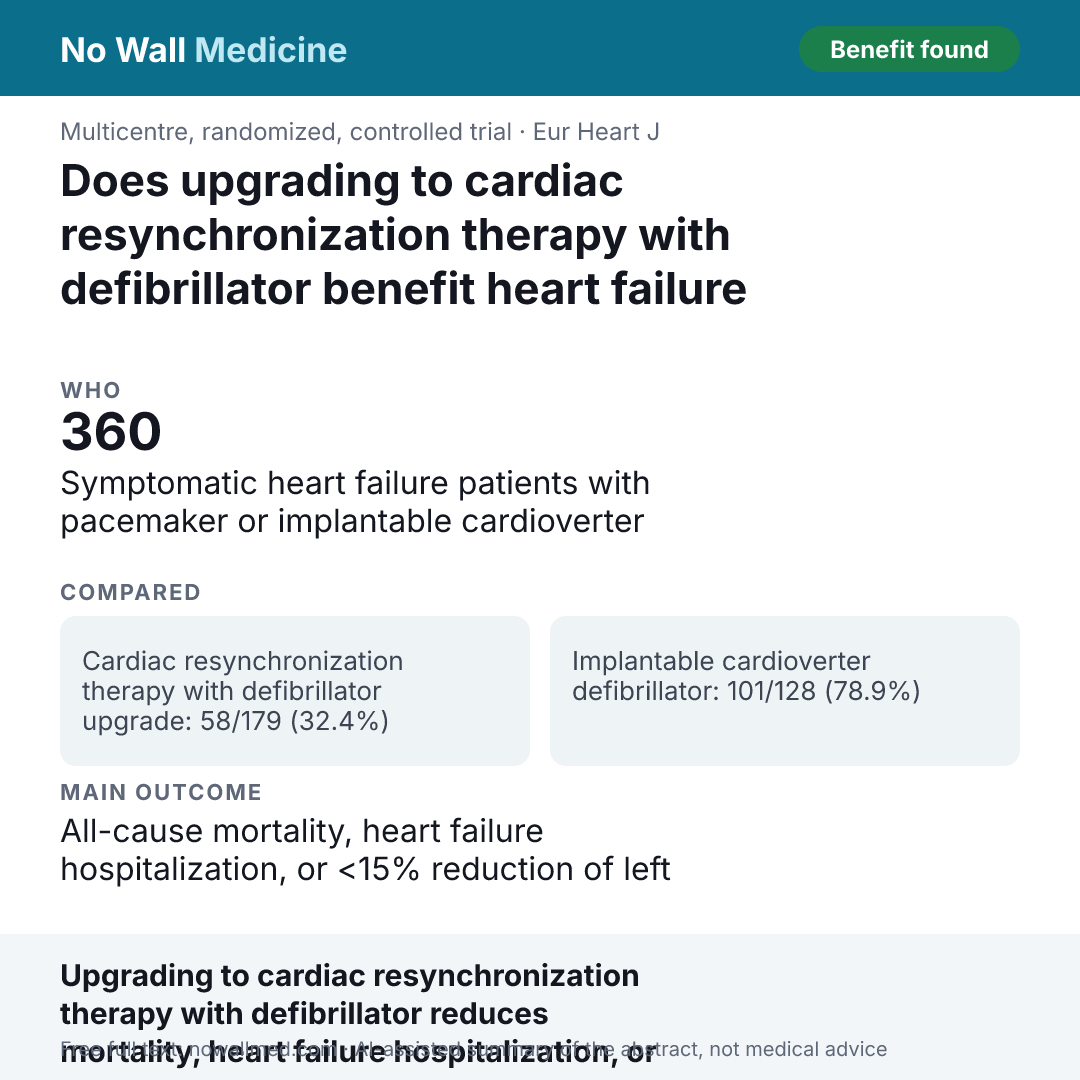
Upgrade of right ventricular pacing to cardiac resynchronization therapy in heart failure: a randomized trial
Multicentre, randomized, controlled trialBenefit found
Does upgrading to cardiac resynchronization therapy with defibrillator benefit heart failure patients with high right ventricular pacing?
Who
360
Symptomatic heart failure patients with pacemaker or implantable cardioverter defibrillator and high right ventricular pacing · Multicentre
Compared
Cardiac resynchronization therapy with defibrillator upgrade: 58/179 (32.4%)
Implantable cardioverter defibrillator: 101/128 (78.9%)
Main outcome
All-cause mortality, heart failure hospitalization, or <15% reduction of left ventricular end-systolic volume
Result: odds ratio 0.11 (95% confidence interval 0.06-0.19)
Bottom line: Upgrading to cardiac resynchronization therapy with defibrillator reduces mortality, heart failure hospitalization, or lack of reverse remodeling.
Eur Heart J · 2023-08-27 · Save PNG
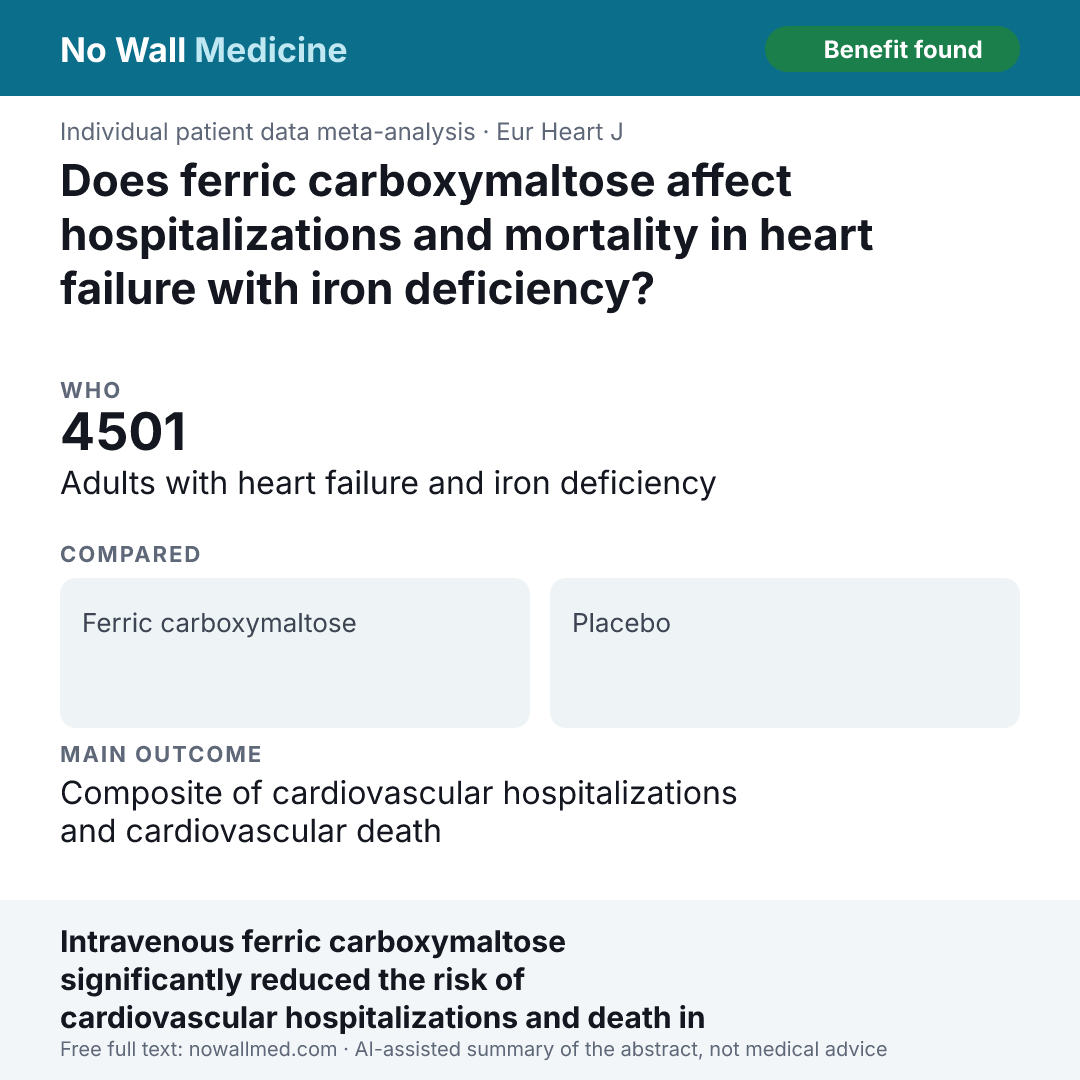
Efficacy of ferric carboxymaltose in heart failure with iron deficiency: an individual patient data meta-analysis
Individual patient data meta-analysisBenefit found
Does ferric carboxymaltose affect hospitalizations and mortality in heart failure with iron deficiency?
Who
4501
Adults with heart failure and iron deficiency
Compared
Ferric carboxymaltose
Placebo
Main outcome
Composite of cardiovascular hospitalizations and cardiovascular death
Result: rate ratio 0.86 (95% confidence interval 0.75-0.98)
Bottom line: Intravenous ferric carboxymaltose significantly reduced the risk of cardiovascular hospitalizations and death in iron-deficient heart failure patients.
Eur Heart J · 2023-08-27 · Save PNG
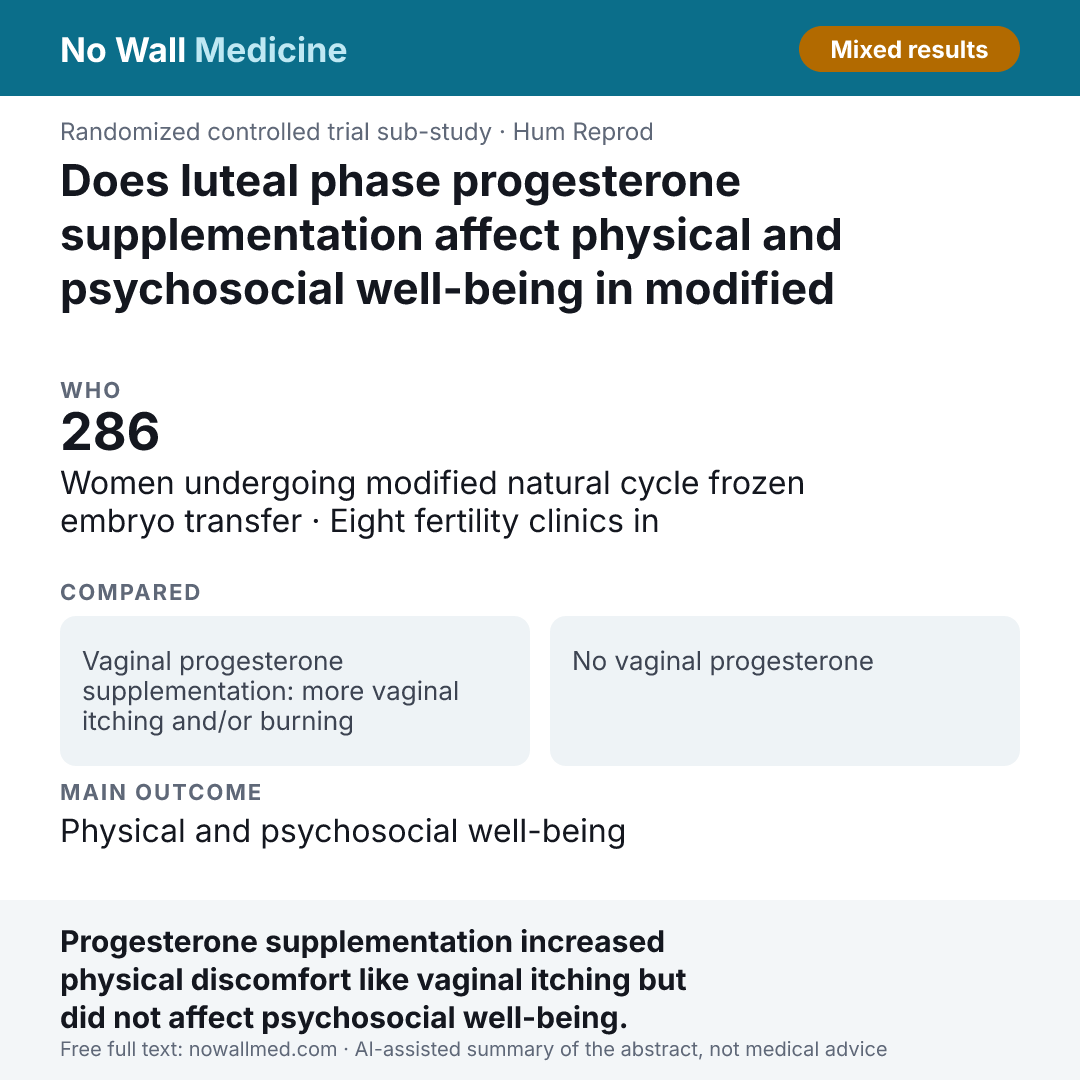
Does luteal phase progesterone supplementation affect physical and psychosocial well-being among women undergoing modified natural cycle-FET? A sub-study of a randomized controlled trial
Randomized controlled trial sub-studyMixed results
Does luteal phase progesterone supplementation affect physical and psychosocial well-being in modified natural cycle frozen embryo transfer?
Who
286
Women undergoing modified natural cycle frozen embryo transfer · Eight fertility clinics in Denmark
Compared
Vaginal progesterone supplementation: more vaginal itching and/or burning
No vaginal progesterone
Main outcome
Physical and psychosocial well-being
Bottom line: Progesterone supplementation increased physical discomfort like vaginal itching but did not affect psychosocial well-being.
Limitation: Physical symptoms were self-reported and not diagnosed by a doctor.
Funded by: Rigshospitalet's Research Foundation and Gedeon Richter
Hum Reprod · 2023-08-27 · Save PNG
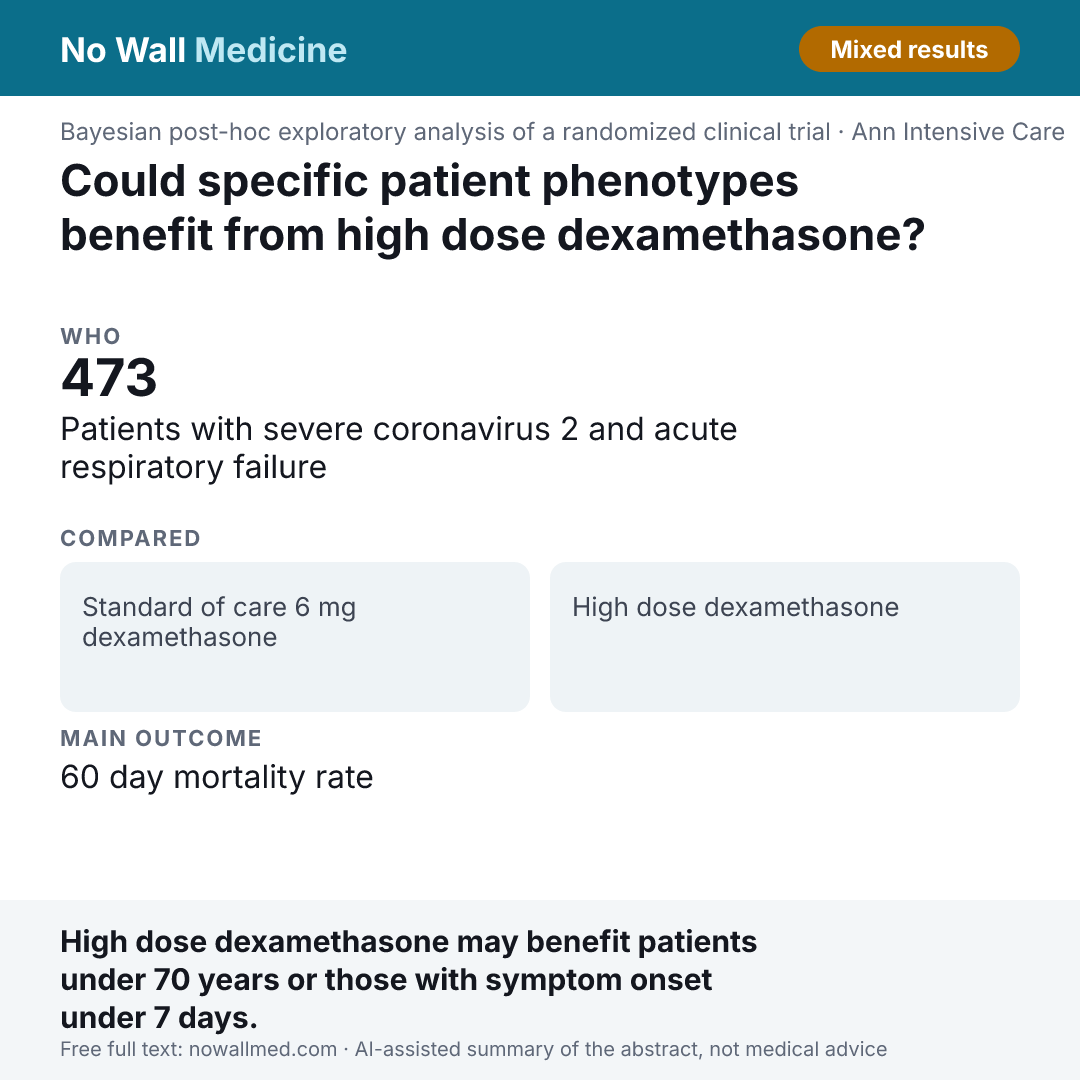
Which severe COVID-19 patients could benefit from high dose dexamethasone? A Bayesian post-hoc reanalysis of the COVIDICUS randomized clinical trial
Bayesian post-hoc exploratory analysis of a randomized clinical trialMixed results
Could specific patient phenotypes benefit from high dose dexamethasone?
Who
473
Patients with severe coronavirus 2 and acute respiratory failure
Compared
Standard of care 6 mg dexamethasone
High dose dexamethasone
Main outcome
60 day mortality rate
Bottom line: High dose dexamethasone may benefit patients under 70 years or those with symptom onset under 7 days.
Ann Intensive Care · 2023-08-27 · Save PNG