Visual abstracts
New randomized trials and meta-analyses from leading journals at a glance: who was studied, what was compared, and what was found. Every paper is free to read in full.
All specialtiesCardiology 4877Oncology 4138Gastroenterology & Hepatology 1942Infectious Disease 3837Neurology 1905Psychiatry & Mental Health 2273Pulmonology 2143Critical Care 1365Endocrinology & Diabetes 2580Pediatrics 2980Surgery 2559Orthopedics & Sports Medicine 931Neurosurgery 537Cardiothoracic & Vascular Surgery 674Plastic & Reconstructive Surgery 591Nephrology 1133Rheumatology 823Hematology 1109Dermatology 621Ophthalmology 543Obstetrics & Gynecology 1686Public & Global Health 1058Radiology & Imaging 648Anesthesiology 986Urology 764ENT (Otolaryngology) 503Emergency Medicine 511Allergy & Immunology 313Geriatrics 981Family Medicine & Primary Care 562Medical Genetics & Genomics 676Pathology & Laboratory Medicine 159Physical Medicine & Rehabilitation 757Palliative Care 444Nutrition 1588Digital Health & AI 2201General Medicine 321
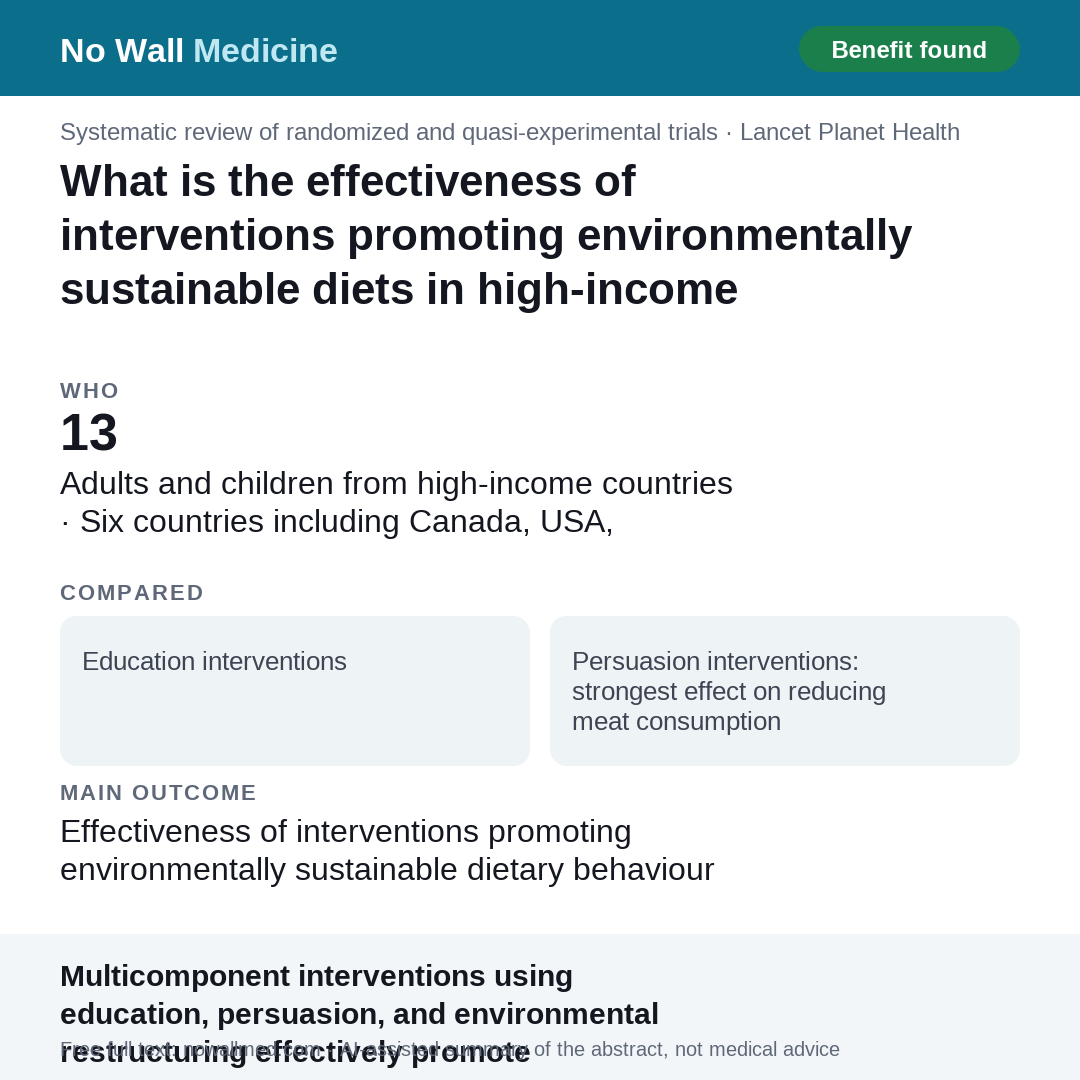
Investigating intervention components and their effectiveness in promoting environmentally sustainable diets: a systematic review
Systematic review of randomized and quasi-experimental trialsBenefit found
What is the effectiveness of interventions promoting environmentally sustainable diets in high-income countries?
Who
13
Adults and children from high-income countries · Six countries including Canada, USA, Germany, UK, Netherlands, Italy
Compared
Education interventions
Persuasion interventions: strongest effect on reducing meat consumption
Main outcome
Effectiveness of interventions promoting environmentally sustainable dietary behaviour
Bottom line: Multicomponent interventions using education, persuasion, and environmental restructuring effectively promote environmentally sustainable diets.
Limitation: Little high-quality research was available, with several studies having high risk of bias.
Lancet Planet Health · 2024-06-08Download image
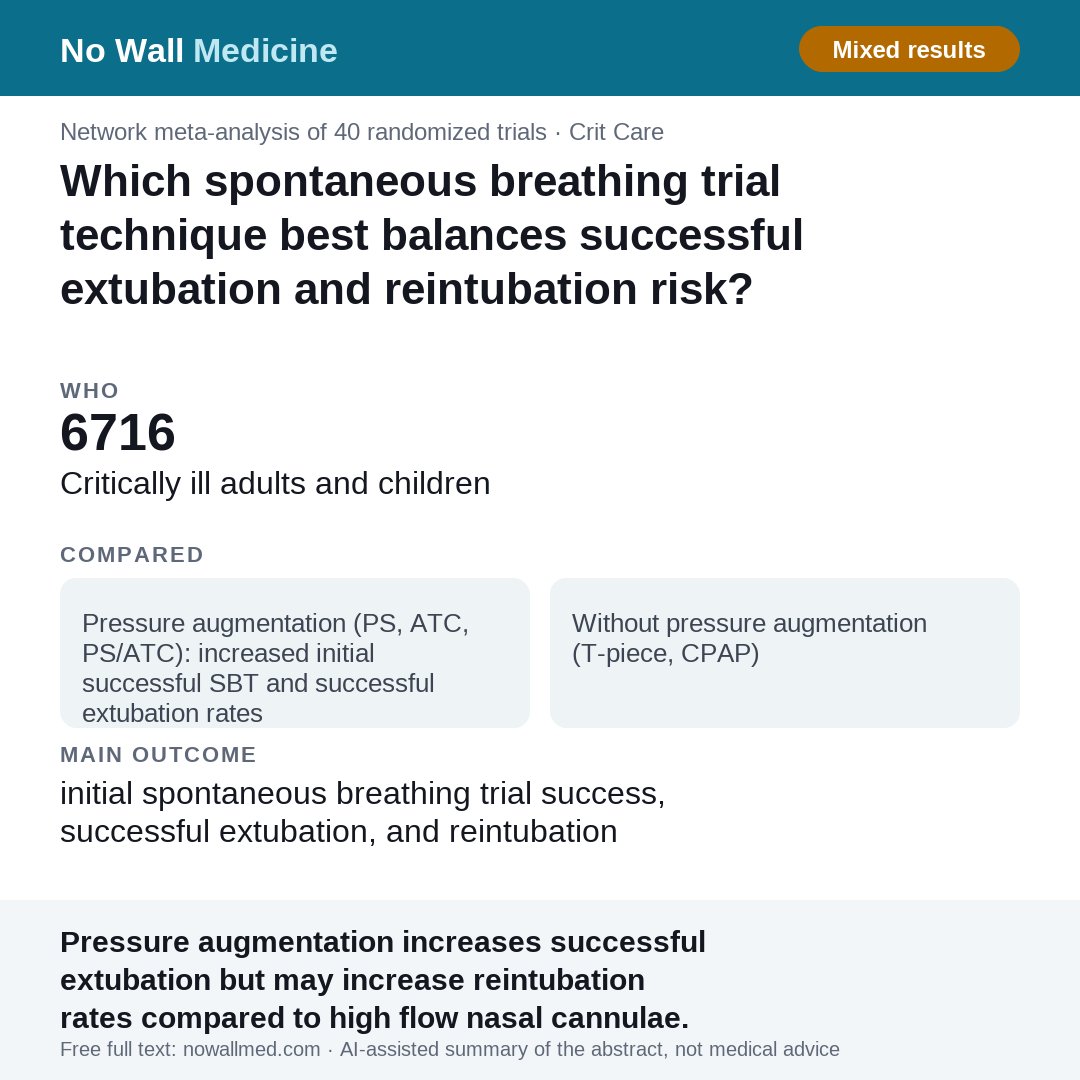
Comparative effectiveness of alternative spontaneous breathing trial techniques: a systematic review and network meta-analysis of randomized trials
Network meta-analysis of 40 randomized trialsMixed results
Which spontaneous breathing trial technique best balances successful extubation and reintubation risk?
Who
6716
Critically ill adults and children
Compared
Pressure augmentation (PS, ATC, PS/ATC): increased initial successful SBT and successful extubation rates
Without pressure augmentation (T-piece, CPAP)
Main outcome
initial spontaneous breathing trial success, successful extubation, and reintubation
Bottom line: Pressure augmentation increases successful extubation but may increase reintubation rates compared to high flow nasal cannulae.
Crit Care · 2024-06-08Download image
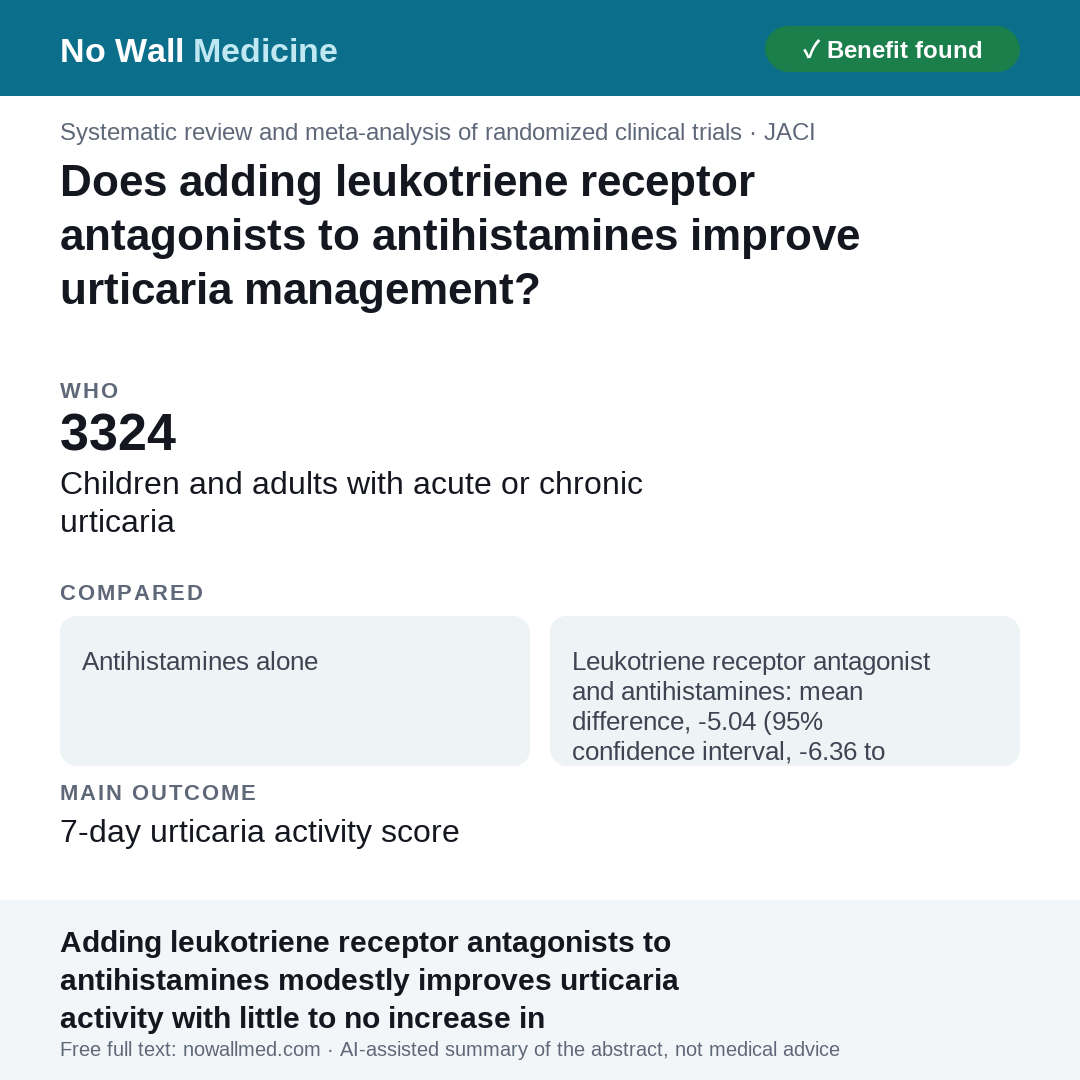
Leukotriene receptor antagonists as add-on therapy to antihistamines for urticaria: Systematic review and meta-analysis of randomized clinical trials
Systematic review and meta-analysis of randomized clinical trialsBenefit found
Does adding leukotriene receptor antagonists to antihistamines improve urticaria management?
Who
3324
Children and adults with acute or chronic urticaria
Compared
Antihistamines alone
Leukotriene receptor antagonist and antihistamines: mean difference, -5.04 (95% confidence interval, -6.36 to -3.71)
Main outcome
7-day urticaria activity score
Result: mean difference, -5.04 (95% confidence interval, -6.36 to -3.71)
Bottom line: Adding leukotriene receptor antagonists to antihistamines modestly improves urticaria activity with little to no increase in overall adverse events.
Limitation: No randomized controlled trial reported on neuropsychiatric adverse events.
JACI · 2024-06-07Download image
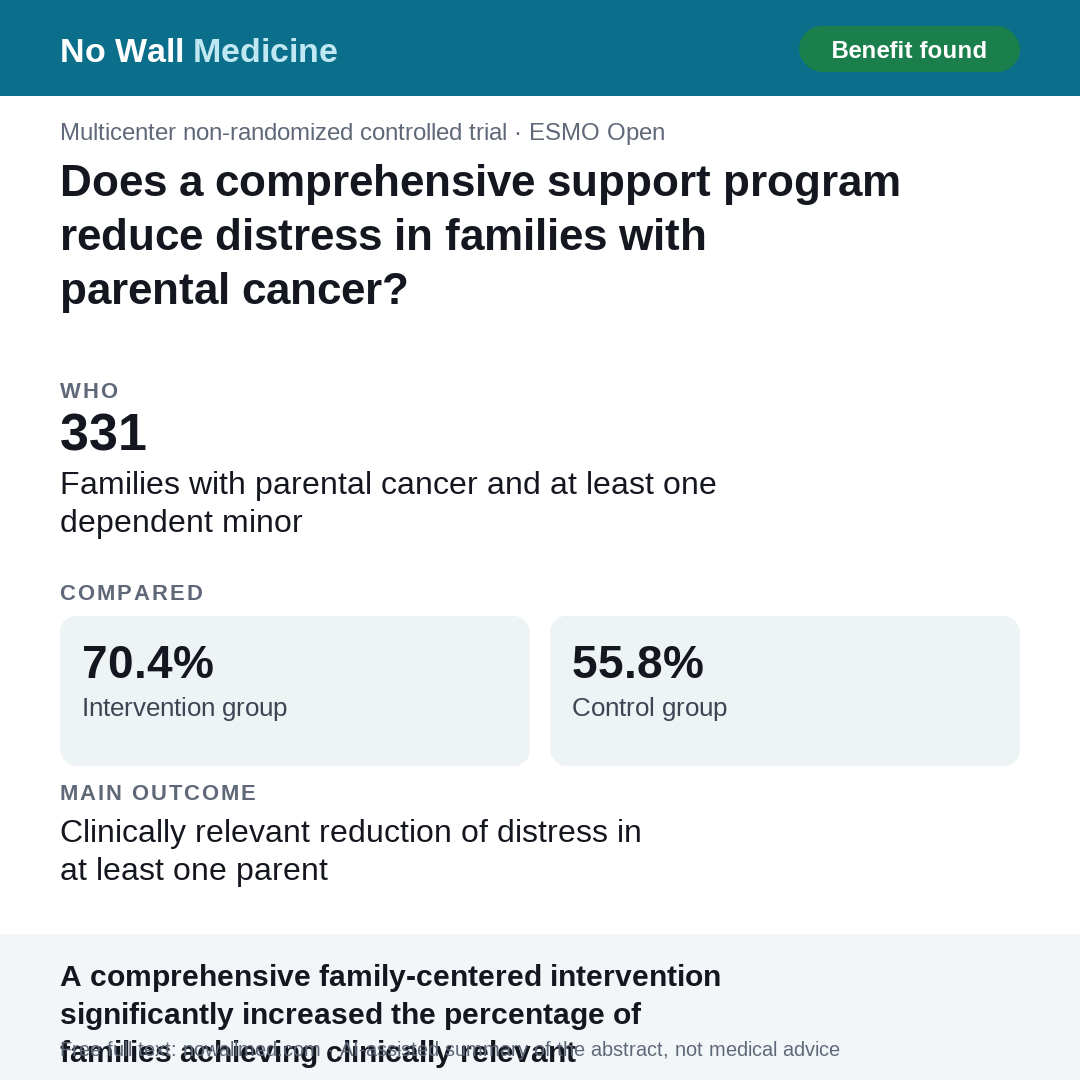
Effectiveness of a comprehensive support program for families with parental cancer (Family-SCOUT): results of a multicenter non-randomized controlled trial
Multicenter non-randomized controlled trialBenefit found
Does a comprehensive support program reduce distress in families with parental cancer?
Who
331
Families with parental cancer and at least one dependent minor
Compared
70.4%Intervention group
55.8%Control group
Main outcome
Clinically relevant reduction of distress in at least one parent
Result: P = 0.008
Bottom line: A comprehensive family-centered intervention significantly increased the percentage of families achieving clinically relevant distress reduction.
Limitation: Bias from other confounders cannot be excluded.
ESMO Open · 2024-06-07Download image
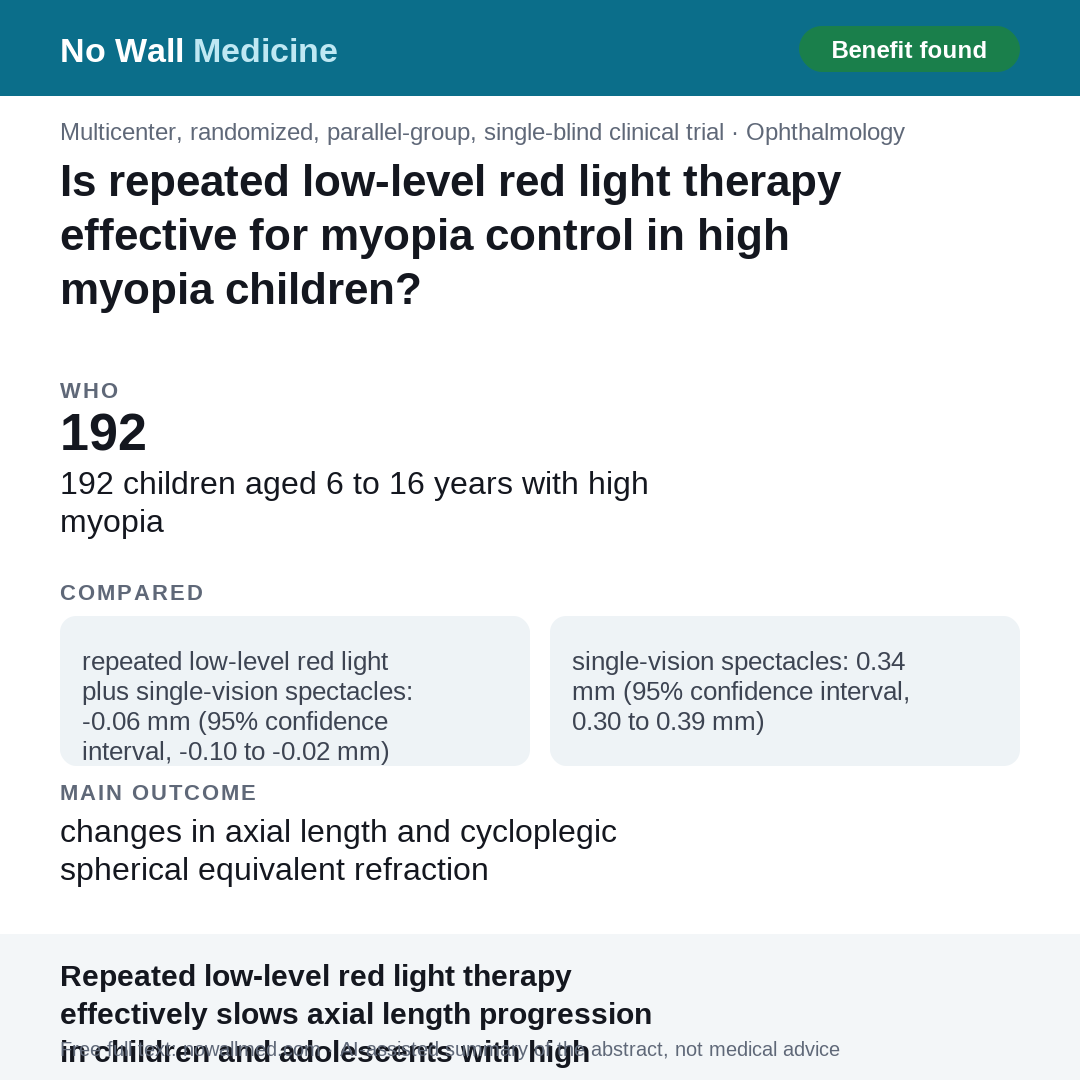
Repeated Low-Level Red Light Therapy for Myopia Control in High Myopia Children and Adolescents: A Randomized Clinical Trial
Multicenter, randomized, parallel-group, single-blind clinical trialBenefit found
Is repeated low-level red light therapy effective for myopia control in high myopia children?
Who
192
192 children aged 6 to 16 years with high myopia
Compared
repeated low-level red light plus single-vision spectacles: -0.06 mm (95% confidence interval, -0.10 to -0.02 mm)
single-vision spectacles: 0.34 mm (95% confidence interval, 0.30 to 0.39 mm)
Main outcome
changes in axial length and cycloplegic spherical equivalent refraction
Bottom line: Repeated low-level red light therapy effectively slows axial length progression in children and adolescents with high myopia.
Ophthalmology · 2024-06-06Download image
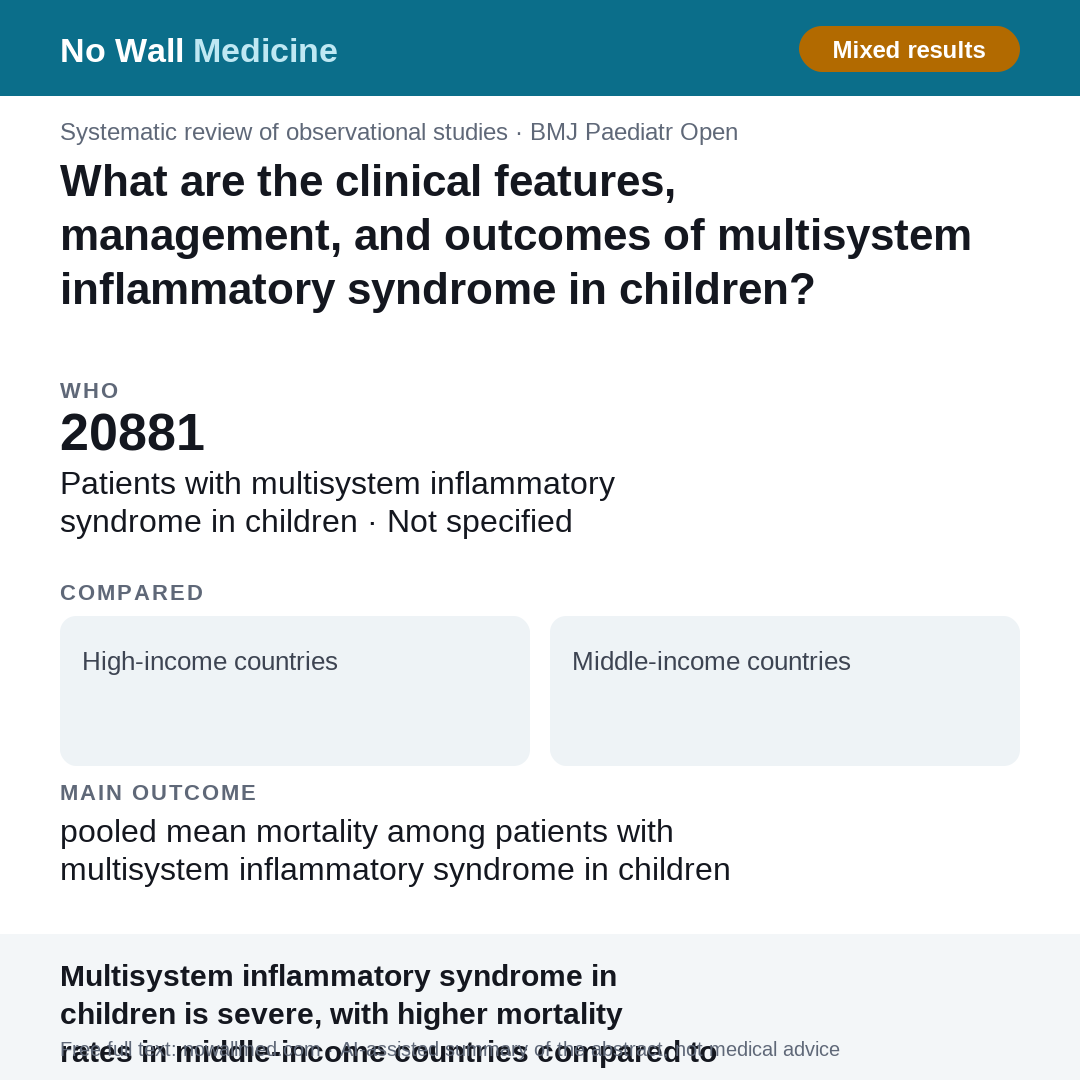
Clinical presentation, diagnosis and management of multisystem inflammatory syndrome in children (MIS-C): a systematic review
Systematic review of observational studiesMixed results
What are the clinical features, management, and outcomes of multisystem inflammatory syndrome in children?
Who
20881
Patients with multisystem inflammatory syndrome in children · Not specified
Compared
High-income countries
Middle-income countries
Main outcome
pooled mean mortality among patients with multisystem inflammatory syndrome in children
Result: 3.9% (95% CI 2.7% to 5.6%)
Bottom line: Multisystem inflammatory syndrome in children is severe, with higher mortality rates in middle-income countries compared to high-income countries.
Limitation: The review includes observational studies which may have inherent biases.
BMJ Paediatr Open · 2024-06-06Download image
Instruments for Measuring Psychological Dimensions in Human-Robot Interaction: Systematic Review of Psychometric Properties
Systematic reviewMixed results
What are the psychometric properties of instruments measuring psychological dimensions in human-robot interaction?
Who
34
Instruments assessing psychological dimensions in social and domestic robot interaction
Compared
Structural validity studies: 24/27 (89%)
Internal consistency studies: 26/27 (96%)
Main outcome
Psychometric properties of instruments for human-robot interaction
Bottom line: Most instruments focus on structural validity and internal consistency, but lack evaluation of measurement error and responsiveness.
Limitation: Included instruments for both social and domestic robots while excluding other specific robot types.
J Med Internet Res · 2024-06-05Download image

Fast and accurate newborn heart rate monitoring at birth: A systematic review
Systematic reviewMixed results
How fast and accurate are various newborn heart rate measurement methods at birth?
Who
Newborns
Compared
Electrocardiogram
Pulse oximetry: slower and less precise than electrocardiogram
Auscultation and palpation: imprecise
Main outcome
Speed and accuracy of newborn heart rate measurement
Bottom line: Electrocardiogram is best for fast and accurate heart rate assessment, though pulse oximetry and auscultation are alternatives.
Limitation: Certainty of evidence was low or very low for most comparisons.
Resusc Plus · 2024-06-05Download image

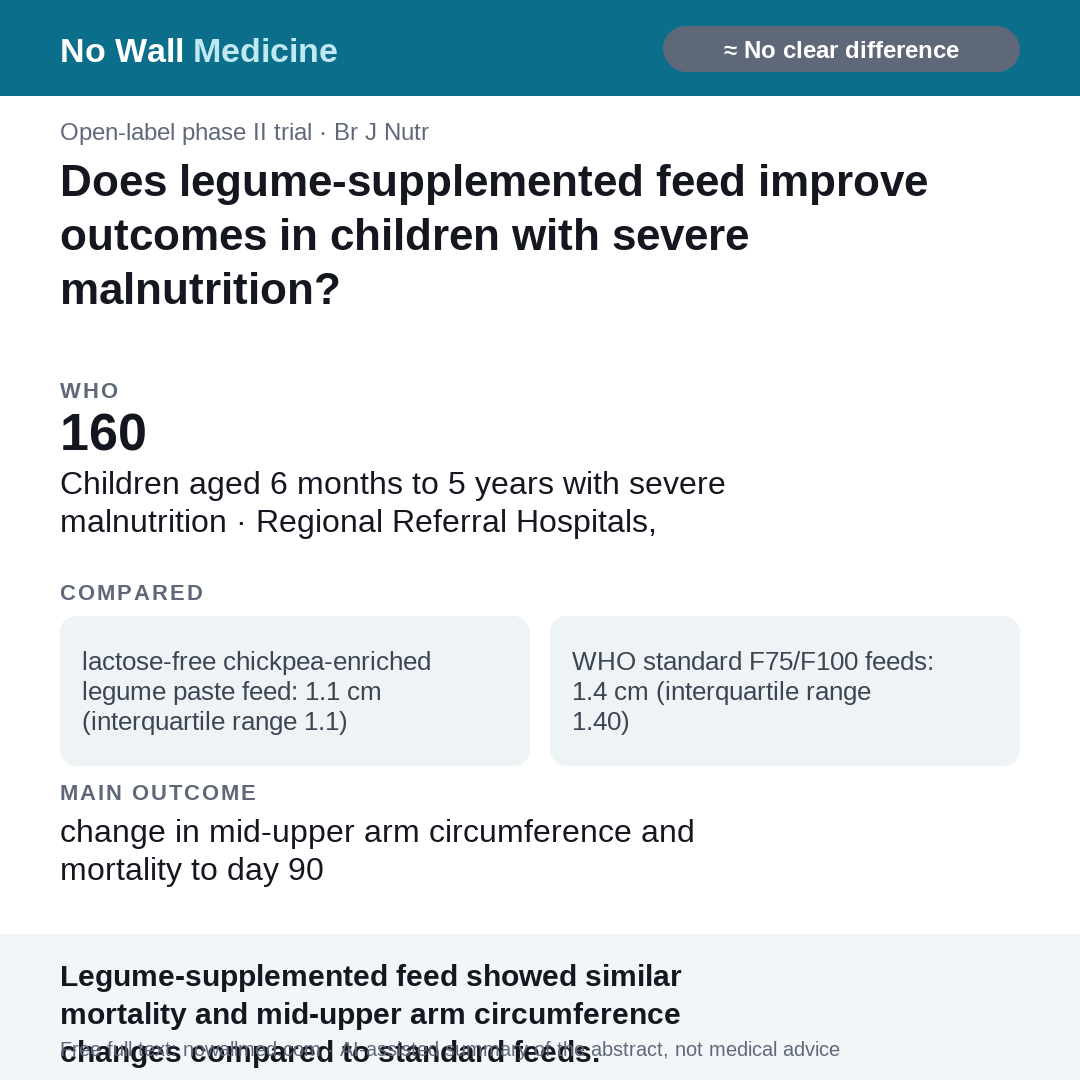
Legume-supplemented feed for children hospitalised with severe malnutrition: a phase II trial
Open-label phase II trialNo clear difference
Does legume-supplemented feed improve outcomes in children with severe malnutrition?
Who
160
Children aged 6 months to 5 years with severe malnutrition · Regional Referral Hospitals, Uganda
Compared
lactose-free chickpea-enriched legume paste feed: 1.1 cm (interquartile range 1.1)
WHO standard F75/F100 feeds: 1.4 cm (interquartile range 1.40)
Main outcome
change in mid-upper arm circumference and mortality to day 90
Result: OR 0.91 (95 % CI 0.40, 2.07)
Bottom line: Legume-supplemented feed showed similar mortality and mid-upper arm circumference changes compared to standard feeds.
Br J Nutr · 2024-06-04Download image
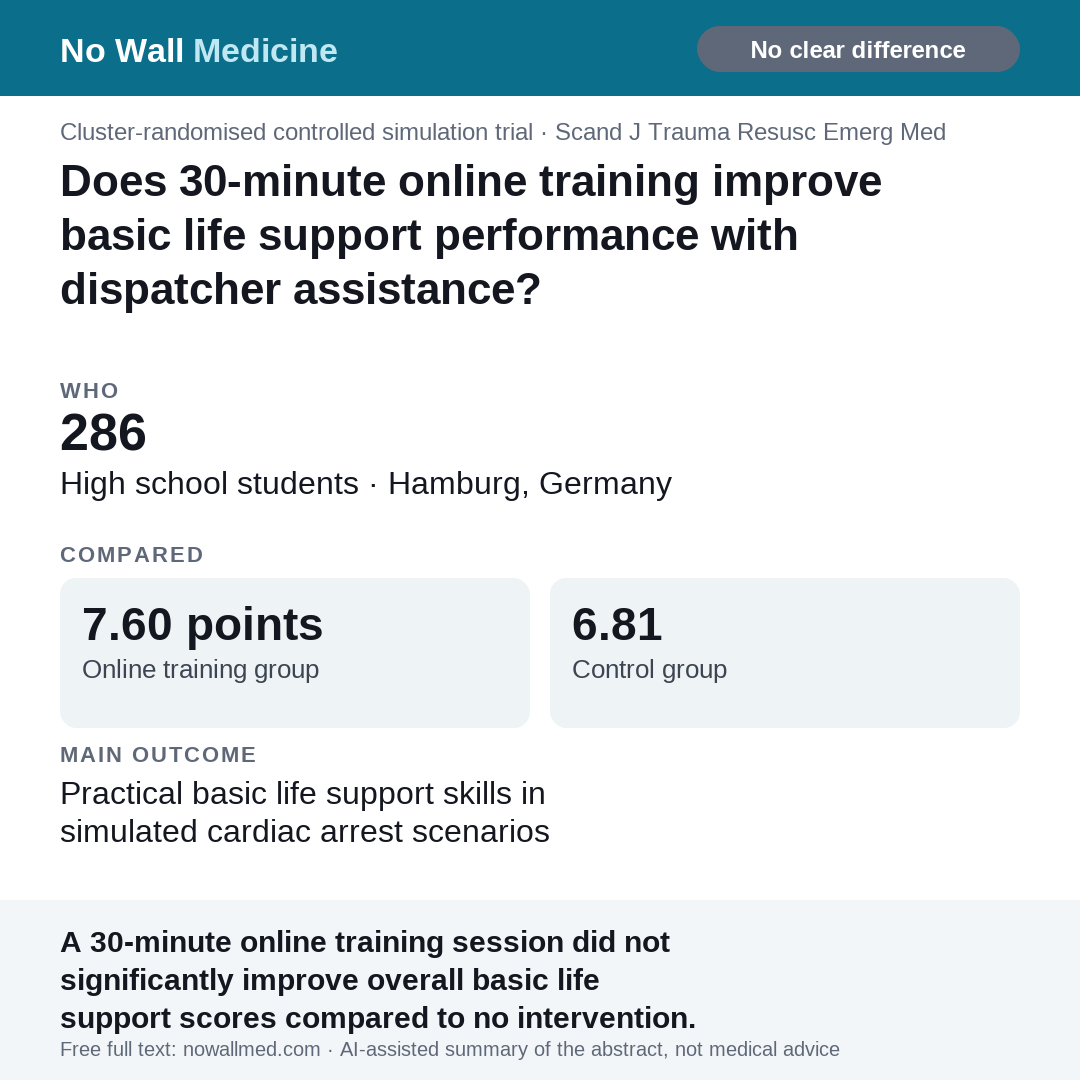
Online training to improve BLS performance with dispatcher assistance? Results of a cluster-randomised controlled simulation trial
Cluster-randomised controlled simulation trialNo clear difference
Does 30-minute online training improve basic life support performance with dispatcher assistance?
Who
286
High school students · Hamburg, Germany
Compared
7.60 pointsOnline training group (95% CI: 6.76 to 8.44)
6.81Control group (95% CI: 5.97 to 7.65)
Main outcome
Practical basic life support skills in simulated cardiac arrest scenarios
Result: mean difference 0.79 (95% CI: -0.40 to 1.97)
Bottom line: A 30-minute online training session did not significantly improve overall basic life support scores compared to no intervention.
Scand J Trauma Resusc Emerg Med · 2024-06-04Download image
Sex Differences in the Global Prevalence of Nonsuicidal Self-Injury in Adolescents: A Meta-Analysis
Meta-analysisBenefit found
What are the sex differences in nonsuicidal self-injury prevalence among adolescents globally?
Who
266491
Adolescents aged 10 to 19 years · 17 countries
Compared
Female adolescents
Male adolescents
Main outcome
Prevalence of nonsuicidal self-injury
Result: odds ratio 1.60 (95% CI 1.29-1.98)
Bottom line: Nonsuicidal self-injury is more prevalent in female adolescents globally, with significant sex differences observed in North America and Europe.
JAMA Netw Open · 2024-06-03Download image

Hand Hygiene Education Components Among First-Year Nursing Students: A Cluster Randomized Clinical Trial
Cluster randomized clinical trialMixed results
What are the effects of instructional video and hand scan images on hand hygiene?
Who
270
First-year nursing students · A university in Hong Kong
Compared
Control group: 3.2 [95% CI, 1.3-5.2] percentage points
Hand scan image group: 3.9 [95% CI, 2.0-5.8] percentage points
Instructional video group: 4.8 [95% CI, 2.9-6.7] percentage points
Hand scan image with instructional video group: 3.5 [95% CI, 1.6-5.4] percentage points
Main outcome
Change in residue from fluorescent lotion remaining on hands
Bottom line: Instructional videos improved handwashing technique, but neither video nor hand scan images significantly enhanced decontamination levels.
JAMA Netw Open · 2024-06-03Download image

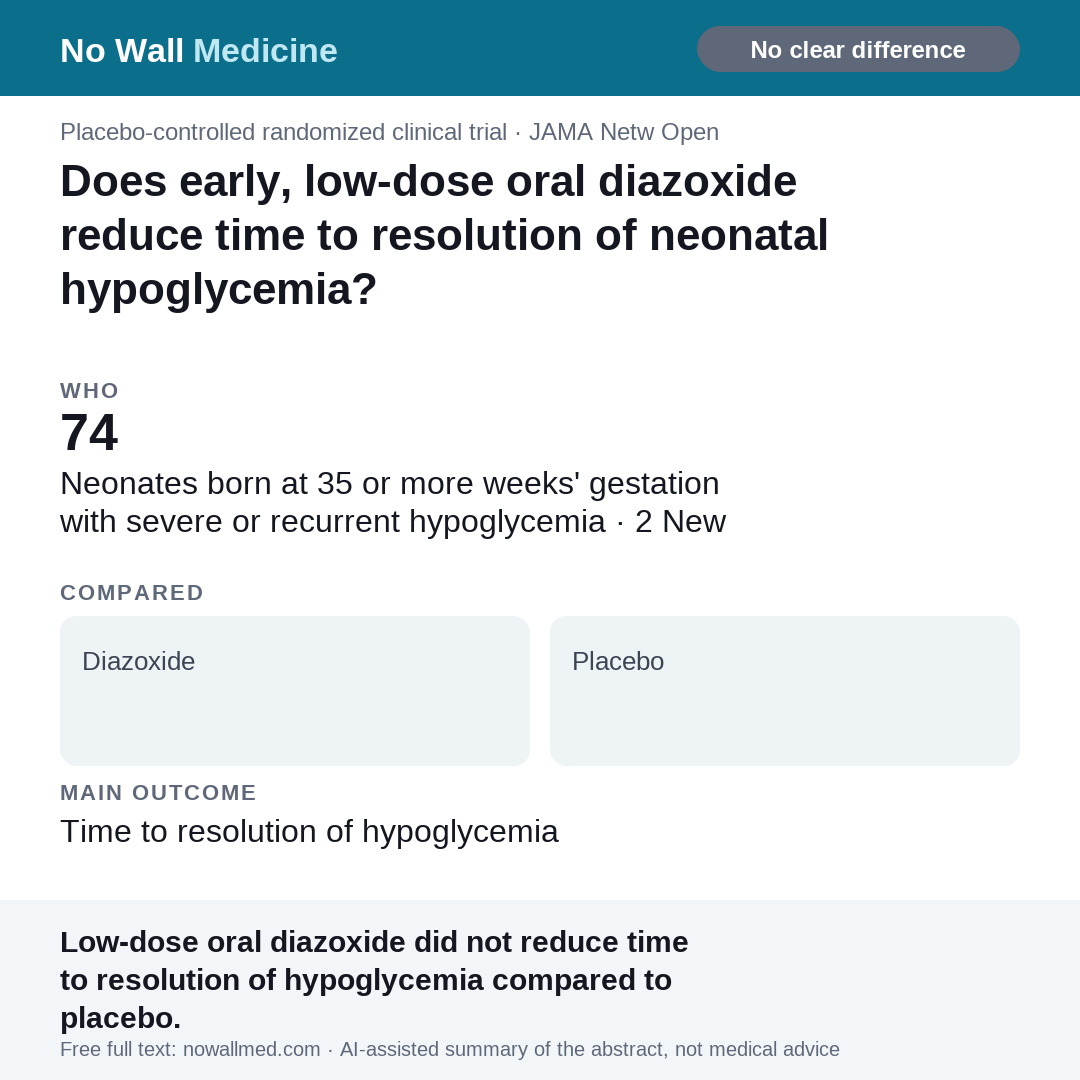
Diazoxide for Severe or Recurrent Neonatal Hypoglycemia: A Randomized Clinical Trial
Placebo-controlled randomized clinical trialNo clear difference
Does early, low-dose oral diazoxide reduce time to resolution of neonatal hypoglycemia?
Who
74
Neonates born at 35 or more weeks' gestation with severe or recurrent hypoglycemia · 2 New Zealand hospitals
Compared
Diazoxide
Placebo
Main outcome
Time to resolution of hypoglycemia
Result: adjusted hazard ratio 1.39 (95% CI 0.84 to 2.23)
Bottom line: Low-dose oral diazoxide did not reduce time to resolution of hypoglycemia compared to placebo.
Limitation: possibly due to increased episodes of elevated blood glucose concentration and longer time to normoglycemia
JAMA Netw Open · 2024-06-03Download image
A sex- and gender-based analysis of alcohol treatment intervention research involving youth: A methodological systematic review
Methodological systematic reviewHarm found
How does alcohol treatment research involving youth account for sex and gender?
Who
86
Youth 30 years of age and under with alcohol use disorder
Compared
Included studies: None defined, measured, and reported both sex and gender accurately
2Studies reporting trans participants
Main outcome
Operationalization of sex characteristics, gender identities, and gender modalities
Bottom line: Most alcohol treatment research for youth conflates sex and gender factors and fails to report both accurately.
PLOS Med · 2024-06-03Download image

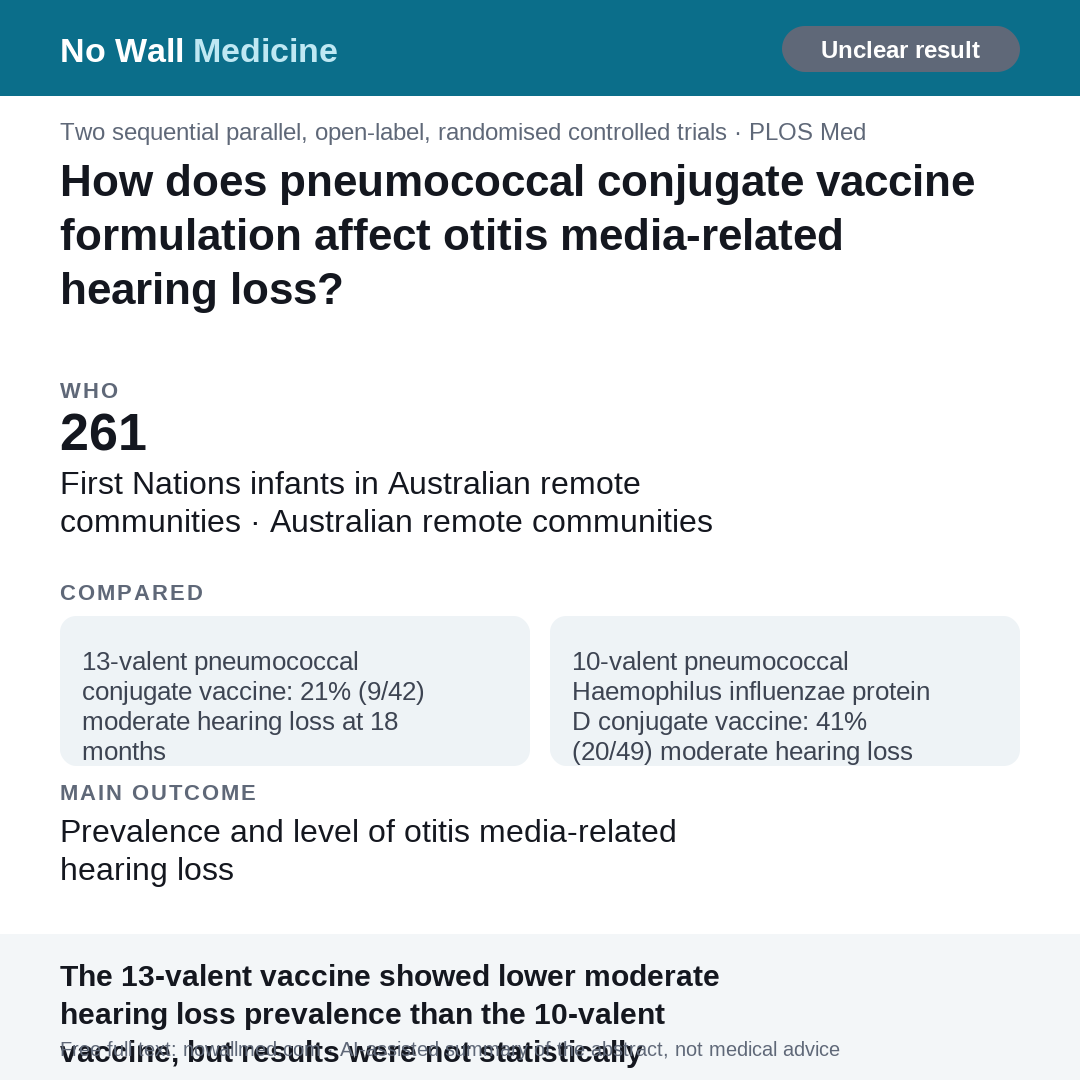
Hearing loss in Australian First Nations children at 6-monthly assessments from age 12 to 36 months: Secondary outcomes from randomised controlled trials of novel pneumococcal conjugate vaccine schedules
Two sequential parallel, open-label, randomised controlled trialsUnclear result
How does pneumococcal conjugate vaccine formulation affect otitis media-related hearing loss?
Who
261
First Nations infants in Australian remote communities · Australian remote communities
Compared
13-valent pneumococcal conjugate vaccine: 21% (9/42) moderate hearing loss at 18 months
10-valent pneumococcal Haemophilus influenzae protein D conjugate vaccine: 41% (20/49) moderate hearing loss at 18 months
Main outcome
Prevalence and level of otitis media-related hearing loss
Result: difference -19%; (95% CI [-38, -1], p = 0.07)
Bottom line: The 13-valent vaccine showed lower moderate hearing loss prevalence than the 10-valent vaccine, but results were not statistically significant.
Limitation: Small sample size, hence low power to reach statistical significance, reducing confidence in the effect size.
PLOS Med · 2024-06-03Download image
Immediate vs Gradual Brace Weaning Protocols in Adolescent Idiopathic Scoliosis: A Randomized Clinical Trial
Open-labeled randomized clinical trialNo clear difference
Does gradual weaning result in better curve magnitude and truncal balance than immediate weaning?
Who
369
Adolescent idiopathic scoliosis patients ready to wean off brace wear · A territory-wide tertiary scoliosis clinic
Compared
Gradual weaning protocol: no significant difference in major Cobb angle change
Immediate weaning protocol: no significant difference in major Cobb angle change
Main outcome
Changes in major curve Cobb angle and truncal balance
Result: difference, -0.3°; 95% CI, -1.2 to 0.7 at 24-month follow-up
Bottom line: Gradual weaning did not show superiority to immediate weaning for maintaining Cobb angle, truncal balance, or health-related quality of life.
JAMA Pediatr · 2024-06-03Download image

Magnesium Sulfate Before Preterm Birth for Neuroprotection: An Updated Cochrane Systematic Review
Systematic review of six randomized controlled trialsBenefit found
Does magnesium sulfate provide fetal neuroprotection for individuals at risk of preterm birth?
Who
5,917
Pregnant participants at risk of imminent preterm birth · High-income countries
Compared
Magnesium sulfate
Placebo
Main outcome
Cerebral palsy and death or cerebral palsy
Result: risk ratio 0.71 (95% CI, 0.57-0.89) for cerebral palsy; risk ratio 0.87 (95% CI, 0.77-0.98) for death or cerebral palsy
Bottom line: Magnesium sulfate reduces the risk of cerebral palsy and death or cerebral palsy in children born preterm.
Limitation: Generalizability of findings to low- and middle-income countries is unknown.
Obstet Gynecol · 2024-06-03Download image

A microbiota-directed complementary food intervention in 12-18-month-old Bangladeshi children improves linear growth
Randomized controlled trial follow-upBenefit found
Does microbiota-directed complementary food improve linear growth in malnourished Bangladeshi children?
Who
124
124 Bangladeshi children with moderate acute malnutrition aged 12-18 months · Bangladesh
Compared
Microbiota-directed complementary food: significantly less stunted during follow-up
Standard ready-to-use supplementary food
Main outcome
linear growth (stunting)
Result: βtreatment group x study week (95% CI) = 0.002 (0.001, 0.003)
Bottom line: Microbiota-directed complementary food reduced stunting in malnourished Bangladeshi children during a two-year follow-up period.
Funded by: BMGF
eBioMedicine · 2024-06-03Download image

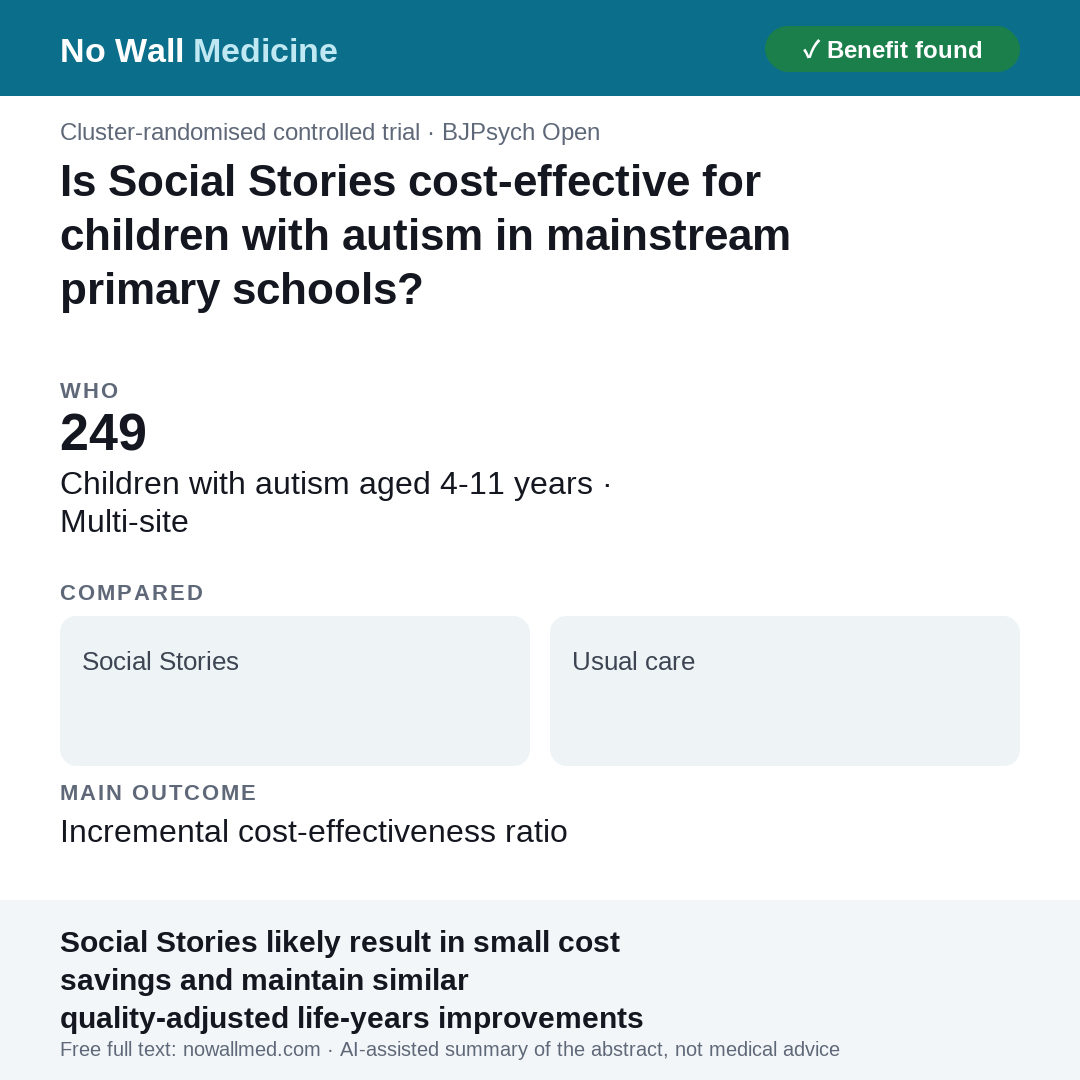
Cost-utility analysis of Social Stories™ for children with autism spectrum disorder in mainstream primary schools: results from a randomised controlled trial
Cluster-randomised controlled trialBenefit found
Is Social Stories cost-effective for children with autism in mainstream primary schools?
Who
249
Children with autism aged 4-11 years · Multi-site
Compared
Social Stories
Usual care
Main outcome
Incremental cost-effectiveness ratio
Result: -£191 per child (95% CI -767.7 to 337.7)
Bottom line: Social Stories likely result in small cost savings and maintain similar quality-adjusted life-years improvements compared with usual care.
BJPsych Open · 2024-06-03Download image
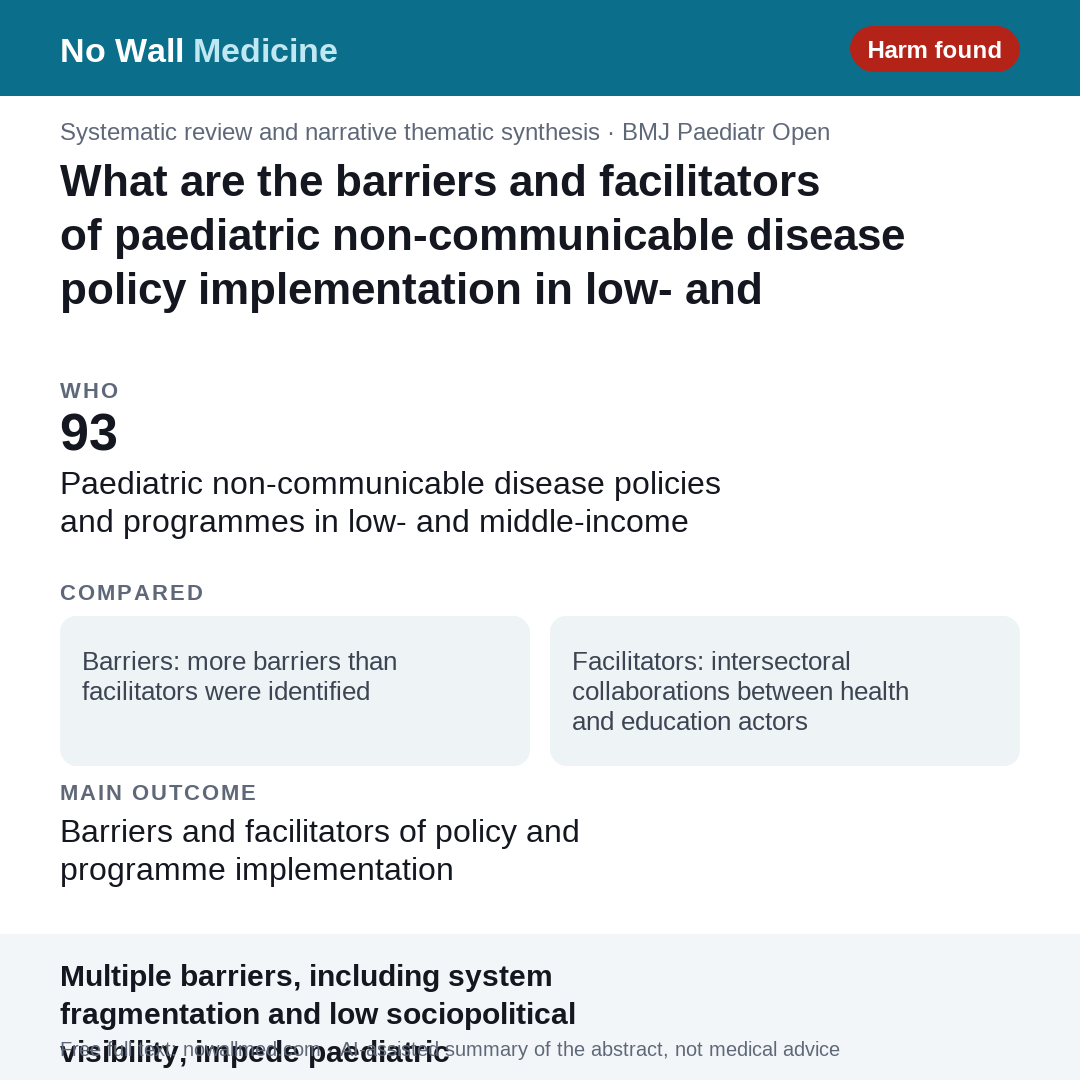
Implementation factors of non-communicable disease policies and programmes for children and youth in low-income and middle-income countries: a systematic review
Systematic review and narrative thematic synthesisHarm found
What are the barriers and facilitators of paediatric non-communicable disease policy implementation in low- and middle-income countries?
Who
93
Paediatric non-communicable disease policies and programmes in low- and middle-income countries · 86 low-income and middle-income countries
Compared
Barriers: more barriers than facilitators were identified
Facilitators: intersectoral collaborations between health and education actors
Main outcome
Barriers and facilitators of policy and programme implementation
Bottom line: Multiple barriers, including system fragmentation and low sociopolitical visibility, impede paediatric non-communicable disease policy implementation in low- and middle-income countries.
BMJ Paediatr Open · 2024-06-03Download image