Visual abstracts
New randomized trials and meta-analyses from leading journals at a glance: who was studied, what was compared, and what was found. Every paper is free to read in full.
All specialtiesCardiology 840Oncology 760Gastroenterology & Hepatology 306Infectious Disease 626Neurology 350Psychiatry & Mental Health 430Pulmonology 365Critical Care 243Endocrinology & Diabetes 480Pediatrics 534Surgery 319Orthopedics & Sports Medicine 161Neurosurgery 89Cardiothoracic & Vascular Surgery 87Plastic & Reconstructive Surgery 118Nephrology 197Rheumatology 108Hematology 181Dermatology 78Ophthalmology 97Obstetrics & Gynecology 261Public & Global Health 167Radiology & Imaging 96Anesthesiology 107Urology 162ENT (Otolaryngology) 86Emergency Medicine 68Allergy & Immunology 58Geriatrics 160Family Medicine & Primary Care 111Medical Genetics & Genomics 91Pathology & Laboratory Medicine 24Physical Medicine & Rehabilitation 148Palliative Care 81Nutrition 223Digital Health & AI 460General Medicine 101
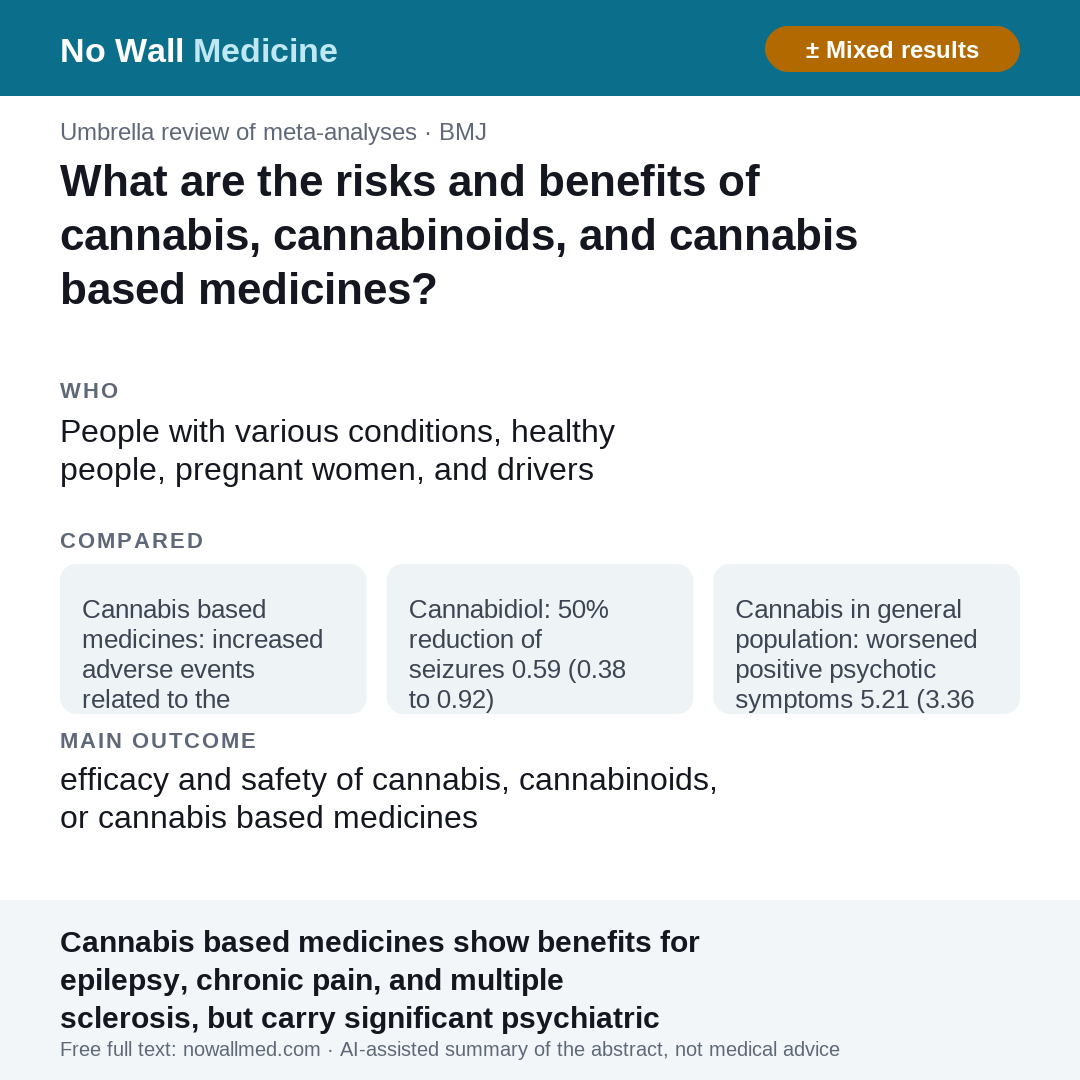
Balancing risks and benefits of cannabis use: umbrella review of meta-analyses of randomised controlled trials and observational studies
Umbrella review of meta-analysesMixed results
What are the risks and benefits of cannabis, cannabinoids, and cannabis based medicines?
Who
People with various conditions, healthy people, pregnant women, and drivers
Compared
Cannabis based medicines: increased adverse events related to the central nervous system 2.84 (95% confidence interval 2.16 to 3.73)
Cannabidiol: 50% reduction of seizures 0.59 (0.38 to 0.92)
Cannabis in general population: worsened positive psychotic symptoms 5.21 (3.36 to 8.01)
Main outcome
efficacy and safety of cannabis, cannabinoids, or cannabis based medicines
Bottom line: Cannabis based medicines show benefits for epilepsy, chronic pain, and multiple sclerosis, but carry significant psychiatric and physical risks.
BMJ · 2023-08-30Download image
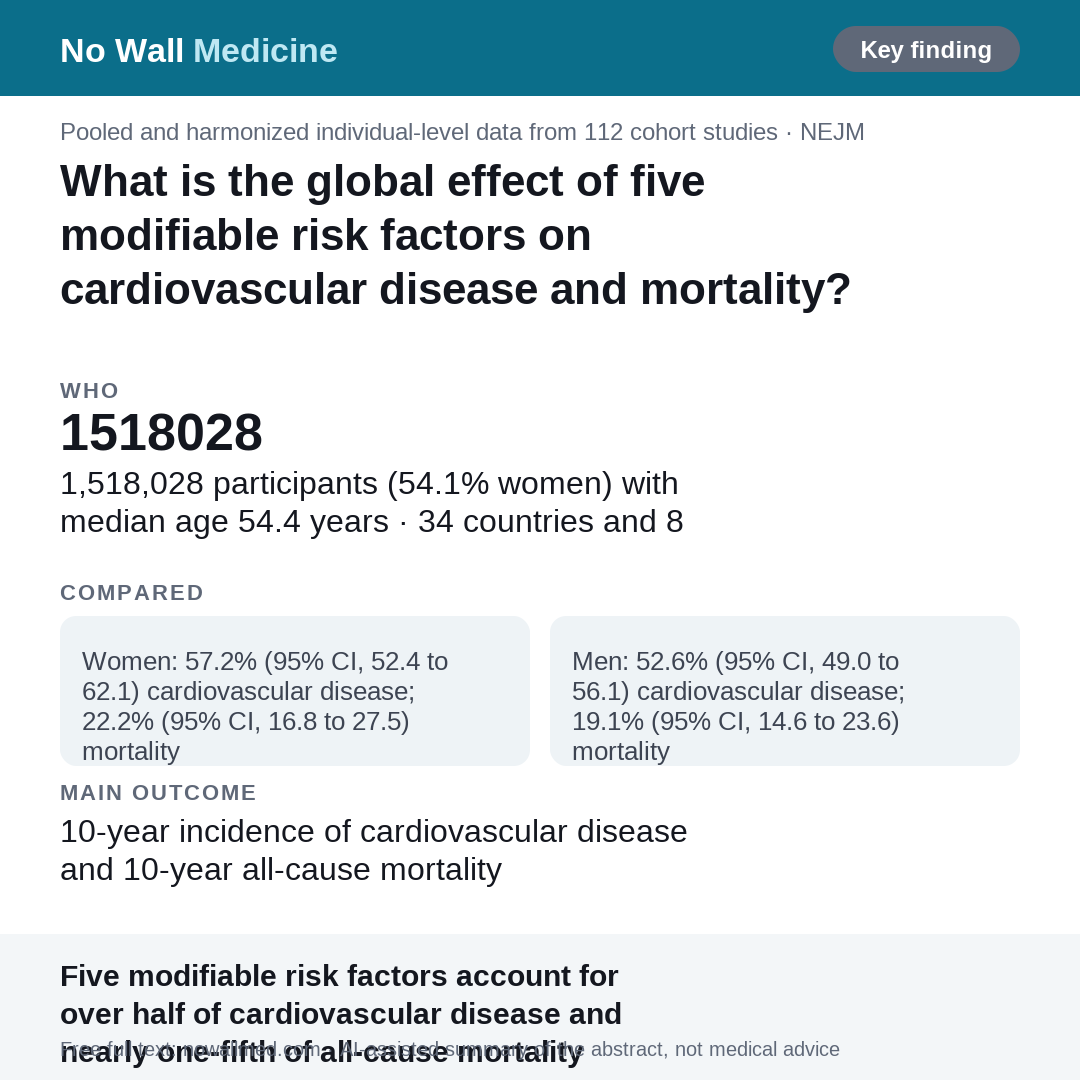
Global Effect of Modifiable Risk Factors on Cardiovascular Disease and Mortality
Pooled and harmonized individual-level data from 112 cohort studiesBenefit found
What is the global effect of five modifiable risk factors on cardiovascular disease and mortality?
Who
1518028
1,518,028 participants (54.1% women) with median age 54.4 years · 34 countries and 8 geographic regions
Compared
Women: 57.2% (95% CI, 52.4 to 62.1) cardiovascular disease; 22.2% (95% CI, 16.8 to 27.5) mortality
Men: 52.6% (95% CI, 49.0 to 56.1) cardiovascular disease; 19.1% (95% CI, 14.6 to 23.6) mortality
Main outcome
10-year incidence of cardiovascular disease and 10-year all-cause mortality
Bottom line: Five modifiable risk factors account for over half of cardiovascular disease and nearly one-fifth of all-cause mortality globally.
Funded by: German Center for Cardiovascular Research (DZHK)
NEJM · 2023-08-26Download image
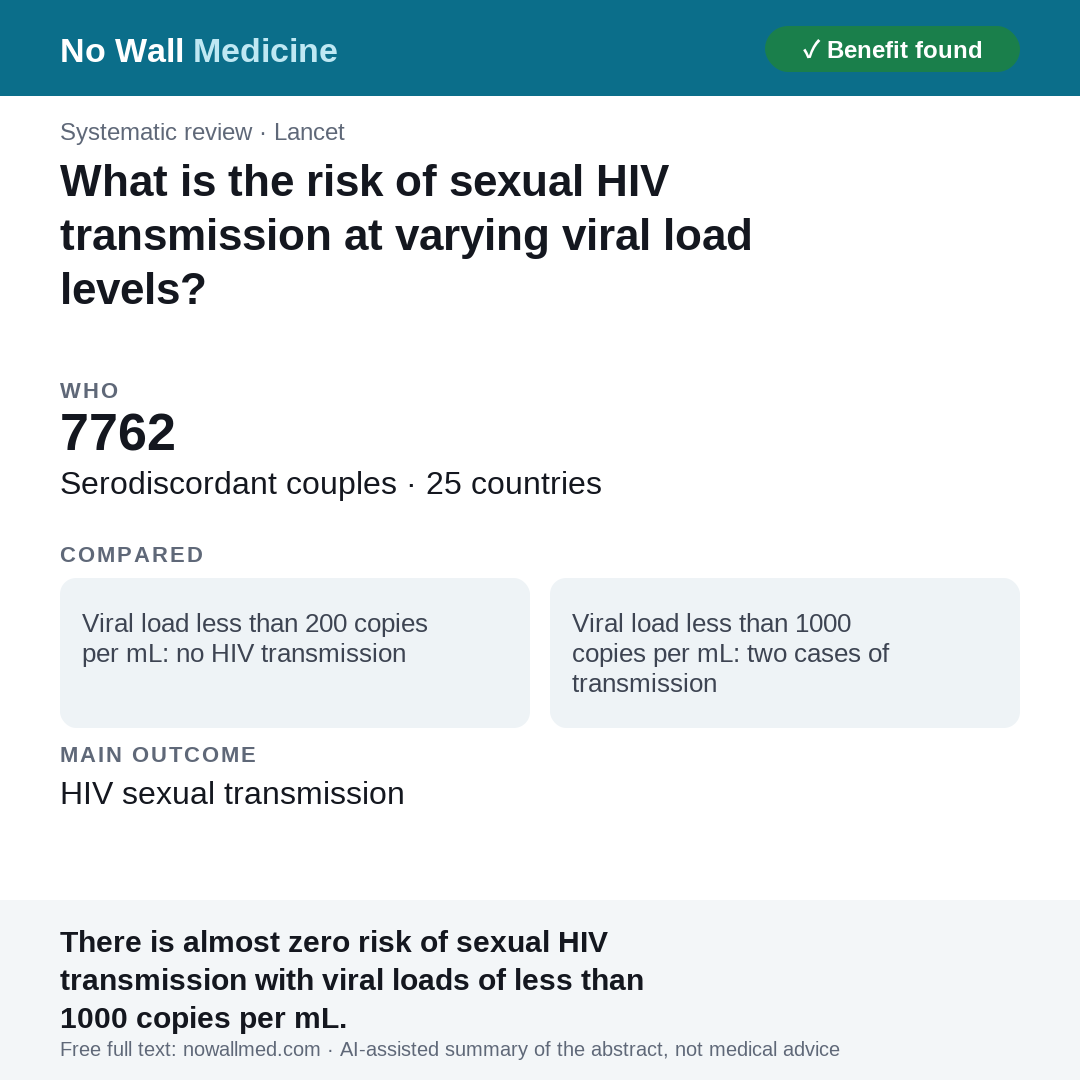
The risk of sexual transmission of HIV in individuals with low-level HIV viraemia: a systematic review
Systematic reviewBenefit found
What is the risk of sexual HIV transmission at varying viral load levels?
Who
7762
Serodiscordant couples · 25 countries
Compared
Viral load less than 200 copies per mL: no HIV transmission
Viral load less than 1000 copies per mL: two cases of transmission
Main outcome
HIV sexual transmission
Bottom line: There is almost zero risk of sexual HIV transmission with viral loads of less than 1000 copies per mL.
Limitation: Interpretation of transmission cases was complicated by long intervals between transmission and the most recent viral load result.
Funded by: Bill & Melinda Gates Foundation
Lancet · 2023-07-22Download image
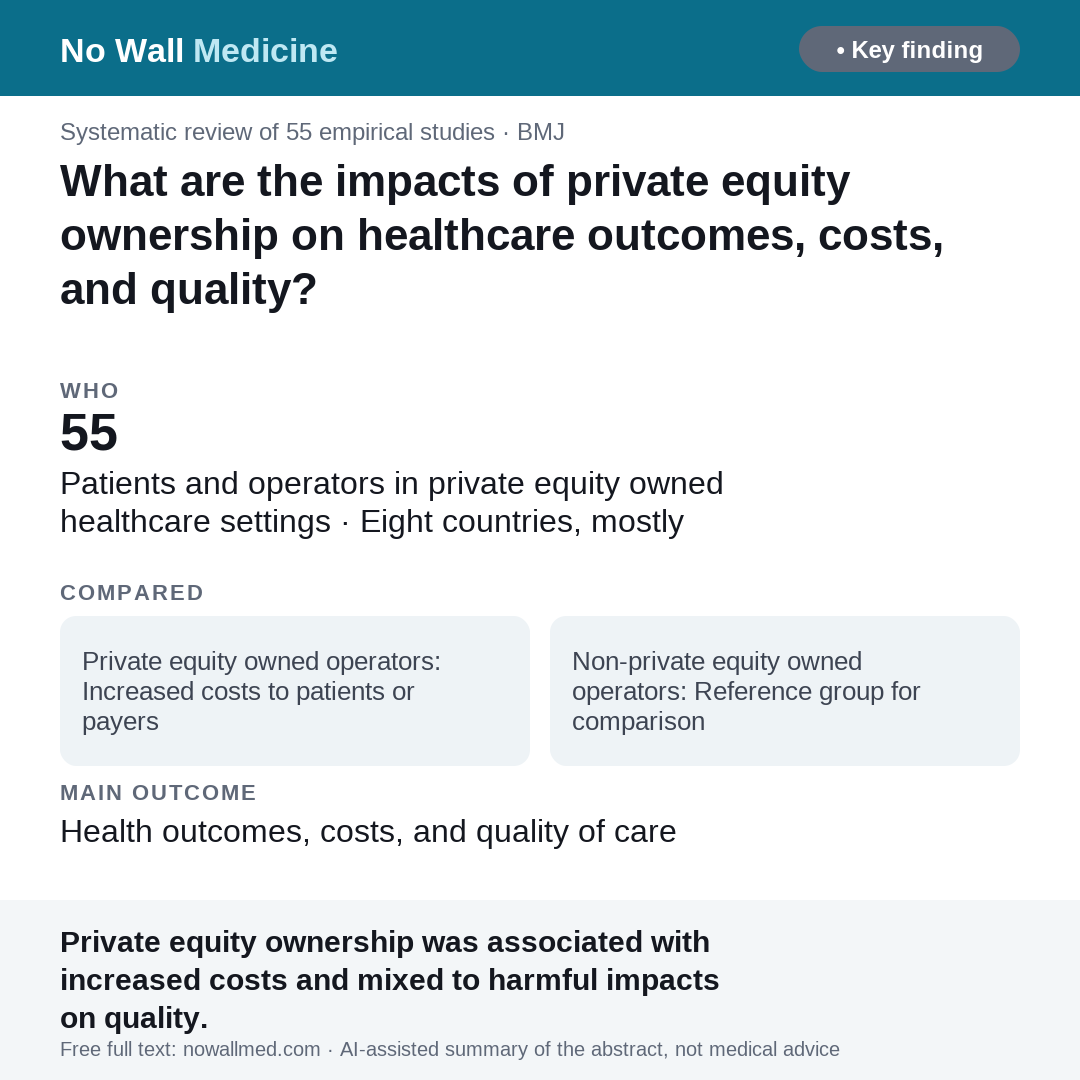
Evaluating trends in private equity ownership and impacts on health outcomes, costs, and quality: systematic review
Systematic reviewHarm found
What are the trends and impacts of private equity ownership on healthcare?
Who
55
Healthcare operators across various settings · Eight countries, mostly in the United States
Compared
Private equity ownership: increases in costs to patients or payers
Private equity ownership: mixed to harmful impacts on quality
Main outcome
Health outcomes, costs, and quality
Bottom line: Private equity ownership rapidly increased and is associated with higher costs and mixed to harmful quality impacts.
Limitation: Risk of bias and frequent geographic focus on the United States may limit international generalizability.
BMJ · 2023-07-19Download image
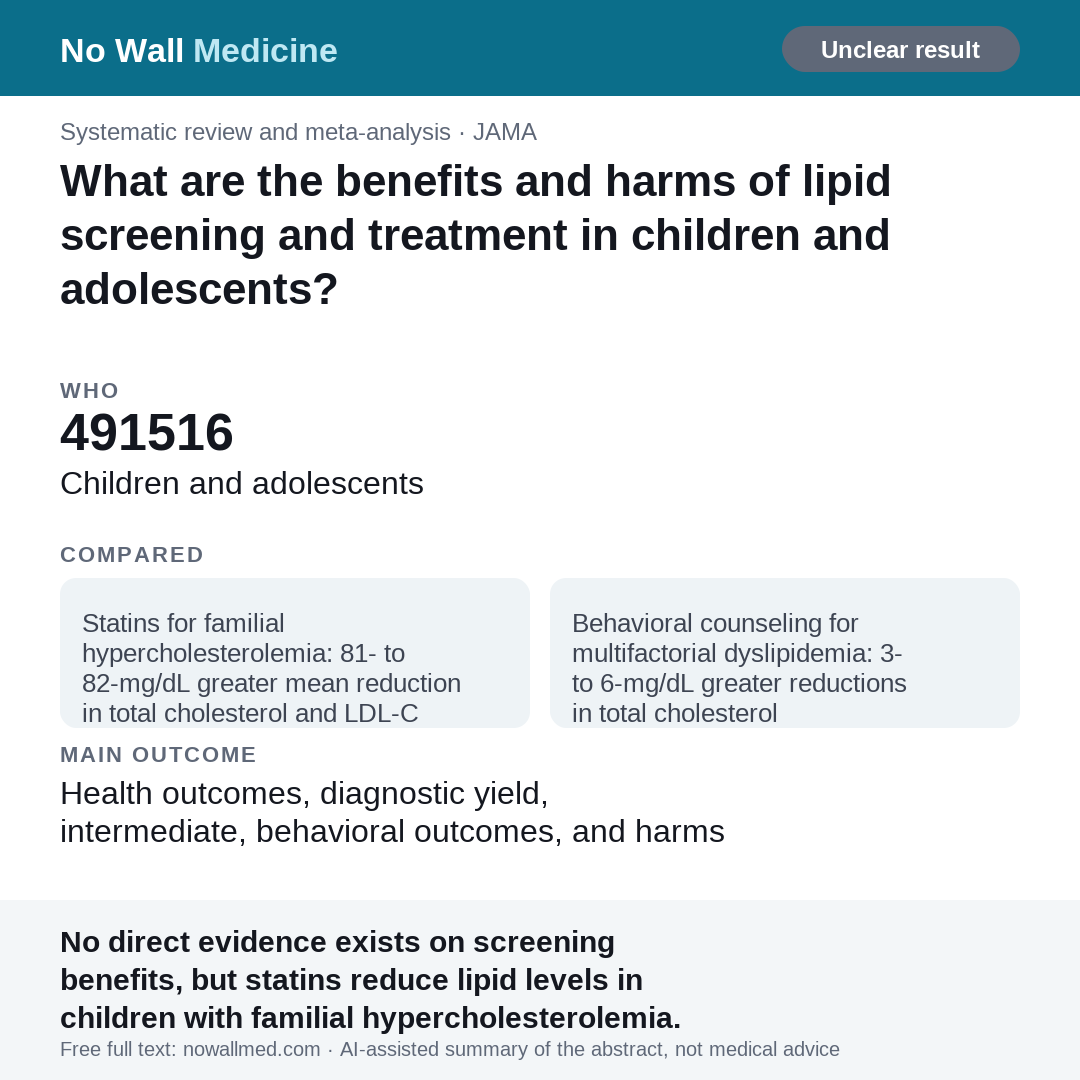
Screening for Lipid Disorders in Children and Adolescents: Updated Evidence Report and Systematic Review for the US Preventive Services Task Force
Systematic review and meta-analysisUnclear result
What are the benefits and harms of lipid screening and treatment in children and adolescents?
Who
491516
Children and adolescents
Compared
Statins for familial hypercholesterolemia: 81- to 82-mg/dL greater mean reduction in total cholesterol and LDL-C
Behavioral counseling for multifactorial dyslipidemia: 3- to 6-mg/dL greater reductions in total cholesterol
Main outcome
Health outcomes, diagnostic yield, intermediate, behavioral outcomes, and harms
Bottom line: No direct evidence exists on screening benefits, but statins reduce lipid levels in children with familial hypercholesterolemia.
JAMA · 2023-07-18Download image
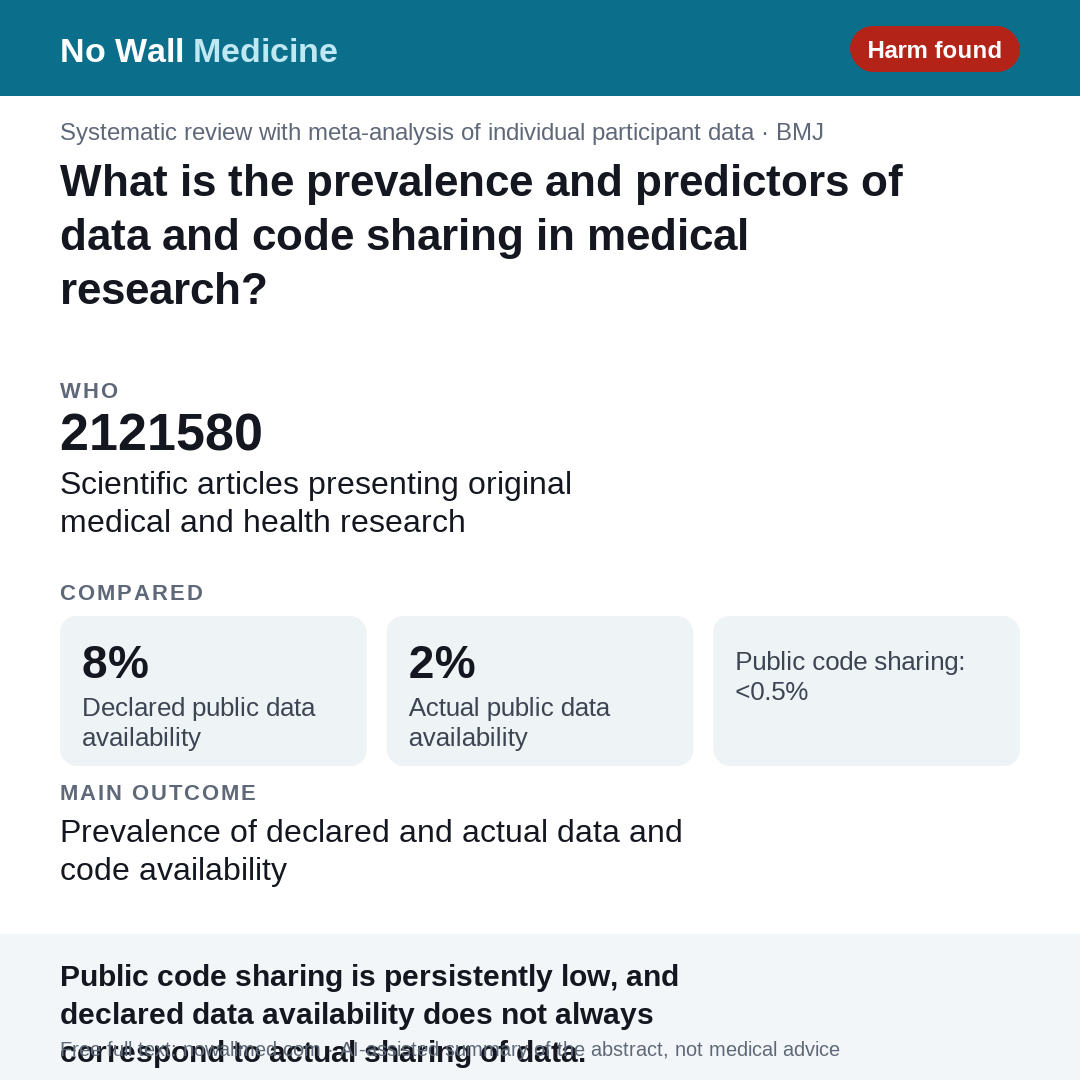
Prevalence and predictors of data and code sharing in the medical and health sciences: systematic review with meta-analysis of individual participant data
Systematic review with meta-analysis of individual participant dataHarm found
What is the prevalence and predictors of data and code sharing in medical research?
Who
2121580
Scientific articles presenting original medical and health research
Compared
8%Declared public data availability (95% confidence interval 5% to 11%)
2%Actual public data availability (1% to 3%)
Public code sharing: <0.5%
Main outcome
Prevalence of declared and actual data and code availability
Bottom line: Public code sharing is persistently low, and declared data availability does not always correspond to actual sharing of data.
Limitation: Only eight studies (8%) were classified as having a low risk of bias.
BMJ · 2023-07-11Download image
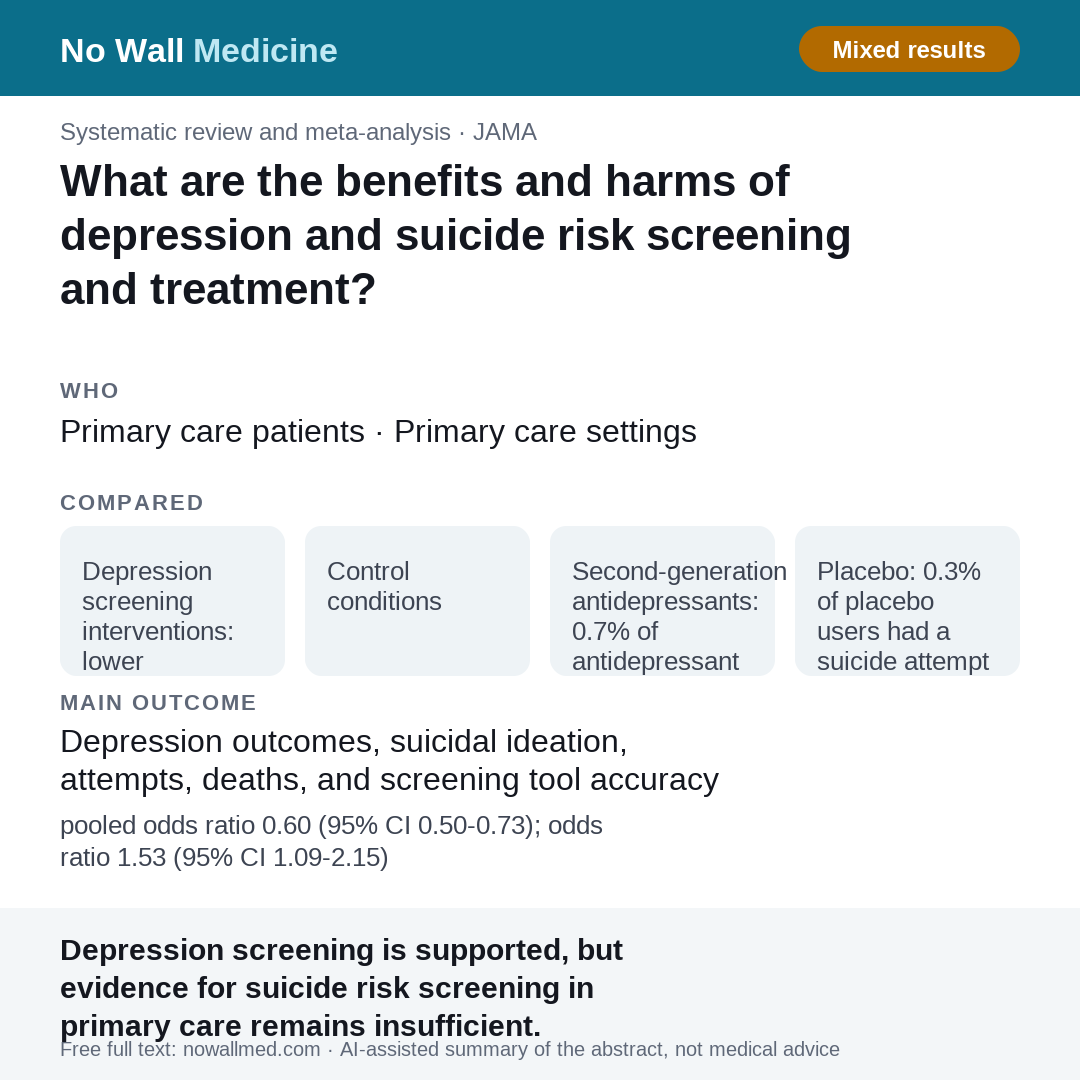
Depression and Suicide Risk Screening: Updated Evidence Report and Systematic Review for the US Preventive Services Task Force
Systematic review and meta-analysisMixed results
What are the benefits and harms of depression and suicide risk screening and treatment?
Who
Primary care patients · Primary care settings
Compared
Depression screening interventions: lower prevalence of depression or clinically important depressive symptomatology
Control conditions
Second-generation antidepressants: 0.7% of antidepressant users had a suicide attempt
Placebo: 0.3% of placebo users had a suicide attempt
Main outcome
Depression outcomes, suicidal ideation, attempts, deaths, and screening tool accuracy
Result: pooled odds ratio 0.60 (95% CI 0.50-0.73); odds ratio 1.53 (95% CI 1.09-2.15)
Bottom line: Depression screening is supported, but evidence for suicide risk screening in primary care remains insufficient.
JAMA · 2023-06-20Download image
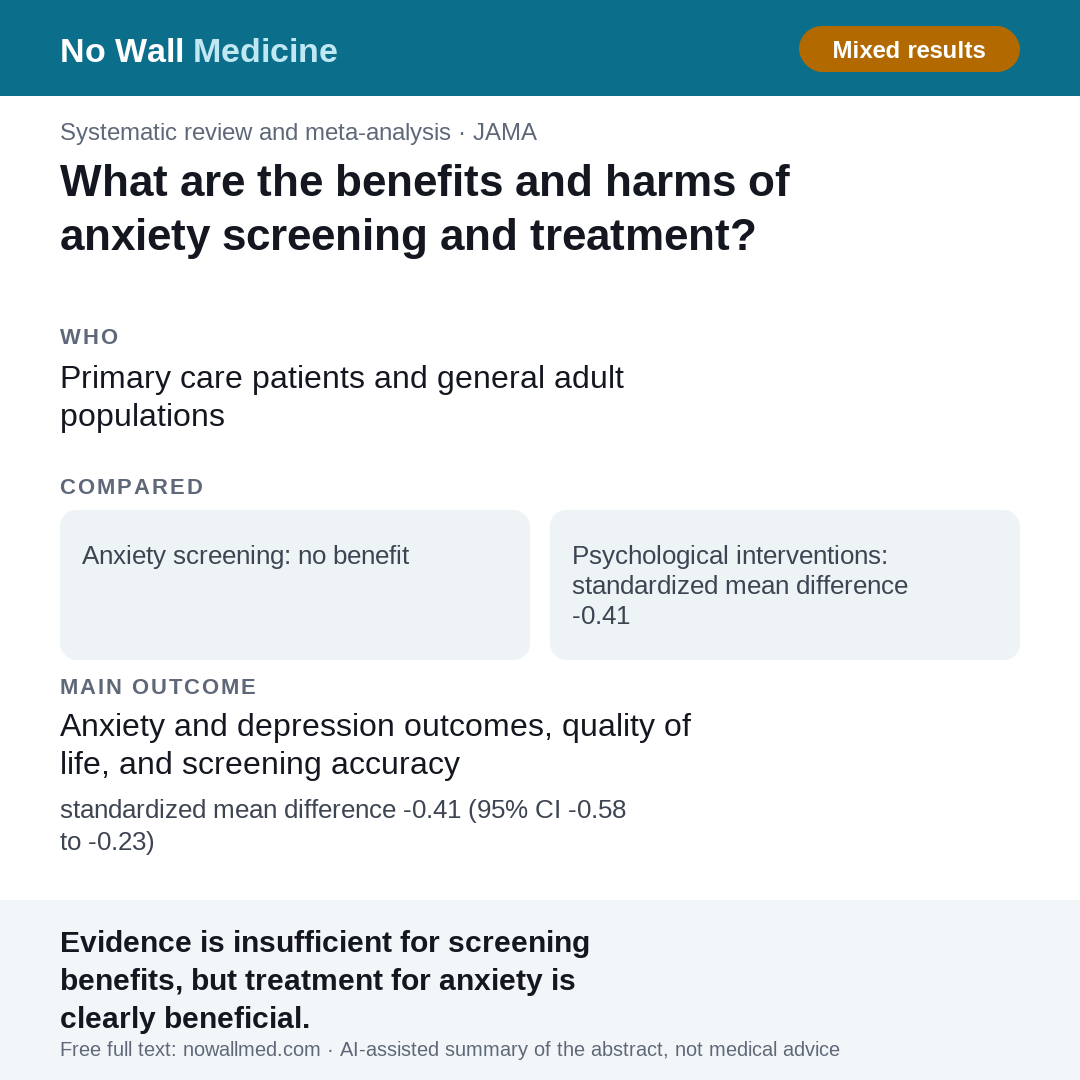
Anxiety Screening: Evidence Report and Systematic Review for the US Preventive Services Task Force
Systematic review and meta-analysisMixed results
What are the benefits and harms of anxiety screening and treatment?
Who
Primary care patients and general adult populations
Compared
Anxiety screening: no benefit
Psychological interventions: standardized mean difference -0.41
Main outcome
Anxiety and depression outcomes, quality of life, and screening accuracy
Result: standardized mean difference -0.41 (95% CI -0.58 to -0.23)
Bottom line: Evidence is insufficient for screening benefits, but treatment for anxiety is clearly beneficial.
Limitation: Evidence was limited for other instruments and other anxiety disorders.
JAMA · 2023-06-20Download image
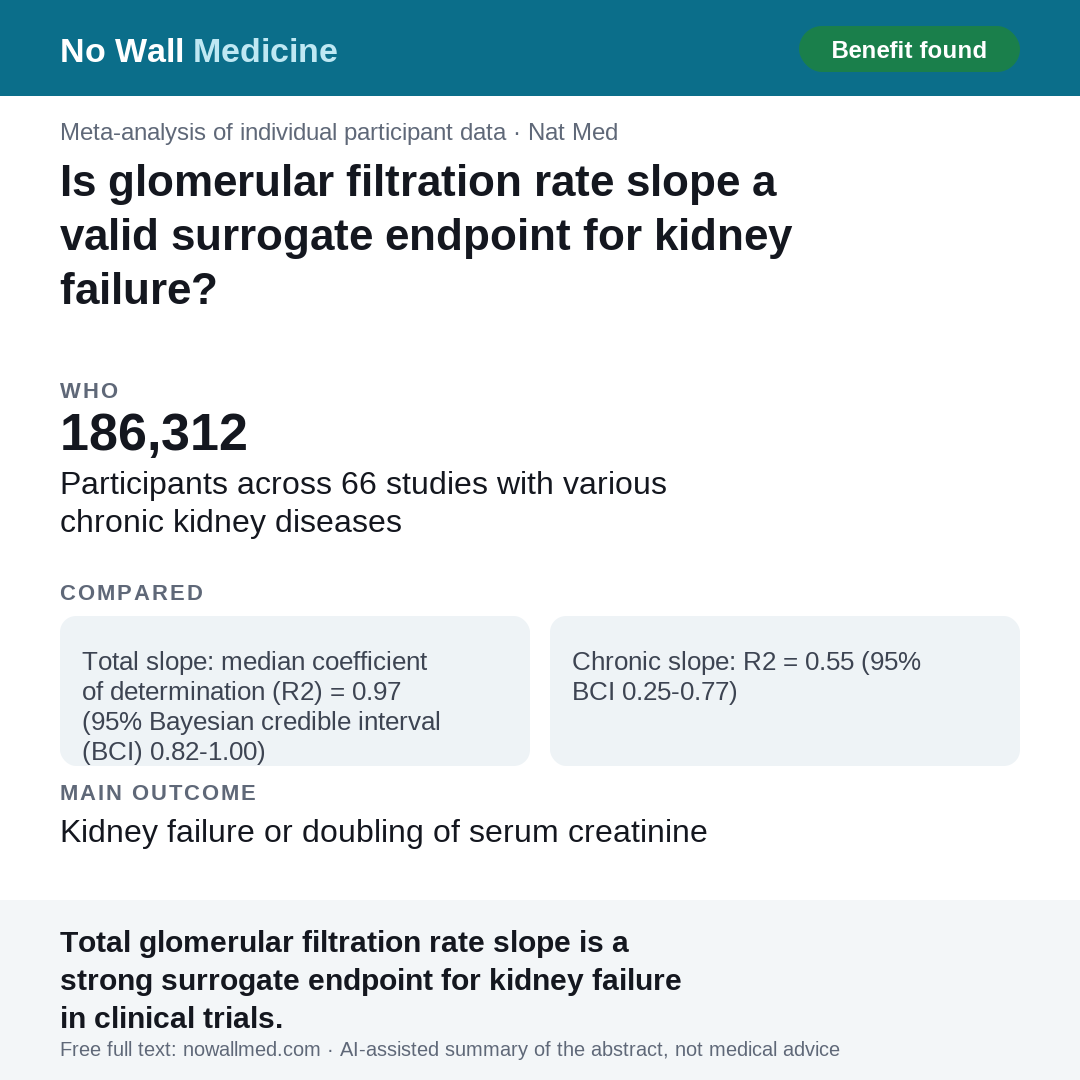
A meta-analysis of GFR slope as a surrogate endpoint for kidney failure
Meta-analysis of individual participant dataBenefit found
Is glomerular filtration rate slope a valid surrogate endpoint for kidney failure?
Who
186,312
Participants across 66 studies with various chronic kidney diseases
Compared
Total slope: median coefficient of determination (R2) = 0.97 (95% Bayesian credible interval (BCI) 0.82-1.00)
Chronic slope: R2 = 0.55 (95% BCI 0.25-0.77)
Main outcome
Kidney failure or doubling of serum creatinine
Result: median coefficient of determination (R2) = 0.97 (95% BCI 0.82-1.00)
Bottom line: Total glomerular filtration rate slope is a strong surrogate endpoint for kidney failure in clinical trials.
Nat Med · 2023-06-17Download image
Genetically adjusted PSA levels for prostate cancer screening
Meta-analysis of menBenefit found
Does genetically adjusted PSA improve screening?
Who
95768
men of European ancestry and others
Compared
Genetically adjusted PSA
Unadjusted PSA
Main outcome
prostate cancer detection
Result: odds ratio 3.44 (no confidence interval given)
Bottom line: Genetically adjusted PSA improves screening
Nat Med · 2023-06-01Download image

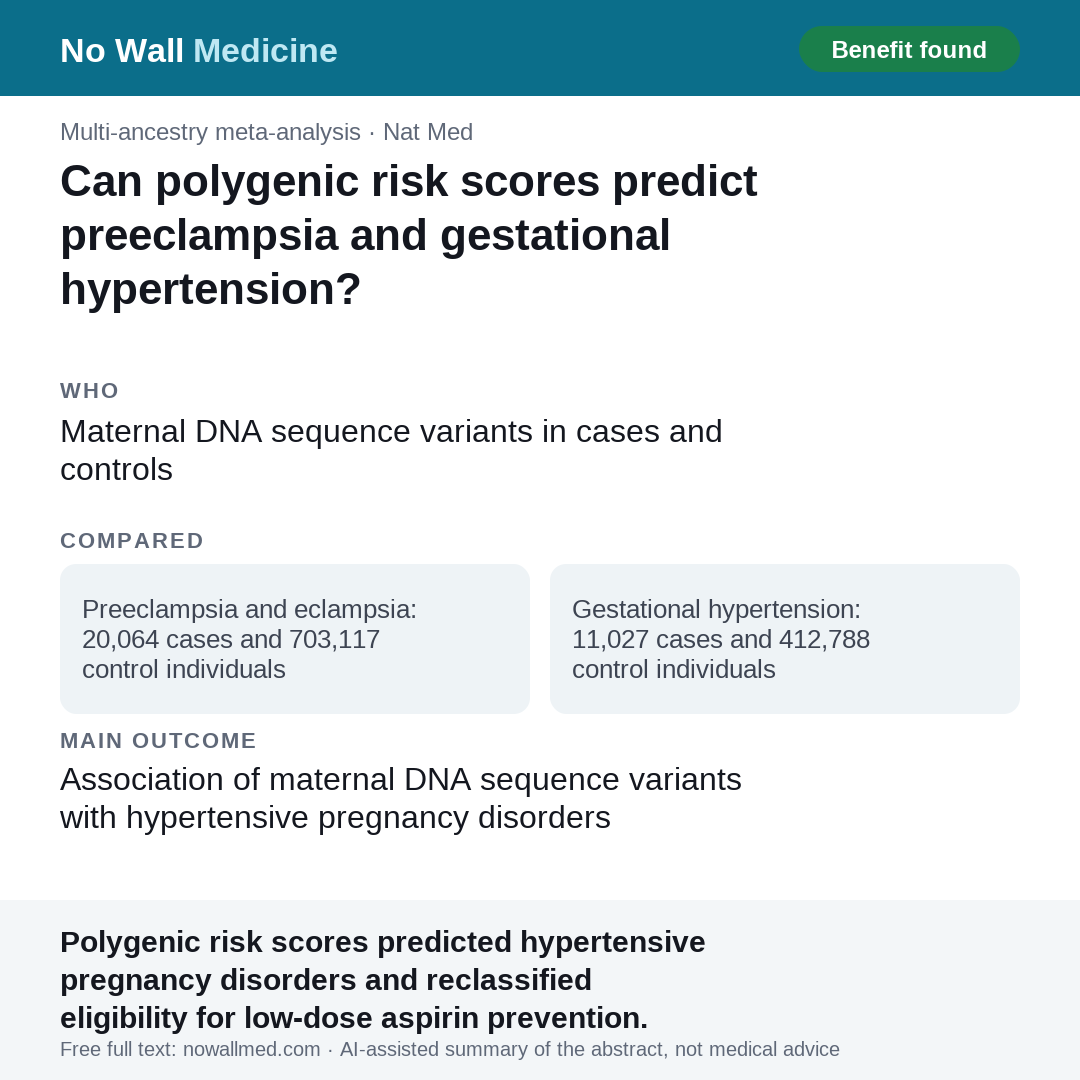
Polygenic prediction of preeclampsia and gestational hypertension
Multi-ancestry meta-analysisBenefit found
Can polygenic risk scores predict preeclampsia and gestational hypertension?
Who
Maternal DNA sequence variants in cases and controls
Compared
Preeclampsia and eclampsia: 20,064 cases and 703,117 control individuals
Gestational hypertension: 11,027 cases and 412,788 control individuals
Main outcome
Association of maternal DNA sequence variants with hypertensive pregnancy disorders
Bottom line: Polygenic risk scores predicted hypertensive pregnancy disorders and reclassified eligibility for low-dose aspirin prevention.
Nat Med · 2023-05-29Download image
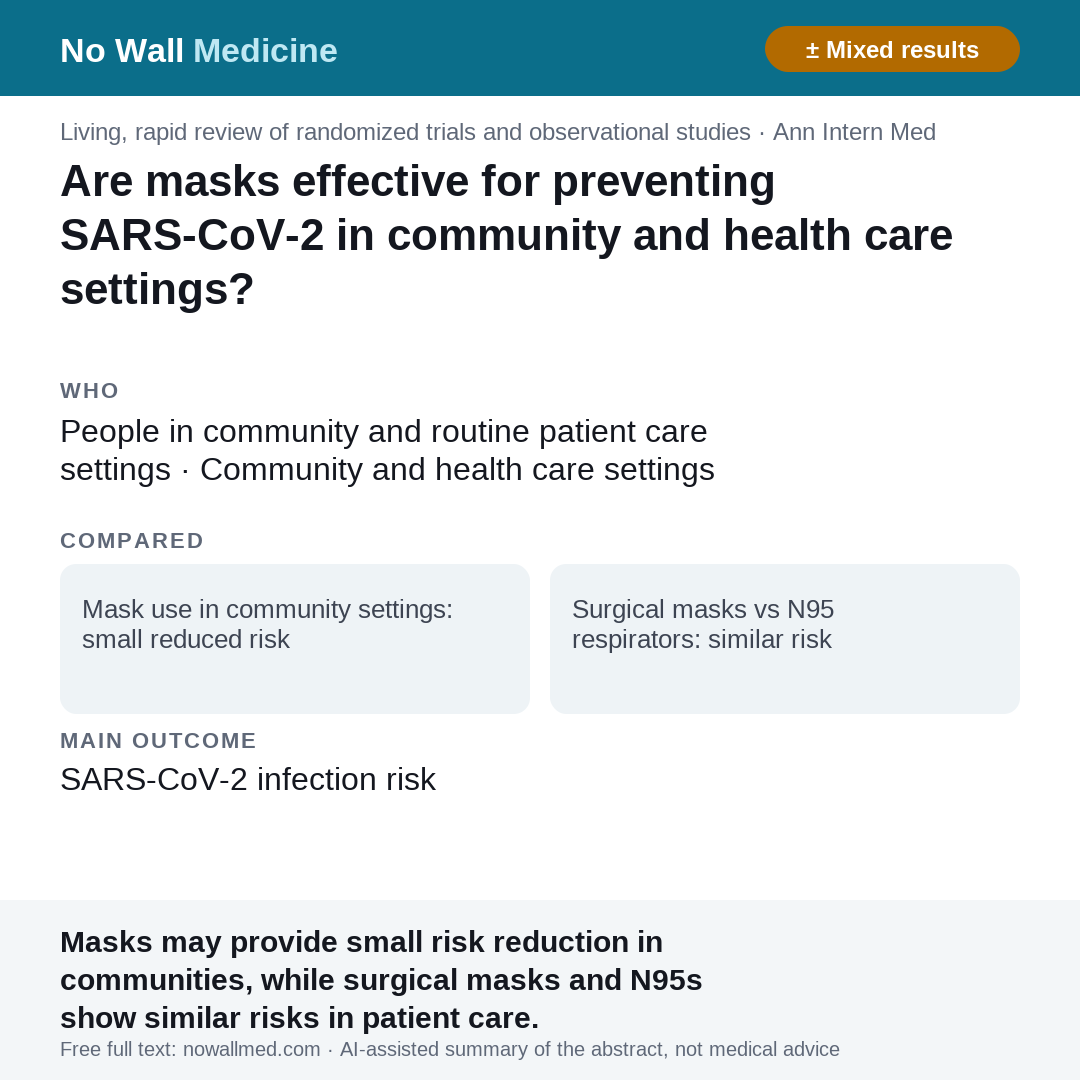
Major Update: Masks for Prevention of SARS-CoV-2 in Health Care and Community Settings-Final Update of a Living, Rapid Review
Living, rapid review of randomized trials and observational studiesMixed results
Are masks effective for preventing SARS-CoV-2 in community and health care settings?
Who
People in community and routine patient care settings · Community and health care settings
Compared
Mask use in community settings: small reduced risk
Surgical masks vs N95 respirators: similar risk
Main outcome
SARS-CoV-2 infection risk
Bottom line: Masks may provide small risk reduction in communities, while surgical masks and N95s show similar risks in patient care.
Limitation: Few randomized trials, methodological limitations, imprecision, and uncertain applicability to Omicron variant era.
Ann Intern Med · 2023-05-16Download image
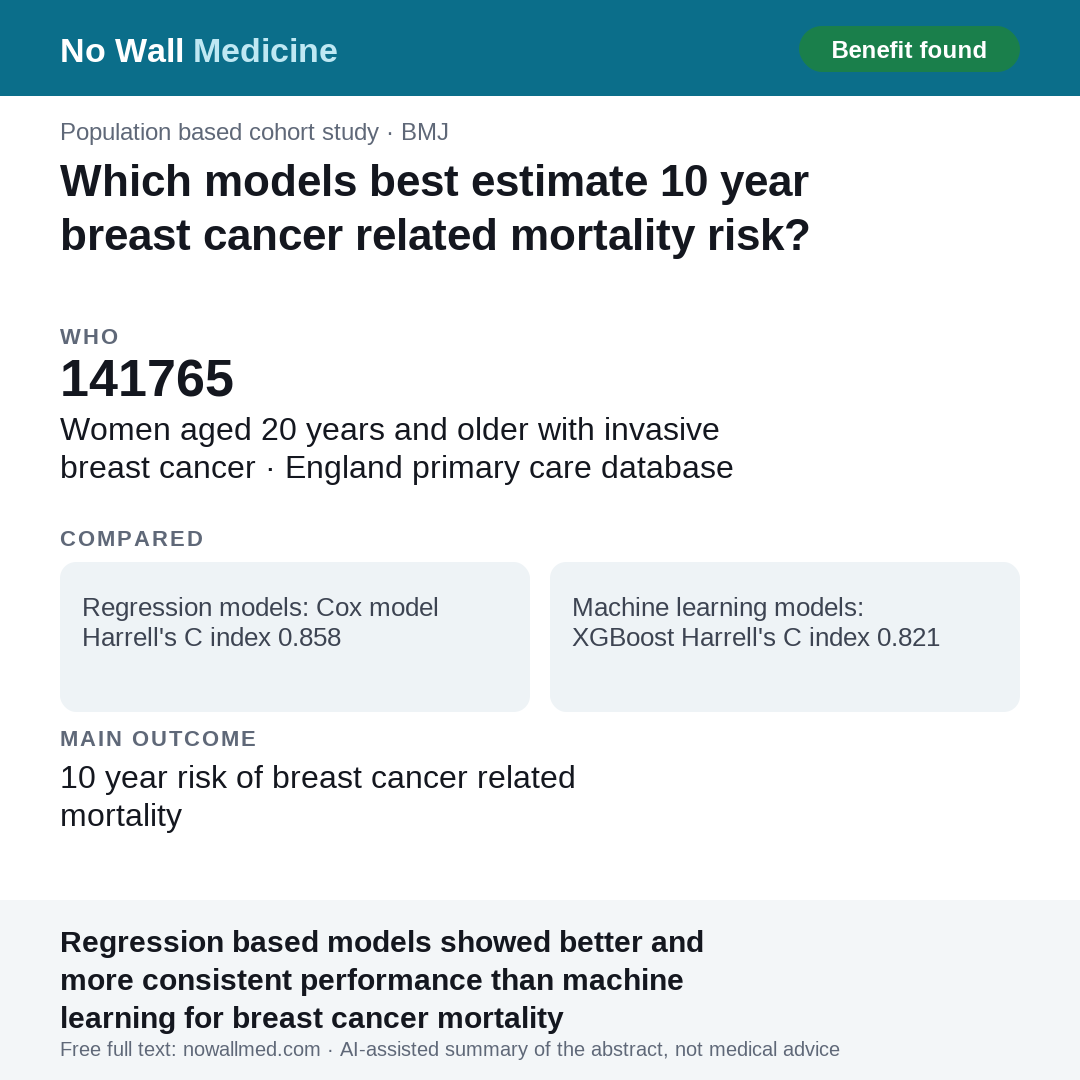
Development and internal-external validation of statistical and machine learning models for breast cancer prognostication: cohort study
Population based cohort studyBenefit found
Which models best estimate 10 year breast cancer related mortality risk?
Who
141765
Women aged 20 years and older with invasive breast cancer · England primary care database
Compared
Regression models: Cox model Harrell's C index 0.858
Machine learning models: XGBoost Harrell's C index 0.821
Main outcome
10 year risk of breast cancer related mortality
Result: Cox model Harrell's C index 0.858 (95% CI 0.853 to 0.864)
Bottom line: Regression based models showed better and more consistent performance than machine learning for breast cancer mortality prediction.
BMJ · 2023-05-10Download image
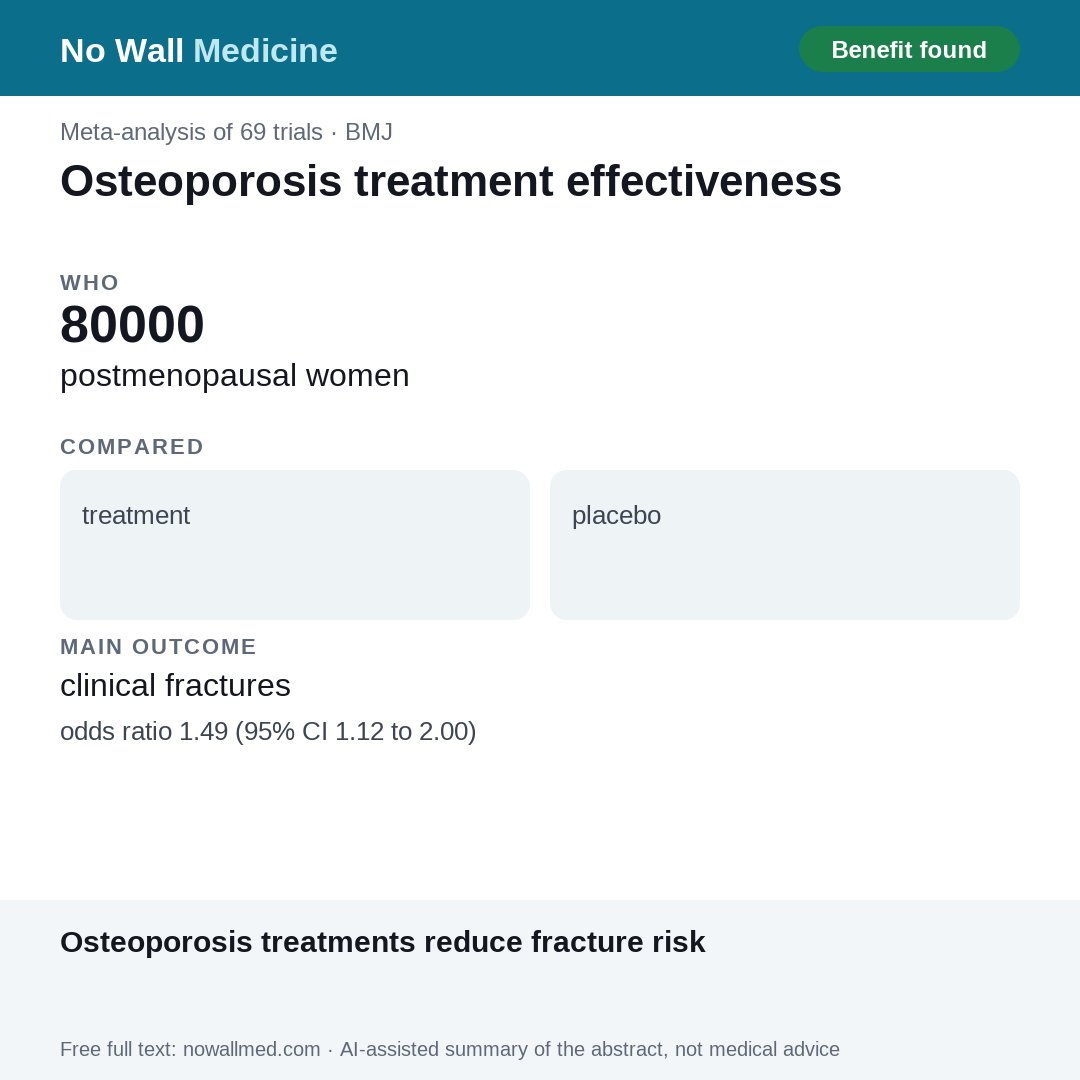
Fracture risk reduction and safety by osteoporosis treatment compared with placebo or active comparator in postmenopausal women: systematic review, network meta-analysis, and meta-regression analysis of randomised clinical trials
Meta-analysis of 69 trialsBenefit found
Osteoporosis treatment effectiveness
Who
80000
postmenopausal women
Compared
treatment
placebo
Main outcome
clinical fractures
Result: odds ratio 1.49 (95% CI 1.12 to 2.00)
Bottom line: Osteoporosis treatments reduce fracture risk
Limitation: serious risk of bias and imprecision
BMJ · 2023-05-02Download image
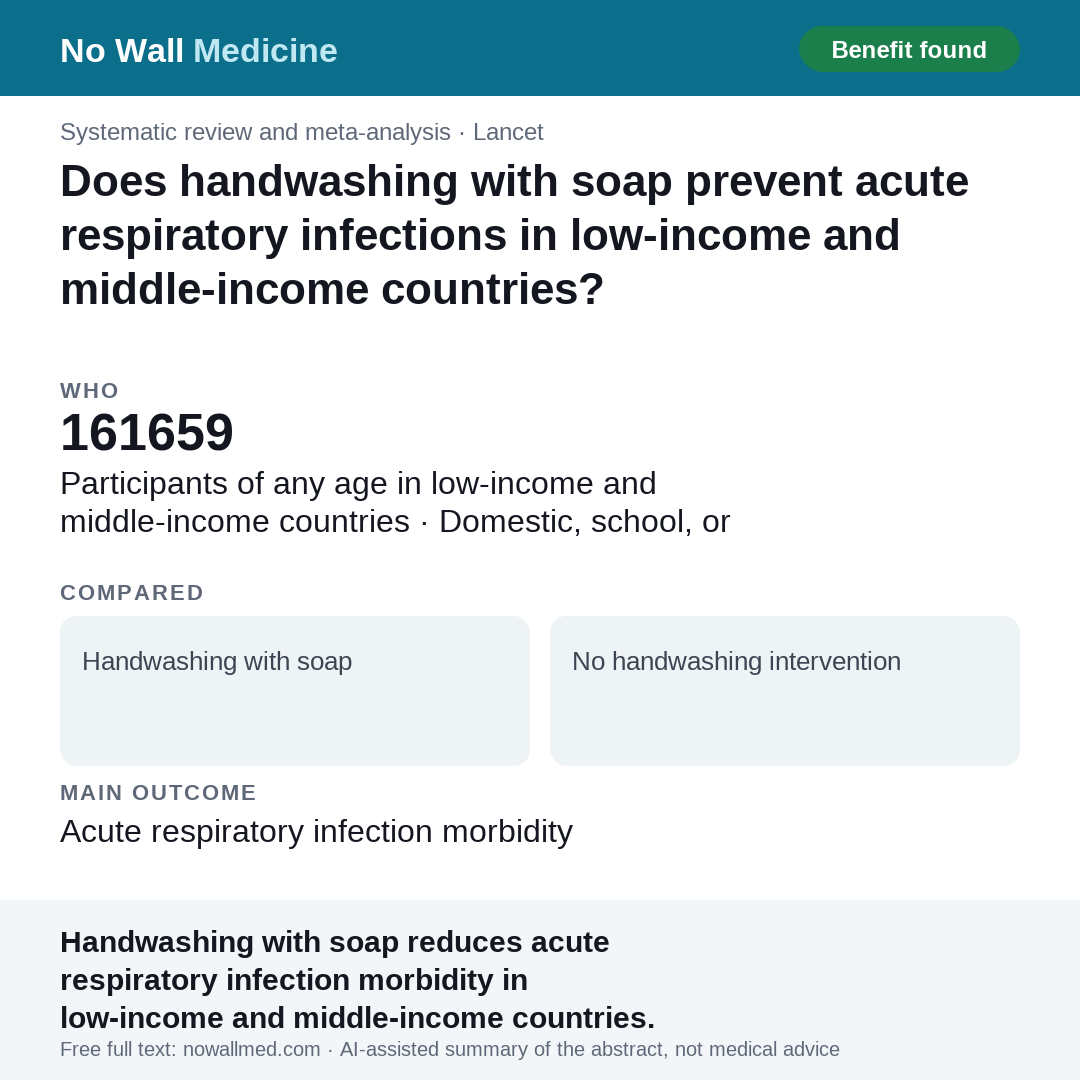
Effectiveness of handwashing with soap for preventing acute respiratory infections in low-income and middle-income countries: a systematic review and meta-analysis
Systematic review and meta-analysisBenefit found
Does handwashing with soap prevent acute respiratory infections in low-income and middle-income countries?
Who
161659
Participants of any age in low-income and middle-income countries · Domestic, school, or childcare settings
Compared
Handwashing with soap
No handwashing intervention
Main outcome
Acute respiratory infection morbidity
Result: relative risk 0·83 (95% CI 0·76-0·90)
Bottom line: Handwashing with soap reduces acute respiratory infection morbidity in low-income and middle-income countries.
Limitation: The GRADE rating for acute respiratory infection was moderate certainty evidence.
Funded by: Bill & Melinda Gates Foundation, Reckitt Global Hygiene Institute, UK FCDO
Lancet · 2023-04-27Download image
Surgical versus non-surgical treatment for sciatica: systematic review and meta-analysis of randomised controlled trials
Systematic review and meta-analysisBenefit found
Is surgery more effective and safer than non-surgical treatment for sciatica?
Who
1711
People with sciatica due to lumbar disc herniation
Compared
Discectomy: moderate effect at immediate term (mean difference -12.1 (95% confidence interval -23.6 to -0.5))
Non-surgical treatment
Main outcome
Leg pain and disability
Result: mean difference -12.1 (95% confidence interval -23.6 to -0.5)
Bottom line: Discectomy may reduce leg pain more than non-surgical treatments, but benefits decline over time.
Limitation: Very low to low certainty evidence
BMJ · 2023-04-19Download image

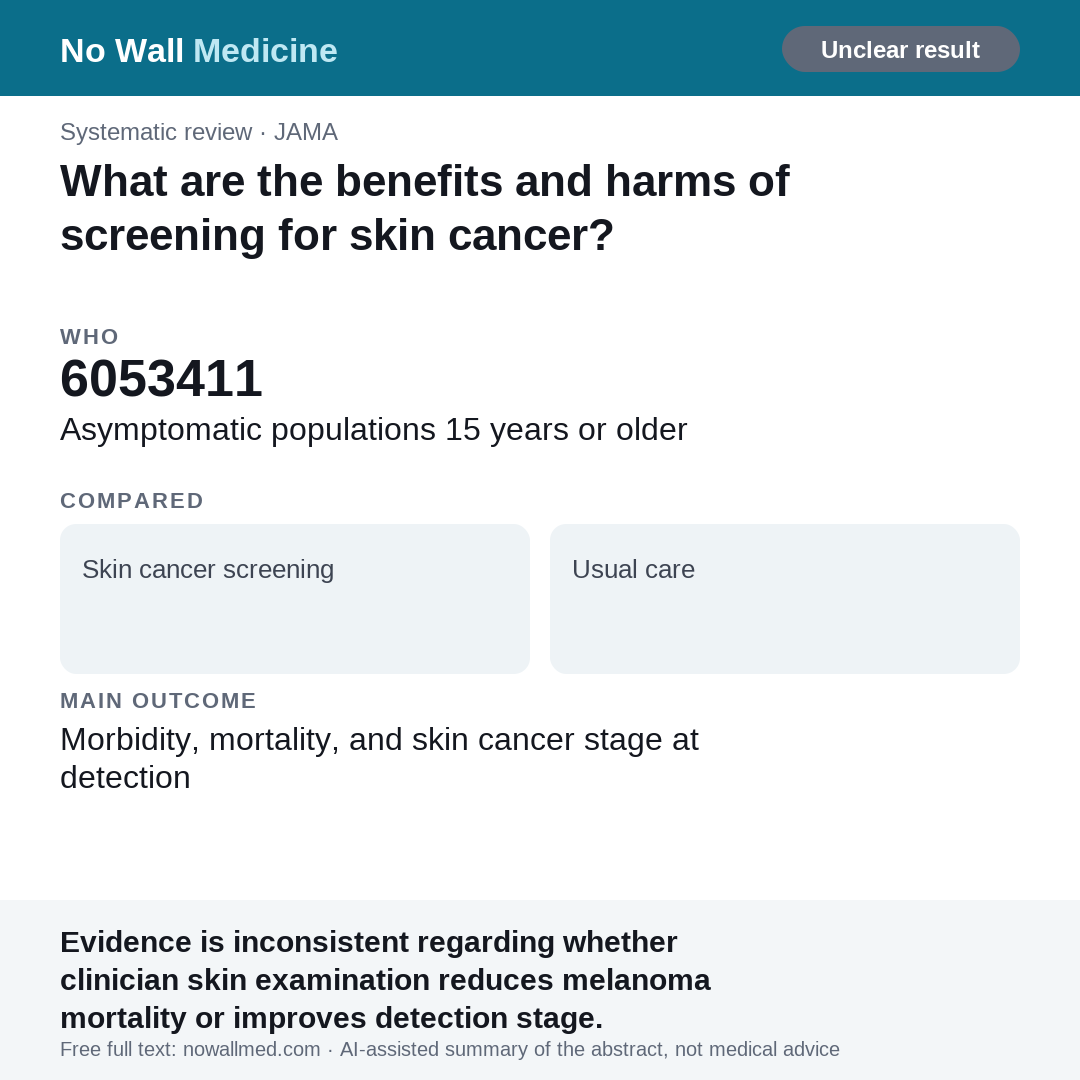
Skin Cancer Screening: Updated Evidence Report and Systematic Review for the US Preventive Services Task Force
Systematic reviewUnclear result
What are the benefits and harms of screening for skin cancer?
Who
6053411
Asymptomatic populations 15 years or older
Compared
Skin cancer screening
Usual care
Main outcome
Morbidity, mortality, and skin cancer stage at detection
Bottom line: Evidence is inconsistent regarding whether clinician skin examination reduces melanoma mortality or improves detection stage.
Limitation: Evidence is based on nonrandomized studies and results are inconsistent.
JAMA · 2023-04-18Download image
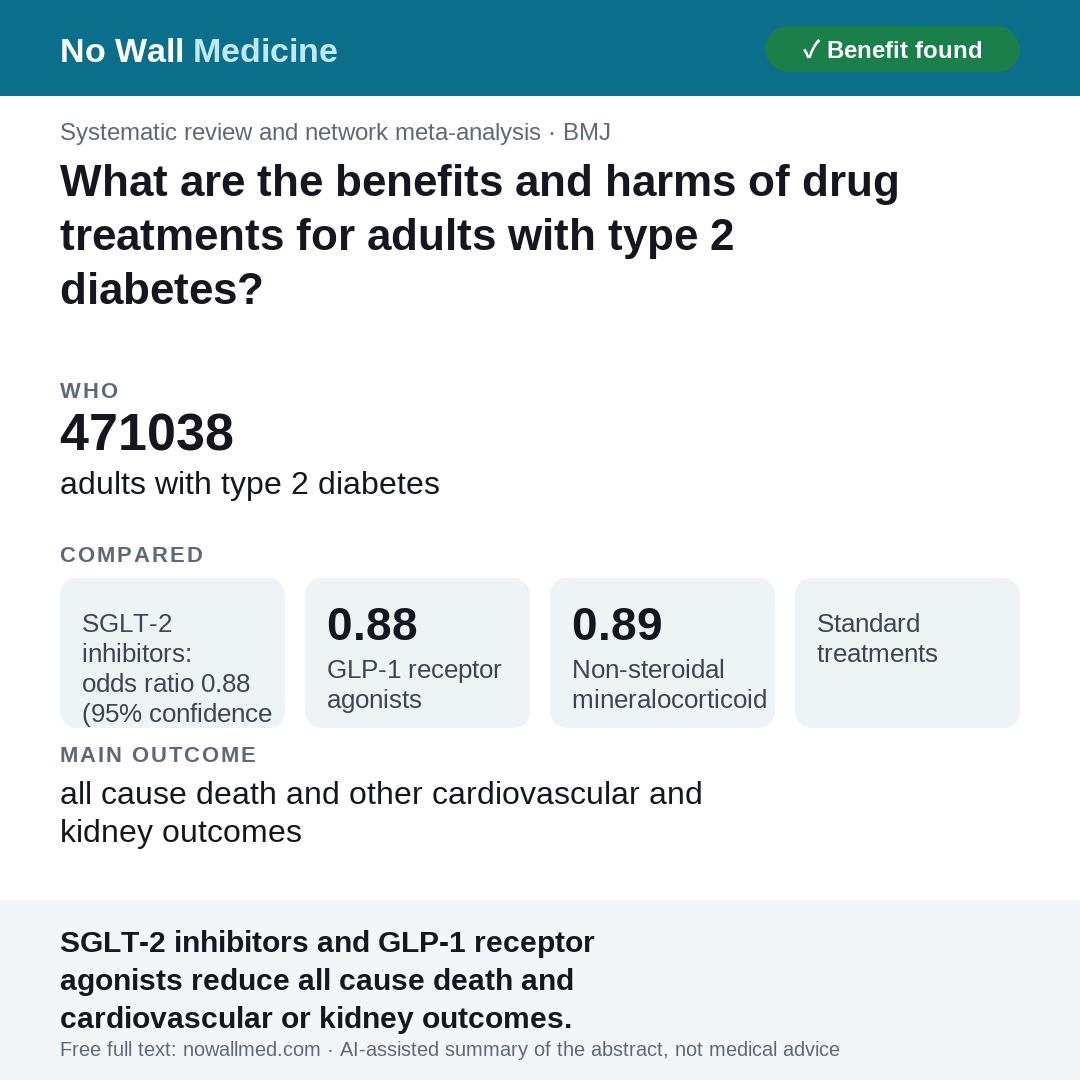
Benefits and harms of drug treatment for type 2 diabetes: systematic review and network meta-analysis of randomised controlled trials
Systematic review and network meta-analysisBenefit found
What are the benefits and harms of drug treatments for adults with type 2 diabetes?
Who
471038
adults with type 2 diabetes
Compared
SGLT-2 inhibitors: odds ratio 0.88 (95% confidence interval 0.83 to 0.94)
0.88GLP-1 receptor agonists (0.82 to 0.93)
0.89Non-steroidal mineralocorticoid receptor antagonists (0.79 to 1.00)
Standard treatments
Main outcome
all cause death and other cardiovascular and kidney outcomes
Result: odds ratio 0.88 (95% CI 0.83 to 0.94) for SGLT-2 inhibitors
Bottom line: SGLT-2 inhibitors and GLP-1 receptor agonists reduce all cause death and cardiovascular or kidney outcomes.
BMJ · 2023-04-06Download image
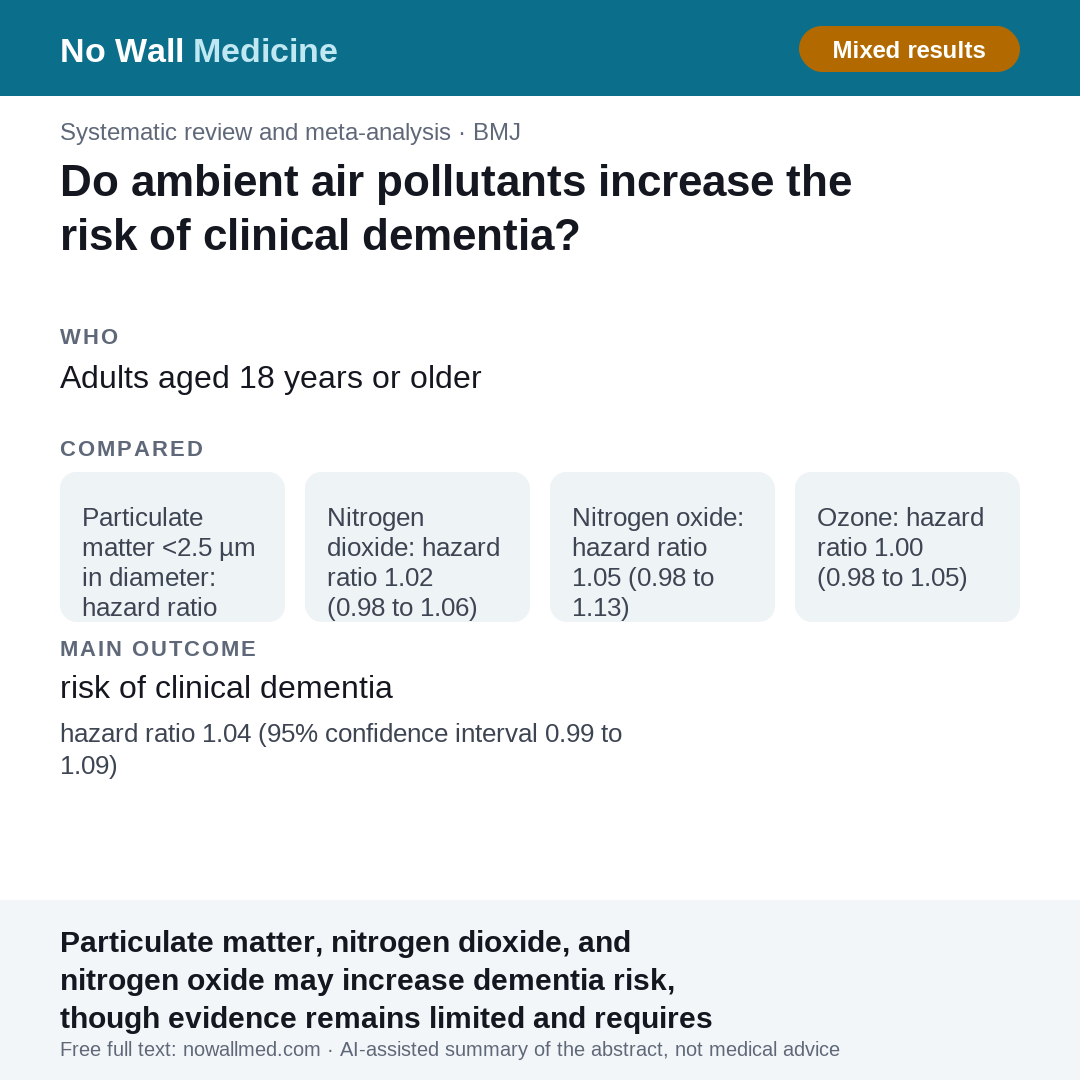
Ambient air pollution and clinical dementia: systematic review and meta-analysis
Systematic review and meta-analysisMixed results
Do ambient air pollutants increase the risk of clinical dementia?
Who
Adults aged 18 years or older
Compared
Particulate matter <2.5 µm in diameter: hazard ratio 1.04 (95% confidence interval 0.99 to 1.09)
Nitrogen dioxide: hazard ratio 1.02 (0.98 to 1.06)
Nitrogen oxide: hazard ratio 1.05 (0.98 to 1.13)
Ozone: hazard ratio 1.00 (0.98 to 1.05)
Main outcome
risk of clinical dementia
Result: hazard ratio 1.04 (95% confidence interval 0.99 to 1.09)
Bottom line: Particulate matter, nitrogen dioxide, and nitrogen oxide may increase dementia risk, though evidence remains limited and requires cautious interpretation.
Limitation: Most studies were at high risk of bias and outcome ascertainment approaches differ across studies.
BMJ · 2023-04-05Download image
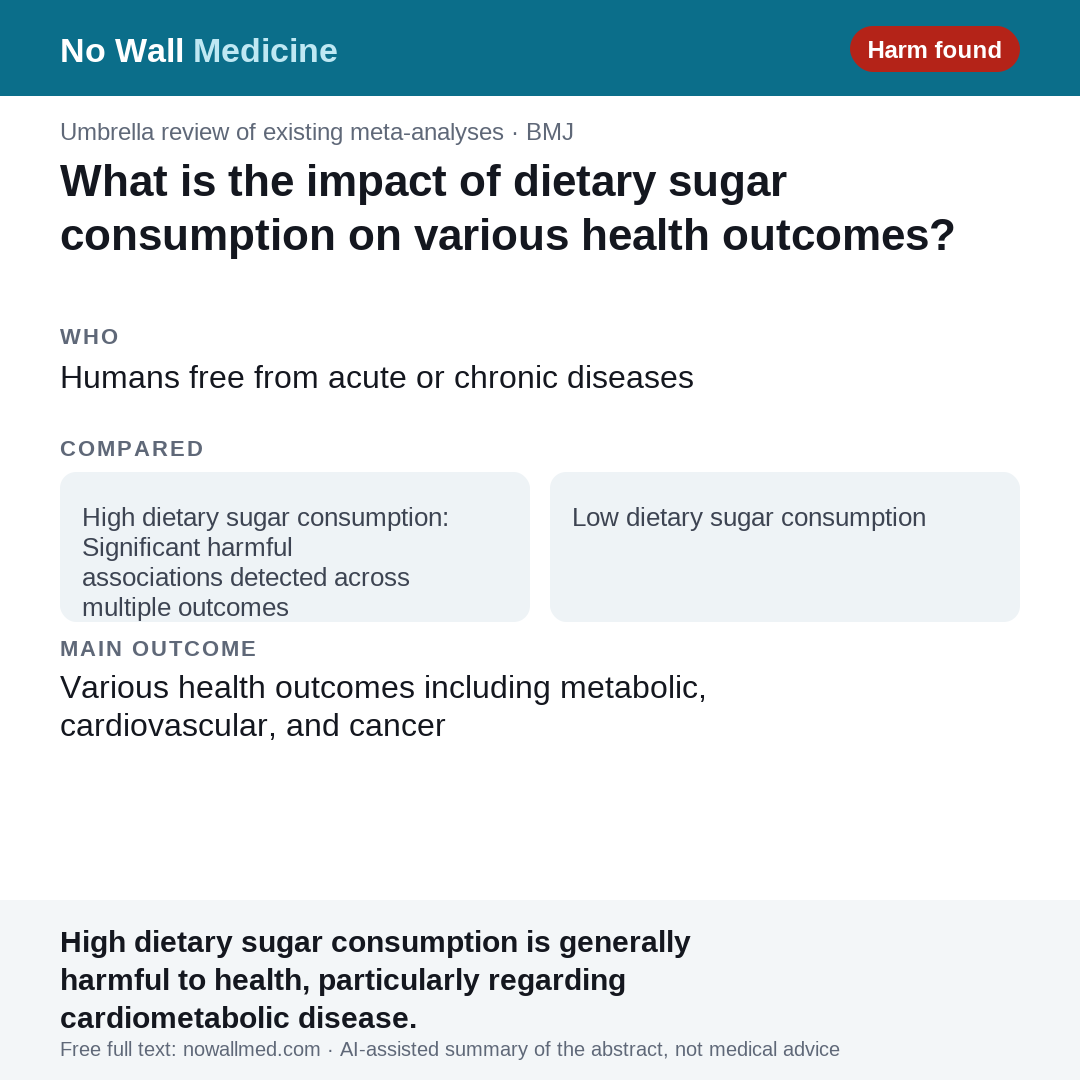
Dietary sugar consumption and health: umbrella review
Umbrella review of existing meta-analysesHarm found
What is the impact of dietary sugar consumption on various health outcomes?
Who
Humans free from acute or chronic diseases
Compared
High dietary sugar consumption: Significant harmful associations detected across multiple outcomes
Low dietary sugar consumption
Main outcome
Various health outcomes including metabolic, cardiovascular, and cancer
Bottom line: High dietary sugar consumption is generally harmful to health, particularly regarding cardiometabolic disease.
BMJ · 2023-04-05Download image