Visual abstracts
New randomized trials and meta-analyses from leading journals at a glance: who was studied, what was compared, and what was found. Every paper is free to read in full.
All specialtiesCardiology 4877Oncology 4138Gastroenterology & Hepatology 1942Infectious Disease 3837Neurology 1905Psychiatry & Mental Health 2273Pulmonology 2143Critical Care 1365Endocrinology & Diabetes 2580Pediatrics 2980Surgery 2559Orthopedics & Sports Medicine 931Neurosurgery 537Cardiothoracic & Vascular Surgery 674Plastic & Reconstructive Surgery 591Nephrology 1133Rheumatology 823Hematology 1109Dermatology 621Ophthalmology 543Obstetrics & Gynecology 1686Public & Global Health 1058Radiology & Imaging 648Anesthesiology 986Urology 764ENT (Otolaryngology) 503Emergency Medicine 511Allergy & Immunology 313Geriatrics 981Family Medicine & Primary Care 562Medical Genetics & Genomics 676Pathology & Laboratory Medicine 159Physical Medicine & Rehabilitation 757Palliative Care 444Nutrition 1588Digital Health & AI 2201General Medicine 321
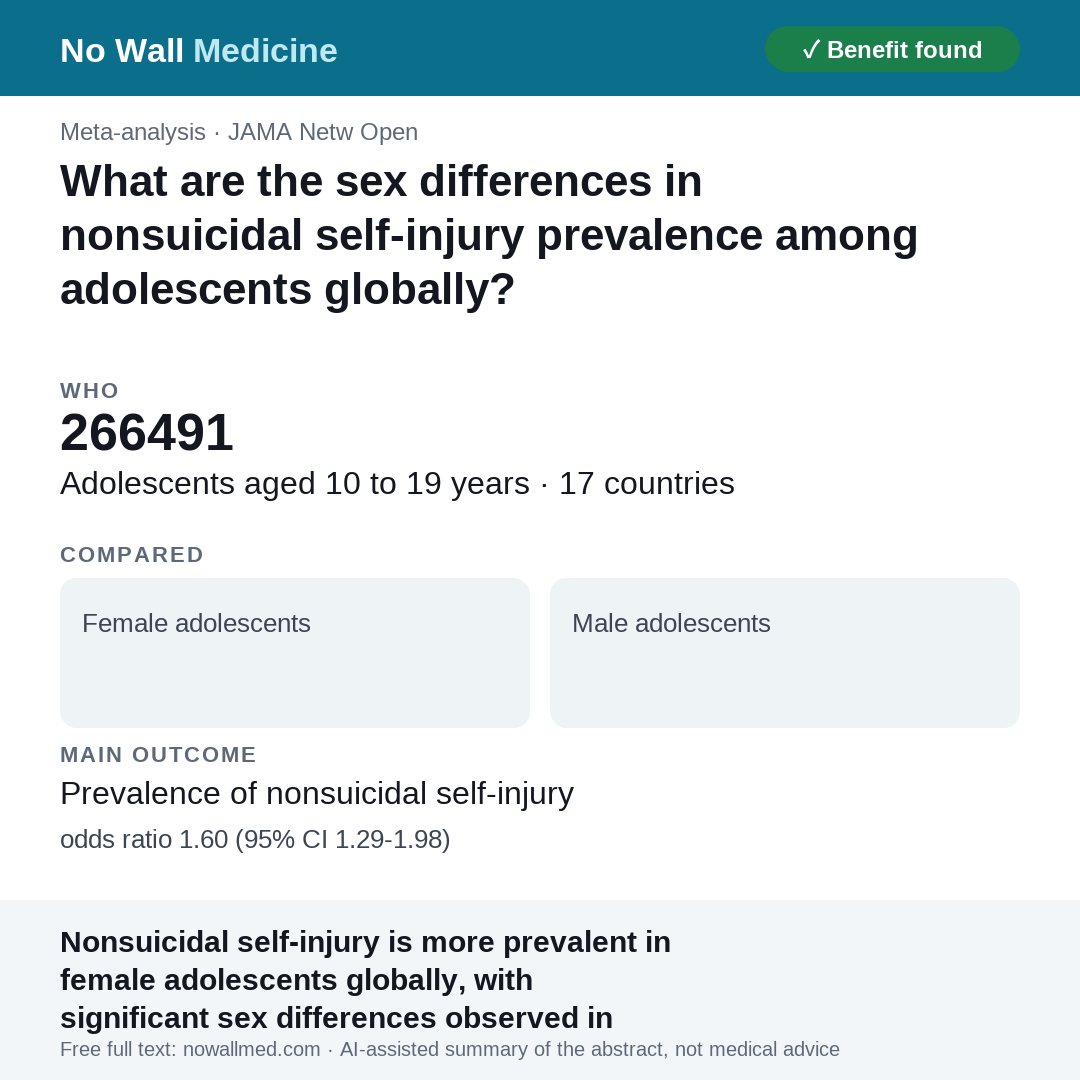
Sex Differences in the Global Prevalence of Nonsuicidal Self-Injury in Adolescents: A Meta-Analysis
Meta-analysisBenefit found
What are the sex differences in nonsuicidal self-injury prevalence among adolescents globally?
Who
266491
Adolescents aged 10 to 19 years · 17 countries
Compared
Female adolescents
Male adolescents
Main outcome
Prevalence of nonsuicidal self-injury
Result: odds ratio 1.60 (95% CI 1.29-1.98)
Bottom line: Nonsuicidal self-injury is more prevalent in female adolescents globally, with significant sex differences observed in North America and Europe.
JAMA Netw Open · 2024-06-03Download image
Hand Hygiene Education Components Among First-Year Nursing Students: A Cluster Randomized Clinical Trial
Cluster randomized clinical trialMixed results
What are the effects of instructional video and hand scan images on hand hygiene?
Who
270
First-year nursing students · A university in Hong Kong
Compared
Control group: 3.2 [95% CI, 1.3-5.2] percentage points
Hand scan image group: 3.9 [95% CI, 2.0-5.8] percentage points
Instructional video group: 4.8 [95% CI, 2.9-6.7] percentage points
Hand scan image with instructional video group: 3.5 [95% CI, 1.6-5.4] percentage points
Main outcome
Change in residue from fluorescent lotion remaining on hands
Bottom line: Instructional videos improved handwashing technique, but neither video nor hand scan images significantly enhanced decontamination levels.
JAMA Netw Open · 2024-06-03Download image

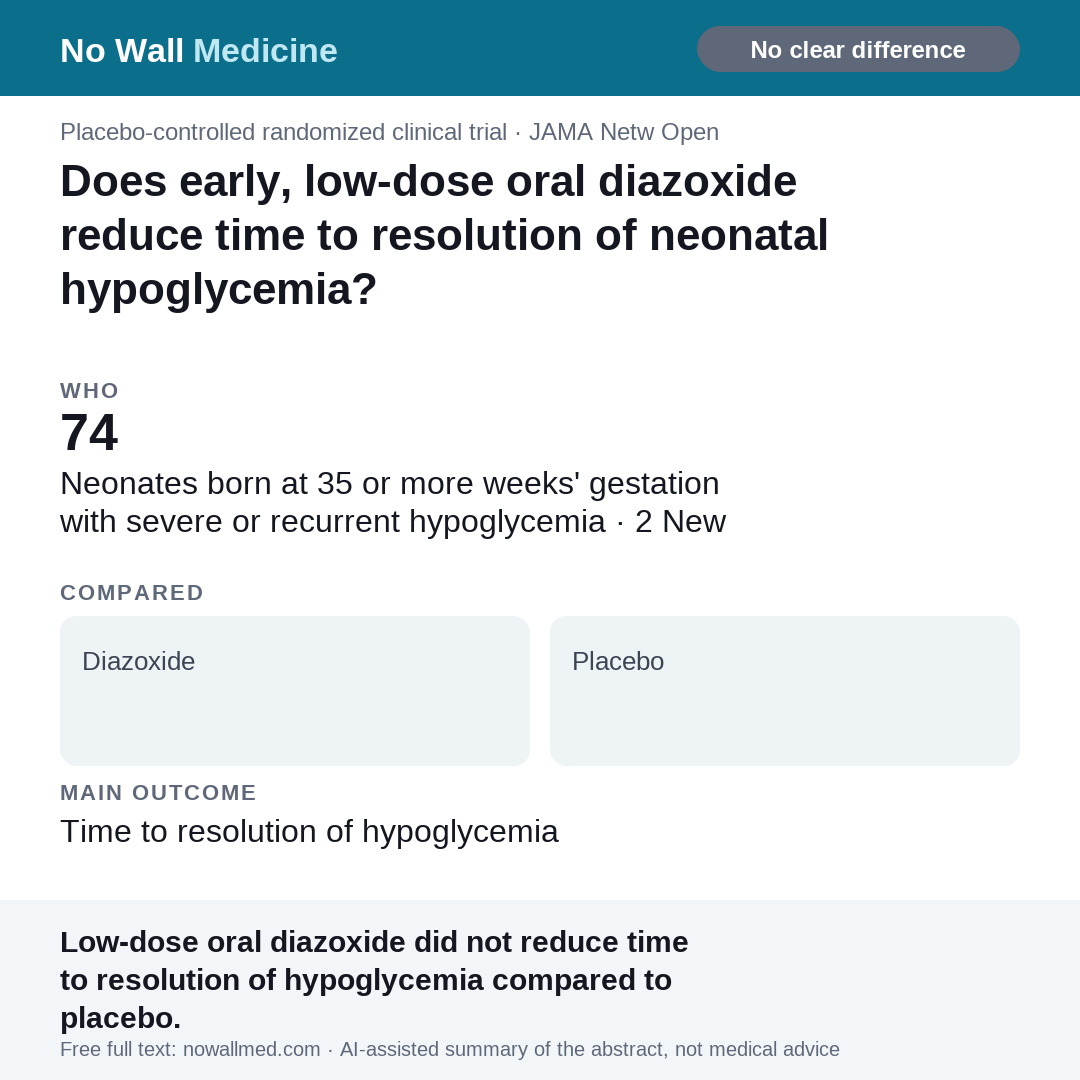
Diazoxide for Severe or Recurrent Neonatal Hypoglycemia: A Randomized Clinical Trial
Placebo-controlled randomized clinical trialNo clear difference
Does early, low-dose oral diazoxide reduce time to resolution of neonatal hypoglycemia?
Who
74
Neonates born at 35 or more weeks' gestation with severe or recurrent hypoglycemia · 2 New Zealand hospitals
Compared
Diazoxide
Placebo
Main outcome
Time to resolution of hypoglycemia
Result: adjusted hazard ratio 1.39 (95% CI 0.84 to 2.23)
Bottom line: Low-dose oral diazoxide did not reduce time to resolution of hypoglycemia compared to placebo.
Limitation: possibly due to increased episodes of elevated blood glucose concentration and longer time to normoglycemia
JAMA Netw Open · 2024-06-03Download image
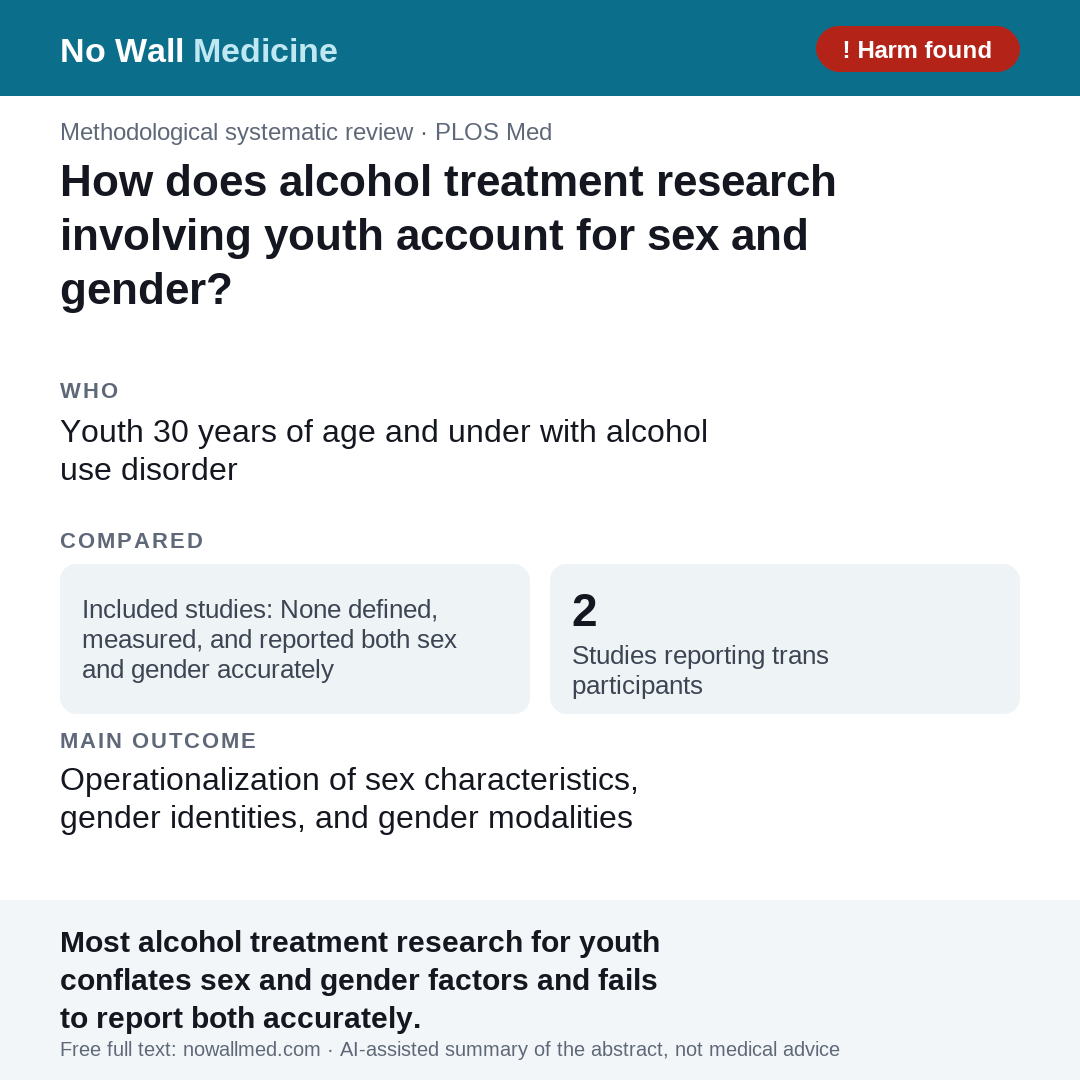
A sex- and gender-based analysis of alcohol treatment intervention research involving youth: A methodological systematic review
Methodological systematic reviewHarm found
How does alcohol treatment research involving youth account for sex and gender?
Who
86
Youth 30 years of age and under with alcohol use disorder
Compared
Included studies: None defined, measured, and reported both sex and gender accurately
2Studies reporting trans participants
Main outcome
Operationalization of sex characteristics, gender identities, and gender modalities
Bottom line: Most alcohol treatment research for youth conflates sex and gender factors and fails to report both accurately.
PLOS Med · 2024-06-03Download image
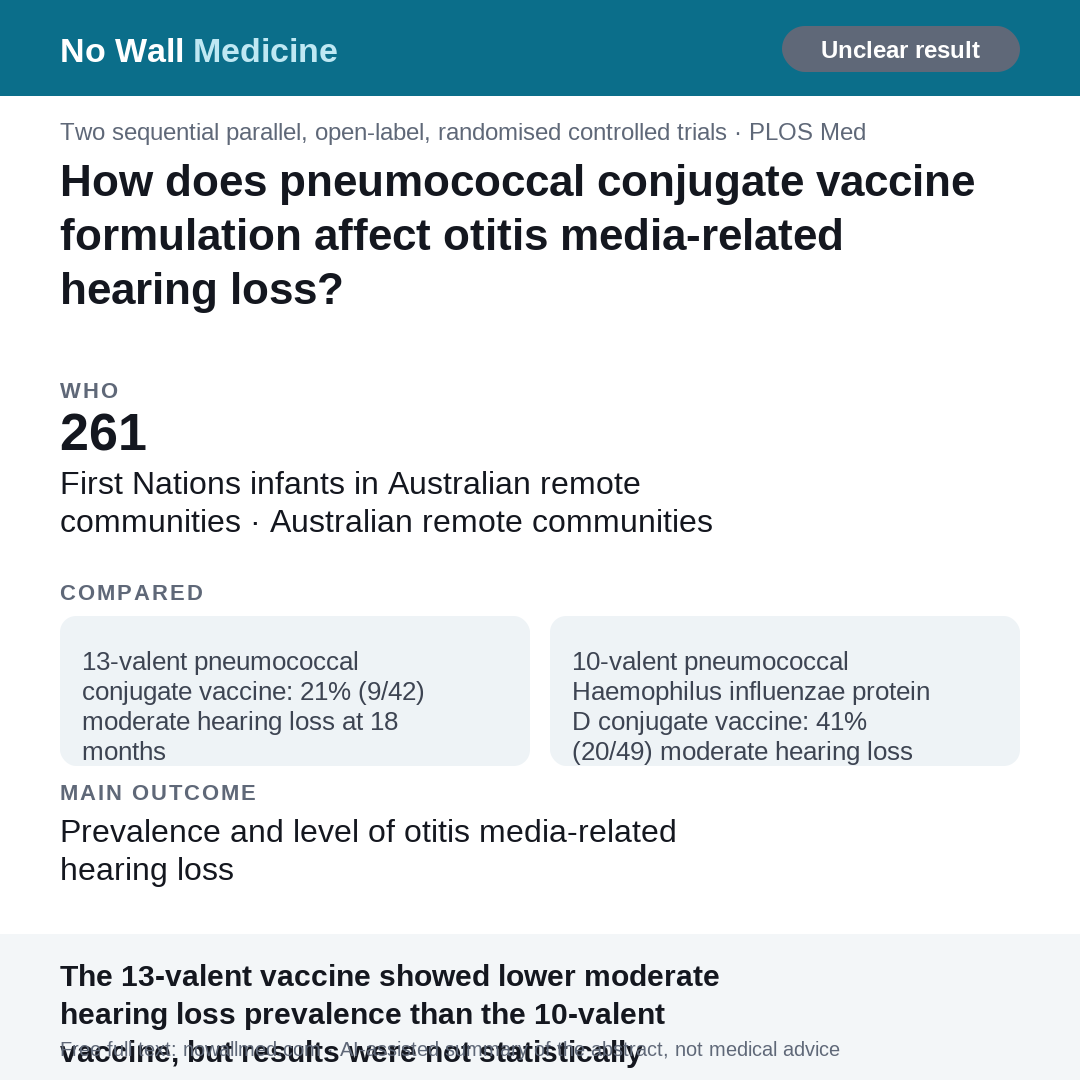
Hearing loss in Australian First Nations children at 6-monthly assessments from age 12 to 36 months: Secondary outcomes from randomised controlled trials of novel pneumococcal conjugate vaccine schedules
Two sequential parallel, open-label, randomised controlled trialsUnclear result
How does pneumococcal conjugate vaccine formulation affect otitis media-related hearing loss?
Who
261
First Nations infants in Australian remote communities · Australian remote communities
Compared
13-valent pneumococcal conjugate vaccine: 21% (9/42) moderate hearing loss at 18 months
10-valent pneumococcal Haemophilus influenzae protein D conjugate vaccine: 41% (20/49) moderate hearing loss at 18 months
Main outcome
Prevalence and level of otitis media-related hearing loss
Result: difference -19%; (95% CI [-38, -1], p = 0.07)
Bottom line: The 13-valent vaccine showed lower moderate hearing loss prevalence than the 10-valent vaccine, but results were not statistically significant.
Limitation: Small sample size, hence low power to reach statistical significance, reducing confidence in the effect size.
PLOS Med · 2024-06-03Download image
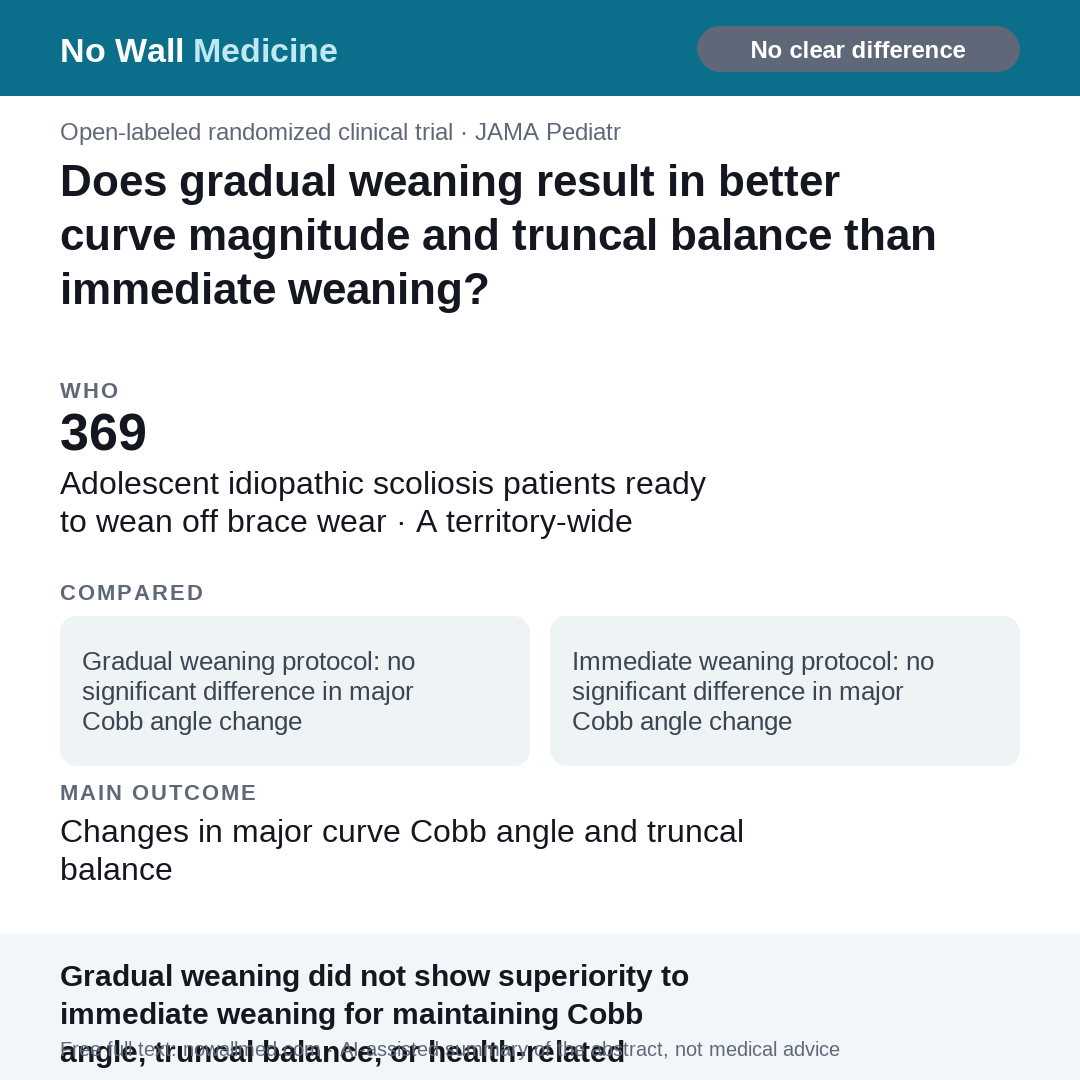
Immediate vs Gradual Brace Weaning Protocols in Adolescent Idiopathic Scoliosis: A Randomized Clinical Trial
Open-labeled randomized clinical trialNo clear difference
Does gradual weaning result in better curve magnitude and truncal balance than immediate weaning?
Who
369
Adolescent idiopathic scoliosis patients ready to wean off brace wear · A territory-wide tertiary scoliosis clinic
Compared
Gradual weaning protocol: no significant difference in major Cobb angle change
Immediate weaning protocol: no significant difference in major Cobb angle change
Main outcome
Changes in major curve Cobb angle and truncal balance
Result: difference, -0.3°; 95% CI, -1.2 to 0.7 at 24-month follow-up
Bottom line: Gradual weaning did not show superiority to immediate weaning for maintaining Cobb angle, truncal balance, or health-related quality of life.
JAMA Pediatr · 2024-06-03Download image
Magnesium Sulfate Before Preterm Birth for Neuroprotection: An Updated Cochrane Systematic Review
Systematic review of six randomized controlled trialsBenefit found
Does magnesium sulfate provide fetal neuroprotection for individuals at risk of preterm birth?
Who
5,917
Pregnant participants at risk of imminent preterm birth · High-income countries
Compared
Magnesium sulfate
Placebo
Main outcome
Cerebral palsy and death or cerebral palsy
Result: risk ratio 0.71 (95% CI, 0.57-0.89) for cerebral palsy; risk ratio 0.87 (95% CI, 0.77-0.98) for death or cerebral palsy
Bottom line: Magnesium sulfate reduces the risk of cerebral palsy and death or cerebral palsy in children born preterm.
Limitation: Generalizability of findings to low- and middle-income countries is unknown.
Obstet Gynecol · 2024-06-03Download image

A microbiota-directed complementary food intervention in 12-18-month-old Bangladeshi children improves linear growth
Randomized controlled trial follow-upBenefit found
Does microbiota-directed complementary food improve linear growth in malnourished Bangladeshi children?
Who
124
124 Bangladeshi children with moderate acute malnutrition aged 12-18 months · Bangladesh
Compared
Microbiota-directed complementary food: significantly less stunted during follow-up
Standard ready-to-use supplementary food
Main outcome
linear growth (stunting)
Result: βtreatment group x study week (95% CI) = 0.002 (0.001, 0.003)
Bottom line: Microbiota-directed complementary food reduced stunting in malnourished Bangladeshi children during a two-year follow-up period.
Funded by: BMGF
eBioMedicine · 2024-06-03Download image

Cost-utility analysis of Social Stories™ for children with autism spectrum disorder in mainstream primary schools: results from a randomised controlled trial
Cluster-randomised controlled trialBenefit found
Is Social Stories cost-effective for children with autism in mainstream primary schools?
Who
249
Children with autism aged 4-11 years · Multi-site
Compared
Social Stories
Usual care
Main outcome
Incremental cost-effectiveness ratio
Result: -£191 per child (95% CI -767.7 to 337.7)
Bottom line: Social Stories likely result in small cost savings and maintain similar quality-adjusted life-years improvements compared with usual care.
BJPsych Open · 2024-06-03Download image

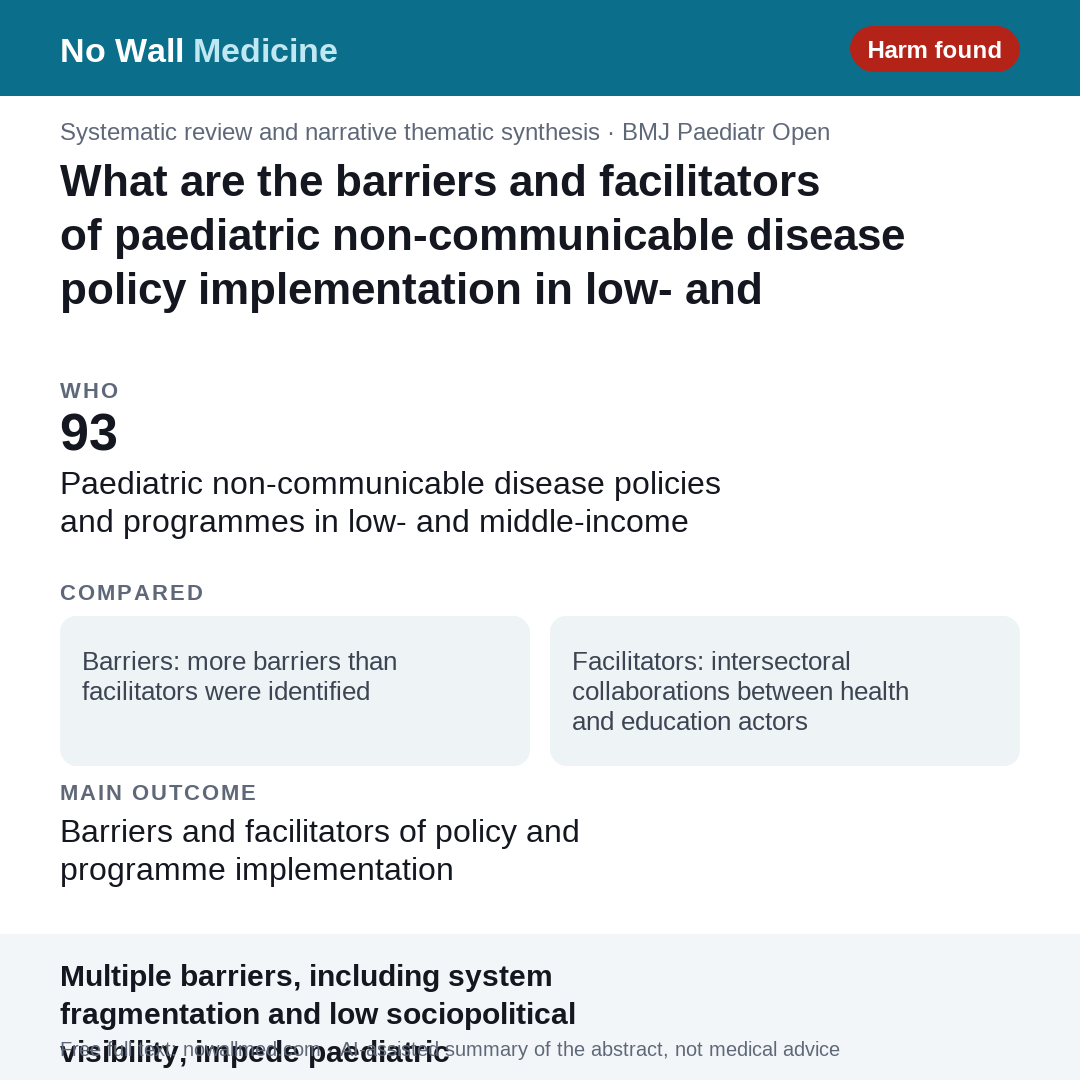
Implementation factors of non-communicable disease policies and programmes for children and youth in low-income and middle-income countries: a systematic review
Systematic review and narrative thematic synthesisHarm found
What are the barriers and facilitators of paediatric non-communicable disease policy implementation in low- and middle-income countries?
Who
93
Paediatric non-communicable disease policies and programmes in low- and middle-income countries · 86 low-income and middle-income countries
Compared
Barriers: more barriers than facilitators were identified
Facilitators: intersectoral collaborations between health and education actors
Main outcome
Barriers and facilitators of policy and programme implementation
Bottom line: Multiple barriers, including system fragmentation and low sociopolitical visibility, impede paediatric non-communicable disease policy implementation in low- and middle-income countries.
BMJ Paediatr Open · 2024-06-03Download image
Cognitive aids used in simulated resuscitation: A systematic review
Systematic reviewMixed results
Does using cognitive aids during resuscitation improve cardiopulmonary resuscitation quality and performance?
Who
29
Healthcare professionals and lay providers in simulated resuscitation · Simulation settings
Compared
Healthcare professionals: showed benefits
Lay providers: reported undesirable effects
Main outcome
Cardiopulmonary resuscitation quality and performance
Bottom line: Cognitive aids may benefit healthcare professionals but may have undesirable effects for lay providers during simulated resuscitation.
Limitation: Limited to indirect evidence from simulation studies only with significant methodological heterogeneity.
Resusc Plus · 2024-06-01Download image

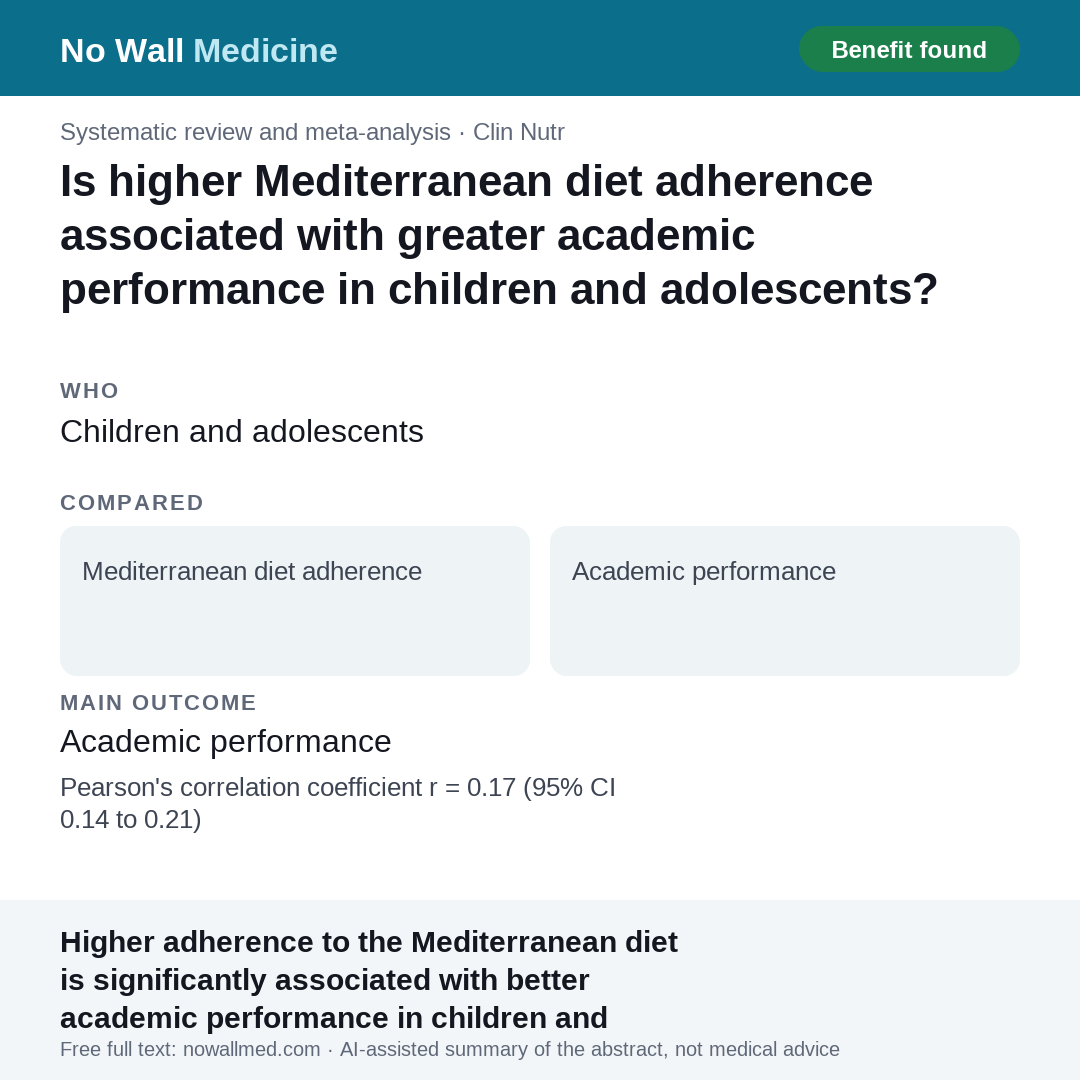
Is higher adherence to the mediterranean diet associated with greater academic performance in children and adolescents? A systematic review and meta-analysis
Systematic review and meta-analysisBenefit found
Is higher Mediterranean diet adherence associated with greater academic performance in children and adolescents?
Who
Children and adolescents
Compared
Mediterranean diet adherence
Academic performance
Main outcome
Academic performance
Result: Pearson's correlation coefficient r = 0.17 (95% CI 0.14 to 0.21)
Bottom line: Higher adherence to the Mediterranean diet is significantly associated with better academic performance in children and adolescents.
Clin Nutr · 2024-05-31Download image
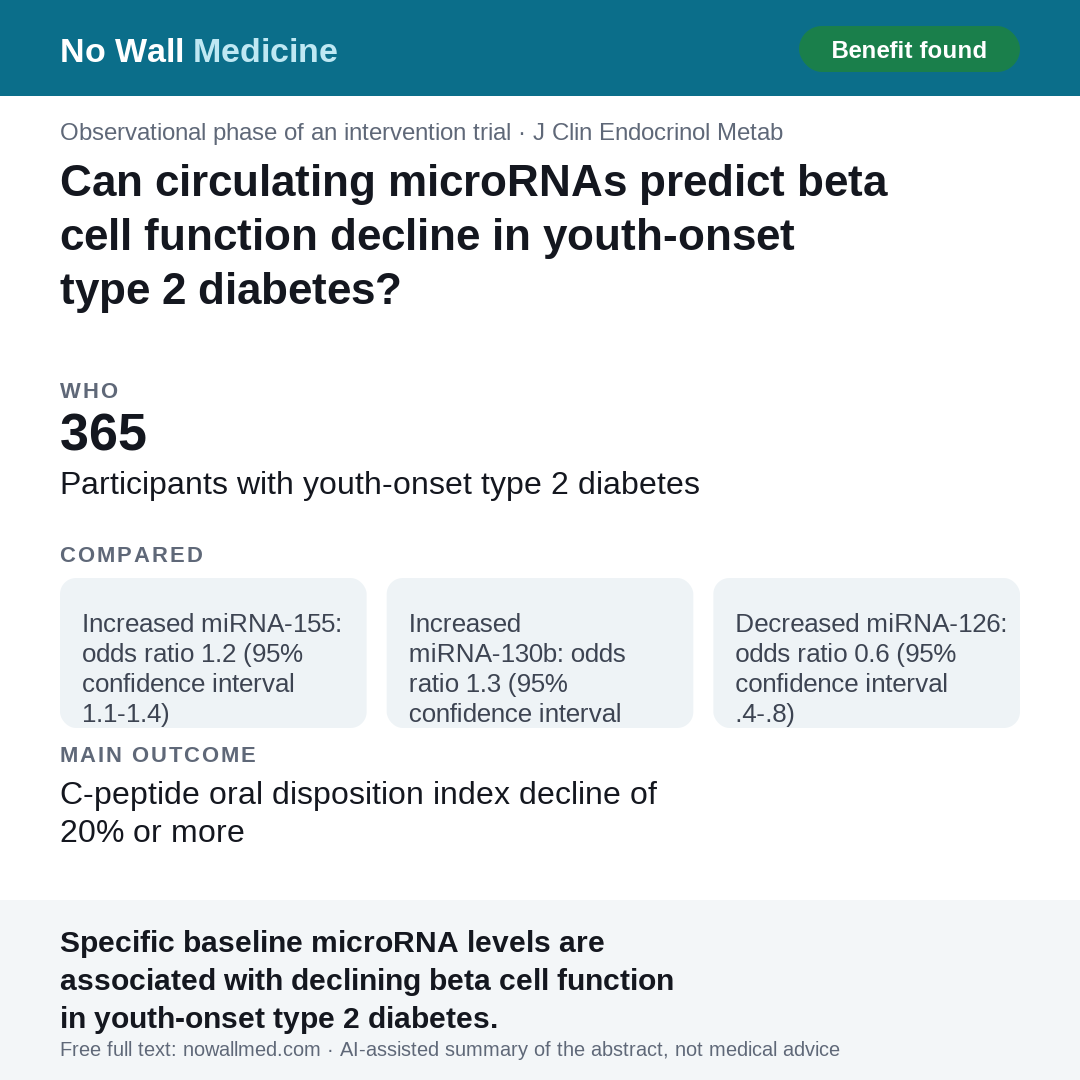
Circulating MicroRNAs as Predictors of Beta Cell Function in Youth-onset Type 2 Diabetes: The TODAY Study
Observational phase of an intervention trialBenefit found
Can circulating microRNAs predict beta cell function decline in youth-onset type 2 diabetes?
Who
365
Participants with youth-onset type 2 diabetes
Compared
Increased miRNA-155: odds ratio 1.2 (95% confidence interval 1.1-1.4)
Increased miRNA-130b: odds ratio 1.3 (95% confidence interval 1.0-1.7)
Decreased miRNA-126: odds ratio 0.6 (95% confidence interval .4-.8)
Main outcome
C-peptide oral disposition index decline of 20% or more
Result: odds ratio 1.2 (95% CI 1.1-1.4) for miRNA-155
Bottom line: Specific baseline microRNA levels are associated with declining beta cell function in youth-onset type 2 diabetes.
J Clin Endocrinol Metab · 2024-05-30Download image
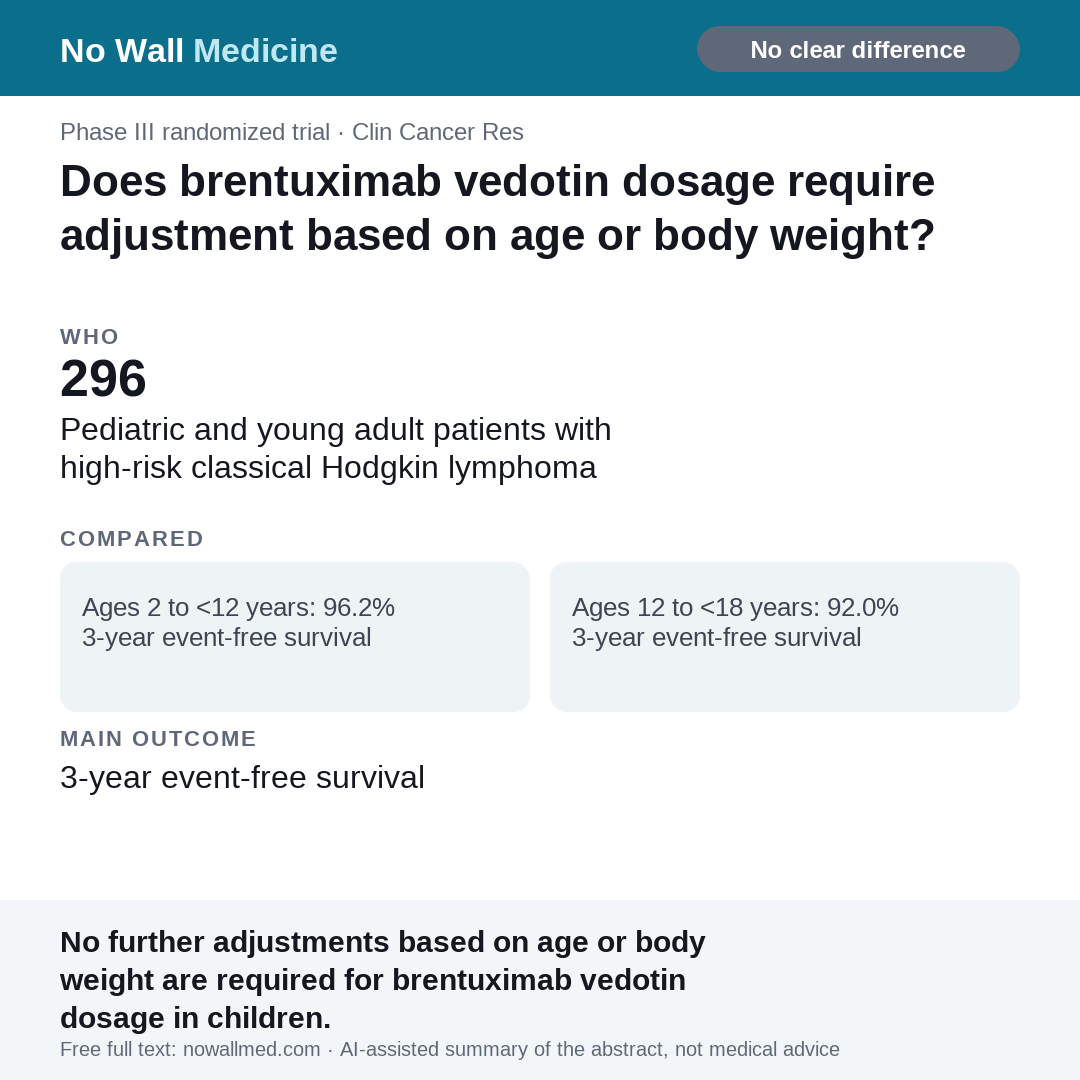
Exposure-Response and Subgroup Analyses to Support Body Weight-Based Dosing of Brentuximab Vedotin in Children and Young Adults with Newly Diagnosed High-risk Classical Hodgkin Lymphoma
Phase III randomized trialNo clear difference
Does brentuximab vedotin dosage require adjustment based on age or body weight?
Who
296
Pediatric and young adult patients with high-risk classical Hodgkin lymphoma
Compared
Ages 2 to <12 years: 96.2% 3-year event-free survival
Ages 12 to <18 years: 92.0% 3-year event-free survival
Main outcome
3-year event-free survival
Bottom line: No further adjustments based on age or body weight are required for brentuximab vedotin dosage in children.
Limitation: Exposure-response analyses were limited to the pharmacokinetic subpopulation of 24 patients.
Clin Cancer Res · 2024-05-29Download image
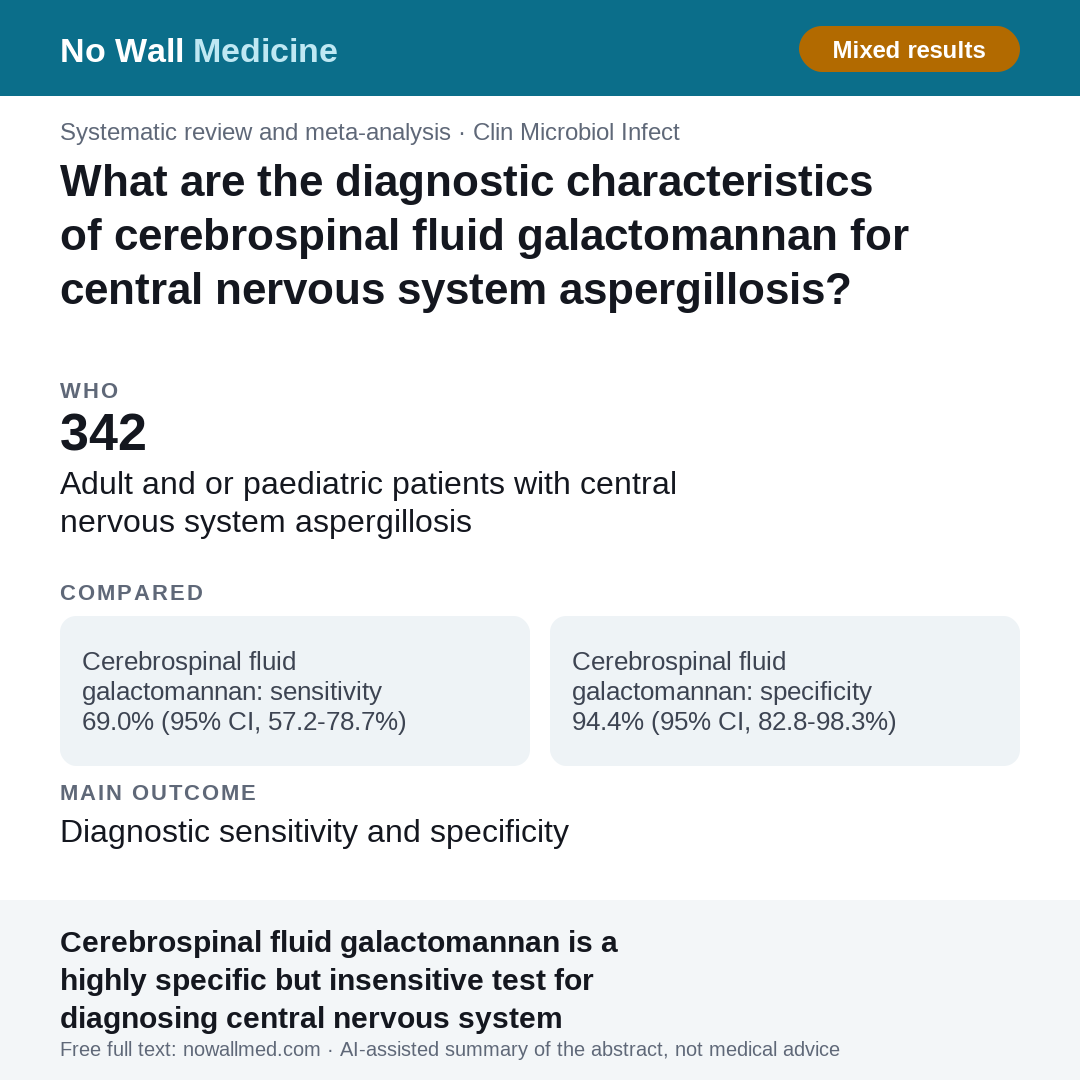
Cerebrospinal fluid galactomannan detection for the diagnosis of central nervous system aspergillosis: a diagnostic test accuracy systematic review and meta-analysis
Systematic review and meta-analysisMixed results
What are the diagnostic characteristics of cerebrospinal fluid galactomannan for central nervous system aspergillosis?
Who
342
Adult and or paediatric patients with central nervous system aspergillosis
Compared
Cerebrospinal fluid galactomannan: sensitivity 69.0% (95% CI, 57.2-78.7%)
Cerebrospinal fluid galactomannan: specificity 94.4% (95% CI, 82.8-98.3%)
Main outcome
Diagnostic sensitivity and specificity
Bottom line: Cerebrospinal fluid galactomannan is a highly specific but insensitive test for diagnosing central nervous system aspergillosis.
Limitation: Few included studies, no prospective studies, and a high risk of bias.
Clin Microbiol Infect · 2024-05-27Download image
Feasibility, safety, and efficacy of dietary or lifestyle interventions for hypothalamic obesity: A systematic review
Systematic reviewMixed results
Are dietary or lifestyle interventions feasible, safe, and effective for hypothalamic obesity?
Who
118
Children and adults with hypothalamic overweight or obesity
Compared
Dietary intervention: effective in terms of weight stabilization or decrease
Combined dietary and lifestyle intervention: decreased BMI, although BMI returned to baseline values on long-term
Main outcome
feasibility, safety, or efficacy of dietary or lifestyle interventions
Bottom line: Hypocaloric or restrictive macronutrient diets appear effective for weight stabilization, but lifestyle interventions only show short-term BMI decreases.
Limitation: High risk of bias, small cohorts without control groups, and limited generalizability.
Clin Nutr · 2024-05-27Download image

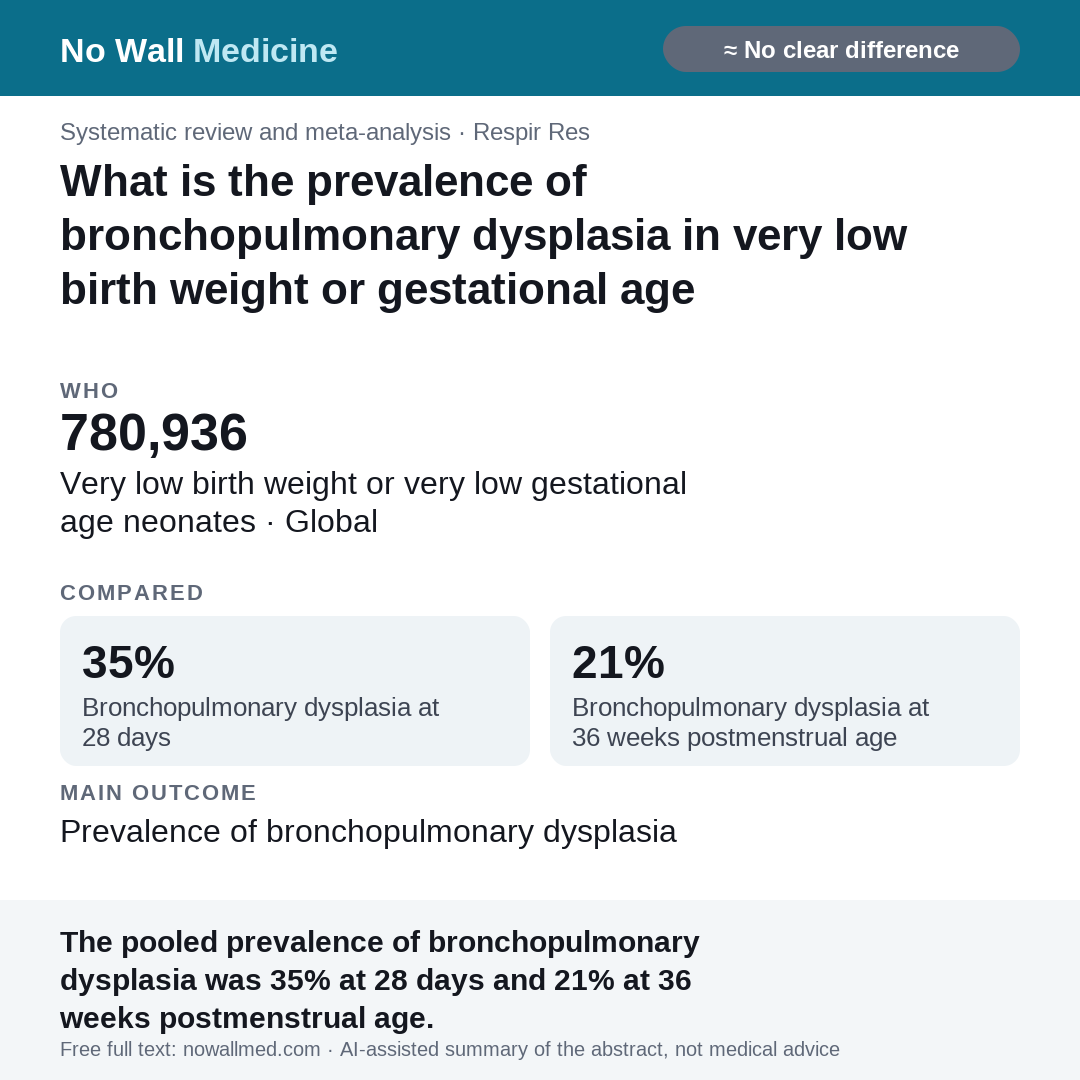
Rates of bronchopulmonary dysplasia in very low birth weight neonates: a systematic review and meta-analysis
Systematic review and meta-analysisNo clear difference
What is the prevalence of bronchopulmonary dysplasia in very low birth weight or gestational age neonates?
Who
780,936
Very low birth weight or very low gestational age neonates · Global
Compared
35%Bronchopulmonary dysplasia at 28 days (95% CI, 28-42%)
21%Bronchopulmonary dysplasia at 36 weeks postmenstrual age (95% CI, 19-24%)
Main outcome
Prevalence of bronchopulmonary dysplasia
Bottom line: The pooled prevalence of bronchopulmonary dysplasia was 35% at 28 days and 21% at 36 weeks postmenstrual age.
Respir Res · 2024-05-24Download image
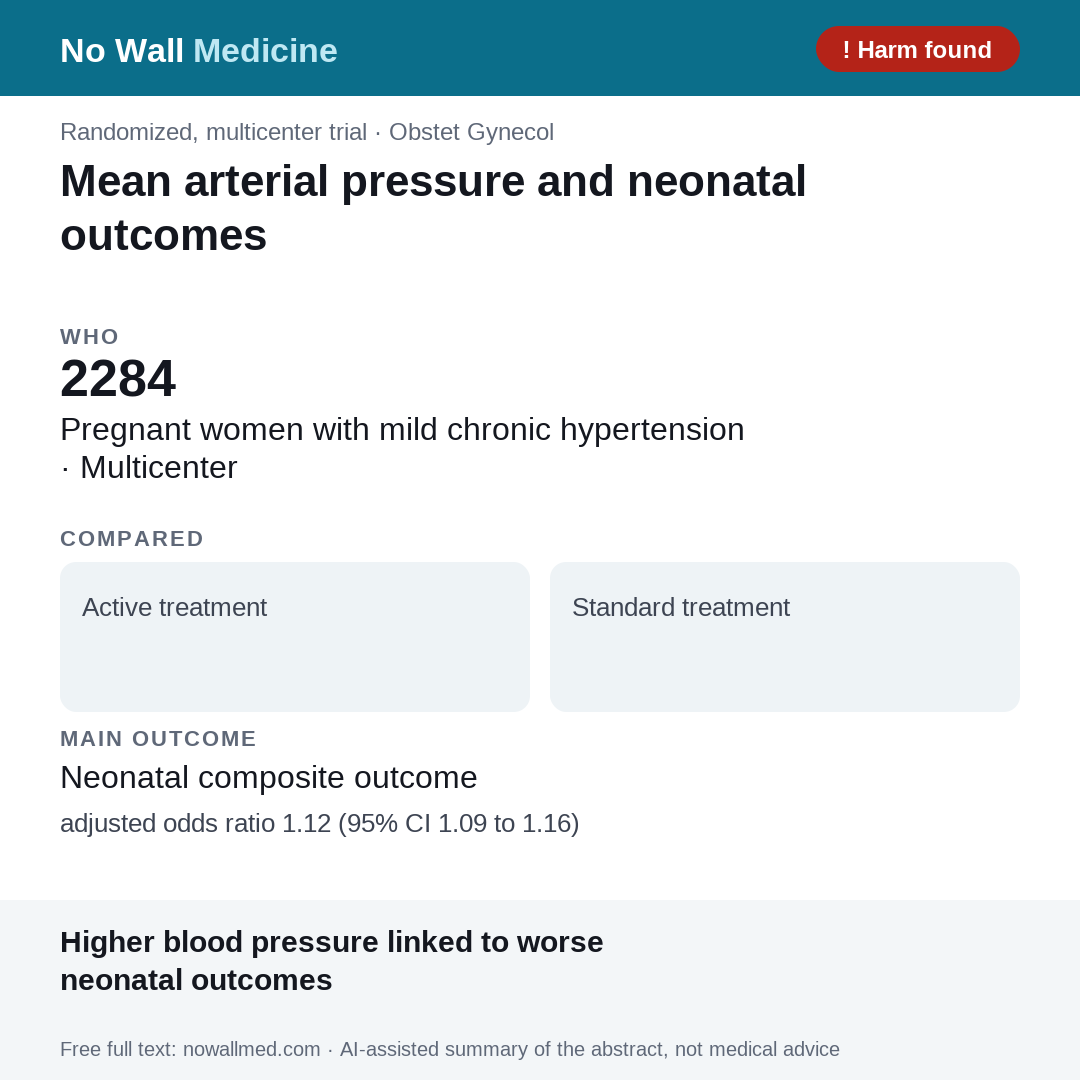
Mean Arterial Pressure and Neonatal Outcomes in Pregnancies Complicated by Mild Chronic Hypertension
Randomized, multicenter trialHarm found
Mean arterial pressure and neonatal outcomes
Who
2284
Pregnant women with mild chronic hypertension · Multicenter
Compared
Active treatment
Standard treatment
Main outcome
Neonatal composite outcome
Result: adjusted odds ratio 1.12 (95% CI 1.09 to 1.16)
Bottom line: Higher blood pressure linked to worse neonatal outcomes
Obstet Gynecol · 2024-05-23Download image
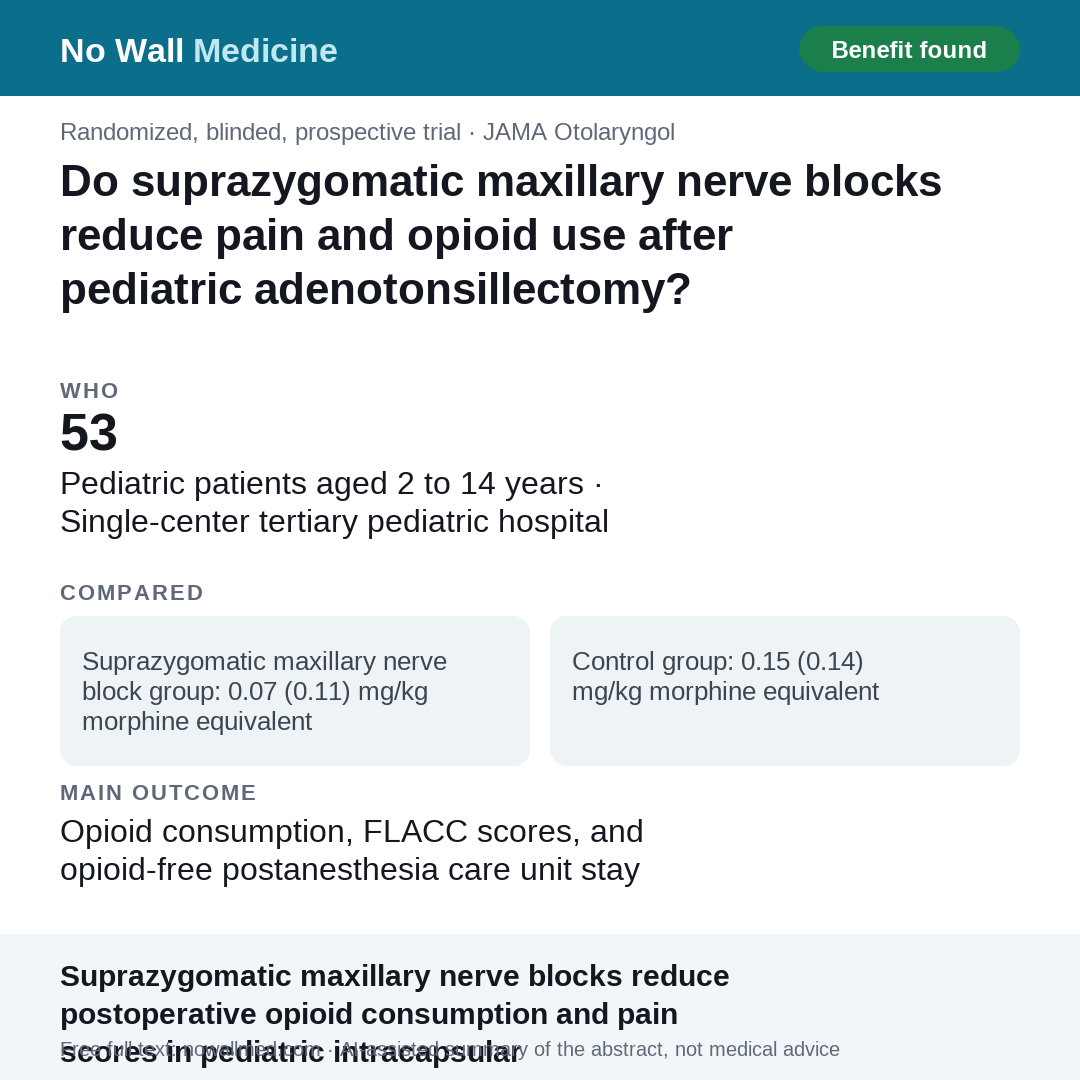
Suprazygomatic Maxillary Nerve Blocks and Opioid Requirements in Pediatric Adenotonsillectomy: A Randomized Clinical Trial
Randomized, blinded, prospective trialBenefit found
Do suprazygomatic maxillary nerve blocks reduce pain and opioid use after pediatric adenotonsillectomy?
Who
53
Pediatric patients aged 2 to 14 years · Single-center tertiary pediatric hospital
Compared
Suprazygomatic maxillary nerve block group: 0.07 (0.11) mg/kg morphine equivalent
Control group: 0.15 (0.14) mg/kg morphine equivalent
Main outcome
Opioid consumption, FLACC scores, and opioid-free postanesthesia care unit stay
Result: mean difference 0.08; 95% CI, 0.01-0.15
Bottom line: Suprazygomatic maxillary nerve blocks reduce postoperative opioid consumption and pain scores in pediatric intracapsular adenotonsillectomy with low complication risk.
JAMA Otolaryngol · 2024-05-23Download image
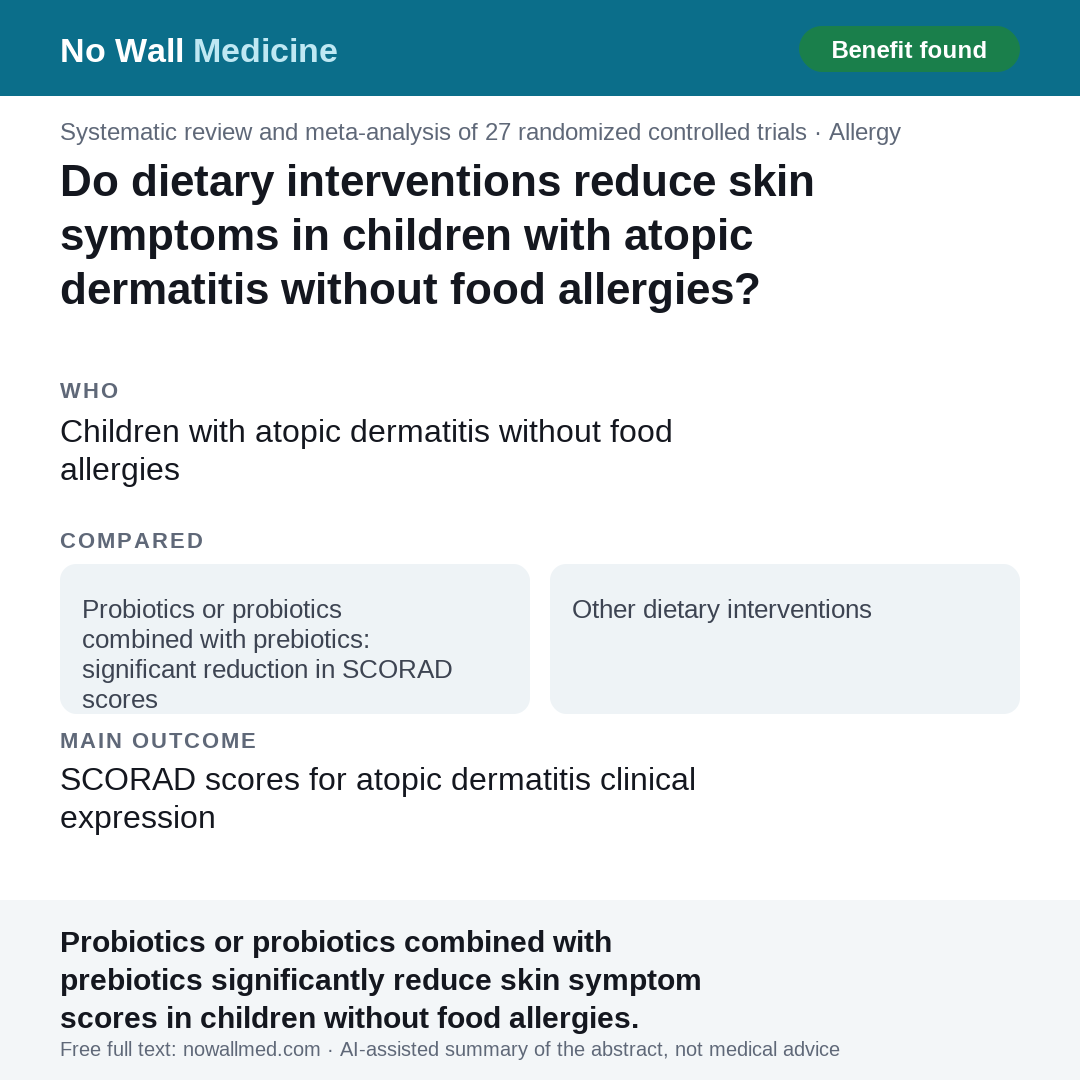
A systematic review and meta-analysis of nutritional and dietary interventions in randomized controlled trials for skin symptoms in children with atopic dermatitis and without food allergy: An EAACI task force report
Systematic review and meta-analysis of 27 randomized controlled trialsBenefit found
Do dietary interventions reduce skin symptoms in children with atopic dermatitis without food allergies?
Who
Children with atopic dermatitis without food allergies
Compared
Probiotics or probiotics combined with prebiotics: significant reduction in SCORAD scores
Other dietary interventions
Main outcome
SCORAD scores for atopic dermatitis clinical expression
Bottom line: Probiotics or probiotics combined with prebiotics significantly reduce skin symptom scores in children without food allergies.
Limitation: Evidence for other dietary interventions remains limited.
Allergy · 2024-05-23Download image