Visual abstracts
New randomized trials and meta-analyses from leading journals at a glance: who was studied, what was compared, and what was found. Every paper is free to read in full.
All specialtiesCardiology 4763Oncology 4043Gastroenterology & Hepatology 1903Infectious Disease 3756Neurology 1872Psychiatry & Mental Health 2216Pulmonology 2044Critical Care 1319Endocrinology & Diabetes 2544Pediatrics 2889Surgery 2480Orthopedics & Sports Medicine 917Neurosurgery 525Cardiothoracic & Vascular Surgery 656Plastic & Reconstructive Surgery 574Nephrology 1107Rheumatology 810Hematology 1090Dermatology 611Ophthalmology 532Obstetrics & Gynecology 1645Public & Global Health 1037Radiology & Imaging 619Anesthesiology 958Urology 745ENT (Otolaryngology) 494Emergency Medicine 481Allergy & Immunology 309Geriatrics 972Family Medicine & Primary Care 534Medical Genetics & Genomics 659Pathology & Laboratory Medicine 156Physical Medicine & Rehabilitation 734Palliative Care 421Nutrition 1560Digital Health & AI 2137General Medicine 318
Neighborhood Safety and Hypertension Risk: A Systematic Review
Systematic reviewKey finding
Does neighborhood safety impact blood pressure and hypertension risk?
Who
General population in various residential environments · Not specified
Compared
Safe neighborhood: lower blood pressure outcomes
Unsafe neighborhood: increase blood pressure and hypertension risk
Main outcome
blood pressure and hypertension risk
Bottom line: Living in safe neighborhoods is associated with lower blood pressure, particularly in longitudinal studies.
J Am Heart Assoc · 2025-04-03 · Save PNG

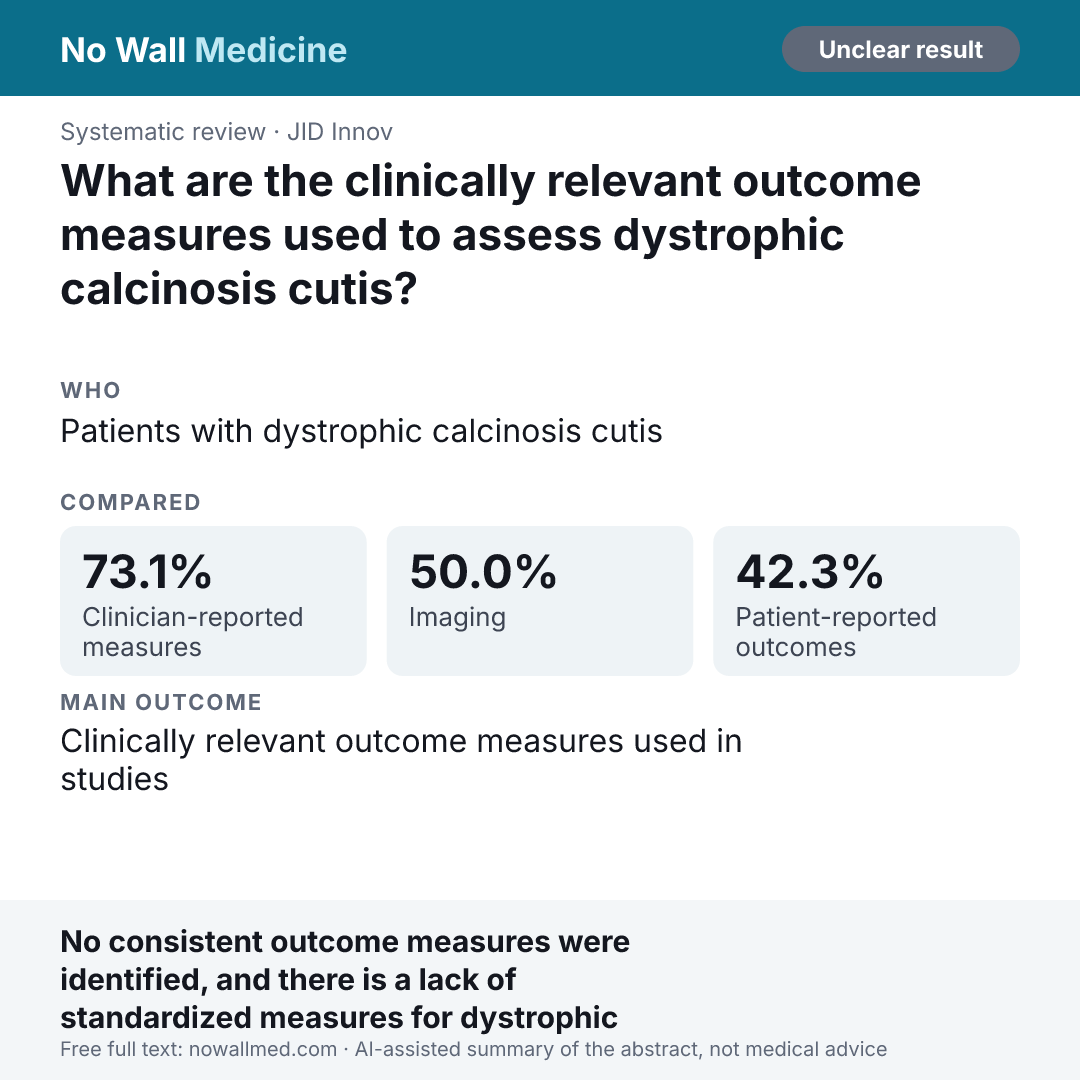
Outcome Measures in Dystrophic Calcinosis Cutis: A Systematic Review
Systematic reviewUnclear result
What are the clinically relevant outcome measures used to assess dystrophic calcinosis cutis?
Who
Patients with dystrophic calcinosis cutis
Compared
73.1%Clinician-reported measures
50.0%Imaging
42.3%Patient-reported outcomes
Main outcome
Clinically relevant outcome measures used in studies
Bottom line: No consistent outcome measures were identified, and there is a lack of standardized measures for dystrophic calcinosis cutis.
Limitation: The majority of included studies were retrospective observational studies.
JID Innov · 2025-04-03 · Save PNG
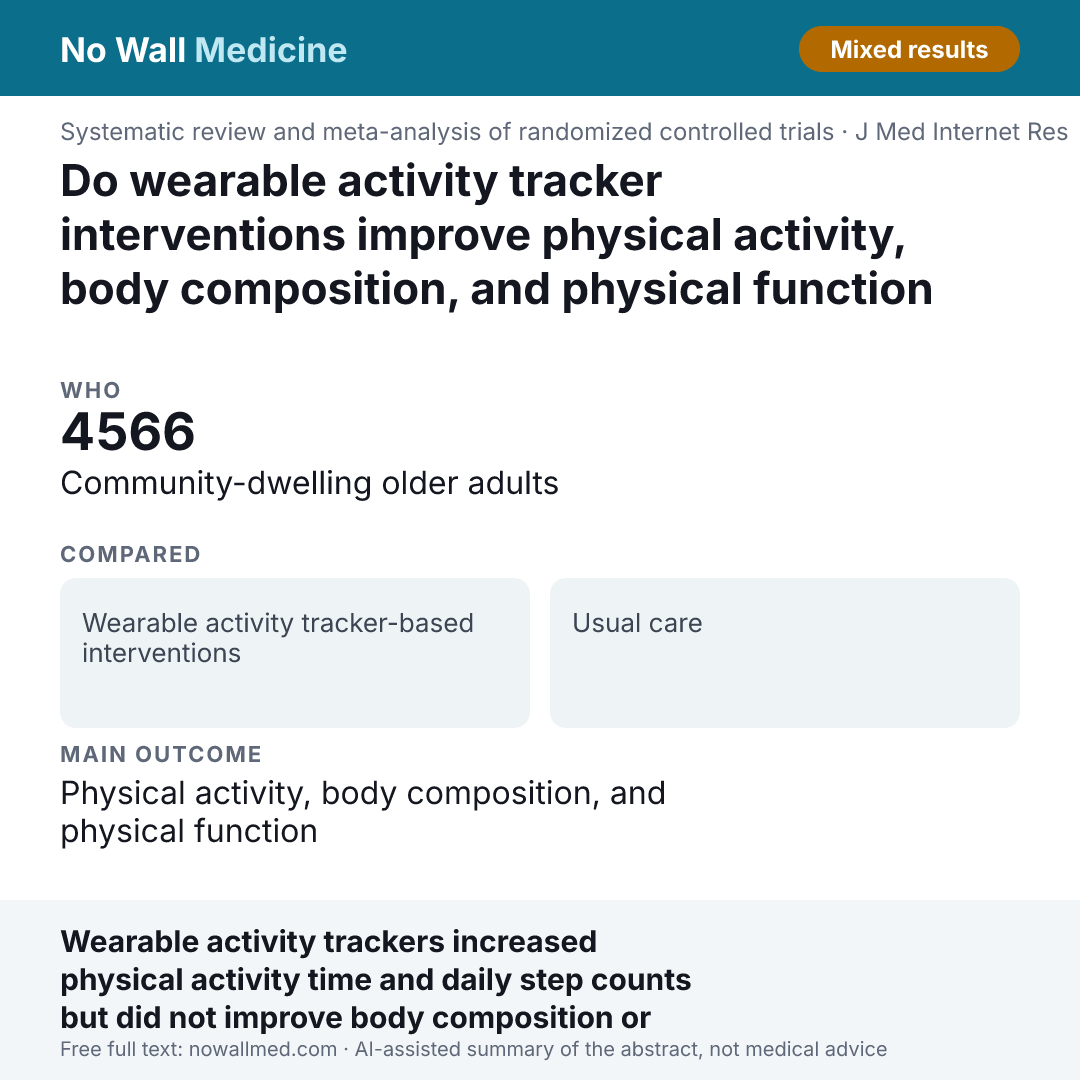
Wearable Activity Tracker-Based Interventions for Physical Activity, Body Composition, and Physical Function Among Community-Dwelling Older Adults: Systematic Review and Meta-Analysis of Randomized Controlled Trials
Systematic review and meta-analysis of randomized controlled trialsMixed results
Do wearable activity tracker interventions improve physical activity, body composition, and physical function in older adults?
Who
4566
Community-dwelling older adults
Compared
Wearable activity tracker-based interventions
Usual care
Main outcome
Physical activity, body composition, and physical function
Result: standardized mean difference 0.28 (95% CI 0.10 to 0.47) for physical activity time
Bottom line: Wearable activity trackers increased physical activity time and daily step counts but did not improve body composition or physical function.
Limitation: low- to moderate-certainty evidence
J Med Internet Res · 2025-04-03 · Save PNG
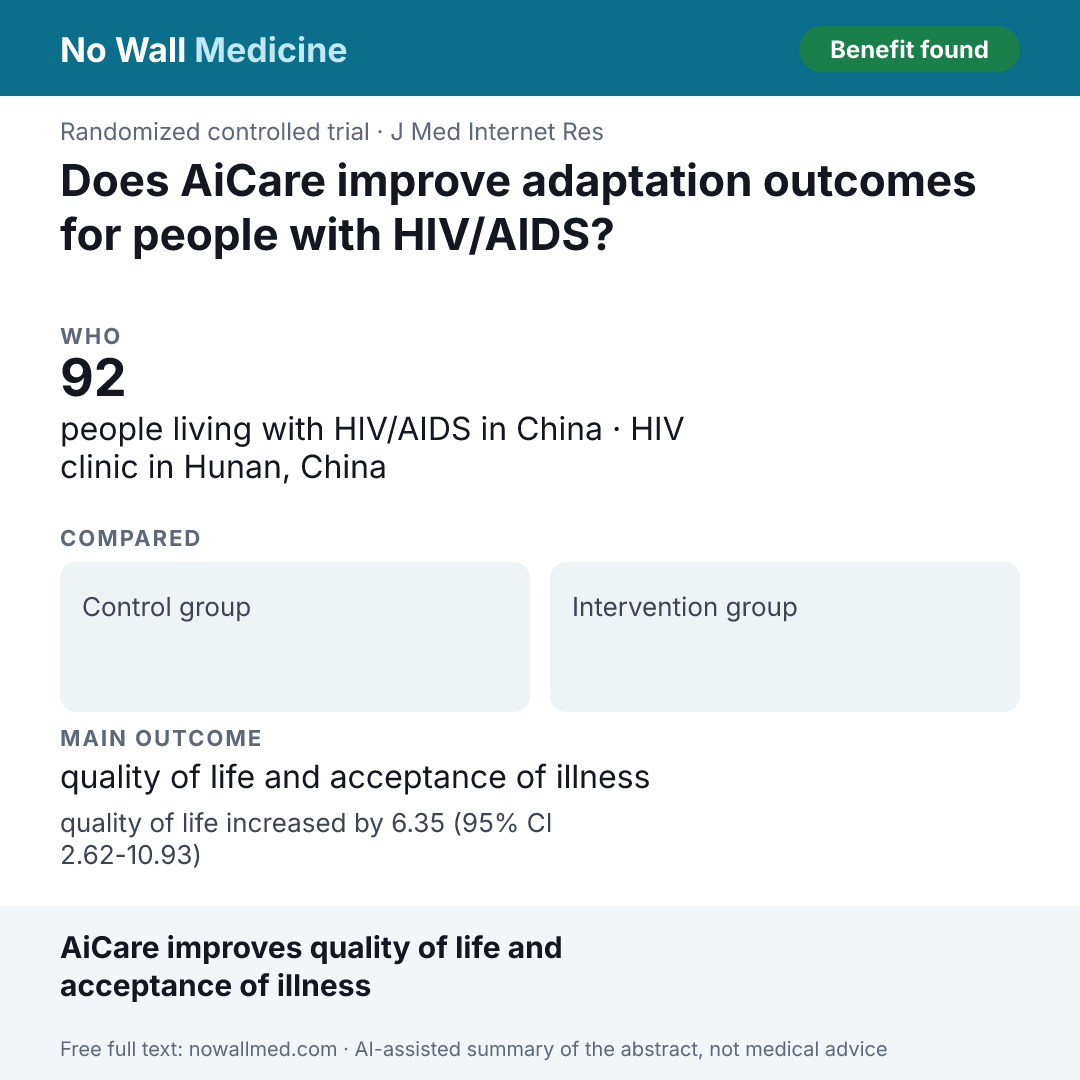
Effect of a WeChat-Based Hybrid Intervention on the Adaptation Outcomes of People Living With HIV/AIDS: Pilot Randomized Controlled Trial
Randomized controlled trialBenefit found
Does AiCare improve adaptation outcomes for people with HIV/AIDS?
Who
92
people living with HIV/AIDS in China · HIV clinic in Hunan, China
Compared
Control group
Intervention group
Main outcome
quality of life and acceptance of illness
Result: quality of life increased by 6.35 (95% CI 2.62-10.93)
Bottom line: AiCare improves quality of life and acceptance of illness
J Med Internet Res · 2025-04-03 · Save PNG
Can motion capture improve task-based fMRI studies of motor function post-stroke? A systematic review
Systematic literature reviewBenefit found
Can motion capture improve task-based functional magnetic resonance imaging studies of motor function post-stroke?
Who
23
Post-stroke individuals
Compared
Studies using kinematic information
Studies without kinematic coupling
Main outcome
Understanding of motor function and cortico-kinematic relationships
Bottom line: Coupling functional magnetic resonance imaging and kinematics may provide valuable insight into cortico-kinematic relationships post-stroke.
J Neuroeng Rehabil · 2025-04-03 · Save PNG

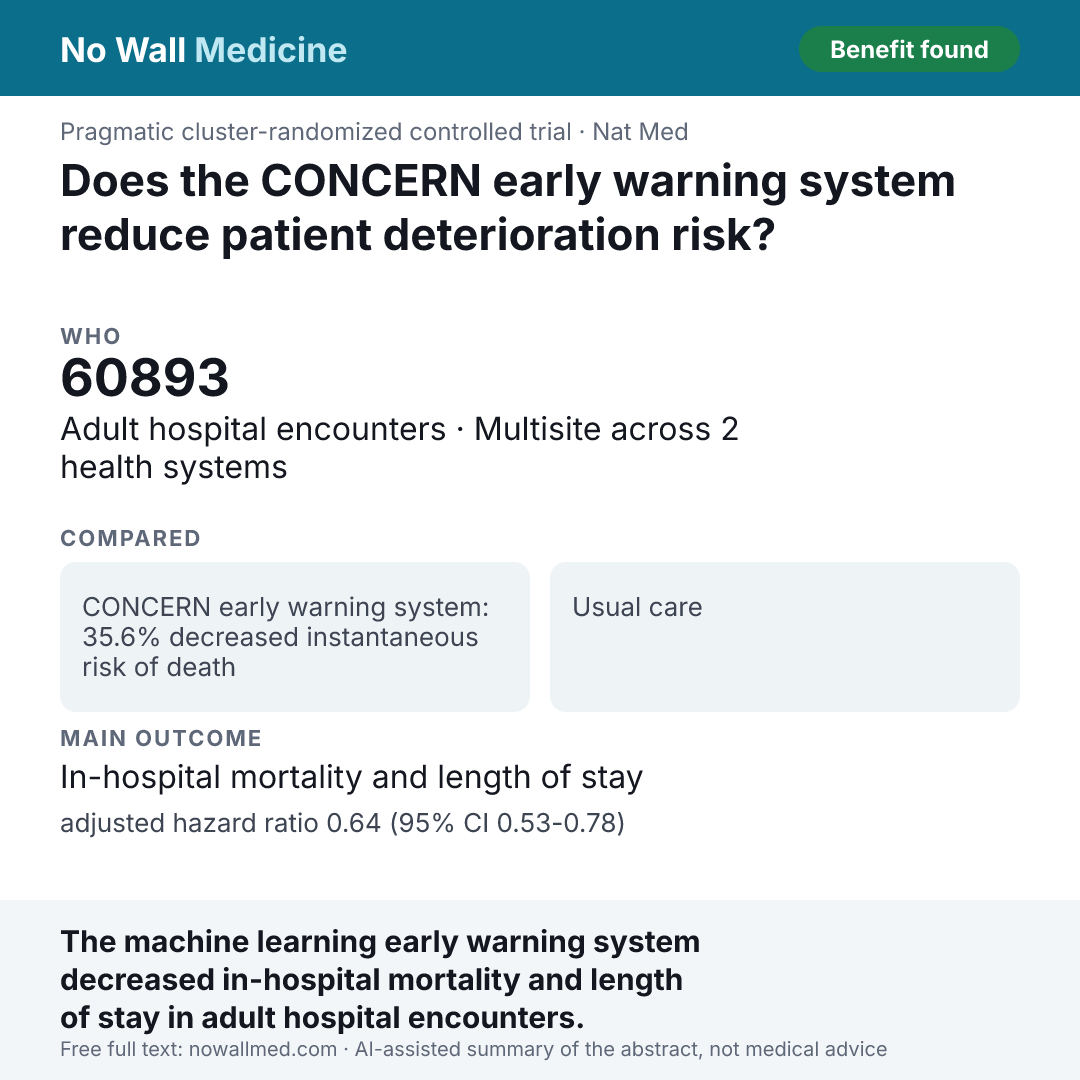
Real-time surveillance system for patient deterioration: a pragmatic cluster-randomized controlled trial
Pragmatic cluster-randomized controlled trialBenefit found
Does the CONCERN early warning system reduce patient deterioration risk?
Who
60893
Adult hospital encounters · Multisite across 2 health systems
Compared
CONCERN early warning system: 35.6% decreased instantaneous risk of death
Usual care
Main outcome
In-hospital mortality and length of stay
Result: adjusted hazard ratio 0.64 (95% CI 0.53-0.78)
Bottom line: The machine learning early warning system decreased in-hospital mortality and length of stay in adult hospital encounters.
Nat Med · 2025-04-02 · Save PNG
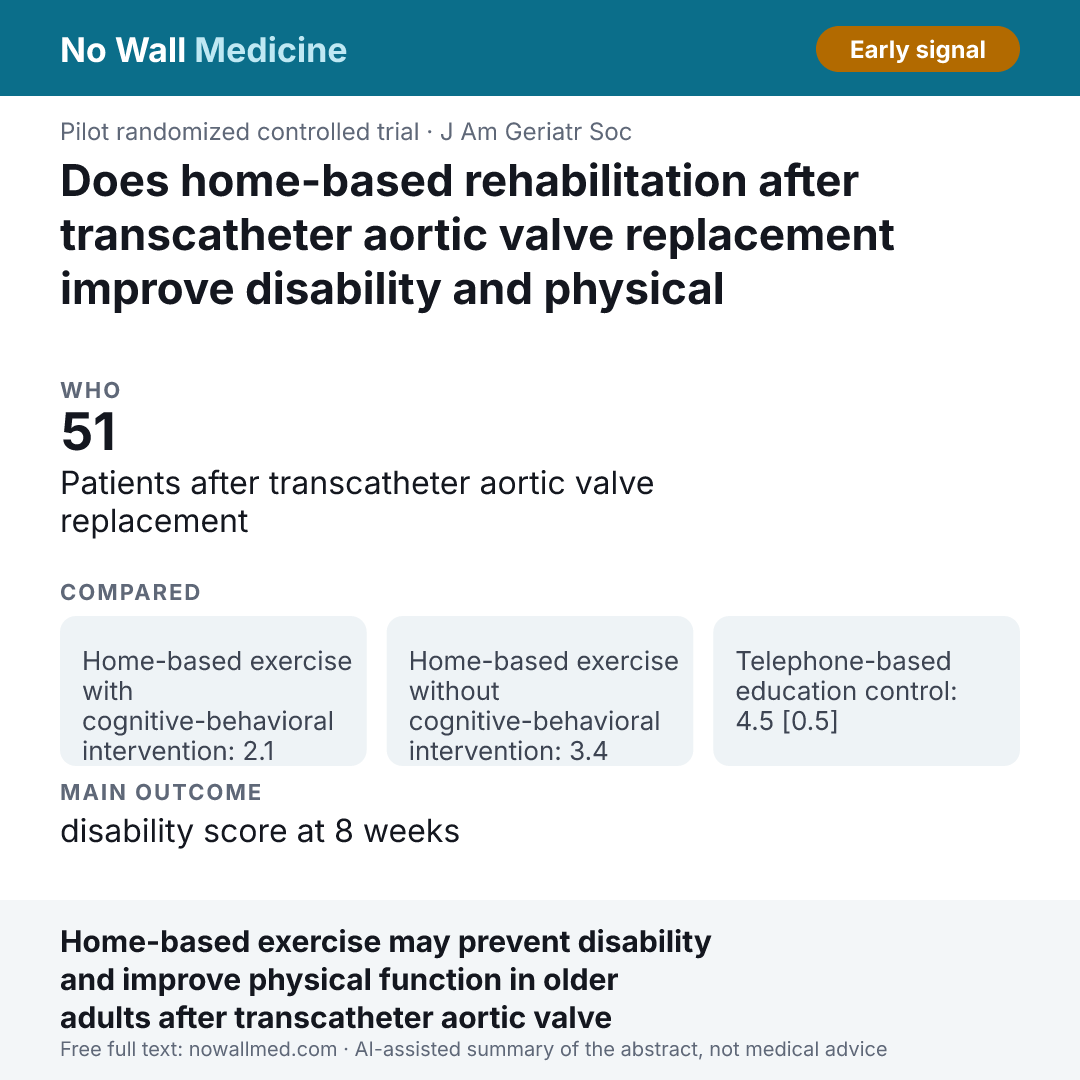
Home-Based Rehabilitation After Transcatheter Aortic Valve Replacement (REHAB-TAVR): A Pilot Randomized Controlled Trial
Pilot randomized controlled trialEarly signal
Does home-based rehabilitation after transcatheter aortic valve replacement improve disability and physical function?
Who
51
Patients after transcatheter aortic valve replacement
Compared
Home-based exercise with cognitive-behavioral intervention: 2.1 [0.4]
Home-based exercise without cognitive-behavioral intervention: 3.4 [0.5]
Telephone-based education control: 4.5 [0.5]
Main outcome
disability score at 8 weeks
Bottom line: Home-based exercise may prevent disability and improve physical function in older adults after transcatheter aortic valve replacement.
J Am Geriatr Soc · 2025-04-02 · Save PNG
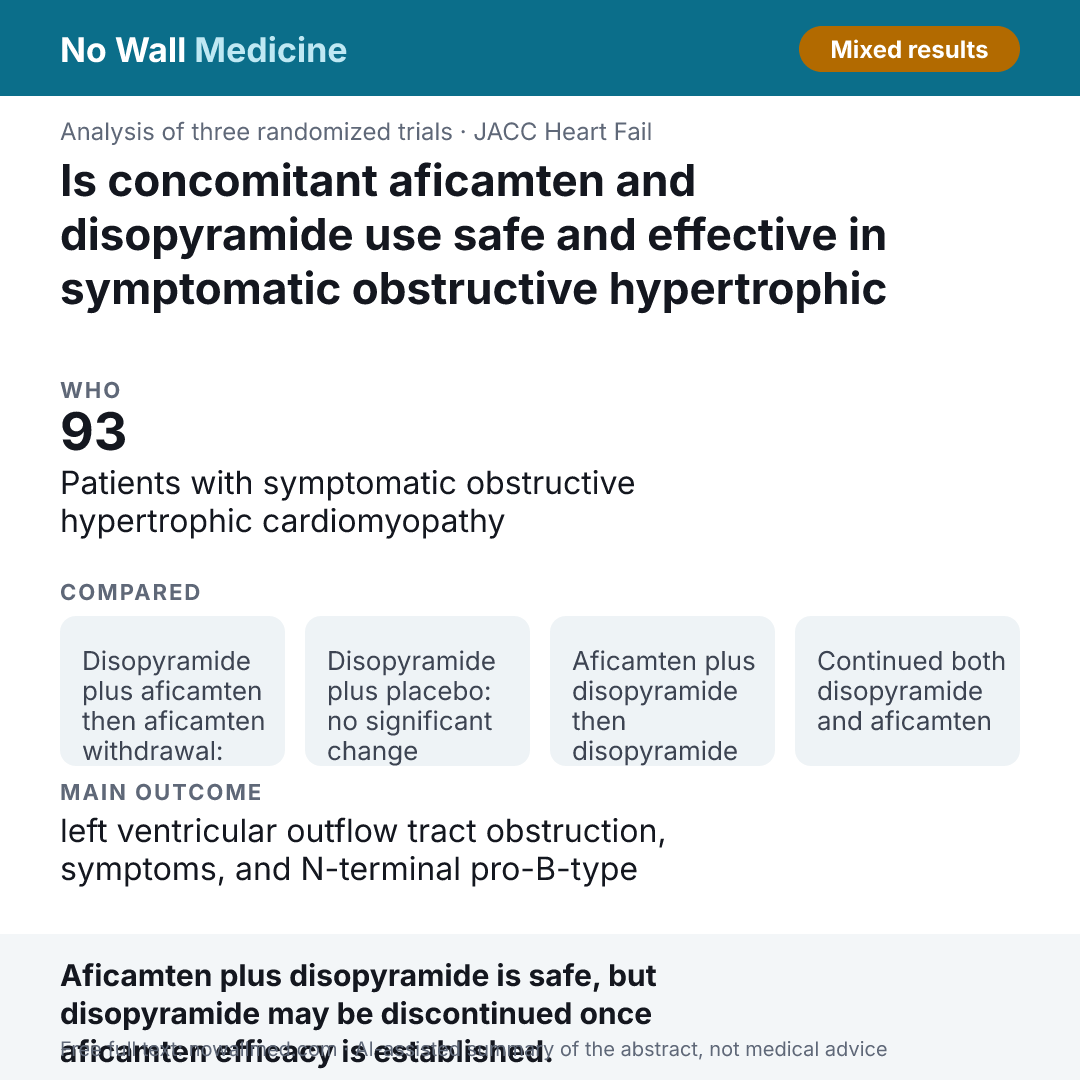
Concomitant Aficamten and Disopyramide in Symptomatic Obstructive Hypertrophic Cardiomyopathy
Analysis of three randomized trialsMixed results
Is concomitant aficamten and disopyramide use safe and effective in symptomatic obstructive hypertrophic cardiomyopathy?
Who
93
Patients with symptomatic obstructive hypertrophic cardiomyopathy
Compared
Disopyramide plus aficamten then aficamten withdrawal: return of LVOT obstruction
Disopyramide plus placebo: no significant change
Aficamten plus disopyramide then disopyramide withdrawal: did not impact efficacy
Continued both disopyramide and aficamten
Main outcome
left ventricular outflow tract obstruction, symptoms, and N-terminal pro-B-type natriuretic peptide
Bottom line: Aficamten plus disopyramide is safe, but disopyramide may be discontinued once aficamten efficacy is established.
JACC Heart Fail · 2025-04-02 · Save PNG
Finerenone Across the Spectrum of Kidney Risk in Heart Failure: The FINEARTS-HF Trial
Prespecified analysis of a randomized trialBenefit found
Does finerenone efficacy and safety vary by kidney risk in heart failure patients?
Who
5797
Patients with heart failure with mildly reduced or preserved ejection fraction
Compared
Finerenone
Placebo
Main outcome
cardiovascular death and total heart failure events
Bottom line: Finerenone consistently improves clinical outcomes and health status across different kidney risk categories in heart failure patients.
JACC Heart Fail · 2025-04-02 · Save PNG

Body Composition and Survival in Patients With Heart Failure: A Systematic Review and Meta-Analysis
Systematic review and meta-analysisMixed results
How do body composition parameters impact survival in patients with heart failure?
Who
36,176
Patients with heart failure
Compared
Low muscle mass: HR: 1.73 (95% CI: 1.32-2.26)
Elevated fat mass: pooled adjusted HR: 0.75 (95% CI: 0.26-2.12)
Main outcome
All-cause mortality
Result: hazard ratio 1.73 (95% CI 1.32-2.26) for low muscle mass
Bottom line: Low muscle mass is associated with increased mortality, but elevated fat mass shows no significant association.
JACC Heart Fail · 2025-04-02 · Save PNG

A randomized study of 2 risk assessment models for individualized breast cancer risk estimation
Randomized intervention studyNo clear difference
How do delivery models compare for individualized breast cancer risk assessment?
Who
663
Healthy women with a family history of breast cancer
Compared
In-person delivery: mean 10.2 (SD 3.1)
10.1Pre-recorded video delivery (2.7)
Main outcome
Cancer worry
Bottom line: Pre-recorded video delivery matches in-person delivery for cancer worry in moderate and average-risk women.
J Natl Cancer Inst · 2025-04-02 · Save PNG

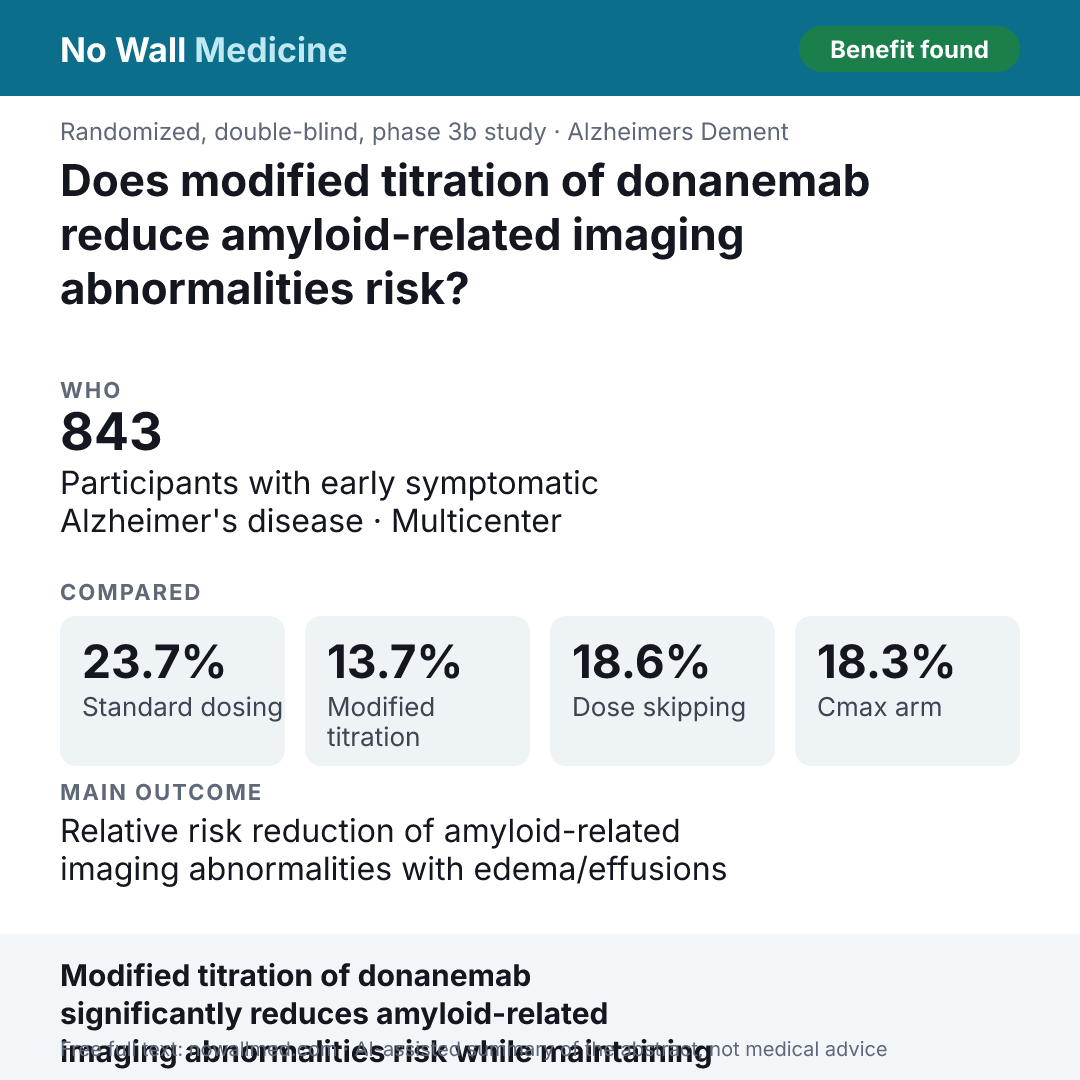
Modified titration of donanemab reduces ARIA risk and maintains amyloid reduction
Randomized, double-blind, phase 3b studyBenefit found
Does modified titration of donanemab reduce amyloid-related imaging abnormalities risk?
Who
843
Participants with early symptomatic Alzheimer's disease · Multicenter
Compared
23.7%Standard dosing
13.7%Modified titration
18.6%Dose skipping
18.3%Cmax arm
Main outcome
Relative risk reduction of amyloid-related imaging abnormalities with edema/effusions
Bottom line: Modified titration of donanemab significantly reduces amyloid-related imaging abnormalities risk while maintaining comparable amyloid reduction.
Alzheimers Dement · 2025-04-02 · Save PNG
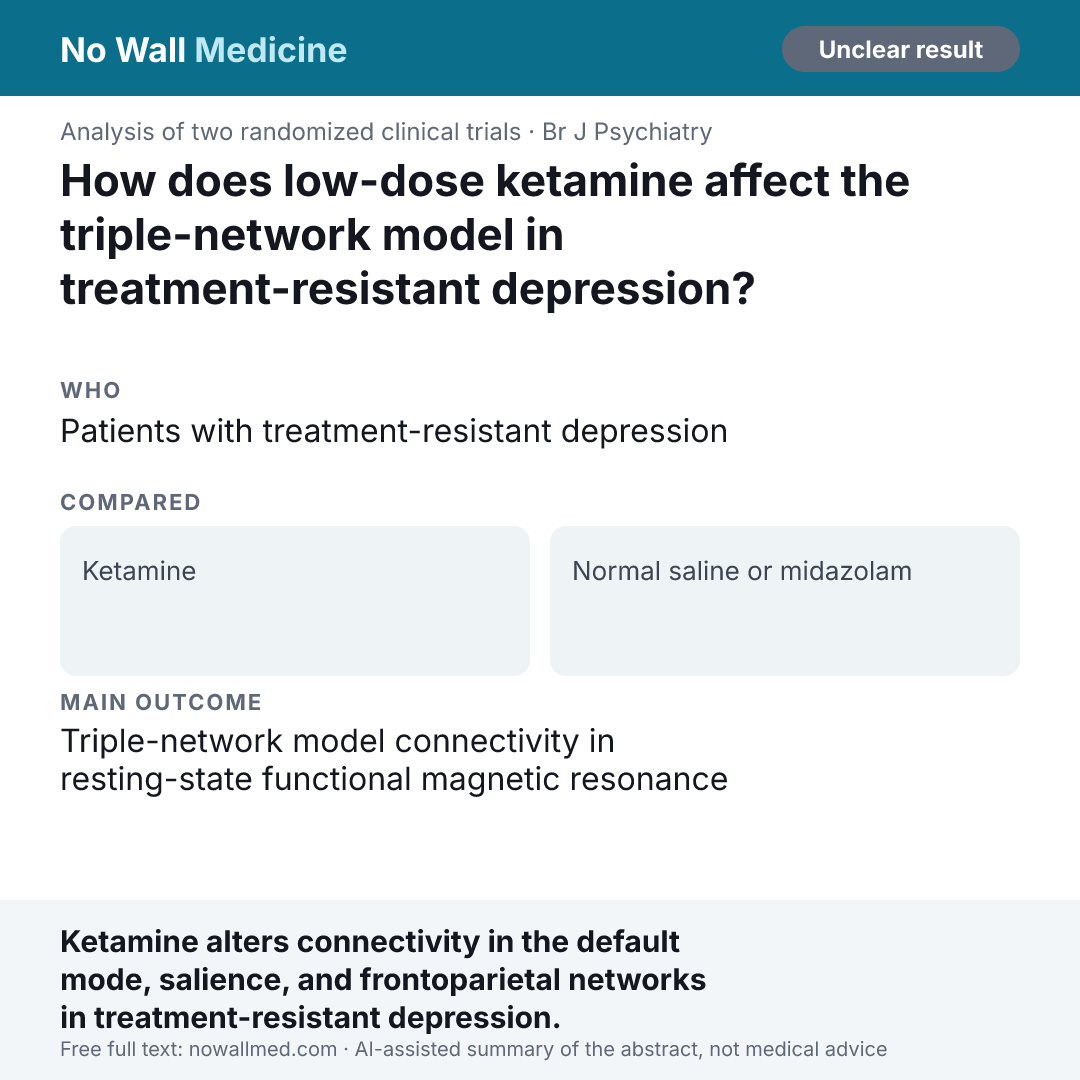
Triple-network model-based graph theory analysis of the effectiveness of low-dose ketamine in patients with treatment-resistant depression: two resting-state functional MRI clinical trials
Analysis of two randomized clinical trialsUnclear result
How does low-dose ketamine affect the triple-network model in treatment-resistant depression?
Who
Patients with treatment-resistant depression
Compared
Ketamine
Normal saline or midazolam
Main outcome
Triple-network model connectivity in resting-state functional magnetic resonance imaging
Bottom line: Ketamine alters connectivity in the default mode, salience, and frontoparietal networks in treatment-resistant depression.
Br J Psychiatry · 2025-04-02 · Save PNG
Capitalizing on natural language processing (NLP) to automate the evaluation of coach implementation fidelity in guided digital cognitive-behavioral therapy (GdCBT)
Randomized trialBenefit found
Can NLP automate coach fidelity evaluation
Who
3381
users with anxiety, depression, or eating disorders
Compared
Human coders
NLP methods
Main outcome
coach implementation fidelity
Bottom line: NLP can automate coach fidelity evaluation
Psychol Med · 2025-04-02 · Save PNG

A 3-Week Ketogenic Diet Increases Global Cerebral Blood Flow and Brain-Derived Neurotrophic Factor
Randomized, crossover trialBenefit found
Does a 3-week ketogenic diet increase cerebral blood flow and brain-derived neurotrophic factor?
Who
11
Cognitively healthy individuals with overweight
Compared
Ketogenic diet: increased cerebral blood flow by 22% and elevated brain-derived neurotrophic factor by 47%
Standard diet
Main outcome
Cerebral blood flow and brain-derived neurotrophic factor
Bottom line: A 3-week ketogenic diet increased cerebral blood flow and raised brain-derived neurotrophic factor levels in healthy individuals.
J Clin Endocrinol Metab · 2025-04-02 · Save PNG

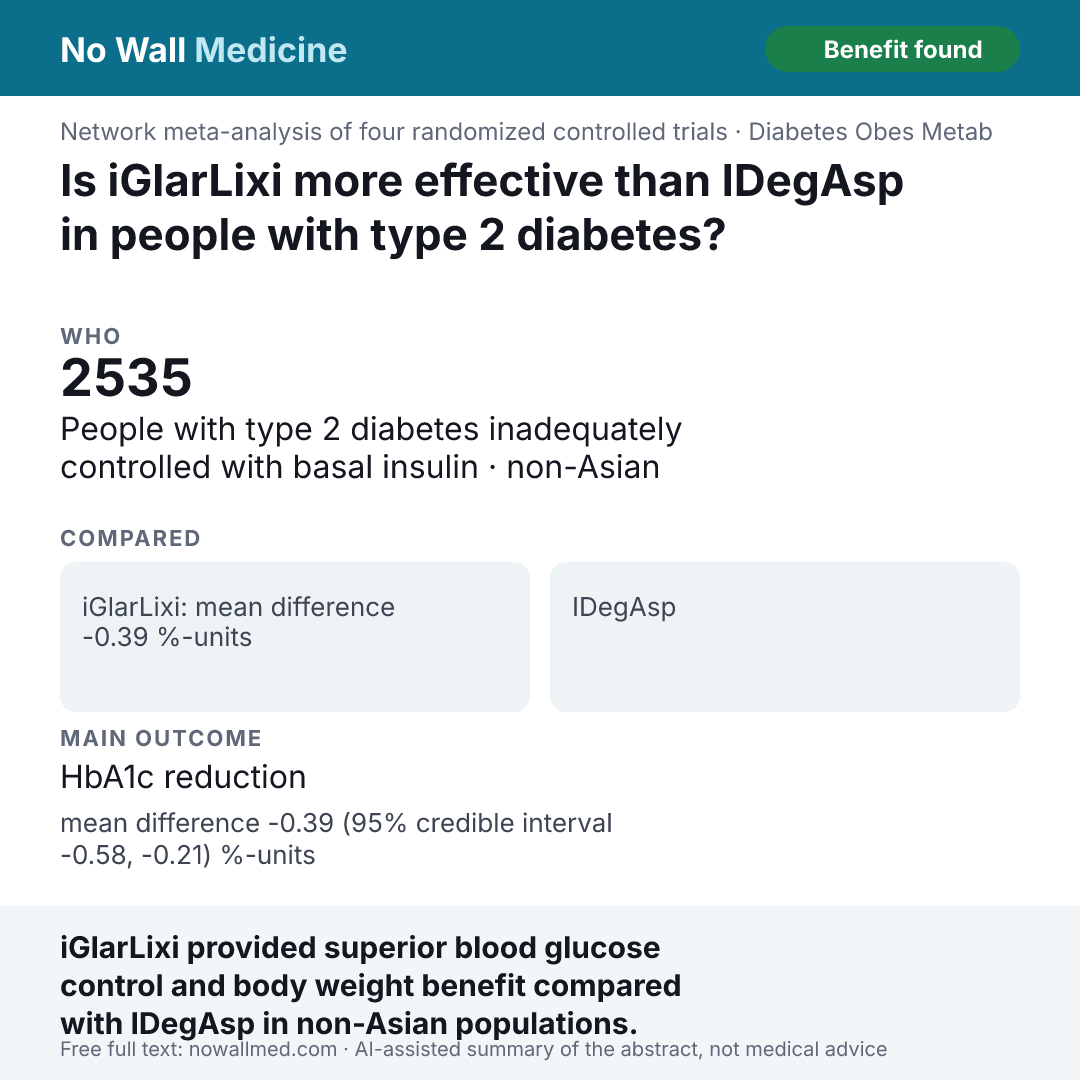
Efficacy and safety of iGlarLixi versus IDegAsp in people with type 2 diabetes inadequately controlled with basal insulin: A systematic literature review and network meta-analysis of non-Asian studies
Network meta-analysis of four randomized controlled trialsBenefit found
Is iGlarLixi more effective than IDegAsp in people with type 2 diabetes?
Who
2535
People with type 2 diabetes inadequately controlled with basal insulin · non-Asian studies
Compared
iGlarLixi: mean difference -0.39 %-units
IDegAsp
Main outcome
HbA1c reduction
Result: mean difference -0.39 (95% credible interval -0.58, -0.21) %-units
Bottom line: iGlarLixi provided superior blood glucose control and body weight benefit compared with IDegAsp in non-Asian populations.
Diabetes Obes Metab · 2025-04-02 · Save PNG
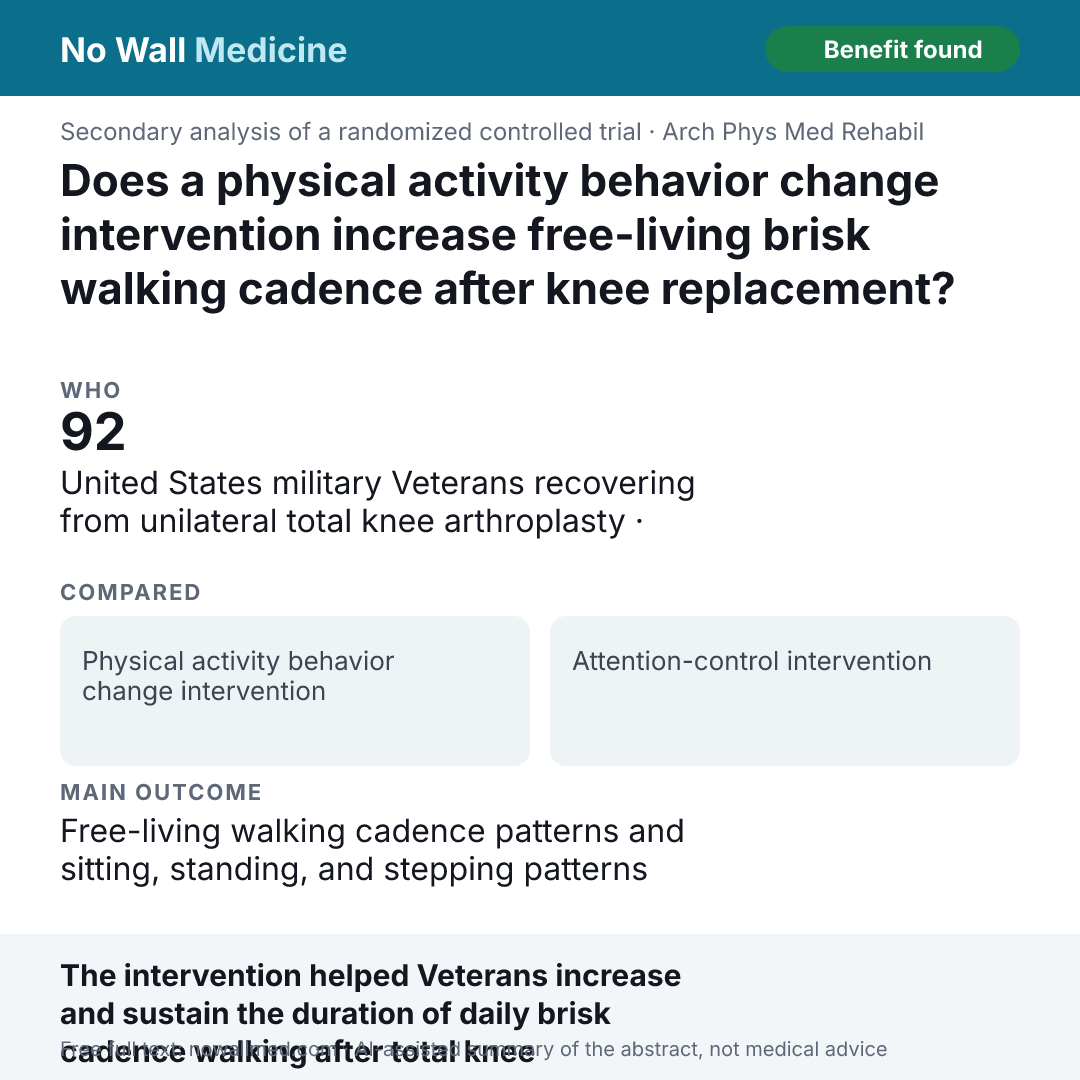
Increased Free-Living Brisk Walking Cadence Following a Physical Activity Behavior Intervention After Total Knee Arthroplasty: A Secondary Analysis of a Randomized Controlled Trial
Secondary analysis of a randomized controlled trialBenefit found
Does a physical activity behavior change intervention increase free-living brisk walking cadence after knee replacement?
Who
92
United States military Veterans recovering from unilateral total knee arthroplasty · Veterans Affairs Medical Center
Compared
Physical activity behavior change intervention
Attention-control intervention
Main outcome
Free-living walking cadence patterns and sitting, standing, and stepping patterns
Result: ∆=8.36 min; 95% confidence interval, 4.83-11.88
Bottom line: The intervention helped Veterans increase and sustain the duration of daily brisk cadence walking after total knee arthroplasty.
Arch Phys Med Rehabil · 2025-04-02 · Save PNG
A pragmatic covariate-constrained cluster-randomised controlled trial of hybrid parents and health workers adaptive intervention for optimal (timely, cumulative age-appropriate) community-wide routine childhood immunisation coverage: the AGINTOPIC trial
Pragmatic covariate-constrained cluster-randomised controlled trialKey finding
Does a hybrid parents and health workers adaptive intervention increase optimal routine childhood immunisation coverage?
Who
Children aged 5-9 months in Ebonyi state, Nigeria · 16 geographical clusters in Ebonyi state, Nigeria
Compared
6.0%control arm (SD 8.1)
14.3%intervention arm (11.7)
Main outcome
proportion of children with optimal/timely receipt of every recommended vaccine
Result: adjusted prevalence difference 10.8%, 95% CI 0.8% to 20.9%
Bottom line: The adaptive engagement intervention significantly increased optimal and timely routine childhood immunisation coverage in Nigeria.
BMJ Glob Health · 2025-04-02 · Save PNG

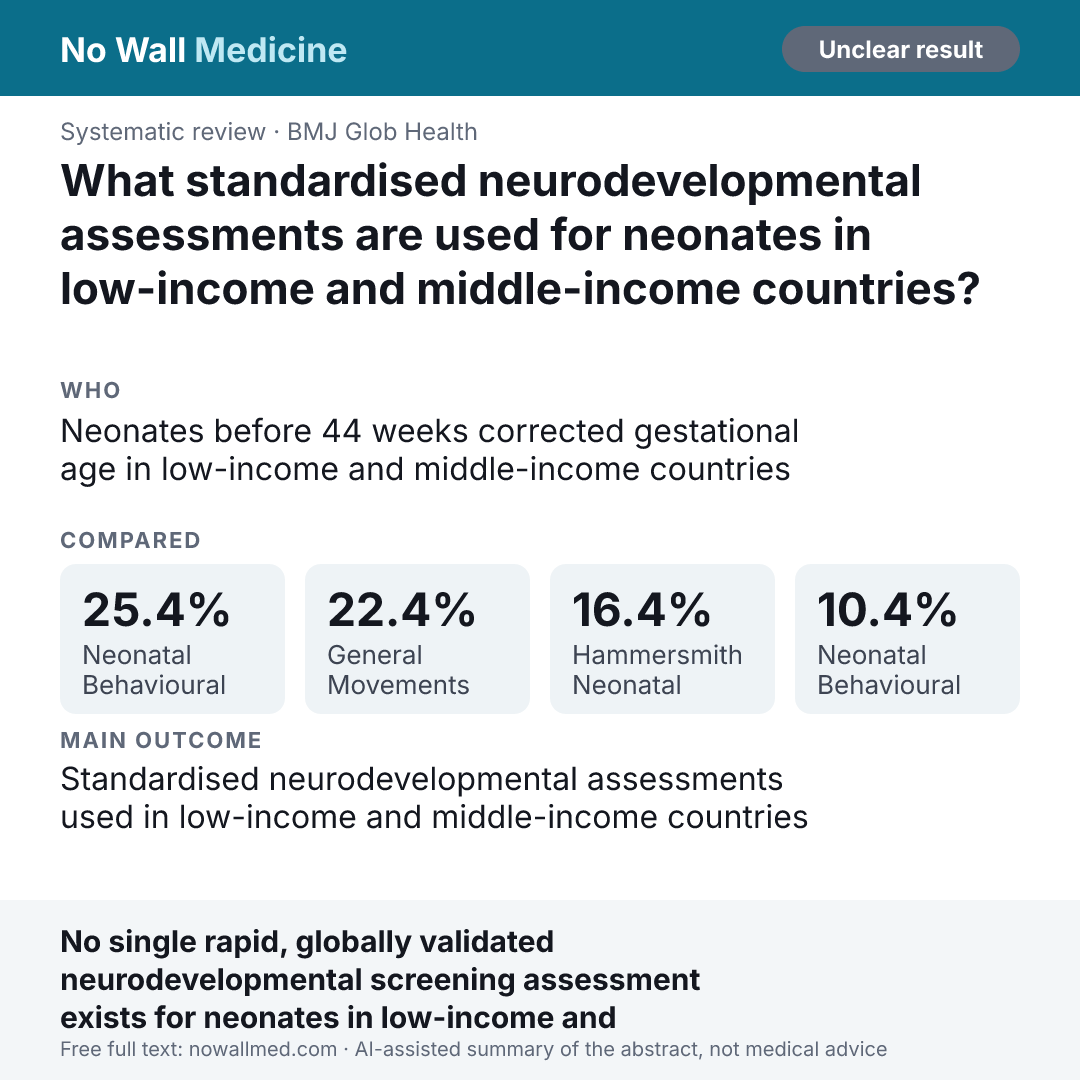
Neurodevelopmental screening for neonates less than 44 weeks gestation in low-income and middle-income countries: a systematic review
Systematic reviewUnclear result
What standardised neurodevelopmental assessments are used for neonates in low-income and middle-income countries?
Who
Neonates before 44 weeks corrected gestational age in low-income and middle-income countries · Low-income and middle-income countries
Compared
25.4%Neonatal Behavioural Neurological Assessment
22.4%General Movements Assessment
16.4%Hammersmith Neonatal Neurological Examination/Dubowitz
10.4%Neonatal Behavioural Assessment Scale
Main outcome
Standardised neurodevelopmental assessments used in low-income and middle-income countries
Bottom line: No single rapid, globally validated neurodevelopmental screening assessment exists for neonates in low-income and middle-income countries.
BMJ Glob Health · 2025-04-02 · Save PNG
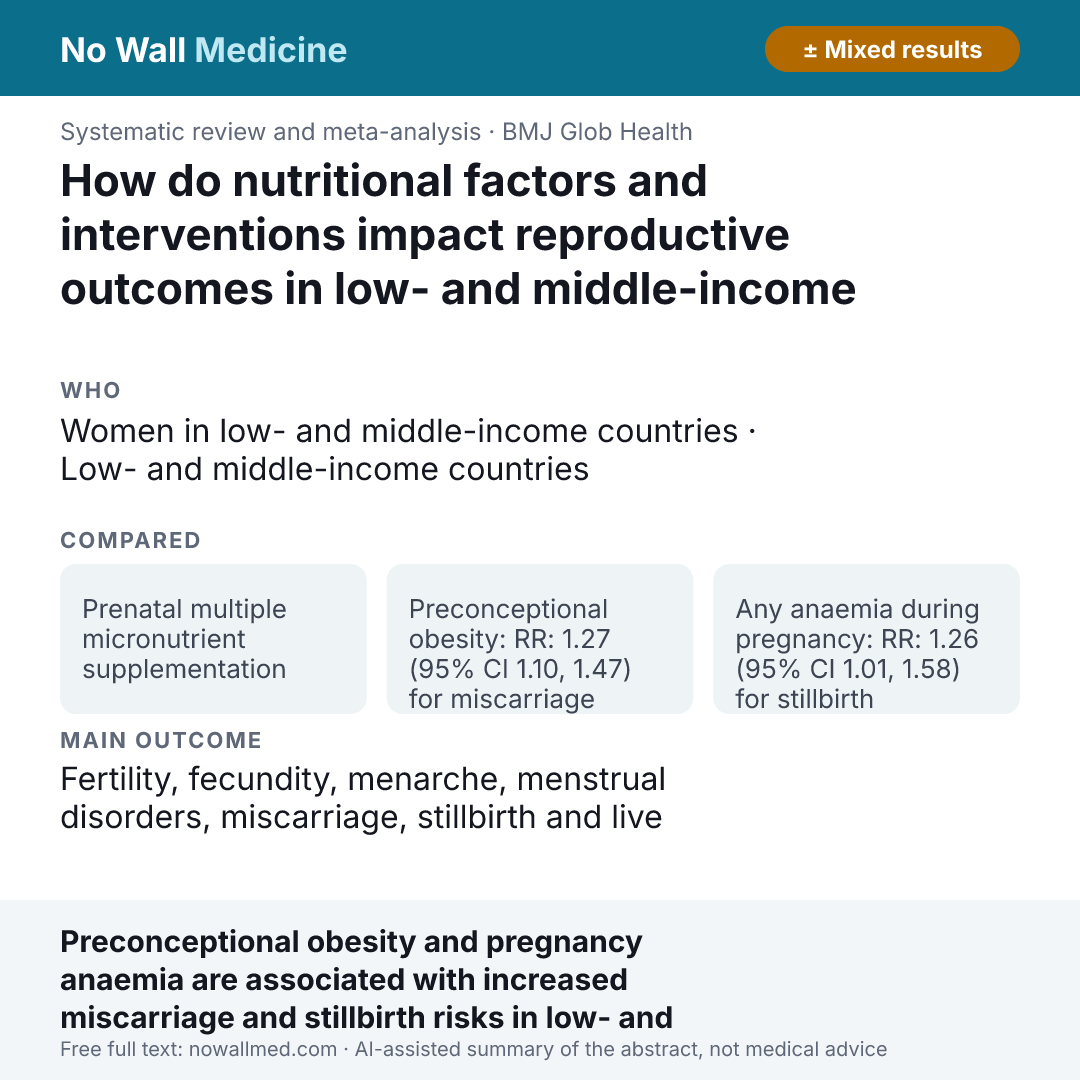
Nutrition and reproductive potential of women in low- and middle-income countries: a systematic review and meta-analysis
Systematic review and meta-analysisMixed results
How do nutritional factors and interventions impact reproductive outcomes in low- and middle-income countries?
Who
Women in low- and middle-income countries · Low- and middle-income countries
Compared
Prenatal multiple micronutrient supplementation
Preconceptional obesity: RR: 1.27 (95% CI 1.10, 1.47) for miscarriage
Any anaemia during pregnancy: RR: 1.26 (95% CI 1.01, 1.58) for stillbirth
Main outcome
Fertility, fecundity, menarche, menstrual disorders, miscarriage, stillbirth and live birth
Bottom line: Preconceptional obesity and pregnancy anaemia are associated with increased miscarriage and stillbirth risks in low- and middle-income countries.
Limitation: The review calls for more randomised controlled trials to evaluate preconceptional and prenatal interventions.
BMJ Glob Health · 2025-04-02 · Save PNG