Visual abstracts
New randomized trials and meta-analyses from leading journals at a glance: who was studied, what was compared, and what was found. Every paper is free to read in full.
All specialtiesCardiology 242Oncology 193Gastroenterology & Hepatology 107Infectious Disease 189Neurology 112Psychiatry & Mental Health 161Pulmonology 110Critical Care 74Endocrinology & Diabetes 155Pediatrics 105Surgery 74Orthopedics & Sports Medicine 45Neurosurgery 10Cardiothoracic & Vascular Surgery 25Plastic & Reconstructive Surgery 53Nephrology 47Rheumatology 45Hematology 57Dermatology 25Ophthalmology 44Obstetrics & Gynecology 64Public & Global Health 74Radiology & Imaging 19Anesthesiology 37Urology 54ENT (Otolaryngology) 31Emergency Medicine 26Allergy & Immunology 19Geriatrics 74Family Medicine & Primary Care 32Medical Genetics & Genomics 27Pathology & Laboratory Medicine 5Physical Medicine & Rehabilitation 60Palliative Care 30Nutrition 85Digital Health & AI 215General Medicine 35
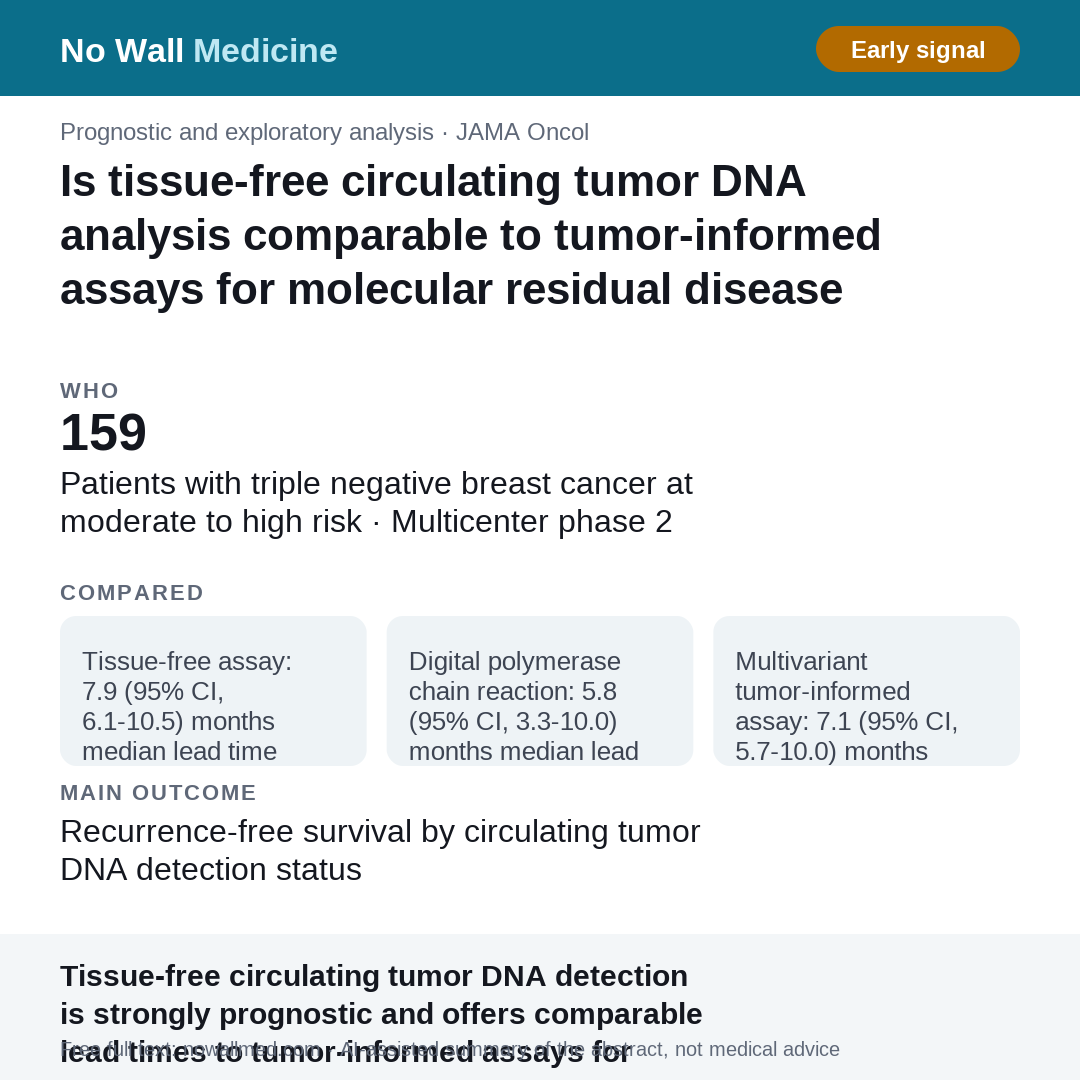
Tissue-Free vs Tumor-Informed ctDNA Assays for Molecular Residual Disease Detection in Early Triple Negative Breast Cancer
Prognostic analysisBenefit found
Tissue-free vs tumor-informed ctDNA assays
Who
159
Patients with triple negative breast cancer · Multicenter
Compared
34.0%Tissue-free assay (54/159)
Tumor-informed assay
Main outcome
Recurrence-free survival
Result: hazard ratio 27.2 (95% CI 13.7 to 54.2)
Bottom line: Tissue-free assay detects recurrence risk
JAMA Oncol · 2026-08-13Download image
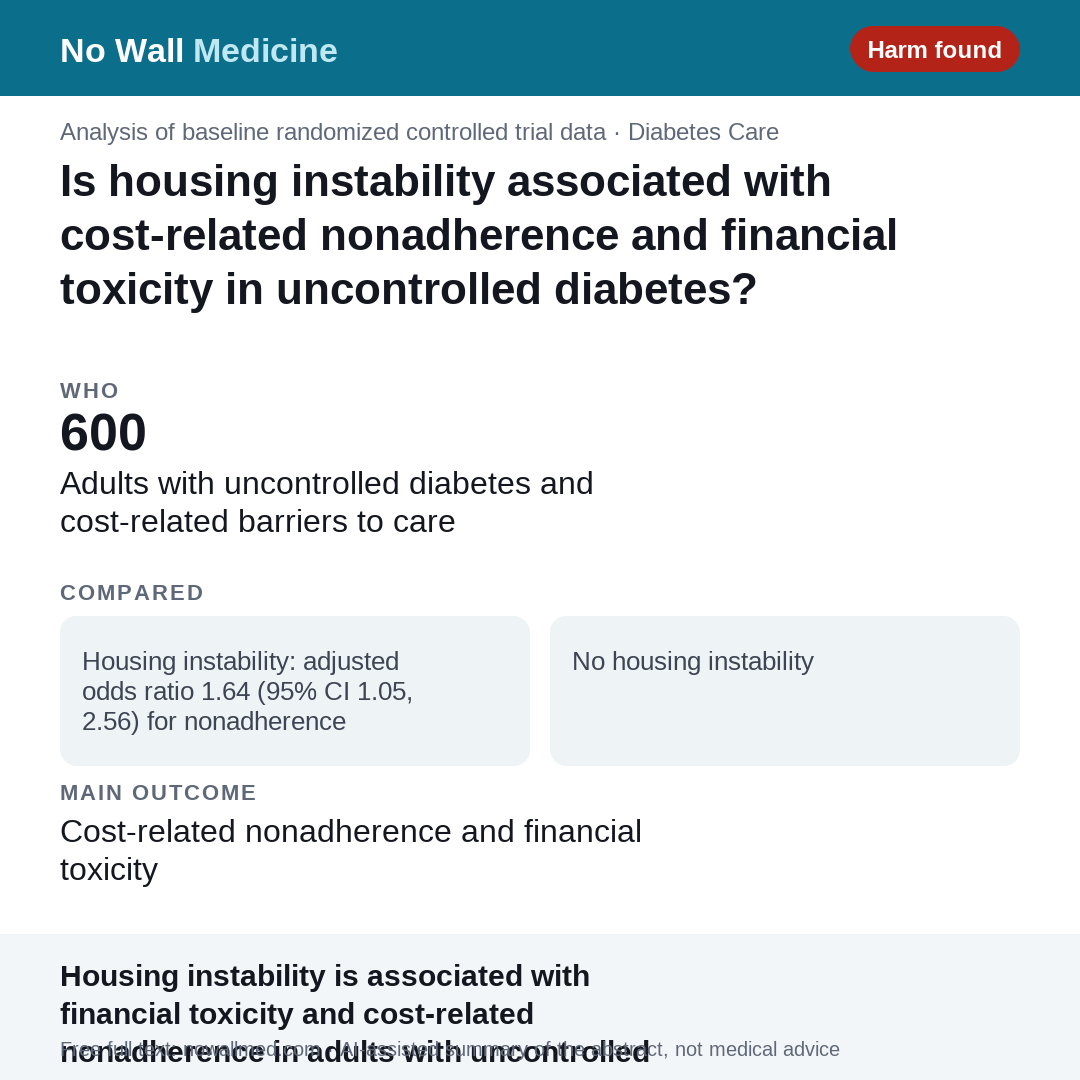
Housing Instability Associated With Cost-Related Nonadherence and Financial Toxicity in People With Uncontrolled Diabetes
Analysis of baseline randomized controlled trial dataHarm found
Is housing instability associated with cost-related nonadherence and financial toxicity in uncontrolled diabetes?
Who
600
Adults with uncontrolled diabetes and cost-related barriers to care
Compared
Housing instability: adjusted odds ratio 1.64 (95% CI 1.05, 2.56) for nonadherence
No housing instability
Main outcome
Cost-related nonadherence and financial toxicity
Result: adjusted odds ratio 1.64 (95% CI 1.05, 2.56)
Bottom line: Housing instability is associated with financial toxicity and cost-related nonadherence in adults with uncontrolled diabetes.
Diabetes Care · 2026-08-13Download image
Standardized Lacrimal Sac Massage vs Probing for Congenital Nasolacrimal Duct Obstruction in Infants: A Noninferiority Randomized Trial
Noninferiority randomized clinical trialBenefit found
Is lacrimal sac massage noninferior to probing for congenital nasolacrimal duct obstruction?
Who
160
Infants younger than 1 year with congenital nasolacrimal duct obstruction · Outpatient clinic in Guangzhou, China
Compared
86.2%Lacrimal sac massage
83.7%Lacrimal duct probing
Main outcome
Resolution rate at 3 months
Result: difference, 2.5 percentage points; 95% CI, -8.78 to 13.76
Bottom line: Lacrimal sac massage is noninferior to lacrimal duct probing for treating congenital nasolacrimal duct obstruction in infants.
JAMA Ophthalmol · 2026-08-13Download image

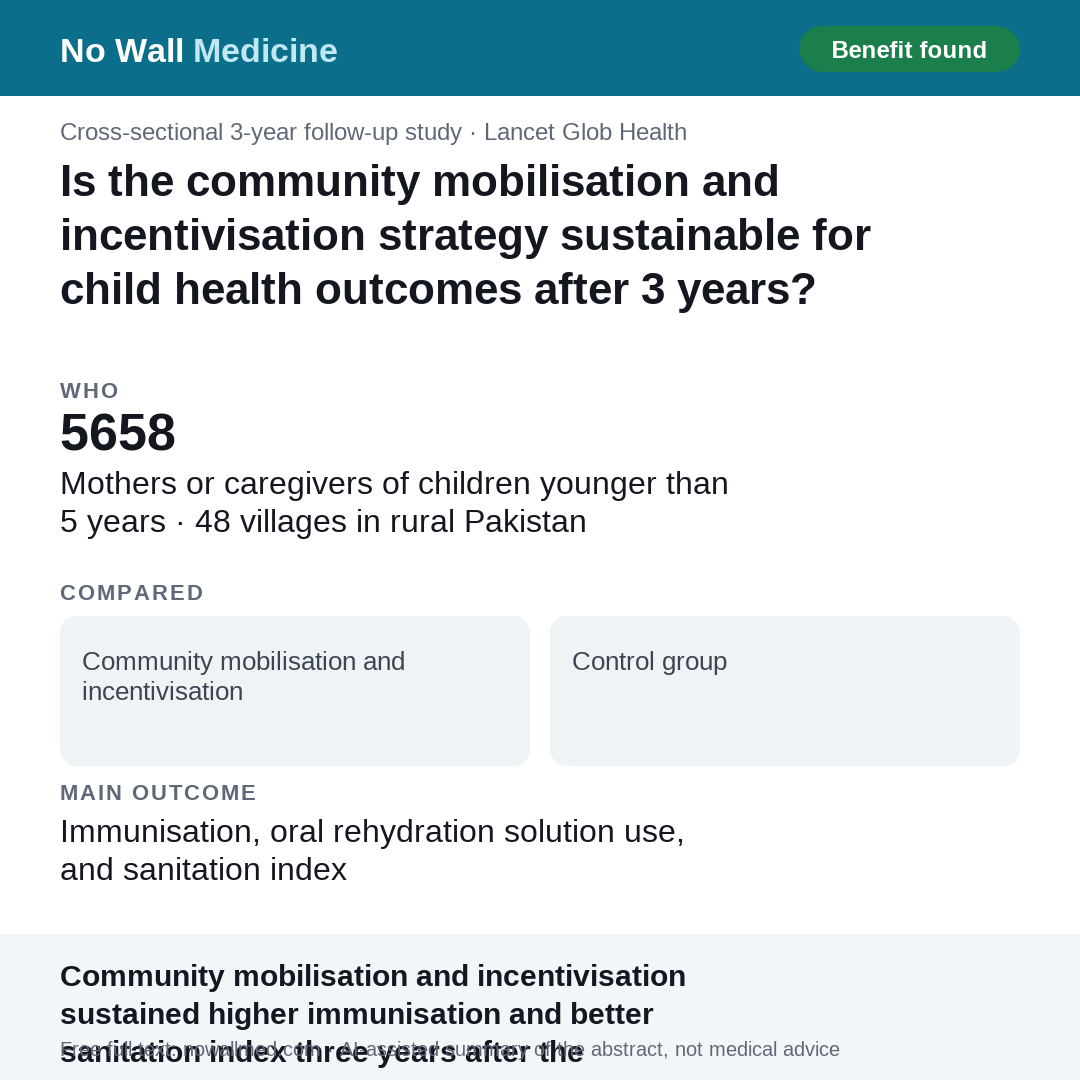
Sustainability and adherence to behaviour change: a cross-sectional 3-year follow-up survey of an innovative Community Mobilisation and Community Incentivisation strategy (CoMIC trial) for child health in rural Pakistan
Cross-sectional 3-year follow-up studyBenefit found
Is the community mobilisation and incentivisation strategy sustainable for child health outcomes after 3 years?
Who
5658
Mothers or caregivers of children younger than 5 years · 48 villages in rural Pakistan
Compared
Community mobilisation and incentivisation
Control group
Main outcome
Immunisation, oral rehydration solution use, and sanitation index
Result: adjusted risk ratio 1·20 (95% CI 1·00-1·43) for full immunisation
Bottom line: Community mobilisation and incentivisation sustained higher immunisation and better sanitation index three years after the intervention ended.
Funded by: Bill & Melinda Gates Foundation
Lancet Glob Health · 2026-08-13Download image
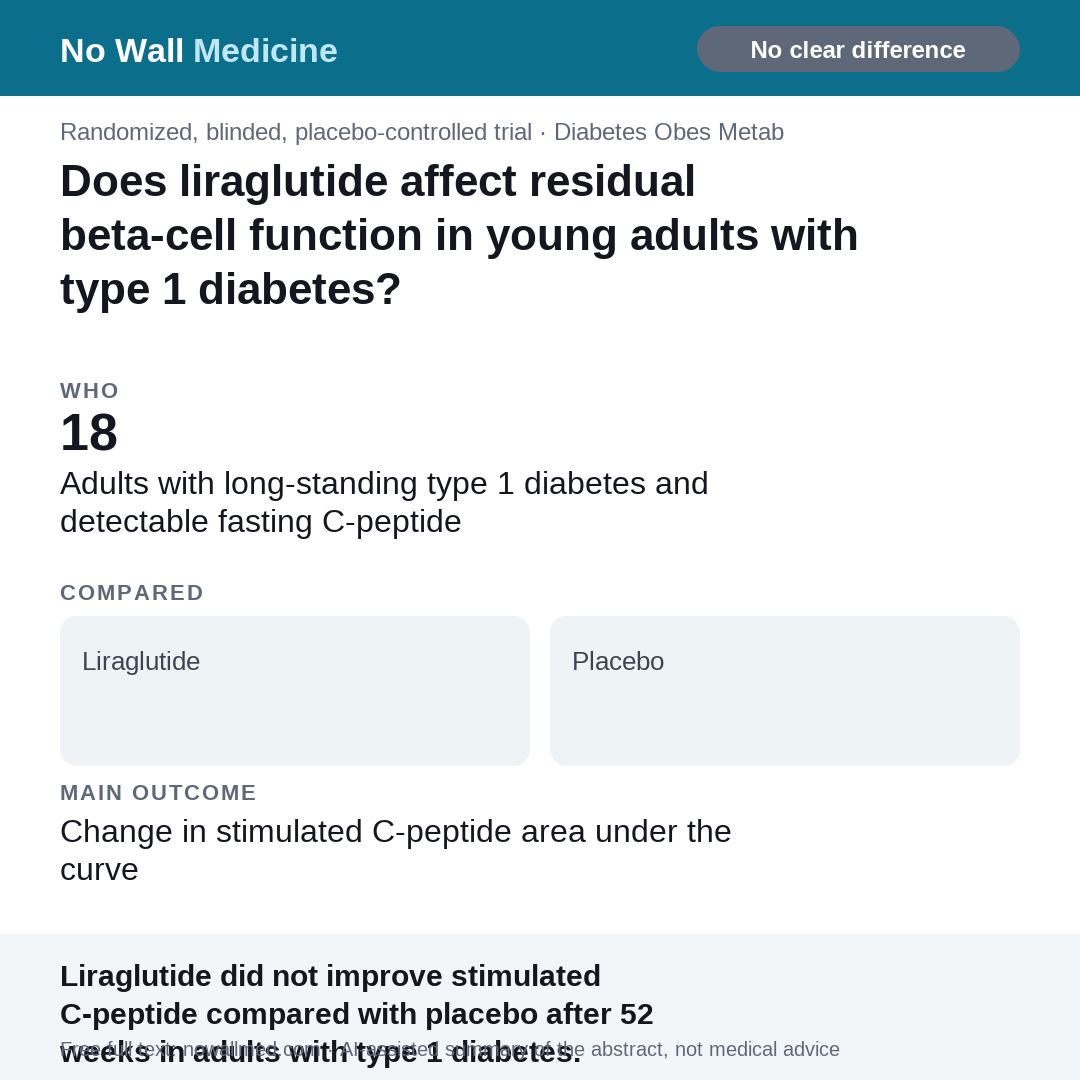
Liraglutide and Βeta-Cell Function in Young Adults With Long-Standing Type 1 Diabetes and Residual C-Peptide: A Blinded, Randomized Controlled Trial
Randomized, blinded, placebo-controlled trialNo clear difference
Does liraglutide affect residual beta-cell function in young adults with type 1 diabetes?
Who
18
Adults with long-standing type 1 diabetes and detectable fasting C-peptide
Compared
Liraglutide
Placebo
Main outcome
Change in stimulated C-peptide area under the curve
Bottom line: Liraglutide did not improve stimulated C-peptide compared with placebo after 52 weeks in adults with type 1 diabetes.
Diabetes Obes Metab · 2026-08-13Download image
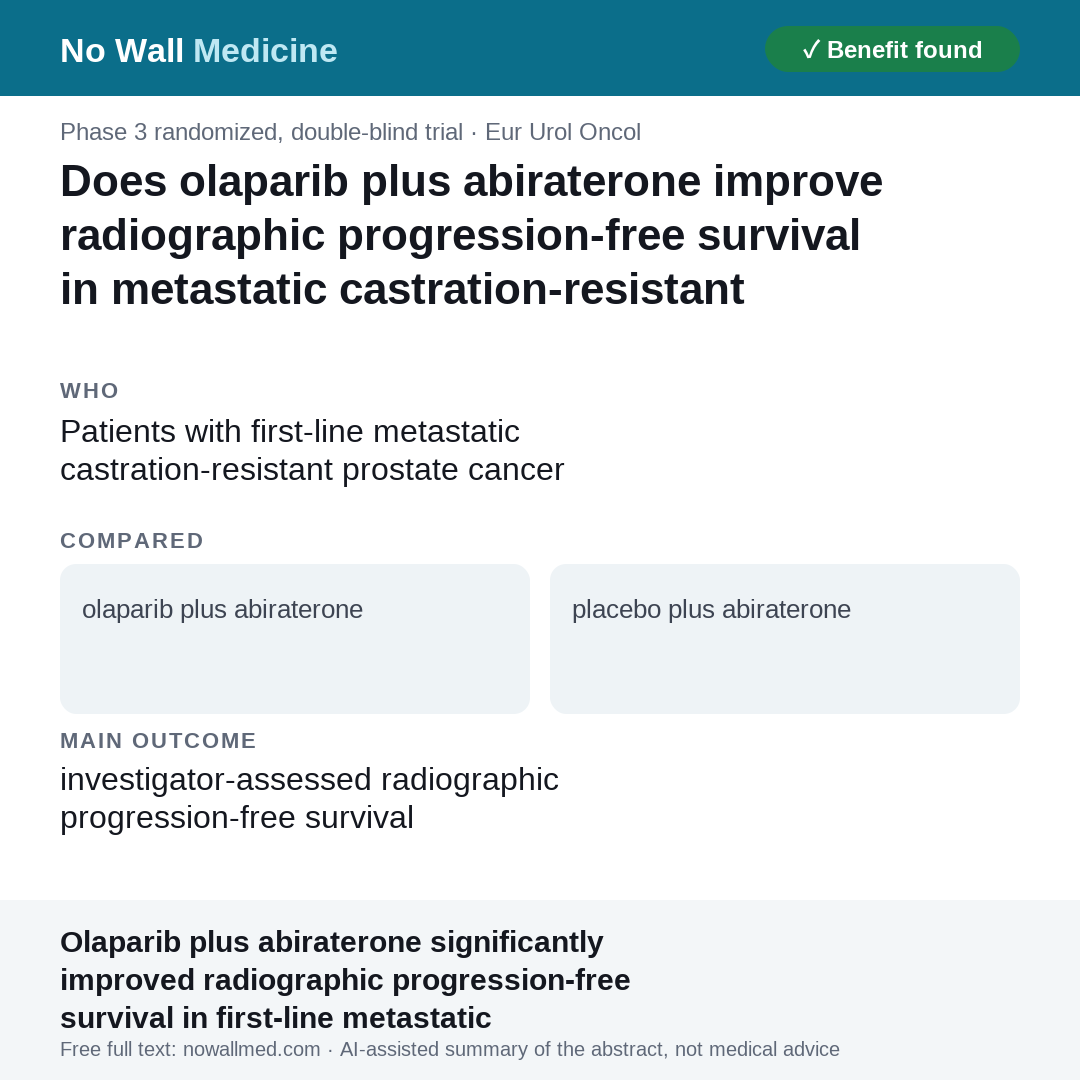
Efficacy of Olaparib Plus Abiraterone for Patients with Metastatic Castration-resistant Prostate Cancer and Single Homologous Recombination Repair Gene Mutations in PROpel
Phase 3 randomized, double-blind trialBenefit found
Does olaparib plus abiraterone improve radiographic progression-free survival in metastatic castration-resistant prostate cancer?
Who
Patients with first-line metastatic castration-resistant prostate cancer
Compared
olaparib plus abiraterone
placebo plus abiraterone
Main outcome
investigator-assessed radiographic progression-free survival
Result: hazard ratio 0.66 (95% CI 0.54-0.81)
Bottom line: Olaparib plus abiraterone significantly improved radiographic progression-free survival in first-line metastatic castration-resistant prostate cancer.
Eur Urol Oncol · 2026-08-13Download image
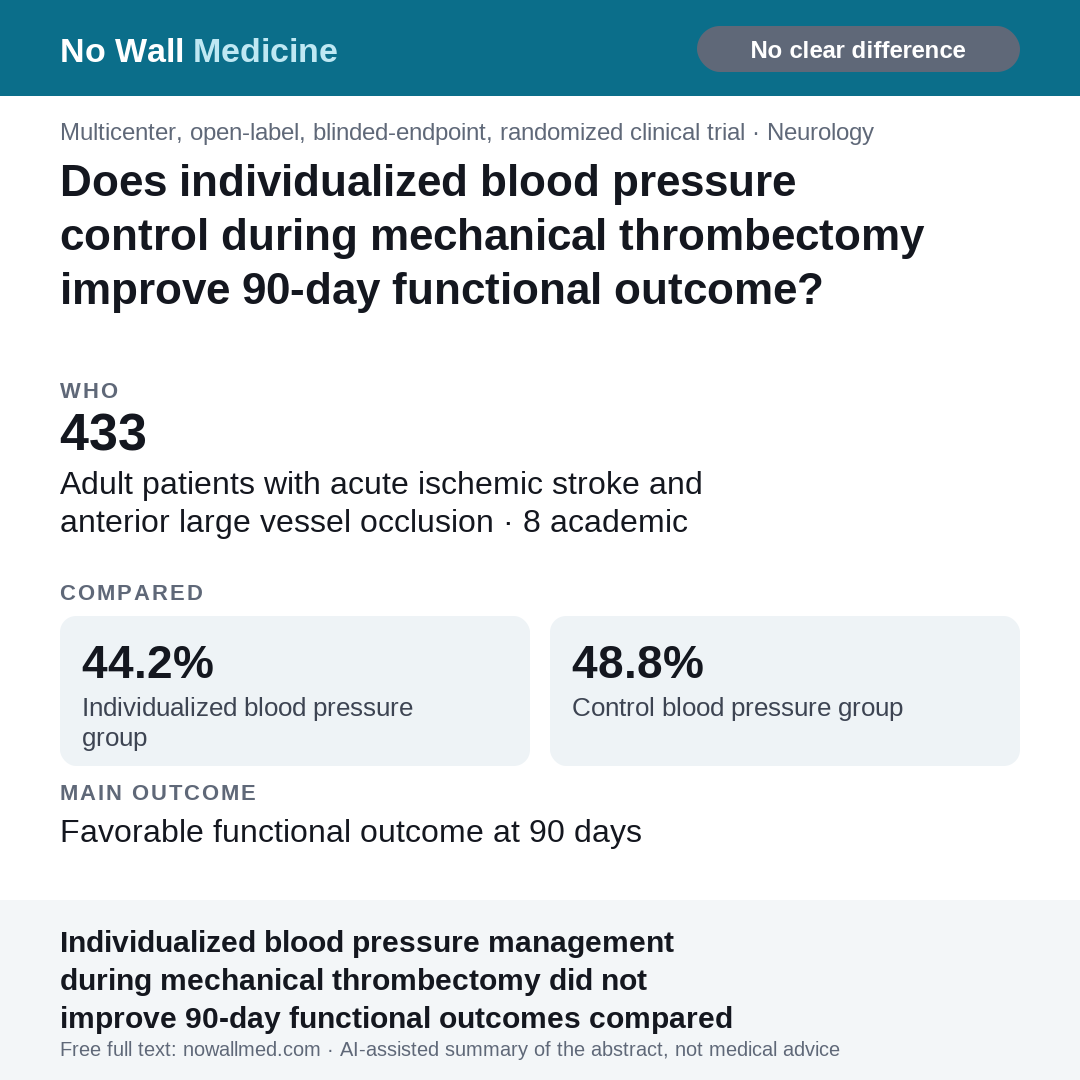
Individualized vs Standard Blood Pressure Control During Thrombectomy for Ischemic Stroke: The DETERMINE Randomized Clinical Trial
Multicenter, open-label, blinded-endpoint, randomized clinical trialNo clear difference
Does individualized blood pressure control during mechanical thrombectomy improve 90-day functional outcome?
Who
433
Adult patients with acute ischemic stroke and anterior large vessel occlusion · 8 academic comprehensive stroke centers in France
Compared
44.2%Individualized blood pressure group
48.8%Control blood pressure group
Main outcome
Favorable functional outcome at 90 days
Result: adjusted odds ratio 0.82 (95% CI 0.54-1.24)
Bottom line: Individualized blood pressure management during mechanical thrombectomy did not improve 90-day functional outcomes compared to standard management.
Neurology · 2026-08-12Download image
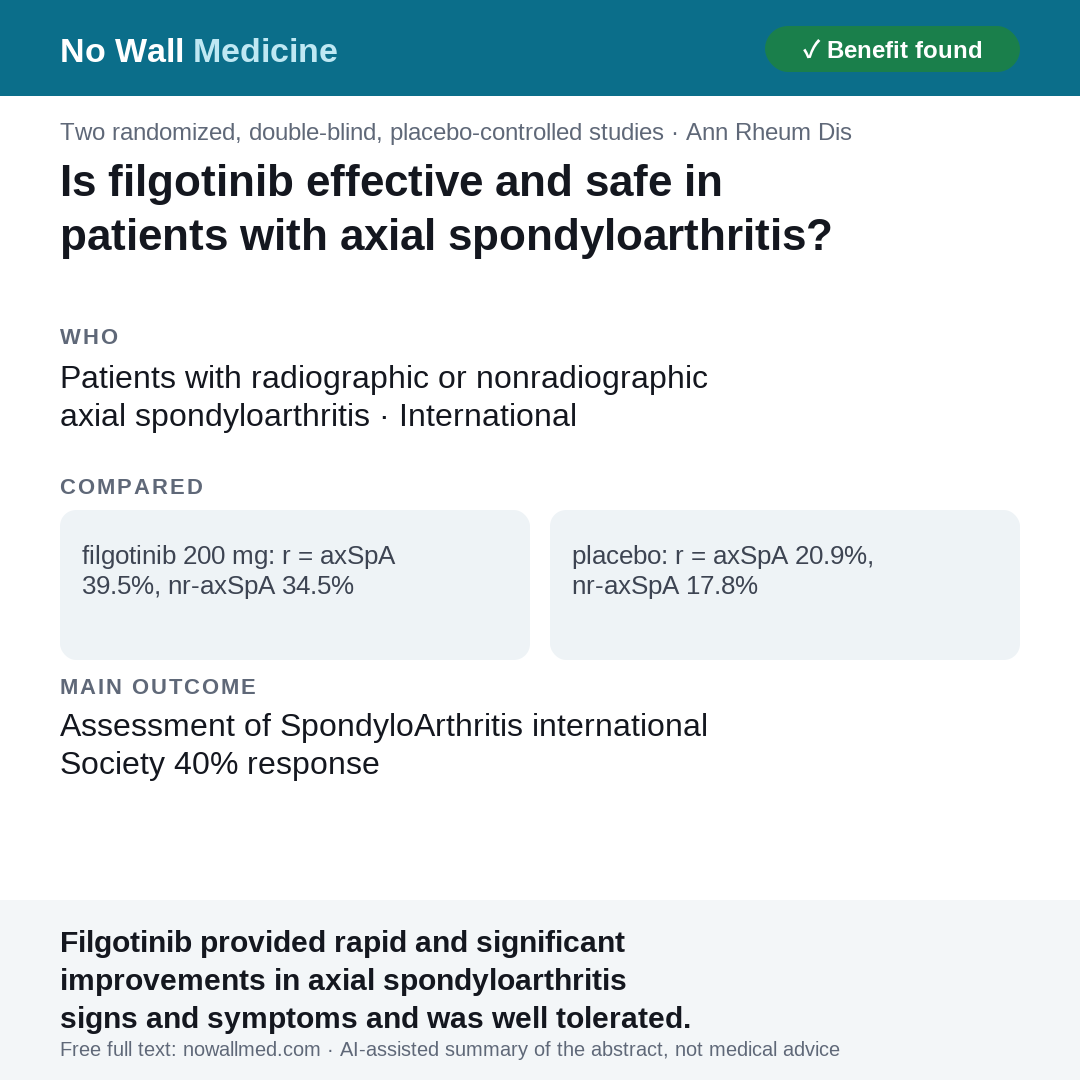
Efficacy and safety of filgotinib in patients with active radiographic and nonradiographic axial spondyloarthritis: results from OLINGUITO, a phase 3 trial consisting of 2 randomised, placebo-controlled, double-blind, parallel-group studies
Two randomized, double-blind, placebo-controlled studiesBenefit found
Is filgotinib effective and safe in patients with axial spondyloarthritis?
Who
Patients with radiographic or nonradiographic axial spondyloarthritis · International
Compared
filgotinib 200 mg: r = axSpA 39.5%, nr-axSpA 34.5%
placebo: r = axSpA 20.9%, nr-axSpA 17.8%
Main outcome
Assessment of SpondyloArthritis international Society 40% response
Bottom line: Filgotinib provided rapid and significant improvements in axial spondyloarthritis signs and symptoms and was well tolerated.
Ann Rheum Dis · 2026-08-12Download image
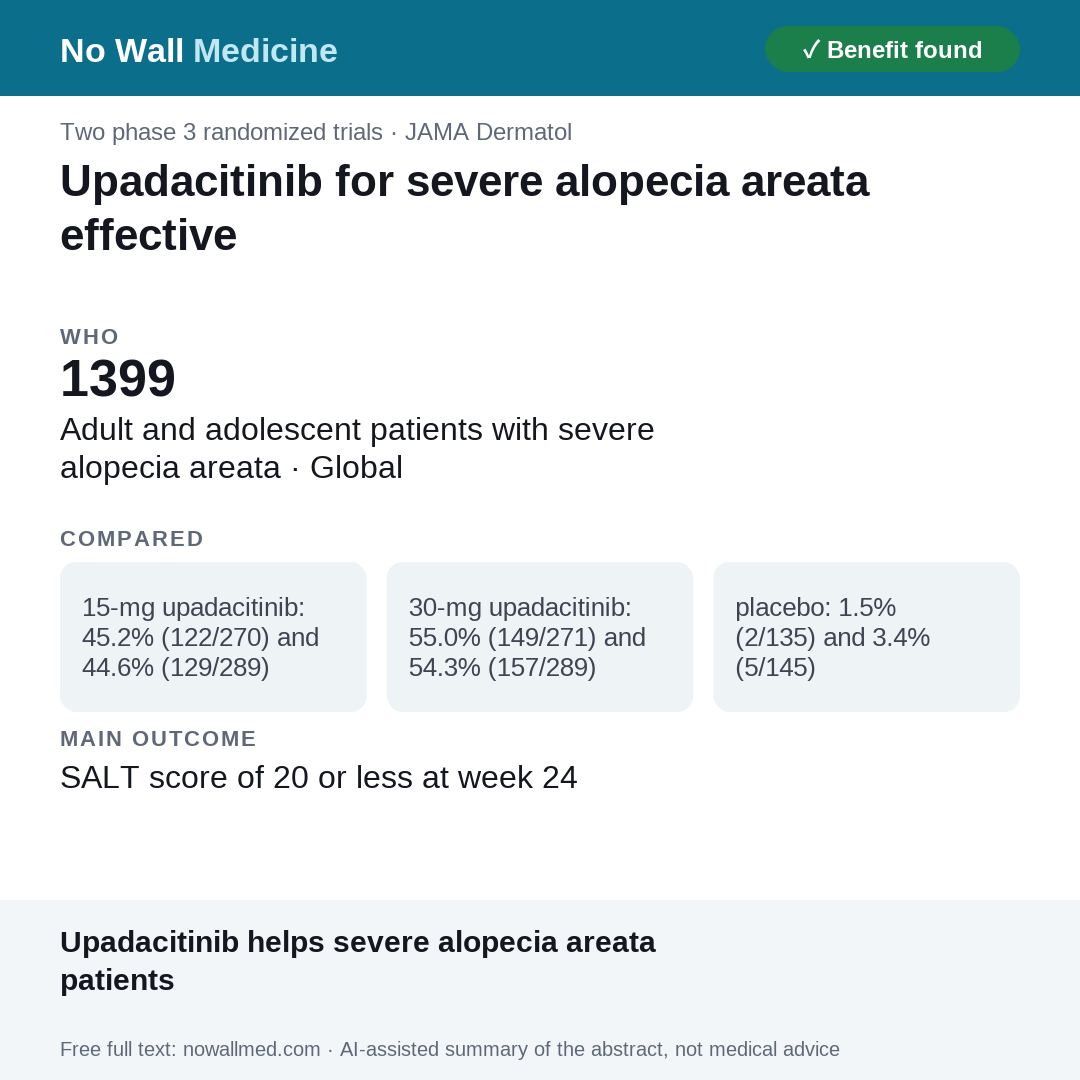
Upadacitinib for Severe Alopecia Areata in Adults and Adolescents: Two Phase 3 UP-AA Randomized Clinical Trials
Two parallel phase 3 replicate randomized clinical trialsBenefit found
Is upadacitinib effective for adults and adolescents with severe alopecia areata?
Who
1399
Adult and adolescent patients aged 12 to 64 years with severe alopecia areata · Global clinical program
Compared
15-mg upadacitinib: 45.2% and 44.6%
30-mg upadacitinib: 55.0% and 54.3%
Placebo: 1.5% and 3.4%
Main outcome
Achievement of SALT score of 20 or less at week 24
Bottom line: Upadacitinib at 15-mg or 30-mg doses demonstrated a positive benefit-risk profile for severe alopecia areata.
JAMA Dermatol · 2026-08-12Download image
Integrating hypertension care into the existing HIV services package in Botswana (InterCARE): a pair-matched, cluster-randomised, type 2 hybrid effectiveness-implementation trial
Pair-matched, cluster-randomised, type 2 hybrid effectiveness-implementation trialBenefit found
Does integrating hypertension care into HIV services improve blood pressure control and electronic prescribing?
Who
4654
Adults aged 20-75 years with HIV and hypertension · 14 HIV clinics in Botswana
Compared
67·1%Intervention group (719/1072)
51·5%Standard-of-care group (593/1152)
Main outcome
Proportion of participants with blood pressure controlled within targets
Result: risk ratio 1·29 (95% CI 1·10-1·51)
Bottom line: Integrating hypertension care into HIV services improves blood pressure control and electronic prescribing without compromising HIV outcomes.
Funded by: National Heart, Lung, and Blood Institute of the US National Institutes of Health
Lancet Glob Health · 2026-08-12Download image

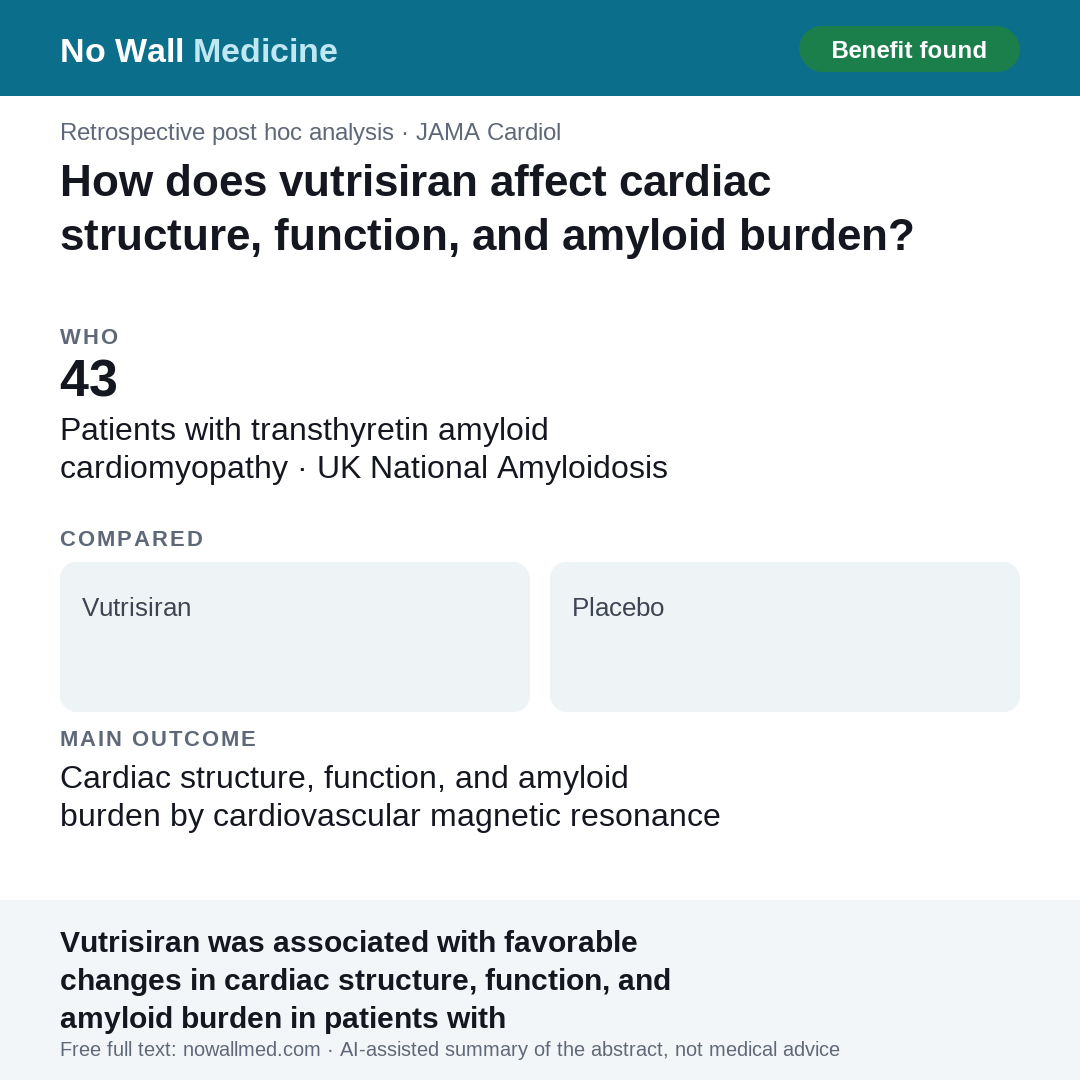
Vutrisiran Treatment and Changes in Cardiac Parameters and Amyloid Burden Assessed by Cardiovascular MRI
Retrospective post hoc analysisBenefit found
Does vutrisiran affect cardiac structure, function, and amyloid burden in ATTR-CM?
Who
43
Participants from the HELIOS-B trial with transthyretin amyloid cardiomyopathy · UK National Amyloidosis Centre
Compared
Vutrisiran
Placebo
Main outcome
Cardiac structure, function, and amyloid burden by cardiovascular magnetic resonance
Result: left ventricular ejection fraction least-squares mean difference, 19.18% (95% CI, 11.76%-26.60%)
Bottom line: Vutrisiran was associated with favorable changes in cardiac structure, function, and amyloid burden in patients with transthyretin amyloid cardiomyopathy.
JAMA Cardiol · 2026-08-12Download image
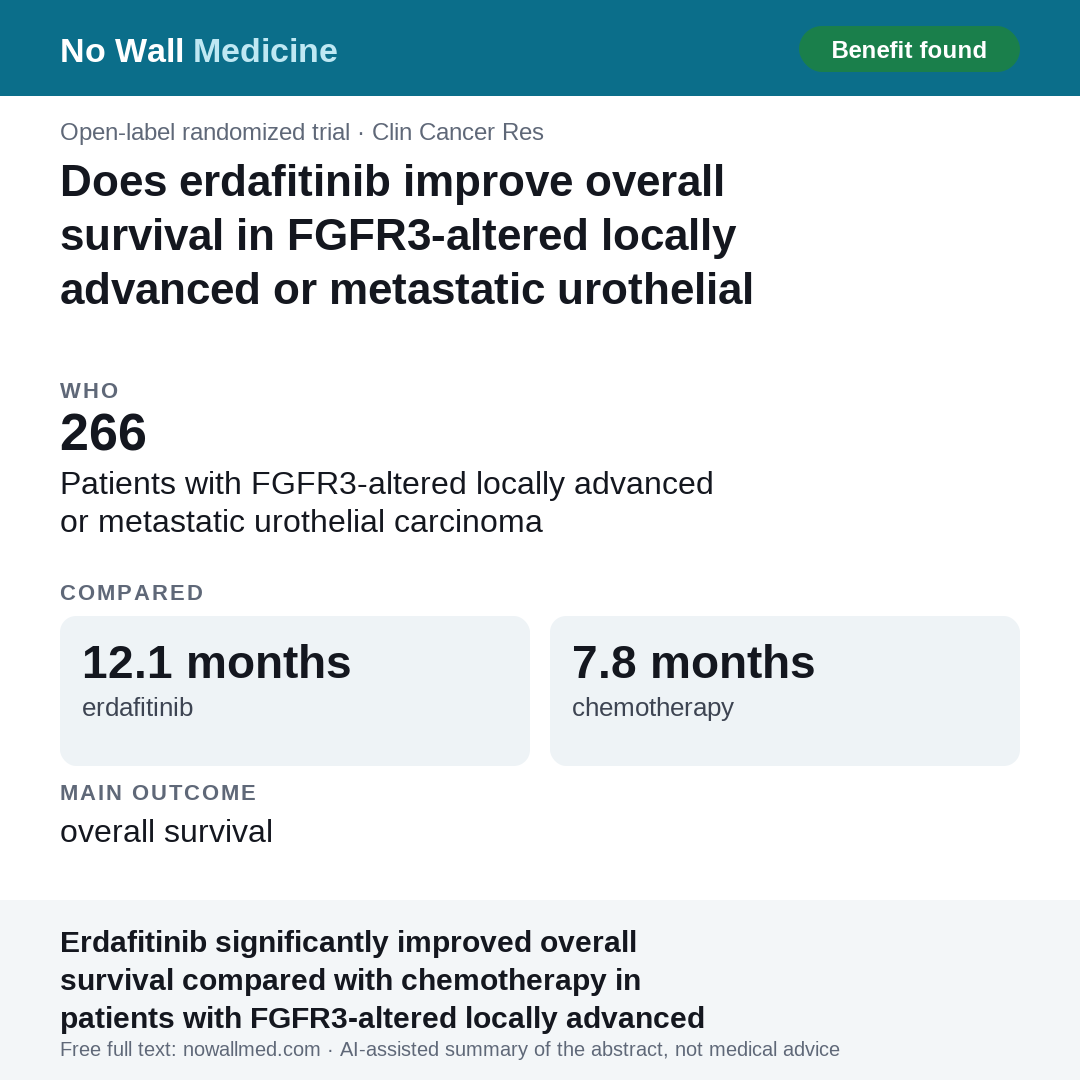
FDA Approval Summary: Erdafitinib for FGFR3-Altered Locally Advanced or Metastatic Urothelial Carcinoma
Open-label randomized trialBenefit found
Does erdafitinib improve overall survival in FGFR3-altered locally advanced or metastatic urothelial carcinoma?
Who
266
Patients with FGFR3-altered locally advanced or metastatic urothelial carcinoma
Compared
12.1 monthserdafitinib
7.8 monthschemotherapy
Main outcome
overall survival
Result: hazard ratio 0.64 (95% CI 0.47-0.88)
Bottom line: Erdafitinib significantly improved overall survival compared with chemotherapy in patients with FGFR3-altered locally advanced or metastatic urothelial carcinoma.
Limitation: Not recommended for patients eligible for and not receiving prior PD-(L)1 inhibitor therapy.
Clin Cancer Res · 2026-08-12Download image
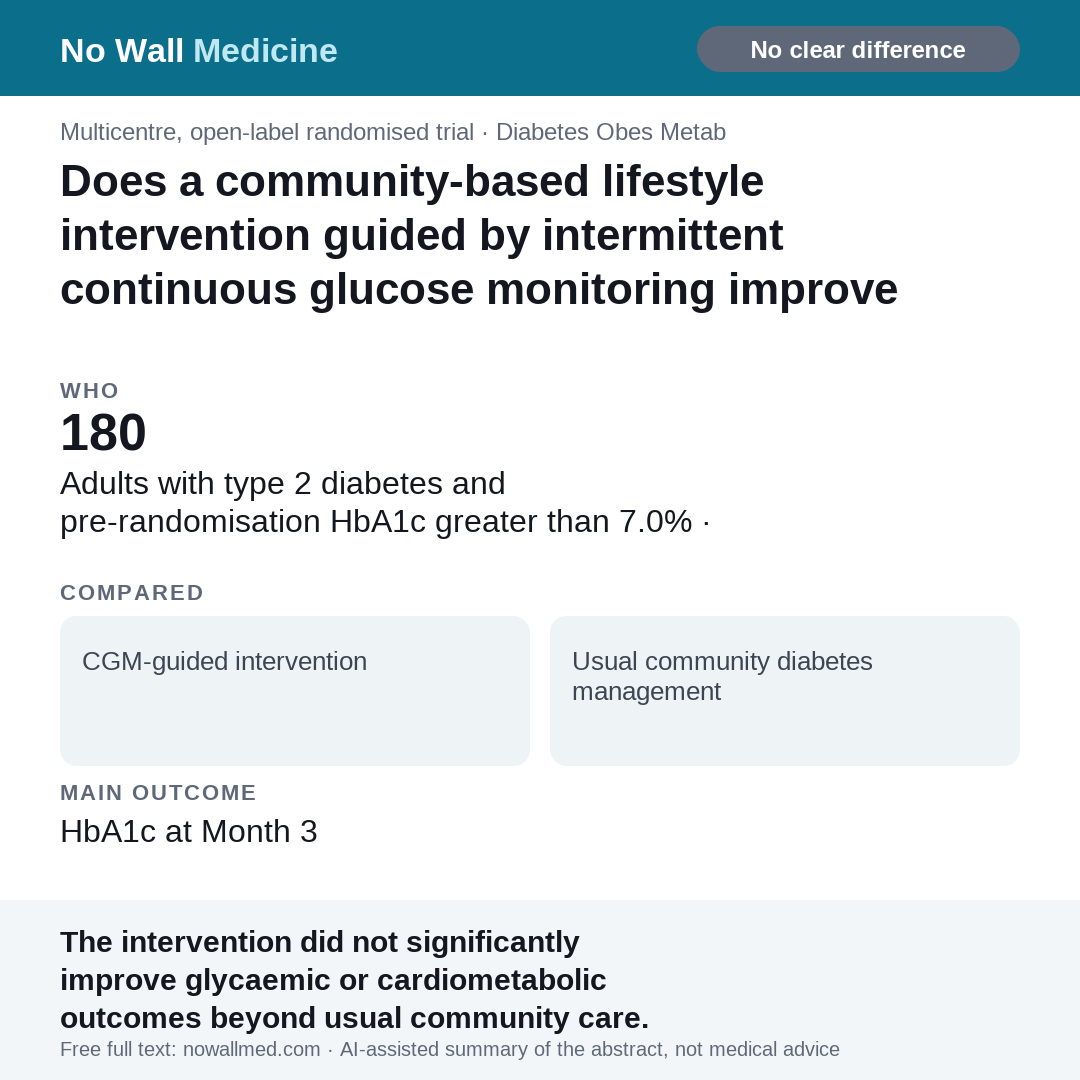
Community-Based Personalised Lifestyle Intervention Guided by Intermittent Continuous Glucose Monitoring in Adults With Type 2 Diabetes: A Multicentre Randomised Controlled Trial
Multicentre, open-label randomised trialNo clear difference
Does a community-based lifestyle intervention guided by intermittent continuous glucose monitoring improve outcomes?
Who
180
Adults with type 2 diabetes and pre-randomisation HbA1c greater than 7.0% · Multicentre
Compared
CGM-guided intervention
Usual community diabetes management
Main outcome
HbA1c at Month 3
Result: -0.09 percentage points (95% CI, -0.38 to 0.21)
Bottom line: The intervention did not significantly improve glycaemic or cardiometabolic outcomes beyond usual community care.
Diabetes Obes Metab · 2026-08-12Download image
Long-Term Effects of Pelvic Floor Muscle Training Combined With Electrical Stimulation Biofeedback Among Women With Symptomatic Pelvic Organ Prolapse: A Randomised Controlled Trial
Randomised controlled trialNo clear difference
Does adding electrical stimulation biofeedback to pelvic floor muscle training improve long-term prolapse anatomy?
Who
220
Primiparas aged 20-40 years with symptomatic pelvic organ prolapse · A tertiary hospital in Beijing, China
Compared
PFMT plus electrical stimulation biofeedback
PFMT only
Main outcome
Pelvic organ prolapse quantitation stage at 24 months
Bottom line: Adding electrical stimulation biofeedback to pelvic floor muscle training provides limited long-term benefit in postpartum prolapse anatomy.
BJOG · 2026-08-12Download image

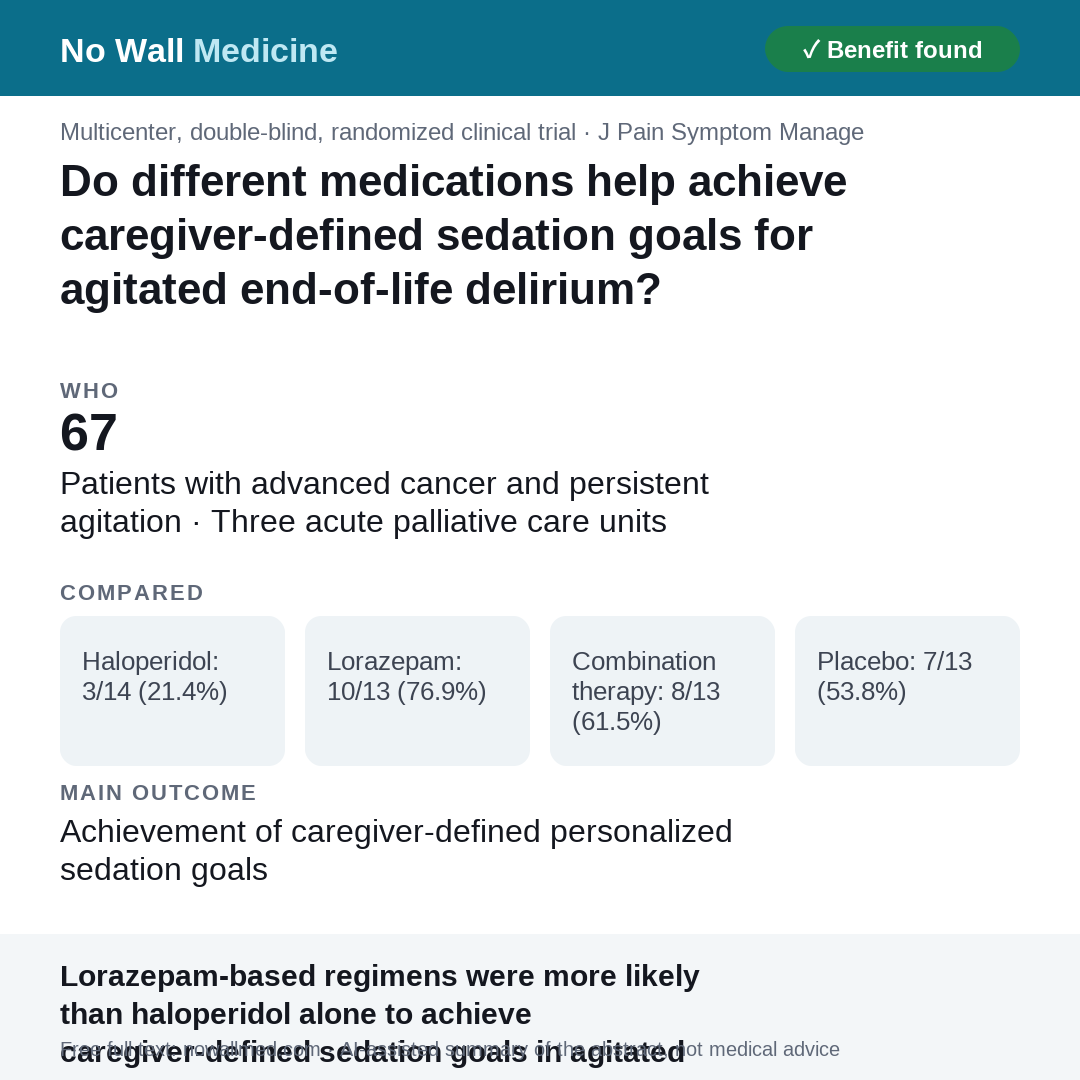
Personalized Sedation Goals for Agitated End-of-Life Delirium: Secondary Analysis of RECORD Trial
Multicenter, double-blind, randomized clinical trialBenefit found
Do different medications help achieve caregiver-defined sedation goals for agitated end-of-life delirium?
Who
67
Patients with advanced cancer and persistent agitation · Three acute palliative care units in United States and Taiwan
Compared
Haloperidol: 3/14 (21.4%)
Lorazepam: 10/13 (76.9%)
Combination therapy: 8/13 (61.5%)
Placebo: 7/13 (53.8%)
Main outcome
Achievement of caregiver-defined personalized sedation goals
Result: odds ratio 12.2 (95% CI 2.0-75.1) for lorazepam; odds ratio 5.9 (95% CI 1.1-32.0) for combination therapy
Bottom line: Lorazepam-based regimens were more likely than haloperidol alone to achieve caregiver-defined sedation goals in agitated end-of-life delirium.
J Pain Symptom Manage · 2026-08-12Download image
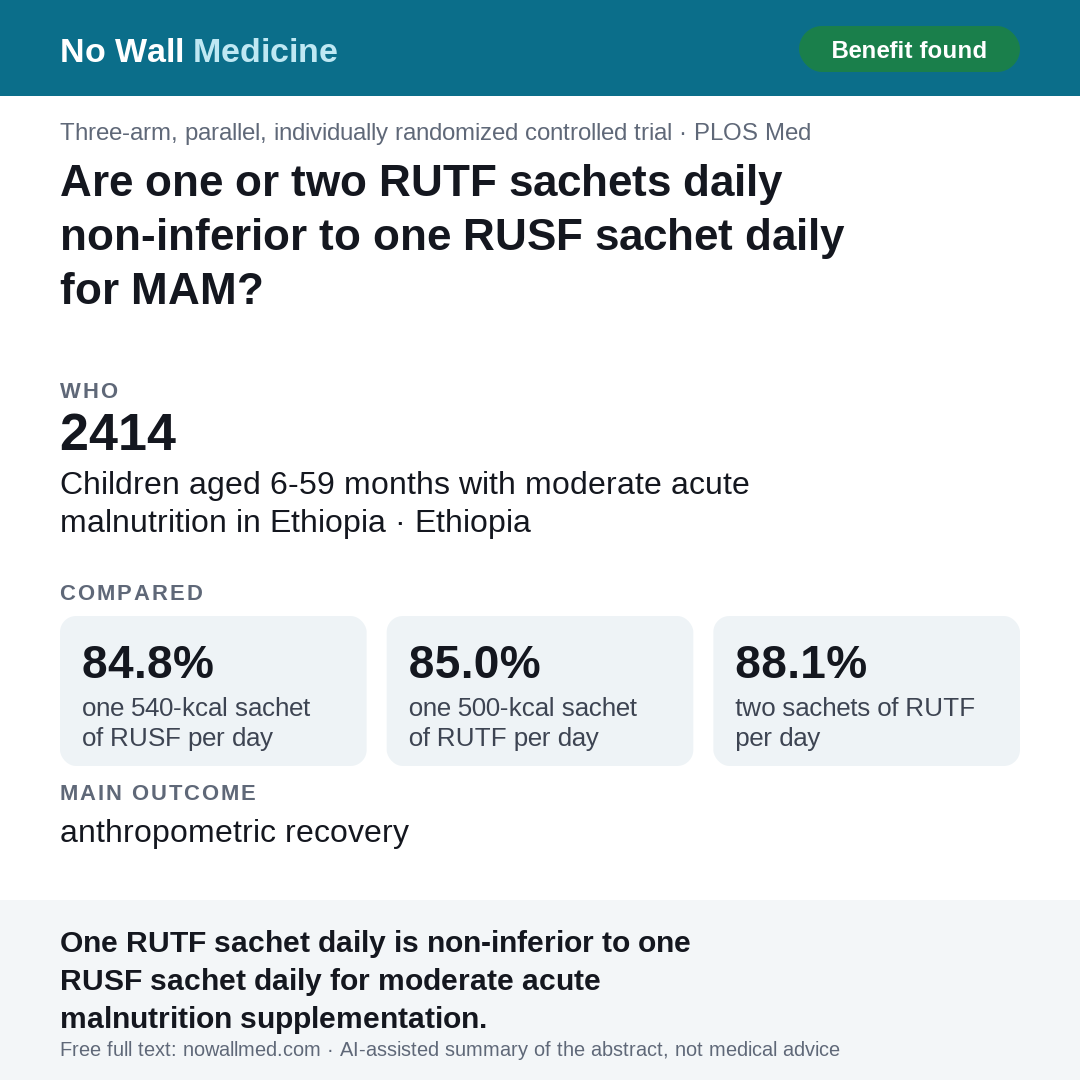
Comparative effectiveness of lipid-nutrient spread supplementation regimens for moderate acute malnutrition in Ethiopia: The MODAM-MAM individually randomized controlled trial
Three-arm, parallel, individually randomized controlled trialBenefit found
Are one or two RUTF sachets daily non-inferior to one RUSF sachet daily for MAM?
Who
2414
Children aged 6-59 months with moderate acute malnutrition in Ethiopia · Ethiopia
Compared
84.8%one 540-kcal sachet of RUSF per day (679/801)
85.0%one 500-kcal sachet of RUTF per day (674/793)
88.1%two sachets of RUTF per day (721/818)
Main outcome
anthropometric recovery
Result: risk difference +0.2 percentage points (95% CI [-3.3, 3.7]) for 1-RUTF; +3.4 percentage points (95% CI [0.0, 6.7]) for 2-RUTF
Bottom line: One RUTF sachet daily is non-inferior to one RUSF sachet daily for moderate acute malnutrition supplementation.
Limitation: evaluation of a single ready-to-use supplementary food formulation and earlier-than-typical case-finding
PLOS Med · 2026-08-11Download image
Efficacy and safety of sublingual cilostazol and dexborneol for the treatment of acute ischaemic stroke: a randomised phase 2 trial in China
Randomised, double-blind, placebo-controlled phase 2 trialNo clear difference
Is Y-6 sublingual tablets effective and safe for acute ischaemic stroke patients?
Who
294
Ischaemic stroke patients with large vessel occlusion undergoing endovascular treatment · 33 centres in China
Compared
44.6%Y-6 high-dose group
46.0%Y-6 low-dose group
41.7%cilostazol high-dose group
37.3%cilostazol low-dose group
Main outcome
90-day modified Rankin Scale 0-1 score
Bottom line: Y-6 sublingual tablets were safe but did not significantly improve functional outcomes compared to placebo.
Limitation: The trial did not demonstrate statistically significant efficacy on the primary outcome.
Funded by: National Natural Science Foundation of China and others
eClinicalMedicine · 2026-08-11Download image

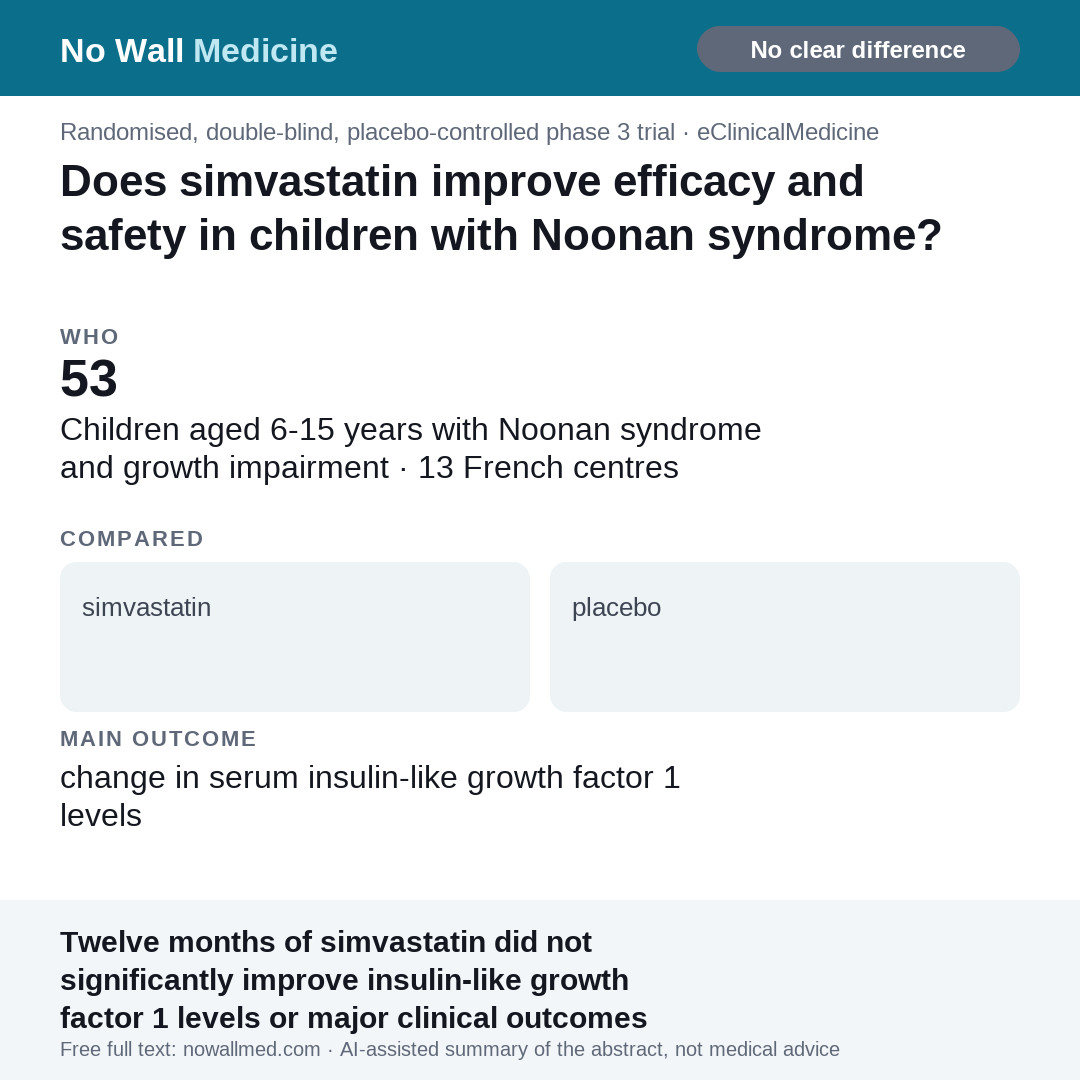
RAS/MAPK pathway modulation with simvastatin in children with Noonan syndrome: a multicentre, randomised, double-blind, placebo-controlled phase 3 trial
Randomised, double-blind, placebo-controlled phase 3 trialNo clear difference
Does simvastatin improve efficacy and safety in children with Noonan syndrome?
Who
53
Children aged 6-15 years with Noonan syndrome and growth impairment · 13 French centres
Compared
simvastatin
placebo
Main outcome
change in serum insulin-like growth factor 1 levels
Result: between-group difference -0.08 log ng/mL, 95% CI -0.18 to 0.01
Bottom line: Twelve months of simvastatin did not significantly improve insulin-like growth factor 1 levels or major clinical outcomes in children.
Limitation: Changes in secondary findings were of borderline statistical significance and lacked corresponding clinical improvements.
Funded by: French Ministry of Health
eClinicalMedicine · 2026-08-11Download image
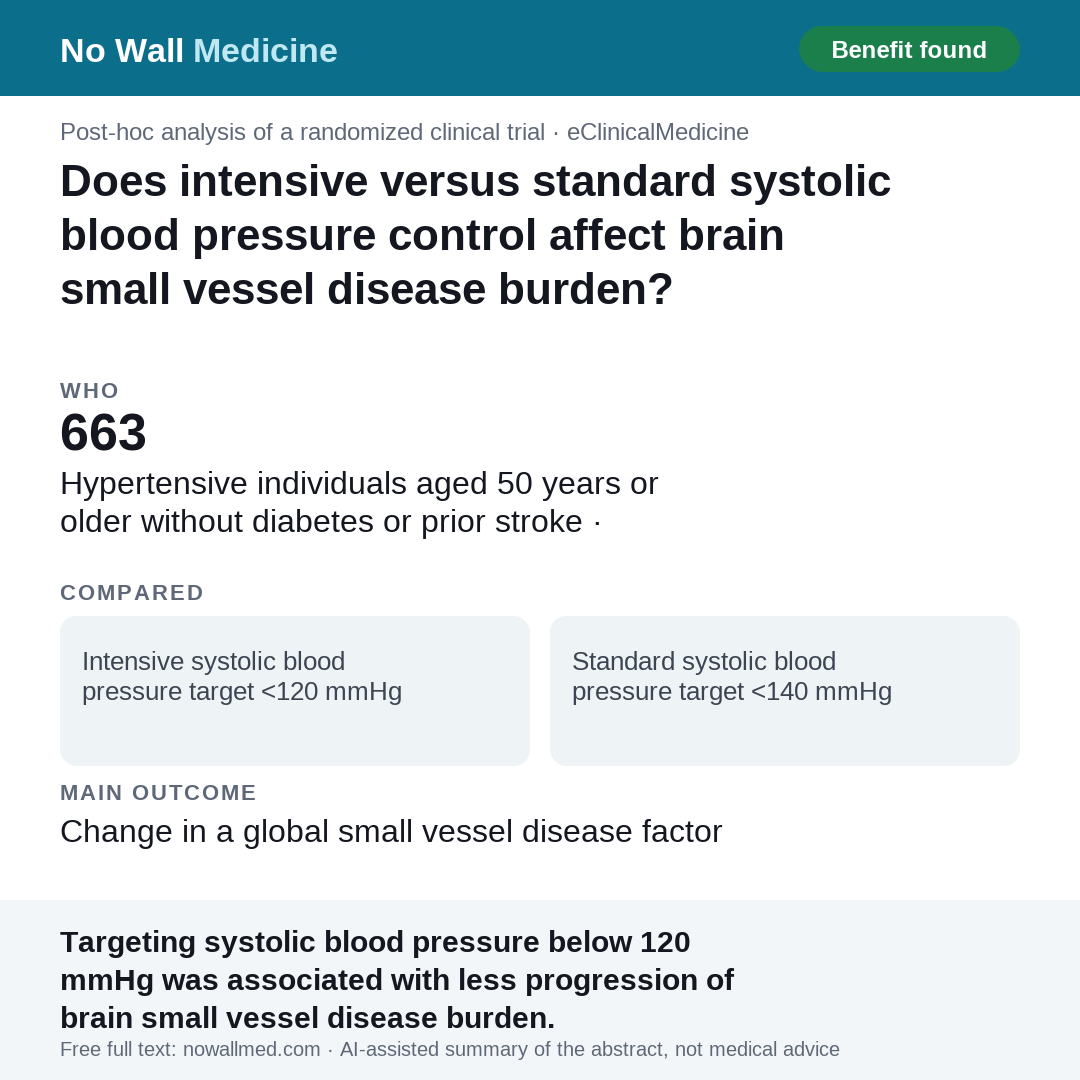
Intensive versus standard blood pressure control and overall brain small vessel disease burden: a post-hoc analysis of the SPRINT randomized clinical trial
Randomized clinical trialBenefit found
Intensive vs standard blood pressure control
Who
1267
Hypertensive individuals aged fifty or more years · Multicenter
Compared
Intensive treatment: less SVD progression
Standard treatment: more SVD progression
Main outcome
Cerebral small vessel disease burden
Result: standardized mean difference -0.40 (95% CI, -0.62 to -0.17)
Bottom line: Intensive control reduces small vessel disease
Funded by: National Institutes of Health
eClinicalMedicine · 2026-08-11Download image
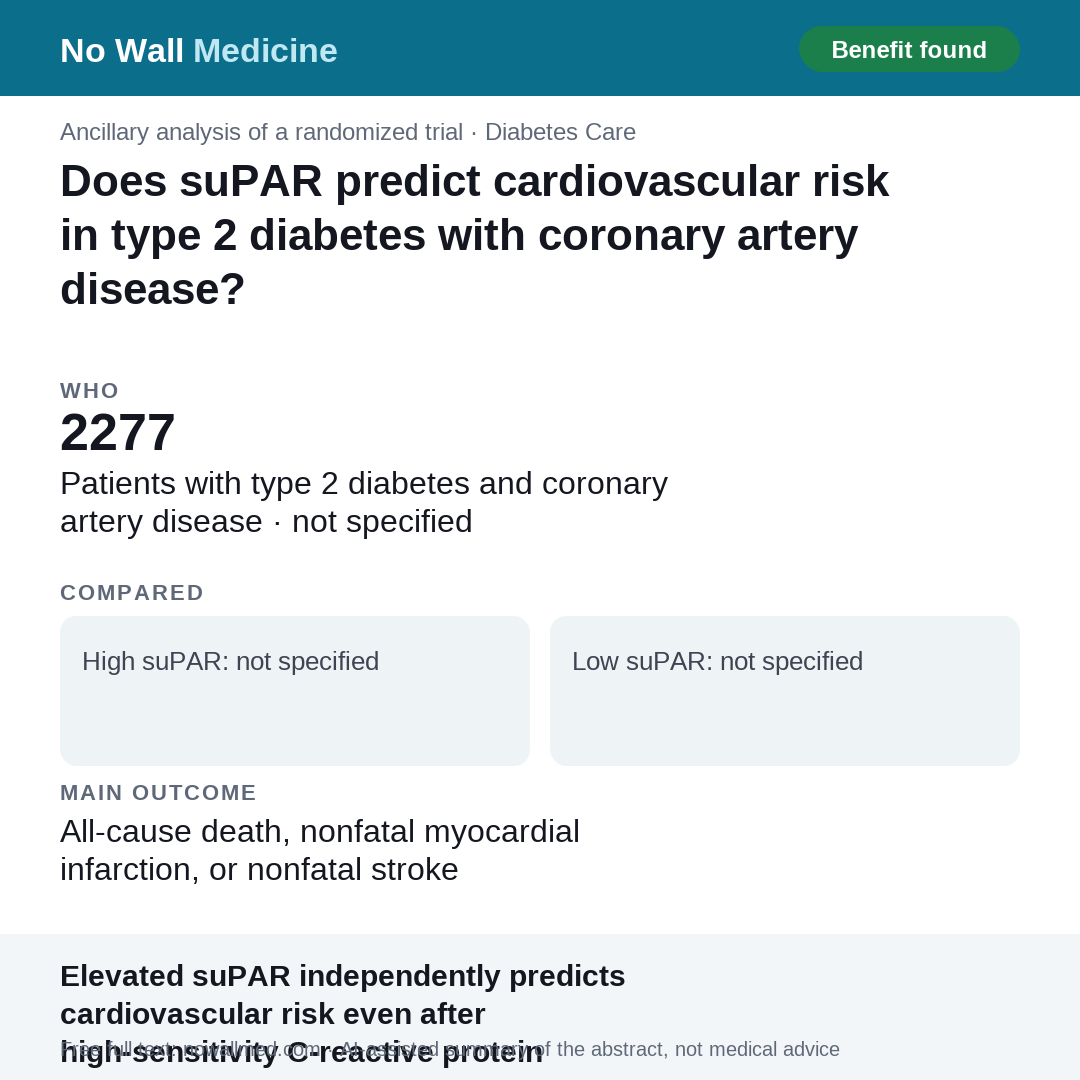
suPAR Identifies Treatment-Resistant Inflammatory Risk Beyond hs-CRP in Type 2 Diabetes With Coronary Artery Disease: An Ancillary Analysis of BARI 2D
Ancillary analysis of a randomized trialBenefit found
Does suPAR predict cardiovascular risk in type 2 diabetes with coronary artery disease?
Who
2277
Patients with type 2 diabetes and coronary artery disease · not specified
Compared
High suPAR: not specified
Low suPAR: not specified
Main outcome
All-cause death, nonfatal myocardial infarction, or nonfatal stroke
Result: adjusted hazard ratio 1.40 (95% CI 1.27-1.55) per standard deviation
Bottom line: Elevated suPAR independently predicts cardiovascular risk even after high-sensitivity C-reactive protein normalization.
Diabetes Care · 2026-08-11Download image