Visual abstracts
New randomized trials and meta-analyses from leading journals at a glance: who was studied, what was compared, and what was found. Every paper is free to read in full.
All specialtiesCardiology 2577Oncology 2194Gastroenterology & Hepatology 986Infectious Disease 1623Neurology 1024Psychiatry & Mental Health 1198Pulmonology 1079Critical Care 709Endocrinology & Diabetes 1337Pediatrics 1515Surgery 1311Orthopedics & Sports Medicine 473Neurosurgery 313Cardiothoracic & Vascular Surgery 282Plastic & Reconstructive Surgery 391Nephrology 530Rheumatology 378Hematology 560Dermatology 293Ophthalmology 302Obstetrics & Gynecology 844Public & Global Health 475Radiology & Imaging 355Anesthesiology 511Urology 432ENT (Otolaryngology) 314Emergency Medicine 287Allergy & Immunology 166Geriatrics 547Family Medicine & Primary Care 293Medical Genetics & Genomics 290Pathology & Laboratory Medicine 80Physical Medicine & Rehabilitation 425Palliative Care 217Nutrition 681Digital Health & AI 1246General Medicine 186
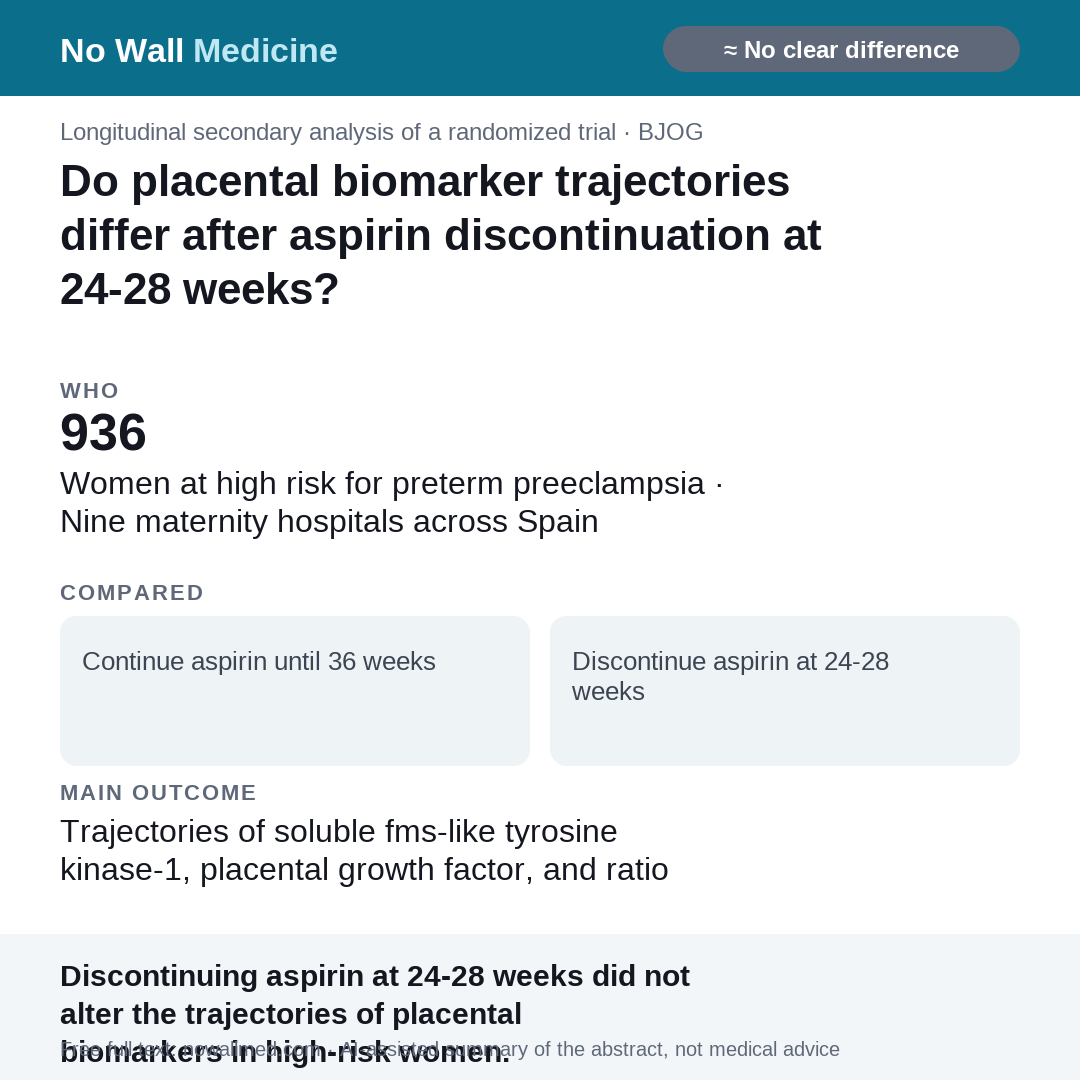
Aspirin Discontinuation at 24-28 Weeks and Placental Biomarker Trajectories: Post Hoc Analysis of a Randomised Trial
Longitudinal secondary analysis of a randomized trialNo clear difference
Do placental biomarker trajectories differ after aspirin discontinuation at 24-28 weeks?
Who
936
Women at high risk for preterm preeclampsia · Nine maternity hospitals across Spain
Compared
Continue aspirin until 36 weeks
Discontinue aspirin at 24-28 weeks
Main outcome
Trajectories of soluble fms-like tyrosine kinase-1, placental growth factor, and ratio
Bottom line: Discontinuing aspirin at 24-28 weeks did not alter the trajectories of placental biomarkers in high-risk women.
BJOG · 2025-09-29Download image
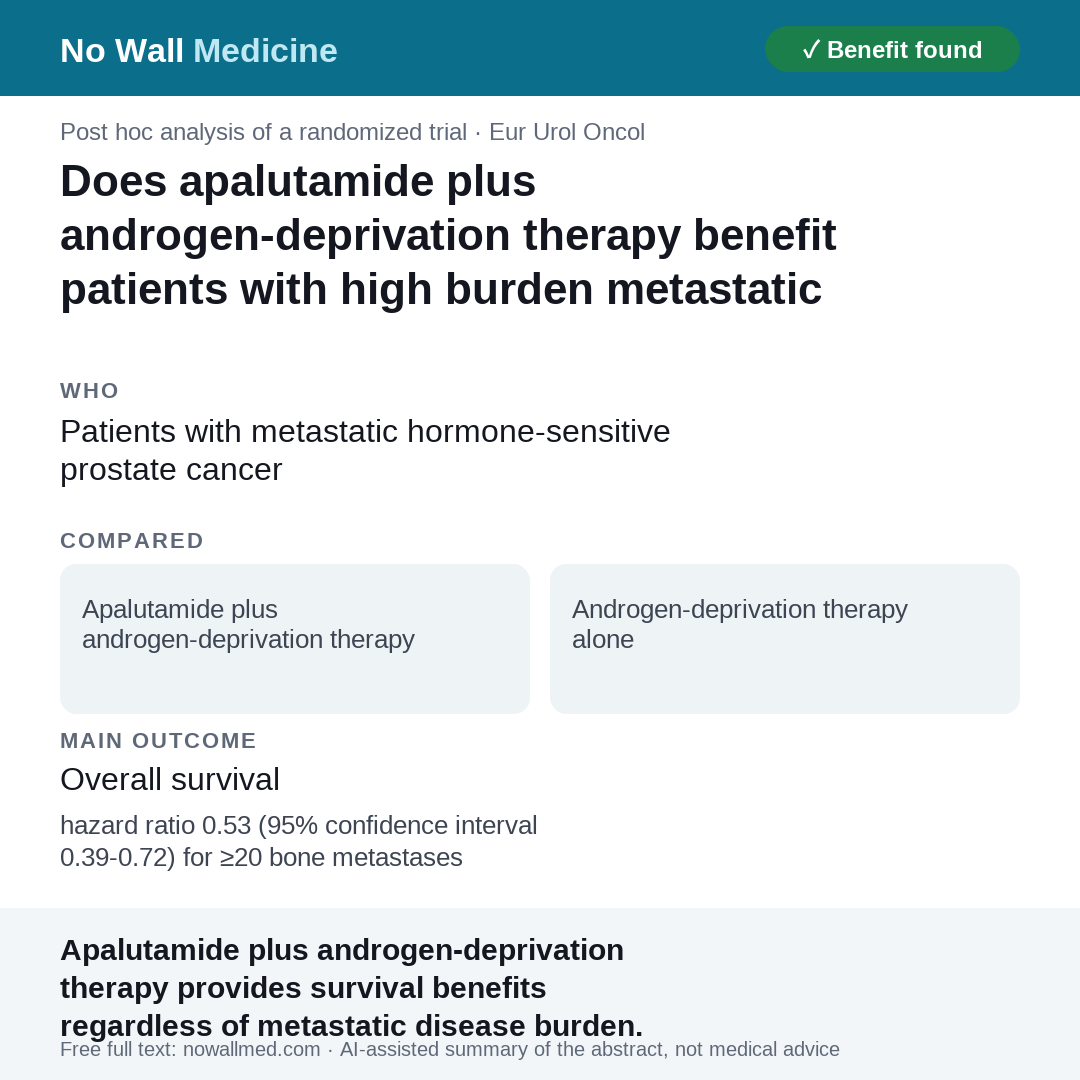
Apalutamide in Patients with High Burden of Metastatic Hormone-sensitive Prostate Cancer: A Subgroup Analysis of TITAN
Post hoc analysis of a randomized trialBenefit found
Does apalutamide plus androgen-deprivation therapy benefit patients with high burden metastatic hormone-sensitive prostate cancer?
Who
Patients with metastatic hormone-sensitive prostate cancer
Compared
Apalutamide plus androgen-deprivation therapy
Androgen-deprivation therapy alone
Main outcome
Overall survival
Result: hazard ratio 0.53 (95% confidence interval 0.39-0.72) for ≥20 bone metastases
Bottom line: Apalutamide plus androgen-deprivation therapy provides survival benefits regardless of metastatic disease burden.
Limitation: This was a post hoc analysis of the TITAN trial.
Eur Urol Oncol · 2025-09-29Download image
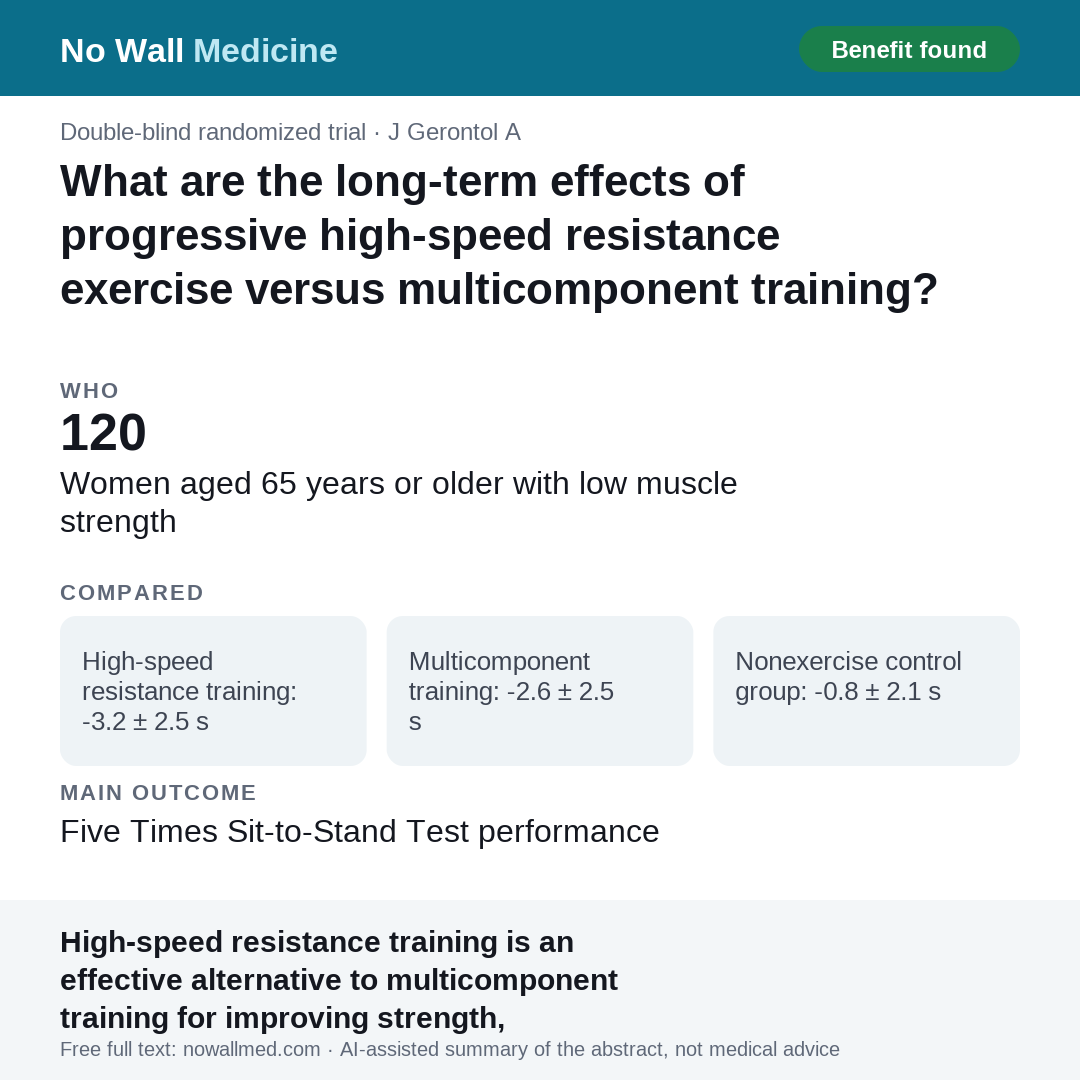
Long-term effects of progressive high-speed resistance exercise in older women with low muscle strength: a randomized clinical trial
Double-blind randomized trialBenefit found
What are the long-term effects of progressive high-speed resistance exercise versus multicomponent training?
Who
120
Women aged 65 years or older with low muscle strength
Compared
High-speed resistance training: -3.2 ± 2.5 s
Multicomponent training: -2.6 ± 2.5 s
Nonexercise control group: -0.8 ± 2.1 s
Main outcome
Five Times Sit-to-Stand Test performance
Bottom line: High-speed resistance training is an effective alternative to multicomponent training for improving strength, performance, and body composition.
Limitation: Further studies should confirm its role in preserving intrinsic capacity and preventing sarcopenic obesity.
J Gerontol A · 2025-09-29Download image
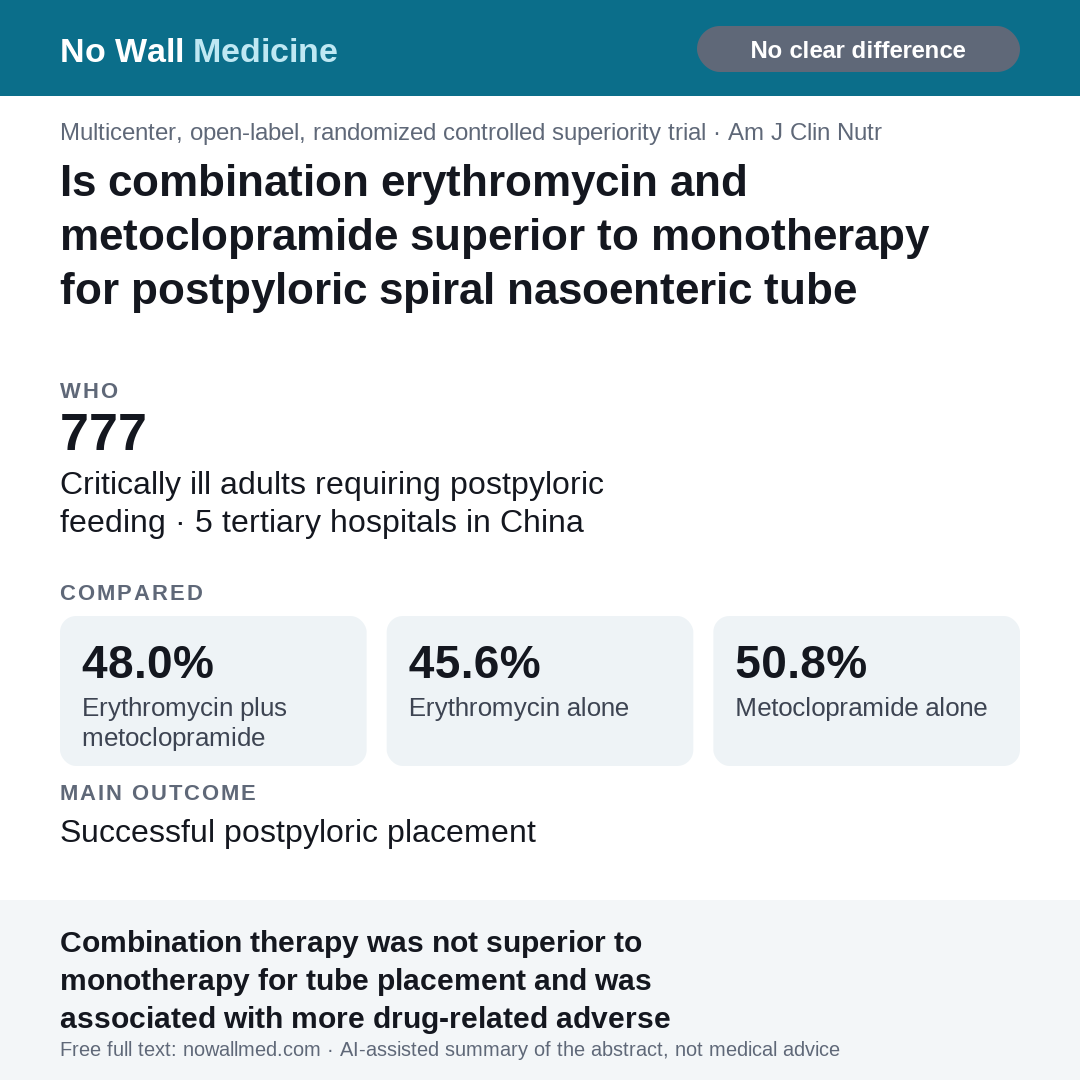
Erythromycin plus metoclopramide combination therapy compared with erythromycin or metoclopramide monotherapy for postpyloric spiral nasoenteric tube placement: a multicenter, open-label, randomized controlled superiority trial
Multicenter, open-label, randomized controlled superiority trialNo clear difference
Is combination erythromycin and metoclopramide superior to monotherapy for postpyloric spiral nasoenteric tube placement?
Who
777
Critically ill adults requiring postpyloric feeding · 5 tertiary hospitals in China
Compared
48.0%Erythromycin plus metoclopramide (123/256)
45.6%Erythromycin alone (119/261)
50.8%Metoclopramide alone (132/260)
Main outcome
Successful postpyloric placement
Result: odds ratio 0.90 (95% confidence interval: 0.63, 1.27)
Bottom line: Combination therapy was not superior to monotherapy for tube placement and was associated with more drug-related adverse events.
Am J Clin Nutr · 2025-09-29Download image
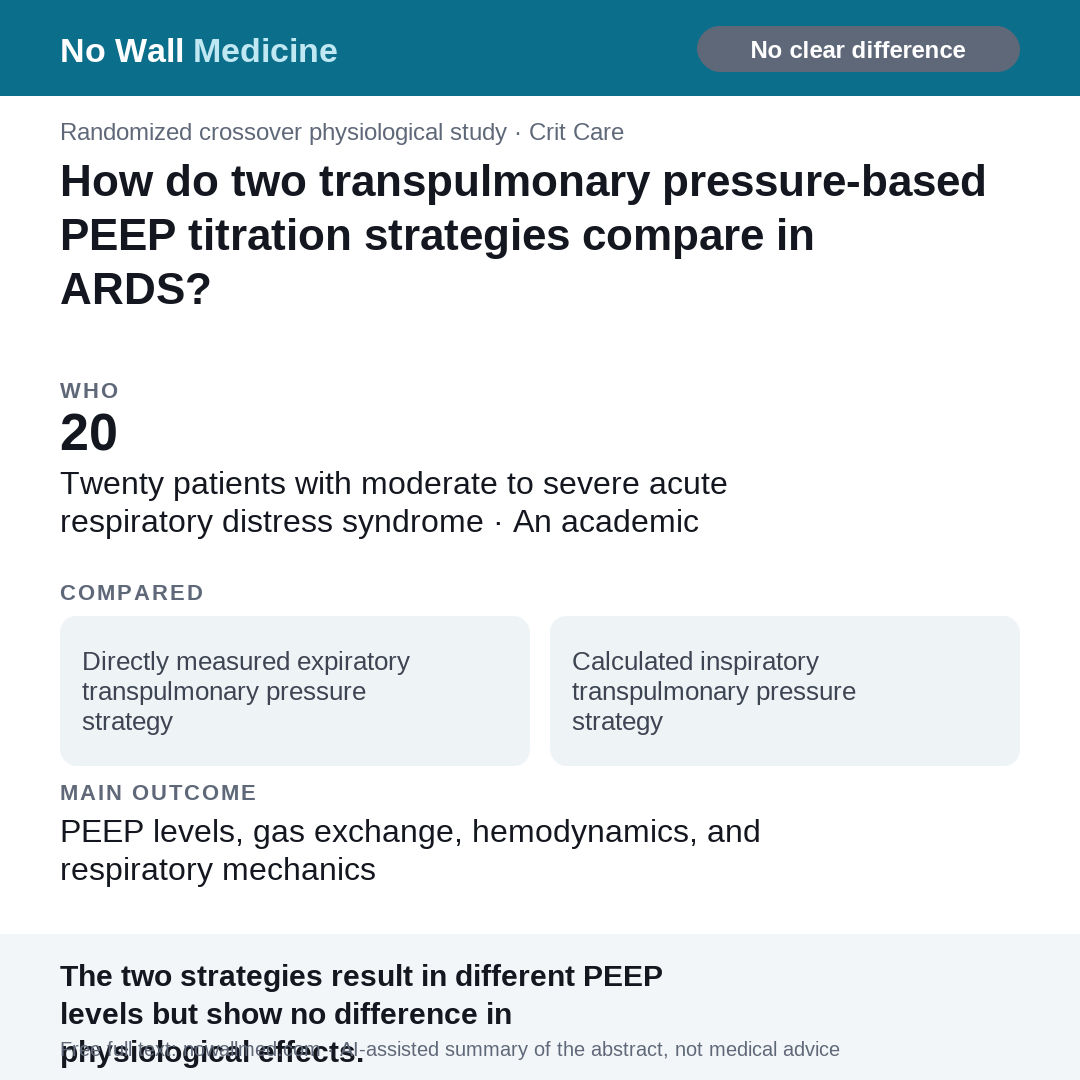
Comparison of two transpulmonary pressure-based positive end-expiratory pressure titration strategies in acute respiratory distress syndrome: a randomized crossover study
Randomized crossover physiological studyNo clear difference
How do two transpulmonary pressure-based PEEP titration strategies compare in ARDS?
Who
20
Twenty patients with moderate to severe acute respiratory distress syndrome · An academic intensive care unit
Compared
Directly measured expiratory transpulmonary pressure strategy
Calculated inspiratory transpulmonary pressure strategy
Main outcome
PEEP levels, gas exchange, hemodynamics, and respiratory mechanics
Bottom line: The two strategies result in different PEEP levels but show no difference in physiological effects.
Crit Care · 2025-09-29Download image
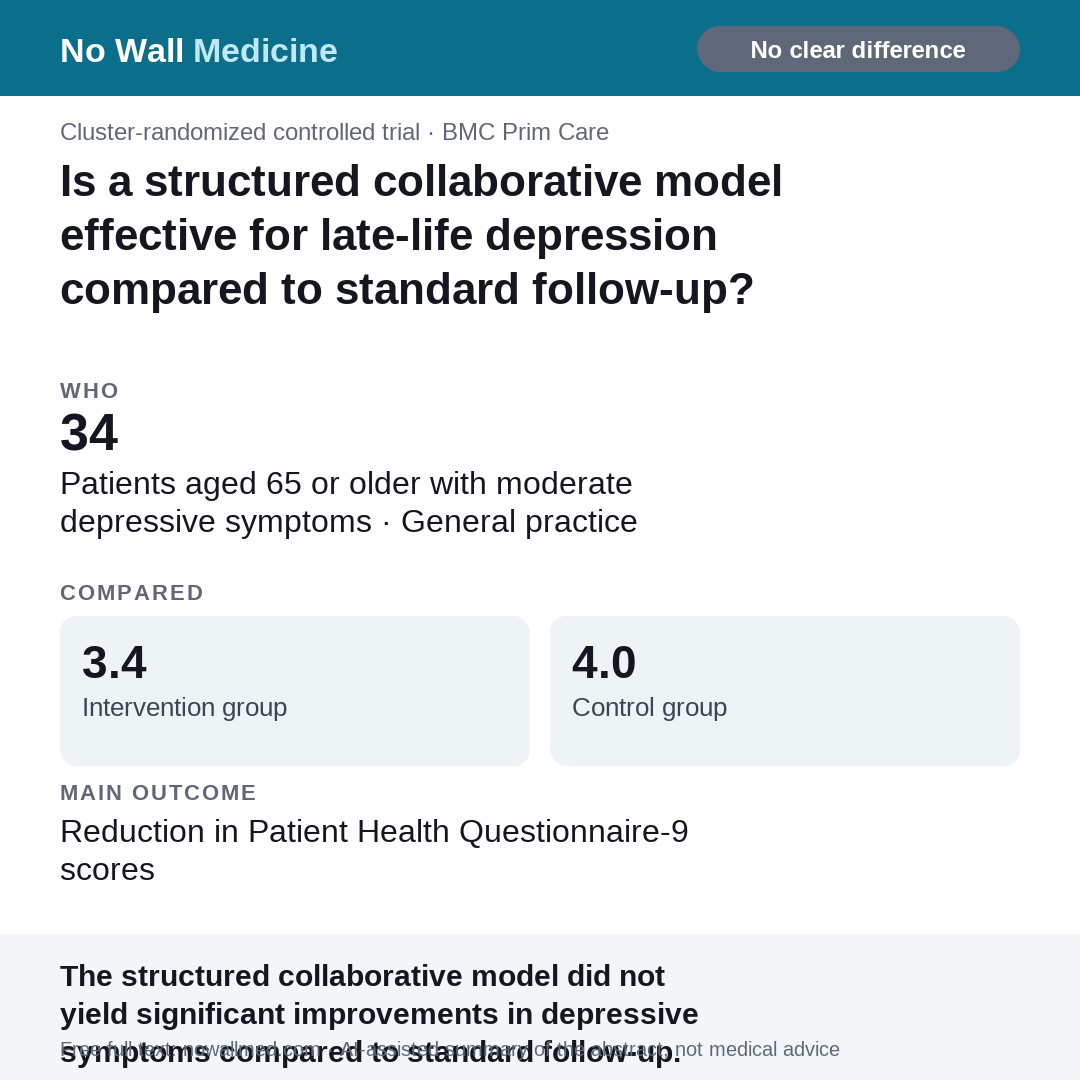
Joint consultations in a structured GP-patient-geriatric-psychiatrist model for late-life depression: a cluster RCT
Cluster-randomized controlled trialNo clear difference
Is a structured collaborative model effective for late-life depression compared to standard follow-up?
Who
34
Patients aged 65 or older with moderate depressive symptoms · General practice
Compared
3.4Intervention group
4.0Control group
Main outcome
Reduction in Patient Health Questionnaire-9 scores
Bottom line: The structured collaborative model did not yield significant improvements in depressive symptoms compared to standard follow-up.
Limitation: Major challenges in the recruitment process likely contributed to the low participation rate.
BMC Prim Care · 2025-09-29Download image
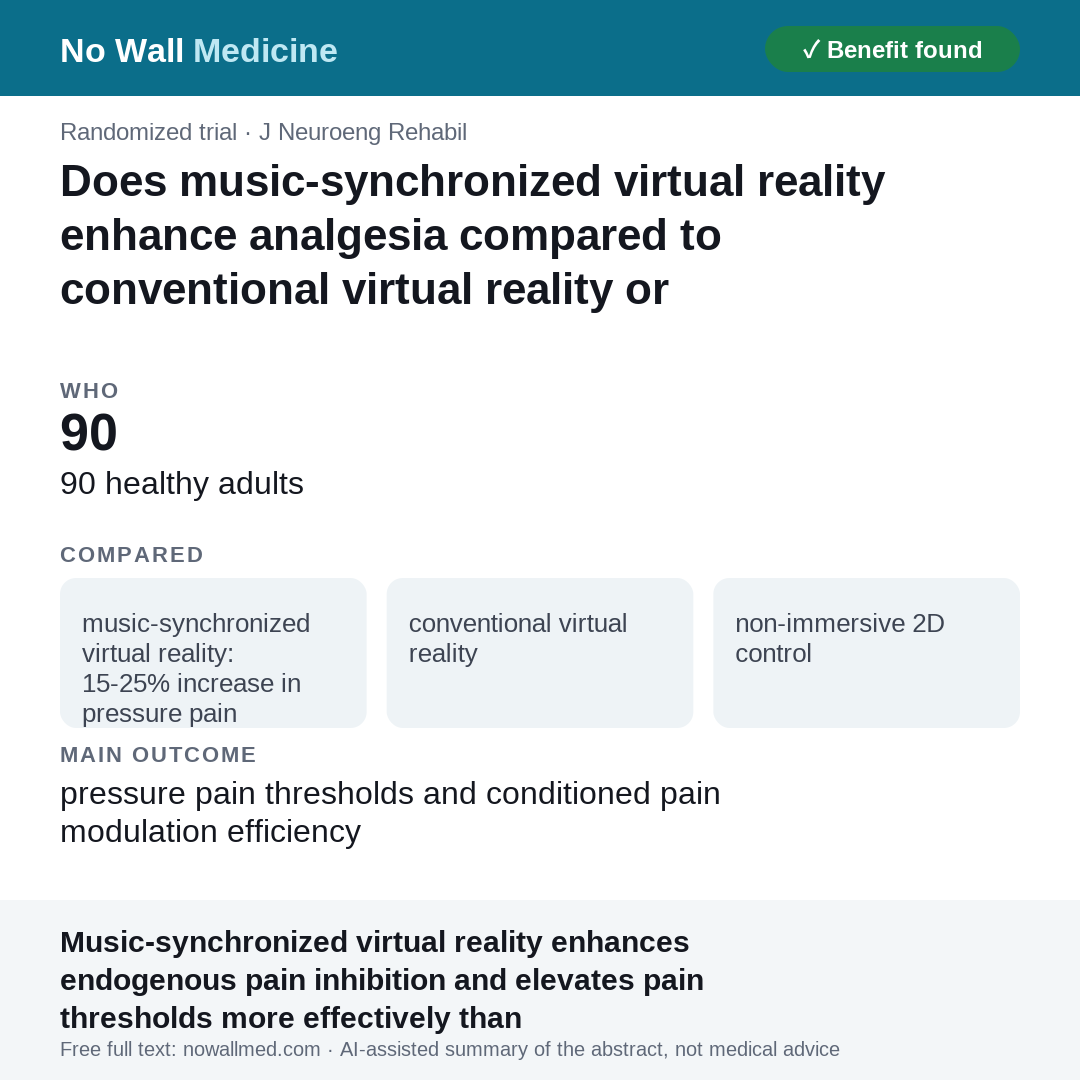
Analgesic effects and neural oscillatory mechanisms of music-synchronized virtual reality intervention
Randomized trialBenefit found
Does music-synchronized virtual reality enhance analgesia compared to conventional virtual reality or non-immersive interventions?
Who
90
90 healthy adults
Compared
music-synchronized virtual reality: 15-25% increase in pressure pain thresholds
conventional virtual reality
non-immersive 2D control
Main outcome
pressure pain thresholds and conditioned pain modulation efficiency
Bottom line: Music-synchronized virtual reality enhances endogenous pain inhibition and elevates pain thresholds more effectively than conventional virtual reality or 2D interventions.
J Neuroeng Rehabil · 2025-09-29Download image
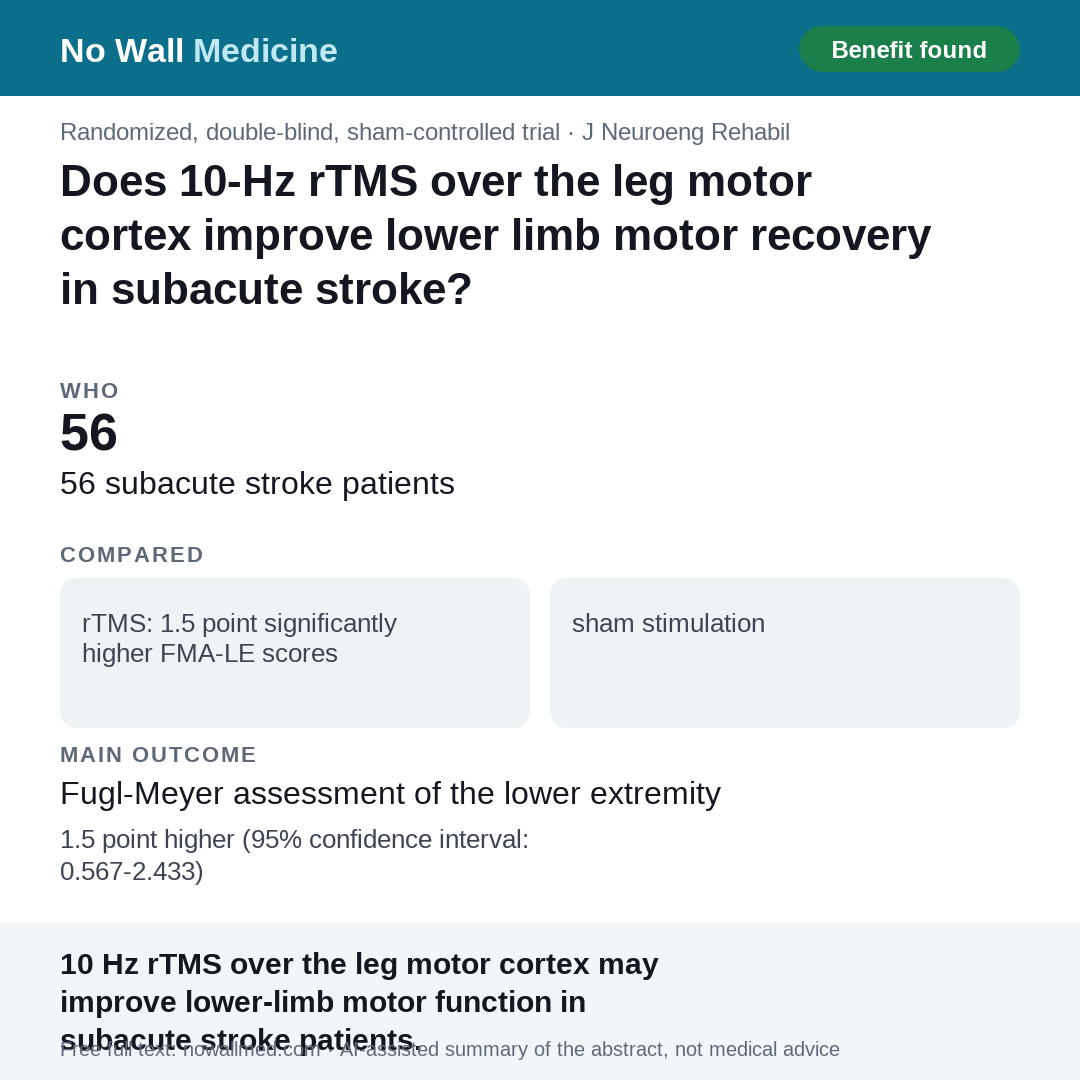
Effects of 10-Hz rTMS over the leg motor cortex using a double-cone coil on lower limb motor recovery in subacute stroke: a randomised, double-blind, sham-controlled study
Randomized, double-blind, sham-controlled trialBenefit found
Does 10-Hz rTMS over the leg motor cortex improve lower limb motor recovery in subacute stroke?
Who
56
56 subacute stroke patients
Compared
rTMS: 1.5 point significantly higher FMA-LE scores
sham stimulation
Main outcome
Fugl-Meyer assessment of the lower extremity
Result: 1.5 point higher (95% confidence interval: 0.567-2.433)
Bottom line: 10 Hz rTMS over the leg motor cortex may improve lower-limb motor function in subacute stroke patients.
J Neuroeng Rehabil · 2025-09-29Download image
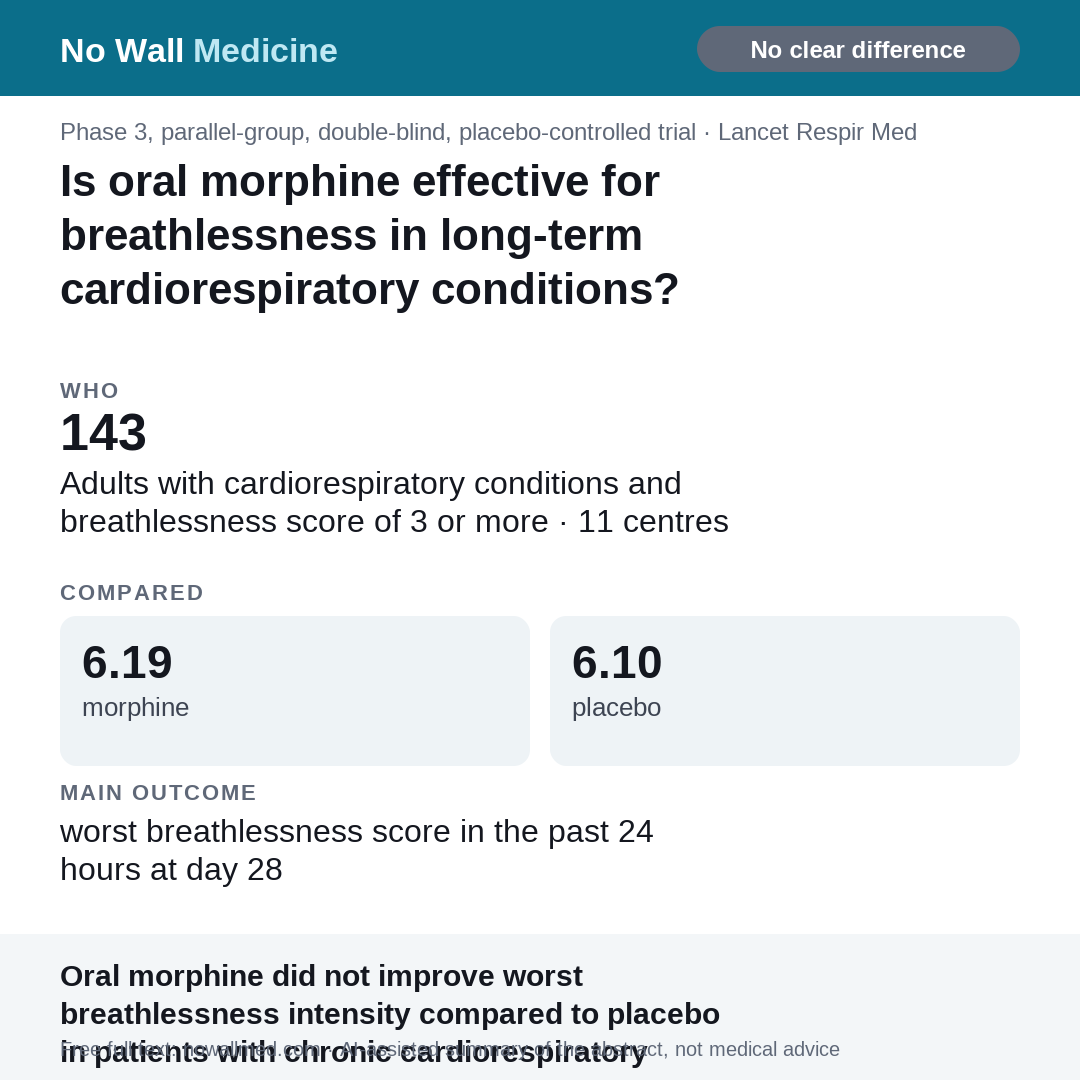
Morphine for chronic breathlessness (MABEL) in the UK: a multi-site, parallel-group, dose titration, double-blind, randomised, placebo-controlled trial
Phase 3, parallel-group, double-blind, placebo-controlled trialNo clear difference
Is oral morphine effective for breathlessness in long-term cardiorespiratory conditions?
Who
143
Adults with cardiorespiratory conditions and breathlessness score of 3 or more · 11 centres
Compared
6.19morphine (95% CI 5.57 to 6.81)
6.10placebo (95% CI 5.44 to 6.76)
Main outcome
worst breathlessness score in the past 24 hours at day 28
Result: adjusted mean difference 0.09 (95% CI -0.57 to 0.75)
Bottom line: Oral morphine did not improve worst breathlessness intensity compared to placebo in patients with chronic cardiorespiratory breathlessness.
Funded by: NIHR Health Technology Assessment programme
Lancet Respir Med · 2025-09-28Download image
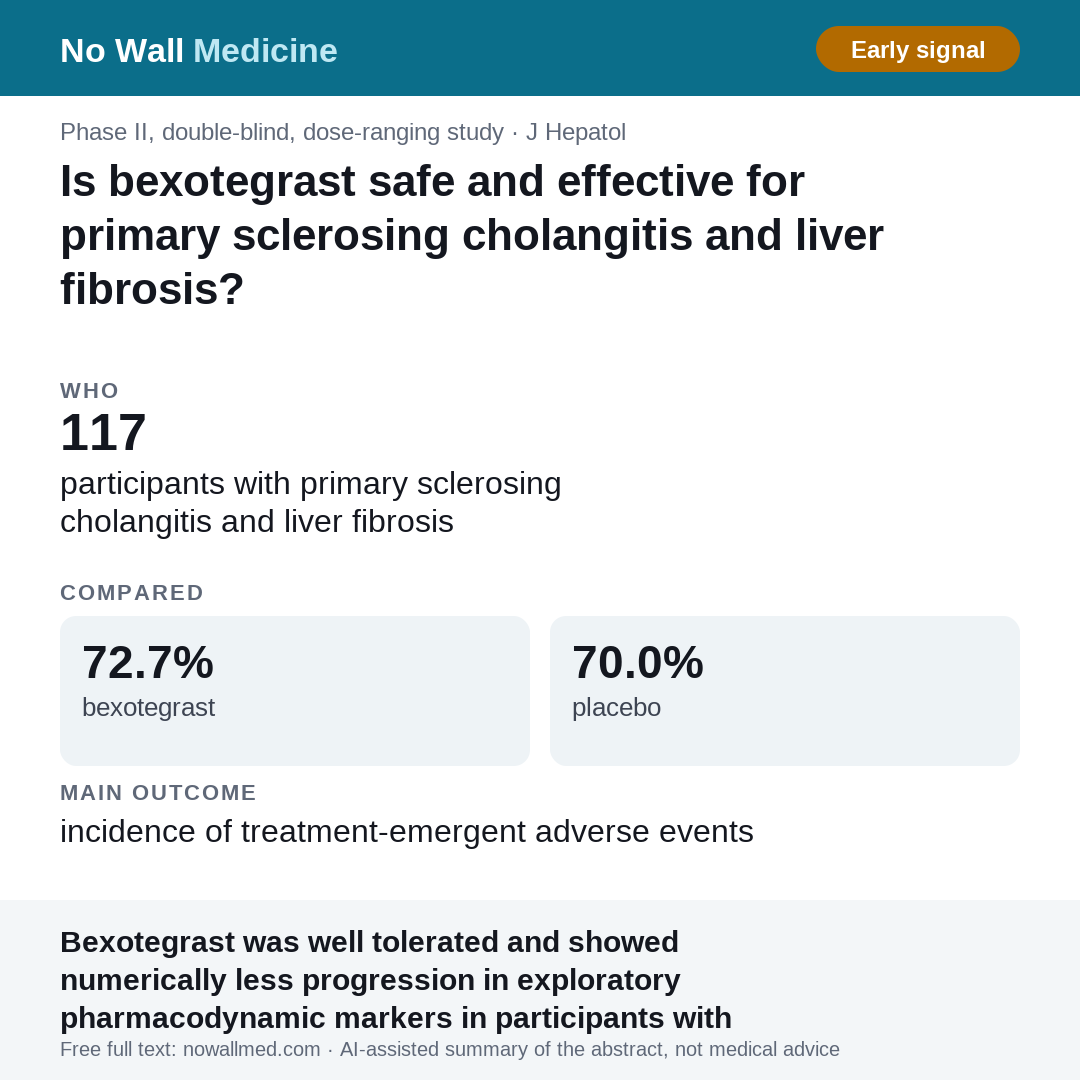
Phase II INTEGRIS-PSC trial of bexotegrast, an αvβ6/αvβ1 integrin inhibitor, in primary sclerosing cholangitis
Phase II, double-blind, dose-ranging studyBenefit found
Is bexotegrast safe and effective for primary sclerosing cholangitis and liver fibrosis?
Who
117
participants with primary sclerosing cholangitis and liver fibrosis
Compared
72.7%bexotegrast
70.0%placebo
Main outcome
incidence of treatment-emergent adverse events
Bottom line: Bexotegrast was well tolerated and showed numerically less progression in exploratory pharmacodynamic markers in participants with primary sclerosing cholangitis.
J Hepatol · 2025-09-26Download image
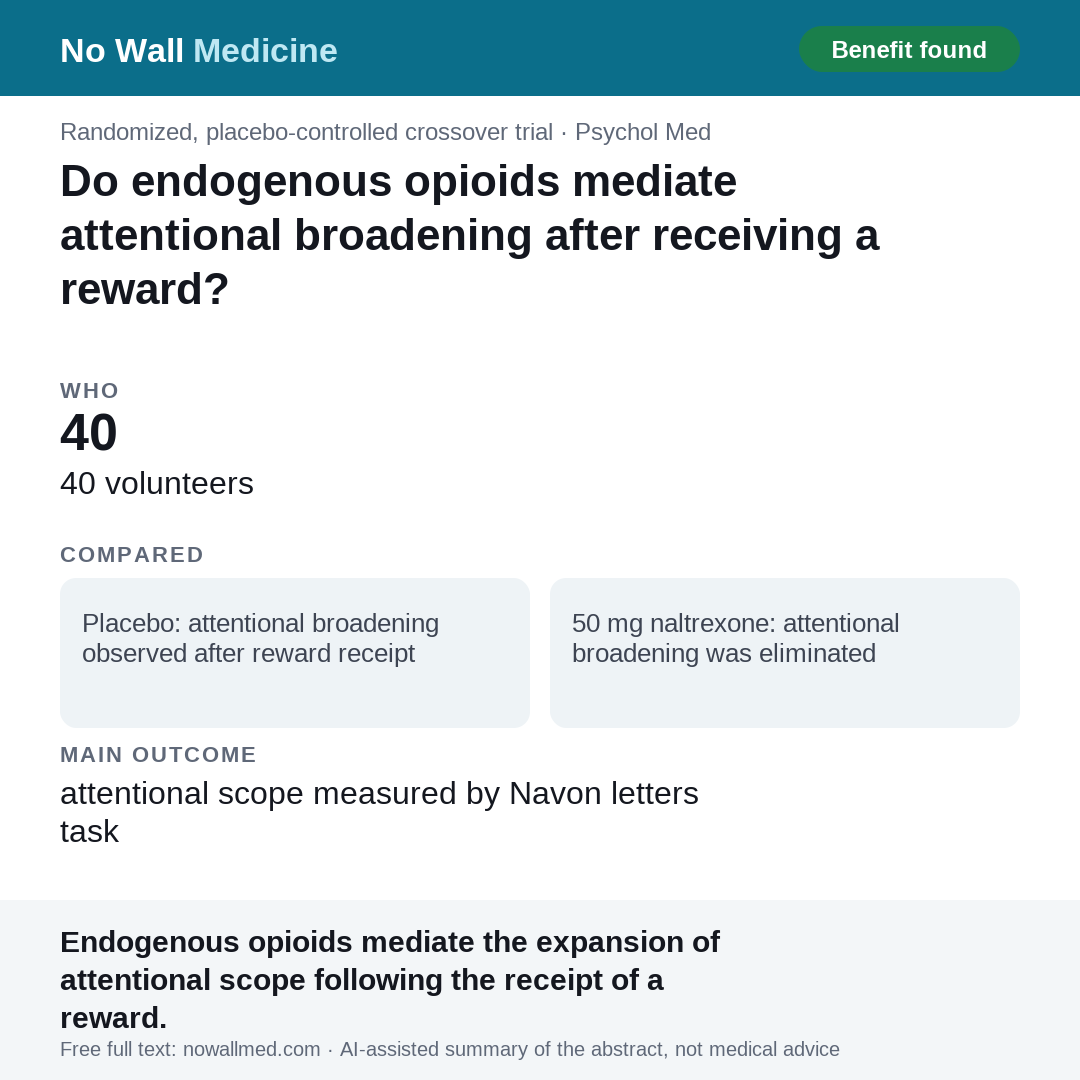
Seeing the bigger picture: endogenous opioids mediate attentional broadening after reward receipt
Randomized, placebo-controlled crossover trialBenefit found
Do endogenous opioids mediate attentional broadening after receiving a reward?
Who
40
40 volunteers
Compared
Placebo: attentional broadening observed after reward receipt
50 mg naltrexone: attentional broadening was eliminated
Main outcome
attentional scope measured by Navon letters task
Bottom line: Endogenous opioids mediate the expansion of attentional scope following the receipt of a reward.
Psychol Med · 2025-09-26Download image
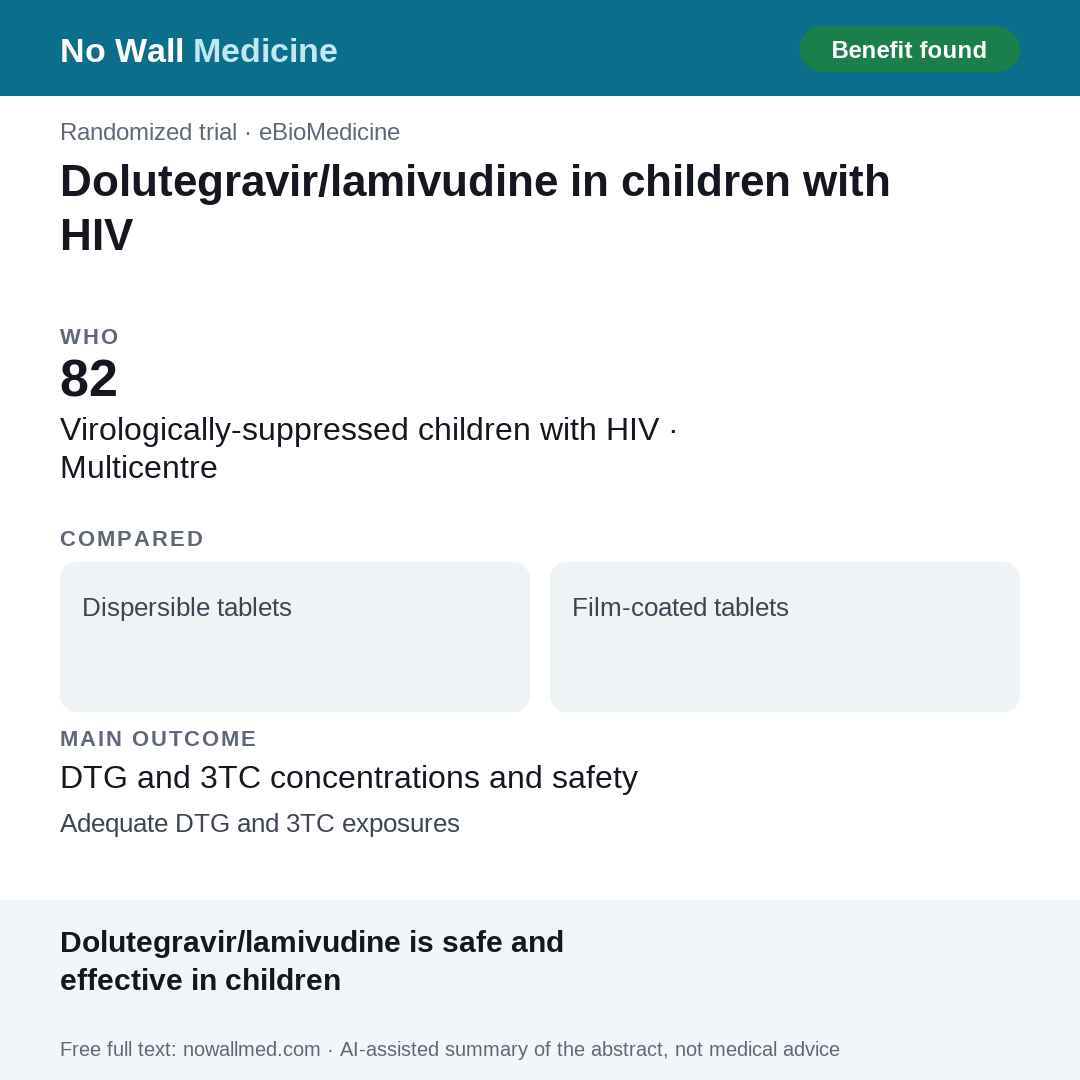
Once-daily dolutegravir/lamivudine fixed-dose formulations in children living with HIV: a pharmacokinetic and safety sub-study nested in the open-label, multicentre, randomised, non-inferiority D3/PENTA 21 trial
Randomized trialBenefit found
Dolutegravir/lamivudine in children with HIV
Who
82
Virologically-suppressed children with HIV · Multicentre
Compared
Dispersible tablets
Film-coated tablets
Main outcome
DTG and 3TC concentrations and safety
Result: Adequate DTG and 3TC exposures
Bottom line: Dolutegravir/lamivudine is safe and effective in children
Funded by: ViiV Healthcare
eBioMedicine · 2025-09-26Download image
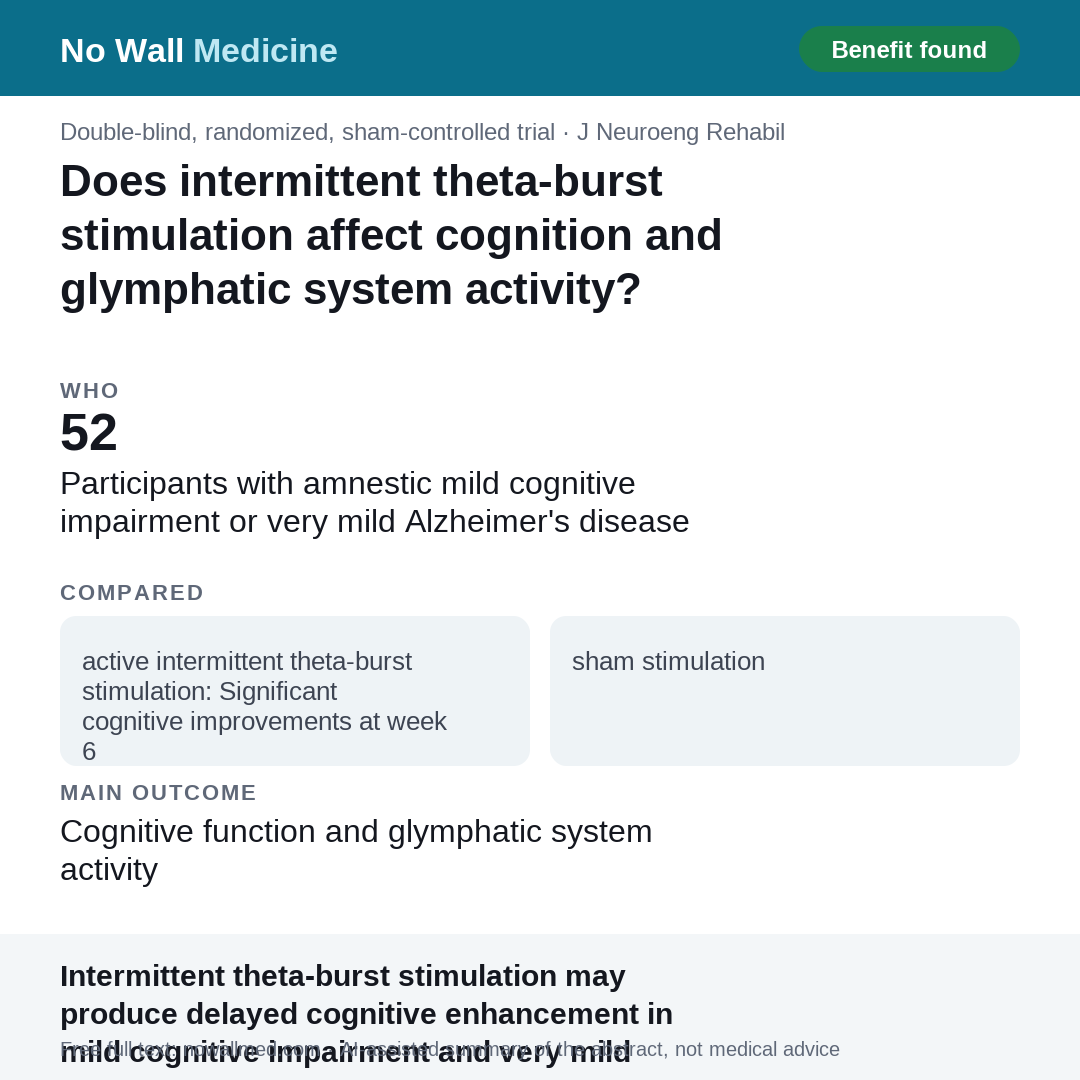
Effects of intermittent theta-burst stimulation on cognition and glymphatic system activity in mild cognitive impairment and very mild Alzheimer's disease: a randomized controlled trial
Double-blind, randomized, sham-controlled trialBenefit found
Does intermittent theta-burst stimulation affect cognition and glymphatic system activity?
Who
52
Participants with amnestic mild cognitive impairment or very mild Alzheimer's disease
Compared
active intermittent theta-burst stimulation: Significant cognitive improvements at week 6
sham stimulation
Main outcome
Cognitive function and glymphatic system activity
Bottom line: Intermittent theta-burst stimulation may produce delayed cognitive enhancement in mild cognitive impairment and very mild Alzheimer's disease.
J Neuroeng Rehabil · 2025-09-26Download image
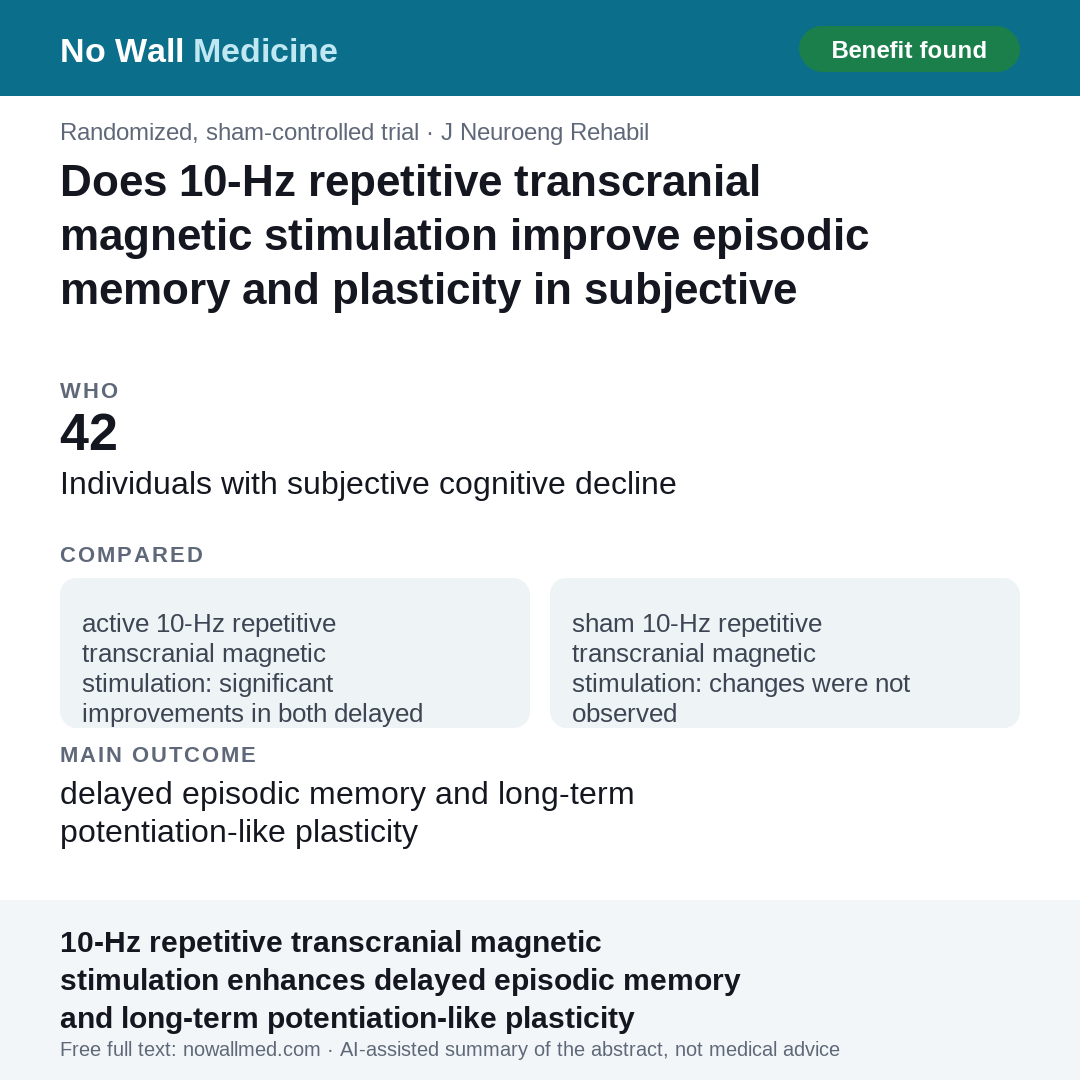
Enhanced episodic memory and LTP-like plasticity in subjective cognitive decline following 10-Hz repetitive transcranial magnetic stimulation
Randomized, sham-controlled trialBenefit found
Does 10-Hz repetitive transcranial magnetic stimulation improve episodic memory and plasticity in subjective cognitive decline?
Who
42
Individuals with subjective cognitive decline
Compared
active 10-Hz repetitive transcranial magnetic stimulation: significant improvements in both delayed episodic memory (AVLT-N5) and MEP amplitudes
sham 10-Hz repetitive transcranial magnetic stimulation: changes were not observed
Main outcome
delayed episodic memory and long-term potentiation-like plasticity
Bottom line: 10-Hz repetitive transcranial magnetic stimulation enhances delayed episodic memory and long-term potentiation-like plasticity in individuals with subjective cognitive decline.
J Neuroeng Rehabil · 2025-09-26Download image
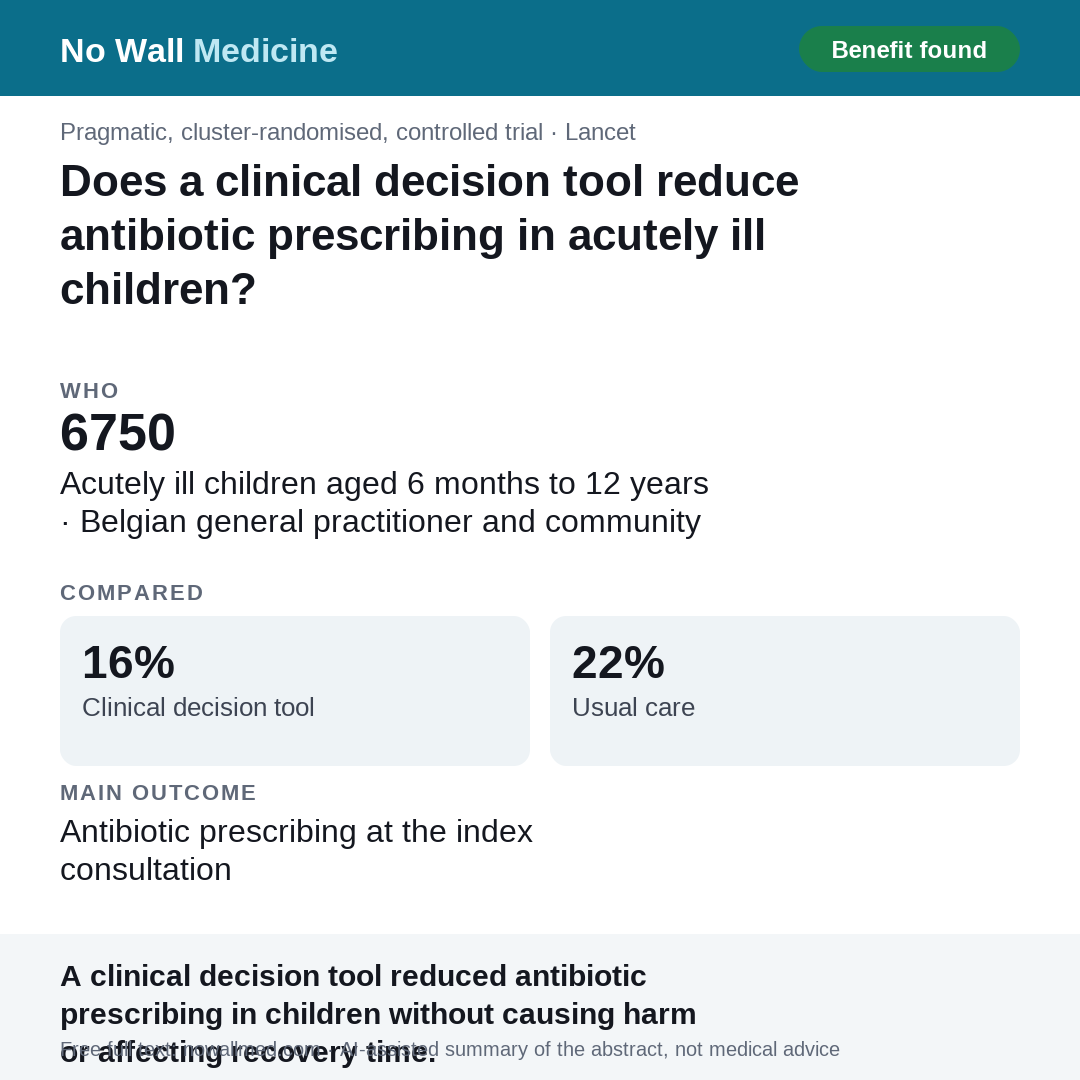
A clinical decision tool including a decision tree, point-of-care testing of CRP, and safety-netting advice to guide antibiotic prescribing in acutely ill children in primary care in Belgium (ARON): a pragmatic, cluster-randomised, controlled trial
Pragmatic, cluster-randomised, controlled trialBenefit found
Does a clinical decision tool reduce antibiotic prescribing in acutely ill children?
Who
6750
Acutely ill children aged 6 months to 12 years · Belgian general practitioner and community paediatrician practices
Compared
16%Clinical decision tool
22%Usual care
Main outcome
Antibiotic prescribing at the index consultation
Result: adjusted odds ratio 0·72 (95% CI 0·55-0·94)
Bottom line: A clinical decision tool reduced antibiotic prescribing in children without causing harm or affecting recovery time.
Funded by: Belgian Health Care Knowledge Centre
Lancet · 2025-09-25Download image
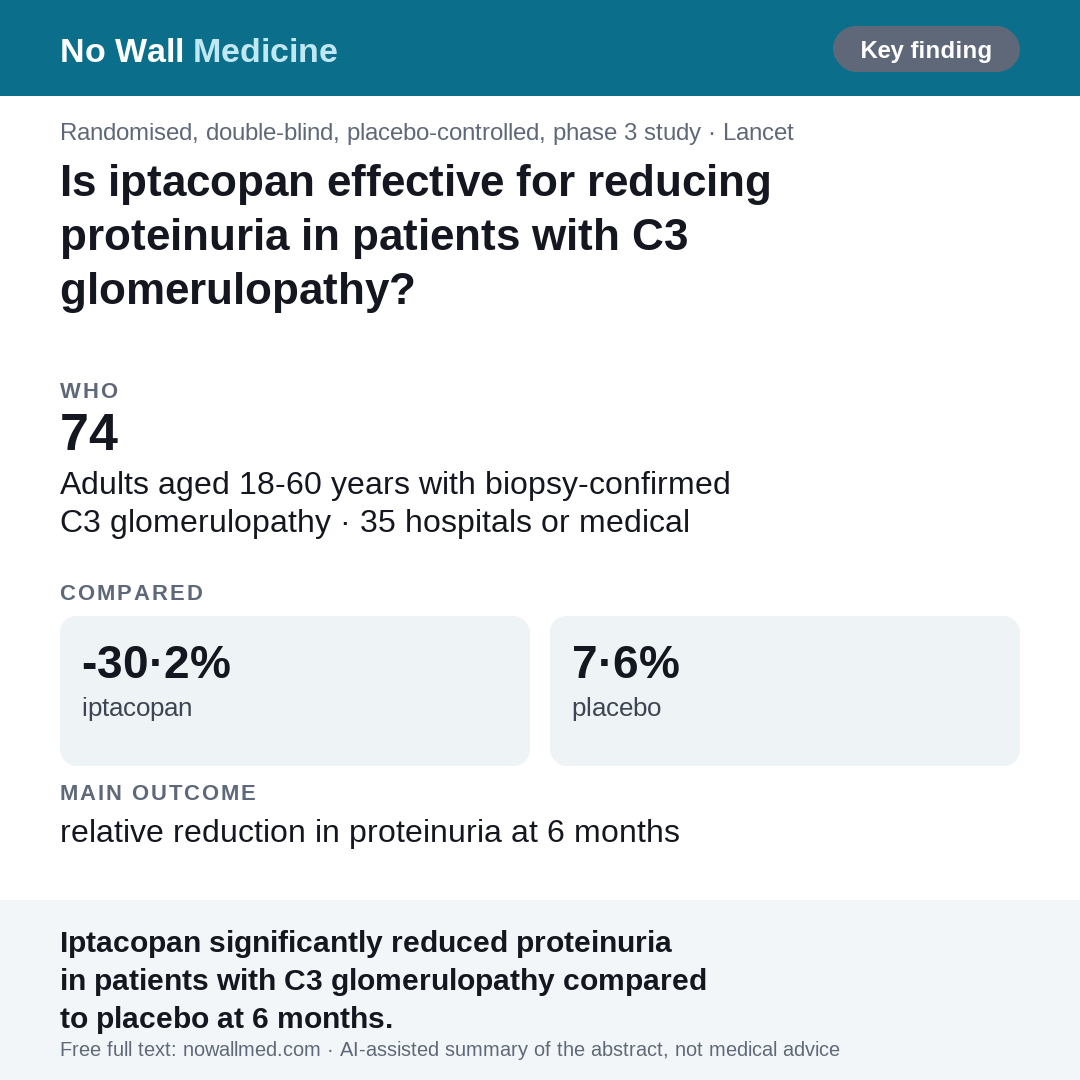
Oral iptacopan therapy in patients with C3 glomerulopathy: a randomised, double-blind, parallel group, multicentre, placebo-controlled, phase 3 study
Randomised, double-blind, placebo-controlled, phase 3 studyBenefit found
Is iptacopan effective for reducing proteinuria in patients with C3 glomerulopathy?
Who
74
Adults aged 18-60 years with biopsy-confirmed C3 glomerulopathy · 35 hospitals or medical centres in 18 countries
Compared
-30·2%iptacopan (95% CI -42·8 to -14·8)
7·6%placebo (-11·9 to 31·3)
Main outcome
relative reduction in proteinuria at 6 months
Result: 35·1% (13·8 to 51·1; p=0·0014)
Bottom line: Iptacopan significantly reduced proteinuria in patients with C3 glomerulopathy compared to placebo at 6 months.
Funded by: Novartis Pharma
Lancet · 2025-09-25Download image
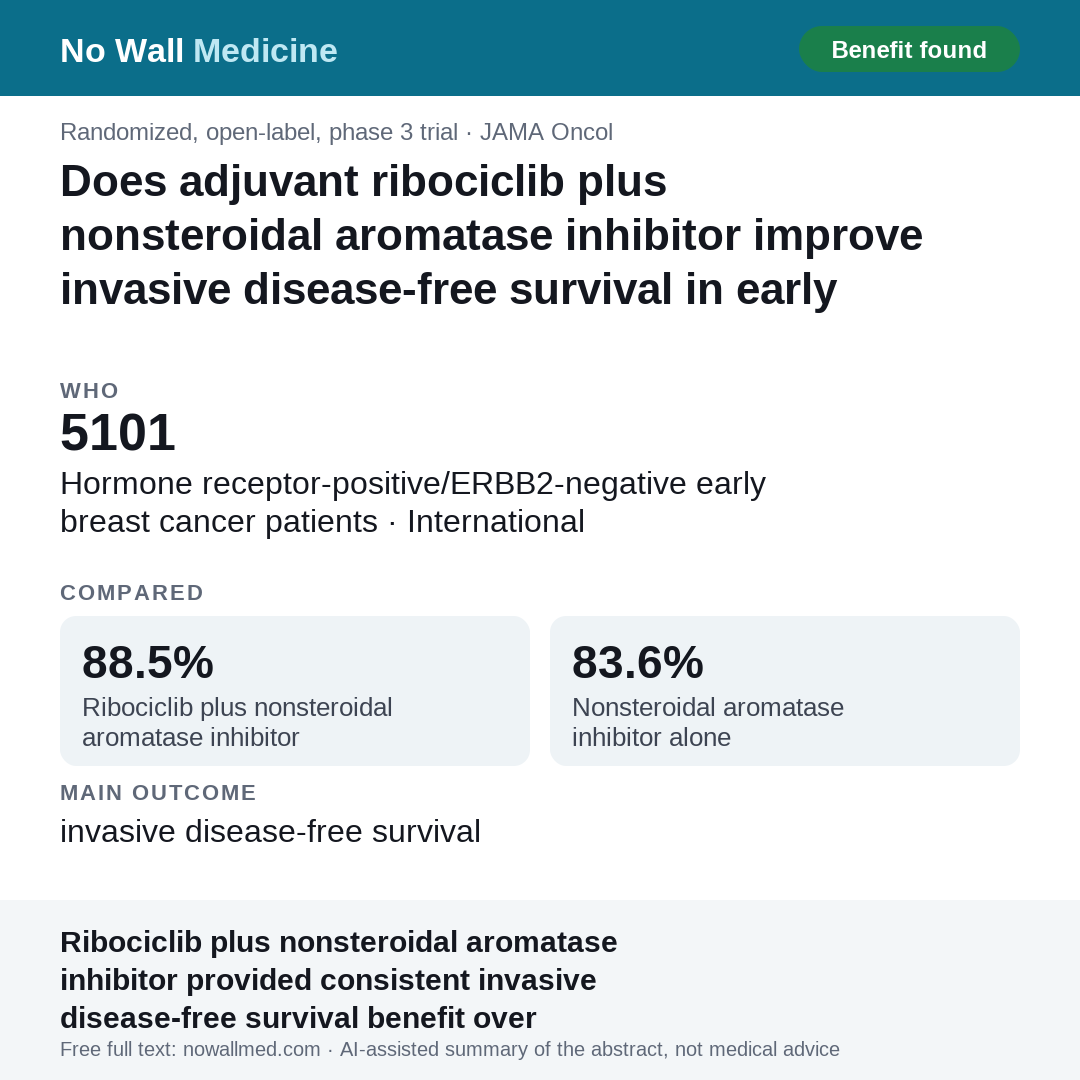
Ribociclib Plus Endocrine Therapy in Hormone Receptor-Positive/ERBB2-Negative Early Breast Cancer: 4-Year Outcomes From the NATALEE Randomized Clinical Trial
Randomized, open-label, phase 3 trialBenefit found
Does adjuvant ribociclib plus nonsteroidal aromatase inhibitor improve invasive disease-free survival in early breast cancer?
Who
5101
Hormone receptor-positive/ERBB2-negative early breast cancer patients · International
Compared
88.5%Ribociclib plus nonsteroidal aromatase inhibitor
83.6%Nonsteroidal aromatase inhibitor alone
Main outcome
invasive disease-free survival
Result: hazard ratio 0.72 (95% CI 0.61-0.84)
Bottom line: Ribociclib plus nonsteroidal aromatase inhibitor provided consistent invasive disease-free survival benefit over nonsteroidal aromatase inhibitor alone at 4 years.
JAMA Oncol · 2025-09-25Download image
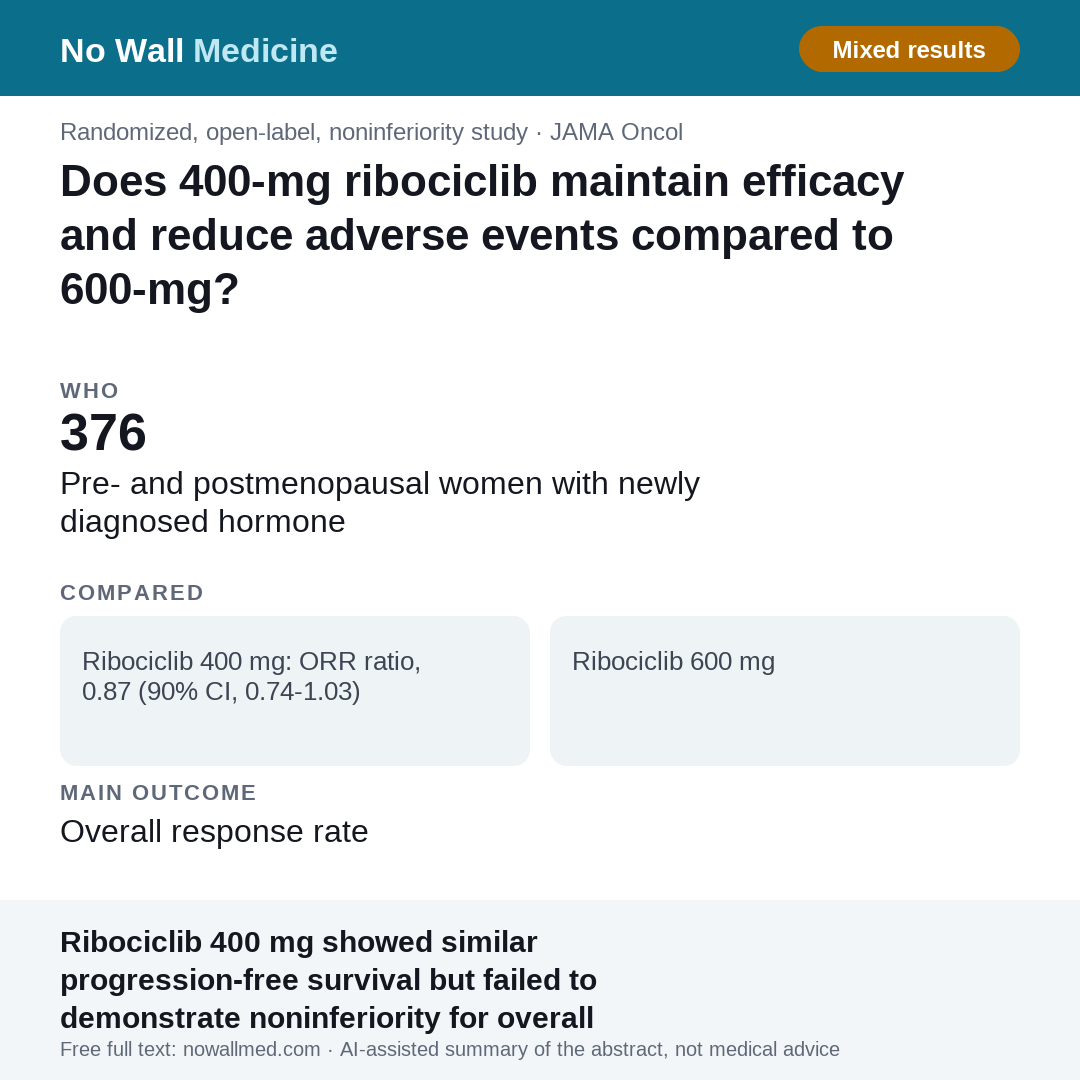
600- vs 400-mg First-Line Ribociclib in Hormone Receptor-Positive/ERBB2-Negative Advanced Breast Cancer: The AMALEE Randomized Clinical Trial
Randomized, open-label, noninferiority studyMixed results
Does 400-mg ribociclib maintain efficacy and reduce adverse events compared to 600-mg?
Who
376
Pre- and postmenopausal women with newly diagnosed hormone receptor-positive/ERRB2-negative advanced breast cancer · 107 sites in 23 countries
Compared
Ribociclib 400 mg: ORR ratio, 0.87 (90% CI, 0.74-1.03)
Ribociclib 600 mg
Main outcome
Overall response rate
Result: ORR ratio, 0.87 (90% CI, 0.74-1.03)
Bottom line: Ribociclib 400 mg showed similar progression-free survival but failed to demonstrate noninferiority for overall response rate.
JAMA Oncol · 2025-09-25Download image
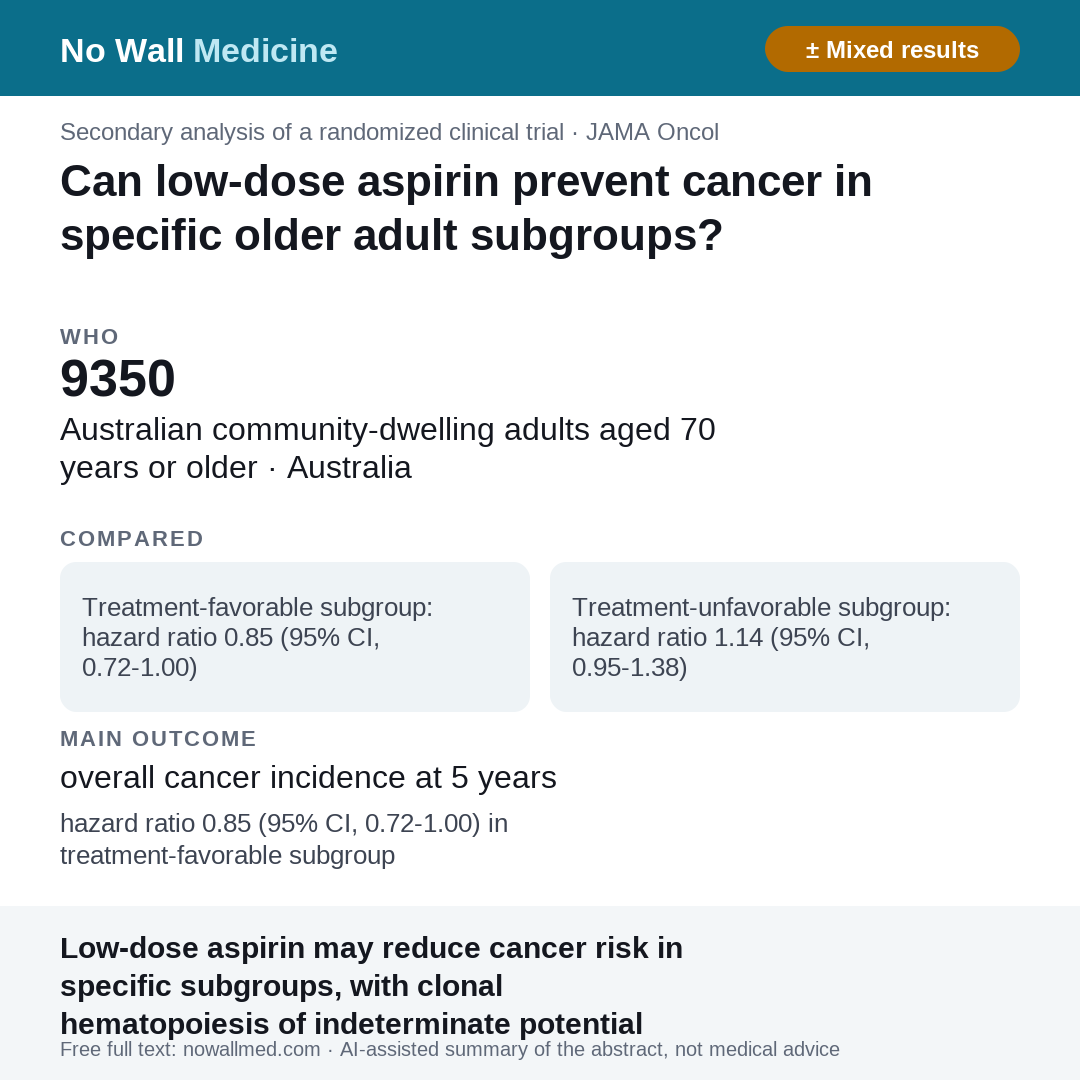
Low-Dose Aspirin for Individualized Cancer Prevention in Older Adults: A Secondary Analysis of the ASPREE Randomized Clinical Trial
Secondary analysis of a randomized clinical trialMixed results
Can low-dose aspirin prevent cancer in specific older adult subgroups?
Who
9350
Australian community-dwelling adults aged 70 years or older · Australia
Compared
Treatment-favorable subgroup: hazard ratio 0.85 (95% CI, 0.72-1.00)
Treatment-unfavorable subgroup: hazard ratio 1.14 (95% CI, 0.95-1.38)
Main outcome
overall cancer incidence at 5 years
Result: hazard ratio 0.85 (95% CI, 0.72-1.00) in treatment-favorable subgroup
Bottom line: Low-dose aspirin may reduce cancer risk in specific subgroups, with clonal hematopoiesis of indeterminate potential being a key predictor.
JAMA Oncol · 2025-09-25Download image
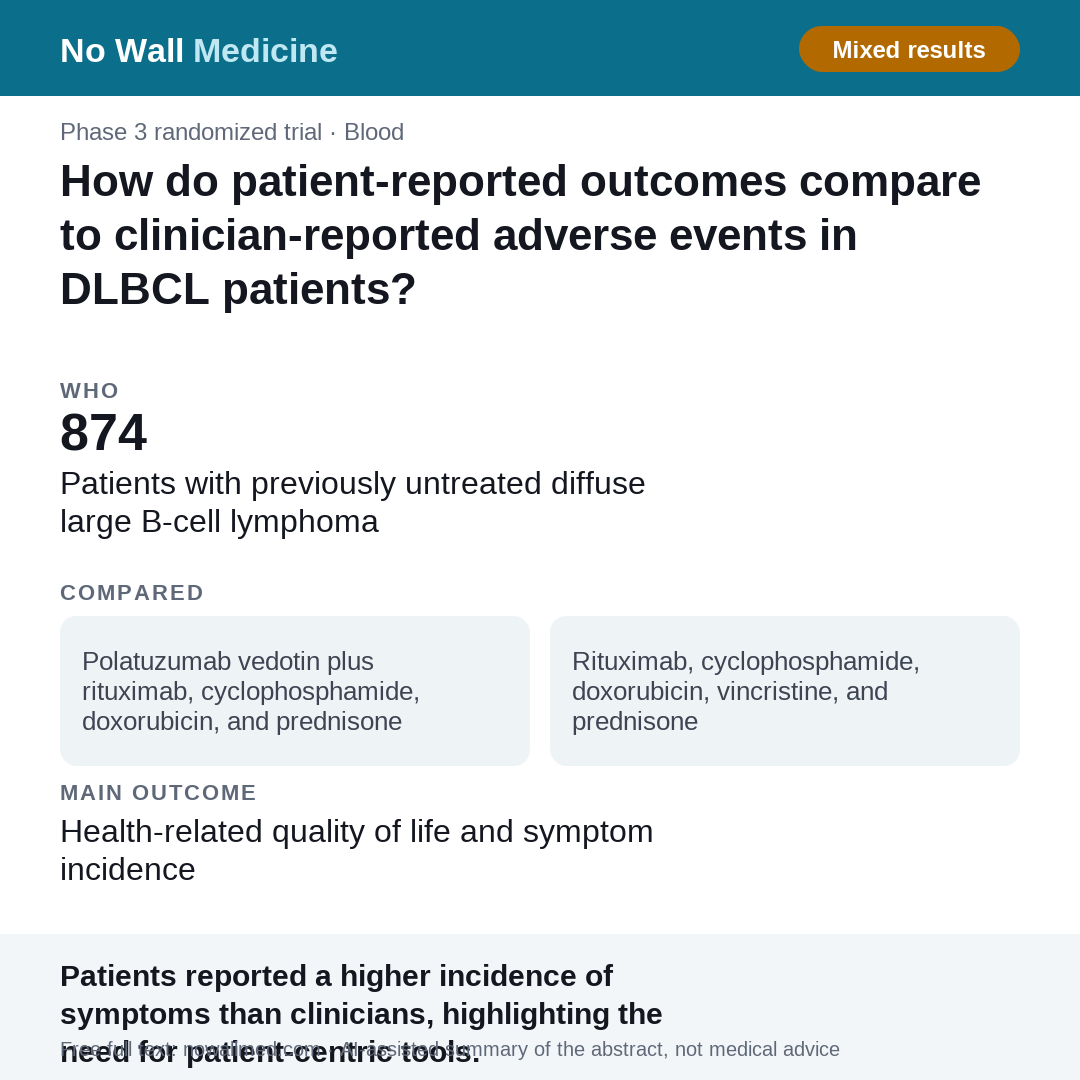
PROs vs clinician-reported adverse events in a large clinical trial: findings from the phase 3 POLARIX study
Phase 3 randomized trialMixed results
How do patient-reported outcomes compare to clinician-reported adverse events in DLBCL patients?
Who
874
Patients with previously untreated diffuse large B-cell lymphoma
Compared
Polatuzumab vedotin plus rituximab, cyclophosphamide, doxorubicin, and prednisone
Rituximab, cyclophosphamide, doxorubicin, vincristine, and prednisone
Main outcome
Health-related quality of life and symptom incidence
Bottom line: Patients reported a higher incidence of symptoms than clinicians, highlighting the need for patient-centric tools.
Blood · 2025-09-25Download image