Visual abstracts
New randomized trials and meta-analyses from leading journals at a glance: who was studied, what was compared, and what was found. Every paper is free to read in full.
All specialtiesCardiology 4763Oncology 4043Gastroenterology & Hepatology 1903Infectious Disease 3756Neurology 1872Psychiatry & Mental Health 2216Pulmonology 2044Critical Care 1319Endocrinology & Diabetes 2544Pediatrics 2889Surgery 2480Orthopedics & Sports Medicine 917Neurosurgery 525Cardiothoracic & Vascular Surgery 656Plastic & Reconstructive Surgery 574Nephrology 1107Rheumatology 810Hematology 1090Dermatology 611Ophthalmology 532Obstetrics & Gynecology 1645Public & Global Health 1037Radiology & Imaging 619Anesthesiology 958Urology 745ENT (Otolaryngology) 494Emergency Medicine 481Allergy & Immunology 309Geriatrics 972Family Medicine & Primary Care 534Medical Genetics & Genomics 659Pathology & Laboratory Medicine 156Physical Medicine & Rehabilitation 734Palliative Care 421Nutrition 1560Digital Health & AI 2137General Medicine 318
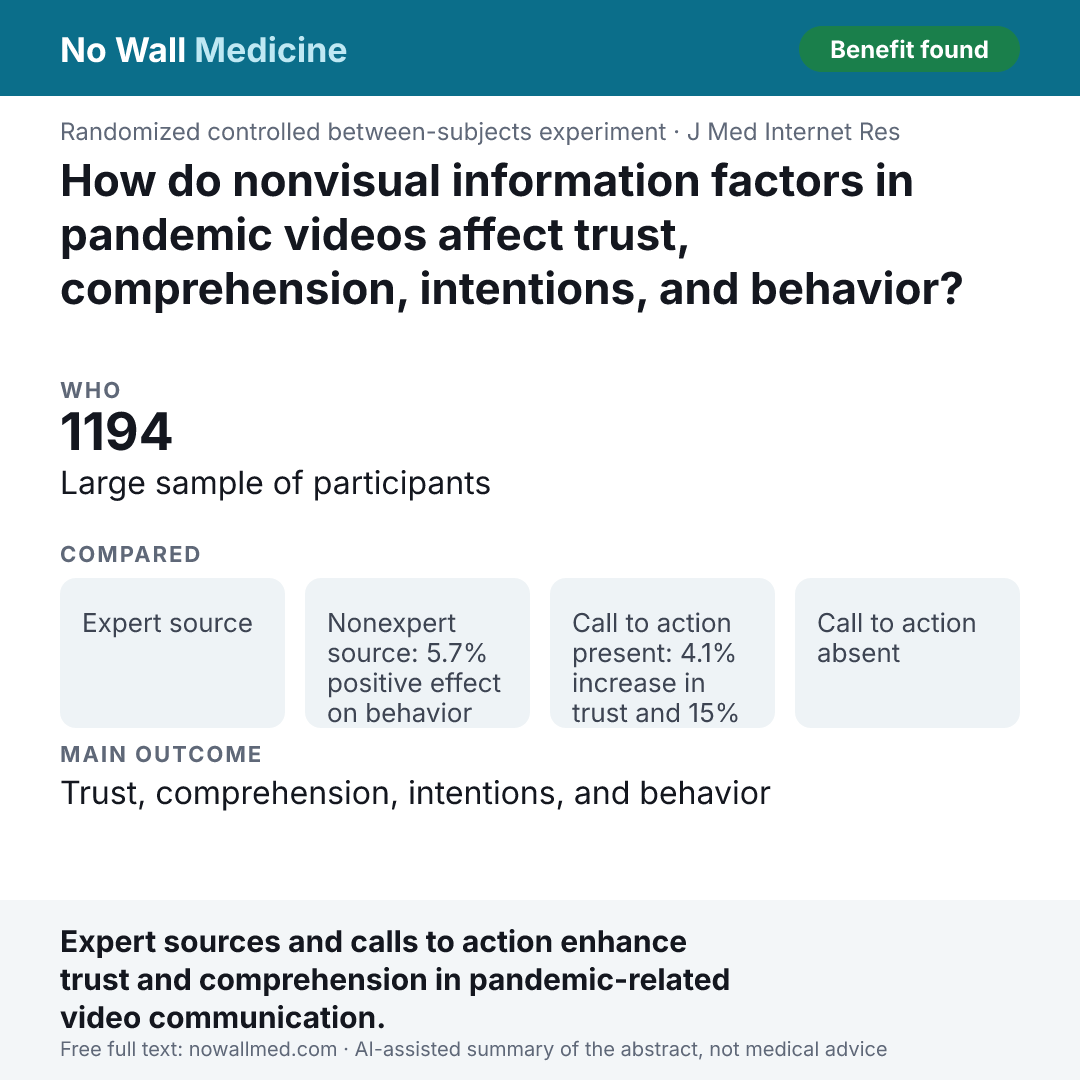
Assessing the Effect of Nonvisual Information Factors in Pandemic-Related Video Communication: Randomized Controlled Between-Subjects Experiment
Randomized controlled between-subjects experimentBenefit found
How do nonvisual information factors in pandemic videos affect trust, comprehension, intentions, and behavior?
Who
1194
Large sample of participants
Compared
Expert source
Nonexpert source: 5.7% positive effect on behavior proxy
Call to action present: 4.1% increase in trust and 15% increase in comprehension
Call to action absent
Main outcome
Trust, comprehension, intentions, and behavior
Bottom line: Expert sources and calls to action enhance trust and comprehension in pandemic-related video communication.
J Med Internet Res · 2023-08-23 · Save PNG
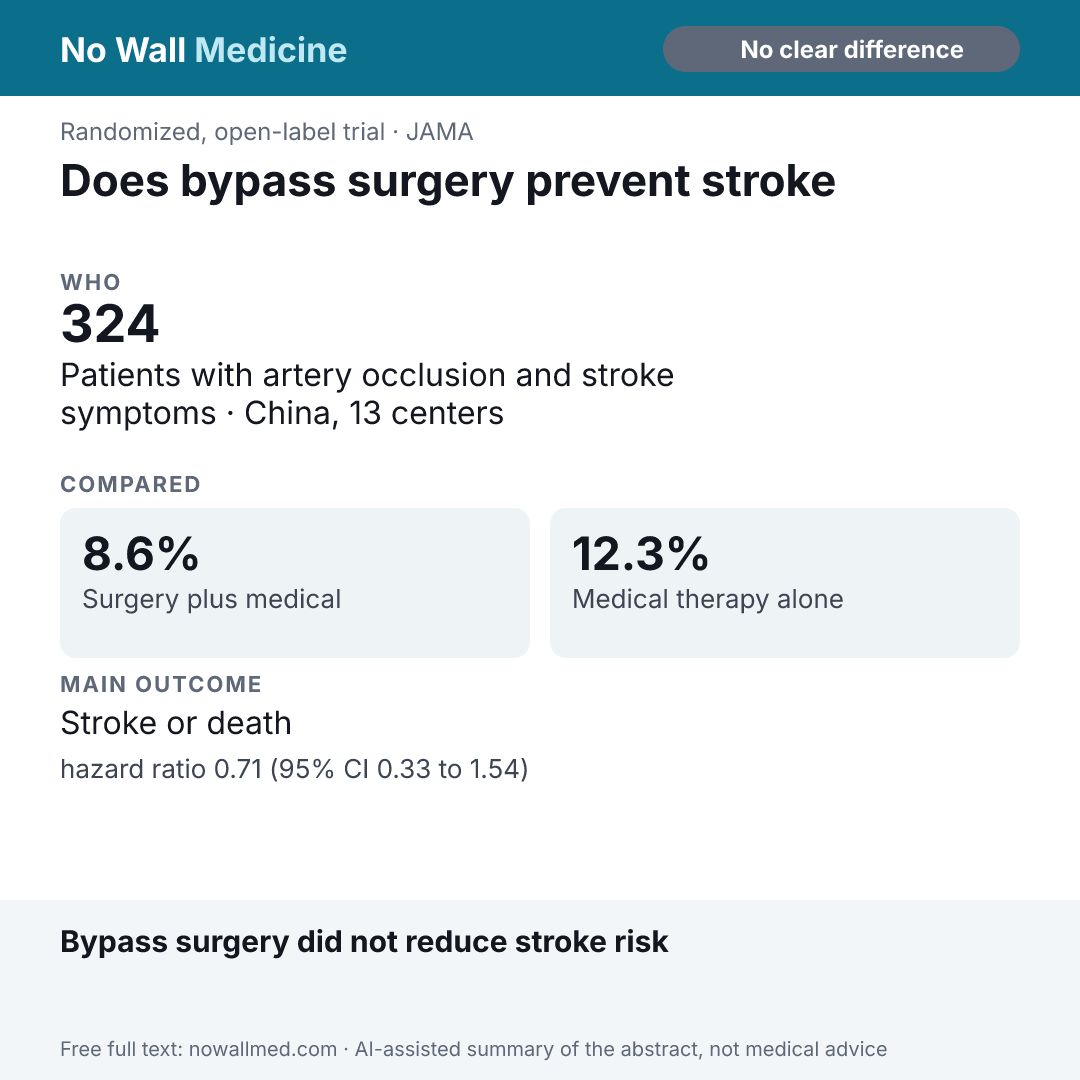
Extracranial-Intracranial Bypass and Risk of Stroke and Death in Patients With Symptomatic Artery Occlusion: The CMOSS Randomized Clinical Trial
Randomized, open-label trialNo clear difference
Does bypass surgery prevent stroke
Who
324
Patients with artery occlusion and stroke symptoms · China, 13 centers
Compared
8.6%Surgery plus medical (13/151)
12.3%Medical therapy alone (19/155)
Main outcome
Stroke or death
Result: hazard ratio 0.71 (95% CI 0.33 to 1.54)
Bottom line: Bypass surgery did not reduce stroke risk
JAMA · 2023-08-22 · Save PNG
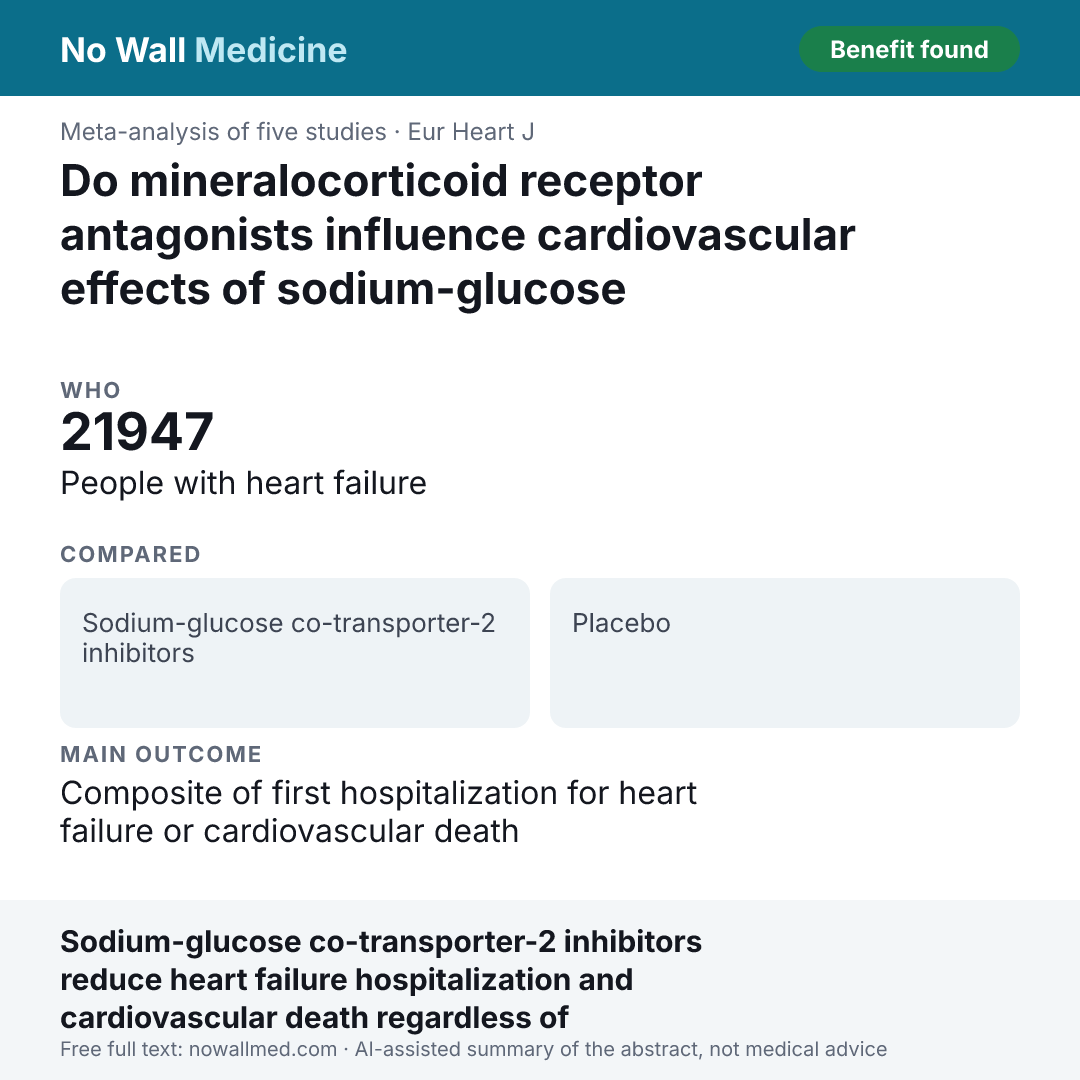
Mineralocorticoid receptor antagonists with sodium-glucose co-transporter-2 inhibitors in heart failure: a meta-analysis
Meta-analysis of five studiesBenefit found
Do mineralocorticoid receptor antagonists influence cardiovascular effects of sodium-glucose co-transporter-2 inhibitors in heart failure?
Who
21947
People with heart failure
Compared
Sodium-glucose co-transporter-2 inhibitors
Placebo
Main outcome
Composite of first hospitalization for heart failure or cardiovascular death
Result: hazard ratio 0.75 (95% CI 0.68-0.81)
Bottom line: Sodium-glucose co-transporter-2 inhibitors reduce heart failure hospitalization and cardiovascular death regardless of mineralocorticoid receptor antagonist use.
Limitation: Findings warrant further validation in well-designed randomized controlled trials.
Eur Heart J · 2023-08-22 · Save PNG
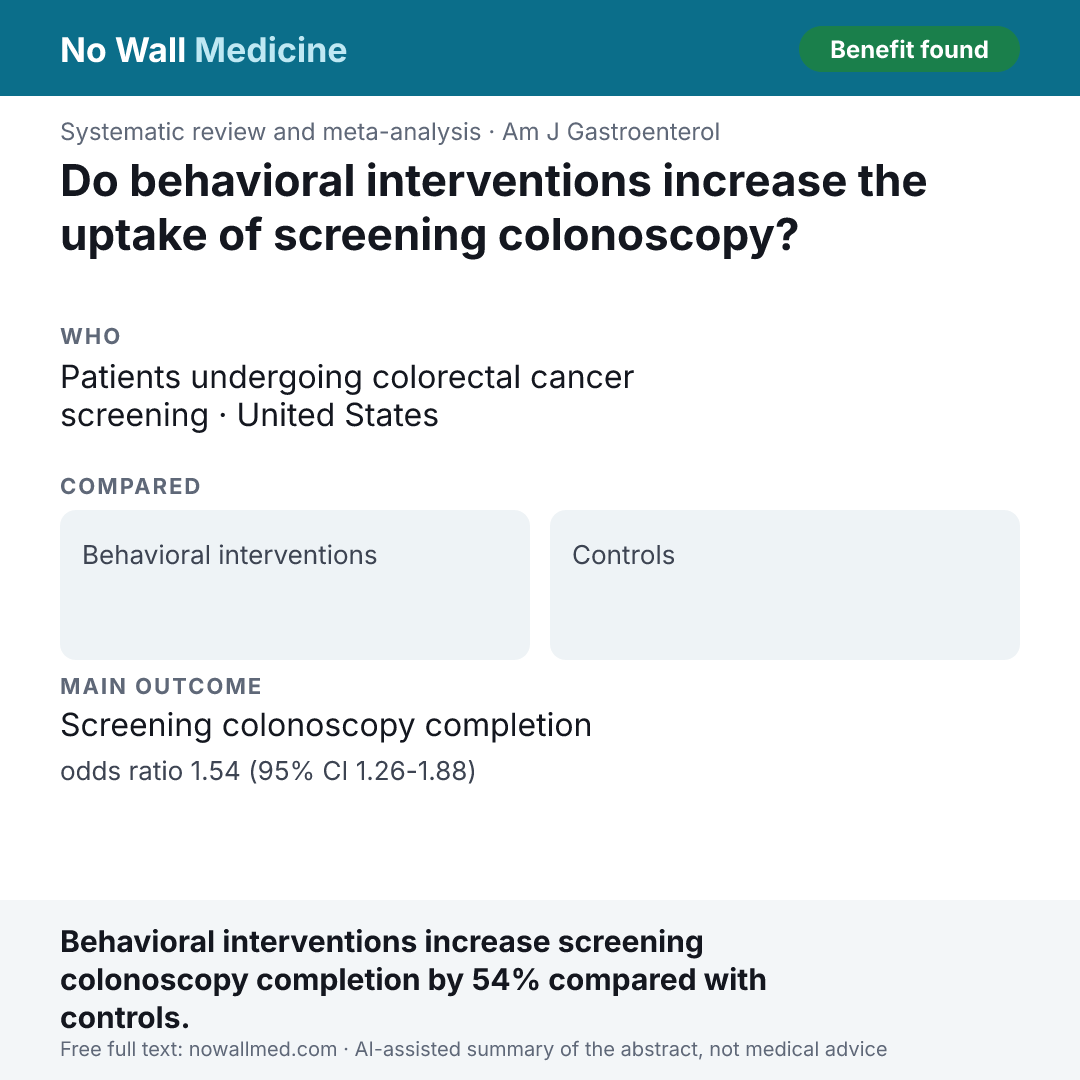
Brain-based correlates of antidepressant response to ketamine: a comprehensive systematic review of neuroimaging studies
Systematic review of neuroimaging studiesUnclear result
What are the brain-based neuroimaging biomarkers of antidepressant response to ketamine?
Who
1751
Participants in neuroimaging studies investigating ketamine response
Compared
Longitudinal biomarkers: increases in gamma power, functional connectivity, and striatum activation
Baseline biomarkers
Main outcome
Neuroimaging biomarkers of ketamine antidepressant response
Bottom line: No well replicated neuroimaging biomarker was identified, though some longitudinal biomarkers warrant further investigation.
Limitation: Substantial methodological heterogeneity and small sample sizes in included studies.
Lancet Psychiatry · 2023-08-22 · Save PNG
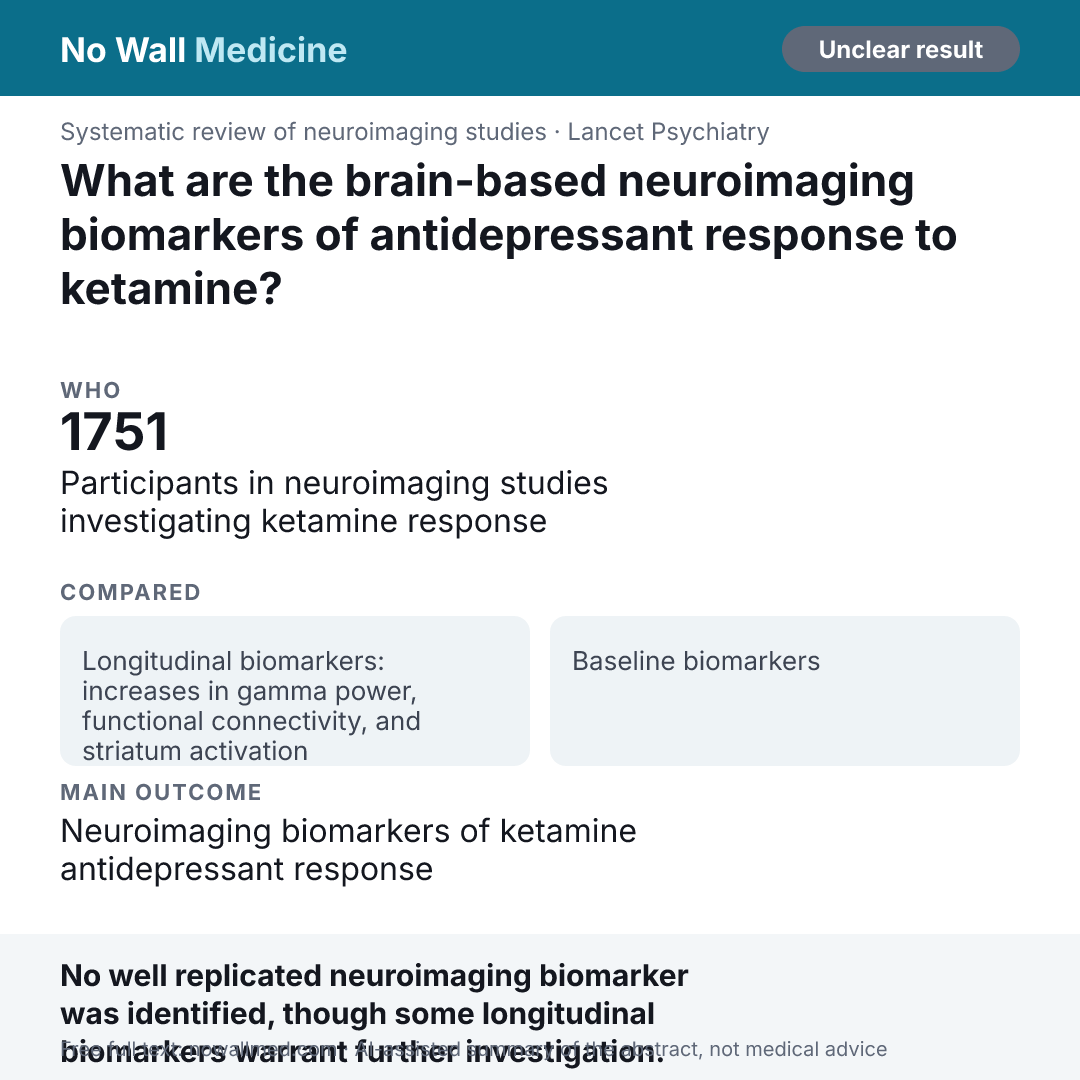
Effect of tapered versus stable treatment with tumour necrosis factor inhibitors on disease flares in patients with rheumatoid arthritis in remission: a randomised, open label, non-inferiority trial
Randomized, open label trialHarm found
Tapered vs stable TNF inhibitor treatment
Who
99
Patients with rheumatoid arthritis in remission · Nine Norwegian sites
Compared
63%Tapering TNFi (27/43)
5%Stable TNFi (2/41)
Main outcome
Disease flare during 12 months
Result: Risk difference 58% (95% CI 42% to 74%)
Bottom line: Tapering TNFi increases disease flare rate
Limitation: Open label design
Ann Rheum Dis · 2023-08-22 · Save PNG
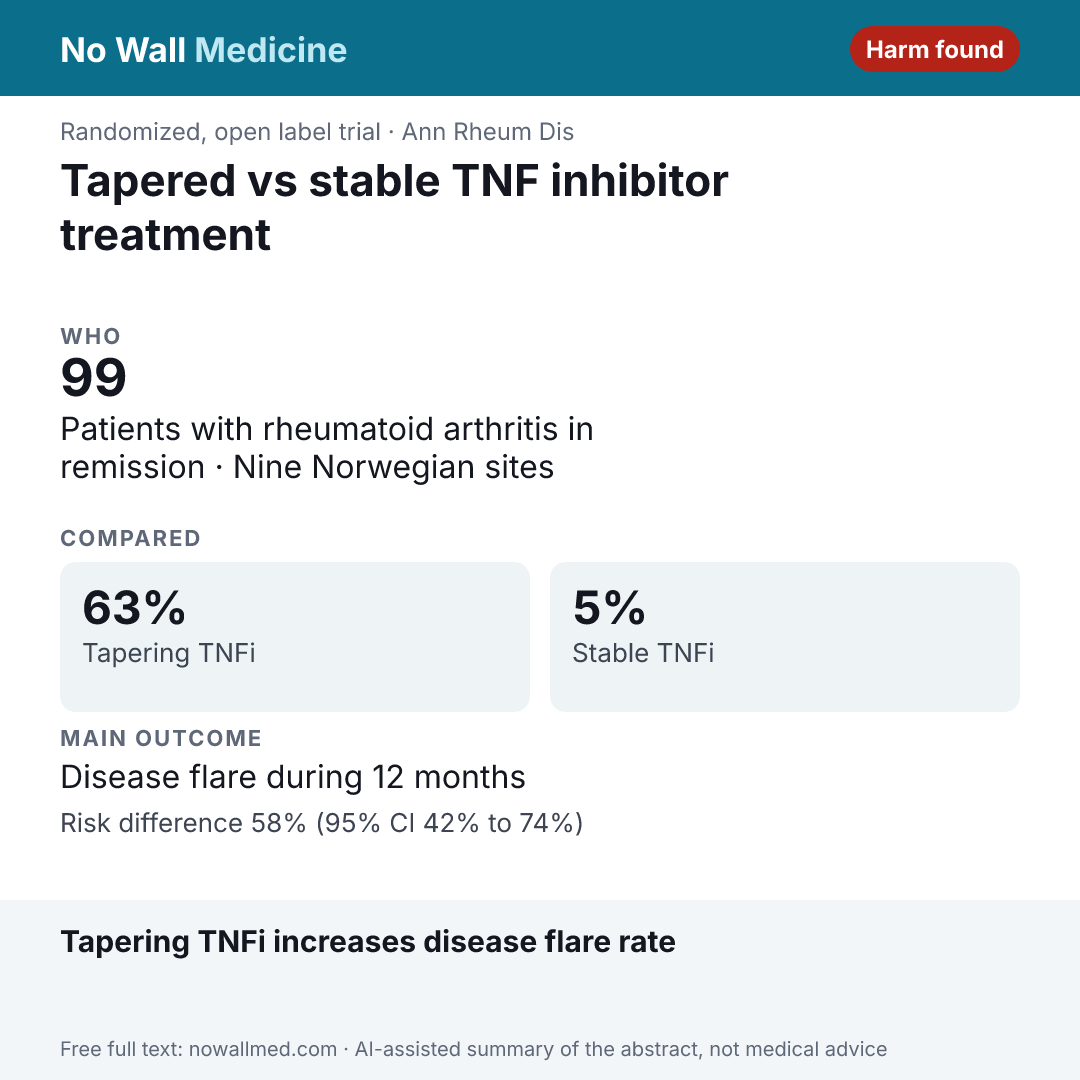
Mineralocorticoid receptor antagonist use and the effects of empagliflozin on clinical outcomes in patients admitted for acute heart failure: Findings from EMPULSE
Randomized trial analysisBenefit found
Does empagliflozin efficacy depend on baseline mineralocorticoid receptor antagonist use in acute heart failure?
Who
530
Patients hospitalized for acute heart failure
Compared
Mineralocorticoid receptor antagonist users: win ratio 1.46 (95% confidence interval 1.08-1.97)
Mineralocorticoid receptor antagonist non-users: win ratio 1.27 (95% CI 0.93-1.73)
Main outcome
all-cause death, heart failure events, and Kansas City Cardiomyopathy Questionnaire symptom score
Result: win ratio 1.46 (95% confidence interval 1.08-1.97)
Bottom line: Empagliflozin produced clinical benefit in patients admitted for acute heart failure irrespective of baseline mineralocorticoid receptor antagonist use.
Eur J Heart Fail · 2023-08-22 · Save PNG
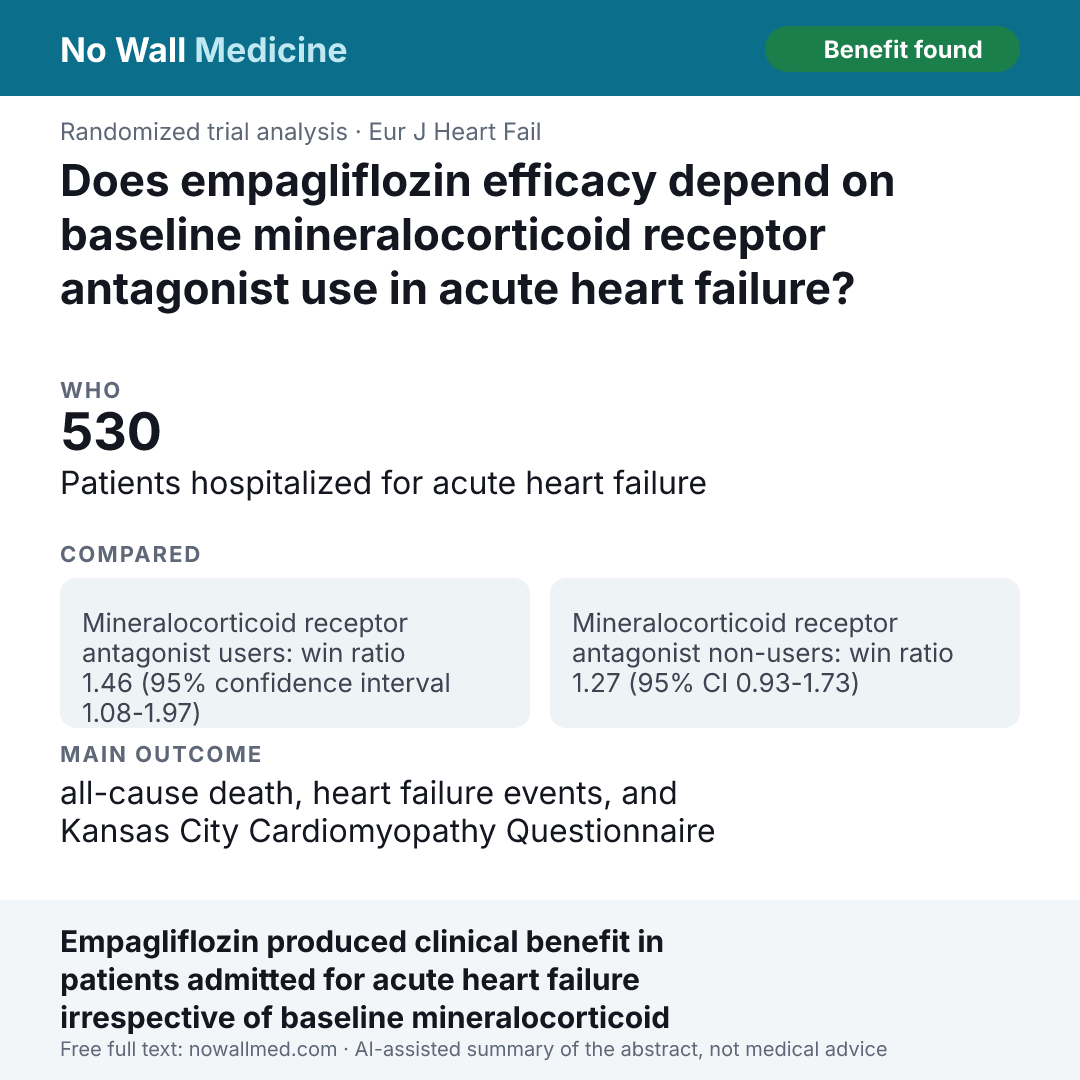
Effect of Behavioral Interventions on the Uptake of Colonoscopy for Colorectal Cancer Screening: A Systematic Review and Meta-Analysis
Systematic review and meta-analysisBenefit found
Do behavioral interventions increase the uptake of screening colonoscopy?
Who
Patients undergoing colorectal cancer screening · United States
Compared
Behavioral interventions
Controls
Main outcome
Screening colonoscopy completion
Result: odds ratio 1.54 (95% CI 1.26-1.88)
Bottom line: Behavioral interventions increase screening colonoscopy completion by 54% compared with controls.
Limitation: Significant heterogeneity was observed both overall and by intervention type.
Am J Gastroenterol · 2023-08-22 · Save PNG
Clinical Prediction Models for Nonmortality Outcomes in Older Adults With Hip Fractures: A Systematic Review
Systematic reviewMixed results
What are the outcomes, predictors, and risk of bias in hip fracture prediction models?
Who
Older adults with hip fractures
Compared
Outcome mapping: 45 studies
Qualitative synthesis: 10 studies
Main outcome
Outcomes, predictor domains, and risk of bias in prediction models
Bottom line: Existing hip fracture prediction models focus on mortality, mobility, and activities of daily living but carry high risk of bias.
Limitation: All ten studies eligible for qualitative synthesis showed a high risk of bias.
J Gerontol A · 2023-08-22 · Save PNG
Multicomponent Home-based Physical Therapy Versus Usual Care for Recovery After Hip Fracture
Randomized trial and cohort studyBenefit found
Home therapy vs usual care after hip fracture
Who
549
hip-fracture patients 8-26 weeks post admission · general community
Compared
PUSH therapy
PULSE therapy
usual care
Main outcome
functional recovery after hip fracture
Result: between-group differences for SPPB improvement
Bottom line: Home therapy improved functional recovery
Arch Phys Med Rehabil · 2023-08-22 · Save PNG
Postoperative Mechanomodulation Decreases T-Junction Dehiscence After Reduction Mammaplasty: Early Scar Analysis From a Randomized Controlled Trial
Prospective, single-center, randomized, within-subject clinical trialBenefit found
Does force modulating tissue bridge reduce T-junction dehiscence after reduction mammaplasty?
Who
68
Patients undergoing Wise-pattern reduction mammaplasty · Single-center
Compared
Force modulating tissue bridge: n = 1
Standard of care: n = 11
Main outcome
T-junction dehiscence and vertical incision wound area
Bottom line: Force modulating tissue bridge reduces T-junction wound dehiscence and decreases nascent scar dimensions after reduction mammaplasty.
Aesthet Surg J · 2023-08-22 · Save PNG
Evaluating the influence of altered cerebral hemodynamics on cognitive performance in asymptomatic carotid artery stenosis: A systematic review
Systematic review of prospective case-control studiesKey finding
Does impaired cerebral hemodynamics influence cognitive performance in asymptomatic carotid artery stenosis?
Who
782
Patients with moderate to severe asymptomatic carotid artery stenosis
Compared
ACS with impaired ipsilateral cerebrovascular reserve: significant cognitive impairment
ACS with normal cerebrovascular reserve: cognitive scores similar to controls
ACS with bilateral cerebrovascular reserve impairment: lowest cognitive scores
Main outcome
global cognition or cognitive function domains
Bottom line: Impaired cerebrovascular reserve is associated with cognitive impairment in patients with asymptomatic carotid artery stenosis.
J Vasc Surg · 2023-08-22 · Save PNG
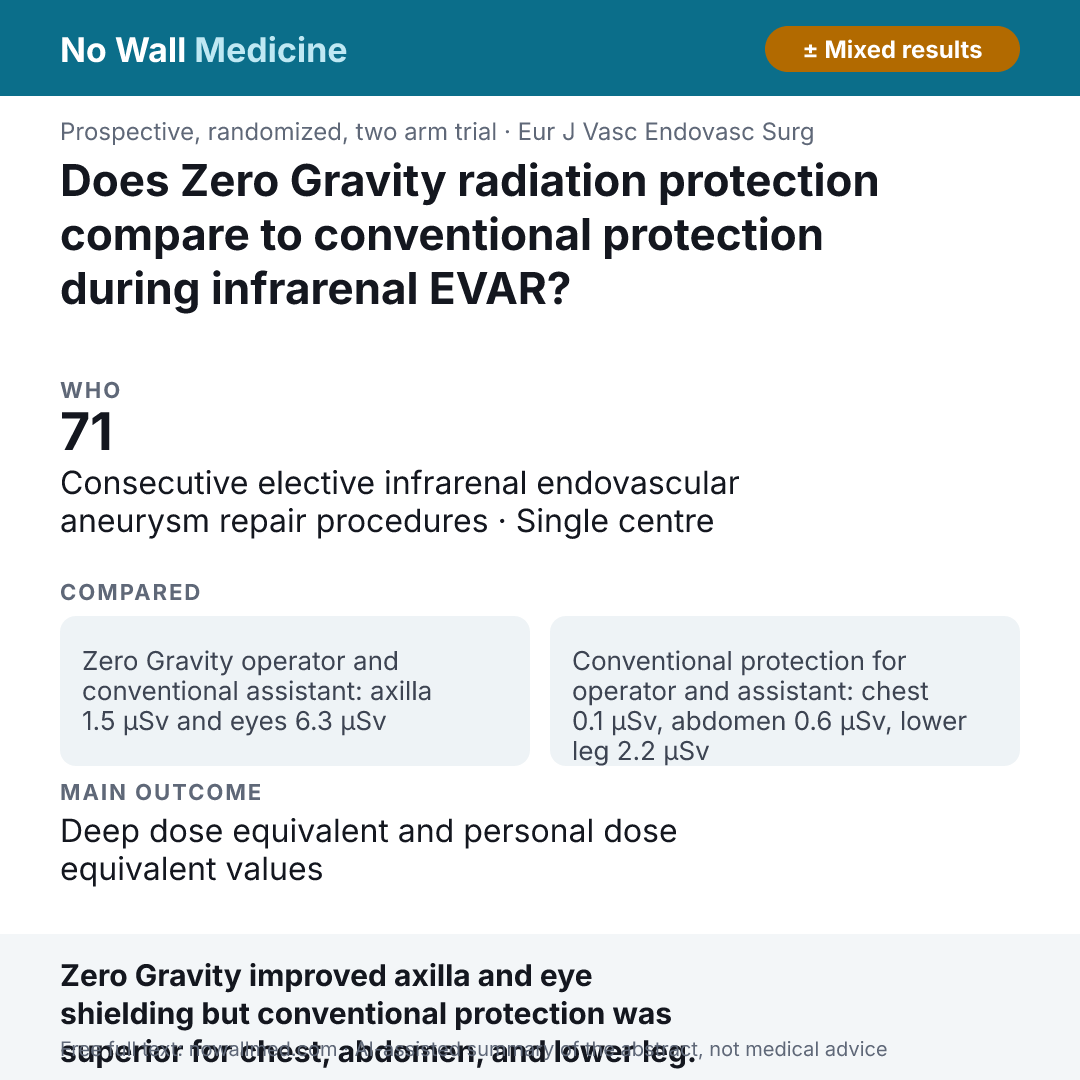
The Effect of a Suspended Radiation Protection System on Occupational Radiation Doses During Infrarenal EVAR Procedures: A Randomised Controlled Study
Prospective, randomized, two arm trialMixed results
Does Zero Gravity radiation protection compare to conventional protection during infrarenal EVAR?
Who
71
Consecutive elective infrarenal endovascular aneurysm repair procedures · Single centre
Compared
Zero Gravity operator and conventional assistant: axilla 1.5 μSv and eyes 6.3 μSv
Conventional protection for operator and assistant: chest 0.1 μSv, abdomen 0.6 μSv, lower leg 2.2 μSv
Main outcome
Deep dose equivalent and personal dose equivalent values
Bottom line: Zero Gravity improved axilla and eye shielding but conventional protection was superior for chest, abdomen, and lower leg.
Eur J Vasc Endovasc Surg · 2023-08-22 · Save PNG
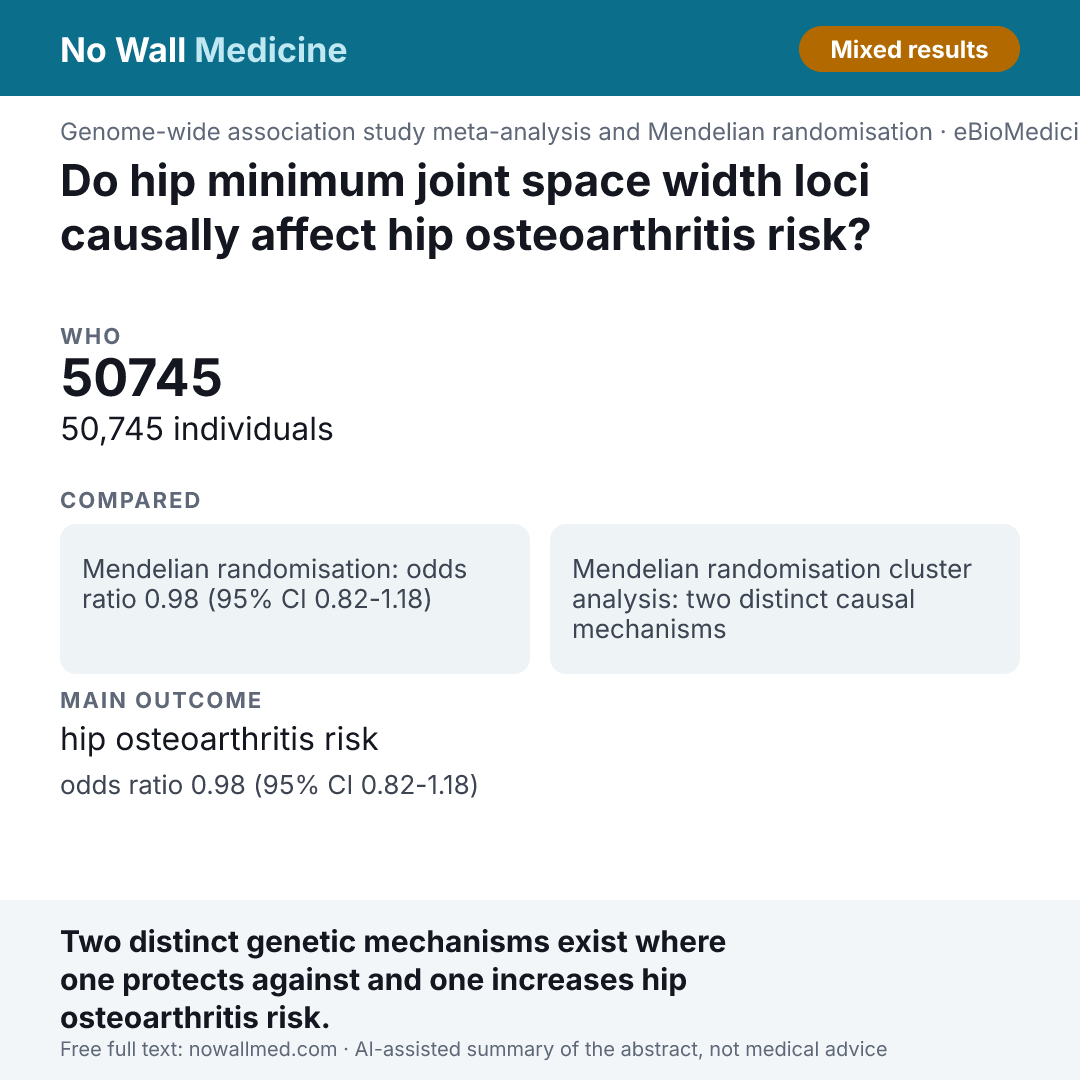
The identification of distinct protective and susceptibility mechanisms for hip osteoarthritis: findings from a genome-wide association study meta-analysis of minimum joint space width and Mendelian randomisation cluster analyses
Genome-wide association study meta-analysis and Mendelian randomisationMixed results
Do hip minimum joint space width loci causally affect hip osteoarthritis risk?
Who
50745
50,745 individuals
Compared
Mendelian randomisation: odds ratio 0.98 (95% CI 0.82-1.18)
Mendelian randomisation cluster analysis: two distinct causal mechanisms
Main outcome
hip osteoarthritis risk
Result: odds ratio 0.98 (95% CI 0.82-1.18)
Bottom line: Two distinct genetic mechanisms exist where one protects against and one increases hip osteoarthritis risk.
Funded by: Medical Research Council and Wellcome Trust
eBioMedicine · 2023-08-22 · Save PNG
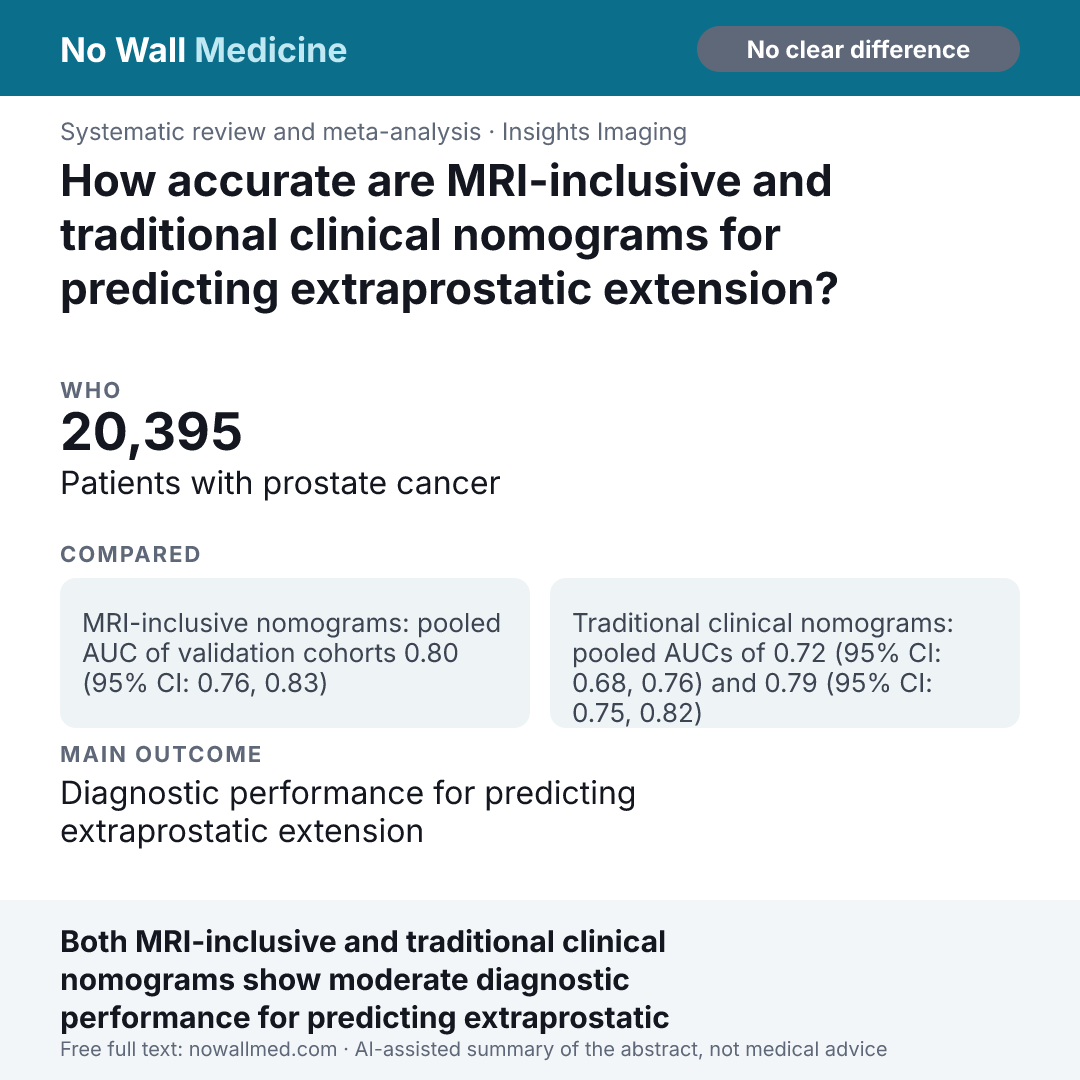
Diagnostic performance of prediction models for extraprostatic extension in prostate cancer: a systematic review and meta-analysis
Systematic review and meta-analysisNo clear difference
How accurate are MRI-inclusive and traditional clinical nomograms for predicting extraprostatic extension?
Who
20,395
Patients with prostate cancer
Compared
MRI-inclusive nomograms: pooled AUC of validation cohorts 0.80 (95% CI: 0.76, 0.83)
Traditional clinical nomograms: pooled AUCs of 0.72 (95% CI: 0.68, 0.76) and 0.79 (95% CI: 0.75, 0.82)
Main outcome
Diagnostic performance for predicting extraprostatic extension
Bottom line: Both MRI-inclusive and traditional clinical nomograms show moderate diagnostic performance for predicting extraprostatic extension in prostate cancer.
Insights Imaging · 2023-08-22 · Save PNG
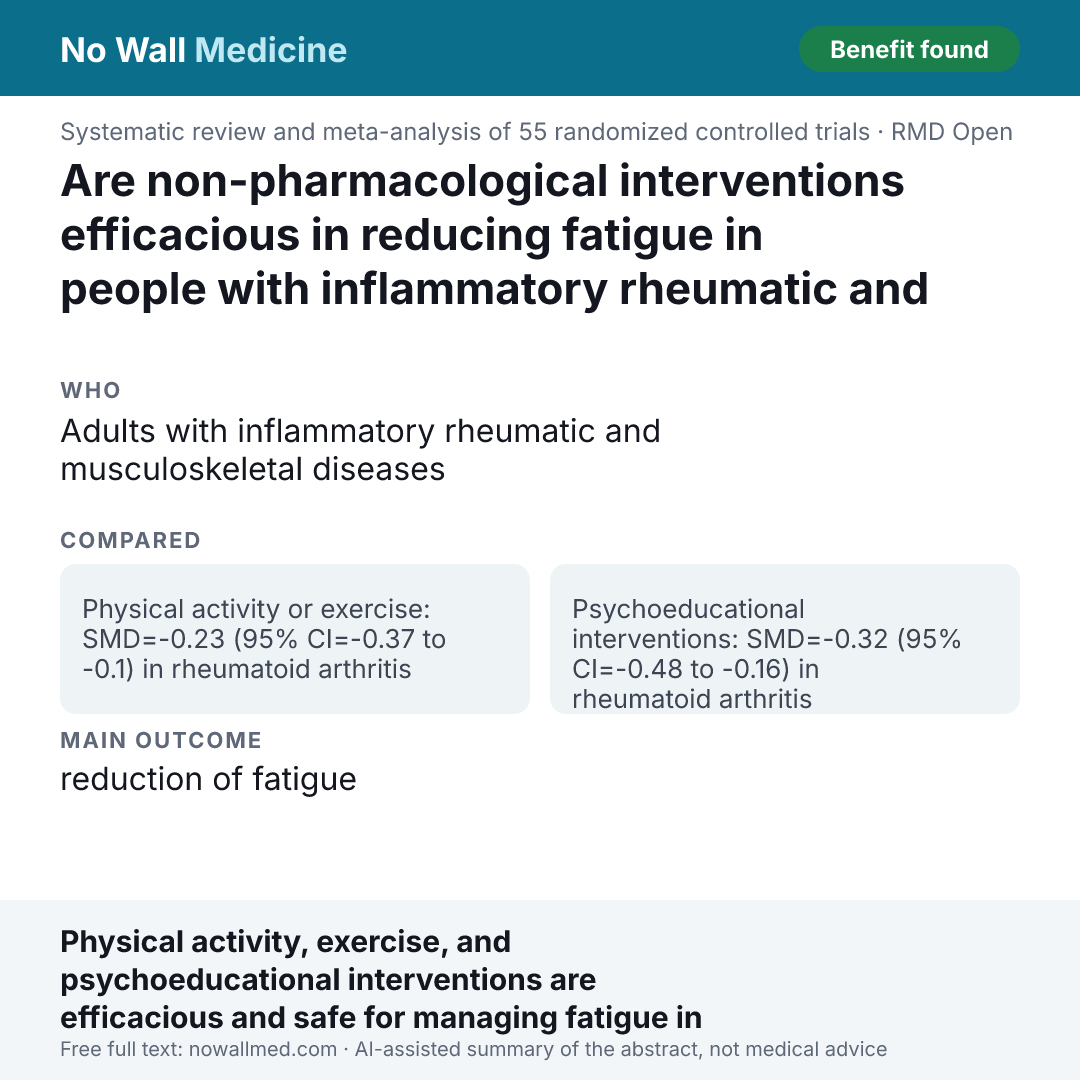
Efficacy of non-pharmacological interventions: a systematic review informing the 2023 EULAR recommendations for the management of fatigue in people with inflammatory rheumatic and musculoskeletal diseases
Systematic review and meta-analysis of 55 randomized controlled trialsBenefit found
Are non-pharmacological interventions efficacious in reducing fatigue in people with inflammatory rheumatic and musculoskeletal diseases?
Who
Adults with inflammatory rheumatic and musculoskeletal diseases
Compared
Physical activity or exercise: SMD=-0.23 (95% CI=-0.37 to -0.1) in rheumatoid arthritis
Psychoeducational interventions: SMD=-0.32 (95% CI=-0.48 to -0.16) in rheumatoid arthritis
Main outcome
reduction of fatigue
Bottom line: Physical activity, exercise, and psychoeducational interventions are efficacious and safe for managing fatigue in people with inflammatory rheumatic and musculoskeletal diseases.
RMD Open · 2023-08-22 · Save PNG
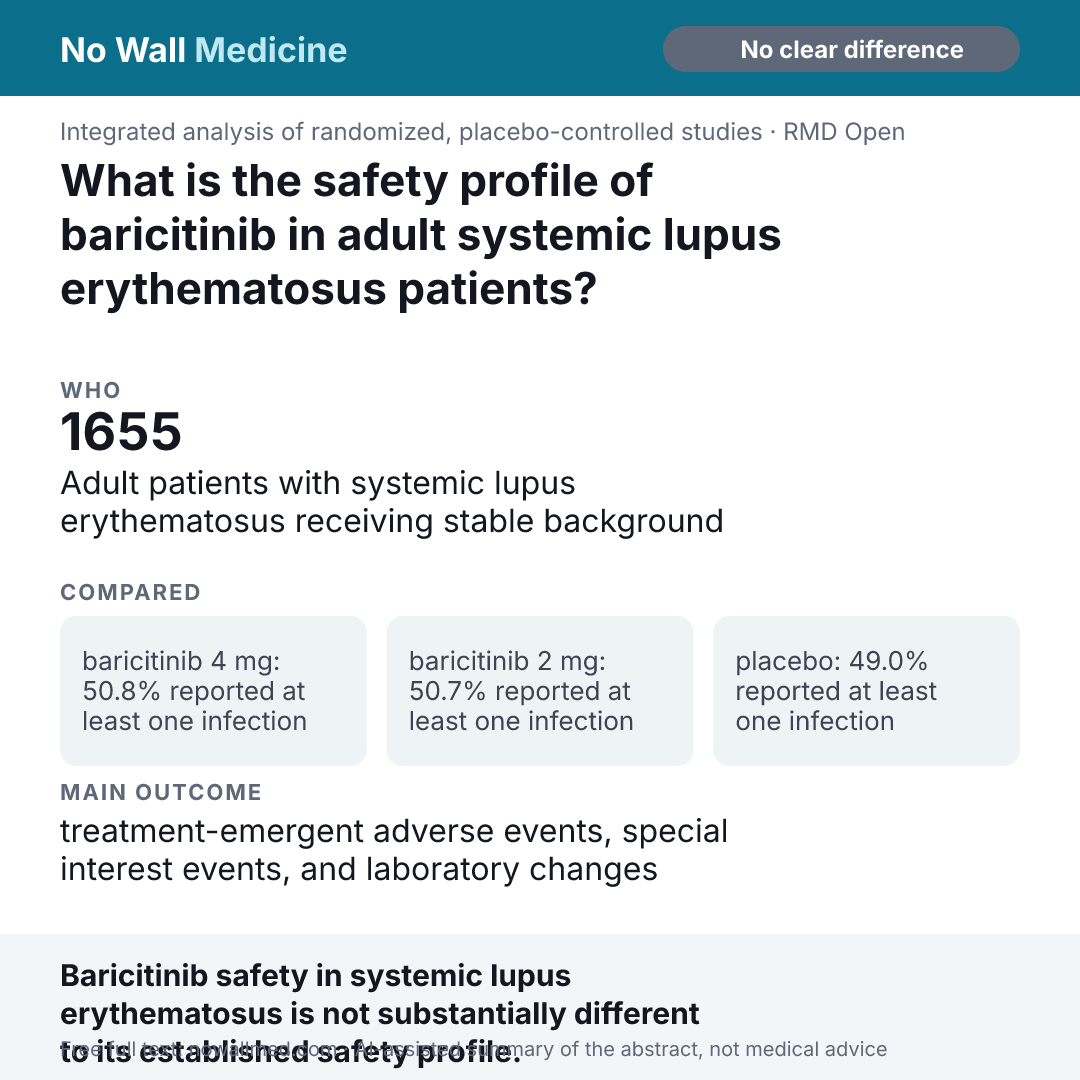
Safety profile of baricitinib in patients with systemic lupus erythematosus: an integrated analysis
Integrated analysis of randomized, placebo-controlled studiesNo clear difference
What is the safety profile of baricitinib in adult systemic lupus erythematosus patients?
Who
1655
Adult patients with systemic lupus erythematosus receiving stable background therapy
Compared
baricitinib 4 mg: 50.8% reported at least one infection
baricitinib 2 mg: 50.7% reported at least one infection
placebo: 49.0% reported at least one infection
Main outcome
treatment-emergent adverse events, special interest events, and laboratory changes
Bottom line: Baricitinib safety in systemic lupus erythematosus is not substantially different to its established safety profile.
RMD Open · 2023-08-22 · Save PNG
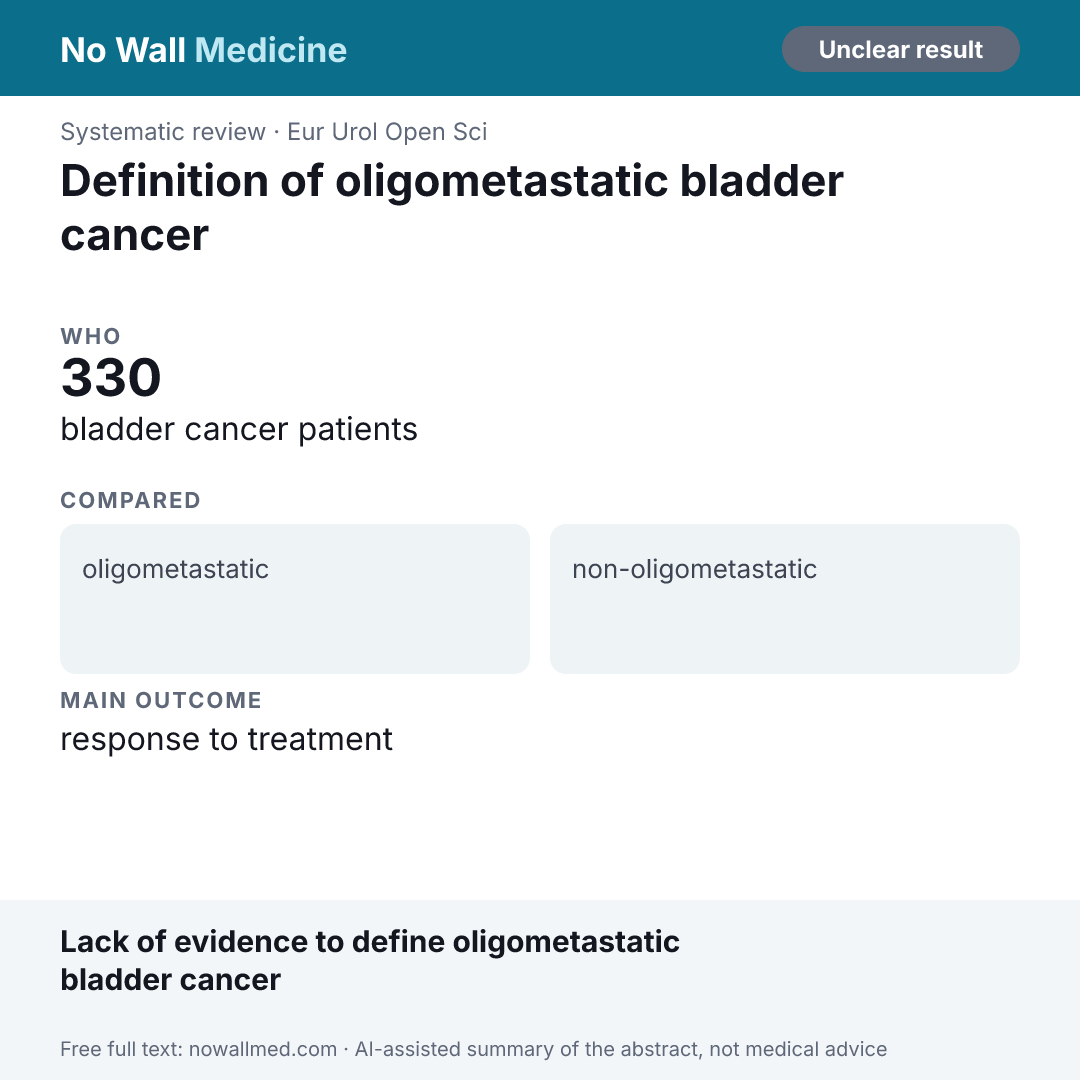
Defining Oligometastatic Bladder Cancer: A Systematic Review
Systematic reviewUnclear result
Definition of oligometastatic bladder cancer
Who
330
bladder cancer patients
Compared
oligometastatic
non-oligometastatic
Main outcome
response to treatment
Bottom line: Lack of evidence to define oligometastatic bladder cancer
Eur Urol Open Sci · 2023-08-22 · Save PNG
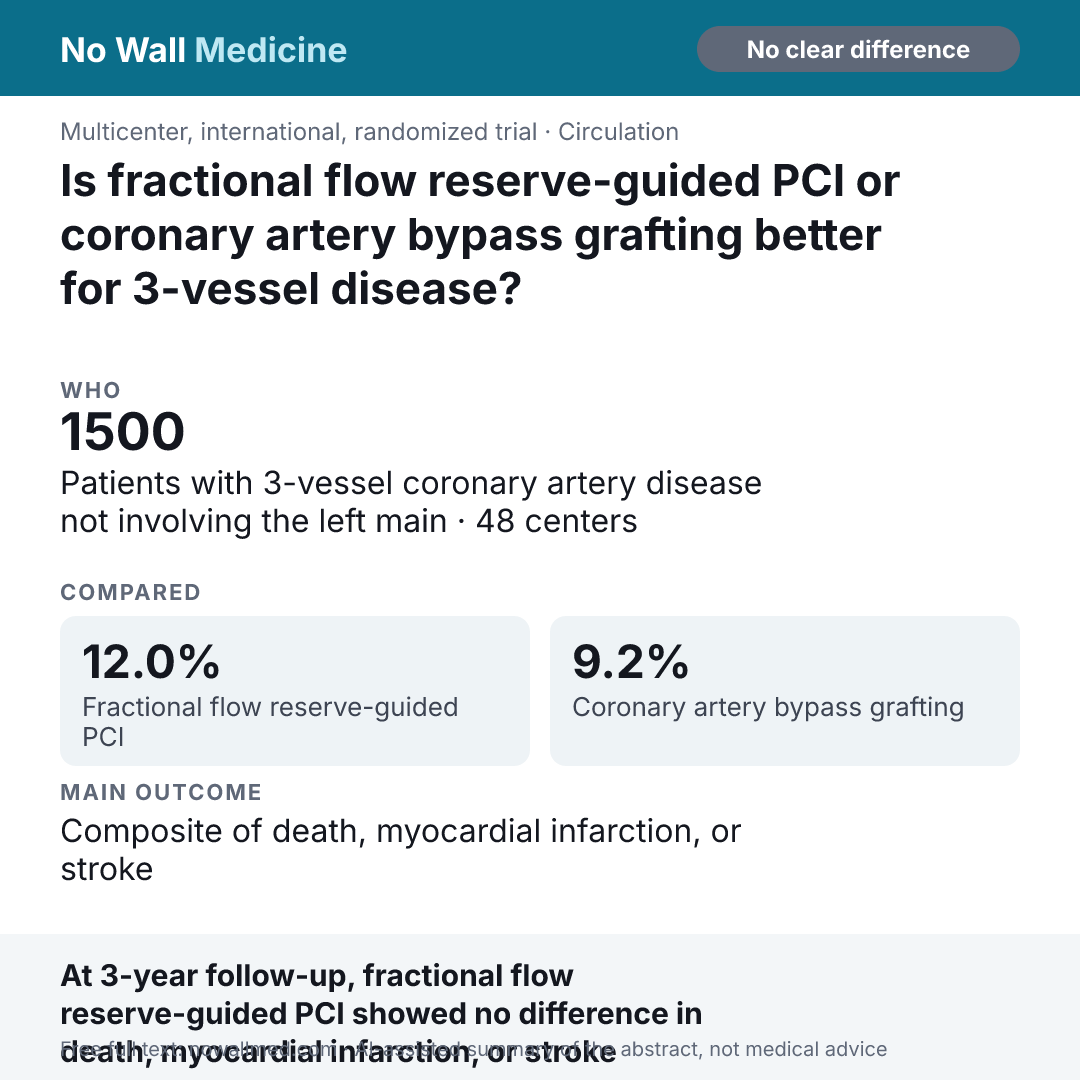
Fractional Flow Reserve-Guided PCI or Coronary Bypass Surgery for 3-Vessel Coronary Artery Disease: 3-Year Follow-Up of the FAME 3 Trial
Multicenter, international, randomized trialNo clear difference
Is fractional flow reserve-guided PCI or coronary artery bypass grafting better for 3-vessel disease?
Who
1500
Patients with 3-vessel coronary artery disease not involving the left main · 48 centers worldwide
Compared
12.0%Fractional flow reserve-guided PCI
9.2%Coronary artery bypass grafting
Main outcome
Composite of death, myocardial infarction, or stroke
Result: hazard ratio 1.3 (95% CI 0.98-1.83)
Bottom line: At 3-year follow-up, fractional flow reserve-guided PCI showed no difference in death, myocardial infarction, or stroke compared to bypass surgery.
Circulation · 2023-08-21 · Save PNG
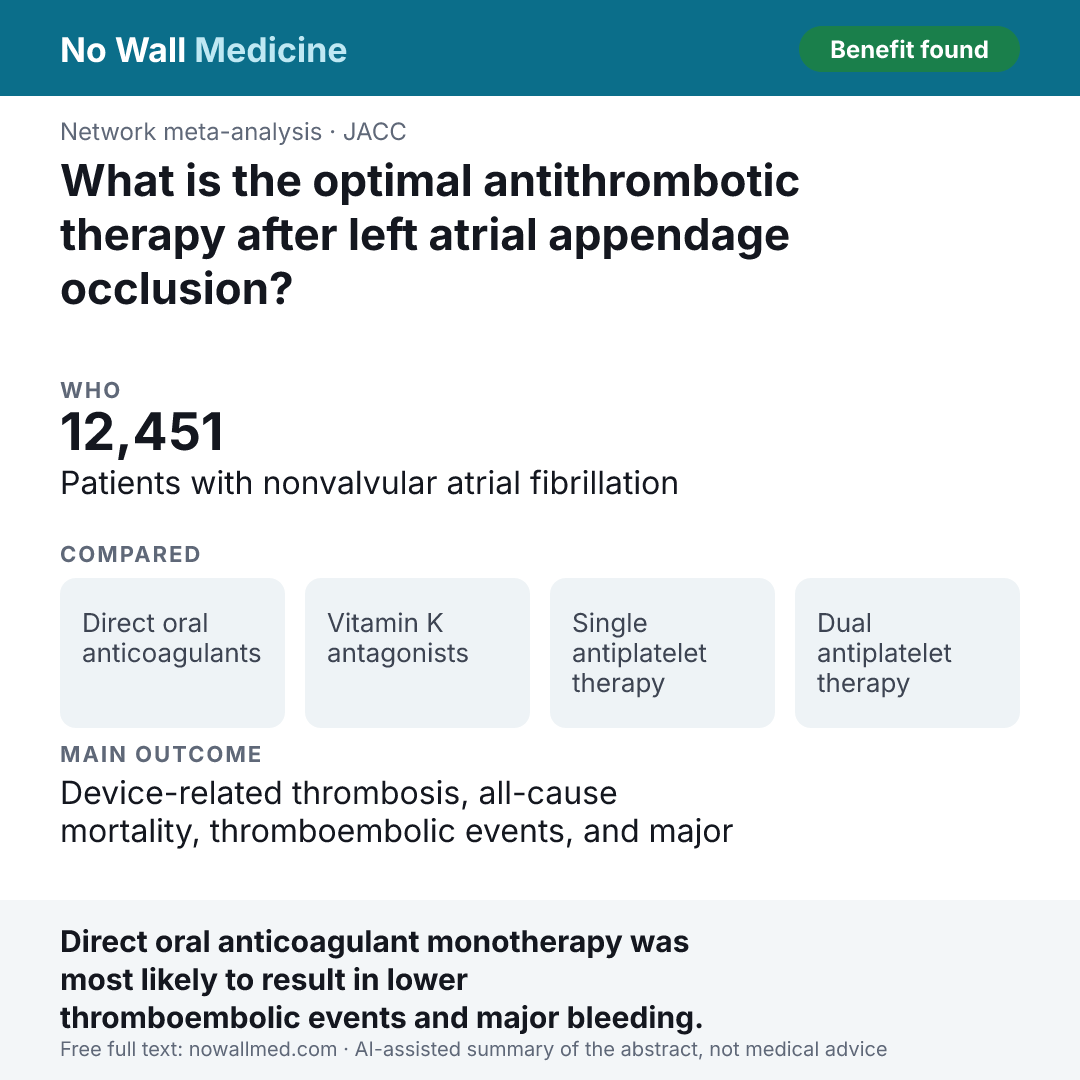
Network Meta-Analysis of Initial Antithrombotic Regimens After Left Atrial Appendage Occlusion
Network meta-analysisBenefit found
What is the optimal antithrombotic therapy after left atrial appendage occlusion?
Who
12,451
Patients with nonvalvular atrial fibrillation
Compared
Direct oral anticoagulants
Vitamin K antagonists
Single antiplatelet therapy
Dual antiplatelet therapy
Main outcome
Device-related thrombosis, all-cause mortality, thromboembolic events, and major bleeding
Result: OR: 0.39 (95% CI: 0.17-0.89) for all-cause mortality (DOAC vs VKA)
Bottom line: Direct oral anticoagulant monotherapy was most likely to result in lower thromboembolic events and major bleeding.
JACC · 2023-08-21 · Save PNG
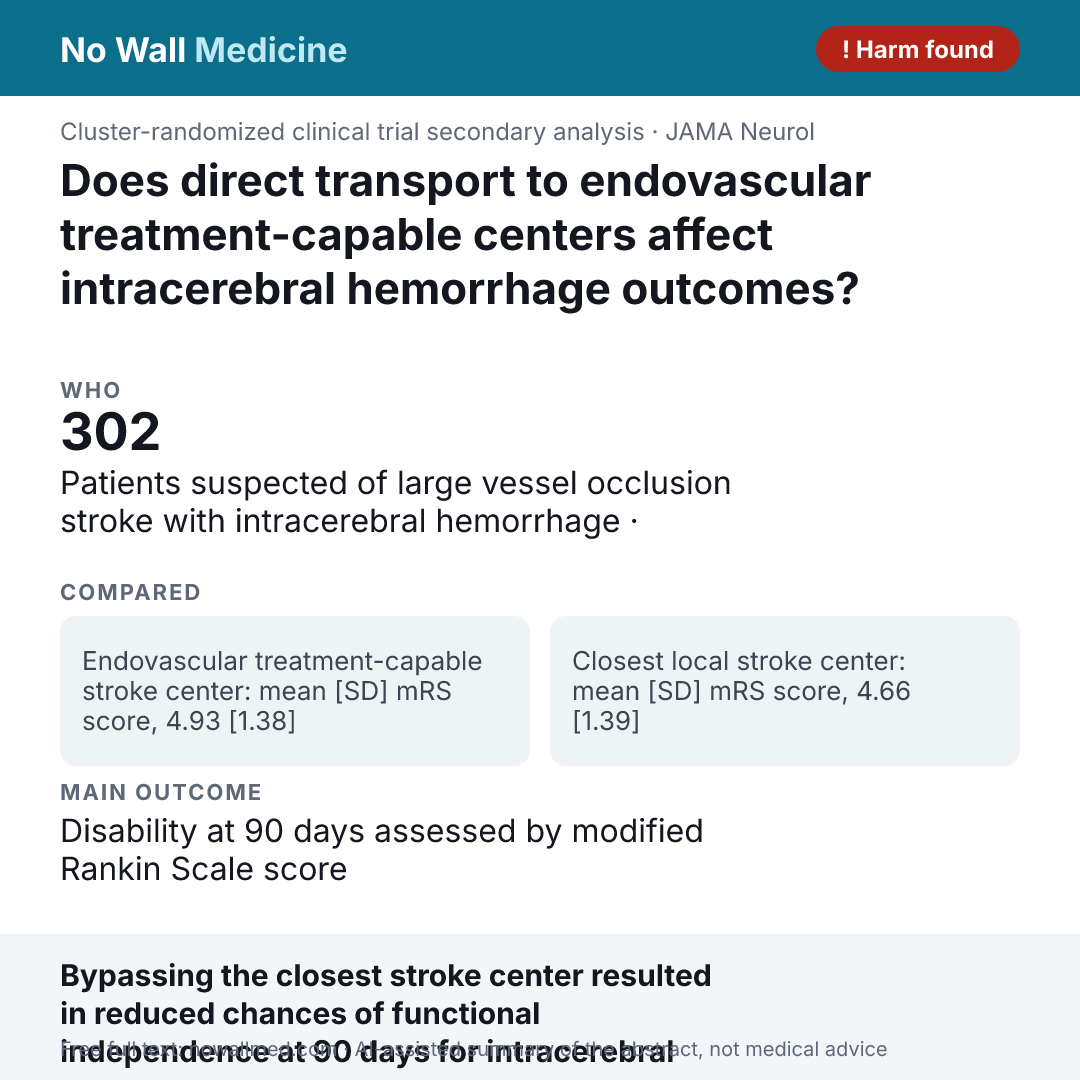
Effect of Bypassing the Closest Stroke Center in Patients with Intracerebral Hemorrhage: A Secondary Analysis of the RACECAT Randomized Clinical Trial
Cluster-randomized clinical trial secondary analysisHarm found
Does direct transport to endovascular treatment-capable centers affect intracerebral hemorrhage outcomes?
Who
302
Patients suspected of large vessel occlusion stroke with intracerebral hemorrhage · Multicenter, Catalonia, Spain
Compared
Endovascular treatment-capable stroke center: mean [SD] mRS score, 4.93 [1.38]
Closest local stroke center: mean [SD] mRS score, 4.66 [1.39]
Main outcome
Disability at 90 days assessed by modified Rankin Scale score
Result: adjusted common OR, 0.63; 95% CI, 0.41-0.96
Bottom line: Bypassing the closest stroke center resulted in reduced chances of functional independence at 90 days for intracerebral hemorrhage patients.
JAMA Neurol · 2023-08-21 · Save PNG