Visual abstracts
New randomized trials and meta-analyses from leading journals at a glance: who was studied, what was compared, and what was found. Every paper is free to read in full.
All specialtiesCardiology 847Oncology 765Gastroenterology & Hepatology 307Infectious Disease 626Neurology 353Psychiatry & Mental Health 430Pulmonology 368Critical Care 252Endocrinology & Diabetes 480Pediatrics 540Surgery 328Orthopedics & Sports Medicine 163Neurosurgery 100Cardiothoracic & Vascular Surgery 87Plastic & Reconstructive Surgery 131Nephrology 197Rheumatology 108Hematology 182Dermatology 80Ophthalmology 97Obstetrics & Gynecology 262Public & Global Health 167Radiology & Imaging 98Anesthesiology 117Urology 162ENT (Otolaryngology) 100Emergency Medicine 84Allergy & Immunology 58Geriatrics 160Family Medicine & Primary Care 111Medical Genetics & Genomics 91Pathology & Laboratory Medicine 24Physical Medicine & Rehabilitation 148Palliative Care 81Nutrition 223Digital Health & AI 460General Medicine 101
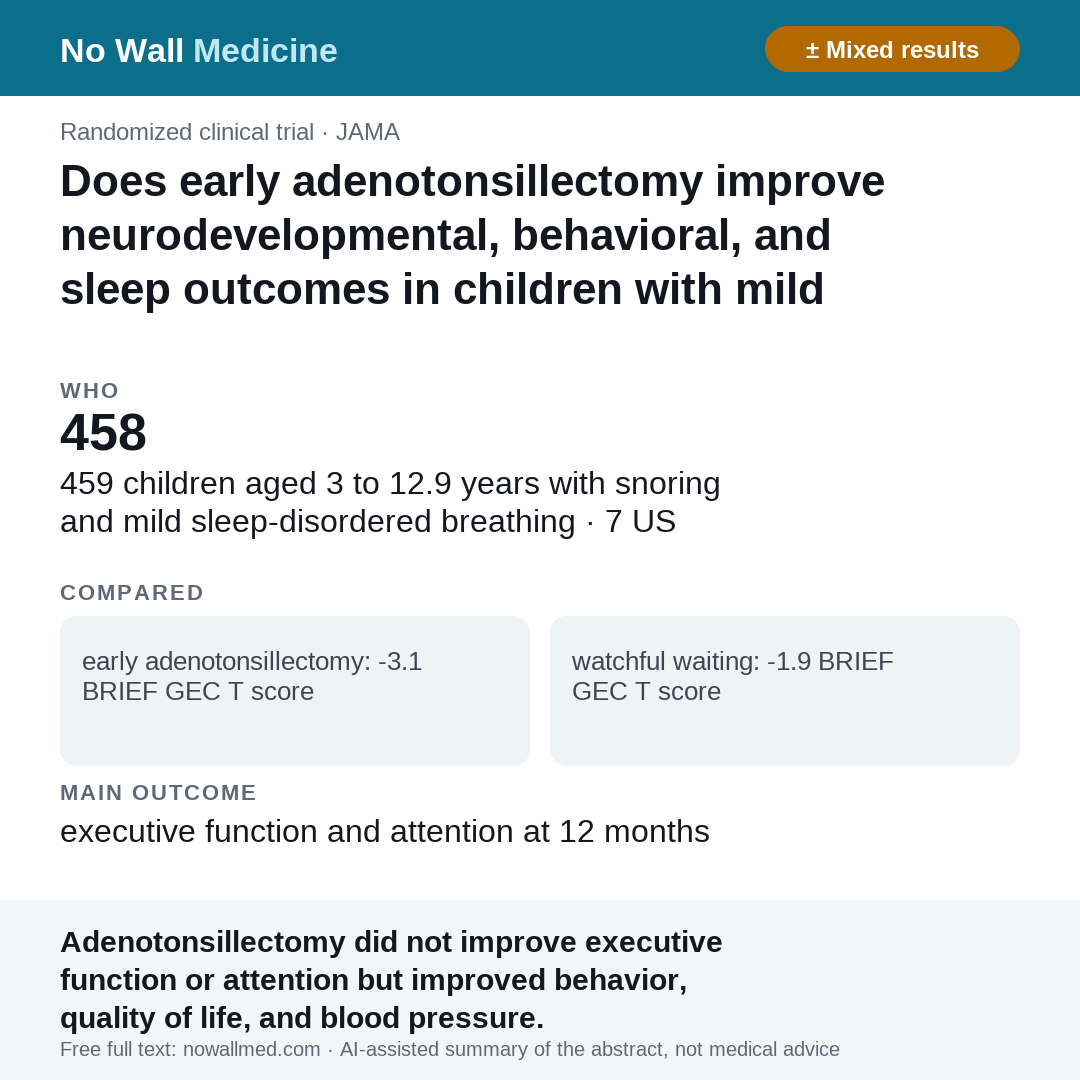
Adenotonsillectomy for Snoring and Mild Sleep Apnea in Children: A Randomized Clinical Trial
Randomized clinical trialMixed results
Does early adenotonsillectomy improve neurodevelopmental, behavioral, and sleep outcomes in children with mild sleep-disordered breathing?
Who
458
459 children aged 3 to 12.9 years with snoring and mild sleep-disordered breathing · 7 US academic sleep centers
Compared
early adenotonsillectomy: -3.1 BRIEF GEC T score
watchful waiting: -1.9 BRIEF GEC T score
Main outcome
executive function and attention at 12 months
Result: difference, -0.96 (95% CI, -2.66 to 0.74)
Bottom line: Adenotonsillectomy did not improve executive function or attention but improved behavior, quality of life, and blood pressure.
JAMA · 2023-12-05Download image
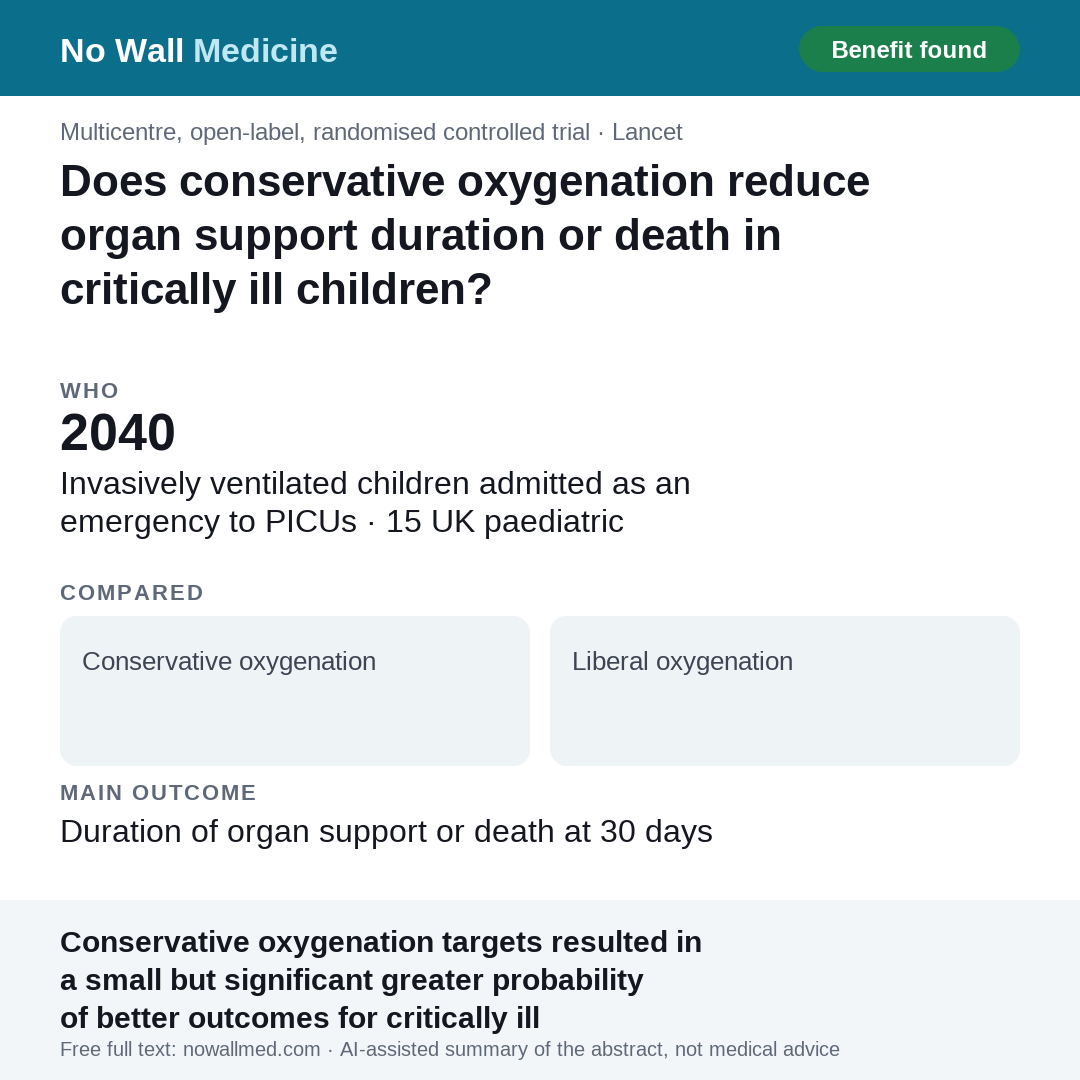
Conservative versus liberal oxygenation targets in critically ill children (Oxy-PICU): a UK multicentre, open, parallel-group, randomised clinical trial
Multicentre, open-label, randomised controlled trialBenefit found
Does conservative oxygenation reduce organ support duration or death in critically ill children?
Who
2040
Invasively ventilated children admitted as an emergency to PICUs · 15 UK paediatric intensive care units
Compared
Conservative oxygenation
Liberal oxygenation
Main outcome
Duration of organ support or death at 30 days
Result: probabilistic index 0·53, 95% CI 0·50-0·55
Bottom line: Conservative oxygenation targets resulted in a small but significant greater probability of better outcomes for critically ill children.
Funded by: UK National Institute for Health and Care Research
Lancet · 2023-12-01Download image
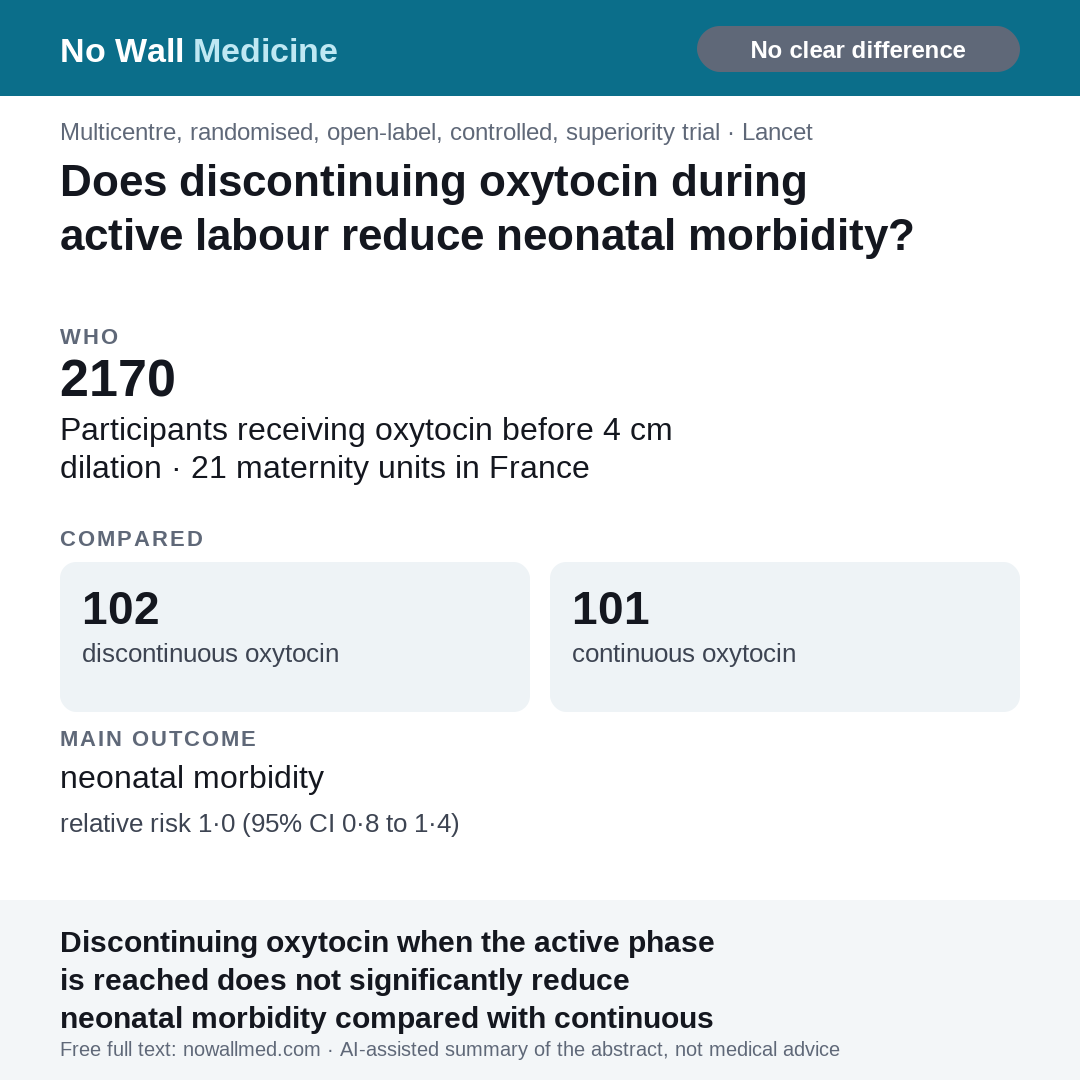
Impact of discontinuing oxytocin in active labour on neonatal morbidity: an open-label, multicentre, randomised trial
Multicentre, randomised, open-label, controlled, superiority trialNo clear difference
Does discontinuing oxytocin during active labour reduce neonatal morbidity?
Who
2170
Participants receiving oxytocin before 4 cm dilation · 21 maternity units in France
Compared
102discontinuous oxytocin (9·6%)
101continuous oxytocin (9·2%)
Main outcome
neonatal morbidity
Result: relative risk 1·0 (95% CI 0·8 to 1·4)
Bottom line: Discontinuing oxytocin when the active phase is reached does not significantly reduce neonatal morbidity compared with continuous oxytocin.
Funded by: French Ministry of Health and Assistance Publique-Hôpitaux de Paris
Lancet · 2023-11-09Download image
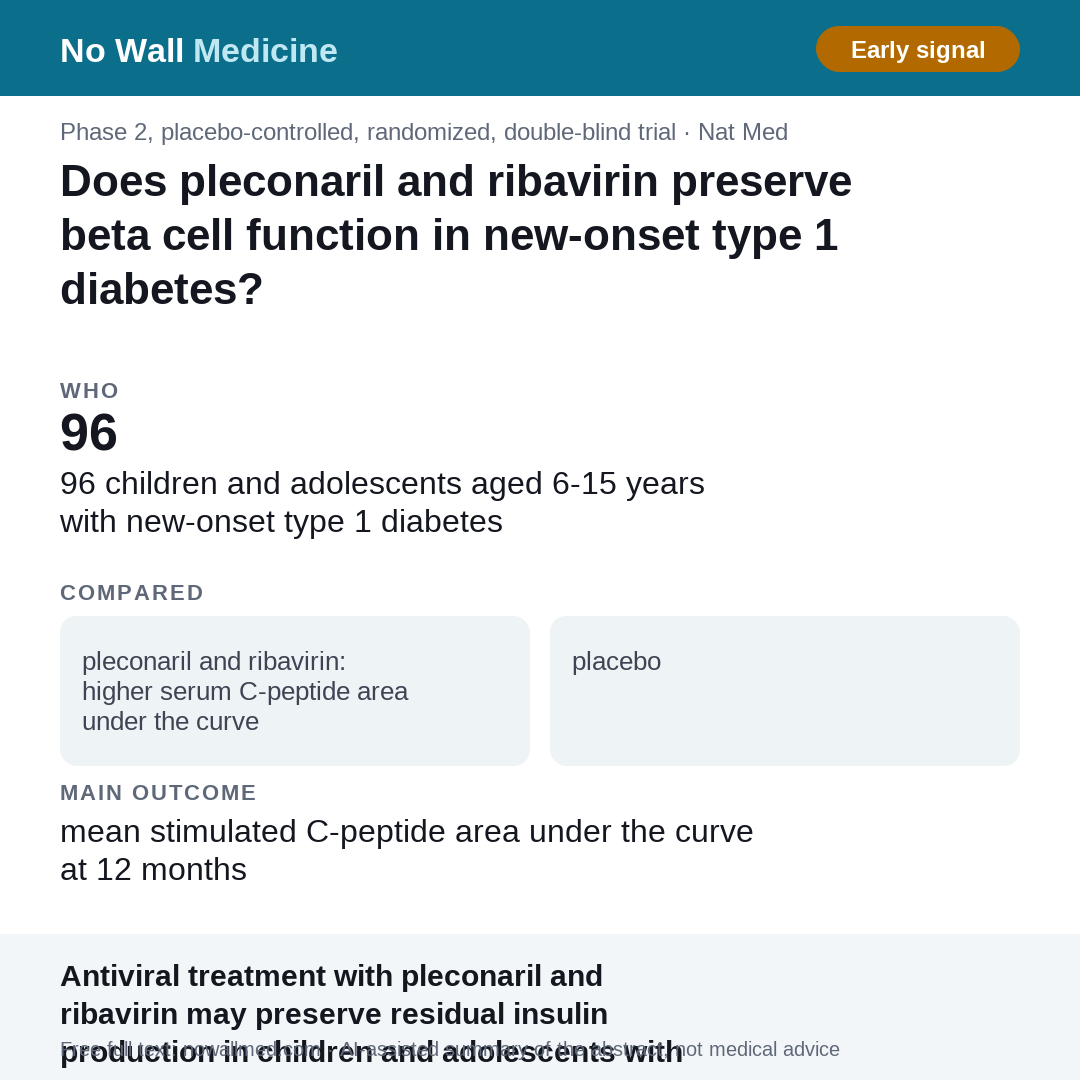
Pleconaril and ribavirin in new-onset type 1 diabetes: a phase 2 randomized trial
Phase 2, placebo-controlled, randomized, double-blind trialBenefit found
Does pleconaril and ribavirin preserve beta cell function in new-onset type 1 diabetes?
Who
96
96 children and adolescents aged 6-15 years with new-onset type 1 diabetes
Compared
pleconaril and ribavirin: higher serum C-peptide area under the curve
placebo
Main outcome
mean stimulated C-peptide area under the curve at 12 months
Result: average marginal effect 0.057 (95% confidence interval 0.004-0.11)
Bottom line: Antiviral treatment with pleconaril and ribavirin may preserve residual insulin production in children and adolescents with new-onset type 1 diabetes.
Nat Med · 2023-10-04Download image
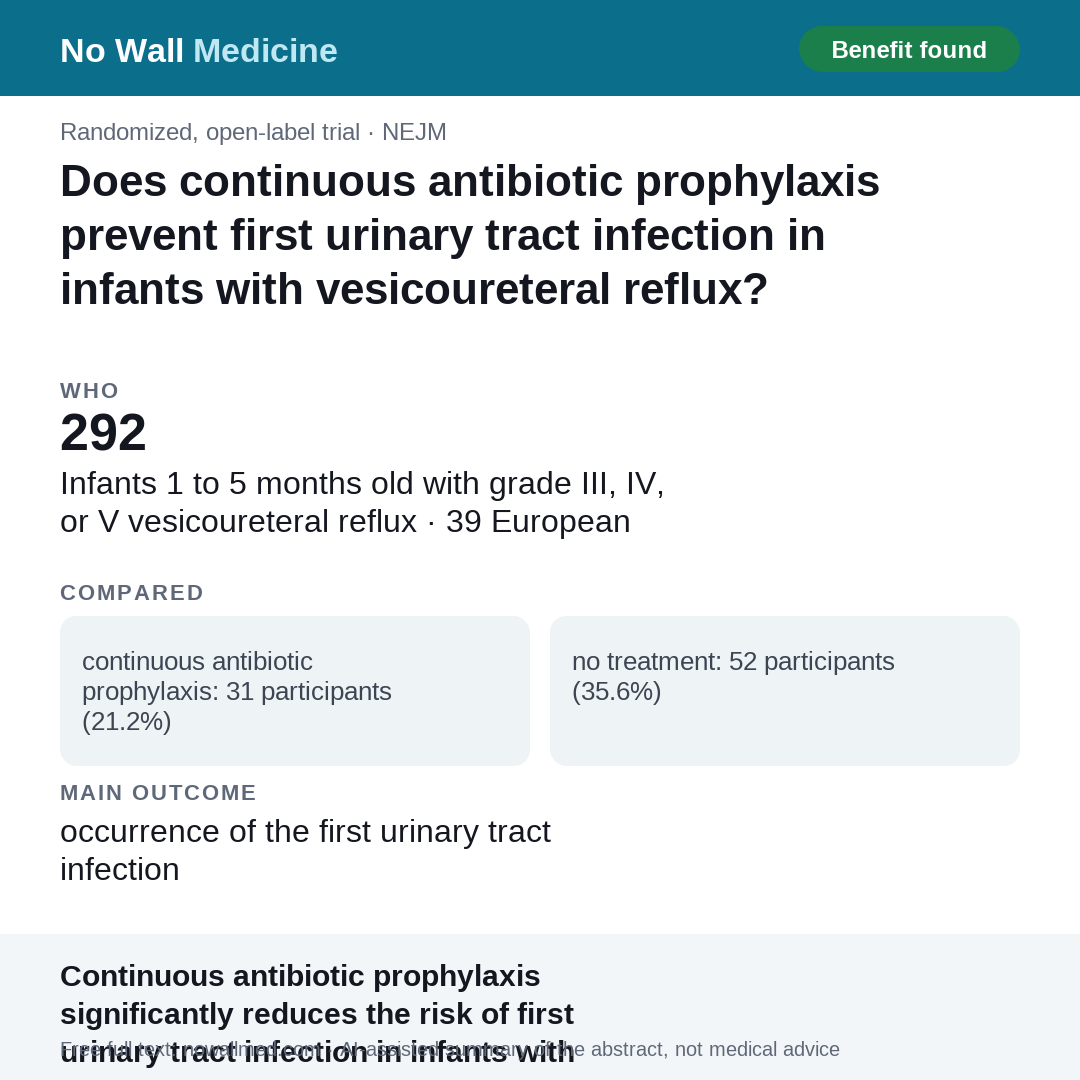
Antibiotic Prophylaxis in Infants with Grade III, IV, or V Vesicoureteral Reflux
Randomized, open-label trialBenefit found
Does continuous antibiotic prophylaxis prevent first urinary tract infection in infants with vesicoureteral reflux?
Who
292
Infants 1 to 5 months old with grade III, IV, or V vesicoureteral reflux · 39 European centers
Compared
continuous antibiotic prophylaxis: 31 participants (21.2%)
no treatment: 52 participants (35.6%)
Main outcome
occurrence of the first urinary tract infection
Result: hazard ratio 0.55 (95% CI 0.35 to 0.86)
Bottom line: Continuous antibiotic prophylaxis significantly reduces the risk of first urinary tract infection in infants with high-grade vesicoureteral reflux.
Funded by: Italian Ministry of Health and others
NEJM · 2023-09-12Download image
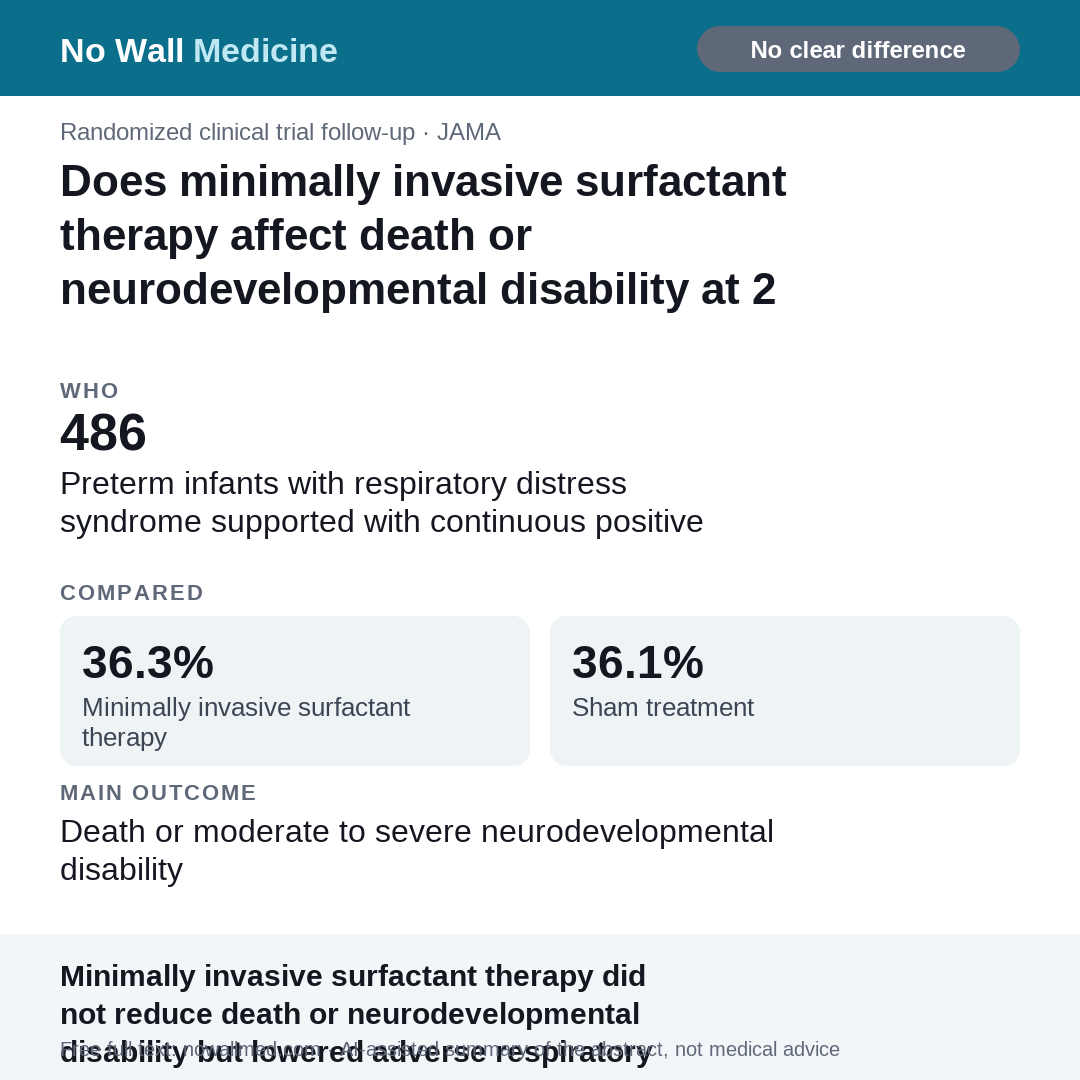
Two-Year Outcomes After Minimally Invasive Surfactant Therapy in Preterm Infants: Follow-Up of the OPTIMIST-A Randomized Clinical Trial
Randomized clinical trial follow-upNo clear difference
Does minimally invasive surfactant therapy affect death or neurodevelopmental disability at 2 years?
Who
486
Preterm infants with respiratory distress syndrome supported with continuous positive airway pressure · 33 tertiary-level neonatal intensive care units in 11 countries
Compared
36.3%Minimally invasive surfactant therapy
36.1%Sham treatment
Main outcome
Death or moderate to severe neurodevelopmental disability
Result: relative risk 1.0 (95% CI 0.81-1.24)
Bottom line: Minimally invasive surfactant therapy did not reduce death or neurodevelopmental disability but lowered adverse respiratory outcomes.
JAMA · 2023-09-11Download image
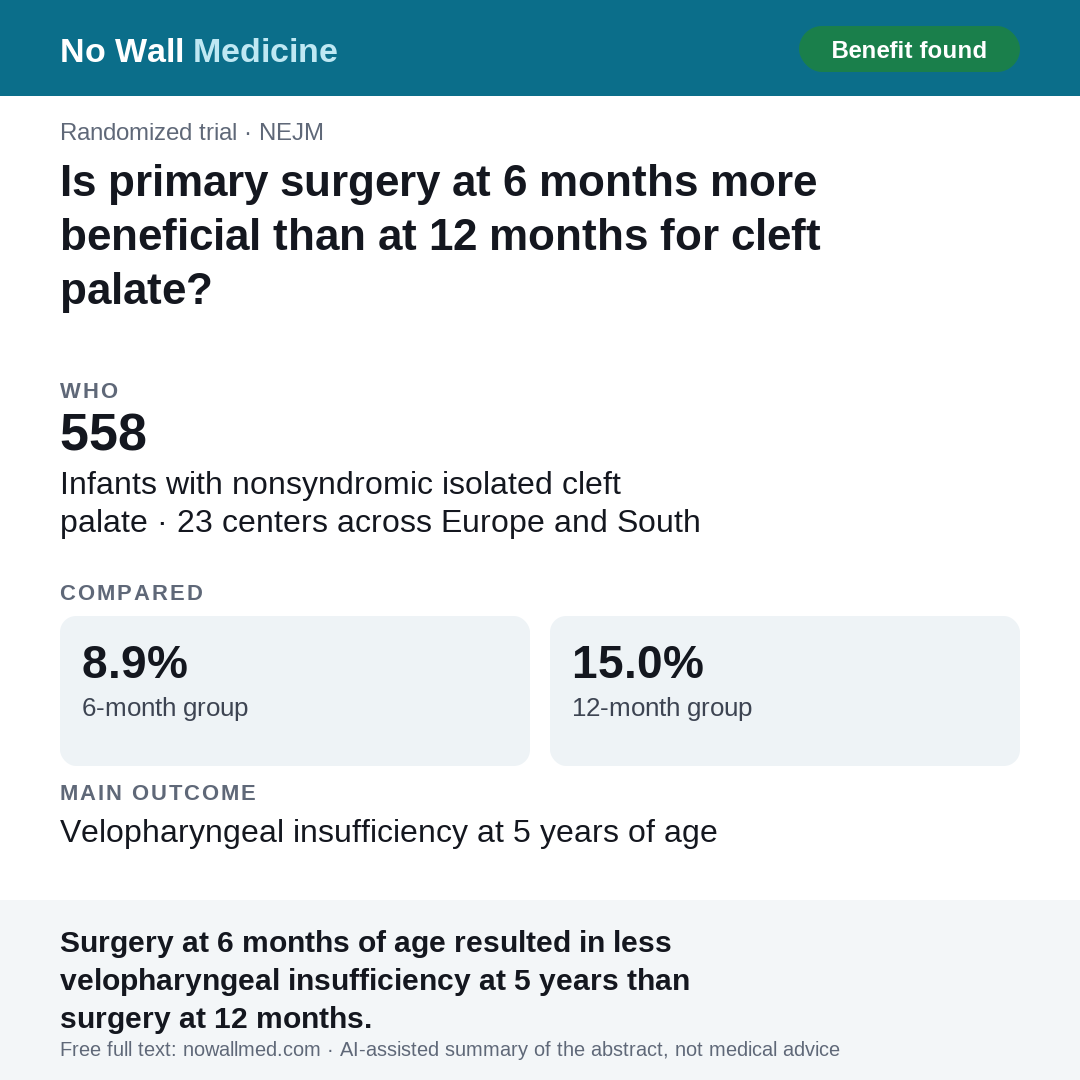
Timing of Primary Surgery for Cleft Palate
Randomized trialBenefit found
Is primary surgery at 6 months more beneficial than at 12 months for cleft palate?
Who
558
Infants with nonsyndromic isolated cleft palate · 23 centers across Europe and South America
Compared
8.9%6-month group (21/235)
15.0%12-month group (34/226)
Main outcome
Velopharyngeal insufficiency at 5 years of age
Result: risk ratio 0.59 (95% CI 0.36 to 0.99)
Bottom line: Surgery at 6 months of age resulted in less velopharyngeal insufficiency at 5 years than surgery at 12 months.
Funded by: National Institute of Dental and Craniofacial Research
NEJM · 2023-08-30Download image
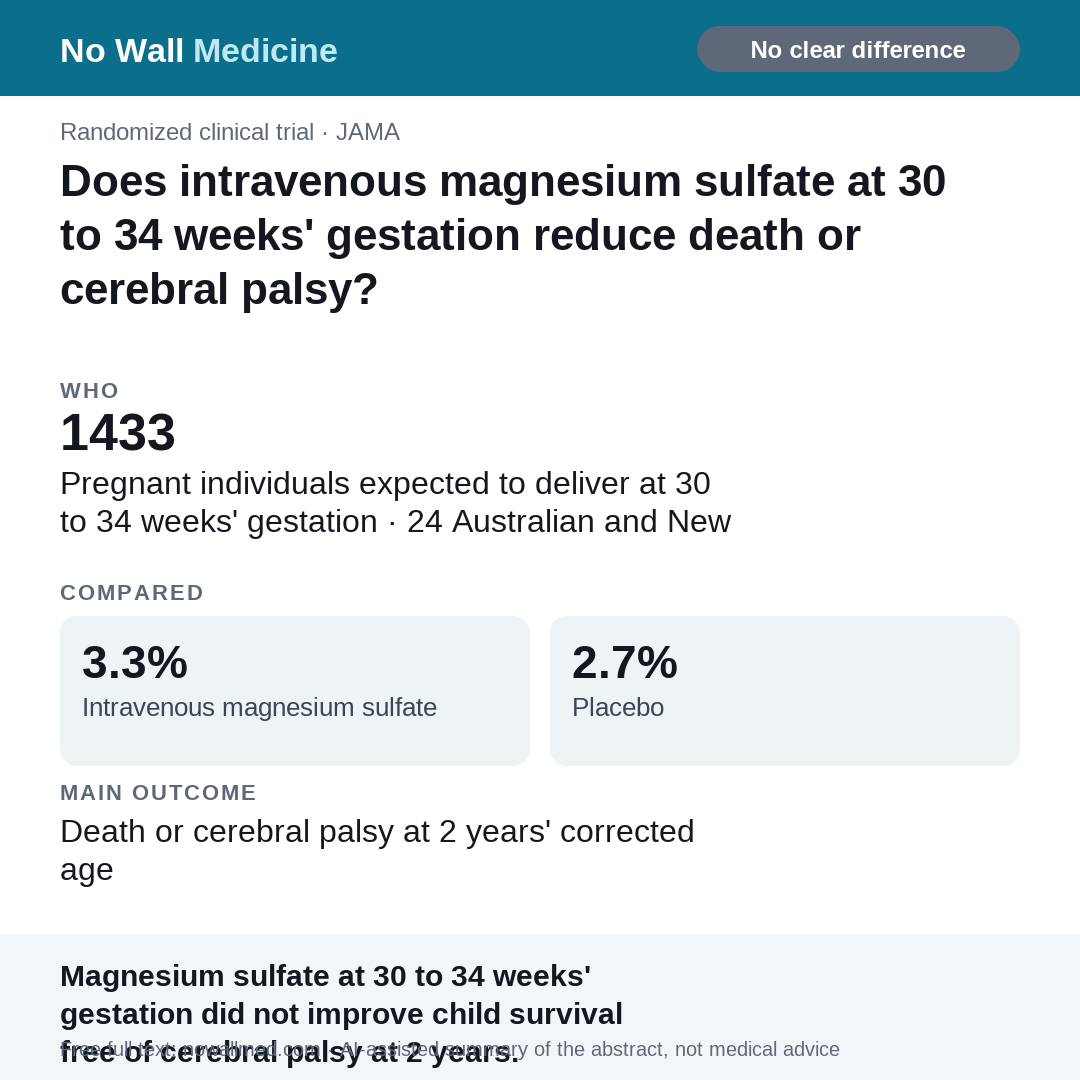
Prenatal Intravenous Magnesium at 30-34 Weeks' Gestation and Neurodevelopmental Outcomes in Offspring: The MAGENTA Randomized Clinical Trial
Randomized clinical trialNo clear difference
Does intravenous magnesium sulfate at 30 to 34 weeks' gestation reduce death or cerebral palsy?
Who
1433
Pregnant individuals expected to deliver at 30 to 34 weeks' gestation · 24 Australian and New Zealand hospitals
Compared
3.3%Intravenous magnesium sulfate (23 of 691 children)
2.7%Placebo (18 of 674 children)
Main outcome
Death or cerebral palsy at 2 years' corrected age
Result: risk difference 0.61% (95% CI -1.27% to 2.50%)
Bottom line: Magnesium sulfate at 30 to 34 weeks' gestation did not improve child survival free of cerebral palsy at 2 years.
Limitation: The study had limited power to detect small between-group differences.
JAMA · 2023-08-15Download image
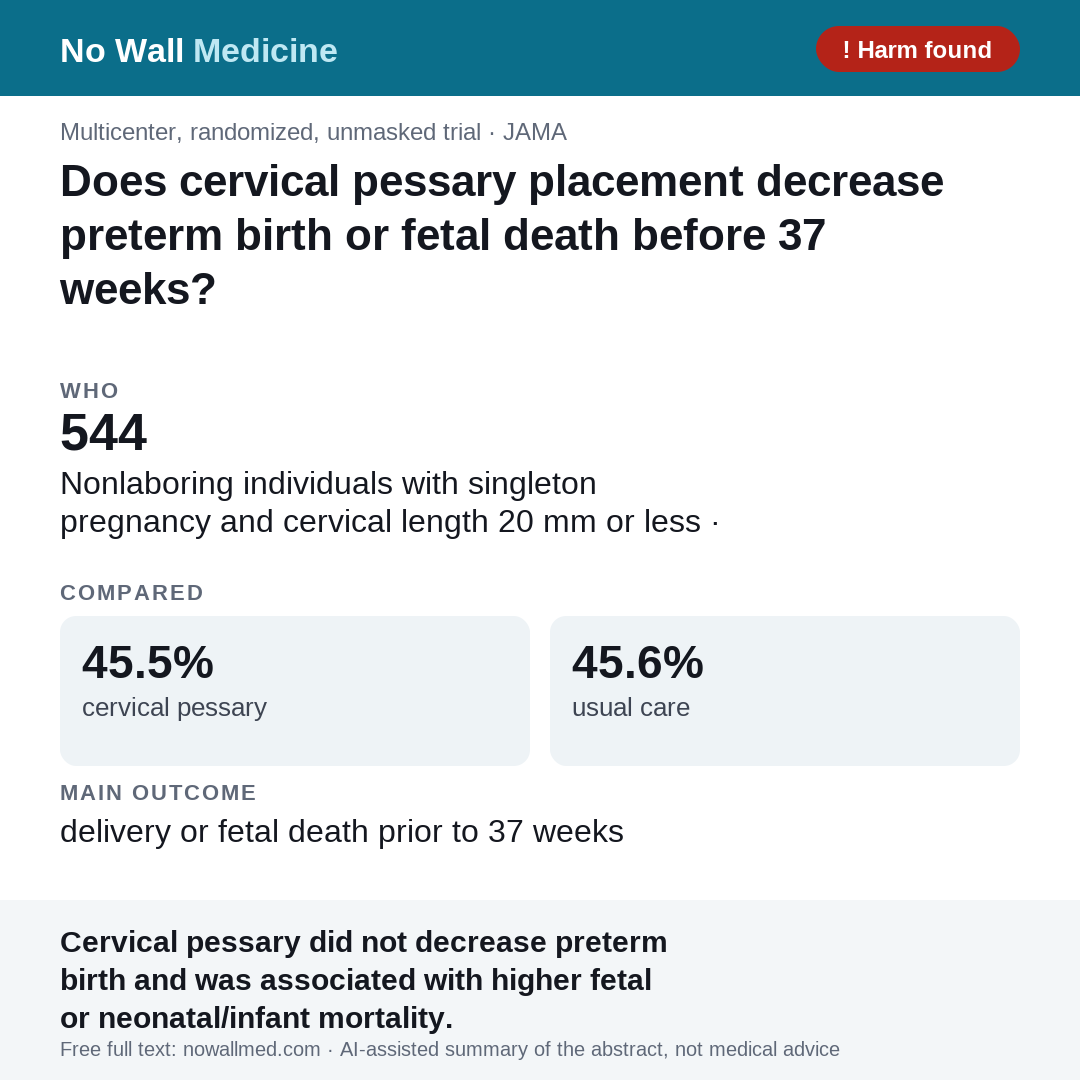
Cervical Pessary for Prevention of Preterm Birth in Individuals With a Short Cervix: The TOPS Randomized Clinical Trial
Multicenter, randomized, unmasked trialHarm found
Does cervical pessary placement decrease preterm birth or fetal death before 37 weeks?
Who
544
Nonlaboring individuals with singleton pregnancy and cervical length 20 mm or less · 12 centers in the United States
Compared
45.5%cervical pessary
45.6%usual care
Main outcome
delivery or fetal death prior to 37 weeks
Result: relative risk 1.00 (95% CI, 0.83-1.20)
Bottom line: Cervical pessary did not decrease preterm birth and was associated with higher fetal or neonatal/infant mortality.
JAMA · 2023-07-25Download image
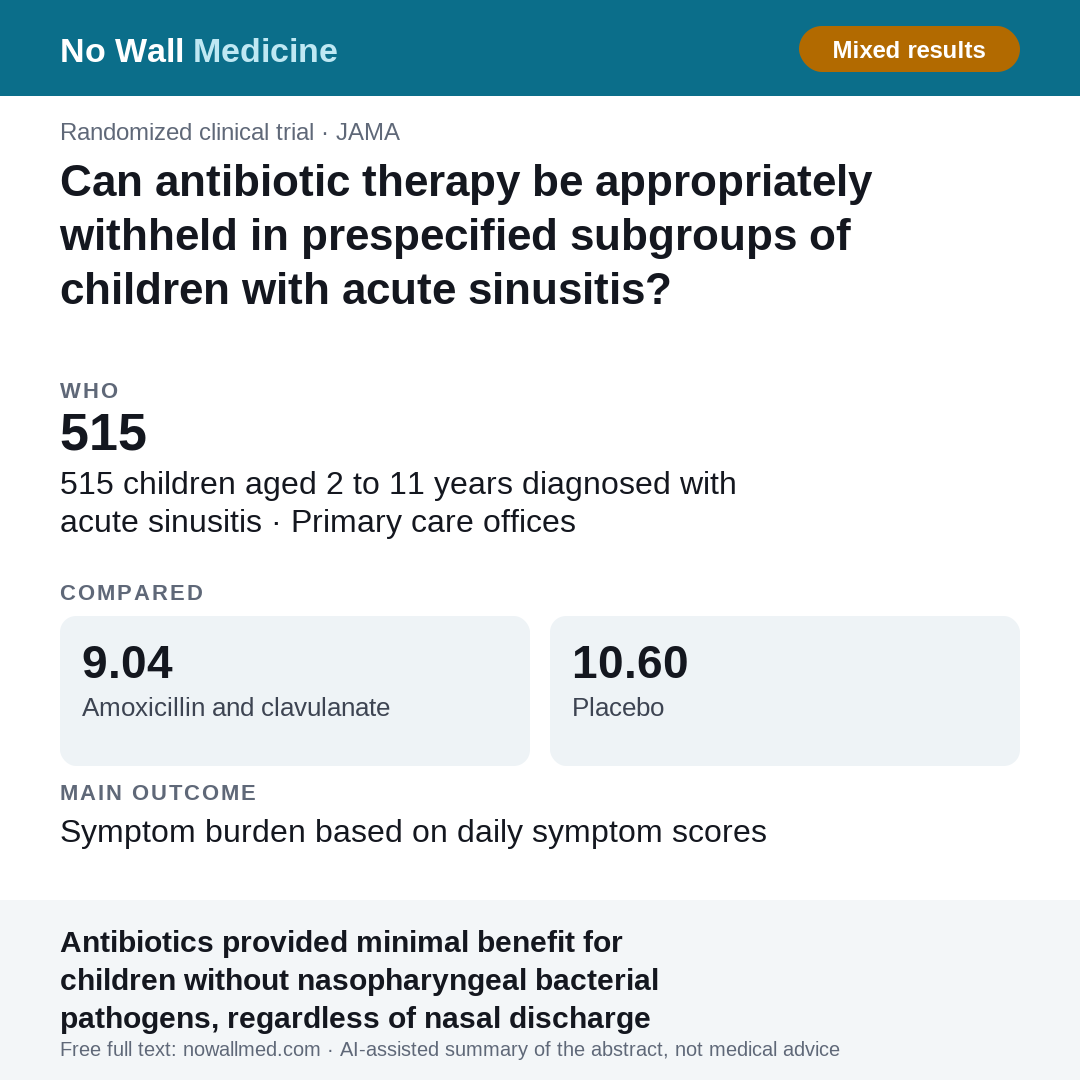
Identifying Children Likely to Benefit From Antibiotics for Acute Sinusitis: A Randomized Clinical Trial
Randomized clinical trialMixed results
Can antibiotic therapy be appropriately withheld in prespecified subgroups of children with acute sinusitis?
Who
515
515 children aged 2 to 11 years diagnosed with acute sinusitis · Primary care offices affiliated with 6 US institutions
Compared
9.04Amoxicillin and clavulanate (95% CI, 8.71 to 9.37)
10.60Placebo (95% CI, 10.27 to 10.93)
Main outcome
Symptom burden based on daily symptom scores
Result: -1.69 (95% CI, -2.07 to -1.31)
Bottom line: Antibiotics provided minimal benefit for children without nasopharyngeal bacterial pathogens, regardless of nasal discharge color.
JAMA · 2023-07-25Download image
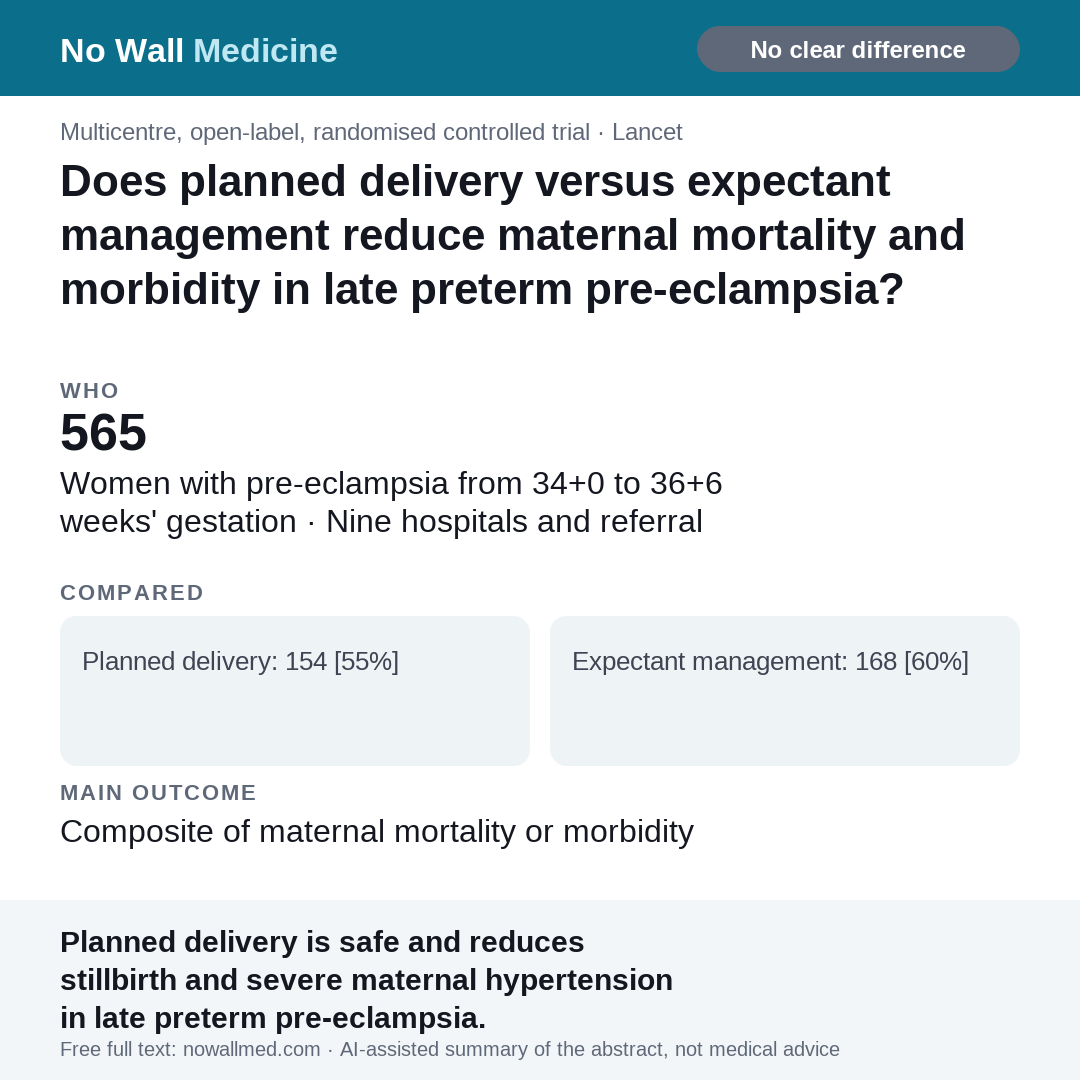
Planned delivery or expectant management for late preterm pre-eclampsia in low-income and middle-income countries (CRADLE-4): a multicentre, open-label, randomised controlled trial
Multicentre, open-label, randomised controlled trialNo clear difference
Does planned delivery versus expectant management reduce maternal mortality and morbidity in late preterm pre-eclampsia?
Who
565
Women with pre-eclampsia from 34+0 to 36+6 weeks' gestation · Nine hospitals and referral facilities in India and Zambia
Compared
Planned delivery: 154 [55%]
Expectant management: 168 [60%]
Main outcome
Composite of maternal mortality or morbidity
Result: adjusted risk ratio 0·91, 95% CI 0·79 to 1·05
Bottom line: Planned delivery is safe and reduces stillbirth and severe maternal hypertension in late preterm pre-eclampsia.
Funded by: UK Medical Research Council and Indian Department of Biotechnology
Lancet · 2023-06-29Download image
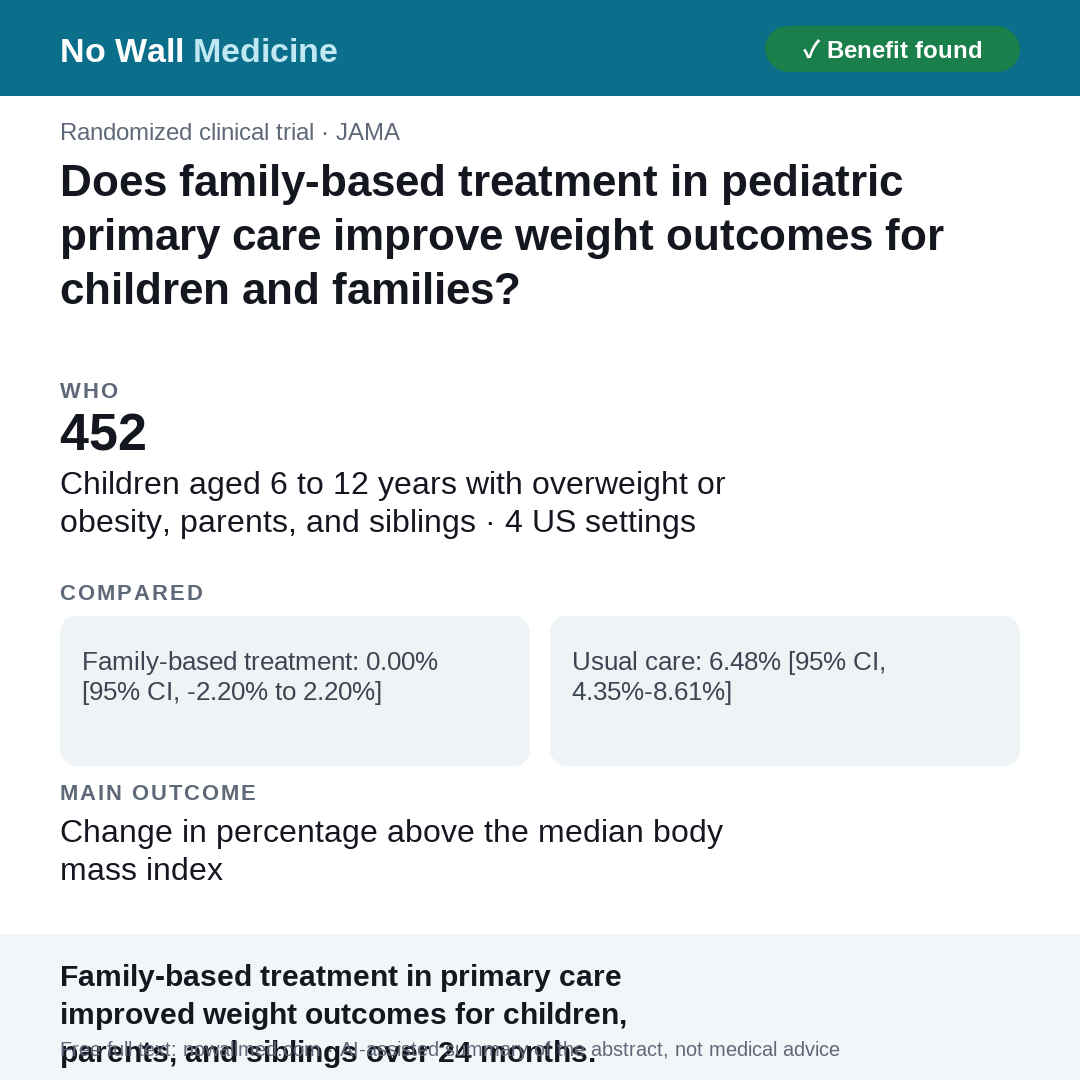
Family-Based Behavioral Treatment for Childhood Obesity Implemented in Pediatric Primary Care: A Randomized Clinical Trial
Randomized clinical trialBenefit found
Does family-based treatment in pediatric primary care improve weight outcomes for children and families?
Who
452
Children aged 6 to 12 years with overweight or obesity, parents, and siblings · 4 US settings
Compared
Family-based treatment: 0.00% [95% CI, -2.20% to 2.20%]
Usual care: 6.48% [95% CI, 4.35%-8.61%]
Main outcome
Change in percentage above the median body mass index
Result: -6.21% [95% CI, -10.14% to -2.29%]
Bottom line: Family-based treatment in primary care improved weight outcomes for children, parents, and siblings over 24 months.
JAMA · 2023-06-14Download image
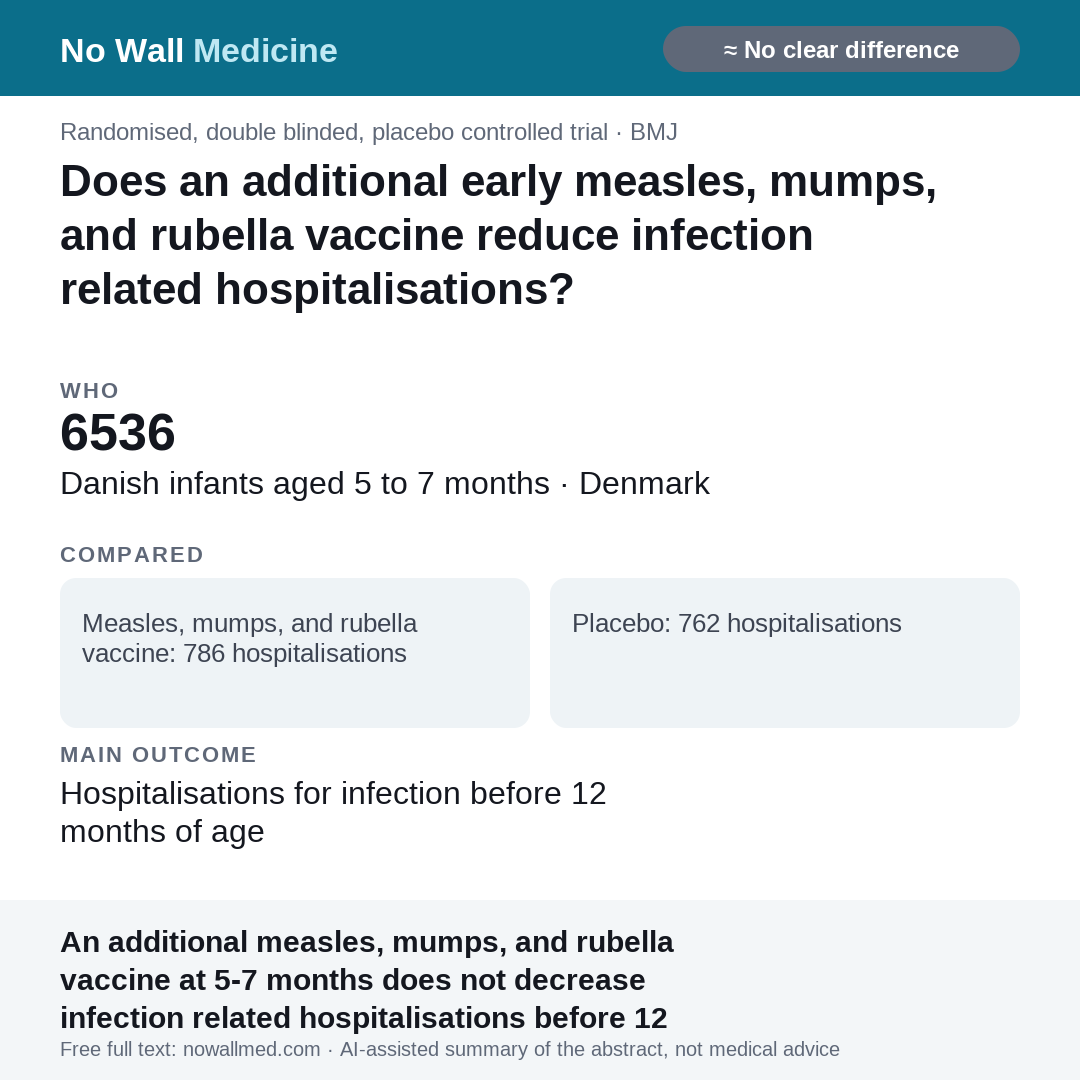
Measles, mumps, and rubella vaccine at age 6 months and hospitalisation for infection before age 12 months: randomised controlled trial
Randomised, double blinded, placebo controlled trialNo clear difference
Does an additional early measles, mumps, and rubella vaccine reduce infection related hospitalisations?
Who
6536
Danish infants aged 5 to 7 months · Denmark
Compared
Measles, mumps, and rubella vaccine: 786 hospitalisations
Placebo: 762 hospitalisations
Main outcome
Hospitalisations for infection before 12 months of age
Result: hazard ratio 1.03 (95% confidence interval 0.91 to 1.18)
Bottom line: An additional measles, mumps, and rubella vaccine at 5-7 months does not decrease infection related hospitalisations before 12 months.
BMJ · 2023-06-07Download image
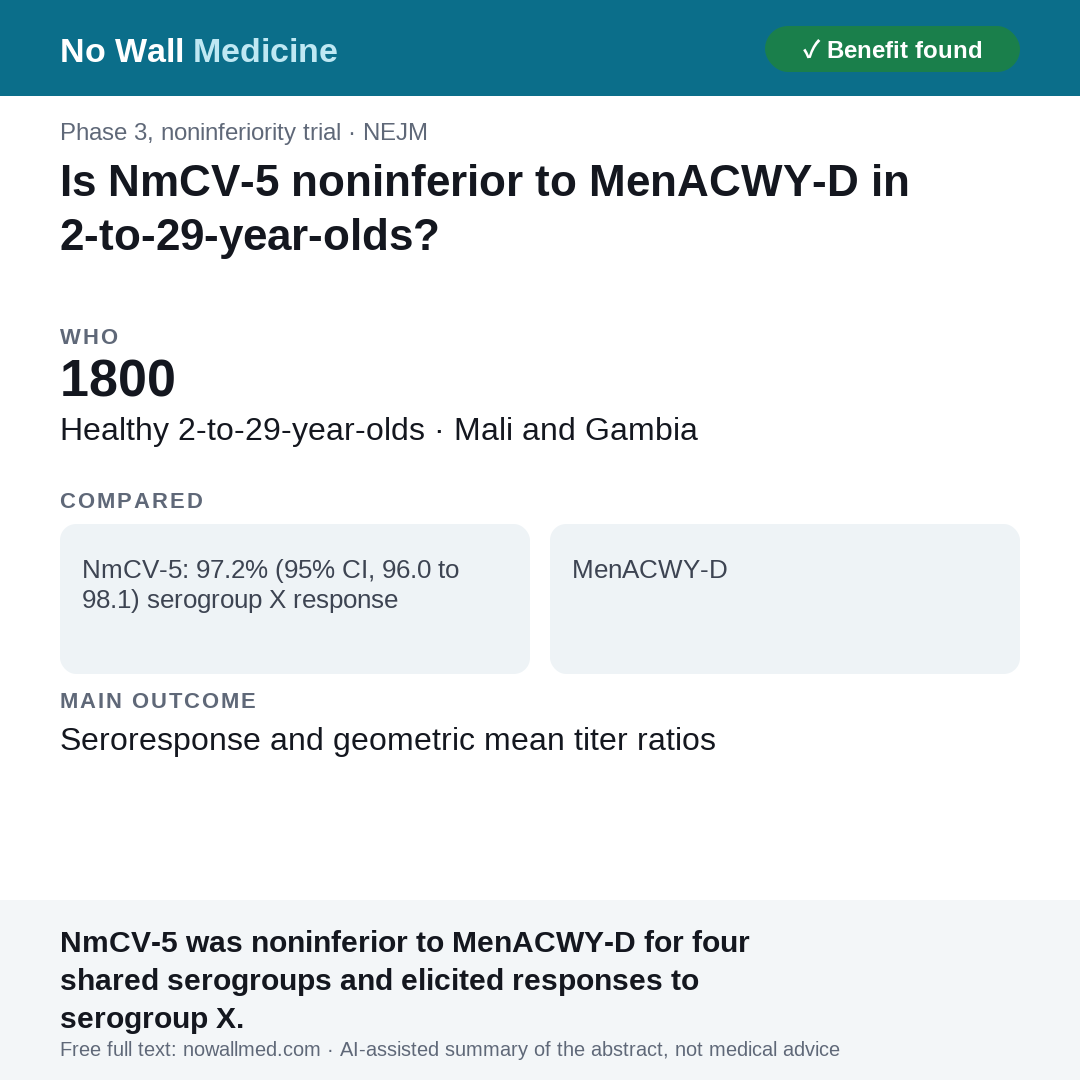
Meningococcal ACWYX Conjugate Vaccine in 2-to-29-Year-Olds in Mali and Gambia
Phase 3, noninferiority trialBenefit found
Is NmCV-5 noninferior to MenACWY-D in 2-to-29-year-olds?
Who
1800
Healthy 2-to-29-year-olds · Mali and Gambia
Compared
NmCV-5: 97.2% (95% CI, 96.0 to 98.1) serogroup X response
MenACWY-D
Main outcome
Seroresponse and geometric mean titer ratios
Bottom line: NmCV-5 was noninferior to MenACWY-D for four shared serogroups and elicited responses to serogroup X.
Funded by: United Kingdom Foreign, Commonwealth, and Development Office and others
NEJM · 2023-05-24Download image
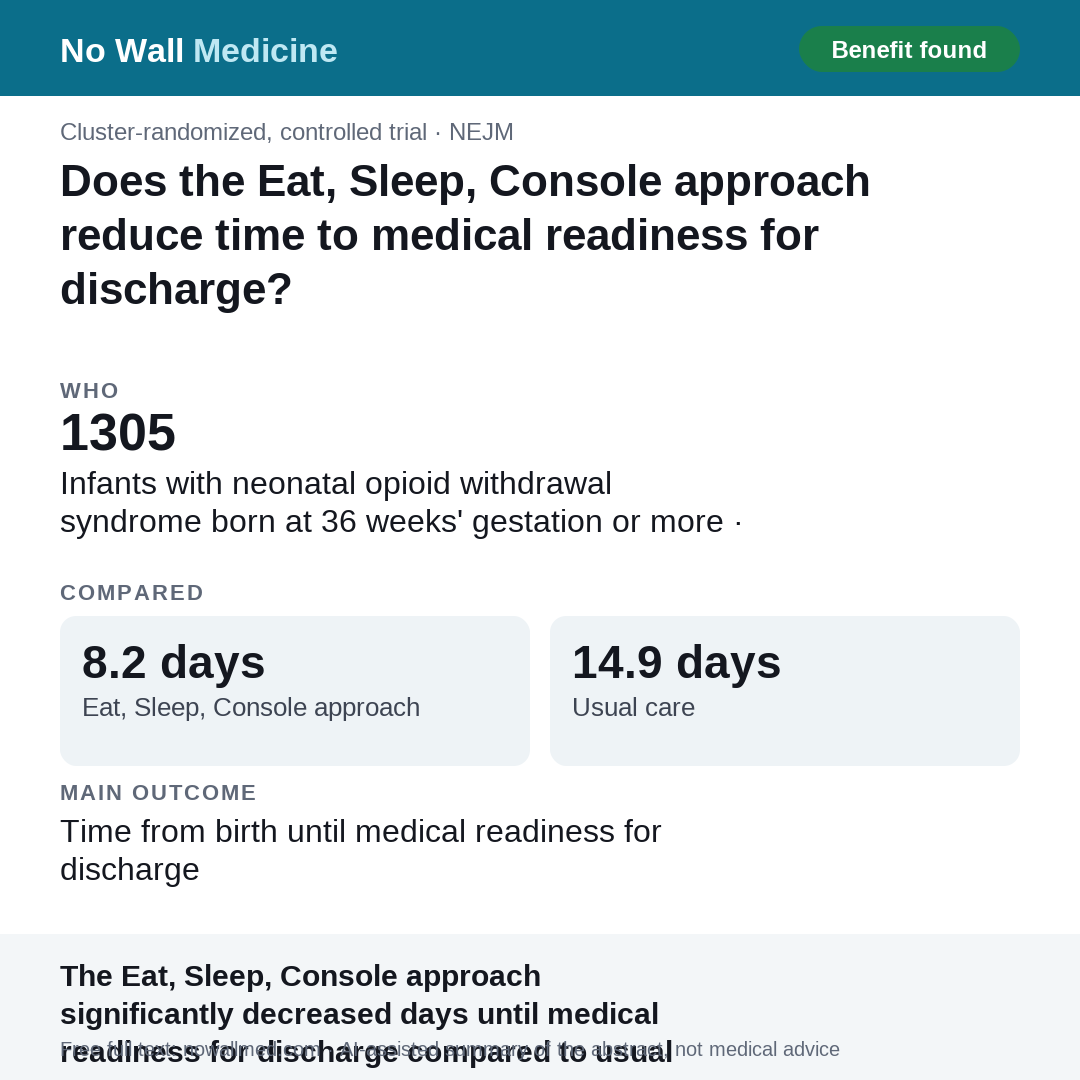
Eat, Sleep, Console Approach or Usual Care for Neonatal Opioid Withdrawal
Cluster-randomized, controlled trialBenefit found
Does the Eat, Sleep, Console approach reduce time to medical readiness for discharge?
Who
1305
Infants with neonatal opioid withdrawal syndrome born at 36 weeks' gestation or more · 26 United States hospitals
Compared
8.2 daysEat, Sleep, Console approach
14.9 daysUsual care
Main outcome
Time from birth until medical readiness for discharge
Result: rate ratio 0.55 (95% CI, 0.46 to 0.65)
Bottom line: The Eat, Sleep, Console approach significantly decreased days until medical readiness for discharge compared to usual care.
Funded by: National Institutes of Health Helping End Addiction Long-term Initiative
NEJM · 2023-04-30Download image
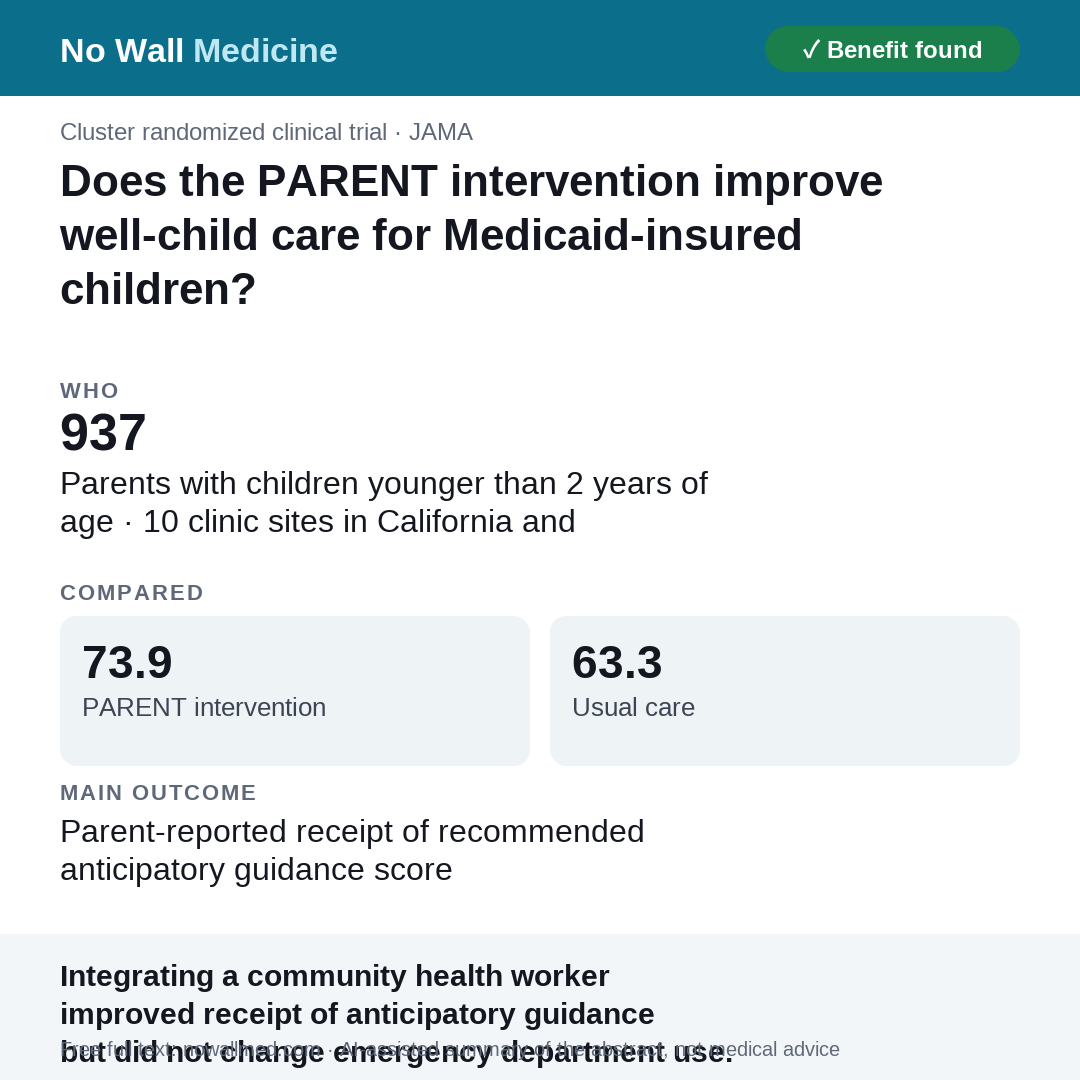
Community Health Workers in Early Childhood Well-Child Care for Medicaid-Insured Children: A Randomized Clinical Trial
Cluster randomized clinical trialBenefit found
Does the PARENT intervention improve well-child care for Medicaid-insured children?
Who
937
Parents with children younger than 2 years of age · 10 clinic sites in California and Washington
Compared
73.9PARENT intervention (SD, 23.4)
63.3Usual care (SD, 27.8)
Main outcome
Parent-reported receipt of recommended anticipatory guidance score
Result: adjusted absolute difference, 11.01 (95% CI, 6.44 to 15.59)
Bottom line: Integrating a community health worker improved receipt of anticipatory guidance but did not change emergency department use.
JAMA · 2023-04-30Download image
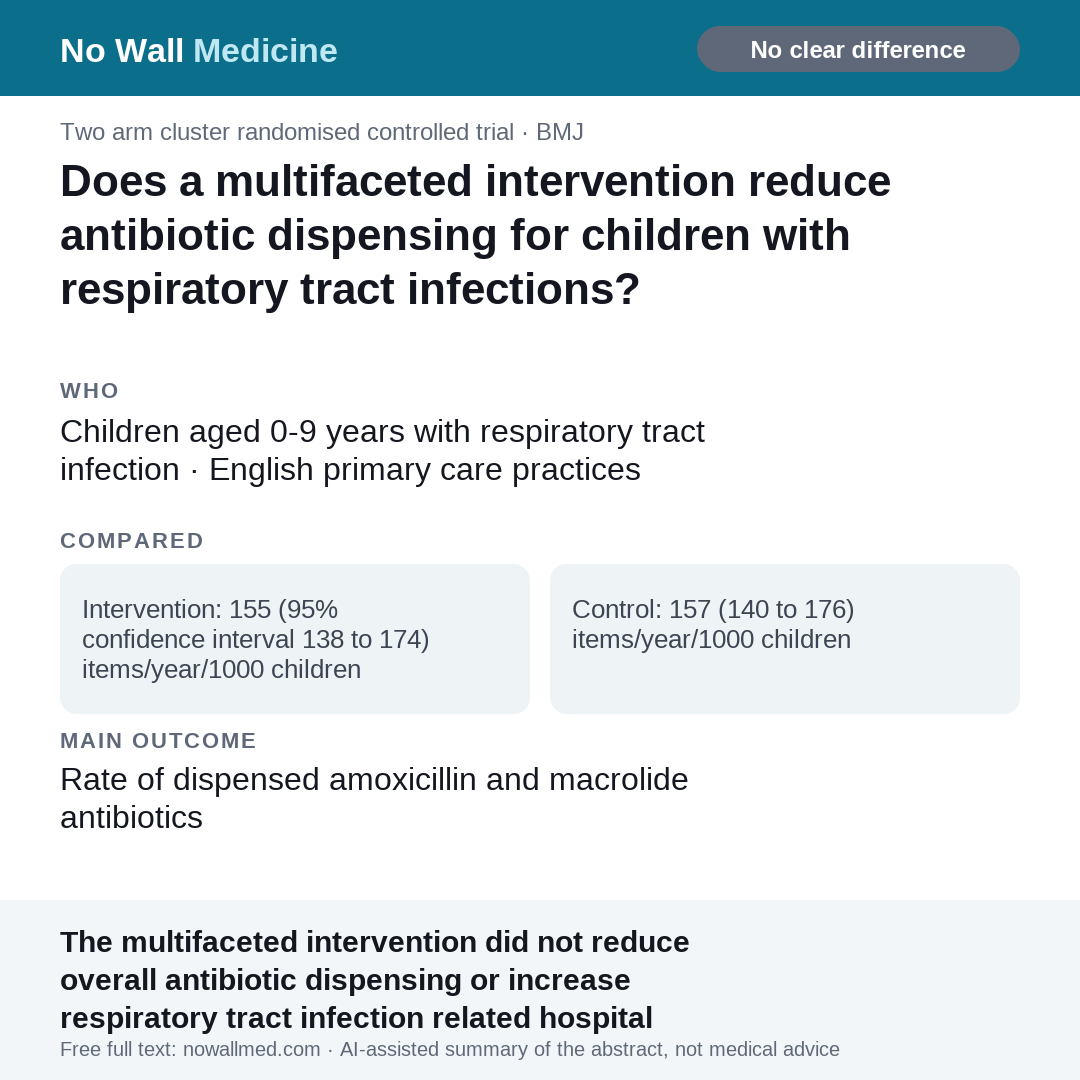
Multi-faceted intervention to improve management of antibiotics for children presenting to primary care with acute cough and respiratory tract infection (CHICO): efficient cluster randomised controlled trial
Two arm cluster randomised controlled trialNo clear difference
Does a multifaceted intervention reduce antibiotic dispensing for children with respiratory tract infections?
Who
Children aged 0-9 years with respiratory tract infection · English primary care practices
Compared
Intervention: 155 (95% confidence interval 138 to 174) items/year/1000 children
Control: 157 (140 to 176) items/year/1000 children
Main outcome
Rate of dispensed amoxicillin and macrolide antibiotics
Result: rate ratio 1.011, 95% confidence interval 0.992 to 1.029
Bottom line: The multifaceted intervention did not reduce overall antibiotic dispensing or increase respiratory tract infection related hospital admissions.
BMJ · 2023-04-26Download image
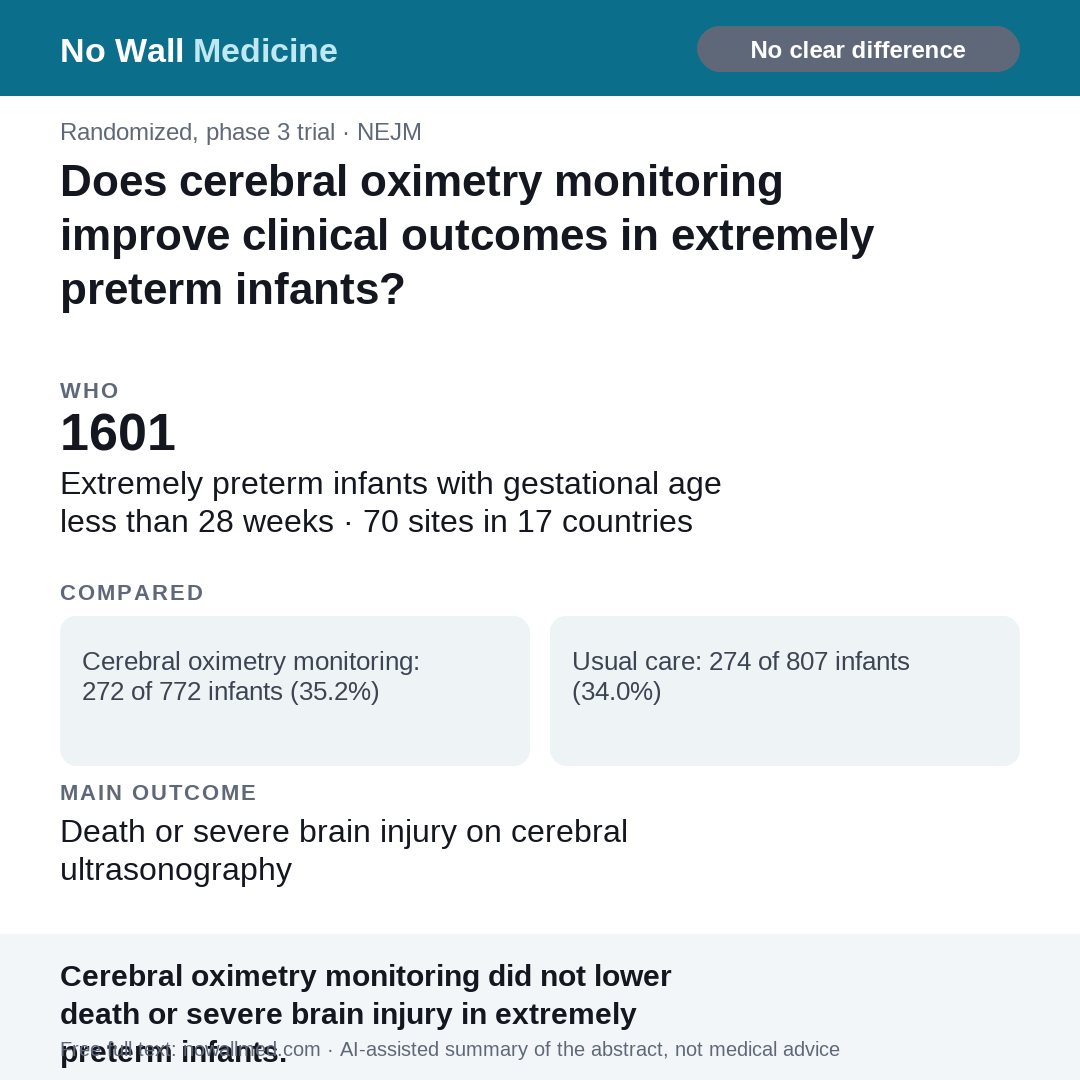
Cerebral Oximetry Monitoring in Extremely Preterm Infants
Randomized, phase 3 trialNo clear difference
Does cerebral oximetry monitoring improve clinical outcomes in extremely preterm infants?
Who
1601
Extremely preterm infants with gestational age less than 28 weeks · 70 sites in 17 countries
Compared
Cerebral oximetry monitoring: 272 of 772 infants (35.2%)
Usual care: 274 of 807 infants (34.0%)
Main outcome
Death or severe brain injury on cerebral ultrasonography
Result: relative risk 1.03 (95% confidence interval, 0.90 to 1.18)
Bottom line: Cerebral oximetry monitoring did not lower death or severe brain injury in extremely preterm infants.
Funded by: Elsass Foundation and others
NEJM · 2023-04-19Download image
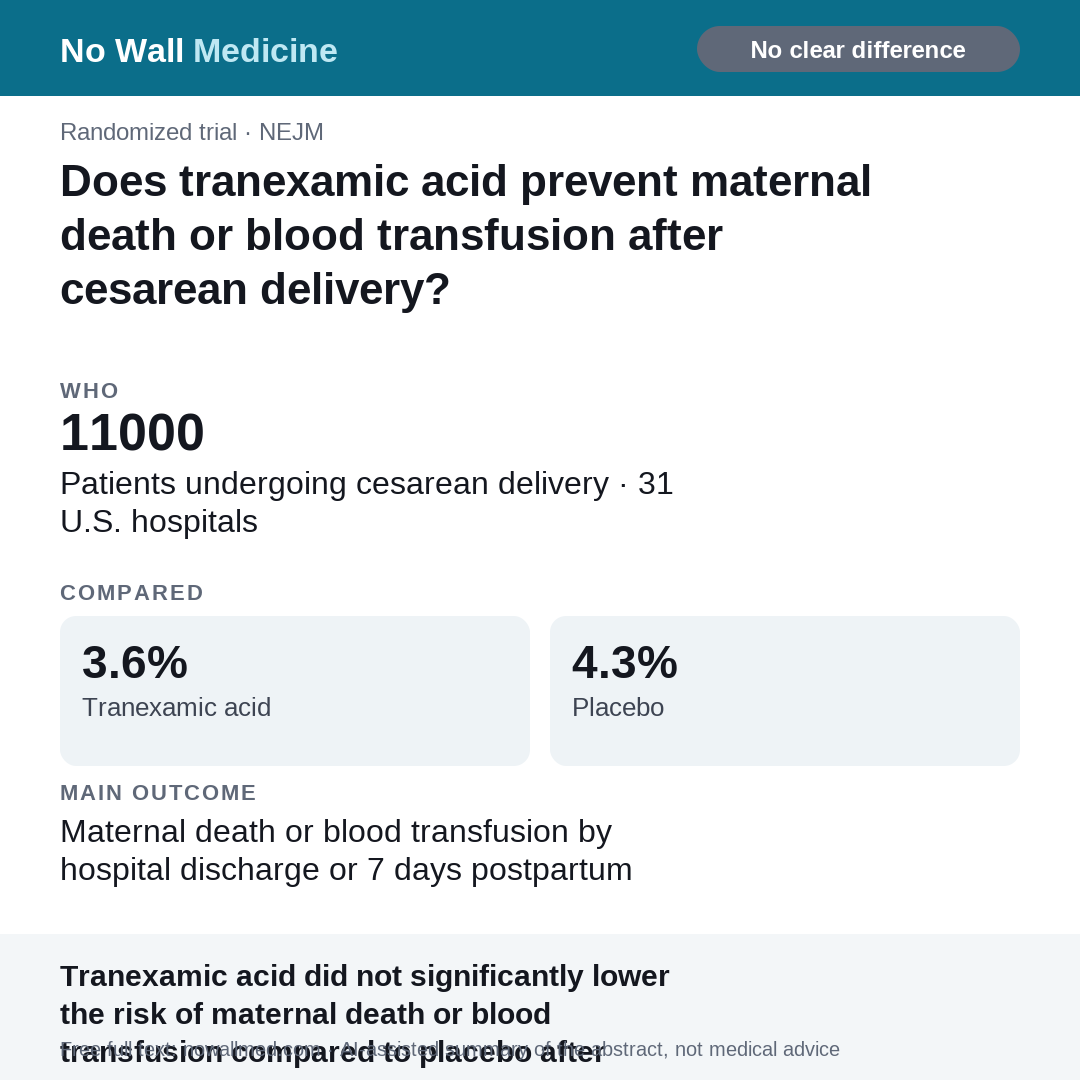
Tranexamic Acid to Prevent Obstetrical Hemorrhage after Cesarean Delivery
Randomized trialNo clear difference
Does tranexamic acid prevent maternal death or blood transfusion after cesarean delivery?
Who
11000
Patients undergoing cesarean delivery · 31 U.S. hospitals
Compared
3.6%Tranexamic acid (201/5525)
4.3%Placebo (233/5470)
Main outcome
Maternal death or blood transfusion by hospital discharge or 7 days postpartum
Result: adjusted relative risk 0.89 (95.26% CI 0.74 to 1.07)
Bottom line: Tranexamic acid did not significantly lower the risk of maternal death or blood transfusion compared to placebo after cesarean delivery.
Funded by: Eunice Kennedy Shriver National Institute of Child Health and Human Development
NEJM · 2023-04-12Download image
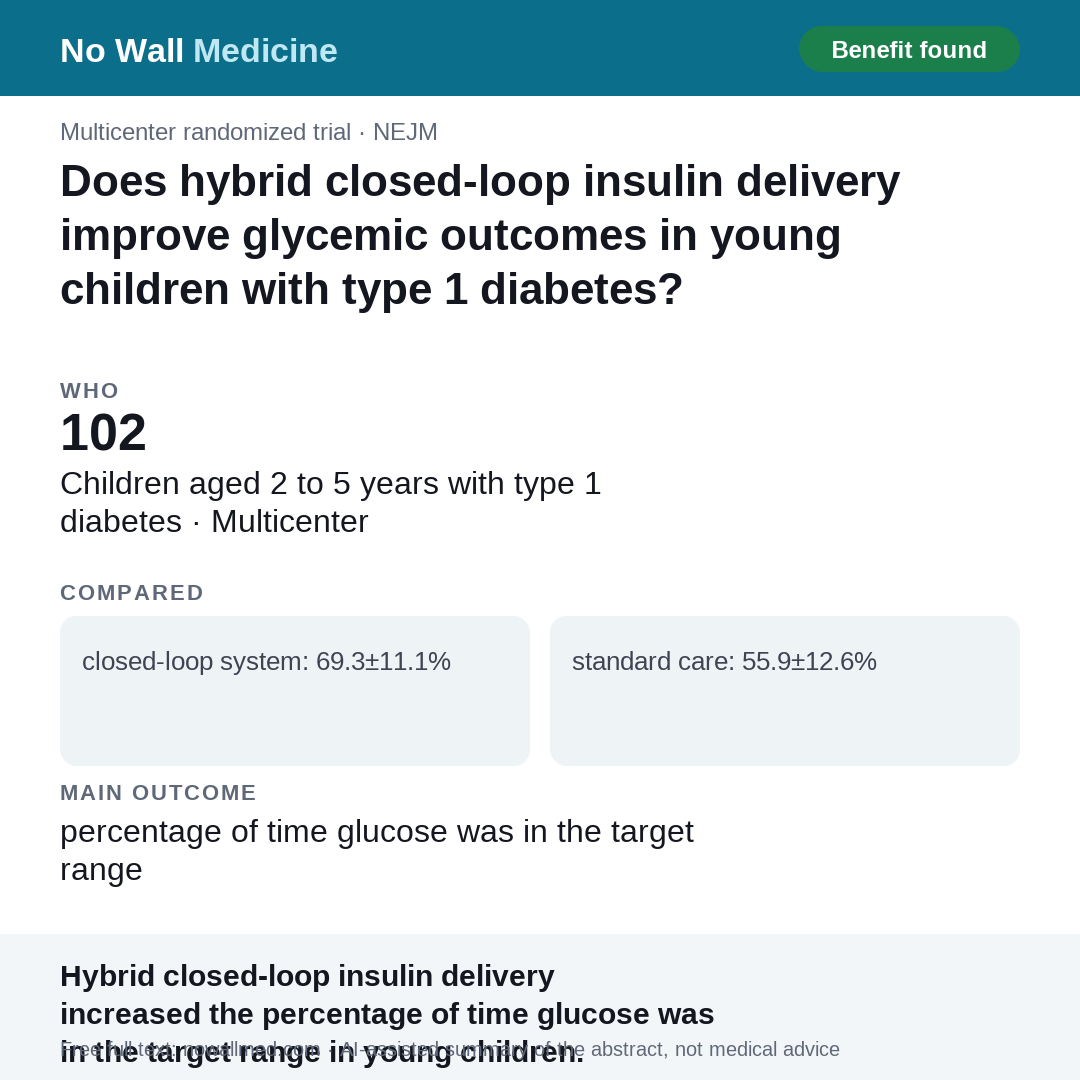
Trial of Hybrid Closed-Loop Control in Young Children with Type 1 Diabetes
Multicenter randomized trialBenefit found
Does hybrid closed-loop insulin delivery improve glycemic outcomes in young children with type 1 diabetes?
Who
102
Children aged 2 to 5 years with type 1 diabetes · Multicenter
Compared
closed-loop system: 69.3±11.1%
standard care: 55.9±12.6%
Main outcome
percentage of time glucose was in the target range
Result: mean adjusted difference, 12.4 percentage points (95% CI, 9.5 to 15.3)
Bottom line: Hybrid closed-loop insulin delivery increased the percentage of time glucose was in the target range in young children.
Funded by: National Institute of Diabetes and Digestive and Kidney Diseases
NEJM · 2023-03-15Download image