Visual abstracts
New randomized trials and meta-analyses from leading journals at a glance: who was studied, what was compared, and what was found. Every paper is free to read in full.
All specialtiesCardiology 1341Oncology 1205Gastroenterology & Hepatology 483Infectious Disease 880Neurology 556Psychiatry & Mental Health 671Pulmonology 578Critical Care 398Endocrinology & Diabetes 746Pediatrics 802Surgery 638Orthopedics & Sports Medicine 259Neurosurgery 182Cardiothoracic & Vascular Surgery 151Plastic & Reconstructive Surgery 212Nephrology 283Rheumatology 179Hematology 283Dermatology 142Ophthalmology 153Obstetrics & Gynecology 426Public & Global Health 261Radiology & Imaging 173Anesthesiology 257Urology 251ENT (Otolaryngology) 182Emergency Medicine 147Allergy & Immunology 90Geriatrics 281Family Medicine & Primary Care 171Medical Genetics & Genomics 144Pathology & Laboratory Medicine 41Physical Medicine & Rehabilitation 233Palliative Care 122Nutrition 353Digital Health & AI 696General Medicine 123
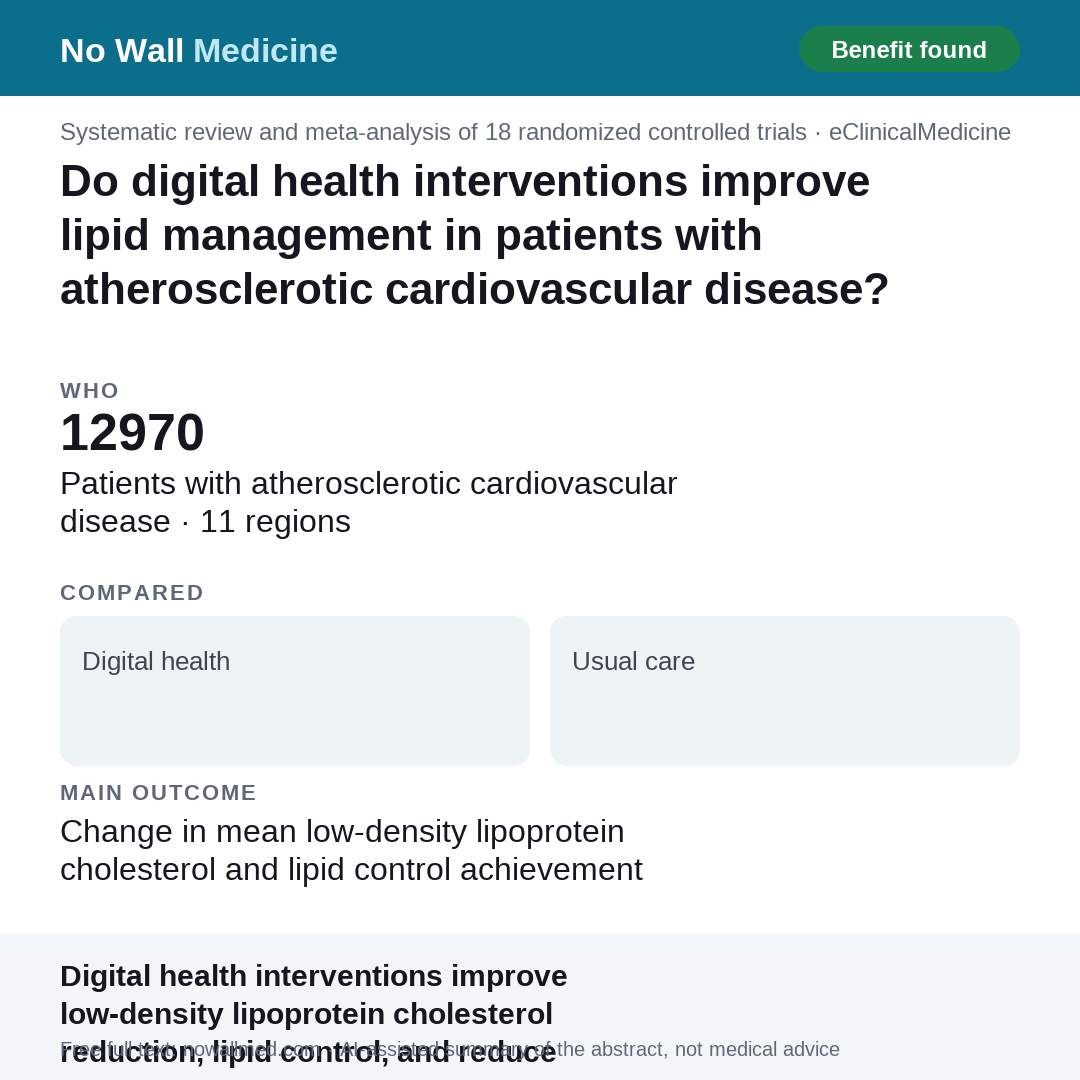
Digital health interventions for lipid management in atherosclerotic cardiovascular disease: a systematic review and meta-analysis of randomised controlled trials
Systematic review and meta-analysis of 18 randomized controlled trialsBenefit found
Do digital health interventions improve lipid management in patients with atherosclerotic cardiovascular disease?
Who
12970
Patients with atherosclerotic cardiovascular disease · 11 regions
Compared
Digital health
Usual care
Main outcome
Change in mean low-density lipoprotein cholesterol and lipid control achievement
Result: mean difference -0.10 mmol/L (95% CI -0.17 to -0.04)
Bottom line: Digital health interventions improve low-density lipoprotein cholesterol reduction, lipid control, and reduce hospitalization risk in patients with atherosclerotic cardiovascular disease.
Limitation: High heterogeneity and high risk of bias were observed across studies.
Funded by: Innovative Health Initiative Joint Undertaking
eClinicalMedicine · 2026-04-10Download image
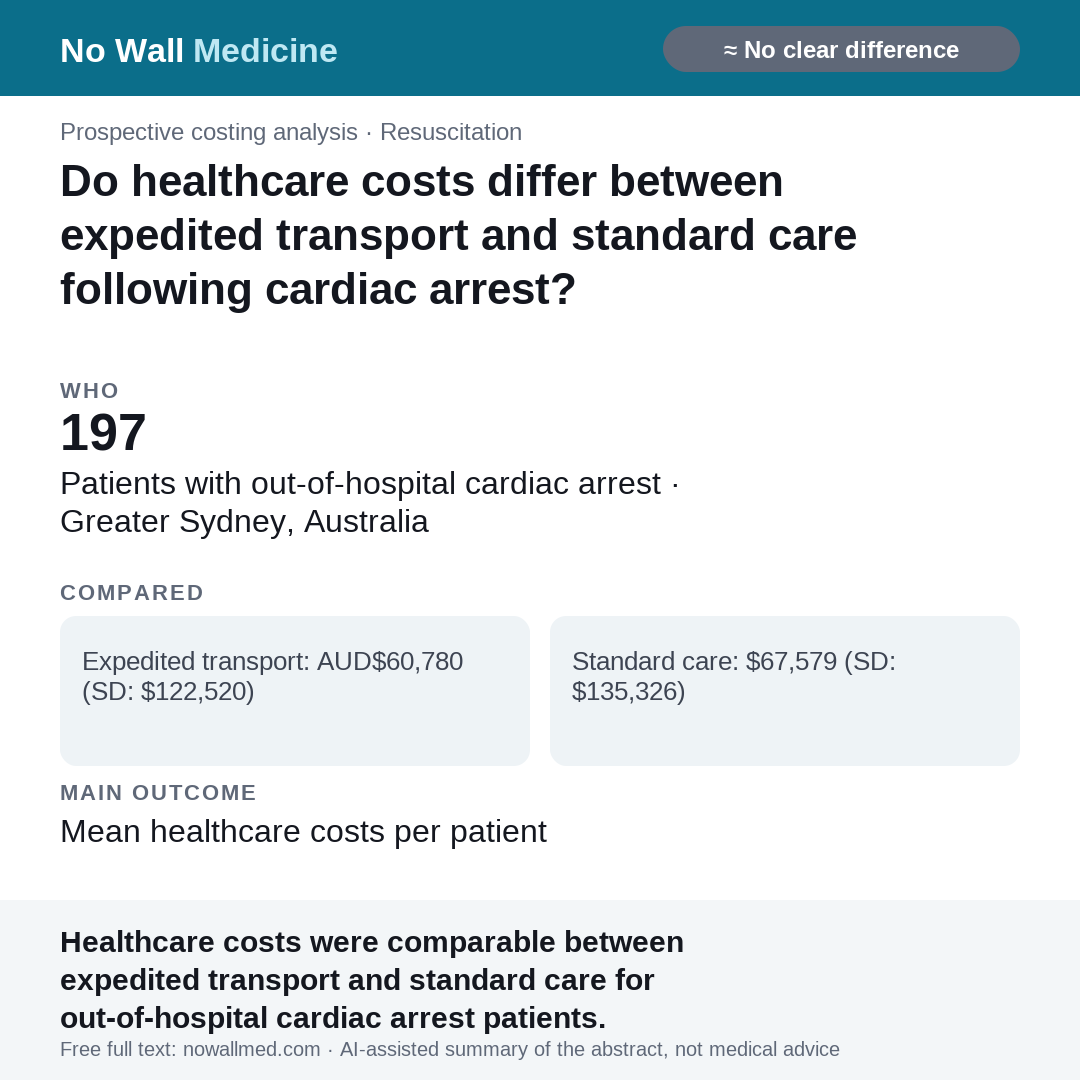
Healthcare costs of expedited transport compared with standard care following out-of-hospital cardiac arrest: results from the EVIDENCE randomised controlled trial
Prospective costing analysisNo clear difference
Do healthcare costs differ between expedited transport and standard care following cardiac arrest?
Who
197
Patients with out-of-hospital cardiac arrest · Greater Sydney, Australia
Compared
Expedited transport: AUD$60,780 (SD: $122,520)
Standard care: $67,579 (SD: $135,326)
Main outcome
Mean healthcare costs per patient
Result: -$6799 (95% CI: -$44,014 to $30,416)
Bottom line: Healthcare costs were comparable between expedited transport and standard care for out-of-hospital cardiac arrest patients.
Resuscitation · 2026-04-10Download image
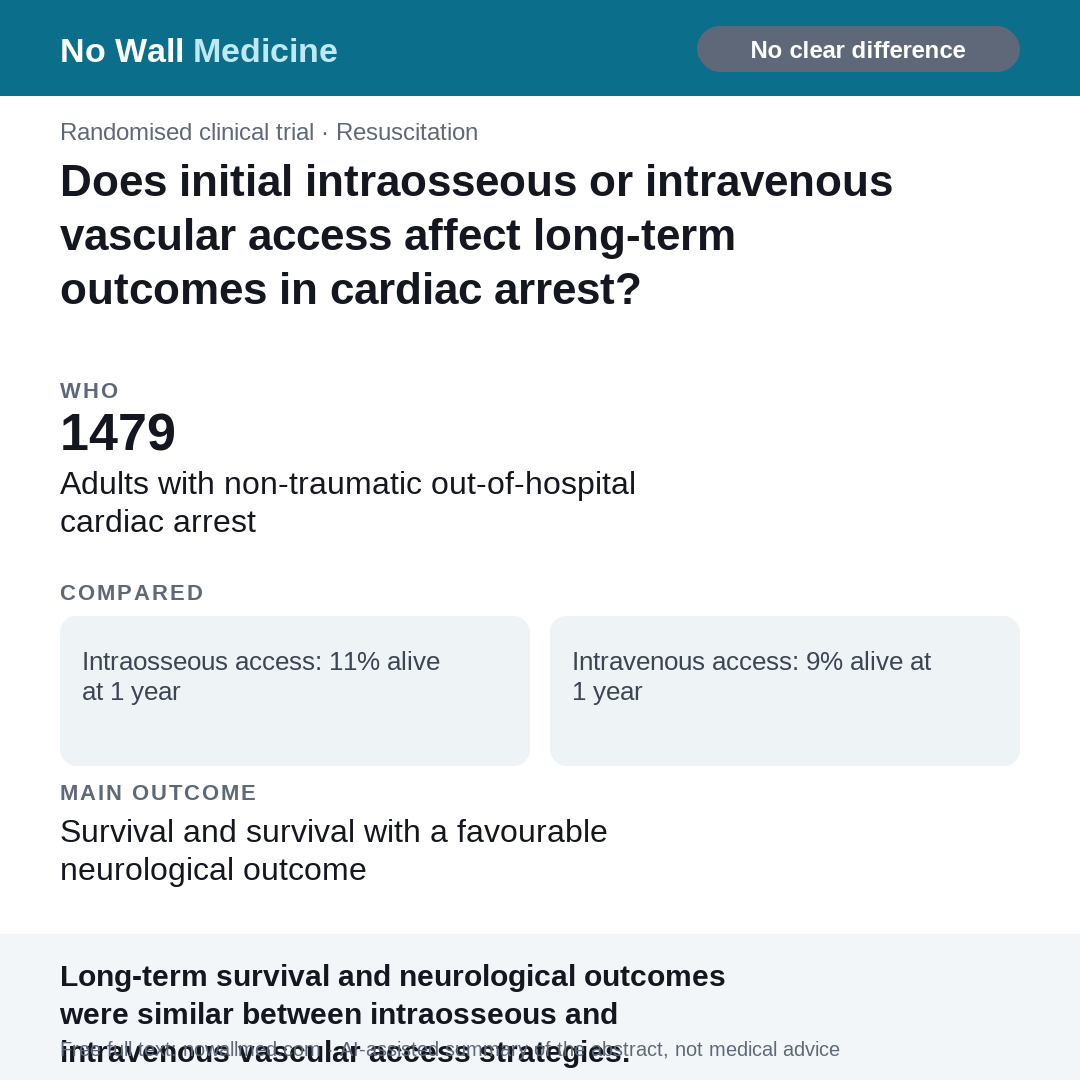
Effect of vascular access strategy on long-term outcomes in patients with out-of-hospital cardiac arrest: a randomised clinical trial
Randomised clinical trialNo clear difference
Does initial intraosseous or intravenous vascular access affect long-term outcomes in cardiac arrest?
Who
1479
Adults with non-traumatic out-of-hospital cardiac arrest
Compared
Intraosseous access: 11% alive at 1 year
Intravenous access: 9% alive at 1 year
Main outcome
Survival and survival with a favourable neurological outcome
Result: risk ratio 1.24 (95% confidence interval 0.91-1.67)
Bottom line: Long-term survival and neurological outcomes were similar between intraosseous and intravenous vascular access strategies.
Resuscitation · 2026-04-10Download image
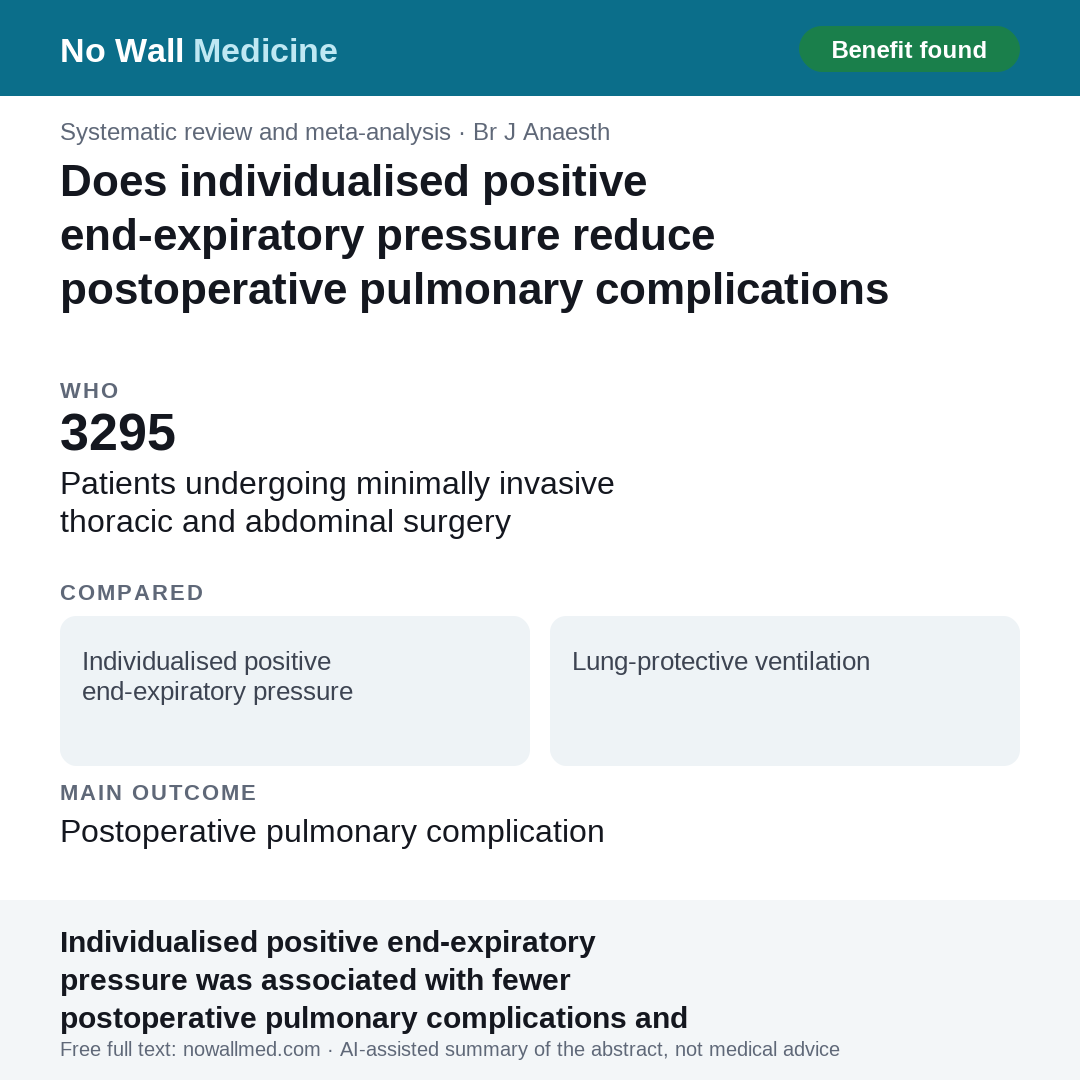
Individualised positive end-expiratory pressure to minimise driving pressure and postoperative pulmonary complications in minimally invasive thoracic and abdominal surgery a systematic review and meta-analysis
Systematic review and meta-analysisBenefit found
Does individualised positive end-expiratory pressure reduce postoperative pulmonary complications and driving pressure?
Who
3295
Patients undergoing minimally invasive thoracic and abdominal surgery
Compared
Individualised positive end-expiratory pressure
Lung-protective ventilation
Main outcome
Postoperative pulmonary complication
Result: risk ratio 0.67 (95% CI 0.56-0.79)
Bottom line: Individualised positive end-expiratory pressure was associated with fewer postoperative pulmonary complications and lower driving pressures.
Limitation: Showing causality requires further research.
Br J Anaesth · 2026-04-10Download image
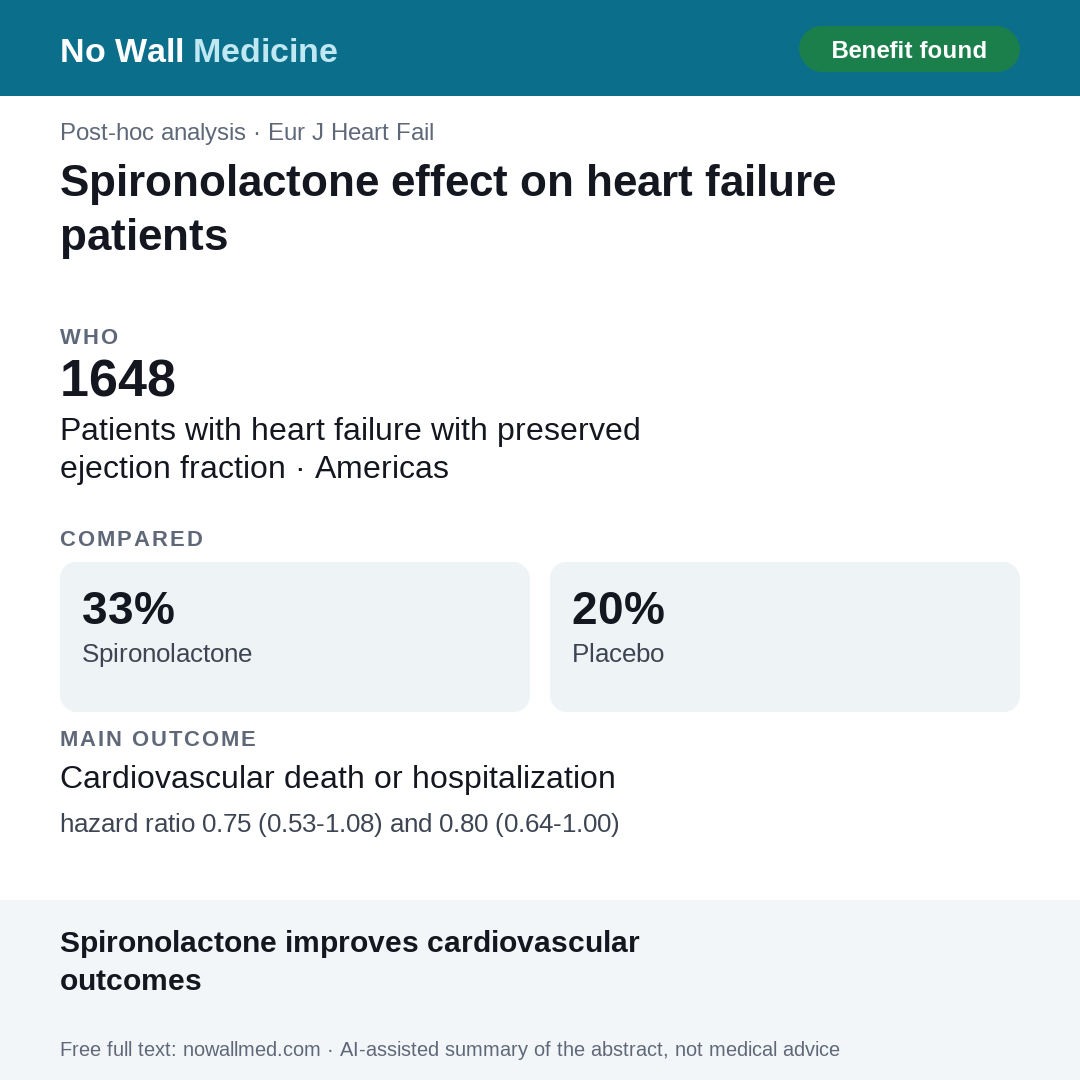
Spironolactone, early acute eGFR changes, and clinical outcomes in patients with heart failure with preserved ejection fraction: insights from TOPCAT Americas
Post-hoc analysisBenefit found
Spironolactone effect on heart failure patients
Who
1648
Patients with heart failure with preserved ejection fraction · Americas
Compared
33%Spironolactone
20%Placebo
Main outcome
Cardiovascular death or hospitalization
Result: hazard ratio 0.75 (0.53-1.08) and 0.80 (0.64-1.00)
Bottom line: Spironolactone improves cardiovascular outcomes
Eur J Heart Fail · 2026-04-10Download image
Feasibility Randomized Controlled Trial of Real-Time fMRI Neurofeedback for Reading Rehabilitation in Aphasia
Feasibility randomized controlled trialBenefit found
Is real-time functional magnetic resonance imaging neurofeedback feasible for reading rehabilitation in aphasia?
Who
11
Subacute left-hemisphere stroke survivors and healthy controls
Compared
Contingent neurofeedback stroke group: mean group difference in Reading Comprehension Battery for Aphasia, second edition, change score=9.75 [95% CI, 1.99-17.51]
Noncontingent neurofeedback stroke group: mean group difference in Reading Comprehension Battery for Aphasia, second edition, change score=11.42 [95% CI, 1.12-21.71]
Healthy controls
Main outcome
Reading comprehension and task-based brain activity
Result: mean group difference in Reading Comprehension Battery for Aphasia, second edition, change score=9.75 [95% CI, 1.99-17.51]
Bottom line: Contingent functional magnetic resonance imaging neurofeedback may improve reading comprehension in subacute stroke survivors.
Limitation: Confirmation of these preliminary effects awaits completion of the ongoing randomized controlled trial.
Stroke · 2026-04-10Download image

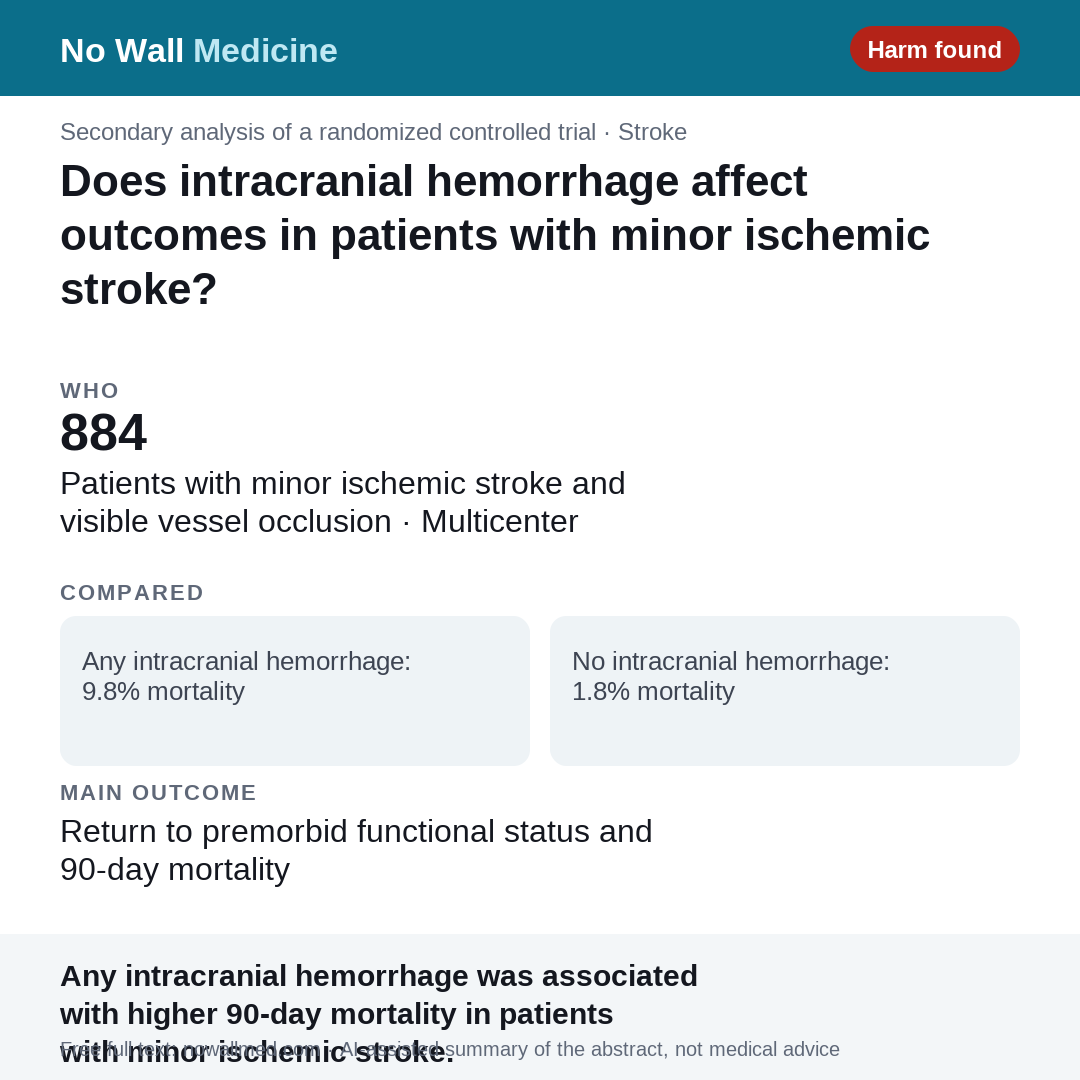
Intracranial Hemorrhage Patterns and Outcomes in Minor Stroke: Analysis of the TEMPO-2 Trial
Secondary analysis of a randomized controlled trialHarm found
Does intracranial hemorrhage affect outcomes in patients with minor ischemic stroke?
Who
884
Patients with minor ischemic stroke and visible vessel occlusion · Multicenter
Compared
Any intracranial hemorrhage: 9.8% mortality
No intracranial hemorrhage: 1.8% mortality
Main outcome
Return to premorbid functional status and 90-day mortality
Result: adjusted hazard ratio 3.71 (95% CI 1.54-8.95)
Bottom line: Any intracranial hemorrhage was associated with higher 90-day mortality in patients with minor ischemic stroke.
Stroke · 2026-04-10Download image
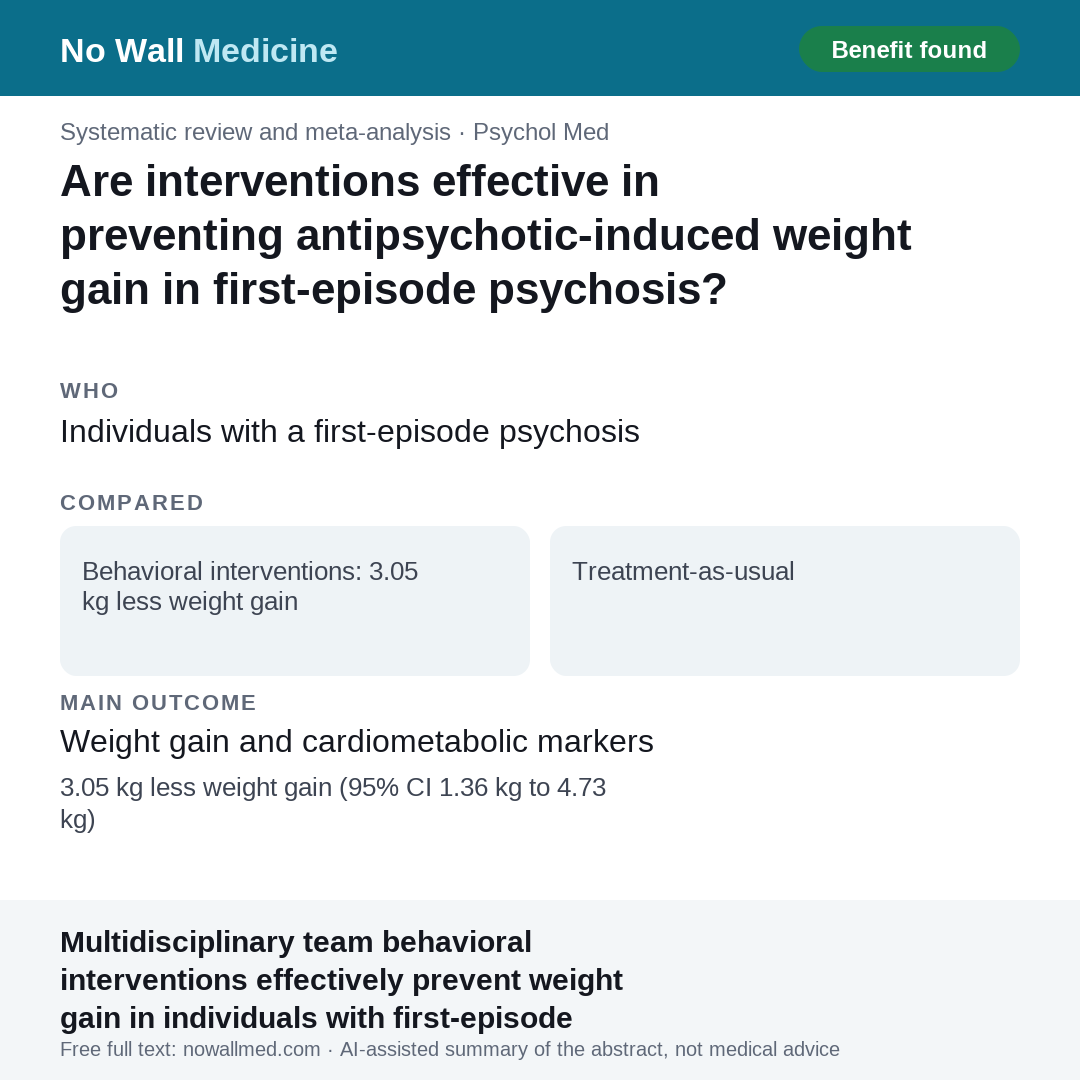
Interventions to prevent antipsychotic-induced weight gain and metabolic complications in individuals with a first-episode psychosis and minimal antipsychotic exposure: a systematic review and meta-analysis
Systematic review and meta-analysisBenefit found
Are interventions effective in preventing antipsychotic-induced weight gain in first-episode psychosis?
Who
Individuals with a first-episode psychosis
Compared
Behavioral interventions: 3.05 kg less weight gain
Treatment-as-usual
Main outcome
Weight gain and cardiometabolic markers
Result: 3.05 kg less weight gain (95% CI 1.36 kg to 4.73 kg)
Bottom line: Multidisciplinary team behavioral interventions effectively prevent weight gain in individuals with first-episode psychosis.
Psychol Med · 2026-04-10Download image
Growth hormone retesting for idiopathic isolated growth hormone deficiency during and after puberty: a systematic review
Systematic reviewMixed results
What are the optimal timing and methods for growth hormone retesting in IIGHD?
Who
2057
Children with idiopathic isolated growth hormone deficiency
Compared
Retesting after 1-2 years of treatment: 46.4% reversal rate
Retesting during mid-puberty: 46.3% reversal rate
Retesting at near adult height: 69.6% reversal rate
Main outcome
Growth hormone secretion reversal rates
Bottom line: Retesting strategies should be individualized, with mid-puberty retesting potentially reducing false-positive diagnoses and treatment burden.
Limitation: Standardization of growth hormone stimulation testing protocols and long-term outcome studies are needed.
J Endocr Soc · 2026-04-10Download image

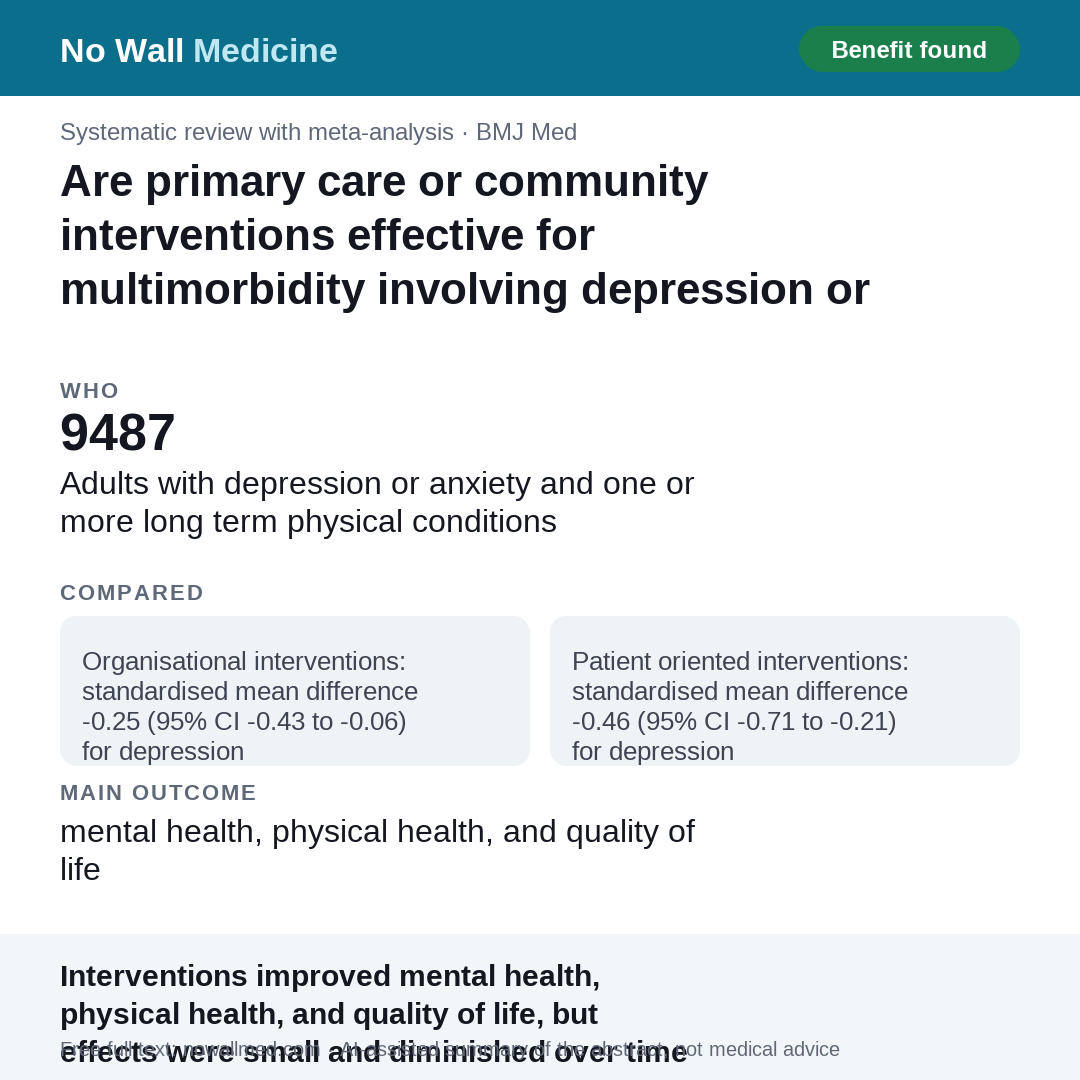
Primary care and community interventions for multimorbidity involving depression or anxiety: systematic review with meta-analysis
Systematic review with meta-analysisBenefit found
Are primary care or community interventions effective for multimorbidity involving depression or anxiety?
Who
9487
Adults with depression or anxiety and one or more long term physical conditions
Compared
Organisational interventions: standardised mean difference -0.25 (95% CI -0.43 to -0.06) for depression
Patient oriented interventions: standardised mean difference -0.46 (95% CI -0.71 to -0.21) for depression
Main outcome
mental health, physical health, and quality of life
Bottom line: Interventions improved mental health, physical health, and quality of life, but effects were small and diminished over time for patient oriented interventions.
Limitation: Effects for patient oriented interventions were diminished at the late follow-up period.
BMJ Med · 2026-04-10Download image
Occupational exposure to toxic particles and risk of pulmonary sarcoidosis: a systematic review and meta-analysis
Systematic review and meta-analysisMixed results
Are occupational toxic particles associated with an increased risk of pulmonary sarcoidosis?
Who
Individuals with occupational exposure to toxic particles
Compared
Silica, pesticides, mould, and WTC dust: increased odds
Gold exposure: protective factor
Main outcome
Risk of developing pulmonary sarcoidosis
Bottom line: Occupational silica, pesticides, mould, and World Trade Center dust increase pulmonary sarcoidosis risk, while gold exposure is protective.
BMJ Open Respir Res · 2026-04-10Download image

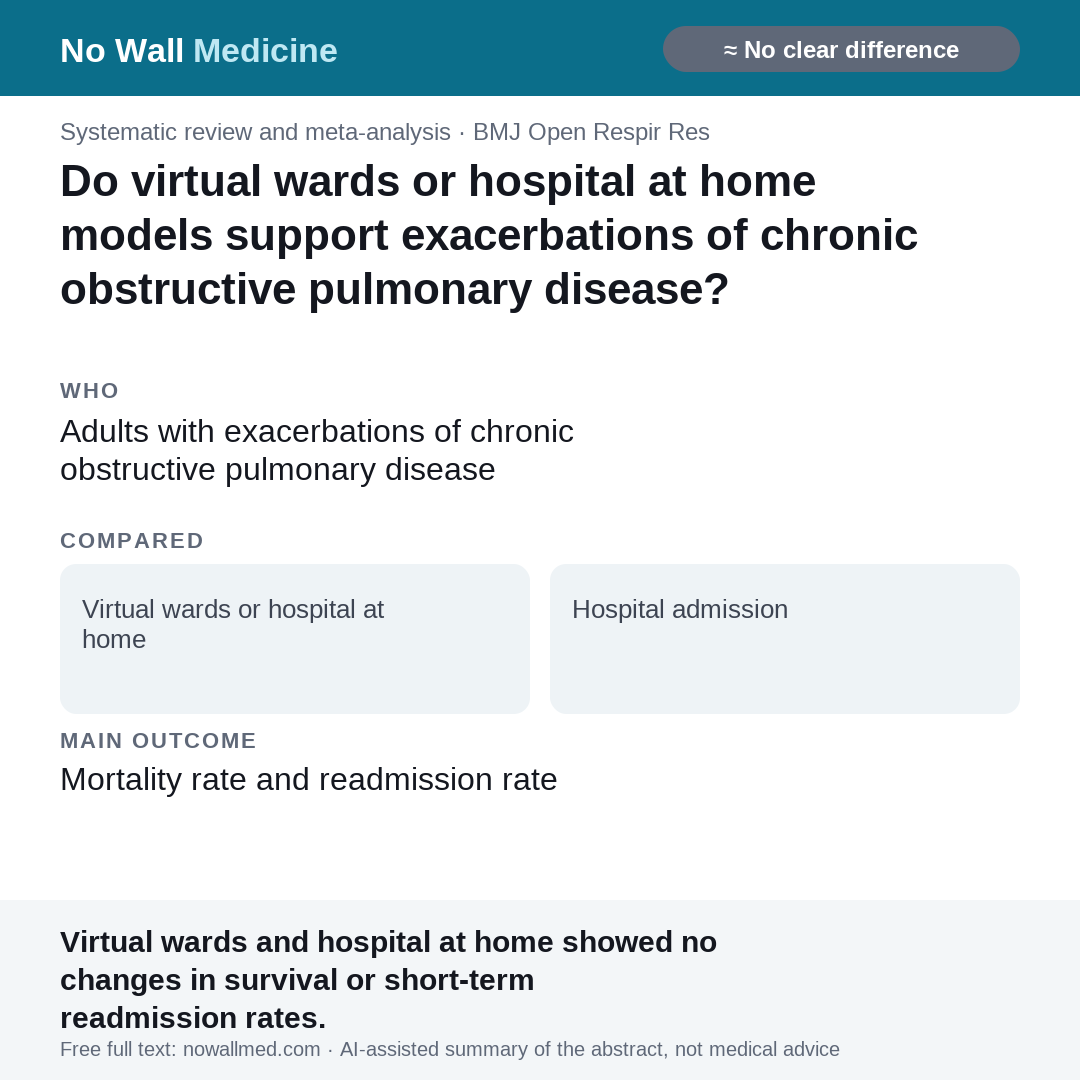
What is the evidence for virtual wards or hospital-at-home care pathways for exacerbations of chronic obstructive pulmonary disease? A systematic review and meta-analysis
Systematic review and meta-analysisNo clear difference
Do virtual wards or hospital at home models support exacerbations of chronic obstructive pulmonary disease?
Who
Adults with exacerbations of chronic obstructive pulmonary disease
Compared
Virtual wards or hospital at home
Hospital admission
Main outcome
Mortality rate and readmission rate
Bottom line: Virtual wards and hospital at home showed no changes in survival or short-term readmission rates.
Limitation: More evidence is needed to support widespread roll-out of these pathways.
BMJ Open Respir Res · 2026-04-10Download image
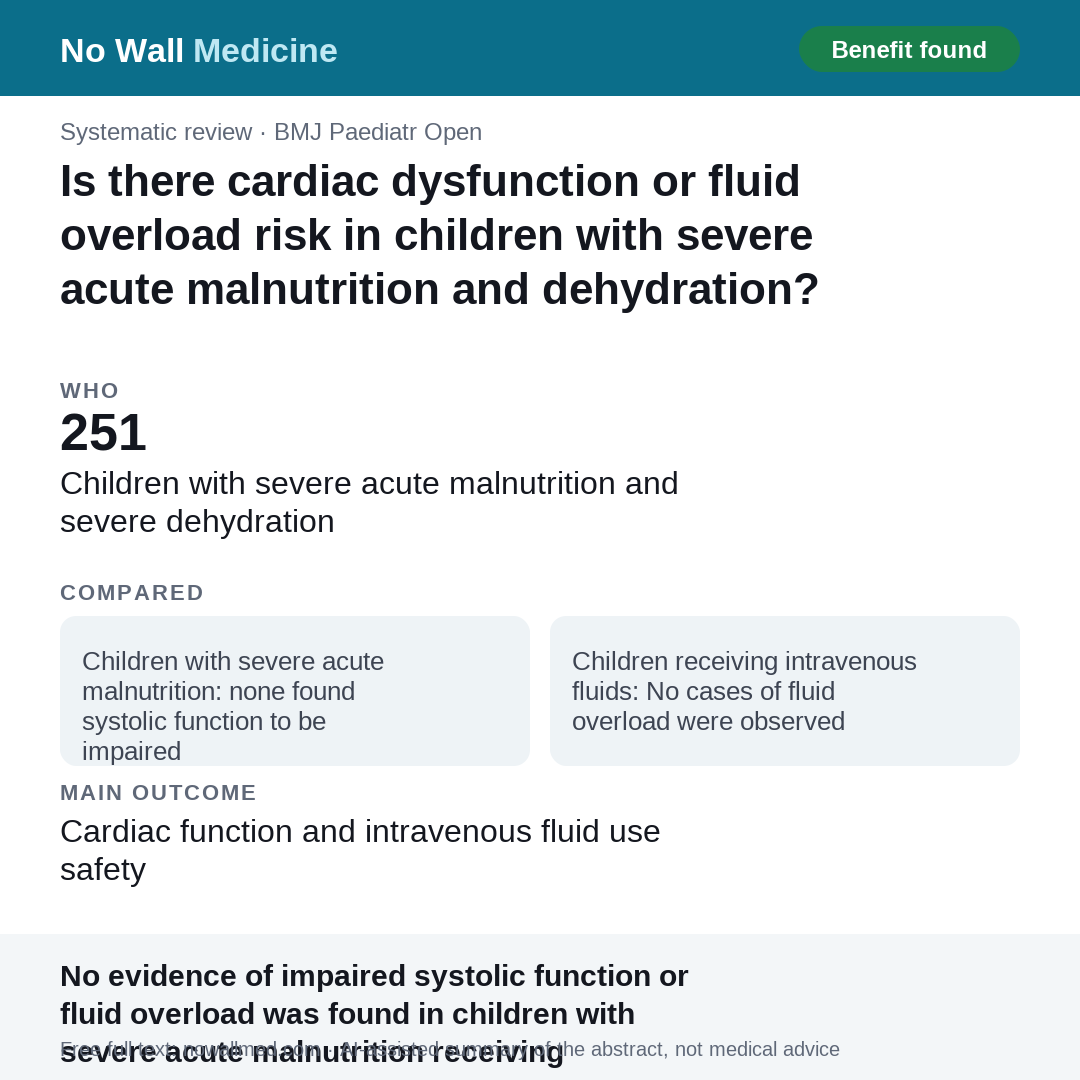
Systematic review of the evidence of cardiac dysfunction and intravenous fluid use among children with severe acute malnutrition and severe dehydration
Systematic reviewBenefit found
Is there cardiac dysfunction or fluid overload risk in children with severe acute malnutrition and dehydration?
Who
251
Children with severe acute malnutrition and severe dehydration
Compared
Children with severe acute malnutrition: none found systolic function to be impaired
Children receiving intravenous fluids: No cases of fluid overload were observed
Main outcome
Cardiac function and intravenous fluid use safety
Bottom line: No evidence of impaired systolic function or fluid overload was found in children with severe acute malnutrition receiving intravenous fluids.
BMJ Paediatr Open · 2026-04-10Download image
Predicting bilingual aphasia treatment outcomes using digital twins: a double-blind randomized controlled trial
Double-blind randomized controlled trialMixed results
Can the BiLex computational model predict the optimal language for bilingual aphasia therapy?
Who
48
Spanish-English bilinguals with chronic aphasia
Compared
BiLex-recommended language
Opposite language
Main outcome
Proportion of maximal improvement and cross-language generalization
Result: Difference (SE) -0.16 (0.07) for cross-language generalization
Bottom line: The model-opposite group showed greater cross-language generalization, but the model-assigned group had advantages in most subgroups.
Limitation: The model-opposite group showed higher response variability.
NPJ Digit Med · 2026-04-10Download image

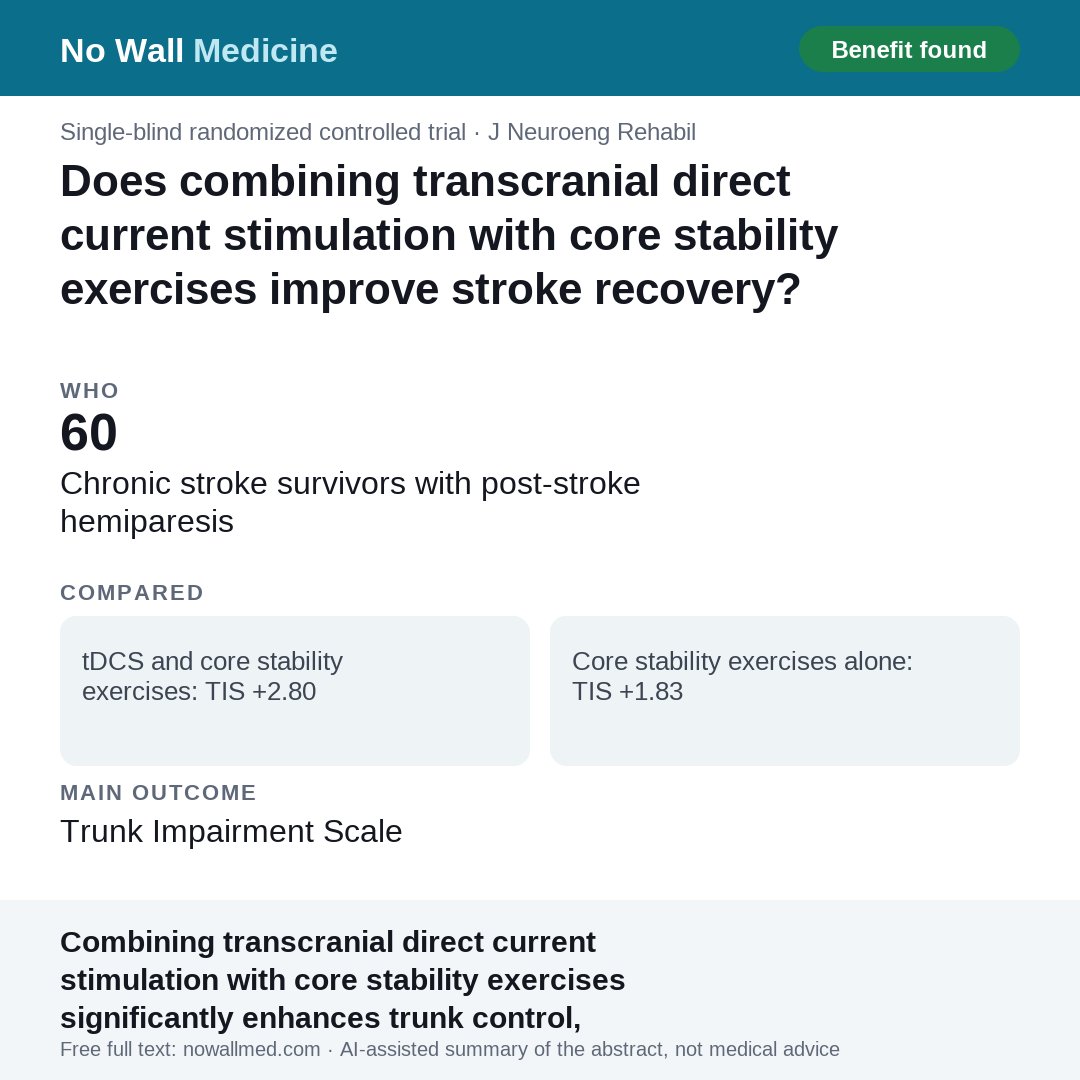
Unlocking trunk potential after stroke: a novel approach combining transcranial direct current stimulation and core stability exercise: a randomized controlled trial
Single-blind randomized controlled trialBenefit found
Does combining transcranial direct current stimulation with core stability exercises improve stroke recovery?
Who
60
Chronic stroke survivors with post-stroke hemiparesis
Compared
tDCS and core stability exercises: TIS +2.80
Core stability exercises alone: TIS +1.83
Main outcome
Trunk Impairment Scale
Bottom line: Combining transcranial direct current stimulation with core stability exercises significantly enhances trunk control, balance, and functional independence in chronic stroke survivors.
Limitation: This study was retrospectively registered.
J Neuroeng Rehabil · 2026-04-10Download image
Efficacy and safety of VPM1002 and Immuvac in preventing tuberculosis: phase 3 randomised clinical trial (PreVenTB trial)
Phase 3 randomised clinical trialMixed results
Is VPM1002 or Immuvac effective in preventing microbiologically confirmed tuberculosis?
Who
12717
12,717 healthy household contacts of patients with smear positive tuberculosis · 18 sites across six states of India
Compared
1.68%VPM1002
2.09%Immuvac
2.13%Placebo
Main outcome
incidence of microbiologically confirmed tuberculosis
Result: vaccine efficacy 21.4% (95% CI -8.9% to 43.2%)
Bottom line: VPM1002 and Immuvac were safe but lacked efficacy against all tuberculosis or pulmonary tuberculosis, though VPM1002 showed efficacy against extrapulmonary tuberculosis.
BMJ · 2026-04-09Download image

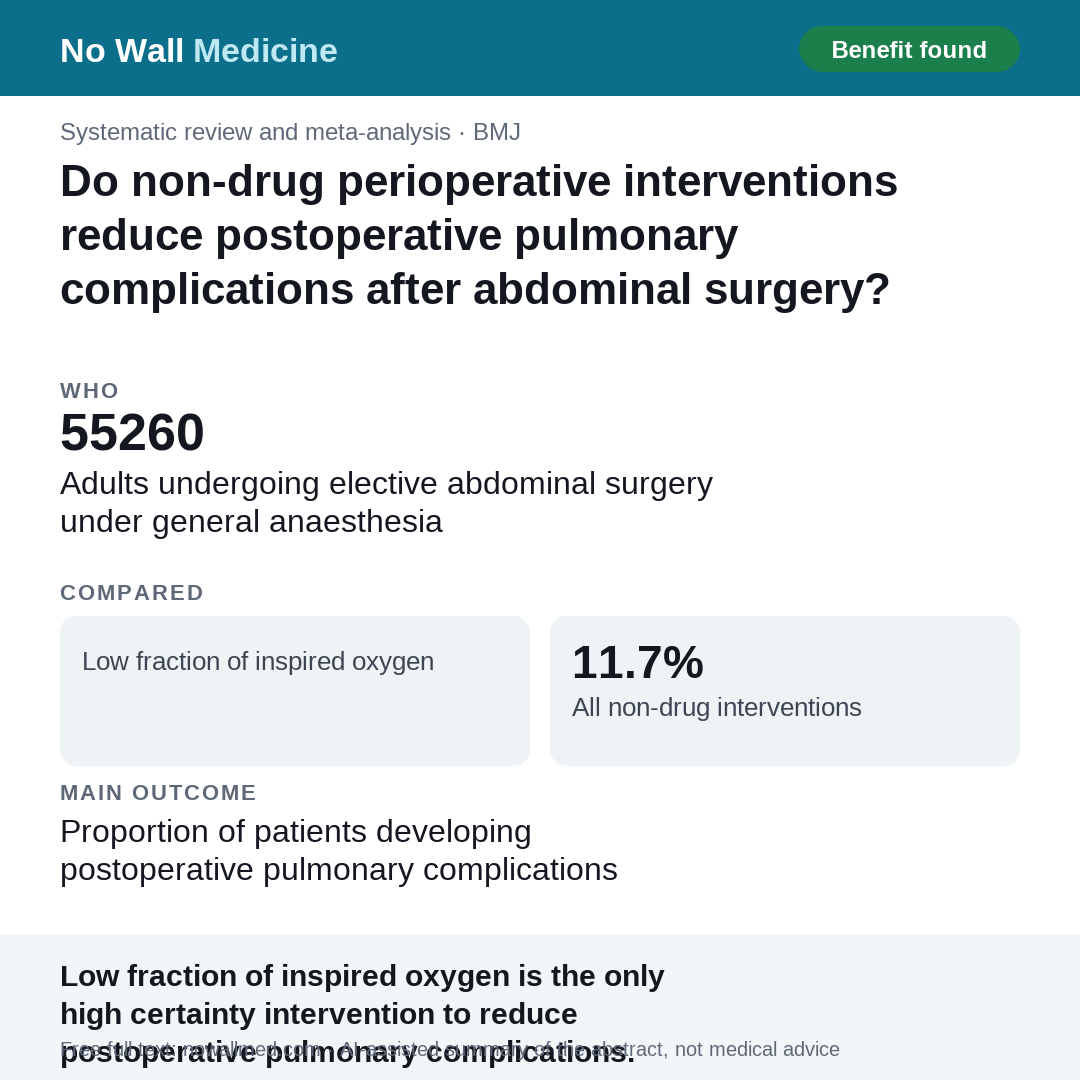
Non-drug perioperative interventions to reduce postoperative pulmonary complications after abdominal surgery: systematic review and meta-analysis
Systematic review and meta-analysisBenefit found
Do non-drug perioperative interventions reduce postoperative pulmonary complications after abdominal surgery?
Who
55260
Adults undergoing elective abdominal surgery under general anaesthesia
Compared
Low fraction of inspired oxygen
11.7%All non-drug interventions
Main outcome
Proportion of patients developing postoperative pulmonary complications
Result: risk ratio 0.81 (95% confidence interval 0.71 to 0.92)
Bottom line: Low fraction of inspired oxygen is the only high certainty intervention to reduce postoperative pulmonary complications.
BMJ · 2026-04-09Download image
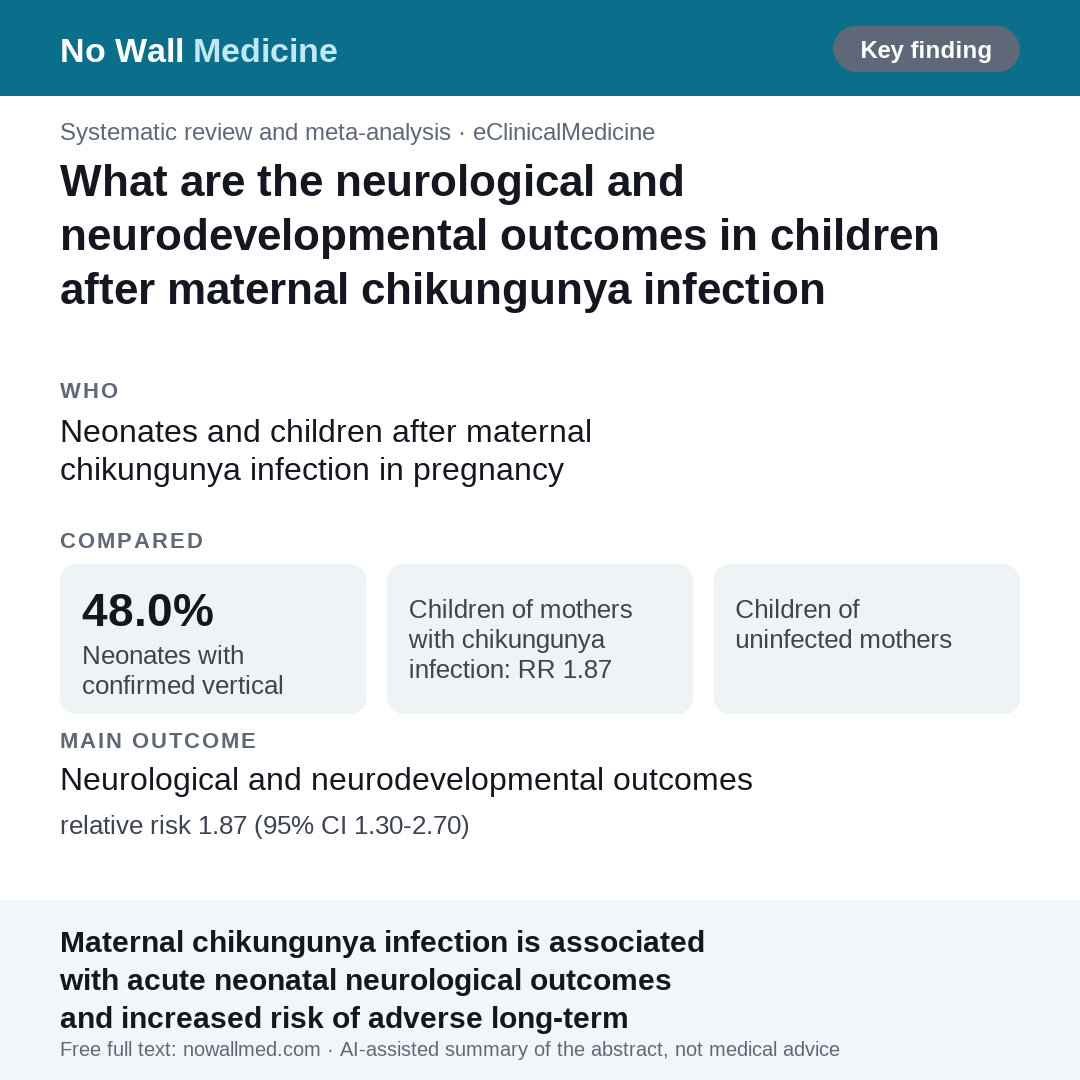
Neurological and neurodevelopmental outcomes in neonates and children after maternal chikungunya infection in pregnancy: a systematic review and meta-analysis
Systematic review and meta-analysisHarm found
What are the neurological and neurodevelopmental outcomes in children after maternal chikungunya infection during pregnancy?
Who
Neonates and children after maternal chikungunya infection in pregnancy
Compared
48.0%Neonates with confirmed vertical chikungunya infection (95% CI 24.0-73.0)
Children of mothers with chikungunya infection: RR 1.87
Children of uninfected mothers
Main outcome
Neurological and neurodevelopmental outcomes
Result: relative risk 1.87 (95% CI 1.30-2.70)
Bottom line: Maternal chikungunya infection is associated with acute neonatal neurological outcomes and increased risk of adverse long-term neurodevelopment.
Limitation: Small, predominantly observational evidence base with heterogeneous outcome definitions and ascertainment.
eClinicalMedicine · 2026-04-09Download image
Post-acute sequelae after Nipah virus infection: a systematic review and meta-analysis
Systematic review and meta-analysisHarm found
What is the prevalence and incidence of post-acute sequelae in Nipah virus survivors?
Who
Survivors of Nipah virus infection · Malaysia and Singapore
Compared
24%Total survivors of Nipah infection (95% CI 9-49; I2 = 0%)
45%Survivors with acute Nipah encephalitis (95% CI 11-85; I2 = 64%)
Main outcome
Prevalence of total residual neurological deficits
Bottom line: Nipah virus survivors face a substantial long-term disease burden, including significant residual neurological deficits.
Limitation: Estimates based on limited data, subjective outcome assessment, and heterogeneous populations.
eClinicalMedicine · 2026-04-09Download image

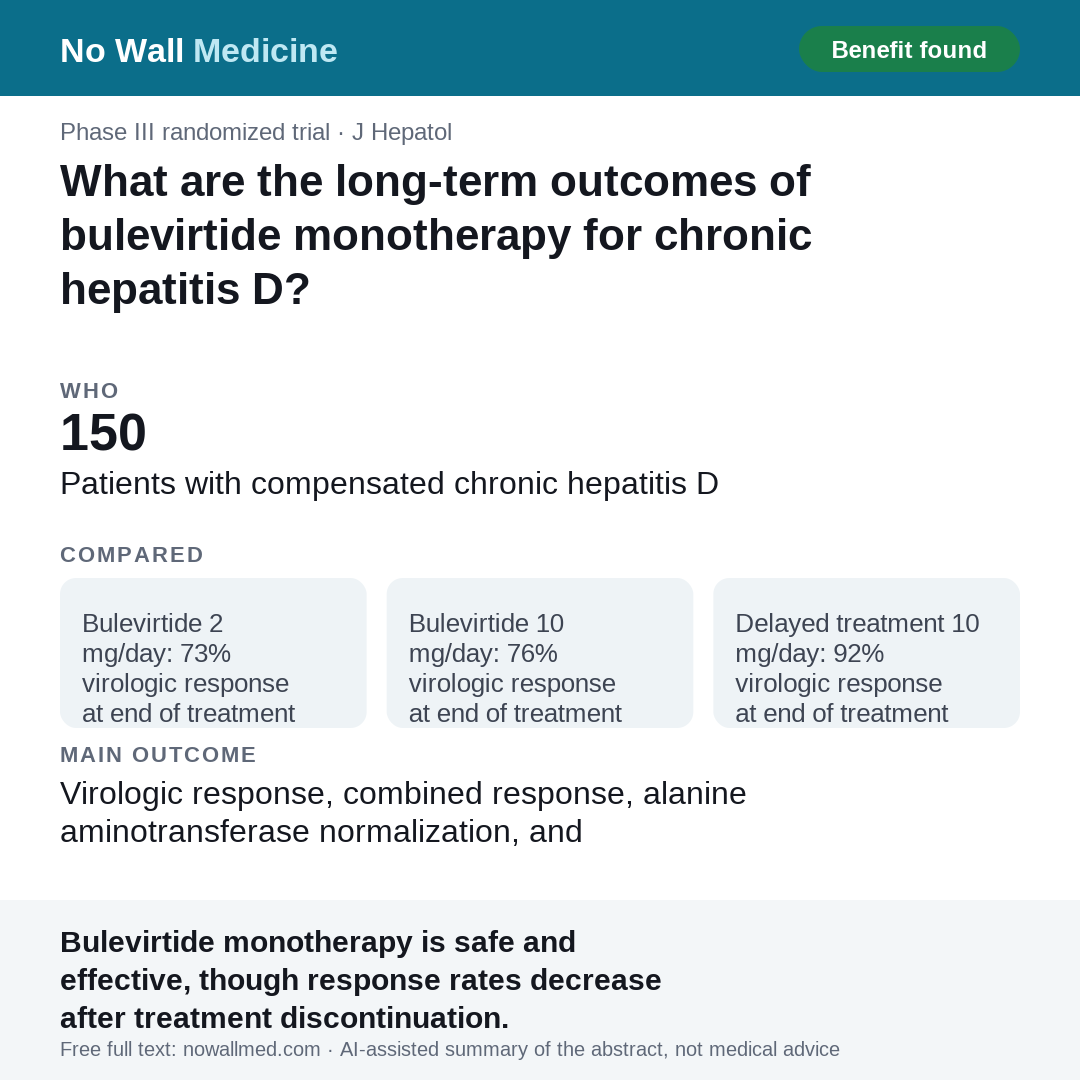
144 Weeks of bulevirtide monotherapy for chronic hepatitis D: Final and post-treatment results from a phase III randomized trial
Phase III randomized trialBenefit found
What are the long-term outcomes of bulevirtide monotherapy for chronic hepatitis D?
Who
150
Patients with compensated chronic hepatitis D
Compared
Bulevirtide 2 mg/day: 73% virologic response at end of treatment
Bulevirtide 10 mg/day: 76% virologic response at end of treatment
Delayed treatment 10 mg/day: 92% virologic response at end of treatment
Main outcome
Virologic response, combined response, alanine aminotransferase normalization, and undetectable hepatitis D virus RNA
Bottom line: Bulevirtide monotherapy is safe and effective, though response rates decrease after treatment discontinuation.
Limitation: Treatment outcomes beyond 2 years and after bulevirtide discontinuation remain unknown.
J Hepatol · 2026-04-09Download image