Visual abstracts
New randomized trials and meta-analyses from leading journals at a glance: who was studied, what was compared, and what was found. Every paper is free to read in full.
All specialtiesCardiology 1312Oncology 1141Gastroenterology & Hepatology 465Infectious Disease 855Neurology 536Psychiatry & Mental Health 650Pulmonology 561Critical Care 387Endocrinology & Diabetes 728Pediatrics 769Surgery 612Orthopedics & Sports Medicine 251Neurosurgery 177Cardiothoracic & Vascular Surgery 147Plastic & Reconstructive Surgery 205Nephrology 277Rheumatology 174Hematology 274Dermatology 135Ophthalmology 144Obstetrics & Gynecology 407Public & Global Health 252Radiology & Imaging 168Anesthesiology 245Urology 240ENT (Otolaryngology) 179Emergency Medicine 142Allergy & Immunology 89Geriatrics 272Family Medicine & Primary Care 164Medical Genetics & Genomics 139Pathology & Laboratory Medicine 40Physical Medicine & Rehabilitation 227Palliative Care 119Nutrition 340Digital Health & AI 670General Medicine 121
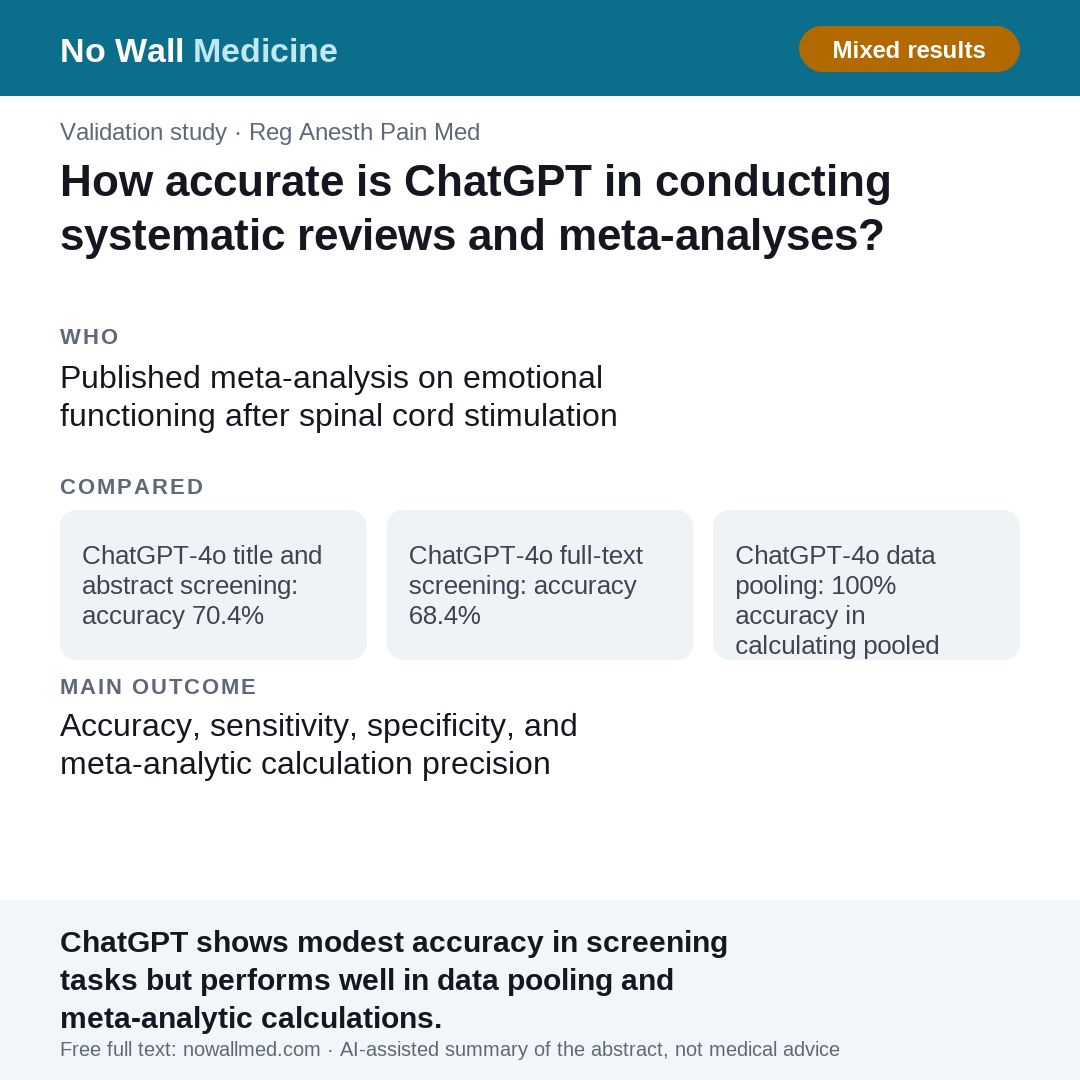
Human versus artificial intelligence: evaluating ChatGPT's performance in conducting published systematic reviews with meta-analysis in chronic pain research
Validation studyMixed results
How accurate is ChatGPT in conducting systematic reviews and meta-analyses?
Who
Published meta-analysis on emotional functioning after spinal cord stimulation
Compared
ChatGPT-4o title and abstract screening: accuracy 70.4%
ChatGPT-4o full-text screening: accuracy 68.4%
ChatGPT-4o data pooling: 100% accuracy in calculating pooled mean differences
Main outcome
Accuracy, sensitivity, specificity, and meta-analytic calculation precision
Bottom line: ChatGPT shows modest accuracy in screening tasks but performs well in data pooling and meta-analytic calculations.
Reg Anesth Pain Med · 2026-04-02Download image
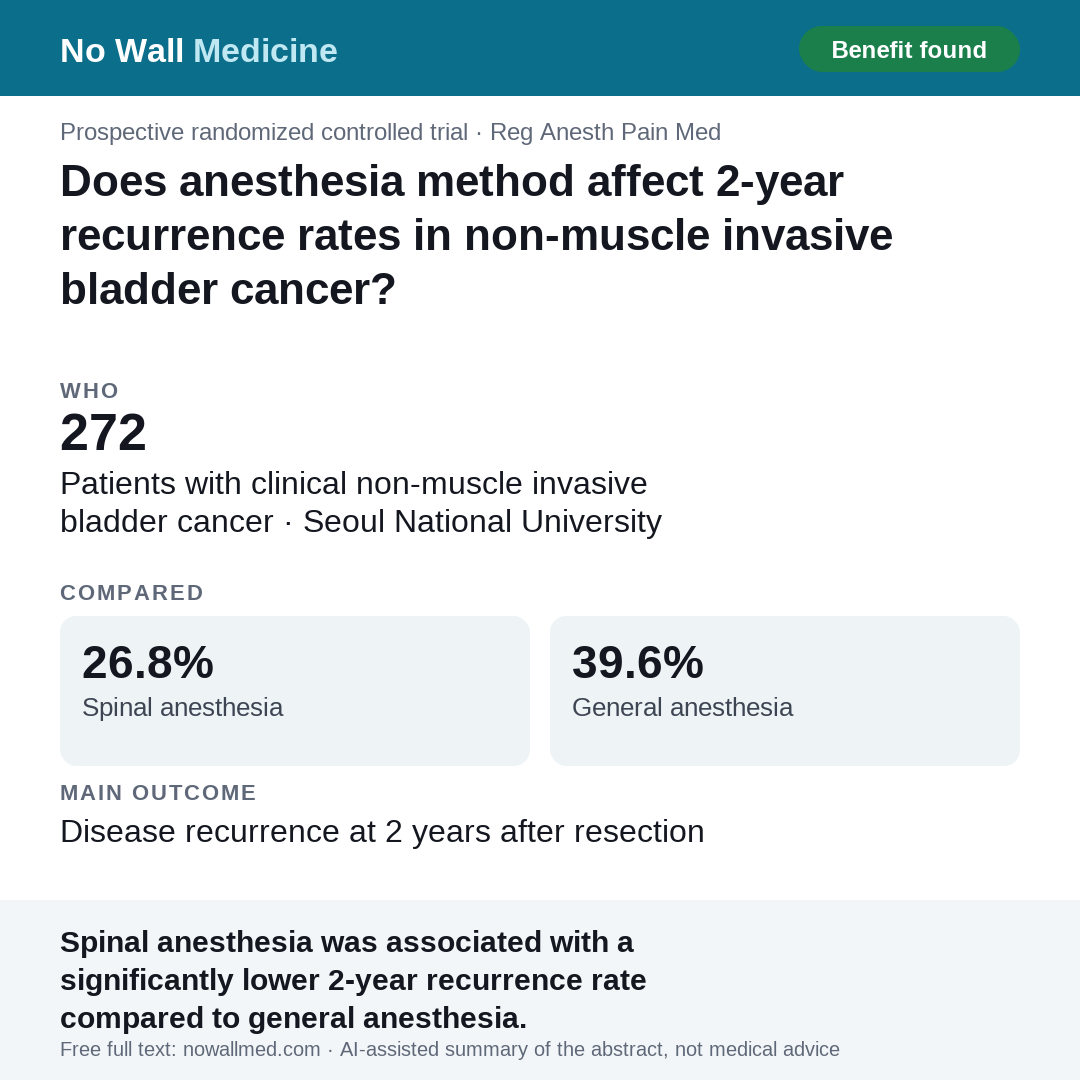
Anesthetic approaches and 2-year recurrence rates in non-muscle invasive bladder cancer: a randomized clinical trial
Prospective randomized controlled trialBenefit found
Does anesthesia method affect 2-year recurrence rates in non-muscle invasive bladder cancer?
Who
272
Patients with clinical non-muscle invasive bladder cancer · Seoul National University Hospital
Compared
26.8%Spinal anesthesia
39.6%General anesthesia
Main outcome
Disease recurrence at 2 years after resection
Bottom line: Spinal anesthesia was associated with a significantly lower 2-year recurrence rate compared to general anesthesia.
Reg Anesth Pain Med · 2026-04-02Download image
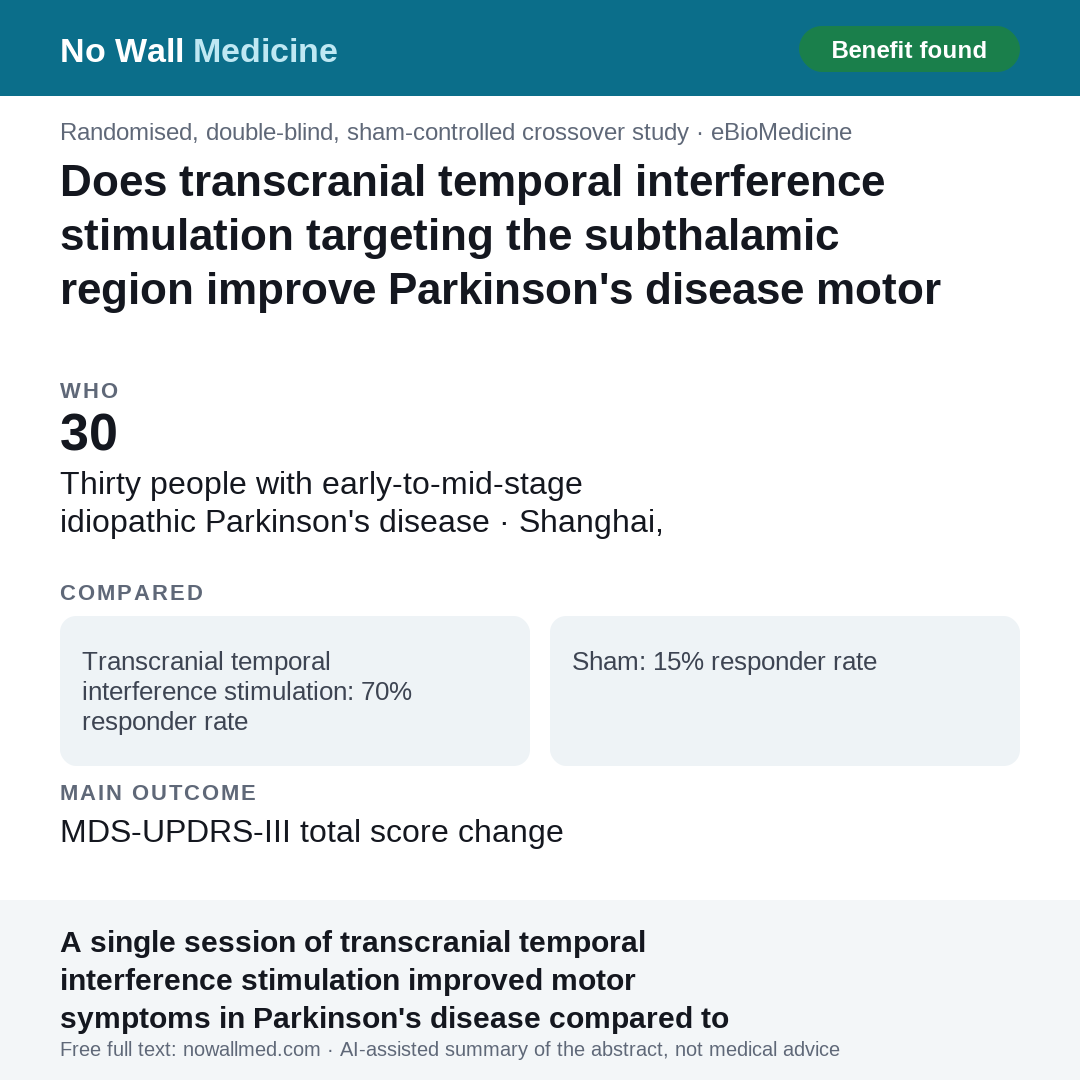
Transcranial temporal interference stimulation targeting the subthalamic region for motor symptoms in Parkinson's disease: a pilot, randomised, double-blind, sham-controlled crossover study
Randomised, double-blind, sham-controlled crossover studyBenefit found
Does transcranial temporal interference stimulation targeting the subthalamic region improve Parkinson's disease motor symptoms?
Who
30
Thirty people with early-to-mid-stage idiopathic Parkinson's disease · Shanghai, China
Compared
Transcranial temporal interference stimulation: 70% responder rate
Sham: 15% responder rate
Main outcome
MDS-UPDRS-III total score change
Result: risk difference 56.3%, 95% CI 38.3-74.4
Bottom line: A single session of transcranial temporal interference stimulation improved motor symptoms in Parkinson's disease compared to sham.
Funded by: National Natural Science Foundation of China
eBioMedicine · 2026-04-02Download image
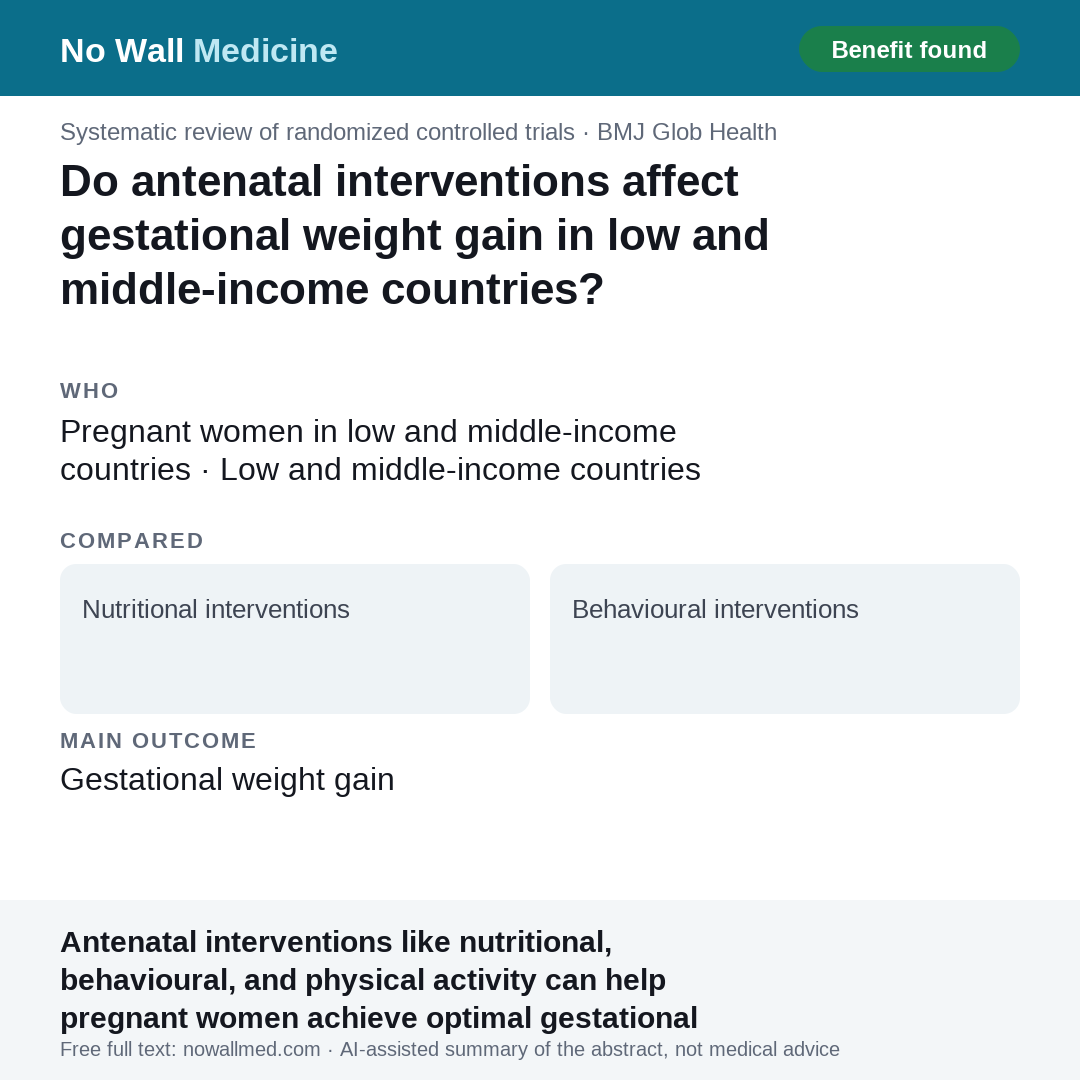
The effects of antenatal interventions on gestational weight gain in low and middle-income countries: a systematic review
Systematic review of randomized controlled trialsBenefit found
Do antenatal interventions affect gestational weight gain in low and middle-income countries?
Who
Pregnant women in low and middle-income countries · Low and middle-income countries
Compared
Nutritional interventions
Behavioural interventions
Main outcome
Gestational weight gain
Bottom line: Antenatal interventions like nutritional, behavioural, and physical activity can help pregnant women achieve optimal gestational weight gain.
BMJ Glob Health · 2026-04-02Download image
Impacts of rising food prices on nutritional outcomes and mortality of children in low and middle-income countries: a systematic review
Systematic review of longitudinal studiesHarm found
How do rising food prices impact nutritional outcomes and mortality of children in low and middle-income countries?
Who
Children in 104 low and middle-income countries · 104 low and middle-income countries
Compared
Higher food costs: adverse nutritional outcomes
Lower food costs
Main outcome
nutritional outcomes and mortality
Bottom line: Rising food prices are associated with adverse nutritional outcomes and mortality in children in low and middle-income countries.
Limitation: Subgroup analyses were limited
BMJ Glob Health · 2026-04-02Download image

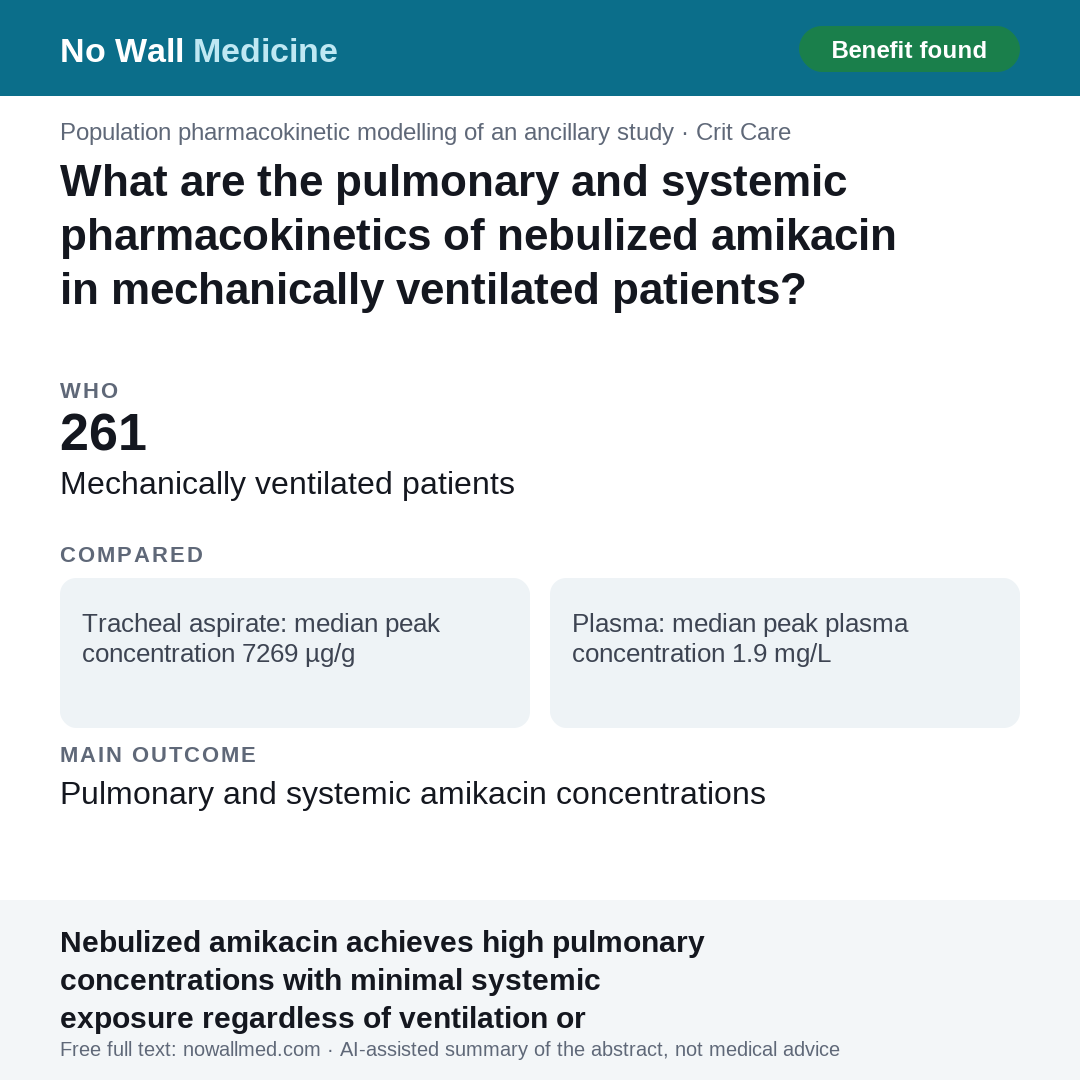
Amikacin pharmacokinetics after nebulization among intubated patients
Population pharmacokinetic modelling of an ancillary studyBenefit found
What are the pulmonary and systemic pharmacokinetics of nebulized amikacin in mechanically ventilated patients?
Who
261
Mechanically ventilated patients
Compared
Tracheal aspirate: median peak concentration 7269 µg/g
Plasma: median peak plasma concentration 1.9 mg/L
Main outcome
Pulmonary and systemic amikacin concentrations
Bottom line: Nebulized amikacin achieves high pulmonary concentrations with minimal systemic exposure regardless of ventilation or nebulization conditions.
Crit Care · 2026-04-02Download image
Advancing neonatal jaundice screening with mHealth: a mixed-methods randomised controlled feasibility study in a resource-limited setting in Mexico
Mixed-methods randomized controlled feasibility studyBenefit found
Is Picterus Jaundice Pro feasible for neonatal jaundice screening in Mexico?
Who
542
Newborns in a resource-limited Mexican healthcare setting · Mexico
Compared
Visual assessment alone
Visual assessment plus Picterus Jaundice Pro
Main outcome
Feasibility of implementing a smartphone-based detection tool
Result: proportional difference [95% CI 0.230 to 0.362] for positive screenings
Bottom line: Picterus Jaundice Pro improved positive screenings, successful referrals, and jaundice management in a resource-limited setting.
Limitation: Incomplete referrals occurred due to logistical barriers and low perceived risk by parents.
BMJ Paediatr Open · 2026-04-02Download image

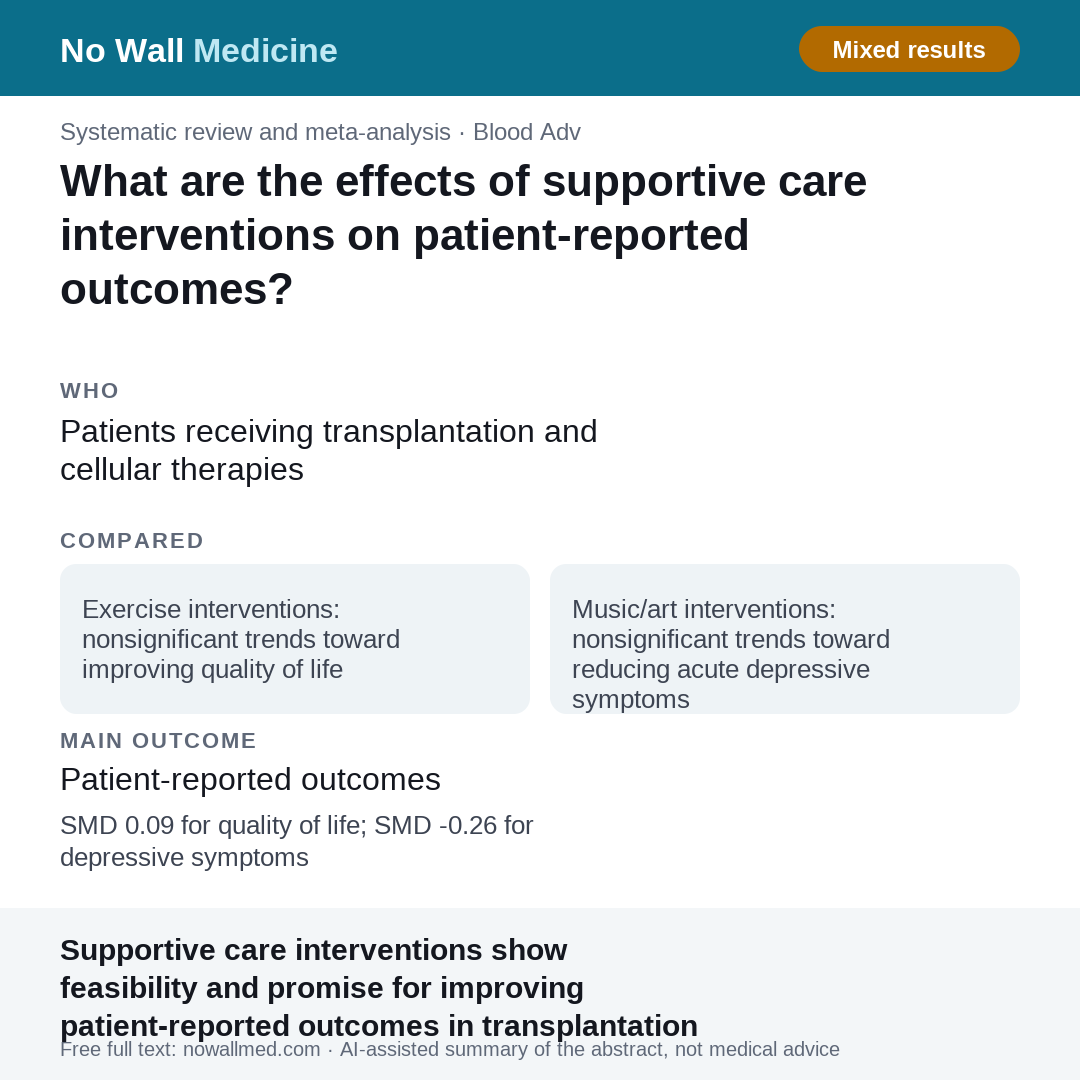
Supportive care interventions in hematopoietic stem cell transplantation: a systematic review and meta-analysis
Systematic review and meta-analysisMixed results
What are the effects of supportive care interventions on patient-reported outcomes?
Who
Patients receiving transplantation and cellular therapies
Compared
Exercise interventions: nonsignificant trends toward improving quality of life
Music/art interventions: nonsignificant trends toward reducing acute depressive symptoms
Main outcome
Patient-reported outcomes
Result: SMD 0.09 for quality of life; SMD -0.26 for depressive symptoms
Bottom line: Supportive care interventions show feasibility and promise for improving patient-reported outcomes in transplantation recipients.
Limitation: Larger, rigorously designed randomized controlled trials using standardized measures are needed.
Blood Adv · 2026-04-02Download image
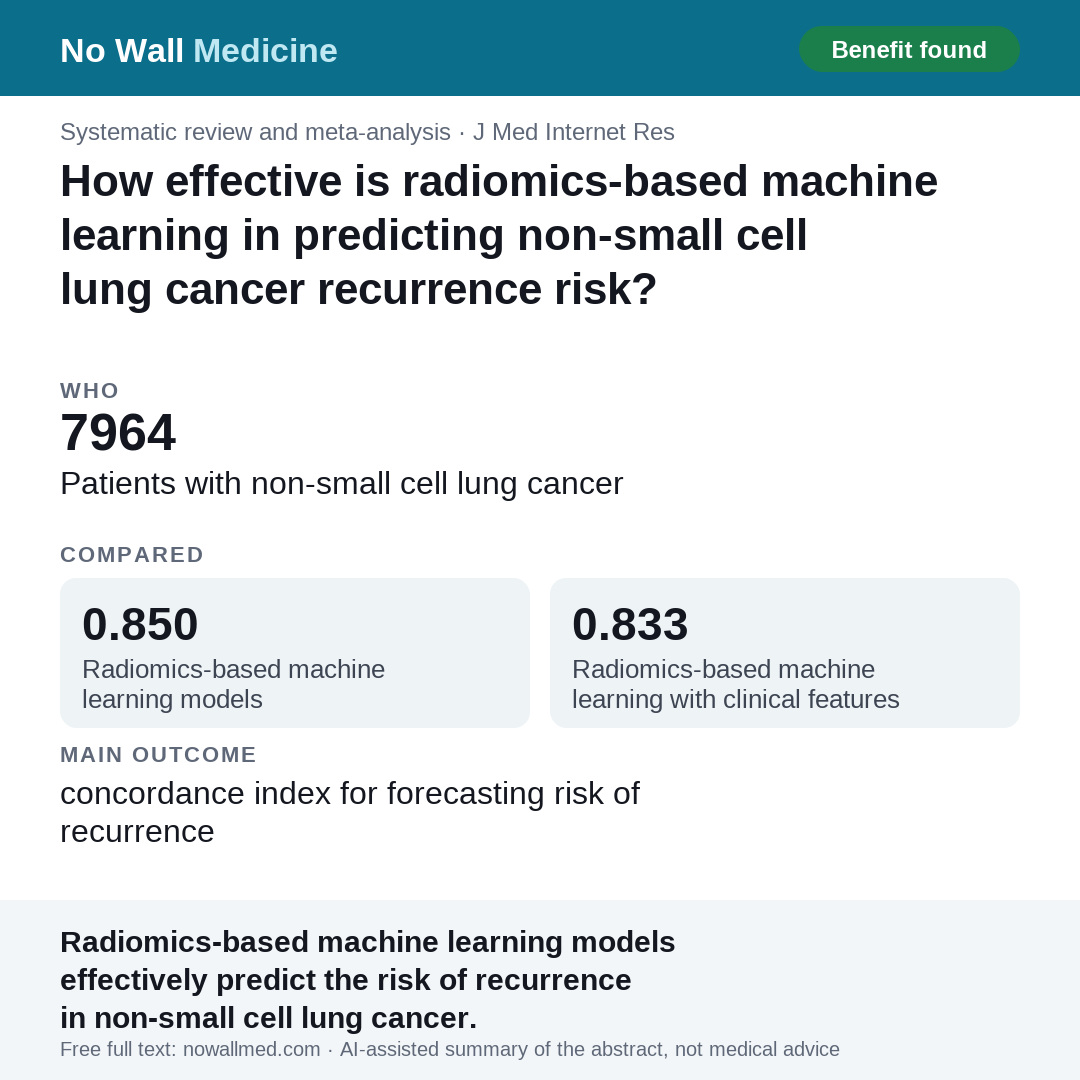
Accuracy of Radiomics-Based Machine Learning for Predicting Risk of Recurrence in Non-Small Cell Lung Cancer: Systematic Review and Meta-Analysis
Systematic review and meta-analysisBenefit found
How effective is radiomics-based machine learning in predicting non-small cell lung cancer recurrence risk?
Who
7964
Patients with non-small cell lung cancer
Compared
0.850Radiomics-based machine learning models (95% CI 0.834-0.866, 95% prediction interval 0.623-1.004)
0.833Radiomics-based machine learning with clinical features (95% CI 0.822-0.854, 95% prediction interval 0.717-0.945)
Main outcome
concordance index for forecasting risk of recurrence
Result: c-index 0.850 (95% CI 0.834-0.866)
Bottom line: Radiomics-based machine learning models effectively predict the risk of recurrence in non-small cell lung cancer.
Limitation: Methodological limitations and an absence of standardization were revealed by the average Radiomics Quality Score.
J Med Internet Res · 2026-04-02Download image
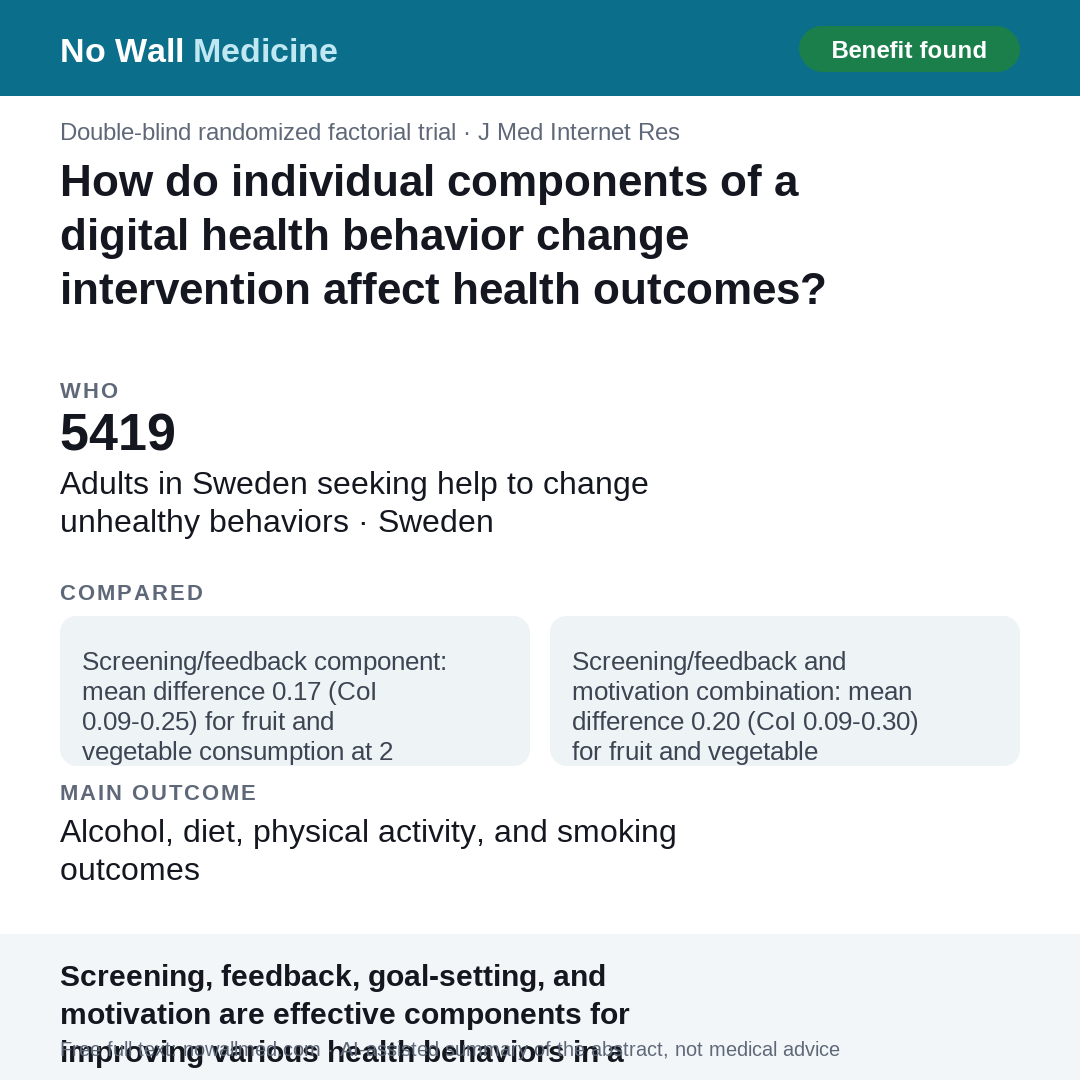
Effectiveness of the Components of a Digital Multiple Health Behavior Change Intervention Among Individuals Seeking Help Online (Coach): Factorial Randomized Trial
Double-blind randomized factorial trialBenefit found
How do individual components of a digital health behavior change intervention affect health outcomes?
Who
5419
Adults in Sweden seeking help to change unhealthy behaviors · Sweden
Compared
Screening/feedback component: mean difference 0.17 (CoI 0.09-0.25) for fruit and vegetable consumption at 2 months
Screening/feedback and motivation combination: mean difference 0.20 (CoI 0.09-0.30) for fruit and vegetable consumption at 2 months
Main outcome
Alcohol, diet, physical activity, and smoking outcomes
Result: incidence rate ratio 0.91 (CoI 0.81-1.03) for heavy episodic drinking at 4 months
Bottom line: Screening, feedback, goal-setting, and motivation are effective components for improving various health behaviors in a digital intervention.
J Med Internet Res · 2026-04-02Download image
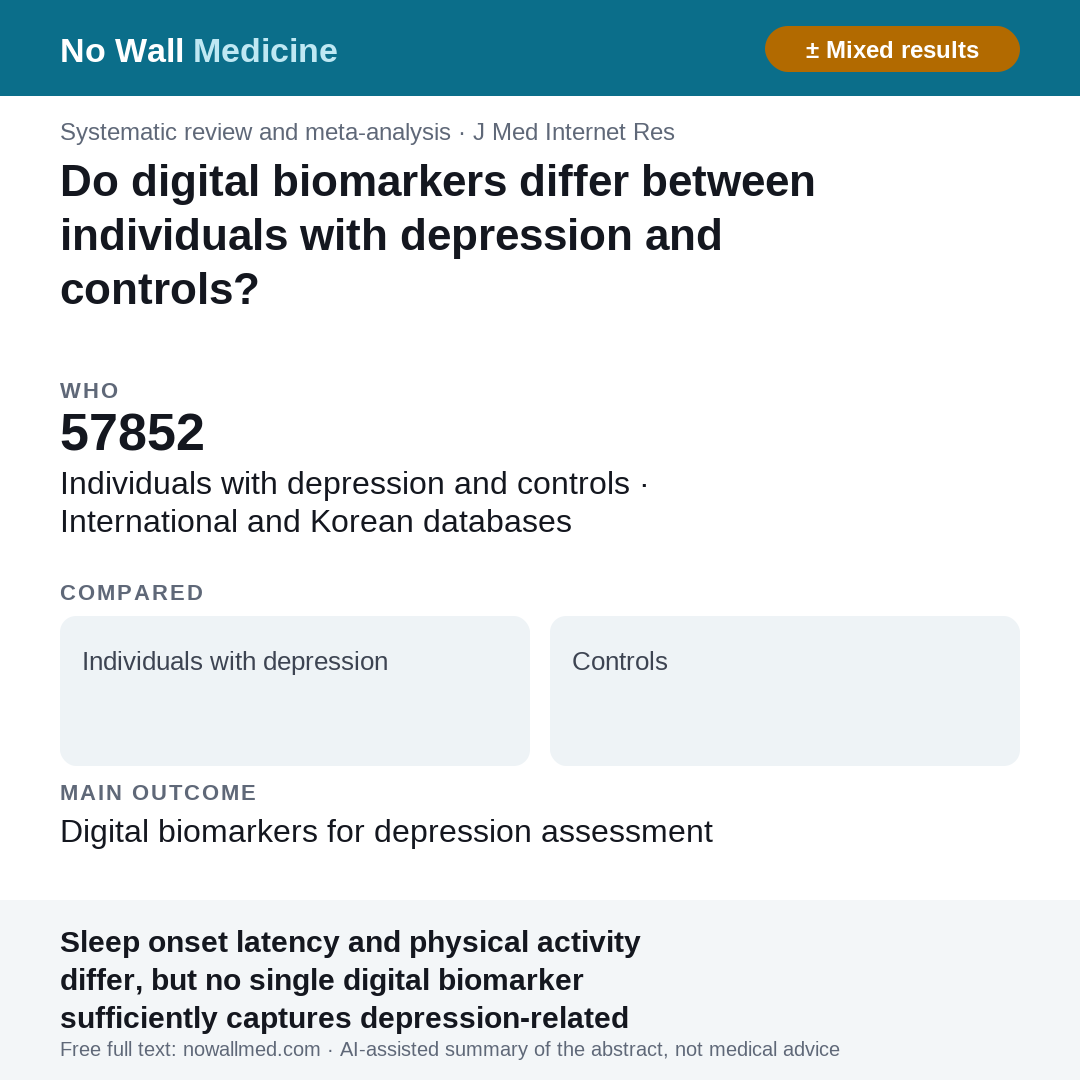
The Role of Digital Biomarkers in Physiological Signal-Based Depression Assessment: Systematic Review and Meta-Analysis
Systematic review and meta-analysisMixed results
Do digital biomarkers differ between individuals with depression and controls?
Who
57852
Individuals with depression and controls · International and Korean databases
Compared
Individuals with depression
Controls
Main outcome
Digital biomarkers for depression assessment
Bottom line: Sleep onset latency and physical activity differ, but no single digital biomarker sufficiently captures depression-related changes.
Limitation: Lack of standardized data collection protocols and high clinical heterogeneity across studies.
J Med Internet Res · 2026-04-02Download image
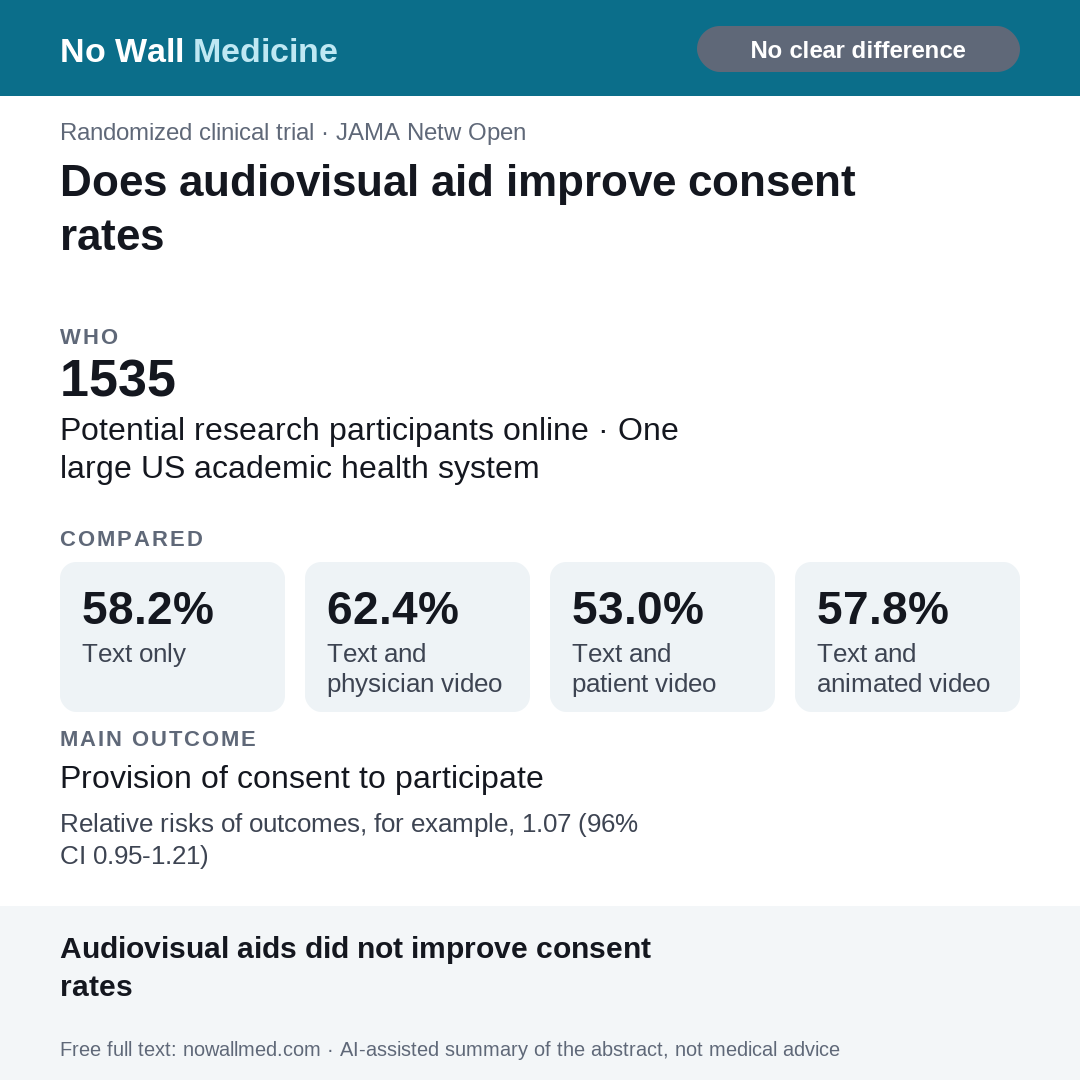
Audiovisual Augmentation of Electronic Consent to Improve Consent Rates and Comprehension: A Randomized Clinical Trial
Randomized clinical trialNo clear difference
Does audiovisual aid improve consent rates
Who
1535
Potential research participants online · One large US academic health system
Compared
58.2%Text only (221/380)
62.4%Text and physician video (241/386)
53.0%Text and patient video (203/383)
57.8%Text and animated video (223/386)
Main outcome
Provision of consent to participate
Result: Relative risks of outcomes, for example, 1.07 (96% CI 0.95-1.21)
Bottom line: Audiovisual aids did not improve consent rates
Limitation: No follow-up undertaken
JAMA Netw Open · 2026-04-01Download image
Navigating Prognostic Dialogue During Serious Illness Conversations
Qualitative studyUnclear result
How do patients navigate prognostic dialogue
Who
50
Patients with hematologic malignant neoplasms and caregivers · Danish hematology departments
Compared
Patients
Caregivers
Main outcome
Prognostic dialogue navigation
Bottom line: Clinicians' attentiveness enabled prognostic dialogue
JAMA Netw Open · 2026-04-01Download image

Care Coordination and Hospitalization in Older Adults With or at Risk for Cardiovascular Disease: A Randomized Clinical Trial
Randomized clinical trialNo clear difference
Are proactive care coordination strategies more effective than usual care for cardiovascular disease patients?
Who
400
Patients 65 or older with cardiovascular disease or risk factors · Accountable care organization in New York, New York
Compared
Proactive intervention group: 0.25 (95% CI, 0.21-0.31) events per 100 person-days alive
Usual care control group: 0.21 (95% CI, 0.17-0.27) events per 100 person-days alive
Main outcome
Emergency department visits or hospitalizations during follow-up
Result: 0.25 (95% CI, 0.21-0.31) vs 0.21 (95% CI, 0.17-0.27) events per 100 person-days alive
Bottom line: Proactive care coordination did not reduce emergency department visits or hospitalizations compared to usual post-hospitalization care.
JAMA Netw Open · 2026-04-01Download image

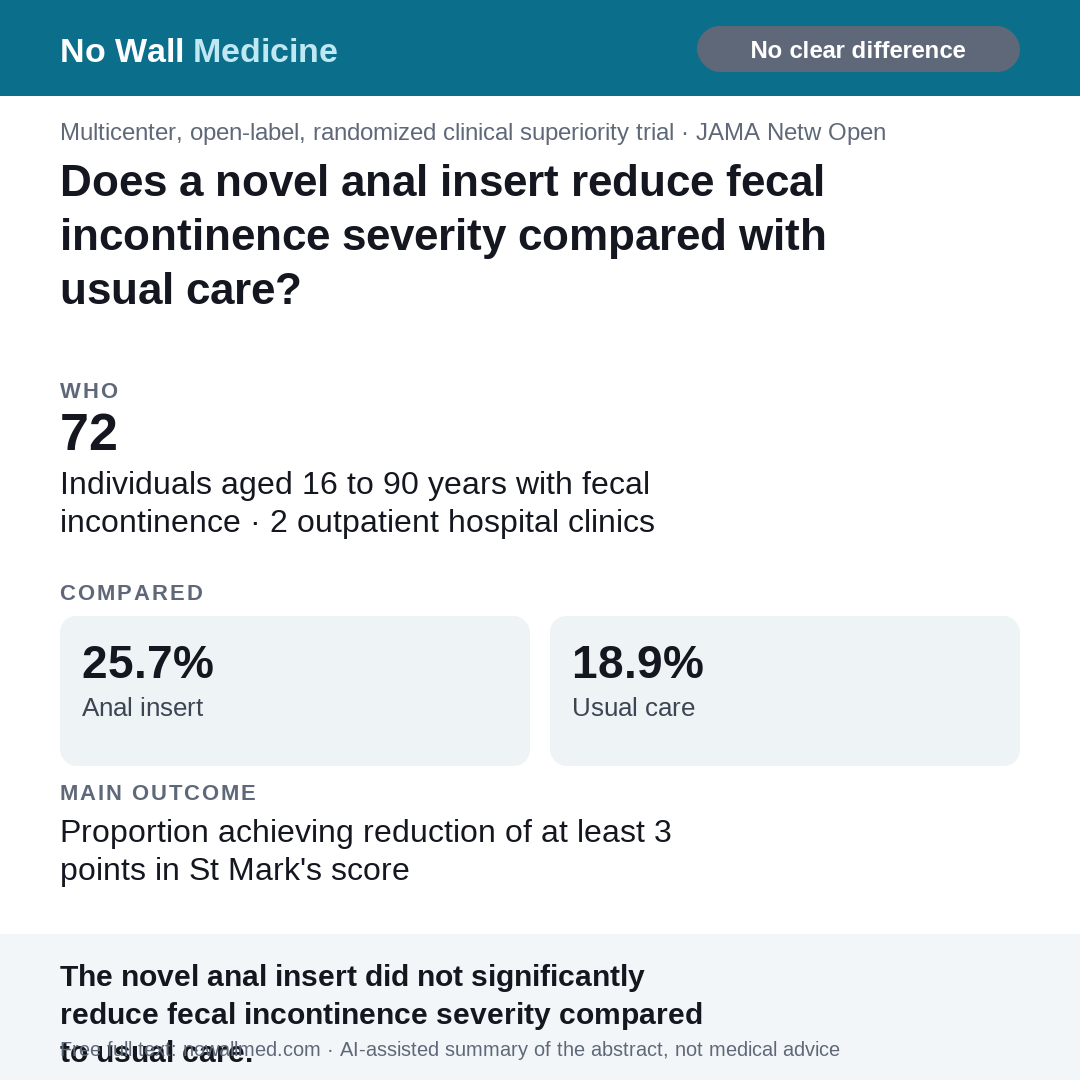
Controlling Fecal Incontinence With a Novel Anal Device: A Randomized Clinical Trial
Multicenter, open-label, randomized clinical superiority trialNo clear difference
Does a novel anal insert reduce fecal incontinence severity compared with usual care?
Who
72
Individuals aged 16 to 90 years with fecal incontinence · 2 outpatient hospital clinics in the Netherlands
Compared
25.7%Anal insert (9/35)
18.9%Usual care (7/37)
Main outcome
Proportion achieving reduction of at least 3 points in St Mark's score
Result: relative risk 1.36 (95% CI 0.57 to 3.25)
Bottom line: The novel anal insert did not significantly reduce fecal incontinence severity compared to usual care.
JAMA Netw Open · 2026-04-01Download image
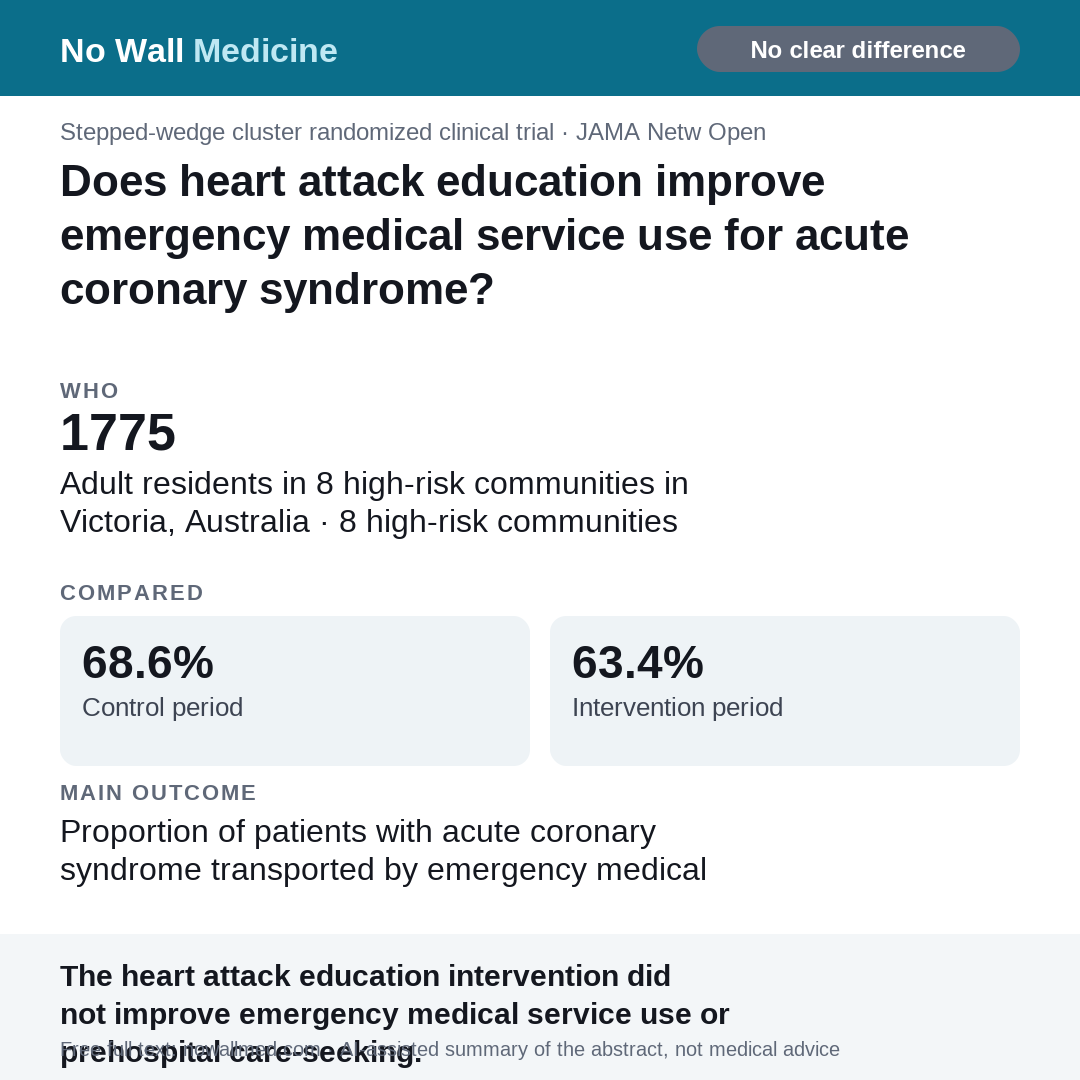
Heart Attack Education and EMS Response in High-Risk, Low EMS Usage Areas: A Stepped-Wedge Cluster-Randomized Trial
Stepped-wedge cluster randomized clinical trialNo clear difference
Does heart attack education improve emergency medical service use for acute coronary syndrome?
Who
1775
Adult residents in 8 high-risk communities in Victoria, Australia · 8 high-risk communities in Victoria, Australia
Compared
68.6%Control period
63.4%Intervention period
Main outcome
Proportion of patients with acute coronary syndrome transported by emergency medical services
Result: adjusted risk difference -8.98% (95% CI -17.50% to -0.46%)
Bottom line: The heart attack education intervention did not improve emergency medical service use or prehospital care-seeking.
JAMA Netw Open · 2026-04-01Download image
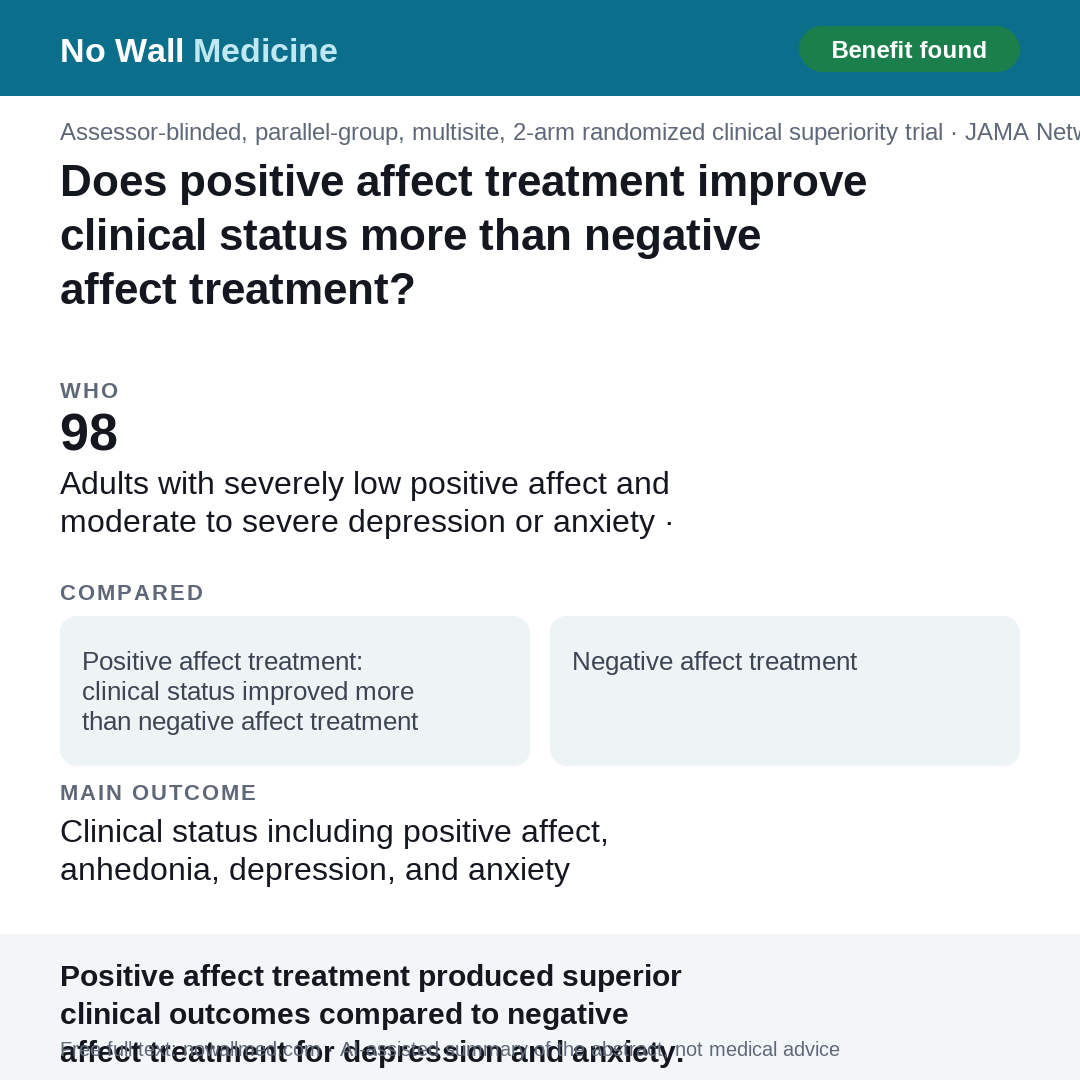
Positive Affect Treatment for Depression, Anxiety, and Low Positive Affect: A Randomized Clinical Trial
Assessor-blinded, parallel-group, multisite, 2-arm randomized clinical superiority trialBenefit found
Does positive affect treatment improve clinical status more than negative affect treatment?
Who
98
Adults with severely low positive affect and moderate to severe depression or anxiety · Academic outpatient treatment centers in California and Texas
Compared
Positive affect treatment: clinical status improved more than negative affect treatment
Negative affect treatment
Main outcome
Clinical status including positive affect, anhedonia, depression, and anxiety
Result: b = -0.06 (95% CI, -0.11 to -0.01)
Bottom line: Positive affect treatment produced superior clinical outcomes compared to negative affect treatment for depression and anxiety.
JAMA Netw Open · 2026-04-01Download image
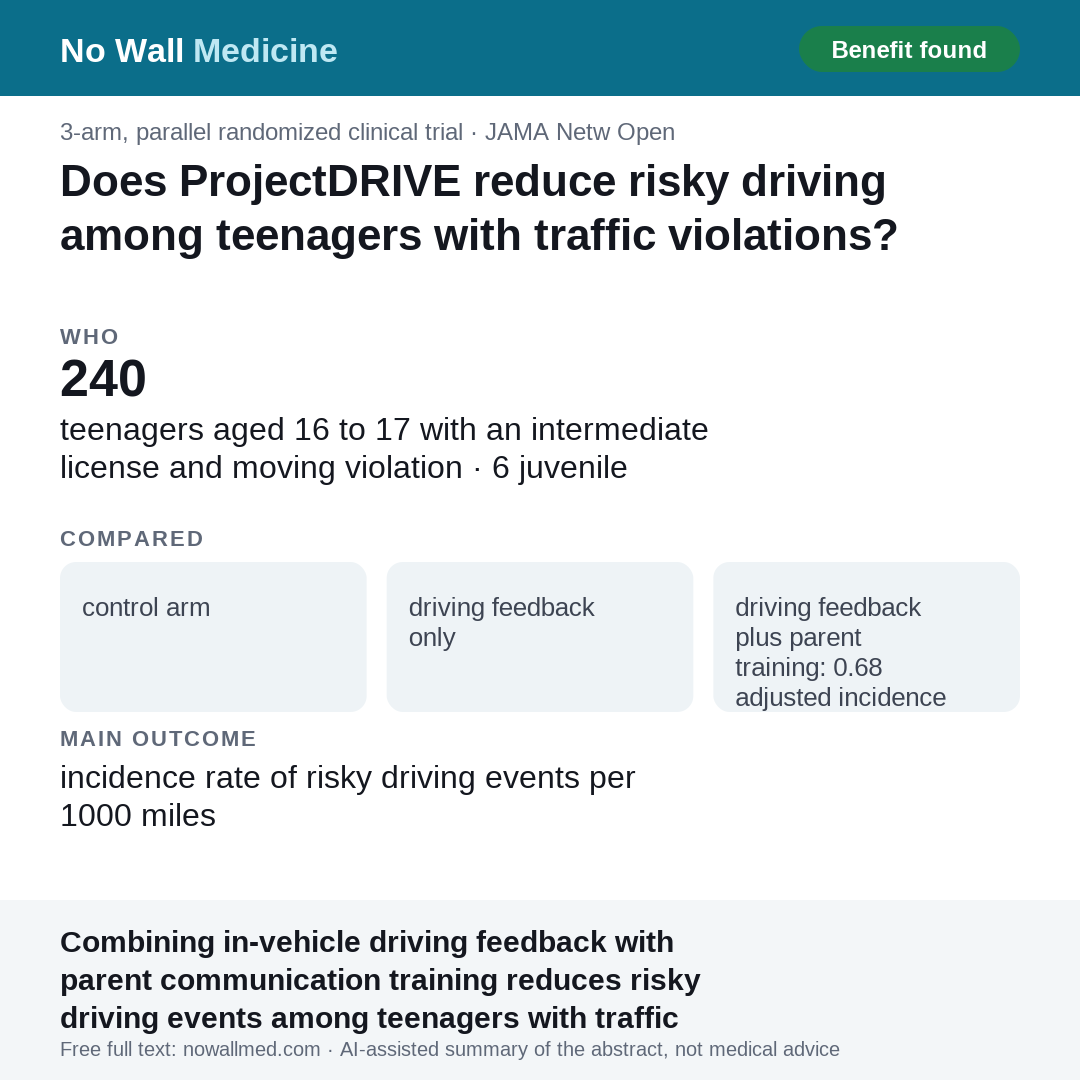
In-Vehicle Feedback With or Without Parent Communication Training and Teenage Driving Behaviors: A Randomized Clinical Trial
3-arm, parallel randomized clinical trialBenefit found
Does ProjectDRIVE reduce risky driving among teenagers with traffic violations?
Who
240
teenagers aged 16 to 17 with an intermediate license and moving violation · 6 juvenile traffic courts across Ohio
Compared
control arm
driving feedback only
driving feedback plus parent training: 0.68 adjusted incidence rate ratio
Main outcome
incidence rate of risky driving events per 1000 miles
Result: adjusted incidence rate ratio 0.68 (97.5% CI 0.51 to 0.90)
Bottom line: Combining in-vehicle driving feedback with parent communication training reduces risky driving events among teenagers with traffic violations.
JAMA Netw Open · 2026-04-01Download image
Behaviorally Informed Text Messaging to Promote Colon Cancer Screening: A Quality Improvement Randomized Clinical Trial
Quality improvement randomized clinical trialBenefit found
Does automated text messaging increase fecal immunochemical test completion compared to nurse-led telephone calls?
Who
1275
Adults with a new fecal immunochemical test order · 8 Federally Qualified Health Centers in Brooklyn, New York
Compared
58.9%Automated text message reminders
49.8%Nurse-led telephone call reminder
Main outcome
Fecal immunochemical test completion within 21 days
Result: absolute difference of 9.0 percentage points (95% CI, 3.6-14.5 percentage points)
Bottom line: Automated text messaging significantly improved fecal immunochemical test completion compared to usual nurse-led telephone outreach.
JAMA Netw Open · 2026-04-01Download image

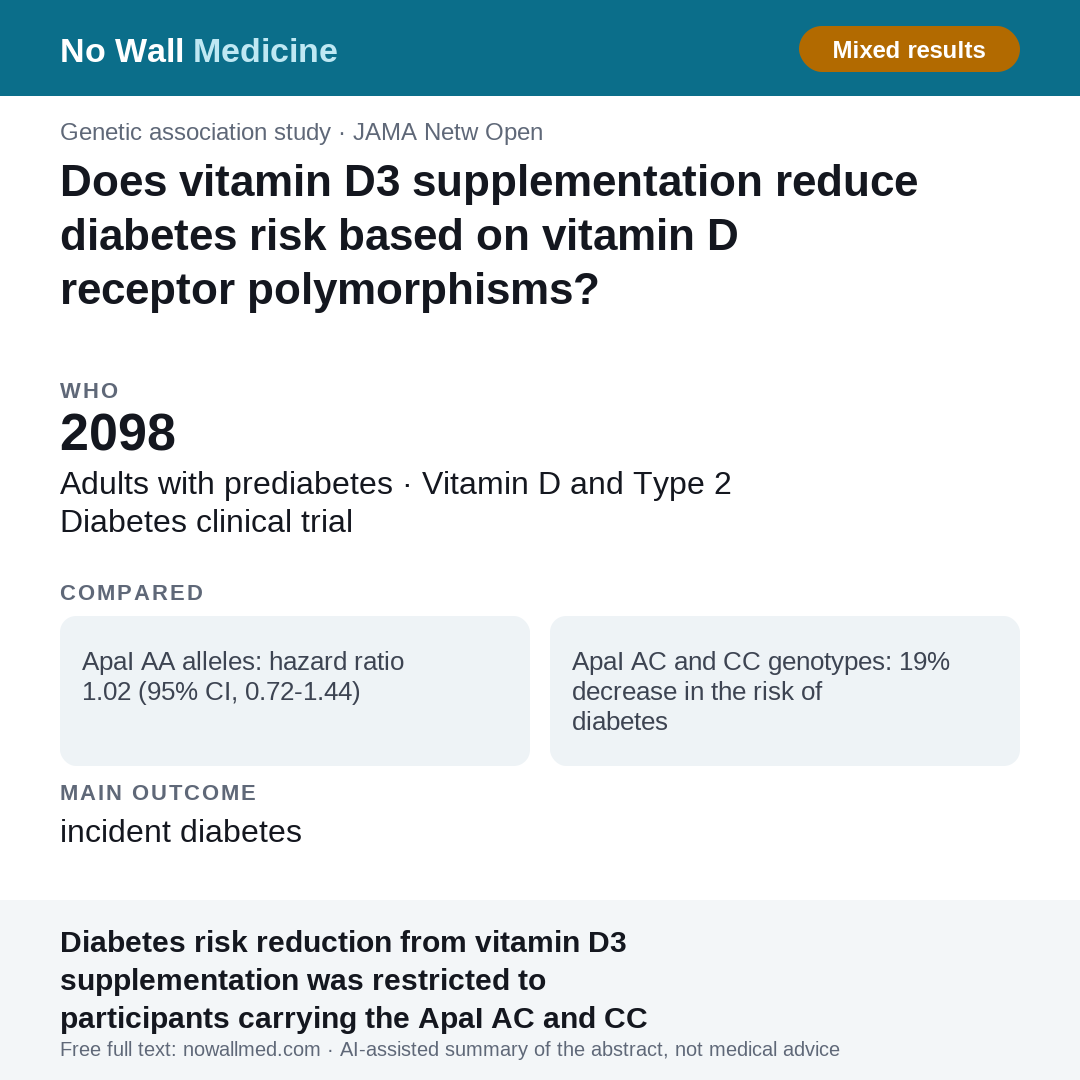
Vitamin D Receptor Polymorphisms and the Effect of Vitamin D Supplementation on Diabetes Risk Among Adults With Prediabetes
Genetic association studyMixed results
Does vitamin D3 supplementation reduce diabetes risk based on vitamin D receptor polymorphisms?
Who
2098
Adults with prediabetes · Vitamin D and Type 2 Diabetes clinical trial
Compared
ApaI AA alleles: hazard ratio 1.02 (95% CI, 0.72-1.44)
ApaI AC and CC genotypes: 19% decrease in the risk of diabetes
Main outcome
incident diabetes
Result: hazard ratio 0.81 (95% CI, 0.66-0.99)
Bottom line: Diabetes risk reduction from vitamin D3 supplementation was restricted to participants carrying the ApaI AC and CC alleles.
JAMA Netw Open · 2026-04-01Download image