Visual abstracts
New randomized trials and meta-analyses from leading journals at a glance: who was studied, what was compared, and what was found. Every paper is free to read in full.
All specialtiesCardiology 1995Oncology 1720Gastroenterology & Hepatology 762Infectious Disease 1264Neurology 823Psychiatry & Mental Health 980Pulmonology 853Critical Care 568Endocrinology & Diabetes 1067Pediatrics 1184Surgery 1015Orthopedics & Sports Medicine 374Neurosurgery 251Cardiothoracic & Vascular Surgery 215Plastic & Reconstructive Surgery 307Nephrology 414Rheumatology 284Hematology 436Dermatology 224Ophthalmology 232Obstetrics & Gynecology 648Public & Global Health 388Radiology & Imaging 275Anesthesiology 401Urology 349ENT (Otolaryngology) 268Emergency Medicine 220Allergy & Immunology 126Geriatrics 426Family Medicine & Primary Care 236Medical Genetics & Genomics 216Pathology & Laboratory Medicine 66Physical Medicine & Rehabilitation 347Palliative Care 174Nutrition 537Digital Health & AI 1044General Medicine 155
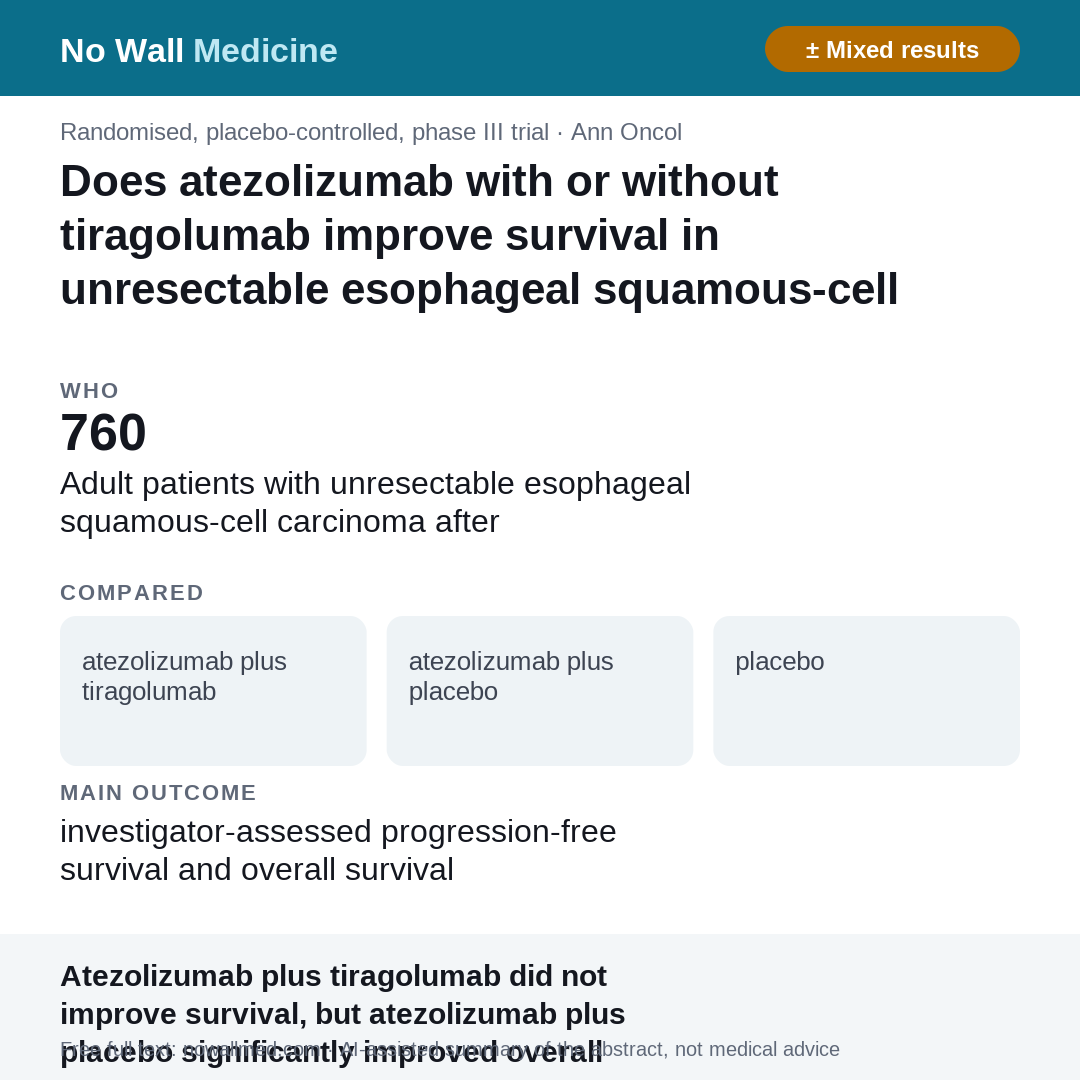
Atezolizumab with or without tiragolumab in unresectable esophageal squamous-cell carcinoma following definitive concurrent chemoradiotherapy (SKYSCRAPER-07): a randomised, phase III study
Randomised, placebo-controlled, phase III trialMixed results
Does atezolizumab with or without tiragolumab improve survival in unresectable esophageal squamous-cell carcinoma?
Who
760
Adult patients with unresectable esophageal squamous-cell carcinoma after chemoradiotherapy · 166 centres in 28 countries
Compared
atezolizumab plus tiragolumab
atezolizumab plus placebo
placebo
Main outcome
investigator-assessed progression-free survival and overall survival
Result: hazard ratio 0.91 (95% CI 0.70-1.18) for atezolizumab plus tiragolumab versus placebo
Bottom line: Atezolizumab plus tiragolumab did not improve survival, but atezolizumab plus placebo significantly improved overall survival versus placebo.
Ann Oncol · 2026-08-21Download image
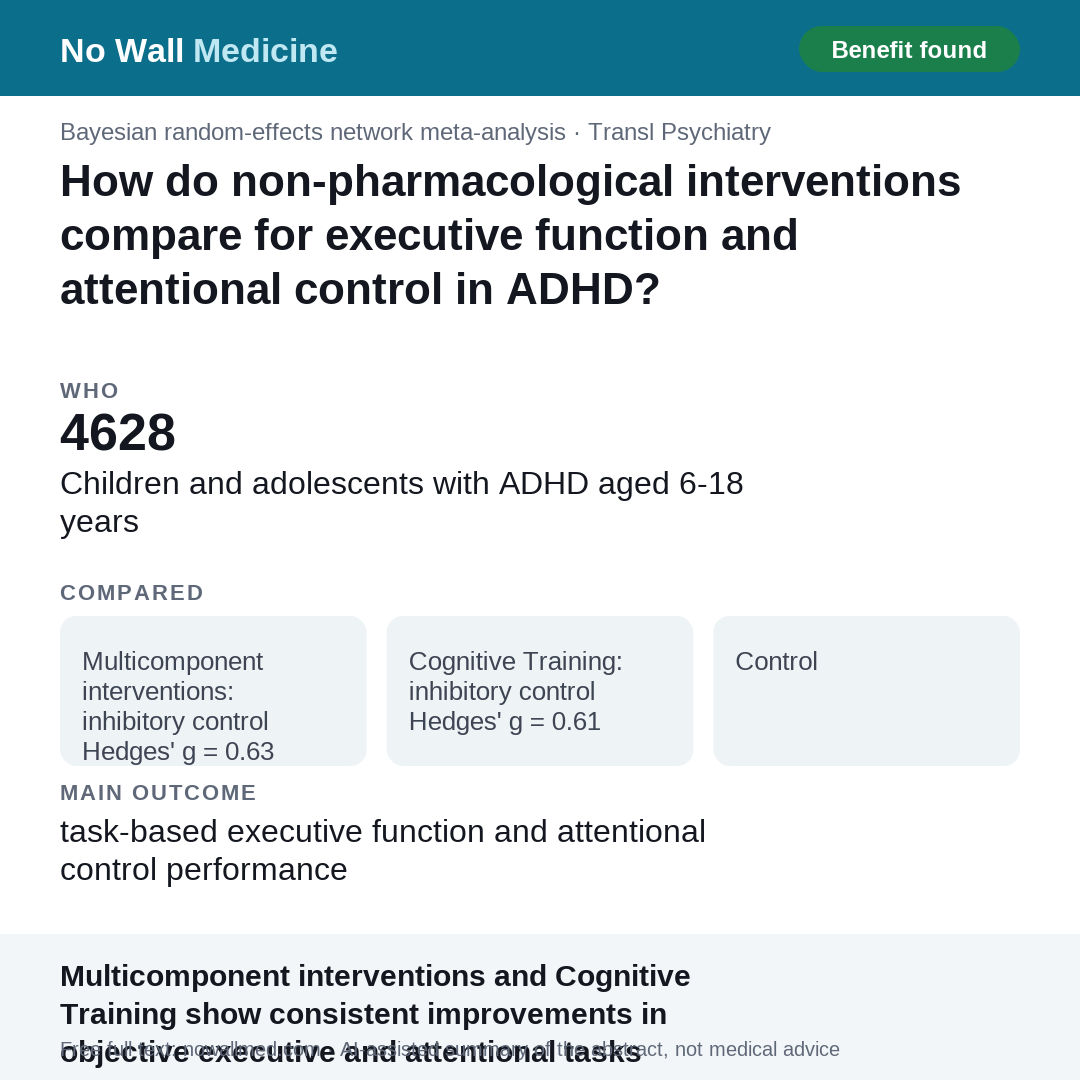
Comparative efficacy of non-pharmacological interventions on executive function and attentional control in children and adolescents with ADHD: a Bayesian network meta-analysis based on task-based cognitive outcomes
Bayesian random-effects network meta-analysisBenefit found
How do non-pharmacological interventions compare for executive function and attentional control in ADHD?
Who
4628
Children and adolescents with ADHD aged 6-18 years
Compared
Multicomponent interventions: inhibitory control Hedges' g = 0.63
Cognitive Training: inhibitory control Hedges' g = 0.61
Control
Main outcome
task-based executive function and attentional control performance
Bottom line: Multicomponent interventions and Cognitive Training show consistent improvements in objective executive and attentional tasks for pediatric ADHD.
Transl Psychiatry · 2026-08-21Download image
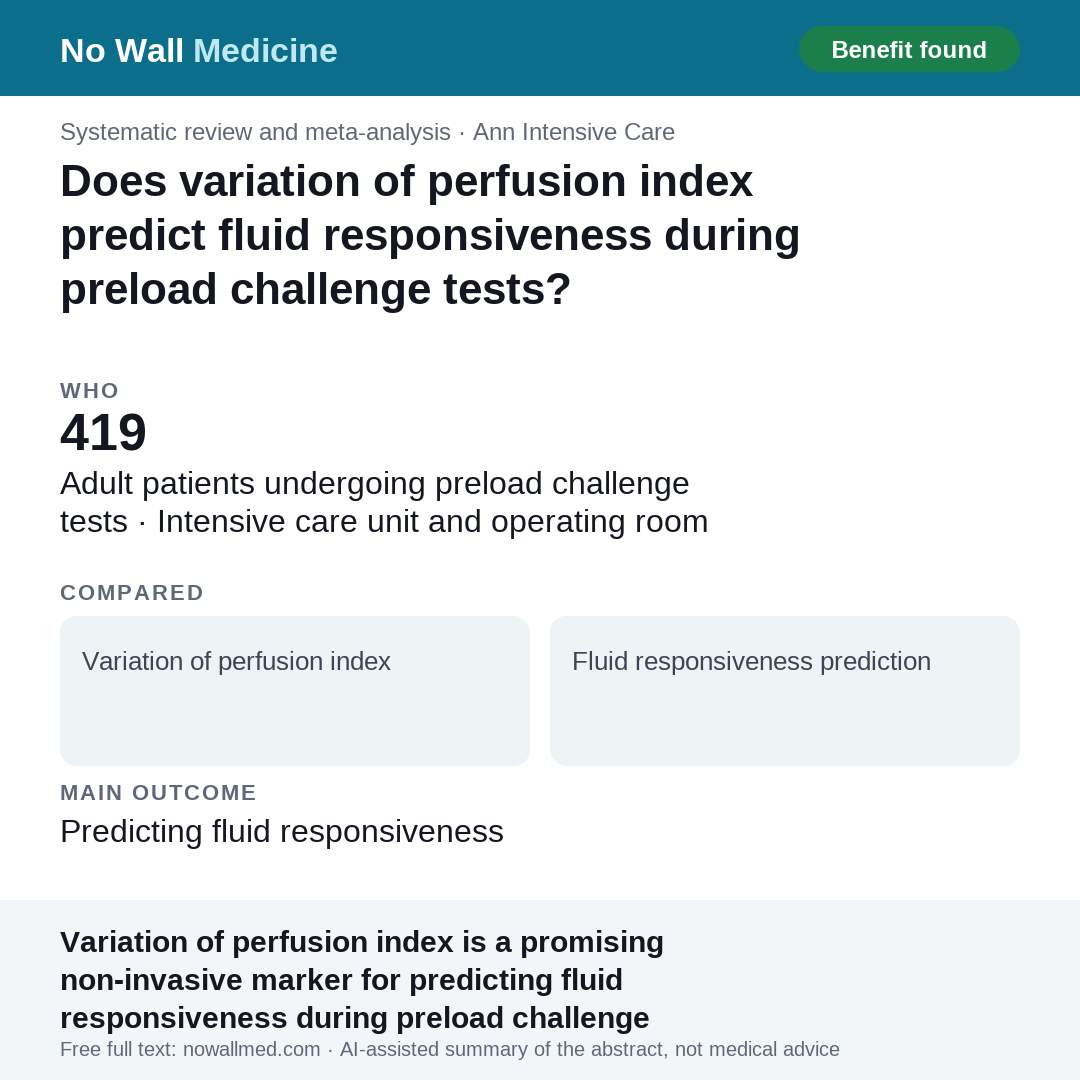
Variation of perfusion index to evaluate fluid responsiveness during the preload challenge tests: a systematic review and meta-analysis
Systematic review and meta-analysisBenefit found
Does variation of perfusion index predict fluid responsiveness during preload challenge tests?
Who
419
Adult patients undergoing preload challenge tests · Intensive care unit and operating room
Compared
Variation of perfusion index
Fluid responsiveness prediction
Main outcome
Predicting fluid responsiveness
Result: AUROC 0.88 (95% CI 0.85 to 0.90)
Bottom line: Variation of perfusion index is a promising non-invasive marker for predicting fluid responsiveness during preload challenge tests.
Limitation: The current evidence base remains limited, heterogeneous, and at risk of bias.
Ann Intensive Care · 2026-08-21Download image
Psychosocial coping with intensive care delirium: a mixed-methods systematic review of patient and family perspectives
Mixed-methods systematic reviewMixed results
What psychosocial coping strategies do intensive care unit patients and families use during delirium?
Who
Intensive care unit patients and their family caregivers · Seven countries
Compared
Patients: problem-focused, emotion-focused, and meaning-based strategies
Families: supporting patients and managing their own distress
Main outcome
Psychosocial coping strategies employed during intensive care unit delirium
Bottom line: Patients and families use diverse coping strategies, with families serving as a primary resource for patients.
Crit Care · 2026-08-21Download image
BIOCARD framework: integrating fecal bile acids, lipids, and metabolites to assess response to a cardiovascular health intervention
Randomized controlled trialBenefit found
Can the BIOCARD framework assess response to a cardiovascular health intervention?
Who
Caregiver-child participants
Compared
multicomponent garden-based intervention
education-only control group
Main outcome
fecal bile acids, lipids, and metabolites
Bottom line: The BIOCARD framework identifies molecular variations that complement traditional clinical indicators in cardiovascular health interventions.
Limitation: Traditional clinical indicators showed limited sensitivity for detecting intervention-related differences.
Gut Microbes · 2026-08-21Download image
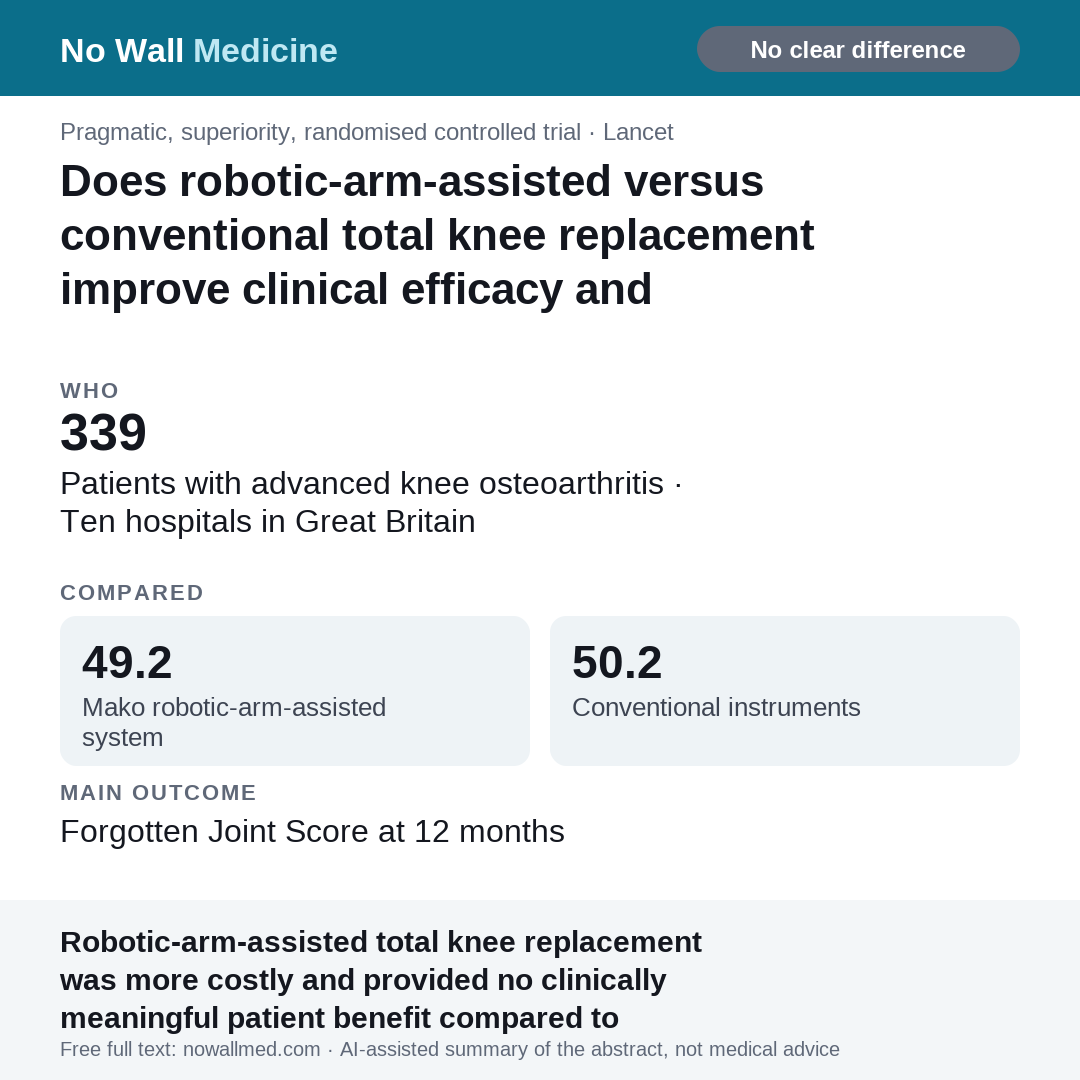
Robotic-arm-assisted versus conventional total knee replacement (RACER-Knee): a pragmatic, multicentre, participant-masked and assessor-masked, superiority, randomised controlled trial
Pragmatic, superiority, randomised controlled trialNo clear difference
Does robotic-arm-assisted versus conventional total knee replacement improve clinical efficacy and cost-effectiveness?
Who
339
Patients with advanced knee osteoarthritis · Ten hospitals in Great Britain
Compared
49.2Mako robotic-arm-assisted system (SD 28.4; n=154)
50.2Conventional instruments (29.9; n=158)
Main outcome
Forgotten Joint Score at 12 months
Result: adjusted mean difference -1.5 (95% CI -7.5 to 4.5; p=0.62)
Bottom line: Robotic-arm-assisted total knee replacement was more costly and provided no clinically meaningful patient benefit compared to conventional instruments.
Funded by: UK National Institute for Health and Care Research
Lancet · 2026-08-20Download image
Head positioning after endovascular therapy for acute stroke due to large vessel occlusion (HeadSOAR): multicentre randomised controlled trial
Multicentre, prospective, randomised, open label, blinded endpoint trialNo clear difference
Does elevated head position improve functional outcomes after successful reperfusion in acute stroke?
Who
1368
Adults with acute ischaemic stroke and successful endovascular reperfusion · 67 comprehensive stroke centres in China
Compared
Elevated head position (30-40°): median modified Rankin scale score 3 (IQR 1-5)
Flat head position (0-10°): median modified Rankin scale score 3 (IQR 1-5)
Main outcome
Functional status at 90 days using modified Rankin scale
Result: adjusted generalised odds ratio 1.12 (95% CI 0.97 to 1.29)
Bottom line: Elevated head position did not significantly improve 90 day functional outcomes compared to flat head positioning.
BMJ · 2026-08-20Download image
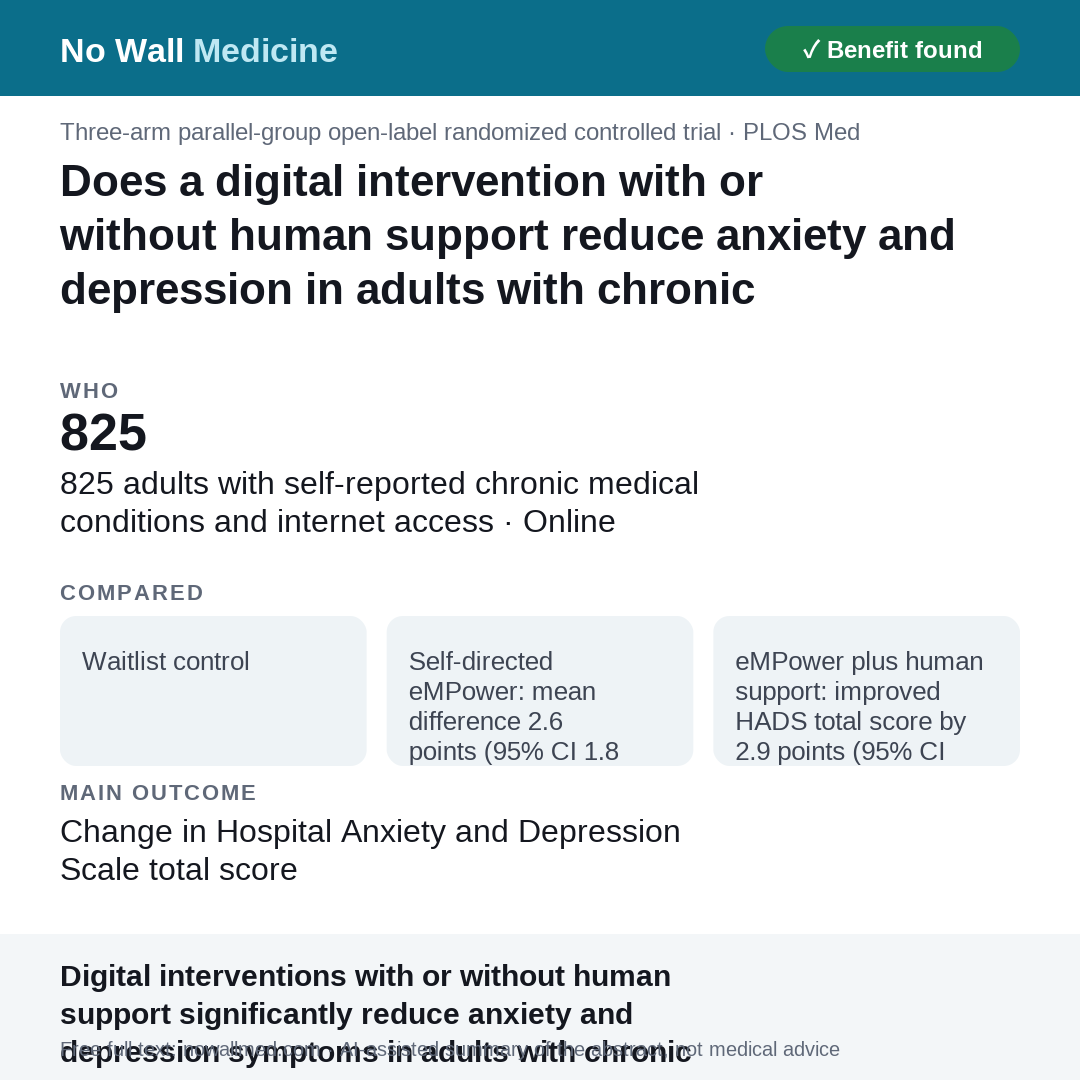
Effect of a digital intervention on mental health symptoms in adults with chronic conditions: A three-arm randomized controlled trial
Three-arm parallel-group open-label randomized controlled trialBenefit found
Does a digital intervention with or without human support reduce anxiety and depression in adults with chronic conditions?
Who
825
825 adults with self-reported chronic medical conditions and internet access · Online recruitment and delivery across 13 countries
Compared
Waitlist control
Self-directed eMPower: mean difference 2.6 points (95% CI 1.8 to 3.5)
eMPower plus human support: improved HADS total score by 2.9 points (95% CI 2.0 to 3.8)
Main outcome
Change in Hospital Anxiety and Depression Scale total score
Result: 2.9 points (95% CI 2.0 to 3.8)
Bottom line: Digital interventions with or without human support significantly reduce anxiety and depression symptoms in adults with chronic medical conditions.
Limitation: Waitlist control design, self-reported diagnoses, 12-week follow-up, and a predominantly female, highly educated sample.
PLOS Med · 2026-08-20Download image
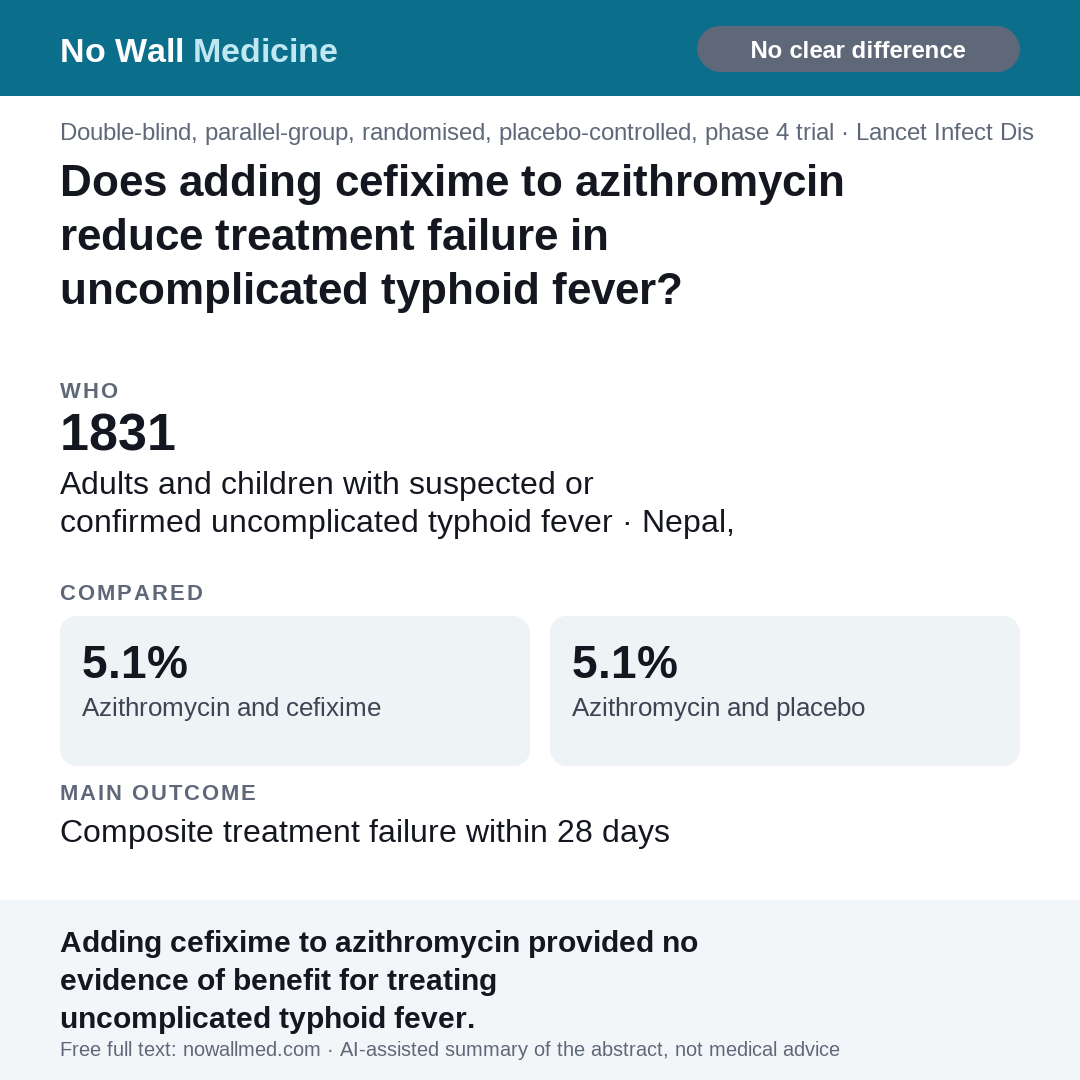
Azithromycin with or without cefixime for suspected or culture-confirmed uncomplicated typhoid fever in Nepal, Bangladesh, and Pakistan (ACT-South Asia): a double-blind, parallel-group, randomised, placebo-controlled, phase 4 trial
Double-blind, parallel-group, randomised, placebo-controlled, phase 4 trialNo clear difference
Does adding cefixime to azithromycin reduce treatment failure in uncomplicated typhoid fever?
Who
1831
Adults and children with suspected or confirmed uncomplicated typhoid fever · Nepal, Bangladesh, and Pakistan
Compared
5.1%Azithromycin and cefixime
5.1%Azithromycin and placebo
Main outcome
Composite treatment failure within 28 days
Result: absolute risk difference -0.00 percentage points, 95% CI -2.08 to 2.08
Bottom line: Adding cefixime to azithromycin provided no evidence of benefit for treating uncomplicated typhoid fever.
Funded by: Department of Health and Social Care, FCDO, Medical Research Council, Wellcome Trust
Lancet Infect Dis · 2026-08-20Download image
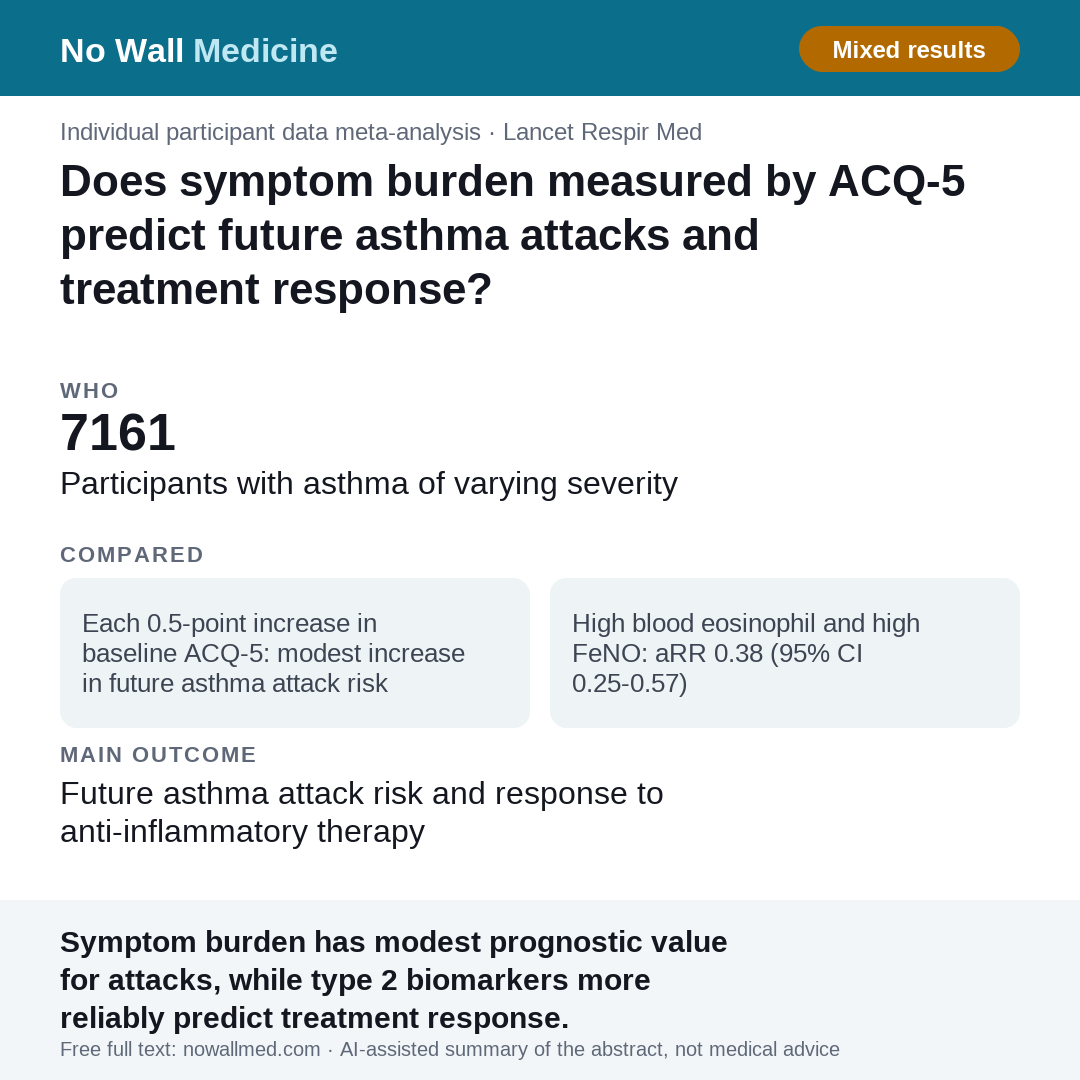
Symptom burden to characterise, predict, and prevent asthma attacks: a patient-level meta-analysis of randomised trials and translational prospective studies
Individual participant data meta-analysisMixed results
Does symptom burden measured by ACQ-5 predict future asthma attacks and treatment response?
Who
7161
Participants with asthma of varying severity
Compared
Each 0.5-point increase in baseline ACQ-5: modest increase in future asthma attack risk
High blood eosinophil and high FeNO: aRR 0.38 (95% CI 0.25-0.57)
Main outcome
Future asthma attack risk and response to anti-inflammatory therapy
Result: adjusted rate ratio 1.09 (95% CI 1.06-1.12)
Bottom line: Symptom burden has modest prognostic value for attacks, while type 2 biomarkers more reliably predict treatment response.
Funded by: National Institute for Health and Care Research and others
Lancet Respir Med · 2026-08-20Download image
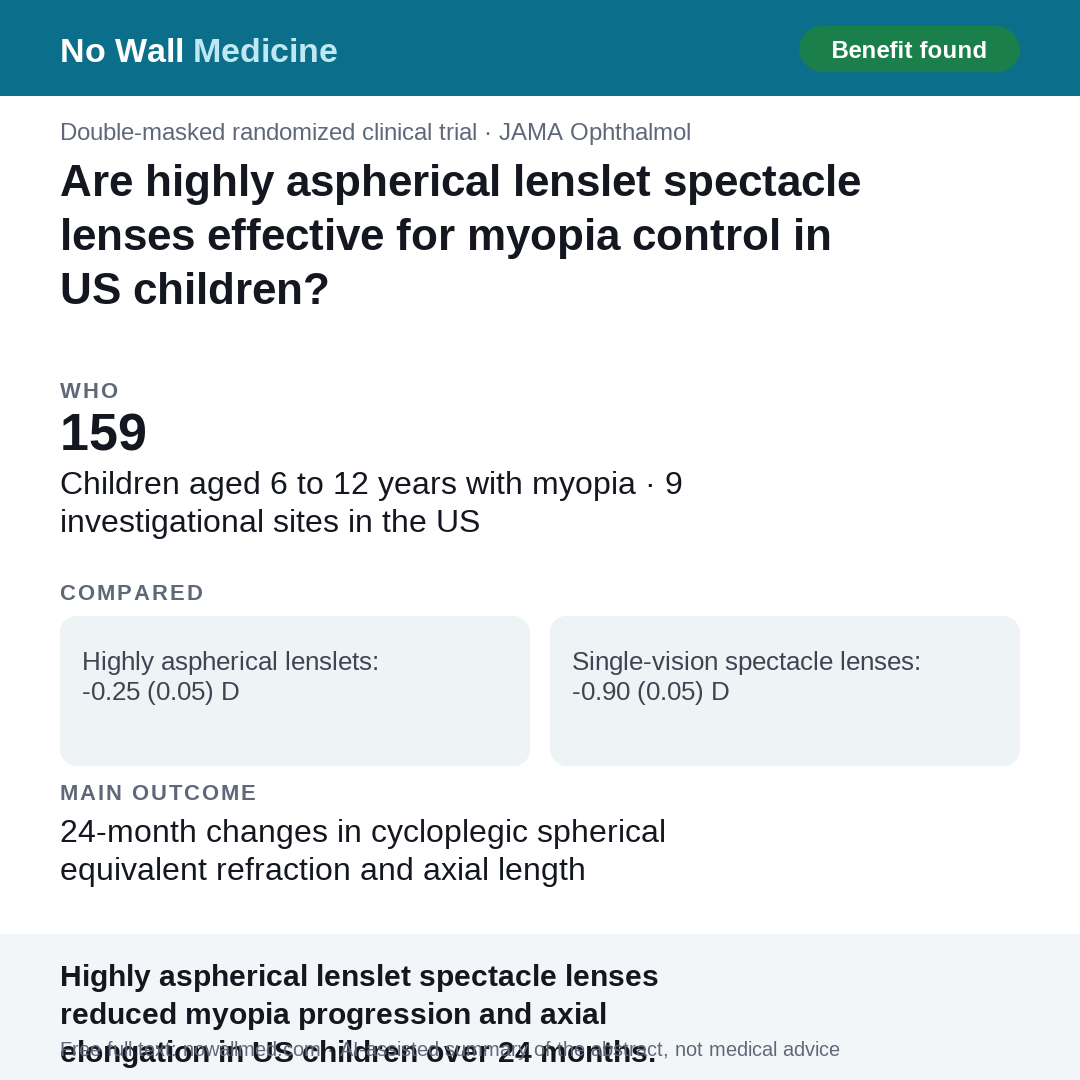
Spectacle Lenses With Highly Aspherical Lenslets for Myopia Control: A Randomized Clinical Trial
Double-masked randomized clinical trialBenefit found
Are highly aspherical lenslet spectacle lenses effective for myopia control in US children?
Who
159
Children aged 6 to 12 years with myopia · 9 investigational sites in the US
Compared
Highly aspherical lenslets: -0.25 (0.05) D
Single-vision spectacle lenses: -0.90 (0.05) D
Main outcome
24-month changes in cycloplegic spherical equivalent refraction and axial length
Result: difference, 0.64 D; 95% CI, 0.50 to 0.79
Bottom line: Highly aspherical lenslet spectacle lenses significantly reduced myopia progression and axial elongation in US children over 24 months.
JAMA Ophthalmol · 2026-08-20Download image
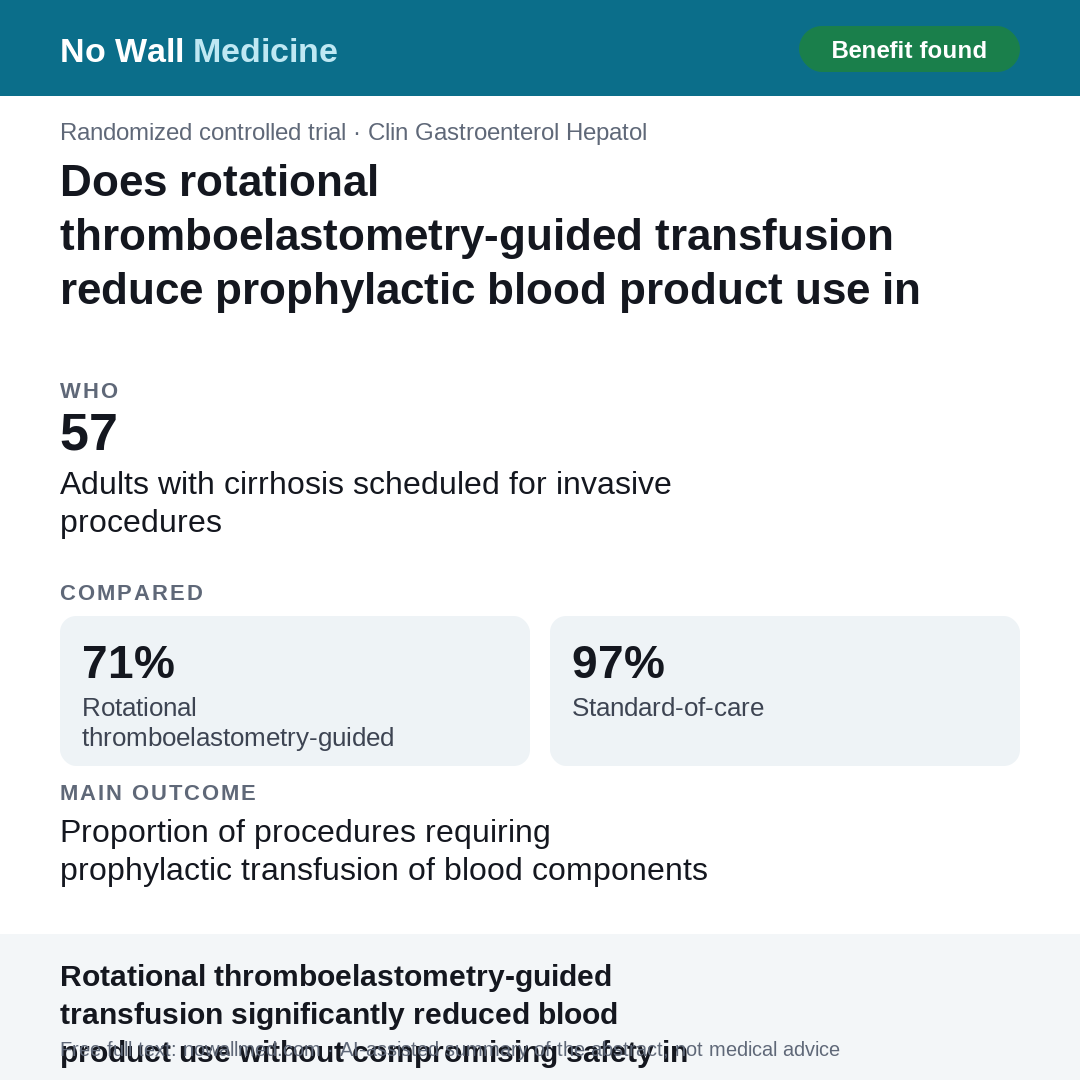
Rotational Thromboelastometry-Guided Blood Product Transfusion in Patients With Cirrhosis Having Invasive Procedures: A Randomized Controlled Trial
Randomized controlled trialBenefit found
Does rotational thromboelastometry-guided transfusion reduce prophylactic blood product use in patients with cirrhosis?
Who
57
Adults with cirrhosis scheduled for invasive procedures
Compared
71%Rotational thromboelastometry-guided
97%Standard-of-care
Main outcome
Proportion of procedures requiring prophylactic transfusion of blood components
Bottom line: Rotational thromboelastometry-guided transfusion significantly reduced blood product use without increasing bleeding complications in patients with cirrhosis.
Clin Gastroenterol Hepatol · 2026-08-20Download image
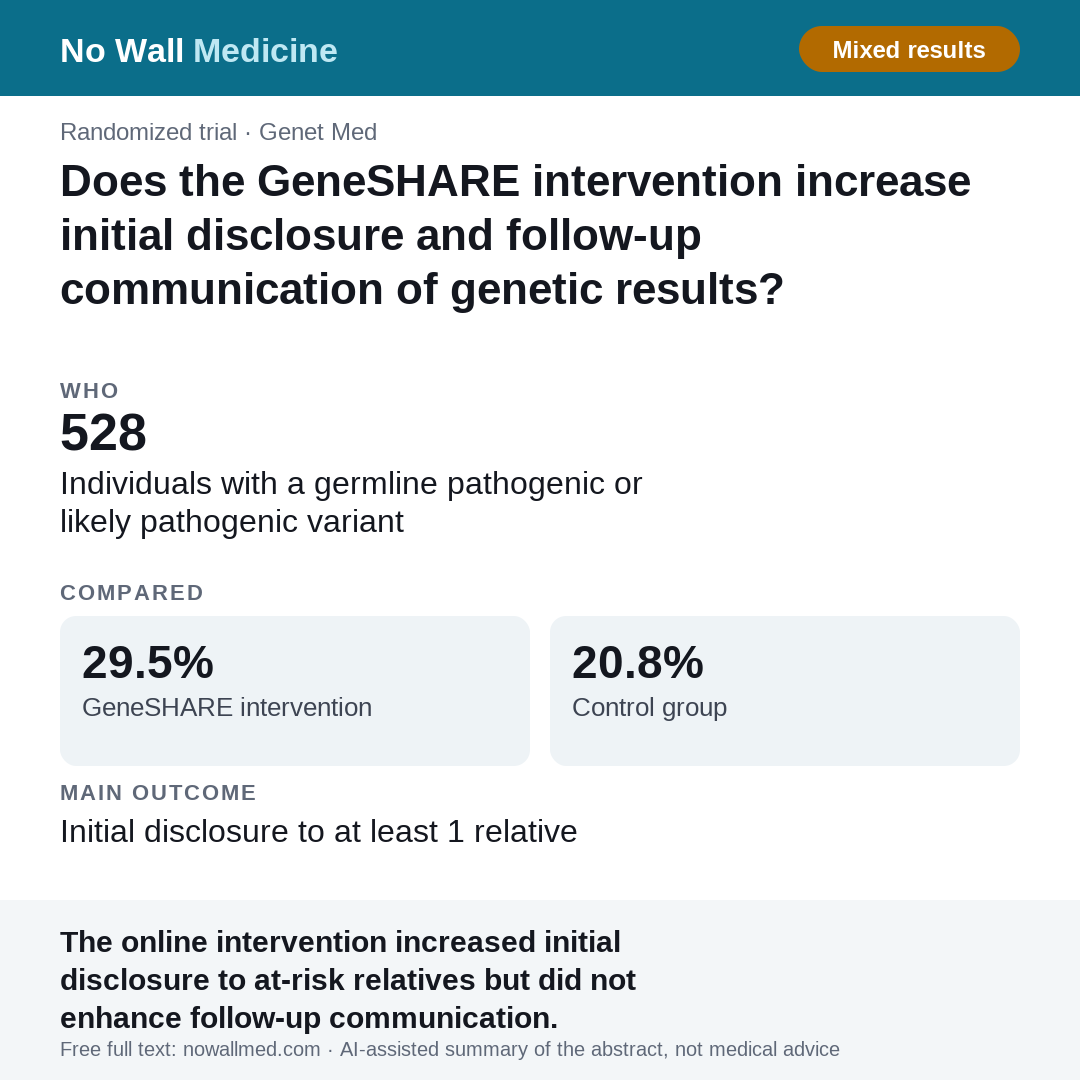
Short-term outcomes of a randomized, mixed-methods trial to improve disclosure of hereditary cancer test results and follow-up communication with family members
Randomized trialMixed results
Does the GeneSHARE intervention increase initial disclosure and follow-up communication of genetic results?
Who
528
Individuals with a germline pathogenic or likely pathogenic variant
Compared
29.5%GeneSHARE intervention
20.8%Control group
Main outcome
Initial disclosure to at least 1 relative
Bottom line: The online intervention increased initial disclosure to at-risk relatives but did not enhance follow-up communication.
Limitation: Intervention delivery long after testing, login barriers, and limited emphasis on follow-up communication.
Genet Med · 2026-08-20Download image
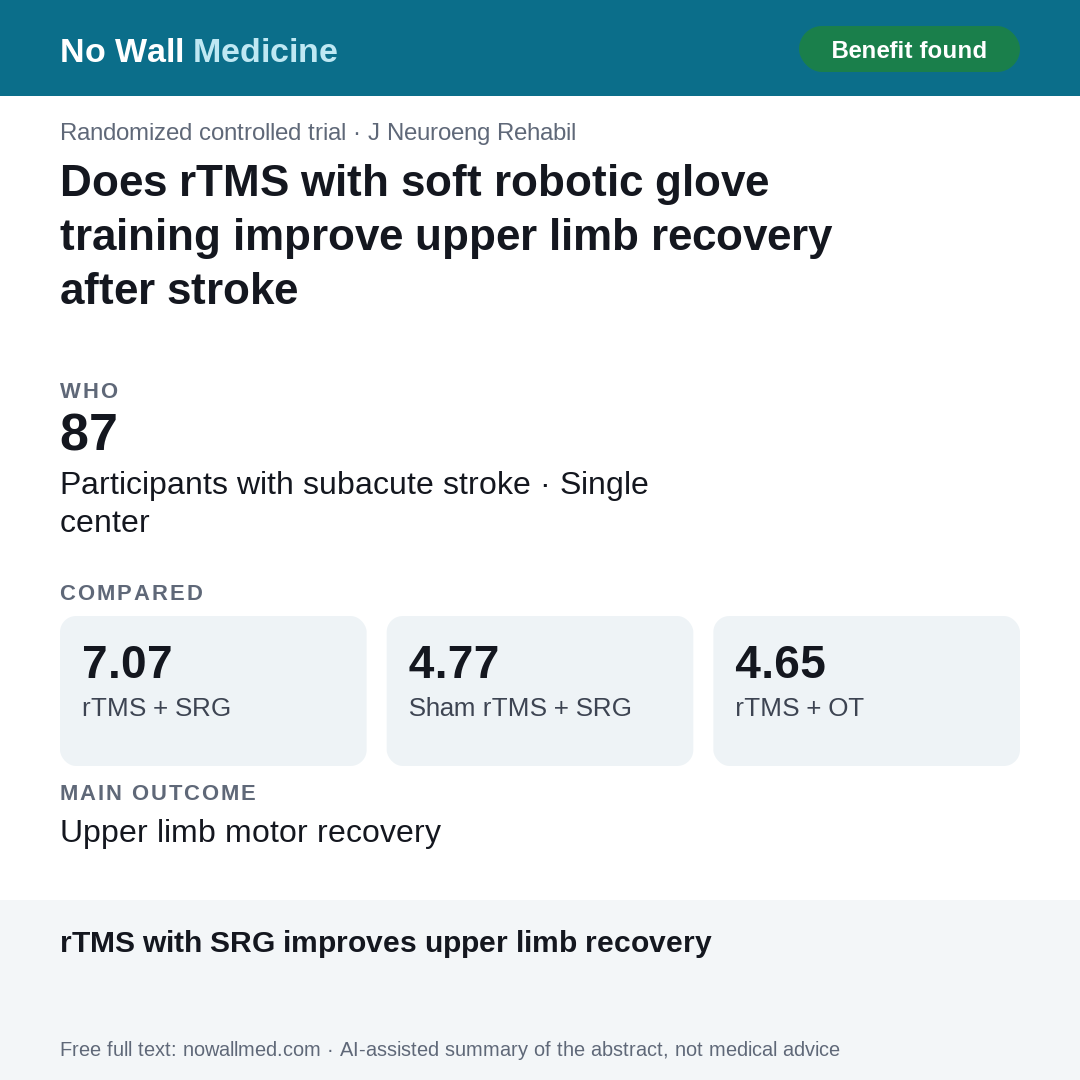
Clinical and neurophysiological effects of rTMS combined with soft robotic glove training on upper-limb recovery after subacute stroke: a three-arm randomized controlled trial
Randomized controlled trialBenefit found
Does rTMS with soft robotic glove training improve upper limb recovery after stroke
Who
87
Participants with subacute stroke · Single center
Compared
7.07rTMS + SRG
4.77Sham rTMS + SRG
4.65rTMS + OT
Main outcome
Upper limb motor recovery
Bottom line: rTMS with SRG improves upper limb recovery
J Neuroeng Rehabil · 2026-08-20Download image
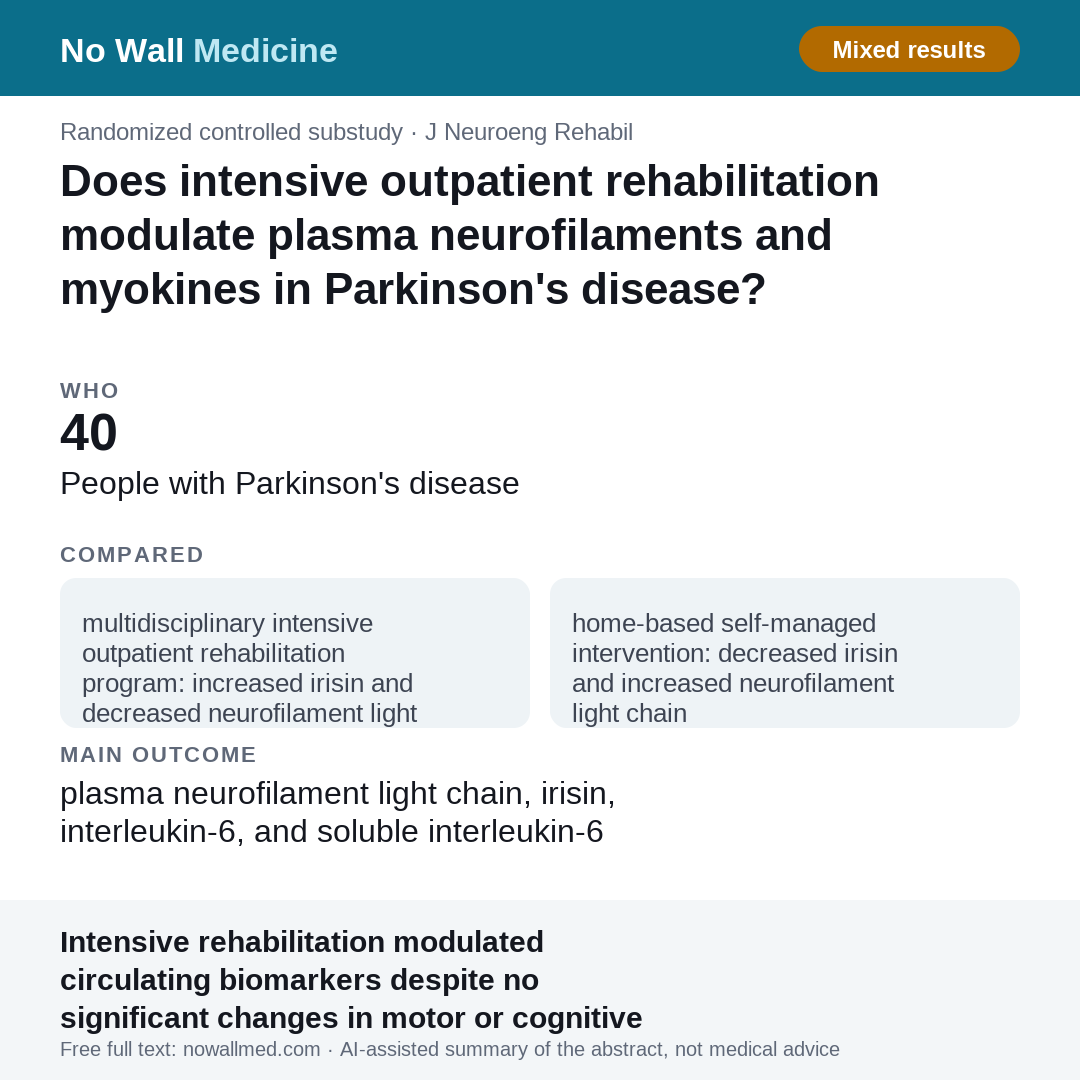
Effect of a multidisciplinary intensive outpatient rehabilitation program on plasma neurofilaments and myokines in Parkinson's disease: an exploratory analysis
Randomized controlled substudyMixed results
Does intensive outpatient rehabilitation modulate plasma neurofilaments and myokines in Parkinson's disease?
Who
40
People with Parkinson's disease
Compared
multidisciplinary intensive outpatient rehabilitation program: increased irisin and decreased neurofilament light chain
home-based self-managed intervention: decreased irisin and increased neurofilament light chain
Main outcome
plasma neurofilament light chain, irisin, interleukin-6, and soluble interleukin-6 receptor
Bottom line: Intensive rehabilitation modulated circulating biomarkers despite no significant changes in motor or cognitive clinical outcomes.
J Neuroeng Rehabil · 2026-08-20Download image
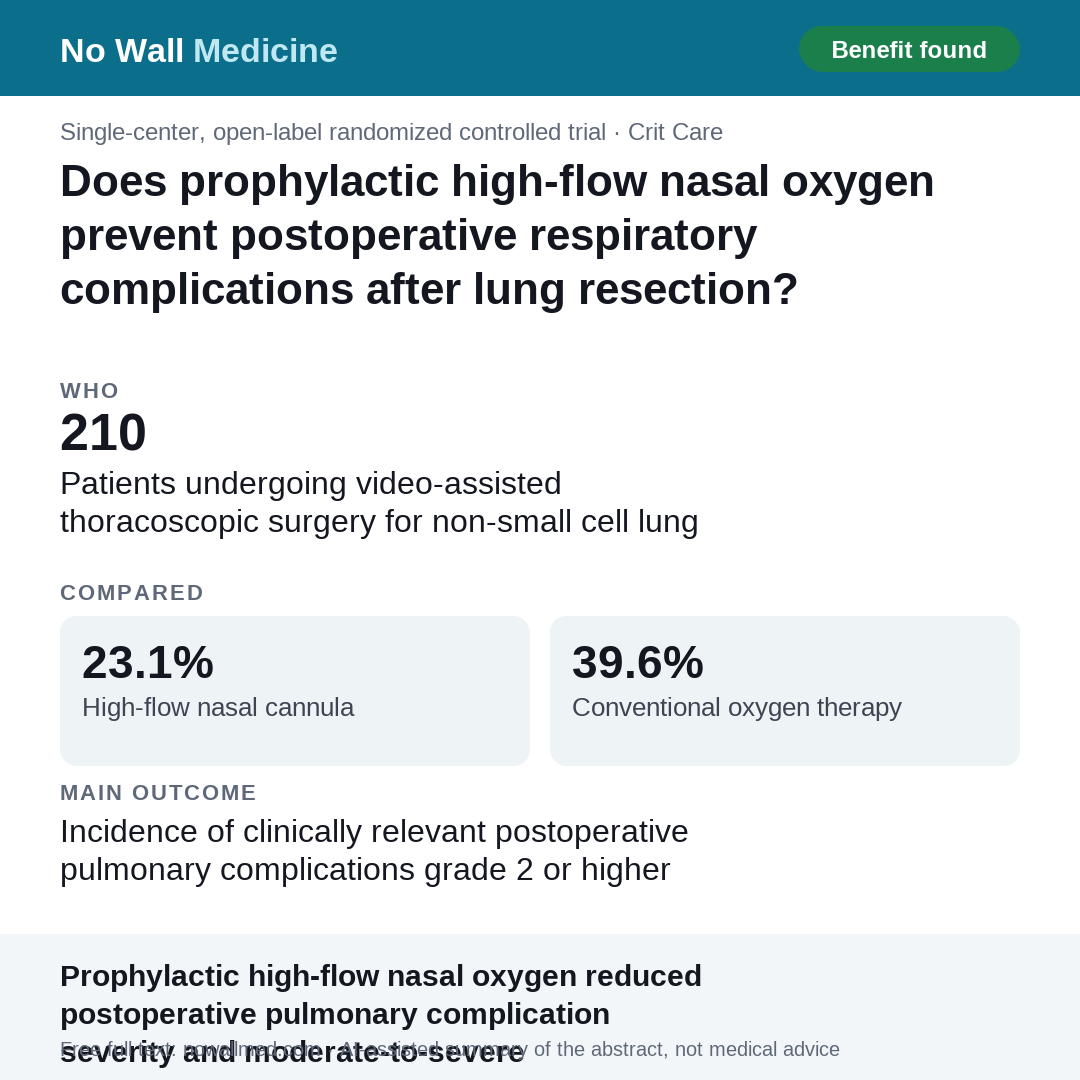
Prophylactic high-flow nasal oxygen vs. conventional oxygen for prevention of postoperative respiratory complications: a randomized trial
Single-center, open-label randomized controlled trialBenefit found
Does prophylactic high-flow nasal oxygen prevent postoperative respiratory complications after lung resection?
Who
210
Patients undergoing video-assisted thoracoscopic surgery for non-small cell lung cancer · Single-center
Compared
23.1%High-flow nasal cannula
39.6%Conventional oxygen therapy
Main outcome
Incidence of clinically relevant postoperative pulmonary complications grade 2 or higher
Result: ordinal OR, 0.50 (95% CI, 0.28-0.91)
Bottom line: Prophylactic high-flow nasal oxygen reduced postoperative pulmonary complication severity and moderate-to-severe complications after lung resection.
Crit Care · 2026-08-20Download image
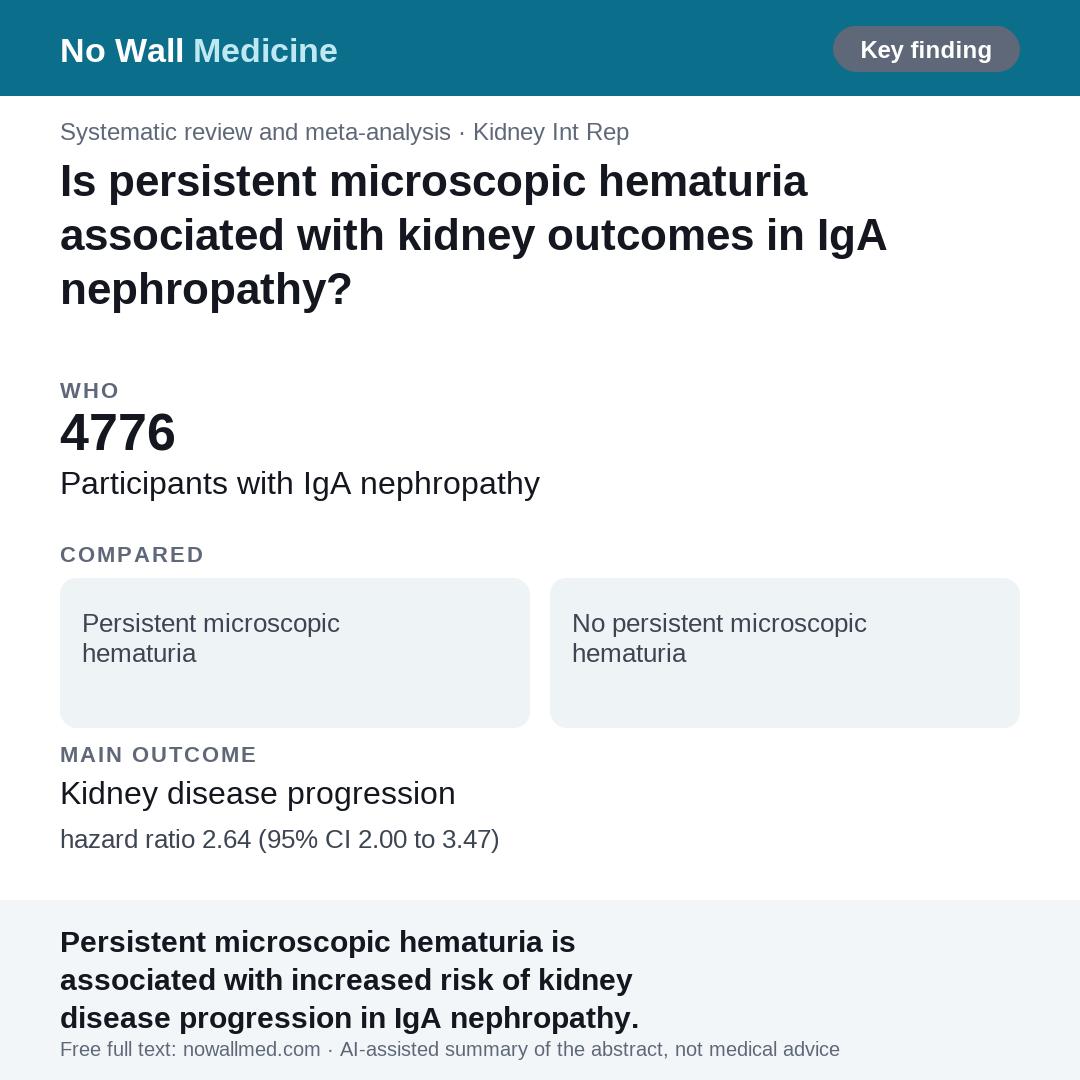
Systematic Review of Persistent Microscopic Hematuria and Kidney Outcomes in IgAN
Systematic review and meta-analysisBenefit found
Is persistent microscopic hematuria associated with kidney outcomes in IgA nephropathy?
Who
4776
Participants with IgA nephropathy
Compared
Persistent microscopic hematuria
No persistent microscopic hematuria
Main outcome
Kidney disease progression
Result: hazard ratio 2.64 (95% CI 2.00 to 3.47)
Bottom line: Persistent microscopic hematuria is associated with increased risk of kidney disease progression in IgA nephropathy.
Kidney Int Rep · 2026-08-20Download image
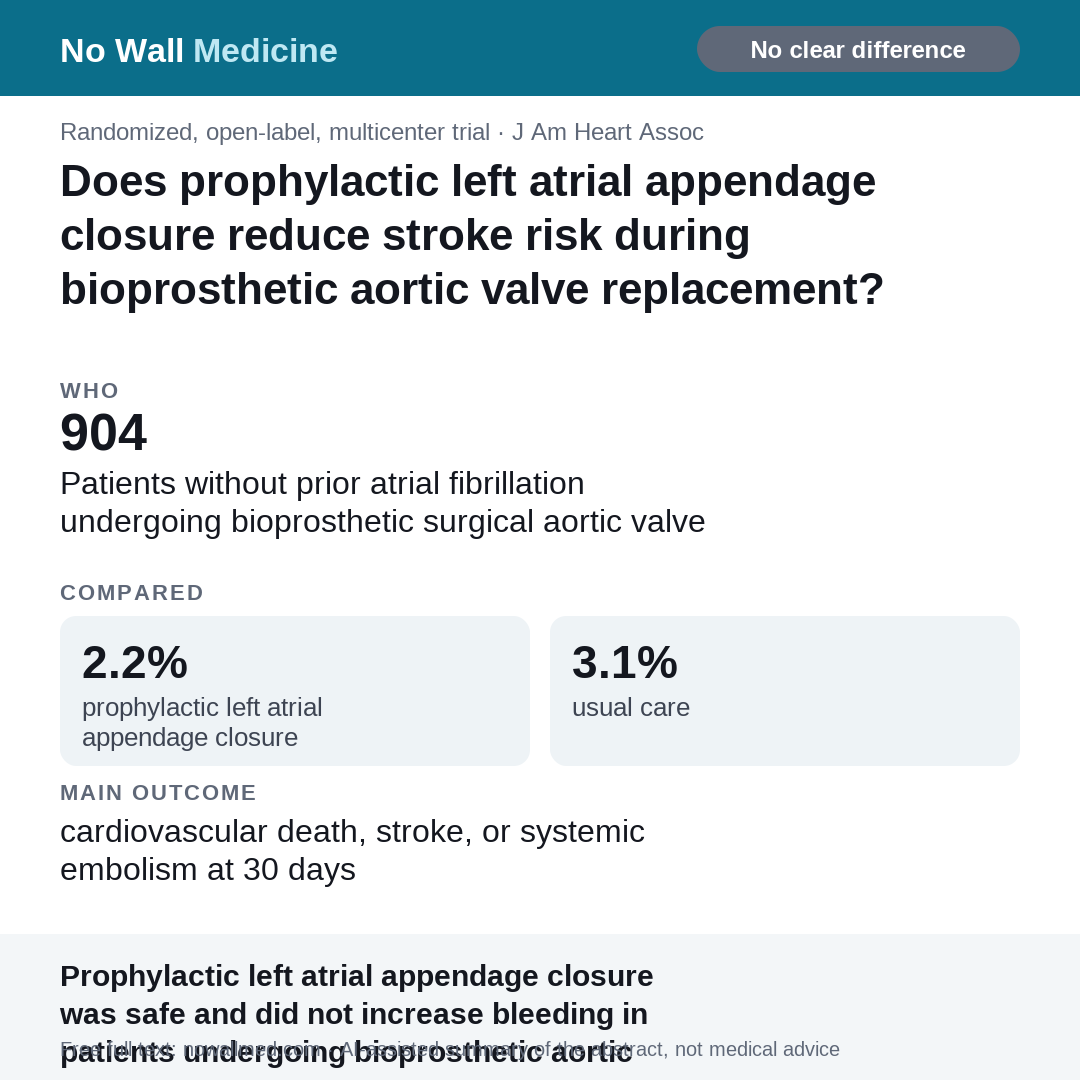
Prophylactic Surgical Left Atrial Appendage Closure in Bioprosthetic Aortic Valve Replacement: Short-Term Outcomes of Randomized Controlled LAA-CLOSURE Trial
Randomized, open-label, multicenter trialNo clear difference
Does prophylactic left atrial appendage closure reduce stroke risk during bioprosthetic aortic valve replacement?
Who
904
Patients without prior atrial fibrillation undergoing bioprosthetic surgical aortic valve replacement · multicenter
Compared
2.2%prophylactic left atrial appendage closure (10/434)
3.1%usual care (14/452)
Main outcome
cardiovascular death, stroke, or systemic embolism at 30 days
Result: hazard ratio 0.29 (95% CI 0.080-1.0) between 7 and 30 days
Bottom line: Prophylactic left atrial appendage closure was safe and did not increase bleeding in patients undergoing bioprosthetic aortic valve replacement.
Limitation: the treatment effect changed direction at approximately 7 days
J Am Heart Assoc · 2026-08-20Download image
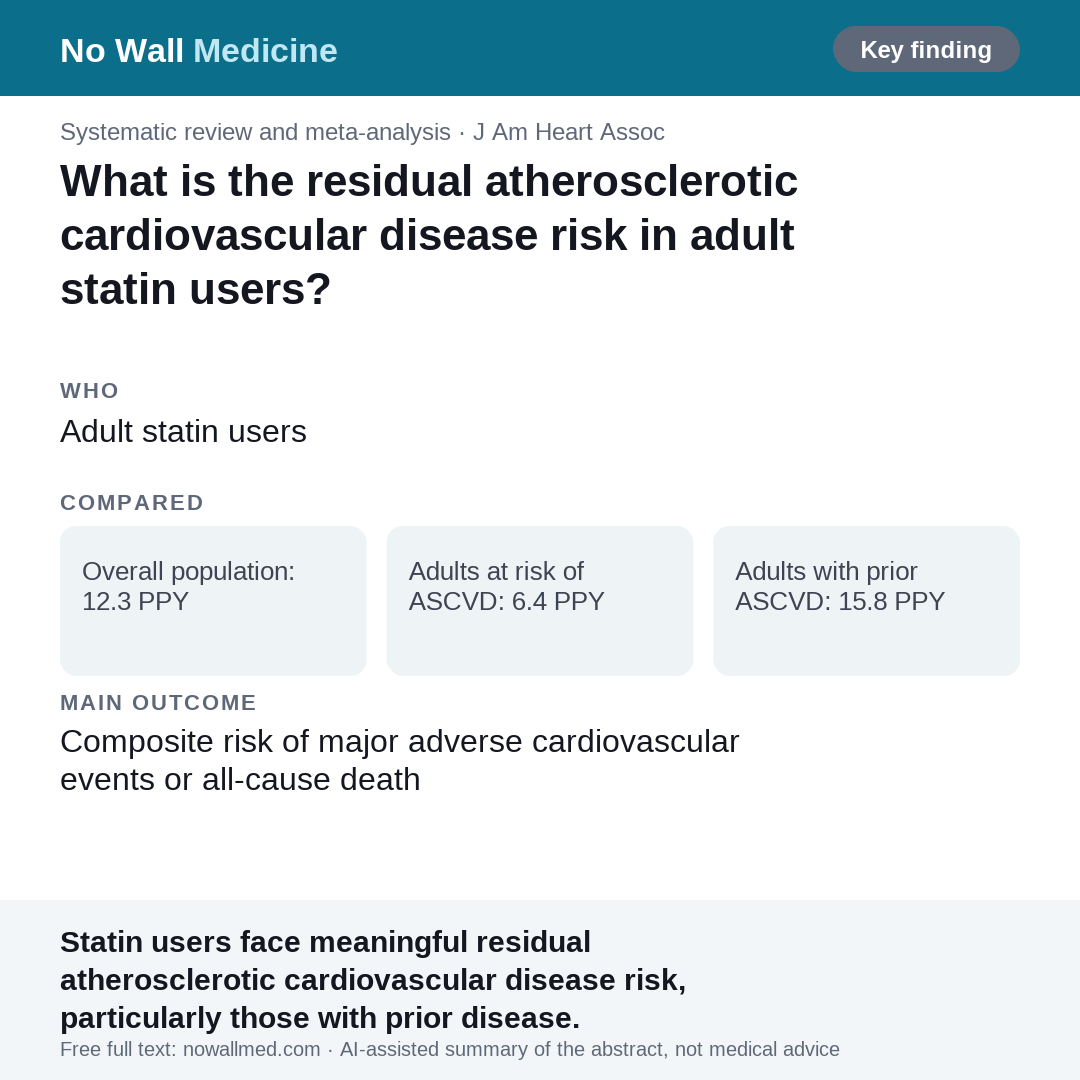
Residual Atherosclerotic Cardiovascular Disease Risk in Statin Users: A Systematic Review and Meta-Analysis
Systematic review and meta-analysisHarm found
What is the residual atherosclerotic cardiovascular disease risk in adult statin users?
Who
Adult statin users
Compared
Overall population: 12.3 PPY
Adults at risk of ASCVD: 6.4 PPY
Adults with prior ASCVD: 15.8 PPY
Main outcome
Composite risk of major adverse cardiovascular events or all-cause death
Bottom line: Statin users face meaningful residual atherosclerotic cardiovascular disease risk, particularly those with prior disease.
Limitation: substantial between-study variability
J Am Heart Assoc · 2026-08-20Download image
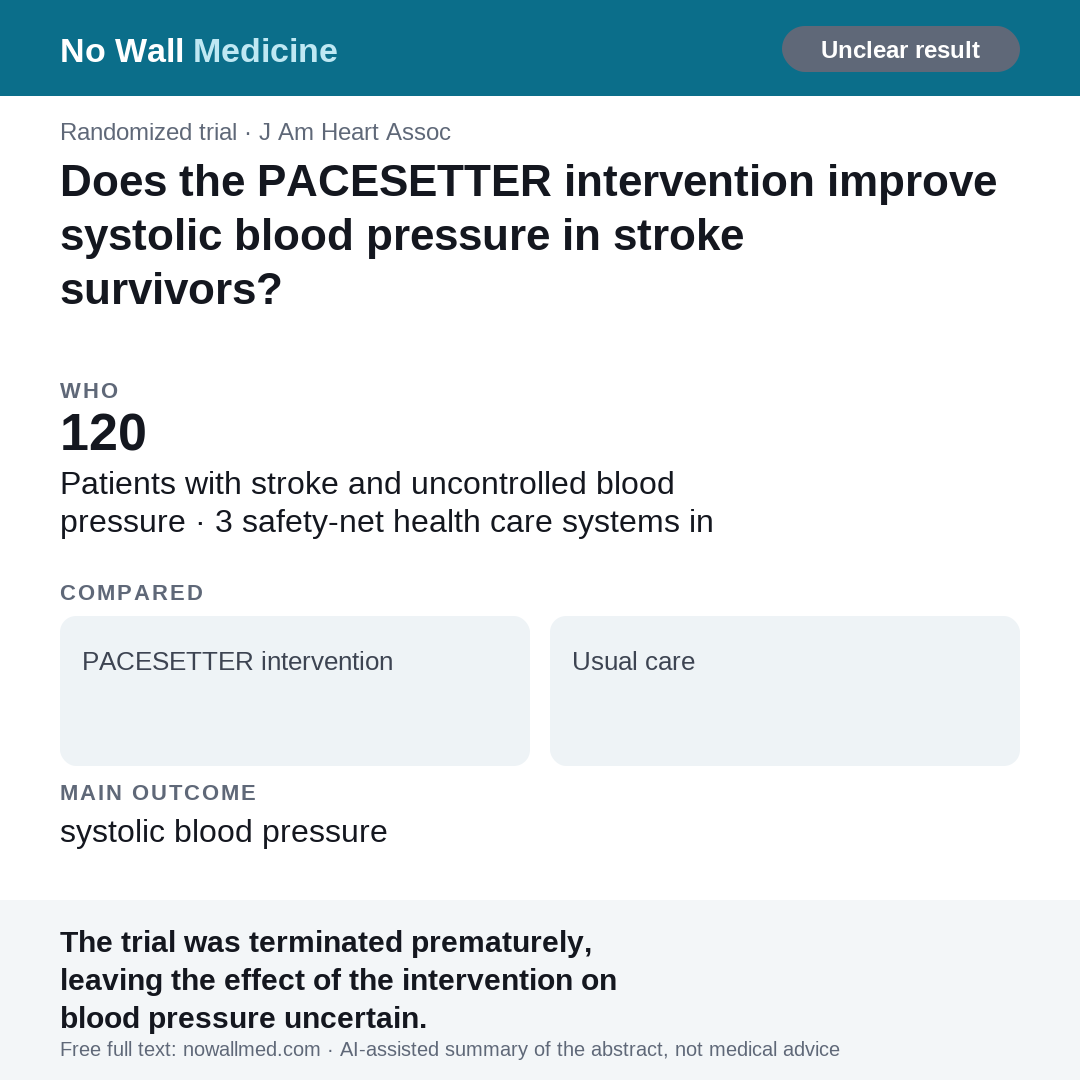
Program to Avoid Cerebrovascular Events Through Systematic Electronic Tracking and Tailoring of an Eminent Risk Factor: A Randomized Trial
Randomized trialNo clear difference
Does the PACESETTER intervention improve systolic blood pressure control at 12 months?
Who
120
Patients with stroke and uncontrolled blood pressure · 3 safety-net health care systems in South Carolina
Compared
50%PACESETTER intervention
47.2%Usual care
Main outcome
systolic blood pressure <130 mm Hg at 12 months
Bottom line: The PACESETTER intervention showed no significant difference in blood pressure control at 12 months compared to usual care.
J Am Heart Assoc · 2026-08-20Download image