Visual abstracts
New randomized trials and meta-analyses from leading journals at a glance: who was studied, what was compared, and what was found. Every paper is free to read in full.
All specialtiesCardiology 1367Oncology 1224Gastroenterology & Hepatology 493Infectious Disease 893Neurology 567Psychiatry & Mental Health 683Pulmonology 589Critical Care 404Endocrinology & Diabetes 754Pediatrics 819Surgery 648Orthopedics & Sports Medicine 261Neurosurgery 186Cardiothoracic & Vascular Surgery 155Plastic & Reconstructive Surgery 215Nephrology 289Rheumatology 183Hematology 286Dermatology 144Ophthalmology 156Obstetrics & Gynecology 433Public & Global Health 270Radiology & Imaging 176Anesthesiology 264Urology 255ENT (Otolaryngology) 187Emergency Medicine 152Allergy & Immunology 91Geriatrics 287Family Medicine & Primary Care 174Medical Genetics & Genomics 144Pathology & Laboratory Medicine 42Physical Medicine & Rehabilitation 242Palliative Care 123Nutrition 359Digital Health & AI 713General Medicine 123
Effectiveness of Long-lasting Insecticide-Impregnated Bed Nets in Controlling Phlebotomus argentipes in Sri Lanka: A Cluster Randomized Controlled Trial
Cluster-randomized trialBenefit found
Do long-lasting insecticide-impregnated bed nets reduce vector-human contact and sand fly density?
Who
People in cutaneous leishmaniasis-endemic sites in Sri Lanka · Sri Lanka
Compared
intervention group (treated nets): antibodies decreased by 44.9% at 12 months
control group (untreated nets)
Main outcome
vector-human contact and density of Phlebotomus argentipes
Bottom line: Long-lasting insecticide-impregnated bed nets effectively reduced vector exposure and indoor sand fly density in Sri Lanka.
J Infect Dis · 2025-07-07Download image

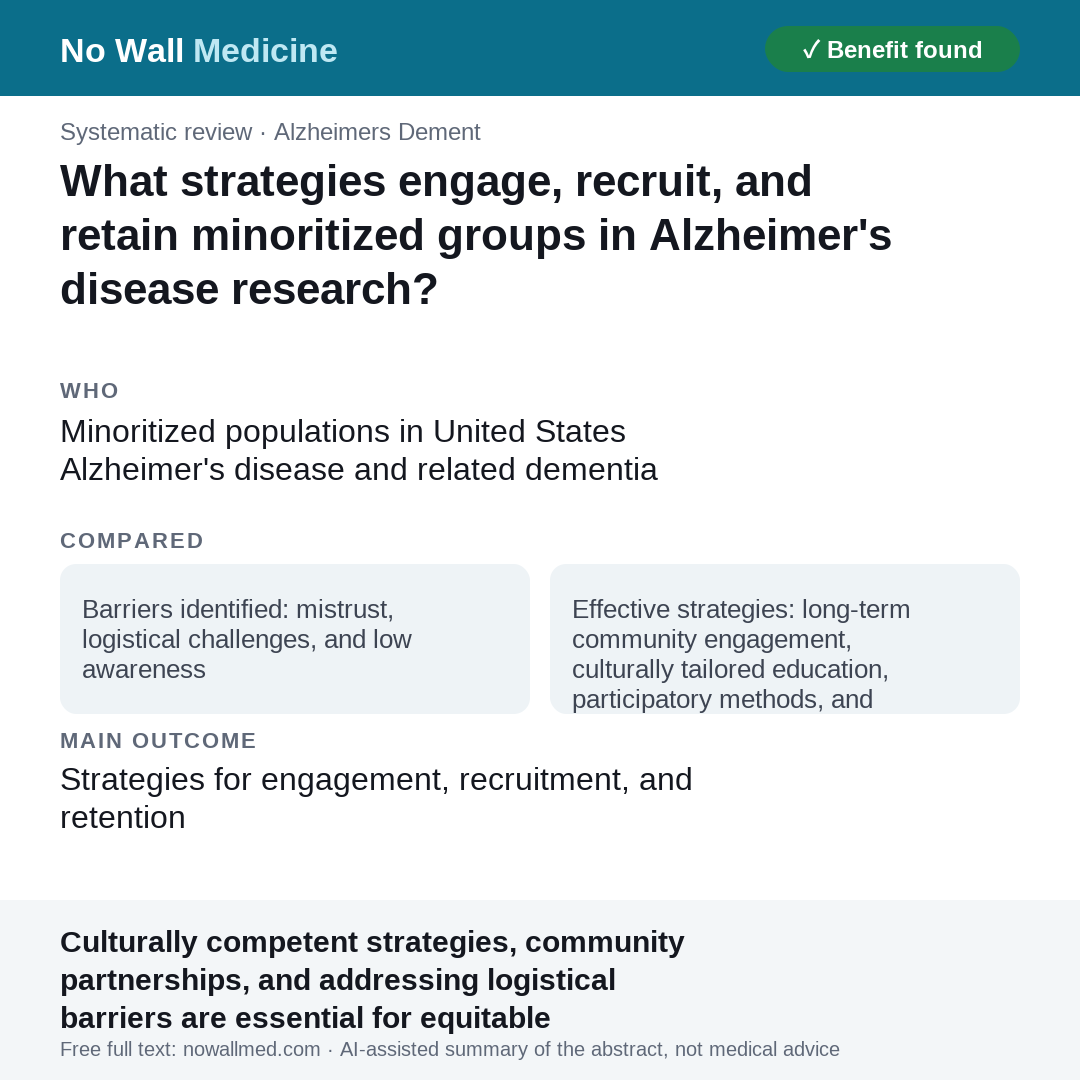
Community engagement, recruitment, and retention of minoritized participants in Alzheimer's disease and related dementia research: A systematic review of disparities
Systematic reviewBenefit found
What strategies engage, recruit, and retain minoritized groups in Alzheimer's disease research?
Who
Minoritized populations in United States Alzheimer's disease and related dementia research · United States
Compared
Barriers identified: mistrust, logistical challenges, and low awareness
Effective strategies: long-term community engagement, culturally tailored education, participatory methods, and logistical support
Main outcome
Strategies for engagement, recruitment, and retention
Bottom line: Culturally competent strategies, community partnerships, and addressing logistical barriers are essential for equitable research participation.
Alzheimers Dement · 2025-07-07Download image
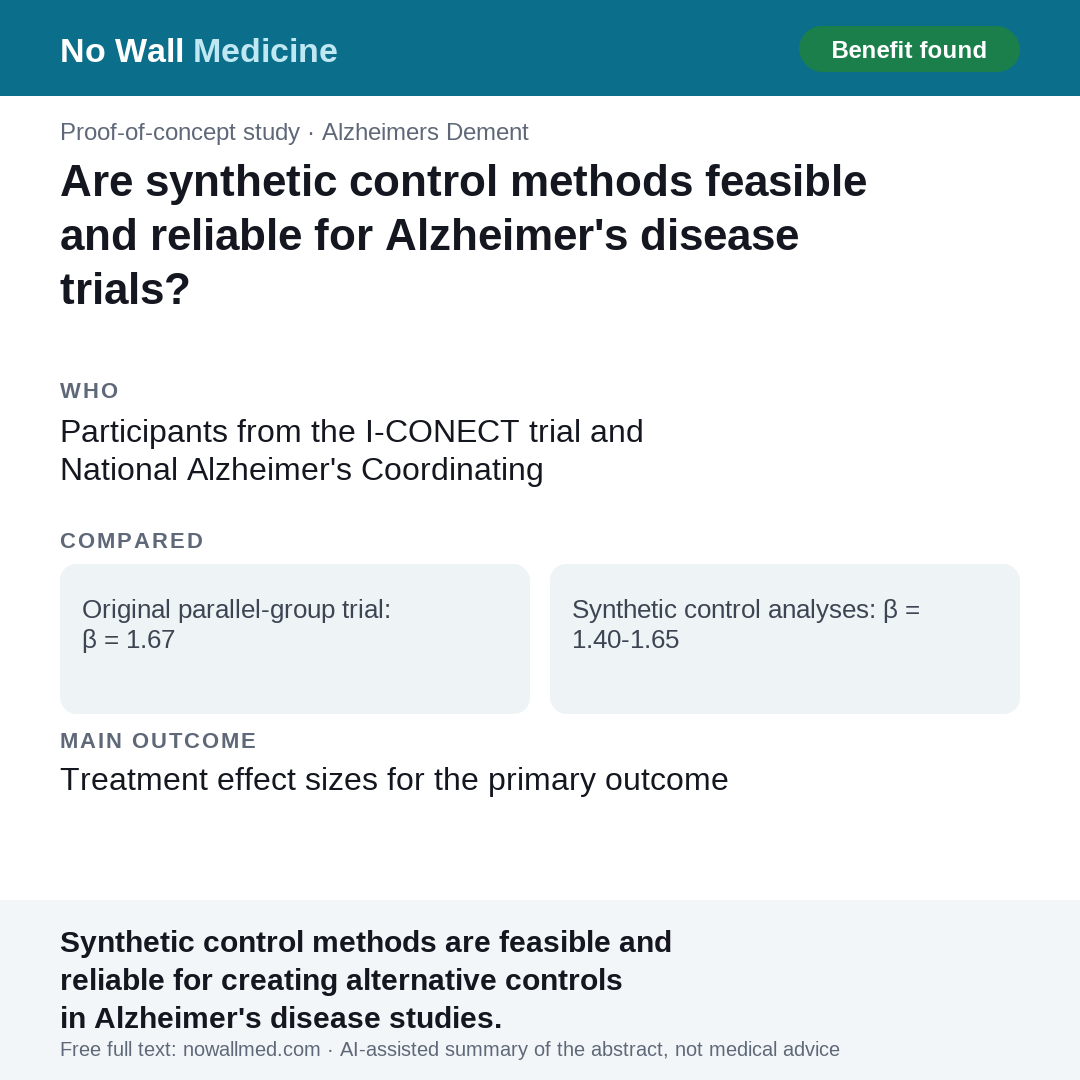
Synthetic control methods for n-of-1 and parallel-group trials in Alzheimer's disease: A proof-of-concept study using the I-CONECT
Proof-of-concept studyBenefit found
Are synthetic control methods feasible and reliable for Alzheimer's disease trials?
Who
Participants from the I-CONECT trial and National Alzheimer's Coordinating Center-Uniform Data Set · Not specified
Compared
Original parallel-group trial: β = 1.67
Synthetic control analyses: β = 1.40-1.65
Main outcome
Treatment effect sizes for the primary outcome
Bottom line: Synthetic control methods are feasible and reliable for creating alternative controls in Alzheimer's disease studies.
Alzheimers Dement · 2025-07-07Download image
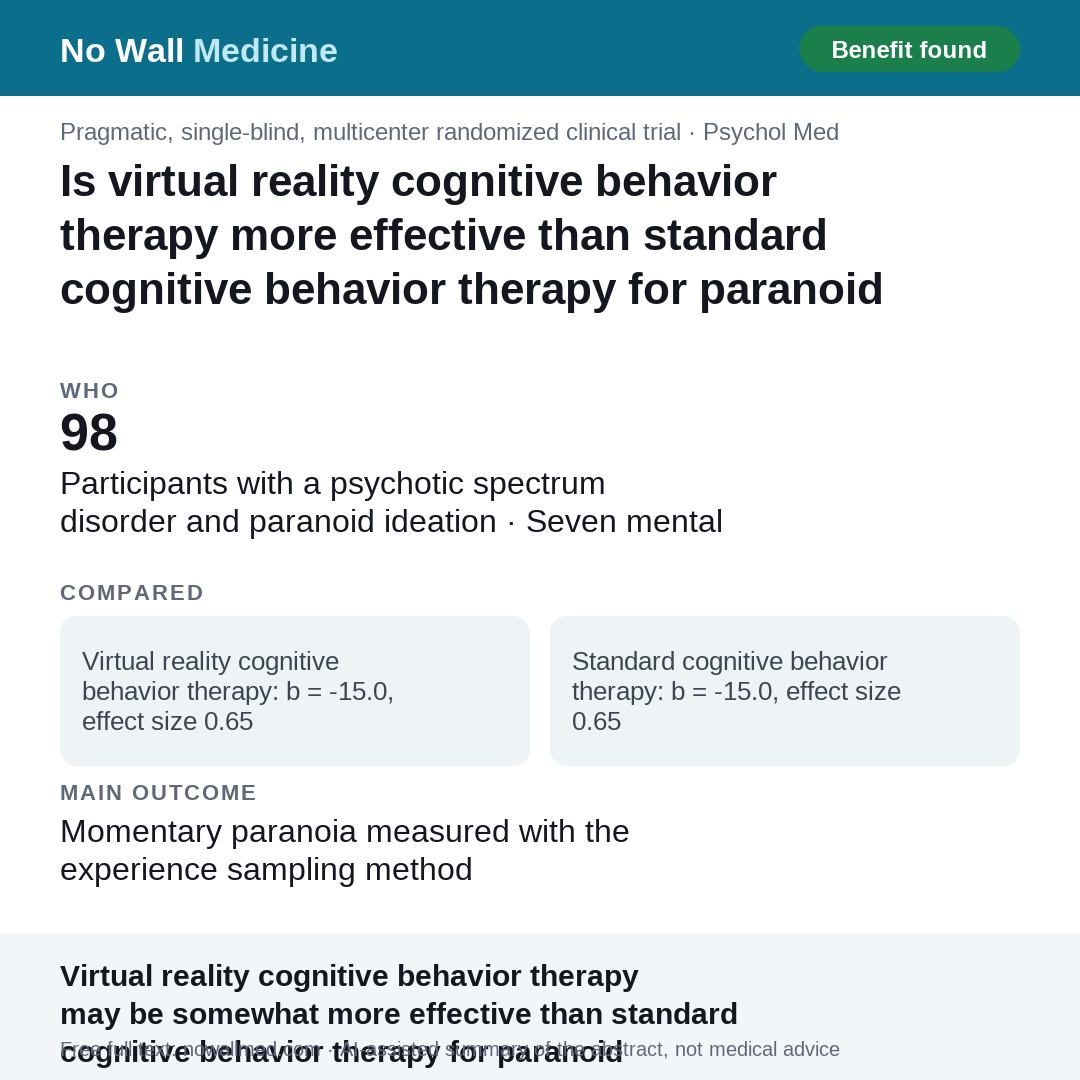
Virtual-reality cognitive behavior therapy versus cognitive behavior therapy for paranoid ideation: A pragmatic, single-blind, multicenter randomized clinical superiority trial
Pragmatic, single-blind, multicenter randomized clinical trialBenefit found
Is virtual reality cognitive behavior therapy more effective than standard cognitive behavior therapy for paranoid ideation?
Who
98
Participants with a psychotic spectrum disorder and paranoid ideation · Seven mental health centers in the Netherlands and Belgium
Compared
Virtual reality cognitive behavior therapy: b = -15.0, effect size 0.65
Standard cognitive behavior therapy: b = -15.0, effect size 0.65
Main outcome
Momentary paranoia measured with the experience sampling method
Result: interaction b = 8.3, ES = 0.62
Bottom line: Virtual reality cognitive behavior therapy may be somewhat more effective than standard cognitive behavior therapy for paranoid ideation.
Limitation: Limited experience sampling method compliance and a lower sample size than anticipated.
Psychol Med · 2025-07-07Download image
Natural history of treated and untreated renal oncocytoma: a systematic review and meta-analysis
Systematic review and meta-analysisBenefit found
What is the natural history of treated and untreated renal oncocytoma?
Who
Adult patients with histologically confirmed renal oncocytoma
Compared
Active surveillance: 14% transition to active treatment
Treated: negligible metastatic oncocytoma and disease-related death
Main outcome
Distant metastases, disease-related death, and tumor growth
Bottom line: Active surveillance is oncologically safe and allows patients to avoid treatment morbidity and mortality.
Limitation: Lack of prospective cohort studies reporting surveillance protocols and clinical outcomes.
BJU Int · 2025-07-07Download image

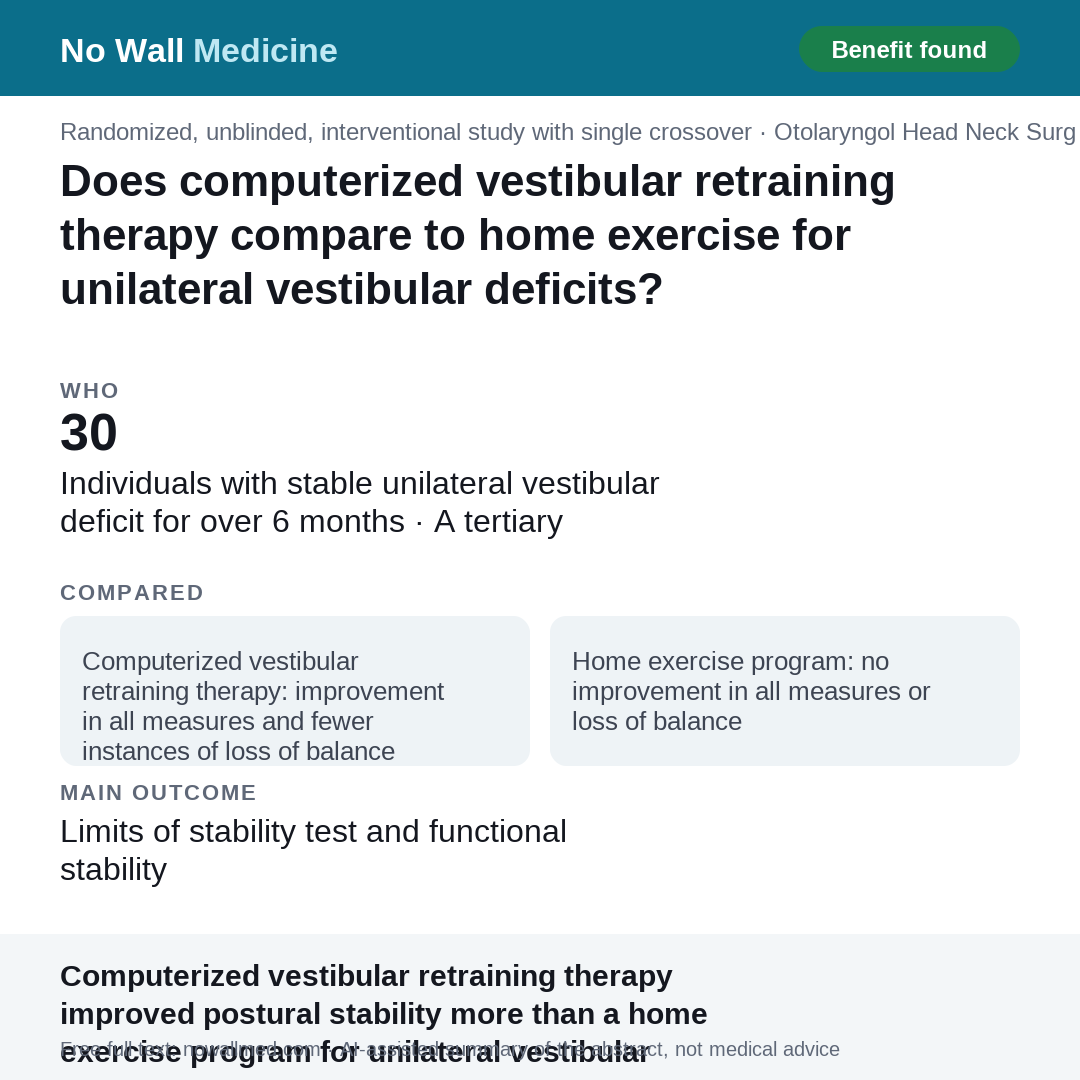
Vestibular Rehabilitation Using Dynamic Posturography: Functional Stability and Fall Risk Outcomes From a Randomized Trial
Randomized, unblinded, interventional study with single crossoverBenefit found
Does computerized vestibular retraining therapy compare to home exercise for unilateral vestibular deficits?
Who
30
Individuals with stable unilateral vestibular deficit for over 6 months · A tertiary neurotology clinic
Compared
Computerized vestibular retraining therapy: improvement in all measures and fewer instances of loss of balance
Home exercise program: no improvement in all measures or loss of balance
Main outcome
Limits of stability test and functional stability
Bottom line: Computerized vestibular retraining therapy improved postural stability more than a home exercise program for unilateral vestibular deficits.
Otolaryngol Head Neck Surg · 2025-07-07Download image
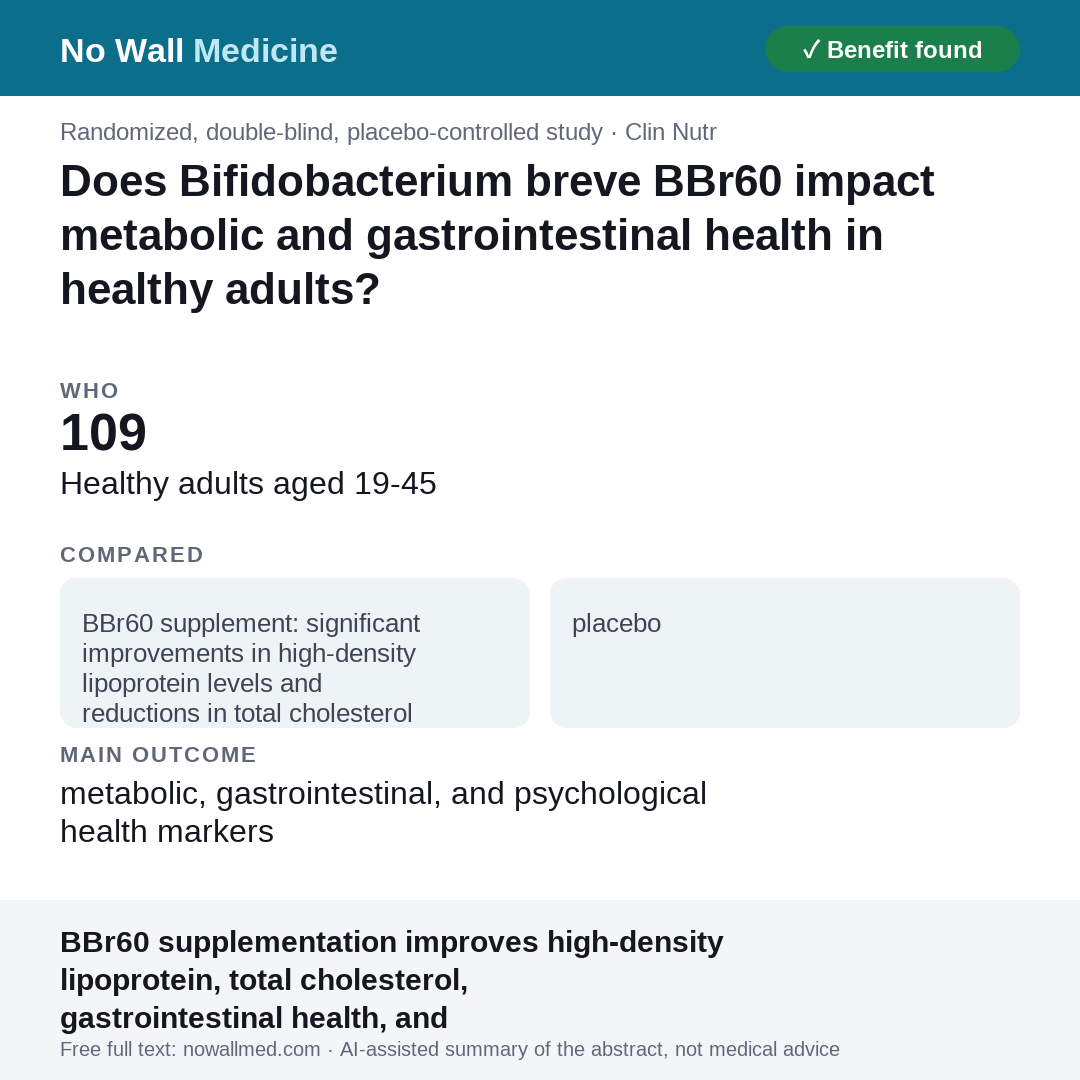
The impact of Bifidobacterium breve BBr60 (BBr60) on metabolic and gastrointestinal health in healthy adults: A combined in vitro metabolomic and randomized, double-blind, placebo-controlled study
Randomized, double-blind, placebo-controlled studyBenefit found
Does Bifidobacterium breve BBr60 impact metabolic and gastrointestinal health in healthy adults?
Who
109
Healthy adults aged 19-45
Compared
BBr60 supplement: significant improvements in high-density lipoprotein levels and reductions in total cholesterol
placebo
Main outcome
metabolic, gastrointestinal, and psychological health markers
Bottom line: BBr60 supplementation improves high-density lipoprotein, total cholesterol, gastrointestinal health, and neuropsychiatric symptoms associated with alcohol consumption.
Clin Nutr · 2025-07-07Download image
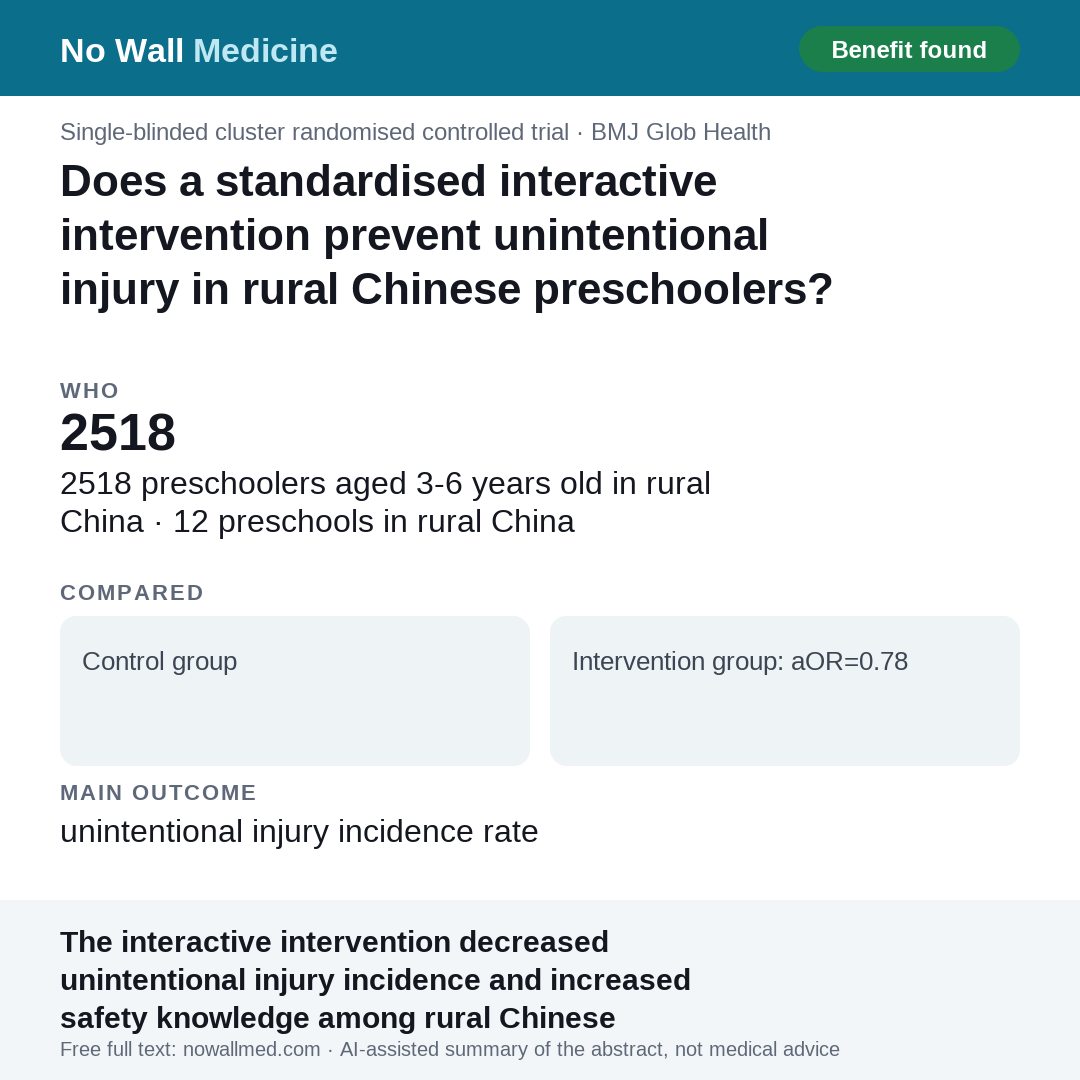
Effectiveness of a standardised and interactive intervention to prevent preschooler unintentional injury in rural China: a cluster randomised controlled trial
Single-blinded cluster randomised controlled trialBenefit found
Does a standardised interactive intervention prevent unintentional injury in rural Chinese preschoolers?
Who
2518
2518 preschoolers aged 3-6 years old in rural China · 12 preschools in rural China
Compared
Control group
Intervention group: aOR=0.78
Main outcome
unintentional injury incidence rate
Result: aOR=0.78 (95% CI: 0.64 to 0.94)
Bottom line: The interactive intervention decreased unintentional injury incidence and increased safety knowledge among rural Chinese preschoolers.
BMJ Glob Health · 2025-07-07Download image
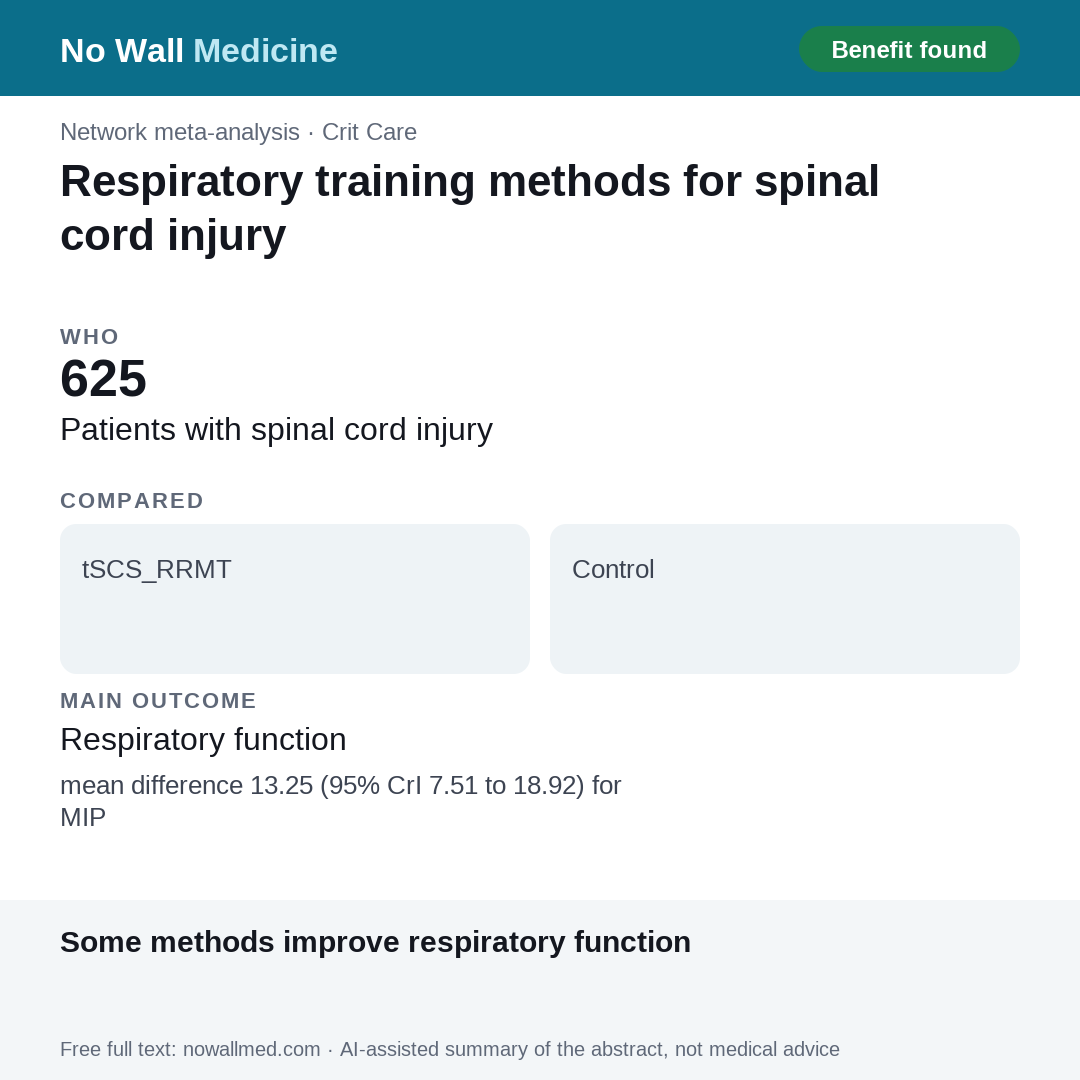
Effects of different respiratory training methods on respiratory function in patients with spinal cord injury: a network meta-analysis of randomized controlled trials
Network meta-analysisBenefit found
Respiratory training methods for spinal cord injury
Who
625
Patients with spinal cord injury
Compared
tSCS_RRMT
Control
Main outcome
Respiratory function
Result: mean difference 13.25 (95% CrI 7.51 to 18.92) for MIP
Bottom line: Some methods improve respiratory function
Limitation: Irreconcilable heterogeneity and imprecision
Crit Care · 2025-07-07Download image
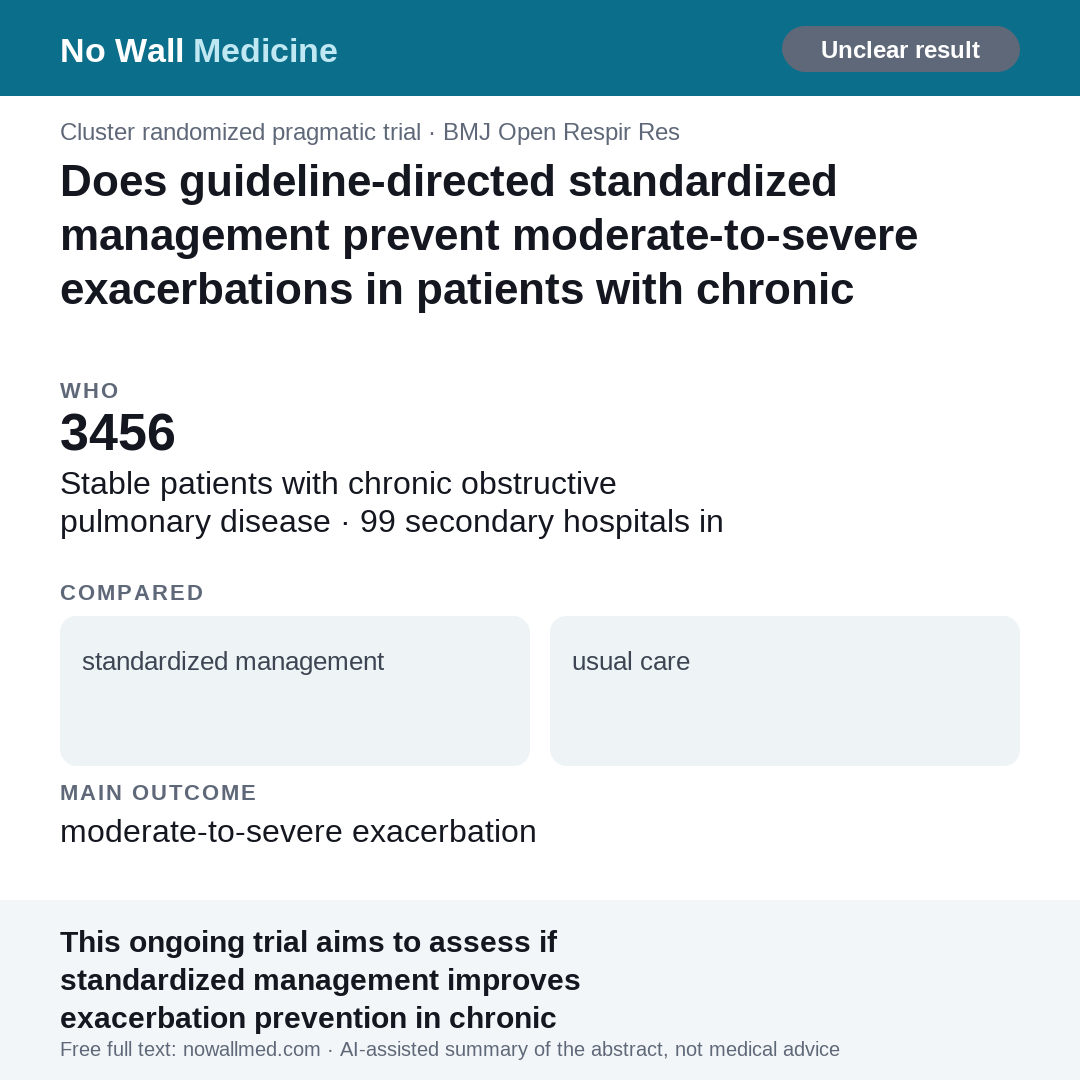
Real-world effectiveness study of guideline-directed COPD STANDARDized management in patients with chronic obstructive pulmonary disease: a cluster randomised trial design
Cluster randomized pragmatic trialUnclear result
Does guideline-directed standardized management prevent moderate-to-severe exacerbations in patients with chronic obstructive pulmonary disease?
Who
3456
Stable patients with chronic obstructive pulmonary disease · 99 secondary hospitals in China
Compared
standardized management
usual care
Main outcome
moderate-to-severe exacerbation
Bottom line: This ongoing trial aims to assess if standardized management improves exacerbation prevention in chronic obstructive pulmonary disease.
Limitation: The study is currently being performed between 2023 and 2027.
BMJ Open Respir Res · 2025-07-07Download image
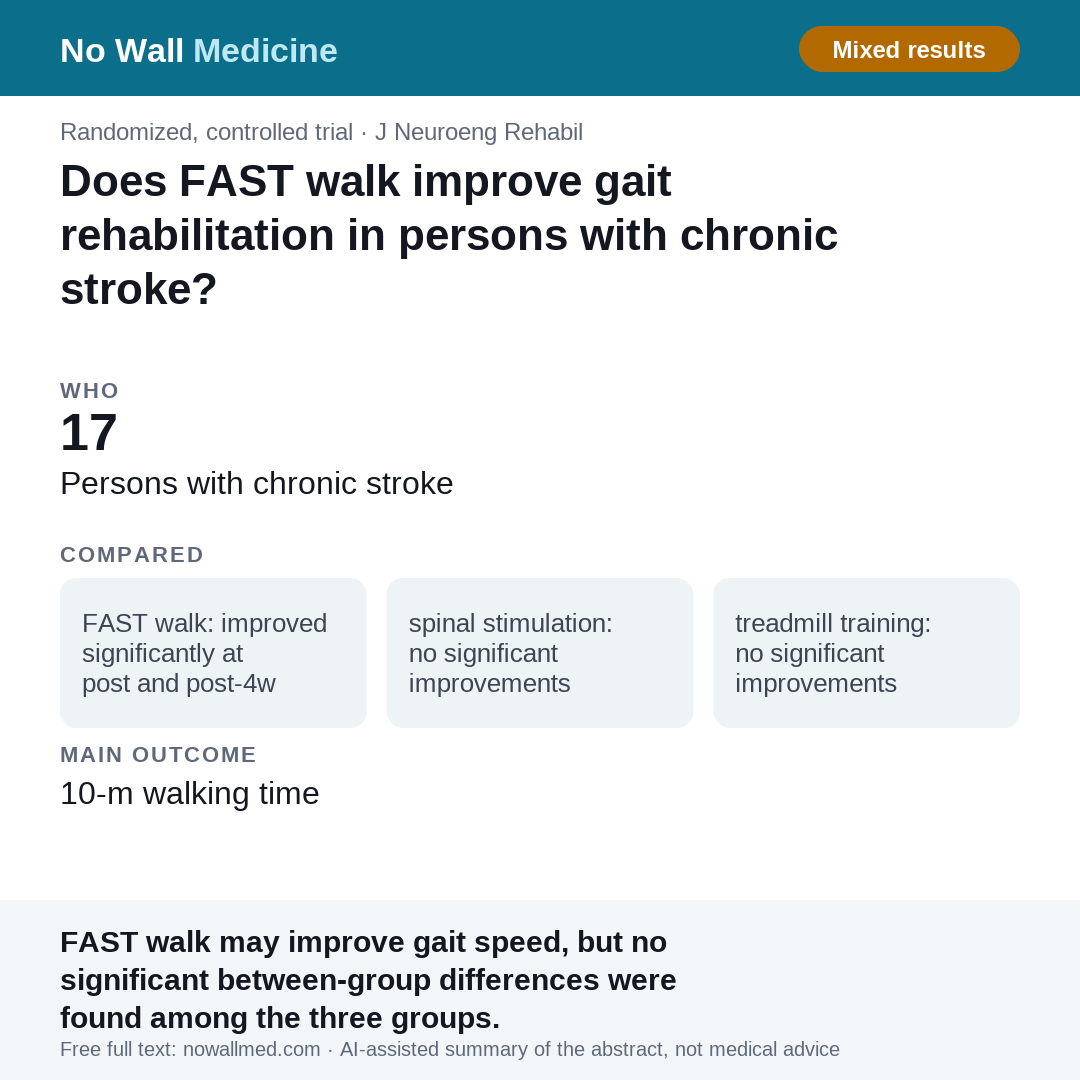
Electromyography (EMG)-triggered transcutaneous spinal cord and hip stimulation for gait rehabilitation in persons with chronic stroke: a randomized, controlled trial
Randomized, controlled trialMixed results
Does FAST walk improve gait rehabilitation in persons with chronic stroke?
Who
17
Persons with chronic stroke
Compared
FAST walk: improved significantly at post and post-4w
spinal stimulation: no significant improvements
treadmill training: no significant improvements
Main outcome
10-m walking time
Bottom line: FAST walk may improve gait speed, but no significant between-group differences were found among the three groups.
J Neuroeng Rehabil · 2025-07-07Download image
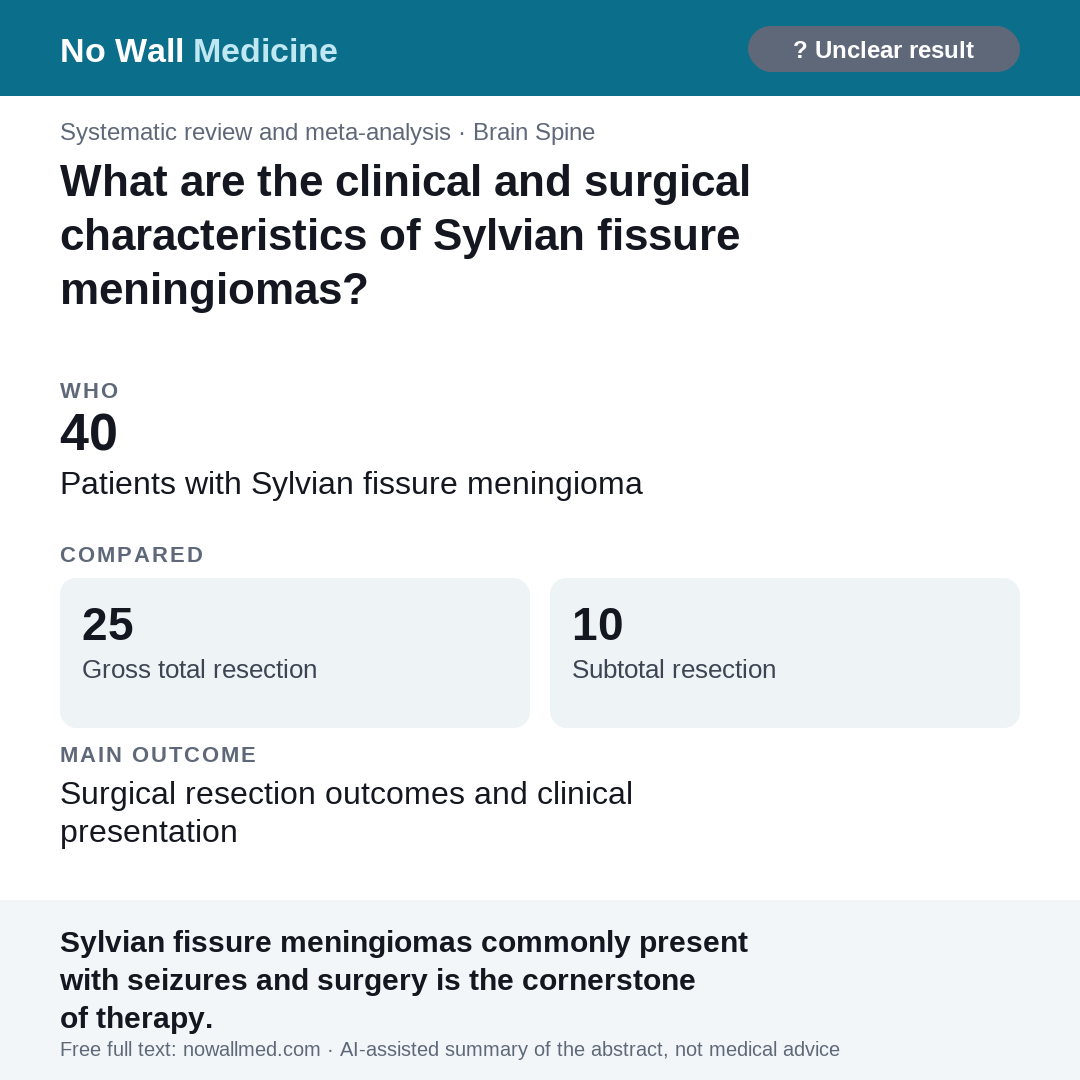
Sylvian fissure meningioma: A case report and systematic review of clinical and surgical insights
Systematic review and meta-analysisUnclear result
What are the clinical and surgical characteristics of Sylvian fissure meningiomas?
Who
40
Patients with Sylvian fissure meningioma
Compared
25Gross total resection (71.4%)
10Subtotal resection (28.6%)
Main outcome
Surgical resection outcomes and clinical presentation
Bottom line: Sylvian fissure meningiomas commonly present with seizures and surgery is the cornerstone of therapy.
Brain Spine · 2025-07-07Download image
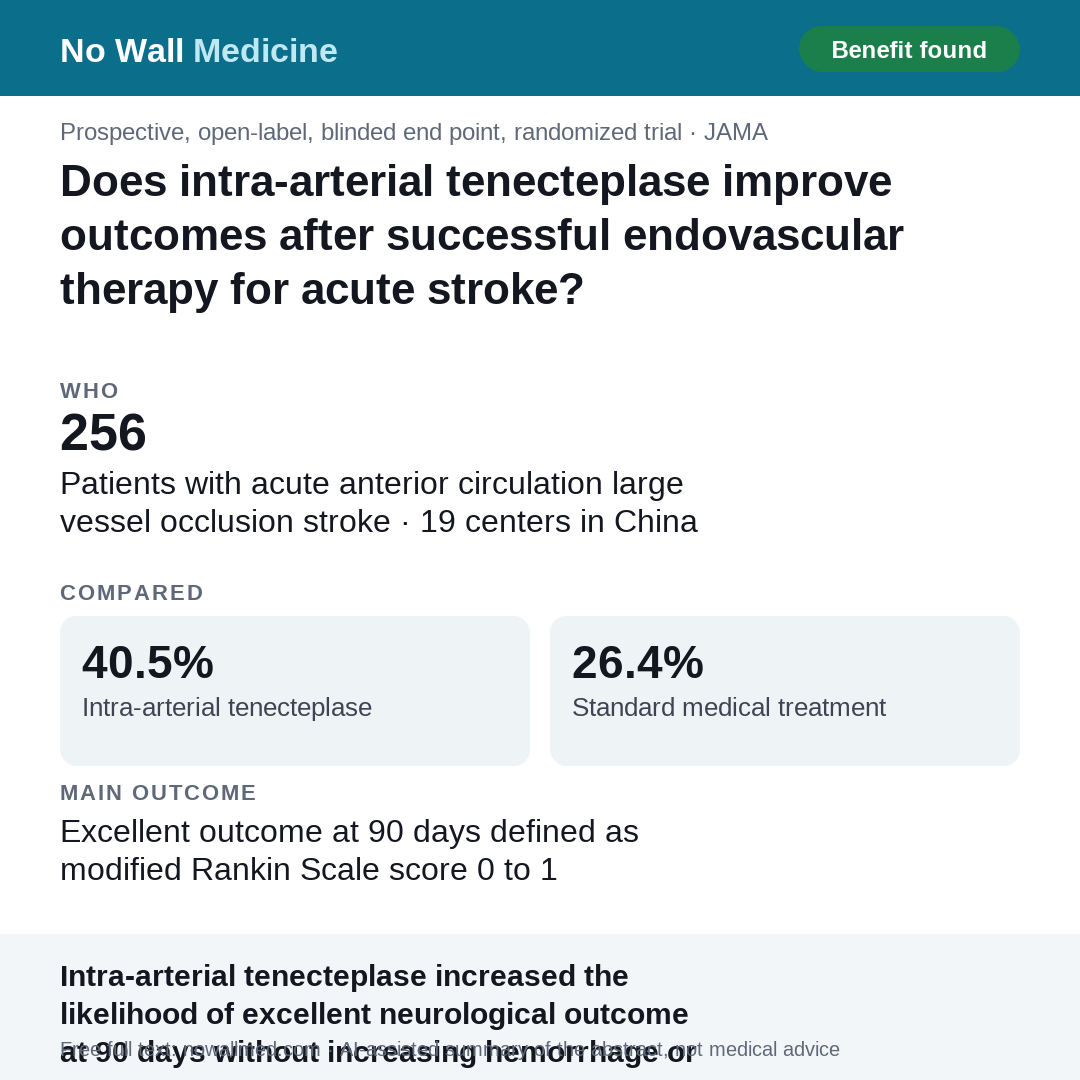
Intra-arterial Tenecteplase for Acute Stroke After Successful Endovascular Therapy: The ANGEL-TNK Randomized Clinical Trial
Prospective, open-label, blinded end point, randomized trialBenefit found
Does intra-arterial tenecteplase improve outcomes after successful endovascular therapy for acute stroke?
Who
256
Patients with acute anterior circulation large vessel occlusion stroke · 19 centers in China
Compared
40.5%Intra-arterial tenecteplase
26.4%Standard medical treatment
Main outcome
Excellent outcome at 90 days defined as modified Rankin Scale score 0 to 1
Result: relative risk 1.44 (95% CI 1.06-1.95)
Bottom line: Intra-arterial tenecteplase increased the likelihood of excellent neurological outcome at 90 days without increasing hemorrhage or mortality.
Limitation: None of the seven prespecified secondary efficacy end points showed a significant difference.
JAMA · 2025-07-05Download image
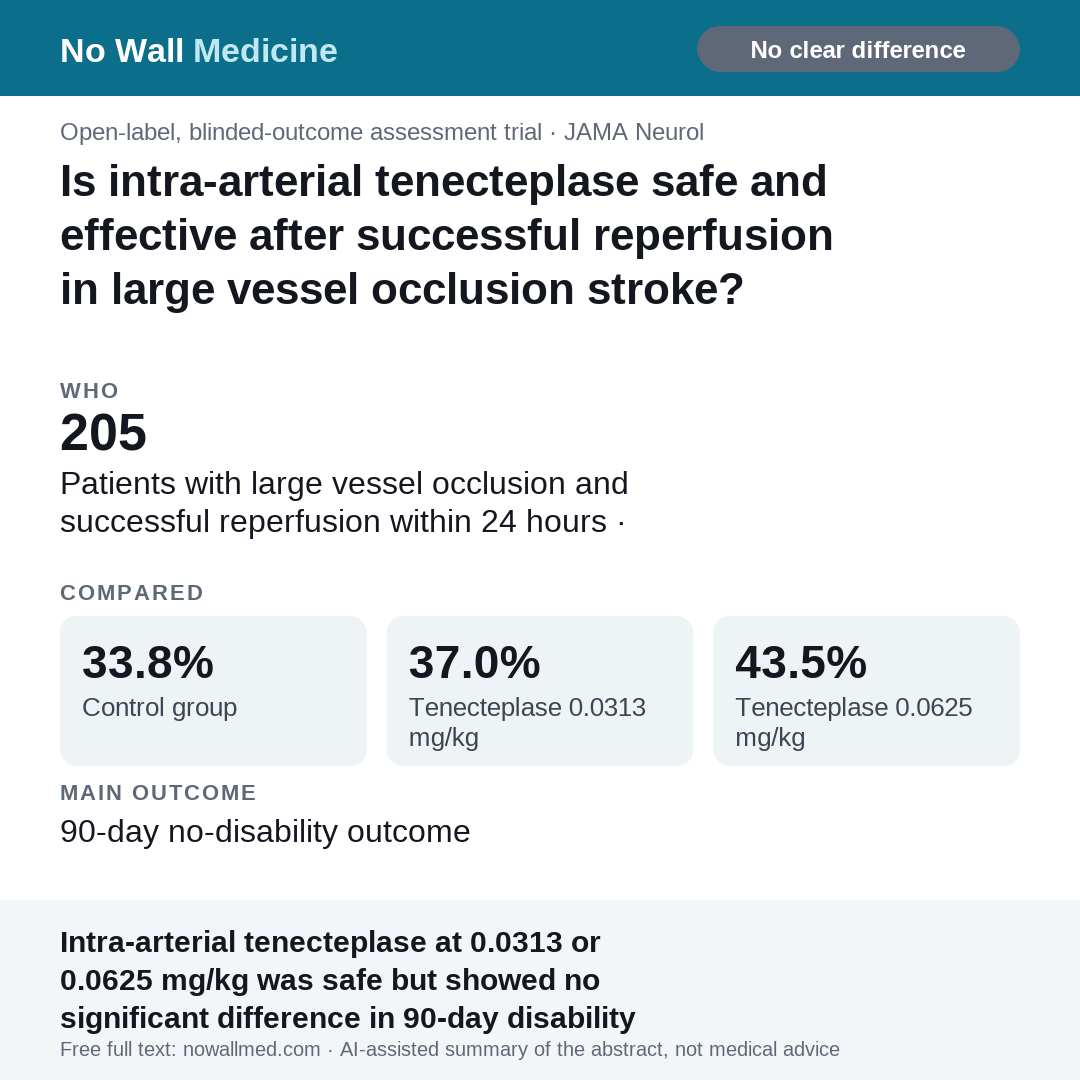
Intra-Arterial Tenecteplase After Successful Reperfusion in Large Vessel Occlusion Stroke: A Randomized Clinical Trial
Open-label, blinded-outcome assessment trialNo clear difference
Is intra-arterial tenecteplase safe and effective after successful reperfusion in large vessel occlusion stroke?
Who
205
Patients with large vessel occlusion and successful reperfusion within 24 hours · Multicenter clinical trial in China
Compared
33.8%Control group
37.0%Tenecteplase 0.0313 mg/kg
43.5%Tenecteplase 0.0625 mg/kg
Main outcome
90-day no-disability outcome
Result: adjusted risk ratio 0.85 (95% CI, 0.54-1.35) and 1.15 (95% CI, 0.73-1.80)
Bottom line: Intra-arterial tenecteplase at 0.0313 or 0.0625 mg/kg was safe but showed no significant difference in 90-day disability outcomes.
JAMA Neurol · 2025-07-05Download image
Metabolic plasticity of the gut microbiome in response to diets differing in glycemic load in a randomized, crossover, controlled feeding study
Randomized, crossover, controlled feeding studyMixed results
How do low and high glycemic load diets affect gut microbiome structure and metabolism?
Who
69
Healthy men and women
Compared
Low glycemic load diet: L-lysine biosynthesis pathway expression enriched (95% CI 0.09, 0.30)
High glycemic load diet: Hexitol fermentation pathway expression higher (95% CI -1.63, -0.67)
Main outcome
Stool bacterial community structure and metabolism
Bottom line: Diet impacts microbial metabolism and enzymatic activity but does not change overall gut microbiome diversity.
Am J Clin Nutr · 2025-07-05Download image

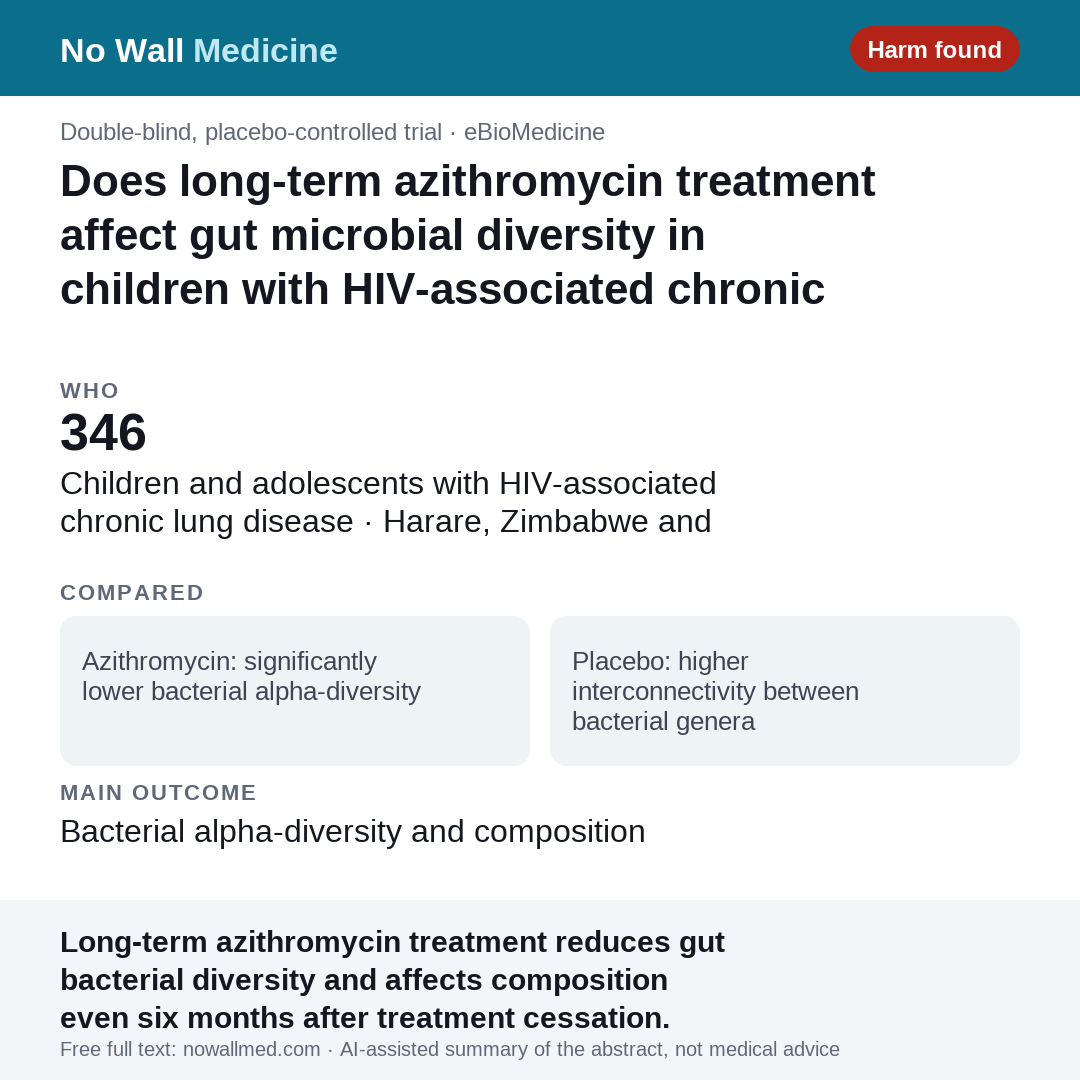
Effect of long-term azithromycin treatment on gut microbial diversity in children and adolescents with HIV-associated chronic lung disease
Double-blind, placebo-controlled trialHarm found
Does long-term azithromycin treatment affect gut microbial diversity in children with HIV-associated chronic lung disease?
Who
346
Children and adolescents with HIV-associated chronic lung disease · Harare, Zimbabwe and Blantyre, Malawi
Compared
Azithromycin: significantly lower bacterial alpha-diversity
Placebo: higher interconnectivity between bacterial genera
Main outcome
Bacterial alpha-diversity and composition
Bottom line: Long-term azithromycin treatment reduces gut bacterial diversity and affects composition even six months after treatment cessation.
Limitation: Consequences of reduced bacterial diversity need further investigation.
Funded by: Norwegian Research Council and Helse Nord
eBioMedicine · 2025-07-05Download image
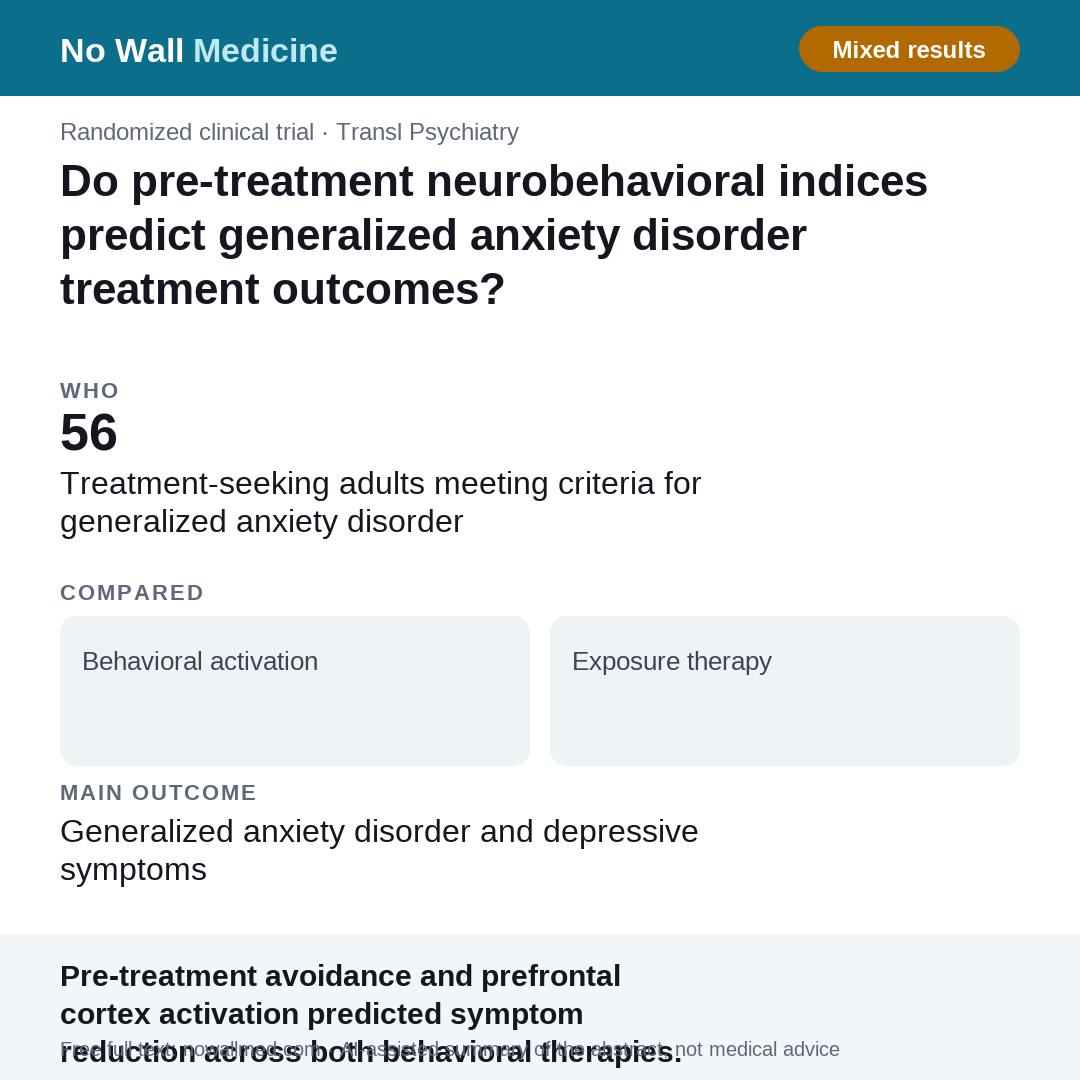
Prediction of generalized anxiety disorder treatment outcomes with neurobehavioral responses to approach-avoidance conflict: a randomized clinical trial
Randomized clinical trialMixed results
Do pre-treatment neurobehavioral indices predict generalized anxiety disorder treatment outcomes?
Who
56
Treatment-seeking adults meeting criteria for generalized anxiety disorder
Compared
Behavioral activation
Exposure therapy
Main outcome
Generalized anxiety disorder and depressive symptoms
Bottom line: Pre-treatment avoidance and prefrontal cortex activation predicted symptom reduction across both behavioral therapies.
Limitation: Larger, longitudinal studies in clinical settings are warranted.
Transl Psychiatry · 2025-07-05Download image
A systematic review of machine learning approaches in cochlear implant outcomes
Systematic reviewBenefit found
How can machine learning techniques predict cochlear implant outcomes?
Who
20
Individuals with cochlear implants
Compared
Imaging-based studies: high predictive accuracy
Neural function measures: feasible way to assess functional status
Speech enhancement algorithms: showed promise
Main outcome
prediction of cochlear implant outcomes
Bottom line: Machine learning shows promise in predicting outcomes and enhancing speech recognition for cochlear implant users.
NPJ Digit Med · 2025-07-05Download image

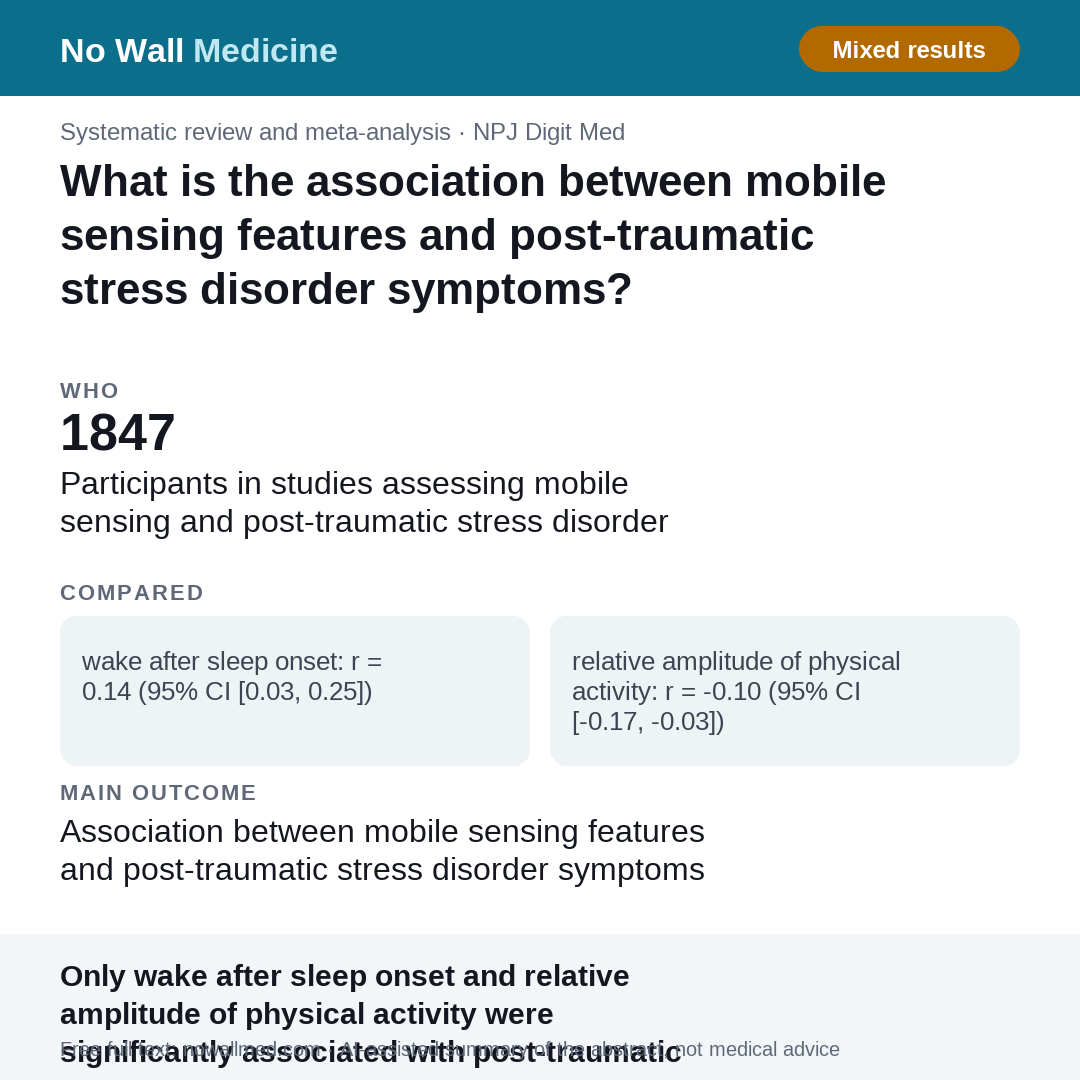
The relation between passively collected data and PTSD: a systematic review and meta-analysis
Systematic review and meta-analysisMixed results
What is the association between mobile sensing features and post-traumatic stress disorder symptoms?
Who
1847
Participants in studies assessing mobile sensing and post-traumatic stress disorder
Compared
wake after sleep onset: r = 0.14 (95% CI [0.03, 0.25])
relative amplitude of physical activity: r = -0.10 (95% CI [-0.17, -0.03])
Main outcome
Association between mobile sensing features and post-traumatic stress disorder symptoms
Bottom line: Only wake after sleep onset and relative amplitude of physical activity were significantly associated with post-traumatic stress disorder symptoms.
NPJ Digit Med · 2025-07-05Download image
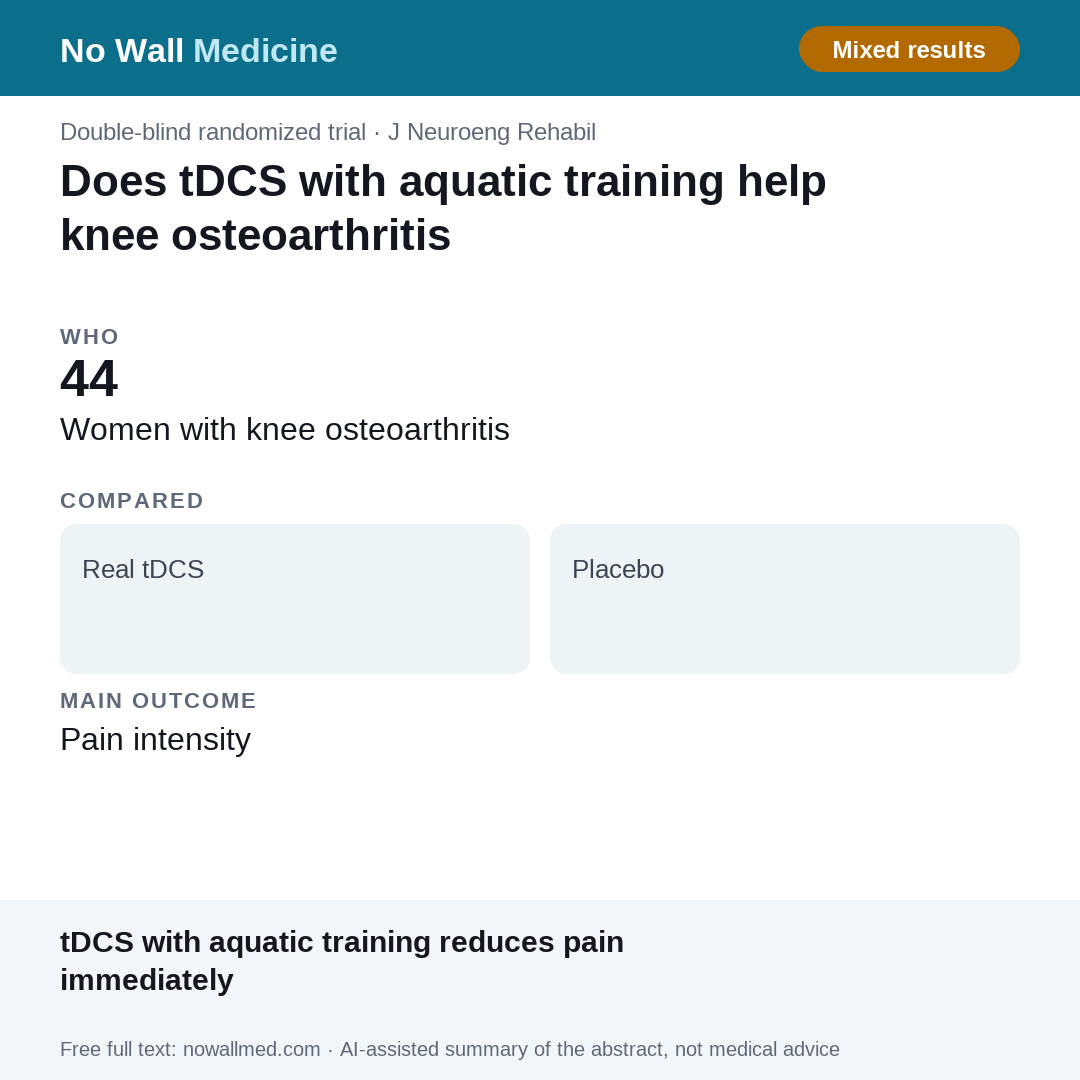
The impacts of transcranial direct current stimulation combined with aquatic neuromuscular training on pain, function, kinesiophobia, knee instability, and quality of life in knee osteoarthritis: a double-blind randomized trial
Double-blind randomized trialMixed results
Does tDCS with aquatic training help knee osteoarthritis
Who
44
Women with knee osteoarthritis
Compared
Real tDCS
Placebo
Main outcome
Pain intensity
Bottom line: tDCS with aquatic training reduces pain immediately
J Neuroeng Rehabil · 2025-07-05Download image